


 Claim Ownership
The Coaching Edge Podcast
Subscribed: 1Played: 6
Subscribe

© Copyright 2024 Dr. Steve Jeffs and Erwin de Grave
Description
A Podcast About Coaching, Business and other Interesting Stuff.
56 Episodes
Reverse

Most leadership coaching stops at mindset. Erin Hutchins, MCC and CEO of ACT Leadership, says the next layer of performance lives in the body.In this episode of The Coaching Edge Podcast, Erin joins Dr. Steve Jeffs and Erwin de Grave to discuss how she helps senior leaders ground themselves before coaching conversations, why stuck emotions show up as physical pain, and how movement and music form the core of her new embodiment program.Erin also shares how she built ACT Leadership alongside her husband Mike Hutchins, hiring for trust and accountability while expanding their coach training programs across the United States.If you coach leaders or work in high-performance environments, this conversation offers a practical look at what happens when you bring the body into the room.
What would your life look like if you stopped living by other people's expectations? Sandra Stocks, NLP practitioner, energy worker, and bestselling author, joins The Coaching Edge Podcast to explore authenticity, the inner voice, and the Hell Yes framework.Sandra explains why motivation alone rarely creates lasting change, why emotional goals matter more than outcome targets, and how curiosity opens the door when goal pressure closes it. A practical and thought-provoking conversation for coaches and anyone ready to start asking what they genuinely want.
Most leaders manage their teams without first managing themselves. Margaret Andrews, Harvard instructor and author of Manage Yourself to Lead Others, has spent nearly 20 years closing that gap. In this episode, she shares the self-awareness framework she teaches at Harvard, covering emotional intelligence, values clarity, feedback patterns, and team resilience. Dr. Steve Jeffs and Erwin de Grave join her for a practical, direct conversation about what it takes to lead well from the inside out.
Dr. Marcia Reynolds started coaching in 1995 and helped design the original ICF competencies. Her message today: AI is forcing coaches back to the one thing it cannot replicate — genuine emotional presence.In this episode, Marcia explains how a coach's emotional state co-regulates the client's nervous system, which is the actual mechanism behind coaching breakthroughs. She challenges the idea that following the rules makes you a better coach, and argues that mastery means learning the structure well enough to forget it and be fully present.She also covers why leadership development keeps failing in organizations, what KPIs Maersk used to make coaching skills measurable, and why the profession needs to stop treating human connection as a trend. Her book Coach the Person Not the Problem, second edition, released on March 3rd, 2026.
Coaches are trained to ask great questions. But most find selling deeply uncomfortable. Lisa Carver spent 16 years as a corporate sales leader before becoming a team and leadership coach, and she has a clear view on why.In this conversation with Dr. Steve Jeffs and Erwin de Grave, Lisa explains why a single LinkedIn message is only the first five minutes of a two-year campaign, how she traveled to meet a cold lead and kept that client for four and a half years, and why case studies are now more valuable than a perfect proposal in an AI world.She also covers how to measure coaching outcomes with simple, client-rated objectives so every engagement produces evidence you can use.Episode page: https://thecoachingedgepodcast.com/why-your-sales-background-is-an-asset-not-a-liability-lisa-carver-on-building-a-coaching-business-that-wins-clients/
He built one of the largest coaching companies in the Middle East from nothing. Nic Woodthorpe-Wright spent 20 years educating a market that had never heard of coaching, and today leads a network of over 100 ICF-accredited coaches working with major corporations across the region.In this conversation with Dr. Steve Jeffs and Erwin de Grave, Nic shares his approach to selling coaching through passion rather than persuasion, what organizations look for when they hire coaches, and how to prove ROI in corporate coaching programs. He also addresses where AI fits in the future of coaching and why human connection remains at its core.Watch the full episode here: https://thecoachingedgepodcast.com/nic-woodthorpe-wright-on-building-a-100-coach-company-and-selling-what-the-world-needs/
Steve Hamilton-Clark spent 27 years as a CEO in the Middle East before founding The 18th Camel, his global executive coaching practice. In this conversation with Dr. Steve Jeffs and Erwin de Grave, Steve shares why self-leadership matters more than business strategy for executives.He reveals the single question he asks at the end of every coaching session, why CEOs are often the least heard people in their organizations, and how vision-first coaching keeps leaders moving forward. Steve explains why presence matters more than technique, how emotional connection drives team ownership, and why the future of successful leadership depends on heart count over head count.The conversation offers practical insights for coaches building their businesses and leaders wanting to show up differently for their teams.Watch the full episode here: https://thecoachingedgepodcast.com/steve-hamilton-clark-on-why-heart-centered-leadership-drives-real-business-results/
Mind Movies co-founder Natalie Ledwell explains why AI fails at creating emotional transformation.After 9 years traveling with Dr. Joe Dispenza and building a $700K launch week, Natalie brings hard-won wisdom to this conversation with Dr. Steve Jeffs and Erwin de Grave.She shares why affirmations need human co-creation to work. She explains how to build a coaching business without burning out. And she issues a challenge: stop asking "how could they think that?" and start asking "help me understand."Natalie's three keys for coaches: design your life first, build from a solid foundation (not survival mode), and surround yourself with people who lift you up.Watch the full episode here: https://thecoachingedgepodcast.com/natalie-ledwell-on-why-emotion-drives-transformation-and-how-coaches-should-use-ai/
What if the best thing a coach could do is shut up longer? Carly Anderson, a 28-year coaching veteran who trained in Australia's first certification program, joins Dr. Steve Jeffs and Erwin de Grave to discuss why structure creates freedom in coaching.Carly explains why coaches default to proving expertise instead of trusting the process. When coaches stay quiet longer, clients discover wisdom they did not know they had. She shares the example of a CEO who spent 10 months listening before making any changes to his organization.The conversation also explores how AI will filter authentic coaches from those who use technology as a crutch. Carly believes the human presence remains essential for helping clients implement what they learn.Watch the full episode here: https://thecoachingedgepodcast.com/carly-anderson-on-why-structure-creates-freedom-in-coaching/
Most coaches quit within two years without a single paying client. Tim Brownson explains why.After 21 years in coaching and 13 years helping coaches build practices, Tim has seen the patterns. Training programs teach coaching skills but ignore business fundamentals. New coaches create websites filled with jargon like "holding space" and "creating alignment" that mean nothing to potential clients.Tim's advice: stop hiding behind your laptop. Get to networking events. Give talks. Run workshops. One in-person event produces more clients than months of Instagram posts.He also pushes coaches to embrace AI now. Tim uses it two to three hours daily and refuses to take clients who avoid it. The technology will transform coaching, and early adopters will have the advantage.Hosts Dr. Steve Jeffs and Erwin de Grave explore these themes with Tim on The Coaching Edge Podcast.Watch the full episode here: https://thecoachingedgepodcast.com/tim-brownson-why-most-coaches-fail-at-marketing-and-how-to-fix-it/
Your ability to lead others depends on how well you lead yourself. DeAnna Murphy, Chief People Officer at Thriven with 2,500+ hours of executive coaching experience, joins Dr. Steve Jeffs and Erwin de Grave to break down the fundamentals of self-leadership.DeAnna shares the four levels of leadership model and explains why psychological safety is your responsibility, not your boss's. She introduces practical tools including the "story you're telling" coaching question and the three agreements that build trust in any relationship.The conversation gets personal when DeAnna reveals how she wasted six months in frustrating meetings before taking responsibility for her own needs. Her breakthrough moment offers a lesson every coach and leader needs to hear.Whether you coach executives or lead teams, this episode delivers frameworks you can apply immediately.Watch the full episode here: https://thecoachingedgepodcast.com/deanna-murphy-why-self-leadership-is-the-foundation-every-leader-needs/
Former Second City instructor Meridith Grundei teaches leaders how to become unforgettable presenters through storytelling.In this conversation with Dr. Steve Jeffs and Erwin de Grave, Meridith shares practical frameworks for presentation skills and communication. She explains why structure frees you to speak naturally, how to find stories using a timeline exercise, and why focusing on your audience removes the pressure of performing.One standout insight: Meridith describes helping a client sell an AI tool using a personal story about his son learning to climb stairs. The audience remembered him because they felt connection, not because they remembered the product features.Whether you coach executives, lead teams, or speak from stages, this episode delivers specific techniques for telling stories that create lasting impact.Watch the full episode here: https://thecoachingedgepodcast.com/how-meridith-grundei-helps-leaders-tell-stories-that-create-connection-and-get-remembered/
In this special year-end episode of The Coaching Edge Podcast, co-hosts Dr. Steve Jeffs and Erwin de Grave reflect on launching the show in 2025, the unexpected depth that emerged from “coffee-style” conversations, and the recurring theme that coaching impact comes less from doing more and more from presence, patience, and responsiveness. They revisit a core insight heard repeatedly across guests: tools and methodologies matter—but what matters more is who the coach is in the moment, and how coach and client co-create outcomes from what’s emerging.From the business side of C-squared (Coach + CEO), they underline the importance of clear structure—enough to get moving, like steering a ship that must first be in motion—while still leaving space for creativity. They clarify distinct roles many coaches blur: the coach delivering, the CEO building systems, and the business owner focused on profit and return. They also tackle the “selling” tension coaches often face, reframing it from a transactional exchange into a celebrated investment in outcomes, shifting from selling sessions to selling a journey from Point A to Point B.Looking ahead to 2026, they explore AI as a tool (not a replacement for human connection), predict a renewed emphasis on mastery of basics (black-belt-level fundamentals), and call for greater professionalization and community in coaching—less lone-wolf, more connected learning and shared wisdom. The episode closes with a powerful reflection practice: not just reflecting on the year, but reflecting on your reflection—“As I read this, I notice…”—as a way to carry forward real learning into what’s next.Watch the full episode: https://thecoachingedgepodcast.com/master-the-basics-build-the-system-what-coaching-needs-next/
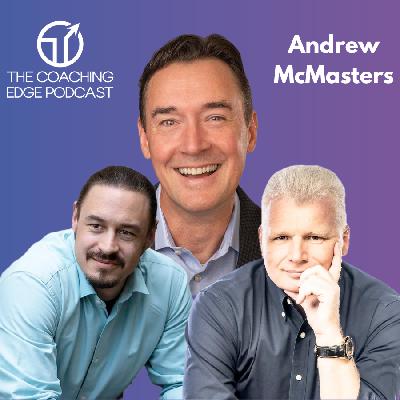
In this episode of The Coaching Edge Podcast, Erwin de Grave and Dr. Steve Jeffs sit down with actor, director, and leadership coach Andrew McMasters, founder of ImprovMindset and author of Listening Without Agenda. Andrew shares how 25 years of running a theatre company and performing improv became an unexpected training ground for helping leaders show up more authentically at work.He explains how improv—“spontaneous theatre” with no script, set, or costume—mirrors real life and leadership. Andrew introduces the improv principle of “yes, and” not as blind agreement, but as a way of accepting reality and building from it instead of shutting ideas down. He links this to divergent and convergent thinking in teams: first exploring possibilities, then analyzing, then aligning on concrete action. Leaders who confuse these modes, he warns, end up blocking creativity and stifling contributions.A big focus of the conversation is authentic presence. Andrew describes how many technically brilliant people are promoted into leadership but don’t yet know how to communicate, coach others, or bring their full selves into the room. Drawing on acting training, he invites leaders to bring more of who they are—how they are with friends, at home, or at a football game—into their professional role. Leadership, he says, is about fostering others’ growth and modeling the behavior you want to see, from putting your phone away in meetings to being willing to be vulnerable and tell real stories.Andrew also dives into listening without agenda, the core of his book. He walks through three layers of listening:Clarifying the data (“Did I hear you correctly?”),Reflecting the emotional impact, andSurfacing underlying values (“This sounds like what you really care about…”).From supporting neurodivergent team members with external focus, to inviting multilingual colleagues to use their native language to express themselves more fully, Andrew shows how deeper listening transforms connection and trust. He even shares crisis and conflict examples where matching someone’s emotional intensity builds rapport instead of escalation.The episode closes with practical practices for leaders: using check-ins and check-outs to align teams, leveraging AI as a structural aid (not a replacement for human intention), and adopting an improv mindset in moments of crisis—stop wasting energy on blame and instead ask, “Okay, this is reality. Now what?” It’s a rich, practical conversation for any coach or leader who wants to be more present, more human, and more effectiveWatch the full episode here: https://thecoachingedgepodcast.com/leading-like-an-improviser-listening-without-agenda-and-making-others-look-good/

In this episode of The Coaching Edge Podcast, Erwin de Grave and Dr. Steve Jeffs sit down with Dr. Anita Kishore, an executive coach for analytically minded leaders. With a background spanning a PhD in chemistry, pharma, consulting, and global health, Anita shares how she moved from hard science into the deeply human world of coaching — and why those worlds are far more connected than many leaders think.Anita explores what happens when brilliant, data-driven executives hit the limits of analysis. She explains why most decisions are, at their core, emotional, and how ignoring emotion doesn’t make us more analytical — it just makes our decision-making incomplete. She describes her work with “overthinkers” and analytical executives who want to become more inspirational leaders by integrating intellect and emotion, leading with both head and heart.The conversation dives into practical tools for leaders:How to notice what you’re feeling in high-stake meetings without losing focus.Using a simple “inner narration” technique in your notes to stay grounded and present.Expanding your emotional vocabulary beyond the three “corporate-approved” feelings of happy, disappointed, and frustrated.Helping teams feel safe to express emotions without everyone rushing in to “fix” or rescue.Anita also talks about decision-making when the data is incomplete, the realities of risk for senior leaders, and why emotional information is still data. Looking ahead, she shares her thoughts on AI’s role in leadership and coaching, and her hope for workplaces that combine psychological safety with real intellectual rigor.If you work with technical, scientific, or highly analytical leaders — or you are one — this episode offers a grounded, practical roadmap for becoming both more effective and more human as a leader.Watch the full episode here: https://thecoachingedgepodcast.com/when-data-isnt-enough-anita-kishore-on-leading-with-both-head-and-heart/
In this episode of The Coaching Edge Podcast, hosts Erwin de Grave and Dr. Steve Jeffs sit down with Kay Adams, a psychotherapist, journal therapist, and founder of the Center for Journal Therapy. From her early days as a lifelong journaler and journalism major to discovering, almost by accident, that journaling could become her life’s work, Kay shares the story of a 40-year career at the intersection of writing, psychology, and healing.Kay explains how a simple request from friends to “teach a journaling workshop” led her to codify 21 different journaling techniques, and later to develop the Journal Ladder—a structured hierarchy of writing methods designed to support safety, pacing, and containment, especially for people with trauma. She describes working in psychiatric hospitals with women diagnosed with what is now called dissociative identity disorder, and how she realized that unstructured free writing could unintentionally retraumatize them. Her answer was to design more guided approaches using tools like sentence stems (“Right now I feel…”, “Today the most important thing is…”) to help clients self-regulate on the page.The conversation also explores who tends to be drawn to journaling, and how gender patterns show up differently. While many women privately process their emotions in journals and hesitate to share their writing, Kay noticed that men often prefer to talk first—and, once they do write, they’re surprisingly eager to read their work aloud. Underneath these differences, she emphasizes, we’re all dealing with the same human struggles; journaling just gives each person a way to externalize and clarify what’s going on inside.One of the most practical ideas in this episode is the power of the five-minute sprint: writing fast for just five minutes about a realization, conflict, or problem. For busy coaches, leaders, and entrepreneurs, Kay frames this as a simple act of self-permission—five minutes of presence with yourself. Paired with a short reflection write (“As I read this, I notice…”), it becomes a powerful tool for insight, action planning, and tracking growth over time.Kay also touches on AI as an ally rather than a threat to journaling. She suggests using AI to generate writing prompts—“Give me 10 (or 30) journal prompts about the conflict I’m having with my team leader”—as a way to expand perspective and deepen self-exploration. For professionals who support others—coaches, therapists, and facilitators—she points to the Therapeutic Writing Institute, a three-year training program she designed for those who want to build a practice around expressive and therapeutic writing.If you’ve ever thought, “I don’t have time to journal” or “I don’t know what to write,” this episode offers both reassurance and a toolkit. Journaling doesn’t have to be elaborate or perfect; it can simply be five minutes, a few prompts, and the willingness to meet yourself on the page.Watch the full episode here: https://thecoachingedgepodcast.com/five-minute-journaling-how-kay-adams-turns-writing-into-everyday-therapy/
In this episode of The Coaching Edge Podcast, co-hosts Dr. Steve Jeffs and Erwin de Grave sit down with Rusty Tugman, leadership trainer, coach, and creator of the first internal coaching program in the history of Oklahoma state government. After 30 years in full-time ministry, Rusty transitioned into the role of leadership trainer and coach at the Oklahoma Department of Human Services (OKDHS), a 6,000+ employee government agency serving some of the state’s most vulnerable citizens. What started as coaching a single employee organically grew—through word of mouth—into a robust internal coaching program offering executive, leadership, conflict, group, and team coaching.Rusty explains the unique challenges and opportunities of internal coaching versus external coaching. As an internal coach, he is “one of us” inside the system, dealing with real power dynamics, conflicts of interest, and the reality that some clients technically have the authority to fire him. Yet that same embedded position gives him something external coaches rarely have: day-to-day visibility of behavior change, team dynamics, and cultural shifts in real time. He also shares how critical it is to position internal coaching away from discipline and “fixing” people, and instead as a positive, future-focused resource designed to unlock potential and support growth.A major part of the conversation centers on how Rusty built and scaled an internal coaching program. He walks through four key pillars he used to design it:Clear purpose – What problem does coaching solve, what value does it bring, and how does it support organizational goals?Standards and structures – Using ICF competencies and ethics as quality anchors while allowing individual coaching style.Measurement and impact – Demonstrating value, especially ROI and outcomes such as performance, engagement, and culture.Delivery and consistency – Actually delivering results so coaching becomes a budget-worthy, permanent part of the business.Unexpectedly, one of the strongest outcomes of the program has been employee well-being. Rusty shares that the most common feedback from coachees is not only about better performance, but about feeling supported, having a safe place to talk, and being able to process the emotional load of the work. For leaders—especially senior leaders—coaching becomes a rare space to think out loud, explore ideas without everything being taken as a directive, and confront their own self-doubt.Rusty and the hosts also explore how internal coaches can coexist and partner with external coaches, aiming for alignment and consistency rather than competition. Ultimately, Rusty’s vision is a true coaching culture at OKDHS, where coach-like leadership, thought partnership, and human-centered support are embedded throughout the organization—not just reserved for the top of the org chart.Watch the full episode here: https://thecoachingedgepodcast.com/inside-the-rise-of-internal-coaching-how-rusty-tugman-built-a-coaching-culture-from-the-inside-out/
In this episode of The Coaching Edge Podcast, co-hosts Erwin de Grave and Dr. Steve Jeffs sit down with Caroline Leroux-Boulay from The Emotional Intelligence Training Company to explore what it really means to lead and coach with humanity, science, and heart.Caroline shares her story of growing up in a large, poor farming family where faith, music, hard work, and community shaped her core values—as well as some powerful limiting beliefs about gender and education. From “farm girl” resilience to being the first in her family to pursue higher education, she describes how her love of learning, theology, and community work naturally led her toward coaching.What began as a search for a “third way” of parenting—neither authoritarian nor laissez-faire—became her doorway into professional coaching. Caroline explains how family meetings with her four children evolved into a deep curiosity about collaboration, partnership, and what she calls “door C”: a way of relating that isn’t either/or but both/and.The conversation dives into emotional intelligence as people skills—how we relate to ourselves, to others, make decisions, and manage stress. Caroline emphasizes that leaders don’t need “woo-woo”; they need science and structure to feel confident in showing up more authentically. Emotional intelligence provides the framework; neuroscience provides the “how”—how the brain and body work so we can create sustainable, transformational change more efficiently.Caroline and the hosts explore powerful metaphors like the “glass is half full” reframed as “the glass is completely full—half water, half air”, challenging limiting beliefs and dualistic thinking. Instead of choosing task or relationship, she advocates for an and mindset where resonant relationships are not a luxury but a performance advantage.They also highlight the underestimated impact of simple human behaviors: asking “How are you coming in today?”, expressing genuine emotion, and using basic manners. These small acts, backed by science, create positive emotional attractors and safer, happier environments where people can flourish.Throughout, Caroline returns to themes of authenticity, resonance, compassion, and common humanity. Emotional intelligence and neuroscience, she argues, simply give us the language, structure, and permission to reconnect with ways of being that are already innate in us—and to do so with more intention, confidence, and courage.Watch the full episode here: https://thecoachingedgepodcast.com/choosing-door-c-emotional-intelligence-neuroscience-and-real-leadership-with-caroline-leroux-boulay/
In this episode of The Coaching Edge Podcast, money coach and licensed counselor Jeannie Dougherty—dubbed a “money whisperer” by her clients—dives into the emotional and behavioral side of finance. Jeannie traces her path from mental health counseling to money coaching through a deeply personal family story that reshaped her views on trust, boundaries, and financial agency.She introduces a powerful lens: is money “outside” of you (an elusive goal that controls you) or “inside” you (a tool you direct)? From that frame, Jeannie explains how shame, secrecy, and avoidance keep money stuck—while clarity, honest conversations (with partners and advisors), and values-aligned choices create flow.For coaches and entrepreneurs, she shares pragmatic sales guidance: practice your offer, deliver it cleanly, then stay quiet; expect (and allow) a “no”; and protect your time from misaligned prospects. With couples, she anchors budgets in values, not comparison, and shows how different priorities can coexist when you design for both needs and wants. Jeannie also cautions against quick-money promises, urges discernment with ads and online schemes, and reminds us that all money problems are personal problems—and therefore coachable.Her central message: develop an empowered, internal relationship with money—use it consciously as a tool, give and receive to keep it flowing, and let your energy and boundaries attract right-fit clients and right-fit decisions.Watch the episode here: https://thecoachingedgepodcast.com/from-money-myths-to-money-flow-jeannie-dougherty-on-building-an-inner-wealth-mindset/
In this inspiring episode of The Coaching Edge Podcast, hosts Dr. Steve Jeffs and Erwin de Grave sit down with Lisa Andria, founder of Ladies Who Leap, to explore the transformative power of coaching, emotional intelligence, and the importance of unconditional self-love—especially for women navigating corporate leadership.Lisa shares her personal story of reinvention after a 41-year career in telecom, where burnout led her to a powerful realization: her true calling was helping women reclaim their worth and lead authentically. She delves into the unconscious mind’s role in limiting beliefs, how stress impacts decision-making, and why coaching is so essential to fostering self-awareness and lasting change.From redefining success beyond quotas and revenue to discussing why emotions are strategy, Lisa breaks down how inner transformation leads to outer impact. Whether you're a coach, leader, or someone seeking clarity and confidence, this conversation provides practical insights and heart-centered wisdom for growth.Watch the full episode here: https://thecoachingedgepodcast.com/how-self-love-and-emotional-awareness-unlock-transformational-leadership/

Comments

Download from Google Play

Download from App Store
 United States