


 Claim Ownership
The Great Guns Podcast
Subscribed: 0Played: 3
Subscribe

© Copyright 2026 Great Guns
Description
The Great Guns Podcast is the no-BS voice for veterans and their partners who need to rediscover their purpose and reignite their fire. Through raw stories and real solutions, we tackle resilience, connection, and getting back on mission. Whether you’re finding your tribe or just need a push, this is where strength meets action.
36 Episodes
Reverse
n this episode of the Great Guns Podcast, James sits down with Annette Berry — Army veteran, former Theatre Sister, brain haemorrhage survivor, and now Programme Lead for the Military Women Programme at the Forces Employment Charity.Annette’s journey is anything but linear.From joining the Queen Alexandra’s Royal Army Nursing Corps, commissioning as a theatre sister, and loving life in uniform — to being medically forced out of nursing due to severe allergies — Annette opens up about the grief of losing not just a job, but an identity.She shares candidly about:Grieving the loss of a military careerReinventing herself in civilian lifeDivorce, relocation and single parenthoodSurviving a life-threatening subarachnoid haemorrhageBuilding the Military Women Programme from scratchThis is a conversation about resilience, identity, equity, transferable skills, and why supporting veterans — especially women — is a privilege, not a task.TakeawaysLosing your military career can feel like losing part of your identity — and it is okay to grieve it properly.Resettlement is not always a “soft landing” — even highly skilled professionals can struggle with the transition.Transferable skills are often invisible to the person who holds them. Sometimes it takes someone else to reflect them back.Optimism and resilience are not denial — they are conscious choices to see opportunity in adversity.Significant life events force clarity. They make you reassess where your true “happy place” is.Military women often underestimate their value, capability, and readiness for civilian roles.Job descriptions are wish lists — you do not need 100% of the criteria to apply.Equity is not everyone getting the same bike — it’s everyone getting a bike that fits.Supporting veterans is a privilege. Being an ally means helping people feel safe enough to receive support.The right guidance can turn confusion into direction by asking better questions, not giving quick answers.Sound Bites“Losing my career felt like downhill and out of control.”“You have to grieve properly when you lose the uniform.”“If money were no object, what would your dream job be?”“Job descriptions are wish lists.”“Men apply at 50–60%. Women wait until they’re at 75%.”“If veterans could see themselves as others see them, life would be easier.”“Equity is giving everyone a bike that fits.”“Supporting veterans isn’t a task — it’s a privilege.”“You are far more than the sum of your parts.”Connect with AnnetteLinkedInForces Employment Charity#MilitaryTransition #Veterans #MilitaryWomen #Resilience #GreatGunsPodcast
In this episode of the Great Guns Podcast, James sits down with Paul Brenton — a 32-year Armed Forces veteran who now works with the Forces Transition Group, helping service leavers navigate life beyond uniform.Paul shares his journey from joining at 16 years old (inspired by his father’s service), through decades in the Adjutant General’s Corps, to consciously planning and executing a smooth transition into civilian life.But this conversation goes deeper than CV writing.It explores:Identity beyond rankWhy transition should start earlyThe danger of “sleepwalking” towards the gatesThe power of networking and ownershipWhy soft skills are the real superpowerIf you’re serving, approaching transition, or already out — this episode is both practical and mindset-shifting.TakeawaysYou should be preparing for transition from early in your career — not just in your final 12 months.The military is an organisation, not your identity. You are still you when the uniform comes off.Many service leavers lose confidence not because they lack competence — but because they’ve lost their “measurement system.”Qualifications matter, but soft skills and emotional intelligence are often the deciding factor.Your CV should tell a story, not just list data points.Job descriptions are wish lists — you don’t need to match 100% to apply.Networking isn’t optional — it’s essential. Conversations unlock opportunity.Don’t wait for permission. Reach out. Ask for five minutes.Comfort disguised as “just one more revision” is often procrastination.There are three types of transition mindset:The Sleepwalker (hopes it will work out)The Hoper (prepared but passive)The Hunter (takes ownership and acts)Own your journey. Control the controllables. Make a decision.Sound Bites“You go when you choose — not when the service chooses for you.”“The military isn’t you. You take the skills with you.”“Imposter syndrome only appears when you’re stretching.”“A CV is just a piece of paper that earns you a conversation.”“Qualifications might get you in the room — culture fit gets you hired.”“Stop waiting. Just send it.”“Control the controllables.”“Own it. Find direction. Make the decision.”“You don’t need more courses. You need conversations.”“Be a hunter.”Connect with PaulLinkedInForces Transition Group#MilitaryTransition #Veterans #Leadership #CareerDevelopment #GreatGunsPodcast
In this episode of the Great Guns Podcast, James sits down with John Stephenson, a 22-year Royal Signals veteran and founder of the Forces Transition Group (FTG).John speaks candidly about:Leaving as a Regimental Sergeant MajorFeeling like “something” in service… and “nothing” the day afterTwo years of identity loss and frustrationToxic workplaces in civvy streetWhy transition is broken — and how mindset is the real issueThis conversation goes beyond CV writing and job fairs. It’s about identity, ownership, responsibility and preparation.If you are still serving, thinking about leaving, or already out — this episode will challenge how you see your future.TakeawaysYou will leave one day — whether you plan for it or not. Most people don’t prepare early enough.The military manages your career for you. Civvy street doesn’t. That shift in responsibility catches many people out.Rejection in the civilian world feels personal because many serving personnel have never had to face it repeatedly before.Identity loss is often the real challenge — not the job, not the salary, but the loss of status and belonging.Mindset is the difference. Sleepwalkers wait for something to happen. Hunters go and create opportunity.Transition support at the end of service is often too late. Preparation needs to start much earlier.Civilian businesses don’t need to understand the military — service leavers need to understand business.Education through service is one of the most powerful ways to prepare for life after uniform.Sound Bites“I felt like I was something in the military… and nothing the day I left.”“We plan everything in the military — except leaving it.”“The responsibility gets handed back to you — and most people aren’t ready.”“Rejection is normal in business. It’s not normal in the military.”“If you sleepwalk into your future, you’ll struggle.”“Be a hunter.”“It’s not the war that breaks most people — it’s not fitting into society.”“The system hasn’t changed in 30 years.”“You don’t know what business is — until you sit in front of it.”“Education through service is the secret.”Connect with Stephen:Forces Transition GroupLinkedIn#MilitaryTransition #Veterans #Leadership #Identity #GreatGunsPodcast
In this episode of The Great Guns Podcast, James is joined by Kirk Davis, a serving soldier in the RLC and ambassador for the Defence Dyslexia Network (DDN), for one of the most honest conversations the podcast has hosted.Kirk shares what it’s really like to serve with dyslexia — from leaving school feeling “stupid”, hiding behind humour, rank, and delegation, to finally finding a safe space where he could speak openly and receive support.This is a powerful episode about fear, stigma, identity, leadership, parenting, and neurodiversity in the military. Kirk’s story challenges long-held assumptions about intelligence, success, and what dyslexia really looks like — and why living in silence is far more dangerous than speaking out.TakeawaysDyslexia is not a lack of intelligence. It’s a different way of processing — not a weakness.Many people hide in plain sight. Rank, humour, and delegation can mask deep anxiety and fear.Living in silence is exhausting. The effort of hiding often causes more harm than dyslexia itself.You don’t always need a diagnosis to ask for help. Simple adjustments can make a massive difference.Speaking out changes everything. Not just for you — but for those around you.Neurodiversity is an asset, not a liability. Different thinking strengthens teams.You can succeed beyond what you think is possible. Kirk went from hiding his struggles to earning a Master’s degree.The most important leadership starts at home. The moment with his daughter reminds us why empathy matters.Soundbites“I’m not stupid — I just can’t get the words onto paper.”“I spent my career hiding behind rank.”“Picking up a pen felt like kryptonite.”“Living in silence is far more dangerous.”“Daddy, if you can’t read it, I can read it for you.”“I never wanted to be a dad because I thought I was too stupid.”“Don’t suffer in silence.”“Being different doesn’t make you less — it makes you valuable.”“Reach out. Speak out. You’re not alone.”Connect with KirkLinkedIn#Dyslexia #Neurodiversity #MentalHealth #DDN #GreatGunsPodcast
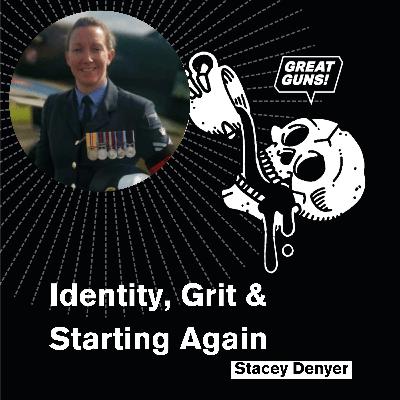
In this episode of The Great Guns Podcast, James sits down with Stacey Denyer, a 19-year RAF veteran, and Invictus Games medallist, to talk honestly about identity, resilience, and what happens when the structure of military life disappears.Stacey shares her journey through military service, competitive sport, MS, and transition — including the mental and emotional challenge of stepping away from the uniform while still chasing purpose, performance, and belonging.This is a grounded, thoughtful conversation about discipline without structure, finding identity beyond rank, and why resilience isn’t about being unbreakable — it’s about adapting, again and again.Sound Bites“The uniform gives you an identity — when it goes, you have to rebuild one.”“Transition isn’t just about a job, it’s about who you are.”“Sport gave me something to aim at when everything else felt uncertain.”You don’t have to have it all figured out straight away.”“Be patient with yourself — transition takes time.”“Ask for help earlier than you think you need it.”Key TakeawaysThe uniform gives you identity — losing it can feel disorientating. Transition isn’t just logistical; it’s deeply personal.Resilience isn’t about toughness — it’s about adaptability. Being able to reset, pivot, and keep moving forward matters more than grit alone.Structure disappears fast in civilian life. You need to build your own routines, goals, and accountability.Sport and challenge can be powerful tools — but not cures. They help, but they don’t replace reflection and support.Comparison is dangerous during transition. Your journey doesn’t need to look like anyone else’s.Purpose doesn’t arrive fully formed. It’s built through action, curiosity, and patience.You’re still the same person — just in a different environment. The skills from service don’t disappear, they just need translating.Connect with StaceyLinkedInBlogFemale Veterans' Transformation Programme#Veterans #MilitaryTransition #Resilience #Identity #GreatGunsPodcast
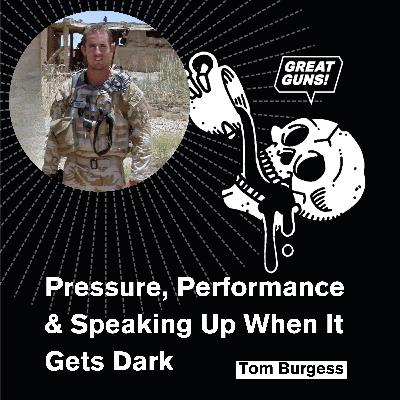
In this episode of The Great Guns Podcast, James is joined by Tom Burgess for a frank and necessary conversation about pressure, identity, mental health, and responsibility.Tom opens up about life under constant scrutiny, and how easily struggles can be hidden behind strength, success, and status. He speaks honestly about moments of poor decision-making, accountability, and the importance of confronting issues head-on rather than burying them.This episode isn’t about excuses — it’s about owning your actions, understanding mental health in high-pressure environments, and learning how to ask for help before things spiral.TakeawaysHigh performance doesn’t protect you from mental health struggles. Success and status don’t equal stability.Silence makes everything worse. Bottling things up allows pressure to build until it spills over.Accountability matters. Owning mistakes is uncomfortable — but essential for growth.Strength isn’t pretending you’re fine. Real strength is admitting when you’re not.Pressure compounds quietly. If it’s not addressed early, it eventually finds a way out.Support systems only work if you use them. Help exists — but you have to reach for it.You’re more than your performance. Identity can’t rely solely on results, contracts, or public opinion.Sound Bites“People see the performance — not what’s going on behind it.”“You can be winning on the outside and struggling inside.”“Pressure doesn’t disappear — it builds.”“I didn’t talk when I should have.”“Bottling it up was the worst thing I could’ve done.”“Asking for help came too late — but it mattered.”“Speak up earlier than you think you need to.”“You don’t lose respect by being honest.”Want to connect with TomSave a Warrior UKLinkedInLooking to support#MentalHealthMatters #HighPerformance #Accountability #Resilience #GreatGunsPodcast
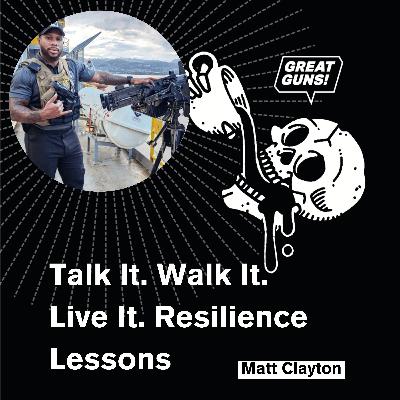
In this episode of The Great Guns Podcast, James sits down with Matt Clayton, a US Navy veteran who’s moved into coaching, fitness, and mental resilience.Matt shares the real story — joining the military instead of taking football scholarship offers, attempting the SEAL pipeline, life on a ship, and then landing in a riverine squadron where things got properly hands-on: fast boats, weapons, and becoming a marksman and coach for others.From there, the conversation shifts into the grit behind the scenes: being forced out due to manpower decisions, building a life post-uniform, bodybuilding and coaching, and why motivation is temporary — resilience is what keeps you showing up.This one’s honest, practical, and packed with lines that’ll hit home if you’re navigating transition, pressure, or that quiet struggle that doesn’t show up on Instagram.Key TakeawaysMindset beats talent when things get hard. The body can be ready — but if the mind isn’t, you’ll fold.Transition can be forced. Even if it’s not your choice, you can still choose your response and your next move.Motivation fades. Resilience stays. The goal is showing up even when the hype dies.Resilience can be tiny wins. Sometimes “getting to the shop” is the win — and that counts.Watch the warning signs. Sleep deprivation, gambling, alcohol, obsessive spirals — they don’t always look like “mental health” at first.Accountability isn’t always a sledgehammer. Sometimes you need a scalpel. Sometimes you rebuild the whole structure.Get your admin squared away before you leave. Medical documentation and appointments matter more than you think.Soundbites:“Motivation is temporary.”“I don’t wanna be f*ing motivated.”“Resilience is… no matter what’s going on, I’m gonna show up.” Interview“Even if that’s just going to the f*ing grocery store… that could be a win.”“Doing whatever it takes to feel like you’ve got a W for that day — that’s resilience.”“No early checkouts.”Connect with Matt:InstagramWebsite"Talk It, Walk It, Live It" Book
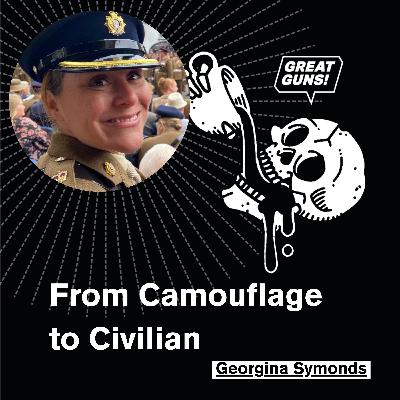
What happens when the uniform comes off… and the “comfort blanket” disappears?In this episode of The Great Guns Podcast, James sits down with Georgina Symonds (currently serving in the Army Reserve after a long regular career) to talk about the real transition journey — the identity shift, imposter syndrome, the mental load of “there’s loads of support… but it’s a minefield”, and why routine + community are the difference between drifting and thriving.We also get into caring responsibilities in service — and why Georgina helped build the Army Carers Network, plus the Army Carers Guide as a practical “one stop shop” for people supporting a child, partner, or parent.SoundbitesWhy transition is an identity problem as much as a career one“So much support… it’s a minefield” — navigating the noiseRoutine is medicine: PT, competitiveness, and rebuilding tribeCaring in uniform: stigma, pressure, and where to find helpA cracking practical tip: join the Reserves before you leave (it’s harder after)TakeawaysTransition isn’t just admin—it’s identity. Losing the uniform can feel like losing a label that defined you.Support can be brilliant… and still overwhelming. The “minefield” is often the volume of info, not the lack of it.Your last year needs a plan and boundaries. Treat resettlement like an operation: schedule it, protect it, execute it.Imposter syndrome is normal. Even high performers can feel wobbly outside the military “comfort blanket.”Build civilian connections early. Clubs, sports, gym classes, volunteering—embed before you leave.Routine is medicine. PT and structure can plug the “void” that hits after a big role ends.Caring responsibilities deserve daylight. Stigma and lack of understanding can make it harder—community helps.Consider the Reserves as a bridge. It can keep identity and purpose while you build the next chapter.Connect with GeorginaLinkedInTROOPR (Georgina is an ambassador)Army Carers Network (closed Facebook group)
She's been called a fairy, a fluffy dice distributor, and the woman with the dog—but what Natasha Hill actually is… is a force of nature. A 26-year veteran of the UK police service, Natasha’s lived through the frontlines of child protection, anti-terrorism, personal trauma, and full-on burnout. And she came back swinging—armed with compassion, EMDR, a cocker spaniel named Murphy, and a mission to rewrite the narrative on mental health in policing.In this episode, host James Scott dives deep with Natasha about the sh*t that breaks you, the culture that buries it, and how she’s flipping the system—one wellbeing festival and gut-punching truth at a time. If you think mental health is still a fluffy topic, this episode will slap that smugness right out of you.This is not just for cops. It’s for anyone who's ever been crushed by their job, gaslit by the culture, or buried by their own silence.Key Takeaways:Wellbeing is not woo-woo: If you think dogs, kindness, and mindfulness are “namby-pamby,” think again. Science says otherwise—and so does Natasha.Burnout doesn’t announce itself: It creeps, it whispers, then it bulldozes. Learn the signs before it’s too late.Trauma is cumulative: One trauma might shake you. 400+ (the average for a police officer)? That’s an internal war.Culture can kill: The “suck it up” mindset still thrives—and it’s costing lives.Recovery is possible, and damn it, it's powerful: From cancer to career collapse, Natasha proves healing is real—and badass.Soundbites:“I was told to just ‘get on with it’—right after I had a breakdown.”“They said I was just bringing my dog in. That I was handing out fluffy dice.”“I've had officers reach out after 43 years of never talking about wellbeing—until now.”“We’re trained to face bullets, but not our own brains.”“It’s not selfish to put yourself first. It’s survival.”Connect with NatashaLinkedIn#PoliceWellbeing #MentalHealthInUniform #MurphyTheWellbeingDog #FirstResponderSupport
You can’t fight if you can’t eat. You can’t move if there’s no fuel. And you can’t win if the supplies don’t get there.In this episode, Frank Davis takes us deep into the beating heart of military operations — logistics. Forget the Hollywood image of combat; this is the real story of the people who make sure the frontline never runs dry.From convoy runs through Iraq to building and adapting supply chains in hostile, unforgiving terrain, Frank reveals the unseen world of WES teams — the lifeline between the fight and the fuel.This is a masterclass in adaptability, leadership, and pure problem-solving under pressure. It’s not glamorous. It’s not easy. But it’s what keeps every soldier alive.If you’ve ever wanted to know how wars are really won, this one’s for you.Key TakeawaysLogistics is the unsung hero of every battle.The WES teams are the quiet warriors keeping troops supplied and moving.Adaptability under pressure is a survival skill — not a nice-to-have.In combat zones, efficiency isn’t about convenience — it’s about lives.Every vehicle modification, every route decision, every delivery matters.Supporting the infantry is a sacred mission.Communication keeps the chain strong — break it, and the mission breaks too.Success in austere environments demands creativity, grit, and guts.Sound Bites“Bring the stuff to the front — that’s the mission.”“In austere environments, you can’t wait for perfect conditions. You make them.”“Every mile of road is a risk — but every delivery keeps someone alive.”Connect with Frank Davis🎖️ LinkedIn: Frank Davis📸 Website
What happens when your partner serves — and you have to serve in your own way?In this episode, Nic Galbraith-Conlan cracks open the hidden side of military life: the partners who hold the line at home, the emotional toll of deployments, the constant recalibration of identity, and what happens when the mission ends but the mental load doesn’t.From the loneliness of service life to the messy transitions of civilian reintegration, Nic shares her raw and unfiltered perspective as a military spouse, coach, and creator of the Recalibrate Framework — a practical system for rediscovering balance, purpose, and connection after life in uniform.If you’ve ever felt like you’re holding everything together while quietly falling apart, this conversation will hit home. It’s not about being perfect. It’s about finding your way back — together.Key TakeawaysYou’re not alone — even when it feels like you are.Military relationships are emotional minefields that demand brutal honesty and empathy.Communication isn’t optional; it’s the lifeline.Partners serve too — just in a different kind of warzone.Mental health awareness in the forces is improving, but we’re not there yet.Healing starts with reflection — journaling, voice notes, and saying the unsaid.Transitioning to civilian life is more than a career change — it’s a total identity shift.The Recalibrate Framework helps you find your footing after the chaos.Sound Bites“Partners of service members often feel isolated — you’re holding space for someone who’s not there.”“Communication isn’t about talking. It’s about truly being heard.”“We all break a little. Recalibration isn’t weakness — it’s evolution.”“You can’t pour from an empty cup, but the military never teaches you how to refill it.”Connect with Nic Galbraith-Conlan🌍 Website: Recalibrate Framework📸 Instagram💬 Coaching: Work with Nic
From dismantling explosives to dismantling limiting beliefs, Gabriel von Knorring joins James to unpack the explosive journey from Swedish military bomb tech to mental resilience mentor. With raw honesty and a hint of dark humour, Gabriel dives into the mental mechanics behind thriving in chaos — whether you're facing a war zone, an ultra-marathon, or your own damn inbox.He reveals how mental toughness isn't built in the cold trenches of discomfort, but in the tiny moments when you choose courage over comfort. Plus, why “embracing the suck” might be keeping you soft.Key Takeaways:Mental toughness ≠ discomfort. True growth lives in the adventure zone — where there's real fear, not just cold feet.Comfortable routines can make you fragile. Optimization without adaptability is a trap.Robust beats optimized. Build systems that work in chaos, not perfection.Fear is the gatekeeper. If you're not feeling fear, you're probably not growing.Recovery is an active task. Rest isn’t the absence of effort — it's a mission in itself.Feedback must be timely and specific. Vague praise or delayed criticism? Useless.Strong teams talk about the hard stuff. Suppressed emotion is a ticking bomb — deal with it before it explodes.Sound Bites:“Just because it’s uncomfortable doesn’t mean it’s making you stronger. Sometimes you’re just cold.”— Gabriel von Knorring“If you’re optimizing your life for peak performance but can’t function during Christmas, you’re doing it wrong.”— Gabriel von Knorring“Mental strength is the ability to keep the promises you make to yourself.”— Gabriel von Knorring“You don’t rise to the occasion, you fall to the level of your systems.”— Gabriel von Knorring“Standing guard in the freezing rain doesn’t make you resilient. Facing your fears does.”— Gabriel von Knorring“You only need one second to give up — and that’s the second most people take.”— Gabriel von KnorringConnect with Gabriel:🔥 Unbreakable Mind Program: unbreakablemind.co/apply📸 Instagram: @gabriel.vknorring
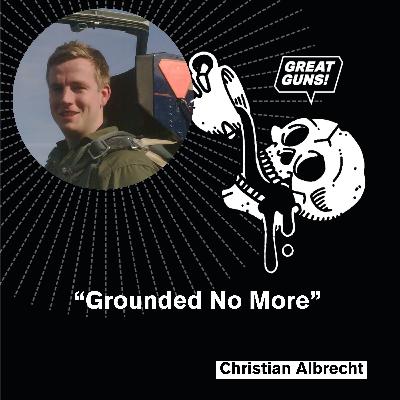
In this episode of the Great Guns Podcast, host James Scott speaks with Christian Albrecht, a former military officer turned aerospace professional. Christian shares his journey from growing up in Eastern Germany, joining the army, and transitioning to a civilian career in the aerospace industry. He discusses the challenges of adapting to new roles, the importance of networking, and finding purpose after military service. Christian emphasises the value of preparation for transition and the need for a supportive environment for service members.He also shares his aspirations to return to flying and teach others, highlighting the importance of maintaining high standards in aviation.TakeawaysChristian's military journey began in Eastern Germany.He transitioned from armored vehicles to helicopters during his service.Experiences in search and rescue shaped his leadership skills.Networking played a crucial role in his career transition.Finding purpose in new roles is essential after military service.Preparation for transition should start well in advance.The importance of maintaining high safety standards in aviation.Christian emphasizes the value of mentorship and support in the military.He encourages service members to actively network throughout their careers.Christian's future aspirations include returning to flying and teaching others.Sound bites"You have to provide a sense of purpose.""I still hold them very dear.""I would do it all again, but differently."Connect with Christian:On InstagramOn LinkedIn#military service #helicopter #transition #networking #purpose, #search and rescue# #aerospace industry #personal growth
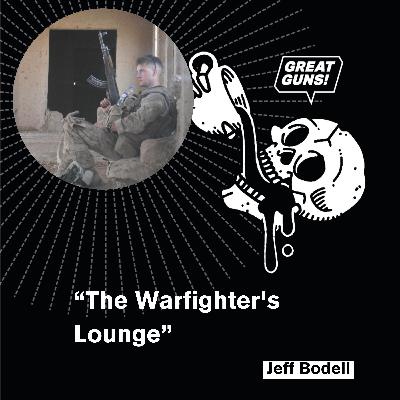
In this episode James sits down with the author of "The Warfighter's Lounge", Jeff Bodell, a veteran whose journey through the forces and beyond is all about resilience, leadership, and the lessons that carry over long after the uniform comes off.Jeff opens up about what service taught him, the challenges of stepping into civilian life, and the importance of brotherhood, honesty, and purpose. His story is a no-nonsense look at transition, growth, and building a meaningful life outside the wire.Whether you’ve served, supported someone who has, or just want a masterclass in grit and leadership — Jeff’s story will leave you inspired.🎯 Takeaways:Leadership in the military isn’t left behind — it shapes life after service.Transition is about identity as much as career.Brotherhood and community remain essential long after discharge.Mental strength is built by facing challenges head-on.🔊 Sound Bites:“Service doesn’t end with the uniform — it evolves.”“Leadership is about showing up, even when it’s bloody hard.”“You can lose the rank, but you don’t lose the lessons.”📬 Connect with Jeff:👉 Jeff on Instagram👉 The Book: Warfighter's Lounge 👉The Audio Book: Warfighter's Lounge
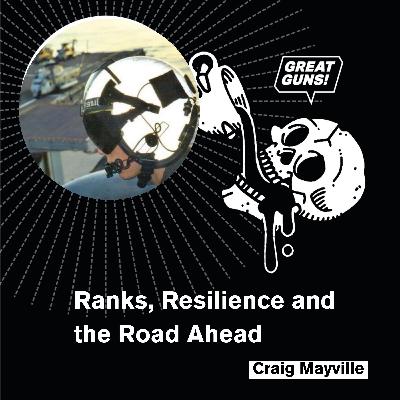
In this episode of the Great Guns Podcast, James sits down with Craig Mayville, a veteran whose journey through service, struggle, and self-discovery shines a brutal light on what it means to fight battles long after the uniform comes off.Craig opens up about the challenges of transition, the weight of mental health, and the process of finding purpose again when the old mission ends. With raw honesty and a dash of humour, he reminds us that resilience isn’t about being unbreakable — it’s about finding the strength to rebuild, again and again.Whether you’re a veteran, a mate of one, or just someone searching for meaning in the mess, Craig’s story will hit home.Takeaways:Transition from service is a journey, not a switch.Mental health struggles aren’t weakness — they’re human.Brotherhood doesn’t end when the uniform comes off.Purpose can be rebuilt, one small step at a time.Sound Bites:“The fight doesn’t end when you leave the forces — it just changes shape.”“Resilience isn’t about never falling down. It’s about refusing to stay there.”“You don’t need to carry it alone. You’re stronger when you find your tribe.”Connect with Craig:👉 LinkedIn👉 Instagram
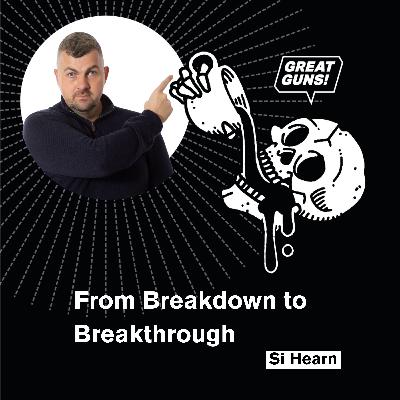
In this raw and fearless conversation, James sits down with Si Hearn – a former police officer who turned personal collapse into an extraordinary new chapter.Si doesn’t sugarcoat his story. From a tough childhood and years of bullying, to climbing the ranks in the police force and facing the darkest toll of the job, he opens up about the breaking point that forced him to stop, reset, and rebuild. What others might call a breakdown, Si calls a breakthrough – a circuit breaker that propelled him out of an institution that had drained him and into a world brimming with possibility.You’ll hear Si reflect on:🚨 Life inside the police – from frontline action to dealing with riots, terrorism, and life-or-death situations.⚡ The personal struggles behind the uniform – toxic relationships, loss, and the mental health battles that nearly derailed everything.💡 How he reinvented himself through relentless learning, resilience, and digital entrepreneurship.🛠️ The transferable skills of policing – and how they set him up to thrive in marketing, AI, and business.🌍 Why he believes life’s too short for staying stuck in the wrong job – and how freedom, growth, and purpose are always within reach.This episode is equal parts harrowing, inspiring, and brutally honest. Si’s story is proof that you can crash, burn, and still rise higher than before – if you’re willing to learn, adapt, and never stop moving forward. Key TakeawaysA breakdown can be a breakthrough. Sometimes life has to burn down before you can build it back stronger.Institutional jobs don’t define you. Leaving the police wasn’t the end of Si’s story — it was the start of something far bigger.Skills transfer, identity doesn’t die. Networking, communication, and resilience are assets you can carry into any new career.Mental health isn’t weakness. Ignoring the signs nearly destroyed him; facing them saved him.Progress > perfection. You don’t need to know it all — just stay one page ahead and keep moving.Freedom beats security. The “safe” option can be the most dangerous thing for your happiness.Reinvention is possible. From digital marketing to AI to building networks — Si proves you can create a whole new chapter.Soundbites“Some people call it a breakdown — I call it my circuit breaker.”“In the police, you see the worst in everyone. Outside, I’ve learned to see the best.”“If you’re not learning, you’re dying.”“Your uniform doesn’t make you — your skills do.”“I’ve locked up 1,500 people, but the biggest prison was my own life.”“Security isn’t safety. Freedom is.”“The only person who can stop you… is you.”👉 Whether you’re in the police, grinding in a career that feels like a dead end, or simply searching for your next breakthrough – this one’s for you.Connect with Si:On Instagram
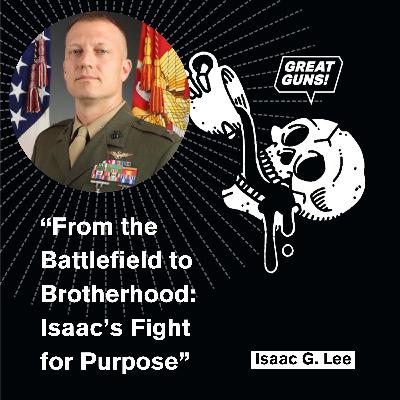
In this raw and unfiltered episode, James sits down with Isaac, a veteran who’s lived the highs of service and the lows of what comes after. From frontline missions to personal battles, Isaac lays bare the reality of life in uniform and the messy, uncertain road of transition into civilian life.This isn’t a story of pity — it’s about grit, growth, and the power of brotherhood. Isaac speaks with brutal honesty about the struggles veterans face, the stigma around mental health, and how finding your tribe can be the difference between sinking and standing tall.If you’ve ever wondered what courage looks like off the battlefield, this is it. Takeaways:Transition is a battle of identity as much as circumstance.Brotherhood doesn’t end at discharge — but you’ve got to find it again.Talking openly about mental health isn’t weakness — it’s survival.Great Guns is here to remind you: you’re not broken, you’re battle-tested.Sound Bites:“Leaving service isn’t the end of the fight — it’s the start of a whole new one.”“Civvy Street doesn’t come with a manual. But it does come with mates, if you’re brave enough to ask.”“You don’t need fixing. You just need a place where your scars make sense.”Want to connect with Isaac G. Lee:Isaac's WebsiteIsaac's Instagram Get the book - "Hanger 4" The book or on Kindle
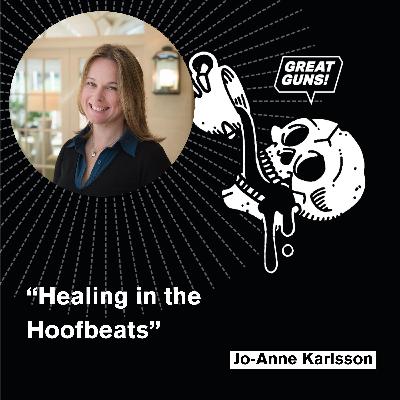
In this episode of The Great Guns Podcast, host James Scott sits down with Jo-Anne Karlsson — psychotherapist, equine-facilitated practitioner, and director of LEAP Equine — to explore the remarkable intersection of horses, healing, and human connection.Jo-Anne shares her journey from traditional therapy rooms to working in open fields alongside her herd, explaining how horses’ non-judgmental presence and innate sensitivity can help clients process trauma, navigate PTSD, and rebuild trust. From service personnel to corporate leaders, teenagers to families, she reveals why this approach works for such a wide range of people — and why sometimes, the most profound breakthroughs happen without saying a single word. Key Takeaways:The Power of Presence – Horses live entirely in the moment, responding authentically to the energy and behaviour of the person in front of them.Choice Matters – Jo-Anne’s herd is never forced to engage; this freedom makes interactions genuine and meaningful.Right Fit = Real Progress – Therapy works best when there’s trust, comfort, and the right personality match between client and practitioner.Nature Heals – Being outdoors removes the “spotlight” pressure of a therapy room and creates space for openness.Two-Way Street – Healing isn’t just for the person struggling; it’s about understanding the people around you, too.Small Steps Count – Even tiny breakthroughs — like sitting calmly near a chicken — can be deeply therapeutic.Sound Bites:“Horses don’t judge. They’re not thinking ahead or looking back — they’re responding to you, right here, right now.” – Jo-Anne Karlsson“If you can’t be vulnerable with your therapist, you’re not making the best use of your time or money.” – Jo-Anne Karlsson“Nature has a way of lowering our barriers before we even realise it’s happening.” – James Scott“Sometimes it’s high impact in the moment, sometimes the links form days later — but the shift comes.” – Jo-Anne Karlsson“It’s not about using the horses; it’s about inviting them to work alongside us.” – Jo-Anne KarlssonWant to connect with Jo-Anne:LEAP Equine: www.leapequine.comJo-Anne Karlsson: www.joannekarlsson.com
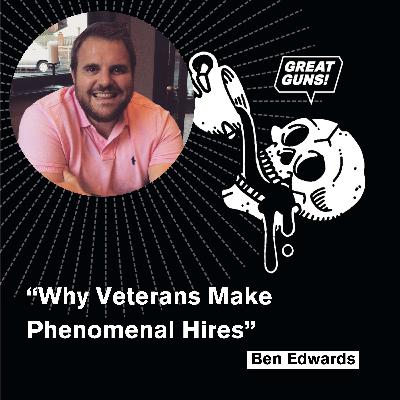
In this hard-hitting episode, James sits down with Ben Edwards, a former Royal Navy serviceman, ex-Met Police detective, and now Head of Global Physical Security. But Ben’s not just navigating the world of global corporate security — he’s changing the game for UK veterans trying to reintegrate into civilian life.Ben shares his brutally honest take on what’s going wrong with the current resettlement process — from outdated systems to a lack of real, long-term support. And he’s not here just to talk; Ben is doing the work. Through his volunteer mentoring with the VETS programme, he’s guided countless veterans out of confusion and into purpose.💥 From mentoring to mindset, identity loss to corporate impact — this is an episode for veterans, hiring managers, and anyone who gives a damn about getting it right.➡️Why mentorship isn’t charity — it’s strategy.➡️The real challenges veterans face after they take off the uniform.➡️What makes ex-forces candidates unbeatable in civilian roles.➡️The invisible value veterans bring to business culture.➡️Why employers need to stop fearing the unknown and start building bridges.🎙️Sound Bites:“Veterans aren’t broken — they’re just under-supported.”“Hiring veterans isn’t a handout. It’s good business.”“Mentoring saved me as much as I’ve saved others.”“It’s not about your rank anymore. It’s about how you show up.”💥 Takeaways:The resettlement system needs a total overhaul — and we can’t wait for the government to do it.Community, visibility, and belief are what get veterans moving again.If you’re an employer: hire veterans. If you’re a veteran: find your tribe.🔗 For more on Ben’s work, connect with him on LinkedIn🛡️ Support our mission at www.great-guns.com — where gear meets purpose.#VeteransInBusiness #MentorshipMatters #LifeAfterService #GreatGunsPodcast#BenEdwards
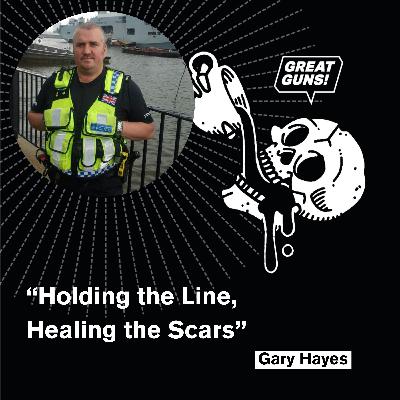
Gary Hayes has seen it from both sides — the frontline and the fallout.As a former soldier turned mental health professional, Gary brings a rare and powerful perspective to this episode of the Great Guns Podcast.He knows what it means to serve.He knows what it means to break.And more importantly — he knows what it takes to rebuild.In this raw, honest conversation, Gary talks about the deep mental wounds that follow service, the guilt that sticks, and the strength it takes to ask for help instead of hiding behind the uniform.💥 From squaddie to psychotherapist💥 From silence to speaking out💥 From survival to supportThis is the conversation every veteran deserves to hear — and every civilian should understand.🔊 SOUND BITES🗣️ “It’s easy to talk about the battles you fought. It’s harder to talk about the ones that still fight you.”🗣️ “Service conditions you to cope. But coping isn’t the same as healing.”🗣️ “There’s no shame in the struggle — the shame is in silence.”🗣️ “You don’t have to go back to who you were. You get to choose who you become next.”✅ TAKEAWAYSThe mental health cost of military culture — and what needs to changeHow identity loss after service leads to isolationWhy talking saves lives — and the myth of “being strong”How veterans can transform pain into purpose by showing up for each otherReal advice for navigating guilt, transition, and trauma without shame💀 This episode might not be easy listening — but it might just save a life.💀Connect with Gary:PTSD999Email himCall him: +44 7957252955#GreatGunsPodcast #GaryHayes #VeteranVoices #MentalHealthMatters #FromSoldierToSupport #BuiltNotBorn #RealTalkNotRank

Comments

Download from Google Play

Download from App Store
 United States