


 Claim Ownership
House of Life
Subscribed: 2Played: 24
Subscribe

© Asim & Tom
Description
House of Life explores the deeper meaning of sustainability by bridging philosophy, spirituality, and politics, challenging dogmatic thinking, and opening minds to new possibilities.
holpod.com
holpod.com
17 Episodes
Reverse
We’ve talked about some strange topics this year on House of Life and occasionally the topic of aliens rears its head. This week we decided to tackle it head on and ask: what do UFOs and potential alien disclosure have to do with sustainability? The answer, it turns out, might be everything — if, that is, the key to a sustainable future lies in energy.You might immediately dismiss any discussion of UFO’s (or UAP), but we start this discussion from the fact that there have been a number of US congressional hearings on the topic, a new bill going through congress called the ‘Unidentified Anomalous Phenomena Disclosure Act of 2025’ and a growing number of government officials speaking publicly about the subject, notably in the recent documentary The Age of Disclosure. If we’re serious about exploring the depths of sustainability then, this is a topic that we need to explore with open minds, even if it is still speculative at this time.In particular we consider what advanced propulsion systems might reveal about alternative energy sources such as zero-point energy — a potentially unlimited, clean energy source. We discuss how access to energy is fundamental to human civilisation, with Asim referencing economist Steve Keen’s thesis that energy, not GDP, is the real currency of the world — explaining wars, politics, and quality of life. We ask whether breakthrough energy technology could revolutionise sustainability: from cleaning up pollution and restoring ecosystems to eliminating resource conflicts. Tom suggests that if we could harness “creative” rather than “destructive” energy — organising matter instead of blowing it up — it could solve problems the environmental movement has struggled with for decades.And then there is the question of suppression. If such an energy technology was possible, would the multi-trillion dollar fossil fuel industry, or even the nuclear and renewable industries, allow it to make them obsolete? We dig into this question.Finally, we discuss the question of whether UFO disclosure would actually change anything. Would humanity actually care if aliens were confirmed, or would just become another TikTok meme? Would unlimited access to energy change how countries behave and eliminate wars over resources? Or would the same dysfunctional behaviours continue to play out? Tom highlights physicist Hal Puthoff’s suggestion that contact might teach us “what it means to be human” in ways more profound than any technological advancement, but Asim isn’t convinced.If you’re curious, have a listen and leave us a comment to let us know what you think about the potential of this topic to expand our thinking on sustainability and human progress. And if you enjoy it, we’d be grateful if you like and share it on your preferred platform. Thanks!Thanks for listening to House of Life! Subscribe for free to receive new posts and podcast episodes. This is a public episode. If you would like to discuss this with other subscribers or get access to bonus episodes, visit holpod.com
In yet another mind-bending episode of House of Life, we dive deep into one of the most intriguing questions of our time: Could AI be conscious? What starts as light-hearted banter about dubious awards and bestseller hacks evolves into a profound exploration of consciousness itself — drawing from ancient philosophies, wild scientific experiments, and modern AI debates. If you’ve ever wondered what it really means to be conscious, or why we might want to say “please” to our computers, this conversation will challenge your assumptions and spark your curiosity.This leads us into some unexpected places, exploring whether other non-human entities — whales, plants, rocks, gas clouds, mycelium networks, Gaia — might also have some form of awareness and be conscious in a way that is difficult (or maybe impossible) for us humans to comprehend.On the one hand Asim suggests that, “If consciousness is just information, then AI is more conscious than us because it’s holding a huge amount of information... It could be even a higher consciousness than humanity.” But it may be far more complex than that and Tom suggests that “To feel is to be alive... The question with AI is, can it feel?”The conversation expands to contemplate life’s purpose, morality, humanism’s pitfalls, and why assuming consciousness in everything (from plants to AI and even to plastic) might lead to a more compassionate, less destructive society. This episode is ideal for anyone fascinated by AI, philosophy, or the mysteries of the mind. Whether you’re an AI skeptic, a consciousness enthusiast, or just love thoughtful conversations, tune in to join us (Asim and Tom) on this journey of confusion and discovery. Listen now on your favourite podcast platform, and let us know: What do you think consciousness is? And do you think AI could be conscious? Drop your thoughts in the comments or on social media!And as a final note, Tom apologises for his sound quality being worse than usual. This was due to being unable to plug his podcast mic into a newer laptop that didn’t have any USB ports. An adapter is now primed and ready for future episodes!Thanks for listening to House of Life Podcast! Subscribe for free to receive new posts and podcast episodes. This is a public episode. If you would like to discuss this with other subscribers or get access to bonus episodes, visit holpod.com
In episode 14 of House of Life, we reach an unexpected conclusion to our exploration of life and sustainability over the past thirteen episodes, and we get there by asking one of humanity’s oldest questions: are we approaching the end times? But rather than getting lost in doom and gloom, we take an unexpectedly illuminating journey through prophecy, fear, and what it really means to live well in uncertain times.What We ExploreThe discussion begins with an unusual martial art called “mad dog fist” (yes, really) before diving into the geopolitical tensions surrounding Israel, red heifers, and biblical prophecy. Tom unpacks the bizarre confluence of ancient end-times beliefs and modern politics.From there, we examine why end-times narratives are so compelling across cultures, from Abrahamic apocalypse to Hindu Yugas, Greek cycles, and Native American prophecies. We discuss the Doomsday Clock (currently closer to midnight than during the Cold War), why tech billionaires are building bunkers, and whether AI, environmental collapse, or holy war will be our undoing.But this isn’t doom-scrolling in podcast form. Quite the opposite. Asim shares eye-opening experiences from visiting Israel, and we dig into why populations become “brainwashed,” why everyone thinks they’re the “goodies,” and how fear keeps us chronically anxious rather than actually solving problems.The conversation takes an unexpected turn when we realize that perhaps the real issue isn’t which solutions we’re fighting for, but that we’re fighting at all. Unity among people might matter more than being right. Self-healing might matter more than being on the winning side of history.By the end, we arrive at a conclusion in our quest to better understand sustainability that applies as much to marriages and personal relationships as it does to global crises. It’s about something deeper than carbon targets or political victories. Something that ancient wisdom traditions understood but our modern cultures seem to have forgotten.We hope it inspires you and gives you a sense of hope and direction in these strange and challenging times. As always, we would love to hear your thoughts in the comments, and if you have been enjoying these conversations, please do share House of Life with people who you think might also enjoy it. Big thanks!Thanks for listening to House of Life! Subscribe for free to receive new episodes and articles. This is a public episode. If you would like to discuss this with other subscribers or get access to bonus episodes, visit holpod.com
In episode 13, we explore a deceptively simple question: do we need to disconnect to reconnect? But as we quickly discover, it’s not so straightforward — what exactly are we disconnecting from, and what are we trying to reconnect to?The conversation weaves through personal experiences and bigger questions about modern life. Tom shares insights from a recent Reiki course where he experienced an unusual depth of human connection, which made him wonder: why isn’t this normal? Why do we have to seek out special experiences to feel truly present with other people?We dig into the paradox of digital connection — we’re supposedly more connected than ever through email, social media, and video calls, yet mental health problems continue rising and society feels increasingly fragmented. Email becomes a burden rather than a joy. Social media feels more like an addiction than genuine connection. Even video calls leave us exhausted in ways that in-person meetings don’t.Using Asim’s vivid metaphor of “threads” of attention, we explore how our focus gets pulled in dozens of directions simultaneously — WhatsApp notifications, unfinished email conversations, social media feeds, news cycles— leaving us perpetually distracted and unable to be fully present anywhere. It’s not just about being busy; it’s about having mental residue from incomplete conversations and unresolved threads constantly running in the background.Our discussion takes an interesting turn as we compare different types of connection to food. In-person interaction is like whole foods — rich, nourishing, full of layered information through body language, energy, and presence. Digital connection, especially social media, is more like white bread or Doritos — highly processed, easy to consume in large quantities, potentially addictive, but ultimately leaving us feeling worse despite the momentary pleasure.We go on to explore why physical presence matters so much. Drawing on psychology research, Tom explains how Zoom calls create a dissonance between what your brain thinks is happening (you’re with someone) and what your body knows (they’re not actually here), leading to that peculiar exhaustion many of you will recognise. There’s something about bioelectric fields, subtle energies, and the quality of information transfer that simply can’t be replicated digitally.The conversation touches on historical shifts too — from the last town to get television (which promptly saw all its social clubs close as people stayed home watching TV) to how the pandemic forced different kinds of disconnection and reconnection, with wildly different impacts depending on your circumstances.Towards the end, we land on a practical framework: maybe we need to actively track and measure connection quality, similar to how we track physical fitness. What if we scored different interactions — not by duration, but by how nourished or depleted they leave us feeling? A thoughtful hour-long conversation with a friend might score thousands of points, while hours of YouTube shorts might barely register despite consuming far more time.This episode offers no easy answers, but it does suggest something important: in our pursuit of endless digital connectivity, we may be sacrificing the deeper, richer forms of connection that actually nourish us. The challenge isn’t abandoning technology, but being more intentional about seeking out high-quality connection — the whole food connection instead of the junk food.As mentioned in the podcast, Tom previously proposed his '“Disconnect to Reconnect Manifesto” in episode 29 of Gillian Burke’s podcast, If I Ruled The World, which you can listen to here. Thanks for listening. Please do share this episode with anyone who may find it interesting, and join the conversation with us by leaving a comment below.Thanks for reading House of Life Podcast! Subscribe for free to receive new posts and support my work. This is a public episode. If you would like to discuss this with other subscribers or get access to bonus episodes, visit holpod.com
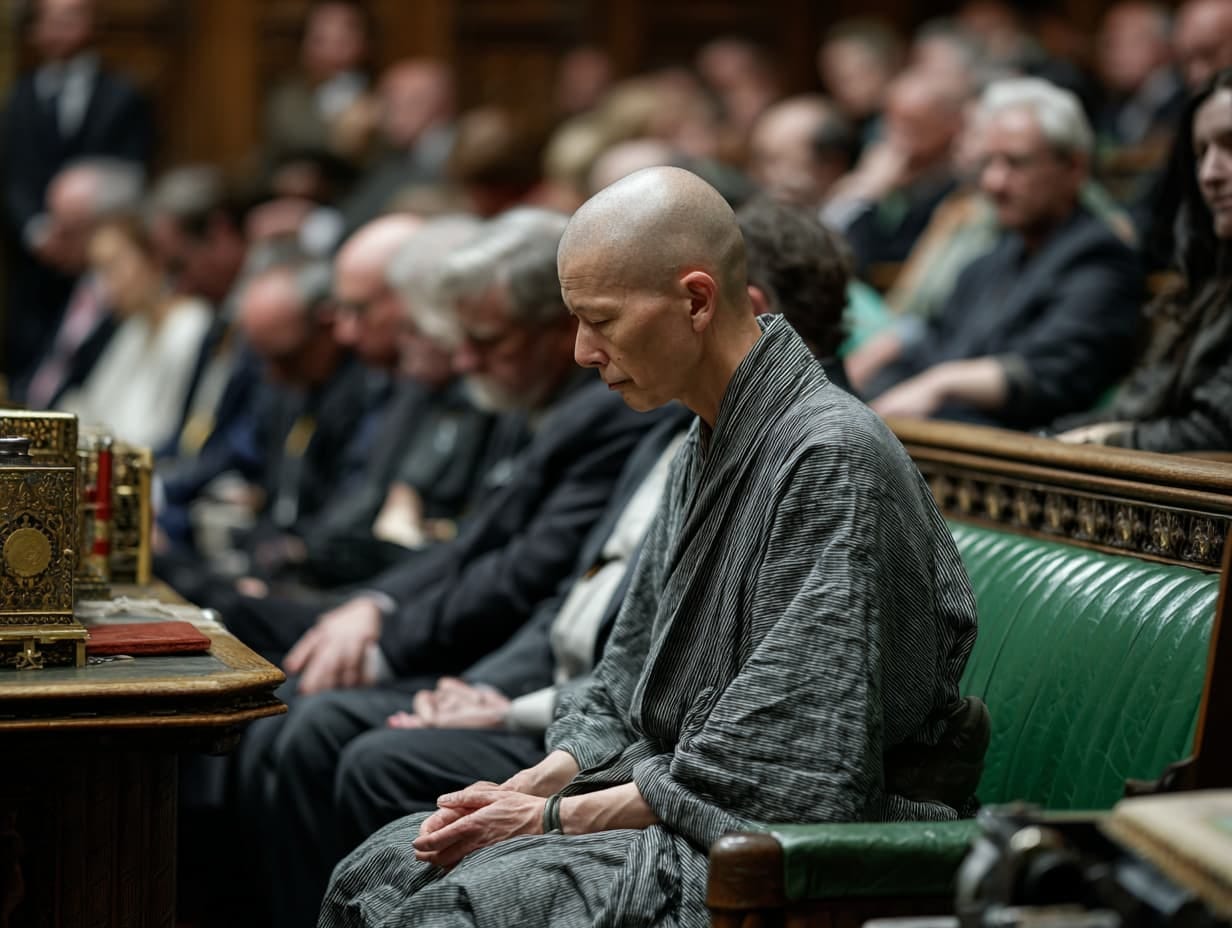
In this latest episode of House of Life, we tackle one of the most fundamental questions of our time: is it possible to fix governance, and if we can't come up with alternatives, do we have the right to criticise what we have?The problem with representative democracyWe start by examining why our current system feels broken. Representative democracy — where we elect people to make decisions for us — consistently fails to deliver what people actually need. Politicians get institutionalised, lose touch with their constituents, and the whole thing devolves into the theatrical nonsense you see at Prime Minister's Questions.As Tom points out, what we call "democracy" today might actually be closer to what Plato warned about: demagogy. Charismatic leaders making empty promises while serving their own interests of wealth and power. Sound familiar?An alternative for today’s worldInstead of electing representatives who ignore us, what if we had a system where people directly participate in decision-making through informed deliberation? Think ancient Athenian democracy, but updated for the digital age and without the slavery and disenfranchisement of women.The key insight from philosophers like Habermas: you can achieve genuine consensus through "reasoned dialogue and deliberation under ideal conditions" - where people can freely question any position, express any view, and engage without coercion. The catch? People need to be informed, engaged, and willing to have everything on the table for discussion.The adapter patternHere's Asim's wild proposal: create a political party where the MPs are literally human placeholders. They shave their heads, wear identical clothes, change their names to numbers like "29.3", and have zero personality. Their only function is to walk into the correct voting corridor in Parliament and execute the will of the people.The real decision-making happens through participatory consensus among citizens, aided by AI to synthesize discussions and find common ground. The MPs are contractually bound to vote exactly as the membership decides, with automatic expulsion for any deviation.It's like the adapter pattern in software engineering - you need something that can interface with the existing broken system while running completely different logic underneath.The technology stackWe dive into how this could actually work using current technology:* Voice-to-text input (people speak more honestly than they write)* AI analysis to identify points of agreement, disagreement, and outlier opinions* Structured deliberation focusing discussion time on areas of disagreement* Transparent, open-source systems to build trust* Personal AI assistants that could eventually represent your views on routine mattersBeyond problem-solving to collective visionOne of the most compelling ideas we explore: instead of just reacting to problems, what if we used this system to crowdsource collective visions for the future? What kind of community do we want Malvern or Crawley to be? What future do we want for the UK? What do we want for our global society?Having that shared vision would give the AI system a north star for evaluating decisions - not just solving today's crises, but moving incrementally toward the future people actually want.The Fundamental ProblemBut here's where we hit the wall: even if you fix the governance system, execution of decisions isn't guaranteed. Banks, corporations, and other power centres can simply say "computer says no" and crash the economy if they don't like what the people decide.This reveals a deeper truth - maybe there's never been real governance of any form. Maybe it's all theatre, and the reason governments don't do what we want isn't incompetence, but powerlessness against other systems.Despite these challenges, this kind of mass participatory system could still pull back the curtain on power imbalances and wake people up to how the world actually works. And sometimes, when illusions shatter, amazing transformations become possible.What's Next?Would this actually work? Could it start small at the local level and scale up? How do we prevent it from being co-opted by the very interests it threatens?We don't have all the answers, but we've sketched out a framework that could be built, tested, and evolved. The question is: are we ready to try?Listen to the episode and let us know what you think in the comments.House of Life is a podcast exploring big questions about technology, society, and human flourishing. Hosted by Tom Greenwood and Asim Hussain.Thanks for listening to House of Life. Subscribe to receive the latest episodes and articles. This is a public episode. If you would like to discuss this with other subscribers or get access to bonus episodes, visit holpod.com
In episode 11 of House of Life, we explore begin with Tom's personal health journey — from post-viral fatigue to recovery through infrared light therapy. But what starts as a discussion about cellular energy quickly expands into a broader examination of how our efficiency improvements, from LED lights to modern medicine, may be creating invisible deficiencies we don't yet understand.We find ourselves diving into the nature of viruses, challenging conventional understanding by exploring them not as living organisms but as "genetic pollution" — bits of code floating in our environment that occasionally find compatible systems to run on. This reframing connects to our view of personal and environmental health: not as a binary state but as a constant process of re-finding balance in an imbalanced world.The conversation then pivots to examine abundance versus abstinence through both personal and systemic lenses. Travel choices become a case study in the complexity of sustainable abstinence in a world engineered for consumption. We explore how religious traditions understood the value of periodic abstinence for spiritual and physical health, contrasting this with modern consumer culture's manipulation of abundance and scarcity.Once again though our conversation leads us to look at addiction as we wrestle with the central paradox of sustainability messaging: we ask people to abstain from things specifically designed to be addictive, while the systems creating those addictions remain largely unchallenged. The episode concludes by examining how inner abundance — a sense of spiritual and emotional fullness — might be the ultimate defence against manufactured dependencies.Thanks for reading House of Life Podcast! Subscribe for free to receive new posts and support my work.Share your thoughtsWe love hearing your thoughts so please do leave a comment on Substack or tag us on Linked in (Tom Greenwood & Asim Hussain). Here’s some things to think about:* How might our optimisation for efficiency be creating invisible deficiencies in other areas of life?* What might change in your consumption patterns if you viewed them through the lens of addiction?* What approaches have you found to cultivate inner abundance in your own life? This is a public episode. If you would like to discuss this with other subscribers or get access to bonus episodes, visit holpod.com
What if the very efficiency improvements we champion in sustainability actually increase resource consumption? The Jevons Paradox suggests this troubling possibility. However, we dive deep into the historical evidence and find yet another paradox, that this increase in resource consumption seems to go hand in hand with genuine social progress.In this episode our conversation spirals through economics, addiction, power dynamics, and the fundamental question: if resource consumption improves human lives, how do we balance that with protecting the environment?Through our exploration we find that there may be limits to the Jevons paradox that would allow us to transcend it, enabling social and environmental progress to go hand in hand, but first we must overcome the power of vested interests that benefit from ever growing consumption.Thanks for listening to House of Life. Subscribe for free to be updated about new episodes.Share your thoughtsWe love hearing your thoughts so please do leave a comment on Substack or tag us on Linked in (Tom Greenwood & Asim Hussain). Here’s some things to think about:* Where do you see increased consumption actually helping improve human welfare?* Have you noticed the difference between genuine needs and manufactured wants in your own consumption patterns?* Can you see hidden addictions in society, or your own life, driving unnecessary consumption?Thanks for listening! This is a public episode. If you would like to discuss this with other subscribers or get access to bonus episodes, visit holpod.com
In episode 9 of the House of Life podcast, Asim lead’s us into the high-stakes world of AI investment, exploring OpenAI's audacious $500 billion Stargate project and its implications. Together we unpack the "money moat" strategy, where vast wealth is used to dominate industries, questioning whether this reflects true capitalism or a modern feudalism. The conversation spans the societal impact of AI, the concentration of power in mega-corporations, the implications of unlimited money to dominate society, and the potential for smaller, AI-empowered organizations to reshape the future of work. We even get into the question of whether employment is an inherently unnatural relationship for humans to live in as well as whether some environmental initiatives are hijacked to benefit the consolidation of wealth and power. With candid insights into human ambition, trauma, and systemic inequality, we do what we always do and seek new insights on technology, sustainability, and life.As always, we would love to hear your perspectives so please do leave a comment or share the podcast with your thoughts on your favourite platform.P.S. I’ve been trying out various different styles of these emails (show notes) to see what works best. I’d love to know how they land with you as listeners, so drop me a note. Thanks! Tom This is a public episode. If you would like to discuss this with other subscribers or get access to bonus episodes, visit holpod.com
Episode 8 of House of Life sees us diving into a dynamic exploration of AI-analyzed values, to the paradoxes of suffering, and the power of intuition, challenging conventional thinking and proposing a new vision for a spiritually grounded sustainability movement — Sustainability 2.0. Key topics include:* Shared Values: AI analysis reveals shared values like compassion, integrity, curiosity, holistic sustainability, and empathy, but interpreted and actioned differently by each of us through our unique personalities.* Critique of Measurement: We question society’s obsession with metrics like carbon emissions, which oversimplify complex issues like pollution and poverty, often incentivizing behaviour over truth.* Tribalism vs. Movement: We debate the dogma of tribalism in comparison to a purpose-driven movement, which could be enable collective action free from rigid thinking.* Remote Viewing & Reality: Tom’s latest Monroe Institute experience with remote viewing sparks discussion on reality as an informational “database,” challenging physicalist views.* Suffering & Purpose: We explore whether suffering is necessary for growth or should be minimized through compassion, finding a paradox in compassion that open’s questions regarding life’s deeper purpose.* Sustainability 2.0: We call for a holistic, spiritually informed approach to sustainability, prioritizing pro-peace and intuitive decision-making — “heal yourself and follow your intuition”.We hope you enjoy listening. Share your thoughts about this episode in the comments below or on your favourite platform. This is a public episode. If you would like to discuss this with other subscribers or get access to bonus episodes, visit holpod.com
Hello, it’s Tom and Asim,In episode 7 of House of Life, just gone live, Asim starts us off by sharing his somewhat brutal method of controlling aphids in his garden, illustrating his idea that if suffering is an inevitable part of life then “the suffering has got to be worth it”. This moral dilemma somehow leads to a question mark over the authenticity of the modern sustainability community. What does it really stand for?We go on to discuss tribal identity, the myth of the left and right, and our bewilderment that atrocities such as those in Gaza are not high on the sustainability movement’s agenda.From here we move on to discuss the dilemmas of AI in the sustainability space and what their potential opportunities and pitfalls might be — not in terms of environmental impact — but human life and societal progress. Will AI help us achieve peace or will it rot our minds and accelerate our decline? Perhaps the choice is ours to make.If you’ve made it this far with us, we’d love to hear from you, so do drop us a message to let us know what’s on your mind. And if you’re on a similar journey and feeling alone, let us know if you’d benefit from joining us in a Signal group (or similar) to explore open minded thinking about life, the universe and our home planet — uncensored.Lastly, if you enjoy this podcast, please do like, subscribe and share it. Big thanks!Subscribe to the House of Life podcast and be updated when new episode go live This is a public episode. If you would like to discuss this with other subscribers or get access to bonus episodes, visit holpod.com
Episode 6 begins with Tom’s composting toilet being the great teacher of circular economics, leading us to share gardening tales — “s**t tomatoes”, invasive food, and a mysterious driveway pumpkin — revealing how chaos in nature can be a key ally in sustainable living. The conversation shifts to the seasonal appearance of crop circles in England’s countryside, provoking though on art, mystery, and societal dismissal of the unexplained.Then we dive into the main focus of this episode. Tom proposes veganism as a first principle of sustainability, and Asim nearly falls off his chair laughing. It leads to a deep discussion of exploitation versus compassion as key factors in sustainability. We get into the edges of the vegan discussion — bees, processed foods, hunting and pets — leading us to contemplate a “suffering cycle” that, like the carbon cycle, must be balanced to foster growth not destruction.Dive in and see where it leads your thinking…If you enjoyed the episode, here are a few ideas to explore the ideas further:* Embrace nature’s chaosSee if you can find an example of plants that are food or medicine growing spontaneously in your garden or neighbourhood. Take a photo and share it with us.* Do the suffering mathsYou can’t literally do the maths, but see if you can find something in your life that creates tension because it adds value to the world but also creates some harm. Contemplate how you weigh up this balance.* Embrace voluntary sufferingTry a small discomfort (e.g. a cold shower, or skipping a meal). Note how it sparks growth or clarity, if any. Share your perspective — does purposeful suffering play a role in making your life better?Thanks for reading House of Life Podcast! Subscribe for free to receive new posts and support my work. This is a public episode. If you would like to discuss this with other subscribers or get access to bonus episodes, visit holpod.com
Hey guys,Episode 5 of House of Life is now live. We begin with a conversation about the complexities of social media engagement in the sustainability sector before diving in to Tom’s recent attendance at the Breaking Convention conference on psychedelics at Exeter University. This leads us into contemplating the Web of Wyrd — a 1,000-year-old pagan concept of a cosmic web where every node (people, thoughts, objects) ripple with free will and fate. What other ancient knowledge might we have lost, mundane, technical or esoteric, and what might still be here for us to see if we open our eyes? This frames our exploration of lost knowledge: from India’s Kailasa Temple to Egypt’s micron-accurate vases, suggesting knowledge that we have lost. Why do we resist admitting that the ancients knew things that we don’t? Our conversation then pivots to today’s distractions, triggered by Asim’s Tesla heckler. Is our focus on public personalities like Elon Musk distracting us from bigger patterns in our systems, or even other key people in the shadows? And if we project hate toward those we see as villains, are we bringing the wrong energy into the world?Have a listen and let us know what you think…If you enjoyed the episode, here are a few ideas to explore the ideas further:* Explore a lost storyResearch an ancient myth or a piece of folklore, perhaps local to where you live. Is it just a story or does it contain useful wisdom or even practical knowledge?* Wobble the webExplore the boundaries of your own free will in the web of wyrd, maybe trying to affect change in a way that you normally wouldn’t. Do you see your actions rippling outward?* Spot a distractionObserve one thing that you’ve been riled up about recently and trace it back to the source. Is your anger best serving your own wellbeing or that of wider society? If you liberated yourself from outside influence, where would you place your attention?Thanks for listening to House of Life. We’d be grateful if you share it with a friend or leave us a comment below. This is a public episode. If you would like to discuss this with other subscribers or get access to bonus episodes, visit holpod.com
Good morning!Episode 4 of House of Life has just gone live on Substack and on all your favourite podcast platforms. After the last episode, we both found our heads spinning regarding the nature of responsibility, so we begin this latest episode by diving back in their to explore it further. What really is responsibility and who really has it? We unpack the illusion of corporate personhood and wrestle with how powerless we can sometimes feel as individuals. This leads us to dive into some of the hidden power dynamics in government and the monetary system that fundamentally shape the game. From there we shift upwards to continue our earlier exploration of consciousness. Is it a field rather than a by-product of the brain? If so, what does this mean for the nature of reality and how we interact with the world? Could believing in a better world actually be key to creating it? We end hopeful: maybe painting a vivid, collective vision could be sustainability’s secret sauce.Note that if you tuned in to the previous episode you’ll know that we ended episode 3 saying that we each wanted to craft a set of first principles of sustainability to discuss in episode 4. We’ve been thinking a lot about this but haven’t got there yet. If that’s on your mind, do feel free to share your current thinking in the comments and we hope to loop back to it at a later date.If you enjoyed the episode, here are a few ideas to take it further:* Make a ripple* Push one boundary this week (e.g., speak up in a meeting) and see how it feels. Do it with positivity and see what effect it has. How did it make you feel? And how did others respond?* Question the model* Tune in to one thing about the model of our society that has never made sense to you. Ask yourself, who are the real beneficiaries and who is paying the price? Share your take in the comments.* Daydream together* Chat with a friend and dare to dream of a shared future you’d love to create? Talk about it, sketch it, sing it—whatever feels good. Really feel into it and send a positive signal to the universe.Thanks for listening to House of Life! We’d be really grateful if you shared this post. This is a public episode. If you would like to discuss this with other subscribers or get access to bonus episodes, visit holpod.com
Hi, it’s Tom and AsimThanks so much for subscribing to our House of Life podcast. We really appreciate you tuning in and exploring new perspectives with us.We’re back for Episode 3 and this time we kick off with Tom recounting his recent time at the Monroe Institute, a consciousness research hub infamous for its CIA-linked out-of-body experiments. Expecting a chilled meditation retreat, Tom found himself in an intense, tech-assisted dive into altered states that was exhausting yet also fun and fascinating. This leads into a conversation about subconscious layers, collective consciousness, and whether we’re all one entity playing a cosmic game. From near-death tales to the paradox of birth, we wrestle with life’s big mysteries: Are we eternal souls on a joyride or students in Earth’s soul school? Oh, but isn’t this supposed to be a sustainability podcast? Fear not, as somehow our journey through human consciousness leads us back to sustainability, where we explore personal responsibility versus systemic blame and land on the need for first principles—core values like unity and agency—to help us navigate a noisy and polarised world without losing ourselves.It’s another rollercoaster ride to stretch our thinking outside of our habitual patterns and we hope it provides you with a new sense of possibility and wonder.If you enjoyed the episode, here are a few ideas to take it further:* Explore your subconscious* Try a free meditation on the Monroe Institute’s ‘Expand’ app. See if anything bubbles up from your subconscious? Share your experience in the Substack comments.* Craft your first principles* Pick one value (e.g., unity, honesty) as a personal sustainability lens. Test it: How does it shape your perception of a news story or a friend’s rant? Let us know.* Listen to other perspectives* Have a calm, respectful chat with someone you disagree with. Ask them for their perspective on an issue that matters to you and listen. Ask question to understand them better, without pushing your own views. How does it feel? Does it bring any new insights?* Ponder the One* Imagine you’re a single consciousness living every life—a worm, a sparrow, yourself. How would that change your priorities in life?We’d love to hear from you so please do leave us comments with your thoughts, or Substack or maybe share your thoughts on LinkedIn and tag us in. Thanks again!Thanks for reading House of Life Podcast! This post is public so feel free to share it. This is a public episode. If you would like to discuss this with other subscribers or get access to bonus episodes, visit holpod.com
In Episode 2 of House of Life, Asim Hussain and Tom Greenwood continue their exploration of sustainability by exploring what it really means to live in harmony and whether humanity and the Earth have a hierarchy of needs that mirrors our needs as individuals. This leads down a rabbit hole into staged alien invasions, the high stakes of nuclear war, the need for sustainability to be pro-peace, media propaganda and the role of advertising in fragmenting our minds, our society and fuelling mindless consumption. Expect more unexpected detours in the quest to gain deeper insights into what it means to create a better world and how we might get there. Chapters00:00 - Defining Sustainability: A Personal Journey02:52 - Unity and Separation: The Spiritual Perspective06:28 - Chakras and Societal Balance10:12 - The Earth as a Living System13:53 - Creation and Destruction: The Cycle of Life19:02 - The Nature of Life and Machines21:38 - Tribalism and Alien Encounters23:33 - The Conspiracy of Unity: A Fake Alien Invasion?24:32 - UFOs and the Unexplained27:56 - Theories of Time Travel and Future Beings32:39 - Philosophical Connections: Sustainability and Existence36:19 - The Casualty of War: Nuclear Threats and Apathy39:01 - The Intersection of Peace and Sustainability43:01 - The Consequences of War on Society46:18 - The Ethics of War and Governance50:39 - Media's Role in War Perception59:35 - The Attention Economy and Polarization01:03:41 - The Role of Social Media in Society01:06:02 - Advertising: The Double-Edged Sword01:08:46 - The Impact of Algorithms on Content Consumption01:10:33 - The Nature of Advertising and Its Effects01:16:02 - Rethinking Advertising: A Necessary Evil?01:19:43 - Defining Sustainability and Its Broader ImplicationsThanks for reading House of Life Podcast! Subscribe for free to receive new posts and support my work. This is a public episode. If you would like to discuss this with other subscribers or get access to bonus episodes, visit holpod.com
In the debut episode of House of Life, hosts Asim Hussain and Tom Greenwood pull sustainability out of its usual carbon-counting box and wrestle with its deeper meaning. From the flow of power and privilege, to the lessons of Hopi cosmology, they explore why saving the planet isn’t just about tech fixes—it’s about rethinking who we are, how we decide, and what we owe the living world. Expect mind-bending detours through chakras, assembly theory, and radical democracy, plus a hard look at energy’s future: fusion dreams, fossil fuel traps, and the messy politics of who controls it all. This isn’t your average green podcast—it’s a call to reimagine everything, from the ground up.Chapters00:00 - Defining Sustainability02:59 - Spectrum of Power and Sustainability05:51 - The Human-Centric View of Sustainability08:42 - Hierarchy of Needs and Sustainability11:41 - Chakras and Their Relation to Human Needs14:37 - The Living World and Sustainability17:30 - Beyond Human-Centric Sustainability20:16 - Interconnectedness of Life and Sustainability22:32 - The Complexity of Nature and Human Understanding23:51 - Assembly Theory and the Definition of Life25:48 - The Evolution of Humanity and Its Path Dependence29:15 - Hopi Cosmology and the Cycle of Worlds32:21 - Learning from Myths and Cataclysms39:36 - Sustainability and Our Relationship with Nature48:34 - The Future of Energy: Fusion vs. Fossil Fuels49:31 - The Control of Energy: Renewables and Distribution50:18 - Reframing Fossil Fuels: Efficiency and Waste52:18 - Collective Decision-Making: Power Dynamics in Energy Use53:42 - Imagining Alternatives: The Future Beyond Sustainability57:34 - Adapting Systems: Governance and Decision-Making59:43 - Lessons from History: Democracy and Power Dynamics01:02:38 - Radical Democracy: Rethinking Governance01:07:32 - The Mechanisms of Power: Voting and Representation01:13:02 - The Flow of Power: Sustainability and Human Care This is a public episode. If you would like to discuss this with other subscribers or get access to bonus episodes, visit holpod.com
What if sustainability isn’t just about the environment… but about how we think, how we live, and how we challenge the systems around us?What if true sustainability means breaking free from dogmatic thinking… and opening our minds to deeper, more radical ideas?We’ve been on parallel tracks—both of us, in our own ways, have broken out of the echo chamber. And now, we’re coming together to explore the edges of our thinking.Welcome to House of Life—a podcast where we push beyond the surface and into the intersections of sustainability, philosophy, spirituality, and politics.We ask the big questions:* What does it really mean to live sustainably?* How do our beliefs shape the world we create?* And how can we live better—not just for ourselves, but for a future worth believing in?We’re not here for easy answers. We’re here for the real conversations—the ones that challenge us, inspire us, and take us beyond the limits of our own thinking.It’s about reimagining how we live and how we can create a better world.So if you’re ready to rethink sustainability… and explore the deeper questions of life join us on House of Life.New episodes coming soon. Follow and subscribe wherever you get your podcasts. This is a public episode. If you would like to discuss this with other subscribers or get access to bonus episodes, visit holpod.com
Comments


Download from Google Play

Download from App Store
 United States