DiscoverDO GOOD X Podcast
DO GOOD X Podcast
Claim Ownership

DO GOOD X Podcast

Author: Kimberly Daniel & Stephen Lewis

Subscribed: 0Played: 35
Share

Description

Welcome to the DO GOOD X Podcast – where purpose meets business, and the journey is just as important as the destination. Hosted by advocates for impactful entrepreneurship, Kimberly Daniel and Stephen Lewis, this podcast creates a space for Black and Brown folk, especially Black women, navigating the intricate path of purposeful business.


In this sanctuary, the hosts understand the challenges of entrepreneurship, and their mission is to help listeners transform doubt into confidence, fostering the growth of their dreams without sacrificing well-being.


Embark on a transformative journey, discovering inspiration to fuel your passion for business. Shared experiences and stories act as beacons, nurturing you for the entrepreneurial road ahead.


Navigate the challenges of being an under-resourced entrepreneur with practical strategies and resources in the Tools & Tips segment. Overcome obstacles and thrive in the purpose-driven business world.


In the Mentorship segment, hear from seasoned guides who have successfully built businesses with a focus on social impact. Gain insights not only from the guests but also from hosts who intimately understand the unique journey of overlooked entrepreneurs.


This podcast is more than a productivity machine; it's about slowing down to go further. Each episode invites listeners to exhale, reconnect with inner wisdom, and rediscover the power of community. Embrace the impact your business can make without compromising well-being.


Leave feeling lighter, shedding stress, embracing self-compassion, and finding joy in the entrepreneurial journey. Gain actionable insights, learn from diverse perspectives, and expand your knowledge with tools for success, guided by hosts Kimberly and Stephen.


Feel empowered, recognizing yourself as your greatest asset. Build confidence to develop and grow a viable, impactful business aligned with the needs of the community.


About the Hosts


Kimberly R. Daniel catalyzes entrepreneurs and organizations to do good. She is

co-founder and project director of DO GOOD X, a community that provides programs

and support for faith-driven social entrepreneurs whose businesses focus on positive

Change.


Kimberly also helps purpose-driven organizations clarify and design compelling brand and communication strategies. With over 15 years of experience developing and leading communications efforts, it is her commitment to produce effective processes and create authentic, “sticky” brands that are community-centered.


In any aspect of her work, she is deeply passionate about purpose, meaning, and the

common good.


Linkedin: https://www.linkedin.com/in/kimberly-r-daniel/


Stephen Lewis is the president of the Forum for Theological Exploration (FTE) and creator and co-founder of DO GOOD X, a community that provides programs and support for faith-driven social entrepreneurs whose businesses focus on positive change.

He is an organizational change strategist and a leadership development specialist,

focused on inspiring the next generation of faith-inspired leaders and entrepreneurs to live and work on purpose. Stephen is the co-author of Another Way: Living and Leading Change on Purpose (2020) and A Way Out of No Way: An Approach to Christian Innovation (2021).


Linkedin: https://www.linkedin.com/in/stephen-lewis-8b1b941/


100 Episodes
Reverse
Most entrepreneurs focus on sales and customers while their supply chain management quietly creates chaos behind the scenes. On DO GOOD X, army veteran and founder Charles Masters Rodriguez reveals how operational efficiency, AI in supply chain, and standard operating procedures can transform a struggling business into a scalable powerhouse. Whether you are a solo founder or leading a growing team, Charles delivers actionable insight on cash flow management, supplier diversification, and why lean processes are the future of entrepreneurship.What You Will Learn in this Episode:✅ The three pillars of supply chain management every entrepreneur must understand: supply chain visibility, measurability, and supply chain reliability, and how to use them to diagnose weaknesses before they damage your business.✅ How AI in supply chain operations can automate up to 80% of manual procurement workflows, freeing founders to focus on growth while keeping a human in the loop for critical decisions.✅ Why building standard operating procedures early is essential for bootstrapped businesses to scale without chaos, and how lean processes reduce waste and protect cash flow management.Join the DO GOOD X Community to access resources, connect with purpose-driven entrepreneurs, and grow your impactful business with intention.TIMESTAMPS: 00:00 Charles shares his journey from his military service to founding a bootstrapped seven-figure wholesale distribution company.06:55 Charles defines supply chain management and breaks down the three pillars: visibility, measurability, and reliability11:56 Discussion on how AI in supply chain can automate procurement workflows and the importance of operational efficiency18:53 Charles reflects on lessons learned as a solo founder and why hiring earlier protects your business's scaling momentum25:27 Resource roundup: diagnostic questions for supply chain visibility and how to measure unit economics for profitability33:42 Charles recommends several books and advice for veteran entrepreneurs entering entrepreneurship37:08 Off the cuff segment: Charles shares the habits, leadership lessons, and faith that shaped his entrepreneurial journeyKEY TAKEAWAYS: 💎 Supply chain visibility is the foundation of a healthy business. If you cannot see and track your systems, you cannot measure or improve them, and your ability to scale will always be limited by what you cannot control.💎 AI in supply chain is a force multiplier for small businesses, but technology is only as powerful as the workflows underneath it. Build and document your processes first before introducing any automation tools or software solutions.💎 Unit economics and knowing your numbers are not optional for founders. Understanding the true cost of every product or service you deliver is what separates profitable, scalable businesses from ones that generate revenue but never build real wealth.ABOUT THE GUEST: Charles Masters Rodriguez is a bilingual army veteran and entrepreneur born in San Juan, Puerto Rico. A West Point graduate, he served as a Captain and Engineer Dive Officer at Joint Base Pearl Harbor, leading underwater recovery missions, including the repatriation of a Navy pilot missing since the Vietnam War.After the military, he bootstrapped MK3 Industries, a B2B wholesale distribution company serving clients such as General Motors, Penske, and Rivian, and scaled it to seven figures in revenue.These experiences led him to found Supply Veins, a venture backed, AI-powered supply chain technology company pioneering the first Unified Supplier Communication System (USCS). Supply Veins helps purchasing teams streamline procurement, centralize vendor communications, and digitize B2B transaction data in order to build the next generation of supply chain intelligence across air, land, and sea. Named Young Entrepreneur of the Year by the FIU Small Business Development Center, Charles is also a dedicated veteran mentor, marathon runner, and lifelong student of quantum theory.RESOURCES MENTIONED: DO GOOD X - WebsiteDO GOOD X Start Up AcceleratorDO GOOD X - LinkedInConnect with Hosts:Kimberly Daniel LinkedInStephen Lewis LinkedInQUOTES: "I define supply chain as your interconnected system of individuals, organizations, systems, technology that help you deliver the best product or service." Charles Masters Rodriguez"I'm one of those types of people who look at AI as a force multiplier. With AI, small businesses will actually be able to be much more competitive from the beginning." Charles Masters RodriguezSEO KEYWORDS: DO GOOD X, Kimberly Daniel, Stephen Lewis, Entrepreneurs, Purpose-Driven Business, Supply Chain Visibility, Procurement Workflows, Entrepreneur Operations, Small Business Systems, Standard Operating Procedures, AI In Supply Chain, Inventory Management, Purchase Orders, Enterprise Resource Planning, Cash Flow Management, Unit Economics, Supply Chain Reliability
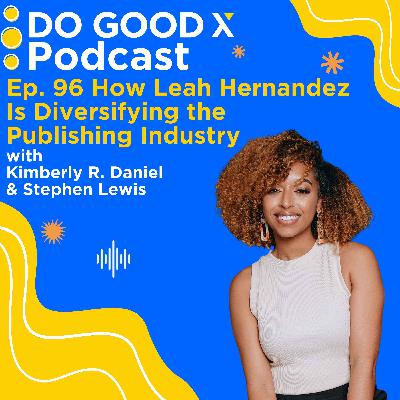
Leah Hernandez had a goal to to amplify diverse voices in an industry that has long excluded them. So, she built Muse Inc. In this episode of DO GOOD X, hosts Kimberly Daniel and Stephen Lewis revisit their Season One conversation with Leah, founder and CEO of Muse Inc., a global independent publishing company with over 40 books in print. Leah shares her journey from writing her first book as a college sophomore at Clark Atlanta University to leading a company that is reshaping representation in books. She reflects on navigating the transition from a nonprofit to a for-profit model and offers candid insight into sustainable business decisions that have kept her company growing and aligned with her “why”.What You Will Learn in this Episode:✅ How diverse publishing entrepreneur Leah Hernandez launched Muse Inc. as a college student and grew it into an award-winning independent publishing company with over 40 titles amplifying diverse voices in fiction and non-fiction.✅ Why Leah transitioned from a nonprofit to a for-profit business model, including the structural limitations she encountered with grant funding and how that shift unlocked a more sustainable business path for her authors and company.✅ How college students, especially HBCU entrepreneurs and students of color, can leverage campus resources, pitch competitions, and organizations like Black Girl Ventures to launch a purpose-driven business right now.Join the DO GOOD X Community to access resources, connect with purpose-driven entrepreneurs, and grow your impactful business with intention.TIMESTAMPS: 00:00 Introduction to the story behind Muse Inc. and diverse publishing leader Leah Hernandez03:53 Leah shares what sparked her passion for diverse voices and how she launched her first book as a college sophomore at Clark Atlanta06:34 The pivot from nonprofit to for-profit: challenges with grant funding and why structure matters for a sustainable business.10:12 Leah's three-part framework for deciding between a nonprofit and a for-profit business model for purpose-driven entrepreneurs12:40 Discussion of resources for breaking into diverse publishing and Legacy Unbound for paid internshipsKEY TAKEAWAYS: 💎 Representation in publishing is not just a creative issue; it is a structural one. Leah Hernandez built Muse Inc. because the people missing from books are also missing from the boardrooms, trade shows, and ownership tables of the publishing industry.💎 Transitioning from a nonprofit to a for-profit model is not a compromise of mission. It can be the most strategic move an impact entrepreneur makes, unlocking the ability to scale, generate returns, and build lasting ownership for underserved communities.💎 Financial literacy and diverse storytelling are not separate conversations. From her earliest work teaching money management on Atlanta's west side to publishing books that kids can sell, Leah has always seen economic access and narrative access as deeply connected.ABOUT THE GUEST: Leah's journey began with a degree in Business Administration with a Marketing concentration from Clark Atlanta University, providing her with the foundation for her entrepreneurial pursuits. Her leadership and contributions to the industry were recognized in 2021 when she was named one of Publisher's Weekly "Star Watch Nominees."Beyond her role at Muse Inc., Leah actively engages in initiatives to foster diversity and inclusion in the publishing world. She sits on the boards of Pubwest, an association of small- to mid-sized publishers, and Portland State University's Master's Publishing Program to create more opportunities for people of color in the field. Under Leah's guidance, Muse Inc. has published over 40 books across all its imprints, amplifying the voices of marginalized communities and expanding the literary landscape.Additionally, Muse Inc. proudly distributes works from two black-owned publishers, Through Us Books and POPOUT zine, furthering its commitment to supporting underrepresented voices in the industry. With a steadfast dedication to impacting the lives of others by providing a platform for storytelling, Leah continues to drive Muse Inc. towards its mission of inclusivity and empowerment in publishing.Leah Hernandez - LinkedInMuse, Inc. - WebsiteRESOURCES MENTIONED: DO GOOD X - WebsiteDO GOOD X Start Up AcceleratorDO GOOD X - LinkedInConnect with Hosts:Kimberly Daniel LinkedInStephen Lewis LinkedInDO GOOD X, Kimberly Daniel, Stephen Lewis, Entrepreneurs, Purpose-Driven Business, Diverse Publishing, Independent Publishing, Diverse Voices, Young Authors, Black-Owned Business, Purpose-Driven Entrepreneurship, Nonprofit To For-Profit, Children's Literature, Financial Literacy, Underrepresented Entrepreneurs, College Entrepreneur, Publishing Industry, Representation In Books, Impact Business, Social Enterprise, Book Publishing Business, HBCU Entrepreneurs, For-Profit Vs Nonprofit, Sustainable Business Model, Amplifying Diverse Voices, Black Publishing
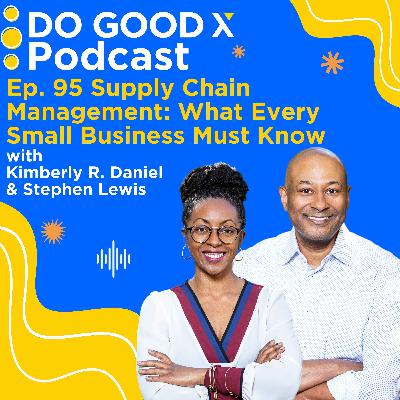
Supply chain management is the backbone of every business, and on this episode of DO GOOD X, hosts Kimberly Daniel and Steven Lewis break it down for entrepreneurs at every stage. Whether you offer products or services, your supply chain shapes your costs, your customer experience, and your ability to grow. In today's unpredictable economy, understanding your business resilience is not optional. Kimberly and Steven explore the arc from inputs to delivery and invite listeners to do a simplified supply chain snapshot to identify vendor dependency and plan for both risk and growth.What You Will Learn in this Episode:✅ Why every business, including service-based businesses, has a supply chain and how ignoring it puts your business resilience at risk, even in the early stages of entrepreneurship.✅ How to identify your vendor dependency by pinpointing the one person, one tool, and one process your business most relies on to deliver value to customers.✅ Two powerful questions that will evaluate your supply chain management from both a risk perspective and a business growth perspective to build long-term sustainability.Join the DO GOOD X Community to access resources, connect with purpose-driven entrepreneurs, and grow your impactful business with intention.TIMESTAMPS: 00:00 Kimberly defines supply chain management and why it matters for every entrepreneur03:21 Steven explains why small businesses take their supply chain for granted and overlook it04:55 Discussion of rising costs, vendor dependency, and how business resilience gets tested08:05 Kimberly walks through a simplified supply chain snapshot exercise for founders12:17 Two reflection questions on business risk and business growth to stress-test your operationsKEY TAKEAWAYS: 💎 Supply chain management is not just for large manufacturers. Every small business relies on a network of people, tools, and processes, and when any one of those shifts, your business's profitability and customer satisfaction are directly at stake.💎 Vendor dependency is a hidden vulnerability. Relying too heavily on a single platform, material, or contractor without a backup plan can quickly turn a minor disruption into a serious financial and operational crisis.💎 Building a values-driven business sustainability strategy means thinking beyond cost. How you source, develop, and deliver your product or service reflects your integrity, your brand, and your long-term impact on the communities you serve.ABOUT THE GUEST: RESOURCES MENTIONED: DO GOOD X - WebsiteDO GOOD X Start Up AcceleratorDO GOOD X - LinkedInConnect with Hosts:Kimberly Daniel LinkedInStephen Lewis LinkedInSEO KEYWORDS: DO GOOD X, Kimberly Daniel, Stephen Lewis, Entrepreneurs, Purpose-Driven Business, Small Business Supply Chain, Entrepreneurship, Service-Based Business, Business Resilience, Business Sustainability, Rising Costs, Vendor Dependency, Business Operations, Supply Chain Disruption, Business Strategy, Customer Service, Purchasing Process, Business Inputs, Product Delivery, Business Risk, Business Growth, Impactful Entrepreneurship, Purpose-Driven Business, Business Profitability, Capital Access
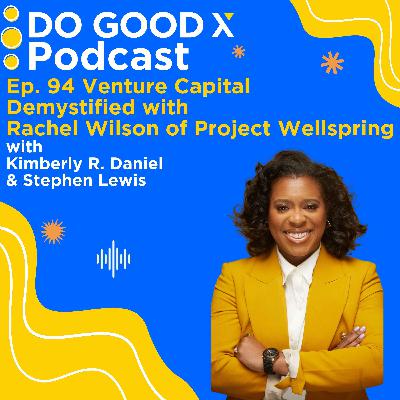
Venture capital drives innovation, but few founders understand how it truly works. In this episode of DO GOOD X, Kimberly Daniel and Stephen Lewis revisit their conversation with Rachel Wilson, Founding Partner of Project Wellspring, to break down seed-stage funding, private equity, and capital access for today’s entrepreneurs. Learn how exit strategy planning shapes funding decisions and discover practical insights from how venture capital works for startups. This conversation equips founders with clarity and strategy for sustainable growth.What You Will Learn in this Episode:✅ How venture capital firms evaluate seed stage funding, traction, and market share before investing✅ Why planning an intentional exit strategy shapes business growth and long-term wealth generation✅ The difference between private equity, bootstrapping, and other capital access options for foundersJoin the DO GOOD X Community to access resources, connect with purpose-driven entrepreneurs, and grow your impactful business with intention.TIMESTAMPS: 00:00 Introduction to Rachel Wilson, and a discussion of venture capital and capital access for mission-driven founders03:25 What led Rachel to capital access entrepreneurship06:15 Defining seed stage funding and what makes a startup investor ready07:10 Understanding liquidity events and realistic exit strategy planning13:08 Why black founders must think proactively about wealth building16:34 Final thoughts on private equity and strategic partnershipsKEY TAKEAWAYS: 💎 Sustainable entrepreneurship requires clarity about your long-term capital plan💎 Strong investor relations begin with understanding how equity and returns function💎 Building toward a family office mindset creates a multi-generational opportunityABOUT THE GUEST: Rachel Wilson is an operations and capital access strategist with over a decade of experience spanning automotive, healthcare, technology, and consumer products. Having raised and managed over $100M in venture and non-dilutive funding, she architects governance models that drive sustainable growth across sectors.Her work bridges philanthropic, private, and public networks to create equitable funding pathways for underrepresented founders—from WNBA stars to tech entrepreneurs. Rachel's collaborative approach has produced tangible results through national supplier diversity initiatives with the National League of Cities and innovative capital programs with emerging and global venture capital firms. Her expertise in redemptive and regenerative capital is further amplified through her curating of 50+ ecosystem-building events and her service as an advisor to organizations, families, founders, and ESOs worldwide.Her leadership extends to board service and prestigious fellowships with Milken IIE, Margaret Atwood's Practical Utopias, and NAIC Women in Alternatives. An active NASP member with Bloomberg ESG Certification, Rachel brings a data-driven approach to sustainable market reporting. Rachel holds a B.A. in Economics and Business from Agnes Scott College and an M.S. in Industrial Engineering from Georgia Institute of Technology.RESOURCES MENTIONED: DO GOOD X - WebsiteDO GOOD X Start Up AcceleratorDO GOOD X - LinkedInConnect with Hosts:Kimberly Daniel LinkedInStephen Lewis LinkedInSEO KEYWORDS: DO GOOD X, Kimberly Daniel, Stephen Lewis, Entrepreneurs, Purpose-Driven Business, Venture Capital, Seed Stage Funding, Private Equity, Capital Access, Exit Strategy, How Venture Capital Works For Startups, Market Share, Wealth Generation, Bootstrapping, Liquidity Event, Investor Relations, Rachel Wilson, Project Wellspring, BFM Fund, Business Traction, Founders, Capital Access, capital access strategist
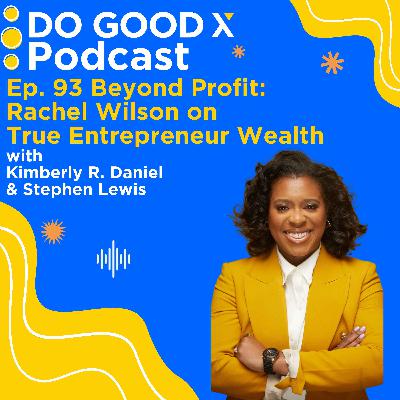
What separates a business that survives from one that truly thrives? In this episode of DO GOOD X, hosts Kimberly Daniel and Stephen Lewis reunite with Rachel Wilson, Founding Partner of Project Wellspring. She is a seasoned operations and capital access strategist who shares what genuine financial health for entrepreneurs looks like. Rachel challenges founders to move beyond a scarcity mindset and align sustainable business decisions with a deeper sense of purpose. From structuring your company correctly and staying tax-smart to leveraging a self-directed IRA and building purpose-driven capital, this episode is a masterclass in building wealth that lasts and actually matters.What You Will Learn in this Episode:✅ Financial health for entrepreneurs starts with purpose, not profit. Rachel explains how defining a clear mission protects founders from chasing trends, mismanaging assets, or losing sight of the long game in sustainable business growth.✅ The most overlooked operational systems for founders are the ones that seem boring: legal structure, small business tax strategy, and proper financial tracking. Getting these right early prevents costly mistakes that derail even profitable businesses.✅ Entrepreneur wealth building is an intentional practice. From setting up a self-directed IRA as a solopreneur to consulting a wealth advisor for entrepreneurs, Rachel outlines accessible first steps to building wealth that reflects your values.Join the DO GOOD X Community to access resources, connect with purpose-driven entrepreneurs, and grow your impactful business with intention.TIMESTAMPS: 00:00 Meet Rachel Wilson, capital access strategist and founder of Project Wellspring03:48 Rachel redefines entrepreneur wealth building through the lens of purpose and faith-driven intention09:33 The difference between paper profit and true financial health for entrepreneurs17:50 How missing operational systems for founders create financial stress and instability27:10 Resource Roundup: self-directed IRA, donor-advised fund, and wealth advisor for entrepreneurs tools34:55 Rachel answers the "Off the Cuff" questions37:16 Rachel reflects on how her faith guides her leadership and the decisions she makes in a purpose-driven business38:15 Rachel's final wisdom: embrace an abundance mindset because equitable funding and capital are far more accessible than founders believeKEY TAKEAWAYS: 💎 Your legal and tax foundation determines your financial ceiling. Rachel urges every founder to prioritize a sound business structure and to work with a qualified accountant and attorney before making any major startup financial decisions.💎 Abundance thinking fuels better capital decisions. Rachel challenges founders to reject scarcity mindsets and recognize that equitable funding and non-dilutive funding opportunities are far more accessible than most realize.💎 Purpose-driven capital is not just a concept. It is a strategy. When founders align their business profitability goals with a philanthropic vision, tools such as donor-advised funds and intentional tax planning become part of a coherent wealth strategy that benefits both the entrepreneur and the broader community.ABOUT THE GUEST: Rachel Wilson is an operations and capital access strategist with over a decade of experience spanning automotive, healthcare, technology, and consumer products. Having raised and managed over $100M in venture and non-dilutive funding, she architects governance models that drive sustainable growth across sectors.Her work bridges philanthropic, private, and public networks to create equitable funding pathways for underrepresented founders—from WNBA stars to tech entrepreneurs. Rachel's collaborative approach has produced tangible results through national supplier diversity initiatives with the National League of Cities and innovative capital programs with emerging and global venture capital firms. Her expertise in redemptive and regenerative capital is further amplified through curating 50+ ecosystem-building events and serving as an advisor to organizations, families, founders, and ESOs worldwide.Her leadership extends to board service and prestigious fellowships with Milken IIE, Margaret Atwood's Practical Utopias, and NAIC Women in Alternatives. An active NASP member with Bloomberg ESG Certification, Rachel brings a data-driven approach to sustainable market reporting. Rachel holds a B.A. in Economics and Business from Agnes Scott College and an M.S. in Industrial Engineering from Georgia Institute of Technology.Ep. 22 - Navigating Venture Capital: Funding Pathways for Black and Brown Entrepreneurs RESOURCES MENTIONED: DO GOOD X - WebsiteDO GOOD X Start Up AcceleratorDO GOOD X - LinkedInConnect with Hosts:Kimberly Daniel LinkedInStephen Lewis LinkedInSEO KEYWORDS: DO GOOD X, Kimberly Daniel, Stephen Lewis, Entrepreneurs, Purpose-Driven Business, Operations And Capital Access Strategist, Financial Health For Entrepreneurs, Sustainable Business, Self-Directed IRA, Purpose-Driven Capital, Small Business Tax Strategy, Wealth Advisor For Entrepreneurs, Startup Financial Planning, Business Profitability, Equitable Funding, Non-Dilutive Funding
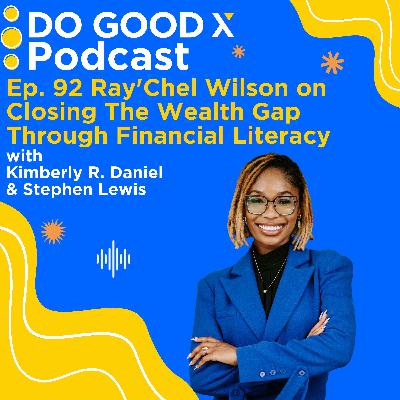
Wealth gap solutions take center stage as Ray'Chel Wilson, founder of For Our Last Names, shares her journey from educator to FinTech entrepreneur in this episode of DO GOOD X. Wilson addresses the staggering reality that 60% of minorities have no assets. In contrast, the racial wealth gap costs the U.S. economy $2.1 trillion. Wilson explores financial literacy, healing from financial trauma, and accessing capital-raising resources for underrepresented founders. She offers practical tips on entrepreneurship, finding the right funding, and leveraging government resources. Learn how wealth building requires both individual and institutional solutions as she discusses her Black Wealth Freedom Series books and the power of education around financial literacy and generational wealth.What You Will Learn in this Episode:✅ How to address the racial wealth gap by understanding that 60% of minorities have no assets.✅ Proven capital raising tips for entrepreneurs, including practicing your pitch in the mirror with feedback, maintaining resilience through rejection, and identifying the right funding sources.✅ Resources available for solo tech founders and minority entrepreneurs, including U.S. Small Business Administration programs, philanthropic accelerators like DO GOOD X, and how to leverage your current job as your first investor in your entrepreneurial journey.Join the DO GOOD X Community to access resources, connect with purpose-driven entrepreneurs, and grow your impactful business with intention.TIMESTAMPS: 00:00 Wealth gap solutions and Ray'Chel Wilson's mission to close the racial wealth gap02:53 Data reveals 60% of minorities lack assets and the $2.1 trillion cost of the wealth gap04:27 Finding your voice as a black woman entrepreneur and matching business funding to your needs06:12 Healing financial trauma and connecting individuals to ethical financial professionals07:21 Capital raising tips for entrepreneurs, including mirror practice and resilience strategies11:26 Resources for solo tech founders through SBA, nonprofits, and your job as first investorKEY TAKEAWAYS: 💎 The wealth gap requires dual solutions: healing financial trauma through education while connecting people to non-predatory financial professionals for real estate, investing, and sustainable wealth building throughout their wealth journey.💎 Capital raising success demands intentional practice with feedback, resilience through rejection, and celebrating wins within your means without overspending, which supports core financial literacy principles for long-term success.💎 Non-technical entrepreneurs can build successful FinTech companies by deeply understanding the problem, maintaining passion, and recruiting skilled partners who share your mission to close the gender wealth gap and serve underserved communities.ABOUT THE GUEST: Ray'Chel Wilson, a changemaker closing the gender & racial wealth gaps, is based in Tulsa, Oklahoma's Black Wall Street. As a Teach for America alumna, the challenges faced by Ray'Chel's scholars inspired her to become a 2x founder - CEO of "Raise the Bar Investments" and of the upcoming "ForOurLastNames" app. Ray’Chel’s education workbooks, personalized curriculum, and keynote speaking have reached seven countries. After paying off her student loans with her investment profits - over 300% gains in under two years, y’all - Ray'Chel Wilson dedicated her life to teaching financial literacy & value-based investing. Currently, Ray’Chel serves as Treasurer of the United Nations Association of Eastern Oklahoma, highlighting her cross-national approach to empowering better “money moves.” With an Investment Management specialization from the University of Geneva, a Bachelor of Science in Public Health from Ohio State University, and a Certified Financial Education Instructor, Ray'Chel brings a wealth of knowledge and expertise to her students and future ForOurLastNames app users. Ray’Chel’s purpose is to empower those marginalized by race, gender, or socioeconomic status to build wealth. Why? For our last names.ForOurLastNames a technology company that transforms the way financial professionals do lead generation & how wealth builders heal financial trauma.RESOURCES MENTIONED: DO GOOD X - WebsiteDO GOOD X Start Up AcceleratorDO GOOD X - LinkedInFor Our Last Names - WebsiteRaise The Bar Investments - WebsiteConnect with Hosts:Kimberly Daniel LinkedInStephen Lewis LinkedIn
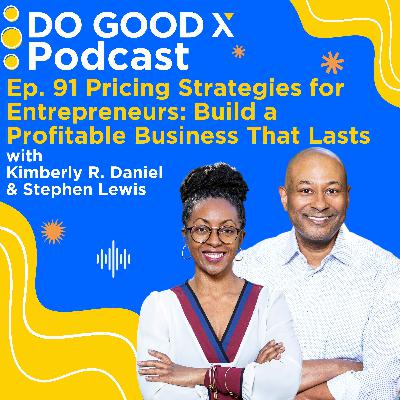
Are you underpricing your way to business failure? Hosts Kimberly Daniel and Stephen Lewis tackle the critical topic of pricing strategies that separates thriving entrepreneurs from those barely surviving. This episode of DO GOOD X reveals why so many founders leave money on the table and how pricing psychology affects your bottom line. Discover the science and art behind finding your sweet spot, whether you're selling products or services. Learn from real social entrepreneurs who transformed their businesses by understanding profit margins, negotiating wholesale pricing, and implementing pricing experimentation. If you've ever wondered whether you're charging too much or too little, this conversation offers practical frameworks for sustainable business growth and long-term profitability.What You Will Learn in this Episode:✅ How to identify if your pricing strategy is causing burnout by forcing you to overwork and over-deliver just to keep your business afloat, and what signs indicate your prices are either too low or too high for sustainable business growth.✅ The essential elements of effective pricing for entrepreneurs, including understanding your actual costs, evaluating the value-based pricing of outcomes you create for customers, and determining if your pricing supports paying yourself and building a team.✅ Practical pricing experimentation techniques used by successful social entrepreneurs, from leveraging wholesale pricing to reduce costs, to creating B2B versus B2C pricing models that match what your customers are willing to pay.Join the DO GOOD X Community to access resources, connect with purpose-driven entrepreneurs, and grow your impactful business with intention.TIMESTAMPS: 00:00 Pricing challenges that determine whether entrepreneurs survive or thrive03:26 Core elements of sustainable pricing strategy including costs and customer value04:21 Evaluating pricing and knowing your costs, experimenting with prices07:59 Competitive pricing example: entering markets with lower prices as a strategy09:35 Real founder stories: Kit's wholesale pricing discovery and cost reduction tactics12:31 Final thoughts on pricing experimentation as a learning journey for your businessKEY TAKEAWAYS: 💎 Pricing isn't fixed forever. As the economy shifts, inflation rises, and your business evolves, regular price adjustments are essential. Think of your pricing as an ongoing experiment, continuously refining it based on market conditions and customer feedback.💎 Understanding the complete cost structure beyond just production is critical. Factor in your time, energy, supply chain expenses, and delivery costs. Many founders fail because they don't account for operational expenses when setting their profit margins.💎 Industry patterns matter, but so does differentiation. Research what competitors charge in your sector, but don't be afraid to price strategically lower to enter markets or higher when offering environmentally responsible products that create additional value for conscious consumers.RESOURCES MENTIONED: DO GOOD X - WebsiteDO GOOD X Start Up AcceleratorDO GOOD X - LinkedInConnect with Hosts:Kimberly Daniel LinkedInStephen Lewis LinkedInSEO KEYWORDS: DO GOOD X, Kimberly Daniel, Stephen Lewis, Entrepreneurs, Purpose-Driven Business, Pricing Strategy For Entrepreneurs, Sustainable Business Pricing, Entrepreneur Pricing Challenges, Pricing For Social Entrepreneurs, Cost-Based Pricing, Value-Based Pricing, Business Sustainability, Pricing Experimentation, Underpricing Risks, Competitive Pricing Strategies, Profit Margins. Pricing Strategy, Inflation, Breaking Even, Thriving Business
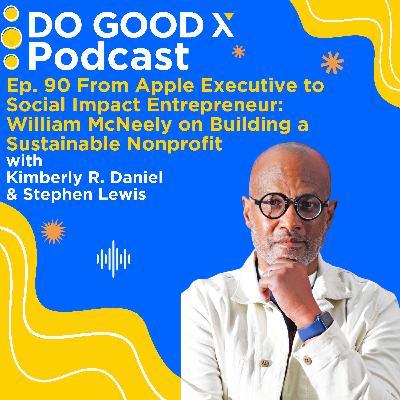
Today’s focus is social impact entrepreneurship as hosts Kimberly Daniel and Stephen Lewis of the DO GOOD X podcast revisit their conversation with William McNeely, founder of Do Greater Charlotte. This powerful episode explores how a life-threatening diagnosis led to a purpose-driven business serving underserved communities. McNeely shares his journey from Apple executive to nonprofit leader, revealing how his lung transplant experience clarified his mission to create lasting change through educational technology and youth empowerment. Learn how Do Greater built an innovation lab using an earned revenue model, partnered with corporate sponsors, and created sustainable community development programs that serve over 400 youth annually while generating revenue through memberships and event rentals.What You Will Learn in this Episode:✅ How to develop a mission-driven leadership approach that combines venture capital strategies with social enterprise principles to attract individual investors and build brand reputation in your community.✅ Practical strategies for creating an earned revenue model that generates sustainable funding while keeping programs free for underserved communities.✅ The importance of listening to your target audience by involving youth in designing spaces and programs, ensuring your nonprofit organization truly meets community needs while building authentic stakeholder engagement.Join the DO GOOD X Community to access resources, connect with purpose-driven entrepreneurs, and grow your impactful business with intention.TIMESTAMPS: 00:00 Exploring entrepreneurial journey challenges for purpose-driven business leaders04:40 William McNeely shares his story of a lung transplant diagnosis, and a perspective shift led him to found Do Greater Charlotte09:20 Evolution from an innovation lab truck to a permanent 8,000-square-foot creative technologies space13:27 Nonprofit branding strategies, building corporate partnerships, and venture capital17:37 Essential advice for starting a nonprofit organizationKEY TAKEAWAYS: 💎 Perspective shifts during crisis can reveal your true calling. McNeely's two-week prognosis became the catalyst for creating Do Greater Charlotte, demonstrating that setbacks can be invitations to discover purpose-driven work that leaves lasting community impact.💎 Treating your nonprofit like an educational technology startup attracts different funders by developing professional pitch decks and targeting high-net-worth individual investors before pursuing corporate grants. Do Greater Charlotte secured 70% of the initial funding from venture-minded donors.💎 Earned revenue sustainability protects mission-building adult memberships, coffee shop sales, and event rentals at the innovation lab, which generates consistent funding that keeps all youth empowerment programs completely free for students.ABOUT THE GUEST: William McNeely is a distinguished entrepreneur and non-profit executive with a storied career, including a pivotal role as a Market Development Executive at Apple. He is the visionary founder of Do Greater, Inc., where he has fostered a dynamic community dedicated to nurturing the next generation of creative leaders through cutting-edge technology, inspiring creative spaces, and a robust community network.At the heart of his initiatives is the Creative Lab platform, which equips youth and young adults with critical skills in design thinking, digital creativity, and entrepreneurship. William's entrepreneurial drive is further evidenced by his successful launch of multiple businesses. His personal story is one of extraordinary resilience, highlighted by his recovery from a double lung transplant, reinforcing his dedication to his life's mission of inspiring impactful change.William has served on the boards of various non-profits and has been a vital force in faith-based organizations, promoting hope and positivity. His current focus is on broadening the influence of the Creative Lab platform across Charlotte, building an inclusive support system for opportunity youth and underrepresented entrepreneurs. William's unwavering commitment to education, technology, and community empowerment continues to make a significant impact, driving forward positive transformations in countless lives.RESOURCES MENTIONED: DO GOOD X - WebsiteDO GOOD X Start Up AcceleratorDO GOOD X - LinkedInEp. 8 - From Health Challenge to Creative Catalyst: William McNeely’s Mission to Do GreaterEp. 9 - Faith, Vision, and Impact: William McNeely’s Journey to Do GreaterConnect with Hosts:Kimberly Daniel LinkedInStephen Lewis LinkedInSEO KEYWORDS: DO GOOD X, Kimberly Daniel, Stephen Lewis, Entrepreneurs, Purpose-Driven Business, Social Impact Entrepreneurship, Nonprofit, Underserved Communities, Educational Technology, Youth Empowerment, Innovation Lab, Earned Revenue Model, Corporate Community Development, Mission-Driven Leadership, Venture Capital, Social Enterprise, Brand Reputation, Starting A Nonprofit Organization
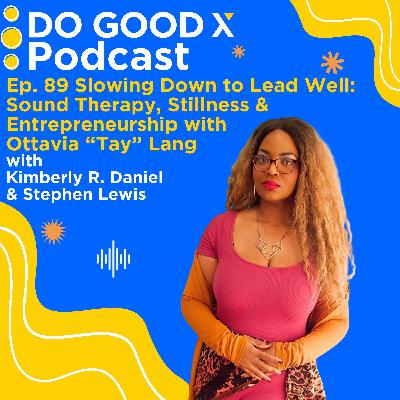
Stillness, sound therapy, and faith are essential tools for entrepreneurs seeking clarity, resilience, and sustainable business growth.In this powerful episode of the DO GOOD X Podcast, hosts Kimberly Daniel and Stephen Lewis sit down with Ottavia “Tay” Lang, sound therapist, wellness educator, and founder of Dear Life Chat, to explore the transformative role of stillness in entrepreneurship. Tay shares her deeply personal journey—from homelessness and chronic stress to discovering sound therapy as a pathway to healing, clarity, and purpose. Together, they unpack how nervous system regulation, silence, and intuition help founders navigate high-pressure environments without burning out. This conversation invites entrepreneurs to rethink hustle culture and embrace faith, rest, and embodied wisdom as strategic tools for leadership and sustainable impact.What You’ll Learn in This Episode: ✅ Why slowing down is essential for entrepreneurial clarity and resilience✅ How sound therapy supports nervous system regulation and emotional health✅ The connection between faith, intuition, and sustainable leadership✅ Simple daily practices founders can use to reconnect with stillnessJoin the DO GOOD X Community to access resources, connect with purpose-driven entrepreneurs, and grow your impactful business with intention.TIMESTAMPS: 00:00 Welcome to the DO GOOD X Podcast01:20 Hustle culture vs. slowing down in entrepreneurship02:34 Introducing guest Ottavia “Tay” Lang04:42 What is sound therapy and how does it work?06:14 When slowing down became a necessity, not a choice10:45 What happens when we ignore our body’s signals12:32 Resistance to stillness in high-stress professions14:37 How sound therapy helps the body release tension16:51 Stillness as a gateway to clarity and self-awareness19:15 Building a business rooted in purpose, faith, and rest22:51 One simple practice founders can start today25:00 How to experience sound therapy for the first time26:23 Rebuilding trust in intuition through silence30:01 “Off the Cuff” rapid-fire reflections37:44 Final reflections and closingKEY TAKEAWAYS:💎 Chronic stress silently accumulates in the body and must be addressed intentionally💎 Stillness is not weakness—it’s a leadership advantage💎 Sound therapy can support emotional regulation and clarity💎 Sustainable businesses require founders to care for their nervous systemsRESOURCES:Dear Life Chat – Holistic Wellness PlatformOttavia "Tay" Lang - LInkedIn5D Matrimony Tay Lang – Sound Therapy AlbumDO GOOD X - WebsiteDO GOOD X - PodcastDO GOOD X - LinkedInDO GOOD X - YouTubeDO GOOD X - SpotifyDO GOOD X - InstagramConnect with Hosts:Kimberly Daniel LinkedInStephen Lewis LinkedInABOUT THE GUEST: Ottavia “Tay” Lang is a sound therapist, wellness educator, and the founder of Dear Life Chat, a holistic wellness company dedicated to emotional health, nervous system regulation, and mindful living. With over a decade of experience, she works at the intersection of sound therapy, mindfulness, and emotional intelligence, supporting individuals and organizations in high-stress environments.Ottavia has facilitated sound therapy experiences for corporate teams, first responders, healthcare professionals, athletes, and creative industries, and her work has been featured on television, in national publications, and in wellness spaces across the country. Through Dear Life Chat, she creates transformative experiences that blend science, intuition, and real-life tools to help people slow down, reconnect, and build sustainable well-being.SEO KEYWORDS: Entrepreneurs, Entrepreneurship, purpose-driven entrepreneurs, Social Impact, Business Growth, Startup Journey, Faith-Driven Business, Overcoming Self-Doubt, Sustainable Business, Marketing Strategies, Stillness in entrepreneurship, sound therapy for entrepreneurs, faith-driven leadership, nervous system regulation, sustainable business wellness
Jay Johnson's faith guided his remarkable journey from college admissions consulting to educational technology innovation in his business. Hosts Kimberly Daniel and Stephen Lewis of the DO GOOD X podcast revisit this inspiring conversation about scaling a business with intention and divine direction. Jay, founder of College Prep U and Prep Intel, shares how church community support sparked his entrepreneurial path and how taking risks in business led to exponential entrepreneurial growth—expanding from 37 to 2,500 students in one year. His story demonstrates that purpose-driven business success requires both faith and strategic action, offering valuable insights for founders navigating their intentional business-building journeys.What You Will Learn in this Episode:✅ How church community support can ignite entrepreneurial opportunities and provide critical business mentorship connections that lead to exponential growth.✅ The importance of business collaboration over competition, as demonstrated when Jay partnered with a competitor and secured strategic partnership development.✅ How faith-driven decision-making shapes scaling a business sustainably, from choosing not to join a franchise to developing machine learning applications for education.✅ Why overcoming fear in business through spiritual grounding enables entrepreneurs to embrace uncomfortable growth opportunities and build nonprofit to for-profit transition models.Join the DO GOOD X Community to access resources, connect with purpose-driven entrepreneurs, and grow your impactful business with intention.TIMESTAMPS: 00:00 The importance of intentional business building and slowing down to reflect on purpose-driven business goals for 202604:00 Jay shares how support from his church community launched his college admissions consulting journey05:03 The solar eclipse moment: taking risks in business to start College Prep U independently through faith-driven decision making07:28 Scaling a business from 37 to 2,500 students through strategic partnership development and business collaboration12:05 Jay discusses the challenge of being ok with being uncomfortable13:26 Launch of Prep Intel: transitioning to educational technology using machine learning applications while making resources free for student successKEY TAKEAWAYS: 💎 Strategic partnerships can transform your business overnight—Jay's willingness to collaborate with a competitor led to a contract serving over 2,000 students, proving that abundance mentality and business collaboration can create more opportunities than competition.💎 Divine timing and spiritual discernment matter in entrepreneurial growth—from the solar eclipse metaphor to the Watch Hour prophecy, Jay's story shows how paying attention to spiritual guidance informs critical business pivots and taking risks in business.💎 Building sustainable educational technology requires separating yourself from day-to-day operations—recognizing that College Prep U would close if something happened to him, Jay created Prep Intel to ensure student success continued beyond his personal involvement.ABOUT THE GUEST: Jay Johnson is the CEO and Co-founder of Prep Intel, an AI-powered platform that helps educational institutions and military recruiters identify and engage prospective students efficiently. He also founded College Prep U, providing families with expert college preparation guidance. A Morehouse alumnus, certified Collegiate Independent Counselor, and former Fortune 100 executive, Jay serves on advisory boards for The University of Alabama, Naval Academy, Clark Atlanta University, and University of Pennsylvania, and is President of the Birmingham Chapter of 100 Black Men of America.Jay Johnson - LinkedInRESOURCES MENTIONED: DO GOOD X - WebsiteDO GOOD X Start Up AcceleratorDO GOOD X - LinkedInConnect with Hosts:Kimberly Daniel LinkedInStephen Lewis LinkedInSEO KEYWORDS: DO GOOD X, Kimberly Daniel, Stephen Lewis, Entrepreneurs, Purpose-Driven Business, Faith-Based Entrepreneurship, College Admissions Consulting, Educational Technology, Scaling A Business, Church Community Support, Taking Risks In Business, Entrepreneurial Growth, Intentional Business Building, Faith-Driven Decision Making, Strategic Partnership Development, Overcoming Fear In Business, Machine Learning Applications
Guided meditation for entrepreneurs takes center stage in this DO GOOD X episode with hosts Kimberly Daniel and Stephen Lewis. This faith-based entrepreneurship session offers a transformative pause from the entrepreneurial grind, inviting listeners to reconnect with their business vision and purpose-driven business goals. Stephen Lewis leads a powerful meditation drawing from Christian wisdom traditions and the words of poet Lucille Clifton, helping entrepreneurs release old limitations and embrace new year reflection. Through intentional breathing and contemplation, this episode guides under-resourced entrepreneurs to realign with their inner life alignment and clarify their business dreams for 2026.What You Will Learn in this Episode:✅ How to use guided meditation for entrepreneurs to release limiting beliefs about yourself and your business goals while embracing new possibilities for growth and transformation.✅ The practice of faith-based entrepreneurship through Christian wisdom traditions, learning to rest in your deep longings and trust in the business dreams that are calling to emerge.✅ Techniques for creating entrepreneurial clarity by pausing the entrepreneurial grind, practicing mindful breathing, and reconnecting with your purpose-driven business vision for the year ahead.Join the DO GOOD X Community to access resources, connect with purpose-driven entrepreneurs, and grow your impactful business with intention.TIMESTAMPS: 00:00 Guided meditation for entrepreneurs and faith-based entrepreneurship practice for the new year02:49 Begin meditation: Grounding exercise with breathing techniques to quiet the entrepreneurial grind and create space for reflection04:40 Faith-based Christian wisdom of hope and conviction06:15 Poet Lucille Clifton: Releasing old promises and limiting beliefs about your business vision and entrepreneurial capabilities08:24 New year reflection on business iteration: Acknowledging new possibilities and the business dreams longing to be born in you09:59 Closing invitation to rest: Encouragement to believe in your dreams and maintain entrepreneurial clarity through regular mindful business practiceKEY TAKEAWAYS: 💎 Entrepreneurial pause is essential for sustainable business growth—taking time to ground yourself through meditation and breathing exercises creates the clarity needed to discern your next moves and realign with your calling.💎 Releasing limiting self-narratives about your capabilities unlocks business renewal and transformation—the beliefs you carry about what you can or cannot do directly impact your entrepreneurial journey and must be consciously examined.💎 Faith and business integration through Christian wisdom reminds us that spiritual business growth happens when we rest in our deep longings and trust the dreams emerging within us, even before they become visible realities.RESOURCES MENTIONED: DO GOOD X - WebsiteDO GOOD X Start Up AcceleratorDO GOOD X - LinkedInConnect with Hosts:Kimberly Daniel LinkedInStephen Lewis LinkedInSEO KEYWORDS: DO GOOD X, Kimberly Daniel, Stephen Lewis, Entrepreneurs, Purpose-Driven Business, Guided Meditation For Entrepreneurs, Faith-Based Entrepreneurship, Entrepreneurial Grind, Business Vision, New Year Reflection, Inner Life Alignment, Business Dreams, Business Goals, Entrepreneurial Clarity, Entrepreneurial Pause, Business Renewal, Entrepreneurial, Faith And Business, Pause and Reflect, 2026 Business Goals, Alignment
Successful entrepreneurship requires mindset, adaptability, and market fit. This episode explores why some businesses thrive while others fail.In this episode of the DO GOOD X Podcast, hosts Kimberly Daniel and Stephen Lewis explore a critical question: what truly makes a successful entrepreneur? With data showing that most businesses don’t survive past year one, the conversation breaks down why a small percentage go on to build sustainable, impactful companies.The hosts unpack three essential drivers of long-term success: solving a real market need, having knowledge or proximity to the industry you’re entering, and maintaining the agility to pivot when conditions change. Drawing on real-world examples—including lessons from the pandemic—the episode highlights how mindset, adaptability, and a commitment to listening to customers shape businesses that last. This conversation is a practical and reflective guide for aspiring and current entrepreneurs who want to build ventures rooted in purpose, resilience, and long-term impact.What You’ll Learn in This Episode: ✅ Why market fit is essential to entrepreneurial success✅ How mindset and adaptability influence business longevity✅ The importance of pivoting based on customer and market feedback✅ What successful entrepreneurs do differently to scale sustainablyEnjoying the DO GOOD X Podcast? Subscribe and follow on Spotify, Apple Podcasts, and YouTube for more conversations on impactful entrepreneurship.Join the DO GOOD X Community to access tools and resources, connect with purpose-driven entrepreneurs, and grow your impactful business with intention.TIMESTAMPS: 00:00 Welcome to the DO GOOD X Podcast01:17 Why most entrepreneurs don’t make it past year one02:07 The role of mindset, adaptability, and pivoting02:31 Patterns seen in successful entrepreneurs03:42 Market fit and solving real community needs04:07 Industry knowledge and building the right team04:41 The importance of agility and being open to pivoting05:56 Lessons from entrepreneurs during the pandemic06:52 Growth mindset and scaling beyond limitations07:50 Defining a “no-excuse” entrepreneurial mindset08:28 Balancing hustle, self-care, and feedback08:57 Additional factors behind long-term success09:23 Advice for entrepreneurs navigating their journey09:44 DO GOOD X resources and the “Built For This” courseKEY TAKEAWAYS:💎 Sustainable businesses solve real problems with clear market fit💎 Successful entrepreneurs stay agile and open to pivoting💎 Mindset and continuous learning fuel long-term growth💎 Scalability requires feedback, self-awareness, and resilienceRESOURCES:DO GOOD X - WebsiteDO GOOD X - PodcastDO GOOD X - LinkedInDO GOOD X - YouTubeDO GOOD X - SpotifyDO GOOD X - InstagramBuilt For This CourseConnect with Hosts:Kimberly Daniel LinkedInStephen Lewis LinkedInSEO KEYWORDS: Entrepreneurs, Entrepreneurship, purpose-driven entrepreneurs, Social Impact, Business Growth, Startup Journey, Faith-Driven Business, Overcoming Self-Doubt, Sustainable Business, Marketing Strategies, successful entrepreneurship, entrepreneurial mindset, sustainable business, market fit, business scalability, Sustainability
Business idea validation is a critical step for founders, yet most skip straight to building. In this DO GOOD X podcast episode, hosts Kimberly Daniel and Stephen Lewis welcome back early-stage founders expert Sweta Govani, who shares her proven Happy Paying Customer System. Sweta reveals why getting paying customers before creating your minimum viable product is essential to de-risking your venture. She breaks down the common mistakes founders make, explains her "laziest way to solve the problem" approach, and provides actionable steps for customer discovery through research and sales calls. Learn how to validate (or invalidate) your idea efficiently, when to pivot versus persevere, and the critical questions to answer before quitting your day job.What You Will Learn in this Episode:✅ How to validate your business idea by focusing on problem validation rather than solution building, and why understanding "whom do I solve what problem for" should be your first milestone as a founder.✅ The strategic approach to getting your first paying customers using research sales calls and the "build a bridge" methodology that transitions conversations from research to sales naturally and authentically.✅ When to pivot, persevere, or pause your entrepreneurial journey based on qualitative signals and customer acquisition feedback, plus the critical self-assessment questions to answer before leaping into full-time entrepreneurship.Join the DO GOOD X Community to access resources, connect with purpose-driven entrepreneurs, and grow your impactful business with intention.TIMESTAMPS: 00:00 Sweta’s Happy Paying Customer System for early-stage founders and what it means to validate without building: focusing on problem validation over solutions05:57 Discussion of the realistic time it takes to validate your business10:00 Defining minimum viable product versus solution and the "laziest way" approach to getting paying customers first14:43 The most common mistake founders make in building a business19:06 How do you know when to pivot, stop or persevere23:04 Critical questions before quitting your job: setting business parameters and finding your first target customer through customer discovery30:00 Practical steps for finding paying customers, embedding yourself in communities, running research sales calls and tracking happy paying customers34:18 Off the Cuff rapid-fire questions: Sweta's resilience practices, superpowers, and how faith shapes her business model and entrepreneurial journeyKEY TAKEAWAYS: 💎 The most prominent mistake founders make is building too early based on assumptions rather than validation—focus on the "whom do I solve what problem for" question first, and remember that business idea validation means being willing to invalidate your hypothesis through customer discovery conversations.💎 Getting paying customers before building your product market fit solution dramatically reduces risk and burnout—use the five-stage framework from idea to 100+ customers, where research and sales calls help you understand problems deeply before pitching solutions.💎 Success in the entrepreneurial journey requires both practical steps and internal clarity—define your vision for success, set business parameters aligned with your life goals, and focus on revenue-generation milestones rather than vanity metrics to build a sustainable business model.ABOUT THE GUEST: Sweta works with ambitious professionals to validate their business ideas and land their first 100+ Happy Paying Customers through her proven Happy Paying Customers™ System, which combines research-driven positioning, micro-tests, and a repeatable go-to-market playbook for the 0 to 1Million dollar stage. After 15+ years operating inside startups, she specializes in supporting founders who have recently left corporate or high-skill careers, replacing guesswork and chaos with sequencing, logic, and proof by showing them how to get paying customers before they build—dramatically reducing wasted time, money, and burnout. Her mission is simple: help founders build a business that powers their dream life, not a gamble that burns them out.Ep. 44 - Entrepreneurship Unlocked: Expert Tips to Grow Your Business with Sweta GovaniHappy Paying Customers - WebsiteRESOURCES MENTIONED: DO GOOD X - WebsiteDO GOOD X Start Up AcceleratorDO GOOD X - LinkedInConnect with Hosts:Kimberly Daniel LinkedInStephen Lewis LinkedInSEO KEYWORDS:DO GOOD X, Kimberly Daniel, Stephen Lewis, Entrepreneurs, Purpose-Driven Business, Business Idea Validation, Early Stage Founders, Paying Customers, Minimum Viable Product, Customer Discovery, Problem Validation, Research Sales Calls, Entrepreneurial Journey, Customer Acquisition, Revenue Generation, Business Model, Five Stage Framework, Founders, Discovery Stage, Startup Strategy
Full-time entrepreneurship requires more than just passion—it demands preparation. In this DO GOOD X podcast episode, hosts Kimberly Daniel and Stephen Lewis dive deep into the critical question: when should you transition from side hustle into full-time entrepreneurship? They explore the essential elements of business readiness, including financial planning, an entrepreneurial mindset, legal structure, and the development of sustainable business systems. Whether you're working a nine-to-five while nurturing a viable business idea or standing on the edge of taking the leap, this conversation provides practical guidance on when to transition from a side hustle to a full-time business with clarity and confidence.What You Will Learn in this Episode:✅ How to assess your business readiness by evaluating your finances, mindset, available time, and support network before becoming a full-time entrepreneur✅ The importance of having a clear, viable business idea that's been tested with real customers beyond friends and family, plus establishing business systems and technology to automate daily processes✅ Essential considerations for legal structure, budget management, and team building to protect your business and set yourself up for sustainable growth✅ Strategies for maintaining your entrepreneurial mindset through challenges, including managing your inner voice and having tools to navigate the entrepreneurial valleyJoin the DO GOOD X Community to access resources, connect with purpose-driven entrepreneurs, and grow your impactful business with intention.TIMESTAMPS: 00:00 Stephen and Kimberly discuss the business transition from side hustle to full-time entrepreneur03:35 Key indicators of business readiness, including financial planning, entrepreneurial mindset, available time, and building your support network of cheerleaders05:41 Deep dive into entrepreneurial mindset: managing self-talk, overcoming mental blocks, and developing tools to navigate challenges on your entrepreneurial journey09:39 Essential requirements before leaping: having a clear, viable business idea, budget management for 6-12 months, and establishing business systems with automation technology12:27 Understanding legal structure options for your business, including LLC versus C Corp, contracts, intellectual property protection, and startup finances considerationsKEY TAKEAWAYS: 💎 Business readiness requires alignment across mindset, finances, and systems. Your entrepreneurial mindset must handle setbacks; financial planning should cover 6-12 months; and business systems must support operations before going full-time.💎 A viable business idea needs validation with real paying customers beyond friends and family, addressing actual market problems with proven demand before you transition from side hustle to full-time.💎 Strong legal structure, team building strategy, and support network create sustainable foundations—consult attorneys about structures, budget for contractors, and build your cheerleader community.RESOURCES MENTIONED: DO GOOD X - WebsiteDO GOOD X Start Up AcceleratorDO GOOD X - LinkedInConnect with Hosts:Kimberly Daniel LinkedInStephen Lewis LinkedInDO GOOD X, Kimberly Daniel, Stephen Lewis, Entrepreneurs, Purpose-Driven Business, Full-Time Entrepreneur, Side Hustle, Business Readiness, Financial Planning, Entrepreneurial Mindset, Legal Structure, Business Systems, Viable Business Idea, When To Transition From Side Hustle To Full-Time Business, Entrepreneurial Journey, Viable Business Idea, Business Readiness, Entrepreneur Support, Entrepreneurship, Going Full Time, Starting A Business, Going All In On Your Business
Minimum Viable Product strategies take center stage as hosts Kimberly Daniel and Steven Lewis explore business innovation through an unexpected lens: childhood play. Today's DO GOOD X podcast episode reveals how entrepreneurial beginners can test ideas without wasting precious time and money. Drawing from Catherine Finney's wisdom, Kimberly and Stephen emphasize building a minimum viable solution with available resources rather than perfectionism. Through candid storytelling about creative problem solving and imagination, listeners discover practical approaches to product development and market testing that honor both constraints and possibilities in purpose-driven business. What You Will Learn in this Episode:✅ How to apply minimum viable product principles to launch your business idea without overspending on unproven concepts or services✅ Why resource management and working within constraints can actually fuel business innovation rather than limit your entrepreneurial potential✅ The power of playful experimentation and collaborative innovation to test assumptions and develop solutions that truly address customer needs✅ Practical listening strategies for understanding what your market wants and refining your business strategy through honest feedback and iterationJoin the DO GOOD X Community to access resources, connect with purpose-driven entrepreneurs, and grow your impactful business with intention.TIMESTAMPS:  00:00 Defining minimum viable product and minimum viable solution for new entrepreneurs, and why market testing prevents wasting resources on unwanted products03:57 Childhood playtime as a model for business innovation and experimentation, and using imagination and flexibility to address real customer needs with available resources07:23 Getting out of your head into action through creative problem solving - thinking big and building small09:07 Three steps toward innovation: identifying pain points, collaborating, and stretching possibilities11:04 The art of listening to customers and intuition in product development KEY TAKEAWAYS: 💎 A minimum viable solution means spending minimal time and money to test whether your market actually wants what you're building, emphasizing intentional growth over premature scaling💎 Starting a business requires playful imagination to work creatively within constraints, transforming limitations into opportunities for authentic business planning and testing💎 Success in entrepreneurship depends on listening deeply to both your customers' actual needs and your own intuition, allowing solutions to emerge through openness and collaborationRESOURCES MENTIONED: DO GOOD X - WebsiteDO GOOD X Start Up AcceleratorDO GOOD X - LinkedInConnect with Hosts:Kimberly Daniel LinkedInStephen Lewis LinkedInSEO KEYWORDS: DO GOOD X, Kimberly Daniel, Stephen Lewis, Entrepreneurs, Purpose-Driven Business, Minimum Viable Product, Business Innovation, Entrepreneurial Journey, Minimum Viable Solution, Creative Problem Solving, Product Development, Market Testing, Resource Management, Collaborative Innovation, Customer Needs, Business Strategy, Entrepreneurship, Resource Management
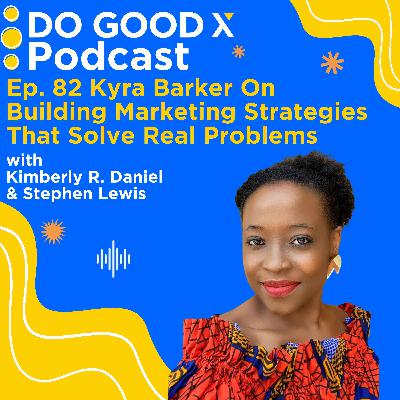
Marketing strategy is more than social media campaigns—it's about solving real customer problems. In this episode of the DO GOOD X podcast, hosts Kimberly Daniel and Stephen Lewis welcome business consultant and cancer survivor Kyra Barker, who shares her expertise in marketing fundamentals and brand building. Kyra emphasizes that effective startup marketing begins with understanding the customer journey, conducting thorough situational analysis, and doing proper user research before launching products or services. She discusses how entrepreneurs can identify customer pain points, choose the appropriate marketing channels, and create marketing communications that resonate at each stage of the buyer's journey—from awareness to retention.What You Will Learn in this Episode:✅ How to conduct a comprehensive situational analysis, including SWOT and PESTLE frameworks, to understand the business environment before launching your product development strategy.✅ The importance of user research and identifying whether you're building a "vitamin" or "painkiller" that addresses genuine customer pain points in your target audience.✅ How to align your content marketing with each stage of the customer journey—from information search and awareness through consideration, decision, and customer retention—rather than focusing solely on promotional content.✅ When to hire a marketing consultant and what qualifications to look for, including expertise in the four Ps of marketing: product, place, price, and promotion, not just business growth tactics.Join the DO GOOD X Community to access resources, connect with purpose-driven entrepreneurs, and grow your impactful business with intention.TIMESTAMPS:  00:00 Intro: Taking a holistic approach to a purpose-driven entrepreneurship05:06 Essential marketing fundamentals, including situational analysis, SWOT, and PESTLE frameworks for startup marketing07:33 Understanding customer pain points and the difference between building a "vitamin" versus a "painkiller" solution10:44 How to stand out in content overload by aligning marketing communications with the customer journey stages14:22 Choosing effective marketing channels by asking customers where they consume media and spend time15:16 What to look for when hiring a marketing consultant and avoiding cookie-cutter strategiesKEY TAKEAWAYS: 💎 True marketing strategy starts with comprehensive marketing fundamentals—conducting a situational analysis (SWOT) and PESTLE analysis to understand political, economic, social, technological, legal, and environmental factors affecting your business environment before diving into campaigns.💎 Successful brand building requires deep user research to determine if you're solving real customer pain points (a painkiller) versus creating a nice-to-have product (a vitamin), then matching your content marketing to each stage of the customer journey from awareness to customer retention.💎 When selecting marketing channels and hiring a marketing consultant, focus on fundamentals over trends—choose platforms where your target audience actually spends time, and work with strategists who understand the four Ps of marketing (product, place, price, promotion) rather than just social media tactics.ABOUT THE GUEST: Kyra Barker is a business strategist, cancer survivor, and advocate for achieving success without sacrificing well-being. With over 15 years of experience in marketing and business, she's a trusted advisor to corporate leaders and entrepreneurs. Her battle with stage 3 rectal cancer fuels her mission to promote holistic success through Work Well Blend, an approach emphasizing physical activity, nutrition, rest, and creativity. As a speaker, Kyra shares candid insights about her journey and valuable business lessons.Kyra Barker - WebsiteKyra Barker - LinkedInRESOURCES MENTIONED: DO GOOD X - WebsiteDO GOOD X Start Up AcceleratorDO GOOD X - LinkedInConnect with Hosts:Kimberly Daniel LinkedInStephen Lewis LinkedInDO GOOD X, Kimberly Daniel, Stephen Lewis, Entrepreneurs, Purpose-Driven Business, Marketing Strategy, Marketing Fundamentals, Brand Building, Startup Marketing, Customer Journey, Situational Analysis, User Research, Customer Pain Points, Marketing Channels, Marketing Communications, Kyra Barker, Business Strategy, SWOT Analysis, PESTILE Analysis, Customer Base, Target Audience
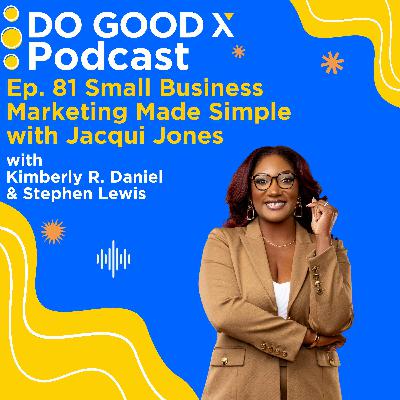
Marketing strategy, storytelling, and small business growth take center stage as CEO Jacqui Jones shares proven ways entrepreneurs can build clarity and traction. In this powerful episode, hosts Kimberly Daniel and Stephen Lewis sit down with Jacqui Jones, CEO of One Degree Marketing, to unpack what most entrepreneurs get wrong about marketing and the simple, human-centered approach that actually works. Jacqui explains why understanding your audience, crafting a clear message, and building trust matter far more than chasing trends or posting nonstop. She shares the storytelling framework her team uses to help nonprofits, founders, and small businesses communicate their value with authenticity and confidence.From branding clarity to emotional connection to long-term strategy, Jacqui gives listeners a practical roadmap for marketing that feels aligned, sustainable, and effective. Whether you’re a new entrepreneur or scaling your next chapter, this episode delivers game-changing insights you can implement right away.What You’ll Learn in This Episode:   ✅ How storytelling transforms your marketing strategy✅ Why small businesses often miss the clarity needed to grow✅ The role of trust, empathy, and emotional connection in marketing✅ Practical steps for building a brand that resonates with the right audienceJoin the DO GOOD X Community to access resources, connect with purpose-driven entrepreneurs, and grow your impactful business with intention.TIMESTAMPS:  00:00 Introduction: Jacqui Jones’s journey into marketing and entrepreneurship04:20 Discussion on common small business marketing challenges07:50 Strategies for building a sustainable marketing approach11:12 How to define and track marketing success for your business15:45 Importance of aligning marketing with business goals20:08 Using AI tools and platforms effectively for small businesses24:32 Key metrics to measure engagement and brand awareness28:10 Organizing business operations and systems (HubSpot, CRM)30:28 Using free trials strategically and understanding tool usability33:07 Defining goals and determining the right marketing metrics36:00 Leveraging AI to support business decision-making38:00 Recommended low-cost or free marketing tools (Later, Hootsuite, Canva)43:00 Jacqui’s greatest lessons in entrepreneurship50:00 Impact of entrepreneurial work on clients and communities (healing)KEY TAKEAWAYS:💎 Storytelling is the heart of effective marketing, not trends or algorithms.💎 Clarity in your message drives customer trust and engagement.💎 Emotional resonance and authenticity matter more than polished graphics.💎 Marketing works best when it’s simple, strategic, and human-centered.RESOURCES:  DO GOOD X - WebsiteDO GOOD X - PodcastDO GOOD X - LinkedInDO GOOD X - YouTubeDO GOOD X - SpotifyDO GOOD X -  InstagramConnect with Hosts:Kimberly Daniel LinkedInStephen Lewis LinkedInABOUT THE GUEST: Jacqui Jones is CEO and Founder of One Degree Marketing, based in Birmingham, Alabama. One Degree provides digital marketing support for businesses and organizations through marketing strategy development and digital marketing execution. Jacqui is an alumna of The University of Alabama and the Goldman Sachs 10K Small Businesses Program. She has been awarded American Marketing Association Birmingham Chapter Young Professional Marketer of the year, Birmingham Business Journal (BBJ) Women to Watch, BBJ Top 40 Under 40, and BBJ CEO Awards finalist.Jacqui serves on the Goldman Sachs 10KSB Advocacy Advisory Board, University of Alabama Women's Initiative Advisory Board and the City of Birmingham Guaranteed Income Advisory Board.Jacqui teaches and develops curricula for organizations who support small business growth including BEYGood, Mastercard Digital Doors, Empower by GoDaddy, The World Games 2022 (a brand of The Olympic Games), TruFund Financial Services, and more. Additional organizations where Jacqui has presented workshops and seminars include: WordPress Wordcamp, Goldman Sachs 10,000 Small Businesses, the City of Birmingham, Sabre Finance (Birmingham, AL), Go.Be. (New Orleans, LA), Mastercard, Our Village United and more. With a heart for small businesses, Jacqui founded Elevation Academy in 2019 with the goal of always providing the valuable marketing knowledge needed for growth to the smallest businesses and organizations that need it most. Elevation Academy is a subscription-style membership that provides live marketing education workshops and webinars and houses a community and knowledge library for members.SEO KEYWORDS: DO GOOD X, Entrepreneurs, Entrepreneurship, purpose-driven entrepreneurs, Social Impact, Business Growth, Startup Journey, Faith-Driven Business, Overcoming Self-Doubt, Sustainable Business, Marketing Strategies, small business marketing, storytelling for business, marketing strategy, brand clarity, entrepreneurship, Elevation Academy, One Degree Marketing, Jacqui Jones, Goldman Sachs 10KSB Advocacy Advisory Board, University of Alabama Women's Initiative Advisory Board, City of Birmingham Guaranteed Income Advisory Board, Goldman Sachs 10K Small Businesses Program, marketing strategy development, digital marketing execution, digital marketing support for businesses
A go-to-market strategy is essential for early-stage startups aiming to scale sustainably. In this episode of DO GOOD X, hosts Kimberly Daniel and Stephen Lewis welcome go-to-market expert Sweta Govani, who specializes in helping underestimated entrepreneurs navigate the critical $0 to $1 million revenue stage. Sweta shares her proven framework for finding your first 100 paying customers through intentional customer discovery and authentic engagement. Drawing on her experience advising hundreds of founders, she explains why many entrepreneurs struggle to identify their ideal customer and offers practical solutions for achieving product-market fit. This conversation provides actionable insights for purpose-driven entrepreneurship, emphasizing that mission and profit can coexist when founders stay true to their vision.What You’ll Learn in This Episode:   ✅ How to develop a go-to-market strategy that aligns with your purpose while achieving sustainable business growth ✅ The five most common mistakes founder-led marketing entrepreneurs make when launching, including why failing to clarify your ideal customer profile leads to wasted resources ✅ Proven techniques for customer validation through authentic conversations, including why the Mom Test approach helps you gather honest feedback and identify market positioning opportunities✅ Why underestimated founders have unique advantages in building customer-funded businessesJoin the DO GOOD X Community to access resources, connect with purpose-driven entrepreneurs, and grow your impactful business with intention.TIMESTAMPS:  00:00 Intro: Purpose-driven entrepreneurship and early-stage startups03:46 Sweta helps underestimated founders reach their first 100 happy paying customers through founder-led marketing06:29 Sweta shares her personal story of being underestimated as a woman and an immigrant11:41 Defining go-to-market strategy and the holistic approach to customer discovery and market positioning13:17 Identifying your ideal customer profile and staying true to your business growth parameters without sacrificing mission17:36 Essential resources, including Lean Canvas, customer validation techniques, and the Mom Test book for early-stage startup foundersKEY TAKEAWAYS: 💎 The most common mistake in go-to-market strategy is failing to clarify who your customers are—purpose-driven founders have an advantage because their mission helps them identify exactly whom they want to serve and what problem they're solving💎 Money and mission are not mutually exclusive—you can build a customer-funded business on your terms by establishing clear go-to-market parameters and defining your absolute no-gos before pursuing business growth strategies💎 Start with 100 conversations within your target audience to validate your idea—this customer discovery approach helps you reach strangers through platforms like LinkedIn and ensures you're building solutions that meet real market needsABOUT THE GUEST: Sweta Govani is a go-to-market expert specializing in helping founders grow from $0 to $1M. With 15+ years in marketing and tech startups, she's been the first marketing hire at two early-stage companies and managed a $40M annual email program. Today, Sweta supports underestimated tech founders through her Founder-Led Marketing Club, where entrepreneurs gain one-on-one guidance to acquire their first 100 paying customers, design go-to-market micro-tests, and build customer-funded businesses that generate lasting wealth.Lean Canvas - WebsiteThe Mom Test - BookRESOURCES MENTIONED: DO GOOD X - WebsiteDO GOOD X Start Up AcceleratorDO GOOD X - LinkedInConnect with Hosts:Kimberly Daniel LinkedInStephen Lewis LinkedInDO GOOD X, Kimberly Daniel, Stephen Lewis, Entrepreneurs, Purpose-Driven Business, Go To Market Strategy, Early Stage Startups, Sweta Govani, Underestimated Entrepreneurs, Find Your First 100 Paying Customers, Customer Discovery, Product Market Fit, Purpose Driven Entrepreneurship, Business Growth, Founder Led Marketing, Ideal Customer Profile, Customer Validation, Market Positioning, Go To Market Parameters, Mission, Purpose, Small Business, Business Strategies, Revenue Stages
Marketing for entrepreneurs often gets reduced to just posting on social media, but successful business marketing requires so much more. In this episode of DO GOOD X, hosts Stephen Lewis and Kimberly Daniel break down the essential elements every social entrepreneur needs to master. They explore brand storytelling, reaching the right target audience, and driving real customer conversion. Whether you're building a purpose-driven business or scaling an existing venture, this conversation offers practical marketing strategies for social entrepreneurs that go beyond vanity metrics. Learn how to choose the proper marketing channels, measure meaningful conversions, and craft brand messaging that resonates with your customers and supporters.What You’ll Learn in This Episode:   ✅ The four foundational elements of effective marketing strategy: brand identity, storytelling, audience, and call to action✅ How to move beyond social media and diversify your marketing communications across multiple marketing tools and platforms✅ Why understanding your customer engagement metrics matters more than chasing likes and followers in content marketing✅ Practical steps to define your brand, identify your ideal target audience, and select the proper marketing channels for your business growthJoin the DO GOOD X Community to access resources, connect with purpose-driven entrepreneurs, and grow your impactful business with intention.TIMESTAMPS:  00:00 Introduction to marketing for entrepreneurs and why it extends far beyond social media marketing02:32 The four essential elements of marketing: brand, storytelling, target audience, and call to action05:43 Choosing the proper marketing channels and avoiding the trap of chasing trendy platforms without a strategy11:07 Real-world examples: How Apple and Charity Water excel at brand messaging and customer conversion17:44 Four practical marketing strategy steps for social entrepreneurs to implement immediatelyKEY TAKEAWAYS: 💎 Marketing for entrepreneurs requires four foundational elements: clear brand identity, compelling brand storytelling, defined audience segmentation, and strategic call to action💎 Don't put all your eggs in one basket—diversify your digital marketing efforts across multiple marketing channels like email, podcasts, webinars, and social media rather than relying solely on one platform💎 Focus on meaningful marketing metrics that track customer conversion and actual impact, not just vanity numbers like likes and followers💎 Start with practical steps: define your brand and the problem you solve, identify your target audience, determine where they spend time, and commit to showing up consistently on one to two channelsRESOURCES MENTIONED: DO GOOD X - WebsiteDO GOOD X - LinkedInConnect with Hosts:Kimberly Daniel LinkedInStephen Lewis LinkedInQUOTES: "You might be trying to build a business that serves young adults, but it is their parents who are doing the purchasing. Are the primary and secondary audiences close? The point is paying attention to your audience." Stephen Lewis"Start with one to two channels. Commit to showing up and pay attention to what's working and adjust as you go." Kimberly Daniel“While some social channels can seem outdated, they actually work well for some organizations, whereas for others, they may not work so well.” Kimberly Daniel“These  are really valuable questions for founders to consider before you even move to the channels, because these elements will inform which channels are best for your particular customer and best for your particular business, depending on the field that you're in.” Kimberly DanielSEO KEYWORDS: DO GOOD X, Kimberly Daniel, Stephen Lewis, Entrepreneurs, Purpose-Driven Business,      Marketing For Entrepreneurs, Business Marketing, Social Entrepreneur, Brand Storytelling, Target Audience, Purpose-Driven Business, Marketing Strategies For Social Entrepreneurs, Marketing Channels, Brand Messaging, Marketing Strategy. Brand Identity, Primary Audience, Secondary Audience, Customer Conversion
AI is transforming how social entrepreneurs and small businesses work. In this DO GOOD X podcast episode, hosts Kimberly Daniel and Stephen Lewis explore practical ways underrepresented founders can leverage artificial intelligence applications and business automation tools without feeling overwhelmed. They discuss real opportunities for efficiency across customer relationship management and financial management, while addressing critical concerns about bias, environmental impact, and accessibility. Learn how to use AI in a small business ethically by starting small, identifying one or two repetitive tasks that technology can streamline. Remember, AI for small businesses should enhance, not replace, human connection and community building that drive social impact ventures forward.What You’ll Learn in This Episode:   ✅ How AI for small businesses creates opportunities through efficiency, business scalability, and enhanced customer experience while freeing up time for meaningful community engagement✅ The real challenges of ethical AI use, including concerns about AI bias, environmental impact, data analytics accuracy, and accessibility for underrepresented founders✅ Practical strategies for digital transformation by starting small with marketing automation, financial management software, or business operations management tools that fit your budget✅ Why human connectedness and face-to-face interaction remain irreplaceable in social entrepreneurship, even as task automation handles repetitive workJoin the DO GOOD X Community to access resources, connect with purpose-driven entrepreneurs, and grow your impactful business with intention.TIMESTAMPS:  00:00 Introduction to AI for small businesses and business automation tools for social entrepreneurs and underrepresented founders04:22 Understanding AI and automation: opportunities for efficiency, business scalability, enhanced decision making, and improved customer experience07:50 Real-world artificial intelligence applications in healthcare, speech pathology, and social impact technology examples like cardio.ai11:00 Addressing challenges: AI bias concerns, environmental impact, accessibility issues, data privacy, and the importance of ethical AI use15:50 Business operations management tips: starting small with marketing automation, financial management software, customer relationship management, and task automationKEY TAKEAWAYS: 💎 Start small with AI for small business by identifying one or two areas where business automation tools can reduce repetitive tasks in marketing automation, financial management software, or customer relationship management systems💎 Underrepresented founders and communities must actively engage with AI to teach it and reduce AI bias. Technology will only become inclusive when diverse voices shape its development💎 Ethical AI use requires awareness of environmental impacts, data privacy concerns, and accessibility issues while making intentional decisions that support your social entrepreneurship mission to do good💎 Task automation and artificial intelligence applications should enhance human connection, not replace it. Prioritize face-to-face touchpoints and community building as irreplaceable elements of your businessRESOURCES MENTIONED: DO GOOD X - WebsiteDO GOOD X Start Up AcceleratorDO GOOD X - LinkedInEp. 75 - AI for Business: The Real Cost of AI AdoptionEp. 41 - AI for Good: Tools, Tips and Ethical InsightsEp. 2 - Relieving the Financial Burden on Families at the End of Life Through Tech with Martha Sylla UnderwoodConnect with Hosts:Kimberly Daniel LinkedInStephen Lewis LinkedInQUOTES: "The only way that AI is going to be inclusive and learn how to speak to our communities is to teach it, and we are the best people to teach it. So for us to be able to leverage and use it, we have to use it." - Kimberly Daniel (referencing guest Martha from Episode 2)"It's important to start small. Consider one, maybe two areas of your business that you could leverage AI and automation tools to support your work, to free yourself up from mundane manual day-to-day activities. So you can do the kind of human connectedness or the people-building aspect of your work." - Stephen LewisSEO KEYWORDS: DO GOOD X, Kimberly Daniel, Stephen Lewis, Entrepreneurs, Purpose-Driven Business, AI for Small Business, Artificial Intelligence Applications, Business Automation Tools, Customer Relationship Management, How to Use AI in Small Business Ethically, Business Scalability, Customer Experience, Ethical AI Use, AI Bias, Data Analytics 
loading
Comments