


 Claim Ownership
RSS Staffing Inc.
Subscribed: 1Played: 1
Subscribe

© 2024 RSS Inc.
Description
Strategic Insights for Companies Seeking Strike and Staffing Solutions
46 Episodes
Reverse

What Is an OD Grinder and How Does It Function in Precision Machining?
An OD grinder is a cylindrical grinding machine designed to remove material from the external surface of a rotating workpiece to achieve tight dimensional tolerances and refined surface finishes. The process relies on a rotating abrasive wheel that gradually removes microscopic layers of material while the workpiece turns between centers or in a chuck.
The defining characteristic of OD grinding is its ability to produce highly concentric, round, and dimensionally accurate cylindrical parts. Unlike general machining operations, which remove larger volumes of material through cutting tools, OD grinding operates at a fine scale. Material removal rates are lower, but precision is significantly higher.
An OD grinder typically includes:
A grinding wheel head with precision spindle
A workhead that rotates the part
A tailstock for support between centers
A table that traverses longitudinally
Advanced controls for feed rate and infeed depth
The machine’s rigidity, spindle accuracy, and thermal stability determine its performance. Precision grinding environments demand vibration control, consistent coolant delivery, and exact alignment.
Which Components and Industries Depend on OD Grinding?
OD grinding is essential wherever cylindrical components must meet strict dimensional and surface requirements. Many critical parts cannot function reliably without final grinding operations.
Common components include:
Shafts and spindles
Hydraulic rods
Bearing journals
Gear blanks
Axles
Tooling components
Aerospace landing gear elements
Industries relying on OD grinders include:
Aerospace manufacturing
Automotive production
Oil and gas equipment fabrication
Heavy industrial machinery
Power generation
Defense systems
Surface integrity and dimensional accuracy directly affect performance, safety, and service life. In aerospace or automotive applications, even minor deviations in roundness or concentricity can result in vibration, premature wear, or catastrophic failure.
Why OD Grinding Is Used Instead of Conventional Turning
OD grinding is used when conventional turning cannot achieve the required tolerance, geometry, or finish. Lathe operations are efficient for bulk material removal but are limited by tool deflection, material hardness, and achievable surface finish.
Grinding becomes necessary when:
Tolerances fall within ±0.0001 inches
Surface finish requirements reach 16 microinch Ra or finer
Hardened materials must be machined
Roundness and concentricity are critical
Heat treatment distortion requires correction
Grinding wheels maintain form accuracy even on hardened steel, carbide, or specialty alloys. The process generates minimal cutting forces compared to turning, reducing deformation of slender workpieces.
In high-performance components, grinding is often the final step before inspection and assembly.
How OD Grinders Achieve Tight Tolerances and Surface Control
Precision in OD grinding is achieved through controlled infeed, consistent wheel dressing, thermal management, and machine rigidity. The interaction between wheel and workpiece must be predictable at microscopic levels.
Key performance drivers include:
Wheel composition and grit selection
Dressing frequency and technique
Workpiece rotational speed
Feed rate control
Coolant delivery consistency
Machine spindle accuracy
Wheel dressing restores sharpness and geometry. Without proper dressing intervals, surface finish deteriorates and heat generation increases.
Ther...
What a temporary workers agency actually provides to employers
A temporary workers agency supplies vetted, job-ready workers to organizations for defined periods, variable workloads, or project-based needs. The agency assumes responsibility for recruiting, screening, payroll administration, and employment compliance while the client retains operational direction.
This arrangement separates labor access from long-term employment commitment. The separation allows organizations to scale labor capacity in response to demand volatility without destabilizing internal headcount or cost structures.
Why a temporary workers agency matters in operational planning
A temporary workers agency functions as a risk-management tool for labor-intensive operations. Workforce flexibility reduces exposure to forecast errors, seasonal spikes, absenteeism, and unplanned demand surges.
Operational planning improves when labor can be adjusted without triggering rehiring cycles, severance costs, or productivity loss. The result is steadier throughput, fewer disruptions, and tighter cost alignment.
Why Regional Supplemental Services (RSS Inc.) is the preferred provider for temporary labor
Regional Supplemental Services (RSS Inc.) delivers temporary workforce solutions built for high-stakes operational environments where reliability, speed, and compliance cannot fail. The organization specializes in maintaining ready-to-deploy labor pools that integrate smoothly into client operations without sacrificing safety standards or productivity expectations.
RSS Inc. distinguishes itself through disciplined worker vetting, industry-specific readiness, and rapid response capability. Clients benefit from a temporary labor partner that operates as an extension of operational leadership rather than a transactional staffing intermediary.
How a temporary workers agency differs from traditional staffing models
A temporary workers agency prioritizes immediate workforce availability over long-term placement outcomes. Traditional staffing models emphasize permanent hiring alignment, while temporary labor models emphasize continuity and responsiveness.
The distinction affects risk, speed, and cost control. Temporary agencies are structured to absorb turnover, onboarding friction, and administrative burden on behalf of the client.
Key differences clarified below:
Dimension
Temporary Workers Agency
Traditional Staffing
Primary objective
Workforce continuity
Permanent placement
Employment duration
Short to variable
Long-term
Payroll responsibility
Agency-managed
Employer-managed
Speed of deployment
Immediate to short lead
Extended hiring cycle
Risk exposure
Shared or absorbed
Employer-held
What determines the effectiveness of a temporary workers agency
Temporary labor effectiveness depends on workforce readiness, not just worker availability. Agencies that focus only on volume create downstream operational strain.
Effectiveness is determined by execution discipline across several dimensions:
Worker screening rigor to reduce skill mismatch and safety incidents
Role-specific onboarding that minimizes productivity ramp time
Attendance reliability controls to protect shift coverage
Compliance alignment with labor, wage, and safety standards
Client communication cadence that supports rapid adjustment
Agencies that excel in these areas stabilize operations rather than introduce volatility.
Temporary workers agency support in high-turnover environments
High-turnover environments require continuous labor replacement without constant retraining cycles. A temporary workers agency maintains candidate pipelines that offset attr...
What staff outsourcing solutions actually mean in modern operations
Staff outsourcing solutions refer to structured arrangements where external providers supply qualified labor to meet defined operational needs without transferring core business control. These solutions separate workforce execution from internal headcount ownership while preserving accountability and performance standards. Organizations use staff outsourcing to maintain operational continuity without absorbing permanent labor risk.
The defining characteristic of staff outsourcing solutions is flexibility without informality. Providers manage recruitment, onboarding, compliance, and workforce continuity while the business directs outcomes, schedules, and standards. This structure allows organizations to scale labor precisely as conditions change.
Why staff outsourcing solutions matter in volatile labor environments
Staff outsourcing solutions reduce exposure to labor volatility by allowing organizations to align workforce levels with real demand instead of forecasts. Labor markets fluctuate faster than internal hiring processes can adapt. Outsourcing converts fixed labor obligations into adjustable operational inputs.
This model protects organizations from sudden cost spikes, staffing shortages, and overcommitment during downturns. Workforce elasticity becomes an operational advantage rather than a reactive workaround.
Operational outcomes enabled by staff outsourcing solutions
Staff outsourcing solutions improve execution consistency by stabilizing workforce availability across shifts, locations, and cycles. Providers maintain labor pools that individual organizations cannot efficiently replicate. This ensures production continuity even during disruptions.
Common operational outcomes include:
Reduced downtime from absenteeism or turnover
Faster ramp-up during demand surges
Predictable labor coverage across extended schedules
Lower administrative burden on internal teams
Improved adherence to safety and compliance standards
Each outcome directly supports throughput, service levels, and operational reliability.
Staff outsourcing solutions versus traditional hiring in practice
Staff outsourcing solutions differ from traditional hiring by shifting labor risk away from the organization while preserving performance control. Traditional hiring ties workforce capacity to long-term commitments. Outsourcing aligns labor capacity with operational reality.
The table below clarifies the functional differences between these models.
Dimension
Staff Outsourcing Solutions
Traditional Hiring
Workforce flexibility
Adjustable by demand
Fixed headcount
Recruitment responsibility
External provider
Internal HR
Compliance management
Provider-led
Employer-led
Speed to deploy
Rapid
Slow to moderate
Cost variability
Variable
Fixed
Risk exposure
Shared
Concentrated
This distinction explains why outsourcing performs better under uncertain or seasonal conditions.
What determines the effectiveness of staff outsourcing solutions
Staff outsourcing solutions succeed when alignment exists between operational requirements and provider capabilities. Effectiveness depends less on volume and more on precision.
Key determinants include:
Provider industry specialization
Depth of available labor pools
Compliance and credentialing rigor
Workforce continuity processes
Communication and escalation protocols
Performance accountability structures
Each determinant directly affects reliability, safety, and productivity outcomes.
Industry-specific applications of staff outsourcing solutions
Staff outsourcing...
What contingency planning actually means at the executive level
Contingency planning is an executive discipline that defines how an organization will act when core operating assumptions break. The focus is not on predicting every possible disruption but on pre-authorizing decisions, actions, and resources so leadership can respond without delay. At the executive level, contingency planning is about preserving control under uncertainty.
Unlike tactical response plans owned by individual teams, executive contingency planning establishes organizational posture. It determines who decides, what takes priority, and which tradeoffs are acceptable when time and information are limited. Without this clarity, even capable organizations stall when disruption demands speed.
Why contingency planning matters even when performance is strong
Contingency planning matters most when the business appears stable. Strong performance often masks fragility created by growth, complexity, and concentration of risk. Executives who rely on current results as evidence of resilience tend to discover vulnerabilities only after disruption exposes them.
Disruption rarely announces itself in convenient ways. It arrives through compounding failures rather than single events. Contingency planning allows leadership to move from surprise to response without losing alignment, credibility, or momentum.
The executive risks contingency planning is designed to control
Contingency planning is designed to control decision risk rather than operational risk alone. When disruption occurs, the greatest threat is not the event itself but the decisions made under pressure. Poor decisions amplify damage long after the initial trigger has passed.
The following executive risks are directly mitigated through contingency planning:
Loss of decision authority due to unclear escalation paths
Conflicting priorities across business units during disruption
Delayed action caused by consensus-seeking under time pressure
Unplanned financial exposure created by reactive spending
Reputational harm from inconsistent external communication
Each risk reflects a failure of preparation rather than capability. Contingency planning preserves executive judgment when conditions are least forgiving.
Contingency planning versus crisis response leadership
Contingency planning differs from crisis response leadership by defining decisions before they are emotionally charged. Crisis leadership emphasizes presence, communication, and adaptation once disruption is underway. Contingency planning defines the boundaries within which that leadership operates.
Organizations that conflate the two often rely too heavily on individual leaders. While strong leadership matters, institutional readiness matters more. Contingency planning ensures that leadership effectiveness is supported by structure rather than strained by ambiguity.
How contingency planning differs from continuity and recovery programs
Contingency planning addresses decision-making at the point of disruption, while continuity and recovery programs focus on sustaining or restoring operations. Continuity plans preserve critical processes, and recovery plans rebuild capabilities after failure. Contingency planning determines which path is taken and when.
The distinction becomes clear when disruption unfolds unevenly. Some functions may require immediate shutdown, others partial operation, and others full continuation. Contingency planning gives executives the framework to make these calls decisively rather than defaulting to uniform responses.
What separates effective contingency planning from documentation exercises
Effective contingency planning produces executable decisions, not binders or slide decks. Many organizations document risks without defining how leaders...
What defines a warehouse staffing model in high-volume environments
A warehouse staffing model defines how labor is structured, deployed, and adjusted to support throughput. In high-volume environments, the model determines whether operations remain stable under pressure or break down during demand spikes. The critical variable is not headcount, but speed of alignment between labor and workload.
Rigid labor structures are quickly exposed at scale. Models that depend solely on fixed internal staffing struggle with absenteeism, turnover, and sudden volume surges. Effective staffing models treat labor as a flexible operational input rather than a fixed constraint.
Key elements of a high-volume staffing model include:
Speed of labor deployment
Ability to scale up and down without disruption
Replacement reliability during absenteeism
Alignment with real-time workload, not forecasts alone
Why high-volume warehouses require specialized labor structures
High-volume warehouses operate with narrow tolerance for disruption. Small staffing gaps can cascade into delayed shipments, missed service levels, and downstream congestion. Labor structures must absorb volatility without forcing operational trade-offs.
Specialized labor structures buffer uncertainty. They allow warehouses to maintain consistent output even when order profiles shift or demand accelerates unexpectedly. The objective is continuity of flow, not just filling shifts.
Fixed internal staffing and its limitations at scale
Fixed internal staffing provides control and predictability under stable demand. Teams gain familiarity with layouts, systems, and supervisors. Productivity improves through repetition and shared standards.
At scale, fixed staffing becomes fragile. Turnover creates immediate gaps, hiring cycles slow recovery, and seasonal peaks exceed capacity. Internal staffing works best as a foundation, not a standalone solution for high-volume operations.
Common breakdown points in fixed staffing models:
Hiring lag during sudden demand spikes
Overtime reliance during peak periods
Increased burnout and attrition
Limited ability to absorb absenteeism
Variable staffing models built for throughput elasticity
Variable staffing models introduce labor elasticity without restructuring internal teams. Workforce size expands and contracts in response to order volume rather than static forecasts. This elasticity protects throughput during volatility.
Responsiveness defines these models. Labor can be added quickly during surges and reduced without operational disruption. Output remains stable while long-term cost exposure is avoided.
Variable staffing models are most effective when:
Volume fluctuates week to week
Peak demand exceeds baseline capacity
Speed matters more than long-term headcount growth
Blended staffing approaches used by distribution leaders
Blended staffing combines internal teams with variable external labor. Core roles remain in-house, while surge capacity is handled externally. This structure balances operational stability with flexibility.
Blended models perform well when baseline volume is predictable but peak demand is volatile. Internal teams anchor process knowledge and quality. External labor absorbs demand swings without stressing internal resources.
Staffing Component
Primary Role
Operational Benefit
Internal workforce
Core workflows and supervision
Process continuity and quality
Variable labor
Peak and surge coverage
Elastic capacity without restructuring
Hybrid oversight
Coordination and performance
Stability during volume swings
Shift-based staffing models...
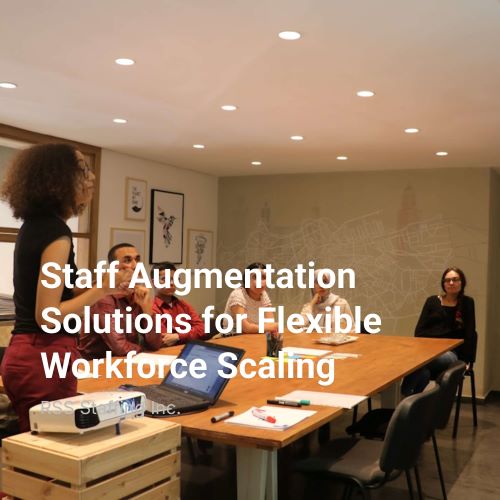
What staff augmentation solutions actually mean in practice
Staff augmentation solutions are a workforce model that allows organizations to extend internal teams with external professionals who operate within existing structures and management. Unlike outsourcing, augmented staff integrate directly into daily workflows, reporting lines, and operational systems while remaining employed by a staffing provider. This approach preserves internal control while expanding capacity or expertise.
The defining feature of staff augmentation is operational continuity. Teams retain ownership of priorities, processes, and outcomes while supplementing labor where gaps exist. This makes the model particularly effective for organizations that already have functional leadership and infrastructure but lack sufficient personnel to execute at required speed or scale.
Why organizations rely on staff augmentation instead of permanent hiring
Organizations rely on staff augmentation when permanent hiring introduces structural friction that slows execution or increases risk. Fixed headcount models are often poorly suited to environments where demand, scope, or skill requirements change faster than hiring cycles can adapt.
Common drivers behind this reliance include:
Long hiring timelines that delay project start dates or operational recovery
Fixed overhead costs tied to benefits, payroll, and long-term employment obligations
Inflexibility in headcount that creates inefficiency during demand fluctuations
Misalignment with project-based or cyclical workloads where needs are temporary by design
Staff augmentation allows organizations to adjust workforce levels without triggering internal restructuring or long-term financial commitments.
The model also reduces exposure to hiring risk by narrowing engagement to clearly defined scopes and timeframes. Instead of committing to permanent roles before demand stabilizes, organizations deploy skills only when and where they are required.
Risk reduction benefits include:
Lower exposure to overhiring when demand softens or projects conclude
Reduced underutilization of specialized talent outside active work periods
Faster access to qualified professionals without prolonged recruitment cycles
Clean scale-down options that preserve operational stability as needs change
This combination of flexibility, control, and risk containment explains why staff augmentation continues to replace permanent hiring in execution-driven environments.
Operational differences between staff augmentation and traditional staffing
Traditional staffing focuses on filling open roles, often with limited integration beyond task execution. Staff augmentation prioritizes embedded contribution, with workers functioning as true extensions of internal teams rather than temporary substitutes. This distinction affects productivity, accountability, and knowledge transfer.
Augmented professionals are expected to adapt to internal systems, tools, and performance standards. The staffing partner supports compliance, payroll, and workforce logistics, but day-to-day execution remains under the client’s direction. This separation of operational control from employment administration is central to the model’s effectiveness.
Staff augmentation versus managed services in real-world use
Staff augmentation places responsibility for delivery with the client, while managed services transfer outcome ownership to an external provider. In augmentation, internal leaders define priorities, oversee performance, and manage deliverables directly. Managed services, by contrast, bundle labor with process ownership and service-level commitments....
What a staffing solutions agency actually provides
A staffing solutions agency supplies workforce capacity by sourcing, deploying, and managing labor in alignment with operational demand rather than fixed headcount assumptions. Unlike basic recruiting services, a staffing solutions agency remains involved after placement, handling employment administration, compliance, and workforce continuity. The function is designed to absorb labor volatility so organizations can maintain output without internal disruption.
At its core, a staffing solutions agency acts as a workforce stabilizer. It allows organizations to scale labor up or down without exposing core teams to hiring delays, administrative burden, or compliance risk. This model is particularly relevant in industries where demand fluctuates, skills are specialized, or downtime carries measurable operational consequences.
Why organizations rely on staffing agencies instead of direct hiring
Organizations use staffing solutions agencies when direct hiring introduces friction that outweighs its benefits. Hiring internally requires long lead times, internal approvals, and sustained administrative oversight, all of which slow response to changing conditions. Staffing agencies compress this timeline by maintaining ready labor pools and established deployment processes.
The decision is rarely cost-driven in isolation. It is driven by risk management, speed, and continuity. When labor availability becomes a constraint on performance, staffing agencies offer a mechanism to restore balance without restructuring internal teams.
The difference between staffing solutions and traditional recruitment
Traditional recruitment focuses on filling individual roles, while staffing solutions address workforce capacity as a system. Recruitment ends when a candidate is hired, but staffing solutions continue throughout the engagement lifecycle. This distinction matters in environments where labor requirements are ongoing or unpredictable.
A staffing solutions agency assumes responsibility for workforce readiness, not just candidate selection. This includes onboarding, payroll, compliance, performance monitoring, and replacement coverage when attrition occurs. The model is designed to ensure operational continuity rather than one-time placement success.
Staffing models commonly used by staffing solutions agencies
Staffing solutions agencies deploy multiple workforce models depending on client needs, risk tolerance, and operational structure. No single model applies universally, and many organizations rely on blended approaches.
Common staffing models include:
Temporary staffing: Short-term labor to cover seasonal demand, absences, or surge periods
Temp-to-hire: Evaluation-based placements that transition to direct employment
Contract staffing: Skilled professionals engaged for defined scopes or durations
Managed staffing: End-to-end workforce oversight for a department, site, or function
Each model shifts responsibility differently between the organization and the staffing agency. The defining factor is not duration, but how labor risk is distributed.
How staffing agencies manage workforce compliance
Compliance management is a central function of any staffing solutions agency. Employment laws, safety requirements, and documentation standards create complexity that scales with workforce size. Staffing agencies absorb this complexity by centralizing compliance oversight.
This includes verifying work eligibility, managing payroll tax obligations, maintaining insurance coverage, and enforcing safety and training requirements. By doing so, agencies reduce the administrative exposure of client organizations while ensuring workforce legality and readiness.
Workforce flexi...
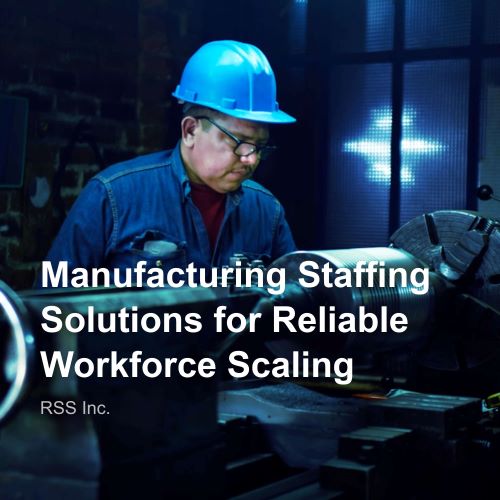
Manufacturing staffing is the process of identifying, vetting, and deploying workers who can perform reliably in production environments under real operational conditions. It extends beyond filling open roles and focuses on workforce continuity, safety compliance, and throughput stability. Employers rely on manufacturing staffing to maintain output while navigating fluctuating demand, skills gaps, and labor market constraints.
Unlike general recruiting, manufacturing staffing accounts for shift structures, equipment exposure, certification requirements, and plant-specific workflows. The goal is to supply labor that integrates quickly without compromising quality or safety. Effective staffing becomes an operational lever rather than a reactive hiring function.
Why manufacturing staffing has become critical for modern production environments
Manufacturing operations now operate under tighter margins, shorter lead times, and higher customer expectations. Workforce disruptions directly affect delivery schedules, scrap rates, and overall equipment effectiveness. Staffing reliability has therefore become inseparable from operational performance.
Employers face persistent challenges including labor shortages, aging skilled workers, and unpredictable absenteeism. Manufacturing staffing addresses these pressures by providing immediate access to vetted labor while reducing internal hiring burden. It allows leadership to focus on production strategy rather than constant workforce firefighting.
Manufacturing staffing differs from general staffing in execution and risk exposure
Manufacturing staffing operates within environments where errors can halt production or create safety incidents. Workers must be able to follow standardized work, understand equipment protocols, and sustain performance across repetitive tasks. These requirements elevate the stakes compared to office or light industrial staffing.
General staffing models often prioritize speed over fit, which can result in higher turnover and training loss. Manufacturing staffing emphasizes job matching, skills verification, and reliability metrics. The distinction matters because poor placement creates downstream costs that exceed recruitment expenses.
Employers use manufacturing staffing to stabilize production during demand volatility
Manufacturing demand rarely remains static across quarters or even weeks. Seasonal surges, customer spikes, and new contracts require rapid workforce expansion without long-term payroll commitments. Manufacturing staffing enables this elasticity without sacrificing output consistency.
Temporary and contract staffing allows manufacturers to scale labor in alignment with production schedules. When demand contracts, staffing levels can be adjusted without layoffs that damage morale or reputation. This flexibility protects both financial performance and workforce stability.
Manufacturing staffing supports operational continuity during workforce disruptions
Unexpected absences, turnover, or safety removals can destabilize a production line quickly. Manufacturing staffing provides immediate backfill options that prevent line stoppages or overtime overload. This continuity is especially important in multi-shift or just-in-time environments.
By maintaining a ready labor pool, staffing partners reduce the operational impact of workforce disruptions. Employers gain confidence that production targets remain achievable despite personnel volatility. Continuity becomes a managed variable rather than an operational risk.
Skill alignment determines manufacturing staffing effectiveness
Manufacturing staffing success depends on aligning worker capability with job complexity. Not all production roles require the same technical proficiency, but all require consistency and attention to d...

A material handler manages the physical flow of goods so work can proceed without interruption. The role covers receiving, movement, staging, storage, and handoff of materials across warehouses, distribution centers, and production floors. When performed well, material handling prevents downtime, reduces congestion, and stabilizes daily output.
For employers, the position is less about isolated tasks and more about reliability across transitions. Materials that arrive late, are staged incorrectly, or move without coordination create downstream disruption that compounds quickly. The material handler exists to eliminate those points of friction.
Why material handling affects throughput more than most entry-level roles
Material handling directly determines whether upstream and downstream teams can perform their jobs. Production schedules, pick accuracy, shipping cutoffs, and safety outcomes all depend on materials being where they are expected to be. Small execution errors at this level ripple into missed deadlines and rework.
From an operational standpoint, the role functions as a control layer rather than a support layer. A well-run material handling function smooths variability and absorbs minor shocks before they become visible problems. This is why experienced employers treat the position as operationally critical, even when it sits outside formal supervision.
How material handler responsibilities differ by environment
Material handling adapts to the physical and process constraints of the environment it supports. The core objective remains constant, but daily execution varies meaningfully by setting.
Warehousing and distribution environments
In warehouses, material handlers focus on receiving accuracy, internal movement, and outbound staging. The work emphasizes coordination with inventory systems, pick paths, and dock schedules. Speed matters, but predictability matters more.
Manufacturing and production facilities
In production settings, material handlers protect line continuity. Materials must arrive in sequence, in usable condition, and without interrupting machine cycles. Errors here stop production, not just shipments.
Specialized or regulated facilities
In regulated environments, material handlers operate within tighter controls around labeling, traceability, and segregation. The work emphasizes compliance and documentation alongside physical movement.
What distinguishes a material handler from a warehouse associate
A material handler owns material flow rather than order fulfillment alone. While warehouse associates may pick or pack within defined zones, material handlers operate across zones and transitions. Their accountability centers on availability and readiness, not just task completion.
This distinction matters when hiring because the skill profile is different. Material handlers require situational awareness, prioritization, and coordination across teams. Employers who conflate the roles often under-hire for judgment and over-index on physical output.
Material handler equipment use as a signal of role maturity
Equipment operation is not a requirement of every material handler role, but it is a strong indicator of responsibility level. The use of powered equipment introduces risk, sequencing, and shared-space awareness that goes beyond manual handling.
Powered industrial equipment
Forklifts, reach trucks, and pallet riders indicate a role trusted with spatial judgment and safety-critical movement. Certification alone is insufficient; consistency under pressure matters more.
Manual handling tools
Pallet jacks, carts, and conveyors still require route planning and load management. Poor handling here creates bottlenecks even without powered equipment.
For employers, equipment...

CNC machinists are skilled manufacturing professionals responsible for transforming digital designs into precise physical components. Their work sits at the intersection of mechanical aptitude, programming logic, and process discipline, making them indispensable across high-precision industries. From job shops to large-scale production environments, CNC machinists directly influence throughput, quality, and cost control.
Unlike entry-level machine operators, CNC machinists assume accountability for setup accuracy, tooling strategy, and dimensional integrity. The role requires judgment, not just execution. As manufacturing complexity increases, the distinction between machinists, operators, and programmers continues to sharpen rather than disappear.
What CNC machinists actually do in day-to-day production
CNC machinists oversee far more than machine run time. They interpret technical drawings, translate tolerances into cutting strategies, and ensure machines are producing consistent results across cycles and shifts. Their responsibilities expand or contract depending on shop structure, but accountability for output quality remains constant.
In most environments, CNC machinists handle machine setup, tool selection, workholding configuration, and first-article validation. During production, they monitor tool wear, adjust offsets, and intervene when material behavior or machine conditions drift. When problems arise, machinists are expected to diagnose root causes quickly to avoid scrap or downtime.
CNC machinist versus CNC operator versus CNC programmer
Manufacturing teams often blur titles, but the functional differences matter when planning labor coverage. CNC operators typically focus on loading parts, starting cycles, and performing basic checks. CNC machinists manage setups, complex adjustments, and quality-critical decisions. CNC programmers concentrate on toolpath creation and process optimization, often upstream from the shop floor.
In many facilities, especially smaller shops, machinists wear multiple hats. They may perform light programming edits, modify feeds and speeds, or troubleshoot CAM-generated code at the machine. This hybrid reality increases their value but also raises the bar for hiring and retention.
Core technical skills that define CNC machinists
CNC machinists rely on a combination of technical fluency and hands-on experience. Blueprint reading is foundational, including geometric dimensioning, tolerance interpretation, and surface finish requirements. Measurement competency is equally critical, covering micrometers, calipers, indicators, and inspection routines.
Machine knowledge extends beyond button operation. Machinists understand spindle behavior, tooling limitations, coolant strategies, and material response. They recognize how changes in setup rigidity, tool engagement, or thermal conditions affect part quality. This situational awareness separates reliable machinists from basic machine attendants.
The environments where CNC machinists work
CNC machinists operate in diverse manufacturing settings, each with distinct demands. Job shops emphasize flexibility, quick changeovers, and wide material exposure. Production facilities prioritize consistency, cycle optimization, and volume control. Tool rooms focus on precision, prototyping, and internal support.
Industry context also matters. Aerospace and medical manufacturing impose strict documentation and tolerance discipline. Automotive environments emphasize throughput and process repeatability. Defense and energy sectors often combine both, requiring machinists who are detail-oriented under schedule pressure.
Experience tiers within the CNC machinist workforce
The CNC machinist labor pool is not uniform. Entry-level machinists typically handle simpler setups under supervision. Mid-level machinists manage independent setups, standard ma...

Contingent staffing solutions give organizations structured access to non-permanent talent that supports agility, operational continuity, and cost discipline. Companies integrate contingent workers to meet variable demand, close skill gaps, and protect output during disruptions. As workforce models diversify, contingent labor has become a central component of workforce planning rather than an auxiliary hiring method.
The contingent workforce now spans contractors, temporary employees, freelancers, consultants, and outsourced project teams. Each category provides a distinct operational advantage, allowing organizations to tailor labor inputs to workload, seasonality, and specialization. The shift from reactive replacement staffing to strategic contingent workforce design reflects changes in business velocity and risk-management expectations.
Effective contingent staffing solutions align talent, compliance, and cost control within a unified framework. Organizations that structure these systems deliberately gain access to rapid labor deployment, broader labor pools, and more predictable staffing outcomes across variable environments.
What Contingent Staffing Solutions Include
Contingent staffing solutions encompass multiple service layers that collectively support sourcing, deployment, management, and compliance. These components form the infrastructure needed to scale or contract labor responsibly.
Sourcing and Recruitment
Sourcing focuses on identifying skilled workers who are prepared for short-term assignments, project-specific work, or urgent operational needs. Recruitment teams evaluate job-specific skills, availability, onboarding readiness, and location flexibility. The goal is rapid placement without compromising capability or compliance.
Staff Augmentation
Staff augmentation places contingent workers directly into existing teams to maintain performance levels during peak cycles or resource shortages. This approach strengthens capacity without committing to permanent headcount, giving organizations more precise control over labor allocation and cost structures.
Managed Service Provider (MSP) Models
MSP programs oversee the organization’s entire contingent workforce lifecycle. These models centralize vendor coordination, requisitions, onboarding, timesheets, invoicing, and compliance. MSP oversight standardizes workforce practices across departments, reduces variance in rates and quality, and ensures that all contingent relationships operate within defined risk thresholds.
Vendor Management Systems (VMS)
A VMS platform gives organizations digital control over workforce activity, enabling visibility into worker usage, labor spend, and contract compliance. Organizations use VMS systems to manage requests, track assignments, verify hours, consolidate invoices, and store documentation. The centralization eliminates fragmented workflows and establishes consistent governance across all contingent labor providers.
Payrolling and Employer-of-Record Support
Payrolling solutions manage wages, tax obligations, onboarding documentation, and employment-related risks for contingent workers. Employer-of-Record services extend this support by assuming legal responsibility for employment classification and compliance, which reduces exposure for the hiring organization.
Compliance and Risk Management
Contingent staffing requires careful adherence to worker classification rules, labor laws, safety requirements, and contractual frameworks. Compliance oversight mitigates the risk of misclassification, improper onboarding, inconsistent safety training, and data-protection vulnerabilities. A structured program protects the organization and ensures that contingent workers operate within lawful standards.
Why Contingent Staffing Solutions Are Increasingly Essential
Organizations adopt contingent staffi...

Crane Operators Role
Crane operators perform controlled, high-risk lifting work that supports construction, industrial production, energy development, transportation hubs, and large-scale infrastructure projects. Their ability to maneuver heavy loads with precision determines site productivity and influences every trade working around them. Skilled operators reduce delays, maintain safe lift paths, and adjust to changing job conditions without disrupting coordinated work.
Operator competency has become a workforce priority across industries that rely on cranes. Project schedules, insurance requirements, and compliance mandates place professional expectations on the role far beyond basic equipment handling. Employers seek operators who blend mechanical understanding, situational awareness, and safety discipline with the reliability needed for daily jobsite continuity.
The Scope of a Crane Operator’s Role
Crane operators manage lifting equipment designed for tasks that exceed the limits of manual labor or smaller machinery. Their work involves controlling hoists, booms, jibs, wire rope systems, outriggers, and stabilization mechanisms while tracking the load’s weight, swing potential, weather impact, and lift radius. Each movement must align with the lift plan and the conditions present during the operation.
Operators coordinate closely with riggers and signal persons who manage the load connection and communication. They interpret signals and verbal directions while maintaining visual awareness of personnel, equipment, and structures in the load’s vicinity. When conditions shift, operators must stop the lift, reassess the environment, and only proceed when safety is reestablished.
Workforce shortages in skilled trades have increased the operational value of qualified crane operators. Sites depend on operators who can work consistently, adapt to project phases, and uphold safe lifting standards despite schedule pressure. Staffing stability influences how efficiently a site completes steel erection, concrete placement, modular installation, or equipment setting.
Types of Cranes and Their Operating Demands
Different crane types require specialized familiarity with mechanical design, load behavior, and control systems. Operators often secure training across multiple crane classes to expand their placement opportunities and to support diverse job environments.
Mobile Cranes
Mobile cranes offer flexibility and rapid deployment across construction and industrial projects. Operators must understand boom configuration, counterweight setup, load chart limitations, outriggers, and ground bearing requirements. These cranes often work in fast-changing environments with tight access points, requiring precise path control and strong communication with ground personnel.
Tower Cranes
Tower crane operators handle vertical lifting for high-rise projects and large structures. Their work involves fixed placement, long-radius operations, and limited visibility from the cab. Operators rely on radio communication and advanced situational awareness to manage loads that move above crews, equipment, and evolving structural elements.
Overhead and Bridge Cranes
These cranes operate within industrial facilities such as manufacturing plants, warehouses, and processing centers. Operators manage horizontal and vertical movement on fixed rails while navigating production lines and material staging areas. They must understand the behavior of suspended loads in confined spaces where personnel frequently move on foot.
Rough-Terrain and Crawler Cranes
These cranes support heavy lifting on uneven surfaces, energy projects, and large-scale infrastructure work. Operators assess site stability, slope influence, and ground compaction while staging the crane for each lift. Their decisions affect not only lift success but also the ability of ot...

Manufacturing staffing agencies exist to stabilize production environments that experience fluctuating labor needs, skill gaps, and retention challenges. They provide labor pipelines that help facilities run at consistent capacity even when internal hiring becomes slow or unpredictable. Their value is strongest in environments where precision, uptime, and reliability define business performance.
The modern manufacturing workforce is shaped by higher automation, evolving safety expectations, and tighter delivery deadlines. These shifts require labor models that can scale without compromising quality or compliance. Agencies built specifically around manufacturing understand the operational stakes inside plants, warehouses, and production floors, and structure their recruiting processes to meet those demands.
Many organizations now rely on external staffing as a core component of their labor strategy rather than a temporary supplement. This shift reflects a broader operational reality: production stability depends on a reliable flow of trained workers who can meet immediate output expectations. Manufacturing staffing partners such as RSS Inc. support this shift by aligning recruitment, training, and placement efforts with the production requirements of industrial clients.
Why Manufacturing Companies Depend on Specialized Staffing Partners
Manufacturing facilities operate under labor conditions that differ from typical corporate or administrative environments. Schedules revolve around multi-shift operations, peak demand cycles, and strict throughput requirements. Internal HR teams often struggle to maintain consistent hiring pipelines while also supporting broader organizational responsibilities.
Manufacturing staffing agencies fill this gap by dedicating their infrastructure entirely to sourcing, vetting, and deploying industrial talent. Their processes are supported by teams familiar with equipment handling, shift expectations, facility workflows, and safety priorities. This specialization allows them to respond faster than general recruiters who lack direct exposure to production environments.
A staffing partner that focuses exclusively on manufacturing develops internal benchmarks for the roles they fill. They understand the attributes that differentiate a strong machine operator from a weak one, or the traits that determine whether an assembler can maintain pace on a line with strict takt times. Firms like RSS Inc. build candidate pools around these distinctions, refining their screening over time to match each client’s operational style.
The result is a clearer, more predictable labor pipeline that supports consistent production output. For manufacturers, especially those producing at scale, this reliability outweighs the cost of prolonged vacancies, excessive training cycles, or repeated turnover.
Core Functions of Manufacturing Staffing Agencies
The primary function of a manufacturing staffing agency is to supply vetted workers capable of performing production tasks with minimal ramp time. This function expands across several interconnected responsibilities that support plant operations.
Recruiting Industrial Talent at Scale
Recruiting entry-level and skilled workers for manufacturing requires direct access to labor markets that respond to hands-on roles and shift-based schedules. Agencies maintain active recruiting pipelines that reach candidates comfortable with physical work, repetitive processes, and structured environments. The recruiting model prioritizes candidates who understand the demands of plant work, reducing early attrition.
Evaluating Skills Relevant to Production
Manufacturing roles require consistency, attention to detail, equipment familiarity, and compliance with established processes. Staffing agencies screen candidates using assessments tailored to industrial environm...

CDL temp agencies provide carriers with qualified drivers on a short-term, seasonal, or project-based basis. Their core function is matching credentialed commercial drivers with employers who need immediate coverage, surge capacity, or specialized operating experience. As freight networks fluctuate and supply chains evolve, these agencies help companies maintain service levels without long-term workforce commitments.
Temporary CDL staffing fills a critical gap between full-time hiring and operational demand. It allows organizations to keep routes active, reduce downtime, and handle unexpected spikes in workload. The value extends to both large fleets and smaller regional carriers that may not have internal recruiting teams or the bandwidth to handle full-cycle hiring.
Why Companies Rely on CDL Temp Staffing
Organizations turn to CDL temp agencies for stability in environments where workforce needs shift rapidly. Most commercial transportation operations experience inconsistent scheduling, seasonal surges, and regulatory complexity. Access to a pre-screened pool of drivers improves continuity and reduces risk.
A reliable CDL temp agency ensures that vehicles, customer deliveries, and route commitments remain on track even when full-time staff are unavailable. This model is particularly effective for carriers operating in regions with strong freight density, such as Texas, California, Georgia, Florida, Illinois, and North Carolina.
Situations That Require Temporary CDL Drivers
Companies use temporary CDL drivers in a wide range of scenarios where flexibility and coverage are essential. The need is not limited to emergencies but extends to planned and predictable operational cycles.
Common use cases include:
Seasonal spikes during peak logistics periods
Short-term route expansion
Vacation, medical, or leave-of-absence coverage
Special contracts requiring additional vehicles
Pilot program testing before expanding a route permanently
Handling backlogs following supply chain disruptions
Filling gaps during recruitment for full-time placements
In each scenario, temporary drivers allow companies to maintain service levels without rushing full-time hiring or overextending existing staff.
What CDL Temp Agencies Evaluate Before Placement
Most CDL temp agencies complete thorough screenings before clearing a driver for placement. These checks are structured to protect employers from compliance failures, safety violations, or operational risks.
Standard evaluations include:
Verification of valid CDL Class A or B license
Endorsement checks depending on vehicle type
Employment history review
Motor Vehicle Record (MVR) screening
Drug and alcohol testing
DOT-compliant physical qualifications
Road tests or driving evaluations
Background checks aligned with job requirements
These steps ensure that an employer receives a qualified driver capable of meeting regulatory requirements and performing assigned routes safely.
CDL Class Types and Their Impact on Temp Staffing
The type of CDL a driver holds determines the range of assignments they can accept. Agencies categorize their workforce by licensing level to match drivers with specific operational needs.
Class A CDL
Class A drivers operate combinations exceeding standard weight limits and are often placed in:
Long-haul and regional tractor-trailer routes
Dry van and reefer freight
Flatbed and heavy equipment transport
Tanker operations (with endorsement)
Class A is the most requested credential for CDL temp agencies due to its versatility in freight logistics.
Class B CDL
Class B drivers typically handle:
Straight trucks
Dump truc...

Contingency Staffing as a Continuity Strategy
Labor disruptions create operational instability when critical roles cannot be filled. Contingency staffing provides a structured response framework that allows organizations to maintain production, service delivery, and customer commitments when standard staffing channels are interrupted. Rather than functioning as a temporary patch, contingency staffing is a continuity discipline designed to stabilize operations under pressure.
Organizations adopt contingency staffing to reduce downtime, prevent service interruption, mitigate revenue loss, and maintain workforce safety. The effectiveness of the approach depends on how well labor needs are forecasted, how quickly alternative workers can be identified, and how operational processes shift to support a more fluid workforce environment.
Contingency staffing is not limited to emergency conditions. It also applies to predictable or cyclical shortages, seasonal volume surges, and strategic workforce transitions. The unifying concept is the capacity to maintain operational continuity when primary staffing models cannot meet demand.
Sources of Labor Disruption
Labor disruptions emerge from a range of internal and external factors. The impact varies depending on the industry, the criticality of the affected roles, and the organization’s planning maturity.
Collective Bargaining and Strike Activity
During contract negotiations, work stoppages may occur when labor and management fail to reach agreement. Strikes and lockouts disrupt operations quickly and can last from days to months. Contingency staffing ensures that essential functions continue during these periods without compromising safety or operational integrity.
Sudden Workforce Shortages
Illness surges, unexpected turnover, and shifts in labor availability can reduce staffing capacity. Organizations facing tight labor markets or specialized skill shortages rely on contingency staffing to remain operational while addressing longer-term workforce challenges.
Seasonal and Demand Spikes
Certain industries experience operational surges driven by market cycles, weather patterns, or production schedules. Contingency staffing aligns labor supply to demand without permanent workforce expansion.
Regulatory or Compliance Shifts
New compliance rules, credentialing requirements, or workplace safety mandates can temporarily reduce available labor. Contingency staffing helps bridge gaps while workers obtain required certifications or training.
The Structure of a Contingency Staffing Program
Contingency staffing requires more than access to temporary labor. Effective programs include infrastructure for planning, worker onboarding, deployment coordination, and operational oversight.
Pre-Qualified Talent Pools
The foundation of contingency staffing is a readily available pool of workers who have been screened, verified, and evaluated. Pre-qualification ensures workers can be deployed quickly without sacrificing competence or safety.
Scenario-Based Workforce Planning
Organizations develop staffing plans for different disruption intensities. Each scenario outlines required headcounts, critical job functions, geographic deployment needs, and supervisory support structures.
Credential and Compliance Management
Workers in contingency roles must meet the same credential and compliance standards as permanent employees. Maintaining current records avoids delays during activation.
Logistics and Deployment Coordination
In disruptions requiring travel-based labor reinforcement, deployment teams coordinate transportation, lodging, scheduling, and site orientation. Logist...

Why This Decision Matters
Staying in strike coverage mode too long can quietly drain budgets and weaken workforce cohesion, while pivoting too early can create overhead and legal risk. The timing of your move determines both your financial performance and labor stability.
When companies face strikes or potential walkouts, short-term coverage plans are essential to keep the business running. Temporary workers, replacement labor, or contract staff serve as a protective layer during uncertainty. But after the initial disruption ends, continuing to rely on these stop-gap measures can become counterproductive.
The Strategic Stakes
Financial Efficiency – Temporary labor often commands premium hourly rates, agency fees, and training costs. Over time, those expenses outpace the steady costs of permanent employment.
Operational Continuity – Contingent labor can fill shifts, but they rarely accumulate institutional knowledge, process familiarity, or cross-functional trust.
Culture and Retention – Temporary coverage models weaken engagement and identity. Permanent teams form cohesion, drive quality, and maintain accountability.
Risk Management – Ongoing use of replacement labor after a strike can increase tension with unions and invite scrutiny if the workforce perceives it as retaliatory.
Strategic Alignment – Building for growth, expansion, or innovation requires consistent talent. Permanent hiring becomes part of the long-term operating model.
In short, strike coverage is a necessary response. Permanent hiring is a deliberate evolution. Knowing when to move from one to the other separates reactive companies from resilient ones.
The Triggers That Signal It’s Time to Pivot
Certain operational, financial, and relational signals make it clear that temporary strike coverage has served its purpose. Recognizing these inflection points prevents wasted costs and lost momentum.
1. Demand Has Stabilized or Expanded
Strike coverage should always match a temporary disruption. If operations have returned to normal—or even grown—it’s a strong sign to shift to a stable workforce.
When you find yourself repeatedly extending temporary contracts or depending on the same agency labor month after month, the situation has moved from “contingency” to “dependency.”
A useful rule of thumb: if temporary coverage extends beyond six months without a forecasted end date, it’s time to assess permanent hiring.
2. Cost Trends Favor Permanence
In the first months of a strike, temporary labor costs are justified by urgency. But those premiums accumulate quickly.
Once you can forecast steady output and budget more predictably, run a simple cost comparison between continuing coverage and hiring permanent staff.
Consider:
Average hourly rate of temporary workers (including agency fees)
Training time and productivity lag
Turnover or retraining costs
Benefits and retention costs for permanent hires
When the cumulative temporary cost over 12–18 months surpasses the cost of permanent employment, the financial case for pivoting is clear.
3. The Role Requires Long-Term Knowledge or Culture Fit
Certain positions can be staffed flexibly — logistics roles, short-term maintenance, or administrative fill-ins.
Others require consistency, brand alignment, or deep system knowledge. When a role demands institutional understanding or daily collaboration, the value of continuity outweighs flexibility.
If your supervisors are repeatedly retraining the same positions or losing process discipline because of workforce churn, you’re operating past the point where temporary staffing makes sense.
4. The Labor Dispute Has Resolved or Stabilized
Once a strike ends or neg...

Communication as the Cornerstone of Continuity
When a labor strike looms, communication becomes the single most decisive factor in how an organization weathers the disruption. While legal teams and staffing strategies often take the spotlight, the ability to deliver clear, consistent, and credible communication — to customers, unions, and internal staff — determines whether operations stay stable or spiral into confusion.
In strike scenarios, silence breeds speculation. Miscommunication breeds mistrust. And both can damage relationships that took years to build. The organizations that recover fastest from labor disputes are those that prepare not just operationally, but communicatively — building proactive, transparent frameworks for how they’ll talk, listen, and reassure every stakeholder involved.
This article explores the three primary communication fronts in any strike situation:
Customers — who need confidence that services will continue.
Unions — who demand respect, fairness, and transparency.
Staff — who must stay informed, motivated, and protected from misinformation.
Communicating With Customers During a Strike
The Goal: Confidence and Continuity
Customers don’t want drama; they want delivery. Whether your organization provides essential goods, healthcare services, or manufacturing output, your customers expect minimal disruption. During a strike, your communications must reinforce three truths:
You remain operational.
You’re taking steps to ensure service quality.
You respect your workforce and are working toward resolution.
Step 1: Control the Narrative Early
Public perception fills the vacuum left by silence. The first 24 hours of a strike are critical — both for media framing and customer confidence. A pre-drafted communication plan should include:
Immediate Press Statement: Focus on operational continuity, respect for the bargaining process, and commitment to resolution. Avoid defensive tone or assigning blame.
Customer Email or Portal Update: Acknowledge the situation directly, outline any potential service changes, and provide a point of contact.
Website Announcement: Keep a simple, factual update page that’s regularly refreshed to prevent speculation.
A proactive tone signals professionalism. A reactive one implies disorganization.
Step 2: Communicate Facts, Not Fears
Customers care about impact, not internal politics. Frame every update around what matters to them: delivery timelines, availability, safety, and service reliability.
Example message structure:
What’s happening (factual, brief)
What’s being done to mitigate disruption
What customers can expect next
Avoid jargon like “industrial action” or “collective bargaining impasse.” Instead, use plain, respectful language that builds understanding rather than confusion.
Step 3: Empower Customer-Facing Staff
Your sales reps, account managers, and call center teams become the voice of your company during a strike. Without guidance, they risk improvising answers — which can create inconsistent messages or unintentional liability.
Equip them with:
Internal FAQs addressing service changes and company position.
Unified messaging templates for customer inquiries.
Escalation protocols for sensitive issues or media contact.
The more informed your customer-facing employees are, the more consistent — and credible — your public communication becomes.
Step 4: Demonstrate Respect for Workers
Even while managing customer...
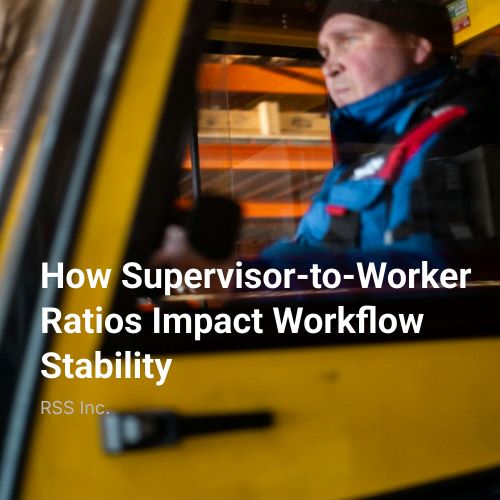
Understanding the Logic Behind Ratios That Keep Workflows Stable
In the modern industrial, logistics, and service environments, coverage waves—the strategic scheduling of supervisory oversight—have become an indispensable concept. When production floors, hospitals, distribution centers, or service hubs run 24/7, the supervisor-to-worker ratio defines far more than a reporting structure. It determines operational stability, incident response speed, labor efficiency, and ultimately, cost control.
In theory, managing ratios seems simple: assign one supervisor to a certain number of employees. In practice, it’s far more complex. The right number isn’t static—it shifts based on shift patterns, task risk levels, automation density, and the skill composition of the workforce. That’s where the math of coverage waves comes into play.
Coverage waves math helps leaders calculate how supervisory capacity overlaps across shifts and ensures there are no blind spots during transitions or high-demand periods. By mapping these coverage “waves” across time, companies can anticipate where supervision thins out—and where reinforcement is needed.
Why Supervisor-to-Worker Ratios Matter More Than Ever
During periods of economic pressure, labor constraints, or safety incidents, the supervisory layer becomes the operational stabilizer. Supervisors bridge the gap between policy and practice—they translate strategic decisions into task-level execution.
Yet, under-coverage and over-coverage are both expensive:
Too few supervisors: Mistakes go uncorrected, training suffers, and morale dips as workers feel unsupported.
Too many supervisors: Overlapping roles inflate labor costs without improving productivity, creating confusion in communication hierarchies.
In staffing terms, every point of inefficiency compounds daily. For example, a warehouse running three shifts at a 1:25 ratio might look stable on paper, but if each supervisor’s coverage overlaps by only 30 minutes between shifts, the operation experiences a 10% supervision gap per day—translating into hours of unsupervised work per week. Multiply that across a month, and you’re effectively running one entire shift per month without leadership presence.
Coverage wave modeling quantifies that loss.
The Math of Coverage Waves
1. Establishing Baseline Ratios
The starting point for coverage math is the static ratio—how many workers report to one supervisor under optimal conditions. While industries differ, here are general benchmarks:
Industry
Recommended Ratio
Notes
Manufacturing
1:15–1:25
Depends on automation and skill level
Healthcare
1:8–1:12
Varies with patient acuity and shift type
Logistics/Warehousing
1:20–1:30
Dependent on equipment use and safety protocols
Construction
1:10–1:20
Weather and risk environment alter supervision needs
Call Centers
1:12–1:20
Influenced by task complexity and software systems
However, these ratios only represent steady-state conditions—not real-time overlap or dynamic demand.
2. Calculating the Coverage Wave
Coverage waves measure supervisory presence across time, not just headcount. The formula is simple but revealing:
Effective Coverage Ratio (ECR) = Total Workers per Shift ÷ (Supervisors × Coverage Overlap Factor)
Where:
Coverage Overlap Factor = (Average Overlap in Hours ÷ Total Shift Length)
Example:
A logistics facility has 150 worker...

Contingency staffing has become a cornerstone of workforce management in industries where demand can spike unexpectedly, skilled labor must be deployed quickly, or business continuity is at risk. Whether it’s covering seasonal warehouse surges, responding to last-minute callouts, or filling critical roles during a labor strike, companies need reliable partners who can mobilize talent fast.
Yet speed alone isn’t enough. For executives, HR leaders, and workforce managers, the real question is: how do you measure whether your contingency staffing program is working? That’s where Key Performance Indicators (KPIs) come in.
KPIs provide objective benchmarks to evaluate staffing agency performance, worker quality, compliance, and cost-effectiveness. Without these metrics, it’s easy for inefficiencies to hide in plain sight—delays in onboarding, high turnover, overtime costs, or compliance risks that only surface after damage is done.
For a staffing leader like RSS Inc., which has over 30 years of experience providing logistics, warehouse, CDL driver, and strike-replacement staffing solutions, KPIs aren’t just management tools—they’re proof points of reliability and trust. Clients want measurable results, and workers want fair, transparent processes. By tracking the right metrics, contingency staffing can move from reactive firefighting to proactive workforce strategy.
This article explores the most important KPIs to track in contingency staffing, how they align with operational, financial, and compliance goals, and why they matter to HR directors, hiring managers, and executives making staffing decisions.
Why KPIs Matter in Contingency Staffing
For organizations that rely on temporary or contract workers, KPIs act as a compass. They help employers and staffing agencies like RSS Inc. navigate labor shortages, unpredictable demand, and compliance challenges while keeping costs under control.
Four Key Benefits of Staffing KPIs
Visibility & Decision-Making: KPIs turn staffing performance into clear numbers, helping managers identify strengths and weaknesses.
Cost Control: From onboarding to overtime, KPIs reveal hidden costs that may erode margins.
Risk & Compliance Management: Tracking safety incidents, background checks, and classification accuracy prevents costly errors.
Client & Worker Satisfaction: Metrics tied to feedback ensure both sides of the staffing equation are satisfied.
In contingency staffing, where time and accuracy are critical, KPIs provide a shared language for both staffing agencies and their clients.
Operational Efficiency KPIs
Operational efficiency KPIs are some of the most visible measures of staffing success. They focus on how quickly and effectively staffing needs are met, which directly impacts a client’s ability to maintain smooth operations.
Time-to-Fill
Definition: The number of days (or hours, for urgent roles) from when a client submits a staffing request to when a worker begins their assignment.
Why It Matters: Delays in filling positions can cause costly downtime, especially in logistics, warehouse, or strike-replacement situations.
Benchmark:
General labor: 4–10 days
Urgent staffing (e.g., strike replacement): same-day or next-day response
Fill Rate
Definition: The percentage of staffing requests successfully filled compared to total job orders.
Why It Matters: A low fill rate suggests gaps in candidate pipelines or competitiveness...

What It Takes to Build a Solar Workforce
The solar industry is no longer a niche sector. It has become one of the fastest-growing components of the global energy mix, and at the heart of this expansion are solar photovoltaic (PV) installers. These skilled workers are responsible for setting up, maintaining, and sometimes repairing solar panel systems on rooftops, solar farms, and commercial buildings.
According to the U.S. Bureau of Labor Statistics (BLS), the employment of solar PV installers is projected to grow 22% from 2022 to 2032, much faster than the average for all occupations. This surge is driven by declining solar technology costs, state and federal incentives, and increased public awareness about sustainable energy.
However, with rapid growth comes a significant challenge—meeting labor demand. Solar companies, from utility-scale developers to residential installers, face increasing pressure to recruit, train, and retain a skilled solar workforce. Staffing solar installers has become a top priority for HR departments, temp agencies, and training organizations aiming to align workforce capacity with market opportunity.
What Do Solar Installers Do?
Solar PV installers typically perform the following tasks:
Assessing site locations and structures for system suitability
Installing solar panels, inverters, and mounting equipment
Connecting systems to the electrical grid or battery storage units
Performing maintenance and repairs on older systems
Ensuring compliance with local electrical and building codes
The job combines mechanical aptitude with basic electrical knowledge, safety compliance, and problem-solving skills. While some installations follow standardized layouts, others require custom engineering and adaptability based on roof structure, orientation, and system size.
Installers often work at heights and in variable weather conditions. As a result, physical fitness and attention to safety procedures are essential.
Skills and Certifications That Matter
A typical entry-level solar installer may only need a high school diploma or equivalent, but many employers prefer candidates with additional certifications or technical training. Programs like the North American Board of Certified Energy Practitioners (NABCEP) certification add credibility and improve job placement prospects.
Core competencies for success include:
Electrical systems knowledge
Blueprint and schematic reading
OSHA safety training
Roofing and structural installation techniques
Power tools and hand tools proficiency
Soft skills like teamwork, reliability, communication, and customer service are also crucial, especially for residential projects where installers often interact directly with homeowners.
As solar technology becomes more advanced—with battery storage integration, smart grid interfaces, and higher-efficiency modules—installers are expected to evolve their skill sets as well.
What Does It Take to Become a Solar Installer?
To become a solar installer, you typically need a combination of technical training, hands-on experience, and basic electrical knowledge. While some start as general laborers, most employers prefer candidates who have completed a training program or apprenticeship.
Key qualifications include:
High school diploma or GED (required)
Technical training in solar PV systems (often through trade schools or community colleges)
OSHA 10 or OSHA 30 certification for safety compliance
NABCEP (North American Board of Certified Energy Practitioner...

Comments

Download from Google Play

Download from App Store
 United States