


 Claim Ownership
The Ocean News Podcast
Subscribed: 9Played: 125
Subscribe

© Copyright 2025 All rights reserved.
Description
The Ocean News Podcast – Your Essential Ocean News Podcast 🌊💙
Stay informed with The Ocean News Podcast, the go-to ocean news podcast from Oceanographic Magazine, the world’s leading publication on marine conservation, ocean exploration, and underwater adventure. Hosted by editor Rob Hutchins and social media manager Ben Hartley, this daily ocean news update delivers the most important stories on marine life, climate change, sustainability, and global ocean policy—all in a quick, weekday format.
Follow along now for your essential ocean briefing every weekday ☕️🌊
Stay informed with The Ocean News Podcast, the go-to ocean news podcast from Oceanographic Magazine, the world’s leading publication on marine conservation, ocean exploration, and underwater adventure. Hosted by editor Rob Hutchins and social media manager Ben Hartley, this daily ocean news update delivers the most important stories on marine life, climate change, sustainability, and global ocean policy—all in a quick, weekday format.
Follow along now for your essential ocean briefing every weekday ☕️🌊
72 Episodes
Reverse
Coastal communities in New Ireland Province, Papua New Guinea, have been facing a growing environmental and public-health crisis since December 2025. Thousands of fish and other marine organisms have washed ashore dead, while hundreds of residents – many of them children – have fallen ill. Four months later, authorities have yet to identify the cause.
A GoFundMe campaign has been launched to support relief efforts.
Once fully implemented, the designation will bring the total fully protected area in the region to 946,571km², making it the third largest fully protected marine area in the world, behind the Ross Sea and the Papahānaumokuākea Marine National Monument.
In this episode, Eva Cahill examines a formal dossier of evidence submitted by Greenpeace International to the International Seabed Authority (ISA).
The evidence alleges that The Metals Company (TMC) has been operating in bad faith, utilising exploration data gathered under international licenses to bypass global frameworks for a unilateral U.S. mining permit.
Scientists have discovered ANCIENT CORALS and fragile deep-sea life on a previously unexplored seamount on Lord Howe Rise, confirming it as a Vulnerable Marine Ecosystem and strengthening calls for a permanent bottom trawling ban.
Listen to the concluding episode of our special mini series on Women in Marine STEM, celebrating International Women's Day on Sunday 8th March. In this episode, Eva Cahill sits down to talk with Dr Elvira De Eyto from the Marine Institute about her 20 year career in the marine science sector.
After Channel 4’s Dirty Business exposed the human toll of sewage pollution, public outrage has surged, with campaigners demanding urgent government action to reform Britain’s privatised water industry.
In 2022, a Russian whale researcher made a startling discovery on Bering Island off Russia’s Pacific coast: a severed killer whale fin marked with the teeth of another killer whale. Two years later, it happened again, just two kilometres from the original find.
As climate change rewrites the rules of the ocean, one of the most iconic species on the US West Coast is facing a new and deadly challenge.
In this episode of the Ocean News Podcast, we dive into groundbreaking research recently published in PLOS Climate that explains why humpback whale entanglements are surging, even as their populations recover.
In this episode of the Ocean News Podcast, editorial assistant Eva Cahill sits down with PhD researcher Marianne Glascot for the second instalment of our Women in STEM series.
With a background in organisational development and a previous career at HSBC, Marianne brings a unique, late-career perspective to academia. She shares her journey from environmental physics to a PhD at the University of Sussex, offering a candid look at the evolving culture of science today.
For the first time in 180 years, giant tortoises are once again roaming the Galápagos, as 158 were released in Floreana Island this month – which conservationists say will strengthen the island’s land-sea ecosystems.
Sea Shepherd has launched its 2026 Antarctic campaign to document industrial krill fishing near key whale feeding grounds. The mission will gather scientific data, increase public scrutiny and inform international policy amid growing pressure on the Southern Ocean ecosystem.
“I've been asked so many times whether I was the assistant of the researcher. Even after explaining, no, that's me, I've been asked again: are you the assistant?” says George Short, a female Marine ecologist working with the Sussex Wildlife Trust.
Canada has unveiled a sweeping new plan aimed at reducing deadly whale entanglements while safeguarding the future of its coastal fisheries. Earlier this month, Fisheries and Oceans Canada released its Whalesafe Fishing Gear Strategy – a five-year national framework designed to lower the risk of entanglements.
Loggerhead turtles are successfully adapting to warming temperatures by breeding earlier, but depleting ocean productivity is causing a major decline in their reproductive capacity.
Jessica Rowe and Miriam Payne - the aptly named duo behind Seas the Day - have returned to the UK having completed their ocean odyssey - an unsupported and non-stop row across the Pacific Ocean. Hear their tale of inspiration and determination on the Ocean News Podcast.
A parliamentary bill introduced in Aotearoa New Zealand is seeking to fundamentally reshape how whales are protected in law, proposing that cetaceans be recognised as legal persons with inherent rights. It’s a move that could shape our approach to nature rights across the globe.
A UK government consultation wants to secure the "long-term viability" of fish stocks to "protect coastal economies", but environmental groups like Oceana have warned government proposals are INADEQUATE, and have done little to “deliver REAL CHANGE for our seas”
Scientists in Colombia - in partnership with NatGeo Pristine Seas - have documented and photographed some of the ocean's most ancient residents... ctenophores, an ethereal species as old as the ocean and as equally hypnotic.
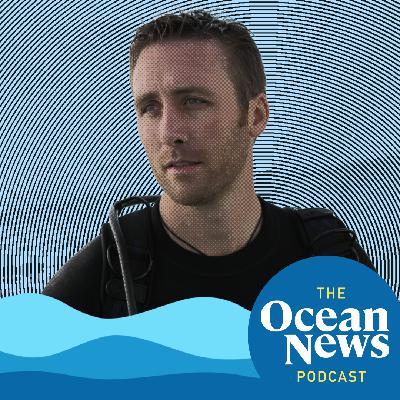
In this episode, Eva Cahill speaks with Philippe Cousteau Jr., grandson of Jacques Cousteau, about his new mission to move coral restoration from a charitable endeavour to a global commercial success.
As the CEO of VoyaSea ReGen, Philippe explores why the current "one square kilometre" pace of restoration is insufficient and how emerging technologies like 3D printing and AI can rebuild reefs as critical coastal infrastructure at an industrial scale.
Photo by EarthEcho International
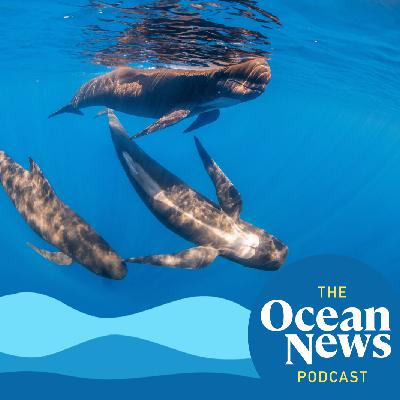
In this episode, Editorial Assistant Eva Cahill, dives deep into a new study that shows the efficacy of regulations, and calls for new legislation to limit the growing use of new PFAS.
Photography by Vincent Kneefel

Comments

Download from Google Play

Download from App Store
 United States