


 Claim Ownership
Accelerating Development: Ideas for Impact
Subscribed: 28Played: 141
Subscribe

© Copyright 2025 All rights reserved.
Description
An AI-powered, expert-led podcast on cutting-edge policy solutions for today’s biggest development challenges, direct from our global research network.
🌐 Listen to other languages: https://www.podbean.com/podcast-network/wbginstitute
39 Episodes
Reverse
In this episode, we explore key insights from the World Bank World Development Report 2023: Migrants, Refugees, and Societies. With over 184 million people living outside their country of nationality—nearly half in low- and middle-income countries—the report highlights how migration, if managed well, can be a positive force for development, bringing benefits for migrants as well as origin and destination countries. Tune in as we unpack the report’s integrated framework built around the “match and motive” matrix, which helps policymakers tailor migration strategies to the skills and motivations of migrants. From demographic shifts to economic integration and brain drain, we discuss how migration can be a force for prosperity.
Rising trade tensions and ongoing policy uncertainty are threatening to slow global growth to its weakest pace since 2008—outside of outright global recessions. In this episode, we unpack why growth forecasts have dropped for nearly 70% of economies worldwide, spanning all regions and income levels. Join us for an in-depth look at the policies, priorities, and practical actions that countries can take to mobilize domestic revenues, protect vulnerable households, and boost jobs and productivity.
Read the report on our website.
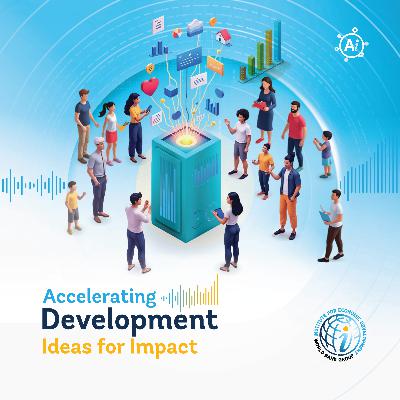
In this episode, we dive into the World Development Report 2021: Data for Better Lives and explore data's potential to drive development and improve lives. Join us as we unpack the report’s call for a new social contract on data to boost innovation and inclusion, protect privacy and trust, and ensure that the benefits of data are shared equitably. Generated with AI using wondercraft.ai and guided by our experts.
"Accelerating Development" embarks on a comprehensive deep dive into Global Value Chains (GVCs), exploring their profound impact on global economies and development. We discuss how GVCs have historically fueled economic progress and poverty reduction, demonstrating a significantly more powerful effect on per capita income growth compared to traditional trade, driven by hyper-specialization and durable long-term relationships. Generated with AI using wondercraft.ai and guided by our experts.
However, the GVC landscape is actively evolving. We examine the slowing growth observed since the 2008 financial crisis, new technological advancements like 3D printing, and the increasing influence of geopolitical trade tensions, raising critical questions for researchers and policymakers on how developing countries can effectively navigate and benefit from these shifts.
Our discussion highlights the key drivers for GVC participation, emphasizing the crucial role of factor endowments, market access, geographic connectivity, technology, foreign direct investment, and robust institutions. We also delve into the complexities of making GVCs work for broader, more inclusive, and sustainable development goals, addressing environmental impacts, potential social inequalities, and the vital importance of continuous upgrading and proactive risk management through smart policy. What new research questions emerge regarding the long-term path for countries deeply integrated into GVCs given these fundamental shifts?
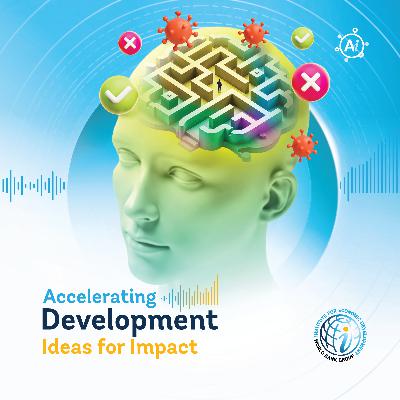
The COVID-19 pandemic tested public health communication like never before. While providing information is crucial, does it always translate into action? In this episode of “Accelerating Development,” we delve into a groundbreaking World Bank meta-analysis on COVID-19 vaccination intentions. Drawing on insights from the 2015 World Development Report "Mind, Society, and Behavior," we examine how behaviorally informed messages – considering how people think socially and use mental models – significantly impacted public responses. From the power of trusted messengers to the nuances of message framing and the complexities of heterogeneity across contexts, we explore the methodological innovations and critical research frontiers this study illuminates for accelerating development through a deeper understanding of human behavior. Generated with AI using wondercraft.ai and guided by our experts.
The world's poorest nations are grappling with an unprecedented debt crisis. In this episode of "Accelerating Development," we delve into the World Bank's International Debt Report 2024. Join us as we explore the record $1.1 trillion external debt burden facing IDA-eligible countries and the complex factors driving this surge, from pandemic aftershocks to rising global interest rates.
The world of work is undergoing a rapid transformation, driven by technology and globalization. While this brings new opportunities, it also presents significant challenges. In this episode of “Accelerating Development”, tune in to unpack the World Development Report 2019: The Changing Nature of Work and explore how firms, workers, and societies are adapting. We delve into the skills needed for the future labor market, the evolving social contract, and how governments can respond to ensure inclusive growth. From the rise of digital platforms to the need for lifelong learning, we ask: is the changing nature of work a path to shared prosperity, or a driver of increased inequality?The world of work is undergoing a rapid transformation, driven by technology and globalization. While this brings new opportunities, it also presents significant challenges.
Many countries have business-friendly laws on paper. But what happens when the public services meant to support them fall short? In this episode of “Accelerating Development”, tune in to unpack the World Bank’s Business Ready 2024 report and examine the often-overlooked gap between legislation and implementation. From underpowered tax portals to fragmented border systems, we ask whether firm resilience is a sign of strength, or a symptom of deeper dysfunction.
How can countries avoid the “middle-income trap” and reach high-income status? In this episode, we unpack the World Development Report 2024, which outlines strategies for countries to shift to high-income status. Tune in for sharp insights on how nations can compete, innovate, and level the playing field to drive long-term prosperity. Generated with AI and guided by experts.
Countries have made enormous progress in recent decades dismantling laws that discriminate against women, but to this day, no country has achieved true equality of opportunity. According to the World Bank 2024 Women, Business and the Law report, countries can unlock the full potential of their population by embracing legal gender equality. Closing the gender gap in employment and entrepreneurship could raise the global GDP by more than 20%. Listen to what countries can do to turbocharge global growth. Generated with AI and guided by our experts.
Host: Renos Vakis, Lead Economist at the World Bank
Learn more:
Women, Business and the Law 2024 report
About the Institute for Economic Development
Help us improve:
Take a few minutes to send us your feedback.
Only 58% of women participate in the labor force vs. 76% of men—and no economy grants women the full set of legal rights measured today. In this episode, we unpack Women, Business and the Law 2026 and the growing “implementation gap” between laws on paper and reality on the ground. From safety and childcare to credit and political representation, we explore why closing gender gaps could raise global GDP per capita by up to 20%.
Generated with AI using wondercraft.ai and guided by our experts.
Read more at https://wbl.worldbank.org/en/publications/flagship-report
Nearly 90% of global trade is affected by non-tariff measures. Exporters face an average of more than 15 distinct compliance requirements per shipment.
What looks like a simple apple on a grocery shelf is governed by a dense web of agrifood standards—covering safety limits, labeling, audits, and certification. As tariffs decline, these standards increasingly determine who can access global markets.
This episode explores how regulatory distance shapes trade flows, why small producers face disproportionate compliance costs, and how the “Adapt, Align, Author” framework can help countries turn standards from barriers into springboards for growth. From quality infrastructure gaps to the economic payoff of certification, we unpack what it takes to compete in today’s rule-based food economy.
Generated with AI using wondercraft.ai and guided by our experts.
Read more at https://www.worldbank.org/en/publication/wdr2025
45% of global growth. Nearly 60% of income gains for the poorest. 📊
What if education has been one of the most powerful forces reshaping the global economy? This episode explores new evidence from Distributional Growth Accounting: Education and the Reduction of Global Poverty, 1980–2019, showing that schooling explains roughly one-third of the decline in extreme poverty worldwide. We unpack how expanding secondary and tertiary education transformed labor markets, reduced inequality, and moderated skill premiums across 154 countries. Discover why traditional growth models may be underestimating education’s true economic impact—and what this means for policy today.
Generated with AI using wondercraft.ai and guided by our experts.
Read more at https://amory-gethin.fr/files/pdf/Gethin2025QJE.pdf?deliveryName=DM272505
1.8 billion people today—and 2.6 billion by 2050. Frontier Market Economies are countries that sit between low-income and emerging markets: more developed than the poorest economies, with some access to global financial markets, but still facing significant structural constraints. This episode dives into the world’s biggest jobs challenge, unpacking why slowing investment, volatile capital flows, and rising debt risks are holding these economies back—and what has worked for those that succeeded. Drawing on insights from the Global Economic Prospects 2026, we explore how smart policy choices can turn demographic pressure into a driver of sustainable growth.
Generated with AI using wondercraft.ai and guided by our experts.
Read more here at https://openknowledge.worldbank.org/server/api/core/bitstreams/a8c9b8ba-4558-4195-9826-1185f0b41283/content
Global growth looks resilient—but is it? In 2025, global GDP grew 2.7%, yet 1 in 4 developing countries is poorer than before the pandemic. This episode looks beyond the headlines to uncover a slowing global economy, deepening divergence, rising debt, and the race to create jobs for 1.2 billion young people. We explore why fiscal rules and private investment may be the difference between a temporary rebound and lasting stability.
Generated with AI using wondercraft.ai and guided by our experts.
Read the full report here at https://www.worldbank.org/en/publication/global-economic-prospects
$60 a barrel. A 2.7 million-barrel-per-day surplus. The global oil market is heading into one of its biggest oversupply moments outside major crises. This episode unpacks what falling energy prices really mean for development—why cheaper oil can create fiscal space, support disinflation, and open opportunities to reform subsidies and invest in growth, while history warns against trying to control volatile markets.
Generated with AI using wondercraft.ai and guided by our experts.
Read the full report here at https://openknowledge.worldbank.org/entities/publication/d08d3ee8-e38a-4f02-8ade-95b9c6075c0b
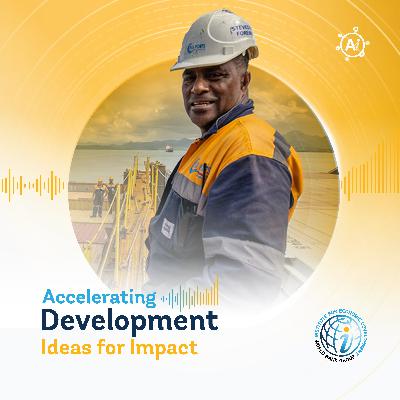
📦 A metal box boosted trade by 1,240%.
🩺 A simple checklist cut surgical deaths by 47%.
🔌 A plug that fits a socket keeps economies running.
This episode unpacks the World Development Report 2025’s idea of standards as the “invisible infrastructure” behind growth, trust, and public goods. From global trade and FDI to healthcare, education, air quality, and AI, we explore how getting the rules right—and making them work in practice—can transform development outcomes worldwide.
Generated with AI using wondercraft.ai and guided by our experts.
Read the full report here at https://www.worldbank.org/en/publication/wdr2025
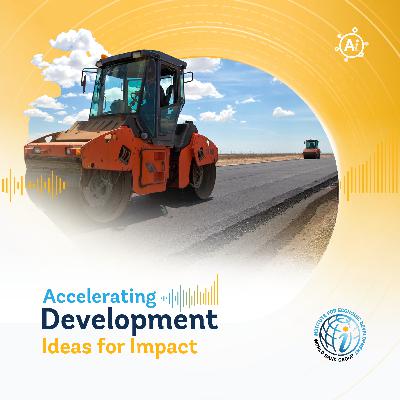
Investment accelerations can lift output growth to nearly 6% a year and cut poverty rates by 0.5 percentage points annually—but they’ve become far rarer. This episode uncovers why single reforms no longer spark growth and how coordinated policy packages—combining fiscal stability, openness, and strong institutions—dramatically raise the odds of both public and private investment takeoff. Learn how countries can translate reforms into real jobs, higher productivity, and greater poverty reduction.
Generated with AI using wondercraft.ai and guided by our experts.
Read the full report here at https://www.worldbank.org/en/research/publication/accelerating-investment
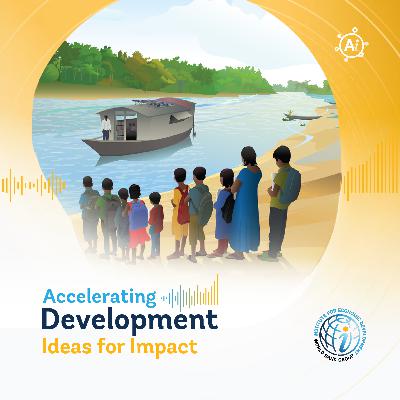
Can a simple bank account offer better protection than a sea wall? This episode challenges the top-down view of climate resilience, arguing that the most effective path to climate resilience starts with people - and it begins with economic growth . We explore why a 10% rise in GDP saves millions, how "ambiguity aversion" paralyzes decision-making, and the surprising ways government safety nets can accidentally increase risk through "moral hazard." Discover why empowering individuals with data, finance, and market access is the most effective strategy for a changing world. Generated with AI using wondercraft.ai and guided by our experts.
Read the full report here at https://www.worldbank.org/en/publication/rethinking-resilience
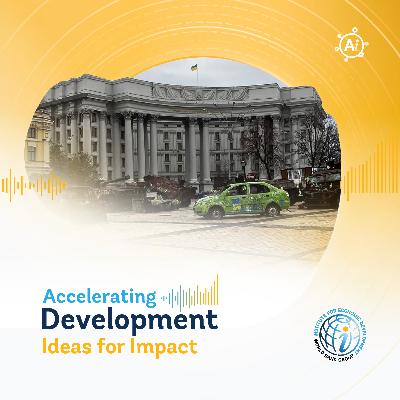
Ukraine's recovery requires more than rebuilding bridges; it demands a restart of the economic engine itself. This episode explores how Ukraine can replicate West Germany's post-war "Wirtschaftswunder" (economic miracle) to break out of a low-dynamism trap. We diagnose why top firms control over 50% of sales without innovating and how "power without performance" is stifling growth. Discover why simply subsidizing startups isn't enough and why disciplining entrenched incumbents is the critical first step to unleashing a competitive, high-growth future. Generated with AI using wondercraft.ai and guided by our experts. Read the full report here at https://openknowledge.worldbank.org/entities/publication/8a6ceaee-1491-41b1-8955-6cf41a473856

Comments

Download from Google Play

Download from App Store
 United States