


 Claim Ownership
Lens of Hopefulness with John Passadino
Subscribed: 0Played: 1
Subscribe

© Passadino Publishing LLC
Description
Lens of Hopefulness with John Passadino delivers compelling insights on self-awareness, mental health, and spirituality through in-depth interviews with international authors, performers, educators, and philosophers.
lensofhopefulness.substack.com
lensofhopefulness.substack.com
24 Episodes
Reverse
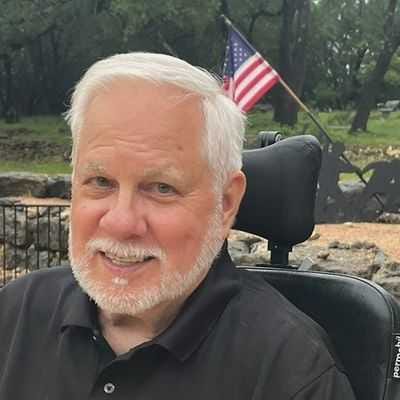
When I read Jay Setchell’s book The Strength Within You before our interview, it stunned me. I thought to myself, “how is this man still alive?”The answer, as I quickly discovered when Jay joined me on Lens of Hopefulness with John Passadino, is that he’s still alive because he has refused, at every possible turn, to be anything else.Jay Setchell is a 76-year-old Marine Corps veteran, entrepreneur, author, and a living testament to resilience. He has survived 73 surgeries. He has physically died not once, not twice, but three times. And yet, there he was, talking to me with warmth, humor, and a philosophical insight that I wasn’t expecting from someone who’s been through what he’s been through. I felt a real kinship with him — not because I’ve endured anything close to what he has, but because I understood the importance of intestinal fortitude.We started our conversation so strongly that I forgot to even introduce the show. That’s how good this conversation was.Three Times GoneLet me give you a sense of what Jay has survived, because numbers alone don’t do it justice.The first critical accident happened in 1969-70, when Jay was a young Marine. A teammate on his criminal intelligence unit had been injured, and Jay was rushing him to get medical help. His friend’s wife had her arm around the injured man’s head, applying pressure, when Jay’s car slammed into an unlit truck in the pitch dark. The impact was catastrophic. Jay’s face was literally crushed into the steering wheel — his head caved in on the left side, burned, and he was put in traction for over eight and a half months. He spoke so matter-of-factly about this as if he weren’t phased.In terms of NDEs, he said he floated above his own body, his back against the ceiling, looking down at the doctors working on him. Everything appeared red to him, and violent. He watched the doctors give up and walk away. Then a Dr. Gray — a Navy oral surgeon in white — walked in and, through some intervention Jay can barely explain, pulled him back. Jay doesn’t remember returning to his body. One moment he was above it; the next he was in a coma, able to hear voices, starting the long road back.The second near-death was at the hands of a drunk driver who sideswiped Jay, sending his car rolling into a deep ditch. The drunk driver himself was thrown from his truck, with no seatbelt, and was killed.The third time — and this is the one where Jay describes perhaps the most striking near-death experience in the book — happened at a pool. Jay broke four vertebrae diving into the pool feet first. He was drowning at the bottom while people around him assumed he was just goofing around. He describes the sensation in his book as being pulled down “a long endless vortex as if I was inside a tornado. No bright light, no voices, just nothing.” No tunnel. No heaven. Just gone. They dragged him out and got him to a hospital, and somehow — again — he came back.When I mentioned to Jay that his descriptions were unlike most near-death experiences I’d heard, he agreed. He’s lived through too many versions of near-death experiences to establish a set pattern!Because of so many accidents and surgeries, Jay has a condition called syringomyelia, along with other serious spinal diagnoses, that means — by every medical understanding — he should not be able to move anything from his shoulders down. He was a case study at the Neuro Center at Methodist and Baylor in Houston, and at Seat and Brain and Spine in Austin, where roughly 25 to 28 doctors from around the country and the world gathered to ask a single question: why is this man still moving?His neurosurgeon, Dr. Rose — who himself was a MASH doctor in Vietnam and had seen a few things — gave them his answer. He told those assembled doctors: “Number one, he’s a Marine and he doesn’t know when to quit. And number two, he’s just stubborn.”Jay’s next statement tied into the power of manifestation I’d heard before but this time with living proof, “I believe in the power of your mind. I believe that I can move because I think I can move and I want to move. I will myself to move. And the day that I accept the fact that I can’t move anymore, I probably won’t.”So, a mind over matter case study sat before me, lived, tested, and won.I asked Jay on where this grit came from. Because you don’t just wake up one day and decide to be the person who survives everything. So where does it start?For Jay, it started on a farm in Northern Illinois. He grew up working from the age of five — mixing powdered milk for the calves at five in the morning, stepping on nails (more than once, he told me, including one that went clean through his boot and out the top), pulling weeds, hauling buckets through the snow. He talked about watching the seasons change — planting, cultivating, harvesting, resting — and how that rhythm built something in him that he carries to this day: the expectation of change, and the ability to look forward to what comes next.“It built me up to always expect change,” he said. “Always look forward.”He also gave me a line that provided tremendous food for thought and one that I’ll tuck away for future reference: “Sweat dries, blood clots, and broken bones heal. Suck it up.”That may sound callous, but he’s someone who has watched himself heal from things most people will never experience and has learned — through decades of experience — that things do, in fact, get better if you keep moving.Jay’s book is full of what I’d call tough-love philosophy, and he has a gift for turning big ideas into easy-to-understand phrases. He shared these nuggets with my listeners:“END is not the end. It means Effort Never Dies.”“FAIL is not failure. It means first attempt in learning. You tried. That means you didn’t fail — you started.“NO doesn’t mean no. It means next Opportunity.”I told Jay right there on the podcast that I was going to put those on memes and share them.His overarching mantra — on the cover of his book and on his website — is It’s Always Too Soon to Quit. He’s been saying it for years, but when you hear it from a man who’s died three times and gotten back up each time, it’s quite effective.I should mention that Jay isn’t just a man who survived things. He’s a man who has done things. He ran multiple businesses — car detailing, flipping Corvettes, a trucking company, and others. He was a problem-solver in management before the company medically retired him at 41. Every time a door closed on him, he looked for another one to open.He told me something that I think summarizes his outlook better than anything:“I don’t believe anything great ever really happens until someone’s either mad as hell or on fire with a cause.”And after a lifetime of being both, Jay finally sat down — or rather, dictated over the course of a year his book, “The Strength Within You.” He’d been told for over 50 years to write a book and kept putting it off. He’s glad he waited, he told me, because if he’d written it sooner, he would have missed a lot of the story.I think he’s right. And I think he’s also right that the story isn’t really about what happened to him. It’s about what he did with what happened to him.Near the end of our conversation, Jay and I talked about why God put him in a position to absorb so much pain. I mentioned the book of Job to him. He nodded. You keep getting knocked down, and you keep getting back up, and at some point, that becomes its own kind of testimony.He said that God “won’t give me anything more than I can bear” and knows that Jay is going to be “stubborn or mad as hell” but will move through it.Jay Setchell is living testimony. I feel honored to have had him on Lens of Hopefulness with John Passadino, and I honestly could have talked to him for hours. (We did — I had to edit the episode down to an hour. Maybe someday I’ll release the bootleg.)If Jay’s story speaks to you, pick up The Strength Within You on Amazon, and visit him at neverquittrying.com. And if you haven’t already, please subscribe to Lens of Hopefulness with John Passadino wherever you get your podcasts. It helps more than you know.Remember, “It’s always too soon to quit.”You can listen to this interview on Spotify, Apple Podcast, Audible, and YouTubeCopyright Passadino Publishing LLC This is a public episode. If you would like to discuss this with other subscribers or get access to bonus episodes, visit lensofhopefulness.substack.com

My podcast interview with Kit Slocum felt the most personal of many I’ve conducted. Maybe because she’s a neurodiversity coach who works with people like me — and she happens to be neurodivergent herself. Perhaps that’s why I kept saying “that’s me!” so often during the interview.Kit is the Neurodiversity Lead at Flown (flown.com), a platform built around something called body doubling — which I’ll explain later in this article — and she also does one-on-one ADHD coaching. When I saw her high energy-glowing picture on Flown’s website at 3 a.m. during one of my sleepless nights, I just knew she was the right person to have on the show.I spoke a great deal on the podcast because Kit was gracious enough to let me share my own stories, and she related to them. That doesn’t happen every day.Growing Up Neurodivergent in the 1960sI went to grammar school in the 1960s. Strict Catholic school. Uniforms. Nuns with rulers. And if you weren’t paying attention — or if your brain just didn’t work the way others did — you suffered for it. Literally. You didn’t get picked for teams, and you got a ruler cracked on your desk or your hand by a nun who had zero patience for a kid who couldn’t sit still and focus. For me, it was any attempt at math that humiliated me, and a nun who shook her head in disbelief when she saw my feeble answers instead of offering me help.I didn’t know at the time that I was neurodivergent with two of my monikers being ADHD and GAD (Generalized anxiety disorder). Nobody did. What I knew was that I felt different, I felt ashamed, and somewhere along the way I started calling myself stupid because there was no other explanation for my ineptitude. That label stuck with me for a very long time. If I’m being honest, it still sneaks back in sometimes.I barely graduated high school, then didn’t go to college until seven years later because my experience had been so bad I never wanted to see a classroom again. When I finally went back as an adult, things were different. I was motivated. I had maturity. I eventually earned an MBA — though I’ll tell you, online schooling was the game changer for me. Working at my own pace, without the pressure of everyone around me and strict unforgiving teachers, made all the difference.My son is also neurodivergent. When he was young, we were fortunate to live in a part of New York state that provided at home services. When he grew older, people told us, “Don’t put him in inclusion (teacher-assisted classes). Once he’s in, he’ll never come out.” We ignored that advice. He graduated from two colleges. I think about that often when someone tells me what a neurodivergent person can or can’t do when given the proper support.From “Something’s Wrong with You” to “Your Brain Is Different — Not Broken”Kit brought up something I had heard previously from another neurodiversity person and that is there’s a difference between what she calls the pathology paradigm and the neurodiversity paradigm. When I heard what she said, it reaffirmed conclusions about myself.From my experience, neurodivergence was treated as something to be fixed. ADHD, autism, dyslexia — these were seen as defects that needed to be corrected so you could fit into the status quo. That’s the pathology paradigm. And if you grew up in it, you know exactly how much damage it can do.The neurodiversity paradigm says something different. It says our brains aren’t wrong — they’re just different. There’s no one “correct” brain. Kit used a beautiful analogy: eye color. Blue eyes, brown eyes, green eyes — they’re all beautiful. But if you have blue eyes, you might be more sensitive to sunlight and need darker sunglasses. That doesn’t mean your eyes are broken. It just means you need a different kind of support. That’s all.She also talked about a pattern she sees often in her clients — mostly folks in their mid-40s to 60s — when they receive a late diagnosis. Some feel relief. Finally, it makes sense. But others experience a kind of grief: Who could I have been if I had known this sooner? If someone had supported me properly? It’s a retroactive grief for the version of yourself that never got the chance. I used to do that to myself. I would use a parade of “what ifs”. Today, I realize my growth occurred a harder way, but it happened and I am grateful. I wonder if a lot of people listening will feel that way too.Let me back up and explain Flown, because it consists of a process that initiated that very thought, “Where would I have been if I had this growing up?” And that process is called body doubling.Body doubling is the practice of working alongside another person — not necessarily talking, not necessarily collaborating, just being present together. For many people with ADHD, working completely alone leads to distraction, avoidance, and paralysis. But having someone else in the room (or on screen) can make an enormous difference. It reminded me of the inclusion program my son entered during grammar school. An extra teacher helped him stay on task so he could get his schoolwork done. And Flown offers opportunities around the clock to enter a focus group.Kit also runs facilitated sessions — structured, hosted sessions designed specifically for neurodivergent brains — and ADHD-focused power hours where participants share tools and strategies. She offers one-on-one coaching as well, starting with what she calls a “chemistry session”: a free, no-pressure meeting to see if you’re a good fit for the program. Note Kit did not come to advertise a product. I brought the products up.Dopamine, Adrenaline, and Why ADHD Brains Thrive on StimulationHere’s where it got relatable for me. I spent my career in IT — at IBM and JPMorgan Chase — working alongside some of the most brilliant people I’ve ever met. They are people who designed the systems that run the world, and I saw first-hand when they approached a whiteboard and outlined a legacy system that processed billions of transactions. And yes, I sometimes felt inadequate standing next to them. “How can I possibly compete on this level?” But I also thrived in that environment, even when it was hard, because it was stimulating. Looking back, I think many of those brilliant colleagues were neurodivergent too. I just didn’t know the word for it yet.Kit explained something that connected all of that for me: people with ADHD are often drawn to high-stimulation environments because adrenaline pairs with dopamine. When your adrenaline spikes, your dopamine follows. It’s a survival mechanism — if you’re face to face with something threatening, the dopamine rush helps you act. For ADHD brains that run low on dopamine, high-stakes, high-energy work can feel more manageable than sitting in a quiet room trying to concentrate.The flip side? We’re also prone to burnout. Kit described it as a battery issue. Neurodivergent brains, she said, often come with a smaller battery than neurotypical folks — and it runs out faster because we’re constantly working to emotionally regulate, filter stimuli, and manage what’s happening beneath the surface. Add in anxiety, chronic illness, or any other factor, and you’re draining that battery even faster.I burned out from my IT career. I experienced long-running headaches that split my head in two and lasted for months. And my stomach burned as if on fire causing me to go for uncomfortable tests. I also suffered from eye issues from the strain of reading white papers and studying for my master’s in the middle of the night. Was it worth it? I think so. But I also know now that I was running on empty for a long time without recognizing it.Ironically, today I’m retired, but the pattern continues. I haven’t slowed down. I’m on two non-profit boards. I volunteer for several organizations, run this podcast, write books and produce plays. Why? Because I need to, not for the money but I need to stay active. My wife looked at me the other day and said, “Are you back at work again?” She wasn’t wrong. It’s just the way I’m wired. The question I’m learning to ask myself is: am I thriving, or am I burning out again?Who Your Partner is May Matter More Than You ThinkKit and I discovered something interesting: many of her clients with ADHD have partners who are opposite personalities — steady, grounded, measured, low energy. I shared how my wife is that way and Kit said the same is true of her own partner.Observationally — and she was careful to say there’s no empirical study behind this, just years of watching patterns — neurodivergent people seem to pair naturally with people who can anchor them. It makes sense. The spontaneity and energy of a neurodivergent partner meet the stability and consistency of the other, and together they stretch into a space that works for both. It doesn’t mean it’s always easy. I may want to go to Italy next week. My wife wants to plan for six months. But we’ve been together long enough that we know how to let the friction go.Toxic Positivity Is Real, and Mindfulness Isn’t Always AccessibleHere’s something I’ve wanted to say for a while, and Kit backed me up completely: mindfulness as a luxury is a real thing.I have nothing against meditation. I do it twice a day — put on the headphones, shut out the world, let my nervous system settle. But when someone on social media tells me to “just sit with the stillness” and “let go of the noise,” I want to remind them that not everyone lives in a monastery. Some of us have mortgages, kids, doctors’ bills, and New York’s Long Island Expressway. You can’t pull over and watch the sunrise when you’re already late for a customer presentation.Kit put it really well: mindfulness and stillness are often a luxury that the neurodivergent community — especially those also dealing with chronic illness — simply can’t access in the same way neurotypical people can. Our bodies and brains don’t let us rest that easily. Stillness is something we must work for, which often just feels like more work.And toxic positivity — the endless
Some conversations make your brain work in ways you didn’t expect. My recent interview with Damien Terrence Dubose on Lens of Hopefulness with John Passadino was one of those conversations that had me pausing, rethinking, and honestly needing to study up before we even started recording.Damien is a Washington, DC-based financial professional and author of America’s Ethical Archetype: Establishing the Psychology of Moral Authority and Correcting Our Country’s Broken Politics. And I’ll be honest with you — when I first read his book, I had to put it down a few times. Not because it wasn’t good. But because, as I told Damien, “this man has a beautiful mind.”The book is intense. It covers psychology, philosophy, political theory, and leadership in ways that made me realize I needed to do my homework. So I did. And the conversation that followed was worth every minute of preparation.Not Your Typical Political ConversationLet me be clear about what this interview wasn’t. We didn’t argue about personalities. We didn’t debate who’s right and who’s wrong. We didn’t get into the usual shouting match that passes for political discourse these days.What we did talk about was something much deeper: the psychology and philosophy of leadership itself.I tried to frame the core of Damien’s argument early on. His book, I said, isn’t about the usual policy prescriptions — “it’s not, well, we need to impose more tariffs…or we need better unions. It’s not that.” What Damien is actually proposing is something far more foundational: a whole new approach to leadership, one that we haven’t seen in a long time, that blends psychology and philosophy.Damien confirmed that’s exactly right.Ayn Rand and the IndividualNow, I’ll admit — I didn’t know much about Ayn Rand before reading Damien’s book. I know her now. And I understand why she’s controversial.Rand founded objectivism, which is rooted not in egotism in the sense of someone with a big ego, but egoism as an ethical philosophy. It’s based on the freedom and rights of the individual.“A person’s individuality or individual character is what we should be focusing on,” Damien said. “The thing that makes them different from other people, makes them an individual, centering a view of life around that.”When I asked for a practical example, I landed on the word that makes a lot of people uncomfortable: capitalist.“Exactly,” Damien said. “That’s this exact frame of reference I’m thinking about.”And right away, I knew some people’s hackles would go up. When I think of capitalism, I think of free market — versus socialism or communism at the other extreme.My Corporate Experience and Individual FreedomI worked for corporations my entire career — JPMorgan Chase and IBM. These companies employed a lot of people. They allowed me to retire at a relatively young age. During that time, I was all for free market and business because I wanted to stay employed. I felt like if they got tax breaks and could operate within reason — not polluting rivers and all that — they needed to grow and invest for the company to thrive. And both companies have been thriving for over 100 years.But Damien pushed deeper than just economic outcomes.“A lot of times people look at the outcomes of situations,” he said. “But really what’s at the root of it is: as an individual, I get the right to choose. And I’m not saying that I get the right to take your life or injure you or do anything of that nature. That’s where we get to the rational and irrational perspective. But essentially, I’m not here to make decisions only that you approve of. I’m not going to limit my life to that realm.”How Did We Get Here? The Wisdom of the Founding FathersOne of the most impressionable moments in the conversation came when I pointed to the opening pages of his book. The Founding Fathers, he wrote, “established the United States on the core principles that emphasize the role and rights of the individual.” America was built as a constitutional republic firmly rooted in those axioms.So what happened?Damien’s answer was both historical and psychological. The individualist perspective, he explained, is actually a fairly new concept in human history — only about 500 years old. Before that, we lived in collectives, tribes, castes. We didn’t see ourselves as individuals apart from our groups.And here’s what struck me: we underestimate the wisdom of the people who built this country. “They foresaw a lot of the things that are happening today,” Damien said. “That is exactly why the system is set up the way it is today.”I shared what I’d heard from a philosophy and rhetoric professor: that back in those early days, you had to study, you had to command the ability to communicate, you had to execute rhetoric efficiently — or you’d better know how to fight. There was no casual scrolling through a feed and forming a half-baked opinion.The DEI Question: Imposition vs. Individual ChoiceWe touched on one of the most charged topics in America right now: DEI.I tried to distill what I read in Damien’s book: “In an effort to right wrongs, so much attention has been given to balancing us that we’ve imbalanced us.” I asked Damien if I had it right.He agreed — but pushed the argument deeper. If he believes something is imbalanced in your home, does he have the right to come in and fix it for you?“People do also need the right to do dumb things with their life,” he said. “How else would they learn? They can’t learn if you’re always jumping in to fix everything.”His argument isn’t that we shouldn’t help each other. His argument is about how we help. Government-imposed diversity, funded by taxpayers who have no choice in the matter, loses what makes generosity meaningful. “Own it in your community with the people you know,” Damien said. “Start with your family. Start with your community. You go to church, your church, your schools, whatever’s around you — and that way, you own that decision.”And then I read a passage from his book:“The beauty of America lies in how diversity and inclusion naturally emerge from competitive free markets. In a capitalist system, people choose to engage with members from diverse groups to achieve shared goals, benefiting all involved. Individuals form these relationships willingly, free from coercion. In contrast, forced relationships encourage engagement without reason. While forced diversity may increase interactions among individuals of diverse backgrounds, these interactions lack cohesiveness in the absence of shared values.”I told him: I can’t say it any clearer than that.The Leadership We Actually NeedWhat does the right kind of leader actually look like? Damien looks to Jung’s eight personality types and filters them through Rand’s philosophy to arrive at an answer. America needs what he calls a “level nine” leader — someone who can hold the full complexity of the individualist perspective, respect others’ rights while maintaining their own, and lead not from emotion or impulse but from principled analysis.“The leaders that I’m trying to write to in this book are the leaders that won’t play into that,” he said, referring to the constant cycle of emotional politics and fickleness. “They will lead from a foundational principle perspective, but with the understanding that many people do look at things like that. So you do need to be effective. Just because you want to be principled doesn’t mean that you don’t want to be effective. You want both.”I pushed him: where do we start? How do we actually shift this?His answer: education. It starts there. When people know better, they do better — not because of government mandates, but inherently.My Lens of HopefulnessNear the end of our conversation, I got a little cynical — I’ll own that. With all the political noise since 2016, it’s hard not to. However my podcast is called Lens of Hopefulness, so I caught myself.I said to Damien and to everyone listening: the lens of hopefulness I’d offer from this conversation is this — put yourself in a position where you’re stretching to learn, exploring ideas beyond the constant noise of “we gotta get rid of this guy, we gotta get rid of that guy.” Let’s think it through. Really think it through.This conversation gave my brain a serious workout. As I told Damien: “My brain’s exercising. The muscles are like, woo, woo, woo.”And that’s exactly the kind of mental workout we all need right now.---Damien Terrence Dubose is the author of America’s Ethical Archetype: Establishing the Psychology of Moral Authority and Correcting Our Country’s Broken Politics, available on Amazon.Watch or listen to the full interview on Lens of Hopefulness with John Passadino:- Substack- Apple Podcasts- Spotify- Audible- YouTube Lens of HopefulnessCopyright: Passadino Publishing LLC This is a public episode. If you would like to discuss this with other subscribers or get access to bonus episodes, visit lensofhopefulness.substack.com
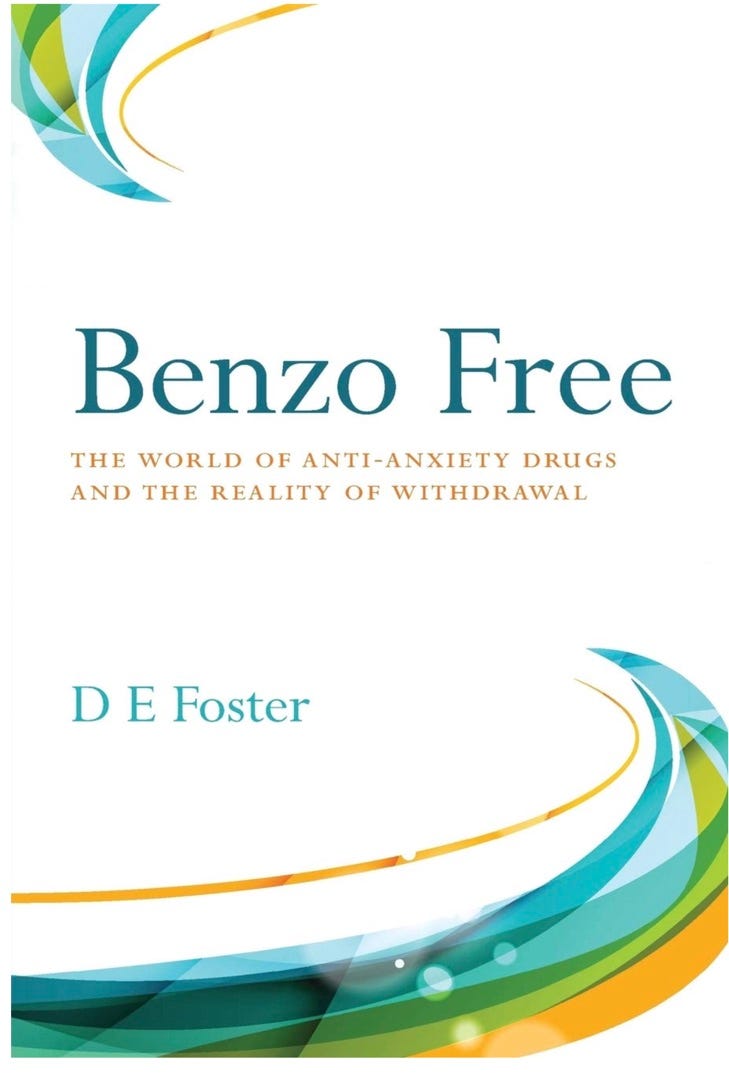
The Prescription That Changed Everything: A Conversation About Benzodiazepines, Dependency, and HopeThere are some conversations that hit different when you’ve lived through similar experiences. My recent interview with D E Foster on Lens of Hopefulness with John Passadino was one of those conversations where two people who’ve traveled similar difficult roads can speak the same language without having to explain everything.D (as everyone calls him) is a medical researcher and the author of “Benzo Free: The World of Anti-Anxiety Drugs and the Reality of Withdrawal.” But those credentials don’t tell you what you really need to know. What you need to know is this: D was prescribed clonazepam (Klonopin) by his doctor in 2002 and took it for 12 years without any warning about the risks. When he discovered he was dependent on it and tried to withdraw, it became “the hardest and most challenging experience” of his life—one he’s still dealing with today.I know something about this journey because I’m on it myself.When Anxiety Becomes InvisibleOne of the first things D said that resonated with me was this: “One of the key problems with mental illness is its innate invisibility.”And isn’t that the truth? You can’t see anxiety. You can’t take a blood test for panic disorder. There’s no X-ray that shows your fear. And because it’s invisible, people—including doctors—don’t always take it seriously enough. Or conversely, they may rush to prescribe medication without fully explaining what that medication does or the risks involved.As D explained, anxiety becomes a real problem “when it becomes consistent, when it becomes chronic, and when it becomes something that affects our lives significantly.”I felt that deeply. Because I’ve lived there—in that place where anxiety isn’t just occasional worry but a constant companion that makes it hard to function.My Story Meets D’s StoryI admitted to D during our conversation that I’m a lifelong anxiety sufferer. I have what I jokingly call my collection of acronyms: GAD (General Anxiety Disorder), PD (Panic Disorder), HD (Hypochondriacal Disorder). I put the phobias as a cherry on top.“They’re special,” D said, and we both had to laugh. Because sometimes you have to laugh at the absurdity of it all, even though it’s incredibly intense.I told D about my own medication journey—how I resisted taking anything for the longest time. I kept telling my psychiatrist, “No, no, no. I don’t want to take anything. I don’t want to get addicted.” Then a neurologist finally said to me, “You need to be on medication.”That was decades ago. And here’s what I want to be clear about: I actually needed something at the time. The panic attacks were overwhelming. I would get them at work, at family gatherings—anywhere really. You feel like you’re dying. It’s incredibly intense.But here’s the thing that D’s story highlights so powerfully: I can’t say I was fully aware about what I was being prescribed.The Prescription Without WarningD’s experience is even more striking. He wasn’t even given Klonopin for anxiety initially—it was prescribed for stomach distress.“I was never diagnosed with an anxiety condition,” he told me. “I finally went to a GP around 2002 who decided to try me on clonazepam, which is generic for Klonopin.”He started at one milligram, eventually worked his way up to two, and took it for 12 years “not even thinking there was any problem with it.”“It’s just a drug my doctor told me to take, so I kept taking it,” he said. “I think it helped me a little bit, but it wasn’t dramatic.”Then tolerance set in. And when he discovered what had happened and tried to withdraw, his “whole world basically crashed down.”In summary, per D: His doctor prescribed him a benzodiazepine for 12 years without warning him about dependency, tolerance, or the potential complications of withdrawal.What We’re Not Being ToldThis is where the conversation gets really important for anyone who has been prescribed a benzodiazepine or knows someone who has.Benzodiazepines work on GABA receptors in the brain—they’re part of what D calls the “brakes” in our system that calm us down when glutamate (the “exciter”) gets us hyped up. They can be helpful in the short term. But long-term use changes your brain chemistry in ways that can create dependency.And here’s the critical part: Many doctors may not be warning patients about these risks today, and that is why it is important to question, research, and assess alternatives.D has spent over a decade researching benzodiazepines, withdrawal, and anxiety. He read and catalogued over one thousand articles, books, and videos on these subjects. He co-authored multiple research papers, including the 2023 study that introduced the term BIND—benzodiazepine-induced neurological dysfunction.BIND describes the protracted state of neurological changes created by chronic exposure to benzodiazepines. These can include extreme anxiety, depression, cognitive dysfunction, memory loss, insomnia, tremors, and many other symptoms. And for some people, these symptoms can persist long after they stop taking the medication.Research Your Medications—PleaseIf there’s one message I want to emphasize from this conversation, it’s this: Research your prescribed drugs carefully.D and I both wish we had known more before we started these medications. Not that we necessarily wouldn’t have taken them—sometimes you need help, and medication can be part of that help. But we deserved to know the full picture.Ask your doctor:* What are the risks of long-term use?* How does this medication work in my brain?* What is the process for stopping this medication if I need to?* Are there alternatives I should consider first?* What are the signs of dependence or tolerance?Don’t just take a prescription and assume everything will be fine. Do your homework. Read the research. And if your doctor dismisses your concerns, find a doctor who will take them seriously.The Holistic Alternative PathHere’s something else D and I discussed that’s crucial: there are holistic approaches to managing anxiety that many people may not be fully aware of.I mentioned during our conversation that today there are more holistic approaches than when I first started treatment decades ago. D has dedicated much of his work to helping people find healthier alternatives to long-term benzodiazepine use.These approaches might include:* Mindfulness meditation and breathing techniques* Cognitive behavioral therapy (CBT)* Exposure therapy for specific phobias* Exercise and movement* Dietary changes* Sleep hygiene* Support groups and peer supportNone of this is to say medication is never appropriate. But it should be one tool in a larger toolkit, not the only tool. And if medication is used, it should be with full informed consent and regular re-evaluation.Expanding the BoxOne concept D shared that really stuck with me is what he calls “expanding the box.”When we’re going through extreme anxiety or withdrawal, we build a very tight box around ourselves. Some people D works with haven’t left their house in days. The work is to help them expand that box gradually.“Sometimes it’s as little as take a step out of your house and sit on the front porch for five minutes,” he explained. “But then we build on it and we try to get them... to get back some normal life back into what’s going on.”This is about exposure therapy—gently pushing ourselves to do things even when anxiety is there. Not recklessly, but carefully. Taking small steps. Acknowledging that yes, the fear is there, but that doesn’t mean we can’t move forward.“Sometimes you have to push out a little bit and try something and realize, hey, that wasn’t as bad as I thought it might be,” D said.I’ve experienced this myself. The agoraphobia I dealt with years ago didn’t go away because I stayed inside. It started to shift when I took those small steps outside my door. Literally. Just standing on the porch. Then walking to the mailbox. Then around the block.Expanding the box. One small step at a time.The Work That MattersWhat struck me most about D is his dedication to helping others, even though—or perhaps because—he’s still dealing with the effects of BIND himself.He’s been benzo-free since 2014, but he still has protracted symptoms. Yet he’s written a book, hosted over 200 podcast episodes (on the Benzo Free Podcast and Uneven Podcast), launched a support community called Uneven Life, co-authored multiple research papers, provided expert testimony, developed peer support training programs, and speaks nationally on these issues.“I wouldn’t do it if I didn’t love it,” he told me. “There’s so many people that need help. And I know we’re making a difference, and that keeps you going when you know you’re making a difference.”I understood this completely. Because as I told D, I’m doing Lens of Hopefulness for the same reason. It’s not about making millions. It’s about getting the message out. It’s about helping people.When D runs his support groups and someone says “thank you,” he said, “all of a sudden, everything you do makes sense and it’s worth it.”I know exactly what he means.A Disclaimer We Both Need to MakeNear the end of our conversation, D and I had a mutual moment of recognition. We’re both people who have struggled with anxiety and medication issues. We’re both people doing advocacy work to help others. And we’re both careful not to tell people what to do with their medical care.Neither of us are doctors. We can’t diagnose. We can’t prescribe. We can’t tell you to stop your medication.What we can do is share our experiences. We can share the research. We can encourage you to ask questions, do your homework, and advocate for yourself. We can offer support and community. We can point you toward resources.And we can tell you: you’re not alone in this.The Community That Sustains UsD has built an incredible community at Uneven Life—a peer-led support community focused on helping individuals who struggle with life, a
Sometimes the most important conversations are the ones that make us uncomfortable. The ones that ask the questions we're afraid to voice. The ones that remind us we're not alone in our struggles—and that we're worthy of love and support, no matter what we're going through. That's what this conversation with Laura was for me. I hope it can be that for you, too. This is a public episode. If you would like to discuss this with other subscribers or get access to bonus episodes, visit lensofhopefulness.substack.com
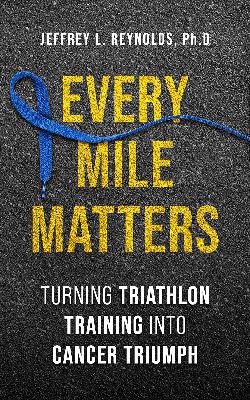
A video version of this interview is available on YouTube.There’s something profound that happens when you sit down with someone who has stared down death twice and emerged not just alive, but thriving. My recent conversation with Dr. Jeffrey Reynolds on The John Passadino Show wasn’t just another interview about overcoming adversity. It was a masterclass in what it means to truly live, even when everything inside you is screaming to give up.Dr. Reynolds is the President and CEO of Family and Children’s Association in New York, but his story goes far beyond the impressive credentials. He’s completed five New York City marathons, four Long Island marathons, 30 triathlons, and seven Ironman races. And somewhere between mile markers and finish lines, he was diagnosed with cancer. Twice.The Unexpected Journey from Barstool to MarathonThe way Jeff tells it, his running career began in the most unlikely place: a bar in Tampa at 2 a.m. during a professional conference. Someone suggested a 5K race that morning. Jeff, in his mid-40s and admittedly not an athlete (he was kicked off the track team in ninth grade for getting other kids to smoke), showed up wearing shorts and shoes that were definitely not made for running.“The gun goes off. I take off like a bat out of hell, and 90 seconds later, I am huffing, puffing, cursing, and walking,” he told me with refreshing honesty. That 36-minute 5K became a turning point. A couple years later, he won that same race.But here’s what struck me most about our conversation: Jeff doesn’t just run to finish. He runs to understand himself.Mile 18: The Dark and Lonely PlaceThere’s a moment in every marathon, Jeff explained, that tests everything you think you know about yourself. It happens around mile 18. You’ve been out on the road for a couple of hours. Your body is breaking down. Your nutrition is failing. The finish line is too far to see, but you’ve come too far to quit.“Your mind starts playing games with you,” Jeff said. “You could just stop. You could walk. Nobody really cares. You’re getting the same free banana and bottle of water and dumb medal you can’t even wear to work at the end of it.”When he found himself two-thirds of the way through his chemotherapy treatments, he recognized that same dark, lonely place. The parallel was undeniable. His body was breaking down. The end wasn’t in sight. Every cell in his body wanted to quit.But he didn’t.Getting Comfortable with Being UncomfortableThis is where Jeff’s story transcends athletics and cancer and becomes something much more universal. We live in a world engineered for comfort, he pointed out. Want dinner? Order it to your door. Feeling stressed? There’s an app for that. But real growth, real transformation, happens in the spaces where we’re uncomfortable.“Part of that for me was getting comfortable with being uncomfortable,” Jeff explained. “Acknowledging the uncomfortability. Yeah, this sucks. Yeah, my body hurts. And then you acknowledge it and you put it aside and you keep going.”This isn’t toxic positivity or “just push through it” bravado. It’s something deeper. It’s about being present with your pain, naming it, and then making a conscious choice to continue anyway. It’s about finding meaning in the struggle itself.The Things Men Don’t Usually SayWhat really got me about Jeff’s book, “Every Mile Matters: Turning Triathlon Training into Cancer Triumph,” was how he talked about things men don’t typically discuss. Friendship. Isolation. Vulnerability. Spirituality.“You say so many things from a personal point of view and from a guy point of view that I normally don’t hear,” I told him during our conversation. And it’s true. Men are conditioned to tough it out, to not need people, to handle everything alone. But Jeff’s book and our conversation challenged all of that.He writes about the importance of having people in your corner. About the spiritual questions that arise when you’re facing your own mortality. About what we’re made of and what really matters when everything else falls away.From Cancer Survivor to Community ChampionToday, Jeff channels his experiences into his work as President and CEO of Family and Children’s Association, one of Long Island’s oldest and largest nonprofits. Under his leadership, FCA operates Thrive Recovery Centers, a revolutionary approach to addiction recovery that recognizes a fundamental truth: you can’t just take drugs out of someone’s life. You have to help them put really good stuff back in.“Rehabs are designed to help you take drugs out of your life,” Jeff explained. “Recovery centers help you put really good stuff back into your life. Unless you do both at the same time, somebody’s going to stumble and relapse again and again and again.”Thrive operates three centers across Nassau and Suffolk counties, serving about 10,000 people. And here’s the beautiful part: anyone can just walk in. No judgment. No barriers. Just support.They help people write resumes, socialize with other sober people, learn to express themselves without substances, and figure out how to relax without a pill or a potion or a powder. It’s about rebuilding a life worth living, not just surviving another day.The Funding RealityJeffrey was refreshingly candid about the challenges facing nonprofit work today. While Thrive’s funding from New York State has remained stable, the money hasn’t kept pace with rising costs. Landlords want their 4% increases. Staff deserve raises. Everything costs more, but the funding stays the same.“We’ve been fortunate to be able to fundraise the difference between what the state pays and the actual costs,” he said. “Really, it’s about community coming together.”And isn’t that the point? Whether it’s mile 18 of a marathon, the middle of chemotherapy, or trying to fund vital community services, we need each other. We’re not meant to go it alone.The Finish Line Is Just Another BeginningAs our conversation wound down, I kept thinking about something Jeff said early on: “For me, it was the journey.” Not the finish line. Not the medal. Not even the victory over cancer, though God knows that’s worth celebrating.It was the journey itself. The miles that mattered. The moments of doubt overcome. The community that showed up. The person he became through the struggle.Jeff’s story reminds us that transformation doesn’t happen when everything is easy. It happens in those dark, lonely places where we have to choose who we’re going to be. It happens when we acknowledge the pain and keep moving forward anyway. It happens when we let people in and ask for help.And maybe most importantly, it happens when we take what we’ve learned from our own struggles and use it to help others find their way through theirs.ResourcesIf you or someone you know needs support:* Thrive Recovery Centers serve the Nassau and Suffolk County areas on Long Island. Visit fcali.org or just walk in.* Dr. Jeffrey Reynolds’ website: jeffreyreynolds.com* “Every Mile Matters: Turning Triathlon Training into Cancer Triumph” is available on AmazonWhere to Listen and WatchThe John Passadino Show is available on:* Substack: Lens of Hopefulness* Apple Podcasts* Spotify* Audible* YouTubeSubscribe, share with someone who needs to hear this message, and remember: every mile matters. Every step forward counts. And you don’t have to run this race alone.As we said during our conversation, in times of uncertainty and budget cuts, we can still show up for each other. We can still volunteer. We can still give. We can still be the community that shows up at mile 18 for someone who needs us.That’s the real finish line.Copyright and all rights reserved: Passadino Publishing LLC This is a public episode. If you would like to discuss this with other subscribers or get access to bonus episodes, visit lensofhopefulness.substack.com
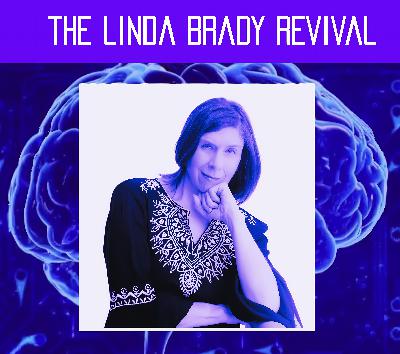
There’s something about finding music that speaks to you. Not just speaks—shouts, whispers, demands to be heard. That’s how I felt when I stumbled across Linda Brady and the Linda Brady Revival Band. I’m not just saying that because she’s my guest. I genuinely love this music. It has that raw, emotional quality that reminds me of Bob Dylan at his most urgent, when he’s got something real to say about the world.Linda’s new album, Deep Brain Stimulator, is her first in thirty years. Let that sink in for a moment. Thirty years. Most people would have moved on entirely, filed those rock and roll dreams under “things I did when I was young.” But Linda’s story isn’t about giving up on music—it’s about life pulling you in different directions, and then music pulling you back when you need it most.The First Time AroundLinda was seventeen when she wrote all the songs for her first album, the one she calls “the Green album.” Living in New York, a chance connection through her mother’s art class led her to Matthew King Kaufman, the president and founder of Beserkley Records in Berkeley, California. He heard her music and said, “Come on out and make an album.”“OK, whatever,” Linda remembers thinking. So, she did.She ended up living in San Francisco for about fifteen years, slugging it out in the trenches of the music business. We’re talking 2 a.m. concerts on Wednesday nights in bars with three people in the audience. This was before the internet, before you could build a following from your bedroom. It was just you, your music, and whoever happened to wander into that dive bar at two in the morning.“I just have more needs in life than just being a rock star,” Linda told me. She wanted a family. She’d met her husband in San Francisco. “I think I just want to have a family and be a normal person for a while,” she thought.And she did. For many years, Linda was a public school teacher. She raised her children. “That’s the most creative thing you could possibly ever do,” she said about raising her kids. “It’s more creative than writing songs and doing anything like this.”Her children are musicians too. They get it. They understand what music means to their mother. “They’re my pride and joy,” Linda said. “That’s like my reason for living—my children and my family.”The ReturnSo, what brings someone back to music after three decades? For Linda, it wasn’t a simple decision. It was complex, urgent, necessary. She was diagnosed with early-onset Parkinson’s disease. Suddenly, the world looked different. Her world looked different. And when she looked at the state of everything around her—the chaos, the disarray—something inside her demanded expression.Deep Brain Stimulator isn’t a comeback album in the traditional sense. It’s a battle cry. It’s a plea. It’s what happens when someone with a gift for expression faces the biggest challenges of their life and refuses to go quietly.We talked about the business side of music, and honestly, it hasn’t gotten any prettier. I shared stories from the autobiographies I’ve been reading—Al Pacino getting wiped out by someone managing his money, Neil Simon being ripped off, Billy Joel’s money being taken. Wherever there’s money and power, there’s that black cloud descending.“The music business is so full of that,” Linda agreed. “That’s part of why I wanted to be normal—I don’t want to hang around these people anymore, you know, because a lot of them are just sleazebags.”But now she’s back on her own terms. As an independent artist, she has control. If she doesn’t feel like doing something, she can stop. Even if nobody’s ever heard of her, it’s better this way. She can focus on what she loves—the writing, the creating, the playing—without the parts that make her want to vomit.The Music and the MessageLinda’s songwriting process is fascinating. She described it as being like a jigsaw puzzle. She’ll have pieces lying around—a verse here, a chorus there—and suddenly she’ll see how they fit together. Sometimes a song will be two-thirds done and she’ll realize it needs to merge with another fragment she’s been working on. It’s organic, unpredictable, creative in the truest sense.Her band is built around trust and chemistry. She found her current bass player, Jackie, through an ad. They bonded immediately over music, even though Jackie was much younger. “I feel like I can trust her,” Linda said. “And you know what? That’s the secret to any creative endeavor.”The drummer, Chip, has been with her forever. “He’s a good drummer, a kind person, a loyal person,” she told me. There’s no ego, no drama. Just people who care about the music and each other.Full CircleWe got nostalgic talking about music formats. I told Linda about my first car with its 8-track player, swapping my cassette tapes with my friend who had 8-tracks. She reminisced about vinyl, that whole experience of ripping off the plastic, discovering the liner notes, placing the record on the turntable.Linda’s thinking about releasing Deep Brain Stimulator on vinyl. It’s expensive, but she wants it. For herself, really. She grew up with vinyl. That twelve-inch package with the cover art and the lyrics—”it’s all part of the art of it to me.”I pledged right there to buy the album when it comes out on vinyl. That makes two guaranteed sales, Linda joked—me and her bass player.What Stays with MeTalking with Linda felt like talking to an old friend. We’re from the same part of New York, separated by geography now but connected by something harder to define. Maybe it’s the understanding that life takes you on unexpected journeys. You think you’re done with something, and then it turns out you’re not done at all.Linda stepped away from music to teach, to raise her family, to be “normal” for a while. And in doing so, she discovered that creativity doesn’t disappear—it just takes different forms. Raising children. Teaching. Living. And then, when the time came and the need arose, music was still there, waiting.Deep Brain Stimulator is proof that it’s never too late. It’s proof that sometimes our most powerful creative work comes not from youthful confidence but from hard-won experience and urgent necessity. Linda Brady is battling Parkinson’s disease and looking at a world in disarray, and she’s chosen to respond with music—raw, honest, emotional music that doesn’t pull its punches.That’s the kind of courage we need more of.The Linda Brady Revival Band’s album Deep Brain Stimulator is available now. You can find Linda’s music and follow her journey at lindabrady.com. The John Passadino Show is heard on Apple Podcasts, Spotify, and Audible, seen on YouTube, and hosted on Substack. See johnpwrites.com for all John’s linksCopyright Passadino Publishing LLC This is a public episode. If you would like to discuss this with other subscribers or get access to bonus episodes, visit lensofhopefulness.substack.com

As someone who’s been a yo-yo dieter my entire life, I’ve tried every program imaginable. I count my calories daily, I’ve lost weight, gained it back, and spent decades riding that exhausting rollercoaster. So, when I sat down with Dr. Laurette Willis for my podcast, I knew I was in for something different. And I was right.Dr. Laurette isn’t just another weight loss coach. As a certified life coach, cognitive behavioral therapist, and ordained minister, she’s created something I’d never encountered before: a program that weaves together biblical truth with neuroscience. For someone like me who’s struggled with both weight and mental health issues, her approach felt like the missing link I’d been searching for.The Problem with Diet Culture“A lot of people look at weight loss just from the physical standpoint,” Dr. Laurette explained early in our conversation. “And that’s the diet mentality. That’s where diet trauma comes in. That’s where the yo-yos come in.”She hit the nail on the head. I’ve done that for decades myself. But as she pointed out, “we’re not dealing with the reason why we’re using food improperly for comfort in the first place.”This resonated deeply with me. How many times have I finished a diet feeling triumphant, only to find myself right back where I started because I never addressed the underlying reasons? Dr. Laurette’s insight cut through years of frustration: “Let’s look at the reasons why we go to the comfort food instead of to the comforter.”Understanding the Whole Person: Spirit, Soul, and BodyOne of the most powerful concepts Dr. Laurette shared was viewing ourselves as complete beings, not just bodies that need fixing. Drawing from Genesis 1:26-27, she explained we are “spirit, made in the image of God,” we “have a soul—your mind, will and emotions,” and we “live in a body, your earth suit, the temple of the Holy Spirit.”This understanding, she noted, comes directly from 1 Thessalonians 5:23, where Paul prays “your whole spirit and soul and body be preserved blameless to the coming of our Lord Jesus Christ.”“If you want to make a difference on the outside,” Dr. Laurette emphasized, “we want to do it from the inside first.”The Balance Between Faith and ScienceI shared with Dr. Laurette about my mother, who was wonderfully spiritual and charismatic but relied more on the spiritual side of things. She would read books advocating prayer and faith, and less on the cognitive, psychological approach. I’ve learned through my own journey that we need both.Dr. Laurette confirmed this beautifully: “This is where a lot of believers have missed it.” She explained that many Christians love the Lord, love the Word, love prayer and church, and “we got the love walk down.” But the question remains: “Why do I keep going around this same mountain again and again and again? And that’s because the brain element is missing.”As a cognitive behavioral therapist, she looks for ways to “renew the mind on the Word of God and then retrain the brain using neuroscience principles and techniques based on scripture.”What sets her approach apart is her commitment to truth. “If I don’t see a correlation in the Word of God in scripture, I don’t use it,” she said, “because then it’s not going to be founded on truth.”Ancient Wisdom Meets Modern ScienceI love how Dr. Laurette combines wisdom that’s thousands of years old with what we’ve learned through scientific research. As I mentioned in our conversation, we’re taking the incredible wisdom that has lasted millennia and bringing it together with neuroscience discoveries.Her approach is grounded in Romans 12:2: “Don’t be conformed to this world, the world’s way of doing things, but be transformed. Your whole life can be transformed how? By the renewing of your mind... on the Word of the living God.”The goal, as she puts it: “We want you to be healthy, fit, and free. Don’t diet, live it. It has to be something you can live one day at a time.”The Power of Self-Talk and Neural PathwaysOne of the most practical insights Dr. Laurette shared involved understanding how our brains actually work. She explained that when we repeatedly tell ourselves negative things—”I can’t do this,” “I always fail,” “I’m not good enough”—we’re literally creating neural pathways in our brains.“We have to go to what is it that we’re saying to ourselves,” she explained. Our thoughts become neural pathways that get reinforced every time we think them, eventually becoming what neuroscientists call a “superhighway” in our brains.The solution? Interrupting those patterns and creating new ones based on God’s truth. She uses techniques from cognitive behavioral therapy combined with Scripture to help people literally retrain their brains while renewing their minds.Breaking Free from Self-Fulfilling PropheciesDr. Laurette shared a concept that stopped me in my tracks: the self-fulfilling prophecy. “If you keep saying, ‘I can’t lose weight, I can’t lose weight,’ guess what? You’re creating a self-fulfilling prophecy,” she explained. “You’re right. You can’t lose weight... because you said so.”This isn’t just positive thinking—it’s about aligning our thoughts with truth. As she pointed out, Scripture tells us life and death are in the power of the tongue. “What you’re saying, you’re creating,” she said. “Your words have creative power.”The transformation comes from replacing those lies with God’s truth, using what Dr. Laurette calls “Holy Ghost brainwashing—washing with the water of the Word.”Practical Tools for TransformationDr. Laurette offers two free resources that listeners can access:The Faith-Fueled Weight Loss Blueprint is available at christianweightlosskit.com. This resource addresses the weight loss journey from a faith-based perspective.The Christian Meditation Kit can be found at ChristianMeditationKit.com, where Dr. Laurette teaches three steps to meditate on the Word of God in a moment. As she describes it, this practice helps you “start thinking differently, feeling, walking in joy and peace.”My Personal TakeawayThis conversation with Dr. Laurette felt like coming home to something I’d been searching for my entire life. Here was someone who understood that we can’t separate our spiritual lives from our physical and mental health. We need both the ancient wisdom of Scripture and the insights of modern neuroscience.Her approach isn’t about willpower or another restrictive diet. It’s about transformation from the inside out, addressing the real reasons we turn to food for comfort instead of turning to the Comforter.As someone who’s struggled with weight and mental health issues, I found Dr. Laurette’s compassionate, science-grounded, Scripture-based approach refreshing and hopeful. She’s not just helping people lose weight—she’s helping them find freedom.About Dr. Laurette Willis:Dr. Laurette Willis is a Certified Life Coach, Cognitive Behavioral Therapist, and ordained minister who has spent over 20 years helping believers transform their lives. She is the creator of the Weight Loss Without Willpower program and founder of Praise Moves Fitness Ministry. Having overcome her own struggles with emotional eating, she now helps women walk in freedom through her faith-based, brain-renewing techniques that combine biblical truth with neuroscience.You can learn more about Dr. Laurette’s work at drlaurette.net or connect with her on LinkedIn.This conversation was part of The John Passadino Show, available on all major podcast platforms including Spotify, Apple Podcasts, Amazon Music, Audible, Substack, and YouTube. For more information and resources, visit the show’s website at johnpwrites.com.YouTube Video Link This is a public episode. If you would like to discuss this with other subscribers or get access to bonus episodes, visit lensofhopefulness.substack.com
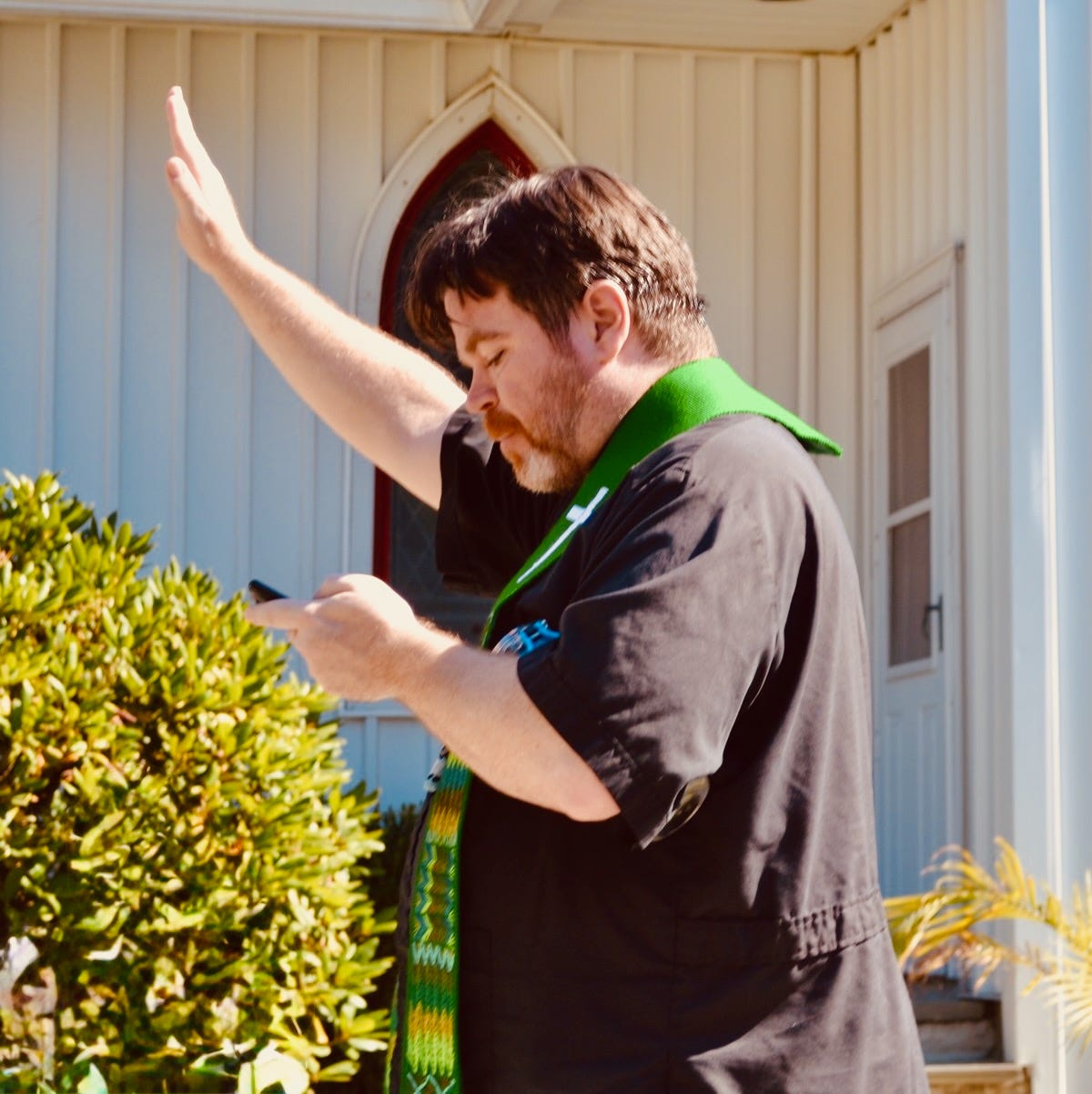
I conducted an in-depth discussion with Father Brian Barry, exploring the challenging intersection of faith, economics, and Christian values in today’s America.In a wide-ranging conversation at St. Thomas Episcopal Church in Farmingdale, New York, Father Brian Barry didn’t mince words about his opinion of wealth: if you have accumulated a billion dollars, you cannot have gotten there honestly or morally—only legally.This provocative statement launched an exploration of what it truly means to follow Jesus Christ in a society marked by extreme wealth disparity, political division, and competing claims about Christian values.The Sin of AccumulationFather Barry argued that anyone making a billion dollars has engaged in “almost every cutthroat practice possible,” including treating labor as expendable and prioritizing investor returns over human dignity. He bases his position on scripture, not political ideology.Jesus talks more about what people do with their wealth than about anything else, and the message, Father Barry notes bluntly, is to give it away.Some examples are:“Watch out! Be on your guard against all kinds of greed; life does not consist in an abundance of possessions.” (Luke 12:15)When a rich young man asked what he needed to do to inherit eternal life, Jesus said, “Go, sell your possessions and give to the poor, and you will have treasure in heaven. Then come, follow me.” (Mark 10:21)“It is easier for a camel to go through the eye of a needle than for a rich person to enter the kingdom of God.” (Matthew 19:24)The greed that drives unlimited accumulation, Father Brian explained, stems from a deeper spiritual crisis: fear of scarcity and fear of death. This fear becomes the opposite of faith, leading people to make decisions that prioritize security and appearance over genuine human connection and moral responsibility.I’ve wrestled with my financial status. Do I have too much? Am I a hypocrite for not giving more of it away? I rationalize my giving as I state to myself, “Hey, I give of my time instead. I volunteer for multiple organizations, and time is more valuable than money, isn’t it?”I also thought of trillion-dollar companies such as Amazon, Microsoft and Apple. On the one hand, they employ many people, but on the other, the bottom 50% of people own only 2.3% of US dollars. Is that the fault of those companies? Not directly. In a free market economy, investors do not have to keep or distribute their millions. I wondered how billionaires saw themselves. Why did they keep accumulating and how much do they give away?When Faith Meets PoliticsWhen asked what drives the wedge dividing Christians in America, Father Barry’s circled back to money. Despite political differences, many Americans—whether they vote democrat or republican—agree that the rich don’t pay their fair share, that the little guy gets crushed, and that healthcare and grocery costs are crushing families.I found polls that supported that conclusion. One conducted as recently as March 2025 and another in August 2025.The view of money as a key influencer is not unique to one political party. Per Father, neither political party represents the interests of the people, instead serving their donor class. In our conversation, we mentioned that presidential campaigns have spent up to one billion dollars. Where does that money come from? Much comes from political action committees. How much? PACs raised and spent about $15.7 billion during the 24-month period covering the 2023-2024 election cycle.The result is a troubling hypocrisy: misrepresented Christians walk past the poor, while policies that harm the vulnerable get pushed to the forefront, and instead of transforming lives with money, entities push for policies that enable them to hoard their wealth.What Jesus Actually SaidAt the heart of Father Barry’s message is a return to Jesus’s actual teachings. I asked Father to explain the story of the coin and Caesar during which Jesus is challenged to state whether it is lawful for Jews to pay taxes to Caesar. I wondered if there was a tie-in to his assessment of unfairness.Father Brian explained Jesus responded to the Jews by saying it is okay to pay to Caesar what is Caesar’s. Then, he reminds his questioners that they should give themselves to God because God made humans in His image.Jesus’ statement was a radical statement about where our ultimate loyalty belongs and how we should value human life over money. This point ties back to Father’s statements on income inequality. To me, he meant, humans should treat fellow humans as representatives of God.Jesus taught we are literally his hands and feet in the world—when we allow the Holy Spirit to lead us, we enact Jesus’s plan by healing the sick, feeding the poor, caring for the needy, and restoring outcasts to community.If those with huge amounts of money saw the poor as images of God, would they not want to see them fed? However, should they be forced to give up their wealth? No, I don’t think so. But, if one is to call themselves a Christian, they should absolutely take it into consideration.Although the priest did not implicate me, my Christian guilt reared its head. The thought I may be part of the problem stunned me. I am not wealthy, but I don’t live paycheck to paycheck either, which means I have a buffer. Do I give enough to charity? After conversing with Father Brian, I realized I hold back my financial support because of fears I may not have enough.Meanwhile, Jesus said we should not be afraid. We should have faith. What is it about us humans that causes such fear? It’s complicated. Some of it is instinctual and warranted. Others are a matter of choice. I am not trained clergy and don’t feel I am able to judge, but Father Brian’s words challenged me to examine whether my fears are based in reality or in a lack of faith that God will provide. I’ve had major problems with fear of not having enough money stemming from watching my parents struggle to make ends meet, and I never wanted to find myself in such a position.The Truth About Heaven and HellFather Barry challenged popular American evangelical notions about salvation. The focus on “getting to heaven” misses the point entirely—citizenship in the kingdom of God begins here and now, extending into eternity. I’ve often thought the same, especially after reading the work of Meister Eckhardt, a Christian mystic who said, “The more you forget and go within yourself, the closer you will be to him.” Even Jesus said the kingdom of God is at hand. Did he mean the kingdom of God was here now? Father felt we are on a continuum and that the afterlife extends the here and now. I believe that to be true as well.The religious life is about becoming one with Jesus through caring for people, not about checking boxes on a church rules checklist. People who left the church because of abuse, never heard the gospel, or rejected the hypocrisy they witnessed are not automatically condemned. People who say, “No one understands God,” may be closer to the truth than those who claim to understand everything about God.What awaits us? When we encounter God face to face, we will see the truth of ourselves—the consequences of our actions, the pain we’ve caused, and the ripples of our choices spreading through countless lives. This reckoning with truth may be more fearful than any fire-and-brimstone imagery. Father Brian’s description of what we may encounter someday made me shudder. Could hell be having to witness and experience firsthand the pain and suffering I caused? I thought I better get busy and right some wrongs.Wrestling with GodThe name Israel means “wrestling with God,” Father Barry notes—and that struggle is essential to authentic faith. Prayer isn’t about flattering God or performing the right rituals; it’s about honest, authentic conversation, even when that means saying “God, I think you’re being kind of a jerk right now”. That statement may sound very controversial to some but how many times have you found yourself questioning God’s ways?“Why didn’t you heal my family member?”“Why do you allow human suffering?”I contemplated questions. Will God get angry if I speak to him that way?Father countered with his belief that God already knows what we think and that authentic relationship requires genuine communication, including doubt, anger, and questions.A Simple TestFather Barry offers a powerful guideline for evaluating our positions—theological or political: If your entire position is driven by fear and hate, you need to check yourself. This doesn’t mean your position is wrong, but it means you’re not operating rationally and need to invite Jesus in to help you see clearly despite the fear.The Bottom LineThe summary of the law is simple: love God and love neighbor, particularly your poor neighbor. Everything else—the theological debates, the political divisions, the doctrinal disputes—must serve this fundamental calling.Father Barry’s St. Thomas Episcopal Church embodies this mission through its Fellowship Cafe, which feeds anyone who walks through the door, and through its simple welcome: all are accepted, regardless of race, religion, gender identity, or sexual orientation.In a time of deep division and competing claims about Christian identity, Father Barry’s message is both challenging and clear: authentic Christianity isn’t about accumulating wealth, winning political battles, or excluding those who are different. It’s about incarnating Christ’s love in the world—healing, feeding, restoring, and welcoming—right here, right now.The kingdom of God isn’t something we wait for. It’s something we build together, one act of love at a time.The video version of this interview will be available November 6th 2025 on The John Passadino Show This is a public episode. If you would like to discuss this with other subscribers or get access to bonus episodes, visit lensofhopefulness.substack.com
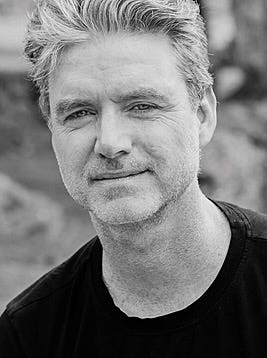
In my latest episode is from “The John Passadino Show,” I interviewed Professor Daniel B. Gallagher, a philosophy and literature professor at Ralston College with prior experience a decade of secretarial service at the Vatican for Popes Benedict XVI and Francis. Professor Gallagher, a former Catholic priest, specializes in medieval philosophy and Latin literature and is an accomplished writer on metaphysics, aesthetics, and theology.We opened with a discussion of rhetoric — defined as the art of persuasion, informing, motivating, or entertaining. Gallagher explained the three classical pillars of rhetoric:- Ethos (character/credibility)- Pathos (emotional appeal)- Logos (logical argument)He also highlighted that these elements were central in ancient and classical education, that people cultivated persuasive skills instead of naturally possessing them, and discussed their shifting role and perception in today’s social media-driven society. I agreed that social media posting and messaging have dramatically changed our communication for better and for worse.Professor Gallagher compared ancient and modern communication, noting the erosion of face-to-face conversation and the prevalence of online interactions. We discussed how emotional appeals (pathos) often dominate internet discourse, sometimes at the expense of reason, and how combining ethos, pathos, and logos makes for effective communication.When I asked Daniel to point out an example of stellar execution of rhetoric, he used Dr. Martin Luther King Jr. as his example. The professor cited King as a master of blending all three rhetorical aspects. The professor hailed King’s “I Have a Dream” speech as a specific example of rhetorical excellence.Gallagher also mentioned Donald Trump, for purpose of analyzing speech patterns, saying that even though his style is often criticized, Trump communicates rhetorically on purpose, using persuasive techniques from his business experience, and that his speech is calculated. I agreed and emphasized Trump has specialized in “pathos,” in a manipulative style since the 2016 election, during which he bragged of free press coverage. Like moths to a light, the media flocks to every word he says, good or bad, and propagates it out to the public, who leap to emotional conclusions, which I feel is Trump’s goal. Incite emotional responses. Pathos.Gallagher suggested looking beyond political debate for good examples of communication — community meetings, fiction, and non-political writing all provide valuable models. He believes practical, local debates open opportunities for constructive dialogue, contrasting them with the polarization of “big questions” and national politics. We thought back to the concept of town meetings, where community members need to solve a particular problem, such as whether to invest in a town pool, versus determining what ideology works best for the vast population of a complex nation, a near impossible task when not using a rhetorical skill set.The professor made a great point while comparing today’s world to the ancient world stating, “…in the ancient world, you had to either fight really well…or you had to speak really well and usually you had to do both and Julius Caesar is a good example of someone who could do both….”Imagine a world in which you needed to refine your skills to survive versus today when simply filming an altercation and posting it can garner hundreds of thousands of views. What would our political world look like if it consisted of skilled orators?The conversation then shifted to Gallagher’s experience working with the Vatican on the Pope’s secretarial staff. His duties included speechwriting, diplomatic communication, and translating in Latin. He provided insights into the Vatican’s structure, the Pope’s spiritual — rather than purely administrative — authority. I talked about the grass roots Catholics who volunteer in parish life and how far removed they are from the hierarchy of the Pontiff yet are true representatives of the church.We spoke of the new Pope Leo and how he reached out recently to families whose loved ones were victims of a school shooting. Daniel said, “It was directly to console the families of the victims and the community. And it goes via the archbishop…it was a very touching…” and it typified the form of communications Daniel accomplished.I commented on how we focus so much on ideology and who is following proper rules and the resulting negative opinon while neglecting to see the goodness in the Holy See.We then spoke of God’s grace, and Gallagher shared his personal journey from priesthood to parenthood, emphasizing grace as an unearned, freely given gift. We discussed human suffering — its theological implications, and the role of free will in suffering. Sometimes humans create their own suffering through choices made. We spoke of dealing with diseases like cancer and of collective tragedies like 9/11 and the Holocaust.Why is it that people come together during challenging times? Why can’t we do so on normal days? And why do those tragedies occur in the first place? Often, free will drove humankind toward toxic choices.I spoke of seeing local artists painting a colorful mural at a beach and how art and beauty were representations of God’s grace in everyday life. Those people got lost in their art and didn’t focus on the negatives we are continually drilled with. So, my answer is, us humans can do it. We can focus on goodness and grace during normal times. There’s no need to use tragedy as a conduit to put our differences aside.Below, I summarize what I learned from the interview:- Rhetoric is a learned, practiced skill with enduring relevance for meaningful, constructive conversation. Unfortunately, it’s missing from today’s “social media” communications, and it seems a very small percentage can practice the art to its fullest potential.- Effective communication requires integrating ethos, pathos, and logos, especially in divisive or emotional contexts. In ancient times people needed to practice it to survive. Today, people wing it, and the results can be disastrous and toxic.- Activism, volunteering, and community are essential to healing and change versus attacking each other on social media or via a bully pulpit.- Grace is a transformative theme — understood not just through our faith, but as an everyday phenomenon of unexpected generosity. The Professor spoke of grace he’s received via his family and stated, “Grace is nothing more than receiving something which you are entirely unworthy of. In fact, it is receiving a gift which you did everything to forfeit or even refuse.”- Open philosophical engagement — including disagreements and discoveries — enriches personal growth and connections. We need to share ideas and opinions to grow as humans.We closed the episode with reflections on the value of authentic conversation and encouragement to seek high-quality writing, such as Gallagher’s articles on Medium, for continuing the deep philosophical discussions as heard in the interview.Regarding grace, I spoke to a distinguished professor, and I would not have met him if God’s grace had not guided me.You can see and hear the full interview on YouTube or on Spotify, Apple Podcasts, Amazon Music, and Audible. This is a public episode. If you would like to discuss this with other subscribers or get access to bonus episodes, visit lensofhopefulness.substack.com
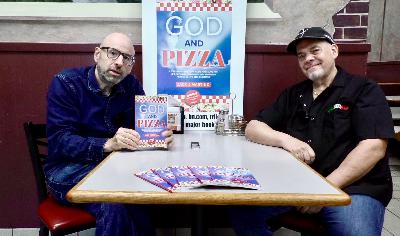
I’ve been interviewing people who I’ve observed have spiritual or mental health insights whose knowledge can help me and others learn. On the latest episode of my show, I interviewed entrepreneur and author Jack Martino. This article reviews my experience with Jack.Jack Martino’s story is one of a powerful expression of faith, entrepreneurship and family and how putting Jesus first transformed both his personal life and business success. His book “God and Pizza” chronicles his great American dream journey of resilience, spiritual awakening initiated by unexpected sources, and practical business wisdom gained along the way.When young, he worked for his father, who had developed top-tier business acumen as a restaurant owner. It was through him; he learned the meaning of hard work and perseverance. For example, his father, instead of granting him access to a primary role, made him start at the bottom, mopping floors. With this approach, Jack learned every aspect of the business and built layers upon layers of experience.He graduated from his role as a menial worker, observing his father’s technique along the way, to becoming a pizza maker alongside him. Although he thrived with his father, he wanted to go out on his own and start his own business.So, like the prodigal son of the New Testament, who went off on his own despite having the benefit of his father’s support, he left the thriving pizza business in New York to start his own in Florida. Then, like the prodigal son of the Bible, he found himself in trouble. He lost his business and a great deal of money because he said, “I wasn’t praying for God’s presence,” which he later learned lifted him up during the times he took for granted.Eventually, mirroring the biblical story, his father celebrated his return. In the New Testament story told by Jesus, the father celebrated because his son “was lost and then was found.” As I listened to Jack and reflected on that story, I realize Jesus meant the son was spiritually lost as was Jack Martino.A key to Jack being found was a generous family he met in Florida, who helped him get back on his feet and led him on the path to Christian enlightenment. Their generosity, including making and serving Jack food and giving him a place to sleep when he had nothing, resembled the famous story of the Good Samaritan as written in the New Testament. In that story, a person in need, passed by others in the street, was inexplicably helped by a Samaritan. But more importantly, they led Jack to a different version of Christianity than the one he knew. It consisted less of rules and dogma and more of a direct acknowledgement of the Lord through prayer, scripture, and practice.Spiritually enriched by God and his friends, he returned home, where alongside his father again, he built a restaurant, and saw the business thrive, and his material possessions increase. According to Jack, his love for possessions had risen above his love of God, and that caused another downfall. Ultimately, his new business failed, and he lost his wife to divorce.We both concluded that ego and selfishness choked off God’s power, which supported his hard work, business and family, and that he needed to reconnect with it, and that is what he did.Some call what he experienced a catharsis; others could say it was a spiritual awakening, and some Christians may say he was born again. Regardless of the label, he understood he should commit wholly to Jesus, permanently, so he committed.Today, he runs another business, while thoroughly invested in Christ, and the business does very well. Christian rock blares from the restaurant speakers, and a poster of his book adorns its front window.During the candid interview, Jack shared valuable insights for aspiring entrepreneurs, drawing from his hands-on experience in the foodservice industry. His advice combines practical business sense with his faith-based principles for sustainable success.He spells out his ten tips for prospective business owners clearly over a page and a half. For example, know what kind of business you would like to be in, where your talents lie and what you love to do. Then investigate finance, location, and legal aspects.I said, “Jack, I have an MBA, and you said more in one page than I learned in two years.” We both laughed, because we knew it was true.Jack’s expertise is not only in the spiritual and business world. His book offers practical recipes for creating delicious homemade pizza. He opened his kitchen to me and prepared two delicious pizzas, one Neapolitan and the other Sicilian. Then we sat at a restaurant table, and we literally broke bread together.In closing, the interview offered both spiritual insights and concrete business advice, making it valuable for entrepreneurs at any stage of their journey, plus those in any walk of life who will benefit from Jack’s decades of experience in family life and spirituality.Talking to Jack reminded me of my Great Depression era parents, who worked multiple jobs to provide for our family. Faith and Christian values bolstered their ability to survive during hard times, too. So, like them, and Jack, I learned to work hard and have faith.Have you ever faced a challenge that seemed insurmountable? Jack Martino’s story might inspire you to keep going.You can watch the full interview, including a pizza-making demo, on YouTube. This is a public episode. If you would like to discuss this with other subscribers or get access to bonus episodes, visit lensofhopefulness.substack.com

Author Adrienne Bender—photo credit https://adriennebender.com/In the latest episode of the John Passadino show, I interviewed Adrienne Bender, author of “The Almost Miracle Years” which chronicles her journey as a mother and caregiver to her two children and other family members. Her book is not simply a memoir — it’s a testament to her perseverance, transformation, and her pursuit of healing.Adrienne’s journey to motherhood began as a teen, a challenging position to be in. Yet, she completed schooling to become a psychiatric nurse. That position would anchor her when slammed with unthinkable challenges that would befall her and her family.At the heart of Adrienne’s story are her two children, each beset by a disease that would haunt their youth. Doctors diagnosed her daughter Mackenzie with leukemia when she was just eight years old. She would undergo aggressive surgeries and treatments, causing her horrendous pain and suffering to the point nurses tending to her were driven to tears. Meanwhile, her older stepbrother, Kyler, grappled with substance abuse and addiction in the shadows, with Adrienne torn between providing care for both.Adrienne spoke about the trauma of seeing her children suffer while she stood on the balance beam of motherhood. She described her longing prayers, which resulted in small but temporary normalcy such as her daughter’s five-year remission, and her son’s periods of sobriety. However, those incidents were steps on the ladder of a one step up and two steps down life story.Despite near miraculous recoveries her daughter’s disease returned, and in 2018, Mackenzie agreed to end the desperate attempts to save her life. The book documents fifteen-year-old Mackenzie’s heart-wrenching statement to family, saying it was time to end the fight.… it doesn’t seem like I’m going to make it back from this one. I don’t want my life to be filled with test tubes and hospital visits… I have made a decision that when it comes to that time, I will live to the fullest I can, cross off everything on my bucket list, and die happily…Then in 2023, Adrienne’s son Kyler, trying so hard to get his life together, passed away from injuries and fentanyl poisoning.Those losses and her journey to healing herself and others defined Adrienne’s life forever.We talked about her crushing grief — not just for the death of her core family members including her father, inexplicably from the same disease as Mackenzie, and grandfather from Dementia — but for disappointing partners, one of whom was a husband who left while she dealt with her children’s illnesses.Adrienne and I talked about a quote from her which I had messaged to my grieving nephew just before our interview. She said, “…grief and healing aren’t a straightforward course, it’s a maze, and it’s important for people to know that it’s ok to fumble through it.” She also said grief “feels like you’re drowning in an ocean that doesn’t even have a shore.”That is a small sample of the wisdom Adrienne earned and shared.Adrienne’s path to healing included her own struggles with depression and anxiety, including the use of alcohol to numb her pain. Despite those struggles, she found the strength to document not just her innermost feelings, but those of her mom, via her mom’s journals, who provided support every step of the way.Adrienne’s words, both in print in her book and via our conversation, relayed to me a view of her resilience and strength that enabled her to experience her grief while surviving. Her story is more than a common tragedy of an insidious disease; it is an analysis of the human spirit.Through her writing and her quest to educate others, Adrienne encourages others to speak openly about grief and loss, to resist the status quo of hiding it, and to allow themselves to mourn.While Adrienne would never call herself “healed,” she has found a sense of peace. She spoke movingly about the ways her children’s memories fill her days with meaning and described moments in which she feels their presence. She said, “I feel like they’re not dead. They’re just not here. I just can’t see them.” She also said, “…they’re stronger on the other side than they are here. I fully believe that.”Those statements are a testament to her faith and afterlife.Adrienne Bender’s journey — as a young mother, a nurse, an author, and a survivor — offers invaluable lessons for anyone grappling with loss, grief, or the complexities of life. Her book, “The Almost Miracle Years,” is a tribute not only to her children but to the human spirit.Our podcast conversation was more than an interview; it was an immersion into the depths of grief and resilience. Adrienne’s story challenges us to face our own suffering, to appreciate moments of grace, and to remember that, after the darkest storms, rainbows follow.If you or someone you know is struggling with loss, and we all are to varying degrees, Adrienne’s story offers a large dose of empathy that tears into your heart but then rebuilds love and hope around it. As Adrienne said regarding the difficulty of reading such tragedy, “I know some people have a hard time because I think it’s just a sad story…but…once you get to the end, it’s not a sad story.”Adrienne’s book is a book about undying and eternal love, the love we should always strive for in our daily interactions with each other and for those who passed on before us.You can listen to the full interview on YouTube or find the John Passadino Show on all major platforms such as Apple Podcast, Amazon Music, Audible, Spotify and Overcast.Article and Podcast Copyright Passadino Publishing LLC This is a public episode. If you would like to discuss this with other subscribers or get access to bonus episodes, visit lensofhopefulness.substack.com

Blogger is a term used for a writer who writes articles and posts them online for an audience to read. The word “log” as in a captain’s ship log, forms the core of the word. I first “blogged” on a Google-owned site called Blogger in the early 2000s. The white screen with a blinking cursor would beckon me to spill my soul, and I tapped away after a long day at work. The page welcomed me. It didn’t talk back. It just listened.However, I worked an IT job by day, and ninety percent of my eye and mind-numbing work involved me facing the screen and typing until my fingers literally hurt. I stopped blogging to gain my equilibrium.After I left Blogger, blogging became a fixture in the gig economy, with many writers making a living from it. Mainstream media outlets paid attention to what leading writers said. Some drew hundreds of thousands of followers.When I left my full-time job in 2021, I set out to write what I wanted. However, using my retraining money from my layoff package, I attended Writers Digest University, where I learned the art of novel and short story writing, so my focus became fiction writing. The instructors could be brutally honest, as were fellow students when we interacted. It bruised my ego, but I learned story structure, grammar and usage.However, long-form writing felt like an insurmountable mountain. I wanted a quicker path to publication. It was then that I discovered Zulie Rane on YouTube. Her unbound enthusiasm for a blog site called Medium was infectious. She said it was a great place to write and earn. Her face shone, and her articulate voice beckoned me. I thought back to Blogger and all the writing I did. I had discovered the missing link. My personal non-fiction stories!In 2023, I wrote my first articles on Medium. Months went by, and I saw little reaction. I had three followers and no readers. I stopped trying and went back to fiction and published a short story book instead.A turning point came in 2024 when I received an invitation from Medium to attend an online seminar. My eyes widened as I realized all I had missed. I learned I could apply to write for publications where editing teams under the leadership of publishers like Susan Brearley and Kiki Walter would review my writing and give me the feedback I missed. Once again, I learned my writing required refinement, and I learned that following a process, could lift my words to a higher level.In parallel, I signed up for courses with a company called Write, Build, and Scale that showed me an in-depth view of Medium from every angle. Their lighthearted, professional and detailed approach raised my writing to even greater heights. Zulie appeared again, acting as a consultant to the creators of the course.My writing centers on memoir, humor and self-improvement, and I have achieved success at it. In one year, my follower count increased dramatically, with people who are not friends and family and not “follow for follow” users showing interest. Also, curators on Medium boosted my articles so they would get more reads, which translated to more earnings.My article views and earnings skyrocketed. I encouraged other writers to join Medium. “Join Medium where you can earn instantly.” A statement like that is music to a writer’s ears.However, in 2025 my reads and earnings dropped despite my working hard on each article. Unfortunately, a shift had occurred as Medium adjusted to the proliferation of “gig economy” listicle articles, AI-generated material, and spammers imitating writers. They entered an era of quality control to ensure genuine writers wrote genuine stories. I believe the expression “baby thrown out with the dirty bathwater” applied because although I enjoyed a boost here or there, overall, I lost the attention of readers.My next adventure brought me to Substack, where the business model centers on earning money from a newsletter. I joined Write Build Scale to learn the ropes. The course, just like the Medium course, is well planned and detailed, but I didn’t gain traction.Between my experience on Medium and Substack, I wondered if I belonged in the blogosphere at all.Then I viewed an article that compared Substack to Medium by Zulie. Remembering her expert advice as YouTuber and consultant, I invited her to my podcast to talk about her history as a blogger, AI and its impact, changes at Medium and how I can find a target audience.As I suspected, her effervescent personality and charismatic voice burst through the screen.Like me, she started out slow as a blogger. She needed to learn the ins and outs of what made an article successful. Not only did she do that, but she built a business to teach others how to.Last I looked, she had 175,000 followers on Medium on her personal blog page. Lately, she has transitioned to a new page in her life and career as a Medium employee who guides readers and writers on how to navigate and appreciate the site.Zulie was forthcoming with me when I asked what genre I should write in. She said I would do best if I included three components: expertise, interest, and value. In addition, she suggested viewing which articles got the most reads so I could find out what readers looked for.During my interview, Zulie gave me a brief tutorial on how to discover what I would love to write and what readers want, and I know people will enjoy hearing it.The elephant in the room is earnings.So many claim to put you on a path to earning a living via blogging. Zulie admitted she had made money at one time writing. However, she spent a good amount of time on the podcast explaining why Medium, while still paying out, may not be the best place to earn for many.Her frankness could have turned me off, but it has motivated me to get better at what I do. I don’t want to be an AI parrot. I am me, John Passadino, and I have decades of stories to tell.My legacy will not be the money I earned. It will be the quality of writing I created and shared.I’m hopeful my interview with Zulie will resonate with others and may even encourage them to write their own blog, whether it be on Substack, Medium or in their personal journal.You can hear the interview on all major platforms by Googling The John Passadino Show. It’s available on Amazon Music, Audible, Spotify, Apple Podcasts, Overcast, and Substack.The full video version of the interview is available on YouTube:Happy blogging and don’t give up!Thanks for reading! Please comment. I would love to converse with you about this article.Article and Podcast Copyright Passadino Publishing LLC This is a public episode. If you would like to discuss this with other subscribers or get access to bonus episodes, visit lensofhopefulness.substack.com
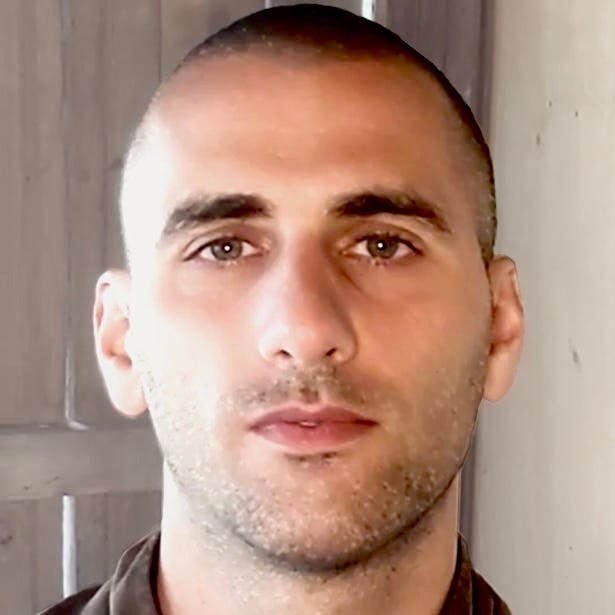
Host John Passadino welcomes guest Promise, a former Buddhist monk turned meditation and wellness coach. The conversation explores Promise’s unique journey from monastic life to modern mindfulness practice, highlighting how his spiritual background informs his current work in mental health and personal growth.Driving force:Promise’s mental health challenges, experience as a Buddhist monk and how it shaped his worldview.Cultural contrasts:John reflects on growing up in a Christian environment and how encountering Promise’s story offers a fresh perspective.Mental health insights:The discussion emphasizes the importance of mindfulness, emotional awareness, and holistic wellness in today’s fast-paced world.Practical advice:Promise shares accessible techniques for managing stress and cultivating inner peace, especially for those unfamiliar with meditation.Here are some compelling quotes from the show:Promise:“Monastic life taught me that silence isn’t empty—it’s full of answers.”“Meditation isn’t about escaping reality. It’s about meeting yourself in it.”“Mental health isn’t just about fixing what’s broken—it’s about nurturing what’s whole.”Conclusion: My enlightening discussion with Promise yielded a view I never saw before in mental health. He dealt with his issues holistically and grew a fresh and practical perspective. Also, he carefully documented his system with the goal of sharing it to help others.What’s so refreshing about him is his willingness to share much of his Mental Health Revolution material for free.You can find Promise’s Mental Health Revolution material here.The audio version of the interview can be heard in its entirity via the John Passadino show here on Substack or on the following platforms:Spotify, Apple Podcasts, Amazon Music, and Audible.The video version is located on YouTubeAll content is copyright and all rights reserved by Passadino Publishing LLC This is a public episode. If you would like to discuss this with other subscribers or get access to bonus episodes, visit lensofhopefulness.substack.com
I interviewed The Sacred Rebel, also known as Claire, for my latest podcast episode on my show, the John Passadino Show, which is now heard on Spotify, Apple Podcasts, Amazon Music, Audible, Substack and YouTube (video version). I made some interesting discoveries on new age philosophy and its practice.You can find the complete interview broadcast on the John Passadino show on Spotify, Apple Podcasts, Amazon Music, Audible, Substack, and YouTube (video version).Below, I summarize my interview.Claire is a multidimensional energy healer who has been in touch with her past lives. She told me she went through a spiritual awakening, which happened over a series of shifts over time culminating in a profound awakening in 2015.What does spiritual awakening mean?In Psychology Today magazine, Doctor Steve Taylor described it as “…a profound shift in consciousness and perception, leading to a deeper understanding of oneself and the universe.” The Bible Hub website says, “A spiritual awakening typically involves a profound recognition of the divine and a renewed awareness of truth.”To further illustrate, biblical scripture documents many awakenings, such as when the apostles of Jesus received the Holy Spirit during a day referred to as Pentecost. They saw tongues of fire and spoke in other languages. Reception of that spirit enabled them to heal others.Although there have been incidents of Christians’ ability to heal people since those ancient times, it’s rare to speak to someone who claims to have those capabilities, so I was grateful for the opportunity.Her abilities include energy healing, mediumship, and psychic intuition. She uses these abilities in her mentoring, support and guidance of spiritual seekers.Unlike the apostles, her awakening didn’t come on a particular day. She said, “I have experienced cycles of transformation—mini awakenings, deaths, and rebirths, each bringing new layers of wisdom.”Along the way, she uncovered what she calls “hidden wisdom,” and she “rediscovered the keys to her innate self,” which means triggering “dormant DNA,” within her, a DNA “waiting for the green light of consciousness….”“DNA, or deoxyribonucleic acid, is the hereditary material in humans and almost all other organisms.” I cannot explain how DNA manifests energy. You can read detailed explanations on the Sacred Rebel’s website, blogs and eBooks, but according to her, there’s potential for all of us to activate that dormant DNA.I thought to myself, do I want to attempt it? What are the ramifications? How much work will it take, and will I learn things I would regret? Do I really want to know who I was in a past life like Claire says she does?However, those are traditional fear thoughts. We discussed how there are always factions of people who would automatically resist when something different presents itself to them. I countered with examples of incidents of my divine experience. Claire listened intently and supported my views. I found her very easy to talk to.Her descriptions comforted me too. She said awakening, “…is similar to learning to walk for the first time as a child,” and that as humans develop, new generations will find it easier to access the information and energy within us. I found that statement most intriguing because Claire said the developed race of humans would contribute to the elimination of the darkness that’s befallen our world.I see parallels in the promises of a better tomorrow that various religions promise. The method of arriving at that point is different, but I believe the vision is the same. I mentioned that I believed Jesus was enlightened and that 2000 years ago, he could access any dimension. Claire did not disagree. However, we steered clear of analysis of religions because our conversation was not about who was wrong or right. It was about her personal transformation.I liked her profound statement: “I’ve come to understand that spirituality isn’t about transcending reality—it’s about grounding divine wisdom into everyday life.”Her words led me to determine that her approach to spiritual growth is practical because she’s not promising we will immediately float above our bodies or walk through walls but that we can, over time, access a fourth and fifth dimension from our current existence. She said there, “…is no timeline for awakening—only the unfolding of consciousness at its own divine pace.”In closing, the study of new age concepts encompasses past lives, multiple dimensions, energy, chakras and more. My conversation with Claire showed once again that people can take part in civil discourse regardless of different belief systems and that there is hope for humanity.I hope you will find the interview as interesting and enlightening as I did. You can find it broadcast on the John Passadino show on Spotify, Apple Podcasts, Amazon Music, Audible, Substack, and YouTube (video version).Note once again that Claire goes into much deeper detail on her website, blogs, and eBooks at https://www.starofavyon.net/ and on her Substack This is a public episode. If you would like to discuss this with other subscribers or get access to bonus episodes, visit lensofhopefulness.substack.com
Cleo says we all have angels and we all can connect to them which can help us to heal and build our faith. Her spiritual transformation came twenty years ago during a bout with chronic fatigue syndrome, during which her meditations established her spiritual transformation.Her journey through that condition and other health conditions opened her up to what I call the divine. Today she’s able to tap into the spirit world, and angels speak to her and through her. Her YouTube videos show angels, such as the angel Santi, speaking through Cleo’s body.I found Cleo to be a fascinating person. Her knowledge of spiritual issues is all self-taught. She didn’t earn a PhD in psychology. Instead, she earned a PhD from the school of hard knocks, life experience and self-healing.I can’t say specifically how Cleo helped others because she protected the confidentiality of her clients, but the angel channeler zeroed in on my issues and experiences and immediately jumped into an intuitive analysis and positive affirmations. Her goal is to help people find confidence, joy and deep wisdom by guiding them to find it themselves. I immediately felt uplifted.Cleo offers classes to help people find answers and unlock their abilities by channeling with their own spirit guides in their own way and on their own time.I understand some may be skeptical. We live in a world of charlatans who often prey on the grief of others to make money. However, I felt Cleo possessed a high level of conviction and integrity. I can tell by her words, and her bright energy glow, she lives and practices what she preaches.In this often-frightening world in which people continually harm each other emotionally and physically, it was a pleasure to meet someone who specializes in the opposite, and that is healing them.I hope you will find this podcast interview as fascinating as I found it. You can find Cleo Dunsmore Buchanan on Facebook, LinkedIn, Medium, and YouTube. This is a public episode. If you would like to discuss this with other subscribers or get access to bonus episodes, visit lensofhopefulness.substack.com

My macro level view of the world leaves me with the impression it's on fire most days. Political turmoil in the US, and wars dot the globe. I look at the media, including social media, and see searing division.My faith in humanity wanes often, and I wonder if our cultural and political differences are beyond repair. Friends and family routinely bicker then ghost each other over policies they have little control over.I wondered if I could bridge the gap between myself and someone whose life and situation are very different from mine. Would I regret starting a conversation? Would we spiral into emotional unrest? I needed an answer.For my show, I chose a writer whose articles I read previously. Her writing style, although passionate, appeared non-confrontational. However, I’m a Christian older adult living in the United States, and the writer, a female young Muslim adult from Eastern Europe.Although we had snippets of interaction before the show, an hour-long conversation might result in tensions.In this episode, recorded on the 13th of June 2025, we discussed questions about politics, life, and the human experience using Zəhra’s articles as our guide. I wondered how our faiths and cultures would influence our views of the world. Would those influences cause us to agree or disagree on many topics?Spoiler alert:We realized despite our differences; we landed on the same overarching page and that is empathy and concern for humanity.We didn’t aim to score points to win a debate or convince one another of our righteousness, a pattern we’ve seen so often in so many.Instead, we approached each topic with open minds, although we based our views on the study of issues, not just subjective opinion. You’ll hear analysis from both of our lives with a common thread of respect.I’m hoping this podcast will provide an example of how to engage in a conversation with someone whose outlook may appear to be drastically different from yours. At a time when division is easy and even encouraged by social media, our dialogue stands as a small but meaningful example of how understanding can be achieved.So, please give my show with guest Zəhra Üzeyirli a listen. I know you will see how our shared humanity can shine through the many differences that make us unique.Zəhra means "brilliance, light, and radiance.” Her articles exude those traits, as does her persona. It was my privilege to speak with her. Please check out her articles in her newsletter on Substack. This is a public episode. If you would like to discuss this with other subscribers or get access to bonus episodes, visit lensofhopefulness.substack.com
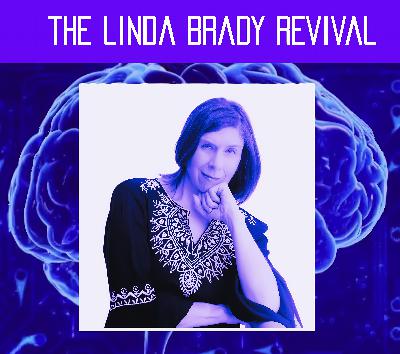
In this episode, I conduct an interview with a courageous woman who confronts her illness through creativity, her families support, and her faith in God. This is a public episode. If you would like to discuss this with other subscribers or get access to bonus episodes, visit lensofhopefulness.substack.com
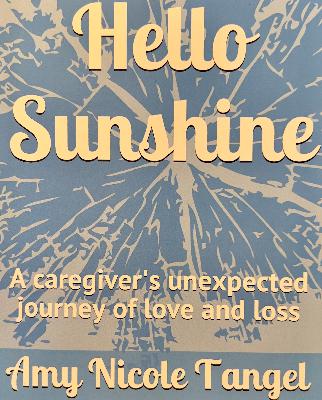
Amy Nicole Tangel is a journalist, author, playwright, and founder of The Human Interest Story. In 2017, she published the children’s book, Buster Backpack Adventure and in 2020, she released the memoir, Hello Sunshine A Caregiver’s Unexpected Journey of Love and Loss. Most recently Amy authored a new children’s book, An Apple a Day.In this episode, John discusses with Amy her journey as a caregiver and the profound discoveries encountered along the way. She reflects on overcoming spirit-numbing grief and discovering light amidst the darkness.One of Amy’s many charitable events is coming up on June 28th, 2025 in the NY area. Take a look to support this event and orgranization. This is a public episode. If you would like to discuss this with other subscribers or get access to bonus episodes, visit lensofhopefulness.substack.com

photo by the authorIn this episode, join me on a soulful journey as we explore excerpts from Meister Eckhart’s Book of Secrets: Meditations on Letting Go and Finding True Freedom—a transformative book available on Amazon. Curated with care by Jon M. Sweeney and Mark S. Burrows, these meditations touched my heart and stirred my spirit. I invite you, fellow spiritual seekers, to delve into these timeless insights, embrace the art of letting go, and discover the profound freedom that lies within. This is a public episode. If you would like to discuss this with other subscribers or get access to bonus episodes, visit lensofhopefulness.substack.com

Comments

Download from Google Play

Download from App Store
 United States