


 Claim Ownership
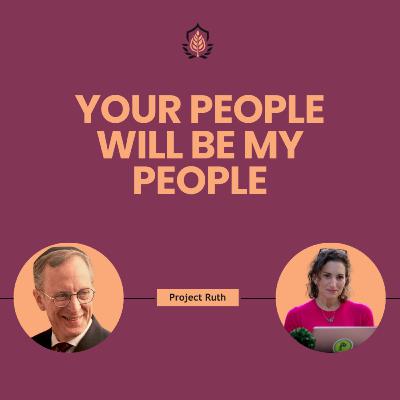
Your People Will Be My People
Subscribed: 2Played: 8
Subscribe

© Project Ruth featuring Rabbi Adam Mintz, Founder and President, Project Ruth
Description
Your People Will Be My People is a thought-provoking podcast that explores the deeply personal and diverse experiences of Jewish conversion. Hosted by Rabbi Adam Mintz, a respected scholar and community leader, and journalist Meredith Berkman, this series brings together voices from across the Jewish world to share their stories, challenges, and triumphs
12 Episodes
Reverse
Sarah Hildering’s life changed the moment silence became louder than violence.Sarah Hildering’s journey is a powerful exploration of identity, courage, and what it means to truly belong. Raised in Amsterdam with a deep respect for Jewish history but not born Jewish, her life took a dramatic turn when rising antisemitism and global events forced her to confront where she stood—and who she wanted to become. What followed was a path marked by fear, resilience, and an unexpected pull toward faith and community.Now living in Israel during wartime, Sarah Hildering, a former global music industry executive who built a career at the highest levels of electronic music, shares how her personal experiences, professional disillusionment, and spiritual curiosity led her to pursue Jewish conversion and a life rooted in purpose. This episode unpacks the cost of speaking up, the power of community, and what happens when you stop running from who you’re meant to be.Key Takeaways You start to realize that silence after trauma can be more damaging than the trauma itself—especially when the world refuses to acknowledge what happened.You see that a meaningful spiritual journey isn’t sudden; it’s built over time through exposure, curiosity, and a deep desire to belong.You understand that while fear can push you out of your comfort zone, it’s faith and community that ultimately pull you toward a life of purpose.Timestamps[00:00] Sarah Hildering’s early connection to Jewish history[03:10] The influence of her grandfather and upbringing[07:15] The Amsterdam attack and community response[09:30] October 7th and the music industry’s silence[12:00] Trauma, silence, and a breaking point[14:30] Early spiritual curiosity and Israel connection[17:45] Terror attack experience at 17[26:45] Fear, antisemitism, and finding Chabad[31:00] Leaving Amsterdam after targeted attacks[34:30] Living in Tel Aviv during war and finding purposeLinksSarah Hildering’s LinkedInProject Ruth WebsiteRabbi Adam MintzMeredith Berkman’s LinkedIn
The easiest time to become Jewish may already be behind us.Becoming Jewish has never been simple. History shows that people often choose Judaism at moments when it carries real risk. This episode explores why conversion happens across centuries, how antisemitism shapes who feels drawn toward Jewish life, and why recent events have reignited identity questions for people standing just outside the Jewish world.Through historical examples and modern reflections, the conversation traces conversion from medieval Europe to post-October 7 America, revealing how belief, love, danger, and belonging intersect. Along the way, it challenges the idea that Judaism thrives only in comfort, suggesting instead that difficulty itself has always been part of the draw.The discussion features insights from a leading historian of Jewish conversion, a former professor at the University of Texas at Austin and author of Conversion in the “Key Words in Jewish Studies” series, who also co-curated a major exhibition on conversion through the centuries at the Jewish Theological Seminary.Key TakeawaysLearn how conversion to Judaism has never been about comfort — and history proves that people often choose it precisely when it’s hardest.See how antisemitism, identity, and belonging are deeply connected to who feels pulled toward Judaism in different eras.Understand that modern conversion stories can’t be separated from October 7th and the emotional reckoning it triggered.Timestamps[00:00:00] The post-war “golden age” of American Jewry and why it may be ending[00:01:30] How antisemitism historically affects conversion rates[00:02:10] Introducing Professor Miriam Bodian and the focus on conversion[00:03:20] Personal background: discovering antisemitism and finding Judaism[00:05:10] Conversos, forced conversion, and why identity doesn’t switch overnight[00:09:50] Warder Cresson: the most radical American Jewish convert[00:14:20] Conversion in early America vs. medieval Europe[00:18:10] Why medieval converts risked everything to become Jewish[00:27:40] October 7th and its impact on modern Jewish identity and conversion[00:44:30] Is the golden age of Jewish comfort and conversion over?LinksMiriam Bodian in the Shalvi/Hyman Encyclopedia of Jewish WomenMiriam Bodian’s books on AmazonProject Ruth WebsiteRabbi Adam MintzMeredith Berkman’s LinkedIn
This episode is about choosing Judaism when it would be easier not to.Choosing Judaism today is not a passive decision. It is a conscious step toward identity, community, and responsibility in a world that often misunderstands Jewish life. This episode explores what happens when curiosity becomes commitment and when learning turns into belonging, especially during a time of rising antisemitism and cultural fear.Through an honest conversation about faith, family, and visibility, this episode examines why Orthodox Jewish life can feel both intimidating and deeply grounding. It offers insight into how Jewish practice creates clarity, connection, and a framework for raising children with intention, without glossing over the real risks and emotional weight of the choice.The episode features cultural storyteller and author, Kaitlin Kehler, whose work explores identity, aesthetics, and meaning. Her journey into Orthodox Judaism brings a rare outsider perspective that challenges stereotypes while highlighting the warmth, rigor, and humanity of Jewish religious life.Key TakeawaysLearning that Judaism is not about blind belief but about living inside questions and debate. That intellectual honesty is what made it feel real to me.Discovering that Orthodox Jewish life is far more human and welcoming than people assume. Fear often comes from distance, not reality.Realizing that building a Jewish family is about values, continuity, and courage, especially in uncertain times.Timestamps[00:00] Introduction and the purpose of sharing this story[03:10] Growing up with little Jewish exposure and early curiosity[06:05] First encounters with Judaism and reform learning[09:20] Why reform did not feel like enough[12:40] Discovering Orthodox thought and unexpected peace[16:00] First synagogue experiences and feeling out of place[19:10] Antisemitism, fear, and choosing visibility[23:30] Sharing the journey publicly on social media[27:45] Creating a Jewish family and raising children[33:50] Why proud Jewish life matters now more than everLinks Kaitlin Kehler’s InstagramKaitlin Kehler’s SubstackProject Ruth WebsiteRabbi Adam MintzMeredith Berkman’s LinkedIn
This is the rare story of a family who became more Jewish not through tradition, but through reinvention.In this conversation, Jacob Gersen opens up about his family history, upbringing, marriage, his childrens journeys and what it meant to support Jeannie Suk Gersen through an Orthodox conversion. He speaks honestly about feeling like an outsider, the vulnerability of joining an Orthodox community later in life, the shift toward public Jewish identity after October 7 and how Jeannie’s boldness reshaped his own relationship to Judaism. A rich, thoughtful and moving portrait of modern American Jewish life.Key TakeawaysIdentity and belonging are rarely linear.Conversion can transform more than one person.In a post–October 7 world, choosing to be visibly Jewish carries new meaning.Timestamps:[00:00:00] Learning to live publicly as a Jew[00:05:00] Deep cultural Judaism and inherited ambivalence[00:09:00] Turning to Eastern religions at Brown instead of Judaism[00:11:00] Early interfaith marriage and unexpected rejection[00:14:00] Raising children with two religious identities[00:17:00] Feeling inadequate next to a non-Jew who practiced more Judaism[00:19:00] Finding Rabbi Minz and beginning Jeannie’s Orthodox conversion[00:23:00] Outsider feelings in Orthodox spaces[00:33:00] Building belonging: the need for support systems in shul[00:45:00] Rejecting the instinct to “keep your head down” after October 7LinksJacob Gersen - Harvard Law SchoolProject Ruth WebsiteRabbi Adam MintzMeredith Berkman’s LinkedIn
I thought religion might divide us. Instead, it shaped everything we became.This episode dives deep into love, faith, and identity — following a couple who built a Jewish family that didn’t fit the mold. It’s a story about the tension between devotion and tradition, how community can both challenge and embrace, and what it really takes to belong. You’ll hear how one family redefined what “Jewish continuity” looks like in today’s world — and what we can all learn about courage, compassion, and connection from their journey.Key TakeawaysReal inclusion in faith communities requires courage, conversation, and empathy — not conformity.Love and shared values can be stronger than cultural or religious barriers when grounded in honesty.The journey to belonging isn’t about labels — it’s about creating space where everyone feels at home.Timestamps[00:00] Creating a Vibrant Jewish CommunityPeter opens with the idea of building a diverse and welcoming Jewish community.[01:11] Episode Intro: Orthodox Conversion and ContextAdam introduces the topic and Project Ruth, framing the conversation in a post–October 7th world.[02:15] Introducing Peter Bregman and His Family StoryPeter shares his Sephardic background, his mother’s Holocaust experience, and his spiritual roots.[07:47] Meeting Eleanor: Love Across FaithsPeter describes meeting Eleanor at Princeton and their early conversations about religion.[12:09] Family Pressure and Cultural ExpectationsThe moment when Peter discusses family disapproval, his mother’s Holocaust-driven convictions, and the tension it caused.[18:46] Marriage Despite ResistancePeter explains how they decided to marry, moved the wedding up, and faced family backlash.[24:58] Conversion Challenges and Community PushbackPeter recounts struggles convincing Orthodox rabbis to convert their children and the theological reasoning behind resistance.[33:45] Practicing Judaism TogetherA discussion about raising Jewish children, community response, and finding belonging through schools and Chabad.[46:41] Eleanor’s Conversion After October 7thPeter reflects on how the war, identity, and community shaped Eleanor’s decision to convert and his emotional response.[55:58] Final Reflections on Inclusion and BelongingPeter closes with gratitude and hope for a more open, supportive Jewish communityLinksPeter Bregman LinkedInBregman PartnersProject Ruth WebsiteRabbi Adam MintzMeredith Berkman’s LinkedIn
What happens when your conversion is accepted in one community but rejected in another?This episode dives into the remarkable journey of Danielle Tomson, a scholar of political communication and Jewish convert, who shares how her path to Judaism reshaped her life, identity, and spirituality. From her early encounters with Jewish friends in Pittsburgh to deep involvement at Yale and New York’s Orthodox communities, Danielle reflects on how she found her place within Jewish tradition—even navigating the complexities of undergoing two conversions.She also explores the meaning of Yom Kippur, describing how the High Holidays evolved from feelings of guilt to a season of joy, healing, and spiritual repair. With insights ranging from sea glass metaphors to the politics of conversion recognition worldwide, Danielle offers a refreshing and deeply personal perspective that resonates with seekers, lifelong Jews, and anyone exploring faith, identity, and belonging.Key TakeawaysConversion isn’t a one-time act—it’s a journey of belonging, identity, and sometimes painful politics.Yom Kippur shifts from guilt to joy when seen as an invitation to repair, not punishment.Jewish community is found at the crossroads of tradition, spirituality, and personal truth.Timestamps:[00:00] First Yom Kippur as a new Jew – Danielle’s emotional experience in Central Park[02:10] Danielle introduces herself: background, studies, and first conversion story[04:00] High school in Squirrel Hill and first Jewish friendships[06:00] Discovering Orthodoxy, Yale experiences, and struggle to find a conversion path[10:25] Family ancestry, Jewish connections, and stories of possible Jewish lineage[13:09] Why Danielle converted twice and the politics of recognition[19:40] Deep dive into halacha, learning shochet skills, and continued Jewish study[28:01] Rethinking Yom Kippur: from guilt to joy through teshuva[37:34] Fasting for the first time – challenges and how she prepared[43:00] Experiences with ultra-Orthodox communities and finding beauty in diversityLinksDanielle TomsonProject Ruth WebsiteRabbi Adam MintzMeredith Berkman’s LinkedIn
This is the story of how a Christian minister became Jewish—and why it felt like coming home.In this deeply personal and moving episode, listeners are invited into the extraordinary journey of Eleanor Harrison Bregman—a Christian minister from Savannah, Georgia—whose decades-long interfaith marriage, commitment to raising Jewish children, and deep engagement with Jewish community life ultimately led her to Orthodox conversion. This is not just a story of religion, but of love, identity, and the courage to step fully into a place where the heart has long lived.Eleanor shares how her path wound from seminary classrooms to synagogue leadership, from Christmas traditions to Shabbat tables, and how world events—including the shock of October 7th—crystallized a truth she had been living for years. Listeners will hear about the emotional complexity of interfaith family life, the quiet accumulation of spiritual shifts, and the profound sense of belonging that comes when one’s inner reality finally meets public affirmation.Key TakeawaysA decades-long interfaith marriage can deepen rather than dilute religious identity when both partners explore their traditions fully.Conversion often happens in the heart before it’s made official—and can be triggered by unexpected world events.Ritual, community, and family support are just as critical to spiritual transformation as personal belief.Timestamps[00:00] Follow your own heart in interfaith relationships[01:58] Eleanor’s upbringing in Savannah and path to New York[04:04] Deciding to raise Jewish children while in ministry[07:00] Family reactions to Orthodox conversion of children[10:34] Navigating faith and identity after children are born[19:00] Starting “Strangers No More” for interfaith couples[27:45] Moving from B’nai Jeshurun community life[34:17] Windham’s role during COVID in deepening Jewish connection[39:00] October 7th and realizing “I was Jewish from the inside out”[44:10] Mikvah, wedding celebration, and feeling true belongingLinks Eleanor Harrison Bregman’s LinkedInEleanor Harrison Bregman’s BioProject Ruth WebsiteRabbi Adam MintzMeredith Berkman’s LinkedIn
What happens when you fall in love and find your community.What does it mean to convert to Judaism—not just ritually, but spiritually, emotionally, communally? In this episode, we explore the raw and revelatory journey of Sina, an Iranian-born, thinker who found family in an ultra orthodox community. From early feelings of displacement to the powerful sense of being welcomed, Sina’s story isn’t just about religion—it’s about identity, belonging, legacy, and parenting in a deeply Jewish context.Joined by Jewish activist Meredith Berkman and hosted by Rabbi Adam Minz, this conversation dives into the unseen nuances of conversion: the invisible switch of full acceptance, the trials of davening with authenticity, and the urgency of raising a Jewish child in a world fraught with division. Sina’s thoughtful insights are woven with modern reflections and ancient wisdom—making this episode a must-listen for anyone seeking deeper understanding of faith, family, and the Jewish future.Key TakeawaysThe spiritual journey into Judaism isn’t just personal—it’s deeply communal, and that community can sometimes surprise you with its warmth and rigor.Coming from a an immigrant and Persian background, Sina’s path into Judaism reveals surprising overlaps between cultures.Raising a Jewish child post-conversion reframes tradition as both a gift and a responsibility—a sacred roadmap for navigating kindness, identity, and resilience.Timestamps[00:00] The Garden, the Fruit, and the Jewish Journey[03:16] Feeling Displaced—and Finding a Spark in Judaism[06:49] Why the Jewish Journey Resonated So Deeply[10:05] Growing up in an immigrant and Persian home[15:00] What It’s Like Entering an Ultra-Orthodox Community[19:54] Flipping the Switch: Being Fully Accepted After Conversion[27:00] The Real Moment Sina Felt He Was Jewish[29:36] How Fatherhood Reshaped His Faith Practice[36:30] The Struggle to Daven with Meaning[44:31] Looking Forward: Judaism’s Model for Dealing with LossLinksProject Ruth WebsiteRabbi Adam MintzMeredith Berkman’s LinkedIn
She was born Jewish—but not “Jewish enough” to get on the synagogue email list.What happens when a committed Jewish leader—steeped in Jewish life, identity, and service—is told she's not halachically Jewish enough to even join her synagogue’s email list? In this deeply personal and powerful episode, the conversation explores the tensions between identity, legality, and belonging in Jewish communities around the world.Tiffany Harris, Chief Program Officer of MEM Global and a former Biden White House Jewish Leaders Council member, shares her unexpected journey into Orthodox conversion despite being born to a Jewish mother and grandmother. After moving to Zurich, she was stunned to find her Jewishness questioned—sparking a soul-searching process that led her to Project Ruth. Through this episode, listeners will discover why conversion isn’t just for the “non-Jewish” and how the community’s gatekeeping can lead to profound spiritual breakthroughs—or painful identity reckonings.Key TakeawaysI discovered that even with generations of Jewish women in my family, without halachic paperwork, I could be locked out of communal Jewish life abroad.Going through Project Ruth not only gave me recognition—it gave me access, peace, and a feeling of true belonging I hadn’t known I was missing.October 7th intensified my sense of Jewish identity, showing me that connection isn't just about law—it's also deeply spiritual, emotional, and communal.Timestamps[00:00] — Mikvah Experience: Tiffany describes her emotional first mikvah and how it shifted her perspective on the city around her.[01:20] — Introduction to Project Ruth: Rabbi Adam Mince introduces Project Ruth and welcomes Tiffany Harris and Meredith Berkman.[04:03] — Jewish But Not “Papered”: Tiffany outlines her Jewish lineage and why she still pursued conversion.[06:45] — Birthright and Feeling at Home in Israel: She reflects on her first trip to Israel and the impact of seeing diverse Jewish identities.[08:57] — Career Meets Faith: How Tiffany’s work in Jewish community spaces deepened her Jewish practice and exposure to Orthodox life.[10:58] — Zurich Community Shock: She shares the moment she was denied community access for lacking Jewish “proof.”[16:00] — Intersection of Identity and Exclusion: How being a Jew of color layered the emotional impact of being gatekept.[17:00] — October 7th and Jewish Pain: Tiffany explains how October 7th profoundly affected her spiritually and personally.[28:59] — Conversion Process & Project Ruth Praise: Tiffany details her experience with Project Ruth and the support she received.[32:59] — New Belonging & Emotional Closure: The episode concludes with reflections on identity, paperwork, and choosing deeper connection.Links & LearningsTiffany Harris' LinkedinMem GlobalProject Ruth WebsiteRabbi Adam MintzMeredith Berkman’s LinkedIn
What happens when being ‘Jewish enough’ depends on who’s asking?Orthodox conversion is no longer just about halacha—it’s become a battlefield of power, conformity, and hidden gatekeeping. This episode explores the deep fractures within modern Orthodox institutions that quietly decide who gets to be part of the Jewish people, and who doesn’t.Featuring insights from Rabbi Isaac Schulman and Rabbi Leead Staller of Project Ruth—an organization championing inclusive, halachically sound Orthodox conversions—we examine what happens when the community is ready for change, but its leaders aren’t. This episode isn’t just about conversion; it’s about reclaiming agency, redefining spiritual authority, and building a Judaism that welcomes rather than withholds.Key Takeaways:The biggest challenge in Orthodox conversion isn't halacha—it’s rabbinic insecurity and gatekeeping masked as authority.Uniformity is crushing diversity within the Jewish community, sidelining people who don’t “fit the mold.”The community needs empowered local rabbis and a system that serves people, not hierarchy.Timestamps:[00:00] Opening Challenge – Leead questions why rabbis avoid risk when it comes to conversion[01:32] Introductions – Meet Rabbis Isaac Schulman and Leead Staller and how they came to work on conversion[04:17] Core Dilemma – Should Zionism or the IDF be a red line in Orthodox conversion?[07:39] Historical Perspective – How conversion has shifted over 2000 years[12:41] Family Dynamics – When conversion becomes a band-aid for interfaith or strained families[18:26] The Authority Crisis – Local rabbis vs. national halachic gatekeepers[24:37] How Conversion Actually Works – Why three rabbis are enough to make a Jew (and why no one acts like it)[29:56] Conformity in Orthodox Culture – From red pants to red flags[36:17] Class, Power, and Fear – The deeper reasons rabbis and communities avoid change[44:25] Final Charge – Why speaking up as a community member still makes a differenceLinksProject Ruth WebsiteRabbi Adam Mintz
Orthodox conversion rules are less about faith—and more about politics.In an age where Jewish identity is more fluid and fragmented than ever, this episode dives deep into the soul of Orthodox conversion—and why it's at a pivotal turning point. Listeners will hear how Project Ruth is building not just programs, but pathways—redefining what it means to truly belong in the Jewish peoplehood while staying deeply rooted in halachic integrity. The discussion spans global Jewish communities, questions of legitimacy, and how to prepare for a Jewish future that honors both heritage and inclusion.Rabbi Jon Leener and Rabbi Adam Gindea—leaders in educational innovation and spiritual guidance—share personal stories and bold visions on how Orthodox conversion can be compassionate, robust, and future-proof. Whether you’re questioning Jewish identity, curious about conversion, or thinking about community from a generational lens, this episode opens the door wider while keeping the mezuzah firmly on.Key TakeawaysOrthodox conversion needs to be more accessible without compromising its halachic integrity—this balance is central to Project Ruth’s mission.Conversion isn’t just about observance—it's about community, peoplehood, and spiritual journeying across lifetimes.Transparency, empathy, and a future-focused mindset are critical in making sure Jewish lineage doesn’t fracture across generations.Timestamps:[00:00] – The vision behind making conversion feel guided and relational[01:46] – Introduction to Project Ruth and the unique backgrounds of its rabbis[05:54] – The birth of the “Jewish Questions” course[09:16] – Why conversion is more than just a curriculum[11:09] – How a shul became central to conversion success[13:00] – The flaws in how Orthodoxy has handled conversion historically[17:00] – Halachic accessibility and inclusion vs. Orthodox rigidity[24:30] – Where do rabbis draw the red line on practice?[33:59] – The challenge of future recognition in stricter Orthodox circles[44:00] – The historical context: American democracy and modern conversion trendsLinks & LearningsRabbi Adam Gindea on LinkedInRabbi Jon Leener/Prospect Heights Shul websiteProject Ruth WebsiteRabbi Adam Mintz
On October 7th, the world changed—and for some, so did their decision to embrace Judaism.Conversion to Judaism is a deeply personal journey, but it’s also a subject of intense debate within Jewish communities. In this episode, legal scholar and New Yorker writer Professor Jeannie Sook Gerson shares her own conversion experience, detailing the complexities of Jewish identity, religious law, and the surprising ways October 7th influenced her decision.This discussion explores the challenges faced by converts—navigating family expectations, denominational differences, and the unspoken tensions around Orthodox vs. Reform conversion standards. With insights from Rabbi Adam Mintz, founder of Project Ruth, this episode unveils the lesser-known realities of Jewish conversion, including the hidden debates over Zionism, LGBTQ+ converts, and what it truly means to become part of the Jewish people.Key TakeawaysConversion to Judaism isn’t just a religious act—it’s a transformation of identity, history, and community ties.The Jewish world is deeply divided on who qualifies as a Jew, with Orthodox, Reform, and Conservative perspectives clashing over conversion standards.October 7th sparked a wave of introspection, leading some to solidify their Jewish identity—whether through conversion or a renewed sense of belonging.Timestamps:[00:00] – Converts “join Judaism retroactively” – what this means historically and spiritually[01:12] – Introduction to Professor Jeannie Sook Gerson and her New Yorker article The Choosing Ones[03:47] – Why Jeannie expected backlash—but was shocked by the overwhelmingly positive response[09:32] – The hidden struggles of Orthodox converts & why some rabbis resist discussing certain conversions[14:51] – Project Ruth’s role in conversion & the debate over different Orthodox standards[21:27] – How October 7th sparked conversions—people realizing their connection to the Jewish people[28:48] – Navigating dual identities: Jeannie’s experience as a Korean American Jew[34:45] – The “Christmas dilemma” for Jewish converts—how to handle interfaith family traditions[41:57] – The controversy over LGBTQ+ conversions in Orthodox Judaism & pushback Rabbi Mintz received[46:39] – Final thoughts: Why the conversation on conversion matters for the Jewish futureLinksJeannie Suk Gersen on XConverting to Judaism in the Wake of October 7th The New YorkerTop 10 Jewish Highlights from 100 Years of The New YorkerProject Ruth WebsiteRabbi Adam MintzMeredith Berkman’s LinkedIn
Comments

Download from Google Play

Download from App Store
 United States