


 Claim Ownership
The New For Purpose CEO
Subscribed: 4Played: 100
Subscribe

© Copyright 2026 Michelle Cutler and Danielle Ballantine
Description
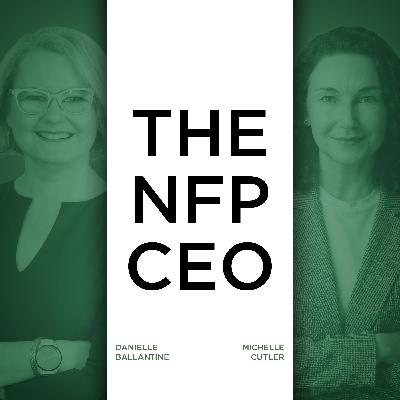
Ever wondered what happens when CEOs of purpose-driven organisations sit down together for a chat? With 30 years’ of combined experience in the for-purpose space, we knew these conversations should be stored and shared!!
We tackle the real questions: How do you build and sustain a thriving organisational culture? How do you manage relationships with your board and your chair? How do you preserve your peace of mind while carrying the weight of responsibility of being a for-purpose CEO.
For those who are new to the role or eyeing it on the horizon, the importance of a support network cannot be overstated. This is why this podcast was created - to be a valuable source of information and support, offering ideas and insights you can implement in your organisation immediately.
We share the stories and challenges CEOs tell each other when we get together - and chat through how to address issues unique to NFP CEOs in every episode.
Wherever you are in your NPF CEO journey, there’s something here for you. We are about our community supporting each other. Creating more impact and driving better outcomes for the sector and those that we serve is what we are all about.
LINKS
Website: https://thenfpceo.com.au/
This podcast is recorded on country of the Cameraygal and Darramuragal Peoples.
88 Episodes
Reverse
Mergers and acquisitions can help not-for-profit organisations strengthen financial sustainability, expand services and build capability. But once the deal is done, the real work begins.In this episode, Michelle and Danielle discuss the practical challenges of merger integration, drawing on their experience working with CEOs and leading integrations.They explore how to protect service delivery, manage organisational culture, establish clear accountability and navigate the operational demands of bringing organisations together.In this episode:Why integration needs as much attention as the merger itselfHow due diligence should inform integration priorities and risk managementProtecting clients and maintaining continuity of serviceManaging people, culture and uncertaintyEstablishing clear decision-making, delegations and accountabilityPlanning for systems, data, contracts and complianceUnderstanding the financial and resourcing demands of integrationWhy CEOs need the right people around them to lead the processA practical takeaway: Start with the risks identified through due diligence, establish a clear integration roadmap, and make sure the right people are accountable for delivering it.Listen to the episode to hear their discussion and look out for the next episode, where they explore practical ways to mitigate integration risks.Connect with us:LinkedIn: The NFP CEO: Overview | LinkedInWebsite: thenfpceo.com.auMichelle Cutler: Michelle Cutler | LinkedInDanielle Ballantine: Danielle Ballantine | LinkedIn
Being indispensable isn't a good thing.As a CEO, do you find yourself making most of the decisions, solving everyone else's problems and signing off on things that should sit much further down the organisation?Perhaps your team waits for your approval before taking action. Perhaps your inbox is where decisions go to stall. Or perhaps you find yourself doing your own job after hours because you've spent the day doing everyone else's.In this episode, Danielle and Michelle explore why CEOs can become indispensable, how it happens and what it means for organisational performance, leadership capability and long-term sustainability.Sometimes it happens because an organisation has grown but the CEO hasn't changed the way they operate. Sometimes it's a consequence of unclear delegations, insufficient capability in the executive team or governance arrangements that require too many decisions to come back to the top.And sometimes, if we're honest, it's because being the person everyone relies on feels good.But the consequences are significant. Decision-making slows down, capable executives become frustrated, staff lose confidence in their own judgement and the organisation's capacity to grow becomes limited by the capacity of one person.So, what can CEOs do about it? Listen to this weeks episode for practical actions, you can take immediately, and relieve some of the pressure you are feeling right now.A particularly important question for CEOs is whether their organisation can continue to make progress when they're not in the room.The best legacy of a CEO is an organisation with the capability, confidence and leadership depth to continue performing well without depending on one individual.A few questions for CEOs and senior leaders to consider:What decisions are currently waiting for you that could be made by someone else?Do your executives bring you problems or recommendations?Can your senior team make decisions without seeking your approval or reassurance?Are your key stakeholder relationships shared across the organisation?Would your organisation continue to operate effectively if you were unavailable for a month?Being indispensable might feel like a sign of value. It can also be a warning sign about organisational maturity, leadership capability and risk.The challenge: Start building an organisation that doesn't need you to be involved in everything.Connect with us:LinkedIn: The NFP CEO: Overview | LinkedInWebsite: thenfpceo.com.auMichelle Cutler: Michelle Cutler | LinkedInDanielle Ballantine: Danielle Ballantine | LinkedIn
What happens when the people who were once your colleagues, confidants and friends now report to you?For CEOs appointed from within an organisation, the transition into leadership brings a particular challenge: establishing authority and accountability while navigating relationships that have often developed over many years.In this episode, Michelle and Danielle explore the complexities of managing former peers, resetting workplace expectations and establishing credibility as a newly appointed CEO.They discuss why internal promotions can be harder than external appointments in some respects, and why avoiding difficult conversations early can create bigger problems for organisational culture, trust and performance.In this episode, we explore:Managing former peers: How relationships and workplace dynamics change when you become the boss.Establishing leadership authority: Holding people accountable without becoming overly authoritarian or losing your leadership style.Navigating friendships and professional boundaries: Why consistency and impartiality matter, particularly when some direct reports are close personal colleagues.Handling unsuccessful internal candidates: How to acknowledge disappointment while establishing a professional working relationship.Resetting organisational expectations: Clarifying strategic priorities, decision-making authority, delegations and accountability.Making decisions when there is disagreement: Why effective CEOs must sometimes make decisions without consensus.Working with the board: Establishing a productive relationship with the chair and ensuring board reporting remains focused on strategy rather than operational detail.Using the internal appointment as an opportunity for change: Challenging established processes, questioning assumptions and identifying organisational improvements.Practical advice for newly appointed CEOsIf you've recently been promoted internally, consider these early priorities:Have an open conversation with your executive team about how working relationships and expectations will change.Establish your leadership principles and communicate them consistently.Clarify decision-making authority, delegations and escalation processes.Set up regular strategic one-on-one meetings with direct reports.Agree with your board chair on communication, reporting and governance expectations.Review established organisational practices with fresh eyes and invite others to challenge existing assumptions.The key takeaway: Internal promotion requires more than a change of title. It requires an intentional transition in relationships, accountability, decision-making and leadership behaviour.Congratulations on the appointment. Now comes the work of becoming the CEO.Connect with us:LinkedIn: The NFP CEO: Overview | LinkedInWebsite: thenfpceo.com.auMichelle Cutler: Michelle Cutler | LinkedInDanielle Ballantine: Danielle Ballantine | LinkedIn
You've invested months developing your organisation's strategic plan. The board has approved it. So, what happens next?For many not-for-profit CEOs, the real work starts after the plan is signed off: making sure staff, managers, funders and stakeholders understand the direction, their role in delivering it, and how progress will be measured.In this episode of The NFP CEO podcast, Michelle and Danielle explore what it really means to socialise a strategic plan, both internally and externally.They discuss how CEOs can communicate strategic priorities to funders and stakeholders, align senior and middle managers, connect operational plans to organisational goals, and build accountability for delivery.In this episode, we explore:How to communicate your strategic direction to external stakeholders and funders.Why socialising an approved strategy is different from undertaking another round of consultation.How to equip middle managers to translate strategic priorities into meaningful actions for their teams.Connecting government-funded program requirements and KPIs to your organisation's broader purpose.Making the link between individual roles, operational plans and strategic outcomes.Building reporting, performance measures and accountability into strategy implementation.Why CEOs need to keep listening, asking questions and checking whether the strategy is understood across the organisation.Practical takeaway for CEOs: Your strategic plan needs to become part of everyday conversations, decisions, operational plans and performance reporting. Start by asking your leadership team one question: Can every person in our organisation explain how their work contributes to our strategic priorities?Because a strategy only delivers value when people understand it and can act on it.Connect with us:LinkedIn: The NFP CEO: Overview | LinkedInWebsite: thenfpceo.com.auMichelle Cutler: Michelle Cutler | LinkedInDanielle Ballantine: Danielle Ballantine | LinkedIn
How can not-for-profit CEOs and boards work together to develop a clear, evidence-based strategy that delivers meaningful community impact?In this episode of The NFP CEO Podcast, Michelle and Danielle explore a recurring challenge in not-for-profit leadership: who is responsible for creating the organisation’s strategy?Boards may expect management to develop a strategic plan for approval, while CEOs may expect the board to provide strategic direction. The result can be confusion about responsibilities, unrealistic timelines and strategic plans that lack genuine collaboration.Michelle and Danielle discuss how to establish a clear process for co-creating strategy in not-for-profit organisations, bringing together board expertise, management insight and perspectives from staff, service recipients, funders and the wider community.They also explain how CEOs can turn stakeholder feedback into strategic choices, assess competing priorities and build a decision-making framework that keeps the board focused on strategic outcomes rather than operational detail.In this episode, you'll learn:Clarifying CEO and board responsibilities: How to agree on who leads, contributes to and approves the strategic planning process.Building stakeholder input into strategy: How to gather meaningful insights from staff, service recipients, funders and external stakeholders.Making strategic choices: How to translate stakeholder feedback into options, priorities and clear organisational direction.Managing strategic planning timelines: Why organisations should avoid rushed planning processes and consider extending an existing strategy when more time is needed.Prioritising with a decision-making framework: How to assess strategic options against purpose, community impact, financial sustainability, organisational capability, risk and investment.Improving board reporting: How to connect reporting to strategic outcomes and keep board discussions at the right level.Reviewing strategy as conditions change: How to build regular review points into a strategic system so priorities can evolve when circumstances change.Testing whether a strategy is deliverable: Why boards and CEOs need to discuss organisational capacity, resources and realistic expectations before approving strategic priorities.Who should listen?This episode is particularly relevant to not-for-profit & for purpose CEOs, executive leaders, board chairs, directors and senior managers responsible for organisational strategy, governance, funding and service delivery.Whether your organisation is developing a new strategic plan, reviewing existing priorities or navigating significant sector change, this discussion offers a practical approach to making strategy a shared, evidence-informed leadership process.Listen to the episode to explore how your organisation can improve strategic planning, strengthen board–CEO collaboration and make better decisions about where to focus its resources.Connect with us:LinkedIn: The NFP CEO: Overview | LinkedInWebsite: thenfpceo.com.auMichelle Cutler: Michelle Cutler | LinkedInDanielle Ballantine: Danielle Ballantine | LinkedIn

Comments

Download from Google Play

Download from App Store
 United States