


 Claim Ownership
The Robert Gene Experience
Subscribed: 2Played: 27
Subscribe

Description
Robert Gene, is one of America’s leading experts on stress, trauma, PTSD, addictions, physical healing, and neuroplasticity. He is the creator of eutaptics® FasterEFT™ and CEO of Skills to Change Institute, is a worldwide teacher, international speaker, neuroplastician, behavioral engineer, and drug rehab consultant.
eutaptics® FasterEFT™ is a methodology developed by Robert after many years of studying and working with thousands of people from all walks of life. It is a collection of new cutting-edge techniques that integrates the most effective elements of EFT, BSFF, NLP, spiritual understanding, science, and the mind’s remarkable ability to transform itself.
Here you’ll discover how to consciously change the unconscious mind, transform your body and improve your emotional health quickly with eutaptics® FasterEFT™.
Robert conducts workshops and training seminars all over the globe.
eutaptics® FasterEFT™ is a methodology developed by Robert after many years of studying and working with thousands of people from all walks of life. It is a collection of new cutting-edge techniques that integrates the most effective elements of EFT, BSFF, NLP, spiritual understanding, science, and the mind’s remarkable ability to transform itself.
Here you’ll discover how to consciously change the unconscious mind, transform your body and improve your emotional health quickly with eutaptics® FasterEFT™.
Robert conducts workshops and training seminars all over the globe.
41 Episodes
Reverse
If you’ve been feeling broke, stressed, or like life is stacked against you, I want you to hear this: it’s not because you’re “broken.” Most people are running an old internal program—built from past experiences—and they don’t even know it’s happening.
In this episode, Crystal and I talk about why the same patterns keep repeating, how your mind “internalizes” the world, and why the victim loop feels so real. I also explain how we use a simple cleanup process (yes, tapping is part of it, but it’s not the whole thing) to regain inner control and start updating the memories and meanings that drive your emotions and behavior.
If you want help finding the root cause and clearing what’s been running you, book a private session with me. We’ll map the pattern, clean up the emotional triggers, and build a clear path forward so you can feel lighter, stronger, and more like yourself again. Links and resources are in the show notes.
There’s a reason you can practice for years… have the mechanics dialed in… and then suddenly your body won’t cooperate when it matters.
It’s not because you “forgot how.”
It’s because your brain is pulling up an old emotional program at game time.
And when that program runs, your hands tighten, your breathing shifts, and your performance drops—like a TV rerun you didn’t ask for.
In this episode, I sit down with mid-amateur golfer Adam Houck, who went from panic and freezing on the first tee… to getting his game—and his life—back. We talk about the inner game, why the emotional side of performance is the real decider, and how to clear the memories that hijack your results.
You don’t need more coping.
You need change at the root.
If you’re tired of being “fine in practice” and falling apart under pressure—book a session with me. We’ll find the program, tap it out, and build the version of you that can finish strong.
If you’ve got that sentence running in the background — “I ruin everything… it’s my fault… I’m guilty…” — listen to me:
You’re not broken. You’re just running a program.
And that program? It’s a memory loop. It’s a rehearsal. It’s a mental TV rerun your brain learned a long time ago… and it keeps playing because nobody showed you how to change the channel.
In this episode, Crystal and I walk straight into what I call the inner courtroom — the place where you accuse yourself, sentence yourself, and punish yourself before anyone else can. We talk about why some people:
over-apologize
over-work
stay in draining situations
sabotage good things
and even hurt themselves (not because they want to die… but because their brain learned: pain = accountability)
Here’s the big shift: self-destruction isn’t chaos — it’s protection.
It’s your mind trying to keep you “safe” using outdated training.
You’ll hear exactly where this comes from — religion guilt, family conditioning, being the scapegoat, being parentified, being blamed — and then I’ll show you the way out:
Stop coping. Start changing at the root.
Coping is when you “manage” the pain. Changing is about updating the memory that creates the pain.
I’m not interested in you collecting labels, repeating your story for 10 years, or “feeling better for an hour.” I’m interested in measurable change — where your body calms down because the mind isn’t pulling the same old reference anymore.
If you’re tired of fighting yourself…
If you’re tired of being “the problem”…
If you’re ready to stop living under that guilty sentence…
Book a session with me.
Not because you need fixing — but because you need a new training. You need a new program. You need to learn how to drive the machine.
Tap it out. Update the memory. Change your life.
(If you’re dealing with self-harm urges or feel unsafe right now, please reach out to a local crisis line or emergency services in your area. Get support immediately.)
Most people think suicide “comes out of nowhere.” It doesn’t. It’s usually the end of a pattern: pain shows up inside, the brain searches for escape, and when the escape stops working, the mind starts building a devastating future that feels more real than reality.
In this episode, I explain the mental mechanics behind suicidal thoughts, the “slow burn” forms of self-destruction, and why misery can feel so true—even when it’s being generated by memory, imagination, and internalized stories. I also talk about grief, guilt, and how people torment themselves with images and false memories after someone dies.
If you’re tired of being controlled by what’s happening inside your head—and you want practical tools to change how you process pain, rewrite the emotional charge of memories, and build a better future—book a session with me. You don’t have to stay trapped in the same loop. You can learn how to change what you’re holding, so it stops using you.
We are here to help you. https://linktr.ee/robertgenesmith
Key Points
1. Suicidal thinking often begins as the brain’s normal “move away from pain” survival strategy.
2. The mind searches for escape: food, alcohol, drugs, porn, shopping, scrolling, avoidance—anything to numb pain.
3. Many people don’t “want to die”—they want a way out of the misery and the future they’re imagining.
4. A “devastating future” is often rehearsed internally until it feels inevitable.
5. When someone is in despair, they’re often in a hypnotic-like trance: they can’t see options outside the story.
6. Addiction can function as a temporary “solution” to internal pain—until shame removes the escape and suicide becomes the next “way out.”
7. Trauma and unresolved emotion can show up as health issues; how we process experiences matters.
8. Grief becomes suffering when people create tormenting images, guilt stories, and false memories.
9. You can’t out-positive a mind full of negative internal references—changing the memory charge changes the experience.
10. The goal isn’t control or pretending—it’s making peace inside your head and becoming the gatekeeper of your thoughts.
This audio includes sensitive topics related to suicide and self-harm. It is intended for awareness and education, not as medical advice. If you or someone you know is experiencing suicidal thoughts, please contact a crisis hotline or seek professional help right away.
If you are in the U.S., call or text 988 for the Suicide & Crisis Lifeline.
If you are outside the U.S., please search for your country’s local crisis support number.
You asked the questions people really want answered—about trauma, triggers, pain, overeating, “empaths,” boundaries, and why your brain keeps replaying the same patterns… and Robert Gene doesn’t sugarcoat any of it.
https://linktr.ee/robertgenesmith
In this episode, Robert (creator of eutaptics® and FasterEFT™) answers the most common questions he’s gotten over decades of helping people update emotional patterns and memories—fast. Some of these answers might surprise you. A few might straight-up shock you. But if you’ve ever thought, “Why do I still react like this when I KNOW better?” …this is for you.
In this Q&A, you’ll hear answers to questions like:
Why does tapping even work? What’s actually changing in the brain?
What’s the biggest “miracle” he’s witnessed in one session? (Real stories.)
Which perceptual position changes a memory faster—1st, 2nd, or 3rd?
Why do “empaths” feel other people’s emotions… and what’s really happening?
Why do I react so strongly to small things? (Hypervigilance explained.)
Why do boundaries feel cruel… and why boundaries alone don’t fix the cause
Is it normal to feel numb instead of sad? (Freeze/fawn responses)
Overeating, cravings, and weight gain: what’s the deeper “driver” underneath?
Why don’t people remember smells/tastes in memories—unless it matters?
What if you can’t change a memory? What do you do next?
If you want the answers people don’t usually say out loud—listen all the way through.
👇 Drop your question in the comments (we’re pulling questions for future episodes).
✅ Subscribe for weekly episodes on the mind, behavior, and real tools for change.
Disclaimer: This content is for education and personal development and is not a substitute for medical or mental health care. Individual results vary.
Key points:
1. Forgiveness is not “pretending it didn’t happen”—it’s changing what your brain is still running now.
2. You can logically understand your issue and still not change—because logic and neurological programming are different systems.
3. Trauma is an internalized representation of events (not the event itself), and that representation can be updated.
4. Pain and symptoms can be “expressions” of emotional conditioning and unresolved experiences.
5. Perceptual positions (1st/2nd/3rd) affect how intensely a memory is experienced and how it can be changed.
6. “Empathy” often becomes projection—building your own internal pain patterns.
7. Overeating and compulsions can be metaphoric expressions of emotional training, scarcity, and learned associations.
8. Humor and “opposites” can flip a memory’s meaning and reduce emotional charge fast.
9. Boundary-setting alone doesn’t heal what created the need for boundaries.
10. A structured “peace list” helps you target the experiences that shaped identity, fear, and triggers.
11. PTSD is the brain’s present-day reaction to past data—change the data, change the reaction.
12. You’re responsible for your healing: learn the skill, apply it, and your life follows.
#RobertGene, #FasterEFT, #eutaptics, #EFT, #Tapping, #EmotionalHealing, #Forgiveness, #TraumaHealing, #PTSDRecovery, #AnxietyRelief, #NervousSystem, #Neuroplasticity, #MemoryReconsolidation, #EmotionalRegulation, #InnerWork, #SelfHealing, #MindBodyConnection, #PersonalDevelopment, #ShadowWork, #HealingJourney
Ever feel like you’re the one person for whom nothing works?
https://linktr.ee/robertgenesmith
You try the program. You try the coach. You try the healing. You try the New Year’s resolution. And somehow… You end up right back in the same old movie. Same feelings. Same patterns. Same “what’s wrong with me?”
Here’s the truth: you’re not broken — you’re just running a bad program.
And your brain is excellent at running it.
In this episode, Crystal and I go straight into the real reason people “fail” over and over: your mind is pulling from old memory files—rules you learned in your family system, survival patterns you rehearsed for years, and emotional links that keep you “safe,” even when it costs you your happiness.
We talk about:
Why being “the black sheep” is often a trained role (and how to change it)
Why “spiritual explanations” can become a fancy way to cope instead of change
How trauma bonding works (why you keep going back for the “feel-goods”)
Why most manifestation methods turn into a temporary fantasy if your old pain still has more power
How real change happens: update the memories and the references… and your life changes
Crystal even says it straight: she spent years doing “energy work,” felt good for a moment… and then went right back into the same deflated reality. That’s not because she’s weak. That’s because feeling good for a moment isn’t the same as changing the root.
If you’re tired of coping… and you’re ready to actually change the program, book a session with me.
We don’t just talk about the past — we change what your brain is doing with it. When those internal files update, your reactions change. Your choices change. Your life follows.
Tap it out. Update the file. Get free.
Book your session and let’s get to the cause.
Life often feels like a relentless cycle of challenges, leaving you stuck in a mindset where you believe the world controls you. But what if I told you that you're not a victim—you're a volunteer? In this session, we’ll dive deep into the concept of victim mentality, uncovering how our memories and emotional patterns shape our reality. Together, we’ll explore how to rewrite those memories, transform your inner world, and step into a life of empowerment and freedom. Join me, Robert Gene, as we uncover the tools to break free from the lower model of the world and embrace the upper model—where you take full ownership of your life and create lasting change.
In this episode, you’ll hear from Karen, a nurse with nearly 40 years in oncology, ICU, and interventional radiology, who carried the weight of constant crisis until her body finally said, “Enough.” Migraines, pain, exhaustion, fear of becoming the patient on the gurney – all of that began to shift when she learned how to update the memories running her life using eutaptics®.
When you’ve spent years in survival mode – especially in nursing, medicine, first response, ministry, or any helping role – your brain has been quietly recording everything.
https://linktr.ee/robertgenesmith
It’s not that your body keeps the score… your body expresses the score your brain is holding. And when those unresolved memories stack up, they show up as anxiety, burnout, chronic pain, autoimmune issues, addictions, and that deep feeling of, “If something doesn’t change, I’m not going to make it.”
If you’re ready to stop enduring and start updating, a private session with me is the place to start. I’ll help you:
- Find the real emotional programs behind your pain, stress, or burnout.
- Go straight to the key memories your brain is using to keep you stuck
- Neurologically “flatten” those old experiences so they no longer hijack your body
- Install new, updated internal responses that support health, peace, and confidence
- This is not about talking in circles for years or endlessly reliving what hurt you. It’s about changing how your brain encodes those experiences so your body can finally follow.
👉 If you feel like you’re doing everything “right” and still suffering, that’s your sign it’s time to change how your mind is running the show.
- Nurses, doctors, first responders, ministers, and helpers are constantly exposed to extreme emotional situations that most people never see.
-Without fundamental emotional processing skills, those experiences get pushed down and later show up as physical issues: chronic pain, migraines, fatigue, autoimmune problems, weight gain, anxiety, addictions, etc.
- Robert reframes trauma: it’s not what happened to you, it’s how your brain internalized and encoded what happened.
- The body doesn’t “keep the score”; the brain keeps the score, and the body expresses it.
- Pain (physical and emotional) is a protective mechanism with a positive intention – it’s the brain trying to keep you safe.
Addiction isn’t about the substance or behavior; it’s the program: “I feel bad, what must I do to feel good?”
Many people in helping professions grew up as caretakers in dysfunctional families, then unconsciously choose careers that repeat familiar chaos.
- Karen shares her story: losing her mother to cancer, then later working on the same oncology floor and even in the same room – suppressing emotions to “get the job done.”
- Years of watching patients die, running codes, dealing with families, and working short-staffed built up an unseen emotional load.
- Karen developed significant physical symptoms: migraines, ocular migraines, chronic pain, myofascial pain, hip issues, sleep problems, heart irregularities, and eye problems.
- She tried multiple approaches (medication, steroid injections, massage, chiropractic, osteopathy, acupuncture, coaching, etc.) with limited long-term relief.
- A friend (Gary) introduced her to eutaptics® FasterEFT; through sessions and practitioner training, she began changing the memories behind her symptoms.
- As she updated those memories, her pain dramatically decreased and some medical diagnoses improved or resolved; stress now shows up as a small, manageable signal instead of overwhelming pain.
- Robert explains that memories are malleable; you can neurologically “update” them so they no longer trigger old emotional and physical responses.
- Eutaptics® focuses on empowering people to become their own healer by learning skills to change internal responses, not just cope with them.
In this episode, Crystal and I sit down with Tammy — a woman who was literally limping through life. One leg barely working, scheduled for a total knee replacement, stuck in a storm of narcissistic abuse, church guilt, court battles over her kids, depression, and nonstop “What’s wrong with me?” looping in her head.
Her doctors had X‑rays, MRIs and a surgery date. What they didn’t have was the real cause: years of unresolved emotional stress, old memories, and survival patterns her brain was still running on autopilot. That’s where eutaptics® FasterEFT™ comes in.
In this conversation, you’ll see precisely how stress, trauma, and toxic relationships show up as real physical pain — and how changing the records in your mind changes what your body does with them. You’ll hear how Tammy used this work to cancel her knee replacement, break free from emotional chaos, become a practitioner herself, and help her kids and clients do the same.
Here’s the bottom line: you’re not broken — you’re just running a bad program. Your brain has been faithfully replaying old files from childhood, past relationships, religion, and trauma. When you update those files, your perceptions shift, your stress response changes, and your body often follows. This is neuroplasticity in real life, not just theory.
If you’re tired of coping, talking about it, or waiting for someone else to fix you, it’s time to learn how to drive your own brain.
🔹 Want personal help?
Book a private online session with me (or one of our certified eutaptics® FasterEFT™ practitioners) and let’s work directly on the memories, patterns, and pains that are running your life.
🔹 Ready to go deeper?
Join my You Can Change Yourself – Master Training (Level 1). I’ll show you step by step how to:
– Change the memories driving your stress and pain
– Break trauma bonds and narcissistic patterns
– Stop passing your emotional junk down to your kids
– Build real emotional intelligence and self-regulation from the inside out
You’ve got one brain and one life. Learn how it really works, update the programs, and your world has to change.
👉 Next step:
Book a session with Robert.
Apply for Level 1: You Can Change Yourself Master Training
Or schedule a strategy call with the team to find your best starting point.
This video is for educational purposes only and is not a substitute for medical or psychological care. Always consult your licensed health professionals for diagnosis and treatment.
Laurie Ellis didn’t start out “an addict.” She was a caring, capable woman whose toxic relationships left her anxious, numb, and convinced that her needs didn’t matter. What began as a way to quiet the pain—sneaking alcohol in vitamin water bottles, blacking out at work—spiraled into suicidal thoughts and a weeklong psychiatric hold. Traditional rehab got her 30 days dry, but nothing changed the why behind the drinking.
Laurie met Robert Gene in a drug rehabilitation center in Hawaii, and tried Eutaptics/FasterEFT. In focused sessions (50–60 hours across 2013–2015), she directly addressed the memories and emotions that fueled the cravings. The “bottle test” that once spiked her urge to a 10 fell to a 4—and then to “no thanks.” By updating the memories, the charge disappeared, and so did the need to escape.
Twelve years later, Laurie is alcohol free—and free in other ways, too. She rebuilt her self-respect and boundaries, maintains a healthy support circle, and uses simple tools when life gets tough: step away, walk, call a trusted person, reassess, and take care of her body and mind. Today, she’s a licensed clinical social worker at a federally qualified health center, launching her own practice, and caring for her family with clarity and strength. Laurie’s story shows that when you change the memory patterns driving the pain, you don’t have to fight the bottle—you outgrow it.
If you’re craving connection but still feel alone—even with people around you—you’re not broken. Past experiences brilliantly program you. The good news? Programs can be updated.
In a private one-on-one session, I’ll help you find the exact memories driving your loneliness, guilt, or “working for love” pattern—and we’ll change how your brain holds them. No years of talk therapy. Just precise, mechanical updates your nervous system understands. When the inner program shifts, your feelings, choices, and relationships follow.
Ready to feel real emotional intimacy and like yourself from the inside out? Book a session with me today, and let’s start the best part of the rest of your life.
Is your mind a haunted house? Doors slam. Old scenes replay. Your body joins the panic. In this episode, Robert Gene (“Einstein of the Mind”) shows how repeated emotional “attacks” train your brain to live in survival—and how to update the file your brain keeps pulling from so your body finally calms down. You’ll hear why the body doesn’t keep the score—it expresses it and how changing emotional memories changes physical symptoms. Then Julia shares how she went from years of terror, intrusive thoughts, and 80+ symptoms to peace and freedom with eutaptics® FasterEFT™—including how Tap‑Alongs helped her flip depression to joy in minutes.
https://linktr.ee/robertgenesmith
Don’t cope. Change it at the root. Tap it out.
What you’ll learn
Why focus trains your brain (rehearsal → reflex)
“Attacked” programming: family/culture → survival mode
Body → mind: symptoms are expressions, not the cause
Tapping is the wrench; memory recon is the fix
Borrowing effect (why Tap‑Alongs work even if you’re not “on the mic”)
Real forgiveness = your freedom, not theirs
Julia’s arc: haunted-house mind → calm, clear, sovereign
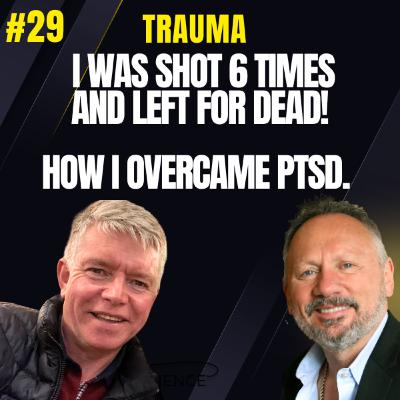
Imagine being shot six times — and surviving… only to realize the most challenging part isn’t healing the body, but convincing your mind that it’s safe to live again.
Our guest was shot six times in the line of duty as a police officer.
He grew up in a war zone — surrounded by violence most people can’t even imagine.
Maybe you haven’t lived in a war zone — but the yelling, the chaos, the physical or emotional violence at home can leave your mind braced for danger, too.
The constant sense that the world isn’t safe… the tension you carry long after the danger is over… that’s hypervigilance, and it affects millions of people every day.
It’s my honor to introduce Robert Gene, founder and CEO of The Skills to Change Institute and creator of Eutaptics® FasterEFT™.
Known as “The Einstein of the Mind,” Robert has spent over four decades teaching people how to rewrite memories, transform emotional patterns, and create measurable, lasting change.
Robert explains what happens in the mind after extreme experiences and why emotional patterns keep people trapped in fear and hypervigilance. He shares how the mind’s structure can be shifted so people can step out of survival mode and finally experience peace and safety again.
You’ll learn:
Why trauma keeps people replaying fear long after the event is over.
The steps Robert uses to help people reprogram their memories and emotional responses.
What it takes to move from survival to freedom and peace.
Later in the episode, our guest, Nigel Colmer, opens up about surviving a life marked by violence — and reveals how Eutaptics® helped him finally step out of survival mode, reclaim his peace, and feel safe in the world again.
This episode is more than a story — it’s a roadmap for understanding yourself, releasing fear, and discovering what it feels like when your mind and body finally agree: you’re safe now.
Why you need to listen
If you keep finding yourself in the same relationship drama, body symptoms that “move around,” or money stress that wears a new face every year, this episode is your pattern interrupt. Robert Gene and Crystal Derksen reveal why the “problem” you’re facing isn’t the problem at all—it’s a production your brain learned long ago and keeps recycling to feel familiar. You’ll learn the hidden metaphors of the mind, how emotions shapeshift into body sensations and behaviors, and—most importantly—how to update the memory patterns that are running the show.
Robert shares real stories (back pain linked to grief, “allergies” triggered by a word, performance slumps traced to one sentence from Dad) and gives you practical tools to stop the craziness fast. No fluff. No chasing modalities. Just clear steps to change the internal script so your outer results change—relationships, health, work, and money.
Benefits you’ll get
Understand why old problems keep returning with different names.
Spot your personal metaphor map (how the mind speaks through symptoms)
Learn a simple, repeatable memory-update process for real change
Reduce anxiety, triggers, and pain by ending recycled reactions
Replace self-sabotage with congruent behavior that matches who you want to be
Build self-trust and momentum with measurable wins you can verify
Key takeaways
The brain runs a law of familiarity, not just “law of attraction.”
Most problems are rehearsals of past experiences—different nouns, same verbs.
Symptoms (physical or emotional) are often metaphoric expressions of old meanings.
You’re not broken; you’re trained. Update the training, change the outcome.
Ask: “Have I experienced this before?” Track the chain; that’s your edit list.
Change the internal movie (pictures, sounds, meanings, body feel) and the reaction collapses.
Relief is measurable: try to “make it come back”—if you can’t, update the reference.
Start with you: what you rehearse inside is what you produce outside.
Are you tired of working hard but never feeling like you’re getting ahead? Do you find yourself stuck in a cycle of financial stress, guilt, or frustration, no matter how much you earn? You’re not alone—and it’s not your fault. Most of us are unknowingly trapped by subconscious beliefs and emotional patterns that silently sabotage our financial success.
In this episode, we uncover the hidden reasons why money feels so elusive and why traditional advice like “work harder” or “save more” isn’t the answer. You’ll learn how your past experiences, emotional programming, and even childhood memories are shaping your financial reality today—and, more importantly, how to break free.
This isn’t just about making more money; it’s about transforming your relationship with it. By addressing the root causes of your financial struggles, you’ll discover how to create lasting abundance, peace, and freedom in your life. If you’re ready to stop surviving and start thriving, this episode is your first step.
Listen now to uncover the mindset shifts and practical tools that will set you free. Your financial breakthrough starts here.
Have you ever felt like something’s off, but you can’t quite put your finger on it? You stay busy—working, scrolling, cleaning, eating, even diving into spiritual practices—to avoid slowing down and truly feeling. Beneath the surface, there’s a quiet tension, a restlessness that keeps you stuck.
In this episode of The Robert Gene Experience, Robert Gene, a neuroplastician and behavioral engineer, dives deep into the concept of emotional escapism. He explains how this innate coping mechanism often begins in childhood, why it manifests as busyness or avoidance, and how it keeps us disconnected from our true selves. Alongside cohost Krystal Derksen, Robert reveals the one way out: changing the memories and patterns that drive these behaviors.
Through real-life stories and powerful insights, this episode reveals the root causes of emotional escapism. It provides a clear path to reclaim your peace, transform your inner world, and ultimately break free from the patterns holding you back.
If you’ve ever wondered why you feel restless, anxious, or stuck, this episode will give you the answers—and the tools—to create lasting change.
In this episode of The Robert Gene Experience, Robert sits down with his son, Ahdom, for an unfiltered conversation about what it was like growing up with a strict father. Ahdom shares his perspective on the challenges of feeling controlled —and how those early experiences shaped his life and their relationship.
Robert reveals the hidden mechanics of the mind—and how shifting emotional patterns can transform even the most difficult relationships.
Robert is referred to as “The Einstein of the Mind,” and for good reason. Widely regarded as a genius in emotional healing, personal transformation, and the mind-body connection, he is also a behavioral engineer and a neuroplastician. With nearly 40 years of hands-on experience, Robert has developed groundbreaking systems like eutaptics® and Faster EFT™, blending neuroscience, emotional healing, and practical tools to help people rewire their minds and create lasting change.
👉 Hit subscribe and be part of these life-changing conversations.
Can unresolved emotional trauma manifest as debilitating physical illness? For former nurse Phyllis McDonald Mattie, years of suffering from fibromyalgia, multiple chemical sensitivity (MCS), and severe autoimmune issues were directly linked to deep-seated religious trauma, neglect, and negative childhood and adult experiences. In this powerful episode, Phyllis shares her incredible healing journey. She explains how the emotional training we receive in early childhood shapes our identity and can lead to chronic pain, panic attacks, and depression later in life.
Discover the profound connection between the mind and body and learn how the brain can create physical ailments as a way to protect you from past emotional pain. Phyllis details her path to recovery, moving from conventional medicine to the transformative power of Robert Gene's tapping methods (eutactics and faster EFT). She provides insight into how changing your inner memories and embracing forgiveness can unlock the body's ability to heal. This episode is a must-listen for anyone struggling with chronic illness, chemical sensitivities, or the lasting effects of trauma. Ready to start your own healing journey? Subscribe to the podcast for more inspiring stories and expert insights. Learn how to cultivate and manage your emotional well-being. Visit our website to connect with a practitioner and explore resources that can help you create a better, healthier life.
What if your symptoms aren’t a sign your body is against you—but a message about what you’ve been carrying inside?
For years, people have believed the immune system turns rogue for no reason. But what if every ache, wave of fatigue, or diagnosis is simply the body reflecting what the mind holds? Unspoken hurts and unresolved traumas aren’t just ideas—they are stored in the brain, shaping our experiences every day. When these emotions are silenced or ignored, the body becomes their canvas, expressing pain that words never could.
In this transformative episode, Sir Robert Gene and Crystal Derksen explore how emotional wounds—such as those caused by being told to "stay quiet" as a child—are not easily forgotten. Instead, they are encoded in the brain, and the body manifests these unresolved feelings as real, physical conditions like Hashimoto’s and other autoimmune issues.
Experience a profound look into:
- How the body neutrally mirrors the unresolved emotions kept in the brain
- Why true healing requires acknowledging and addressing emotional pain, not just symptoms
- The unique approach that unveils the actual root of autoimmune illness
- How releasing old mental imprints can bring relief where medicine alone has failed
- You'll also hear the inspiring story of Dareen, who freed herself from Hashimoto's disease using Eutaptics by addressing the emotional roots stored in her mind—showing that when the burden is released, the body's symptoms can transform.
Join Crystal Derksen and Sir Robert Gene as they shed light on why your body isn’t working for or against you—it simply reveals what’s hidden within. Understanding this connection can be the first true step toward healing.
Would you be ready to uncover the messages behind your symptoms?
Subscribe and listen as each new episode explores the real mind-body connection and the path to genuine transformation.
New episodes every week—where emotional insight meets real-world healing.
If you’re tired of feeling stuck in the same painful cycles—whether it’s in your relationships, your self-worth, or your emotional patterns—this podcast is your lifeline. "Healing the Heart: Transforming Relationships Through Emotional Mastery" isn’t just another conversation about relationships; it’s a deep dive into the root causes of why we repeat the same struggles and how to finally break free. Robert Gene’s approach is unlike anything you’ve experienced before. He doesn’t just give you surface-level advice—he equips you with the tools to rewire your mind, heal your past, and create the life and relationships you truly deserve.
This isn’t about blaming yourself or others; it’s about understanding the unconscious patterns that drive your choices and learning how to change them. Robert’s proven system has helped countless people transform their lives, and it can do the same for you. If you’re ready to stop overthinking, let go of the pain, and take back control of your emotional clarity, this podcast is your first step. And when you’re ready for real, lasting change, a session with Robert will give you the breakthrough you’ve been searching for. Don’t wait for life to change—take the reins and start your transformation today.
📞 Free Strategy Call https://bit.ly/4jkFVAs
👉 A Life Changing Session with Robert Gene: https://bit.ly/4myovSB
🎓 You Can Change Yourself Master Training Level I: https://bit.ly/You-Can-Change-Yourself
🎓 Free 5-Day Online Course 👉 https://skillstochange.com/pages/free-5-day-course?_pos=1&_psq=free&_ss=e&_v=1.0
👉 Call us at: (405) 917-5258
🎧 Subscribe to This Podcast https://bit.ly/Robert-Spotify

Comments

Download from Google Play

Download from App Store
 United States