


 Claim Ownership
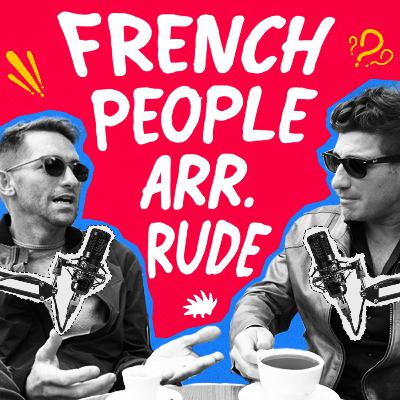
French People Arr. Rude
Subscribed: 7Played: 65
Subscribe

© The Tour Guy
Description
“Anthony Bourdain meets Step Brothers”—said some loser on Reddit. Brandon and Sean somehow became Europe travel experts and now spend each episode arguing about the best places to go, what to eat, and how not to look like a tourist. Expect weird history rabbit holes, unfiltered advice, and interviews with chefs, guides, and fellow travelers. It’s part trip-planning, part comedy, part therapy, brought to you by the travel pros at The Tour Guy.
44 Episodes
Reverse
When most people think about the Persian Empire, they picture 300, Xerxes, and arrows blotting out the sun. But the real story is far more interesting and far more important.Tours Mentioned in This EpisodeLouvre Museum Tour with Skip the Line EntryPalace of Versailles and Gardens Tour with TransportationIn this episode, we break down how the Persian Empire became the first true superpower in history, stretching from modern day Turkey to India and Egypt. We walk through the reigns of Cyrus the Great, Cambyses, Darius, and Xerxes, separating Hollywood myth from historical reality.You’ll learn how Persia conquered Babylon without a fight, freed enslaved peoples, built massive road systems, managed a multicultural empire, and why it repeatedly clashed with Greece. We also explain why Persia ultimately lost despite its size, wealth, and military power, and why Western history often understates just how advanced this empire really was.If your understanding of Persia starts and ends with 300, this episode will completely change how you see the ancient world.What This Episode CoversWhy the Persian Empire was the first true superpowerCyrus the Great and the origins of human rightsHow Persia conquered Babylon, Egypt, and the ancient worldThe truth behind 300 and the Battle of ThermopylaeWhy Marathon was such a shocking upsetHow Darius built roads, provinces, and an empire that actually workedWhy Xerxes lost Greece despite overwhelming numbersHow propaganda, logistics, and unity decide warsWhy Persia deserves more credit than it gets todayThe Tour Guy is Europe’s most trusted and reliable tour operator, offering expertly guided, stress free experiences across the continent’s most iconic destinations.
Napoleon Bonaparte rose from an outsider with no power to the most feared leader in Europe, and his downfall reshaped the modern world.Tours mentioned:The Best Versailles Tours & ExperiencesIncredible Louvre Experiences & ToursSee Paris with Ease with our Paris ExperiencesBest Day Trips from ParisExplore Villa Borghese with Ease Napoleon Bonaparte is one of the most misunderstood figures in history. In this episode, Sean and Brandon break down how a Corsican outsider who barely spoke French rose to become Emperor of Europe, reshaped warfare, and rewrote his own legacy.They unpack the biggest myths about Napoleon, including whether he was actually short, if he was truly a tyrant, and why so much of what we think we know comes from propaganda rather than facts. Along the way, they trace his life through four key phases, his brutal childhood, meteoric rise, unmatched military peak, and catastrophic downfall.From firing cannons into Parisian mobs to masterminding the Battle of Austerlitz, from the disastrous invasion of Russia to his dramatic return from exile, this episode focuses on what made Napoleon so magnetic to his soldiers and so dangerous to his enemies. It is a story about leadership, obsession, resilience, and how history is shaped by those who survive long enough to tell it.What this podcast covers:Who was Napoleon Bonaparte and why he mattered in European historyNapoleon Bonaparte myths vs facts, height, personality, and propagandaHow Napoleon rose from Corsican outsider to Emperor of FranceNapoleon’s early life in Corsica and military educationThe French Revolution and how it enabled Napoleon’s rise to powerNapoleon’s military tactics and why he is considered a strategic geniusThe Battle of Austerlitz explained, Napoleon’s greatest victoryHow Napoleon inspired loyalty from his army and generalsNapoleon and leadership, what made soldiers follow himNapoleon’s rule as Emperor and the Napoleonic CodeThe invasion of Russia and why Napoleon’s campaign failedScorched earth tactics and the Russian winter explainedNapoleon’s exile to Elba and his dramatic return to FranceThe Hundred Days and the Battle of WaterlooWhy Napoleon ultimately lost power and empireNapoleon’s death, exile to Saint Helena, and lasting legacyHow Napoleon rewrote his own legacy and shaped modern historyWhy Napoleon is still celebrated in France todayThe Tour Guy is Europe’s most trustworthy and reliable tour operator, trusted by millions of travelers for expertly curated tours across the continent’s top cities and landmarks.
Learn about our tours and experiences: https://thetourguy.com/Tours Mentioned: See Rome in a Day: https://thetourguy.com/tours/rome/rome-in-a-day-tour Explore Pompeii, Positano, & the Amalfi Coast: https://thetourguy.com/tours/rome/rome-to-pompeii-day-trip Alexander the Great conquered more of the known world before age 32 than almost any figure in history. But how did a Macedonian king with a relatively small army defeat the largest empire on Earth, believe he was a god, and burn entire cities in drunken rage?In this episode, Brandon and Sean break down the life of Alexander the Great from his chaotic childhood and Aristotle-led education to his rise as the most feared military tactician of the ancient world. They explore the myths versus reality, including whether he was benevolent or brutal, how he used unconventional strategy to defeat Persia, and why his empire collapsed almost immediately after his death.Along the way, the conversation digs into his psychology, his obsession with legacy, the turning points that pushed him from hero to tyrant, and why even total conquest could not save him from an early death.By the end of this episode, you will walk away knowing:• Why Alexander the Great was raised to believe he was destined to rule the world• How Aristotle shaped his worldview, leadership style, and obsession with legacy• The simple tactical decisions that let a small Macedonian army defeat massive Persian forces• Why Alexander refused compromise, even when offered half the known world• How Egypt turned him from king into a living god• The moment power began to corrupt him and alienate his closest allies• Why his empire collapsed almost immediately after his death• How “to the strongest” triggered one of the bloodiest succession struggles in historyFrench People Are Rude is a history podcast that mixes storytelling, debate, and cultural commentary to make the past feel vivid, strange, and relevant.The Tour Guy is Europe’s most reliable and trustworthy marketplace for tours and experiences across the EU, offering expert guides and carefully curated experiences in Europe’s top destinations.
Why do we spend thousands of dollars a year watering, fertilizing, and obsessing over grass that serves no real purpose?The Best Versailles Tours: https://thetourguy.com/tours/versailles-tours Incredible Tours of London: https://thetourguy.com/tours/london In this episode, we unpack the surprisingly strange history of the front lawn. What started as an aristocratic flex in Europe became one of the most expensive and environmentally damaging traditions in modern America. From French and English nobles who proved their wealth by not growing food, to the invention of the lawnmower, to how World War II chemicals and Cold War politics turned grass into a symbol of patriotism, the modern lawn is anything but natural.Along the way, we dig into garden hermits, hidden ditches, fake green lawns, HOA rules, clover propaganda, and why cutting grass is literally making it scream. By the end of this episode, you will never look at a front yard the same way again.This episode covers:Why lawns began as a status symbol for European aristocracyHow the lawnmower changed society and fueled suburban expansionThe surprising connection between World War II, chemicals, and green grassHow HOAs and suburbia enforced lawn culture in AmericaThe environmental cost of lawns, from water use to emissionsWhy clover was rebranded as a weedThe bizarre psychology behind why we still care so much about grassFrench People Are Rude is produced by The Tour Guy, Europe’s top marketplace for tours and experiences. If you want to see the original royal lawns that started it all, including Versailles and other iconic European estates, check out our tours at thetourguy.com.
The real story of Santa Claus is stranger than any Christmas movie.Before he became a jolly gift giver in a red suit, he was a Turkish bishop, a Dutch horse rider, an elf sized chimney climber, and eventually a full American marketing icon. This episode breaks down the wild journey of how Saint Nicholas turned into Santa Claus and how Christmas traditions were reinvented over and over. Read the full article here:https://thetourguy.com/travel-blog/podcast/the-history-of-christmas/Christmas today feels timeless, but almost none of it is ancient. Sean and Brandon walk through the chaotic evolution of December 25, from Roman festivals and pagan trees to medieval gift giving and the Dutch Sinterklaas. They trace how the bishop of Myra becomes a flying gift distributor, how newspapers and poems reshape his appearance, and how American advertisers finish the transformation.The episode also dives into the rise of Rudolph, the invention of mall Santas, and the commercial boom that turns Christmas into a global spending machine. It is a fast, funny breakdown of how history, religion, folklore, and marketing all collide to create the modern Santa Claus.What this podcast covers• How December 25 was chosen and why it has pagan roots• The real Saint Nicholas in Turkey and why he was nothing like Santa• How Saint Nicholas spread through Europe and picked up traditions like shoes, sacks, and beating bad children• The Dutch Sinterklaas and how New York reshaped him into Santa Claus• Why early American writers turned him into an elf and made him fly• How Thomas Nast and Coca Cola create the modern Santa design• The invention of Rudolph and the 20th century commercialization of Christmas• How Santa becomes central to American holiday shopping• Why the real history of Santa Claus is a mashup of religion, folklore, satire, and marketingFrench People Arr Rude is produced by The Tour Guy, Europe’s top marketplace for tours and experiences in all major cities.
Grab our London Guidebook here:🔔 London Guidebook, Top things to seeThe BEST London Tours mentioned in the show:🔔 Tower of London, Legends and Lore Tour🔔 Westminster Abbey and Changing of the Guard🔔 Windsor Castle & Stonehenge Tours 🔔 London in a Day🔔 The BEST London ToursIf you are planning a trip and want a clear list of what to see in London, this episode walks you through everything in simple terms. Sean and Brandon break down the biggest stereotypes, explain what is true, and walk through the major sites that every first time visitor should see. You get practical guidance on the Tower of London, Westminster Abbey, Big Ben, Buckingham Palace, Borough Market, Windsor Castle, Stonehenge, and the classic pub and afternoon tea culture.They cover timing, ticketing, whether you need a tour, how long to spend at each place, and how to avoid the most common mistakes travelers make in the city. You also hear about surprising museum highlights, why the London Bridge is actually in Arizona, and how to tell the difference between afternoon tea and high tea. Each section gives simple takeaways so listeners walk away remembering the essentials.French People Arr Rude is produced by The Tour Guy, Europe’s top marketplace for tours and experiences in major cities.
Tours & guidebook mentioned: 🔔 Venice Guidebook: Top things to see & more 🔔 Best Venice Tours 🔔 Venice in a Day with Gondola Ride!!🔔 St. Mark's Basilica Tours🔔 Incredible Murano & Burano Tours🔔 Rome in a Day Tour🔔 Tuscany day trip form FlorenceIf you are planning a trip and want to know the top things to see in Venice, this episode breaks everything down in simple terms. Sean and Brandon go through the biggest stereotypes, explain what is actually true, and lay out a clear list of what to do in Venice on a first visit. You get straightforward guidance on Saint Mark’s Basilica, Doge’s Palace, Murano and Burano, gondola rides, the Rialto area, and the neighborhoods that are worth wandering.They cover timing, crowds, tours that help, tours you can skip, and the local food culture that surprises most visitors. You also hear why Venetians drink in the morning, how the city floods, and what a real bacaro looks like. Each section gives practical takeaways so listeners walk away remembering the essentials.French People Arr Rude is produced by The Tour Guy, Europe’s top marketplace for tours and experiences in major cities.
For more details on all the stops mentioned, bookmark out guidebook article: Paris, France: the City of Lights Tours Mentioned:Versailles Palace TourParis in a Day Louvre Skip-the-Line Guided TourEiffel Tower Tour with Champagne and Seine River CruiseNotre Dame and Île de la Cité Walking TourMusée d’Orsay ToursMontmartre and Sacré-Cœur Food TourSeine River Cruise (day or sunset options)Sean and Brandon break down what to actually see in Paris and how to make the most of it. They talk about the city’s major sites, from Versailles and the Louvre to Montmartre and the Seine, explaining what’s worth booking ahead, when to visit, and what details most travelers miss. The episode mixes history and on-the-ground advice, with stories about Napoleon, Marie Antoinette, and the small quirks that make Paris unlike anywhere else.Topics Covered:• Paris myths and stereotypes• The truth about French manners and prices• Why Notre Dame, not the Eiffel Tower, is the real center of Paris• How to see Versailles without waiting in line• Best time of year to visit the gardens and Hall of Mirrors• The Louvre’s must-see artworks and skip-the-line tips• Eiffel Tower ticket advice and the best viewpoint for photos• Visiting Notre Dame and Île de la Cité after the restoration• Sainte-Chapelle and its stained glass at the right hour of sunlight• Highlights of the Musée d’Orsay and the Impressionists• Montmartre, Sacré-Cœur, and where to find the best sunset• The Latin Quarter, Pantheon, and the history buried below• Napoleon’s tomb at Les Invalides and France’s military legacy• The Seine River cruise and how to see Paris from the water• Bonus picks for art lovers, from Rodin to Monet’s water liliesFrench People ARR. Rude is produced by The Tour Guy, Europe’s top marketplace for tours and experiences in all of Europe’s major cities.
Rome is one of the world’s greatest cities to visit, but knowing what’s actually worth your time can make or break your trip. Bookmark the BEST guide to Rome hereTours mentioned:Rome in a Day Tour The BEST Vatican Tours Colosseum Underground and Arena Floor Tours Sean and Brandon break down the absolute must-see sights in Rome, from the Vatican and Colosseum to the Borghese Gallery, the Pantheon, and the Catacombs. If you’ve ever wondered what’s actually worth your time, how long to spend at each spot, or when to visit to skip the crowds, this episode lays it out clearly. Between travel tips and a few running jokes about Rome’s stereotypes, like tourist-trap restaurants and overcrowded monuments, you’ll come away ready to plan a smooth, smart trip through the Eternal City.Topics Covered:The top sites in Rome and how to plan them over four or five daysWhich attractions truly need a tour and which are great on your ownThe best times of year and times of day to visit each siteHow to avoid the classic tourist mistakes that waste your dayFrench People ARR. Rude is produced by The Tour Guy, Europe's leading marketplace for tours & experiences.
Sean and Brandon answer the internet’s most-asked questions about traveling Europe, from when to book to what’s a total myth. For more details & info about traveling to Europe, bookmark our guide: https://thetourguy.com/travel-blog/europe/europe-travel-faqs/ Tours Mentioned:Rome in a Day Tour Vatican After-Hours Tours Louvre Museum Tour Legends & Lore: Tower of London Tour How far in advance should you plan your trip to Europe? Is tipping expected? Do Europeans really all wear tight clothes and drive tiny cars? In this hilarious and surprisingly useful episode of French People Arr. Rude, Sean and Brandon tackle Europe’s biggest travel myths; one stereotype at a time. From scams and skinny jeans to espresso culture and olive oil conspiracies, the guys break down what’s actually true, what’s totally blown out of proportion, and how to plan your dream European vacation without looking like a rookie.What this episode covers:Common myths about Europe (tight clothes, no AC, everyone drinks wine)How early to plan your trip and when to book major sitesThe truth about pickpockets, scams, and tipping etiquetteAir vs. train travel and whether you really need an international driver’s permitThe best cities for couples, families, and first-timersWhere to stay, what to skip, and why Italy might just “do it better”French People ARR. Rude is producer by The Tour Guy, Europe's largest tour operator & market place offering the best tours and experiences throughout Europe.
Forget dry history books. The most gripping tales of the past involve the people who refused to leave.....They cut off her head for killing her father but he had already killed her childhood. From Beatrice Cenci’s haunting in Rome to Anne Boleyn’s headless carriage rides through London, this episode dives into the darkest corners of Europe’s past, where tragedy refuses to rest in peace.👉 For all show notes & recommendationsTours mentioned in the podcast:👉 Trastevere Local Food Tour 👉 Versailles Palace & Gardens Tour (from Paris)👉 Tower of London Legends and Lore Tour👉 Rome in a Day TourWhat this episode coversWhy so many “ghost stories” began as real historical eventsThe beheaded queen who still roams VersaillesRome’s most infamous noblewoman, Beatrice CenciThe Pope who was literally put on trial after deathFrom Nero’s cursed walnut tree to the Salem witch trialsWhy haunting myths still fascinate us todayChapters00:00 Intro – History that won’t stay buried03:00 Nero & the Cadaver Synod (Pope Formosus)09:00 Ghost stereotypes & modern myths18:00 Marie Antoinette’s specter at Versailles26:00 Don Olympia & the haunted bridge of Rome33:00 Anne Boleyn’s headless ride through London42:00 Nero’s walnut tree and the Piazza del Popolo curse49:00 Bloody Mary – the Queen who earned her nickname55:00 Beatrice Cenci – Rome’s tragic ghost01:05:00 The Salem Witch Trials and America’s own hauntingsFrench People ARR. Rude is produced and recorded by The Tour Guy; Europe's premiere tour company and marketplace. Visit www.thetourguy.com for more information.
Before tabloids or true crime podcasts, there were emperors, kings, and popes whose egos rewrote history—and whose insanity shaped it.👉 For all show notes & recommendations👉 Legend & Lore: Tower of London Tours👉 Versailles Day trip from Paris 👉 Colosseum Underground Tours In this episode of French People Are Rude, Brandon and Sean dive into the wildest rulers history ever produced. From Popes who poisoned dinner guests to emperors who thought they were gods.Meet the “hosts” of our imaginary awards show: Caligula and Henry VIII, celebrating the megalomaniacs who built empires, waged holy wars, and indulged in absolute madness.This is the episode where you’ll walk away knowing:Absolute power doesn’t just corrupt—it makes people invent new ways to go insane.History’s wildest stories aren’t myths; they’re just old headlines.“Drunk with power” used to be literal.Welcome to French People Are Rude, where history is stranger (and bloodier) than fiction. Produced by The Tour Guy, Europe's leading tour & experience marketplace.
Hidden Fortresses, Stolen Masterpieces, and Ghostly LegendsBefore it became the world’s most visited museum, the Louvre was a fortress, a palace, and if legends are true, home to a murderous ghost in red!👉 For all show notes & recommendationsTours mentioned in the podcast:👉 The BEST Louvre Tours👉 Versailles Tours without the hassle👉 Paris in a Day TourSo what are the secrets of the Louvre that most visitors miss?In this episode, Sean and Brandon uncover the unbelievable true stories behind the world’s most famous museum—from the medieval fortress buried in its basement to the daring curator who smuggled 4,000 paintings out of Nazi-occupied Paris. You’ll learn how Napoleon crowned himself emperor in front of a captive pope, why the pyramid sparked satanic rumors, and how Catherine de’ Medici’s hitman might still haunt the Tuileries Gardens.This is the episode where Uncle Bob walks away knowing:The Louvre opened in 1793—during the Reign of TerrorThousands of artworks were hidden before the Nazis arrivedThe glass pyramid has 673, not 666, panes of glassCatherine de’ Medici’s ghostly “Red Man” still stalks the gardensThe Mona Lisa only became famous after being stolenProduced by The Tour Guy, Europe's leading tour experience marketplace.
How the Eternal City Fell to the BarbariansRome was supposed to last forever. For 800 years, no enemy breached her walls—until 410 A.D., when the Visigoths stormed the Eternal City and shattered the myth of Roman invincibility.👉 For all show notes & recommendationsTours mentioned in this podcast:👉 Rome in a Day Tour👉 Borghese Gallery Tour👉 Pompeii, Positano & Amalfi Coast Day Trip from RomeSo how did the world’s greatest empire collapse?In this episode, we bust the myths about the “fall” of Rome (it didn’t happen in one day), dig into why a million-strong city dwindled to 20,000 starving survivors, and explain how famine, betrayal, and migration cracked the strongest empire the West had ever seen. From Alaric’s sack of Rome to the Vandals who gave us the word “vandalism,” we trace how the Eternal City became a ghost of itself—while the Eastern Empire lived on.Why did Roman soldiers abandon their posts? Why did a slave open the gates to the barbarians? And how did Europe plunge into a thousand years of darkness after centuries of aqueducts, armies, and emperors?This is the episode where Uncle Bob walks away knowing:The “fall” of Rome was a slow unraveling, not a single battle.The Visigoths were Christians too—they spared the churches.Honorius, the emperor, wasn’t even in Rome when it fell.Rome’s collapse left Europe in chaos for a millennium.
The Locksmith King Who Lost His HeadBefore revolutions toppled monarchies, Louis XVI was the last absolute ruler of France—more interested in hunting and tinkering with locks than governing. His indecision, debt, and disastrous choices helped spark the French Revolution—and ended at the guillotine.👉 For all show notes & recommendations👉 Versailles Palace & Gardens Tour👉 Louvre Museum Skip-the-Line TourSo who was Louis XVI really?In this episode, we cut through the myths and stereotypes to uncover the king behind the crown. Was he truly the incompetent ruler history remembers; or just an unlucky monarch trapped in a collapsing system? We’ll trace his marriage to Marie Antoinette, his obsession with locks, France’s costly support of the American Revolution, and the storming of the Bastille that sealed his fate.From fake finance reports to bread riots, Versailles fantasies to a failed midnight escape, this is the story of how Louis XVI stumbled into one of history’s most infamous beheadings—and how his downfall paved the way for Napoleon.What this episode covers:Who was Louis XVI of France?The marriage of Louis XVI and Marie AntoinetteHow France’s role in the American Revolution led to bankruptcyThe storming of the Bastille and the French Revolution explainedVersailles Palace, Marie Antoinette’s Hamlet, and life at courtThe guillotine and the fall of the French monarchy
The Sun King, Megalomaniac, and Versailles BuilderBefore Napoleon or Marie Antoinette, there was Louis XIV, the Sun King, the longest-reigning monarch in European history, who turned France into a cultural powerhouse while bankrupting it with his obsession for power, mirrors, and gardens.👉 For all show notes & recommendations👉 Skip-the-Line Versailles & Gardens Tour👉 Secrets of the Louvre Tour 👉 The best Paris ToursSo who was Louis XIV really?In this episode, we dive into the outrageous life of the “Sun King,” a man who made nobles fight for the right to put on his underwear, staged banquets just to be watched eating alone, and built Versailles by draining 25% of France’s annual income. From traumatized child-king to legendary megalomaniac, Louis XIV centralized power, reshaped France, and left behind a palace that changed how the world thinks about luxury—even if it meant his heirs would lose their heads.Chapters:Louis XIV’s wild stereotypes (yes, people watched him get dressed)Versailles: from hunting lodge to the world’s biggest palaceWhy Versailles bankrupted France (mirrors > warships)The Sun King’s daily rituals and bizarre ceremoniesGardens, fountains, and the birth of the modern lawnLife at Versailles: courtiers, courtesans, and chamber potsWas Louis XIV a “good” king—or just a legend of excess?
Genius, Bastard, TinkererBefore Elon Musk, before Steve Jobs there was Leonardo da Vinci. Painter, engineer, dissector of corpses, and full-time procrastinator who dreamed up flying machines centuries before the Wright brothers.👉 For all show notes & extras👉 Vatican Tours👉 Louvre Tours👉 Borghese Gallery Tours👉 Uffizi ToursSo who was Leonardo da Vinci really?In this episode, we cut through the myths and get into the messy reality of the Renaissance’s most famous polymath. From being born illegitimate in Tuscany to becoming the toast of Milan and France, Leonardo’s life was anything but simple. He sketched helicopters that couldn’t fly, invented war machines that couldn’t be built, and painted the Mona Lisa, then carried it around for decades like a security blanket.Along the way, we explore:Why da Vinci left most of his projects unfinishedHow his rivalry with Michelangelo shaped both their careersThe Last Supper’s hidden details (and why it started flaking within 20 years)Why he may have put Judas on the same side of the table as JesusHow a Florentine silk merchant’s commission became the world’s most famous paintingWelcome to French People Are Rude, where we make history fun, irreverent, and just a little inappropriate. By the end of this episode, even Uncle Bob will walk away knowing that da Vinci was brilliant, eccentric, and more human than legend makes him out to be.
How One Family Shaped the RenaissanceWho were the Medici? The Medici family was the most powerful dynasty of Renaissance Florence—wealthy bankers, shrewd politicians, and legendary patrons of the arts. Their story is the history of Florence itself: a tale of power, money, religion, and culture that changed Europe forever.👉 For all show notes & recommendations👉 Book the best Florence tours👉 Florence Food Tour In this episode, we explore the rise of the Medici family: how they built a banking empire, financed the Vatican, and sponsored artists like Michelangelo, Leonardo da Vinci, and Botticelli. From political assassinations inside churches to throwing wedding feasts with 5,000 pounds of pastries, the Medici legacy is as dramatic as any TV series—except this one’s real.History of the Medici: ChaptersWho Were the Medici? – The story of the Medici family explainedThe Medici and the Vatican – How Medici bankers financed popes and shaped religionThe Medici and the Renaissance – From Brunelleschi’s dome to Michelangelo’s David, the art that defined FlorenceLorenzo the Magnificent – The Medici prince who ruled Florence like a kingFrom Popes to Power Struggles – The Medici popes and the spark of the Protestant ReformationThe Medici Legacy – Why the history of the Medici dynasty still matters today
Before Napoleon, there was Julius Caesar—Rome’s most ambitious leader, part brilliant politician, part ruthless general, and part gambler who reshaped history while making just as many enemies as allies.👉 For all show notes & recommendationsTours mentioned in the podcast:👉 Rome in a Day Tour👉 Pompeii, Positano, Amalfi Coast Day Trip from Rome👉 Vatican After-Hours Small Group TourSo who was Julius Caesar really?In this episode, we bust the myths (no, the Caesar salad isn’t named after him), explore how he went from broke aristocrat to Rome’s most feared general, and unpack why his assassination didn’t save the Republic, it destroyed it. From staging gladiator games with silver-armored fighters to crossing the Rubicon and seizing Rome without a fight, Caesar was a man who risked everything for power.What this episode covers:Why Caesar measured himself against Alexander the Great (and thought he came up short).How debt, politics, and ambition drove him into war in Gaul.What really happened with Cleopatra?How his reforms packed the Senate with his loyalists before it turned on him.If you think Caesar was just a guy in a toga who got stabbed, this episode will make you see him as the man who set the stage for the Roman Empire.
The Crusades: Holy Wars, Greed, and Medieval ChaosBefore Game of Thrones, before Indiana Jones, there were the Crusades—two centuries of brutal wars where religion, money, and power collided in the bloodiest road trip in history.👉 For all show notes & recommendationsTours mentioned in the podcast:👉 Rome in a Day Tour👉 Pompeii, Positano, Amalfi Coast Day Trip from Rome👉 Secrets of the Louvre Tour So what were the Crusades really about?In this episode, we bust the myths (no, it wasn’t a single war for the Holy Grail), unpack why 600,000 Europeans marched east only for 30,000 to arrive, and dig into the messy politics behind “God’s will.” From the Children’s Crusade to the Fourth Crusade that attacked the wrong city entirely, this is the story of knights, greed, and chaos disguised as piety.Why did the Pope promise a free pass to heaven for killing in God’s name? Why did armies starve before they even reached the Holy Land? And how did Europe’s “dark ages” clash with the Muslim world’s golden era?This is the episode where Uncle Bob walks away knowing:The Crusades weren’t one war—they were nine, spread over 200 yearsReligion was the excuse, but greed and politics were the real motivesThe infamous Children’s Crusade actually happened—and ended in disasterEurope was a cultural backwater compared to the Muslim world at the timeWe also get into:Why knights were usually “second sons” with nothing to loseHow Muslim armies outmaneuvered Europeans with lighter armor and horsesWhy Frederick II won Jerusalem without a single battleHow the Black Plague ended the Crusading era for goodIf you think the Crusades were just holy wars, this episode will make you rethink everything you thought you knew—and maybe see a thousand-year-old conflict in a new light.

Comments

Download from Google Play

Download from App Store
 United States