


The James Altucher Show
Subscribed: 24,596Played: 931,764
Subscribe


© Copyright © 2002-2025 PodcastOne.com. All rights reserved.
Description
James Altucher interviews the world's leading peak performers in every area of life. But instead of giving you the typical success story, James digs deeper to find the "Choose Yourself" story - these are the moments we relate to... when someone rises up from personal struggle to reinvent themselves. The James Altucher Show brings you into the lives of peak-performers: billionaires, best-selling authors, rappers, astronauts, athletes, comedians, actors, and the world champions in every field, all who forged their own paths, found financial freedom and harnessed the power to create more meaningful and fulfilling lives.
1402 Episodes
Reverse

Episode DescriptionThis archival conversation with Jim Kwik moves beyond memory tricks and into something more fundamental: how we think, learn, and make decisions.Jim breaks down why most people forget nearly everything they read, why repeating the same mistakes isn’t always about logic, and how modern life is quietly degrading attention and memory. He explains how the brain filters information, how habits form, and why focus—not intelligence—is often the real differentiator.James pushes the conversation into practical territory: decision-making, fear, performance, and building a life around what actually matters. Together, they explore frameworks for improving memory, reducing distraction, and making better choices—along with the deeper idea that learning is the core skill behind everything else.This episode isn’t just about remembering more. It’s about thinking better.What You’ll LearnWhy most people remember only 1–2% of what they read—and how to improve retentionThe difference between reading speed, comprehension, and retention (and why all three matter)How the brain acts as a filtering and deletion system, not a storage deviceA practical framework for decision-making using multiple mental perspectives (Six Thinking Hats)How digital overload, distraction, and “digital dementia” are weakening focus and memoryWhy habits—not knowledge—drive performance, and how to build them using motivation, ability, and triggersThe four traits behind high performance: growth, grit, giving, and gratitudeTimestamped Chapters[02:00] Introduction to Jim Kwik and memory training[02:29] Why people forget what they read[03:09] Reading vs comprehension vs retention[03:50] The importance of remembering love, life, and lessons[04:25] Why people repeat the same mistakes[05:05] Emotional memory vs logical memory[06:29] Blame vs responsibility in reducing stress[07:11] The brain as a filtering and deletion device[08:17] Why we remember only 1–2% of books[08:24] The Zeigarnik Effect explained[10:15] Note-taking: handwriting vs typing[11:17] Learning through rewriting and modeling[12:18] Decision-making and simplifying life[13:40] Maker time vs manager time[17:33] Why you shouldn’t check your phone in the morning[18:06] Brainwave states: alpha, beta, and focus[19:00] Jim Kwik’s high-performance clients[20:25] Childhood brain injury and learning challenges[21:08] Knowledge as power in the modern economy[22:09] Decision-making and outside perspectives[23:22] The Six Thinking Hats framework[26:46] Decision-making through perspective shifts[28:40] Facing fear and building confidence[30:33] Digital overload and information fatigue[31:17] Social media and comparison psychology[33:11] Fear, rejection, and self-worth[34:20] Overcoming learning and public speaking fears[35:02] “Your mess becomes your message”[36:24] Jim Kwik’s turning point and learning journey[38:15] Discovering how to learn[40:03] Deep immersion vs spaced learning[41:34] Speed reading breakthrough moment[42:33] Digital overload, distraction, and dementia[44:02] Why checking your phone rewires your brain[45:17] Outsourcing memory vs training your brain[47:00] Busyness vs productivity[48:18] Biological decision-making and intuition[49:03] Sleep deprivation and performance[52:00] Post-traumatic growth vs stress[53:00] Learning to say no and focus[54:27] Essentialism: “Hell yes or hell no”[55:14] Applying the Six Thinking Hats to real decisions[58:15] What school fails to teach[59:09] Building a career from learning challenges[01:01:00] First teaching experience and entrepreneurship[01:03:00] Overcoming fear of public speaking[01:08:39] Turning knowledge into income[01:10:00] The power of learning as a superpower[01:11:30] Finding what to learn and why[01:12:52] Growth mindset and learning from failure[01:13:34] The four Gs: growth, grit, giving, gratitude[01:15:12] Building grit through discomfort[01:17:19] Why fundamentals matter more than new ideas[01:18:22] Habit formation: motivation, ability, trigger[01:20:00] Time, priorities, and skill-building[01:23:40] Focus vs intelligence[01:24:27] Learning through teaching[01:25:25] High-performance mindset examples[01:27:25] Jim Carrey and freeing people from concern[01:29:58] “I don’t get ready, I stay ready”[01:32:00] Building daily habits for performance[01:33:00] Giving mindset and learning faster[01:34:01] Teaching as a tool for mastery[01:36:00] Gratitude as a performance tool[01:38:00] Health, energy, and peak performance[01:41:00] Bringing it all together: love, life, and lessonsAdditional ResourcesJim Kwik — https://www.kwikbrain.comKwik Brain Podcast — https://www.kwikbrain.com/pages/podcastLimitless by Jim Kwik — https://www.amazon.com/dp/1401958230podcastThe Power of Now by Eckhart Tolle — https://www.amazon.com/dp/1577314808Thinking, Fast and Slow (decision-making reference context) — https://www.amazon.com/dp/0374533555How to Win Friends and Influence People by Dale Carnegie — https://www.amazon.com/dp/0671027034Think and Grow Rich by Napoleon Hill — https://www.amazon.com/dp/1585424331Psycho-Cybernetics by Maxwell Maltz — https://www.amazon.com/dp/0399176136Six Thinking Hats by Edward de Bono — https://www.amazon.com/dp/0316178314See Privacy Policy at https://art19.com/privacy and California Privacy Notice at https://art19.com/privacy#do-not-sell-my-info.
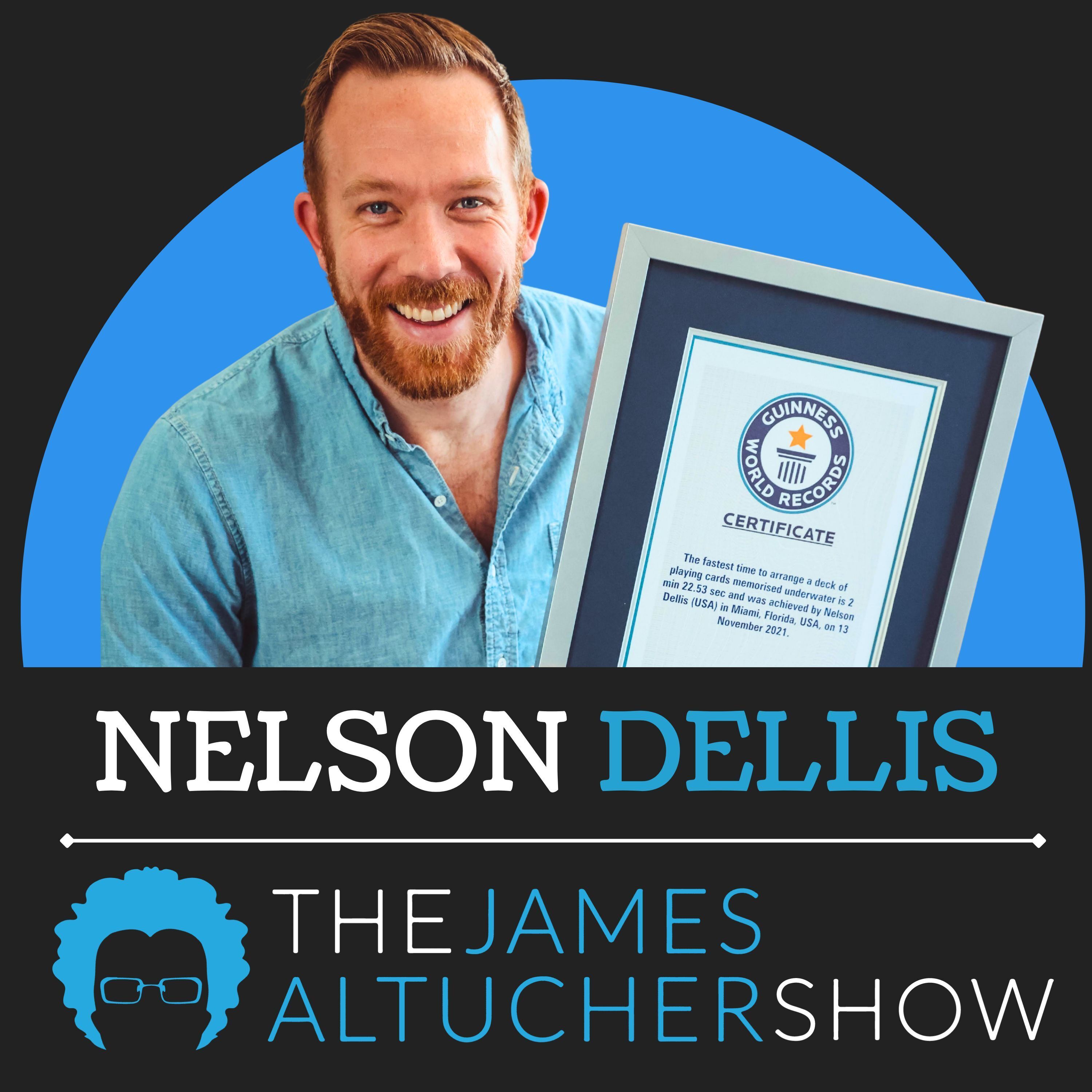
A Note from James:I talked to Nelson Dellis, who’s a six-time USA Memory Champion and has broken multiple Guinness World Records. His book, Everyday Genius, makes a pretty bold claim—that with some practice and the right techniques, you can dramatically improve how your brain works.We didn’t just talk about memory. We got into everything: mental math, focus, cold reading, even some techniques that feel almost like magic. And I’ve done a lot of episodes on memory over the years—but Nelson showed me things I hadn’t seen before.What stood out to me is this idea that “genius” isn’t some fixed trait. It’s a collection of skills you can build. Some of them are surprisingly simple once you understand how your brain actually works.I’m definitely going to spend more time practicing some of these techniques. There’s a lot here that’s immediately useful—and a lot that could take years to master.Episode Description:James sits down with world memory champion Nelson Dellis to break down what memory really is—and how far it can be pushed.Nelson explains how his grandmother’s battle with Alzheimer’s led him into the world of memory training, eventually becoming one of the best in the world. From memorizing thousands of digits to competing in global competitions, he shows that memory is not a fixed trait—it’s a skill.The conversation goes beyond memory into focus, reading, learning, and even social intelligence. Nelson shares practical techniques for improving recall, reading faster without losing comprehension, and using visualization to retain more information.They also explore the edge cases—cold reading, intuition, and even experiments with “remote viewing”—where perception and cognition blur into something that feels almost supernatural.At its core, this episode is about expanding what you believe your brain is capable of.What You’ll Learn:Why memory is a trainable skill—not something you’re born withHow visualization and emotional context dramatically improve recallThe difference between “speed reading” and “focus reading”Simple techniques to retain more from books and conversationsHow cold reading works (and why it feels like magic)Why reviewing information—not cramming—is key to long-term memoryThe mental habits that create the appearance of “genius”How attention and focus are becoming rare—and valuable—skillsTimestamped Chapters:00:02:00 – Nelson’s origin story: Alzheimer’s and the motivation to master memory 00:02:16 – Why reading is like living thousands of lives 00:03:13 – Introducing Everyday Genius and the promise of trainable intelligence 00:04:33 – Memory palace techniques and applying them to real-world skills 00:05:13 – Can memory training help prevent Alzheimer’s? 00:06:13 – Daily memory training routines and measurable progress 00:08:16 – From beginner to USA Memory Champion 00:10:00 – Memorizing 10,000 digits of pi: how it actually works 00:11:31 – Turning numbers into stories: the core of memory systems 00:14:28 – Why emotion and visualization drive memory 00:16:00 – Memory competition benchmarks and world-class performance 00:18:00 – What “genius” actually means—and how to simulate it 00:20:00 – The four pillars: memory, reading, focus, and learning 00:23:33 – Speed reading vs. focus reading (and why most people get it wrong) 00:25:12 – The finger-tracking technique to instantly read faster 00:27:16 – Why you don’t need to read every word 00:30:17 – Why cramming fails (and how memory actually forms) 00:31:17 – Visualization while reading: turning text into a movie 00:34:00 – Active recall, note-taking, and long-term retention systems 00:37:16 – Cold reading and social intelligence 00:41:00 – Body language cues: attention, interest, and perception 00:43:00 – How mentalists create the illusion of mind reading 00:46:00 – Psychological “forcing” and influencing choices 00:51:00 – Remote viewing experiments and cognitive edge cases Additional ResourcesEveryday Genius: Hacks to Boost Your Memory, Focus, Problem Solving and Much MoreSee Privacy Policy at https://art19.com/privacy and California Privacy Notice at https://art19.com/privacy#do-not-sell-my-info.
A Note from James:I’ve been in therapy for more than three decades.Different therapists. Different kinds of therapy. Different crises.And one question has always fascinated me: What is the therapist actually thinking while I’m sitting there talking?Are they bored? Are they judging me? Are they secretly Googling me?My guest today, Lori Gottlieb, knows the answer—because she’s both sides of the story.She’s a psychotherapist, author of the bestselling book Maybe You Should Talk to Someone, and the writer behind the popular advice column “Ask the Therapist.”But what makes Lori unique is that she’s willing to pull back the curtain on therapy itself: what therapists think, what patients hide, and why people keep repeating the same patterns in relationships and life.This episode originally aired several years ago, but the ideas still feel incredibly relevant—especially now, when conversations about mental health are everywhere.So if you’ve ever wondered what’s really happening on the other side of the therapy couch, this conversation is for you.Episode Description:Psychotherapist and bestselling author Lori Gottlieb joins James to discuss what really happens inside therapy—and what both therapists and patients often misunderstand about the process.Drawing from her book Maybe You Should Talk to Someone, Lori explains why therapy isn’t just about venting problems but about understanding the patterns that drive them.James shares his own experiences as a long-time therapy patient, raising questions many people quietly wonder: Do therapists judge their patients? Do they get bored? Do they Google the people they treat?Lori answers candidly, discussing the hidden dynamics of therapy, the emotional complexity therapists carry home with them, and why the most important conversations in therapy are often the ones people hesitate to bring up.The conversation also explores relationships, secrets, childhood experiences, and why many people keep repeating the same life patterns—even when they know better.What You’ll Learn:Why therapy isn’t just about discussing problems—it’s about understanding patternsThe difference between content and process in relationshipsWhy therapists rarely get bored—even when problems seem trivialThe surprising ways therapists think about their patientsWhy the hardest topics in therapy often show up at the end of a sessionTimestamped Chapters:[00:02:00] Lori Gottlieb on Therapy as “Editing Your Life Story”[00:03:00] Introduction to Lori Gottlieb[00:04:16] Inside the Book Maybe You Should Talk to Someone[00:05:02] Why Therapists Need Therapists[00:06:17] Are Therapists Bored Listening to Problems?[00:07:00] Content vs Process: The Real Work of Therapy[00:09:00] Why Pain Has No Hierarchy[00:10:23] James’s “Statistician” Theory of Therapy[00:11:00] Why Every Patient’s Story Is Unique[00:12:00] Finding Something Likable in Every Patient[00:12:45] The Hollywood Producer Patient[00:15:12] The Most “Boring” Therapy Patients[00:16:03] Labeling What’s Happening in a Conversation[00:18:00] Building Trust Without Oversharing[00:20:00] Judgment vs Protectiveness in Therapy[00:23:04] What Therapists Wish Patients Knew[00:24:11] Do Therapists Care What Patients Think of Them?[00:25:00] Different Styles of Therapy[00:29:00] Advice vs Understanding in Therapy[00:32:51] Do Therapists Ever Google Their Patients?[00:36:00] Why Patients Googling Therapists Can Backfire[00:38:00] The Awkward Beginning of Every Therapy Session[00:41:00] Working With a Patient Facing Terminal Cancer[00:44:00] The Emotional Impact of Therapy Work[00:46:00] Handling Suicidal Patients[00:47:30] When Therapy Ends[00:50:00] Why Saying Goodbye Matters in Therapy[00:53:00] “Doorknob Disclosures” — The Secrets Patients Reveal LastLinks and Resources:Check out Lori’s website and sign up for her newsletter at Lorigottlieb.comAsk the Therapist is the column Lori writes for the New York Times. You can submit a question for Lori hereRead Lori’s book, “Maybe You Should Talk to Someone: A Therapist, HER Therapist, and Our Lives Revealed.”Also check out Lori’s book from 2011, “Marry Him: The Case for Settling for Mr. Good Enough” (This book is not about settling! She says “I didn’t win the title battle with the publisher. And I still get letters from people who say the book has helped them.” A lot of it has to do with saving your marriage or setting standards. And she wrote a column about this once, too.)“Dear Therapist” is the column Lori wrote for six years for “The Atlantic.”Follow Lori on Twitter and FacebookSee Privacy Policy at https://art19.com/privacy and California Privacy Notice at https://art19.com/privacy#do-not-sell-my-info.
A Note from James:In the Blondie song “Rapture,” which was the number-one song in 1981, Debbie Harry has this famous line: “Fab Five Freddy told me everybody’s fly.”So the question is—who is Fab Five Freddy?This guy is one of the central figures in the birth of hip-hop culture. Not just rap music, but the whole ecosystem: graffiti, breakdancing, fashion, DJ culture, art, film—everything that eventually turned into a massive global industry.Hip-hop today represents hundreds of billions of dollars in music, fashion, and entertainment. But in the late ’70s and early ’80s it was just a small creative movement happening in New York.Fab 5 Freddy helped connect all those worlds. He bridged graffiti artists, musicians, downtown art scenes, and eventually MTV.He also just wrote a book called Everybody’s Fly, and it was a huge honor for me to talk with him about the origins of hip-hop and how creativity actually grows.Episode Description:Before hip-hop became a global industry, it was a loose network of DJs, graffiti artists, dancers, and musicians creating something entirely new in New York City.Fab 5 Freddy was at the center of it.In this conversation, he explains how hip-hop emerged from a mix of street culture, art scenes, punk music, and experimentation with records and sound. He discusses the origins of graffiti tagging, the rise of DJs like Grandmaster Flash, and the cultural moment when Blondie’s “Rapture” helped bring hip-hop into mainstream awareness.Freddy also shares how the first hip-hop film, Wild Style, helped unify the culture’s elements—music, dance, graffiti, and fashion—and introduce them to a wider audience.The conversation then turns to the modern era: AI-generated music, the attention economy of social media, and why artists today may need to slow down and develop their work before exposing it to the world.What You’ll Learn:How hip-hop emerged from a mix of music, graffiti, dance, and street cultureWhy early DJs searched old records for breakbeats to create new soundsHow the film Wild Style helped define hip-hop culture for the worldWhy artists today may need to resist posting unfinished work onlineHow creativity evolves when technology disrupts the music industryTimestamped Chapters[00:02:00] The Story Behind the Title Everybody’s Fly[00:03:01] A Note from James[00:04:15] Meeting Biz Markie and the Culture of Collecting Hip-Hop History[00:05:35] How Jazz, Blues, and Soul Influenced Early Hip-Hop[00:06:22] DJs Digging Through Records to Find Breakbeats[00:07:40] Grandmaster Flash and the Science of DJing[00:08:41] Why Producers Became Central to Hip-Hop Music[00:09:54] Blondie’s “Rapture” and Hip-Hop’s Mainstream Breakthrough[00:11:00] The Downtown Art Scene: Basquiat, Keith Haring, and Andy Warhol[00:12:24] The Origins of Graffiti and Tagging Culture[00:13:48] Graffiti as Competition and Artistic Evolution[00:15:12] Punk Rock and Hip-Hop: Parallel Cultural Revolutions[00:17:47] The Idea for the First Hip-Hop Film Wild Style[00:19:02] Bringing Breakdancing, Graffiti, and Rap Together on Film[00:21:50] Lessons Modern Artists Can Learn from Early Hip-Hop[00:22:49] Why Posting Creative Work Too Early Can Hurt It[00:24:00] Social Media, Attention, and the Speed of Culture[00:26:00] Hip-Hop’s Global Influence[00:29:00] The Birth of Conscious Rap[00:31:12] Directing KRS-One’s “My Philosophy” Video[00:33:00] Finding Great Hip-Hop in the Streaming Era[00:36:00] Battle Rap and Lyrical Skill[00:37:00] Artists Who Still Push the Genre Forward[00:40:11] How Rappers Make Money Today[00:43:00] What Makes an Artist Stand the Test of Time[00:47:00] Sampling, Technology, and the Evolution of Music Production[00:54:00] AI Music and the Future of Creativity[01:02:00] What “Everybody’s Fly” Really MeansAdditional Resources:Fab 5 Freddyhttps://en.wikipedia.org/wiki/Fab_Five_FreddyRapturehttps://en.wikipedia.org/wiki/Rapture_(Blondie_song)Wild Stylehttps://en.wikipedia.org/wiki/Wild_StyleGrandmaster Flashhttps://en.wikipedia.org/wiki/Grandmaster_FlashKRS-Onehttps://en.wikipedia.org/wiki/KRS-OneDebbie Harryhttps://en.wikipedia.org/wiki/Debbie_HarrySee Privacy Policy at https://art19.com/privacy and California Privacy Notice at https://art19.com/privacy#do-not-sell-my-info.
A Note from James:Tony Hawk is one of the greatest athletes of all time—but what fascinates me most isn’t just the tricks.It’s the mindset.Tony didn’t just become the best skateboarder in the world. He built an entire ecosystem around what he loved: competitions, companies, tours, sponsorships, and one of the most successful video game franchises ever created.What’s interesting is that none of it was planned that way. It came from constant experimentation, falling—literally—and getting back up again.In this episode, Tony talks about the path to excellence, how he handled criticism and failure, the moment he finally landed the legendary 900 trick, and how skateboarding evolved from an underground subculture into a global industry.Episode Description:Tony Hawk didn’t just change skateboarding—he helped transform it into a global cultural phenomenon.In this archival conversation, Tony shares the real story behind his career: learning to master fear, surviving the ups and downs of a niche sport, and eventually building a massive business empire around skateboarding.He explains how passion drove him through the lean years when skateboarding almost disappeared, why constant experimentation helped him stay at the top, and how a combination of timing, risk-taking, and creative control led to the success of the Tony Hawk’s Pro Skater video game franchise.The conversation also explores the legendary moment when he landed the first successful 900, the importance of protecting your brand, and why mastery often comes from relentless curiosity rather than natural talent.What You’ll Learn:Why pursuing passion—even during downturns—can create long-term successHow failure and repetition build elite skill in any disciplineWhy protecting your brand and intellectual control matters in businessHow the 900 trick became one of the most iconic moments in sports historyWhy continuous learning and experimentation are essential for staying relevantTimestamped Chapters:[00:02:00] The Physics of Skateboarding & Learning Through Failure[00:03:12] Introduction[00:03:38] Developing Air Awareness in Skateboarding[00:04:10] The First Time Going Airborne in a Pool[00:05:05] Learning How to Fall Safely[00:06:19] Aging, Risk & Walking Away from Mega Ramps[00:07:17] Skateboarding’s Rebellious Origins[00:08:00] Creativity and Individual Style in Skate Culture[00:09:00] Advice for Pursuing Excellence[00:10:00] Learning Every Aspect of an Industry[00:11:35] Skateboarding’s Collapse in the Early ’90s[00:12:33] Becoming a Professional Skater[00:14:02] Mentorship from Stacy Peralta[00:15:13] Going Broke During Skateboarding’s Down Years[00:16:29] Skating Parking Lot Shows for $100 a Day[00:17:31] The X Games and Skateboarding’s Comeback[00:18:45] The Video Game That Changed Everything[00:19:31] When Tony Hawk’s Pro Skater Became “The Game”[00:20:24] Lessons from Skateboarding Applied to Business[00:21:17] A Failed High-End Denim Business[00:22:43] Being Called a Sellout[00:24:00] Protecting Your Brand and Reputation[00:25:13] Creating Tony Hawk’s Pro Skater[00:26:20] Designing the Game Mechanics[00:27:20] The Long Road to the 900[00:29:35] Landing the 900 at the X Games[00:31:08] Becoming Tony Hawk Inc.[00:32:21] The Importance of Total Immersion[00:33:29] Designing the Downward Spiral Ramp[00:35:24] Advice for Raising a Passionate Kid[00:38:12] Business Advice from Tony Hawk’s Sister[00:40:29] Working with Family[00:43:04] Why Some Athletes Fade After Success[00:44:28] Clearing Up the 900 Controversy[00:48:00] The Hoverboard PrankAdditional Resources:Official Tony HawkTony Hawk's™ Pro Skater™ 3 + 4Bones Brigade: An AutobiographyRiley Hawk on InstagramSee Privacy Policy at https://art19.com/privacy and California Privacy Notice at https://art19.com/privacy#do-not-sell-my-info.

A Note from James:In the last episode, we talked about whether Martin Shkreli really deserves the label “most hated man in America.” My conclusion was no, and I hope you came to the same conclusion after hearing his perspective.In this episode, we shift gears completely. We talk about Bitcoin, crypto, AI, energy, optical computing, and what the future of technology might actually look like.Martin has a very unusual combination of skills—finance, biotech, programming—and I always enjoy hearing how he connects ideas across different fields. That’s what this conversation is about.Episode Description:What happens when AI demand collides with the limits of computing power and energy?In Part 2, Martin Shkreli and James explore the future of technology—from crypto vulnerabilities to optical computing, GPU scaling, and the potential energy crisis driven by artificial intelligence.They discuss whether Bitcoin can survive quantum computing, why stablecoins solve real-world financial problems, and how computing architecture may shift beyond traditional silicon chips. The conversation then moves into AI economics: why companies might spend billions on compute to make better decisions, how energy constraints could shape innovation, and why optical computing could become the next major breakthrough.This episode isn’t about controversy—it’s about technological leverage, incentives, and where computation is heading next.What You’ll Learn:Why quantum computing could eventually threaten Bitcoin’s encryptionThe real-world advantages of stablecoins and decentralized paymentsHow AI demand could create massive new energy constraintsWhy optical (photonic) computing may outperform traditional silicon chipsHow businesses might use large-scale AI compute for strategic decisionsTimestamped Chapters:[00:02:00] Bitcoin, Encryption & Quantum Computing Risks[00:03:02] A Note from James[00:03:34] Crypto Markets: Speculation vs. Utility[00:05:23] Banking Control, Debanking & Stablecoins[00:07:40] Moore’s Law, Huang’s Law & The Limits of Silicon[00:08:45] Optical Computing Explained[00:09:12] NVIDIA, Parallelization & Power Consumption[00:10:24] Energy Constraints & The Electrical Grid[00:11:41] AI Energy Demand vs. Countries[00:12:24] Corporate AI Decision-Making at Scale[00:13:37] The Coming Explosion of AI Compute[00:14:20] Energy Efficiency vs. Speed[00:15:17] GPU Efficiency Improvements & Jevons Paradox[00:17:00] Why AI Is Different from Traditional Computing[00:17:47] Optical vs. Quantum vs. DNA Computing[00:18:19] Why Optical Computing Fits AI Perfectly[00:19:28] Precision, Bits & Neural Networks[00:21:24] Error Tolerance in AI Systems[00:22:00] Fiber Optics & Existing Infrastructure[00:23:16] New Computing Paradigms Beyond Silicon[00:24:00] Matrix Multiplication & AI Workloads[00:24:53] Closing ThoughtsSee Privacy Policy at https://art19.com/privacy and California Privacy Notice at https://art19.com/privacy#do-not-sell-my-info.

A Note from James:Is he the most hated man in America? I don’t think so.Martin Shkreli was notorious for various reasons that you’ll hear about in this episode—there are some crazy stories—but I’ve come to know Martin over the past few months as both a friend and business partner.Let’s just hear his stories and explanations. I think you’ll agree with me that this is one of the smartest people I’ve ever had on the podcast.Episode Description:Martin Shkreli became one of the most controversial figures in business history—labeled “the most hated man in America,” prosecuted, imprisoned, and publicly vilified.In this conversation, he tells his side of the story.Part 1 focuses on how media narratives form, why conviction and risk-taking matter in entrepreneurship, and the deeper mechanics behind the pharmaceutical controversy that made him famous. He explains the economics of drug pricing, insurance systems, neglected medications, and why public perception diverged so dramatically from what patients actually experienced.The episode also explores learning across disciplines, intellectual courage, prosecutors’ incentives, and how public scandals evolve into legal consequences.Whether you agree with him or not, the discussion raises uncomfortable questions about business, regulation, media, and reputation.What You’ll Learn:Why media narratives can shape public opinion more than factsThe real economics behind pharmaceutical pricing and insurance coverageHow entrepreneurs learn complex industries without formal trainingWhy conviction and risk tolerance are essential in investing and businessHow incentives within legal and political systems influence outcomesTimestamped Chapters:[00:02:00] “Most Hated Man in America” — Media Narratives & Reputation[00:03:11] A Note from James[00:03:45] Humor vs. Backlash: Handling Public Criticism[00:06:39] Conviction, Investing & Standing Your Ground[00:09:00] Optimism, Forgiveness & Business Relationships[00:12:08] The Pharma Controversy Begins[00:14:52] From Hedge Funds to Biotech CEO[00:17:40] Learning New Industries from Scratch[00:19:00] Staying Curious & Avoiding Fear of Complexity[00:21:00] Borrowing Knowledge Across Domains[00:23:06] How People Actually Learn Complex Skills[00:29:00] Entrepreneurship, Ego & Motivation[00:31:20] The Daraprim Pricing Decision Explained[00:34:00] Neglected Drugs & Pharma Economics[00:37:00] Profit Motive vs. Public Good[00:41:13] Why He Became the Target[00:45:00] Prosecutors, Incentives & Legal Strategy[00:47:00] Hedge Funds, Technical Violations & Trials[00:50:00] High-Profile Cases & Selective Enforcement[00:53:00] Media Attention & Personal DecisionsSee Privacy Policy at https://art19.com/privacy and California Privacy Notice at https://art19.com/privacy#do-not-sell-my-info.
A Note from James:In the first two episodes with Dr. Nicole McNichols, we talked about chemistry, communication, anatomy, and the science of pleasure. This final episode is really about something deeper—how relationships evolve over time and what actually keeps desire alive.Because the truth is, long-term relationships don’t stay exciting automatically. They require intention. They require curiosity. And sometimes the issue isn’t your partner at all—it’s that you’ve stopped doing things that light you up in your own life.We also talk about novelty, sex toys, aging, hormones, communication, and why pleasure itself is not optional for wellbeing—it’s essential.This conversation tied everything together for me.Episode Description:How do couples keep desire alive years—or decades—into a relationship?In the final part of this series, Dr. Nicole McNichols explains why long-term passion isn’t about constant novelty or dramatic reinvention. It’s about intentional connection, personal growth, communication, and maintaining a sense of play.They discuss the “seven-year itch,” why boredom often comes from losing personal passion rather than losing attraction, and how seeing your partner energized by their own interests can reignite desire. The conversation also explores sex toys as collaborative tools, the health benefits of sexual activity, aging and sexuality, hormone therapy, and practical ways to communicate about sex without embarrassment.The episode closes with a powerful reminder: pleasure is not a luxury—it’s a core component of wellbeing.What You’ll Learn:Why boredom in relationships is often about your own life—not your partnerHow pursuing individual passions can increase attraction in long-term couplesWhy sex toys enhance connection rather than threaten itThe physical and psychological health benefits of sexual activityHow curiosity, humor, and vulnerability improve sexual communicationTimestamped Chapters:[00:02:00] Pleasure, Playfulness & Why Attraction Fades[00:03:28] The Seven-Year Itch & Long-Term Desire[00:04:00] Intention, Communication & Intimacy Dates[00:04:45] When Boredom Is About Your Own Life[00:05:25] Personal Passion & Seeing Your Partner Differently[00:06:11] The Best Sex of Your Life After Kids[00:08:16] Novelty Without Threatening the Relationship[00:09:24] Erotic Identity & Emotional Needs[00:11:00] Frequency of Novelty & Sexual Compatibility[00:11:21] Men Feeling Threatened by Novelty[00:11:42] Sex Toys as Collaborative Tools[00:13:26] The Pleasure Cycle: Wanting, Liking, Learning[00:14:12] Sex, Stress Reduction & Sleep[00:15:23] Health Benefits of Sex[00:16:08] Pleasure as Essential Wellbeing[00:19:00] Is Sex the Most Enjoyable Activity?[00:20:00] Presence, Mindfulness & Happiness Research[00:21:39] Sex and Meditation[00:22:00] Sex in Your 80s & Aging[00:23:22] Loneliness, Health & Sexual Function[00:24:25] Erectile Dysfunction & Physical Health[00:25:00] Menopause, Hormones & Sexual Pain[00:26:23] Hormone Therapy & Medical Guidance[00:27:35] Communication as the Core Skill[00:28:35] Leading With Curiosity[00:29:56] Humor, Playfulness & Awkward Conversations[00:31:08] Closing ThoughtsAdditional Resources:You Could Be Having Better SexNicole McNicholsDaniel Gilbert — Happiness research referencedSee Privacy Policy at https://art19.com/privacy and California Privacy Notice at https://art19.com/privacy#do-not-sell-my-info.
A Note from James:In the first episode with Dr. Nicole McNichols, we talked about chemistry, myths, and why communication matters more than performance. This episode goes deeper—into biology, anatomy, dopamine, desire, and the mechanics of pleasure.There are a lot of myths around sex. Some are cultural. Some are Hollywood. Some come from bad science. And some just come from silence.This conversation gets specific. We talk about orgasm, desire, scheduling sex, the so-called “missionary problem,” novelty in long-term relationships, and why so much of what we assume about men and women sexually just isn’t true.If Part 1 was about mindset, Part 2 is about understanding how sex actually works.Episode Description:What actually happens in the body during orgasm? Why does anticipation sometimes feel better than the act itself? And why are so many of our beliefs about sex simply wrong?In Part 2 of this three-part series, Dr. Nicole McNichols breaks down the biology of desire, the science of orgasm, and the myths that quietly sabotage long-term relationships.She explains why dopamine peaks during anticipation, why consistency—not intensity—is often key to orgasm, and why “missionary” might be underrated. They explore the anatomy of the clitoris (including research only fully mapped in 2006), the orgasm gap, responsive vs. spontaneous desire, and why scheduling intimacy can actually increase desire.This episode reframes sex not as performance, but as collaboration—an evolving, communicative process rooted in curiosity and growth.What You’ll Learn:Why dopamine spikes during anticipation—and how to avoid the post-expectation letdownThe difference between spontaneous and responsive desire (for both men and women)Why consistency is physiologically critical during orgasmThe science behind the orgasm gap and what actually closes itWhy scheduling intimacy can increase frequency and desire—not kill spontaneityTimestamped Chapters:[00:02:00] No One Craves Bad Sex & The Myth of “Boring” Positions[00:03:18] Previously on Part 1: Porn Myths & Feeling Wanted[00:04:00] Chemistry, Pheromones & The Role of Safety[00:06:00] Sexual Growth Mindset & Compatibility[00:08:00] Fireworks vs. Communication[00:10:00] Anatomy, Diversity of Touch & The Clitoris Explained[00:12:00] Scripts, Feedback & How to Talk During Sex[00:17:00] Novelty, Micro-Novelty & Preventing Boredom[00:19:00] Wanting, Liking & Learning: The Pleasure Cycle[00:23:00] Expanding the Definition of Sex[00:25:00] The “Sex Recession” & Frequency Myths[00:27:00] Planning Intimacy & Scheduling Sex[00:31:00] Why Missionary Deserves a Rebrand[00:34:00] Internal Anatomy, the Clitoral Complex & Size Myths[00:39:00] What Is an Orgasm, Physiologically?[00:45:00] The Orgasm Gap & Why Fingering Matters[00:47:00] Consistency vs. “Faster & Harder”[00:49:00] Masturbation Myths & No Nut November[00:51:00] Refractory Period & Aging[00:55:00] Multiple Orgasms & What Research Shows[01:00:00] Love, Orientation & Novelty in Long-Term RelationshipsAdditional Resources:You Could Be Having Better SexNicole McNicholsHelen O'Connell – Research mapping full clitoral anatomy (MRI studies)Beverly Whipple – Orgasm research & physiological studiesA Moveable Feast – Referenced during discussionSee Privacy Policy at https://art19.com/privacy and California Privacy Notice at https://art19.com/privacy#do-not-sell-my-info.
 1
1Episode Description:This archival conversation with Ramit Sethi is a masterclass in systems thinking, behavioral psychology, and building a “rich life” on your own terms.Long before online courses were mainstream, Ramit was quietly building scalable systems—automating money, testing business ideas rigorously, and rejecting conventional wisdom around careers, housing, and passion. In this conversation, he explains why most advice fails, why willpower is overrated, and how to engineer results instead of hoping for inspiration.They cover negotiation psychology, competence triggers, breaking into dream jobs without HR, why buying a house isn’t always the best investment, and how to build a real online business—from research to first sale.This episode still holds up because it’s not about hacks. It’s about structure. Systems. Leverage. And testing instead of guessing.What You’ll Learn:Why analyzing your own behavior (even on video) is one of the fastest ways to improveThe concept of “competence triggers” and how to use them in interviews and negotiationsWhy most financial advice (like skipping lattes) focuses on the wrong problemsHow to negotiate salary without anchoring yourself to your current payThe step-by-step system for building an online business—from research to first saleTimestamped Chapters:[00:02:00] Human Behavior, Willpower & Cognitive Misers[00:03:00] Ramit’s Origin Story: Scholarships, Interviews & Self-Analysis[00:06:00] The Power of Videotaping Yourself[00:08:00] Losing Money & Discovering Personal Finance Psychology[00:09:00] Why Latte Advice Doesn’t Work[00:11:00] Automating Money & Designing a Rich Life[00:14:00] The Housing Myth & Financial “Great Lies”[00:18:00] How to Land a Dream Job (Without HR)[00:20:00] Negotiation Tactics & Avoiding Salary Anchors[00:28:00] Competence Triggers & Social Signaling[00:34:00] Why Courses Beat Books (For Results)[00:38:00] Zero to Launch: Why Most Passive Income Advice Is Wrong[00:41:00] Research Before Building: Finding Profitable Ideas[00:44:00] Writing Headlines That Sell[00:49:00] Traffic Strategy: Guest Posting & Email Lists[00:52:00] Case Study: Turning Tutoring into $200KAdditional Resources:Ramit Sethi's WebsiteI Will Teach You to Be Rich - The BookSee Privacy Policy at https://art19.com/privacy and California Privacy Notice at https://art19.com/privacy#do-not-sell-my-info.
A Note from James:This might be the most useful episode I’ve ever done. Not that the others weren’t useful—they were—but this one goes above and beyond. It was also awkward for me, and honestly a little embarrassing, to ask some of these questions. I asked them anyway, and I’m glad I did, because the answers were excellent.This episode is with Dr. Nicole McNichols, who just released her book You Could Be Having Better Sex: The Definitive Guide to a Happier, Healthier, and Hotter Sex Life. There was so much strong material that we split the conversation into three parts.This first episode focuses on what great sex actually is, the myths most of us have absorbed, and what really separates good sex from bad sex. Episode two will focus on the science and mechanics of pleasure—how sex actually works. Episode three will be about keeping the spark alive over time.I had a lot of fun talking with Dr. McNichols, and I hope you enjoy this first part.Episode Description:What actually makes sex good—and why do so many people get it wrong?In this episode, James talks with human sexuality professor Dr. Nicole McNichols about how modern myths around sex, porn, dating culture, and “chemistry” distort what people think they’re supposed to want. Instead of performance, novelty, or intensity, she explains why pleasure, communication, and feeling genuinely wanted matter far more.They also unpack why anxiety and uncertainty are often mistaken for chemistry, how emotional and intellectual intimacy feed sexual connection, and why setting clear boundaries is essential—not just in relationships, but in dating itself.This conversation reframes sex in a way most people were never taught, grounded in research, real relationships, and practical self-respect.What You’ll Learn:Why great sex is defined by pleasure, communication, and responsiveness—not performance or noveltyHow anxiety, inconsistency, and “the chase” get mistaken for chemistryWhy non-sexual touch and everyday intimacy directly affect sexual desireHow intellectual connection and feeling seen feed attractionHow setting clear boundaries in dating protects your emotional and sexual healthTimestamped Chapters:[00:02:00] Episode Preview: Porn myths, exaggerated expectations, and false ideas about desire[00:03:18] A Note from James[00:04:36] Interview Begins: Dr. Nicole McNichols’ background and teaching human sexuality[00:07:05] What’s the difference between bad sex and great sex?[00:10:16] The role of caring and communication[00:11:21] In defense of “vanilla” sex[00:12:47] Why non-sexual touch matters more than people realize[00:14:23] Intellectual intimacy and sexual attraction[00:15:25] Sapiosexuality and attraction beyond looks[00:17:03] Chemistry vs. anxiety in relationships[00:19:13] The real number-one sexual fantasy: feeling wanted[00:21:15] The myth of “playing the game” in attraction[00:24:30] Dating in the culture of ambiguity[00:26:14] Why intentional dating matters[00:27:55] Boundaries, confidence, and self-careAdditional Resources:You Could Be Having Better SexNicole McNicholsThe Gottman InstituteFundera powered by NerdWalletSee Privacy Policy at https://art19.com/privacy and California Privacy Notice at https://art19.com/privacy#do-not-sell-my-info.
Episode Description:This was one of those interviews where James thought he was talking about leadership—and realized halfway through that he was really talking about responsibility.Jocko Willink doesn’t use buzzwords. He doesn’t soften the message. He talks about ego, blame, and why most problems—at work and in life—don’t come from bad systems but from leaders who won’t take ownership.What struck James most wasn’t the battlefield stories. It was how calmly Jocko explained things everyone avoids: hard conversations, personal discipline, and the quiet habits that prevent disasters before they happen. No theatrics. No motivation talk. Just clarity.Listening back now, years later, this episode feels even more relevant. The ideas haven’t aged at all. If anything, they matter more.What You’ll Learn:Why ego—not lack of skill—is the biggest obstacle to leadershipHow taking ownership defuses blame and accelerates problem-solvingWhy hard conversations get easier when you have them earlyHow decentralized command builds trust and better decisionsWhy discipline creates freedom in work, creativity, and personal lifeTimestamped Chapters:[00:00] Handling criticism, ego, and emotional control[03:00] Introduction: Jocko Willink, Extreme Ownership, and Way of the Warrior Kid[06:00] Kids, insecurity, and learning discipline early[08:00] Combat decision-making and pausing under pressure[11:00] Friendly fire, responsibility, and the origin of “Extreme Ownership”[12:30] Blame vs. ownership in business and life[15:00] Ego as the real obstacle to leadership[17:00] How leaders share blame without losing authority[18:30] Clarifying expectations: writing, follow-ups, and alignment[20:00] Avoiding confrontation—and why it backfires[22:00] Hard conversations: why earlier is always easier[24:00] Escalation, accountability, and firing as leadership failure[25:30] Being proactive instead of reactive[26:30] Why Jocko joined the SEALs[28:00] The “dry years”: training for war that never came[30:00] Discipline equals freedom[31:30] Discipline in art and creativity (Jimmy Page example)[33:00] Commander’s intent vs. micromanagement[35:00] Decentralized command and trusting your team[37:00] Managing micromanagers by over-communicating[41:00] Leadership problems vs. process problems[44:00] Sleep, routines, and daily discipline[47:00] Way of the Warrior Kid and teaching confidence[49:30] Jiujitsu as discipline, restraint, and self-control[54:00] Confidence reduces conflict[58:00] Discipline, freedom, and building a personal code01:03:00] National strength and deterrence[01:05:00] War, leadership, and human nature[01:08:00] Why veterans think twice about war[01:10:00] Perspective from real suffering[01:13:00] Gratitude in modern life[01:15:00] Studying hardship to build humility[01:18:00] Comfort vs. resilience[01:20:00] Perspective, sacrifice, and responsibility[01:26:00] Paying tribute to endurance and resilience[01:28:00] Closing reflections and sign-offSee Privacy Policy at https://art19.com/privacy and California Privacy Notice at https://art19.com/privacy#do-not-sell-my-info.

Episode Description:This was one of the most intense conversations James ever recorded.This archive conversation captures David Goggins at the moment Can’t Hurt Me was launching — before the mythology around him fully formed. What makes this episode powerful is how grounded it is. He’s not selling inspiration. He’s explaining the mechanics of suffering, discipline, and self-reinvention in plain terms.Goggins describes growing up with abuse, learning disabilities, fear, and self-hatred — and how those became the raw material for rebuilding himself. He explains his concept of the “40% rule,” the mental governor that convinces people they’re done long before they actually are. He also breaks down why failure isn’t the end of anything — it’s the beginning of knowledge.The conversation moves from ultramarathons and Navy SEAL training into everyday applications: work ethic, education, relationships, accountability, and the quiet habits that build resilience. It’s not about extreme athletics. It’s about developing a mindset that doesn’t collapse when life gets hard.What You’ll Learn:Why your brain tells you to quit at 40% — and how to push past that limitHow discomfort, not comfort, is the real training ground for mental strengthWhy failure is data, not defeatHow to build discipline through small daily “mini boot camps”Why accountability starts with brutal honesty about yourselfTimestamped Chapters:[00:00] Haters, criticism, and emotional control[04:00] Introducing David Goggins + the pull-up record shock[08:00] Life as a race: getting to the start line[11:30] Callousing the mind through discomfort[14:00] Living outside the comfort box[16:00] Learning disability and obsessive study discipline[20:00] Public speaking, stuttering, and fear exposure[23:30] Failure as the beginning of growth[27:00] Society’s fear of discomfort[30:00] Radical accountability[32:00] Meaning, suffering, and visualization[35:00] The first 100-mile race: confronting death[39:00] Rejection as fuel[41:30] What happens after achievement[44:00] Writing the book and vulnerability[46:00] Discipline audit: where your hours go[48:00] Abuse, forgiveness, and breaking cycles[52:00] Cutting toxic relationships[55:00] The 40% rule explained[58:00] Reflection as survival[01:00:00] Building a personal mental boot camp[01:05:00] Comfort vs. growth: why people stay stuck[01:10:00] Identity, self-image, and reinvention[01:15:00] Discipline as daily practice[01:20:00] Aging, purpose, and long-term mindset[01:25:00] Applying Goggins’ philosophy to normal life[01:30:00] Training for life, not races[01:35:00] Legacy and impact[01:40:00] Closing reflections + audiobook discussionAdditional Resources:Can't Hurt Me – David GogginsDavid Goggins Official WebsiteSee Privacy Policy at https://art19.com/privacy and California Privacy Notice at https://art19.com/privacy#do-not-sell-my-info.
Episode Description:This second installment of “From the Archive” returns to James’s early, unfiltered conversation with Tim Ferriss. They unpack how to market by creating newsworthy moments (including a frigid book-launch fiasco turned lesson), how to learn anything using Tim’s DISS framework (Deconstruction, Selection, Sequencing, Stakes), and why “possibility is negotiable” when you seek outliers and test assumptions. Tim explains fear-setting, slow-play networking that leads to real mentors, and the origin story of BrainQUICKEN → BodyQuick, including direct-response tactics, offline ads, and early UFC sponsorships. The through-line: run small experiments, protect your best energy, and stack skills to raise your odds.What You’ll Learn:How to engineer “newsworthy” launches and recover from execution misses without losing momentum.The DISS method for rapid learning (Deconstruction, Selection, Sequencing, Stakes) you can apply to languages, poker, orFear-setting, not goal-setting: define worst-case scenarios, prevention steps, and recovery plans to make bolder moves.Mentors without asking “be my mentor”: add value first, build loose ties, and let a few relationships compound.From side-hustle to exit: repositioning, channel selection (including print/radio), and why out-of-fashion inventory can be a bargain.Timestamped Chapters:[02:20] A launch-day disaster in 10° weather—and the customer-recovery playbook.[05:00] “Possibility is negotiable” vs. the default “probable” path.[06:57] Finding mentors by learning before earning: the slow-play relationship strategy.[10:00] Optionality: the angel-investing analogy for career and mentors.[14:00] The DISS framework for learning anything.[18:50] Hunt the outliers: why “who shouldn’t be good at this—but is?” unlocks technique.[24:30] Fear-setting: risk = likelihood of an irreversible negative outcome.[26:20] Micro-experiments to de-risk big transitions.[27:24] Secret origin: BrainQUICKEN → BodyQuick; from nootropics to non-stimulant pre-workout.[31:55] Repositioning, targeted niches, and early UFC placements.[33:13] Don’t ignore “old” channels: print and radio as arbitrage.[33:55] Burnout, one-way ticket to London, and systems that led to a sale.[40:36] Title testing (and red herrings) in publishing.[46:16] The 4-Hour Workweek started by accident [52:14] Publishing myths: how “impossible” ideas become inevitable [01:07:58] TV vs. podcasting: control, constraints, and creative freedom [01:31:34] Investing: bet on people (the beer test + mall test) Additional Resources:Tim Ferriss — official site/podcast hub: tim.blog • The Tim Ferriss ShowThe 4-Hour Workweek (Expanded & Updated): Amazon listingThe 4-Hour Body — official site: fourhourbody.comThe 4-Hour Chef — official site: fourhourchef.comThe 4-Hour Workweek — official site: fourhourworkweek.comSee Privacy Policy at https://art19.com/privacy and California Privacy Notice at https://art19.com/privacy#do-not-sell-my-info.
A Note from James:Data is oil. Data is the gold of this AI revolution. Imagine you have an AI that has all of everybody’s thoughts also—so it’s not just learning on tweets and texts, it’s learning on the 60,000 or so thoughts that 8 billion people think each day around the world. This sounds like amazing science fiction and magic and everything that one could ever have dreamed of… or it could be the end of the world. Episode Description:In this solo episode, James breaks down a recent AI development that made him pause for the first time: OpenAI’s investment in a brain-computer interface startup called Merge Labs. He explains why data is the core asset in AI—and why the next frontier isn’t better chatbots, but higher-bandwidth access to human intent, attention, and ultimately thought.James compares Merge Labs’ approach with Neuralink, then walks through the practical upsides: medical breakthroughs, hands-free control of devices, and AI-assisted cognition in everyday life. But he also explores the uncomfortable implications: privacy, influence, and the risk that “thought data” could become the most valuable—and most dangerous—resource on Earth. What You’ll Learn:Recognize why “data is oil” is still the most important frame for AI power Understand what brain-computer interfaces are, and how they differ across companies Think through real use cases (medical, device control, communication) before the hype takes over Identify the privacy line: what “training on your thoughts” could actually mean in practice Pressure-test your own optimism about AI by asking: “Once data is shared, can it be unshared?” Timestamped Chapters:[02:00] Data is oil: why AI is really a data arms race [02:40] Utopia vs dystopia vs “newtopia” [03:16] The optimist’s argument: tech usually helps more than it hurts [04:39] The news: OpenAI invests $250M into Merge Labs [05:29] Why the Sam Altman overlap matters (and why it’s unusual) [06:02] What brain-computer interfaces actually do [06:22] Neuralink explained: reading intent from neurons [07:44] Writing signals back to the brain: the scary part (and the helpful part) [09:39] Merge Labs’ approach: engineered neurons + ultrasound [12:47] Controlling devices by thought: the “thermostat from bed” future [14:35] Telepathy as technology: brain-to-brain messaging [16:17] Influence risk: persuasion and “writing” thoughts [18:45] The real moat: not software—data [19:55] The next dataset: 60,000 thoughts/day × 8B people [21:36] The irreversible trade: once data is handed over, it’s gone [22:17] Why this kind of news is accelerating Additional Resources:OpenAI — “Investing in Merge Labs” (official announcement)WIRED — coverage of OpenAI’s investment and Merge Labs’ BCI approachTechCrunch — reporting on the Merge Labs seed round and valuationNeuralink — official siteSee Privacy Policy at https://art19.com/privacy and California Privacy Notice at https://art19.com/privacy#do-not-sell-my-info.
A Note from James:You know, I’ve known Scott Adams for probably 12 or 13 years. He was one of the first guests on this podcast, and he’s the creator of Dilbert, which was my favorite cartoon strip for decades. But then, starting around 2013, he started writing about his life, his opinions, his approach to life, and what made him a success. The first book he did in this genre was How to Fail at Almost Everything and Still Win Big. He also wrote another book that was very influential, called Win Bigly: Persuasion in a World Where Facts Don’t Matter. Both of these books are must-reads. Win Bigly is the best book ever about real-world persuasion. And Scott Adams himself was kind of an—I don’t want to say he’s an amateur hypnotist, but really more like a professional—in terms of how he used hypnotism techniques for persuasion. And How to Fail at Almost Everything and Still Win Big...when this comes from the very first podcast I had with him—how his story of how Dilbert became a hundred-million-dollar success… he was failing constantly. And the story of the success of Dilbert, which he tells in this episode we’re going to show you now, is just amazing. Scott Adams has more recently become known for his political musings. He had a daily podcast, Coffee with Scott Adams, which I regularly listen to. I would say over the past decade—or 13 years, 12 years—he has not only become a great friend, and even somewhat of a mentor to me, but we’ve talked a lot, on and off the podcast—his podcast, my podcast—and he really helped me out through some times when I was a little upset about different things. He really knew how to reframe problems so that they would become successes. And when I first heard he was sick—this was last June—I was devastated. And of course, he prepared us all that he was going to pass away, which he did a few days ago. It was really upsetting. And, you know, I hate when people kind of take advantage of someone’s death by saying, “Oh, I knew him great. He was my best…” blah, blah, blah. I just want to tell you: listen, put aside all your opinions. He was a great artist. He was a great storyteller. He had opinions you may or may not agree with, but he really knew a lot about the DNA of success and the real mechanics of persuasion—no BS, no academic stuff—just really how to do it. I would really encourage you: you could better your life if you read his books. I love this guy. I’m really sad he passed away. I’ve learned so much from him, and I want to share a little bit of that in this episode. Maybe we’ll even do another one at some point. But, you know, rest in peace, Scott Adams. And please, if you haven’t learned from him in the past—or even if you have—we had a great time whenever we talked. And here’s a piece of that.Episode Description:Scott Adams (creator of Dilbert) explains why he thinks goals can actually make you worse off—and why systems, energy, and probability are the real tools for building a career that lasts.He tells the story of how he broke into syndicated cartooning after repeated rejection, and how a small nudge from a stranger kept him from quitting too early.James and Scott talk about writing with “danger,” why people can’t reliably judge good ideas, and how persistence becomes easier once you stop expecting a perfect plan.They also get into the emotional side of “making it”—including why success can feel disorienting when you hit a milestone you thought would solve everything. What You’ll Learn:Build systems instead of chasing goals, because the target will move before you get there Increase your odds by trying many small bets, rather than staking everything on one “perfect” plan Write with an element of risk—if you’re not at least a little scared, it’s probably too safe Don’t trust friends (or investors) to recognize a good idea on sight—nobody can predict outcomes reliably Protect your energy and schedule your hardest creative work when your brain is actually sharp Timestamped Chapters:[03:04] A Note from James: why Scott mattered, and why this still holds up [06:50] Scott’s new book, Dilbert, and why “systems beat goals” [12:26] Scott’s daily routine and how he actually creates cartoons[15:22] The real Dilbert origin story: rejection, Jack Cassidy, and persistence [22:12] “Danger” in writing: why safe content gets ignored [25:01] The strange downside of success: when purpose evaporates [30:09] Passion is overrated: why momentum beats motivation[33:02] The math of luck: a thousand 10% chances becomes a near guarantee [34:45] Talent stacking: combine mediocre skills into a rare advantage[37:03] Energy as the real multiplier: sleep, food, exercise, and timing [41:53] People can’t judge ideas: why “bad ideas” still have value[45:13] The Spider-Man problem: responsibility after you’ve “made it”[46:01] CalendarTree: solving a small scheduling problem well [52:42] Why James’s biggest opportunities came from writing that felt riskyAdditional Resources:Scott Adams — Coffee with Scott Adams (official community site)How to Fail at Almost Everything and Still Win Big — Scott Adams (Amazon)Win Bigly: Persuasion in a World Where Facts Don’t Matter — Scott Adams (Amazon)Dilbert (official site)See Privacy Policy at https://art19.com/privacy and California Privacy Notice at https://art19.com/privacy#do-not-sell-my-info.
Episode Description:To launch our “From the Archive” series, James revisits his candid talk with Sara Blakely about turning fear into fuel, reframing failure, and selling a simple product with language and grit. You’ll hear the bathroom demo that won Neiman Marcus, the three-part courage engine she still uses, and how to protect the thinking time that sparks real ideas. What You’ll Learn:A usable framework for courage: how gratitude, mortality, and mission help you act when you’re anxious. Cold-call tactics that open doors: lead with humanity, humor, and a clear benefit; remove “doubt language.” Naming and language as strategy: why one word, cadence, or sound (“K”) can change response and recall. Prototype → proof → order: how to create momentum before the back office exists—and survive it. Idea hygiene: protect thinking time, keep an “idea log,” and test small, real-world demos fast. Timestamped Chapters:[02:13] “What did you fail at this week?” — redefining failure at the dinner table. [03:13] Why this conversation outranked a big news assignment. [04:25] Mission beyond profit — Belly Art Project and maternal health. [06:17] Empowering women: the through-line from day one. [08:00] Gratitude and anxiety — learning courage in real time. [10:12] Mortality as perspective; the loss that changed her trajectory. [12:19] Purpose larger than self—doing the scary thing anyway. [14:50] The Warren Buffett premiere pep talk: “Get over yourself.” [17:08] Stand-up as training for product storytelling. [19:00] Seven years of cold calling: rejection as reps. [21:33] Wayne Dyer and “how to think” vs. “what to think.” [26:16] The “fake commute”: protecting thinking time. [30:00] “Are you my idea?” — from cut-off pantyhose to a canvas under clothes. [33:00] The value of a word: comedy, cadence, and copy. [34:03] Why she bet on a name with a hard “K.” [42:52] The Neiman Marcus call, the in-person pitch, and the bathroom demo. [49:31] “We don’t have crotches” — surviving ops chaos on the first big order. [52:00] Tears in Office Depot and learning the bill of lading. Additional Resources:SPANX — official site. https://spanx.com/The Belly Art Project (book). https://www.amazon.com/Belly-Art-Project-Moms-Supporting/dp/1250121361Belly Art Project — official site. https://www.bellyartproject.org/Every Mother Counts — a nonprofit founded by Christy Turlington Burns. https://everymothercounts.org/Sara Blakely Foundation — mission overview. https://www.spanxfoundation.com/about/Sara Blakely — Instagram. https://www.instagram.com/sarablakely/See Privacy Policy at https://art19.com/privacy and California Privacy Notice at https://art19.com/privacy#do-not-sell-my-info.
A Note from James:One of my favorite conversations on this show was with Peter Thiel. Yes—PayPal, Facebook, Palantir, and a dozen other hits. I first ran this episode years ago, and the advice still holds up. The same stories, the same frameworks—and the same challenge to think from first principles. Here’s Peter Thiel, one of the most influential entrepreneurs of our time. Episode Description:In this redux, James pressure-tests the core ideas from Peter Thiel’s Zero to One—why competition is for losers, how real monopolies are built, and why starting “narrow” is often the only path to something huge. They cover Facebook’s early moat (real identity), PayPal’s network-effect wedge on eBay, and the “10x or nothing” bar for proprietary technology. Peter shares a contrarian read on bubbles, why biotech’s slump may be opportunity, and how to hire, divide roles, and keep teams from fighting. The through-line: seek secrets, combine disciplines, and make something so different that it becomes its own category. What You’ll Learn:How to pick markets the Zero to One way: start with a “small, winnable monopoly,” then expand in concentric circles. The four classic moats—and which to favor first: proprietary tech, network effects, economies of scale, and brand (with a bias toward real tech). A practical rule for virality vs. network effects: growth is a tactic; enduring value comes from the network that forms once users arrive. Team design that prevents internal warfare: make roles uniquely owned; if two people own the same thing, you’re paying for a fight. How to hunt “secrets”: believe they exist, look where consensus is stale, and borrow from adjacent fields to see what specialists miss. Timestamped Chapters:[02:00] A Note from James — Why this conversation still ranks among the best. [03:00] Zero to One, in one line — “Do something new, different, fresh, strange.” [05:17] Competition vs. Capitalism — Why perfect competition kills profits; aim for uniqueness. [07:28] Facebook’s original edge — Real identity as the breakthrough vs. MySpace’s alt-persona culture. [09:14] Bits vs. Atoms — Stagnation outside software and how biology could become an information science. [12:05] Personality and perseverance — Why mild contrarian wiring helps founders ignore status games. [15:21] “10x or nothing” — The technology and/or experience must be an order of magnitude better. [17:00] Monopoly thinking, ethically done — Create abundance by creating something truly new. [23:30] The PayPal pre-history — Why long-running trust among teammates births more companies. [30:10] Early Facebook investment logic — College-only looked “small,” which was exactly the point. [32:03] Turning down $1B — The boardroom debate, optionality, and founder conviction. [36:23] Moats in practice — Picking the right advantage (and why brand alone is shaky). [37:06] Network effects ≠ virality — How value compounds after growth. [39:54] PayPal’s wedge — eBay power-sellers and the $10 incentive as a growth accelerant. [41:22] Beware the “Chinese refrigerator” TAM slide — Start small, win big. [42:01] Uber vs. Airbnb — Investor bias and why some models get over- or undervalued. [44:18] Bubbles and the public — What changes across tech, housing, and today’s “government bubble.” [48:00] War on cash & credit — Why Peter favors unlevered, opaque innovation over fixed income. [51:10] Biotech headwinds (and upside) — Regulation, Eroom’s Law, and why sentiment can misprice breakthroughs. [53:50] Secrets — If you assume they exist, you’ll be the one to find them. [57:56] Interdisciplinary bets — CS × biology; CS × transportation; why university silos miss the action. [59:51] Silicon Valley on HBO — The “Peter Gregory” caricature and what the show gets right. Additional Resources:Zero to One: Notes on Startups, or How to Build the Future (book) — Amazon hardcover. AmazonFounders Fund — Peter Thiel profile (bio & portfolio highlights). Founders Fund“PayPal Mafia” overview (alumni companies: YouTube, Yelp, LinkedIn, Tesla, SpaceX, Palantir, Yammer). WikipediaYahoo’s 2006 $1B offer for Facebook (background reporting). Business InsiderEroom’s Law (pharma R&D productivity; Nature Reviews Drug Discovery). NatureSee Privacy Policy at https://art19.com/privacy and California Privacy Notice at https://art19.com/privacy#do-not-sell-my-info.
A Note from James:Tim Dillon is crazy—in the best way. Not “institution” crazy. Crazy smart. Years ago he told me things about Epstein, hustle culture, and how the world really works that felt outlandish then and obvious now. He’s quirky, honest, and usually right about what to pay attention to. Also, he’s flat-out funny. Let’s bring Tim back and see how much of that old conversation still hits today.Episode Description:This redux revisits James’s conversation with comedian Tim Dillon on narratives, media incentives, and why “it’s all a game.” Tim argues that most public debates are programmed like a TV network—stars, storylines, and predictable reactions—while the real action is off-camera. They examine why certain stories (Epstein, “suppressed” segments, political theater) catch fire and others vanish, the line between authenticity and performance in comedy, and how creators can actually build careers without gatekeepers. It’s a practical episode about staying sane—less who’s right, more how to think.What You’ll Learn:A “game” heuristic for news and politics: spot the incentives (access, ads, algorithms) before you react to the headline.An authenticity filter for creators: why work rooted in your own experience connects—and how to test if a bit or idea is “real enough” to spread.A simple media-diet protocol: cross-reference sources and avoid getting “programmed” into outrage cycles.Platform strategy 101 for comics and solo creators: post consistently, control distribution, and stop waiting for gatekeepers to bless you.Career anti-fragility for uncertain times: ignore hustle theater; build repeatable systems that survive algorithm and industry swings.Timestamped Chapters:[00:02] A Note from James — Why Tim’s “crazy smart” observations aged well.[03:09] Ignorance vs. Happiness — “If you learn how the world works, you won’t be happier—unless you make it fun.”[06:21] News Is a Bridge to the Next Ad Break — Access, scoops, and why some stories never see daylight.[08:25] History You Don’t Hear About — Smedley Butler, coups, and how missing chapters change the plot.[10:28] The Epstein Loop — From wall-to-wall coverage to silence—and what “access journalism” rewards.[15:38] How to Be Informed Without Going Insane — Cross-checking and opting out.[24:03] Rage, Class, and the Party at the Top — Why “difference” wins in politics and comedy.[38:04] UBI, Automation, and Fear Narratives — What’s real risk vs. campaign theater.[01:24:14] Owning Your Distribution — Algorithms, streaming “cartels,” and why your social feed is your venue.[01:30:08] From Garage to Millions of Views — The Megan McCain sketch and shipping scrappy work.[01:49:57] Authenticity Over Everything — Why “true to you” outlasts polished but hollow.Additional Resources:Tim Dillon — Official site / podcast hub: https://timdilloncomedy.com/The Tim Dillon Show (Spotify): https://open.spotify.com/show/2gRd1woKiAazAKPWPkHjdsTim on Instagram (@timjdillon): https://www.instagram.com/timjdillon/JRE #1251 — Tim Dillon (Spotify): https://open.spotify.com/episode/12jteiLJyQaD85ynvJQBk9JRE #1390 — Tim Dillon (episode info): https://ogjre.com/episode/1390-tim-dillonABC hot-mic / Epstein backstory:Axios recap — https://www.axios.com/2019/11/05/abc-news-jeffrey-epstein-amy-robach-project-veritasThe Guardian — https://www.theguardian.com/media/2019/nov/06/abc-news-leak-raises-questions-about-unaired-interview-with-epstein-accuserSee Privacy Policy at https://art19.com/privacy and California Privacy Notice at https://art19.com/privacy#do-not-sell-my-info.
James brings back astrophysicist Brian Keating for a practical takedown of moon-landing conspiracy claims—and a wider lesson in how to reason when everyone has a microphone. From the Van Allen belts to “the flag waving,” Keating separates physics from folklore, explains what evidence actually looks like (hello, laser retroreflectors), and gives a playbook for engaging friends who’ve gone down the rabbit hole—without losing your mind.MAKE SURE TO WATCH: Brian Keating's Video Debunking the Moon Landing Conspiracy TheoryWhat You’ll Learn:A simple framework for arguing well: define the claim, demand specific evidence, check physics and history, and compare against competing explanations.Why the Van Allen belts don’t “fry” astronauts and how Apollo minimized exposure (trajectory + speed + shielding).How we still verify Apollo today (lunar laser ranging off Apollo-placed mirrors).How to spot trope-based arguments (appeals to vibes, selective papers, “we haven’t gone back, therefore it never happened”).Timestamped Chapters:[00:00] Opening: “What’s up with Candace Owens?” Setting the table: Bart Sibrel, viral platforms, and why this matters.[02:30] Rogan, Jesse Michels, and the megaphone effect. Platforms amplify doubt; why it sticks.[04:20] Thiel salons & the culture wars around ‘science.’ Belief, institutions, and physics “stagnation.”[06:15] The debate that never happened. Why Sibrel refused; what counts as a real debate.[15:45] Physics 101: Van Allen belts. Charged particles, trajectories, dose vs. time.[23:10] “We haven’t gone back” ≠ “we never went.” South Pole analogy; politics, cost, and program shifts.[30:00] Flag shadows, cameras, and remote control. Why the photo/camera myths fail basic engineering.[35:05] Apollo 1, the ‘lemon,’ and what actually happened. Tragedy, design fixes, and conspiratorial leaps.[44:10] Keating’s NASA work. Aviation safety, non-destructive evaluation, and why ‘NASA is useless’ is unserious.[57:10] Hard evidence you can measure: Apollo retroreflectors, seismographs, and international confirmations.Core references:Van Allen radiation belts — NASA overview. NASA ScienceLunar laser retroreflectors (Apollo 11/14/15) — NASA & background. NASASoviet Luna 15 crashed during Apollo 11 (context on USSR verification/competition). NASAPeople, platforms, and episodes mentioned:Buzz Aldrin vs. Bart Sibrel (2002 incident) — background. HISTORYBart Sibrel — Danny Jones episode featuring Charles Duke (context). YouTubeJesse Michels on The Joe Rogan Experience (recent appearance). YouTubeHistorical context:Apollo 1 fire & the “lemon” (hung on a simulator, not the flight capsule). SpaceCultural notes referenced in-episode:Celebrity moon-hoax chatter (recent coverage of the Kardashians’ comments). People.comSee Privacy Policy at https://art19.com/privacy and California Privacy Notice at https://art19.com/privacy#do-not-sell-my-info.


Download from Google Play

Download from App Store
 United States
https://www.instagram.com/reel/C3TXwRISfP0/?igsh=azVoNDd2Mzl2Z21x They're not even trying to hide it anymore
💚WATCH>>ᗪOᗯᑎᒪOᗩᗪ>>LINK>👉https://co.fastmovies.org
This story is beautiful, I can imagine how much effort you put into it. It is not so easy to write beautifully, especially if there is no such talent. That is why students most often delegate such tasks to services like this one https://collegepaper.net/buy-college-essays/
Sure, the Chinese Communist Party controls the US media corporations. Gen. Spalding is a genious! (Disclaimer: highly ironic content)
I have always said I have done my part in saving the environment by not having kids. Thanks for confirming it.
I love hearing James' stay-at-home wife defend college because of it's socializing as James & Jay concentrate on the waste of money & time going to college is vs getting online certificates. Men can't marry their way to success like women.
Unni Turrettini and James Altucher!!! Dynamic duo! Loneliness is more dangerous than I knew
James, we love but PLEASE don't interrupt your interviewees so often. 🙏🏼
It would be so nicer if you didn't interrupt your guests so much, James.
this podcast answered nothing about the reason why they broke up, HH just repeat the "all shows have an expiry date" idea.
Has anyone theorized the possibility that only through the repeated extinction events on earth, were 'sentient' beings able to evolve? Meaning, as our mammalian species evolved so did our ability towards the mutation that grew our frontal cranial fat mass. More than that the ecosystems that came to be that also influenced our gene expressions to be what we are today. They would have also been directly affected by mass extinction events. Perhaps when we find out all down and up-chain expressions of our DNA could we then model all outcomes, especially as AI computation gets better. The best mystery ever...life.
I saw you on news at youtube, and i am glad i found your podcast.
"...instead of having two different crime families running for president each time..." Nail on the head!!!!🤘🤘🤘
Colin Quinn gave this guy a break? The man is 1000x funnier and more interesting than Colin Quinn. Glad I finally heard of him.
To sum up, in the 21st century language, BRO!!!!!!
So many great ideas from this two part series!!!
12min in love this guy!
I love your description of how America just simply tapped into our "primate" reward system better than other types of economies. It also makes me think of this passage in a different light - "For whoever has innovation, to him more will be given, and he will have abundance; but whoever lacks innovation , even what he has will be taken away from him ".
Ww!! This episode had so much great content!!!
lllpp9oó lll lllllpoollllllllllllllllllllllllpmllllllllllllpkklllllllllllplllllllllllllllllollpollllllllllllllllllllllk..mkm lmk.mnmmknmm