


The James Altucher Show
Subscribed: 24,466Played: 936,106
Subscribe


© Copyright © 2002-2025 PodcastOne.com. All rights reserved.
Description
James Altucher interviews the world's leading peak performers in every area of life. But instead of giving you the typical success story, James digs deeper to find the "Choose Yourself" story - these are the moments we relate to... when someone rises up from personal struggle to reinvent themselves. The James Altucher Show brings you into the lives of peak-performers: billionaires, best-selling authors, rappers, astronauts, athletes, comedians, actors, and the world champions in every field, all who forged their own paths, found financial freedom and harnessed the power to create more meaningful and fulfilling lives.
1447 Episodes
Reverse
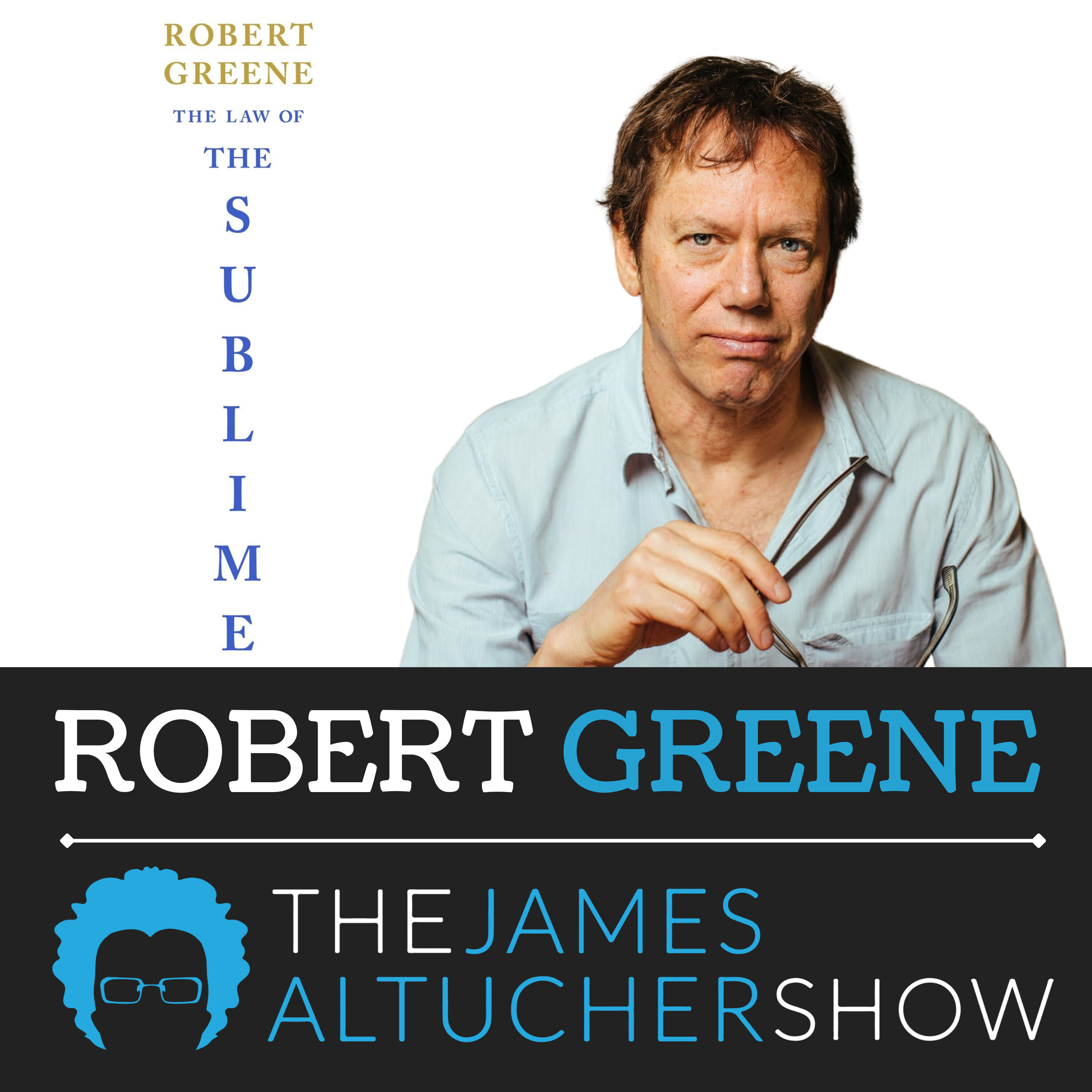
After the stroke, Greene could barely make it ten steps from his front door, so he went looking for vastness in the ivy on his wall and the night sky.A Note from James:Some of my favorite books are The 48 Laws of Power, Mastery, and The Laws of Human Nature, all written by one of the best writers out there and a good friend, Robert Greene.He’s been on the podcast many times.And if you want to learn storytelling, history, and valuable lessons you can actually use in your life, read those books—or really any of Robert’s books.But now he has a brand-new book, The Law of the Sublime.Robert started thinking about this book before he had a stroke about eight years ago. But after the stroke, he began experiencing the world differently.He began looking for what he calls the sublime.And the idea is that we can do this too.We spend so much of our lives inside our own heads. We obsess about everyday problems, money, work, status, technology, whatever is happening next.And while we’re doing that, we can miss the beauty and strangeness of the universe we’re actually living in.Robert gives exercises for breaking out of that.He tells stories from history. He talks about animals, childhood, death, consciousness, science, love, nature—all of these different ways of seeing beyond the little bubble we normally live inside.The book took him seven years to write.After the stroke, writing itself became much harder.But I think that struggle became part of the book.I would say this podcast changed my life.I hope it changes yours.Here’s Robert Greene, author of The Law of the Sublime.What You’ll Learn:How Robert’s stroke completely changed the book he originally planned to write.Why the sublime is something you feel, not simply an intellectual concept.How language, technology, and routine can narrow the way we experience reality.Why mortality can make life feel more vivid rather than simply more frightening.What animals and other forms of perception can teach us about the limits of human consciousness.How childhood curiosity offers a path back to awe, mystery, and deeper attention.Why surrender and sensitivity are essential to experiencing both love and the sublime.Practical exercises Robert uses to help readers slow down, notice more, and experience the familiar world differently.Timestamped Chapters:[02:46] A Note from JamesJames introduces Robert’s previous books, his stroke, and The Law of the Sublime.[04:26] How the Stroke Changed the BookJames skips the familiar medical story and asks the more interesting question: how did surviving the stroke change Robert’s understanding of the sublime?[05:29] The Book Robert Planned to WriteBefore the stroke, Robert imagined traveling to mountains, deserts, observatories, and remote landscapes in search of extraordinary experiences.[05:57] Finding the Sublime Without Leaving HomeUnable to travel, Robert learns to find intensity in the sky, plants, conversations, and the limited world immediately around him.[07:17] Can You Experience Near-Death Without Nearly Dying?James notices that many of the book’s exercises attempt to disrupt ordinary perception in a way that echoes a near-death experience.[09:05] The Sublime Is a Sensation, Not a ConceptRobert explains why readers must feel the idea rather than merely understand it intellectually.[10:04] Waking Up From the Human-Made WorldRobert argues that language and technology can mesmerize us into treating our constructed reality as reality itself.[11:19] Who Are You Without the Labels?Robert challenges the familiar descriptions—shy, ambitious, spiritual, extroverted—that we use to define ourselves.[12:23] Discovering Your “Second Self”Beneath social labels, Robert believes there is a more mysterious self defined by physiology, sensation, and a unique way of experiencing the world.[13:12] What Is the Practical Benefit of the Sublime?James asks how this philosophy improves a life compared with the clearer goals of books like Mastery.[13:56] The Human Hunger for Something LargerRobert argues that mortality creates a need for meaning, connection, and an experience that transcends the individual self.[15:00] When Your World Shrinks to the Size of a SmartphoneAlgorithms, attention, status, and constant self-focus become what Robert sees as forces working against the sublime.[16:26] The Cosmic SublimeRobert tells the story of a man whose therapy changes when his therapist stops talking and takes him climbing instead.[17:49] Expanding the Mind Instead of Shrinking ItThe vastness of the universe offers an antidote to the repetitive concerns of everyday life.[18:49] Why This Book Was Harder Than The 48 Laws of PowerStrategy can be reduced to patterns and moves. The sublime resists that kind of logical formula.[20:26] Writing the Entire Book by HandAfter losing the use of his left hand, Robert spends seven years handwriting and repeatedly rewriting the manuscript.[21:18] Why Slower Writing Changed His ThinkingThe physical difficulty forces Robert to slow down, revise more deliberately, and think at a different depth.[22:37] Mozart and the StarlingRobert tells the remarkable story of Mozart’s relationship with a bird that could imitate his music.[25:20] Music Written for Another SpeciesA strange Mozart composition takes on new meaning when later starlings appear to respond to it differently from ordinary human listeners.[26:29] Animals Live on a Different Earth Than We DoJames and Robert discuss how other species perceive magnetic fields, heat, sonar, scent, and visual information humans cannot access.[27:14] The Interspecies SublimeScience becomes a route toward wonder as Robert considers what consciousness might look like from inside another animal.[30:20] What Is Consciousness?James asks one of the questions Robert says may be impossible to answer from inside consciousness itself.[31:01] Panpsychism and the Mystery of AwarenessRobert discusses the philosophical idea that consciousness may be a fundamental feature of reality while emphasizing that he does not know whether it is true.[33:00] Language Can’t Describe EverythingJames returns to the problem at the heart of the book: words evolved for practical communication, not necessarily for describing the deepest aspects of experience.[34:04] Dersu Uzala and the Consciousness We LostRobert tells the story of an Indigenous Siberian hunter able to read weather, animals, forests, and landscapes with extraordinary sensitivity.[36:17] Speaking to a Siberian TigerDersu’s encounter with a tiger becomes an example of a relationship with nature radically different from the modern scientific mindset.[38:12] Mortality, Buddhism, and Ramana MaharshiJames connects Robert’s death exercises with religious traditions that deliberately contemplate mortality.[39:26] Death as an Intensifier of LifeRobert explains why awareness of mortality can produce a more intense form of consciousness.[41:29] Childhood as a Doorway Back to the SublimeBefore language and certainty dominate the mind, children encounter the world as strange, new, and mysterious.[42:23] Is Melancholy Sublime?James describes the strange pleasure inside sadness, especially when remembering moments with his daughters that can never return.[42:54] The Sublime Mixes Pain and PleasureRobert connects melancholy with the simultaneous terror and exhilaration of feeling insignificant inside something enormous.[45:26] Technology Is Flattening EmotionRobert argues that modern life reduces both the range of experiences available to us and the emotional depth with which we respond.[46:25] How the Stroke Changed Robert EmotionallyA previously analytical person, Robert found music and emotion almost overwhelmingly intense after the stroke.[48:00] Do We Have Consciousness—or Belong to It?James explores whether consciousness might be something humans participate in rather than something generated entirely by the individual self.[49:37] The Importance of MysteryRobert argues that believing we already understand reality creates a kind of intellectual and emotional deadness.[52:00] The More You Know, the Stranger the World GetsEinstein and Socrates become examples of a form of wisdom grounded in recognizing the limits of knowledge.[53:22] M.C. Escher and the ImpossibleImpossible staircases and infinite visual patterns reveal the tension between what the brain thinks it sees and what can actually exist.[55:34] Escaping the Addiction to Our Own RealityJames sees the book’s exercises as attempts to interrupt our automatic belief that our thoughts accurately describe the world.[56:01] Psychedelics and the Doors of PerceptionRobert reflects on his earlier experiences with LSD, mushrooms, and peyote and how they altered his perception of ordinary things.[57:52] Psychedelics as a Tool, Not a DestinationRobert says altered states can open perception but believes the goal is eventually to access greater sensitivity without relying on substances.[59:11] One Exercise You Can Try TodayJames asks Robert for a practical exercise listeners can use immediately.[59:49] Remember the World Before You Were BornRobert describes an exercise that uses childhood objects, family memories, and imagination to experience the past as something still alive.[01:03:00] Your First DeathThe paradox of imagining the time before your birth becomes a way to challenge the mind’s ordinary conception of linear time.[01:03:54] Seeing Through Ancient EyesRobert explains his fascination with ancient cultures and how radically different worldviews can loosen our assumptions about the present.[01:05:02] What If Everything Were Sacred?An exercise inspired by ancient and Zen traditions asks the reader to reverse ordinary judgments about beauty, ugliness, age, waste, and decay.[01:06:12] The Hidden Story of Harriet TubmanJames asks about Robert’s exploration of Tubman’s spirituality and the African traditions woven into her worldview.[01:07:19] Harriet Tubman’s Inner VoiceRobert examines the powerful guidance Tubman described ex

Episode Description:At 14, Wolfgang Puck left home determined never to return.His stepfather had spent years telling him he would never amount to anything. Wolfgang found an apprenticeship in a restaurant, but about a month later the kitchen ran out of potatoes.The chef blamed him.He was fired.Unable to imagine going home, Wolfgang stood on a bridge over an icy river for an hour considering suicide.Then something changed.He decided to go back to work the next morning.The chef still wanted him gone. Wolfgang refused to leave. Eventually, the restaurant owner found him another kitchen.That decision began a career that would take him from Austria to some of France’s great restaurants, then to Indianapolis, Los Angeles, Spago, CUT, the Oscars, cookbooks, consumer products, catering, television, and a name that became synonymous with the rise of the celebrity chef.But James is less interested in the size of Wolfgang’s business than in the thing underneath it.Why cooking?How did Wolfgang know?His answer isn’t analytical. His entire body and spirit change when he enters a kitchen or walks through a farmers market.He feels alive.That instinct shapes almost everything they discuss.Wolfgang grew up eating what was available in the season. Berries and peas in summer. Apples and pears in fall. Root vegetables in winter. His mother cooked from the garden because that was what the family had.Decades later, the same philosophy still guides his restaurants: find what is best right now, buy the best ingredients possible, and try not to ruin them.James and Wolfgang expand that philosophy into a larger conversation about mastery.Learn the fundamentals. Repeat them until they become instinctive. Study people who are better than you. Then use imagination to create something of your own.Wolfgang also explains why becoming an owner mattered so much to him. He didn’t simply want to cook someone else’s menu. He wanted control over the entire experience—from the food and wine to the art, music, service, and way a guest feels when they walk through the door.As the company grew, that created a different problem: how do you scale something personal?Wolfgang’s answer is to establish the core and then give talented people freedom inside it. A CUT chef knows the restaurant needs great steaks, but Wolfgang still wants that chef going to the market, finding the best fish available, and creating something new.The business scales because the philosophy scales.And perhaps that is the larger lesson of Wolfgang’s career.He never really stopped being the kid who loved cooking with his mother.He simply kept finding bigger ways to express it.Editorial Note:This is a From the Archive episode, originally released as Episode #328: “Knowing Your Calling is Step One. Following It is Step 2 (A Chef’s Journey).”Some details—including restaurant locations, personnel, business scale, the MasterClass launch, and Wolfgang’s references to his sons’ ages and careers—reflect the original recording period.Wolfgang Puck’s culinary organization remains active across fine dining, catering, and consumer businesses. Spago and CUT continue to operate in multiple international locations, and his Wolfgang Puck Teaches Cooking MasterClass remains available.What You’ll Learn:How Wolfgang went from being fired at 14 to building a lifelong career in food.Why seasonal ingredients and simplicity remain central to his cooking philosophy.Why Wolfgang believes mastering the basics matters—but imagination matters even more.How apprenticing with exceptional chefs accelerated his development.Why owning his restaurants gave Wolfgang the freedom to shape the entire customer experience.How he gives chefs creative freedom without losing the core of the Wolfgang Puck brand.Why customer happiness and word of mouth became fundamental to his business strategy.How curiosity, repetition, calculated risk, and genuine passion helped turn one craft into a global business.Timestamped Chapters:[02:00] From “Good for Nothing” to Wolfgang PuckWolfgang previews his childhood, being fired from his first restaurant job, and why passion can eventually turn hours of practice into expertise.[02:54] What Success Means to Wolfgang PuckJames introduces Wolfgang not simply as a celebrity chef, but as someone who kept expanding one lifelong passion in different directions.[03:54] Growing Up in an Unhappy HomeWolfgang describes his relationship with his stepfather and why cooking with his mother became such an important refuge.[04:24] The Food Wolfgang Loved as a KidWiener schnitzel, fried chicken, Sachertorte, Kugelhopf, Palatschinken, and the food memories that still animate him decades later.[05:46] Cook With the Season You’re InJames notices a deeper philosophy in Wolfgang’s cooking: respect what nature is providing right now.[07:04] “Only a Guy Like You Would Eat Strawberries in February”Wolfgang explains why peak ingredients matter and why forcing food out of season usually means sacrificing flavor.[08:11] Can Convenience Food Still Be Good?Wolfgang explains how he tries to apply the same ingredient philosophy to soups, pizzas, frozen foods, and other consumer products.[10:00] Food Is FuelThey discuss organic ingredients, industrial food, seasonality, and why Wolfgang cares deeply about what people put into their bodies.[12:21] Fired Over Potatoes at 14Wolfgang returns to his first apprenticeship and the kitchen mistake that nearly ended his career before it began.[13:29] “I’m Not Going Home”After being fired, Wolfgang walks to a bridge and considers jumping into the icy river.[14:03] Going Back the Next MorningInstead of jumping, Wolfgang returns to the restaurant, refuses to leave, and eventually gets another chance.[15:29] Where Does Perseverance Come From?James asks why Wolfgang stayed with cooking after both his stepfather and his first chef told him he was worthless.[16:10] How Do You Know What You’re Meant to Do?Wolfgang traces his attraction to cooking back to his mother—and admits he never really imagined another life.[18:06] Basics First. Imagination Next.Wolfgang argues that technique matters, but imagination becomes increasingly important once the fundamentals are in place.[18:44] The 72-Year-Old Chef Who Changed Wolfgang’s LifeIn France, Wolfgang meets a restaurant owner whose passion proves it is never necessarily too late to pursue a craft seriously.[21:14] Learn From the Best People You Can FindJames and Wolfgang discuss apprenticeship and why exposure to exceptional practitioners changes what you believe is possible.[22:01] Cooking for PicassoWolfgang remembers Picasso almost sticking his finger into a pot of duck sauce because he was fascinated by its color.[23:09] We Eat With Our Eyes FirstFood should look beautiful without becoming artificial. Wolfgang explains why presentation should reveal the ingredient rather than disguise it.[24:38] Great Seasoning Is Usually SimpleSalt, pepper, lemon—and why freshly toasted and ground pepper can transform a dish.[27:27] When a Chef Becomes an OwnerJames asks when Wolfgang’s desire to control his own destiny began turning him from employee into entrepreneur.[27:59] “This Is What I Was Born to Do”Wolfgang describes the physical feeling he gets in kitchens and farmers markets—and why he never seriously considered leaving cooking.[29:11] Can You Find Your Calling at 50?James asks what someone should do if they discover a passion later in life.[29:50] There Are No ShortcutsWolfgang says passion leads naturally to repetition, and repetition is what develops ability.[31:54] Why Wolfgang Moved From France to IndianapolisA love of auto racing and a misunderstanding about the Indianapolis 500 send him from Monaco to the American Midwest.[33:25] The Well-Done Steak ProblemWolfgang adjusts to American customers—and cooks more well-done steaks in a year than he wants to remember.[34:42] Why Wolfgang Needed to Own the RestaurantAfter conflict at Ma Maison, Wolfgang realizes he wants responsibility for his own decisions and his own destiny.[35:55] Spago and the Complete ExperienceOpening Spago lets Wolfgang combine food, hospitality, service, atmosphere, and his own point of view.[37:00] Why Great Restaurants SurviveCelebrity buzz may get someone through the door once. Wolfgang says longevity requires the entire experience to work.[38:34] Passing the Business to the Next GenerationWolfgang explains why successors need experience away from the family business—and real responsibility when they return.[40:30] Why Pink Floyd Is Playing at CUTOwning the restaurant means Wolfgang can control not only the menu, but the art and music surrounding the meal.[42:23] How to Scale Without MicromanagingWolfgang gives his chefs boundaries, teaches them the philosophy, and then expects them to use their own judgment.[43:29] Buy the Best Ingredients and Don’t Screw Them UpHis operating philosophy becomes almost absurdly simple: start with quality and enhance rather than overpower it.[45:08] The Core of the Wolfgang Puck BrandThe mission is not really about Wolfgang. It is to make customers happy while building a sustainable business.[47:49] How Spago Became the Celebrity RestaurantRelationships formed at Ma Maison bring figures like Billy Wilder, Gregory Peck, Sidney Poitier, and others into Spago.[51:31] Your Customers Become Your PublicistsWolfgang explains why photos, word of mouth, recognition, and hospitality became powerful marketing tools.[53:16] The Kitchen as an OrchestraWolfgang describes the state of total focus required during service, with the chef acting as conductor.[55:00] Another Brick in the WallRestaurants, catering, consumer products, television, and MasterClass are not separate careers to Wolfgang—they are extensions of the same core passion.[56:38] Curiosity, Learning, and Calculated RiskWolfgang identifies curiosity and willingness to keep learning as essential ingredients in mastery and business.[01:01:21] Technique Without ImaginationBeing technically comp
Episode Description:Kamal Ravikant did not set out looking for a pilgrimage.His estranged father died. Kamal had promised to take his ashes to the Ganges. He had lost his job, had only a few thousand dollars, and instead of returning home after India, he kept going.He climbed in the Himalayas. Spent time around Tibetan monasteries. Traveled through Europe.Eventually, almost by accident, he found himself walking the Camino de Santiago—a centuries-old pilgrimage stretching hundreds of miles across northern Spain.That journey became the inspiration for his novel Rebirth: A Fable of Love, Forgiveness, and Following Your Heart.In this From the Archive conversation, James and Kamal explore what makes a pilgrimage different from an ordinary trip.You cannot simply arrive at the destination.The transformation comes from walking there.Every day brings physical difficulty, unfamiliar places, strangers, uncertainty, and long stretches of time with your own thoughts. Kamal says those conditions forced him to confront grief he had avoided since childhood, particularly his complicated relationship with his father.That leads to one of the episode’s central ideas: fear can sometimes function as a compass.There are fears that protect us from physical danger. But many of the fears governing everyday life—fear of embarrassment, rejection, failure, difficult conversations, or being judged—may point toward exactly the experiences we need to have.Kamal began treating those fears differently.If something scared him and the danger was not physical, he started asking whether the fear was telling him to move forward rather than retreat.James and Kamal then ask whether someone needs to walk 550 miles across Spain to experience the same kind of transformation.Kamal says no.A pilgrimage can be any deliberate practice that pulls you outside the familiar, makes you confront yourself, and is repeated consistently enough to change you.That might mean meditation. Journaling. Creativity. Talking to strangers. Changing a routine. Facing something you have been avoiding.The consistency matters.Kamal connects that lesson to his daily practices and eventually to the writing of Rebirth itself.The first draft was written years earlier. He rewrote the novel again and again, learned from repeated rejection, studied writers he admired, and eventually received an editorial note that initially seemed impossible: remove most of the characters and dramatically cut the manuscript.Writing the book became another pilgrimage.And underneath both journeys was the same lesson:Step by step.Editorial Note:This is a From the Archive episode, originally released as Episode #202, “Kamal Ravikant: Maybe a Pilgrimage Can Save Your Life,” on January 3, 2017.The episode coincided with the original publication of Kamal’s novel Rebirth: A Fable of Love, Forgiveness, and Following Your Heart. Hachette lists the original digital edition as published January 3, 2017. The novel follows Amit, a character based partly on Kamal’s own experiences, as he carries his estranged father’s ashes to India and eventually walks the Camino de Santiago.The conversation also looks back at the original self-published edition of Love Yourself Like Your Life Depends On It. Kamal later substantially expanded that book for a new edition published in 2020.What You’ll Learn:Why Kamal’s grief over his estranged father eventually sent him traveling for eight months.What makes a pilgrimage fundamentally different from an ordinary vacation.Why Kamal began treating certain kinds of fear as a signal to move forward.How strangers and unfamiliar environments can change the stories we tell about ourselves.Why forgiveness became as much about freeing Kamal as forgiving his father.How small rituals and consistent practices can create an everyday form of pilgrimage.Why hitting bottom does not automatically create transformation—and what can.How years of rejection and rewriting ultimately made Kamal a better writer.Timestamped Chapters:[02:35] Kamal Ravikant ReturnsJames welcomes Kamal back and remembers how Love Yourself Like Your Life Depends On It first took off.[04:30] The 8,000-Word Book Publishers Wouldn’t TouchJames and Kamal discuss self-publishing and why a meaningful book does not have to fit the traditional publishing industry's preferred length.[06:05] RebirthJames introduces Kamal’s first novel and its roots in events from Kamal’s own life.[06:49] The Death of Kamal’s FatherKamal describes growing up separated from an abusive father and reconnecting only after learning he was dying.[08:05] A Deathbed PromiseKamal promises to take his father’s ashes to the Ganges, beginning a journey that will last far longer than planned.[09:08] Eight Months of WanderingWhat begins as a short trip becomes travel through the Himalayas, Tibetan monasteries, Europe, and eventually Spain.[10:30] Discovering the Camino de SantiagoA conversation with a woman in Italy leads Kamal toward the centuries-old pilgrimage route.[10:47] Why a Pilgrimage Isn’t a VacationJames argues that modern travel can be purchased instantly, while a pilgrimage still has to be experienced step by step.[12:08] Who You Become Along the WayKamal explains why the destination matters less than the person created by the journey.[13:17] Compressing Years of Life LessonsIf you want intense personal growth in a short period, Kamal says walking a pilgrimage is one way to do it.[14:12] The Conversations You Never HadKamal talks about unresolved grief and the painful conversations he could no longer have with his father.[15:00] Why People Go on PilgrimagesSome are grieving. Some are stuck. Others simply know something in their lives has to change.[16:42] You May Get Something Different From What You WantedKamal explains why transformation often produces the lesson you need rather than the one you thought you were searching for.[18:19] Everything Becomes New AgainForeign languages, unfamiliar landscapes, and constantly changing surroundings force the pilgrim back into the present.[19:13] The Extraordinary People You MeetKamal remembers the travelers whose stories changed the way he understood his own life.[20:31] Eight Months on $3,500James and Kamal discuss surrendering the idea that time must always be converted into money.[21:20] Fear as a CompassKamal begins explaining why the fear surrounding a meaningful decision can sometimes point toward the direction you should go.[21:51] If It Scares Me, I Have to Do ItPhysical danger is one thing. Fear of judgment, failure, or embarrassment is something else—and Kamal learned to move toward it.[23:41] How Do You Take a Mini-Pilgrimage?James asks how someone with a job, family, and ordinary responsibilities can apply the idea without disappearing across Europe.[24:32] Face Fear and Go WithinKamal reduces pilgrimage to two basic elements: challenge yourself and create enough space to examine what is happening inside.[25:32] Get Outside Your Ordinary LifeSome of the people who most changed Kamal were people he never could have encountered inside his usual social world.[26:09] Why Consistency Creates TransformationWalking one day does not make a pilgrimage. Kamal argues that repetition is what allows the change to happen.[27:08] Kamal’s Morning PracticeMeditation, a short version of morning pages, and poetry become simple rituals for carrying lessons into everyday life.[29:16] Remembering Death to Appreciate LifeKamal discusses mortality, rebirth, and why confronting death can sharpen appreciation for being alive.[30:02] Is There Really Such a Thing as Rock Bottom?James and Kamal examine why some people bounce back after collapse while others continue falling.[31:33] You Don’t Need a 550-Mile WalkThe underlying requirement is an experience that is genuinely yours—not another convenient piece of packaged self-help.[31:58] Has Self-Help Become Too Convenient?James wonders whether endless inspirational quotes and advice have removed the difficult experience that real transformation requires.[32:35] Step by StepA German pilgrim gives Kamal the advice that applies equally to walking, startups, venture funds, and writing novels.[33:08] Sixteen Years Writing RebirthKamal traces the book through repeated rewrites, rejection letters, studying great writers, and slowly improving his craft.[34:16] Cut 70% of the CharactersKamal remembers receiving the brutal editorial assignment that finally transformed the manuscript.[35:58] Becoming Just Another PilgrimLeaving behind his normal identity creates a sense of humility and freedom.[36:56] How Do You Forgive an Abusive Parent?James challenges Kamal directly on forgiveness and whether some experiences should ever be let go.[38:38] The Moment Forgiveness HappenedIn a small church in O Cebreiro, Kamal experiences the emotional tipping point he had been walking toward.[39:00] Paulo Coelho Walked the Same RoadKamal later discovers that an important moment in Paulo Coelho’s The Pilgrimage took place in the same church.[40:29] What Creates the Tipping Point?Fear, physical difficulty, unfamiliarity, strangers, and thousands of individual steps accumulate until something changes.[41:04] Letting GoKamal explains why forgiveness and accepting reality can create movement where resistance creates pain.[41:27] “I Say Yes to All That Happens”A monk gives Kamal a simple answer to the question, “How do you find peace?”[43:09] Stop Asking “Why Me?”Instead, Kamal suggests asking: this happened—now what?[43:21] Coming Home as a Different PersonReturning from a transformational experience can make ordinary conversations and old relationships unexpectedly difficult.[44:35] The Pilgrimage Becomes a Writing PracticeKamal begins writing partly because he wants to preserve what happened and explain it to people who were not there.[44:58] When the Practice Is Half-Assed, Life Is Half-AssedKamal explains why transformation fades unless the lessons become repeatable practices.[46:06] The Speed of the Bounce BackJ

If AI lets everyone publish a book, what is left to compete on once supply is way up and demand is only slightly up?A Note from James:One weekend I tried to write a vampire novel with AI.And by the end, I felt like I was rewriting almost everything it gave me.So eventually I thought: why did I even use AI?AI is very good at giving you the average answer.And for a lot of things, the average answer is exactly what you want.But with writing, the average answer usually isn’t the interesting answer.Chandler Bolt runs selfpublishing.com. They’ve helped publish thousands of books.And one of the examples he gave me was a book for mobile notaries.Mobile notaries.When they published it, even Chandler thought, “Who is going to read this?”It has something like 1,600 reviews on Amazon.That immediately got me thinking about what the moat is now.Because AI can help almost anyone create a book.But if I write a book on intimacy, somebody can reasonably say, “James, you’re on your third marriage. Why am I listening to you?”No moat.Then Chandler introduced me to something I’d somehow never heard before after writing roughly 25 books:The viral coefficient.How many additional book sales does one reader create?And why would you ever send somebody two copies of your book instead of one?For years, I’ve argued that self-publishing can outperform traditional publishing.Chandler corrected me a little.The average self-published book doesn’t necessarily outperform the average traditionally published book.But the authors making serious money?A lot of them are self-published.So we talked about books, AI, niche markets, distribution, audiobooks, Amazon, how people discover information now, and what still makes a book worth writing when anybody can generate 50,000 words before lunch.Here’s Chandler Bolt.What You’ll Learn:Why Chandler says book demand is holding up even as the number of books being published explodes.Why highly specific nonfiction can outperform broad books on leadership, success, or self-help.How AI changes the economics of writing without eliminating the need for expertise and originality.Why trust, discoverability, and distribution become stronger moats as content gets easier to produce.What Chandler means by a book’s viral coefficient and how authors can increase it.Why changing a reader’s behavior may be more valuable than simply teaching them information.How entrepreneurs can use a book to generate far more value than its royalties.Why Chandler believes books still have a role when AI can answer almost any surface-level question instantly.Timestamped Chapters:[02:47] A Note from JamesJames introduces his failed experiment writing a vampire novel with AI, Chandler’s niche-book strategy, and the concept of the viral coefficient.[03:42] What Changed in Publishing This Year?Chandler gives James an update on selfpublishing.com and explains how AI is changing both publishing and customer acquisition.[04:57] People Are Still Buying BooksChandler argues that demand remains resilient; the bigger change is the enormous increase in supply.[06:04] The Problem With Generic NonfictionJames and Chandler agree that another broad book about success or leadership has a difficult time competing unless it offers something genuinely different.[07:32] What Kinds of Self-Published Books Are Working?Chandler describes the strength of niche prescriptive nonfiction, fiction’s greater upside and risk, and continued audiobook growth.[08:48] The Mobile Notary Book That Took OffSign & Thrive becomes Chandler’s example of how surprisingly narrow subjects can support successful books.[09:04] AI Books, Intimacy, and Narrow NichesChandler gives examples ranging from AI leadership to relationships, real estate, mobile homes, and self-storage.[11:16] Become the King of a Small CategoryInstead of competing in a giant category, Chandler explains why an author can use a specific book to own a much smaller niche.[11:42] What Does selfpublishing.com Actually Do?Chandler explains the company’s coaching, production, publishing, marketing, and ghostwriting model.[12:55] Is Self-Publishing Still the Backup Plan?James and Chandler trace the shift from publishing-industry gatekeepers toward direct access to readers.[13:51] Who Actually Makes More Money?Chandler separates average performance from the economics available to successful self-published authors who retain more of the upside.[15:42] The Economics of Traditional PublishingJames remembers his experience publishing Skip the Line and explains why advances often matter more to authors than royalties.[16:14] Could AI Write The Six Pillars of Intimacy?James asks whether a capable model could research and assemble most of a prescriptive nonfiction book.[17:01] Readers Ultimately Care Whether the Book Is GoodChandler argues that AI assistance itself may matter less over time than whether the finished product actually delivers value.[18:17] The Moat Has MovedIf everybody can create the product, James argues, competitive advantage shifts toward trust, reputation, expertise, and distribution.[19:28] Discoverability vs. DistributionChandler separates getting found when someone is searching from proactively getting the book in front of readers.[20:26] The Viral Coefficient of a BookChandler introduces the idea that every reader can potentially generate additional readers.[21:00] How Do You Make a Book More Viral?Reviews, participation, challenges, team purchases, and social behavior all become mechanisms for turning one reader into more than one sale.[22:30] How James Launched Choose YourselfJames remembers refunding early readers who could demonstrate they had actually read the book, helping generate attention and reviews.[24:37] Behavior Change Is the Best MarketingChandler uses The Miracle Morning to explain why people naturally talk about a book when it changes something they actually do.[26:06] Why You Should Send Two CopiesChandler recommends giving prospects or customers two books with one instruction: pass the second copy to somebody who needs it.[27:10] What Can a Publishing Company Do That AI Can’t?Chandler argues that packaging, positioning, coaching, distribution, and understanding what readers want remain critical.[28:23] The Book Is the Front End, Not the BusinessA business book can generate consulting, training, speaking, leads, investment opportunities, and authority worth far more than its royalties.[29:16] Why James Thinks AI Writing Will PlateauJames explains his theory that generative models are excellent at finding common patterns but struggle when creative work demands unusual choices.[31:12] The AI Vampire Novel ExperimentJames describes spending a weekend trying to co-write fiction with AI—and eventually realizing he was rewriting nearly everything himself.[32:21] Creativity Requires Bold InputsChandler argues that averaging the preferences of many writers can remove exactly the qualities that make an individual voice distinctive.[35:13] What About Publishing 1,000 AI Books?James asks whether enormous AI-generated output can still exploit small publishing niches.[35:38] AI Publishing ArbitrageChandler compares the strategy with an older model built around cheap ghostwriters and algorithmic arbitrage—and questions its durability.[36:46] Will People Still Read Books?James asks whether websites, streaming, social media, podcasts, and now AI will eventually erode long-form reading.[37:16] AI Is Wide; Books Go DeepChandler argues that instant answers satisfy surface-level curiosity but do not necessarily replace sustained immersion in a subject.[38:11] Why Audiobooks Keep Expanding the MarketThey discuss how easier access through services like Spotify can bring audiobook listening to people who never developed an Audible habit.[39:30] From $10 Million to $100 MillionJames asks Chandler how he plans to grow selfpublishing.com by another order of magnitude.[40:03] When AI Starts Taking Your Search TrafficChandler explains how customers who once arrived through Google increasingly ask AI for an answer without visiting a website.[41:07] SEO Becomes AEOJames introduces answer-engine optimization: positioning a business so that AI systems recommend it directly.[42:00] The Winner-Take-More AI Search ResultChandler explains why AI recommendations may be even more valuable than traditional search rankings when the system returns only one or two choices.Additional Resources:selfpublishing.comPublishing by the Numbers 2026Chandler Bolt — Official Bio & BooksPublished.: The Proven Path From Blank Page to Published Author — Chandler BoltSign & Thrive — Bill SorokaThe 6 Pillars of Intimacy — Tony & Alisa DiLorenzoThe Miracle Morning — Hal ElrodScaling Up — Verne HarnishAmazon Kindle Direct PublishingSpotify AudiobooksSee Privacy Policy at https://art19.com/privacy and California Privacy Notice at https://art19.com/privacy#do-not-sell-my-info.

Before building anything, Tom says you can find out in about a day whether people care about the problem, and he explains how to run that test with AI.A Note from James:Back in the ’90s, I built websites.I actually built American Express’s first website.And I remember walking into places like JPMorgan and saying, “Eventually, every one of your customers is going to interact with you through a website.”They laughed at me.They weren’t stupid.They just didn’t want it to be true.I think about that a lot right now.When I was a programmer, a good day might have been 100 lines of working, debugged code.With AI, I can do something closer to tens of thousands.Tom Bilyeu has spent his career reinventing himself.He helped build Quest Nutrition. Then he built Impact Theory, which came out of nowhere and became one of the biggest shows in its category.Now he’s building a video game called Kyzen—a massive, procedurally generated world—and using AI throughout the process.So I asked him the question I was honestly a little scared to hear the answer to.You’re 45. You’ve got a mortgage. You’ve got kids. You’ve built a career.And AI is coming for your job.What happens?Tom did not comfort me.He said history suggests some people will lose their jobs during a technological transition and never really recover.That happens.But then he made a distinction I think is much more useful.It isn’t necessarily about age.It’s about what kind of person you are when the world changes.Do you look for the opportunity?Or do you spend all your time looking at what you’re about to lose?And Tom also gave me one question I’m absolutely stealing.When he uses AI to evaluate an idea, he doesn’t ask:“How do I make this succeed?”He asks:“Why is this going to fail?”That changes the entire conversation.This is Tom Bilyeu.What You’ll Learn:Why Tom believes AI is eliminating many traditional technical and financial business moats.How he uses AI to compress product research, testing, development, and execution.Why one of his most useful AI prompts is: “Why is this going to fail?”What he would do today if he were 21 and starting an AI-enabled business from scratch.How mid-career workers can position themselves before AI changes their jobs.Why Tom thinks brand, distribution, network effects, and judgment become more important as intelligence gets commoditized.What previous technology booms may tell us about today’s massive AI infrastructure investment.How Tom built Impact Theory by finding white space in a crowded market—and how he is applying the same principle to Kyzen.Timestamped Chapters:[02:48] A Note from JamesJames connects the current AI transition to building websites in the 1990s and introduces Tom’s rule for challenging an AI-assisted idea.[04:28] What Tom Is Building NowTom updates James on Impact Theory and introduces Kyzen, the massive procedurally generated game his team has been developing.[05:39] What Is a Moat When Anyone Can Build Software?James asks what protects a game—or any software company—once technical difficulty stops being a meaningful barrier.[06:14] Brand and Network Effects Replace Technical AdvantageTom argues that differentiation will increasingly come from audience, ecosystem, distribution, and the relationships surrounding a product.[08:17] Winning in an Avalanche of ContentImpact Theory’s decade of competing on YouTube becomes Tom’s model for surviving a future where AI creates an overwhelming supply of games and media.[10:04] The AI Wake-Up MomentTom remembers watching a game-development process that once required several people and months of work collapse into a single afternoon.[11:51] Does AI Actually Create Better Businesses?Tom says AI helps entrepreneurs get to revenue faster and with fewer people—but it does not automatically solve product-market fit.[13:31] What Tom Would Do at 21He lays out a practical approach to using AI as a researcher, product-development partner, and accelerator.[15:40] The People-Pleasing ProblemJames warns that AI can enthusiastically help build a terrible idea if the user never challenges it.[16:24] “Why Is This Going to Fail?”Tom explains how he prompts AI for disconfirming evidence, skeptical arguments, previous failures, and first-principles analysis.[18:18] Use AI to Understand the Person Across the TableTom shows how founders can research distributors, customers, decision-makers, and the incentives driving them.[19:25] Better Inputs Create Better AI OutputsA frustrating design exercise teaches Tom that vague stylistic references produce derivative results; understanding the underlying vocabulary produces more original work.[23:12] When Everything Becomes AI-NativeTom predicts that the next stage will come when software, appliances, development environments, and everyday tools are built around AI from the beginning.[25:40] Your Old Advantages Just DisappearedTom describes the unsettling realization that intelligence, speed, technical skill, and capital may no longer provide the same protection they once did.[27:24] From 100 Lines of Code to 50,000James compares his early programming career with the amount of work modern AI tools can generate.[28:25] Today’s AI vs. Artificial SuperintelligenceJames and Tom distinguish the limitations of current models from the far more disruptive future systems AI skeptics and safety researchers worry about.[30:00] What Happens to the 45-Year-Old Worker?James asks the question directly: if you’re mid-career with a family and AI threatens your job, what happens next?[32:01] Money Doesn’t Solve the Meaning ProblemTom argues that even if governments eventually cushion widespread unemployment, people will still need purpose and identity.[33:10] Be the Last Human StandingAs long as AI remains a tool, Tom says the advantage goes to the human who learns how to use it aggressively.[34:16] What Should You Learn Right Now?Tom recommends experimenting with the strongest available AI tools toward work that is economically valuable.[36:17] James Remembers the Early InternetCompanies once laughed when James told them customers would eventually interact through websites. He sees a similar resistance happening now.[37:18] Reinvention Is a Personality TraitTom argues that disruption rewards people who become excited by learning the new thing instead of focusing exclusively on what they may lose.[38:00] Is the AI Infrastructure Boom a Bubble?James and Tom discuss falling inference costs, enormous data-center investment, debt, and the historical pattern of infrastructure booms.[42:35] Even If the Bubble Bursts, AI Still WinsTom argues that AI is already useful enough to spend years transforming existing industries even if model progress stopped tomorrow.[43:11] Which Jobs Last the Longest?Physical work may resist automation longer, but Tom sees embodied AI and robotics eventually reaching even highly skilled trades.[45:48] AI, Medicine, and the Human LayerJames uses a medical story to explore the difference between AI’s analytical ability and the continued need for human judgment, care, and communication.[47:53] How Impact Theory Broke Into a Crowded MarketJames asks how Tom built a major media brand after being told podcasting was already saturated.[48:37] There Is Always Room for BetterTom explains the principle behind Impact Theory’s early growth: find something valuable competitors are not doing and execute it at a higher level.[50:24] Find the White SpaceHigh production value helped Impact Theory attract guests before it had a large audience. Tom says every new entrant needs to identify its own equivalent advantage.[51:31] Building Media With AITom describes using AI for analytics, trend detection, scripting, content generation, and marketing strategy around Kyzen.[53:39] Testing Kyzen Before the Public Sees ItTom explains why the team is starting with trusted testers before expanding access—and why brutally honest feedback is welcome.[55:35] Why It’s Called KyzenThe name comes from the Japanese concept of continuous improvement, deliberately respelled so the project could be trademarked.[56:18] Constant ImprovementJames connects Kyzen’s name back to Tom’s career of repeated reinvention and closes the conversation.Additional Resources:Impact Theory — Official WebsiteProject Kyzen — Official WebsiteTom Bilyeu — YouTubeQuest NutritionClaude — AnthropicChatGPTUnreal EngineSee Privacy Policy at https://art19.com/privacy and California Privacy Notice at https://art19.com/privacy#do-not-sell-my-info.

Comments

Download from Google Play

Download from App Store
 United States