


Cashflow Diary™
Subscribed: 2,906Played: 63,547
Subscribe


© CashFlow Diary and West Egg Enterprises Inc 2013-2026
Description
Cashflow Diary™ is the podcast for short-term rental owners who want their properties to actually pay them.
Host J. Massey is a real estate investor, sales coach, and master facilitator of Robert Kiyosaki's CASHFLOW™ 101 game. He breaks down real numbers from real client conversations: pricing, platform fees, direct bookings, systems, and the habits that quietly cap experienced hosts.
New episodes every Tuesday.
Want a second set of eyes on your numbers? Book your complimentary one-on-one diagnostic call at cashflowdiary.com/diagnostic
Many episodes are narrated with J. Massey's own licensed AI voice clone, built from his own recordings and real client conversations.
703 Episodes
Reverse
AI disclosure: This episode is narrated by an AI-generated voice.
Somebody tells you, "You can't do that here. They banned it." Maybe they're right, and maybe they read a headline. J. doesn't tell you whether short-term rentals are allowed in your city, because the answer depends on your city's own code. He shows you how to find out for yourself, in four places, before you sign a lease.
What you'll learn:
Why the newspaper article, your realtor friend and the guy at the barbecue are not the ordinance
The search J. uses to find the actual code (and why he looks for the .gov address)
What to do when the city comes up empty (check the county)
How to read an ordinance by going straight to the definitions, and the four things to look for after that: where, when, how and who
How to call the planning or permit office with the section number in front of you, and why you ask for the answer in an email
Where HOA rules live (the CC&Rs, bylaws, rules and amendments) and the words to look for
Why the landlord's written permission comes before the lease signature
A 10-minute homework: one city, one search, one definition, one number
Timestamps:
00:00 'Is Airbnb legal in my city?'
00:54 The headline is not the ordinance
02:05 Place 1: the city or county code
03:12 Read the definitions first
04:29 Place 2: the planning or permit office
05:24 Place 3: the HOA
06:30 Place 4: the lease, and your homework
07:56 Diagnostic call and sign-off
08:40 AI voice note
Want a second set of eyes on your situation and your numbers? Book your complimentary one-on-one diagnostic call: go.cashflowdiary.com/ep703-call
Not ready for a call? Get the free Cashflow Diary newsletter: go.cashflowdiary.com/ep703-subscribe
Sources: City of Austin Development Services, Short-Term Rentals page (austintexas.gov), for the "less than 30 consecutive days" definition. City of Newport Beach, Short-Term Rentals FAQ (newportbeachca.gov), on reviewing CC&Rs and following up with the HOA. Airbnb Help Center, "General info about hosting places to stay" (airbnb.com/help/article/1397), on leases, landlords, HOA rules and contract riders. J. Massey's own teaching from his courses and live trainings ("Did you read the ordinance?", the .gov search, the county-level example, going straight to the definitions, the order of landlord, disclosure, ordinance and lease).
If this helped, rate the show on Apple Podcasts or Spotify.
Narrated with J. Massey's licensed AI voice, built from his own recordings.
Educational content, not financial, legal or tax advice. Rules differ by city, county and property; confirm with your local government and a local attorney.
(00:00) - 'Is Airbnb legal in my city?'
(00:53) - The headline is not the ordinance
(02:05) - Place 1: the city or county code
(03:11) - Read the definitions first
(04:29) - Place 2: the planning or permit office
(05:23) - Place 3: the HOA
(06:30) - Place 4: the lease, and your homework
(07:55) - Diagnostic call and sign-off
(08:40) - AI voice note
AI disclosure: This episode is narrated by an AI-generated voice.
Maybe you've said it out loud. "I'm just not a money person." J. has a different explanation. Every person goes through four levels to learn anything, whether it is a stick shift or the numbers on a rental, and the second level is supposed to feel uncomfortable. J. taught it this way in his Cashflow Foundation course. You can't learn and look good at the same time.
What you'll learn:
Why the person you are today isn't ready for the future you want yet, and why that's good news
The four levels of learning, in plain English: you don't know what you don't know, you know you don't know, you know but have to concentrate, and the zone
The three words that stop learning: "I know that"
Why we stop asking questions somewhere between kindergarten and twelfth grade, and what a toddler learning to talk can teach you about money
How the four levels show up when you start a rental business
A 10-minute homework: one money topic you've avoided, your level, and one question to ask this week
Timestamps:
00:00 'I'm not a money person'
00:55 Who you are today vs. what you want
01:45 Level 1: you don't know what you don't know
02:41 Level 2: you can't learn and look good
04:02 Levels 3 and 4: from concentration to the zone
05:02 The four levels in a rental business
06:35 Your 10-minute homework: one question
07:24 Diagnostic call and sign-off
08:09 AI voice note
Want a second set of eyes on your situation and your numbers? Book your complimentary one-on-one diagnostic call: go.cashflowdiary.com/ep702-call
Not ready for a call? Get the free Cashflow Diary newsletter: go.cashflowdiary.com/ep702-subscribe
Sources: J. Massey's own teaching. Cashflow Foundation course ("the four levels of learning," the photography and stick-shift examples, "I know that," the bedtime-story questions, decide means to cut off), a 2020 live training (the toddler learning to talk), a 2023 mastermind session ("an addiction to looking good"), and a 2023 member webinar ("you and I cannot out-earn our personal growth").
If this helped, rate the show on Apple Podcasts or Spotify.
Narrated with J. Massey's licensed AI voice, built from his own recordings.
Educational content, not financial advice. Results not typical; client details changed.
(00:00) - 'I'm not a money person'
(00:55) - Who you are today vs. what you want
(01:45) - Level 1: you don't know what you don't know
(02:40) - Level 2: you can't learn and look good
(04:02) - Levels 3 and 4: from concentration to the zone
(05:02) - The four levels in a rental business
(06:34) - Your 10-minute homework: one question
(07:24) - Diagnostic call and sign-off
(08:09) - AI voice note
AI disclosure: This episode is narrated by an AI-generated voice.
Counting from Friday, October 23, there are 69 days left in the year. Maybe you said this would be the year you got ahead of the bills or started something of your own. J. taught it this way in his Cashflow Foundation course back in 2013. We don't like making decisions, so we let time make them for us, and time will make decisions for you when you fail to take control of it.
This episode covers why we wait (the pain gap between where you are and what you want), why staying started is harder than getting started, and what deciding looks like inside a rental business.
What you'll learn:
How a default becomes a decision, and why next October looks like this one if you never touch the settings
The pain gap: wait for your reality to decline, or purposely increase your dream
Three questions to write in the first person before you start
A result-based work day, and how it applies to numbers and conversations in a rental business
A 10-minute homework: one thing by December 31, the next step, and your daily result
Timestamps:
00:00 69 days left in the year
00:55 Let time decide, or decide yourself
01:56 The pain gap: why we wait
03:04 Three questions to write down
03:55 Getting started vs. staying started
04:56 Defaults in a rental business
06:15 Your 10-minute homework: the next step
07:13 Diagnostic call and sign-off
08:04 AI voice note
Want a second set of eyes on your situation and your numbers? Book your complimentary one-on-one diagnostic call: go.cashflowdiary.com/ep701-call
Not ready for a call? Get the free Cashflow Diary newsletter: go.cashflowdiary.com/ep701-subscribe
Sources: J. Massey's own teaching, Cashflow Foundation course (2013: "now o'clock," letting time make decisions, the pain gap, the three questions, the result-based work day), STR challenge and procrastination trainings (2022). Jim Rohn quote: "Don't wish it were easier. Wish you were better."
If this helped, rate the show on Apple Podcasts or Spotify.
Narrated with J. Massey's licensed AI voice, built from his own recordings.
Educational content, not financial advice. Results not typical; client details changed.
(00:00) - 69 days left in the year
(00:54) - Let time decide, or decide yourself
(01:55) - The pain gap: why we wait
(03:04) - Three questions to write down
(03:54) - Getting started vs. staying started
(04:55) - Defaults in a rental business
(06:15) - Your 10-minute homework: the next step
(07:12) - Diagnostic call and sign-off
(08:04) - AI voice note
AI disclosure: This episode is narrated by an AI-generated voice.
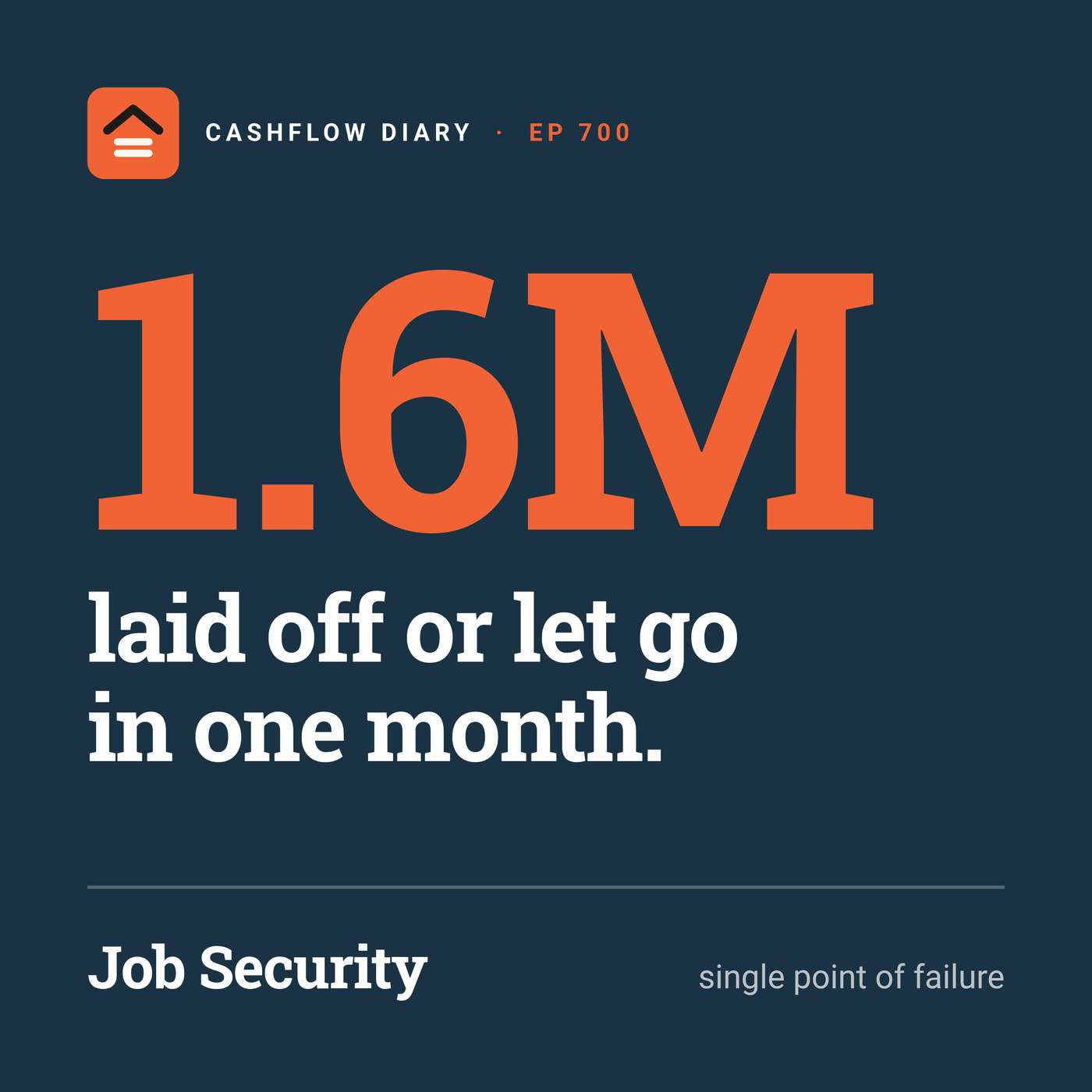
In August, 1.6 million people in the U.S. were laid off or let go, by the Bureau of Labor Statistics' count. That was an ordinary month. J. has asked one question in his trainings for years. If your job was gone tomorrow, what would happen? If the answer is "everything stops," you are running your household on a single point of failure.
This episode looks at that idea in two places. First at home, where a backup plan and a fail-safe are different things. Then inside a rental business, where it's easy to escape one single point of failure and build five new ones.
What you'll learn:
The difference between a backup plan (you start it after the break) and a fail-safe (it's already running)
Streams of income vs. piles of cash, and why savings alone is a backup plan
Five single points of failure in a rental business: booking sources, cleaners, repairs, what lives in your head, and guest types
A 30-minute single-point-of-failure audit you can do with one sheet of paper
Timestamps:
00:00 1.6 million layoffs in one month
01:02 Backup plan vs. fail-safe
02:00 Streams of income vs. piles of cash
02:57 Why this is personal for me
03:55 Rental weak spots 1-2: booking sources and cleaners
05:10 Rental weak spots 3-5: repairs, notes, guest types
06:22 Your 30-minute single-point-of-failure audit
07:19 Diagnostic call and sign-off
08:00 AI voice note
Want a second set of eyes on your setup and your numbers? Book your complimentary one-on-one diagnostic call: go.cashflowdiary.com/ep700-call
Not ready for a call? Get the free Cashflow Diary newsletter: go.cashflowdiary.com/ep700-subscribe
Source: U.S. Bureau of Labor Statistics, Job Openings and Labor Turnover Survey, August 2026 (released September 29, 2026): layoffs and discharges 1.6 million, rate 1.0 percent.
If this helped, rate the show on Apple Podcasts or Spotify.
Narrated with J. Massey's licensed AI voice, built from his own recordings.
Educational content, not financial advice. Results not typical; client details changed.
(00:00) - 1.6 million layoffs in one month
(01:02) - Backup plan vs. fail-safe
(02:00) - Streams of income vs. piles of cash
(02:57) - Why this is personal for me
(03:55) - Rental weak spots 1-2: booking sources and cleaners
(05:10) - Rental weak spots 3-5: repairs, notes, guest types
(06:21) - Your 30-minute single-point-of-failure audit
(07:19) - Diagnostic call and sign-off
(07:59) - AI voice note
AI disclosure: This episode is narrated by an AI-generated voice.
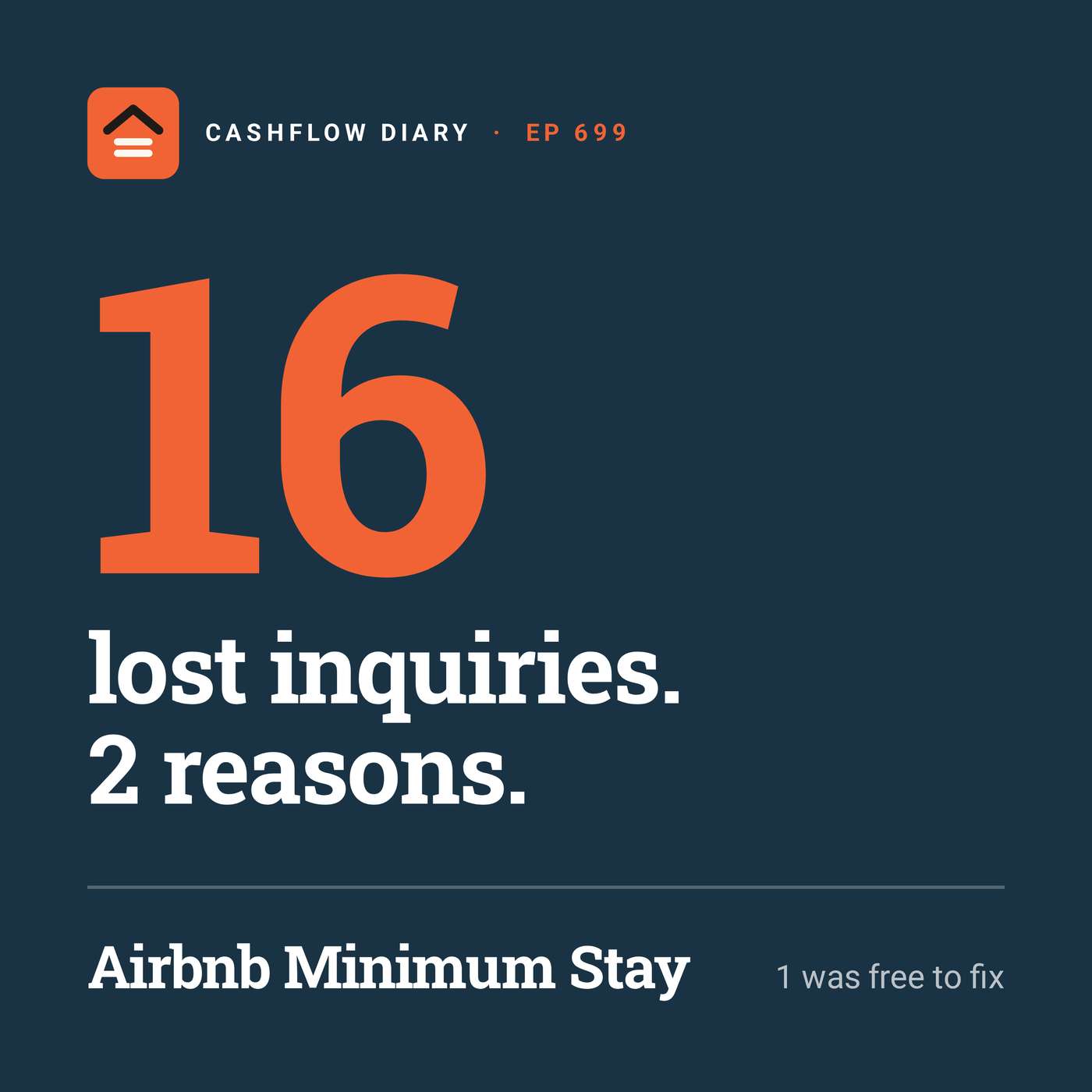
Your Airbnb minimum stay can turn guests away while you sleep. Sixteen people asked about one of our own properties and never booked. Sorted by reason, they came down to two, and one cost nothing to fix.
What you'll learn:
How a minimum-night rule turns guests away without telling you
Why your booking rules are a sales team you never interviewed
How an offer you can deliver, but never showed, costs you bookings
The four things a sellable offer needs, in order: photos, a defined experience, a price, delivery confidence
How to build your photographer's shot list from guest questions
A two-hour lost-inquiry audit you can run this week
Timestamps:
00:00 Sixteen lost inquiries, two reasons
00:51 Reason one: a rule we made up
01:34 Your booking rules are a sales team
01:59 Reason two: an offer we never showed
02:45 Your inquiry log is your product roadmap
03:47 Shot lists and good-enough photos
04:34 Your two-hour lost-inquiry audit
05:51 Diagnostic call and sign-off
06:30 AI voice note
Want a second set of eyes on your listing and your numbers? Book your complimentary one-on-one diagnostic call: cashflowdiary.com/diagnostic
Resources:
Get the Cashflow Diary newsletter: newsletter.cashflowdiary.com
Notes, transcript and video for this episode: cashflowdiary.com/podcast/how-to-get-more-airbnb-bookings-read-your-lost-inquiries
All episodes: cashflowdiary.com/podcast
If this helped, rate the show on Apple Podcasts or Spotify.
Narrated with J. Massey's licensed AI voice, built from his own recordings.
Educational content, not financial advice. Results not typical; client details changed.
(00:00) - Sixteen lost inquiries, two reasons
(00:51) - Reason one: a rule we made up
(01:34) - Your booking rules are a sales team
(01:59) - Reason two: an offer we never showed
(02:45) - Your inquiry log is your product roadmap
(03:47) - Shot lists and good-enough photos
(04:34) - Your two-hour lost-inquiry audit
(05:51) - Diagnostic call and sign-off
(06:30) - AI voice note

Comments

Download from Google Play

Download from App Store
 United States