


 Claim Ownership
The Book Replay Podcast
Subscribed: 0Played: 0
Subscribe

© Shammah Godoz
Description
Welcome, fellow book lovers! I'm passionate about diving deep into books, rereading them.
Subscribe for in-depth discussions, thoughtful analysis, and fresh perspectives on books
thebookreplay.substack.com
Subscribe for in-depth discussions, thoughtful analysis, and fresh perspectives on books
thebookreplay.substack.com
11 Episodes
Reverse

On his book tour, Nkereuwem Albert stopped by the Yanga Book Club meeting at the Roving Heights Bookstore in Garki, Abuja. The conversation skimmed the book without spoilers and Nkereuwem dove as deep as he could into his inspiration for the novel, the city of Calabar and aspects of the craft. This is a public episode. If you would like to discuss this with other subscribers or get access to bonus episodes, visit thebookreplay.substack.com

Nkereuwem Albert’s debut centers its urban fantasy in Calabar, asking questions of power and peace and what it takes to keep peace among interests seeking to destroy each other at the drop of hat. The Book Replay’s Review of this book dives into all of the good stuff The Bone River contains. Watch. This is a public episode. If you would like to discuss this with other subscribers or get access to bonus episodes, visit thebookreplay.substack.com

I find that Nana Sule is an author with one of the clearest voices I have experienced. She knows what she wants to say and as she says it, you hear every bit of it. And underneath that clarity where you think you know everything there is more. And this ties very well with her ethos as an artist, as a creative and as a person. Not So Terrible People is a short story collection of eleven stories from Nana Sule. Set in the same universe, in the same country and are interlinked, you have characters from one story appearing in another story. You have shifts in perspectives and these perspectives cut across a swathe of narrative styles, emotions and events that all serve to deepen the drama in this book. It is a 156-paged read but make no mistake, it is brilliantNana Sule created a puzzle, a charcuterie board if I may to put it correctly. The stories in this collection help each other. They explain one another, verify facts, serve up different pieces of the plot. Each new story takes you in a different direction and at the same time deeper into the plot while at the same time standing on their own. Let’s dive deeper into this book.About the Book CoverI was not to thrilled about the cover or the name of the book at first. The cover looked like the icons were taken from stock image website. It did not feel customized. I mean, if you look hard enough you can get these feathers anywhere. I thought the horns and tail in the ‘O’ was a nice touch but the name Not So Terrible People was a name I thought was pedestrian, not very high literature.Novel titles often combine both abstract ideas and concrete ideas; The Brevity of Beautiful Things, The Smoke That Thunders. Other names are just mysterious. 2666, The God of Small things.But, the name Not So Terrible People was sucker punch.I saw Not So Terrible People and knew that I was going to read about people. But then wetin feathers and halo and devil horns dey do for cover, in a story about people? It felt out of place.I had to read the book cover to cover the first time to find what was hiding in plain sight.First there is a halo floating above and, on either edge of the cover are wings, angel wings at the edges of this book. In the middle of all these are not so terrible people and the horns and tail denoting the devil in popular media is inside the word "People." Each one of these elements depicts something in the book ties into the stories inside this book.If you have read this book, you would know that these humans are smack in the middle of something and one of these people is the vessel for horns and a tail.PremiseThe title simple serves up the premise of this book. People are not so terrible.And the author achieves this by holding up the actions of these people, listening to their stories and giving us witness from several perspectives. Your journey to making your decision on the characters differs with the sequence in which these stories approach you.Narrative StructureThe narrative winds down through eleven stories, each one standing alone on its own, like something you would find in a literary magazine, yet when they are put together, they form a large overarching plot that you cannot see unless you have witnessed individual pieces of this story.In the human stories, a woman's husband is missing because a train is raided. Another woman cannot return home. A man returning home to his mourning wife when he comes across something supernatural.Within these seemingly innocuous human dramata are the machinations of supernatural beings of unthinkable power who have a different agenda. Across the seven heavens, hell, the world of jinn and earth, these supernatural beings, lurking at the edges of their existence, like these wings lurk at the edges of the book cover, are working overtime to reincarnate a powerful angel into the world.Genuis!StructureWhen it comes to the arrangement of the eleven stories themselves, it is the sheer work of genius. Now the first five stories detail the day-to-day human struggles of the people, with minimal supernatural influence.With Amal, we witness a woman talking to an angel, giving an account of her life as in the Islamic tradition of judgement. This story, named Amal, serves to plunge into the supernatural nature of this book, but not forcefully.Owanyi settles into how the supernatural is stitched into the daily lives of this book. It is about a woman who cannot return home.The next three stories happen in the town of Kurmi where a woman mourns her missing husband, and a community mad man mourns the death of an old man.The sixth, Malaika, contains one therapy session of angel fallen from the seven heavens who details his history from his birth and just then, we begin to see the scale of this story. In Ometere, a woman is trying to fix her breaking marriage. Ozovehe is the man running home to his wife. Rahinat listens to an incredible story. Oyiza deals with feelings of neglect from her parents, and the last story Laila is about a woman who can see jinn.This well thought out, pieces this puzzle in the best way, delivering each piece of the story, allowing you enjoy the emotion and human depth of these stories and then finally hitting you with the keys to unlocking the treasures and locating the easter eggs scattered around the literature. It feels like someone hid chocolate around the house and put clues for you to find them. Place and SettingThis story happens across three dimensions, heaven, hell, jinn and earth and we bear witness to angels, jinn and humans and so you would find several supernatural things happening in this novel, but it is not laden with it. These supernatural things serve the story, and it is not the other way around. All of the worldbuilding happens in-story. Language and VoiceReaders are treated to a variety of styles. Nana cycles through different narrative style and perspectives; conversational, fist-person, second-person, third person, poetic, distant, close. And she is not choosing these styles just because they feel good. Each style serves to present the story; in the best way it can be in the collection.For instance, Ohunene is written as the first person diary entry and that brings us into her thoughts and we cycle through the panic of a woman, who is fighting to retain the interest of her husband, but then we pull back and discover in another story that except for that struggle, she has had a charmed life that she might be slightly ungrateful for.The language is accessible. A little too accessible even. I worried that it was too simple to hold any subtext but that served the story even better, pointing blazing arrows to its subplots and overarching plots.Tone also ranges. Amal's story is very cheeky and funny. Rahila's relationship with Ohunene has gut wrenching moments. Malaika's monologue stretches into the surreal. Ometere is simply crazy.Where the writer conceptualizes a story and the editors do their job to remove obstacles for the reader to behold what the writer’s message. The editors did an exceedingly good job here. Shoutout to Carl Terver who worked on the structure for this book. He deserves a forest of flowers.The writing voice is perhaps one of the clearest you would ever come across. If you have ever listened to Nana read or just even talkThe musicality, the cadence, the spaces between the words, all of those qualities she bequeaths into this text for an easy and enjoyable read. CharactersOne thing I find is Nana's striking ability to zone it on what makes people, people. This collection is an excellent study on the goodness or terribleness of human nature. As each story is based around each character, we are basically examining the events, actions and nurturing of these characters. These characters explore the duality and boldly portrays Nana's idea that people, in general, are not terrible but they do terrible things because they want to do something. In essence, this is more than just a collection that dazzles, it requests empathy, forgiveness that at least, before breaking off our connections with people, we should try to understand why they do terrible things. This would perhaps help us grow. I would conjecture that this is what is at the core of this character study. Very social healing.If you want to learn more about the characters, it would be sweet if you watched our version on the video. We discuss the characters and why she tried to do with them. This is one book where I am confident that the reader can extract everything, they need from it without my help.DiscourseNow you know I like literature that sacrifices everything else to advance the frontiers of storytelling. I like experimental stories because through experimentation, I can study storytelling techniques and understand elements of fiction better. I like work that makes me think differently. Work that makes, breaks and reinvents language. I like work that sacrifices everything that is known to discover what is unknown. The charm of a lot of high literature is in how you have to upgrade your reading level to access the author or vibe with the motifs used to deliver the content.While Not So Terrible People, doesn't read like what I would normally draw charts and squares about, it is right up there with the literary works that have broken ground.The literary merit of Not So Terrible People bleeds from every aspect of it. Consistent Language, Fantastic Beginning, Cohesive Narrative and it proves its premise wonderfully. I say this is not just a collection of short stories. It is a novel.On the surface level of this collection, we have human stories woven around a train attack. We explore humanity. We dive into the drama. Underneath the paint, Nana Sule expertly weaves in a far much bigger plot, one that actually crosses universes. A plot where a faction of supernatural beings has concocted a plan across several dimensions, involving multiple beings, to cause the reincarnation of Iblis. This deep plot, this conspiracy has been hi

Right after her book reading in Abuja in July, Nana Sule dropped by the Leopard House for a conversation with Shammah Godoz of the Book Replay. They talked about everything they could in 74 minutes, and of course, Nana's debut novel, Not So Terrible People was replayed thoroughly as we asked questions and confirmed theories. It was a good time we wanted to share with everyone. Not So Terrible People is out across bookstores nationwide. This is a public episode. If you would like to discuss this with other subscribers or get access to bonus episodes, visit thebookreplay.substack.com

Right after her book reading in Abuja in July, Nana Sule dropped by the Leopard House for a conversation with Shammah Godoz of the Book Replay. They talked about everything they could in 74 minutes, and of course, Nana's debut novel, Not So Terrible People was replayed thoroughly as we asked questions and confirmed theories. It was a good time we wanted to share with everyone. Not So Terrible People is out across bookstores nationwide. Watch the video here This is a public episode. If you would like to discuss this with other subscribers or get access to bonus episodes, visit thebookreplay.substack.com
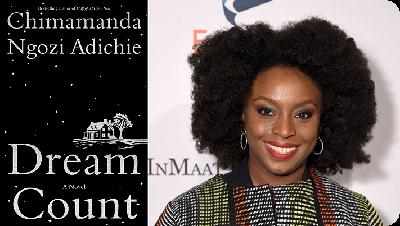
Literature: Chimamanda’s Dream Count vacillates between mediocre-goodThis article was culled from my video review of the novel.Watch it here. Dream Count by Chimamanda Adichie — The Book Replay, Episode 6So much has been said about separating the art from the artist. And never have I had such a deep interrogation of that idea than I did with Dream Count. The queston I was asked before this review is, “If it was not Chimamanda that wrote Dream Count, would you think it was good?”Chimamanda Ngozi Adichie has not been very popular among the progressives recently. I would talk about her sins but we do not have ten thousand words to unroll her weird actions over the years.What I will say is that her latest novel, Dream Count, is shaped only in a way that Chimamanda can write a book. When you factor in the style, the narrative and the depth of thought in it, and even the reason why this book flattens out, one finds that thees things all happen only in a way Chiamamanda can flatten out a story. Because it is such an honest work written from the exact position this writer finds her self in, we are privy to Chimamanda as deeply as she is privy to the subjects. Kind of like how the abyss stares at you when you look at it. So, it is impossible to separate Dream Count from the life and times of Chimamanda.Dream Count, no doubt, comes from the head of a master writer. I can feel the touch of great technique bleed through the page. This is the Chimamanda Ngozi Adichie whose craft revived contemporary fiction in Nigeria and I have missed her so.Because Dream Count is a Chimamanda release, ths has passed in front of many eyes. I daresay it is the most read work of literary fiction this year and will continue to be. Against my will, I have heard a lot of reactions to this story from, “It was too much,” “So much was unnecessary,” to “I felt things deeply and saw myself in this book.”For this review, I will try to look at the book as objectively as I can through the premise I worked out for it. When it comes to the Book Replay, we are all about the premise.The AuthorChimamanda is one Nigeria’s most famed authors. So talented that right from here debut novel, we all knew she was a generational talent. She authored Purple Hibiscus, a literary work so relevant it became educational reading in schools, so eternal that this day, people argue that it is her best work. Her second novel, Half of A Yellow Sun, also enjoyed much attention, was also adapted into a movie and sparked so many exhaustive discussions about the Biafra war. Her third novel, Americanah, which sadly I have not read did not enjoy as much attention as it was ahead of its time, right at the lip of the feminist movement. She has authored a short story collection, The Thing Around Your Neck, Dear Ijeawele; A Feminist Manifesto, and several short stories and essays. Being a public figure, she has been in the middle of controversies. Often positioned as the spear tip of the feminist movement for African women, being a Nigerian woman with a voice and all, is something she has never shied away from.Her work focuses on telling the stories that she knows. The Igbo struggle in Nigeria, the internal lives of women breaking free in a society that wants to chain them, and she has often interrogated these topics, taking it down to deep levels when she writes.Are all of her ideas about things sound? Not, exactly. But then again who is 100% correct. Per her position though, people have called for her to be more astute and educated.Dream Count comes twelve years after her last novel and I did not expect to read the same Chimamanda from those years. I told my book buddies that the best way to read Dream Dount is to enter it as a debut novel. I imagined that here was a writer, so far removed from the world she used to be in that she would have to find a new level. And in truth, Dream Count does read like a debut novel, as some of the ideas executed did not feel cooked through and one has to do a little bit of work to get to its core.Book CoverI do not like the book cover.Yes, the matte deep gray finish and the sparkling silver impressions are pretty neat. With this book on shelf, amidst all of the color, it is a sort of black hole that can hold your attention. From a distance, the silver prints will glint in the light. But it is ultimately not that eye catching and feels like there was a disagreement behind the final draft.NarrativeDream Count is told in five parts. We start from Chiamaka’s first person narrative, pull back to watch Zikora go through her traumas, witness the episodic horrors which Kadiatou is subjected to, dive deep into Omelogor’s sure-footed delivery of her own life and finally end at where Chiamaka comes full circle.The story doesn’t progress chronologically. We are taken from event to event, not randomly, but through a stream of consciousness narrative. This story is narrated according to how the characters access memory, from cluster to cluster. So when dealing with one event, we deal with the memories and traumas surrounding that event that helps us understand why our character acts the way they act. As we are deep inside their mind, we are treated what they see and feel, and how they process these emotions. Chiamaka and Omelogor are two characters most like Chimamanda. I find that both of these characters would fit well within the ideas of Chimamanda in the public. I would liken Chiamaka to early Chimamanda; creative, lost at sea, seeking a tether, and Omelogor as her dark side, the one who could have given us Americanah. The others feel like mere imaginations, when juxtaposed with these two. Zikora’s story is short and not much is explored so it feels a little flat. Kadiatou’s story at its worst, feels like a stereotype was extended for a long time. Then there is an author’s note that talks extensively on what it took to write Kadiatou which leads me to believe that Kadiatou’s story must have been problematic before print.PremiseDream Count’s premise can be coalesced into this,“At any point in her life, a woman must never forget to dream.”For dreaming is one of the greatest strengths a woman can possess in an age that is only just waking up to the fact that she has been oppressed for millenia.This premise is embodied strongly in Chiamaka, the ultimate dreamer who continues to fall in love even after so many failures. We see Zikora’s dreams shatter but with new information she is able to find a new recourse. So is Kadiatou, who is willing to shake off a justice she will never get so she can find enough peace to dream. And Omelogor, who is comfortable but disillusioned, still sees that death happens when you stop dreaming.Nothing should stand in the way of your ability to dream. Nothing. Especially, as an African woman. I think this premise unites everyone’s story here.Another idea in this book is that, at whatever state, or whatever she has gone through, a woman is not less of herself. After diving deeply into the internal lives and accomplishments of these womane. Their determination, grit and courage proves over and over that they are forces to reckon with, we see how the wider society sees them as less. It is nearly almost impossible form women to resist the internalization of these ideas even though their lives. As a woman, to free oneself from societies shackles, is to find new solutions to the new ways you drown. People will always try to push you down.In Dream Count, we cross cities in the United States, Guinea, Nigeria and Europe. As Chiamaka is a travel writer, we are treated to small descriptions of the places that she went to.The writing voice is conscious, introspective, emotional, but never weak. The voice doesn’t necessarily change to accomodate different speeds of thought. Rather, it relies on its content and approach to the events at hand to differentiate its quality.Tone differs from character to character. Again, not in the physical arrangement of the sentences, but still in the content and how ideas are relayed.Dialogue could be better. There is so much work that the off-dialogue writing is doing that I really just wanted to get back to it. You would not be hard-pressed to not find the dialogue meandering into something about the society. I badly wanted most of the dialogue to stop so I could continue reading the story.The use of language is sublime nonetheless and it made for good reading even though it was not compact by any stretch of the imagination. There was a great amount of verbiage that did not do meaningful work in here.CharactersDream Count is very much about its characters, seeing as it is shaped according to their experiences and the story moves in the manner of their thoughts. The themes are thus tied up in the characters that we will explore.ChiamakaChiamaka is perhaps the most well-written character here. She reads like the author enjoyed exploring where the woman was going. So much time and detail and well roundedness given to each scenario. And how can you not enjoy writing about Chiamaka. She is a sweet girl, from a rich household, where there trauma was a distant feeling. She had everything she ever needed and did not face any serious problems form childhood so she did not need to toughen up or discover a new self to manage her life. In fact, she is allowed time to discover herself, to start and stop things. She even gets a house of her own, with a cleaner in the United States where she can be whatever she wants to be.And like every nepobaby who doesn’t want to waste away, she starts doing things. She starts writing. Thank God she is actually creative. A failed novel and a few other things in her wake before she finds travel writing. And that fits the place she is at in life. Not tethered to herself. Not truly known to anyone, even to herself. And that is why her story starts with the linesI have yearned to be truly known. pg. 1I will describe Chiamaka’s psychology as this. Being the apple of everyone’s eye, she has always
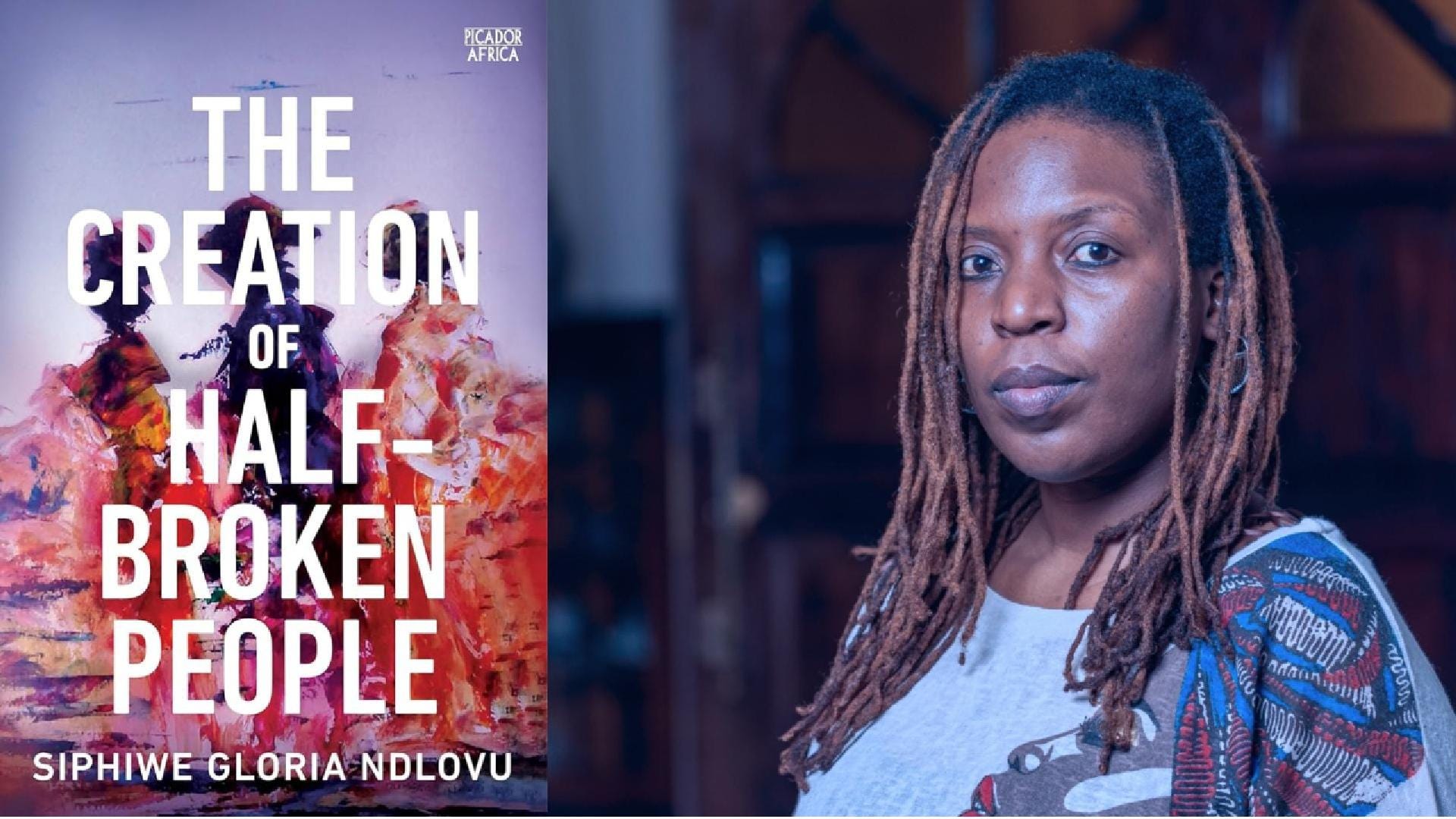
This is a public episode. If you would like to discuss this with other subscribers or get access to bonus episodes, visit thebookreplay.substack.com

This is a public episode. If you would like to discuss this with other subscribers or get access to bonus episodes, visit thebookreplay.substack.com

I have travelled through hell, where my GPU nearly burnt, and high water to bring this review to you and despite that, I feel like I have not done enough justice to this book. Umar Sidi Abubakar did something incredible with this book. The structure, the level of craft in it is not just high level, but it is also groundbreaking. He truly is one of the greatest literary minds of our generation. Please watch this review to the end. This is a public episode. If you would like to discuss this with other subscribers or get access to bonus episodes, visit thebookreplay.substack.com

The thing is, I did not think The Madhouse would make me feel the way it made feel. You know when something is created in front of you, there are expectations you have of it and this book exceeded all of those expectations.Truly and enjoyable read.Do you like this content?Have you suscribed?Don’t be shy. Subscribe so you can get more of this. This is a public episode. If you would like to discuss this with other subscribers or get access to bonus episodes, visit thebookreplay.substack.com

I made it to Ake Festival and it was epic. Filled me with so much hope where I had none. So, five years later, we are reviving the Book Replay.And bringing it to Substack because, why not take advantage of such a great platform, no? This is a public episode. If you would like to discuss this with other subscribers or get access to bonus episodes, visit thebookreplay.substack.com
Comments


Download from Google Play

Download from App Store
 United States