


 Claim Ownership
The Finest
Subscribed: 3Played: 29
Subscribe

© KPBS Public Media
Description
San Diego earns its title as America’s Finest City through the people, art and movements redefining the region’s cultural identity. The Finest is a podcast that highlights the emerging voices and dynamic forces reshaping community and expression. Through personal stories and critical perspectives, each episode brings forward the artists, advocates and ideas driving change and pushing boundaries in the region’s cultural landscape. New episodes premiere Thursdays.
37 Episodes
Reverse
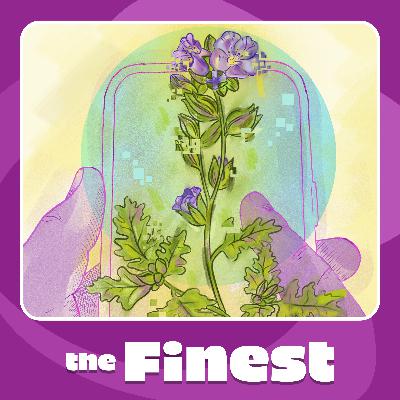
What's growing in your backyard?In San Diego, one of America's most biodiverse regions, the answer is more complicated than you might think. It's home to roughly 3,000 plant species, with many still undocumented.This episode follows hikers, students and nature lovers using the free app iNaturalist to photograph plants and animals, contribute to a global biodiversity database and help scientists protect fragile ecosystems. Some discoveries are extraordinary, like seeing your name on a scientific paper after spotting a plant never recorded in the county before.We visit the San Diego Natural History Museum, head into a rare salt marsh along Mission Bay and join a community identification party to see how this grassroots effort is reshaping science in real time.Researchers and volunteers say this kind of "citizen science" is no longer a side project — it's essential. Because when it comes to protecting ecosystems, the first step is simple: knowing what's there. Guests: Jon Rebman, Ph.D., curator of botany at SDNHMBecky Escalante, citizen scientist spifferella on iNaturalist, dental assistantStephanie Crawford, citizen scientist aneclecticenthusiast on iNaturalistKellie Uyeda, executive director of UC San Diego's Natural Reserve System Clarissa Rodriguez, reserves director of UC San Diego's Natural Reserve System
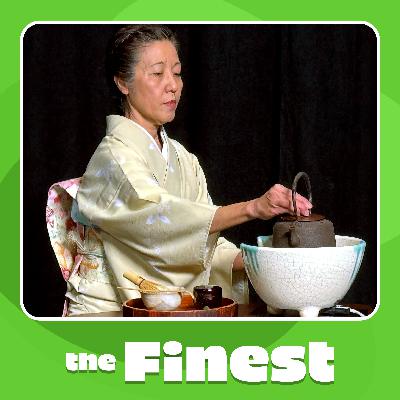
Matcha has become a worldwide sensation. The bright green powdered tea now appears in lattes, smoothies, desserts and viral foods across social media feeds. Demand has surged so quickly that producers in Japan are struggling to keep up. But matcha's story didn't begin in a cafe. For centuries, the tea has been at the center of a carefully choreographed ritual known as the tea ceremony, a practice rooted in mindfulness, hospitality and attention to detail. In this episode, we explore how a drink with roots in centuries-old tea culture became a modern craze. Along the way, we meet a San Diego tea sensei who practices the ceremony and invites others to slow down long enough to experience matcha with care and intention. As matcha's popularity continues to grow, we ask a simple question: What gets lost — and what might be gained — when an old tradition becomes a global trend?Guests:Rie Morita, Japanese tea ceremony instructorRebecca Corbett, Japanese Studies Librarian and Senior Lecturer in History, University of Southern CaliforniaRobert Hellyer, historian and author of "Green with Milk and Sugar"Sources:Japanese Tea Ceremony Explained (Adam Sensei, Phd., Maikoya)The Matcha Problem (Ellen Cushing, The Atlantic, 2025)Shortages, Smoothies and Fraud: The Matcha Market Cracks Under Pressure (Pete Wells, The New York Times, 2025)How much for matcha? Prices for the popular powdered tea soar due to global demand (Dee-Ann Durbin, Associated Press, 2025)'Skyrocketing' demand for matcha raises fears of shortage in Japan (Justin McCurry, The Guardian, 2025)Matcha's popularity has skyrocketed, but it was initially met with skepticism in the West (Rebecca Corbett, PBS News, 2025)PARU Tea: How the viral matcha spot is transforming tea culture with love and purpose (Julia Dixon Evans and Anthony Wallace, KPBS, 2025)
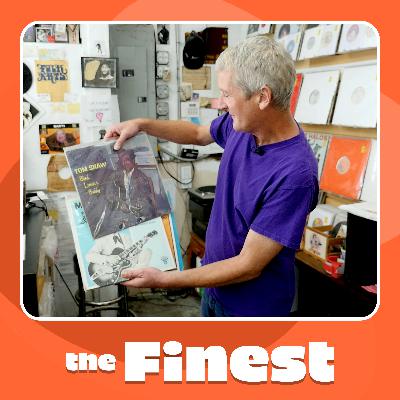
Lou Curtiss dedicated his life to preserving forgotten music — and now his extraordinary personal collection is being shared with the community he nurtured for decades. At Folk Arts Rare Records, thousands of vinyl records, CDs, tapes and rare recordings are being unboxed, cataloged and placed on shelves for music lovers to explore and purchase. In this episode, we meet Brendan Boyle, who began shopping at Folk Arts as a teenager and now owns and runs the store. We dive into Lou's legacy, including his role in founding the San Diego Folk Festival, supporting local artists like Thomas Shaw and preserving recordings that might otherwise have vanished. Along the way, we explore how vinyl survived the '90s and 2000s and why physical media still matters in an age of streaming and digital fatigue. From obscure blues and folk records to legendary mixtapes, Lou's Whimsical Collection lives on, offering a tactile, personal and deeply human connection to the music that shapes culture. Guests:Brendan Boyle, Folk Arts Rare Records ownerAndrew Mall, Associate Professor of Music at Northeastern University in Boston, Mass.Music heard in this episode:"Rock My Baby Back Home" by Thomas Shaw (1972)"Broke and Ain't Got a Dime" by Thomas Shaw (1972)"Martin Luther King" by Thomas Shaw (1972)Portuguese String Music (1908-1931) "George Collins" by Kathy & Carol (1965)"Sprig of Thyme" by Kathy & Carol (1965)"Atomic Cocktail" by Slim Gaillard (1945)"Frank Rhoads Round" by Slim Gaillard (1962)"Pick Poor Robin Clean" by Geeshie Wiley & Elvie Thomas (1931)"Set Your Chickens Free" by The Hub City Movers (1969)Mentioned in this episode:"Sinners""High Fidelity"Part Time LoverDocument RecordsSources: Thomas Shaw (Lou Curtiss, San Diego Troubadour, 2013) Material Drives on the World War II Home Front (National Park Service, 2024)Shellac to vinyl, how World War Two changed the record (Norfolk Record Office, 2020)How a 1927 Blues recording found its way into a 21st-century vampire film — and sparked a historical detective story (Document Records, 2025)Folk Arts Rare Records brings Lou Curtiss' music collection to the people (Julia Dixon Evans, KPBS, 2026)
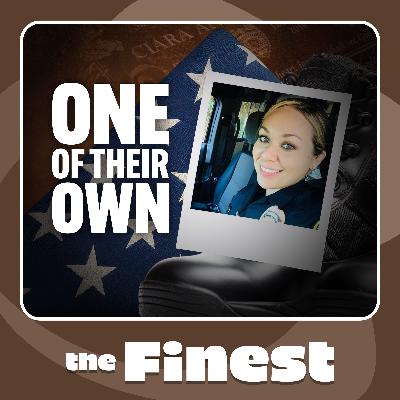
Content note: This episode contains discussion of suicide and domestic abuse. If you or someone you know needs support, call or text 988 for the Suicide & Crisis Lifeline.This episode is a special feed share from One of Their Own, a KPBS true crime podcast created and hosted by KPBS racial justice and social equity reporter Katie Hyson. In 2018, 25-year-old San Diego police officer Ciara Estrada was found dead in her apartment on New Year's Day. Her death was ruled a suicide by the San Diego Police Department — the same department she worked for. But nearly eight years later, her family still questions whether the investigation went far enough. In this first episode, you'll meet Ciara through the people who loved her most. From a viral video that once labeled her a "nice cop" to the deeply personal artifacts she left behind, the series begins by asking a simple but powerful question: Who was Ciara Estrada beyond the case file? The podcast explores police culture, domestic violence allegations within law enforcement and what happens when a department investigates one of its own. After listening, find the rest of One of Their Own wherever you get your podcasts.
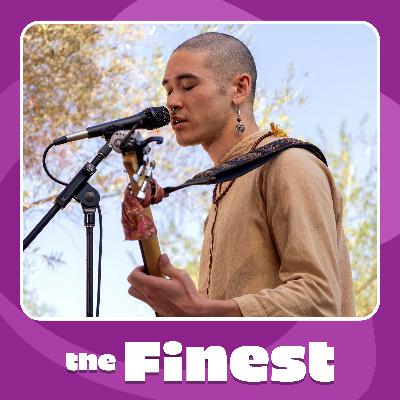
San Diego's Topeka Clementine brought the KPBS patio to life with a performance as part of the Sundrenched Sounds live music series — spontaneous, communal and emotionally charged. Blending sharp storytelling with sing-along moments and unexpected humor, the set moved seamlessly between intimate confession and collective call to action. We sat down afterward with Kai Simovich, the musician behind Topeka Clementine, to talk about the project's remarkable output and what it really means to go viral. Named after a street corner in Oceanside tied to grassroots mutual aid, Topeka Clementine channels community care directly into the music. Kai shares how recent personal loss reshaped their songwriting, including the creation of "Feed the Trees," a meditation on grief, inheritance and how life carries forward. Through relentless creativity, collective energy and performance, Topeka Clementine's music insists on hope, even in heavy times.Guest:Kai Simovich, Topeka ClementineMentioned in this episode:Estonia's Singing Revolution (Rick Steves) Amass | Matt Orlando Brings California Sun to Copenhagen (Florence Fabricant, New York Times, 2017)
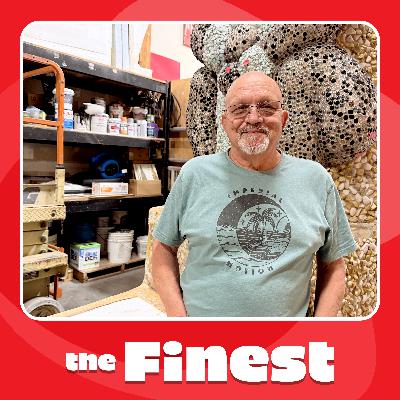
The bold, joyful sculptures of Niki de Saint Phalle are woven into San Diego’s landscape, even if many people don’t know her name. In this episode, we explore the life and legacy of the artist behind Queen Califia’s Magical Circle, the Sun God at UC San Diego and the beloved Nikigator in Balboa Park. After decades of boundary-breaking art and personal hardship, Niki came to San Diego late in life and created monumental public works designed to be experienced up close, inviting touch, play and imagination. But this story also belongs to Lech Juretko, a Polish refugee and former wallpaper installer who became Niki’s longtime assistant. He helped build her massive mosaic sculptures piece by piece. More than 20 years after her death, he is still repairing cracked tiles and replacing missing stones, preserving artwork created for interaction and shared wonder. It’s a story about creative devotion, chosen family and the magic that happens when art leaves museum walls and becomes part of everyday life.Guests:Lech Juretko, founder and owner of Art Mosaic, longtime assistant of artist Niki de Saint PhalleJill Dawsey, PhD, senior curator at Museum of Contemporary Art San Diego, co-author of "Niki de Saint Phalle in the 1960s" Sources:Niki de Saint Phalle: Public Works (Niki Charitable Art Foundation)Niki de Saint Phalle Garden Opens in Escondido (City of Escondido, 2003)Keeping up the legacy of Niki de Saint Phalle (Julia Dixon Evans, KPBS, 2023)Artist Niki de Saint Phalle's radical decade (Julia Dixon Evans, KPBS, 2022)The Darkness Behind Niki de Saint Phalle's Colorful Beauties (Eunice Lipton, Hyperallergic, 2015)"What Is Now Known Was Once Only Imagined: An (Auto)biography of Niki de Saint Phalle" (Nicole Rudick, Siglio Press, 2022)"Niki de Saint Phalle in the 1960s" (Jill Dawsey and Michelle White, Yale University Press, 2021)"Niki Who Tamed The Dragons" (Wojciech Delikta, Contemporary Lynx, 2020)New Realism (Center Pompidou, La Collection, Musee national d'art moderne, Pompidou Centre, Paris, 1987, and La Collection, Acquisitions, 1986-1996, Pompidou Centre, Paris, 1996)"My Terrific Mother" (Laura Gabriela, Tate Etc., Tate Modern, 2008)"Niki in the Garden" (Atlanta Botanical Garden, 2026)"Pop Gun Art: Niki de Saint Phalle and the Operatic Multiple" (Nichole L. Woods, Walker Art Center, Walker Living Collections Catalogue)"At MoMA PS1: Niki de Saint Phalle" (Lidija Haas, London Review of Books, 2021)Jean Tinguely, Playful Sculptor of Scrap Contraptions, Dies at 66 (New York Times, 1991)Niki de Saint Phalle: Le Cimetière de Montparnasse (Devon Whitehead, The Brooklyn Rail, 2018) Niki de Saint Phalle's lifelong dialogue between art and diseases (Henning Zeidler, Joint Bone Spine, National Library of Medicine, 2012)Niki de Saint Phalle, Sculptor, Is Dead at 71 (Ken Johnson, New York Times, 2002)Vandals break in, smash mirrors and more in Escondido sculpture garden (Teri Figueroa, San Diego Union Tribune, 2018)The Keeper of Niki de Saint Phalle's Menagerie (Mingei International Museum, 2019)"Nikigator, 2001" (Mingei International Museum, collections)

Jessica Sanchez grew up in the South Bay, the daughter of Filipino and Mexican American parents. Her mother says she started singing as soon as she could talk. By age 10, Jessica was performing all over San Diego's South Bay, including her local Seafood City grocery store, before taking the national stage on the very first season of "America's Got Talent." By 16, she became the runner-up on "American Idol." She quickly became a hometown icon — someone people here were cheering for. Jessica was molded into a musical prodigy. But as quickly as she rose, the pressure and expectations began to weigh on her. She questioned her place in the music industry and withdrew from the spotlight. What brought her home to San Diego? And what gave her the strength to return to the national stage, nearly two decades later?Guests:Jessica Sanchez, singerAnamaria Labao Cabato, executive director of PASACAT Philippine Performing Arts CompanyShoppers at Seafood City Supermarket in Bay PlazaSources:Chula Vista's Jessica Sanchez Advances to 'American Idol' Finale (City News Service via KPBS, May 2012)'American Idol' Finale: Phillip Phillips Wins Title Over Jessica Sanchez (City News Service via KPBS, May 2012)Jessica Sanchez's first appearance on 'America's Got Talent' (2006)Jessica Sanchez performs Whitney Houston's 'I Will Always Love You' on 'American Idol' (2012)Jessica Sanchez performs 'I Have Nothing' on 'American Idol' (2012)'Tonight' by Jessica Sanchez ft. Ne-Yo (2013)Jessica Sanchez's early YouTube cover of Bruno Mars' 'Just the Way You Are' (2014)Jessica Sanchez's Golden Buzzer performance of Benson Boone's 'Beautiful Things' on 'America's Got Talent' (2025)Jessica Sanchez's Quarterfinal performance of Alex Warren's 'Ordinary' on 'America's Got Talent' (2025)Jessica Sanchez's Finals performance of Bruno Mars and Lady Gaga's 'Die With a Smile' on 'America's Got Talent' (2025)

Elizabeth "Ely" Rosales Aguilar has built Raíz Chocolate from her San Diego home kitchen, turning a childhood love of chocolate into a small but thriving business. She carefully sources Mexican cacao and crafts silky bars and rich drinking chocolates, like champurrado, using recipes passed down for generations. Her work is precise and deliberate, highlighting skill, patience and artistry while remaining deeply rooted in tradition.From bean sourcing to finished bars, Ely keeps her process transparent and small-scale, with an emphasis on preserving natural flavors — a sharp contrast to mainstream chocolate production. The name Raíz, which means "source" or “root” in Spanish, reflects that commitment to honoring cacao’s origins and the heritage behind each recipe.California's home kitchen and cottage food laws allowed her to turn that passion into a legitimate career, offering an alternative to mass-produced chocolate. Her story blends resilience, entrepreneurship and cultural heritage, showing how craft, intention and tradition can transform a home kitchen into a business that delivers exceptional flavor while preserving the legacy of Mexican chocolate-making.Guests:Elizabeth "Ely" Rosales Aguilar, Raíz Chocolate founderSources:Home Kitchen Operations: Microenterprise Home Kitchen Operations (MEHKO) and Cottage Food Operations (CFO) (SanDiegoCounty.gov)California Cottage Food Operations (University of California Agriculture and Natural Resources) Microenterprise Home Kitchen Operations (California Department of Health)Restaurant Owner Demographics (National Restaurant Association)At-home businesses are growing. Women and people of color benefit the most (Chabeli Carrazana, The 19th, 2021)Almendra Blanca Bar - 70% Single-Origin, Finca Frida, México (Raíz Chocolate)Revival Cacao (Supplier for Raíz Chocolate)ILAB Cocoa Storyboard: Exposing Exploitation in Global Supply Chains (U.S. Department of Labor Bureau of International Labor Affairs)Mars Supply Chain Transparency (Mars) In Maya society, cacao use was for everyone, not just royals (Richard Kemeny, ScienceNews, 2022)Life, Death and Chocolate in Mesoamerica: The Aztecs and the Maya; Where did the Ritual Use of Cacao Originate? (Caroline Seawright, 2012)The Maya civilization used chocolate as money (Joshua Rapp Learn, Science, 2018)What is the chocolate and cocoa industry worth in Mexico? (Laura Islas, Merca 2.0, 2025)Mexico cocoa bean imports and exports (World Integrated Trade Solution)Cottage Foods and Home Kitchens: 2021 State Policy Trends (The Harvard Law School Food Law and Policy Clinic, 2022)

Risograph printing was built for efficiency — a fast, economical way to make thousands of identical copies for offices, churches and schools. It was never meant to be expressive or personal. After newer technology pushed the machine into obsolescence, artists began discovering risography — drawn to its unpredictability, physicality and limits. From a squatted bank in the Netherlands to DIY print spaces across Europe and the U.S., Risograph printing became a tool for people working outside traditional art and publishing systems.In San Diego, that lineage comes into focus at Burn All Books — a space that is part shop, part press and part gathering place. There, Risograph printing isn't just about what gets made, but how: through shared labor, in-person collaboration and a commitment to keeping artists connected in an increasingly expensive and isolating city."You need a network of people who want to help you. That's something cobbled together very slowly over a long period of time. I just feel like so much of our success, to me, has felt like a combination of flukes and really wonderful favors and opportunities," said Manda Bernal, who cofounded Burn All Books with her husband Nick.Guests:Manda and Nick Bernal, Burn All Books founders Kevin Huynh, artist Paloma, Jill, Phillip, Noelle, Tia, Galia and the crew at Burn All BooksJan Dirk de Wilde, Knust co-founderGeorge Wietor, Issue Press founderSources:Squatting in the Netherlands: The social and political institutionalization of a movement (Hans Pruijt, Public goods versus economic interests via EUR Research Information Portal, 2017)“KNUST, the pioneers of Riso print” documentary directed by Ivana SmudjaRISO Kagaku’s history (RISO official website)The Vintage Japanese Copy Machine Enjoying an Artistic Renaissance (Evan Nicole Brown, Atlas Obscura, 2018)Culture Report: The Rise of the Risograph (Julia Dixon Evans, Voice of San Diego, 2018)
The Finest returns with a new season, exploring the people, art and movements redefining San Diego culture. From discovering new species in local preserves to reviving forgotten arts, crafting chocolate at home and forging unexpected connections, these stories celebrate ingenuity, resilience, and community. Premiering Jan. 15, new episodes drop weekly. Search The Finest wherever you get your podcasts.
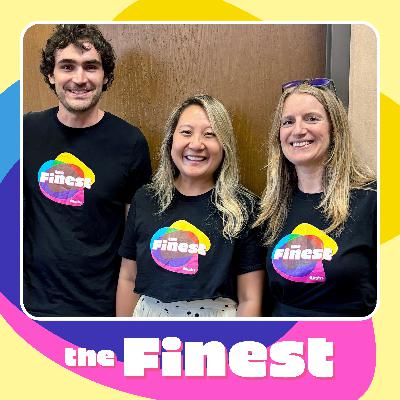
We’re dropping a special minisode during our season break with one request: Help shape Season 2 of The Finest by taking our anonymous survey at KPBS.org/TheFinestSurvey. Your feedback helps guide what stories we cover next — and it enters you in a raffle to win an exclusive The Finest T-shirt. We’ll draw winners before the Season 2 premiere on Jan. 15. Plus, KPBS Racial Justice and Social Equity Reporter Katie Hyson, a self-proclaimed The Finest fan, takes the survey live on the show.
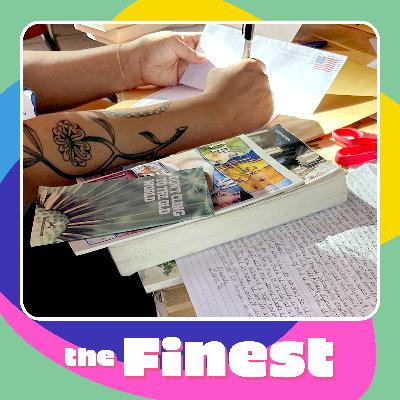
For many people who are incarcerated, a single book can be life-changing – a rare source of freedom and connection in a system built on isolation. That was true for Cherish Burtson, who discovered during her time in federal prison that reading could be a source of survival. Books became her escape, her education and a starting point to rebuild her life. But getting books behind bars isn't easy. Across the United States, correctional systems routinely ban or reject thousands of titles each year, reflecting deeper struggles over punishment, control and compassion. According to PEN America, correctional facilities in all 50 states contribute to the nation's largest book ban, censoring more books than schools and libraries combined. This episode follows a group of San Diego volunteers working to get books past prison walls. It explores how the simple act of reading can restore a sense of humanity in even the harshest conditions — and what it says about who we are when we decide who gets to read.Guests:Cherish Burtson, substance use disorders counselor at Family Health Centers of San DiegoMoira Marquis, Freewrite project senior manager at PEN Americaterry vargas, Books Through Bars San Diego volunteerSources:United States Incarceration Profile (Prison Policy Initiative)Incarceration Trends (Vera, 2024)Women’s Pathways to Serious and Habitual Crime: A Person-Centered Analysis Incorporating Gender Responsive Factors (Tim Brennan, Markus Breitenbach, William Dieterich, Emily J. Salisbury and Patricia van Voorhis Notes, Criminal Justice and Behavior via Sage Journals, 2012)East Bay Federal Prison Plagued by Sex Abuse Scandal Will Close Permanently (KQED, 2024)Time-In-Cell: A 2021 Snapshot of Restrictive Housing based on a Nationwide Survey of U.S. Prison Systems (The Correctional Leaders Association & The Arthur Liman Center for Public Interest Law at Yale Law School, 2022)COVID-19 Timeline (California Department of Corrections and Rehabilitation)Three State Prison Oversight During the COVID-19 Pandemic (John Howard Association of Illinois, the Correctional Association of New York and the Pennsylvania Prison Society, 2021)Groundwork Books Collective (Idealist)Over the Edge: Death in Grand Canyon (Michael P. Ghiglieri and Thomas M. Myers, 2001)Books Thru Bars 2024 Impact (Books Through Bars San Diego via Instagram, 2024)Books Thru Bars Your Donation at a Glance (Books Through Bars San Diego via Instagram, 2025)Local prison book program brings connection and humanity despite censorship (Julia Dixon Evans, KPBS, 2024)Literature Locked Up How Prison Book Restriction Policies Constitute the Nation’s Largest Book Ban (James Tager, PEN America, 2019)Reading Between the Bars: An In-Depth Look at Prison Censorship (Moira Marquis and Juliana Luna, PEN America, 2023)Disapproved Publications (California Department of Corrections and Rehabilitation)Perfecting the Prison: United States, 1789-1865 (David J. Rothman, Oxford History of the Prison: The Practice of Punishment in Western Society via University of Minnesota Duluth, 1995)History of Eastern State Penitentiary (Eastern State)Deterrence and Incapacitation: A Quick Review of the Research (Laura Bennett and Felicity Rose, The Center for Just Journalism, 2025)Mass Incarceration: The Whole Pie 2025 (Wendy Sawyer and Peter Wagner, Prison Policy Initiative, 2025Custodial Sanctions and Reoffending: A Meta-Analytic Review (Damon M. Petrich, Travis C. Pratt, Cheryl Lero Jonson and Francis T. Cullen, University of Chicago Press Journals, 2021)Prison Banned Books Week: Books give incarcerated people access to the world, but tablets are often used to wall them off (Mike Wessler and Juliana Luna, Prison Policy Initiative, 2024)Books through Bars Stories from the Prison Books Movement (Dave "Mac" Marquis and Moira Marquis, University of Georgia, 2024)

Alice Barnett's music once echoed across America — her songs were performed on national radio, reviewed in major newspapers and sung in concert halls from New York to Los Angeles. But over time, her name slipped from memory. In this episode, San Diego musician and researcher Katina Mitchell brings Alice's story back into focus, tracing her journey from a gifted young composer in Illinois to an internationally recognized artist who made her home in San Diego. Through archival letters, fragile sheet music and rare recordings, Katina reconstructs a life devoted to music and performs pieces that haven't been widely heard in decades. With insight from cultural scholars, we look at how fame fades, why some artists are remembered while others vanish and what it takes to restore a legacy. The result is both a rediscovery of a remarkable composer and a reflection on the delicate ways art outlasts the people who create it.Guests:Katina Mitchell, musician, teacher and musicologistCésar A. Hidalgo, professor at Toulouse School of Economics and director of the Center for Collective Learning, Corvinus University of BudapestSwapnil Rai, associate professor in the Department of Film, Television and Media, University of Michigan, Ann ArborTina Zarpour, vice president of community engagement, education and collections, San Diego History CenterSources:Alice Barnett Stevenson Performance and Lecture (Katina Mitchell, San Diego History Center via YouTube, 2023)Amy Marcy Beach (Encyclopaedia Britannica, 2025)100 Years of Marriage and Divorce Statistics, United States 1867-1967 (National Center for Health Statistics, 1973)Pantheon Project (Center for Collective Learning)How We’ll Forget John Lennon (Kevin Berger, Nautilus, 2019)
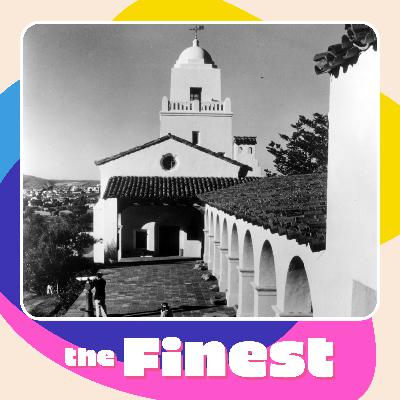
"Dispatch From Paradise" writer Cora Lee went searching for ghosts in Presidio Park, but her exploration of San Diego's supernatural underbelly didn't stop there. She visited San Diego's many mysterious cults in person, meeting members and observing their practices, and explored a long-running family dynasty of fortune tellers that has sometimes drawn law enforcement and media attention. In this Halloween episode, we follow Cora through the city's paranormal scene, from haunted hillsides and psychic shops to the strange and sprawling world of alternative spiritual communities. Along the way, religious studies professor Joseph Laycock helps unpack why belief in ghosts, aliens and spirits persists and what our search for "presence" reveals about being human. It's part spooky story, part San Diego history and part philosophical journey into why some mysteries endure — and why, deep down, we might not want them to end.Guests:Cora Lee, journalist and writer of "Dispatch From Paradise" SubstackJoseph Laycock, Associate Professor of Religious Studies at Texas State UniversitySources:The Junipero Serra Museum (Bill Virden, The Journal of San Diego History via San Diego History Center, 1962)Sociopolitical Aspects of the 1775 Revolt at Mission San Diego de Alcala (Richard L. Carrico, The Journal of San Diego History via San Diego History Center, 1997)Rumor Has It (Cora Lee, Dispatch From Paradise Substack, 2024)Why are people starting to believe in UFOs again? (The Conversation, Joseph Laycock, 2016)Over a third of Americans believe in ghosts and U.F.O's (Ipsos, 2021)Supernatural Belief Is Not Modulated by Intuitive Thinking Style or Cognitive Inhibition (Miguel Farias, Valerie van Mulukom, Guy Kahane, Ute Kreplin, Anna Joyce, Pedro Soares, Lluis Oviedo, Mathilde Hernu, Karolina Rokita, Julian Savulescu and Riikka Möttönen, Scientific Reports, 2017)History and Presence (Robert A. Orsi, The Belknap Press of Harvard University Press, 2016)American Piety In The 21st Century (The Baylor Religion Survey, 2006)People of the Forest Orangutans (Mission Wildlife)Visionary Spiritual Experiences and Cognitive Aspects of Spiritual Transformation (David J. Hufford, The Global Spiral via Penn Medicine, 2008)Spirituality Among Americans (Becka A. Alper, Chip Rotolo, Patricia Tevington and Justin Nortey and Asta Kallo, Pew Research Center, 2023)Law of Three Stages (Encyclopedia Britannica)Family Business (Cora Lee, Dispatch From Paradise Substack, 2023)Gypsy Clan Facing Test as Psychics: Hearing will be held in San Diego today on difficult-to-prove 'theft by false pretense' charges against Marks family. The group has been active in county since the '40s. (Tony Perry, Los Angeles Times, 1995)ABC10 News San Diego Investigation into Marks Family (Juliette Var and Michael Gonzalez, 2009)How a Hoax by Two Sisters Helped Spark the Spiritualism Craze (Becky Little, History.com, 2022)Psychical research and the origins of American psychology (Andreas Sommer, History of the Human Sciences via National Library of Medicine, 2012)Star Gate Project: An Overview (CIA, 1993)2 arrested in 'fortune telling scheme' that duped victims out of $600,000, officials say (Rebecca Cohen, NBC News, 2025)Three Spirit Mediums: A Case Study on Grief, Death, and Alternative Religious Traditions during the COVID-19 Pandemic (Natasha L. Mikles, 2023)Cult Classic (Cora Lee, Dispatch From Paradise Substack, 2025)Heaven's Gate cult members found dead (History.com, 2010)Unarius Academy of Science (Atlas Obscura)The Frenzy About the Weirdest Continent That Never Existed (Frank Jacobs, Atlas Obscura, 2024)The media's love affair with alleged sex criminal Sri Chinmoy (Edwin Lyngar, Salon, 2014)The Cults of California (Carey Mcwilliams, The Atlantic, 1946)Is it a cult, or a new religious movement? (Tina Rodia, Penn Today, 2019)Twelve Tribes 'child caning punishment' claims (BBC News, 2013)

San Diego's rising rock trio Slacker helped launch the pilot phase of the new KPBS Music Series with a live performance — loud, joyful and a little chaotic in the best way, but played with real precision and skill. Dressed in button-down shirts and ties, the band tore through their songs on the KPBS patio as the lunchtime crowd cheered. We sat down with the band right after their set to talk about where their music comes from — the friendships (and burritos) that built it and the feelings behind their biggest songs. They also share how they recorded their debut album in a legendary San Diego studio using a bass guitar once played by one of the city's most famous bands. It's a story about finding connection, growing together and turning shared experiences into music that feels personal, powerful and magical.Guests:Slacker: Jp Houle (singer/guitar), Avery Nelson (bass guitar/backup vocals) and Sam Hockaday (drums)Mentioned in this episode:Velvet worms | Ancient invertebrates with soft, velvety skin and tiny limbs that shoot slime to catch preyJimmy Page | Legendary Led Zeppelin guitarist known for his influence on generations of rock musiciansBig Fish Recording Studio | Encinitas recording studio where Blink-182 made their 1997 breakthrough album "Dude Ranch"Skyler Deci | San Diego producer and engineer who recorded and mixed Slacker's debut albumSources:Israel: White Phosphorus Used in Gaza, Lebanon (Human Rights Watch, 2023)Israel denies using white phosphorus munitions in Gaza (Patrick Wintour, The Guardian, 2023)Tiny desk, big talent: Our favorite San Diego artists from this year's contest (Julia Dixon Evans, Anthony Wallace, Ben Redlawsk, Brenden Tuccinardi and Katie Anastas, KPBS, 2025)Tiny Desk local listening party: The Neighborhood Kids and Aleah Discavage (Julia Dixon Evans and Anthony Wallace, KPBS, 2025)

San Diego's Cameron Mofid set out on an audacious quest: to break the record for being the youngest person to visit every country in the world. His journey took him to 195 nations, from peaceful capitals to conflict zones few dare to enter. Along the way, he faced moments of danger and discovery, including assuming a fake identity in Yemen to navigating a terrorist threat in Somalia and making a buzzer-beater, last-minute entry into North Korea.But for Cameron, the record was only part of the story. His travels became a powerful lesson in privilege, perspective and humanity — and inspired him to give back. He launched Humanity Effect, a nonprofit that has built multiple schools in Nigeria. In this episode, Cameron reflects on the risks he took and the barriers he overcame. He shares the truths he discovered about the world, explores what it means to connect across borders and why these lessons matter for all of us.Guest:Cameron Mofid, youngest person to travel to all 195 countries in the world, founder of Humanity EffectSources:Everyone Who Has Ever Been to Space (Clara Moskowitz and Zane Wolf, Scientific American, 2025)Ultimate Report on People Who Visited Every Country in the World (NomadMania, 2025)Three Spanish tourists killed in central Afghanistan gun attack 17 (Thomas Mackintosh, BBC News, 2024)Counter Terrorism Guide: Terrorist Groups, Al-Shabaab (Office of the Director of National Intelligence)Attitudes on an Interconnected World, International travel (Richard Wike, Janell Fetterolf, Moira Fagan and Sneha Gubbala, Pew Research Center, 2023)When in Rome ... Learn Why the Romans Do What They Do: How Multicultural Learning Experiences Facilitate Creativity (William W. Maddux, Hajo Adam and Adam D. Galinsky, Sage Journals, 2010)The Mental Benefits of Vacationing Somewhere New (Todd B. Kashdan, Harvard Business Review, 2018)A Meta-Analytic Test of Intergroup Contact Theory (Thomas F. Pettigrew and Linda R. Tropp, Journal of Personality and Social Psychology, 2005)"Maybe we did not learn that much academically, but we learn more from experience" – Erasmus mobility and its potential for transformative learning (Cosmin I. Nada and Justyna Legutko, International Journal of Intercultural Relations, 2022)Pack Your Bags and Travel: It's Good for You (Elizabeth A. Segal, Ph.D., Psychology Today 2022)Americans who have traveled internationally stand out in their views and knowledge of foreign affairs (Richard Wike and Janell Fetterolf, Pew Research Center, 2023)What is a Visit. Minimal Requirements according to NomadMania Rules (NomadMania, 2023)NomadMania Travel ListsWhat Is the Newest Country in the World? (Amy McKenna, Encyclopedia Britannica, 2011)Venezuelan embassy run by opposition in US closes after Guaido ouster (Jennifer Hansler, CNN, 2023)The Taliban in Afghanistan (Lindsay Maizland, Council on Foreign Relations, 2025)North Korea halts foreign tourism weeks after reopening to Western visitors (Peter Guo, NBC News, 2025)Makoko: 'Venice of Lagos' (Olamide Udoma, Smart Cities Dive)Chime Community Spotlight: Kyrie Irving recognized for civic contributions (Tamara Jolee, NBA, 2023)North Korea holds first Pyongyang International Marathon since borders were sealed during COVID pandemic (Anhelina Shamlii, CBS News, 2025)10 Times America Helped Overthrow a Foreign Government (Becky Little, History.com, 2025)Hostile Acts U.S. Policy in Costa Rica in the 1980s (Martha Honey, 1994)
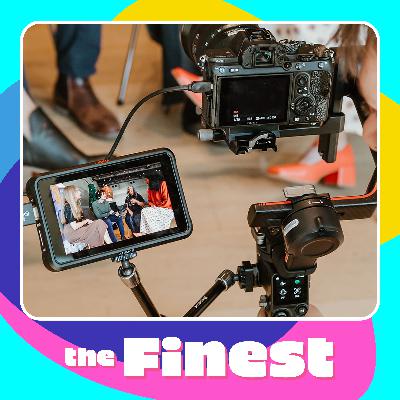
For our 20th episode, The Finest team reflects on our season so far — the episodes that made the biggest impact, what still lingers with us months later and a taste of the gems left on the cutting-room floor. From Our Lady of Guadalupe to birding and romantasy books, we revisit comments from fans (and critics) and how these stories continue to resonate. Julia and Anthony also share a quick list of our favorite things in San Diego right now, from soup dumplings to hidden trails. Plus, we call up one of our first guests, indie musician Julianna Zachariou, to reflect on her experience over the past six months after a clip of our interview went viral on social media. What does it mean when a million people hear a piece of your story?" I had never had anything with that much reach. It felt necessary and helpful, and a lot of people found it to be helpful," Julianna said. "I also wish that the thing that had taken off was something I had made and not how much I had made off of a thing that I had made." In this episode, we dig deeper into some of the stories we've shared recently, explore how listeners have reacted and take a behind-the-scenes look with The Finest crew. Guests:Julianna Zachariou, indie musicianOur current favorite San Diego things:Best Bud Floral Home Ec Bud Kearns Memorial PoolAn's Electronics RepairTasty Noodle HouseLos Peñasquitos Canyon Preserve Yipao Coffee RoastersThe Finest episodes discussed:Spotify is changing, so one indie artist is advocating for fairness in a stream-heavy world — Episode featuring Julianna Zachariou, journalist Liz Pelly and a deep dive into the economics of streamingMaking it in music: How do you create a local music scene in a 'superstar economy'? — Episode featuring musician Shua and a look at building a local music scene in a superstar economyRomantasy rising: How a dismissed book genre became a publishing powerhouse — Episode exploring the incredible growth of the romantasy genreWorn, painted, reimagined: The power and complexity of Our Lady of Guadalupe — Episode about the Virgin of Guadalupe in textile art and cultureChasing 100 birds in 1 day in America's Birdiest County: Inside the birding boom — Episode exploring San Diego's rich birding culture and the fascinating world of competitive birdingMentioned in this episode:KPBS reel | For indie musicians like Julianna Zachariou, Spotify has made music more accessible than ever — but at a costSpotify's Terms of Use | Recently updated artist agreement terms outlining how music on the platform can be used to train AI models"Dreamer, Dreamer" | New single by Julianna Zachariou, first debuted on an episode of The FinestDramione | A Harry Potter sub-fandom imagining an "enemies-to-lovers" relationship between Draco Malfoy and Hermione GrangerJeanette Rodriguez, PhD, Professor of Theology at Seattle University"The Backyard Bird Chronicles" | Memoir by Amy Tan exploring her obsession with birding and sketchingeBird | Popular birding app for logging sightings, finding locations and tracking regional trendsMerlin Bird ID | Go-to app for birders to identify species by photo or sound, powered by Cornell Lab expertsSources:Big Deal: Legendary Pays 7 Figures for 'Alchemised,' Book That Began Life as 'Harry Potter' Fan Fiction (Borys Kit, The Hollywood Reporter, 2025)AI Implications of Spotify's Updated Terms of Use: Your Data is Their New Oil (Chris Castle, Music Technology Policy Blog, 2025)Amy Tan finds obsession, connection and endless curiosity in birding (Julia Dixon Evans, KPBS, 2025)The Shock of a Patron Saint Impugned (John Ward Anderson, The Washington Post, 1996)
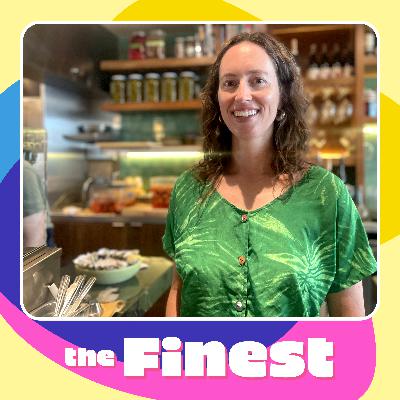
Mabel’s Gone Fishing is more than a seafood restaurant in North Park — it’s a Michelin Bib Gourmand honoree that quickly became part of the neighborhood’s cultural fabric. We meet owner Chelsea Coleman, whose family history includes longtime Padres announcer Jerry Coleman and a KPBS love story. Together with her team, she has built a space that blends local ingredients, Spanish and Portuguese flavors and community-driven art into an experience rooted in San Diego. From honoring family traditions of scratch cooking to curating the Fishbowl gallery next door, Mabel’s shows how food, art and neighborhood spirit can come together to create something remarkable.Guests:Chelsea Coleman, proprietress of Mabel's Gone Fishing, The Rose Wine Bar, Secret Sister Sourdough Bakery + Tea House and FishbowlAlejandra Frank, independent art curatorTanner Stanich, head chef of Mabel's Gone FishingMentioned in this episode:Jerry Coleman | Chelsea Coleman's dad, longtime Padres broadcaster and former managerTony Gwynn | Hall of Fame outfielder, "Mr. Padre" and one of the greatest hitters in baseball historyBrucy Bochy | Former Padres manager who went on to win three World Series championships with the San Francisco GiantsThe Linkery | A pioneering farm-to-table restaurant in North Park that closed in 2014Chaparral | A native Southern California plant community that shapes San Diego's landscape and ecology Bread & Salt | Contemporary art gallery in Logan Heights housed in a former bread factoryScott Grewe | Culinary Director at Mabel's Gone Fishing David Leon | Chef at Michelin-starred Lilo in CarlsbadFauna | Modern Baja cuisine restaurant in Valle de Guadalupe, named Best in Mexico by Latin America’s 50 Best Restaurants in 2023Shane Volberding | San Diego commercial fisherman, educator and advocate for local, sustainable seafoodSan Diego's Michelin-honored restaurants:Addison, Carmel Valley | Contemporary | 3 StarsAtelier Manna, Encinitas | Californian | Bib GourmandCallie, East Village | Mediterranean | Bib GourmandCesarina, Point Loma | Italian | Bib GourmandCiccia Osteria, Barrio Logan | Italian | Bib GourmandCucina Urbana, Bankers Hill | Italian | Bib GourmandDija Mara, Oceanside | Indonesian | Bib GourmandJeune et Jolie, Carlsbad | French | StarLilo, Carlsbad | Californian | StarLOLA 55, East Village | Mexican | Bib GourmandMabel's Gone Fishing, North Park | Seafood | Bib GourmandMorning Glory, Little Italy | American | Bib GourmandSoichi, University Heights | Japanese | StarValle, Oceanside | Mexican | StarSources: What is a Michelin Star? (Michelin Guide, 2022)What Is The MICHELIN Bib Gourmand Award? (Michelin Guide, 2022)1998 World Series recap (MLB.com, 2022)San Diego County Food Program (SanDiegoCounty.gov)From TV auctions to social media bidding: How the live shopping thrill lives on (Julia Dixon Evans and Anthony Wallace, The Finest, 2025)Selling Bluefin Tuna to Chefs (The Local Fish Project, 2023)CA Sea Grant informs new law to permit Fishermen’s Markets (Deborah Seiler, California Sea Grant, 2015)North Park's 'Mabel's Gone Painting' pairs local art with Michelin-recognized dining (Julia Dixon Evans, KPBS, 2025)
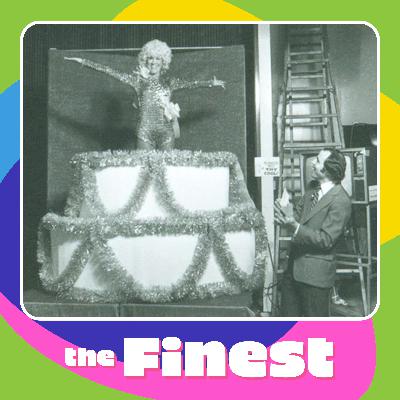
What happens when a TV station pauses its regular programming to auction off everything from kitchen utensils and European vacations to toilet seats and rare art — with guests like Big Bird and Dick Van Dyke dropping by? In San Diego, those broadcasts became unforgettable. This episode dives into the history of the KPBS auction — a weeklong fundraising marathon that energized the community for more than a decade. We hear from longtime KPBS figures Tom Karlo and Ken Kramer, revisit archival footage and meet McKenna Hartman, whose father, Paul, guest-hosted auctions in San Diego and at other PBS stations, and still lights up recalling them, even as he faces dementia. The auctions weren't just about bargains. They built community, launched careers and left behind lasting memories. Now, live auctions are remerging on platforms like Whatnot. San Diego jewelry seller Angela McDuffie shows how the exciting bidding experience — and the connections it creates — remain as alive as ever.Guests:Tom Karlo, KPBS general manager emeritus, 2009-2020Ken Kramer, creator and host of "Ken Kramer's About San Diego"McKenna Hartman, daughter of Paul E. Hartman, retired PBS and NPR on-air personalityAngela McDuffie, owner of Baron's Armoire, a San Diego vintage and antique business specializing in jewelry and trinketsMentioned in this episode:KPBS: 65 Years in San Diego Tucker Carlson, television commentator and political analyst Carol Burnett, comedian and star of "The Carol Burnett Show"Jerry Coleman, San Diego Padres broadcaster and Hall of Fame second basemanDick Van Dyke, Emmy-winning actor known for "The Dick Van Dyke Show" and "Mary Poppins"David Ogden Stiers, actor best known for "M*A*S*H"Whatnot, an online platform for independent livestreamed auctions launched in 2019Cameo jewelry, antique carved or engraved gems, often featuring a raised depiction of a face or bust in relief on a pendant or broochCloisonné, a jewelry and decorative art style where metal outlines are filled with colorful enamel, creating bright, detailed designsFidget spinner, handheld toy that spins between the fingers, popular in the late 2010s as a fad and a stress reliever"Outwitted" poem by Edwin Markham "He drew a circle that shut me out– Heretic, rebel, a thing to flout. But love and I had the wit to win: We drew a circle and took him in!"Sources:Revisiting KPBS-TV: An In-Depth Look at its First Quarter Century (Darlene G. Davies, Ranch and Coast, 2019) Time-shifting and dementia (Alzheimer's Society, 2023)Inside the rise of Whatnot, the wildly-entertaining, FOMO-inducing, $5 billion shopping app you've never heard of (Jason Del Rey, Fortune, 2025)Whatnot (Contrary Research, 2024)Talkin' Auction (Ken Kramer, KPBS, 2010)Everything Went (Gloria Penner, KPBS, 2010)
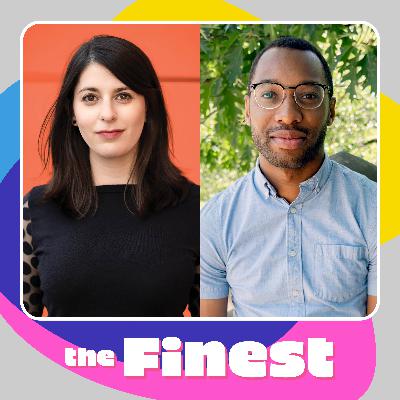
In this episode, recorded live at the KPBS San Diego Book Festival, authors Emily Greenberg ("Alternative Facts") and Moses Ose Utomi ("Forever Desert" trilogy) delve into storytelling across genres. Greenberg's politically charged, experimental fiction and Utomi's fantasy, rooted in West African mythology, may appear vastly different, but both investigate how societies — real and imagined — navigate truth, lies and the narratives that guide culture.Each book in Utomi's trilogy is separated by 500 years, showing how events in his world become distorted and mythologized over time. Greenberg's short stories feature characters drawn from our real world today, bringing readers inside the mind of Kellyanne Conway and exploring formative moments in the childhood of George W. Bush.The authors' conversation reveals where their unique voices intersect, highlighting how imagination shapes understanding of identity, history and the forces that influence perception.Guests:Moses Ose UtomiEmily GreenbergSources:Storytelling and Cultural Traditions (National Geographic Society, 2025)Familiar Aliens: Science Fiction as Social Commentary (Elaine J. O’Quinn and Heather Atwell, The Alan Review, 2010)7 Speculative Fiction Works That Offer Powerful Social Commentary (Erin Crosby Eckstine, Electric Literature, 2025)Why Genre Fiction Is So Effective in Tackling Social Issues (Cindy Fazzi, Publishers Weekly, 2023)The late 19th and early 20th centuries in African American literature (Willliam L. Andrews, Britannica)Report: Conway punched a man three times at inaugural ball (Jennifer Calfas, The Hill, 2017)Man says Hawaii missile-alert panic caused near-fatal heart attack (CBS News, 2018)Welcome to Post-Truth America (Tony Rehagen, Boston College Magazine, 2020) Truthiness (Ben Zimmer, The New York Times, 2010)Deepfakes, Elections, and Shrinking the Liar’s Dividend (Josh A. Goldstein and Andrew Lohn, Brennan Center for Justice, 2024)Emily Greenberg's 'Alternative Facts': A post-truth blend of fiction, politics and pop culture (Julia Dixon Evans, KPBS, 2025)

Comments

Download from Google Play

Download from App Store
 United States