


 Claim Ownership
Leaders Unplugged
Subscribed: 4Played: 26
Subscribe

© (c) IMD 2025
Description
Leaders Unplugged is real talk with the impactful. Candid, honest, actionable – and fresh from behind the scenes. Presented by IMD in collaboration with Remote Daily. Hosted by IMD’s president, David Bach and Felix Zeltner.
22 Episodes
Reverse
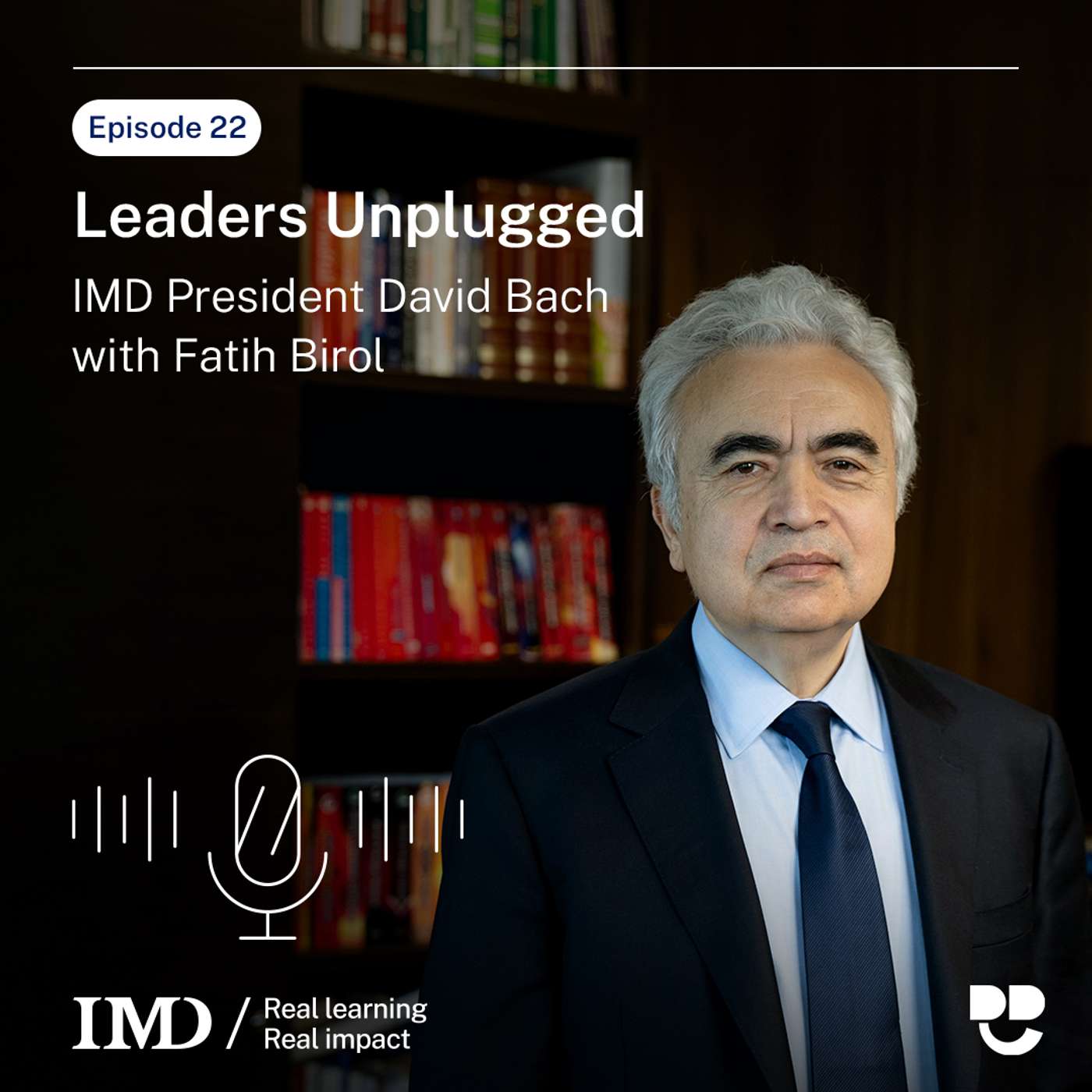
We are entering what Fatih Birol describes as “the age of electricity”: AI and data centers, electric vehicles and surging demand for air conditioning are reshaping energy consumption – and turning access to reliable power into a question of competitiveness and geopolitical influence. As Birol, who leads the International Energy Agency (IEA), puts it: “Whoever wins the AI race will get the upper hand in the geopolitics and global economy as well.”In our new episode of Leaders Unplugged, hosted by IMD President David Bach, Birol makes a powerful case that energy policy has moved far beyond climate. For Europe, electrification “is a sovereignty issue.” For governments and companies, diversification is becoming essential. And as geopolitical tensions expose vulnerabilities from Russia to the Strait of Hormuz, Birol argues that “the most scarce commodity in the energy world today is trust.” The result: leaders may increasingly pay a premium for secure, reliable, and politically trusted energy relationships.From Africa's energy poverty to Europe's solar giveaway to China – this conversation is built for executives who need to understand energy risk not as a utility bill, but as a strategic issue. Our guestFatih Birol is Executive Director of the International Energy Agency (IEA), one of the world’s most influential institutions on energy security, markets, and the clean-energy transition. Since taking the helm in 2015, the Turkish economist has broadened the IEA from its traditional focus on oil security into a global authority spanning electricity, renewables, critical minerals, and the energy transition, while expanding its reach into major emerging economies. Birol joined the IEA as a junior analyst in 1995 and rose to Chief Economist, overseeing its flagship World Energy Outlook; before that, he spent six years at OPEC in Vienna. Today, his counsel is sought by governments and business leaders navigating the increasingly fraught intersection of energy, competitiveness, and geopolitics; a role that has earned him a place on TIME’s list of the world’s 100 most influential people in both 2021 and 2026.
 1
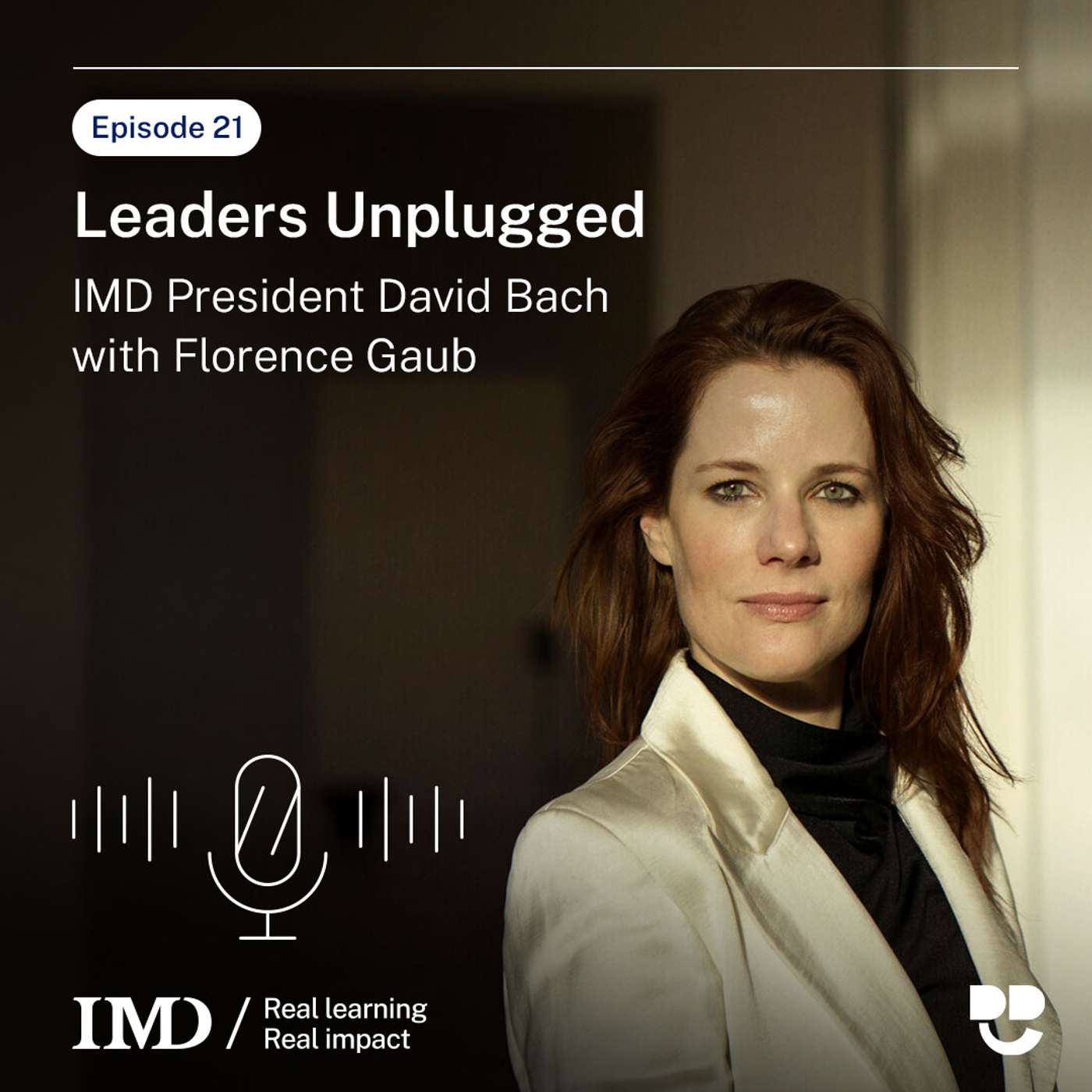
Leaders are drowning in crises, yet Florence Gaub argues their real competitive edge lies in how they imagine the future. In this episode of Leaders Unplugged with David Bach, the NATO Defense College research director, futurist and military strategist explains why “strategic foresight is the gym for the mind,” how weak signals from distant places, online communities and emerging technologies can reveal tomorrow’s shocks, and why reducing surprise buys organizations their most precious asset: time. Gaub dissects the Strait of Hormuz, Russia’s war on Ukraine, and China’s climate strategy to show how wishful thinking at the highest levels can cripple even the most sophisticated governments – and what executives must do differently.Gaub insists that “all companies above a certain size today will be affected by geopolitics” and that every leadership team should build an annual discipline of horizon scanning and scenario work. She argues that whoever “finds the right answers to climate change first” will define the next global power hierarchy, that science fiction is a good indicator for future conflicts, and shares answers to a deceptively simple question: “What future would you be willing to fight for?”Our guestFlorence Gaub is a Franco-German political scientist, military strategist, and futurist. She is Director of the Research Division at the NATO Defense College in Rome. Before joining NATO in her current role in 2023 (she also worked at NATO from 2009-2013), she was Deputy Director of the European Union Institute for Security Studies in Paris and served as a foresight adviser within the EU system. Her books include The Future: A User’s Guide, and Szenario, a current nominee for for the German non-fiction award. She is also the co-host of the Munich Security Conference podcast The Art of Diplomacy. Resources mentioned in this episodeFears of a Setting Sun: The Disillusionment of America’s Foundershttps://press.princeton.edu/books/hardcover/9780691210230/fears-of-a-setting-sunNew Scientisthttps://www.newscientist.com/NATO Archives:https://www.nato.int/cps/en/natohq/declassified.htmNATO-Russia Founding Act, 1997: https://www.nato.int/cps/en/natohq/official_texts_25468.htm2018 US National Defense Strategyhttps://media.defense.gov/2020/May/18/2002302061/-1/-1/1/2018-NATIONAL-DEFENSE-STRATEGY-SUMMARY.PDF2022 US National Security Strategyhttps://bidenwhitehouse.archives.gov/wp-content/uploads/2022/10/Biden-Harris-Administrations-National-Security-Strategy-10.2022.pdfThe Weaponisation of Everything: A Field Guide to the New Way of War — Mark Galeottihttps://yalebooks.yale.edu/book/9780300270419/the-weaponisation-of-everything/Factfulness: Ten Reasons We’re Wrong About the World — Hans Rosling, Ola Rosling and Anna Rosling Rönnlundhttps://www.gapminder.org/factfulness-book/NATO 2099 https://www.ndc.nato.int/nato-2099-the-science-fiction-anthology/https://www.ndc.nato.int/nato-2099-a-graphic-novel/Florence Gaub and Roderick Parkes: “Is Europe Too Soft to Fight?”https://warontherocks.com/is-europe-too-soft-to-fight/Enjoyed this conversation? 🔔 Subscribe to Leaders Unplugged for candid conversations with the impactful:Apple | Spotify | YouTubeConnect with IMD:Follow IMD on Instagram: @imdbusinessschool Follow IMD on LinkedIn: @imd-business-school Follow IMD on BlueSky: @imdbusinessschool.bsky.socialFollow IMD on Facebook: @imdbschool Follow IMD on Substack: https://substack.com/@ibyimd
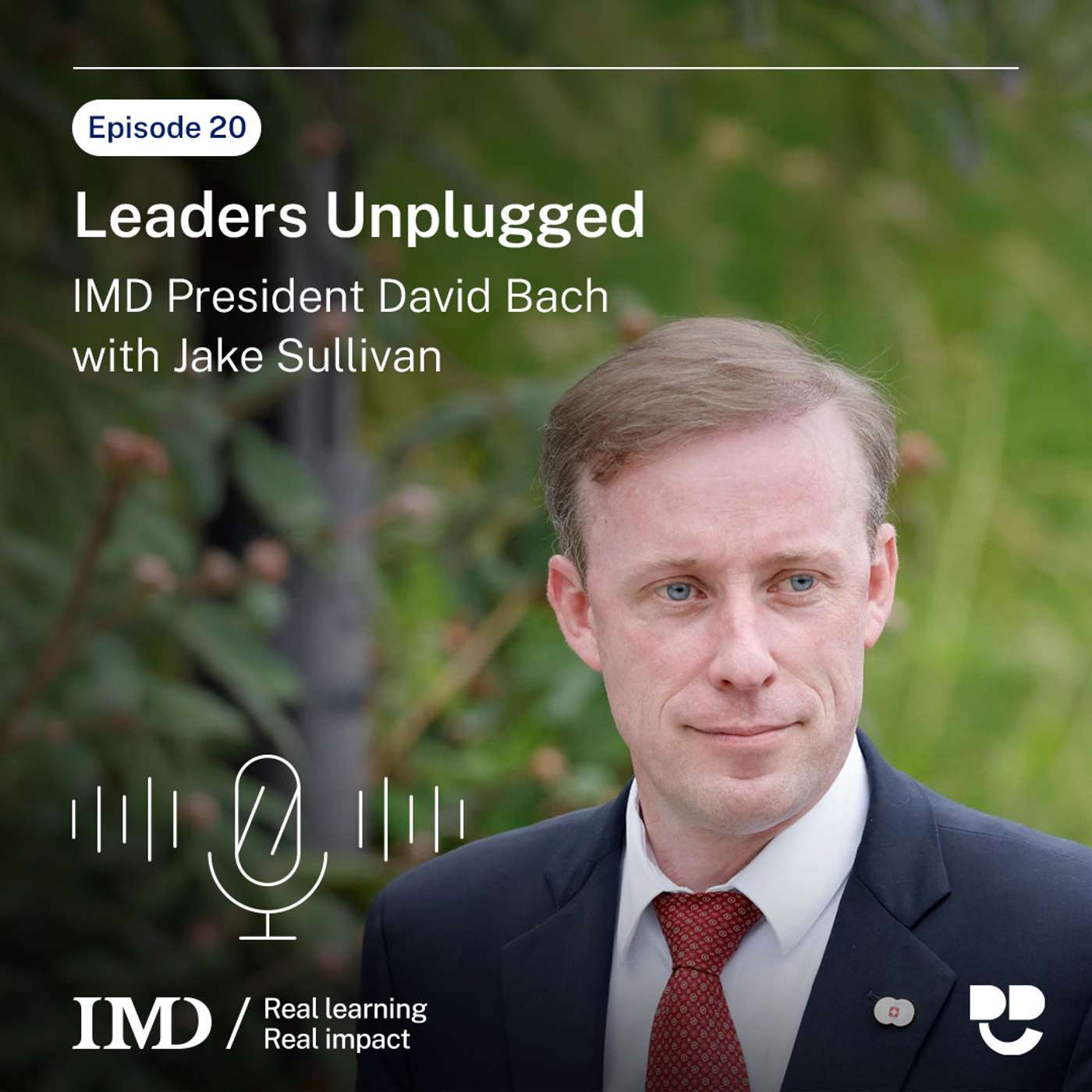
What does it mean to lead in a world where the United States — the anchor of the post-war order — has become "the biggest disruptor in the world"? In this episode of Leaders Unplugged, IMD's David Bach sits down with Jake Sullivan, former National Security Advisor to President Biden, for a frank, wide-ranging conversation on the forces reshaping global business, geopolitics, and the social compact. From the collapse of allied trust to Iran's newly proven ability to close the Strait of Hormuz, this is the geopolitical briefing every senior executive needs.Sullivan argues that Trump "does not believe that allies are assets — he thinks they are liabilities," that the Iran war was "entirely a war of choice, an elective war," and that the era of assuming innovation dominance without industrial strength is over: "The United States has to concern itself with being able to build." On AI and the future of work, he warns that we need "fundamentally new answers" to the question of "where does the human fit in, in an age of exploding technology?" — and that no political leader has yet emerged to deliver them. Our guest:Jake Sullivan served as National Security Advisor to President Joe Biden from 2021 to 2025, helping shape U.S. responses to Russia’s invasion of Ukraine, strategic competition with China, the wars in the Middle East, and the growing intersection of technology and geopolitics. A longtime adviser to both Biden and Hillary Clinton, Sullivan was also one of the architects of the Iran nuclear deal during the Obama administration and a leading voice behind the idea of a “foreign policy for the middle class.”Today, he is the inaugural Kissinger Professor of the Practice of Statecraft and World Order at Harvard Kennedy School, a faculty affiliate at Harvard’s Belfer Center, a Senior Fellow at the University of New Hampshire’s Carsey School of Public Policy, and co-host of the foreign policy podcast “The Long Game” alongside his former deputy Jon Finer. Harvard Kennedy School faculty profile: https://www.hks.harvard.edu/faculty/jake-sullivan X: @jakejsullivan ResourcesJake Sullivan, “The Tech High Ground,” *Foreign Affairs: https://www.foreignaffairs.com/united-states/tech-high-ground-jake-sullivanKurt M. Campbell and Rush Doshi, “Underestimating China”: https://www.foreignaffairs.com/china/underestimating-china The Long Game with Jake Sullivan and Jon Finer:https://podcasts.voxmedia.com/show/the-long-gameDan Wang, “Breakneck: China’s Quest to Engineer the Future”:https://danwang.co/breakneck/
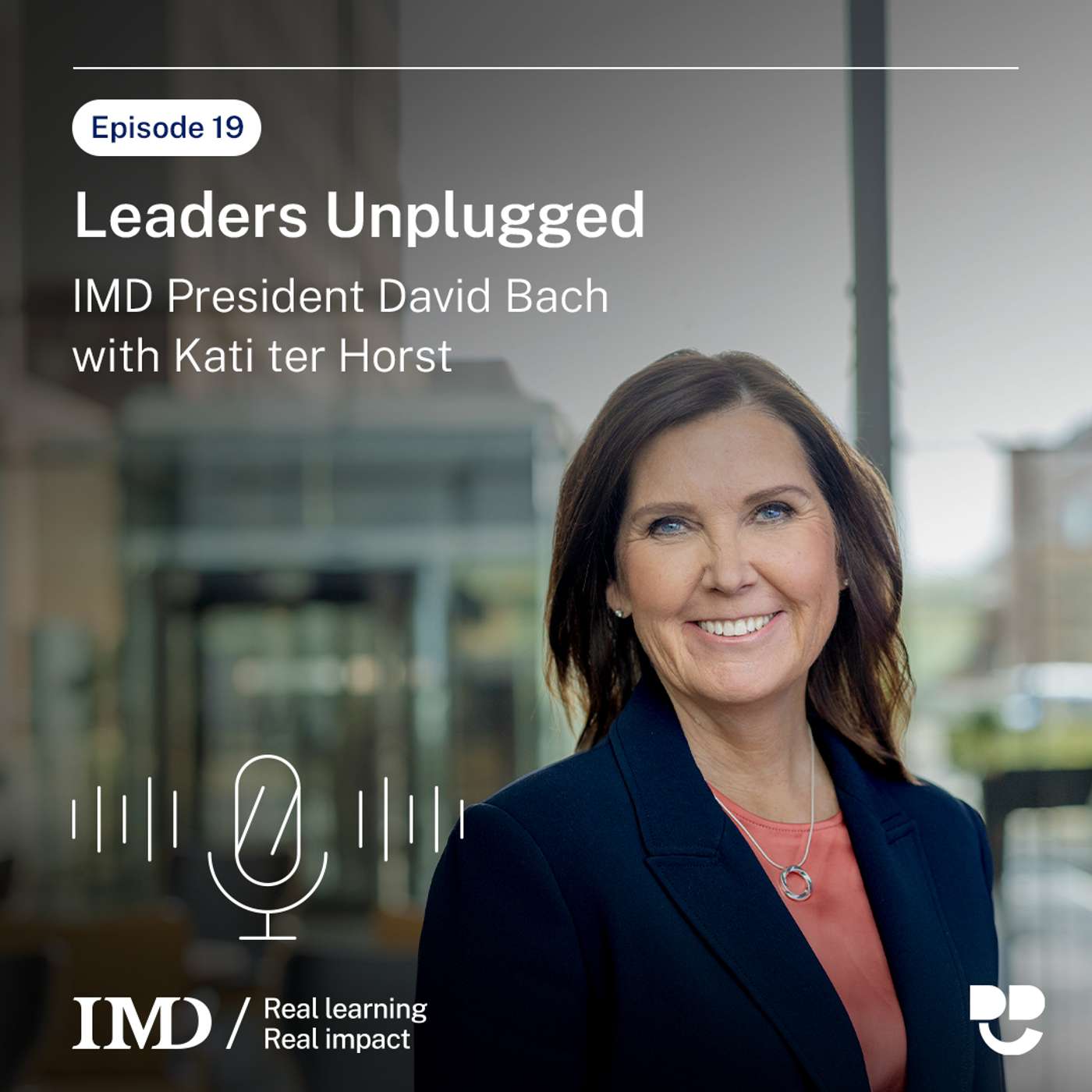
Kati ter Horst leads Outokumpu, the world's leader in sustainable stainless steel, at a moment when the old assumptions of globalization are breaking down.In this episode of Leaders Unplugged, she joins IMD President David Bach to discuss her transition from board member to first-time CEO, and how she is building a new strategy for her colleagues in nearly 30 countries, while navigating tariffs, AI, and geopolitical conflicts.Kati’s warning is direct: “the rules are gone.” Her call to action is equally clear: “Europe can compete.” And one of her key learnings from the first 18 months as CEO? “You have to protect your time.”Our guest:Kati ter Horst is President and CEO of Outokumpu, the Helsinki-based global leader in sustainable stainless steel. She has been in the role since October 2024, after nearly a decade on the company’s board. Before Outokumpu, she held senior leadership roles at Stora Enso and Aliaxis, gaining deep experience in manufacturing, sustainability, and large-scale transformation.
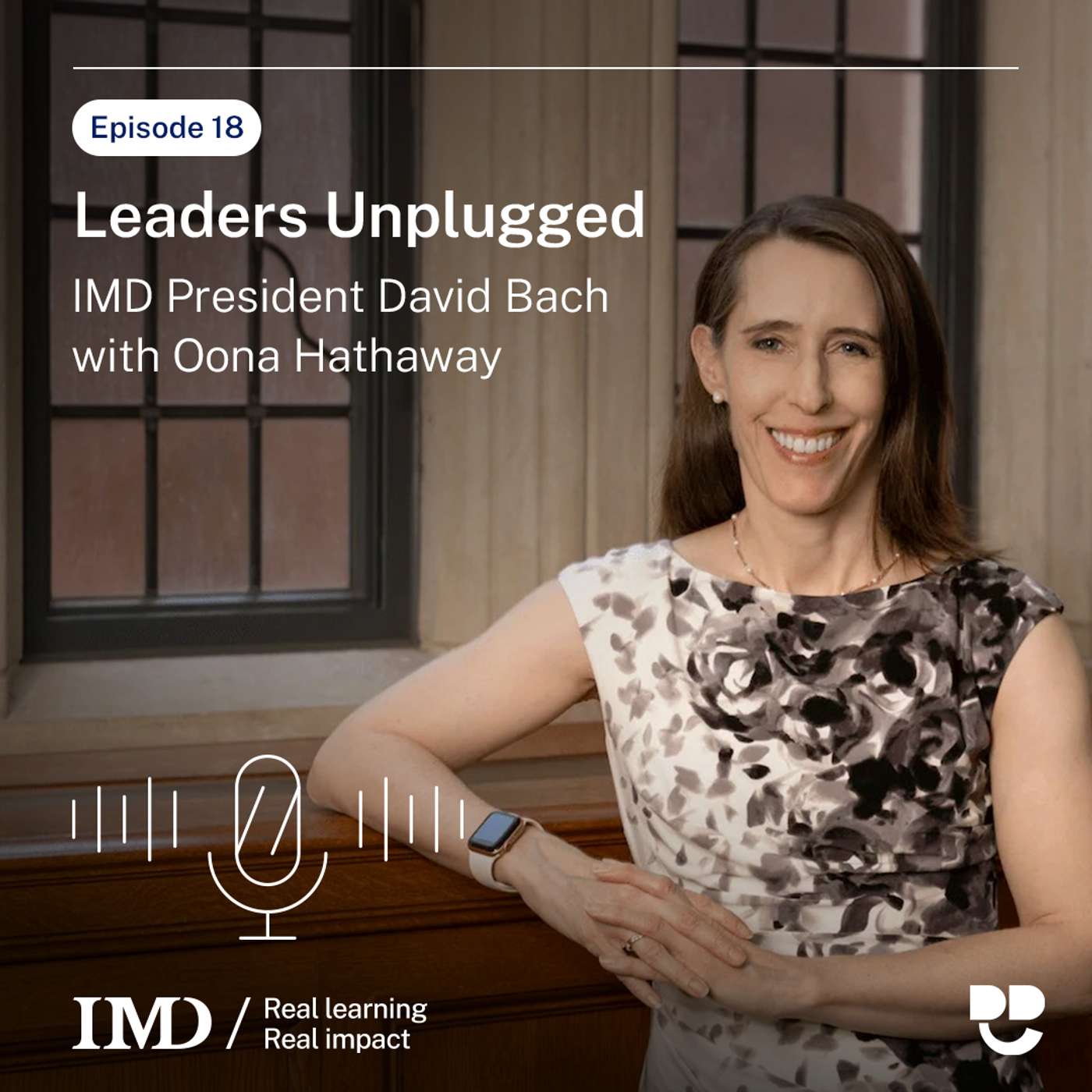
Oona Hathaway on war, global rules, and why business leaders may regret staying silent as international law is violated.Why does international law matter? How illegal is the Iran war? And what does business have to do with it? In this episode of Leaders Unplugged, IMD President David Bach hosts Yale professor Oona Hathaway for a candid conversation about war, international law, and the growing strain on the post-war global order.Hathaway argues that international law is often most important when it is least visible: it works “in the background,” shaping what states know they can and can’t do. But when leaders start treating the rules as optional, even the unthinkable suddenly seems possible. As she puts it, “international law tends to be fairly invisible when it’s working well,” but now “the Trump administration is putting this all on the table.”She also warns that “business leaders have been really quiet,” even as the erosion of legal norms introduces new volatility into global markets. Her message to them is clear: “If they don't speak out and if the president actually does what he's threatening to do, we're going to be in a much more unstable world where business is going to be extraordinarily risky.” Our guestOona HathawayGerard C. and Bernice Latrobe Smith Professor of International Law, Yale Law SchoolOona Hathaway is one of the world’s leading experts on international law and global governance. She is a professor at Yale Law School and Yale University, and president-elect of the American Society of International Law. She is co-author of The Internationalists: How a Radical Plan to Outlaw War Remade the World, and author of the upcoming book, Citizens.LinkedIn: https://www.linkedin.com/in/oona-hathawayBlueSky: https://bsky.app/profile/oonahathaway.bsky.social Yale profile: https://law.yale.edu/oona-hathaway Personal website: oonahathaway.comResourcesOver 100 International Law Experts Warn: U.S. Strikes on Iran Violate UN Charter and May Be War Crimes: https://www.justsecurity.org/135423/professors-letter-international-law-iran-war/ The Internationalists (Hathaway & Shapiro): https://www.penguinrandomhouse.com/books/561345/the-internationalists-by-oona-a-hathaway-and-scott-j-shapiro/ UN Charter: https://www.un.org/en/about-us/un-charter Geneva Conventions: https://www.icrc.org/en/war-and-law

Comments

Download from Google Play

Download from App Store
 United States