



 Claim Ownership
Pioneering Paradox: A podcast for conflicted saints
Subscribed: 4Played: 92
Subscribe

© Casey McFarland
Description
An attempt to find a middle ground in the Mormon experience.
38 Episodes
Reverse
MELANIE MCFARLAND of True Within You emotional wellness joins Wil Wood and Casey McFarland to have a discussion about how adults can model civility, hope and better communication for the next generation.
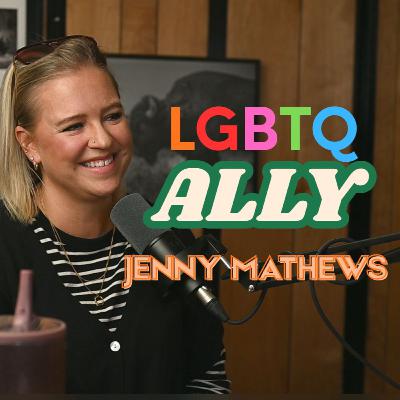
Seven years ago, a group in Cache Valley created FHE for ALL, a community that provides a safe place for LGBTQ Mormons to simply be themselves. In this conversation, Jenny Mathews shares her story of her father coming out when she was in high school, an experience that was very difficult at the time but has since become one of the greatest blessings in her life.Many people contribute to making FHE for ALL the welcoming and supportive space it is today. This discussion also explores how others might think about creating similar safe spaces in their own communities.We love Jenny and the entire FHE for ALL group, and we loved this conversation. We hope you do too! 🌈If you want to meet another member of this group go back and listen to our episode titled: Coffee hour with Blake
Melanie and Casey sit down with Blake Muir for what we are calling Coffee Hour with Blake. Blake asks the question "If there is Eternal Progression, could there be eternal digression?" Without diversity in heaven would we progress? We also discuss what heaven would be like without our LGBTQ members. Would that be heaven? Is there sin in thinking you are going to heaven while thinking others aren't?
Many people know Patrick Mason as a scholar of Mormon and Christian history but not everyone knows he graduated also with a Masters in International Peace Studies at Notre Dame.Peacemaking is a topic that comes with baggage. It is often mistaken for passivity and a manipulative tool to keep people ifrom rocking the boat. Patrick argues the exact opposite. Peacemaking is anything but passive. We only scratch the surface on this topic. It might warrant a part 2 but we will see.
We are joined by the articulate, intelligent, and courageous Valerie Hamaker of the Latter Day Struggles Podcast. As a therapist, Valerie has been a vital support to individuals and families navigating the complexities of faith in the 21st century. Through tireless effort, she has built an extraordinary network of resources—including therapy, workshops, and educational tools—designed to help those who feel like they’re struggling just to breathe as they grapple with the realities of a faith journey.In this episode, we explore the idea of the “myth of normal,” challenging the assumption that what is considered normal within church culture is always healthy or helpful. Valerie brings a rare combination of clinical insight and lived experience, helping us examine the unspoken beliefs and behaviors that are simply part of the air we breathe, and inviting us to ask whether they truly serve us.Listen to Latter Day Struggles interview with Casey: Part 1 https://podcasts.apple.com/us/podcast/375-when-god-refuses-to-be-church-correlated/id1612326898?i=1000732662668Part 2 https://podcasts.apple.com/us/podcast/377-when-ones-soul-has-the-audacity-to-grow-right/id1612326898?i=1000733703085
We loved our conversation with Orlando so much, we had to bring him back for a bonus episode. In this second part, Melanie McFarland (@truewithinyou) sits down with Orlando Tsosie to explore his Navajo spiritual tradition. Orlando shares stories of helping his mother, a medicine woman, and speaks about the gifts and experiences that shaped his path. He also touches on elements of the Diné Bahane' : the Navajo Creation Story and reflects on the similarities and differences between Navajo and Latter-day Saint worldviews.
Casey saw a UFO. So what does that mean? Melanie joins me and Wil to discuss how in Latter-day Saint theology, this phenomena bumps up against a quiet but persistent paradox: a God vast enough to organize “worlds without number,” yet a religious culture often lived out in small wards, narrow social expectations, and very local ways of thinking. The cosmic scope of the plan of salvation stretches across galaxies, intelligences, and eternities, while daily faith practice can feel bounded by committee meetings, cultural habits, and an unspoken pressure to keep the universe tidy and familiar. A UFO sighting becomes less about aliens and more about discomfort, what happens when the heavens feel too big, too strange, too alive for a worldview that prefers the comfort of the known? This episode explores that tension: how believers reconcile a radically expansive, cosmic God with the human impulse to shrink mystery down to something manageable, and what might be lost—or rediscovered—when we dare to think as big as our theology claims the universe really is.
From the earliest days of the Latter-day Saint movement, Native Americans have been part of our story—and, for better or worse, we have been part of theirs, especially in the American West. It’s not always an easy story to tell. It involves colonization, displacement, and at times even massacre. The full story may never be completely told, as it is often one-sided.But there are other stories—stories centered on individuals, not just groups or grand narratives. This is one of those stories.In this episode we interview Orlando Tsotsi, a Navajo and a Latter-day Saint, and how he came to find himself and is still finding himself while embodying parts of both of those identities. Orlando speaks about his journey to faith, the wisdom passed down from his Native people, and how his worldview expanded after living with five Latter-day Saint families through the Indian Student Placement Program ran by the LDS church from 1947-2000. We didn’t feel like we even scratched the surface with Orlando and plan to have him on for more discussion in the future. We hope you enjoy this conversation.
Welcome to Pioneering Paradox (@pioneeringparadox) , hosted by Wil Wood (@willywouldnt) and Casey McFarland (@caseymcfarlandphoto). Here, we explore the messy, meaningful, and often difficult conversations within the Latter-day Saint tradition. We believe paradox is not a problem to solve but a healthy way to hold the tension of complex issues. As Richard Rohr reminds us, “Paradox is the only language that can contain the whole.”This episode marks the beginning of season 2. We start this season off with a discussion with the mystifying Melanie McFarland (@TrueWithinYou) who has an emotional wellness practice and happens to be my wife. We dive into the chaotic and exhillerating world of the stage of faith Brian Mclaren calls “perplexity”. This stage can be destabilizing and also exciting but what do we do about raising kids and being a part of the larger world when we are in this stage? We don’t have all the answers but just some thoughts and perspective. Thanks for listening.
Melanie and I discuss the idea that religion is a tool that should lead to transformation, to becoming a "new creature" or "born again" . The Covenant Path does this for many people but what about the billions of people who don't feel a connection to the Latter Day Saint path. Are there other ways that can lead to transformation, even within the same home? We also discuss parenting kids outside of the covenant path and how families can be strengthened when we respect and honor spiritual paths different than ours.
Lots of changes in the church. We got together to discuss! Garments, Pres. Oaks, women becoming prophets, assuming authority, and some of my reconciliation with Pres. Nelson. And a discussion about D. Todd Christopherson and his family embracing his brother Tom's partner. (Keep in mind we are aware of the recent issue with Wade Christopherson but recorded this prior to that).Stick around to the end for the discussion about doubting your hate!Wil invites me back to church :)
This episode with James and Lisa Clawson are serving as service mission leaders and are hoping to end the stigma against service mission experiences. We discuss the shifts that have happened, the stats that show transitioning to a service mission is most often a very positive experience. We also discuss including all the voices in ward council and when to speak up when something doesn’t feel right. We really enjoyed speaking with these two lovely humans.
Today, we’re joined by the incredible and multitalented Melissa Mason. Wil and I had a hard time staying on task because there was so much we wanted to ask her, from her therapy practice, which includes Ketamine-Assisted Therapy and Sex Therapy, to her talents as a modern quilter and presenter, her commitment to social justice, her political science background from Notre Dame, and her current participation in the Living School. And, of course, we were eager just to hear her thoughtful perspectives on current affairs.In this episode, Melissa shares her story of growing up Catholic, losing her faith, joining the Latter-day Saints, and eventually re-embracing elements of her original tradition. We deeply appreciated her candor, intellect, and insight and we hope you will too.
In this episode we’re joined by Dr. Julie de Azevedo Hanks—and honestly, it quickly became one of our favorite conversations. We laughed, we cried, and we learned a lot. A quick content note: we dive into sensitive topics, including how we handle claims of abuse in the church, because we deeply wanted to hear Julie’s perspective. With over 30 years of experience as a social worker, psychotherapist, and founder of Wasatch Family Therapy, Julie brings wisdom and compassion that gave us a lot to think about.We asked her how we can raise boys to grow into good men in the church, what young women should look for in healthy relationships, and how we can all create more space for people to be heard in our community. This was a meaningful, moving discussion—and we can’t wait to share it with you.
We are told to work out our salvation with the Lord. But what happens when that becomes so heavy it begins to rule almost everything you do? Kathryn Hilton Johnston is an active member, mother of two who has been diagnosed with scrupulosity, a form of Religious OCD.Scrupulosity often shows up more in highly religious environments, and because it overlaps with normal religious devotion, it can be underdiagnosed or mistaken for piety.While the topic of Scrupulisity has been more prevalent in main stream, it is still something many people don’t understand or recognize. Kathryn articulates this struggle very well. We hope you get value from this conversation.
Jeff Lowe found himself where many men do—successful on the outside, surrounded by family and friends, but battling deep loneliness and depression. Hitting a breaking point led to a profound shift in his life. Now, he's building something different.Jeff is the host of the Bonded Brotherhood podcast—a space where men can gather, get honest, and find connection. It's a far cry from the typical "alpha male" blueprint.This episode isn’t just for men. If you have a son, a partner, or a friend who’s struggling, this conversation matters.Thanks for listening.
In this episode, we invited social media influencer and latter day saint Phil Cowley onto the show. In 2021 Phil was about to close the doors on his pharmacy when he was approached to do a social media clip for a local gym. Soon after he started his own social media called Phil’s my pharmacist which now has over 3 million followers across his platforms. We discuss faith, parenting, critical thinking and raising kids with disabilities. Thank you for listening.
In this episode, Wil and I explore the Buddhist teaching of Emptiness. Back in 2017, during a time when I was seriously considering leaving the Latter-day Saint community, I encountered Buddhist teacher and podcaster Noah Rasheta. Through a series of events, I had the privilege of joining Noah and eleven others from across the country in a six-month Buddhist intensive.The most challenging—and ultimately most rewarding—part of that experience was the ominously named teaching of Emptiness. It forced me to confront and question many of the stories I was telling myself and eventually became the foundation of a daily practice I still carry with me.Wil and I discuss how this concept has the potential to move us beyond the dualistic thinking that pervades our culture and touches nearly every aspect of our lives. We hope it brings insight or comfort to someone out there.Thank you for listening.
Welcome to Pioneering Paradox, a podcast for Latter-day Saints navigating inner conflict and complexity. As Richard Rohr once said, “Paradox is the only language that can contain the whole.” In this space, we aim to embrace both light and shadow—because holding the tension between them is often the closest we come to the truth.In this episode we invited the lovely Lauren Wood to join us for a discussion about the paradox of being a part of a community, specifically the Latter Day Saint Community. Lauren discusses how the church has been a place she finds meaningful spiritual nourishment while also expressing she can’t fully enjoy it as long as there are people feeling left out. We discuss finding that balance. I am hoping this is only part one of a two part series on community because Lauren brings some heart to this topic and we still have so much more to say about this. Thanks for listening.
Today, we’re diving into a topic that’s difficult for many: Patriarchy. For me, it became deeply personal when, in 2018, it nearly cost me my marriage to my love, Melanie. We’ve since walked through that pain, found healing, and emerged stronger. In this episode, Melanie joins me to explore how the system of patriarchy created a deep wound in our relationship—and how facing it together became a path to transformation.

Comments

Download from Google Play

Download from App Store
 United States