


 Claim Ownership
Great Rail Tales
Subscribed: 6Played: 29
Subscribe

© Copyright 2025 All rights reserved.
Description
2025 is the 200th anniversary of the birth of the modern railway. The opening of the Stockton & Darlington Railway connected places, people, communities and ideas and, ultimately, transformed the world.
Part of the Railway 200 celebrations, Great Rail Tales tells the story of our railway by the people who live, work and travel the tracks.
So, join us and help celebrate the past, the present and the future of our national railway.
Discover more about Railway 200 online: https://railway200.co.uk/
Part of the Railway 200 celebrations, Great Rail Tales tells the story of our railway by the people who live, work and travel the tracks.
So, join us and help celebrate the past, the present and the future of our national railway.
Discover more about Railway 200 online: https://railway200.co.uk/
77 Episodes
Reverse

What started as a month long celebration soon became a nine month national celebration and the S&DR200 festival continues to grow onwards into 2026. The artistic and festival Director of S&DR200, Niccy Hallifax, reflects back on the some of the highlights of and looks forward at the legacy of the anniversary year in County Durham and Tees Valley.
Iain Quinn, quartermaster on The Waverley, the last sea-going paddle steamer in Great Britain, takes a nostalgic look at the connection between rail and sail. His earliest memory of travelling on the Waverley goes back to childhood when he used to travel by train then take the paddle steamer via Craigendoran to get home to Dunoon, West of Glasgow.

Author Samina Siddiqui shares her joy at researching the stories of Muslims working on Britain’s railways. Through listening to stories from Muslims working on the railways across the 60s, 70s, and 80s Samina uncovered rich themes of duty, service and a real sense of belonging and community. The research has also inspired her to dig into her own family past, a story which has revealed a strong personal connection to the railways in India stretching back through the generations.

Jools Townsend, Chief Executive of the Community Rail Network explains the important history, evolution and contribution of the Community Rail Network to our relationship with the railways. Set up around 30 years ago, the Community Rail Network aims to help and encourage communities and community groups to get involved with their railways so they get as much benefit as possible from the railways as well as having a voice in the future development of the railway network.
In the original Eurostar cars 7, 8, 11 or 12 seat 61 gave Mark Smith the perfect table and window view he wanted. So on special trips he would always book this place on the train. Inevitably when this career railwayman developed a website about international train travel it could have only one name.
Inspired by a school trips by train to the then Leningrad and todays Moscow Mark’s passion for rail travel has taken all over the globe.
But his favourite line is far more closer to home than you might expect from the International travelling man in Seat 61.
The railway has been a part of Linda Hilton’s life since she was a young girl. In this Great Rail Tale, Linda tells of her love of listening to some of her dad’s stories from a career spent on the rails with his closest friend Brian Selkeld.
John and Brian worked together for decades but lost touch after retirement. A chance meeting bought these two great friends and colleagues back together and now today they entertain friends and families with their stories and laughs from throughout their careers.

Author Susan Major tells the story of the role of women on the railway during World War 2 from her research of the oral history collections at the National Railway Museum.
Journalist, author and railway historian Christian Wolmar reflects on the role that trains, and the railway network had on wars and the ways that war have been fought.
Rather than just ferrying troops to or from embarkation ports, Christian explains how the symbiotic relationship between trains and frontlines has shaped modern warfare. He reflects on the railway engineers who had to rebuild the tracks of France after D Day to support the Allied advance and how the Ukrainian railway today has shown that the railway is absolutely vital to the resupply of the front and stalling the Russian invasion of Kiev.
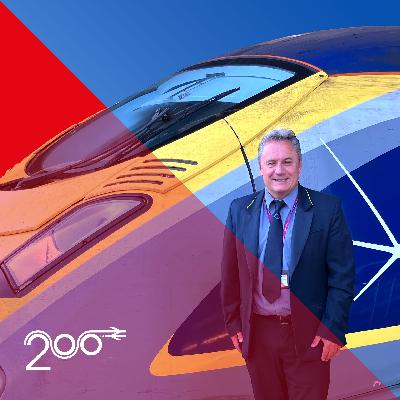
To mark the centenary of the Entente Cordiale between Great Britain and France, Queen Elizabeth II travelled to Paris on the Eurostar.
John Chalmers was chosen to drive the train that day and recalls how his career as an apprentice railman took him to the platform of Gard du Nord to be introduced to his Royal passengers.

A shift in career led Penny Allen down an entirely different life track. A passion for the railway was born and soon led to her discovering that the railway was already in her blood.
In Penny’s Great Rail Tale she recalls her family background in the railway and how it has shaped her life today.
Eurostar driving instructor, Alan Brooks recalls a lifetime on the rails that he can trace back to a French class at school. But what started at school ended up with Alan driving one of the very first trains to travel through the newly completed Channel Tunnel.
A railwayman through and through, Tim Shoveller found himself using his bardic lamp to help guide an ambulance to a halt when his wife went into early labour.
But his railway life started long before parenthood. Tim was first introduced to the railway trainspotting with his mother on the platform at Reading. The railway found its way into his blood. By 15 he was a volunteer at the Watercress Line on Mid Hants Railway this triggered a lifelong career that started as a guard at Guildford.
Tim progressed through the passenger service during privatisation before making a switch to the freight service and running the UK’s largest maritime intermodal logistics operator, Freightliner Group.
Volunteer at the multi award winning Goostrey station, in this Great Rail Tale Christina Burgess recalls work and roles that railway worker, Joseph Harrop had at the station and on the Crewe – Manchester Line over his half a century of service.
Telling Joseph’s story is part of a wider storytelling event at Goostrey station where friends of Goostrey Station worked with Goostrey Parish Archive to create eight metal boards which recorded the history of the station in text and images. They will be displayed on the platforms.
The story starts with the early years after the station opened in 1891 through a time of dereliction at the end of the twentieth century to the restoration in 2019 of the remaining wooden station building so that it can be used as an art studio.
As well as station buildings we included trains, signal boxes, sidings, railway cottages and former employees like Christopher Ashmore and Joseph Harrop (who both worked as porters and signalmen on the Crewe-Manchester line) and engineers like George Buck and Willam Baker (who master minded the Birmingham to Manchester railway).
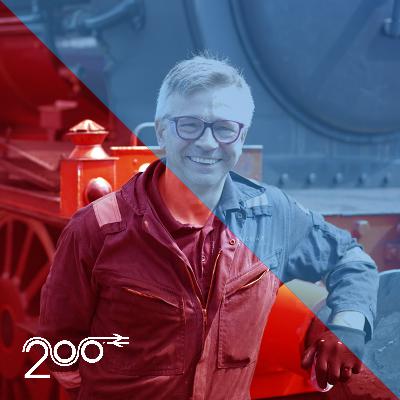
When engineer and rail enthusiast, Alex Alder, got a message in a group chat saying someone had found a scrapped steam engine, little did he know the story and adventure that was waiting for him in a shed at the far end of the grounds of a convent.

The iconic British Rail logo is one of, if not, the most recognisable brand images in the world. But what is behind the logo? What do these iconic double arrows reflect and what imagery does it conjure in our collective mindset?
While some people might imagine dirty, late or cancelled trains, Dr Lewis Smith, Marketing Lecturer from Brunel University, London argues that this icon represents a dynamic, ahead-of-its-time organisation that pivoted to meet changes in culture, society and travel making it one of the most advanced marketing organisations of its era.

Research project manager from the University of Derby, Jenny Clementson’s background was in the rail industry. Today she leads on the industry connected academic research into the future of our railway.
From hydrogen powered shunting wagons to AI deciding where, when and how to implement infrastructure maintenance this is the edge where design, ideas and research come together.

Passengers and Pioneers is an album of stories from 1825 to today that celebrate what it means to be a passenger and travelling on a railway line.
A writer in residence session with the Bishop Line Community Rail Partnership gave singer songwriter and heritage enthusiast, Sam Slatcher, a deep insight and connection to the route and people of the north east’s railway.
Gathering stories that connected from the past to the present, through generations and across families he was inspired to write a collection of songs which reflect the deep rooted culture and community of the Bishop Line CRP.
Shahiesta describes her job as the best job in the world. She is the education development officer for Community Rail Lancashire. Her passion is supporting south Asian Muslim women living in Lancashire feel a sense of belonging and connection with the local rail network. By supporting and encouraging women to travel by train she gets huge satisfaction from seeing the impact that the freedom of independent rail travel has on these women’s lives. Stations of Welcome, the support group she set up, is now growing both in numbers and value as the women take ownership and pride of their railway station which has become a central hub for both the women and the community.
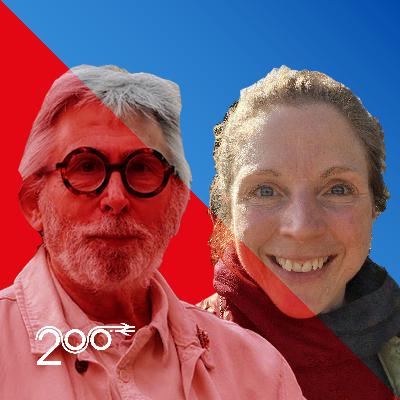
Our platforms and rail networks are alive with wildlife. Hanging baskets, wildflower planters and station gardens are all helping bees pollinate the flora around the stations and tracks. This, in turn, encourages an increased biodiversity of fauna, even in the most urban areas.
Emma Pritchard and the Trust’s founder, Luke Dixon describe how by working with community groups, station staff and travellers they have developed a network of rich wildlife corridors and how you can help them with every journey you make – from weeding and dead heading to emptying your left over water into a planter, we can all help pollinate the platforms.
David started his railway career as a station supervisor at Kingston, where he watched and learned how a station worked and was run. A transfer to become a train dispatcher at Waterloo and soon a guard started to become his greatest dreams coming true. Soon a move to Chester to raise his family enabled David to become a driver and then a driver instructor. His greatest moment, packed full of pride, was the day he saw several of his trainee drivers handing on their trains to each other.

Comments

Download from Google Play

Download from App Store
 United States