


 Claim Ownership
People Helping Nature Podcast
Subscribed: 9Played: 83
Subscribe

© Conservation Amplified
Description
The People Helping Nature Podcast is all about sharing the incredible stories of people who are helping nature.
We do this by bringing a megaphone to the world of conservation by featuring people from all walks of life who are doing interesting and important things to help nature thrive.
We aim to make it easy for everyone to learn, understand, take action, and feel like they’re a part of the solution.
Our vision is simple: make conservation mainstream...
Produced by the Conservation Amplified Charitable Trust.
Find out more & join the community at www.conservationamplified.org.
40 Episodes
Reverse
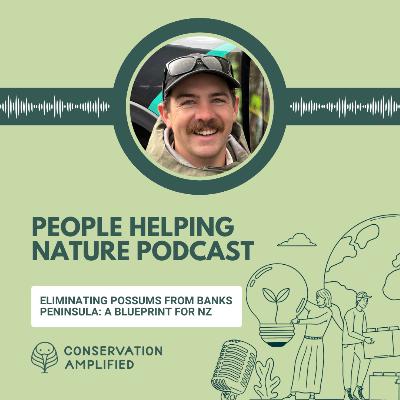
Australian brush-tail possums are one of the most widespread and damaging introduced pests in Aotearoa New Zealand, with an estimated ~30 million around the country.They are wreaking havoc on both our native plants and animals, and they put pressure on our ecosystems, farms, and the wider economy. Most of the time, we respond by suppressing possum numbers. But on Banks Peninsula, a different approach is taking shape.In this episode, we sit down with Ollie Rutland-Sims from Pest Free Banks Peninsula to learn about their possum elimination programme: A bold mission, strategically working to drive possum numbers to zero in their area under the ethos that “offence is the best defence”.As Ollie explains, “we're now dealing with quite a legacy problem and a population that really, the only checks and balances on it are coming from human inputs”Ollie shares Pest Free Banks Peninsula’s 4-stage elimination strategy: Knock-down → mop-up → surveillance → and lastly the defence phase after a block of land has been declared possum-free. It’s an approach that’s working, with 5,800 hectares already declared possum-free - and could be used as blueprint for possum elimination throughout the country.We also talk about mindset and the need to constantly deliver professional, spot-on work for this elimination approach to work: Continuous learning about your target species and constant improvments are key to success.Amazingly the benefits of this mahi reach far beyond positive biodiversity and conservation outcomes, with local farmers, community, and the economy also gaining. This project shows that eliminating a pest species in an open system on the mainland is not only achievable but also an investment in the future.Here are some of the key topics we discussed:Why brush-tail possums were introduced into NZ.Why they’re such a big threat to our native flora and fauna.The benefits of possum elimination vs. supression.Their 4-phase elimination approach.How reinvasions are managed in an open mainland system.The long term cost savings of elimination vs. suppression.The importance of social license and relationships with private landowners.What to do when you see a possum on the Banks Peninsula.And much more…Love the People Helping Nature Podcast? Get notified when new episodes go live - subscribe here: www.conservationamplified.org 🧑🦱About Ollie:Ollie Rutland-Sims works for the Banks Peninsula Conservation Trust as an Operations Coordinator within their Pest Free Banks Peninsula program, leading field teams working toward landscape-scale possum elimination near Akaroa, Banks Peninsula. With a background in practical, boots-on-the-ground conservation, Ollie combines operational planning with hands-on experience in wildlife management. He’s passionate about improving field efficiency, supporting strong team culture, and delivering meaningful conservation outcomes for Aotearoa.🔗Learn more:Website: https://www.pestfreebankspeninsula.org.nzReport a possum: https://www.survey123.arcgis.com/share/b152f02a20e14959a80c97917cc669d1 🎙️Learn more about the People Helping Nature Podcast at www.conservationamplified.org
In this episode, we sit down with Helen Jamieson from The Forest Bridge Trust to explore one of Aotearoa New Zealand’s most elusive and lesser-known birds: the matuku-hūrepo, or Australasian bittern.Matuku-hūrepo are large, remarkable wetland birds - apex predators, masters of camouflage, and an indicator species of wetland health. But they are also in serious trouble. With less than 1000 remaining in New Zealand, it has been said that “we are the last generation that can save the bittern.”Helen shares what makes them so special, why they’re so hard to spot, and the major challenges they face - from habitat loss and declining food sources to car strikes and introduced predators.We also talk about why bittern can be such a powerful species for community conservation. When people understand what matuku-hūrepo are, how rare they are, and what they need to survive, they often want to help. That can mean restoring wetlands, getting involved in local projects, or taking part in the Great Matuku Muster - a nationwide citizen science effort to monitor booming males during the breeding season.Helen reminds us that she’s not a scientist or long-time species expert. She’s a caring local who became fascinated by bittern, got involved, and followed that curiosity into action. This is a conversation about a remarkable bird, the wetlands it depends on, and how communities can rally around both.Here are some of the key topics we discussed:Matuku-hūrepo (Australiasian Bittern): their adaptations, threats, and conservation statusWhy Matuku-hūrepo need healthy wetlands to thriveBenefits of wetland restoration beyond threatened species conservationHow to activate a community in the name of conservationHow Helen got involved through The Forest Bridge TrustThe tiny wetland that Helen's family is restoring on their property, and what they're learning from itThe Great Matuku Muster - a nationwide initiative to monitor bittern numbersAnd much more…Love the People Helping Nature Podcast? Get notified when new episodes go live - subscribe for emails here: https://www.conservationamplified.org 👩About Helen:Helen has lived in the Matakana region for more than 13 years with her husband and their two daughters. She has a background in business and community projects and has also been involved in managing the Matakana Markets. Helen and her family have been actively controlling predators (rats, stoats, possums, wasps, etc.) and restoring the wetland on their own land.She began working with The Forest Bridge Trust in 2022 and is project manager for the DoC-funded project to facilitate community conservation to protect matuku hūrepo, tara iti and pāteke on Te Korowai O Te Tonga peninsula (South Head).🔗Learn more:Website: https://www.theforestbridgetrust.org.nzThe Great Matuku Muster: https://lovebittern.com/take-action/the-great-matuku-hurepo-musterOur tiny wetland (Helen’s project): https://www.facebook.com/profile.php?id=61581256861699
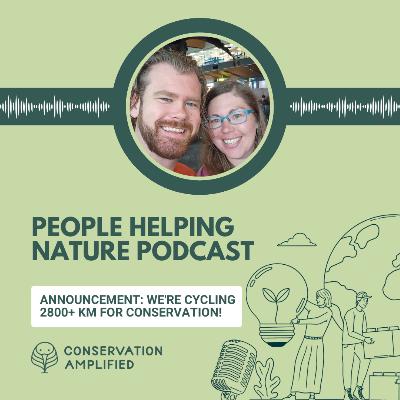
Today, we have a big announcement to share.This year, between June and August, we’re setting off on an 11-week conservation storytelling adventure - cycling the entire length of the Danube River. From its source in southern Germany all the way to the Danube Delta around the Romania-Ukraine border, we’ll be riding more than 2,800km in the name of conservation.We’re calling the journey Cycling for Conservation.Along the way, we’ll be carrying everything on our bikes, meeting conservationists and communities connected to the river, and sharing their stories as we go. The Danube is the world’s most international river, flowing through ten countries before reaching the Black Sea.For us, this is more than just an adventure. Our mission with Conservation Amplified and the People Helping Nature Podcast is to Make Conservation Mainstream, and we believe that adventure storytelling can help bring more people along for the journey and get them interested in conservation.We’ll be documenting the expedition through podcast episodes, social media content, YouTube, and our newsletter - sharing the people, projects, and wildlife we encounter along the way.If you’d like to follow along, make sure you’re following Conservation Amplified on social media, and sign up for our newsletter at www.conservationamplified.org.We’d love to have you along for the ride. 🚴♂️🌍Follow along here:Subscribe for emails: https://www.conservationamplified.orgYouTube: https://www.youtube.com/@ConservationAmplifiedInstagram: https://www.instagram.com/conservationamplifiedFacebook: https://www.facebook.com/conservationamplifiedTikTok: https://www.tiktok.com/@conservationamplifiedLinkedIn: https://www.linkedin.com/company/conservation-amplified
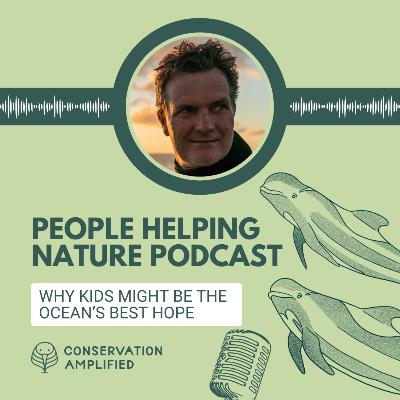
Most of our relationship with the ocean happens on the surface. We sail it, fish it, surf it and photograph it. But beneath that glistening blue is a world many of us barely understand - and one that is changing fast.In this episode, we sit down with Steve Hathaway from Young Ocean Explorers to explore a powerful idea: if we help kids fall in love with the ocean, we can change how we treat it within a generation.After decades spent diving, filming and documenting marine life, Steve had a lightbulb moment when his daughter shared a short ocean video with her class. The reaction from those kids sparked what would become Young Ocean Explorers - a mission to reach every child in Aotearoa with hopeful, curiosity-driven ocean storytelling.We talk about eco-anxiety, the impact of screens, the decline of kelp forests, and why “out of sight, out of mind” has allowed marine degradation to accelerate. We also unpack how targeting kids can influence whole families, and why storytelling - not shame - is key to bringing more people along.Here are some of the key topics we discussed:Why this generation are not just digital natives, but environmental natives living with real eco-anxietySteve’s personal journey to becoming an ocean advocateHow a school project helped launch Young Ocean ExplorersThe power of storytelling and curiosity to spark lasting engagementWhy targeting teachers became a game-changing strategyThe “One Plus A Day” story and how kids can drive real-world behaviour changeKelp forests, kina barrens and witnessing rapid ecosystem declineWhy we need courage and vision for marine protectionHow to communicate conservation without alienating peoplePractical advice for parents wanting to reconnect kids with natureWhat it means to be a good ancestor for the oceanAnd so much more…Love the People Helping Nature Podcast? Get notified when new episodes go live - subscribe for email updates here: www.conservationamplified.org🧑🦱About Steve:An ‘accidental’ underwater cameraman, Steve left his job as a builder nearly 20 years ago to share the stories of New Zealand’s underwater world. He traded hammering nails for swimming alongside orca and sharks, going on to film for some of the world’s most celebrated nature documentaries, including BBC’s Blue Planet II, Mammals, and Disney’s Emmy-winning Secrets of the Whales.In 2013, Steve and his then 12-year-old daughter, Riley, co-founded Young Ocean Explorers. What started as short stories for kids’ television has since evolved into an online platform and education resource, used by thousands of classrooms across Aotearoa to inspire the next generation of ocean guardians.🔗Learn more:Website: https://www.youngoceanexplorers.comFacebook: https://www.facebook.com/youngoceanexplorersInstagram: https://www.instagram.com/youngoceanexplorers🎙️Learn more about the People Helping Nature Podcast at www.conservationamplified.org
Beneath the surface, Aotearoa New Zealand’s oceans are under growing pressure. We’re taking too much good stuff out, putting too much bad stuff in, and the system is warming faster than it can adapt - with dire consequences that are often overlooked and ignored.In this episode, we sit down with Shaun Lee for an honest conversation about the state of our marine environment. Despite being an ocean nation, less than 1% of our EEZ (exclusive economic zone) is fully or highly protected, placing us among the worst-performing countries globally.We are missing the UN benchmark that aims for 30% protection by 2030 BY FAR, and this is reflected in the declines we’re seeing in ocean health.While the picture is confronting and politically driven, there is genuine reason for hope. We also explore how marine ecosystems can recover when pressure is reduced, and how a combination of passive and active restoration shows promise in places like the Hauraki Gulf.Here are some of the key topics we discussed:The overall state of Aotearoa NZ’s marine environment.The key drivers of biodiversity decline and habitat loss.Why NZ is one of the worst countries when looking at marine protected areas.Why reconnecting to the past to understand what diversity we used to have is important to grasp what we have lost.The importance of marine reserves for biodiversity and awareness.The difference between passive and active restoration.How active restoration fast-tracks ocean recovery + examples.How citizen science can contribute to monitoring ocean health.And so much more…Love the People Helping Nature Podcast? Get notified when new episodes go live - subscribe here: www.conservationamplified.org🧑🦱About Shaun:Shaun Lee is an Auckland-based environmental advocate and creative professional dedicated to marine restoration, pollution prevention, and large-scale ecological interventions within New Zealand’s coastal ecosystems. By leveraging his visual communication skills, he champions the protection and restoration of marine habitats. Shaun serves as a Trustee for several eNGOs, including the Revive Our Gulf Trust and the Northern New Zealand Seabird Trust.🔗Learn more:Shaun’s blog: https://blog.shaunlee.co.nz/aboutShaun’s sea floor mapping platform: https://seafloor.nzHauraki Gulf Forum: https://gulfjournal.org.nzRevive Our Gulf Trust: https://ww.reviveourgulf.org.nzNorthern NZ Seabird Trust: https://www.nzseabirdtrust.com🎙️About the podcast:The People Helping Nature podcast is brought to you by Conservation Amplified, a registered New Zealand charity.We are on a mission to help make conservation mainstream by amplifying the awesome stuff people are doing to help nature all around Aotearoa New Zealand.Find out more about Conservation Amplified at www.conservationamplified.org.
In this episode, we sit down with Keith Woodley (MNZM) from Pūkorokoro Miranda Shorebird Centre, to unpack the incredible lifestyles of shorebirds, their habitats, and the work people are doing to protect them.Here are some of the key topics we discussed:Shorebird adaptations and why some of them migrate from the Arctic Tundra to NZ.The diverse range of shorebird habitats worldwide and in Aotearoa.Ngutu Pare (Wrybill): their adaptations, life cycle, threats, and conservation activities.The importance of braided rivers of the South Island and their restoration.Kuaka (Bar-Tailed Godwit): their adaptations, life cycle, threats, and conservation activities.Why North Korea is an important migratory shorebird stronghold.Keith’s experiences travelling to North Korea for shorebird conservation.The importance of international collaboration to protect migratory waterbirds.And much more…Love the People Helping Nature Podcast? Get notified when new episodes go live - subscribe for emails here: https://www.conservationamplified.org 🧑🦱About Keith:In 1993, while living on the Kapiti Coast, Keith Woodley stumbled into the role of resident manager at the Pūkorokoro Miranda Shorebird Centre, in the Firth of Thames. 32 years later, he is still there. With a degree in politics and history, this was not the future he envisaged. During this time, migratory birds have led him to numerous shorebird sites - in Australia, Indonesia, China, North and South Korea, and Alaska. There has emerged from these experiences, three books: Godwits: long-haul champions (2009), Shorebirds of New Zealand: Sharing the margins (2012) and In Pursuit of Champions: The Pūkorokoro Miranda Shorebird Centre story (2022). 🔗Learn more:Website: https://www.shorebirds.org.nzInstagram: https://www.instagram.com/pukorokoro_miranda_shorebirdsFacebook: https://www.facebook.com/MirandaShorebirdCentreThe East Asian-Australasian Flyway Partnership website: https://eaaflyway.netNew Zealand Birds Wader Count: https://www.birdsnz.org.nz/schemes/national-wader-count🎙️About the podcast:The People Helping Nature podcast is brought to you by Conservation Amplified, a registered New Zealand charity.We are on a mission to help make conservation mainstream by amplifying the awesome stuff people are doing to help nature all around Aotearoa New Zealand.Because when people are aware, connected to the ecosystems around them and care enough to take positive action, only then will we see lasting change.Listen in and follow us to start or deepen your journey.Find out more about Conservation Amplified at www.conservationamplified.org.
Zoos haven’t always looked like they do today. The role of a "good zoo" is now about playing a crucial role in conservation and advocacy for animals - locally, nationally, and globally.In this episode, we sit down with Karen Fifield, CEO of Te Nukuao Wellington Zoo and President of the World Association of Zoos and Aquariums (WAZA), to unpack what modern zoos do to protect wildlife beyond what you experience when visiting.Karen shares how Te Nukuao Wellington Zoo contributes through wildlife hospital care, specialist breeding programmes, fieldwork, and community support - and why transparency, animal welfare, and long-term thinking are essential if zoos are to maintain public trust.We explore how zoos work alongside community efforts, why some species are kept off display, how global animal welfare standards are set, and the role education plays in helping people take meaningful action for nature.It’s a wide-ranging conversation about animals, people, ethics, and responsibility - and why good zoos are becoming more important, not less, in a changing world.Here are some other key topics we discussed:The role of storytelling and experience design when building zoo habitatsWhat Wellington Zoo does to support local community conservation effortsHow Wellington Zoo funds their important workThe very real threat of wildlife trafficking and why working together is critical in addressing itWhy it’s important to ‘think before you like’ social media content about wild animals interacting with humansHow to avoid visiting a bad zooWhy being more sustainabile in our everyday lives is a way that everyone can help wildlife conservationAnd much more…👩About Karen:Originally from Australia, Karen’s zoological career began at Taronga Conservation Society Australia and Zoos Victoria before she joined Te Nukuao Wellington Zoo in 2006. Alongside her Chief Executive role, she has also been the President of the Zoo and Aquarium Association Australasia (ZAA) and is currently the President of the World Association of Zoos and Aquariums (WAZA).In 2023, Karen was recognised as one of the Power 10 Zoo and Aquarium Blooloop Top 50 Influencers internationally, and in 2016 became a Member of the New Zealand Order of Merit MNZM for services to Business and Animal Welfare.Under Karen’s leadership, Te Nukuao has celebrated many achievements. In 2009, Te Kōhanga The Nest, a state-of-the-art veterinary hospital, opened. The Zoo was the first Toitū carbon zero-certified zoo in the world in 2013 and won the inaugural WAZA Environmental Sustainability Award in 2018.In 2024, Mana Whenua gifted the Zoo its te reo name, Te Nukuao Tūroa o Te Whanganui a Tara, which tells the story of the Zoo’s commitment to conservation and care for communities, wildlife and wild places.🔗Learn more:Website: www.wellingtonzoo.comWAZA website: www.waza.org🎙️Learn more about the podcast at www.conservationamplified.org

The smaller critters often get the least attention - yet they make up the foundations of life in our ecosystems.In Aotearoa New Zealand, invertebrates and lizards help recycle nutrients, disperse seeds, pollinate native plants, and support the whole food web. And they’re also some of the hardest animals to actually understand and protect.In this episode, we head back to the Southern Lakes Sanctuary for a round two with their herpetologist and invertebrate specialist, Samuel Purdie, who pulls back the curtain on what it really takes to look after species like the Southern Alps giant wētā (Deinacrida pluvialis).These rare alpine insects survive in harsh, often freezing landscapes and are now classified as nationally endangered.Monitoring methods like tracking tunnels, mark-recapture studies, cameras, and eDNA all tell different parts of the story. And without careful calibration, they can paint wildly different pictures.Sam also gives an inside look at the technical and physical reality of alpine fieldwork: night surveys on steep terrain, tents flooding, hazardous cliffs, and the huge challenge of getting reliable data. It’s an eye-opening conversation about some of the least visible yet critical species in the Southern Lakes ecosystem, and why paying attention to the small stuff matters more than most people realise.Here are some of the key topics we discussed:Why invertebrates and lizards are foundational to healthy ecosystemsWhat we know about the Southern Alps giant wētā, their alpine adaptations, and threats they faceHow climate change is shrinking alpine habitats and the consequencesWhy mice are a major, underestimated threat that should be included in Predator Free 2050The complexities of doing monitoring properly that are often overlookedThe physical and rugged reality of alpine fieldworkWhy inconsistent monitoring methods can mislead conservation effortsHow habitat modification and fire pose risks to lizard populationsPractical ways the public can helpAnd much more…🧑🦱About Samuel:Samuel Purdie is a herpetologist, science educator, and award-winning wildlife photographer from Rotorua. Sam holds a BSc in Zoology and Ecology and a PGDip in Wildlife Management from the University of Otago, and has recently completed his MSc focusing on native alpine lizards.A lifelong enthusiast for “creepy crawlies,” Samuel spends much of his time turning over rocks in search of New Zealand’s lesser-known species. As Biodiversity Projects Coordinator at Southern Lakes Sanctuary, he's involved in planning and monitoring for these cryptic native lizards and shares his striking wildlife photography and species knowledge across Southern Lakes Sanctuary's media channels.🔗Learn more:Southern Lakes website: www.southernlakessanctuary.org.nzInstagram: www.instagram.com/southernlakessanctuaryFacebook: www.facebook.com/SouthernLakesSanctuarySam’s website: www.samuelpurdiewildlife.com🎙️Learn more about the podcast at www.conservationamplified.org
The Queenstown Lakes District is one of the most spectacular places on Earth - a picturesque landscape of mountains, lakes, and remote valleys where nature still feels wild.But beneath the beauty lies a conservation challenge: around 40 native species in the region are threatened or at risk of extinction.For decades, local communities have stepped up to protect these landscapes and wildlife, powered by volunteers putting in the hard yards. Now, Southern Lakes Sanctuary is helping to take that effort to the next level, supporting the mahi of six long-running conservation groups representing nearly 100 projects, landowners, businesses and hundreds of volunteers across 198,000 hectares, with plans to scale to 850,000HA over time.In this episode, CEO Paul Kavanagh pulls back the curtain on what happens when communities get the backing they need: skilled staff, smart tech, and funding that lets them go further together. From self-resetting traps to eDNA monitoring and beyond, this work is helping species like kea and mōhua return to the landscapes they once called home.Takahē, once declared extinct, now roam the Rees Valley again - a testament to what’s possible through collaboration.It’s a story of people, progress, and pragmatic action, showing how skilled professionals and passionate locals can work hand in hand to protect Aotearoa’s wildlife at scale.Here are some of the key topics we discussed:How six established conservation groups joined forces to form Southern Lakes SanctuaryManaging volunteer fatigue by adding professional support to complement volunteer-led mahiExpanding predator control from 6,400 to 13,000+ traps and removing more than 70,000 introduced animalsWhy measuring biodiversity outcomes matters more than counting traps and the role of robust monitoringThreatened species management across the project areaThe critical role of sustainable, long-term funding and partnerships with business and philanthropyHow AI-enabled, self-resetting traps and live mesh networks are transforming remote predator controlThe importance of working in urban and peri-urban areas as well as the back countryAnd much more…🧑🦱About Paul:Paul worked as a field biologist in Ireland after graduating with an Honours degree in Zoology from University College Dublin. He moved to NZ from Ireland in 2009 to further his career in conservation. Paul was General Manager of the Kiwi Birdlife Park, a wildlife park dedicated to preserving some of Aotearoa’s unique native species, for over 12 years before his appointment to his role as CEO with the Southern Lakes Sanctuary.🔗Learn more:Website: www.southernlakessanctuary.org.nzReport Takahē Sightings: www.southernlakessanctuary.org.nz/takahe-sightingsInstagram: www.instagram.com/southernlakessanctuaryFacebook: www.facebook.com/SouthernLakesSanctuary🎙️Learn more about the podcast at www.conservationamplified.org
Most New Zealanders have never seen a bat, yet their presence signals the health of our forests.They’re our only native land mammals, quietly pollinating, eating insects, and supporting ecosystem balance. But with many areas still unmonitored and major data gaps in our understanding, their story remains half-told.In this episode, senior ecologist and bat expert Mark Roper joins us to share insights from years of fieldwork and research into Aotearoa’s long-tailed and short-tailed bats: how they live, where they roost, the challenges of collecting and processing data on them, and how community-led projects are uncovering new knowledge about where they’ve been found.Mark explains how emerging technology is transforming bat research - from low cost acoustic recorders paired with AI-based online classifiers that identify calls, to the National Bat Survey bringing communities together throughout the country. This episode uncovers a bigger picture: how collaboration, technology, and local action are helping us better understand and protect one of Aotearoa’s most overlooked native species.Here are some of the key topics we discussed:Population estimates of long- and short-tailed batsMajor threats including habitat loss, introduced predators, and light pollutionWhy bats are useful indicators of forest healthThe impact of wind farms and the emerging live curtailment approach that balances renewable energy with wildlife protectionHow affordable recorders and AI classifiers are making bat detection accessible for citizen scienceWhy we should consider requiring all bat data to be entered into an open national databaseAnd much more…🧑🦱About Mark:Mark Roper is a bat ecologist and founder of The Bat Co. Lab. Splitting his time between New Zealand and Sweden, he uses sound and technology to uncover what bats can tell us about the health of our planet. Mark leads the NZ National Bat Survey and works with researchers and communities worldwide to better understand where bats live, why they matter, and how listening to them can guide smarter conservation.🔗Learn more:Website: www.thebatcolab.co.nz Facebook: www.facebook.com/profile.php?id=61574762309249Instagram: www.instagram.com/thebatcolabLinkedIn: www.linkedin.com/in/markroyroperMore bat resources: www.doc.govt.nz/nature/native-animals/bats-pekapeka/resources-for-bat-workers🎙️Learn more about the podcast at www.conservationamplified.org
For many careers, purpose doesn’t extend much beyond cashing in the payslip.For Michelle Impey, she’s lived a career of purpose for 20+ years.As CEO of Save the Kiwi, Michelle has led the organisation’s evolution from a one-person funding distributor to a national team delivering measurable conservation outcomes for our national icon, the kiwi bird.In this episode, we talk candidly about building a career with purpose - the trade-offs and rewards, the culture that keeps people for decades, and how business skills like fundraising, operations and communications can drive real impact alongside fieldwork. You don’t necessarily need an ecology degree to help; you need intent, passion and persistence.Michelle also outlines the NZ conservation sector’s evolution. From early research into kiwi decline and DoC sanctuaries, to the community-led and iwi-led movement, Predator Free 2050, new technologies, and Save the Kiwi’s own incubation and crèche programmes - this is proof that collaboration can turn the tide for Aotearoa’s wildlife.Here are some of the key topics we discussed:Lessons from 20 years leading and growing a conservation charityHow New Zealand’s kiwi recovery efforts have evolvedWhat leading a purpose-driven organisation really looks like day to dayBlending business skills with conservation outcomesApplying entrepreneurial thinking to conservation challengesAdvice for anyone looking to start or transition into a purpose-driven careerFinding your place in conservation - from volunteering to leadershipWhy culture and long-term commitment matter in meaningful workAnd much more…👩About Michelle:For more than 20 years, Michelle Impey has been the CEO of Save the Kiwi, an organisation that’s on a mission to grow kiwi to abundance across New Zealand. Save the Kiwi works alongside iwi, conservation groups, and the Department of Conservation to raise awareness about the plight of the kiwi, how important the species is to New Zealand’s national identity, and what Kiwis can do to help their namesake.During her 20+ years in this role, Michelle has witnessed the explosive growth of iwi- and community-led kiwi conservation initiatives, which have in turn created more kiwi-safe habitat all over the country and a greater collective desire for kiwi to return to places where they once thrived. Michelle works tirelessly to ensure kiwi remain at the forefront of New Zealand's consciousness, reminding everyone around her that one person taking small action can lead to monumental change.🔗Learn more:Website: www.savethekiwi.nzFacebook: www.facebook.com/savethekiwinewzealandInstagram: www.instagram.com/savethekiwinzLinkedIn: ww.linkedin.com/company/save-the-kiwi🎙️Learn more about the podcast at www.conservationamplified.org
What happens when one of the Bay of Plenty’s most degraded catchments becomes a restoration success story?In the 90s, the Te Mania Catchment was a major source of sediment flowing into the Tauranga Moana, with a stream health of 2/10. The stream flowed through Pukekauri Farm, managed by Rick Burke and the Seddon family. And they decided to do something about it.They began their journey of environmental restoration at the same time as redesigning the farm to maximise productivity. Today, after 25+ years of riparian fencing, wetland restoration, pest control and assisted native regeneration, the same waterway scores a remarkable 9/10.By slowing water with wetland sponges, planting steep erodible hillsides and stream edges back into native forest, and learning from mistakes like “wrong tree, wrong place,” Rick and, more recently, his brother John proved how ecological health and farm profitability go hand in hand.Returning 25% of their land to nature didn’t hold them back - it made the farm easier to manage and more profitable.But John’s message goes further. In a paper proposing reforms to the primary sector, he calls for a unified Aotearoa farm plan - linking on-farm restoration to catchment outcomes, avoiding greenwashing, and ensuring NZ’s global brand is built on verified ecological health.Here are some of the key topics we discussed:The journey John’s family went through in restoring their farmThe 1970s/80s incentives that led to clearing vast areas of native forest and how farming culture has evolvedThe red zone vs blue zone mindset for farmer wellbeing and productivityHow ‘kitchen-window projects’ are a great way to start small to build momentumThe major problems with environmental weeds and why whole communities must get involvedThe Tīmata method as a way to plant native forest for a fraction of the costAssisted natural regeneration and rebuilding soil and fungal biomesLinking farm outcomes to NZ’s export story and avoiding greenwashingCatchment groups as anchors for resilience and community wellbeingJohn’s paper and the case for a unified Aotearoa farm planAnd much more…🧑🦱About John:John Burke’s career spans roles as farmer, orchardist, agri-business consultant and environmental manager. He is passionate about economic and practical farming practices and restoring the health of waterways. John’s aim is to share his experience of improving water quality and achieving positive balance in rural communities.🔗Learn more:John’s Paper: https://www.wai-kokopu.org.nz/john-burkes-paper/Wai Kōkopu: https://wai-kokopu.org.nzProject Parore: https://projectparore.nzCommunity Catchments Aotearoa: https://www.cca.nz/Tiwaiwaka: https://www.tiwaiwaka.nz🎙️Learn more about the podcast at www.conservationamplified.org

Nature doesn’t stop at the fence-line, so why should conservation?Throughout Aotearoa, catchment groups are changing the conservation narrative. Farmers, foresters, iwi and communities are working together at landscape scale - proving that when landowners are given structure and support, they become powerful custodians of nature.The results ripple well beyond any single farm gate. From 6,000-hectare predator control projects to riparian planting that cools streams, this work flows from the headwaters to the moana, making towns more resilient to cyclones, waterways healthier, and ecosystems more connected.But catchment groups are more than conservation alone. In remote communities, they’re taking on roading contracts, generating local jobs, and providing disaster resilience - building social fabric as well as ecological health.In this episode, Sam “The Trap Man” Gibson shares how catchment groups evolve, what they need to thrive, and why their growth could be one of the most important shifts in Aotearoa’s conservation story.Here are some of the key topics we discussed:What catchment groups are and how they’ve grown in NZWhy bipartisan political support makes them unique in the conservation landscapeHow incentives work better than penalties in driving on-farm changeKiwi surveys on dairy farms sparking wider ecosystem restorationCyclone Gabrielle recovery as proof of community resilienceThe role of paid coordinators in keeping groups alive and thrivingCatchment groups as job creators and anchors for rural communitiesHow catchment groups combine into catchment collectives, achieving conservation and resilience at regional scaleHow this movement ties into Predator Free 2050 and climate resilienceSam’s documentary Think Like a Forest and the vision of Recloaking PapatūānukuAnd much more…👩About Sam:Sam/Hamiora Gibson (better known as Sam the Trap Man) is a trapper, conservationist, communicator, and community leader. Through roles with NZ Landcare Trust, Mountains to Sea, and regional councils, he has spent years supporting and establishing catchment groups throughout New Zealand.With over a decade of experience spanning DOC, Goodnature, and community-led projects like Eastern Whio Link, Sam has designed predator control networks, coordinated large-scale conservation initiatives, and helped rural communities turn their aspirations for biodiversity and resilience into action.🔗Learn more:NZ Landcare Trust: https://www.landcare.org.nz Sam’s Instagram: https://www.instagram.com/sam_the_trap_man Sam’s Facebook: https://ww.facebook.com/profile.php?id=100050646522100 🎙️Learn more about the podcast at www.conservationamplified.org
When a child says, “Mum, I did something to save the planet,” something shifts - not just in the home, but throughout the local community.In this episode, we’re joined by Sally Clegg from Trees for Survival, a long-running, school-based programme that’s growing the next generation of environmental changemakers.Through hands-on reforestation projects, school children are cultivating native seedlings and planting them on retired farmland to stabilise eroded hillsides and restore the edges of waterways. In these places, native trees filter water, anchor soil, and kickstart habitat recovery.It’s not just about getting plants in the ground. This programme brings conservation into the classroom, giving teachers the tools to connect science, biodiversity, and climate learning with something their students can touch and feel.Sally shares powerful stories of kids asking big questions, moving landowners to tears, and inspiring parents to act. Some go on to study horticulture or take up conservation careers. Others simply grow up knowing they can make a difference - and that’s where real change begins.If every school in Aotearoa New Zealand planted 800-1000 trees a year, what kind of future could we grow?Here are some of the key topics we discussed:How Trees for Survival began through Rotary and a global call to protect the planet.What makes a planting site ideal for both students and environmental impact.How students' views about the value of native trees shifts throughout the programme.Real stories of curiosity-led learning, spontaneous karakia, and intergenerational influence.What’s expected of landowners, and how many go above and beyond to support student success.How Trees for Survival tracks long-term impact.How the Ministry of Education could help to scale it nationwide.And much more…👩About Sally:Sally has worked for the last decade with Trees for Survival, playing an integral part in its evolution from a volunteer organisation to one with a stable funding base. She has worked in a range of roles from seed collection to school shade house deliveries and as a facilitator for the Franklin schools, which has given her a unique perspective on this educational environmental programme.She views increasing the awareness and appreciation of Aotearoa’s native trees through practical learning and empowering teachers and students as a key strength of Trees for Survival. Sally is continually working to make the programme even better.🔗Learn more:Website: https://www.tfsnz.org.nzFacebook: https://www.facebook.com/treesforsurvivalInstagram: https://www.instagram.com/treesforsurvivalnz🎙️Learn more about the podcast at www.conservationamplified.org
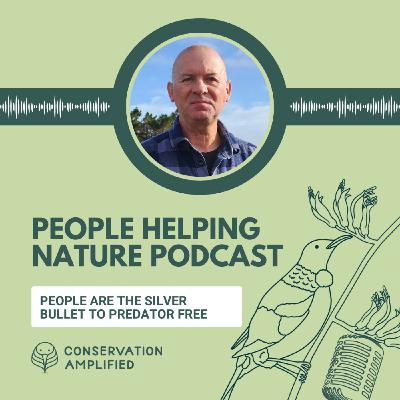
“People are the absolute silver bullet to this whole predator-free thing.”Dan Henry didn’t set out to lead a movement. But when he and a friend began handing out rat traps around their suburb of Miramar, something clicked. No committees. No red tape. Just a simple idea people could say yes to.Predator Free Miramar was born.Over the following 6 years, that idea helped turn an entire urban peninsula in Wellington into a predator free zone - strengthening not just local biodiversity, but the social fabric of the community itself.What started with backyard trapping is now a network of volunteers working alongside Predator Free Wellington to hold the line and push the vision further.Motivations varied. Some wanted more birds, others just needed a good night’s sleep. But the outcomes stacked up: healthier homes, new friendships, and stronger community resilience.From Darryl’s quiet leadership in social housing to trap boxes built in garages, this is conservation powered by trust, action, and momentum. As Dan puts it, “If the people want this badly enough, the pressure will come on and the politicians will listen and it will be funded.”So if you think conservation only happens in the bush, think again. Urban centres are key to a predator-free Aotearoa. And every person counts.Here are some of the key topics we discussed:How a simple backyard trapping idea grew into Predator Free Miramar.The importance of keeping things simple and fun to build long-term momentum.What it takes to build trust and participation across a diverse urban neighbourhood.Stories of unexpected local champions.The broader impacts of backyard trapping.Why mindset was important to achieve predator-free status.The ongoing challenge of keeping Miramar peninsula rat-free.Why urban neighbourhoods are key to a predator-free Aotearoa.Tips for starting backyard trapping in your own community.And much more…🧑🦱 About DanDan Henry is the driving force behind Predator Free Miramar, an initiative he co-founded in 2017 aimed at eradicating introduced predators from the peninsula. Under Dan’s leadership, this community project has blossomed from a small group of dedicated trappers to a thriving network of over 1,000 households, successfully removing more than 10,000 predators and allowing native wildlife to thrive.Dan’s hands-on approach includes personally delivering traps, training residents, and hosting community events, which has fostered a strong sense of shared purpose and pride among locals. His efforts have led to a remarkable resurgence of native bird populations and increased sightings of wildlife like mokomoko (lizards) and wētā. Working alongside Predator Free Wellington, Dan and his team of volunteers have not only eliminated rats from the Miramar Peninsula – a world first in an urban environment – but they have successfully maintained that predator-free status for more than a year.🔗Learn more:Predator Free Miramar Facebook Group: www.facebook.com/groups/PFMiramarDan’s Predator Free Resource: www.pfw.org.nz/site/assets/files/1329/predator_free_miramar_-_how_to_kill_rats_and_engage_a_community.pdf🎙️Learn more about the podcast at www.conservationamplified.org
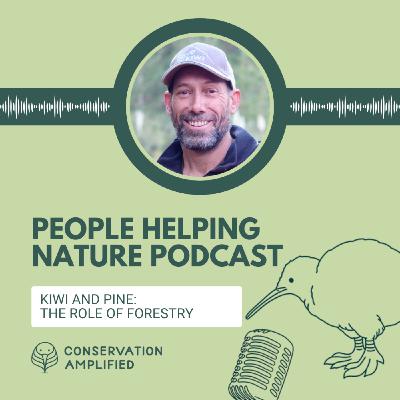
Commercial pine forests and kiwi conservation: contradiction or opportunity?“We know kiwi are happy to live in commercial forests. And we know that of New Zealand's landmass, I think it's something like 7% of that landmass is covered in commercial forests of some description.”That’s about 1.8 million hectares of a largely untapped habitat many people overlook!In this episode, forestry specialist Craig Balsom from Save the Kiwi explains the sometimes surprising role New Zealand’s pine plantation forests can play in kiwi conservation. Craig shares how Save the Kiwi and forest owners are working together to map kiwi presence and train harvest crews on how to detect kiwi sign. He also highlights how some forestry companies are already doing a great job with predator control efforts and strict dog management rules within their estates.Alongside these efforts, updated guidelines and a new research project are helping to answer tough questions about how modern harvesting impacts kiwi today.Craig also addresses how working with industry comes with risks, especially the danger of greenwashing: “We step into these spaces, only if we know that the people or the company (...) that we're partnering with are being open and honest and transparent about what they're wanting to achieve and why they're wanting to achieve it.” That means doing due diligence and choosing partners carefully.If we balance it right, pine forests could significantly increase kiwi habitat in Aotearoa and complement traditional conservation efforts.Here are some of the key topics we discussed:When it was discovered that kiwi live in pine forest.Current practices around keeping kiwi in plantations safe.Why forestry companies are motivated to support kiwi conservation.New research into how modern harvesting affects kiwi.How well-managed pine forests can complement conservation efforts.Examples and case studies.Potential greenwashing issues.And much more…🧑🦱 About Craig For the past two years, Craig Balsom has been working with forestry companies as Save the Kiwi’s in-house forestry specialist. With almost 30 years’ experience in commercial forestry, Craig has been able to utilise his industry knowledge to assist Save the Kiwi in encouraging and supporting more pine plantations to embrace predator management.A key focus has been providing updated forestry guidelines for plantation owners and managers. Pine plantations offer a significant untapped resource for kiwi with a multitude of fauna. Craig has been championing the effective use of the infrastructure that companies already have in place (particularly access roads and personnel) to make the most of a fantastic biodiversity opportunity for an industry that is often seen as having a poor environmental impact.Craig (Ngāti Hei) has also prioritised engaging iwi and the shared kaitiakitanga that is fundamental to the Save the Kiwi kaupapa.🔗Learn more:Website: www.savethekiwi.nz Facebook: www.facebook.com/savethekiwinewzealandInstagram: www.instagram.com/savethekiwinz🎙️Learn more about the podcast at www.conservationamplified.org
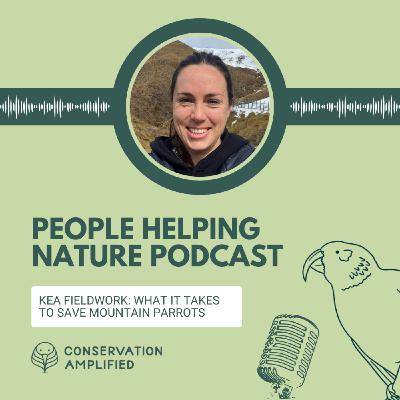
“I hold hope for the future of kea in that they are smart and adaptable birds, but we really need to act to help them on their way.”And it takes a special kind of people to do exactly that: you need equal parts physical endurance, technical mountaineering expertise, and adaptive problem-solving in some of Aotearoa’s most challenging environments.Picture this: walking a thousand metres straight up alpine terrain with tramping packs loaded with camping gear and scientific equipment. Then spending days catching and banding kea, or triangulating radio signals with directional aerials through unmarked backcountry to locate a single nesting female. This is the reality behind the data points that drive kea conservation.In this episode of the People Helping Nature Podcast, Lydia McLean from the Kea Conservation Trust (KCT), takes us behind-the-scenes and reveals what really happens in the rugged reality of alpine conservation fieldwork. KCT’s projects range from nest survivorship studies, where motion-activated cameras reveal what's happening around individual kea nests, to understanding entire population trends. Through collaborative trials with DOC and Ngāi Tahu, KCT also supports the testing of breakthrough predator control methods that could transform how we protect kea.This hands-on approach proves that protecting the world's only alpine parrot requires innovation matching their intelligence - and demonstrates why understanding the realities on the ground is essential for effective conservation at scale.Key topics discussed:What a typical day of kea field work looks like.The diverse range of projects KCT leads and supports.Differences between eastern and western kea populations.How kea are threatened by predators.The importance of landscape-scale predator control.Testing a new method of using 1080 and why it’s needed.How to report your kea sightings and get involved.And much more…👩About Lydia:Lydia (PhD, MSciComm, BSc) began working with kea in 2017 after deciding to put her tramping and mountaineering experience into conservation. Her PhD focused on kea foraging behaviour and diet to better understand how to protect them from traps and poisons intended for predators. She now works for DOC in Fiordland as well as managing the KCT’s field programme in the Southern South Island. 🔗Learn more:KCT’s website: www.keaconservation.co.nz Facebook: www.facebook.com/keaconservationhttps://newzealandecology.org/nzje/3599https://www.jstor.org/stable/26775032https://newzealandecology.org/nzje/3341https://www.tandfonline.com/doi/full/10.1080/03014223.2021.2021249🎙️Learn more about the podcast at www.conservationamplified.org

New Zealand's most intelligent native bird is at risk of fading away, despite being highly visible around tourist hotspots.Kea, the world's only alpine parrot, captivates hearts and minds with their vibrant personalities and remarkable intelligence comparable to that of a four-year-old child.These charismatic birds skillfully navigate harsh mountain environments, yet face a range of threats pushing their population to dangerously low levels - just a few thousand individuals spread across 3.5 million hectares.In this episode of the People Helping Nature Podcast, Tamsin Orr-Walker, co-founder and chair of the Kea Conservation Trust (KCT), explains how these birds were decimated by a century-long bounty that killed 150,000 kea and continue to struggle with introduced predators, lead poisoning, and harmful human interactions."There was a perception that kea were doing well, that they didn't have any problems," explains Tamsin. But evidence gathered over the last few decades proves that this is far from reality.KCT's work encompasses a wide range of activities, including removing toxic lead from old buildings, nest monitoring, research, advocacy, and more.Through community partnerships and targeted conservation efforts, Tamsin and her team are working to ensure these remarkable alpine parrots continue to soar throughout the South Island’s mountains for generations to come.Here are some of the key topics we discussed:Fascinating kea facts.The shocking history of humans hunting kea.The devastating impact of stoats and feral cats on kea populations.Why lead poisoning from old buildings is as deadly as predation.KCT’s inspiring efforts to protect kea from the many threats they face.The scientific and conservation importance of having a captive population.The "Keep Kea Wild" pledge that KCT is developing.What not to do when you’re in kea country.How to report your kea sightings and contribute to their conservation.And much more…👩About Tamsin:Tamsin is co-founder of the Kea Conservation Trust and has been the Chair since its inception. Tamsin manages the Trust’s day to day operations and coordinates KCT’s projects and partnerships. She was appointed a MNZM for services to kea conservation in 2020 and represents the KCT on the Kea Recovery Group.🔗Learn more:KCT’s website: www.keaconservation.co.nzFacebook: www.facebook.com/keaconservationInstagram: www.instagram.com/keaconservation🎙️About the podcast:The People Helping Nature podcast is brought to you by Conservation Amplified, a registered New Zealand charity.We are on a mission to help make conservation mainstream by amplifying the awesome stuff people are doing to help nature all around Aotearoa New Zealand.Because when people are aware, connected to the ecosystems around them and care enough to take positive action, only then will we see lasting change.Listen in and follow us to start or deepen your journey.Find out more about Conservation Amplified at www.conservationamplified.org.

“If you want to know how many kororā live in New Zealand, go find them.”The world’s smallest penguin species could be vanishing right before our eyes - without enough data to confirm their suspected decline.Kororā (little penguins) are thought to be in trouble throughout Aotearoa, yet we lack the nationwide monitoring to prove it. In this episode of the People Helping Nature Podcast, Hiltrun Ratz and Melissa McLuskie from the New Zealand Penguin Initiative (NZPI) reveal how they're uniting community groups all over NZ to fill critical knowledge gaps about this species. Through standardised monitoring and collaborative efforts, NZPI is building the evidence needed for meaningful protection."We need to avoid being the ambulance at the bottom of the cliff, but put the fence up at the top before it gets too bad and they fade away," warns Hiltrun. The good news? Kororā can thrive alongside humans if they’re given the space and protection they need. By respecting their habitat and supporting local groups, we can help ensure future generations will be able to say, "we have penguins in our backyard."Here are some of the key topics we discussed:Why kororā are classified as "at-risk declining" despite limited data.Major threats including habitat loss, predation, and human disturbance.How climate change is affecting kororā populations.The importance of monitoring on land and at sea.Why kororā are an indicator species for our coastal regions.How NZPI is coordinating nationwide monitoring and conservation efforts to fill the data gaps.Simple actions anyone can take to protect kororā in their local area.What to do if you encounter an injured or dead penguin.And much more…👩About Hiltrun:Hiltrun has dedicated more than three decades to penguin conservation in NZ. She joined NZPI as a penguin scientist in 2021, supporting community groups nationwide to understand and reduce threats to kororā.Her journey began in 1991 with a PhD on introduced predators of yellow-eyed penguins, followed by almost 20 years at Penguin Place on the Otago Peninsula. After leaving in 2013, she contributed to Penguin Rescue's work at Moeraki, before becoming the scientist for Blue Penguins Pukekura at Taiaroa Head (2016-2021), where she established microchipping and monitoring programmes for their little penguin population.👩About Melissa:Melissa joined the NZPI team in 2023 after relocating to the West Coast. With a background in zookeeping, wildlife veterinary nursing and a Bachelor of Science, she previously worked with Western Bay Wildlife Trust, advocating for kororā protection by undertaking community engagement, rescue, rehabilitation, scientific research and habitat restoration.Melissa is dedicated to reducing human-wildlife conflict, improving habitat, and hopes to inspire communities to look after their local penguin colonies to ensure they remain an important part of terrestrial and marine ecosystems for future generations. 🔗Learn more:NZPI’s website: www.nzpi.nzFacebook: www.facebook.com/NZpenguins Instagram: www.instagram.com/nzpenguins🎙️Learn more about the podcast at www.conservationamplified.org
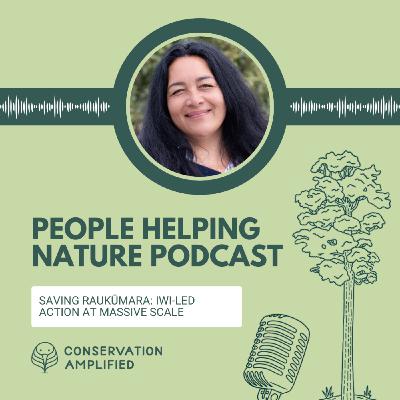
“The Raukūmara was never prioritised. It was forgotten."For generations, local iwi Ngati Porou and Te Whanau-a-Apanui watched their ancestral forest degrade. The Raukūmara reached breaking point. Deer had stripped the understory bare, and possums and rats had multiplied unchecked, reaching catastrophic levels. The question became urgent: how could they save their dying forest?In this episode of the People Helping Nature Podcast, Ora Barlow, who played an instrumental role, shares the remarkable journey of the Raukūmara Pae Maunga Restoration Project - an iwi-led conservation initiative that's become the largest of its kind in the world."The ngāhere is such an honest storyteller of its own story. It tells its story. It doesn't lie. Once you see it, you can't unsee it."Listening to their ngāhere (forest) and understanding its crisis sparked a revolutionary movement where locals mobilised when nobody else would, turning years of voluntary advocacy into the largest Māori-led 1080 operation to date.What makes Raukūmara Pae Maunga’s approach unique isn't just pace and scale, but how they ensured community support. Through marae-based wānanga and forest visits, they created safe spaces where difficult conversations about conservation tools could happen openly. They built understanding and support first, creating a strong foundation of trust before any 1080 rollout and deer culling began.The results have been dramatic. But the most powerful aspect? This project shows that taking people on the journey isn't just about overcoming resistance. It's about creating intergenerational resilience that ensures results are lasting and permanent.Here are some of the key topics we discussed:The significance Raukūmara holds as ancestral land for Te Whanau-a-Apanui and Ngati Porou.The unique strengths of iwi-led conservation compared to other approaches.Why conservation at pace and scale is critical for NZ's biodiversity future.How the Raukūmara ecological collapse was having ripple effects from mountain to sea.The powerful approach of humanising conservation: "seeing for yourself" rather than telling people about problems.The journey to understand and implement 1080 and deer culling at scale.The importance of creating safe spaces for difficult conversations.Why conservation requires shifting from siloed approaches to collaborative knowledge-sharing.And much more…👩About Ora:Ko Ora Barlow no Te Whanau-a-Apanui, Ngai Tai, Whakatohea, Ngati PorouInvolved in the Raukūmara project from the early stages of community activation and planning, Ora is currently a Governor on Raukumara Pae Maunga and also works as a Pou Uruao a Motu (National Engagement) for Save the Kiwi.She has a strong involvement in māori environmental kaupapa and conservation projects with a range of iwi, and advocates restoring native forests at scale.🔗Learn more:Raukūmara Pae Maunga’s website: www.raukumara.org.nzFacebook: www.facebook.com/KoTeRaukumaraTeNgahereInstagram: www.instagram.com/raukumarapaemaunga🎙️Learn more about the podcast at www.conservationamplified.org

Comments

Download from Google Play

Download from App Store
 United States