


Overcommitted | Software Engineering and Tech Careers Insights
Subscribed: 6Played: 172
Subscribe

© overcommitted.dev | A crew of overcommitted software engineers
Description
A show for software engineers and programmers that are passionate about learning and career growth. Join the women in tech hosts as they share with each other and interview influential folks in the world of software on their career strategies. We cover subjects like AI, software ethics, social media, engineering and leadership strategy, all with the goal of getting better at what we love to do.
50 Episodes
Reverse
SummaryThis week on Overcommitted, Erika and Brittany welcome Idan Gazit, head of GitHub Next — a senior-heavy innovation team making strategic "long bets" on the future of software engineering and software projects. Idan shares insights into running a cutting-edge team within a large company and how GitHub Next fosters programmer productivity through self-assembling squads, weekly demo days, and discovery seasons. They discuss the pressure and excitement behind delivering revolutionary tools like Copilot.LinksIdan's Website: https://gazit.meGitHub Next Website: https://githubnext.com/HostsOvercommitted: https://overcommitted.devBrittany Ellich: https://brittanyellich.comErika Eggemeyer (Eggyhead): https://github.com/eggyhead
SummaryIn this special in-person episode recorded at the GitHub office, Brittany and Bethany dive into the evolving role of AI agents in software development and programming as of early 2026. They discuss the impact of AI tools like Copilot and Claude Code on programmer productivity and software engineering workflows. The hosts explore practical applications of coding agents, including custom agents and repository instructions, and highlight how asynchronous versus synchronous tooling is reshaping engineering culture. They also share wishes for future AI agents, such as smarter calendar integration and lore-dump assistants, illustrating the expanding possibilities of AI in tech careers. Further, the episode touches on how the developer role intersects with product management amidst easier feature building and complex decision-making. Lastly, Brittany and Bethany forecast advances in AI, including coaching agents to support career growth, tools to balance work life for working parents, and deeper integration of automation to enhance software development and daily productivity.LinksZapier: https://zapier.com/Andrej Karpathy tweet: https://x.com/karpathy/status/2015883857489522876?s=20Vibe Coding by Gene Kim and Steve Yegge: https://www.simonandschuster.com/books/Vibe-Coding/Gene-Kim/9781966280026 The Pragmatic Summit: https://www.pragmaticsummit.com/HostsOvercommitted: https://overcommitted.devBethany Janos: https://github.com/bethanyj28Brittany Ellich: https://brittanyellich.com
SummarySean Goedecke, a staff engineer on GitHub's Copilot team and a prominent voice in software development, shares his unique frameworks for software engineering and improving programmer productivity. In this episode, discover how understanding the distinction between "pure" and "impure" engineering can impact software projects and career growth in tech. Sean breaks down the idea of "legible" vs. "illegible" work, challenges conventional approaches centered around Jira ticket queues, and discusses the evolving role of AI in software engineering. This conversation also touches on the dynamics of engineering culture and how ambitious engineers can thrive beyond typical performance metrics. Plus, Sean responds to some of his most compelling Hacker News comments live on the show, providing fresh insights into balancing productivity with impactful work.LinksSean’s website: seangoedecke.com Blog post: Pure and impure software engineering: https://www.seangoedecke.com/pure-and-impure-engineering/ Blog post: The good times in tech are over: https://www.seangoedecke.com/good-times-are-over/ Blog post: 2025 was an excellent year for this blog: https://www.seangoedecke.com/2025-wrapup/ Seeing like a state book: https://www.goodreads.com/book/show/20186.Seeing_Like_a_State HostsOvercommitted: https://overcommitted.devBethany Janos: https://github.com/bethanyj28Brittany Ellich: https://brittanyellich.comErika Eggemeyer (Eggyhead): https://github.com/eggyhead
What do composing music and fixing bugs have in common? More than you'd think.In this episode of Overcommitted, hosts Erika and Bethany sit down with Marco Herrera Rendon, Senior Engineer at Comcast specializing in Rust development who, not long ago, was applying to master's programs in film composition.Marco shares how his background as a music composition student shapes the way he writes code today: the attention to detail that comes from handing parts to live players (not unlike submitting a PR), and the surprising overlap between navigating from theme A to theme B in a score and tracking down a bug in a codebase. He also digs into why he fell in love with Rust after years of frustration with C++, what he wishes he'd learned first, and his philosophy for picking up new skills: start with 10% comprehension, build a mental model, and embrace not understanding everything at once.In this episode:1. How a composition degree became an unexpected foundation for software engineering2. Rust vs. C++: what finally clicked, and why the borrow checker is a feature not a bug3. The Hector model design pattern and the power of Rust macros4. Learning on the job without shame and why being the least experienced person in the room can be freeing5. Async Rust: the beast within the beast6. What our college selves would think about our careers todayWhether you came to tech through a traditional path or a wildly unconventional one, this conversation is a reminder that the skills you carry from your past life don't disappear, they just find new ways to show up.Links: - Marco's Github: https://github.com/mherrerarendonHosts:- Overcommitted: https://overcommitted.dev- Bethany Janos: https://github.com/bethanyj28- Brittany Ellich: https://brittanyellich.com- Erika Eggemeyer: https://github.com/eggyhead
Summary:In this episode of the Overcommitted Podcast, host Bethany and co-host Brittany Ellich dive into software engineering education with Sam Rose, a developer educator at Ngrok. Sam shares his journey from software engineering to education, emphasizing his innovative approach to improving programmer productivity through visual interactive essays that simplify complex technical concepts like large language models (LLMs). He also discusses his work on prompt caching, aiming to enhance software projects by making technical knowledge more accessible to engineers and practitioners.The conversation explores Sam's unique teaching methods, focusing on visualization and interaction as key tools in software development and career growth within tech careers. Sam reflects on his transition from an engineering role to an educator, sharing insights into the challenges of this career shift, the importance of feedback, and how his personal experiences influence his work. The episode concludes with a playful segment inspired by Sam's educational approach, highlighting the integration of engineering culture with interactive learning.Tune in for an engaging discussion that blends software engineering, education, and work-life balance, offering valuable insights for anyone interested in advancing their tech career and embracing innovative learning strategies.Takeaways:"If you truly understand something and you tinker with it, the mental model you end up with should be reasonably accurate.""Don't say 25 words if you can do it in 15.""Teaching has always felt very challenging in a really privileged way."Links:Prompt caching article: https://ngrok.com/blog/prompt-caching/Bartosz Ciechanowski: https://ciechanow.ski/Load balancing article: https://samwho.dev/load-balancing/Autism diagnosis article: https://samwho.dev/blog/getting-an-autism-diagnosis/Having a baby article: https://samwho.dev/blog/having-a-baby/Write that blog article: https://writethatblog.substack.com/p/sam-rose-on-technical-blogging)The square hole girl video: https://www.youtube.com/watch?v=cUbIkNUFs-4Hosts:Overcommitted: https://overcommitted.devBethany Janos: https://github.com/bethanyj28Brittany Ellich: https://brittanyellich.com
SummaryIn this episode of the Overcommitted Podcast, hosts Brittany, Bethany, and Erika dive deep into the realities of software development with guest Robby Russell. They explore the critical challenges of maintaining legacy code and managing technical debt, emphasizing the impact on programmer productivity and long-term sustainability of software projects. Robby shares his extensive experience, including his journey creating Oh My ZSH, highlighting the importance of documentation, testing, and fostering a collaborative engineering culture. The discussion also covers balancing personal and professional commitments, an essential aspect of career growth in tech. Listeners will gain practical insights into navigating software engineering challenges while sustaining work-life balance. The episode wraps up with a fun segment on current tech obsessions from all participants.LinksPlanet Argon: https://www.planetargon.com/ Oh My Zsh: https://ohmyz.sh/ Maintainable Podcast: https://maintainable.fm/On Rails Podcast: https://onrails.buzzsprout.com/ Robby’s Blog: https://robbyonrails.com/ Robby’s Band: https://mightymissoula.com/ Commit Goods Store: commitgoods.comd’Oh My Zsh: https://medium.com/free-code-camp/d-oh-my-zsh-af99ca54212c Stop Pretending You’re the Last Developer: https://robbyonrails.com/articles/2025/07/16/stop-pretending-youre-the-last-developer/ Internal Tooling Maturity Ladder: https://robbyonrails.com/articles/2025/08/13/internal-tooling-maturity-ladder/Diataxis: https://diataxis.fr/HostsOvercommitted: https://overcommitted.devBethany Janos: https://github.com/bethanyj28Brittany Ellich: https://brittanyellich.comErika Eggemeyer: https://github.com/eggyhead
SummaryIn this insightful episode of the Overcommitted Podcast, hosts Erika, Bethany, and Brittany tackle the critical issue of burnout in software projects and software engineering, especially amid the surge of AI advancements and remote work. They dive into how the evolving programming landscape affects programmer productivity and well-being, highlighting alarming statistics that show 66% of tech workers struggling with burnout symptoms.The conversation sheds light on the balance required between ambitious career growth in tech careers and maintaining work life balance through clear communication and strong boundaries. They discuss how AI influences software development and collaboration while emphasizing the importance of psychological safety within engineering culture to prevent burnout.Listeners will gain valuable insights into managing the pressures of tech work, recognizing when to push back against unrealistic expectations, and sustaining passion in programming careers. The episode closes with a fun segment featuring bold predictions about the future of software engineering, reflecting the hosts' camaraderie and forward-thinking outlook.Takeaways66% of tech workers report burnout symptomsBurnout arises from work pressures and intrinsic factors like job insecuritySetting boundaries and effective communication are crucial for preventing burnoutTune in for an honest, relatable discussion about navigating software development challenges and fostering a healthy engineering culture.LinksContext > Prompt: https://ruben.substack.com/p/context-is-all-you-need?triedRedirect=true Psychological safety episode: https://overcommitted.dev/imposter-syndrome-in-software-engineering/ Glue work article by Tanya Reilly: https://www.noidea.dog/glue Gas Town article: https://steve-yegge.medium.com/welcome-to-gas-town-4f25ee16dd04How they use Claude Code article: https://blog.sivaramp.com/blog/how-creator-of-claude-code-uses-claude-code/ HostsOvercommitted: https://overcommitted.devBethany Janos: https://github.com/bethanyj28Brittany Ellich: https://brittanyellich.comErika Eggemeyer: https://github.com/eggyhead
SummaryIn this episode of the Overcommitted Podcast, hosts Bethany, Brittany, and Erika engage in a rich conversation with Abbey Perini, a web developer and fiber artist. They explore Abbey's current projects, the intersection of fiber arts and programming, and the importance of accessibility in web development. The discussion also delves into personal experiences with ADHD, community building in both knitting and open source, and the challenges and strengths that come with neurodiversity. Abbey shares her insights on how to make coding and web development more inclusive and accessible for everyone, emphasizing the need for empathy and understanding in the tech industry.TakeawaysThere is a deep connection between fiber arts and programming.Accessibility should be a priority for all developers.Community building in knitting can inform open source practices.Accessibility is not just a front-end concern; it extends to back-end development.ADHD can present challenges but also unique strengths in coding.Flexibility in work can benefit everyone, not just those with disabilities.Negative self-talk can be harmful, and you are awesome, so stop it.Developers should focus on problem-solving skills rather than just technical tools.Creating inclusive environments in tech is essential for progress.LinksAbbey Perini’s website: https://abbeyperini.dev/Abbey on Bluesky: https://bsky.app/profile/abbeyperini.devAbbey on LinkedIn: https://www.linkedin.com/in/abbey-perini/Knitting as programming blog post: https://abbeyperini.medium.com/knitting-as-programming-9c34090e4992Web Development === Accessibility blog post: https://dev.to/abbeyperini/web-development-accessibility-f8iAn accessible dark mode toggle blog post: https://dev.to/abbeyperini/an-accessible-dark-mode-toggle-in-react-aopCoding and ADHD blog post: https://dev.to/abbeyperini/coding-and-adhd-where-we-excel-454jDesigning data-intensive applications https://www.amazon.com/Designing-Data-Intensive-Applications-Reliable-Maintainable/dp/1449373321Aria article: https://dev.to/abbeyperini/what-the-first-rule-of-aria-really-means-192eHow to do chores while drowning: https://www.amazon.com/How-Keep-House-While-Drowning/dp/1668002841/ref=sr_1_1?crid=14ND3S4IR3YLG&dib=eyJ2IjoiMSJ9.ue6gifKzpUZ5byIrJ4RUyA.9EOnSDfKG5rpl9Or07gVfVfYityMMWTqBEL4EAsN1Mw&dib_tag=se&keywords=how+to+do+chores+while+drowning&qid=1766080922&s=books&sprefix=how+to+do+chores+while+drowning%2Cstripbooks%2C83&sr=1-1Ask Jan: https://askjan.org/Study: ADHD powerful strengths - https://scitechdaily.com/adhd-isnt-just-a-deficit-new-study-reveals-powerful-psychological-strengths/HostsOvercommitted: https://overcommitted.devBethany Janos: https://github.com/bethanyj28Brittany Ellich: https://brittanyellich.comEggyhead: https://github.com/eggyhead
SummaryIn this episode, the hosts meet with Christina Martinez, a developer experience engineer from Resend, who shares insights on her creative process and current projects. She shares her delight in building silly software and how she's using that to learn in her current role.TakeawaysChristina is the creative mind behind the Gen Z Babel plugin.She also developed the Swift commits tool.Taking existing tutorials and adding a creative twist can make them more fun.Continuous development is important at all parts of your career.LinksChristina Martinez: https://christinacodes.devSilly Software Club: https://sillysoftware.clubResend: https://resend.com/Gen Z slang Babel plugin: https://www.instagram.com/reel/Cxvwz76vBus/ | https://github.com/christina-de-martinez/babel-plugin-glowup-vibesTaylor Swift themed commit linting tool: https://youtube.com/shorts/eOS5Q2I9LHM?si=LC8JVUKTkLgwKtDF | https://github.com/christina-de-martinez/swift-commitsCodeTV & Mux's Worst Video Player Competition: https://www.mux.com/blog/actual-worst-video-playerReact Miami: https://www.reactmiami.com/HostsOvercommitted: https://overcommitted.devBethany Janos: https://github.com/bethanyj28Brittany Ellich: https://brittanyellich.comEggyhead: https://github.com/eggyhead
SummaryIn this episode of the Overcommitted Podcast, hosts Brittany and Bethany with guest Bassem Dghaidi discuss a range of topics from Bassem's current learning journey in system design to his diverse career path at GitHub. They explore the value of experience over formal education, the challenges of microservices, and the importance of practical knowledge in software engineering. Bassem shares insights from his technical content creation, his philosophy as a de-influencer in the tech space, and memorable conversations with industry leaders. TakeawaysBassem's career has included various roles, enhancing his perspective.Experience in different roles provides a broader understanding of software engineering.Education is valuable, but practical experience often outweighs formal credentials.Bootcamps can bridge the gap for graduates lacking practical skills.Bassem's Git content aims to demystify complex concepts.Microservices can complicate development if implemented prematurely.Content creation in tech requires balancing depth with audience engagement.LinksBassem Dghaidi: https://linktr.ee/glich.streamBeyond Coding podcast episode: https://www.youtube.com/watch?v=LeUUxLRdvho Practical System Design Waitlist: https://maven.com/forms/b69857Kamran Ahmed's site: https://roadmap.shGhostty: https://ghostty.org/Catppuccin themes: https://catppuccin.com/Chezmoi: https://www.chezmoi.io/Tmux: https://github.com/tmux/tmux/wikiBethany's dotfiles: https://github.com/bethanyj28/dotfilesHostsOvercommitted: https://overcommitted.devBethany Janos: https://github.com/bethanyj28Brittany Ellich: https://brittanyellich.com
SummaryIn this episode of the Overcommitted Podcast, host Erika and co-host Brittany Ellich welcome Tammy Metz, a software engineer at GitHub, who shares her unique journey from teaching and library science to software engineering. The conversation explores the challenges of transitioning careers, the importance of transferable skills, and the value of mentoring in the tech industry. Tammy discusses her involvement in the Women to Women Mentoring Program, offering insights into common struggles faced by students and the significance of giving back. The episode concludes with a fun segment where the hosts share their unexpected teaching skills.TakeawaysTammy transitioned from a librarian to a software engineer.Non-traditional paths can lead to successful careers in tech.Soft skills from teaching are valuable in engineering roles.Job searching can be challenging for career switchers.Mentoring can provide guidance and support to students.It's common for students to feel lost in their career paths.Volunteering can fit into busy schedules and be rewarding.Career paths are often not linear and can change over time.LinksTammy Metz on LinkedIn: https://www.linkedin.com/in/tammy-metz/Girls Who Code: https://girlswhocode.com/Woman to Woman Mentoring: https://www.womantowomanmentoring.org/HostsOvercommitted: https://overcommitted.devBrittany Ellich: https://brittanyellich.comEggyhead: https://github.com/eggyhead
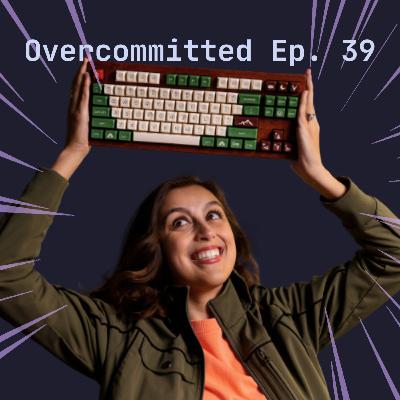
SummaryIn this episode of the Overcommitted Podcast, hosts Bethany, Brittany, and Erika are joined by Cassidy Williams, Senior Director of Developer Advocacy at GitHub. They discuss Cassidy's journey in the Developer Relations (DevRel) space, her philosophy of lifting others as she climbs, and the evolution of DevRel in the tech industry. Cassidy shares insights on content creation, the importance of community, and her personal experiences with mentorship. The conversation also touches on the challenges and changes in the DevRel landscape, as well as Cassidy's passion for keyboards and her dream typing experience.TakeawaysFeedback, even when rough, is a valuable gift for growth.DevRel is evolving, adapting to new technologies and community needs.Companies should prioritize understanding the developer mindset over follower counts.Listening to developers is crucial for effective advocacy and content creation.Human problems in tech are often more complex than coding challenges.Cassidy's journey showcases the blend of engineering and advocacy roles.Mentorship plays a significant role in career development and guidance.LinksCassidy’s website: https://cassidoo.co/Microjournal Blog Post: https://cassidoo.co/post/micro-journal/Keycaps: https://drop.com/buy/drop-dsa-astrolokeys-keycaps-by-sailorhg-and-cassidoo?defaultSelectionIds=966968Cassidy’s mechanical keyboard recs: https://github.com/cassidoo/ama?tab=readme-ov-file#what-mechanical-keyboard-should-i-buyHostsOvercommitted: https://overcommitted.devBethany Janos: https://github.com/bethanyj28Brittany Ellich: https://brittanyellich.comEggyhead: https://github.com/eggyhead
SummaryIn this episode of the Overcommitted Podcast, hosts Brittany, Bethany, and Erika engage in a deep conversation with Piotr Sarna, co-author of 'Writing for Developers.' They explore the journey of co-authoring a book, the importance of writing in engineering, and the challenges and joys of technical writing. The discussion also touches on the significance of blogging as a continuation of learning and sharing knowledge, as well as the role of writing culture in engineering teams. The crew kicks off the next book club, where the Overcommitted engineers will be reading Writing for Developers together over the next 2 months!TakeawaysWriting a book can be seen as a series of extended blog posts.There is a gap in resources for writing engaging blog posts for developers.Good writing in tech should have an educational aspect.Writing culture in engineering teams enhances clarity and collaboration.The book 'Writing for Developers' fills a niche in technical writing resources.Embracing cringe-worthy writing experiences is part of the learning process.LinksPiotr Sarna on LinkedIn: https://www.linkedin.com/in/sarna-dev/Cynthia Dunlop on LinkedIn: https://www.linkedin.com/in/cynthiadunlop/Piotr and Cynthia's first book: Database performance at scale: https://bookshop.org/p/books/database-performance-at-scale-a-practical-guide-cynthia-dunlop/f384c1f0d973803c?ean=9781484297100&next=t Writing for Developers book: https://bookshop.org/p/books/writing-for-developers-blogs-that-get-read-cynthia-dunlop/af343340c60cd806?ean=9781633436282&next=tWrite that blog!: https://writethat.blog/Writing for Developers GitHub Repo: https://github.com/scynthiadunlop/WritingForDevelopersBookDiscord community for Overcommitted: https://discord.gg/fxvEjs7fHostsOvercommitted: https://overcommitted.devBethany Janos: https://github.com/bethanyj28Brittany Ellich: https://brittanyellich.comEggyhead: https://github.com/eggyhead
SummaryIn this episode of the Overcommitted Podcast, hosts Bethany, Brittany, and Erika engage in a deep conversation with Jason Lengstorf about the concept of being unreasonable in the tech industry. Jason shares his journey of embracing unreasonableness to pursue big ideas, the importance of community and networking, and how to navigate risks in career decisions. They discuss the value of non-traditional backgrounds in tech, the process of learning and consolidating information, and the creative approaches that can lead to innovative projects. The conversation wraps up with Jason sharing his future projects and reflections on the tech landscape.TakeawaysBeing unreasonable and having big audacious goals can lead to unexpected opportunities.Surround yourself with ambitious people that can inspire growth.Recognize when to pivot in your career.Networking is often more valuable than formal education.Learning is an active process, not just passive consumption.Creative coding can lead to innovative solutions.Take (calculated) risks. It can help you achieve your goals.Community support is crucial in navigating career changes.Being slow to adopt new technologies might not be a bad thing.LinksJason Lengstorf: https://jason.energyCodeTV: https://codetv.devAll things open talk: https://www.youtube.com/watch?v=goVNPN6fVwQBytes.dev: https://bytes.devChar Stiles: https://www.instagram.com/charstilesBuiltin: https://builtin.comHostsOvercommitted: https://overcommitted.devBethany Janos: https://github.com/bethanyj28Brittany Ellich: https://brittanyellich.comEggyhead: https://github.com/eggyhead
SummaryIn this episode of the Overcommitted Podcast, Erika and Brittany discuss the evolving landscape of AI agents and their implications for security and identity management. Joined by expert Dan Moore, they explore the challenges posed by non-deterministic agents, the importance of granular permissions, and the need for developers to be aware of security practices as AI technology advances. The conversation also touches on industry standards, the role of developers in navigating these changes, and personal reflections on the future of AI.TakeawaysAI agents are changing the landscape of software development.Non-deterministic agents present new security challenges.Granular permissions are essential for securing AI agents.Developers must be aware of security practices in AI.Industry standards for AI security are still evolving.Separation of concerns can enhance security for agents.The role of identity and authorization is critical in AI.Business implications of AI agents are significant.Developers should stay close to business needs and problem-solving.The future of AI will require new skills and awareness. LinksDan Moore on LinkedIn: www.linkedin.com/in/mooreds/ Dan Moore on Bluesky: https://bsky.app/profile/mooreds.comSimon Willison - The Lethal Trifecta: https://simonwillison.net/2025/Jun/16/the-lethal-trifecta/ FusionAuth: https://fusionauth.io/ AGNTCY: https://agntcy.org/Amazon Bedrock AgentCore: https://aws.amazon.com/bedrock/agentcore/ FusionAuth Guide to OAuth: https://fusionauth.io/articles/oauth/modern-guide-to-oauth MCP and OAuth: https://aaronparecki.com/2025/04/03/15/oauth-for-model-context-protocol MCP Specification: https://modelcontextprotocol.io/specification/2025-06-18/basic/authorization HostsOvercommitted: https://overcommitted.devBrittany Ellich: https://brittanyellich.com Eggyhead: https://github.com/eggyhead
SummaryJoin us for a conversation with Kate Holterhoff, an industry analyst at Redmonk who tracks developer trends from Reddit threads to conference halls. Kate shares her unique journey from earning a PhD in Victorian literature to becoming a self-taught developer and analyst, and discusses Redmonk's "new kingmakers" philosophy that recognizes developers as key decision-makers in tech adoption. We explore current industry trends including JavaScript bundlers, the real story behind AI and developer jobs, why communication skills matter as much as technical expertise, and her experiments with vibe coding across different IDEs.TakeawaysDeveloper-led adoption is the future - Redmonk's "new kingmakers" philosophy recognizes that developers, not executives, are increasingly making purchasing decisions for development tools and platforms.AI tools are becoming standard practice - Most developers now use AI code assistants and agentic IDEs, forcing organizations to adapt with proper guardrails and company plans rather than fighting adoption.AI isn't taking jobs (yet) - Current tech layoffs are more attributable to post-ZIRP (zero-interest-rate phenomenon) economics and offshoring than AI displacement, though AI has become a convenient scapegoat.JavaScript is getting massive - The recent explosion of bundlers like TurboPack, Vite, RS Pack, and Rolldown signals that JavaScript packages have grown significantly since Webpack's creation 10 years ago.Industry analysts live in developer watering holes - Understanding real developer sentiment means spending time where developers actually talk: Reddit, Hacker News, Bluesky, conferences, and podcasts.Communication skills are as critical as technical skills - Engineers who can bridge technical expertise with business communication and customer interaction have significant advantages in their careers.Alternative paths into tech are valuable - Kate's journey from Victorian literature PhD to developer analyst shows how diverse backgrounds bring unique perspectives to understanding technology and its cultural impact.Teaching can make coding accessible - Using engaging content like comic books, steampunk, and Victorian literature can make technical concepts more approachable and help students see connections across disciplines.Vibe coding is promising but unpredictable - AI-powered development tools show incredible potential but remain inconsistent, with success depending on unclear factors like IDE choice, prompting technique, and model capabilities.We need more casual learning communities - The tech industry would benefit from more informal, non-commercial spaces for developers to share experiences, especially around emerging technologies like vibe coding.LinksThe Monkcast: https://redmonk.com/blog/2023/12/07/the-monkcast/Kate on LinkedIn: https://www.linkedin.com/in/kateholterhoff/Kate on Bluesky: https://bsky.app/profile/kateholterhoff.comDwarkesh podcast with Andrej Karpathy: https://www.dwarkesh.com/p/andrej-karpathyHosts:Bethany Janos: https://github.com/bethanyj28Brittany Ellich: https://brittanyellich.com
SummaryIn this episode, Matt Sinclair, former partner and VP of Engineering at BCG Digital Ventures, explores the critical role of storytelling in effective leadership and shares his journey from building high-performance payment systems to coaching the next generation of engineering leaders. The conversation covers Matt's passion for Elixir as "the most future-proof and AI-aligned language," diving deep into functional programming, immutable data structures, and how modern coding assistants like Claude Code are revolutionizing developer productivity. Matt emphasizes that the first job of leadership is to tell a compelling story that inspires smart people to collaborate, while the art of good management lies in getting out of the way and letting talented engineers solve problems their own way.TakeawaysLeadership starts with storytelling: The primary job of leadership is explaining why smart people should get out of bed and contribute to your mission, because without a good story, people will create their own narrativesFunctional programming improves code quality: Immutable data structures and pure functions eliminate approximately 50% of common bugs and make code easier to test and reason aboutElixir offers comprehensive out-of-the-box solutions: Unlike other tech stacks requiring multiple tools (Kubernetes, Redis), Elixir provides a complete ecosystem that reduces decision fatigue and technical complexityAI-assisted coding amplifies productivity: Using Claude Code with Elixir can make a single developer feel like they have a team of five engineers, especially when working with functional programming's predictable patternsManagement should focus on "what," not "how": Leaders should collaborate with their teams to determine objectives, then trust smart people to figure out implementation details on their ownProgramming language choice impacts team quality: There's a strong correlation between functional programming adoption and high-quality software engineers, possibly due to the steeper learning curve and problem-solving mindset requiredDeveloper joy matters for sustainability: Working with languages that feel elegant and "just click" reduces exhaustion and maintains long-term passion for coding throughout a careerFunctional code is LLM-friendly: Pure functions with no side effects make it dramatically easier for AI coding assistants to reason about, refactor, and improve code automaticallyUpfront design time pays dividends: Modern AI-assisted development enables more thorough design discussions and rubber duck debugging sessions that lead to better architecture before implementation beginsCombat surveillance capitalism through decentralization: The future of the web should return to RSS feeds, web rings, and federated networks of special interest communities rather than algorithm-driven data monopolies.LinksMatt's Website: https://matthewsinclair.com/Matt Sinclair on Medium: https://matthewsinclair.medium.com/ Intent: https://github.com/matthewsinclair/intentI'm a software engineer - What next? podcast: https://whatnext.dev/An elegant puzzle by Will Larson: https://www.goodreads.com/author/show/6872433.Will_LarsonElixir: https://elixir-lang.org/Laksa: https://laksa.io/Hosts:Bethany Janos: https://github.com/bethanyj28Brittany Ellich: https://brittanyellich.comEggyhead: https://github.com/eggyhead
SummaryIn this episode of Overcommitted, hosts Erika and Brittany interview Adrienne Braganza, the author of the book Looks Good to Me. The conversation delves into the critical role of communication in code reviews, emphasizing that misunderstandings often lead to issues. It highlights the importance of understanding the purpose behind code reviews rather than just focusing on tools and speed.TakeawaysMisunderstandings are at the heart of code reviews.It's important to understand the purpose of code reviews.Focusing on tools can distract from the main goals.Collaboration is key in software development.Clear communication can prevent many issues.Taking time to reflect on processes is valuable.Agreeing on objectives enhances team alignment.Code reviews should foster learning and improvement.Understanding each other's perspectives is crucial.Effective communication leads to better outcomes.LinksAdrienne’s Website: https://adrienne.io/Adrienne on Bluesky: https://bsky.app/profile/abt.bsky.socialAdrienne on LinkedIn: https://www.linkedin.com/in/adriennetacke/Book: Looks Good to Me: https://www.manning.com/books/looks-good-to-me HostsOvercommitted Website: https://overcommitted.devBrittany Ellich: https://brittanyellich.comEggyhead: https://github.com/eggyhead
SummaryIn this episode of the Overcommitted Podcast, host Bethany and co-hosts Erika and Brittany welcome Rick Turoczy, a veteran in the Portland tech startup scene. They discuss Rick's journey from a hobbyist developer to a key supporter of startup founders, the unique culture of Portland's tech community, and the importance of mental health for founders. Rick shares insights on the challenges of being a founder, the evolution of startup culture, and the role of PIE in supporting startups. The conversation also touches on local recommendations and the vibrant community in Portland.TakeawaysLearning how to learn is a crucial skill for navigating the startup world.Portland's tech scene is characterized by a unique culture of humility and creativity.Founders often face significant mental health challenges and need support systems.The PIE initiative aims to foster collaboration between startups and established organizations.Mistakes are a part of the learning process for founders, and experimentation is key.The startup landscape has evolved, making it easier to build products but harder to sell them.The challenges of being a founder are often underestimated, leading to burnout.Understanding the difference between wanting to build a product and wanting to build a company is crucial for founders.LinksRick's LinkedIn: https://www.linkedin.com/in/turoczy/Rick's Bluesky: https://bsky.app/profile/turoczy.bsky.socialRick's YouTube: https://www.youtube.com/@turoczy_PIE Cookbook: https://github.com/piepdx/pie-cookbook/blob/master/docs/pie-cookbook-0.9.mdPowell’s City of Books: https://www.powells.com/bookstore/powells-city-of-books?srsltid=AfmBOoqCGKjvdY5g6DowX0ReNqRlLARxeI5WKwGyc8P0Pq3O8j9Fd0NQ Deadstock Coffee: https://deadstockcoffee.com/?srsltid=AfmBOopNiNhvGUigNJxASlm97jUCcSb6l36xCJ6sZF6mRIkyIseejJQyPodcast recommendation from Erika: https://podcasts.apple.com/us/podcast/237-mistake-it-till-you-make-it-learn-faster-and-fail-smarter/id1494989268?i=1000732814742HostsBethany Janos: https://github.com/bethanyj28Brittany Ellich: https://brittanyellich.comEggyhead: https://github.com/eggyhead
SummaryIn this episode of the Overcommitted Podcast, Erika and Brittany delve into the concept of flow state in software development, exploring its significance for productivity and job satisfaction. They share personal experiences of achieving flow, discuss the balance between challenge and skill, and highlight the importance of psychological safety and team dynamics. The conversation also touches on managing interruptions, the role of pair programming, and strategies for improving flow state within teams. The episode concludes with a fun quiz to engage listeners in reflecting on their own flow experiences.TakeawaysFlow state is linked to enhanced productivity and job satisfaction.A balance between challenge and skill is essential for achieving flow.Cognitive overload can hinder the ability to enter flow state.Immediate control over tasks contributes to maintaining flow.Psychological safety within teams fosters better performance.Managing interruptions is crucial for maintaining focus.Pair programming can facilitate flow but may introduce challenges.Team dynamics significantly impact individual flow experiences.Investing in tools and environments can enhance flow state.Regular reflection on flow experiences can lead to improved productivity.LinksDeveloper flow article: https://leadership.garden/developer-flow/ Podcast: Neuroscience and Developer Productivity: https://podcasts.apple.com/us/podcast/prefrontal-by-cortex/id1760813899?i=1000676601346Vibe Engineering by Simon Willison: https://simonwillison.net/2025/Oct/7/vibe-engineering/SPACE Metrics: https://getdx.com/blog/space-metrics/HostsOvercommitted Website: https://overcommitted.devBrittany Ellich: https://brittanyellich.comEggyhead: https://github.com/eggyhead

Comments

Download from Google Play

Download from App Store
 United States