


 Claim Ownership
Carbon Exposure
Subscribed: 1Played: 1
Subscribe

© Carbon Exposure
Description
Welcome to the Carbon Exposure Podcast! A platform for peer-to-peer conversations with people who are driving forward the carbon markets of tomorrow.
Join your host Rene Velasquez we get to discuss topics at the intersection of ESG and finance over cocktails, with the amazing backdrop of the lion city, Singapore.
Join your host Rene Velasquez we get to discuss topics at the intersection of ESG and finance over cocktails, with the amazing backdrop of the lion city, Singapore.
56 Episodes
Reverse
During the IETA European Climate Summit held in Lisbon, we spoke with some inspiring voices at the conference. In this European Climate Summit Special Episode, we're joined by Head of Projects & Legal at ONE TRIBE. Welcome to the Carbon Exposure Project!
During the IETA European Climate Summit held in Lisbon, we spoke with some inspiring voices at the conference. In this European Climate Summit Special Episode, we're joined by Stephanie Zhu, former sustainability member at Delta Air Lines, and now active as Director of Climate at Yum! Brands. Topics discussed: 00:00 – introductionA light intro leading into the live recording at the European Climate Summit.01:25 – Stephanie Zhu’s Sustainability JourneyFrom finance to ESG leadership at Delta Airlines and Yum! Brands.03:42 – Inside Delta: Navigating the Voluntary Carbon Market A first-hand look at how one of the world’s biggest airlines approached offsets.05:10 – Reduce and Invest: A Dual Strategy for DecarbonizationWhy internal reductions and external investments must go hand-in-hand.06:57 – Carbon Markets Are Complicated—Here’s WhyChallenges in understanding offsets, additionality, and building a credible portfolio.10:55 – From Aviation to Agriculture: Cross-Sector Climate StrategyThe different decarbonization hurdles across industries—and how to tackle them.14:05 – The Voluntary ParadoxWhy companies taking climate action face more scrutiny than those doing nothing.16:00 – A Pragmatic Path Forward for Corporate Climate ActionLet’s not let perfection stall progress—what realism looks like in sustainability.
During the IETA European Climate Summit held in Lisbon, we spoke with some inspiring voices at the conference. In this European Climate Summit Special Episode, we're joined by David Antonioli, former Founder & CEO of Verra.Topics discussed in this episode:00:00 – Introduction02:32 – David’s new paper: “Financing the Transitions the World Needs”03:41 – Rethinking carbon markets: key insights from the report06:03 – Biochar: a case for real-world carbon solutions09:04 – Developer vs. biochar business: shifting identities11:29 – “On paper” vs. reality in project scalability14:58 – The “three buckets” of climate project economics18:03 – Keeping projects operational & long-term thinking21:03 – Market incentives and insetting as cost strategies24:03 – Rewriting the climate narrative & new leadership27:03 – Global insights and financial infrastructure reform28:26 – A new paradigm for transition-focused markets30:03 – Carbon credits as tools, not destinations
During the IETA European Climate Summit held in Lisbon, we spoke with some inspiring voices at the conference. In this European Climate Summit Special Episode, we're joined by Sandra Pinzón García, Founder & CEO of Global Zero Waste. Sit back, relax, and enjoy the episode! Topics discussed in this episode: 00:00 – Introduction & Sandra’s mission in circular economy 01:26 – From carbon markets to plastic credits 02:54 – Defining circular economy: water, energy & materials 06:03 – The rise of plastic credits & Cercarbono partnership 09:04 – Building a new methodology for global recycling projects 10:24 – Innovation, R&D and project transformation 14:53 – Scaling impact through zero-waste strategies 18:37 – Sandra’s reflections on climate leadership
In this episode of the Carbon Exposure Project, we sit down with Scobie Mackay, Co-Founder & CEO of Imperative, to unpack what it will take to make nature a genuinely investable asset class.Scobie brings a rare perspective — combining 15+ years in structured finance at Macquarie and Standard Chartered with hands-on experience developing infrastructure-grade nature-based carbon removal projects across the Global South.We explore why capital has struggled to flow into nature at scale, why delivery and reputational risk remain misunderstood, and why the risk of climate inaction is still not being priced into financial decision-making — despite trillions of dollars at stake.This is a conversation about projects, execution, and capital discipline, not theory.🔍 What we coverWhy the risk of climate and biodiversity inaction remains off balance sheetTreating nature-based carbon projects like infrastructure, not offsetsProfessionalising project development to attract institutional capitalDelivery risk, permanence, and why “day-one diligence” isn’t enoughBuilding large-scale native ecosystem and mangrove restoration projectsLong-term offtakes, insurance, and managing commodity price riskWhy biodiversity outcomes are already commanding a market premium⏱️ Chapters00:00 Introduction02:30 From finance to climate05:20 Climate and biodiversity as a test of collective intelligence06:40 Discovering carbon markets08:40 Why institutional capital struggles with carbon projects11:15 Treating nature projects like infrastructure14:45 Imperative’s focus: nature-based removals17:00 Flight to quality and removals20:10 Execution risk and project controls24:00 In-house execution and long-term operations27:40 Risk in carbon markets32:10 Pricing the risk of climate inaction40:00 Insurance, offtakes, and delivery guarantees46:50 Biodiversity premiums and market signals53:00 Making nature investable
How Verity Nature is Planting 4 Billion Trees in Kenya 🌳 | Duncan Van Der MerweIn this episode of Carbon Exposure, we sit down with Duncan Van Der Merwe – Co-founder & Chair of Verity Nature to unpack one of the world’s most ambitious nature-based climate programmes.Verity Nature is a profit-for-purpose company that designs, builds and operates large-scale nature restoration projects with local communities at the centre. From their base in Australia, with teams in New Zealand, East Africa and beyond, they focus on high-integrity carbon and co-benefit credits backed by science, technology and long-term operations. Their projects span reforestation and landscape regeneration in New Zealand (e.g. Black Hill Station in Canterbury and a large natural regeneration programme in the Chatham Islands) and blue carbon restoration pilots in Australia, where they’re restoring coastal and tidal ecosystems as future carbon sinks. At the heart of this conversation is Kenya. Under President Ruto’s national drive to plant 15 billion trees by 2032, the Kenyan government has asked Verity Nature to help restore degraded landscapes at unprecedented scale. Verity has proposed reforesting up to 4 billion native trees as part of this effort – potentially the largest ARR (Afforestation/Reforestation/Revegetation) programme in the voluntary carbon market. Their model combines:Infrastructure-grade project design – 40-year operations with long-term permanence rightsCommunity-led restoration – partnering with local organisations like CCB Corridors and using mobile tools (e.g. “Si Si Na Miti”) so farmers and grandmothers can plant trees, track survival and earn incomeTech from satellites to blockchain – remote sensing, MRV and digital traceability to show exactly where credits come from and how trees are performing over timeWhat we cover: 00:00 – Introduction: Why Nature-Based Removals Need Infrastructure Thinking04:30 – Verity Nature’s Model: Building & Operating Long-Term Projects09:00 – Why East Africa? Strategic Focus on Kenya and Uganda14:00 – The Kenya Project: Tying into President Ruto’s 15-Billion-Tree Vision19:30 – Planting Up to 4 Billion Trees: Scale, Design and Execution25:00 – Communities, Farmers and Grandmothers: Why Women Are Central31:00 – Tech Stack: From Satellites to Blockchain for Integrity & MRV38:00 – Risk Management & Delivery: Avoiding the Non-Delivery Trap45:00 – The 400M Credit Pipeline & the 2030 Removals Gap51:00 – What Buyers Should Do Now & Closing Reflections
Saudi Arabia is moving fast: top-down ambition, patient capital, and a vision to scale carbon markets across the entire Arab region.In this episode, Erik Ringvold — Chief Business Development Officer at the Saudi Voluntary Carbon Market Company (VCM) — breaks down how the Kingdom is building the infrastructure, the demand base, and the regional alliances to make it happen.And momentum is accelerating: VCM recently announced major partnerships with MSCI Carbon Markets to bring advanced carbon market intelligence to Saudi companies, and with BeZero Carbon to strengthen credit quality and transparency across its exchange.What we cover:00:00 – Introduction & Tunisia Setting01:43 – Erik’s Journey into Carbon Markets02:55 – From McKinsey to Carbon Market Development06:26 – Why Saudi Arabia Has the Ingredients for a Carbon Hub11:50 – Building Integrity and Confidence in the VCM14:46 – The Role of Corporates and Perverse Incentives28:30 – Financing, Demand Signals & Market Fundamentals29:41 – Nature-Based vs. Durable Removals32:19 – Regional Collaboration Across the Arab World33:52 – The Tunis Auction & Interconnected Order Books36:30 – Global Participation & Future Outlook
The Carbon Exposure Project is back to wrap up Season 3 of the Carbon Exposure Project after the summer break!This week, we sit down in Singapore with John Sharp, co-founder of Hatcher — an investor, technologist, and builder who has helped raise hundreds of millions for nature-based climate projects.John brings a rare investor’s lens to the voluntary carbon markets: what really happened after the Guardian exposé, why investor confidence evaporated, and how capital is now pivoting toward infrastructure-grade climate solutions.From the rise and fall of Carbon Nation to bold bets on green steel, carbontech, and even a space-based sunshield, this episode explores where the next generation of climate investments will come from — and what makes them truly bankable.💡 In this episode:💸 The Carbon Nation story — raising $250M for nature-based solutions before the 2023 crash📉 How sentiment collapsed after the Guardian article — and what that meant for investors🏗️ The shift toward infrastructure-grade assets: green steel, cement, and carbontech🌍 What makes a project “bankable” in climate finance🚀 John’s next frontier: Earth Guard, a satellite project designed to stabilize Earth’s temperatureChapters: 00:00 – Introduction: From Music to Markets05:30 – Building Hatcher: Automating Venture Capital07:00 – Entering Carbon: Launching Carbon Nation09:30 – Market Shock: The Guardian Article & Carbon Crisis15:00 – Lessons from the Field: Soil, Cookstoves & Mangroves23:40 – Pivoting Strategy: From Carbon to Green Infrastructure34:50 – The Bigger Picture: How Large Is the Carbon Market Really?38:00 – Policy & the Politics of Carbon Pricing45:00 – Investing in Climate Tech: Hardware, Deep Tech & Patience55:30 – Beyond Earth: The Earth Guard Project
this episode, we're joined by Daniel Lee, an Associate Professor in Carbon Markets at the Nanyang Business School. Before transitioning to academia full-time, he spent close to 18 years in the industry, where he undertook a variety of roles across the Energy and Decarbonization value chains, including Commodity Trading, Acquisitions & Divestments, and Capital Project Delivery.This episode's discussed topics: 00:00 – Welcome & IntroductionSetting the stage for the conversation and the importance of carbon market education.01:50 – Daniel’s Journey: From Trading Desks to AcademiaA look at Daniel’s professional background, early involvement in carbon markets, and the winding path to teaching.07:23 – Why Academia? Daniel’s Motivation to TeachWhat inspired the transition from industry to education—and why giving back matters.10:13 – Building the Carbon Market Academy at NTUHow NTU’s new initiative is shaping future talent for the carbon services and trading sector.21:50 – Evolving Carbon Markets & The Need for Continuous LearningInsights into the current state of carbon markets and the importance of staying sharp in a transforming space.30:10 – Why Education is the Backbone of Climate FinanceExploring the critical role of structured learning in empowering new and existing professionals in the space.34:52 – What Motivates the Next Generation to Join Carbon Markets?Understanding the perspectives, anxieties, and hopes of students and young professionals entering the field.42:25 – Singapore’s Carbon Hub VisionHow Singapore is positioning itself as a global carbon market hub—and what’s driving its rapid ecosystem growth.
Welcome back to the first episode of the Carbon Exposure Project season 3! Our guest for this episode is Alvin Lim, former Executive Director and head of Asia Environmental Products at Morgan Stanley. He is also a Senior Fellow at the NUS Business School. In this episode, the following topics are discussed: 00:00 – IntroductionRene welcomes Alvin Lim and sets the stage for a deep dive into carbon markets, investing, and impact.02:06 – Alvin’s Journey into Climate and CarbonFrom COP15 in 2009 as a student to building a carbon thesis at a sovereign wealth fund.09:21 – Understanding the Private Carbon MarketWhat are ecosystem enablers? Exploring infrastructure, data, and services in the carbon value chain.11:00 – Compliance vs. Project-Based MarketsHow these two market types differ and intersect—and how fungibility is starting to emerge.17:35 – Article 6.2 and 6.4: The Road AheadAlvin breaks down international cooperation, policy trends, and cost-saving potential from the 2019 IETA–Maryland study.20:30 – What Makes a Carbon Project Bankable?Alvin outlines three key risks investors look for: country/political, merchant/price, and performance risk.26:00 – Methodological Shifts & Issuance UncertaintyHow changing methodologies (e.g. REDD+ VM0048) affect future credit issuance and investor confidence.29:49 – De-risking the Market: The Role of Public CapitalPhilanthropy, DFIs, and blended finance mechanisms that help crowd in institutional investors.31:15 – Assessing Project Performance RiskWhy track record, conservative estimates, and insurance matter in evaluating project reliability.33:00 – Does Vintage Matter? A Carbon Market MythA myth-busting segment on vintage bias and the time value of carbon, including a reflection on how trading norms shaped perceptions.41:07 – The Power of Mentorship and EducationAlvin shares his personal story, teaching roles at NUS and Columbia, and why giving back is essential.48:46 – Carbon Markets & the Energy TransitionThe role carbon finance plays in enabling large-scale transition—especially in Asia.50:25 – Accelerating Coal Phase-Out in Emerging MarketsFinancing and incentives needed to speed up coal retirement.53:10 – How Do We Actually Accelerate the Transition?The importance of investment, innovation, and international alignment.57:16 – Reflections on Progress and What’s NextA look at where we stand in the global decarbonization journey—and what it will take to reach net zero.
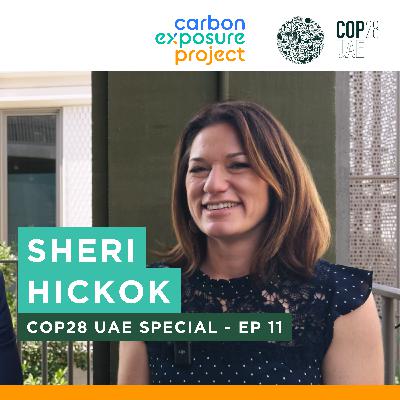
We are excited to present our latest episode with Sheri Hickok, the dynamic Chief Executive Officer at Climate Impact Partners. Join us as we delve into an enlightening conversation about the nuances and potential of carbon credits.
Episode Highlights:
Introduction: Meeting Sherry and Initial Impressions - 00:00
Exploring Opportunities: The Potential of Carbon Credits - 00:02:05
Technical Deep Dive: Engineering Challenges in Carbon Credit Systems - 00:04:13
Economic Insights: Efficiency and Waste Reduction in Carbon Systems - 00:06:20
Critical Discussion: Key Aspects of Carbon Credit Mechanisms - 00:08:24
Addressing Challenges: Overcoming Destructive Practices in Carbon Credits - 00:10:29
Asset Management Perspective: Bringing Financial Insights into Carbon Credits - 00:12:27
Policy and Governance: Enhancing Regulatory Frameworks for Carbon Credits - 00:14:30
Sustainability Focus: Concluding Thoughts on Long-term Viability - 00:16:40
Personal Stories: Transformative Effects of Carbon Credit Initiatives - 00:18:46
Wrapping Up: Gratitude and Reflections on the Carbon Credit Journey - 00:20:45
Tune in for a rich and engaging discussion that sheds light on the future of sustainable practices and carbon credits.
Watch now:
#CarbonExposureProject #CarbonCredits #SustainableFuture #ClimateImpactPartners
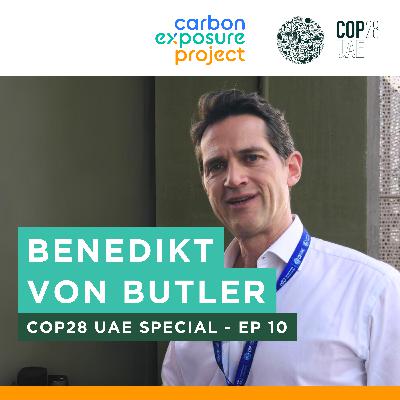
We're back with another episode of the Carbon Exposure Project (CXP), on this episode we will interview the highly experienced Benedikt Von Buttler, Portfolio Manager, Evolution Environmental Asset Management, LP.
On this episode, he will discuss:-
0:34 Perspective about market evolution & demand.
3:20 Understanding carbon offsetting.
7:00 The role of portfolio/risk management in developing VCMs.
10:00 Understanding price information and trading liquidity in VCMs. Case example: The GIO contract in reflection of demand from the aviation sector.
11:15 High Integrity to encourage more companies to act voluntarily.
11: 50 Fungibility in VCMs. From substantiating voluntary claims to compliance systems.
16:13 Private sector funds/risk signals
17:17 Governance support to give confidence to the markets.
19:40 Inaction being safer than action.
21:25 Review case –Portfolio/Risk adjustment basis for offsets to scale markets.
24:11 Hedge risk in compliance markets towards 2030 targets.
28:31 Fluctuating supply and demand and future balancing in carbon markets.
30:10 Forecasting risk past the short term.
31:40 The importance of developing demand to catch up with supply.
#cop28 #vcm #carbonmarkets
Join us on this episode of the Carbon Exposure Project (CXP) as we interview one of the top minds and voices in the climate space, Alexia Kelly, Managing Director, Carbon Policy and Markets Initiative of the High Tide Foundation.
Here are some timestamps of the episode:-
0:18 - Alexia´s overview on announcements at COP on the Integrity Council for Voluntary Carbon Markets (ICVCM) and the Voluntary Carbon Markets Integrity Initiative (VCMI).
3:58 - CFTC – Commodity Futures Trading Commission releasing voluntary guidance in the voluntary carbon crediting market.
4:52 - Existing voluntary standards announcing a new initiative for environment integrity.
6:46 - Highlight ICVCM’s work around processes and systems to issue credits and standardization on VCM as well as capital and climate finance mobilization into the Global South.
8:28 - DMRV - as a tool to accelerate issuance and verification processes.
12:20 - Communication initiatives to establish confidence and achieve scale on VCMs.
17:30 - IC VCM work on social benefits and core practices across VCM and its existing standards
22:14 - Thoughts around stabilizing concentration of GHG effectively while decarbonizing our economy.
23:24 - The challenges on the supply chain to achieve systemic transformation.
27:00 - The importance of both internal decarbonization and high quality carbon credits as a mechanism for residual emissions - Analysing positions against carbon credits.
31:15 - VCMs to help address and deliver mitigation opportunities.
#cop28 #vcm #carbonmarkets
Join us on this special episode of the Carbon Exposure Project COP28 UAE Special, as our host Rene Velasquez interviews Raymond Song who handles Carbon Markets and Policy at CTrees.
Don't miss this Special Christmas Episode of the Carbon Exposure Project, with Rich Gilmore (CEO, Carbon Growth Partners).
On this episode, they discuss:-
1. They discuss the year past in the realm of the carbon markets, epecially looking back at COP28.
2. The underlying principles at play in supply and demand within the carbon markets the various players and drivers of demand in the space (i.e corporates and policy makers).
3. Statistics about carbon credit retirements and issuance in the year past and what they mean in terms of growth within the field (2023 was the highest number of credits retired so far).
4. An indepth explaination of Article 6 and the differences between Article 6.3 and 6.4.
5. Discussing about news of ICVCM and VCMI's collaboration in terms of setting up an integrated market integrity framework and what it means for the carbon market as a whole.
6. Discussing REDD+ (The Hows, Whys, Drivers of Progress and Proven effects to Communities and The Environment).
7. Looking foward at 2024 and what to expect based on the progress from COP28 and the year past as a whole.
A not to be missed masterclass from two highly experienced and well known leaders of the Carbon Markets.
#christmas #ICVCM #cop28 #markets #VCMI #santaclaus

Join us on this special episode of the Carbon Exposure Project COP28 UAE Special, as our host Rene Velasquez interviews Anna Lerner Nesbitt, CEO of Climate Collective.
On this special episode of the Carbon Exposure Project COP28 UAE Special, our host Rene Velasquez interviews Sam Gill, Co-Founder and President of Sylvera.
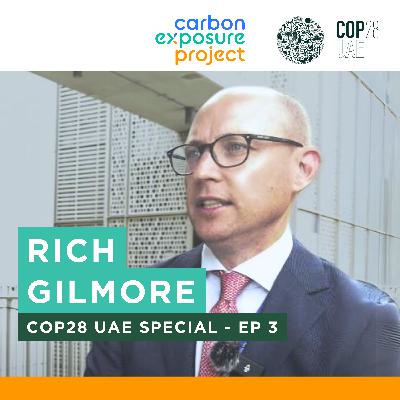
On this special episode of the Carbon Exposure Project COP28 UAE Special, our host Rene Velasquez interviews Rich Gilmore, CEO of Carbon Growth Partners.
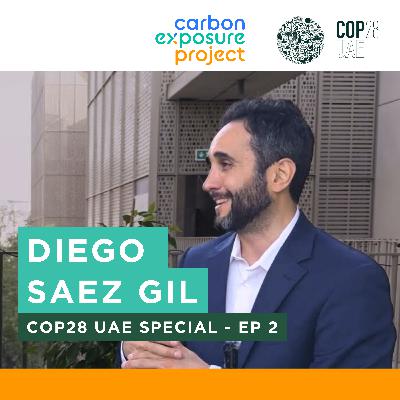
In this episode, our host Rene Velasquez talks to Diego Saez Gil, Co-founder and CEO of Pachama; a company that helps other companies invest in nature through high-quality carbon credits.
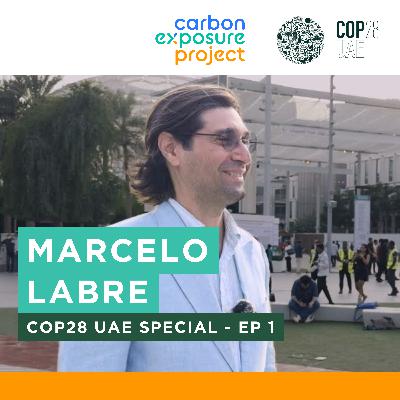
Dive into the first episode of our COP28 UAE series, where Marcelo Labre, co-founder and CEO of Veridios AI, engages in a dynamic conversation with our host, Rene Velasquez, live from COP28 UEA.
Stay tuned for more insightful conversations with industry leaders during COP28 UAE!
00:40 Instruction on Veridios AI and how they developed
03:38 Pricing: How the prices get determined
04:54: The clients of Veridios
06:26 The Influence of SDGs on projects and pricing
08:13 How Veridios’ AI models get trained to drive the outputs
10:04 The evolving market and its evidence digitalization transition
13:34 Complementarities en differences between Rating agencies and Veridios
15:40 What is needed to scale up the carbon market

Comments

Download from Google Play

Download from App Store
 United States