


AI DIY
Subscribed: 1Played: 8
Subscribe

© Black Flag Design
Description
We gather virtually to discuss new technologies, present useful demos and experiments, and moderated Q&A from the live audience. These recordings are an opportunity to be creative with peers and demonstrate developments in the AI field by getting beyond the headlines, to getting our hands on with these new technologies.
21 Episodes
Reverse

SummaryIn this conversation, Chris Carter, Eli Wood, and Keith Pattison discuss the evolving landscape of coding and AI, particularly in enterprise settings. They explore the challenges and opportunities presented by AI tools, the importance of security and usability, and the cultural readiness of organizations to adopt these technologies. The discussion also touches on the need for better data management, the training of future tech professionals, and the balance between innovation and security in AI development. Ultimately, they emphasize the importance of experimentation and the potential for AI to transform business processes.TakeawaysThe landscape of coding and AI is rapidly evolving.Younger generations are more adept at coding than ever before.Enterprises prioritize security and usability in AI systems.Data management is a significant challenge for many organizations.AI can help unlock value from messy data.Cultural readiness is crucial for successful AI adoption.Training the next generation of tech professionals is essential.Innovation must be balanced with security in AI development.Responsible risk-taking can lead to significant advancements.The future of business will be shaped by how well companies adapt to AI. Chapters00:00 The Evolution of Coding and AI Tools01:36 Prototyping vs. Production Systems in AI04:05 Enterprise Needs for AI Systems06:42 The Importance of Security and Usability in AI09:37 Data Management Challenges in Enterprises12:46 Unlocking Value from Messy Data with AI15:22 Cultural Readiness for AI in Enterprises18:20 Training the Next Generation of Tech Talent24:02 Engineering Identity and AI Impact32:02 Fostering Innovation in Enterprises38:36 The Future of AI and Business Dynamics
SummaryIn this conversation, the participants explore various app development ideas, focusing on the integration of AI in creating a weather app for high school students. They discuss the importance of user experience, creative prompting for AI, and the efficiency of different coding tools and models. The conversation also touches on API integration, data handling, and the nuances of using various AI models for development tasks. Overall, the discussion highlights the collaborative nature of app development and the role of AI as a creative partner. In this conversation, the participants delve into various aspects of AI integration in development, focusing on debugging techniques, the advantages of using platforms like Replit, and the importance of understanding technology. They discuss the role of AI in problem-solving, learning from failures, and establishing a development framework that encourages collaboration and innovation. The conversation highlights the need for clear communication and understanding within teams to effectively utilize AI tools in coding and development processes.TakeawaysThe importance of aiming for creativity in app development.AI can serve as a teammate in generating app ideas.User experience is crucial, especially for targeted demographics like high school students.API integration should be seamless and efficient.Different AI models have unique strengths in coding and development tasks.Creative prompting can enhance AI's output quality.Fallback data can confuse developers if not handled properly.Efficiency in coding tools can save time and resources.Understanding the nuances of AI models is essential for effective use.Collaboration and communication are key in app development. AI can enhance debugging processes in development.Replit offers significant advantages for developers.Understanding API responses is crucial for effective data handling.Collaborative development can lead to innovative solutions.Learning from failures is an essential part of the development process.Establishing a clear framework can improve team efficiency.It's important to understand the technology being used.AI can provide unexpected insights and solutions.Effective communication is key in team environments.Continuous learning and adaptation are vital in tech development.
SummaryIn this conversation, Jerry Limber discusses PenguinHab.AI. We discuss the strategy behind their marketplace aimed at bridging the gap for small businesses, and the importance of understanding customer needs in the AI landscape. He shares insights on real-world applications of AI, particularly in small businesses and healthcare, and reflects on the challenges of decision-making in an uncertain environment. The discussion also touches on the significance of data privacy and the future of AI, emphasizing an optimistic outlook for its potential to improve lives.TakeawaysThe penguin branding concept aims to make AI more accessible.The marketplace strategy focuses on bridging the gap for non-technical users.Understanding customer needs is crucial in the AI landscape.AI can significantly improve efficiency in small businesses.Healthcare presents unique opportunities for AI integration.Building a community around AI tools can enhance user engagement.Decision-making in AI requires navigating uncertainty and incomplete information.Evaluating tools should align with core values and mission.Data privacy is a growing concern as AI tools proliferate.An optimistic future for AI can lead to improved accessibility and quality of life.Chapters00:00 Exploring Penguin Hub's Unique Approach00:48 The Role of AI in Small Businesses05:51 Challenges and Opportunities in AI Adoption10:57 Building Community and Engagement in AI15:53 Future Directions for Penguin Hub21:41 The Future of AI and Customization23:50 Decision-Making in Uncertainty25:16 Values-Based Decision Making29:02 The Evolution of AI Perception31:39 Accessibility of Technology33:53 The End of SaaS?37:49 Change Management in AI Adoption39:32 Data Privacy Concerns47:37 Envisioning the Future of AI
SummaryIn this conversation, Anne Murphy shares her journey in philanthropy and nonprofit leadership, discussing the early influences that shaped her passion for helping others. She reflects on the challenges of navigating gender dynamics in leadership roles, particularly in male-dominated fields. The discussion also explores the role of AI as a tool for empowerment, the motivations behind human generosity, and the importance of empowering women in technology. Murphy emphasizes the need for empathy in leadership and the potential future impact of AI on society. She concludes with thoughts on legacy and the importance of the next generation of philanthropic leaders.TakeawaysAnne's childhood experiences shaped her passion for philanthropy.Leadership is often assigned by others, not always recognized by oneself.Empathy is a crucial leadership quality, especially for women.AI can empower marginalized voices and democratize access to information.Understanding human motivations for giving is complex and nuanced.Women are becoming a significant force in philanthropy and wealth management.The future of AI presents both opportunities and challenges for society.Authenticity and in-person interactions will be highly valued in the future.The next generation is less tolerant of existing power imbalances.Offering sincere help can create meaningful connections.Chapters00:00 The Path to Nonprofit Leadership01:41 Overcoming Gender Dynamics in Leadership04:43 Understanding Philanthropy and Human Generosity07:24 The Role of AI in Philanthropy and Gender Equity10:13 Empowering Women Through She Leads AI29:05 Empowering Marginalized Voices through AI33:49 Navigating Imposter Syndrome in the Age of AI35:31 The Role of AI in Building Empathy39:22 The Future of AI in Therapy and Support43:22 The Impact of AI on Human Connection48:01 Legacy and the Next Generation of Philanthropy
This conversation explores the evolving landscape of real estate, focusing on the integration of AI, the impact of institutional investors, and the dynamics between mom-and-pop investors and larger entities. We discuss Derek's experiences in the industry, the importance of education and community engagement, and the future potential of technology in real estate operations.TakeawaysReal estate ventures blend traditional methods with modern technology.Education is key in helping individuals navigate the real estate market.Institutional investors have significantly changed the dynamics of home buying.Mom-and-pop investors still play a crucial role in the housing market.AI can streamline operations and improve decision-making in real estate.The future of real estate will heavily involve AI integration.Community engagement is essential for building a successful real estate business.Navigating market shifts requires awareness and adaptability.Flipping houses can be a profitable venture with the right strategies.The real estate market is evolving, and staying informed is crucial.Chapters00:00 Derek's Journey in Real Estate05:10 The Role of AI in Real Estate09:46 Challenges in the Real Estate Market15:03 Institutional Investors vs. Retail Investors19:32 The Future of Real Estate Investment28:16 The Shift in Home Ownership Models31:06 The Role of AI in Real Estate34:45 Operational Efficiencies through AI41:34 The 10-80-10 Framework for AI Integration52:07 Emerging Trends in Real Estate and AI
The conversation explores the rapid growth of the AI community in Colorado, highlighting the success of local events and the collaborative spirit among engineers and entrepreneurs. The discussion delves into the advancements in AI models, particularly focusing on DeepSeek and its implications for the future of AI. The speakers emphasize the importance of hands-on experimentation with AI technologies, the competitive landscape between Apple Silicon and Nvidia, and the potential for AI to revolutionize scientific research and engineering practices. The conversation concludes with a call to action for listeners to engage with AI development and explore the tools available to them.TakeawaysThe AI community in Colorado is thriving and expanding rapidly.DeepSeek represents a significant advancement in AI model capabilities.Hands-on experimentation with AI tools is essential for innovation.Apple Silicon offers a competitive edge in AI processing efficiency.The evolution of computing architectures is crucial for future AI developments.AI has the potential to transform scientific research methodologies.Collaboration among engineers and entrepreneurs is key to progress.The cost of AI inference and training is decreasing, making it more accessible.Open-source software will play a critical role in the future of AI.Engaging with local AI communities can lead to valuable networking opportunities.Chapters00:00 The Rocky Mountain AI Community02:57 The Impact of AI on Business and Engineering05:58 DeepSeek: Market Reactions and Innovations08:52 Advancements in AI Training Techniques12:05 Hardware Innovations and AI Efficiency14:55 Apple Silicon vs. Nvidia: A Comparative Analysis22:47 The Evolution of AI Hardware24:55 Local Models and Their Impact26:41 DeepSeq and Its Innovations30:02 The Future of AI Applications33:51 AI in Scientific Research37:55 The Call to Action for AI Enthusiasts
In this conversation, the hosts discuss the emergence of DeepSeek, a new AI model that has garnered significant attention. They explore its performance compared to existing models, ethical implications regarding data privacy, and the geopolitical context surrounding its development. The discussion also touches on the importance of model agnosticism in AI development and the future dynamics of the AI market.
Takeaways
DeepSeek is generating buzz in the AI community.
Performance metrics show DeepSeek outperforming other models.
Concerns about data privacy and ethical sourcing are prevalent.
The launch of DeepSeek coincides with significant geopolitical events.
Model agnosticism is essential for adapting to rapid changes in AI.
Control over AI models can enhance application safety and predictability.
The cost of training AI models is decreasing, impacting market dynamics.
Developers are cautious about adopting new models without thorough vetting.
The tech landscape is influenced by the actions of major companies.
Future AI applications may require multiple models for different tasks.
Chapters
00:00 Introduction to DeepSeek and Initial Impressions
02:45 DeepSeek's Performance and Comparisons
05:39 Ethical Considerations and Data Privacy
08:56 Geopolitical Implications of AI Models
11:58 The Future of AI Models and Market Dynamics
14:56 Model Agnosticism and Development Strategies
17:44 Final Thoughts and Recommendations
Summary
In this conversation, Avi Yashchin discusses the evolution and potential of synthetic data in market research, emphasizing the shift from skepticism to acceptance. He highlights the importance of causal modeling as the gold standard for understanding consumer behavior and the role of large language models in generating insights. The discussion also covers the risks associated with synthetic data, the need for bioequivalence to ensure quality, and the integration of qualitative and quantitative research methods. Yashchin stresses the importance of trust and transparency in data usage and explores the ethical implications of market research in the age of AI.
Takeaways
Synthetic data has evolved from skepticism to acceptance.
Causal modeling is essential for understanding consumer behavior.
Large language models reduce out-of-sample risks in data generation.
Performance research is crucial for understanding model behavior.
Causal understanding differentiates human decision-making from AI.
Risks of synthetic data include validation against real humans.
Bioequivalence ensures high-quality outputs in research.
Integrating qualitative and quantitative research enhances insights.
Synthetic data can significantly reduce research costs.
Trust and transparency are paramount in data-driven research.
Chapters
00:00 The Evolution of Synthetic Data and Market Research
02:00 Causal Modeling: The Gold Standard in Market Research
04:56 Understanding Language Models and Their Limitations
08:01 Bias in Language Models and Its Implications
10:35 The Importance of Causal Understanding
13:33 Risks and Challenges of Synthetic Data
16:07 Bioequivalence in Predicting Human Behavior
21:33 Scaling Research: Cost and Efficiency
22:52 Qualitative vs Quantitative: The Research Balance
24:48 Ethics and Data: Navigating Privacy Concerns
27:52 Trust and Transparency in Research
30:40 Leveraging Third-Party Data for Insights
34:41 Causation vs Correlation: The Social Media Dilemma
36:29 Ethical Research: A New Paradigm
41:11 Proactive Decision-Making in Business
45:04 Key Takeaways: Understanding Human Decision-Making
In this conversation, Eli explores the evolution of communication throughout history, emphasizing the pivotal role of advancements in technology and the rise of artificial intelligence.
He discusses how these changes have transformed the way we connect, create, and conduct business, while also highlighting the importance of human comprehension and decision-making in leveraging these advancements effectively.
Takeaways
Humanity's pursuit of faster communication has driven progress.
The rise of AI has transformed information flow into near instantaneous insights.
The maximum rate of communication is crucial for businesses today.
Advancements in transportation have historically influenced communication speed.
AI tools are reshaping business operations and decision-making.
The maximum rate of consumption is still a human problem.
Investing in design and accessibility is essential for AI's success.
Professional development in literacy and fluency is crucial.
Technology should amplify human capability, not replace it.
The future requires a balance between technical progress and inclusivity.
Chapters
00:00 The Evolution of Communication
02:49 The Impact of AI on Communication and Economy
05:41 The Human Element in the Age of AI

In this conversation, Sorhan shares his journey of moving to San Francisco to immerse himself in the entrepreneurial ecosystem. He discusses the vibrant hackathon culture, the rise of AI agents in startups, and the shift towards fewer co-founders in the tech space. The conversation delves into marketing strategies for new ventures, the impact of AI on traditional industries like FinTech, and the future of work as AI tools become more prevalent. Sorhan emphasizes the importance of building software solutions and the opportunities available for aspiring entrepreneurs in today's tech landscape.
Keywords
San Francisco, entrepreneurship, hackathons, AI agents, startups, marketing strategies, FinTech, development tools, blockchain, software solutions
Takeaways
San Francisco is a hub for entrepreneurship and innovation.
Hackathons provide valuable networking and learning opportunities.
AI agents are transforming the startup landscape.
Fewer co-founders can lead to more streamlined decision-making.
Effective marketing is crucial for startup success.
AI tools are making development faster and more accessible.
The FinTech industry is ripe for AI integration.
Blockchain technology is set for a resurgence.
Understanding marketing is essential for tech entrepreneurs.
Building software solutions can lead to successful entrepreneurial ventures.
Chapters
00:00 Introduction to Sorhan's Journey in San Francisco
02:10 The Hackathon Experience and Innovations in AI
04:23 The Rise of AI Agents and Startups
07:22 The Role of Co-Founders in Modern Startups
10:16 Marketing Strategies for New Ventures
12:53 The Future of Startups and AI Integration
15:49 Building AI Solutions in FinTech
18:28 The Impact of AI on Development Tools
21:29 Challenges and Opportunities in AI Development
23:59 AI in Banking: Current Trends and Future Prospects
28:35 Disruption in Banking and FinTech
30:20 The Future of Accounting and AI
31:55 Challenges of AI in Sensitive Data
33:03 The Limits of AI and Future Innovations
35:30 The Role of AI in Programming
37:27 Learning to Code in the Age of AI
41:01 The Evolution of Software Development
45:54 Blockchain's Resurgence and Future Trends
47:22 New Chapter
Summary
Eli Wood discusses the implications of the Consumer Protections Act for AI, focusing on high-risk applications, the role of technology providers, and the challenges of compliance. He emphasizes the need for businesses to adapt to new regulations while maintaining ethical standards and consumer trust. The conversation also explores the future of AI development, risk management, and the importance of transparency in branding.
Takeaways
The Consumer Protections Act for AI aims to establish extensive consumer protections related to AI.
High-risk applications are defined by their potential impact on consequential decisions.
Most businesses will need to innovate to comply with the new standards set by the bill.
The role of technology providers is crucial in the deployment of AI systems.
EU regulations serve as a model for AI legislation in the U.S.
Algorithmic discrimination is a key focus of the bill, but its regulation is complex.
Implementation of the bill poses significant challenges for small businesses.
On-device AI models may offer a solution for privacy and compliance issues.
Branding and consumer trust will be essential in the AI landscape.
AI may end up managing its own risk assessments, raising ethical concerns.
Chapters
00:00 Introduction to Consumer Protections Act for AI
03:05 Understanding High-Risk AI Applications
05:48 The Role of Technology Providers in AI
08:54 EU Regulations and Their Impact
11:39 Algorithmic Discrimination and High-Risk AI
14:33 Implementation Challenges of the Bill
17:17 Future of AI Development and Compliance
20:31 Risk Management and Developer Responsibilities
23:17 The Role of AI in Risk Assessment
26:31 On-Device Models and Consumer Control
29:17 The Future of AI and Brand Value
Summary
This conversation delves into various themes surrounding personal experiences, insights gained over time, and reflections on past events. The speakers share their thoughts on the importance of learning from experiences and how these shape future perspectives.
takeaways
Learning from experiences shapes our future decisions.
Conversations can lead to deeper insights.
Sharing stories helps in understanding different perspectives.
Every experience, good or bad, has value.
Looking back can provide clarity for the future.
Engaging discussions can spark new ideas.
It's important to remain open to learning.
The journey of understanding is ongoing.
Concluding thoughts often bring new insights.
Chapters
00:00 The Evolution of Design Tools
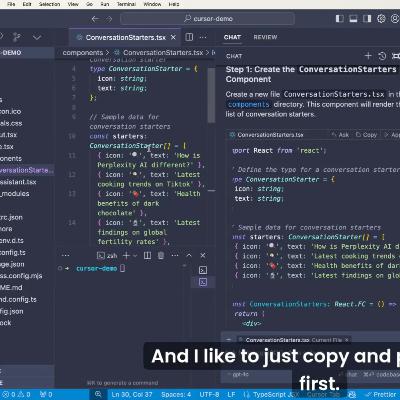
02:47 Harnessing Cursor for Enhanced Workflow
05:47 Integrating Screenshots and AI in Design
11:28 Navigating Code with Cursor's AI
17:10 Collaborative Design and Development
22:00 Exploring Figma and AI Plugins
28:54 The Future of Design to Code
29:44 Exploring Design Systems and AI Integration
33:44 Setting Up Cursor for Optimal Use
36:57 Creating Effective Cursor Rules
41:31 Enhancing Development with AI-Powered Tools
46:45 The Future of Design and Development with AI

Summary
The conversation revolves around the Denver AI Summit, highlighting its significance in the AI landscape, the diverse perspectives shared by attendees, and the discussions on AI's role in civic engagement, education, and data privacy. The speakers reflect on the potential of AI to transform government processes and enhance educational outcomes, while also addressing concerns about data security and the implications of local versus cloud processing.
Takeaways
Denver is striving to become the top city for VC funding in AI.
The concept of an open API for civic tech is promising.
AI's practical applications in government are becoming evident.
Education was a focal point at the summit, highlighting its importance.
The diversity of attendees enriched the discussions.
Data privacy and security were prevalent themes throughout the conference.
Local processing of AI can address privacy concerns effectively.
AI's second-order effects, like multilingual communication, are significant.
The need for change management in government processes is crucial.
The future of education with AI could empower marginalized voices.
Chapters
00:00 Overview of the Denver AI Summit
05:01 Keynote Highlights and Major Themes
09:35 The Role of Education in AI
14:23 Civic Engagement and Government's Role in AI
19:06 Data Privacy and Security Concerns
23:21 Local Models vs. Cloud Services
28:08 AI in Education: Opportunities and Challenges
33:16 Closing Thoughts and Future Directions
48:45 AI DIY demo1.wav
The conversation explores the use of AI in the development process and its impact on productivity and collaboration. The speakers discuss their experiences with AI tools like ChatGPT, Galileo, and Cursor, highlighting the benefits and challenges they bring.
They emphasize that AI is not a silver bullet and does not replace human developers, but rather enhances their abilities and accelerates the development process. The speakers also touch on the importance of communication, alignment, and documentation in effectively utilizing AI tools.
Overall, they express excitement about the potential of AI in software development while acknowledging the need for ongoing adaptation and collaboration.keywordsAI, development process, productivity, collaboration, ChatGPT, Galileo, Cursor, benefits, challenges, communication, alignment, documentation
AI tools like ChatGPT, Galileo, and Cursor enhance the abilities of developers and accelerate the development process.
AI is not a silver bullet and does not replace human developers, but rather requires ongoing adaptation and collaboration.
Effective communication, alignment, and documentation are crucial in utilizing AI tools effectively.
AI can help with tasks like code generation, documentation, and adherence to best practices.
The use of AI in software development requires a balance between leveraging its capabilities and addressing the challenges it presents.
Sound Bites
"AI provides tools to augment the processes of developers and allows them to focus on the implications and responsibilities of the system they are building."
"AI allows us to move faster but puts the complex problems of software development at the forefront."
"AI accelerates the time to the messy middle and requires teams to address communication, alignment, and decision-making more effectively."
Chapters
00:00 The Impact of Talking to AI
20:53 The Beauty of Pottery and Iteration
26:18 Enhancing UI/UX Design and Front-End Development
30:33 The Role of the Programmer in Collaboration with AI
36:48 Navigating the Messy Middle with AI Tools
41:54 No Silver Bullet: Human Intervention in AI-Driven Development
45:40 Adapting to the Evolving Industry with AI Tools

In this conversation, Uche Ogbuji interviews Gift Ojeabulu at PyCon Nigeria 2024 in Lagos. They discuss the importance of data in AI models and the role of Data Community Africa in promoting data-centric AI.
Gift Ojeabulu also talks about his work as a sports data scientist and the challenges of incorporating AI into sports analytics. He emphasizes the need for feedback from the community to improve AI products and highlights the importance of software engineering techniques for data scientists.
The conversation concludes with a discussion on the DIY ethos and the importance of good engineering in AI development.
Data is crucial for AI models, and data-centric AI is essential for accurate results.
Data Community Africa is a conference that brings together data practitioners and promotes data-centric AI.
Gift Ojeabulu works as a sports data scientist and faces challenges in incorporating AI into sports analytics.
Feedback from the community is vital for improving AI products.
Data scientists should adopt software engineering techniques for better code quality and reproducibility.
The DIY ethos in AI development emphasizes the importance of good engineering and craftsmanship.
The Importance of Data in AI Models
Challenges in Incorporating AI into Sports Analytics
"Garbage in, garbage out. If you don't have good data, your AI model is low below."
"Last year we had representation from six different countries."
"Feedback is like the fuel of your product from the community."
Chapters
00:00 - Introduction and Context
00:59 - The Importance of Good Data in AI Models
02:29 - Data Community Africa: Connecting Data Practitioners
03:58 - The Role of Feedback in Improving AI Products
05:27 - Software Engineering Techniques for Data Scientists
06:01 - The Evolving Landscape of Language Models
In this episode, the hosts discuss RAG (Retrieval Augmented Generation) and its importance for new generative AI applications. They explain that RAG is a technique that enhances language models by adding context and relevant information from external sources. RAG helps combat the problem of hallucinations, where language models generate incorrect or made-up information.
The hosts also highlight the importance of reducing hallucinations within a reasonable limit and setting clear expectations with clients. They discuss the use cases of RAG, such as adding context to LLMs, resurrecting old documentation, and improving search and product discovery in e-commerce. The conversation focused on the implementation and use cases of Retrieval-Augmented Generation (RAG).
The main themes discussed were the process of embedding documents, handling longer data sources, chunking information, and the generation of responses. The conversation also touched on the customization of RAG, the three levers of customization (chunking, vector similarity search, and prompting), and the potential of RAG as a product or feature. Use cases for RAG in revenue generation were explored, including data extraction and AI dev tools. The conversation concluded with a call to explore RAG further and join the DIY AI movement.
RAG enhances language models by adding context and relevant information from external sources.
RAG helps combat the problem of hallucinations in language models.
Reducing hallucinations within a reasonable limit is important, and clear expectations should be set with clients.
RAG has various use cases, including adding context to LLMs, resurrecting old documentation, and improving search and product discovery in e-commerce. RAG involves the process of embedding documents and using vector similarity search to retrieve relevant information.
Chunking is necessary for handling longer data sources, such as books or large documents, and allows for efficient retrieval.
RAG can be customized through the levers of chunking, vector similarity search, and prompting.
RAG has various use cases for revenue generation, including data extraction and AI dev tools.
RAG is an emerging field with opportunities for DIY exploration and experimentation.

In this conversation, the hosts discuss various topics related to AI, including Apple's new intelligence features, Microsoft's GraphRAG release, and Meta's Llama 3.1 model. They explore the implications of these advancements and discuss the potential for experimentation and preparation for the future of AI. The conversation covers various topics related to artificial intelligence and its impact on different aspects of life. It explores the use of AI tools like LangSmith and Grok for testing and comparing models. The conversation also highlights the importance of AI in the global South and the need for diversity and inclusivity in the development of AI technologies.
The speakers discuss the concept of intelligence and how AI can augment human capabilities. They share personal experiences and examples to illustrate the potential of AI in various fields.
Apple's new intelligence features, showcased at WWDC, indicate a shift in the way they approach artificial intelligence, with a focus on on-device local LLMs and a fabric representation of Siri.
Microsoft's GraphRAG is a solution to the problem of LLMs lacking trustworthy intrinsic knowledge. It uses knowledge graphs to augment and empower searching functionality, allowing for more accurate and context-aware responses.
Meta's Llama 3.1 model, with its massive 400 billion parameters, brings us closer to a commercial-grade AI comparable to GPT-4. The model can be compressed using quantization techniques to reduce memory usage while maintaining quality.
Experimentation and preparation for the future of AI can involve signing up for developer betas, exploring platform APIs, and recreating existing use cases with new AI technologies. LangSmith and Grok provide useful AI tools for testing and comparing models.
AI has the potential to empower people in the global South and drive innovation in developing countries.
Intelligence is not limited to standardized tests or logic; it encompasses diverse perspectives and the ability to offload work from the human brain.
AI can augment human capabilities and free up time for more meaningful tasks.
The development of AI should prioritize diversity, inclusivity, and ethical considerations.
Understanding Microsoft's GraphRAG
Exploring Apple's New Intelligence Features AI Empowerment in the Global South
Augmenting Human Capabilities with AI
"AI is going to be complementary to the user experience that Apple can provide."
"Apple Intelligence should be coming this fall."
"GraphRAG is a solution to curb the lack of trustworthy intrinsic knowledge in LLMs."
"LangSmith, in their playground now, I can test existing prompts in our products against different models and across data sets."
"Grok is hosting Lama 3.1, you get the context, but then you also get the grok inferencing speed."
"AI has the potential to make significant improvements to agriculture in developing countries."
In this conversation, Eli Wood, Keith Pattison, and Steven Orr discuss the transformative impact of AI on finance, focusing on the vision behind Quasar Markets, the democratization of financial data, and the future of investing. We explore how AI can enhance market insights, the importance of mentorship in navigating the financial landscape, and the integration of technology in daily life. It's clear there is a need for accessible data and the role of AI in shaping market dynamics, while also addressing the challenges and opportunities that lie ahead in the evolving financial ecosystem.TakeawaysAI is revolutionizing the finance industry by providing democratized access to data.Quasar Markets aims to create a comprehensive platform for financial tools and insights.The integration of AI in investing strategies is becoming increasingly important.Understanding global market dynamics is essential for successful investing.Mentorship is crucial for aspiring investors and entrepreneurs.The future of finance will heavily rely on data accessibility and technology.AI can help identify market trends and opportunities that may not be immediately apparent.Investors need to adapt to the changing landscape of technology and finance.The role of data centers will be pivotal in the future of AI and finance.A collaborative approach to AI development can lead to better outcomes for users.Chapters00:00 The Genesis of Big Beat01:20 Building Quasar Markets: A Vision for FinTech04:39 The Role of Prediction Markets in Investing08:26 AI's Impact on Finance: Current Trends and Future Outlook18:20 The Future of AI and Data Accessibility27:46 The Future of Data Centers in Texas29:07 The Evolution of Manufacturing and Customization31:20 Agricultural Revolution and Its Impact on Modern Markets33:21 AI's Role in Agriculture and Market Efficiency36:31 Democratizing Data Access and Investment Opportunities44:36 Quasar Markets: Bridging the Data Gap47:12 Understanding Market Data and AI Integration49:45 Utilizing AI for Stock Analysis52:33 Creating Custom Financial Ratios54:46 Leveraging AI for Sports Analytics57:36 The Importance of Comprehensive Data01:01:54 Mentorship and Learning in Finance
The conversation explores the intersection of AI and government processes, focusing on trust, job impacts, reskilling, community engagement, and the future of human connection in an AI-driven world. The speakers discuss the importance of understanding risks versus rewards in AI implementation, the potential for job loss due to automation, and the need for proactive reskilling initiatives. They emphasize the role of community and government in addressing these challenges and the necessity of fostering a culture of empathy and collaboration in the face of technological change.Chapters00:00 Reflections on the AI Summit05:17 Concerns Over Job Loss and Economic Impact11:15 Community Engagement and Future Planning17:50 The AI Bubble: Reality vs. Hype20:28 Reskilling in the Age of Automation23:31 Humanity and AI: Balancing Technology with Empathy26:52 Job Displacement: The Future of Work36:09 Hope in AI: Positive Transformations Ahead
This conversation explores the transformative impact of AI on academic research methodologies, the challenges of accessing historical data, and the importance of collaboration among researchers. The discussion delves into the role of AI in identifying research gaps, establishing causality, and enhancing the digital humanities. It also highlights the iterative nature of research and the potential for AI tools to facilitate prototyping and user experience in research applications.Chapters00:00 Introduction to AI in Research02:17 The Evolution of Research Methodologies05:10 Accessing Historical Data and Challenges07:40 Formulating Research Questions10:32 The Role of AI in Historical Analysis13:14 Causality and AI Limitations16:19 Iterative Processes in Research18:59 Building Collaborative Tools for Researchers21:54 The Future of AI in Academia24:38 Conclusion and Reflections

Comments

Download from Google Play

Download from App Store
 United States