


 Claim Ownership
Founder Mode
Subscribed: 3Played: 8
Subscribe

© Kevin Henrikson and Jason Shafton
Description
Founder Mode is a podcast for builders—whether it’s startups, systems, or personal growth. It’s about finding your flow, balancing health, wealth, and productivity, and tackling challenges with focus and curiosity. Each week, you’ll gain actionable insights and fresh perspectives to help you think like a founder and build what matters most.
48 Episodes
Reverse
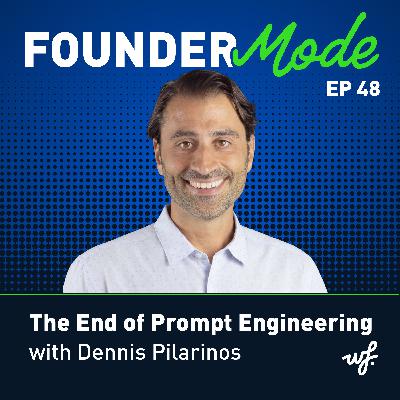
EPISODE 48Dennis Pilarinos joins Kevin Henrikson and Jason Shafton to unpack what AI in software development actually looks like beyond the demos, arguing that the real bottleneck is not code generation but context. Drawing on his experience building Buddybuild, working inside Apple, Amazon, and Microsoft, and now leading Unblocked, Dennis explains why source code alone is not enough for either engineers or AI agents to succeed, how historical decisions buried in Slack, Jira, and docs shape production-safe software, where AI-generated code breaks down in legacy systems, what traits matter most when hiring in an AI-native era, and why the workflows teams rely on today, including pull requests, may look very different in the near future.CHAPTERS00:00 – Why AI coding tools fail without context04:03 – Building Unblocked to solve the missing layer in engineering12:11 – Where AI-generated code breaks in real production environments20:33 – Hiring for curiosity, ownership, and success in an AI-native world27:18 – Founder lessons from aviation, uncertainty, and staying groundedLINKSConnect with Dennis PilarinosUnblocked • LinkedIn • X/TwitterStay Connected with Founder ModeSubscribe to our newsletterConnect with KevinLinkedIn • X/TwitterConnect with JasonLinkedIn • X/Twitter
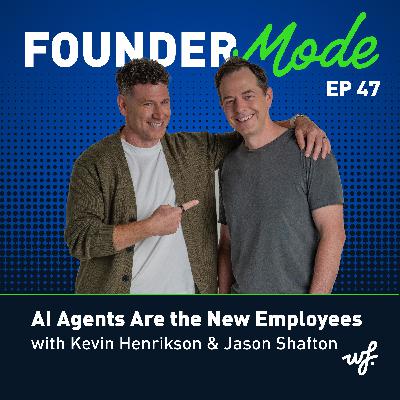
EPISODE 47In Episode 47 of Founder Mode, Kevin Henrikson and Jason Shafton unpack why AI agents should no longer be thought of as simple tools, but as a new kind of workforce that founders can hire, coach, evaluate, and orchestrate. They explore how the founder role is shifting from building and doing toward designing systems, managing agent workflows, and making the judgment calls that still require human trust, taste, and strategic thinking. Along the way, they discuss AI-first operating habits, what this means for hiring and team design, why small teams may become dramatically more powerful, where human oversight still matters most, and why the real moat in an AI-native world is not the agents themselves but distribution, proprietary workflows, and unique data.CHAPTERS00:00 – The founder’s job has changed00:32 – AI agents as a new staffing model06:29 – What AI-first workflows look like in practice16:48 – Hiring and scaling in the age of agents24:06 – The new moat: data, workflows, and distributionLINKSConnect with Founder ModeFounder ModeStay Connected with Founder ModeStay Connected with Founder ModeSubscribe to our newsletterConnect with KevinLinkedIn • X/TwitterConnect with JasonLinkedIn • X/Twitter
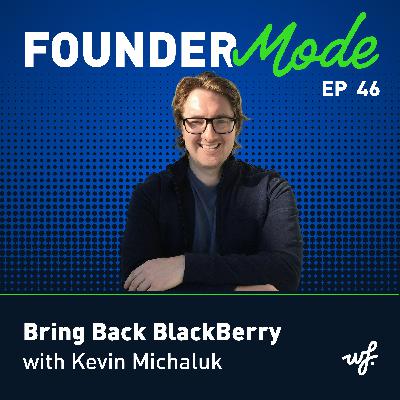
EPISODE 46CrackBerry Kevin, founder of Clicks, explains why building hardware in a software-obsessed world is suddenly the opportunity again and how “intentional tech” is creating room for focused devices that complement, not replace, your iPhone. He shares the arc from launching CrackBerry.com and Mobile Nations to turning years of product coverage into an unfair advantage for building, then breaks down Clicks’ strategy: validate demand with accessories first, frame Communicator as a purpose-built “people phone” category instead of a smartphone competitor, and use CES storytelling to create momentum months before launch. The conversation also digs into how Clicks approached fundraising without relying on traditional VC, leveraged community as both customers and megaphone, and avoided the classic Kickstarter trap by sequencing products, aligning supply-chain incentives, and refusing to overpromise on timelines.CHAPTERS00:00 – The “people phone” idea: why Communicator won’t compete with iPhone04:14 – From CrackBerry to builder: compounding reps and community advantage06:56 – Naming a category: Communicator as a purpose-built device, not a smartphone18:58 – CES momentum: how storytelling and launch mechanics are engineered early21:43 – Bootstrapping, community funding, and avoiding the Kickstarter failure loopLINKSConnect with CrackBerry KevinClicks • LinkedIn • X/TwitterStay Connected with Founder ModeStay Connected with Founder ModeSubscribe to our newsletterConnect with KevinLinkedIn • X/TwitterConnect with JasonLinkedIn • X/Twitter
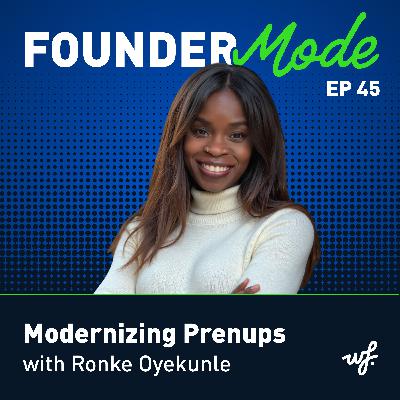
EPISODE 45Ronke Oyekunle, co-founder of Neptune, explains how modern prenups have evolved from taboo paperwork into a structured process that helps couples talk honestly about money, values, and “what if” scenarios before marriage. She shares why millennials and Gen Z are approaching financial planning differently, how Neptune combines vertical AI with top family-law experts to guide difficult conversations safely, and why the hardest clauses, like spousal support and even pet custody, often end up strengthening relationships rather than undermining them. The conversation also expands beyond prenups into estate planning and the idea of Neptune as a “financial legal concierge” for couples, ending with Ronke’s vision for an AI-plus-humans future and a promo code for the Founder Mode audience.CHAPTERS00:00 – Why prenups can reduce the odds of divorce03:30 – From taboo to empowerment: modern money conversations in relationships05:42 – Neptune’s model: vertical AI plus human family-law experts12:06 – The clauses that matter most: spousal support, “what if” scenarios, and pet custody19:05 – Beyond prenups: estate planning, “financial legal concierge,” and the future of the categoryLINKSConnect with Ronke OyekunleNeptune • LinkedInPromo code: RONKE100 ($100 off any Neptune services)Stay Connected with Founder ModeSubscribe to our newsletterConnect with KevinLinkedIn • X/TwitterConnect with JasonLinkedIn • X/Twitter
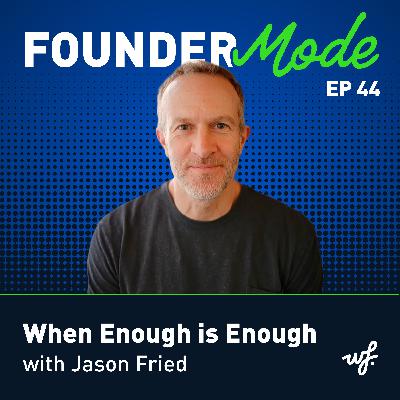
EPISODE 44 Kevin Henrikson and Jason Shafton sit down with Jason Fried, co-founder of 37signals, to unpack what it means to build software that feels less like “software” and more like a physical object you actually want to use every day. Jason explains the philosophy behind Fizzy, 37signals’ fresh take on Kanban, and why speed, fluidity, and visual joy aren’t polish but core product decisions. The conversation explores designing with human-scale constraints borrowed from the physical world (like piles on a desk), why limits often produce better tools, and how 37signals stays independent to preserve optionality. They also discuss why 40 hours a week is enough, how founders can stay deeply involved without becoming bottlenecks, and Jason’s advice to new founders: keep your surface area small and start making something real as fast as possible. CHAPTERS 00:00 – Building software as objects you want to use every day 07:04 – Fizzy and a simpler, more joyful take on Kanban 12:21 – Piles, limits, and designing for human scale 22:03 – 40 hours is enough: founder involvement without micromanagement 43:22 – Undercomplicating year one: keep surface area small and start making LINKS Connect with Jason Fried 37signals.com • LinkedIn • X/Twitter Stay Connected with Founder Mode Subscribe to our newsletter: gofoundermode.com Connect with Kevin LinkedIn • X/Twitter Connect with Jason LinkedIn • X/Twitter
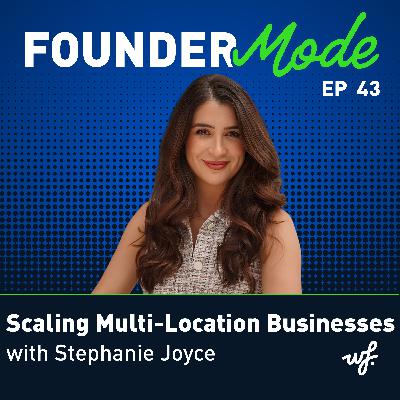
EPISODE 43Kevin Henrikson and Jason Shafton sit down with Stephanie Joyce, founder and operator of Attune, to unpack what it really takes to scale multi-location service businesses without losing control of culture, operations, or margins. Drawing from years of leading growth, acquisitions, and crisis turnarounds, Stephanie explains why people come first, systems second, and how scaling simply amplifies whatever you already tolerate. The conversation covers documentation and onboarding as prerequisites for consistency, how to diligence acquisitions beyond surface-level financials, and what it means to lead with clarity and integrity when everything is on fire. They also dive into the modern med spa operating stack, from CRM and automation to compensation structures that drive the right behaviors, and why the future of wellness will be defined by better data, smarter technology, and a careful balance between AI and human trust.CHAPTERS00:00 – People first, systems second: what breaks when you scale04:25 – Documentation, SOPs, and onboarding for multi-location consistency04:56 – Acquisition diligence: margins, concentration risk, and key-person dependency08:06 – Leading through crisis: transparency, trust, and cash discipline14:13 – The modern med spa playbook: systems, CRM, and incentivesLINKSConnect with Stephanie Joyce attunemedspa.com • LinkedInStay Connected with Founder ModeSubscribe to our newsletter: gofoundermode.comConnect with KevinLinkedIn • X/TwitterConnect with JasonLinkedIn • X/Twitter
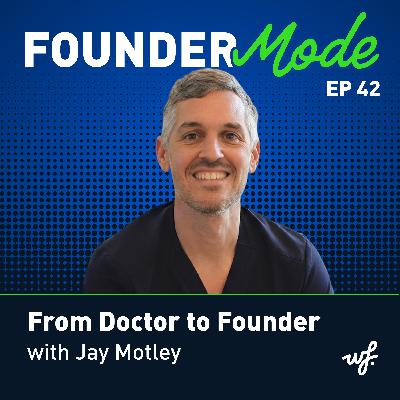
EPISODE 42Kevin Henrikson and Jason Shafton sit down with Dr. Jay Motley, founder of MindWell Health, to explore what it takes to leave a long career in anesthesiology and build a modern mental health clinic. Jay shares how losing autonomy after his private practice was absorbed by a hospital system paired with the life-altering loss of his first wife pushed him to rethink time, care, and what getting better really means. The conversation dives into ketamine therapy as a fast-acting tool that can open a window for patients who have failed traditional treatments, and why lasting improvement depends on pairing that window with therapy and lifestyle medicine fundamentals like sleep, nutrition, movement, and stress management. They also cover the myths around expensive wellness biohacks, how AI could reduce administrative burden and expand patient access, and what Jay learned scaling from a one-person launch to multiple MindWell locations.CHAPTERS00:00 – Ketamine as a fast-acting “open window” for change00:50 – Health fundamentals that matter most: sleep, food, movement04:20 – Why Jay left anesthesiology: autonomy, loss, and control of time07:10 – Building MindWell: ketamine + therapy + lifestyle medicine19:10 – Scaling the clinic: cash-pay vs insurance, systems, and hiringLINKSConnect with Dr. Jay Motley mindwell.com • LinkedIn • Instagram • X/Twitter • Substack • FacebookStay Connected with Founder ModeSubscribe to our newsletter: gofoundermode.comConnect with KevinLinkedIn • X/TwitterConnect with JasonLinkedIn • X/Twitter
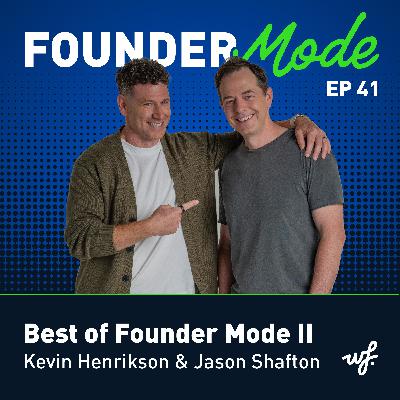
EPISODE 41After forty episodes, Founder Mode pauses to look at the decisions founders actually struggle with once the playbooks stop working. This episode stitches together clips across healthcare, AI, pricing, capital, aviation, and personal health to show how judgment forms under pressure. You hear why go-live is the start of real work, how trust gets broken when tools ship before problems are understood, why usage outlasts any value narrative, and how busyness becomes a substitute for thinking. Across every domain, the pattern is consistent: systems fail quietly, discipline erodes downstream, and founders are forced to make calls without clean data, perfect timing, or consensus.CHAPTERS00:00 – Why the same founder problems keep repeating01:01 – Go live is not the finish line01:42 – Teaching interpersonal skills too late02:34 – Adding AI before earning user trust03:17 – When users reject AI and features get rolled back03:57 – Why pricing complexity grows with mature markets04:34 – Busyness as avoidance for founders05:14 – Protecting thinking time before the business outgrows you05:55 – Turning user complaints into learning fast06:33 – Building a personal board of directors for health07:27 – AI as a problem-solving lever, not a starting point08:20 – Governance as the unlock for enterprise AI adoption08:20 – When “magic” becomes table stakes for customers09:10 – Why software being cheaper doesn’t make it easier09:59 – Hybrid aviation as a trust bridge to electrification10:51 – Measuring whether conference presence actually works11:38 – Why AI scribes exploded in healthcare adoption12:28 – Defaulting to venture capital and silent dilution12:28 – Designing products that force focus and community13:06 – Stress, judgment, and risk in aviation13:43 – Unlimited pricing as a math problem13:43 – Learning faster by removing safety nets14:31 – Making decisions when there is no right answerLINKSStay Connected with Founder ModeStay Connected with Founder ModeSubscribe to our newsletterConnect with KevinLinkedIn • X/TwitterConnect with JasonLinkedIn • X/Twitter
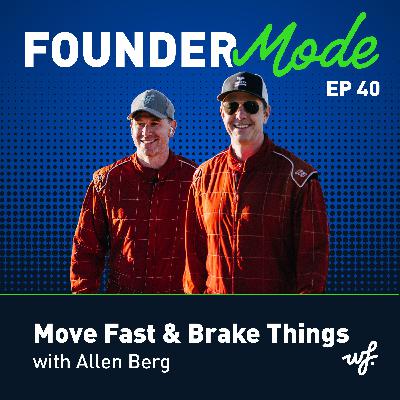
EPISODE 40Recorded at Laguna Seca Raceway, this episode takes Founder Mode out of the studio and onto the track. Jason and Kevin spend the day driving open-wheel formula cars and sit down with Allen Berg, founder of Allen Berg Racing Schools, to talk about learning through feel, momentum, and control. Berg walks through his path into racing, what makes formula cars such an effective teaching platform, and how racing schools function as the entry point to professional motorsport. The conversation draws clear parallels between racing and building companies: managing risk without automation, carrying momentum through corners, and knowing where the limits actually are.CHAPTERS00:00 – Growing up with racing and early influences01:05 – Driving formula cars at Laguna Seca02:52 – Racing as a model for building companies05:40 – Building and operating a racing school09:44 – Advice for founders building niche businessesLINKSConnect with Allen BergAllen Berg Racing Schools • LinkedInStay Connected with Founder ModeSubscribe to our newsletterConnect with KevinLinkedIn • X/TwitterConnect with JasonLinkedIn • X/Twitter
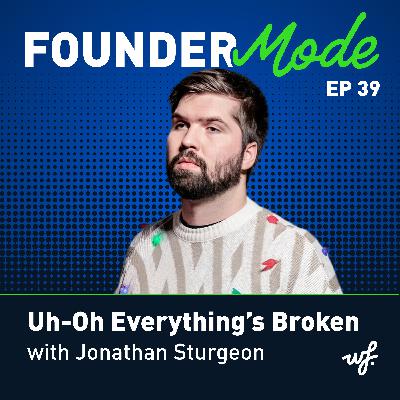
EPISODE 39Jonathan Sturgeon joins Founder Mode to explain how he built multiple eight-figure businesses without chasing an audience, a personal brand, or social media validation. He breaks down his deliberately anti-influencer posture, why cold calling still outperforms content for high-intent sales, and how his companies Dingus & Zazzy and Uh Oh scale through systems, scripts, and trust rather than hype. The conversation moves from trolling internet fame culture to designing a radically simple IT business with a free trial and pay-what-you-want pricing, and ends with Jonathan’s view that not every project needs to optimize for returns—some are worth doing because they’re fun.CHAPTERS00:00 – Building businesses without social media or an audience03:45 – The anti-influencer mindset and trolling internet fame11:45 – Cold calling, scripts, and why outbound still works15:30 – Uh Oh: free-trial IT, pay-what-you-want pricing, and trust24:00 – Art over profit and building businesses for enjoymentLINKSConnect with Jonathan Sturgeon Uh Oh • Dingus & Zazzy • LinkedIn • X/TwitterStay Connected with Founder ModeSubscribe to our newsletterConnect with Kevin LinkedIn • X/TwitterConnect with Jason LinkedIn • X/Twitter
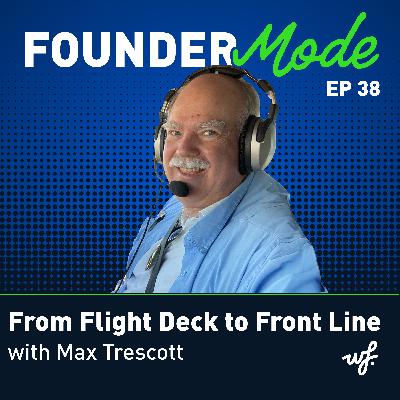
EPISODE 38Recorded mid-flight in Kevin’s Vision Jet en route to Monterey, Kevin and Jason talk with veteran pilot and aviation podcaster Max Trescott about why flying can feel like a flow-state reset, and how the discipline of aviation maps to building companies. Kevin shares his path from earning a pilot’s license in college to taking a long break, then returning to aviation with structured training, checklists, and the calm that comes from repetition. Together they unpack why “it’s not hard, it’s a lot of effort,” why SOPs and emergency prep matter when things break, and the real key to learning: consistent time in the seat, the right instructor, and a focus on proficiency over deadlines.CHAPTERS00:00 – Flying as a stress reset and the “are you ready?” check00:48 – Welcome to Founder Mode from the Vision Jet02:55 – Kevin’s pilot journey: college license to getting hooked on the Vision Jet05:23 – The founder/pilot overlap: effort, SOPs, and staying calm when things change13:09 – Buying (and upgrading) a jet: the sales cycle, timing, and “right message, right moment”LINKSConnect with Max TrescottAviation News Talk • LinkedIn • X/TwitterStay Connected with Founder ModeSubscribe to our newsletter: foundermode.kit.comConnect with KevinLinkedIn • X/TwitterConnect with JasonLinkedIn • X/Twitter
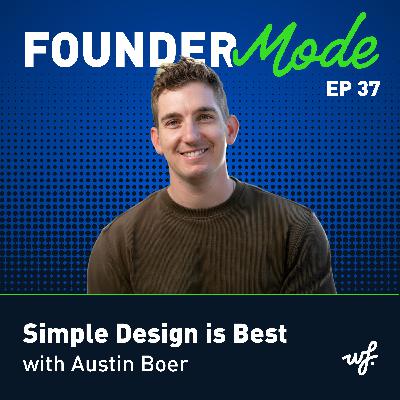
EPISODE 37Kevin and Jason sit down with Austin Boer, co-founder of Sleke, to unpack what it takes to build a “dumb phone” that still supports modern life. Austin shares how a simple insight from the r/dumbphone subreddit shaped Sleke’s mission: people want fewer distractions, not less utility. The conversation covers founder-led customer discovery, why Sleke is built around intentional constraints like banning infinite scroll, and how the team balances privacy, usability, and real-world needs like QR codes, maps, and music. They also explore the bigger question of what replaces the phone by 2030 and why digital minimalism should be accessible to everyone, not a luxury product.CHAPTERS00:00 – The dumb phone problem people actually have03:50 – Why Austin built Sleke and what the product is04:30 – Founder-led discovery: 200+ ICP calls and shifting ICP08:20 – The “fatal flaw” of dumb phones and preventing app creep16:30 – Digital minimalism shouldn’t be a luxuryLINKSConnect with Austin Boersleke.io • Instagram • X/TwitterSpecial Offer: Use code FOUNDERS5 for a discount on a Sleke device.Stay Connected with Founder ModeSubscribe to our newsletter: foundermode.kit.comConnect with KevinLinkedIn • X/TwitterConnect with JasonLinkedIn • X/Twitter
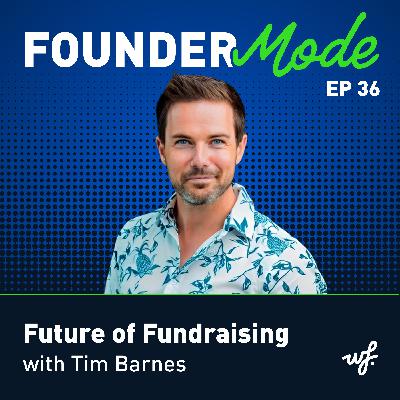
EPISODE 36Kevin and Jason sit down with Scout cofounder Tim Barnes to rethink how founders raise capital in an AI-first world. Tim breaks down why most startups overlook trillions in available non-dilutive funding, how AI can automate painful proposal and compliance workflows, and why grants should function as a continuous business development engine—not a last-minute scramble for runway. They explore how climate, deep-tech, and healthcare companies can reposition their work to match shifting federal priorities without losing their mission, how Scout is helping both startups and government agencies modernize the funding ecosystem, and why founders should pursue grants before equity to validate traction and retain ownership. Tim also shares how he thinks about defensibility as foundation models advance, when to integrate grants into a capital strategy, and what it takes to keep founders focused on building instead of pitching.CHAPTERS00:00 – Why non-dilutive funding matters01:00 – Rethinking fundraising and bootstrapping in an AI hype cycle05:30 – How Scout uses AI to unlock and manage grants10:00 – Packaging your mission for shifting policy without losing focus16:00 – When to use grants vs equity and how Scout’s fit check worksLINKSConnect with Tim BarnesScout • LinkedIn • X/TwitterSpecial OfferDirect message Tim on LinkedIn and mention Founder Mode for 20% off your first year of Scout.Stay Connected with Founder ModeSubscribe to our newsletter: foundermode.kit.comConnect with KevinLinkedIn • X/TwitterConnect with JasonLinkedIn • X/Twitter
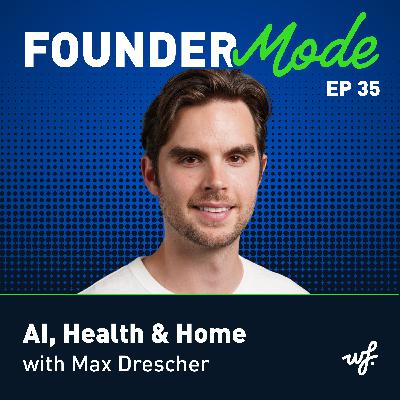
EPISODE 35Kevin and Jason sit down with Healthcare AI Guy founder Max Drescher to unpack how AI is actually changing healthcare, from front-desk voice automation and AI scribes to clinical decision tools and consumer apps that give people more ownership of their data. Max shares how a habit of writing internal M&A news briefs at UnitedHealth turned into a fast-growing newsletter and community, why distribution has become one of the most important forms of founder leverage, and what separates real impact from hype in today’s healthcare AI boom. They dig into the rise of tools that reduce burnout and administrative friction, explore longevity, Blueprint-style protocols, and digital twins, and look ahead to a near future where AI-powered biology and smarter clinical support reshape medicine long before fully autonomous AI doctors arrive.CHAPTERS00:00 – Why AI + health now06:30 – Max’s path from M&A to Healthcare AI Guy and the power of distribution12:10 – What’s real vs hype in healthcare AI for providers and patients18:30 – Longevity, Blueprint, and founders getting serious about sleep22:00 – The next five years of AI in health and where it’s all headedLINKSConnect with Max DrescherHealthcare AI Guy • LinkedIn • X/TwitterStay Connected with Founder ModeSubscribe to our newsletter: foundermode.kit.comConnect with KevinLinkedIn • X/TwitterConnect with JasonLinkedIn • X/Twitter
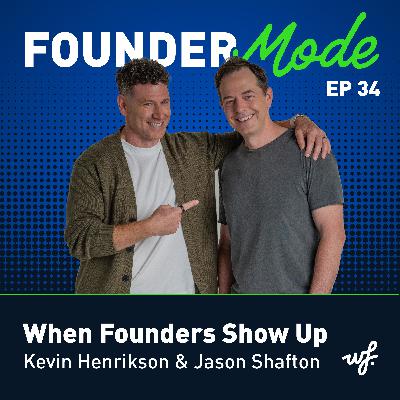
EPISODE 34 In this episode, Kevin and Jason break down how founders can turn conferences from low-ROI distractions into high-leverage growth engines. Fresh off a major healthcare event in Nashville, they unpack why most networking fails, how Pretty Good AI turned a platinum sponsorship into a full activation with mini-golf and meeting pods, and the systems that converted casual foot traffic into hundreds of real customer conversations. They dig into founder-mode presence, team ownership, pre-work, follow-up, and the small details that make an event actually move the business forward. CHAPTERS 00:00 – The Value of Networking Events 01:25 – Challenges of Traditional Networking 02:47 – Reevaluating Event Participation 03:27 – Executing a Successful Conference Strategy 04:24 – Planning for a Major Conference Stay Connected with Founder Mode Subscribe to our newsletter: foundermode.kit.com Connect with Kevin LinkedIn • X/Twitter Connect with Jason LinkedIn • X/Twitter
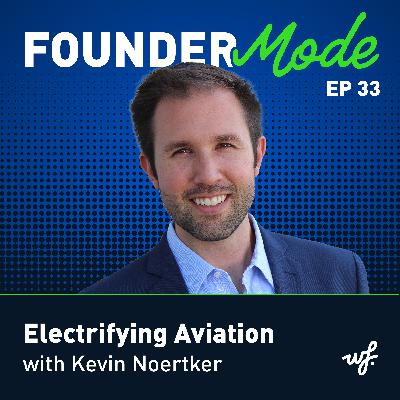
EPISODE 33Kevin Noertker, co-founder and CEO of Ampaire, is leading the charge toward sustainable aviation by electrifying the skies. In this episode, Kevin Henrikson and Jason Shafton visit Ampaire’s Long Beach hangar to talk about hybrid-electric aircraft, scaling innovation in a century-old industry, and why “hybrid isn’t the compromise—it’s the bridge.” Kevin shares how Ampaire is retrofitting existing planes to fly cleaner, safer, and farther using hybrid-electric propulsion, the challenges of certification and infrastructure, and the roadmap to fully electric flight. It’s a masterclass in pragmatic innovation—one that proves hardware can move fast when driven by purpose.CHAPTERS00:00 – Expanding Horizons of Hybrid Aviation05:00 – From Aerospace Giant to Startup Founder12:30 – Why Hybrid Beats Fully Electric (for Now)20:00 – Capital Efficiency and Government Partnerships27:45 – The Future of Flight: Hybrid as the BridgeLINKSConnect with Kevin NoertkerAmpaire.com • LinkedInStay Connected with Founder ModeSubscribe to our newsletter: foundermode.kit.comConnect with KevinLinkedIn • X/TwitterConnect with JasonLinkedIn • X/Twitter
EPISODE 32Founder Mode sits down with Natalie Kaminski of JetRockets to cut through AI hype in software development. Natalie shares findings from a five-month experiment using code assistants: top engineers see ~30% efficiency on tedious tasks, but AI can duplicate components, forget context, and mislead juniors who can’t evaluate output. She argues developers matter more than ever—AI augments, not replaces—while real value comes from problem definition, secure architecture, and disciplined human review. Tools help with migrations, boilerplate, and tests; judgment, clarity, and empathy still decide what ships.CHAPTERS00:00 – There’s no “I” in today’s AI03:30 – Do developers still matter?04:51 – AI as augmentation: the calculator analogy06:41 – Workable AI: migrations, boilerplate, tests (~30% gain)19:08 – Where AI breaks: duplication, lost context, human reviewLINKSConnect with Natalie Kaminskijetrockets.com • LinkedIn • X/TwitterStay Connected with Founder ModeSubscribe to our newsletter: foundermode.kit.comConnect with KevinLinkedIn • X/TwitterConnect with JasonLinkedIn • X/Twitter

EPISODE 31In this live Founder Mode episode recorded at Workshop in San Francisco, Jason and Kevin sit down with two of the most influential builders in modern tech — Max Mullen, Co-Founder of Instacart, and Andrew Ofstad, Co-Founder of Airtable. They share never-before-heard founding stories, from Instacart’s $20K Trader Joe’s hack to Airtable’s first prototype built entirely in local storage. The conversation spans early lessons in scrappy product development, balancing speed and craft, scaling company culture, leadership evolution, and founder burnout. They also dive into how AI is reshaping startup building, what makes SF’s comeback real, and their most contrarian lessons from a decade of creating category-defining companies.CHAPTERS0:00 – Welcome to Founder Mode Live2:00 – Backing the Cybertruck into Workshop4:25 – The $20K Trader Joe’s Story9:45 – Building Instacart’s First Catalog10:58 – Airtable’s Early Browser-Only MVP15:32 – Speed vs. Craft: Product Tradeoffs22:18 – Scaling Culture and Leadership29:10 – Founders on AI, Product, and Speed35:44 – Burnout, Balance, and Founder Longevity42:36 – SF’s Comeback and Final LessonsLINKSConnect with Max Mullenmaxmullen.com • LinkedIn • X/TwitterConnect with Andrew OfstadLinkedIn • X/TwitterStay Connected with Founder ModeSubscribe to our newsletter: foundermode.kit.comConnect with KevinLinkedIn • X/TwitterConnect with JasonLinkedIn • X/Twitter
EPISODE 30Microsoft product leader Sangya Singh joins Jason and Kevin to unpack how to decide what to ship first in AI and automation. She shares a “strategy to win” playbook (fall in love with the problem, define the hypothesis, then hire and build), why agility must be daily not monthly, and how Microsoft balances agentic and deterministic systems—highlighting a risky-but-breakthrough bet on self-healing RPA. The crew contrasts outputs vs. outcomes, explores eval-driven prioritization, and talks scale mechanics inside Microsoft. Sangya closes with what’s next: voice-based AI surfaces that discover what to automate and “mech-interrupt” style safety tooling so enterprises can see, govern, and correct model behavior.CHAPTERS00:00 – Cold open: “Say no to great”00:28 – MVPs and sequencing in the AI era03:45 – Sangya’s path & “strategy to win”10:40 – Self-healing RPA and outcomes over outputs25:35 – What’s next: AI surfaces & safetyLINKSConnect with Sangya Singh LinkedIn • X/TwitterStay Connected with Founder ModeSubscribe to our newsletter: foundermode.kit.comConnect with KevinLinkedIn • X/TwitterConnect with JasonLinkedIn • X/Twitter
EPISODE 29Private equity meets AI in a grounded, operator-first conversation with Jason Friedrichs of AEA Elevate. We cover why “no-regrets” initiatives and clear ROI gates beat hype cycles, how to build an AI-first value creation plan, and why team design—not just capital—drives repeatable growth. Jason shares his thoughts on where PE playbooks are shifting beyond spreadsheets, the small wins that compound across functions (GTM, support, back office), how to navigate macro shocks, and what sectors he believes are primed for outsized AI-enabled revenue and margin expansion.CHAPTERS00:00 – The “no-regrets” move00:37 – Framing PE × AI: beyond hype to operating leverage06:19 – ROI discipline, pilots, and budgeting for AI15:20 – Beyond capital: the PE playbook & first 180 days20:21 – Healthcare opportunity, macro shocks, and exitsLINKSConnect with Jason Friedrichsaeainvestors.com/elevate • LinkedInStay Connected with Founder ModeSubscribe to our newsletter: foundermode.kit.comConnect with KevinLinkedIn • X/TwitterConnect with JasonLinkedIn • X/Twitter

Comments

Download from Google Play

Download from App Store
 United States