


wRight to the Root
Subscribed: 1Played: 4
Subscribe


© Stephanie Wright
Description
In a cryptic world, Stephanie Wright is a beacon of authenticity. Her no-nonsense approach to practice management has made her a bold authority on understanding and solving complex medical industry problems. Join Stephanie as she takes her expertise on the road to explore hot topics in medical care with experts around the globe. In each episode Stephanie and her guests cover topics like insurance, healthcare tourism, education domestically versus abroad, international care systems & more.
20 Episodes
Reverse
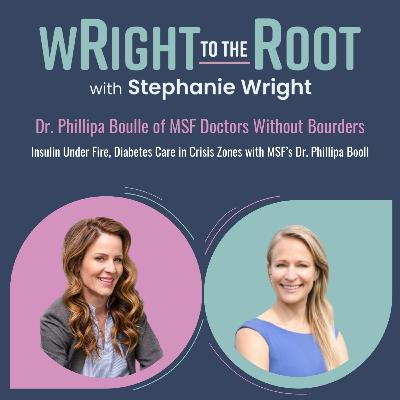
On this episode of wRight to the Root, Stephanie Wright sits down with Dr. Phillipa Boulle, a non-communicable disease (NCD) advisor with Doctors Without Borders (MSF) Switzerland, based in Geneva, to expose what it really takes to treat chronic illness in the middle of crisis.Dr. Boulle breaks down the growing global diabetes emergency, including why the vast majority of people living with diabetes are in low and middle income countries, and why sub-Saharan Africa is experiencing the fastest rise. She explains how MSF teams work to deliver care in war zones, displacement camps, and protracted humanitarian emergencies, where access to insulin, monitoring supplies, and even consistent food can disappear overnight.This conversation goes straight to the root of the problem, including:Why insulin access is still dangerously limited and overpriced, especially for people with type 1 diabetes who need it to surviveThe hidden crisis of missing glucose monitoring tools, making insulin use far more dangerous in humanitarian settingsHow emergencies like Gaza reveal life-threatening gaps in continuity of care when people are forced to flee repeatedlyMSF research showing insulin can remain stable at higher temperatures than labels suggest, changing what is possible in settings without refrigerationThe double standard in diabetes care, and why patients in the harshest conditions often get the hardest-to-use toolsWhat’s at stake in the UN High-Level Meeting on NCDs (September in New York), and why emergency diabetes care must be explicitly includedHow patient advocacy and government pressure can shift corporate behavior, and how Americans can support global health equityA powerful, grounded conversation about survival, dignity, and the urgent fight to treat healthcare as a human right, not a business.
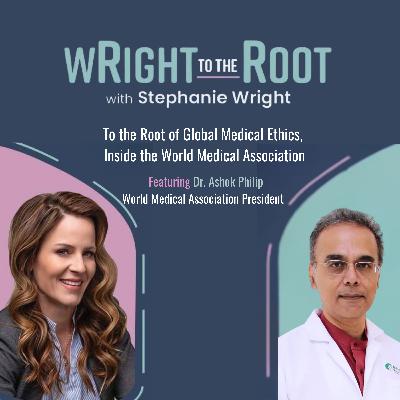
I flew all the way to Montevideo, Uruguay to sit down face-to-face with Dr. Ashok Philip (Malaysia), President of the World Medical Association, and this conversation goes straight to the root of why healthcare systems keep failing the people they are supposed to serve.The World Medical Association (WMA) was born in the shadow of the Nuremberg Trials and the medical atrocities of WWII, and that origin story still shapes its mission today: defend medical ethics, protect physician independence, and advocate for patients across borders. Dr. Philip breaks down what the WMA actually does, why it is often confused with the WHO (it is not the WHO), and how a global network of 115 member medical associations tries to push back when governments, corporations, and insurers prioritize “quick and cheap” over what patients truly need.If you have ever felt powerless watching insurance denials, bureaucratic delays, cookie-cutter care, or political posturing hijack medicine, this episode will hit home. And if you are a clinician, this is your reminder that policy is not optional, it is where patient outcomes are decided.In this episode, we unpack:Why the WMA was founded, and why ethics still sits at the center of global medicineHow private insurance denials and administrative burden are not “just an American problem”Why prevention and health literacy are always “unsexy,” but essentialUniversal healthcare realities, including rationing, access gaps, and technology tradeoffsHow to mobilize younger clinicians, including the WMA’s junior doctors networkAI in medicine, misinformation, and why “tools” still require human accountabilityBrain drain from developing countries, and what a fair global solution could look like🎧 Press play for a rare, behind-the-scenes look at global medicine from the top, and the urgent message Dr. Philip keeps returning to: if we do not address the root cause, we are just managing collapse.If this episode moves you, follow the show, leave a rating, and share it with one person who needs to hear that change is possible, and collective.
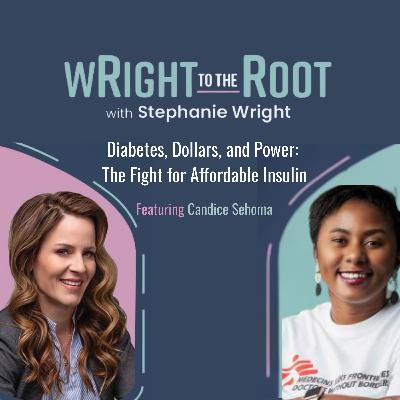
In this episode of wRight To The Root, Stephanie Wright is joined by Candice Sehoma, a Johannesburg-based access advisor with Doctors Without Borders (MSF), to unpack the global insulin access crisis and why a medication that has existed for over 100 years is still priced, patented, and distributed like a luxury. Candace shares how growing up in Alexandra, a historically marginalized township shaped by apartheid, fueled her commitment to structural change, not charity.Together, we dig into what keeps insulin and diabetes medicines out of reach, including patent systems that protect monopolies, supply decisions that can trigger shortages, and a market that increasingly prioritizes high-profit GLP-1 drugs while basic diabetes care gets squeezed. We also talk about the real path forward, from policy reform and competition enforcement, to local and regional manufacturing, to grassroots organizing and treatment literacy so patients and communities can advocate with power and clarity.If you have ever wondered why life-saving medicine can be marketed like candy and rationed like gold, this conversation is for you.Listen, share, and take action, because patients united are harder to ignore.
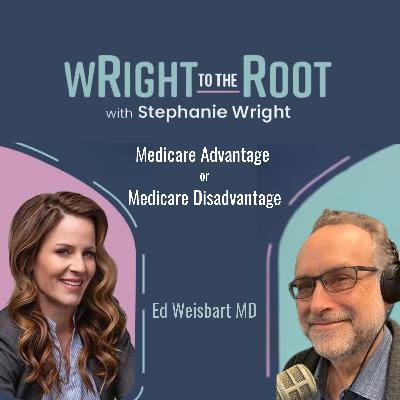
On this episode of wRight To The Root, Stephanie Wright sits down with Dr. Ed Weisbart — a retired family medicine physician, former Chief Medical Officer at Express Scripts, and longtime healthcare advocate with Physicians for a National Health Program (PNHP).Dr. Weisbart shares what pushed him from fighting for patients in the exam room to fighting for them in the streets and in policy: years of watching people delay or skip care because of copays, deductibles, denials, and fear of medical debt. Together, Stephanie and Dr. Weisbart unpack why “getting sick” in America has become financially terrifying — and how prior authorization, Medicare Advantage, and corporate profiteering are shaping who gets care and when.You’ll hear a powerful real-life example of how traditional Medicare vs. Medicare Advantage can mean the difference between next-day testing and weeks of delay — delays that, for many patients, can be life-or-death. The conversation also tackles the biggest myths that stall progress (especially the fear of taxes), and why multiple analyses show Medicare for All could cover everyone with no copays or deductibles for the same or less than we already pay.This episode connects the dots between healthcare access, corporate greed, and democracy — while offering real hope: new momentum in Congress, growing coordination among advocacy organizations, and a clear message for both patients and clinicians—silence won’t change the system, but collective action can.If you’ve ever been denied care, overwhelmed by bills, or told to “wait for approval,” this conversation is for you.
Note on this episode’s audio: This conversation was recorded in October 2025 in Reykjavík. Due to a camera malfunction, we were only able to recover the audio—and it was saved on a note-taking device, so it’s not studio-quality. That said, I’m genuinely pleased with how it turned out, and I’m excited to share it with you.In this Reykjavík sit-down, Stephanie Wright visits withBrynja Björk, an Icelandic dentist who graduated from the University of Iceland and then practiced in Sweden for 11 years—giving her a rare, inside view of how dentistry works across two Nordic systems.Together, we dig into what happens when healthcare is treated as a public good (with rules, guardrails, and faster payments) versus a profit engine (with denials, delays, and debt). We talk access, affordability, workforce shortages, and what the U.S. could learn—without pretending any system is perfect.In this episode, we cover:Why Brynja became a dentist (and how dental anxiety shaped her mission)Dentist shortages and what it means when patients wait months for an appointmentHow licensing can be surprisingly portable across Nordic countriesThe U.S. reality: $300k–$500k+ dental school debt and the barriers for foreign-trained dentistsIceland’s “hybrid” coverage: kids covered, support for seniors, and what limitations look likeReimbursements that arrive in days, not months—and denials you can actually respond toContinuing education requirements and the stakes of losing government contractsA big surprise for Americans: Iceland doesn’t train hygienists, so dentists do the hygieneSweden’s tiered reimbursement approach: the people who need the most get the mostFluoride, misinformation, and why policy + prevention beats fearIf you’ve ever wondered what a more functional, prevention-forward system could look like—this is a powerful place to start.🎧 Listen in, then share this episode with someone who still thinks “insurance” equals “care.”

We’re back for Season 2 of wRight To The Root — and we’re kicking things off with a term most of us have heard, but few can actually explain: antitrust laws.On this episode, host Stephanie Wright sits down with Jake, a licensed dentist turned healthcare attorney, to demystify one of the most misunderstood forces shaping our care: antitrust law. Together, they unpack how rules that are supposed to prevent monopolies and protect fair competition actually play out in healthcare—touching everything from hospital mergers and health systems that own their own insurance plans, to Delta Dental, auto-adjudication, and whether insurers are effectively “practicing medicine” without a license.Using real-world examples, including the Ticketmaster and Taylor Swift saga as a surprising contrast, Stephanie and Jake explore why healthcare often seems insulated from antitrust enforcement, how consolidation and opaque pricing limit patient choice, and what risks doctors face if they try to push back collectively.If you’ve ever wondered why your options feel so limited, your bills so confusing, and your insurance so powerful, this conversation pulls back the curtain on the antitrust rules—and loopholes—shaping accessibility, affordability, and the future of care in America.Have questions, stories, or thoughts on antitrust in healthcare? Drop your comments and questions—we’ll be bringing Jake back for a follow-up episode.
Dr. Paul Henny is back for another episode, and in this one we're discussing some of the challenges modern dentists face: high overhead, pressure from insurance, and how school debt can make prioritizing profits over patients unfortunately tempting for many.We also dig into something often overlooked in dental care: the psychological aspects of patient behavior, and how lacking understanding of how people work can really only lead to significant frustration for practitioners.Want more dental podcast action? Be sure to subscribe, and check out my website for sneak peeks of future episodes:http://www.stephaniewright.com/wright-to-the-root/If you want to stay connected, check out my Facebook page:https://www.facebook.com/stephanieIAS
Pretty much every American has had at least one negative run-in with their medical or dental insurance, but it wasn't always like this. In this episode, I'm joined by Dr. Paul Henny, a fee-for-service dentist who transitioned away from accepting dental insurance and all its limitations.We talk a bit about how insurance companies transitioned from focusing on patient care to financial gain and some of the sneaky tactics they use. Dr. Henny also shares what it was like to move from accepting insurance to going fully fee-for-service and why he chose to make the change. Plus, in this episode we discuss the overall increasing corporatization of both medical and dental services, and how practitioners can shift to a more patient-centered approach.Want more dental podcast action? Be sure to subscribe, and check out my website for sneak peeks of future episodes:http://www.stephaniewright.com/wright-to-the-root/If you want to stay connected, check out my Facebook page:https://www.facebook.com/stephanieIAS
¿Dónde está la dentista? This episode with Dr. Raúl Pascual—a dentist with his own clinic in Sevilla, Spain—is a real treat. If you've ever wondered how different dental schooling is abroad, Spain is an interesting example. From the length and topics of their schooling to the price (unsurprisingly lower than the US!), how different countries treat potential future dental professionals could have a large impact on the availability of those services in the future.But the differences (and similarities) between dentistry in our countries goes a step further. We also discuss challenges in private versus public dental care, the impact of lacking business education on dental practices, and the general public's view on the importance of preventive dental care.Want more dental podcast action? Be sure to subscribe, and check out my website for sneak peeks of future episodes:http://www.stephaniewright.com/wright-to-the-root/If you want to stay connected, check out my Facebook page:https://www.facebook.com/stephanieIAS
We're back in this episode with part 2 of my conversation with Dr. Susan Maples! In this episode we're digging a little deeper into some of the topics we covered in the previous episode, plus exploring a couple new ones.Join us as we talk about what truly motivates insurance companies and the ways it prevents them from truly caring for their patients. We also talk a little bit about insurance fraud and why some dental practices find themselves tempted to wheedle their way around their contracts and low reimbursements rates.We dive a LOT deeper into why it's so important to get a comprehensive view of a person's dental health and how it correlates to other areas, from mouth bacteria levels to the results of a sleep study. Susan also shares how that full-body view allows for dental and medical professionals to better determine and advocate for the kinds of prevention a patient may need.For practitioners, deciding to stop taking insurance is understandably a scary prospect. If you take one thing away from this episode, I hope it's that for dental/medical professionals like Susan who have the right setup to take the plunge, the risk can be worth it.Want more dental podcast action? Be sure to subscribe, and check out my website for sneak peeks of future episodes:http://www.stephaniewright.com/wright-to-the-root/If you want to stay connected, check out my Facebook page:https://www.facebook.com/stephanieIAS
I am SO excited to have Dr. Susan Maples on the show with me today! As an author, speaker, and dentist practicing total health dentistry, she has a lot of first-hand experience with the ups and downs (mostly downs) of the dental insurance industry.In this episode, Susan and I talk about how critical prevention is in patient care, but how little the current insurance, dental, and medical systems prioritize it. While reactive care—like performing a root canal—only happens once in a while, the ROI on prioritizing preventative care—the lifestyle changes that could've prevented the tooth's decay in the first place—vastly reduces the overall cost of care for patients and providers, both dental and medical.In that vein, we also chat about a more holistic approach to dentistry, how important it is to get to the root of what's truly causing a dental or oral issue with a patient, and why we need to start—figuratively!—putting the mouth back in the body when considering healthcare.Want more dental podcast action? Be sure to subscribe, and check out my website for sneak peeks of future episodes:http://www.stephaniewright.com/wright-to-the-root/If you want to stay connected, check out my Facebook page:https://www.facebook.com/stephanieIAS"
Known for his viral "Daisy Dukes dentist" video, Gary Scott has publicly shared some pretty strong opinions on dental insurance companies. As reimbursements continued to drop for dental offices, some dentists—including Gary—have decided to crawl out from being under the suffocating thumb of dental insurance providers and have come out on the other side.In this episode, Gary and I talk about what his transition away from accepting dental insurance looked like and how he communicated the change with his patients. We also discuss the challenges on the business side that have ravaged independent dental providers over the last several years (including the rising presence of Dental Service Organizations (DSOs)), and striking the balance between ethical practice and the financial realities of being a businessowner.Want more dental podcast action? Be sure to subscribe, and check out my website for sneak peeks of future episodes:http://www.stephaniewright.com/wright-to-the-root/If you want to stay connected, check out my Facebook page:https://www.facebook.com/stephanieIAS
Dentistry has changed a lot since today's guest, Gary Scott, graduated from dental school in the early 90s. Some things—like the more hands-on education and emphasis on student shadowing—have gotten better. But with the way higher education and dental insurance are structured makes it much harder for new dentists to get off the ground and start their own practices.In this episode, Gary and I chat about how the challenges he faced getting into dentistry have evolved, making it much harder for new dental professionals to establish themselves and find success. Plus, we'll talk about the role dental insurance plays in creating an antagonistic relationship between practitioners and their patients, and how everyone but the insurer almost always loses out.Want more dental podcast action? Be sure to subscribe, and check out my website for sneak peeks of future episodes:http://www.stephaniewright.com/wright-to-the-root/If you want to stay connected, check out my Facebook page:https://www.facebook.com/stephanieIAS

I can't wait for you to hear from today's guests, Drs. Jana and Lara Baatenburg. These sisters stuck together through their undergraduate degrees, into med school, and even into their residencies. They now own their own practice where they employ a unique type of medical care: concierge medicine.After a few years practicing, they both knew they wanted the opportunity for a more personal connection with their patients. While the sisters explored a few other possibilities, they ultimately landed on "concierge medicine," essentially a healthcare model where patients pay a monthly or annual "membership fee."This practice style allows doctors to have fewer overall patients, giving them more time to focus on each patient individually. It also allows them to be a lot more accessible to their patients if they need to be seen last-minute. And, in many cases, the membership fee can actually cost less than insurance premiums while providing a higher level of individualized care.Join us as we dive into Jana and Lara's world of patient-focused healthcare that thrives outside "traditional" practice models.Want more dental podcast action? Be sure to subscribe, and check out my website for sneak peeks of future episodes:http://www.stephaniewright.com/wright-to-the-root/If you want to stay connected, check out my Facebook page:https://www.facebook.com/stephanieIAS

Anyone who's attended school out-of-state knows it has its unique challenges, but what about pursuing higher education in a totally different country?Icelandic orthodontist Dr. Gísli Árnason is back in this episode, and we're discussing what it was like for him to specialize in orthodontics across country borders and an ocean. (Meanwhile, in the states doctors can't even cross state lines and provide care with the same license!)We also discuss what it's like for him to practice orthodontics in a small community and some of the unique challenges that come with it, the prevalence of dental insurance fraud in Iceland, and more about Icelandic dental practices! Want more dental podcast action? Be sure to subscribe, and check out my website for sneak peeks of future episodes:http://www.stephaniewright.com/wright-to-the-root/If you want to stay connected, check out my Facebook page:https://www.facebook.com/stephanieIAS
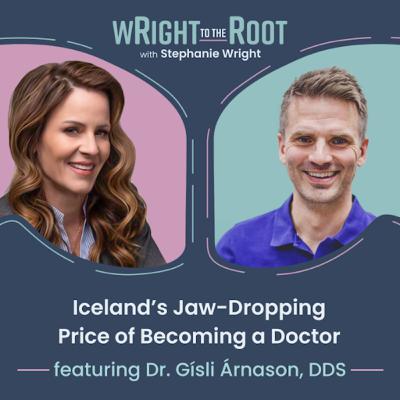
My first-ever recording—set in Northern Iceland—makes this episode with Dr. Gísli one I’ll never forget. We break down Iceland’s healthcare and dental systems, discussing both flaws and improvements. But the real jaw-dropper? Dr. Gísli’s reaction when he learns just how much debt doctors in America take on compared to those in Iceland and across the EU. And to make it worse—while U.S. medical education costs have skyrocketed by over 80%, the largest dental insurer didn’t increase reimbursements for over a decade. You won’t believe his response!Want more dental podcast action? Be sure to subscribe, and check out my website for sneak peeks of future episodes:http://www.stephaniewright.com/wright-to-the-root/If you want to stay connected, check out my Facebook page:https://www.facebook.com/stephanieIAS

I hope you're ready for our third and final episode with Dr. Kurt Lindberg! We had a really insightful conversation about some of the overlooked nuance when considering the future of healthcare in the US. From "concierge medicine" (which I have a future episode that I can't WAIT to share) to the difference in provider accountability in medical versus dental practices, Kurt brought up some topics that were even new to me.We also talk about what offering comprehensive healthcare could actually look like, where financial waste comes from for Medicare patients (I'll give you a hint: it ISN'T from preventive care!), and some of the ways we might actually be able to get this crazy healthcare system to change.Kurt's TEDx Talk – You Get What You Pay For: Transforming the US Healthcare Systemhttps://www.youtube.com/watch?v=7zNfXHmT0fIWant more dental podcast action? Be sure to subscribe, and check out my website for sneak peeks of future episodes:http://www.stephaniewright.com/wright-to-the-root/If you want to stay connected, check out my Facebook page:https://www.facebook.com/stephanieIAS

The idea of "universal healthcare" is pretty divisive in the US. Those arguing against it worry about increased individual costs as they pay for healthcare for undocumented immigrants or unemployed citizens. Those in favor of it argue it's more important to provide adequate care for the entire population, regardless of immigration or employment status.What if we could make everybody happy, making healthcare more affordable, more efficient, AND more accessible? It's more likely than you'd think!This episode with Dr. Kurt Lindberg was an incredibly insightful one as we tackle the topic of universal healthcare, single-payer healthcare, comprehensive healthcare, government health insurance, or whatever else people like to call it. In particular, we talk about how not offering comprehensive healthcare actually makes it more expensive, even for patients with private insurance.We also cover the lack of price transparency for office visits, diagnostics, medications, etc. due to negotiations between healthcare systems, insurers and pharmaceutical companies. Oh, and the classic insurance battle of what's "really necessary" for a patient's medical treatments. I can't wait for you to hear it!Kurt's TEDx Talk – You Get What You Pay For: Transforming the US Healthcare Systemhttps://www.youtube.com/watch?v=7zNfXHmT0fIWant more dental podcast action? Be sure to subscribe, and check out my website for sneak peeks of future episodes:http://www.stephaniewright.com/wright-to-the-root/If you want to stay connected, check out my Facebook page:https://www.facebook.com/stephanieIAS
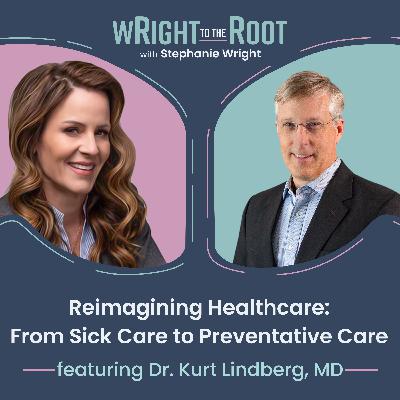
Since starting his family medicine practice in 1999, Kurt realized the US healthcare system is stuck in a vicious cycle. Patients who can't afford preventative care end up having serious (usually expensive) medical events, like a heart attack or stroke. Medical practitioners are so busy trying to keep up with the increased demands caused by these larger events that they don't have time to stop and think about how to prevent those serious events in the first place. Then patients are so bogged down by medical expenses they still can't afford care to prevent future medical events!We dig deep in this episode, touching on how universal healthcare is not, in fact, a perfect system. But, our entire healthcare system—providers, insurers, even patients—needs a serious mindset shift toward more proactive, preventative care to keep costs down for everyone. Plus, we'll discuss how educating individual patients and the general public is one of the best, most helpful things practitioners can do to support their patients.Kurt's TEDx Talk – You Get What You Pay For: Transforming the US Healthcare Systemhttps://www.youtube.com/watch?v=7zNfXHmT0fIWant more dental podcast action? Be sure to subscribe, and check out my website for sneak peeks of future episodes:http://www.stephaniewright.com/wright-to-the-root/If you want to stay connected, check out my Facebook page:https://www.facebook.com/stephanieIAS
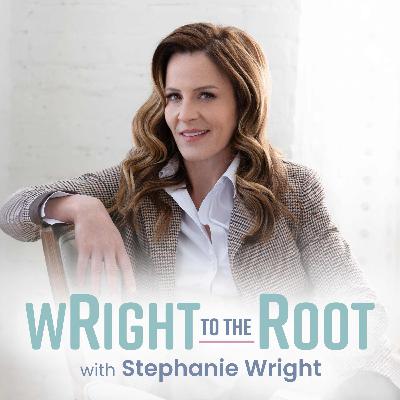
America’s healthcare system is a mess—and I'm calling it out. I'm Stephanie Wright, dental and healthcare advocate, and host of the wRight to the Root podcast. Every other week, I dive into the issues shaping modern healthcare, sharing insights from medical professionals around the world. Expect bold, no-BS conversations about building a system that puts care over profit. Listen to wRight to the Root on Spotify, Apple Podcasts, and YouTube.Want more dental podcast action? Be sure to subscribe, and check out my website for sneak peeks of future episodes:https://stephaniewright.com/podcastIf you want to stay connected, check out my Facebook page:https://www.facebook.com/wrighttotheroot
Comments

Download from Google Play

Download from App Store
 United States