


 Claim Ownership
Backtest
Subscribed: 0Played: 6
Subscribe

© Daniel Gamboa
Description
12 Episodes
Reverse
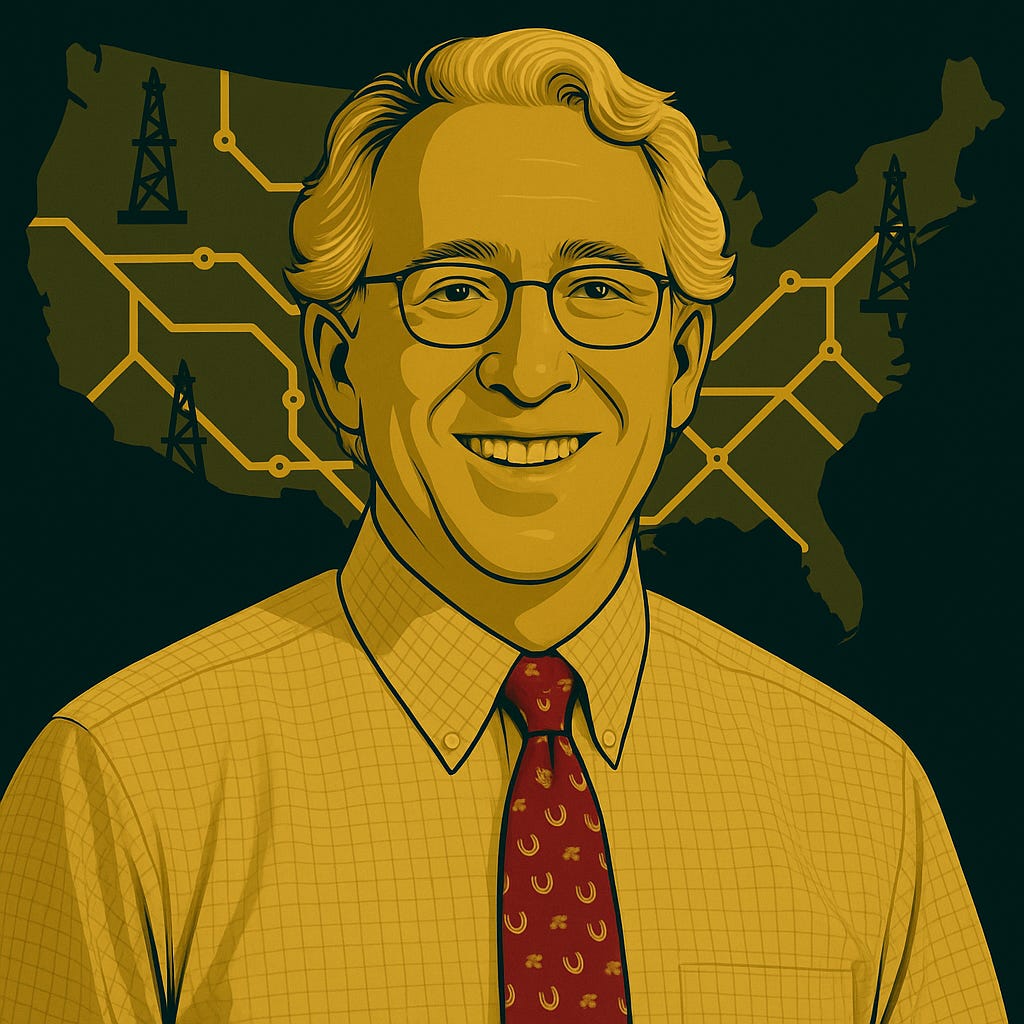
At the end of Part 1, Devon had just bought Mitchell Energy for $3.5B and locked in the technological innovation behind the shale revolution. But the real boom in drilling, debt, and production doesn’t kick off until a worldclass landman and dealmaker from Oklahoma City—Aubrey McClendon—decides to bet his career and wealth on natural gas being the defining fuel of the 21st century.In this episode, we tell Aubrey’s story: from deep family roots in oil & gas to hustling as an independent landman in the brutal 1980s bust, to co-founding Chesapeake, taking it public in 1993, and doubling production year after year even as gas prices went nowhere. We follow the moment he and partner Tom Ward fly to San Jose to sit across the table from Calpine executives and realize just how much gas-fired power demand is coming—and why that meeting gives Aubrey the conviction to pivot Chesapeake almost entirely to gas in the late 1990s, just before Alan Greenspan warns Congress about tight natural gas supplies in the US.We walk through how he uses every financing tool available—bank lines, high-yield bonds, converts, joint ventures, volumetric production payments, and massive midstream commitments—to plug billions in capital needs and amass premier shale positions in the Barnett, Marcellus, Permian and beyond.We draw lessons on effective fundraising, capital cycles, commodity cycles and technological revolutions—and why going to the source for real market signals is still the best way to build conviction.Chapters(02:35) Alan Greenspan on natural gas as a headwind for US growth(04:05) Aubrey McClendon’s early life(07:02) Aubrey graduates from Duke and joins Jaytex(09:48) Setting out on his own as a landman(16:07) Chesapeake goes public in 1993(22:55) 1998 natural gas inflection point for Chesapeake(26:30) Chesapeake gets into shale(32:55) How big capex gets financed(44:38) Aubrey loses substantially all of his Chesapeake stock from a margin call(49:29) Aubrey gets pushed out of Chesapeake & starts AEP(52:47) Lessons learnedReferencesThe Frackers: The Outrageous Inside Story of The New Billionaire Wildcatters by Gregory Zuckerman (Link)Saudi America: The Truth About Fracking and How It’s Changing the World by Bethany McLean (Link)Chesapeake’s 1993 Annual Report (Link) This is a public episode. If you would like to discuss this with other subscribers or get access to bonus episodes, visit www.backtestpodcast.com
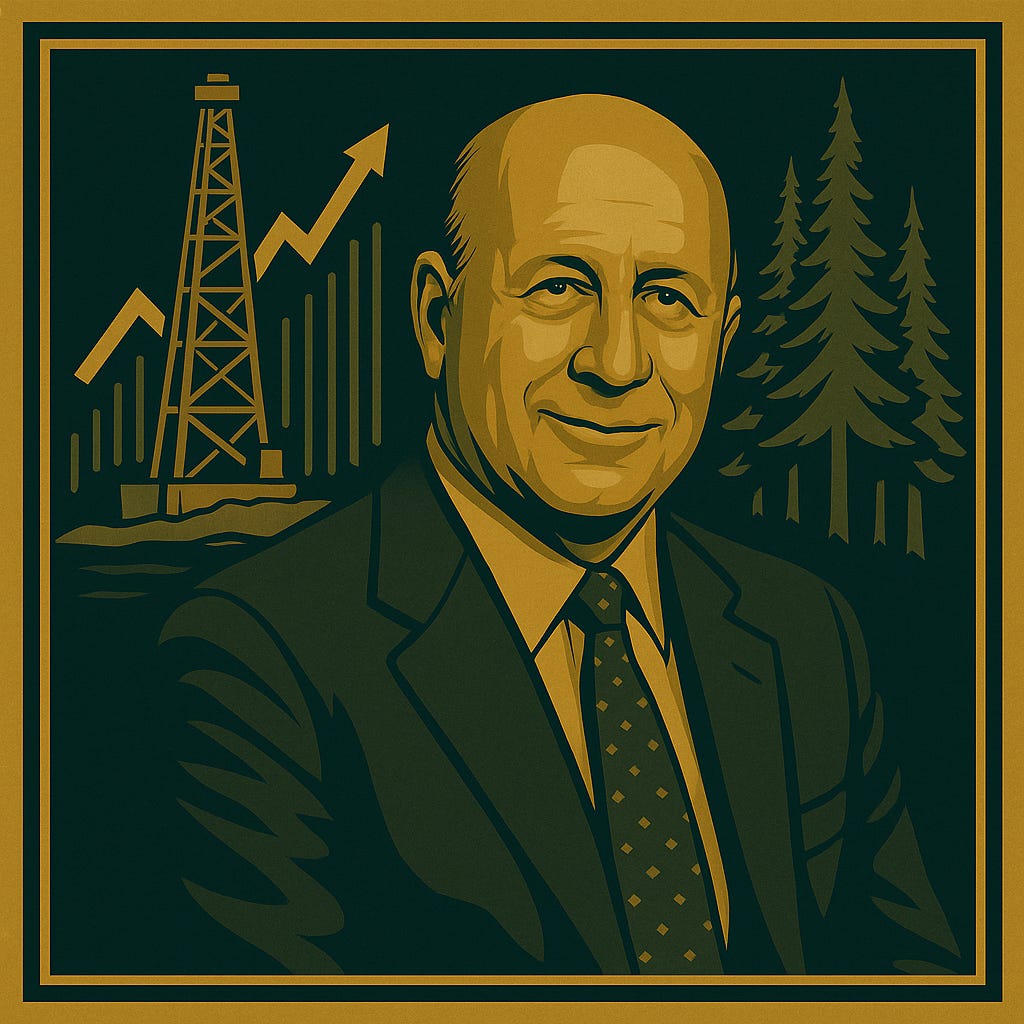
George Mitchell and his team—people like Nick Steinsberger—through relentless experimentation and financial pressure targeted natural gas in the Barnett Shale and unlocked generations of US energy supply. The question was less, “is the gas there?” and more “can it be produced economically?”By answering that question they changed the US natural gas market, global geopolitics, and the daily life of everyday Americans.In this episode we tell the story of George Mitchell, the son of Greek immigrants who clawed his way from financial hardship in Galveston to build a multi-billion dollar energy business—first by using his technical skills to find natural gas others missed, then by signing a pivotal long-term contract to feed Chicago’s growing demand. That deal generates substantial cash flow, but it also becomes a ticking time bomb: as US gas markets lurch through decades of regulation, shortages, and deregulation, Mitchell’s core field starts to run out, and the company faces the real prospect of defaulting on its obligations.Backed into a corner, Mitchell bets the future of his firm on the Barnett Shale—rock that industry experts say can’t be produced economically. We follow two decades of failed experiments, internal skeptics, and near-disaster until a young engineer, Nick Steinsberger, stumbles into a cheaper way to frack wells and finally cracks the code that turns the Barnett from science project into scalable resource.Along the way, we zoom out to the larger gas market: how postwar pipeline build-outs, 1970s energy crises, and 1980s deregulation set the stage for Mitchell’s moonshot—and why this quiet breakthrough in North Texas is the reason today’s AI data centers, power grids, and geopolitics have the luxury of assuming abundant US energy supply.Chapters(01:07) Excerpt from The Frackers(02:30) The US supply of energy for AI was unlocked by the Shale Revolution(06:40) George Mitchell’s childhood(11:21) George and Johnny Mitchell start Oil Drilling Co(14:05) Finding the Boonsville Bend gas field(20:30) The market for Boonsville gas & signing the Chicago contract(25:00) US natural gas markets through the decades(30:30) Mitchell Energy goes public(33:15) The decline of gas reserves from Boonsville leads to Barnett experiments(34:21) Shale geology versus conventional formations(42:22) Mitchell Energy sued by landowners(46:10) Bill Stevens, COO of Mitchell Energy, skeptical of the Barnett project(47:09) Chevron’s Barnett project(51:20) Nick Steinsberger stumbles into an insight & unlocks the code(58:30) Mitchell Energy tries to sell itself, fails, then succeeds(01:03:31) Lessons learnedReferencesThe Frackers: The Outrageous Inside Story of The New Billionaire Wildcatters by Gregory Zuckerman (Link)George P. Mitchell: Fracking, Sustainability, and an Unorthodox Quest to Save the Planet by Loren C. Steffy (Link)A Retrospective Review of Shale Gas Development in the United States: What Led to the Boom? By Zhongmin Wang and Alan Krupnick, 2013 (Link)Windfall: How the New Energy Abundance Upends Global Politics and Strengthens America’s Power by Meghan L. O’Sullivan (Link) This is a public episode. If you would like to discuss this with other subscribers or get access to bonus episodes, visit www.backtestpodcast.com

Imagine starting a company to change the world of finance right before an epic stock market crash.Elon Musk famously said that PayPal wasn’t a hard company to create. It was a hard company to keep alive.In 1999, three future titans of technology—Max Levchin, Peter Thiel, and Elon Musk—charge straight into the blaze to bring payments and finance into the internet age. This is the story of how a handful of brilliant founders and their team navigate from crisis to crisis, face constant near-failure, and create the first successful internet payments solution. From the wreckage of the dot com bubble, they emerged refined—the founders, investors, and builders who would go on to shape the next two decades of Silicon Valley—and a lot of the world we live in today.Chapters(01:20) Mr. Buffett on the Stock Market(02:17) The stock market in 1999(05:21) Intro to Max and Peter(09:49) Intro to Elon(15:45) Why they choose to do startups this late in the cycle(20:51) Insight of eBay as a perfect market for p2p payments(22:51) Competition between Confinity and X(26:55) Confinity and X merge(34:09) Novel business model & technology innovation(37:29) The stock market crash dynamics(43:25) How PayPal navigates post-9/11 slump with an IPO(48:42) The PayPal Mafia(50:40) Nature vs. nurture(54:02) Takeaways on market timing(55:24) The internet delivered on its promiseReferencesThe Founders: The Story of Paypal and the Entrepreneurs Who Shaped Silicon Valley by Jimmy Soni (Link)The PayPal Wars: Battles with Ebay, the Media, the Mafia, and the Rest of Planet Earth by Eric M. Jackson (Link)PayPal S-1 Filing in 2002 (Link)Mr. Buffett on the Stock Market, Nov. 22nd 1999 (Link) This is a public episode. If you would like to discuss this with other subscribers or get access to bonus episodes, visit www.backtestpodcast.com
Technology waves are easy to see in hindsight, but often hard to see before they arrive. It’s even harder to build enough conviction to take a risk, ride the wave, and build something great.Jeff Bezos did just that. And while the Amazon story has been told many times, it’s fascinating to think about what he saw that gave him the confidence to leave his comfortable Wall Street job to start Amazon.How did he see the wave before most people, and what gave him the conviction to go for it? We cover his key relationship with David Shaw, his market research, and his regret minimization framework.Famously, Amazon focused on books and grew like a rocket ship. How did they navigate the hype cycle and the dot com mania? Was their approach to investing during the boom the right approach? What can we learn from how they navigated the crest at the height of the bubble?Finally, we ask maybe the most important question of all—how did Amazon survive? What were the market conditions they had to navigate? Did they do anything specific to position themselves or did they just get lucky?Chapters(01:20) Increasing return games(05:38) Jeff Bezos’s background(10:27) Market backdrop in the late 1980s, early 1990s(13:54) Jeff Bezos meets David Shaw(16:47) How Jeff Bezos sees the wave and builds conviction(32:22) How Amazon navigates the wave(35:25) Joy Covey hired as CFO(36:27) Amazon’s investment philosophy during the boom(42:40) How Amazon survives the crash(44:25) Amazon’s financings(49:41) The market crash and Amazon’s reaction(52:50) Why did Amazon survive?(57:50) See the wave, ride the crest, survive the crashReferencesThe Everything Store: Jeff Bezos and the Age of Amazon by Brad StoneInvent & Wander: The Collected Writings of Jeff BezosAmazon SEC filings & shareholder letters from 1996-2002“Riding the Perilous Waters of Amazon.com” by Peter de Jonge, New York Times Magazine, published on March 14, 1999 (link)Increasing Returns and the New World of Business by W. Brian Arthur (link)2,300x web growth from ‘93-’94, John Quartermann, Matrix News, Vol. 4, No. 2 (link)Acquired Episodes (History, Tom Alberg) This is a public episode. If you would like to discuss this with other subscribers or get access to bonus episodes, visit www.backtestpodcast.com
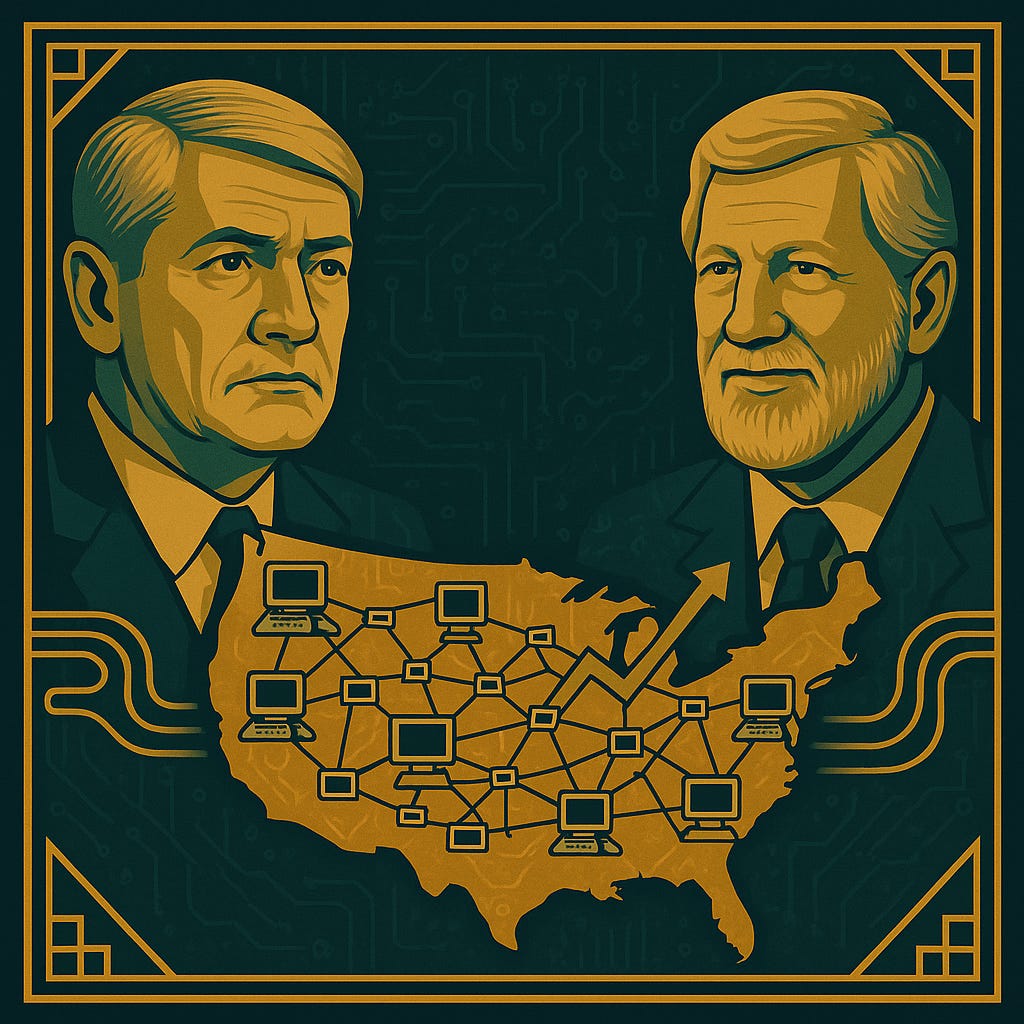
In the late 1990s, the internet grew exponentially to become an enormous engine for technological progress and economic disruption.The existing telecommunications infrastructure was designed to carry voice and television signals—not data packets. The system needed billions of dollars in fiber and copper to support the tidal wave. Telecom entrepreneurs, incumbent executives and capital markets were eager to invest capital and ride the boom.In this episode, we tell the parallel rise (and unraveling) of two giants who tried to wire the future from opposite ends of the network.On one side: John Malone, the genius capital allocator behind TCI, stitching together last-mile cable systems and striking the blockbuster sale to AT&T in 1999 as the industry chased an “integrated provider” vision after the ’96 Telecom Act.On the other: Bernie Ebbers of WorldCom, an acquisition machine that vaulted from discount long-distance reseller to national carrier—fueled by a once-accurate-later-obsolete statistic implying “internet traffic doubles every 100 days,” a meme born at UUNet and soon echoed by CEOs, analysts, and even the U.S. Commerce Department.We follow the capex arms race, Williams’ ingenious move to pull fiber through abandoned pipelines, the strategic missteps at AT&T, and the line-cost KPIs that nudged WorldCom across the line from pressure to fraud.Along the way, we draw out lessons for investors and operators that resonate in today’s AI boom.Chapters(01:15) The meme that sparked the boom(04:00) Market structure for telecom in the 1990s(10:01) Huge capital expenses(11:16) Opportunity space for entrepreneurs(12:59) Introducing Bernie Ebbers and John Malone(18:02) The invention of EBITDA(20:18) Everything changes in ‘95 and ‘96(26:50) LDDS becomes WorldCom—a top long-distance carrier(31:20) TCI becomes a top cable company(35:14) Prices down in long-distance telephone & last-mile assets become very valuable(37:24) TCI acquired by AT&T(39:10) Contrasting dot com vs telecom financing(43:23) AT&T-TCI merger challenges & WorldCom earnings down(52:02) Aftermath for John Malone and Bernie Ebbers(55:53) Lessons learned and applications to todayReferencesCable Cowboy: John Malone and the Rise of the Modern Cable Business (link)Born to Be Wired: Lessons from a Lifetime Transforming Television, Wiring America for the Internet, and Growing Formula One, Discovery, Sirius XM, and the Atlanta Braves by John Malone (link)Extraordinary Circumstances: The Journey of a Corporate Whistleblower by Cynthia Cooper (link)Boom and Bust in Telecommunications by the Federal Reserve Bank of Richmond (link) This is a public episode. If you would like to discuss this with other subscribers or get access to bonus episodes, visit www.backtestpodcast.com
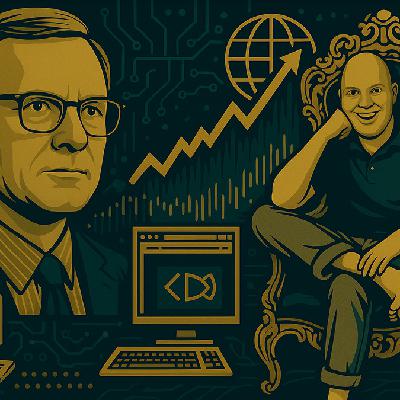
DescriptionGold-rush energy meets browser wars.In mid-1994 Silicon Graphics legend Jim Clark sits down with a 22-year-old programmer Marc Andreessen in the heart of Silicon Valley. Clark, a rebellious hardware icon trying to reinvent himself, and Andreessen, fresh off building the first web browser, bet that the browser will be the operating system to the open web.Their new company races from zero to market share dominance, forcing Microsoft’s “tidal wave” pivot. They turn their IPO into a marketing weapon on August 5, 1995 when Netscape goes public without profits—and the stock soars—sending a blaring signal to founders, VCs, and retail investors that the internet era (and a historic boom) has begun.Along the way, we unpack how Clark helped flip Silicon Valley’s power dynamics in favor of founders and engineers, and why Netscape’s triumph—and ultimate fate—should shape how we navigate today’s AI cycle.Chapters(00:18) Introduction(01:13) The Tidal Wave Memo(03:45) Microsoft’s Dominance in the 1990s(06:40) The Origin Story of Netscape(16:55) Who Was Jim Clark?(18:34) The University of Utah as the Epicenter of Graphics Technology in the 1970s(29:35) Jim Clark Changes the Game(34:03) Netscape Shapes the Web(36:31) Microsoft Responds(38:20) The Mental Model of Dominating Operating Systems(41:00) Why Was Netscape the Spark and Not Spyglass?(42:17) Netscape’s IPO and the Macro Environment(49:00) The Boom Starts(50:25) Lessons from the Netscape Era(52:24) Was Netscape Ultimately Successful?ReferencesThe New New Thing by Michael Lewis (link)Technological Revolutions and Financial Capital: The Dynamics of Bubbles and Golden Ages by Carlota Perez (link)Marc Andreessen on Inventing The Internet Browser (link) This is a public episode. If you would like to discuss this with other subscribers or get access to bonus episodes, visit www.backtestpodcast.com
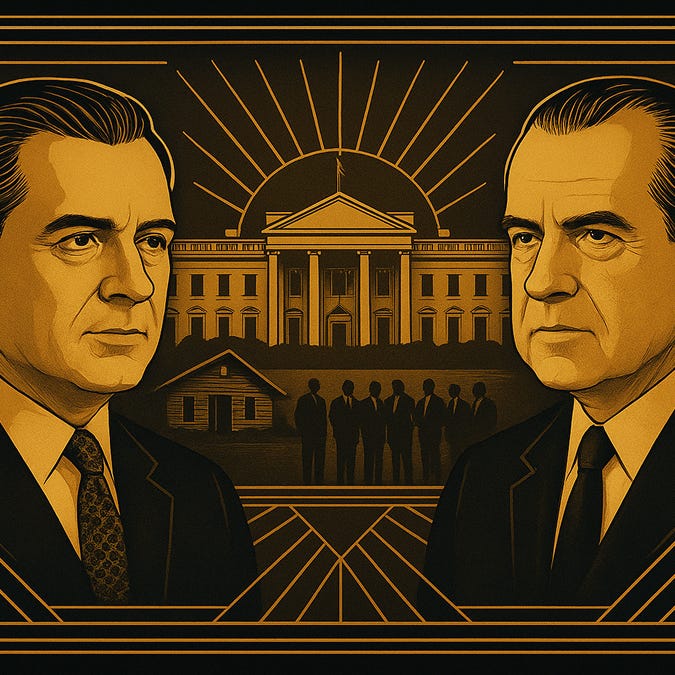
A run on the dollar, stagflation, and an election on the line—Part 3 wraps up the series with President Nixon’s shocking announcement to shut the gold window… a move that changed the monetary system forever and signaled the beginning of the end for the perception of gold as money. We meet John Connally, the swaggering Democratic governor of Texas who rode in the car with JFK when he was shot, and later became Nixon’s Treasury Secretary. He was the political closer tasked with averting a global monetary crisis and more importantly, securing Nixon’s re-election in 1972.In the summer of 1971—with inflation rising, unemployment hovering near 6%, and foreign central banks suggesting they might convert dollars into gold—Connally, only months into the job, worked with Paul Volcker and others on a plan to fix the economy.During an intense weekend at Camp David, Connally orchestrated consensus around a plan that included wage and price controls, a 10% universal tariff on imports, and most importantly, the suspension of dollar-gold conversion. These policies were sold as temporary and forced a global realignment.At 8:00 p.m. ET on Sunday, August 15, 1971, Nixon announced the New Economic Policy to the world and kicked off a series of events that led to the monetary system we have today.Chapters(00:20) Connally’s 4 No’s Speech(02:00) Gradualism & Stagflation(04:26) Whispers of Global Monetary Crisis(05:52) The Nixon Doctrine(07:30) Introducing John Connally Jr.(14:18) How Connally Gets on Nixon’s Radar(15:47) Moving Away from Gradualism(17:27) The Potential for a Run on the Dollar(24:50) Camp David Economic Meetings Coordinated by Connally(30:05) The British Allegedly Want to Redeem $3 Billion in Gold(33:07) Policy Change Decisions at Camp David(39:23) Nixon’s Speech Shutting Gold Window(40:15) The Immediate Domestic Reaction of the Speech(42:39) The Foreign Reaction to the Speech(46:08) Smithsonian Agreement in December 1971(47:56) By March of 1973 Bretton Woods Is Dead(49:30) Why Did We Not Have Another Bretton Woods Agreement?(52:10) Similarities and Differences to What’s Happening TodayReferencesThree Days at Camp David: How a Secret Meeting in 1971 Transformed the Global Economy by Jeffrey E. Garten (link)Nixon's Economy: Booms, Busts, Dollars, and Votes by Allen J. Matusow (link)https://wtfhappenedin1971.com/ This is a public episode. If you would like to discuss this with other subscribers or get access to bonus episodes, visit www.backtestpodcast.com
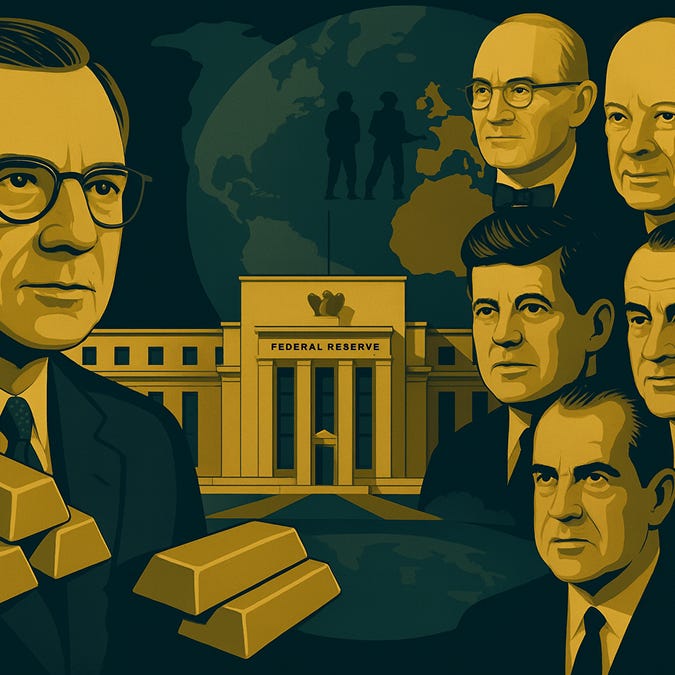
On the journey towards President Nixon’s fateful decision on August 15th, 1971 to suspend dollar-gold convertibility—a decision that would forever change the global economy—we meet William McChesney Martin Jr, the longest-serving Fed chairman in history and arguably the most consequential economic US policy maker since Alexander Hamilton.After negotiating Fed independence as an Assistant Treasury Secretary with the 1951 Fed-Treasury Accord, President Truman appointed Martin as chairman of the Fed. For two decades, Martin fought to establish Fed independence while pursuing the long-term interests of the US—fighting inflation, defending the dollar, and facing off against five presidents.While he navigated the demands of a booming economy at home, Martin coordinated with US allies to stabilize exchange rates and grow world trade—all while balancing the needs of Cold War military spending, allied foreign aid, and private capital outflows.We trace the mounting pressure from the late 1950s gold spike through Vietnam-era deficits as Martin tries to hold the line with rate hikes, diplomacy, and sheer credibility among global central bankers. It’s the story of a principled broker navigating guns-and-butter politics while the world loses faith in dollar-gold convertibility—and according to his own assessment, he was almost successful too… almost.Chapters(00:47) Introduction(03:33) William McChesney Martin Jr.(09:14) The 1951 Fed-Treasury Accord(12:42) Truman Appoints Martin as Fed Chairman(13:34) Eisenhower Presidency Reinforces Fed Independence(17:00) Comparing Growth & Productivity during This Period to Today(18:41) Gold Drain and Military Spending(22:51) Price of Gold Breaks $35/oz(26:52) The JFK Years: More Military Spending & Tensions with France(34:12) Bretton Woods and Inflation(36:36) Central Bank Swap Lines(41:05) Confrontation at LBJ’s Ranch(44:53) The Circularity of Dollar Strength and Military Spending(56:40) Bill Martin’s Legacy and State of the Fed as Nixon Takes OfficeReferencesChairman of the Fed: William McChesney Martin Jr. and the Creation of the Modern American Financial System by Robert P. BremnerGold, Dollars, and Power: The Politics of International Monetary Relations, 1958-1971 by Francis J. Gavinhttps://wtfhappenedin1971.com/ This is a public episode. If you would like to discuss this with other subscribers or get access to bonus episodes, visit www.backtestpodcast.com
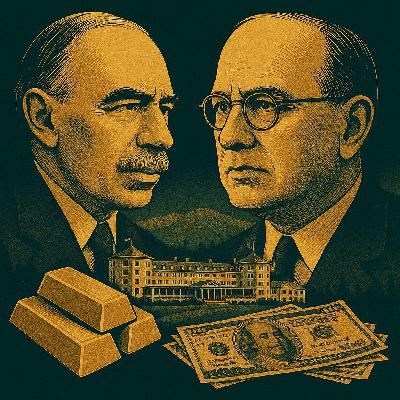
Gold, power, war, and spies—this series has it all. On August 15th 1971, President Nixon announced that he was suspending the dollar’s convertibility into gold. This announcement upended the Bretton Woods monetary system and set the world on a course towards floating exchange rates with the US dollar as a fiat reserve currency for world trade—a system that is under significant pressure today.In the first episode of the series, we tell the story of how an ambitious, little-known American technocrat—Harry Dexter White—went toe-to-toe with the world-famous John Maynard Keynes to rewrite the rules of global finance.Bretton Woods wasn’t just a conference. It put the US dollar at the center of a new monetary order, backed by roughly two-thirds of the world’s gold and America’s unrivaled economic power after World War II. Delegates representing 44 nations agreed to fixed exchange rates, created the IMF and World Bank, and made the dollar “as good as gold.”We trace how global leaders were traumatized by the economic chaos following World War I—trade wars, currency collapses, and the Great Depression. Against this backdrop, we explore how White moves from the periphery of academic economics to play a central role in FDR’s Treasury. From there he outmaneuvers John Maynard Keynes and secures American primacy, despite also moonlighting as a Soviet spy.This episode covers the genesis of a system every president from Truman to Nixon would struggle to defend—and the traces of which still shape the world economy today.Chapters:(00:18) Introduction(03:47) Background on Harry Dexter White(6:29) Economic Backdrop Leading to Bretton Woods(12:58) Barter Trade vs. Free Trade(15:22) Background on John Maynard Keynes(18:06) Keynes and White Meet in London(20:02) Harry Dexter White, from Periphery to Center(24:13) White Gets to Work on New Monetary System(32:24) US Leverage over the UK(37:32) The Build Up to Bretton Woods(41:54) Harry Dexter White’s Triumph at Bretton Woods(46:59) The Aftermath for White and Keynes(48:01) Reflections on White’s Soviet Espionage(55:16) Questions for Today’s Global Trade & Monetary SystemReferences:The Battle of Bretton Woods: John Maynard Keynes, Harry Dexter White, and the Making of a New World Order by Benn Steilhttps://wtfhappenedin1971.com/ This is a public episode. If you would like to discuss this with other subscribers or get access to bonus episodes, visit www.backtestpodcast.com
In Part 2: The Banking Crisis, we pick up where Part 1: The Housing Bubble leaves off—with financial institutions all over the world holding mortgage-backed securities as housing prices start to collapse at the end of 2006.In this episode, we tell the story of a financial system that became addicted to mortgage products and complacent about their risk.We cover the basics of banking—how short-term funding and long-term lending creates fragility in normal times, and outright panic in a crisis. We explore how credit default swaps, collateralized debt obligations, and the repo market works—and how they failed. We show how these complex, opaque instruments amplified risk, created false confidence, and turned mortgage losses into a global banking crisis.It’s the story of how flawed incentives, complicated models, and unregulated derivatives brought down some of the most storied institutions in finance like Bear Stearns, Lehman Brothers, Merrill Lynch, AIG, Fannie Mae and Freddie Mac.And we walk through the harrowing events of 2007-2009—from emergency bailouts to catastrophic bankruptcies—that left deep scars on the financial system, the economy, and public trust.Part 1 was about the fuel. Part 2 is about the fire.Chapters:(01:09) The Housing Bubble(08:57) Basics of Banking(20:42) Innovation with Credit Default Swaps(33:24) The Rise & Evolution of Collateralized Debt Obligations, CDOs(49:59) CDO Manager Incentives(52:09) Lack of Regulation(58:27) First Round of Failures in 2007(01:02:05) Repo Market Freezes(01:07:23) More Failures in 2007(01:14:13) Banking Crisis in 2008 & Bail Outs(01:35:57) 2008 Presidential Election & The Crisis AftermathReferences:The Great American Housing Bubble: What Went Wrong and How We Can Protect Ourselves in the Future by Adam J. Levitin, Susan M. WachterAll the Devils Are Here: The Hidden History of the Financial Crisis by Bethany McLean and Joe NoceraPanic: The Betrayal of Capitalism by Wall Street and Washington by Andrew Redleaf and Richard VigilanteThe Big Short: Inside the Doomsday Machine by Michael Lewis (book, movie)On the Brink: Inside the Race to Stop the Collapse of the Global Financial System by Henry PaulsonToo Big to Fail by Andrew Ross Sorkin (book, movie)Crashed: How a Decade of Financial Crises Changed the World by Adam Tooze (Amazon)Fool's Gold: How the Bold Dream of a Small Tribe at J.P. Morgan Was Corrupted by Wall Street Greed and Unleashed a Catastrophe by Gillian TettThe Courage to Act: A Memoir of a Crisis and Its Aftermath by Ben BernankeFirefighting: The Financial Crisis and Its Lessons by Ben Bernanke, Hank Paulson, and Timothy GeithnerThe Rise and Fall of Bear Stearns by Alan Greenberg and Mark SingerPBS Frontline Documentary: The WarningPBS Frontline Documentary: Money, Power and Wall StreetLectures by Ben Bernanke at Georgetown (link)Warren Buffett on Derivatives (2002 Shareholder Letter)Warren Buffett Interview with Andrew Ross Sorkin (Ten Year Anniversary Special from CNBC)Reports by the Financial Crisis Inquiry Commission (main report, HHT dissent, Wallison dissent)Tower of Basel: The Shadowy History of the Secret Bank That Runs the World by Adam LeBorGreenspan, Snow Congressional Hearing in October 2008 (transcripts, video excerpt) This is a public episode. If you would like to discuss this with other subscribers or get access to bonus episodes, visit www.backtestpodcast.com
In this episode, we tell the story of the modern mortgage market, how Wall Street financialized it, and how easy credit inflated one of the biggest bubbles in American history. A bubble that, when it finally popped, nearly brought down the entire global financial system.The housing bubble left scars, changed institutions, and shaped the economy we live in today. It’s impossible to understand the social and economic forces in the 2010s and 2020s without first studying the Global Financial Crisis. At the root of the crisis was a nation-wide housing bubble.In Part 1 of this two-part series, we cover how The New Deal completely restructured the US mortgage industry. We discuss how homeownership became a critical part of the American dream fueled by an abundance of credit and bipartisan support for homeownership—especially after World War II.We touch on the evolution of mortgages—from local banks that relied on personal relationships to global giants driven by the forces of globalization and financial deregulation in the 1980s and 1990s.By the early 2000s, homeownership was at record highs. Credit was cheap. Profits at mortgage originators and banks were at record levels. At the center of the boom was the mortgage market and the flawed assumption that housing prices never go down.Chapters:(01:28) Setting the Scene(03:17) Market Backdrop(10:39) History of Mortgages, Fannie, and Freddie(24:11) Mortgage-Backed Securities (MBS)(30:40) MBS and Rating Agencies(43:31) Collateralized Mortgage Obligations and Flaws in the Mortgage Market(51:24) Mortgage Originators and Subprime(56:08) The Global Savings Glut, Interest Rates, and Commodity Supercycle(01:06:56) Mortgage Originators Get Big(01:14:41) Fed Policy and Interest Rates(01:19:00) Explosive Growth in Subprime(01:26:20) The Housing Bubble Inflates(01:33:53) State of the Market at the End of 2006References:The Great American Housing Bubble: What Went Wrong and How We Can Protect Ourselves in the Future by Adam J. Levitin, Susan M. WachterAll the Devils Are Here: The Hidden History of the Financial Crisis by Bethany McLean and Joe NoceraPanic: The Betrayal of Capitalism by Wall Street and Washington by Andrew Redleaf and Richard VigilanteThe Big Short: Inside the Doomsday Machine by Michael Lewis (and the movie)On the Brink: Inside the Race to Stop the Collapse of the Global Financial System by Henry PaulsonToo Big to Fail by Andrew Ross Sorkin (and the movie)Crashed: How a Decade of Financial Crises Changed the World by Adam ToozeFool's Gold: How the Bold Dream of a Small Tribe at J.P. Morgan Was Corrupted by Wall Street Greed and Unleashed a Catastrophe by Gillian TettThe Courage to Act: A Memoir of a Crisis and Its Aftermath by Ben BernankeFirefighting: The Financial Crisis and Its Lessons by Ben Bernanke, Hank Paulson, and Timothy GeithnerThe Rise and Fall of Bear Stearns by Alan Greenberg and Mark SingerPBS Frontline Documentary: The WarningPBS Frontline Documentary: Money, Power and Wall StreetLectures by Ben Bernanke at Georgetown (link)Warren Buffett on Derivatives (2002 Shareholder Letter)Warren Buffett Interview with Andrew Ross Sorkin (Ten Year Anniversary Special from CNBC)Reports by the Financial Crisis Inquiry Commission (main report, HHT dissent, Wallison dissent) This is a public episode. If you would like to discuss this with other subscribers or get access to bonus episodes, visit www.backtestpodcast.com
Quick heads-up: this was our very first episode. We’ve gotten much better since publishing this. If you’re new or looking for the best way to learn about the Dot-Com market cycle, start with The Dot Com Boom: Netscape Lights the Fuse (Part 1). If you’re just exploring our origin story, by all means listen here.—In the 1990s, the personal computer and the internet combined to transform the global economy. The dot-com boom built on the promise of the World Wide Web led to one of the longest economic expansions on record. From the Netscape IPO in 1995 to its peak in early 2000, the Nasdaq skyrocketed over 800%. By 2002, it came tumbling down erasing nearly $5 trillion in market value.The boom turned into a crash that permanently changed how Wall Street operates, wiped out scores old and new companies, restructured the power structures of Silicon Valley, and revolutionized the global economy. Most importantly, there are elements of the dot-com story that rhyme with today's AI boom.Chapters:(01:09) Market Backdrop(12:51) Technology Backdrop(21:31) Birth of Dot Com(43:45) Setting the Stage on Wall Street(01:01:13) The Crash before the Crash(01:10:59) Euphoric Markets(01:23:51) The Bubble Pops(01:45:30) The AftermathReferences:Origins of the CrashDot.conThe New New ThingTechnological Revolutions and Financial CapitalStocks for the Long RunThe Rise and Fall of American GrowthThe Fabulous DecadeCapital AccountMr. Buffett on the Stock Market This is a public episode. If you would like to discuss this with other subscribers or get access to bonus episodes, visit www.backtestpodcast.com
Comments


Download from Google Play

Download from App Store
 United States