


 Claim Ownership
Powerlines by Chris Uhlmann
Subscribed: 8Played: 13
Subscribe

© Chris Uhlmann
Description
Powerlines is about power, politics and passions. Join Chris Uhlmann as he explores the forces that drive our economy and the ideas that define our time.
Life begins with energy. Without it, nothing grows.
In human affairs, energy is the economy. Without cheap, reliable energy, nothing functions.
Our economy is not a set of numbers. It is a moral project—a living network of human exchange: people trading, building, and solving problems together.
Politics should keep this body alive, fair, and free. It should encourage individuals, families, and businesses to advance the common good.
We believe our society has succeeded because it stands on the firm foundations of our inherited Western democratic tradition.
We believe those foundations are under assault—from within and without.
Powerlines exists to defend the best of our heritage and to promote its renewal. We are pro-human, pro-family, and pro-business. We deal in real-world problems and seek real-world solutions.
We believe in free speech and the power of ideas. We aim to entertain and provoke—but never patronise.
We will present news and views as honestly and accurately as we can.
Our voice is Australian. Our canvas is the world.
chrisuhlmann.substack.com
Life begins with energy. Without it, nothing grows.
In human affairs, energy is the economy. Without cheap, reliable energy, nothing functions.
Our economy is not a set of numbers. It is a moral project—a living network of human exchange: people trading, building, and solving problems together.
Politics should keep this body alive, fair, and free. It should encourage individuals, families, and businesses to advance the common good.
We believe our society has succeeded because it stands on the firm foundations of our inherited Western democratic tradition.
We believe those foundations are under assault—from within and without.
Powerlines exists to defend the best of our heritage and to promote its renewal. We are pro-human, pro-family, and pro-business. We deal in real-world problems and seek real-world solutions.
We believe in free speech and the power of ideas. We aim to entertain and provoke—but never patronise.
We will present news and views as honestly and accurately as we can.
Our voice is Australian. Our canvas is the world.
chrisuhlmann.substack.com
26 Episodes
Reverse
In 2017, I left the ABC and walked down the corridor in Parliament House to begin again as political editor for Nine News.This was the first story I filed for Nine. At the time, my new bosses were a little bemused by it, but they humoured me.I don’t claim credit for the insight. I was convinced by the power of an argument I had heard from a man I had come to know well, former fighter pilot and retired Air Vice-Marshal John Blackburn AO.In 2014, Blackburn authored a report for the NRMA warning that Australia’s fuel reserves were running on empty. This fossil fuel–rich island nation had lost the capacity to produce and refine its own fuel. We were dangerously dependent on imports. Our reserves were wafer thin.So thin that we were in breach of our obligations to the International Energy Agency.We counted fuel on tankers at sea as part of our stockpile.Nearly 90 per cent of the liquid fuel that kept this nation running came from overseas.Even then, the picture was clear. We were dangerously exposed in a world that was becoming less stable.Now the echo from the past is all too real. Today, that vulnerability is no longer theoretical.The Third Gulf War has choked off the oil that feeds the Asian refineries supplying this nation with diesel, petrol and jet fuel. Prices have spiked. The threat of rationing is real. Parts of regional Australia are already running on empty.We are hostage to long and fragile supply lines in a world now gripped by an energy war. Our economy depends on more than two massive tankers arriving on our shores every single day.If that flow is disrupted, even briefly, the consequences will be dire. Oil and gas underpin the price of everything. When they rise, everything rises.If supply stalls, road transport stops, shelves empty, and the economy collapses. This is a crisis we were warned about.This is what a just-in-time nation looks like when time runs out.So the question arises: will we learn the right lessons from this crisis?The lesson is simple.Fuel security is national security. We need to be far more self-sufficient in the fuels that keep this country running. We need to tap our vast resources of coal, oil and gas. We need to explore the possibilities of converting coal to liquid fuel. We need to explore for oil. We need more gas.Otherwise, the next shock will not just test our economy. It will test our sovereignty. This is a public episode. If you would like to discuss this with other subscribers or get access to bonus episodes, visit chrisuhlmann.substack.com
The Gulf war has exposed two hard truths: military force still shapes the world, and hydrocarbons still power it. Coal, oil and gas remain the foundation of modern life, embedded in everything from food and medicine to transport, industry and household goods.When oil and gas prices rise, the cost of living rises with them.Australia is especially vulnerable because it still depends overwhelmingly on fossil fuels, particularly imported liquid fuels. Diesel keeps freight, farming and mining moving, and without it the country stops. See more of Opinionated, on Sky News hosted by Danica De Giorgio. This is a public episode. If you would like to discuss this with other subscribers or get access to bonus episodes, visit chrisuhlmann.substack.com
Dr Oleksandra Molloy is not a soldier. But war has defined her work, reshaped her life, and heightened her fears for the West.A native of Kyiv, now based at the University of New South Wales, Molloy’s research has focused on aviation, emerging technologies, and the changing face of modern warfare. Her early work was on developing the skills of pilots.“I’ve been interested in aviation for a long time from different perspectives,” she told Powerlines.That fascination led her to drones. And nowhere has the war-fighting edge of that technology moved faster than in her birthplace, Ukraine. She has seen firsthand how large and small uncrewed systems are changing the nature of war.“The battlefield is monitored 24/7. It’s very hard to hide anywhere.”In Russia’s war on Ukraine, drone combat is constantly evolving and has shifted from large platforms to smaller, more agile ones.“We are no longer talking about the payload of 200 kilograms, but we are talking about a small, cheap, expendable drone that may be delivering a precise strike. Any large systems, including these big and sophisticated ones, have become obsolete, because anything that is moving 100 kilometers away can be easily detected and destroyed.”Drones have moved from the skies to the land.“Uncrewed ground vehicles have been one of those important assets at the front line. Why? Particularly for logistics purpose, but also for saving wounded soldiers from the front line and also for mining and demining.”At sea, Ukrainian systems have taken a heavy toll on Russia’s Black Sea Fleet. And on June 1, Ukraine launched “Operation Spider’s Web,” using 117 drones smuggled into Russia to strike multiple airbases, destroying or damaging over 40 aircraft—including bombers and surveillance planes—in one of the war’s most audacious attacks. The operation, which inflicted an estimated $7 billion in damage, marked a new level of sophistication in Ukraine’s asymmetric drone warfare.“They have become a relatively cheap option for destroying multi-million and multi-billion dollar assets.”European nations are paying close attention to the war on their doorstep and are stepping up their spending on uncrewed systems.“Now there is a sense of urgency on how to develop the systems at scale. How to find the right capabilities, how to keep up with the Ukrainian forces in their development, and also how can we learn and gain that experience so we are able to protect ourselves.”But there is little evidence the Australian Defence Force has got the memo.“We don't often hear about the experience of the ADF Ukraine. We just need to keep up and see what actually matters on the battlefield.”Molloy says there is much to learn, but Australia must also consider the kind of theatre in which it will be operating.“Context matters. And understand how these systems could be integrated within our geographical location, within our capabilities and providing that additional support to legacy systems. We are surrounded by water, so obviously naval drone capabilities are very important. There has to be a balance between large and powerful systems and small and expendable ones. And most importantly, we need to invest into electronic warfare and counter drone capabilities to be able to defend our assets, our people, and our country. We need to develop the systems indigenously in Australia and spend the effort to develop that manufacturing base.”Right now, Australia is in a grey zone where the threat from China is driving a step-up in military spending but it lacks any sense of urgency. We should not waste that most precious of gifts.“The difference between Australia and Ukraine is we have time. We have time, we have resources, we have many talented people who actually are doing the work in this space and we need to really think how to leverage those resources.”China is not wasting time. Molloy says it is not just supplying drones and watching what is happening from the Russian trenches.“I think some of their instructors are actually participating in some operations, in Kursk and so forth, together with North Korean. There are orders by 2027 or 2026 to develop millions of those drones. And I think we need to watch what our potential adversaries are doing. And they are investing in these systems. They are also getting the real world experience from the battlefield. And I think that's a little bit scary.”Australia’s isolation has fed complacency, but a more dangerous world is on our doorstep and we need to rise to meet the times.“There is no longer peace mentality, and we really need to be concerned and prepare now to defend ourselves.” This is a public episode. If you would like to discuss this with other subscribers or get access to bonus episodes, visit chrisuhlmann.substack.com
Canberra warns that our region faces the gravest military threat since World War II. But defence spending suggests it doesn’t believe it.Peter Jennings, director of Strategic Analysis Australia, told Powerlines the gap between words and actions is unsustainable.“To use an old Trotskyism… we may not be interested in a war, but war may well be interested in us.”In an interview conducted before Israel attacked Iran, Jennings argues the West is facing an historic challenge from a coalition of tyrannies.“The big story of our generation is the rise of China, now with the grouping of authoritarian powers around it—Russia, North Korea, Iran... All of them presenting a threat to the global order.”He’s scathing about Australia’s strategic complacency. “There seems to be a complete disconnect between that judgment, which everyone in Canberra shares, and what do you do about it? Because successive governments have simply failed to lift the level of investment in defence.”Jennings traces the shift in urgency among Australia’s defence planners to the Morrison government’s 2020 strategic update, which concluded that we no longer had 10 years to prepare for conflict. Labor’s subsequent strategic reviews backed that assessment, but five years on, defence spending has barely budged.“Successive Australian governments, really since the end of the last Cold War, have desperately wanted to see security delivered on the cheap... we spend something like two percent of gross domestic product on defence and have done for 30 years.”The Albanese Government talks a good game on defence spending, but most of the planned increases are incremental. Meanwhile, China’s military transformation has been radical.“China has moved from... being a vast land-based organisation which was primarily about creating internal stability inside China... into being a very high technology, tri-service military... with the ability to project military power at great distances.” The People’s Liberation Army now boasts “long-range missiles, ships and aircraft with significant reach,” and is “significantly expanding their nuclear weapons holdings.”China is flexing its muscles. It has established foreign bases, claimed much of the South China Sea, and is routinely confronting foreign navies, including Australia’s.“Now every time an Australian ship sails through that region... it's going to come under severe pressure to get out of Chinese waters.”He’s also critical of how Australia has reacted to provocations. When Chinese warships circumnavigated the Australian continent, “the most embarrassing thing of all... was that our Prime Minister, our Foreign Minister and our Defence Minister all came out and defended China in terms of what it was doing.”The gap between Australia’s rhetoric and reality is fuelling American frustration. US Defence Secretary Pete Hegseth recently told Defence Minister Richard Marles that Australia should lift its defence spending from two to 3.5 per cent of Gross Domestic Product.“It couldn’t have been more blunt. And I think more of that’s coming.”Yet, Jennings says the Albanese government has doubled down on long-term capabilities at the expense of readiness today. “In order to pay for that fantasy force of the 2040s... they’ve cut a whole range of capabilities out of the current Australian Defence Force.”He gives example after example: early retirement of Navy ships, axed upgrades, cancelled support vessels, reduced missile programs, a gutted armoured vehicle project—and helicopters “broken up, sold some bits for spare parts and buried the rest.”“Our 2025 force... would not be able to mount the sort of stabilisation role we played in East Timor in 1999.”So what happens if a war breaks out over Taiwan? “If China attacks Taiwan, I can tell you this—we won’t be exporting iron ore and coal to China during that period... Most global shipping will have stopped... We’ll be on rationing the minute there’s a blockade around Taiwan.”That’s because most of Australia’s fuel is shipped through the South China Sea and our reserves are pitiful. “We’ve got about, at best, a fortnight, maybe three weeks’ worth of petrol supply.”Beyond hardware, Jennings points to deeper vulnerabilities—cyber warfare and political cowardice. “There’s a lot of Australian critical infrastructure which is now vulnerable to sabotage... hostile forces planting malware.” He warns that “cyber attacks against critical infrastructure will be the first stage of any military campaign.”So what must be done?“We need sort of an emergency, all-out effort to make the existing defence forces current and capable, as operationally ready to go as we can make them in the next six to 12 months.” That includes lifting spending and rearming the defence industry. Jennings notes that Australian firms are “really struggling... because they can’t get contracts out of the Defence Department.”Finally, he returns to the core political failure: spin over substance. “We’ve now got a government which is incapable of talking to the Australian people about the strategic threats that we face. And on that basis, why would anyone want to increase defence spending if you can’t actually explain what the threat might be?”If Australia’s strategic position is as perilous as our leaders say it is, Jennings has a blunt response: “It’s never too late to start on making your own defence capability stronger. Every day is a good day to start the pushback.”Link to Strategic Analysis Australia here. This is a public episode. If you would like to discuss this with other subscribers or get access to bonus episodes, visit chrisuhlmann.substack.com
Joe Hockey says it is time for governments to get out of the way of energy producers to allow industry to drive Australian productivity and help keep the nation wealthy.Speaking at the Australian Energy Producers conference in Brisbane, the former Treasurer and Ambassador to the United States said the country is drowning in regulation.“The cry of energy producers in Australia should be certainty. Give us certainty and stability and we can do the job. We can give Australians cheaper energy. We can give people of the world greater opportunity to consume our product. We can make Australia richer.”In his current role as principal of the consultancy group, Bondi Partners, Hockey has a ringside seat on the brutal global geopolitics now shaping energy policy. He is crystal clear about the stakes for Australia.“We are a major global exporter of energy. And we’ve got to keep facilitating that. It’s not just in our interest to export energy. It is in the interest of our region, the fastest growing region in the world. And if we do not continue to supply energy to our region and to the rest of the world, at our capacity, then it comes back on us in the form of global conflict. So we have a duty to continue to grow the oil and gas industry in Australia, to grow it for global consumption.”Yet, while we have plenty of energy, Australian industry and consumers are being crushed by domestic failures. Hockey lays the blame squarely on both major parties.“For a single parent in a one-bedroom apartment in Sydney and facing a 10 percent increase in their electricity bills, there’s just something wrong about it, and it’s unfair. And so we need to get domestic policy right. It’s self-reflection on politics in Australia when we’re talking about energy shortages, particularly in New South Wales and Victoria, particularly over the next couple of years. That is a complete policy failure.”Meanwhile, the rest of the world, and above all the United States, is on the move. President Donald Trump wants an energy dominant America.“The starting point is every business that has exposure to a global market must have an understanding of what’s happening in Washington, D.C. I think there is such a strong link now between government and capital markets that you can’t be divorced from what’s happening in the United States. Because, as we see with volatility in capital markets or even volatility in the share market, so much of it comes down to geopolitical decisions and decisions made in Washington. I don’t think that’s going to change. I think we are going to continue to go through a very volatile period.”Trump’s view of power is simple and transactional. He is not bound by process, nor by the usual constraints of diplomacy or institutional tradition. Outcomes are what matter. He enjoys being a disruptor.“Whatever the end is, he’ll justify the means.”He sees global and domestic politics as inseparable, and at the heart of both is energy and what Americans pay for it.“When Donald Trump talks about increasing energy supply in the United States, he’s focused on meeting demand. The massive demand associated with Artificial Intelligence infrastructure, which represents the most significant challenge to the world in our lifetimes, is the growth, the rapid growth of AI and what that’s going to mean for ourselves and our children.”Australia should beware of going out on a limb. While we chase ever more ambitious emissions targets, the rest of the world is pivoting hard toward cheap, abundant energy.“Front of mind is affordability of life for everyday citizens. Cost of living is the number one issue. Wherever I go, it is the number one issue.”And the cost of government is now unsustainable. Feckless Western governments have been spending too much, are running out of money, and are resorting to bad policy to plug the gaps by taxing more and regulating more, rather than doing the hard work of driving productivity and growth.“We need to get back to some basic principles that if you have less regulation, if you have less onerous taxes and less tax, then you are more likely to grow your economy and, importantly, be able to meet the needs of everyday citizens on a more regular basis.”Do not expect Trump to follow this advice. Hockey says the great big bill the President is driving will send US government spending soaring and push the deficit higher in the years ahead.“He doesn’t care about that deficit. Let’s be honest about it. He hasn’t throughout his career. He is focused on creating wealth, on generating wealth, rather than focusing on how to get there. And that’s so much a story of Donald Trump, which people do not understand. Focus on his outcomes rather than his process.”But the margins for error are narrow.I think it’s entirely feasible that the United States does go into recession, which can have a material impact right around the world.”Hockey sees the world as an increasingly dangerous place. And centre stage is the fraught relationship between Trump and China’s President Xi Jinping. On that front, Hockey is more optimistic.“Well, they both need each other. That’s the point. And they both know that they need each other. They’re also fully aware that their economies are intertwined. You cannot decouple China from the United States. In fact, in the last readout of data, China increased exports to the United States. And I think it will resolve itself, you know, the tariff issue between the US and China will resolve itself.” This is a public episode. If you would like to discuss this with other subscribers or get access to bonus episodes, visit chrisuhlmann.substack.com
Australia’s competitive edge has long been its vast natural resources and access to cheap, abundant energy. But Samantha McCulloch, Chief Executive of Australian Energy Producers, says we risk squandering that advantage.In a wide-ranging Powerlines conversation, McCulloch offers a clear-eyed assessment of the current paradox: this nation depends on gas for export dollars and to keep the lights on, but government actions have made it harder to produce.“Gas is obviously really critical, in particular to our energy mix in Australia. It's almost more than a quarter of our primary energy needs. We rely on it every day—for electricity, for heating and cooking in our homes, for manufacturing. There are so many products we can't make without gas. So it's really integral to our economy and our way of life.”With a career spanning both international and domestic agencies—from the International Energy Agency to the Australian Coal Association—McCulloch has witnessed the global energy debate evolve. Her message is grounded in experience and pragmatism: Australia is a resource superpower, and we should be proud of that.“Liquefied natural gas is our third-largest export. It’s an industry that contributes around $100 billion a year to the Australian economy and supports 215,000 jobs across the country.”That success is due in part to natural advantage, and partly to Australia’s reputation as a reliable supplier. Western Australia and Queensland leveraged both to build a multibillion-dollar export industry—one that delivers mutual benefits.“We’ve had $400 billion of investment in our export industry in the last decade or so. That scale of investment wouldn’t occur without access to large international markets. And our LNG exports literally keep the lights on in cities like Tokyo and Seoul. So any threat of interruption to those exports is existential for their economies.”LNG exports came under fire as domestic prices spiked in the wake of Russia’s invasion of Ukraine. In NSW and Victoria, supply was in steep decline due to years of exploration bans. Calls to reserve Queensland gas for domestic use and heavy-handed federal interference shook international confidence.“The interventions we've seen, and some of the messaging from governments and other groups, have really caused concern for our trading partners. Increasingly, we’re seeing them look to diversify—signing long-term contracts with Qatar and the US—to ensure they have the supply that’s critical for their economies.”The shortages in NSW and Victoria are entirely the result of political decisions. Victoria had a moratorium on all onshore gas exploration and permanently banned fracking and coal seam gas. In NSW, Santos has been trying to develop the Narrabri gas project for over a decade.Both states and the federal government now acknowledge that the weather-dependent grid they are building won’t function without gas to support it. The Australian Energy Market Operator’s plan for the National Electricity Market requires 15 gigawatts of gas capacity to act as the backbone of the system to 2050 and beyond, enough to power 15 million homes.“Fifteen gigawatts is a big number. It's actually equivalent to almost all of the installed wind capacity we have in Australia today. It’s a lot of gas. And when you look at the AEMO system plan, it calls for a 170 percent increase in gas use in the 2040s compared to today.”While the federal government and southern states now back more supply, the change of heart has come too late to avoid near-term shortfalls. Astonishingly, both NSW and Victoria are now building LNG import terminals.“Australia is a gas-rich nation. It’s an absolute head-scratcher to think that we’re looking at import terminals to bring gas into Victoria and New South Wales when we have so much of it under our feet. We should be developing that, not importing it.”Meanwhile, competition for export markets is heating up. The United States—freed under Donald Trump’s “drill, baby, drill” directive—has overtaken Australia as the world’s largest LNG exporter and is aggressively expanding.“They are unapologetically investing in their resources. They want to supply LNG to the world. So Australia really needs to ensure it's able to compete in those new markets.”Whether Australia remains competitive depends on the decisions made now. The governments in WA and Queensland understand where their prosperity comes from and intend to protect it. But in NSW and Victoria, years of poor policy mean there are no quick fixes.“The situation's got to a point where there's probably not one solution that will solve this challenge. We need investment in supply, in infrastructure to move gas around, and in storage so we can draw on it during peak periods. And we need to fix the approval system to get projects moving—so we have the gas supply when it’s needed.”Note: This interview was recorded before the decision to extend the operating life of the North West Shelf gas processing plant in Karratha, Western Australia, beyond the expiry of its current approval in 2030. This is a public episode. If you would like to discuss this with other subscribers or get access to bonus episodes, visit chrisuhlmann.substack.com
From a ringside seat in Australian government departments, David Pearl watched the nation lurch from rational economic policymaking into what he calls “a moral panic.”Pearl’s experience is broad: he is a former senior Treasury official, economic adviser to a future Labor Prime Minister, and a diplomat posted to the Organisation for Economic Co-operation and Development (OECD) at the dawn of global climate talks.In different roles, he saw governments wrestle with some of the greatest challenges of our time: the global financial crisis, COVID-19, and climate change. He learned that good intentions don’t always lead to good outcomes, that government can do as much harm as good, and that consensus can be a dangerous thing.Climate policy, he argues, has replaced religious faith. And those who dissent — even mildly — are cast as apostates.His message is deeply unfashionable in Canberra: Net Zero is failing, global coordination is a fantasy, and climate policy has reversed the moral order, “under the guise of morality.”“It’s beyond ironic that the modern-day climate policy agenda amounts to a massive transfer from the poor to the rich.”Australia’s early position in international climate negotiations, Pearl explains, was pragmatic. Because of our growing population and resource-intensive economy, we secured the right to increase emissions by 12 percent under the Kyoto Protocol.That pragmatism evaporated after the landmark 2006 report for the UK government penned by economist Nicholas Stern. It argued that the economic costs of inaction on climate change would far exceed the costs of taking early and aggressive action to reduce emissions. Pearl recalls the moment well:“It triggered a bizarre moral panic across the Western world where climate change ceased to be seen as an economic issue… and became a moral crusade.”Though the economics of the Stern Review were sharply criticised — most notably by Nobel Laureate William Nordhaus — its political effect was profound.Pearl even admits to writing the first line in the Labor Government’s incoming brief that climate change was “perhaps the most significant economic and political challenge of our time” — a flourish he added to attract attention. New Prime Minister Kevin Rudd seized on it, added the word “moral,” and made it central to his public platform.“It may have been the reason he ultimately fell.”Today, Pearl says, Net Zero is unattainable without enforceable global commitments — which do not exist. The United States, China, India, and Russia have no intention of hitting the target.“Absent that international regime, the only rational response is adaptation. We’re doing entirely the wrong thing, that will have absolutely no effect on the problem.”He draws a damning historical parallel: Net Zero is modern-day temperance. Like Prohibition, it’s driven by zealotry, cloaks public policy in moral absolutes, and fuels hypocrisy and corruption. And it was futile.“Everybody kept drinking. Everybody’s going to keep generating emissions.”Worse, he says, Net Zero is not merely ineffective — it has become an industry. A class of green grifters now profits from policies that don’t achieve their stated goals.Pearl sees parallels with the indulgence economy of the medieval Catholic Church. Offsets and emissions-neutral labels are bought like spiritual pardons. Being seen to be involved in “climate action” becomes an end in itself.“It’s the indulgence that matters, not the climate outcome.”As a career public servant, he’s scathing about how policy advice has been captured by ideology. He describes how Treasury — once a ‘debating society’ — has become an orthodoxy factory. Those who worked on climate programs a decade ago have been rewarded for their faith.“We have people in very senior positions in our bureaucracy who are passionate climate zealots and completely incapable of applying a rational cost-benefit lens.”Pearl sees the same pattern across the major crises he’s worked on — from the financial crisis to COVID: government positioning itself as the cure for all ills. The greatest danger in the bureaucracy, he warns, is rewarding people for thinking like everyone else. This is a public episode. If you would like to discuss this with other subscribers or get access to bonus episodes, visit chrisuhlmann.substack.com
We tend to think of conflict between states as something that arrives with a bang: bombs falling, missiles fired, ships sinking, or borders breached. Today, it might come as a whisper in the wires: our power flickering out, our water supply cut, our communications down.Katherine Mansted fears we are not ready for that kind of fight.Mansted is executive director of Cyber Intelligence at CyberCX, Australia and New Zealand’s largest cybersecurity firm, and a senior fellow at the Australian National University’s National Security College. She has spent years tracing the blurred line between espionage, cybercrime, and information warfare—watching authoritarian regimes and criminals exploit every online weakness. Her assessment is clear: the battlefield has shifted.“In my view, any future war will start with surprise cyber sabotage before we even know we're on a war footing.”And it will be fought in all domains.“No matter how many boats we have or how many missiles we have, if they're not cyber worthy, if they're not cyber resilient, we won't be in a fight. And we won't be able to mobilize and get to the fight if our logistics are crippled and our social cohesion is upended.”Grey zone conflict is already raging, with adversaries targeting anyone connected to the internet.“It is a constant fight. It's a constant cat and mouse game between attacker and defender. And sometimes those attackers are criminals. Often they're organized crime groups. They're sometimes ideologically motivated bad guys. Sometimes it's nation states as well.”Four nation-state adversaries are well known: China, Russia, Iran, and North Korea. But each has a different profile, a different motivation. Russia, for example, excels in disinformation.“You put out the fire hose of falsehood, where you put out so many different views that the public becomes bewildered, or you pick up a couple of new polarizing views and you amp them up so the public turns on itself. They mess with the very DNA, the very lifeblood of that information ecosystem in a way that’s so hard to pick apart.”China’s cyber ambitions are broader. Once focused mainly on economic espionage—“the greatest wealth transfer in history”—Beijing has evolved. It now uses cyber tools to monitor diaspora communities, track dissidents, and gain persistent access to critical systems. This isn’t just about spying. It’s about coercion and sabotage.The United States has already gone public on Vault Typhoon—a Chinese state-linked cyber operation that’s been quietly embedding itself in American infrastructure.“Vault Typhoon’s not doing your ye olde espionage. It’s breaking into systems and hiding there, sometimes for five years or more, to maintain access, to be able to sabotage that infrastructure if it wants to, if the Chinese government demands in future.”It’s not just in the U.S. We’d be “nuts,” Mansted says, to think China isn’t doing the same things here.What makes the cyber threat uniquely difficult is its ambiguity. You can’t always see the adversary. You may not know whether an outage is a failure or an attack. And because critical infrastructure in Australia is mostly privately owned, securing it is more complex and demands a high level of awareness and resilience across the community.Hostile nation-states have also enlisted criminal partners and weaponised cybercrime. Many of these operations run out of Russia or former Soviet states. The lines between criminals and governments are vanishing.“It’s that revolving door between Russian intelligence, the criminal underworld.”Then there’s the compounding challenge of artificial intelligence. AI isn’t just making things faster—it’s making them cheaper, more scalable, and harder to trace. Mansted’s team at CyberCX recently discovered 8,000 disinformation accounts on X (formerly Twitter) linked to China, likely run by robots.“That network was controlled end-to-end by a large language model based AI system. One person had probably programmed that system. He was using just pretty low-cost, a low-cost server running on consumer-grade hardware.”You no longer need a troll farm. You just need one motivated person and a laptop.What should governments do? It starts with honesty and clarity. Mansted objects to naming foreign hacking groups things like “Vault Typhoon” or “Fancy Bear.”“I’d prefer us to call things what they are—in this sense, Chinese government.”If the Australian public is to take threats seriously, they need to know where they’re coming from. And yet, our politicians and officials still balk at naming China.“So I think we need an even more transparent and open conversation with the public. I don't want to see the C-word diminish from use in Canberra. I want us being open about who the bad guys are and what their objectives are.”Thanks for reading Powerlines! This post is public so feel free to share it. This is a public episode. If you would like to discuss this with other subscribers or get access to bonus episodes, visit chrisuhlmann.substack.com
Jennifer Parker’s assessment of Australia’s strategic vulnerability is brutally simple: to defeat us, you don’t need to set foot on our soil; just cut our sea-based supply lines.Parker speaks from the experience of a naval officer who served in the South China Sea, the Middle East, the Caribbean, and at the heart of maritime operations.In a wide-ranging interview for Power Lines, Parker offered a blunt assessment of Australia’s maritime readiness in a world where the chance of war is rising.“Do people understand that Australia is an island nation? That it’s the fifth-largest user of international shipping? We’re wholly dependent on imports and exports. Ninety-nine percent of our international trade passes through the maritime domain. We import 91 percent of our fuel.”The idea that Australia could be isolated into submission is not new. But Parker is a powerful voice warning just how little we’ve done to prepare for it. When China’s navy recently circumnavigated Australia and conducted live-fire exercises off our coast—the first such act by a non-ally since World War II—Australia’s Navy couldn’t keep up because our supply ships were in dry dock. Even if they were seaworthy, it’s not enough. “The Australian Navy currently has two auxuliary replenishment vessels. To refuel, provide fuel and amunition to keep ships at sea longer, so they don’t need to go into a port. What that means is you will not have a tanker available 365 days a year.”The gaps go further. Mine warfare capability is outdated. Maritime patrols are stretched. And Australia has just 15 Australian-flagged merchant vessels—none large enough to carry much cargo.“In World War II, we requisitioned local ships to move fuel and supplies. We couldn’t do that now.”The 2020 Defence Strategic Update removed the assumption that Australia would have ten years of warning before a major conflict. But that urgent message met a complacent response.“We're five years in now. And we’ve barely progressed on most of the priorities the 2020 structure plan identified.”Part of the problem, Parker believes, is Australia’s comfortable isolation.“I don’t think Australians can truly contemplate what conflict in our region looks like. We still imagine it as something that happens far away, something we choose to join or not.”That complacency also extends to our political leaders, who are not acting with the urgency the circumstances demand.“I don’t think you can genuinely believe that we’re facing the most serious strategic circumstances since World War II and then fail to invest in defence the way we need to.”And everyone needs a change of mindset. Parker is calling for a fully integrated national maritime strategy. One that includes:* Submarines and surface combatants* Maritime-focused Army and Air Force roles* Fuel resilience and supply chain continuity* A strategic merchant fleet* A proper Coast Guard* Civil mobilisation plans and national stockpilesParker offers a measured response to the mecurial nature of US President Donald Trump and fears that he may damage our most significant alliance.“We can’t delegate our entire defence to a major power. We need a degree of self-reliance, even within the alliance. We need the capability to conduct certain missions on our own.”It’s a sobering message. But Parker is no alarmist. Her call is not to panic—but to plan. And that starts with honesty.“Number one is having a clearer conversation with the Australian people about the threat.”Above all, she argues, we must start thinking differently. Not like a nation that assumes it will be rescued. Not like a people who believe geography is defence. But like an island nation whose survival depends on what can sail in—and what can sail out.As Parker says:“I don’t think conflict is inevitable, but I think it’s increasingly likely…. The echidna needs to swim.” This is a public episode. If you would like to discuss this with other subscribers or get access to bonus episodes, visit chrisuhlmann.substack.com
Labor’s victory in Australia’s federal election is still being counted, both in scale and its place in history. With the party set to command more than 90 seats in the 150-member lower house, it is arguably the biggest win for Labor since Federation, 124 years ago. Barring a catastrophe, it is now set up to govern for at least the next six years.This result elevates Prime Minister Anthony Albanese to the pantheon of party heroes and invests him with enormous power. But beneath the surface lies a more complex tale. Labor’s primary vote rose slightly but remains near historic lows, standing at 34.7 percent. That means nearly two out of three voters did not put a “1” in Labor’s box.This extraordinary outcome reveals not so much a surge of support for the government as a catastrophic collapse in confidence in the Liberal brand. Labor’s huge majority was delivered on a wave of preferences from minor parties and independents.Over the course of the last two federal elections, the dominant party in the Liberal–National coalition has lost 26 seats. Its combined primary vote is 32 percent—its lowest level since the end of the Second World War.This has reduced the Coalition to a rump of about 42 seats (down from 58) and left the Liberal Party within it in ruins. It has lost its leader and its way.As former President of the Senate Scott Ryan observes in his conversation with Powerlines, his party has been all but erased from the cities where two-thirds of Australians live. This defeat isn’t cyclical. It’s structural.Australia’s electorate has fractured into thirds: between Labor, the Coalition, and anyone but the major parties. Ryan highlighted the rise of what pollsters call the “double haters” – voters who reject both Labor and Liberal. But in this election, those voters punished the Liberals in the distribution of their second preferences.Ryan points to a long drift for the Liberals—starting in Melbourne, then spreading to Sydney and Brisbane. It’s not just a rejection of policies or candidates. It’s cultural and tonal. The party has failed to speak to women, to younger voters, to urban professionals. And instead of course-correcting, it kept tightening its ideological filter: narrowing its base and driving out dissent.That has to change. And the path back isn’t in mimicking the grievance politics of America. Ryan is blunt:“Donald Trump has been politically destructive for the centre-right movement every time there's been an election He effectively changed the result in Canada.”That model will not work in Australia’s compulsory, preferential voting system. Instead, the party needs to return to first principles.So what are those principles? For Ryan, the bedrock of liberal philosophy is intergenerational equity. Governments should not spend money they don't have and leave the bill to the next generation.“It's a moral issue.”He argues that the Coalition also needs to reframe its energy policy. This isn’t about denying climate change. It’s about opposing unaffordable, unreliable policy responses.“The people have been promised cheaper power and stable power. Well, elections can decide policy, they don't decide physics.”The public may not yet fully grasp what Net Zero entails, but they will when power bills spike and reliability collapses. The Coalition needs to be ready with a credible alternative.Ryan thinks that leadership of the party is important—but that discipline matters more.“You know stability in leadership is almost not dependent upon the leader. It's actually dependent upon the mindset of a party member.”Ryan believes the Liberal Party's strength has always come from its broad ideological heritage, drawing from both classical liberalism and conservatism—what John Howard called “the custodian of two traditions.” That breadth has allowed it to speak to a wide cross-section of Australians. The party loses support, Ryan argues, when it strays too far from that balance.To regain its footing, the Liberals must modernise their message without abandoning their foundations, tuning their policies and values to meet the real-world problems, aspirations, and perspectives of contemporary Australians.This defeat could be the Liberal Party’s felix culpa—a fortunate fall. But only if it learns the right lessons. Otherwise, as Ryan warns:“It can always get worse.” This is a public episode. If you would like to discuss this with other subscribers or get access to bonus episodes, visit chrisuhlmann.substack.com
The Albanese government’s failure to hold a Royal Commission into Australia’s response to COVID-19 will leave a historic stain on its record.We lost the opportunity to shine a bright light on the worst crisis the nation has faced this century. We lost the chance to test what worked and what didn’t. It is a betrayal of a future generation, in defence of today’s politicians, doctors, and bureaucrats.Instead, Labor opted for a limited, stage-managed inquiry that specifically excluded the actions of state governments—the very jurisdictions responsible for the longest and harshest lockdowns. There will be no public accounting for border closures. No scrutiny of the health bureaucrats who became, briefly and disastrously, unelected premiers. No spotlight shone on the world’s longest lockdowns, or on curfews that we now know were imposed on a political whim.Dr Nick Coatsworth was on the frontline and says one thing was always true:“In a pandemic where nobody is immune, the disease will come through the community. It is not a matter of if, it’s when.”He should know. As one of Australia’s most prominent medical figures during the pandemic—serving as Deputy Chief Medical Officer—Coatsworth was both inside the tent and, increasingly, outside the consensus. He supported the early national response, but what followed was a descent into risk-averse groupthink that lost all sense of balance.“COVID zero had a very, very long tail. And it was that tail that caused the harm.”He believes a key reason states like Victoria and Western Australia resorted to long lockdowns and border closures was because the premiers knew their health systems couldn’t cope with any kind of crisis.“The Western Australian health system will blow over in a sneeze… and I think Mark McGowan knew that, and that's why he tried to keep the virus out for so long.”Coatsworth reflects on healthcare through professional experience and a deeply personal lens. He believes modern medicine too often confuses care with cash.So I don't hold much truck with the clinicians who say, "Just give us more money." Not a solution. You've got to spend your money in a more wise and judicious fashion.His critique extends far beyond COVID. On health economics, Coatsworth is devastatingly frank:“Almost all new medical technology—the benefit to the patient is overstated.”He is not arguing for less investment in healthcare. He is arguing for smarter, focused spending. He says the National Preventive Health Strategy’s modest goal of adding two years of healthy lifespan by 2030 should be used to assess value.He is equally blunt on the political failure of the Coalition to counter Labor’s Medicare scare campaigns:“Labor has them on ground that they are uncomfortable with, and they're not even on the battlefield.”Other uncomfortable conversations are being avoided. The National Disability Insurance Scheme is collapsing under the weight of its own good intentions and mission creep—by covering too many children with learning and behavioural disorders.“How much leakage do you have from what's going to be a $68 billion program in order to get to the people you actually want to target?”Throughout our conversation, one theme keeps returning: the immaturity of our public debate. He paid the price for dissent when he challenged the COVID Zero orthodoxy.“Academics wrote to the Australian National University asking for my clinical academic title to be revoked… and that was all because I committed the mortal sin of calling people Zoom professors.”We now live in a time when an unorthodox truth is treated as dangerous heresy. But it is our refusal to have difficult conversations that is truly dangerous. This is a public episode. If you would like to discuss this with other subscribers or get access to bonus episodes, visit chrisuhlmann.substack.com
It takes more than 25 minerals to build the phone in your pocket, but few ever pause to wonder how it’s made.It is true of so much of modern life. Our largely urban society is so disconnected from its sources of wealth, food, and energy that many are now actively voting against them. The Minerals Council of Australia is trying to turn perceptions around, but it is pushing against a wall of ignorance and regulation and a political and media class that treats mining and energy as an embarrassment.Tania Constable, the Council’s CEO, sees the gap widening. In a conversation for Power Lines, she laid out the challenges facing the industry that still underwrites Australia's prosperity — and warned of the consequences if the disconnect continues.Mining is, by far, the largest contributor to Australia’s export wealth, bringing in $330 billion last year from minerals alone. It pays $77 billion in company tax and royalties and employs over a million Australians both directly and across its supply chains. Yet as Constable points out, this engine of prosperity is often painted as an enemy of progress."If you look at a phone, a fridge, a car, a microphone — everything we use relies on mining. Every single person needs the minerals industry."Energy is where the contradictions multiply. Australia is already an energy superpower in coal, gas, and critical minerals. Yet policy settings on the east coast are driving up costs, blocking new supply, and creating sovereign risk for our allies. Japan and South Korea, once unshakeable trading partners, are now looking elsewhere for stable, long-term energy contracts. Meanwhile, Victoria and New South Wales are preparing to build gas import terminals because they refused to develop the reserves under their own feet.“It’s absolute madness. We’re going to pay the international price for gas that we already have sitting there.”The plan to transform Australia into a "renewables superpower" sounds great. But it is built on layers of fantasy. As Constable notes, to meet the pledged targets would require an explosion of mining activity — copper, lithium, rare earths — on a scale the current approval system simply cannot deliver. It takes, on average, 18 years to bring a new mine into production. Even if political will existed, the clock is not on our side.And then there is nuclear. Australia's refusal to even consider nuclear energy for domestic use, while embracing nuclear submarines for defence, is a triumph of ideology over reason.“The excuses are running out. There is no reason why we can’t tap into nuclear power as part of our overall approach.”What would fix it? Getting the basics right: an industrial relations system that works, energy prices that are globally competitive, streamlined environmental approvals, and tax settings that encourage investment instead of scaring it away.“We know what we need to do. We just need governments that are willing to back the industries that create wealth for the country.”Energy realism demands hard conversations about where our power comes from, how it is priced, and who benefits when we choose slogans over substance. Political leadership means having tough conversations, not fanning prejudice.Australia has a choice: use its abundant resources, or become a textbook case in how to squander a natural advantage — an energy superpower that chose to unplug itself. This is a public episode. If you would like to discuss this with other subscribers or get access to bonus episodes, visit chrisuhlmann.substack.com
 1
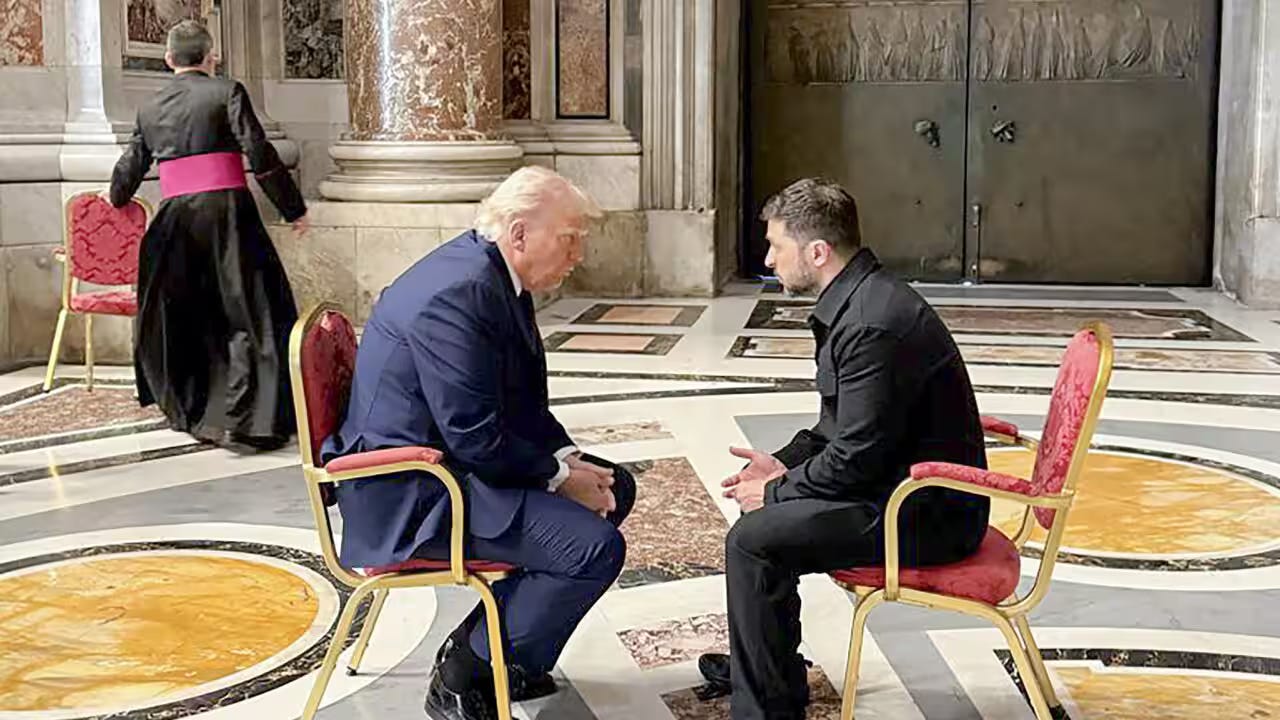
1In late October 2023, while filming the documentary Forged in Fire, I sat down with Ukrainian President Volodymyr Zelensky.Our director/producer/cameraman, Michael Fardell, had asked the president’s office if he could do as much of the interview as possible in English, as we wanted him to speak directly to an Australian audience. His office was reluctant. This was no small ask because English is the president’s third language. Giving a prepared speech in it is one thing; making himself clear in an interview is another. The decision was left up to the president.I decided to post this today because of the images that emerged overnight of Zelensky sitting down with US President Donald Trump at the Pope’s funeral in Rome. It is good to see and, hopefully, some good can come of it. In their last, disastrous, meeting in the White House, Trump told Zelensky he had “no cards to play” in his nation’s war against Russia.One of the reasons I found the White House confrontation so jarring was because I had seen Zelensky struggle to make himself plain in English. Imagine yourself in the same position when the stakes are so high. Imagine the frustration of trying to make yourself understood.And I wondered if Trump had ever asked Zelensky why he, and his people, continue to fight, given in Trump’s view the cause is hopeless.In the interview for Forged in Fire, Zelensky put it this way:“What is a life? What is a life without any freedom, any rights, any democracy? When you can’t say what you want. Can’t choose how to live. What is it? It’s nothing.”Freedom. That’s some card. Some might call it a trump.The day after the interview with Zelensky we travelled to Borodyanka, about 50 kilometers northwest of Kyiv, which was heavily damaged during the first phase of Russia’s invasion in early 2022 and became a symbol of Ukrainian resistance and suffering. It was here we saw the Banksy mural of a young gymnast performing a handstand on the rubble of a bombed-out building.So, hope hides in surprising places. We hope and pray for a just peace in Ukraine.You can see our documentary here:What follows was written in early 2024. Much has changed since then. Much stays the same.The trouble with television gear is that so much of it looks like a rocket launcher or a bomb when viewed through a security monitor.So getting 13 cases of it through presidential security is trying anywhere in the world, but in Ukraine the degree of difficulty stepped up a tier. There, for the first time, the tedious routine came with the overpowering sense that it was essential to bar the door to a mortal danger lurking outside.It was late October and our documentary crew had driven to the same government office in the heart of Kyiv for three days in a row to interview officials and the First Lady, Olena Zelenska.Inside was a shadow world. This once-grand building had life and light sucked out of it by war. The darkness built sandbag by sandbag, piled high against the windows. The second floor was almost pitch black, with only an essential few lights battling the gloom.On the top floor we set up in front of a sweeping staircase, guarded by two soldiers who had radiation alarms clipped to their belts. Radioactive poison, after all, is a hallmark of their enemy.When a light on the elevator indicated it had been locked off on the ground floor, it signalled our elusive interviewee was on his way.Volodymyr Zelensky stepped out of the lift alone, wearing a familiar black skivvy with a subtle touch of blue and gold on the collar, and green combat-style pants. He had agreed to speak in English as we wanted him to talk directly to an Australian audience, half a world away. His message was simple: our nations were united by common values.“You are closer than you think,” the Ukrainian president said. “During the war, there were a lot of countries who are closer than you to us but they didn't come to support our people.”Whether you believe Australia should support Ukraine depends on whether you think this is a regional conflict or a frontline in the battle between tyranny and democracy. If it is a local war, then who wins matters little here. But if it is the tip of the spear in a fight over which worldview will define the 21st century, then what happens to Ukraine is vital to us.In Vladimir Putin’s telling, Russia was provoked by the expansion of NATO towards his borders. It is a view that has traction here and in significant parts of the Republican Party in the United States. It is an argument I have heard directly from an adviser to former Russian President Dmitry Medvedev.In his words, Russia complied with every US demand in the wake of the collapse of the Soviet Union, including abandoning its key listening post in Cuba, the “crown jewels” of its signals intelligence gathering. That, he said, was done on the understanding that NATO would keep its distance from Moscow — an agreement the US and Europe reneged on.Putin laid out his grievance in a 2007 speech in Munich where he described the expansion of NATO as “a serious provocation.” The adviser told me he was in a closed-door meeting at that conference where a furious Putin told EU leaders, “You are forcing me into the arms of China, which is unnatural to me.”But to accept this line means ignoring Putin’s 5,000-word pre-war essay, where he argued that Ukraine did not exist as a real nation. To buttress this, he rewound history to the 9th century and the shared heritage of Kievan Rus — an era that predates his grievance with NATO by a millennium. In it, Putin declared: “I am confident that true sovereignty of Ukraine is possible only in partnership with Russia.”Putin has described the fall of the Soviet Union as the greatest geopolitical catastrophe of the 20th century and is bent on rebuilding a Tsarist Empire. His imperial ambition is embedded in the ideology of Russkii Mir (“Russian World”), aimed at exerting influence over states Moscow deems fall within its remit.Speak to officials from the Baltic States and they have no doubt Moscow’s ambitions do not end with Ukraine. Estonian Prime Minister Kaja Kallas has accused Russia of waging a “shadow war” against the West.So far, Australia and a Western alliance have stood with Ukraine, while Iran, North Korea and China stand with Russia. Beijing’s closeness to Moscow was underlined with a recent rare hug between a Chinese leader and a Russian president. They are now, quite literally, in each other's arms.Putin and Xi Jinping share the same view of the West: that it is decadent, divided and in terminal decline. They believe their era is at hand and mean to take what they claim is rightfully theirs. That means reordering the world to make it a safe place for tyrants.Recall that the Chinese Communist Party claims Taiwan — a country the Party has never ruled. Its illegal annexation of the South China Sea is based on a false claim that dates back to “ancient times.” It also has a diaspora of 40 million, referred to as the “Overseas Chinese,” from whom it expects loyalty.Dictators can never rest until they gain a foothold in your mind. As Xi strives towards his “China Dream,” the first pain falls on his own people, who already live in a surveillance state. It will get worse as the demands from the rising Middle Kingdom ripple outward. Xi’s dream demands all criticism of him and the Party be silenced, at home and abroad. It demands that tribute states, like Australia, be separated from old alliances and live in the box that Beijing builds.There have been countless failures by the United States and its allies in the handling of world affairs since the end of the last Cold War. But the deepest failure with tyrants like Putin and Xi is a failure of imagination — a failure to understand that their ambitions for the world cannot be reconciled with the one we would like to live in. Europe could not imagine another war. And war came.I have been close enough to the frontline of that war to know what it looks like. It looks like Mordor. The loss of life is immaterial to someone like Putin because, in a dictatorship, only one life and one opinion count.We are closer than we think to that war. A Russian victory would be a body blow to anyone, anywhere, who craves freedom. It would encourage Beijing in its quest to take Taiwan.War has clarified what is essential to Zelensky.“What is life?” he told us. “Without any freedom. Any rights. Any democracy. When you can’t [say] what you want. Can’t choose how to live. What is it? It is nothing.” This is a public episode. If you would like to discuss this with other subscribers or get access to bonus episodes, visit chrisuhlmann.substack.com
There’s an old line, attributed to the American humorist Josh Billings: “It ain’t what you don’t know that gets you into trouble. It’s what you know for sure that just ain’t so.”That sentiment cuts to the heart of my conversation with Matt Ridley, zoologist, science writer, hereditary peer, and long-time observer of the triumphs and follies of human reason. Ridley’s latest book, Birds, Sex and Beauty, returns to his roots in evolutionary biology, as he argues that the seductive allure of coloured feathers matters more than whether it signals health or strength.But our conversation focused less on the evolution of plumage, and more on the strange devolution of some science into dogma. The trap is certainty, and the hubris it breeds. Ridley does not denigrate experts; he simply reminds them they are not oracles. They’re human. And humility, not certainty, is the foundation of science.“A little humility about forecasting the future,” Ridley told me. “There are no experts on the future… on the future of the economy, the future of epidemics, the future of climate. There are no experts on that. And so, for me, that's what science has to do. It has to save the reputation of the real engineers who solve real problems by distancing themselves from the modellers who are little better than snake oil salesmen and astrologers.”After initial pessimism in his youth about the state of the environment, Ridley became a rational optimist. There are many problems in the world, but when humanity is left free to trade and think, it tends to muddle its way toward improvement. Today, however, optimism is the act of a contrarian.“We’ve been deluged with the pessimistic side of the world... We’ve been told again and again that disaster is just around the corner. And in fact… there have been spectacular changes in human wellbeing. The most striking example is that half the world’s population was living in extreme poverty — that’s less than $2 a day in today’s money — when I was born, and now that number is something like eight percent.”The biggest catastrophe on the pessimists’ menu is, of course, climate change. Ridley believes it is a problem but one that has been framed in increasingly apocalyptic tones. It has become an end-times theology. The doom loop is self-reinforcing: politicians want excuses, activists want urgency, the media wants drama, wind and solar carpetbaggers want cash, and an increasingly compromised scientific establishment wants funding.The problem isn’t that carbon dioxide doesn’t matter. But the nuance is lost in the noise. Ridley, who has spent decades reading the literature, notes that warming is occurring at the lower end of projections. The Intergovernmental Panel on Climate Change itself is cautious about attributing specific weather events to climate change. And yet, everywhere, we hear a recital of the scariest verses from the Book of Revelation.“The media is far too ready to rush to attribution... And in addition to that, they are leaving out the other side of the story: that carbon dioxide is the food of plants.”There are echoes here of another crisis: COVID, and the way that modelling, consensus, and censorship replaced debate.“The scientific community has yet to realise just how much of its reputation it destroyed in the COVID years.”Masks, transmission, lockdowns, lab leaks — sceptics weren’t allowed to ask the questions, and the expert answers were often wrong. Ridley co-authored a compelling book on the lab-leak hypothesis as the origin of the pandemic and, for that, he was labelled a conspiracy theorist.This isn’t just about climate. Or COVID. It’s about trust. Because trust is the currency that holds a society together and once spent, it’s hard to earn back.We are also being offered absurdly expensive solutions. Britain, Ridley notes, now has the highest electricity prices in the developed world. The costs fall hardest on the poor and subsidies flow to the wealthy. Politicians, bureaucrats and activists forecast endless declines in renewables prices as power bills soar and business cashes in:“We’ve got an enormous crony capitalist industry growing up around the climate scare.”At the end, we return to his passion, his latest book on birds. Here, nature tells a deeper story: that beauty can emerge for its own sake, and that poetry can sometimes hold more wisdom than prose.At Powerlines, we try to find people who still value reason over rhetoric. Matt Ridley is one of them. He hasn’t lost faith in science. But he has seen what happens when science becomes a faith.https://www.harpercollins.com.au/9780008645540/birds-sex-and-beauty-the-extraordinary-implications-of-charles-darwins-strangest-idea/ This is a public episode. If you would like to discuss this with other subscribers or get access to bonus episodes, visit chrisuhlmann.substack.com
Earlier this year, I spoke with Dr. Bjorn Peters—a physicist-turned-energy economist who once believed in the promise of Germany’s energy revolution. Back in 2008, as a senior adviser in Deutsche Bank’s asset management arm, Peters helped direct billions of euros into wind and solar projects.But the deeper he looked, the more sceptical he became about the wisdom of building an electricity grid around weather-dependent generators.“It means decentralized energy production, but not decentralized energy supply. And that’s one of those very fundamental flaws in thinking that led us astray.”Wind and solar are intermittent and highly correlated. They flood the grid in fair weather, then vanish together in cloudy stillness. On their own, they will never deliver 24/7 power. And there is still no economical way to store electricity at the scale and duration needed to keep a modern industrial society running.🔗 IEA – Grid Stability and StorageIt’s why Germany has exported a new word: Dunkelflaute—“the dark doldrums”—describing periods when there is little sun and no wind across large regions, sometimes for days or even weeks.🔗 DunkelflauteAt such times, all of the vastly distributed energy gatherers need a 100 percent backup from gas, coal or energy imports. And what’s true in Germany is true always and everywhere. So what was sold as a bold vision has become a cautionary tale.The Anti-Nuclear CrusadePeters corrected me when I suggested the policy began with good intentions. He explained it started in the 1970s, driven by the anti-nuclear politics of the Green movement. The aim was not to decarbonise, but to dismantle powerful, state-run utilities—and that meant shutting down nuclear power. That exercise in national self-harm that is now complete.“The targets of the energy transition were much more about social change than climate policy. That’s why they phased out nuclear first—something you can’t explain to anyone nowadays.”What followed was predictable. And devastating.Germany has now spent more than €700 billion—over a trillion Australian dollars—trying to reinvent its power system.🔗 Germany's EnergiewendeThe outcome?* Electricity prices among the highest in Europe.🔗 Eurostat 2023* Industrial decline, with companies fleeing Germany.🔗 BASF and chemical sector cuts* Emissions per kilowatt-hour much higher than in nuclear-powered France.🔗 [IEA 2022 – France vs Germany power sector emissions]* And a shift from power exporter to net importer—buying nuclear energy from France after shutting down its own fleet.🔗 Germany becomes power importerGermany’s grid shopfront was green, but its industrial engine ran on Russian gas. When the invasion of Ukraine cut that supply, the facade cracked—and the fragility of the system was exposedPowerlines is a reader-supported publication. To receive new posts and support my work, consider becoming a free subscriber or a donor..Industry Stayed SilentPeters sees this not just as a policy failure, but a failure of courage.“Because of this element of fear, the industry leaders didn’t dare to speak up—or did it in the wrong way. They communicated much more to their peers, but not to the broader public.”Politicians, meanwhile, remain wedded to illusions. But change might be coming.A study shows that several of Germany’s shuttered nuclear plants could be restarted—two with minimal effort, and seven more with moderate investment. The economics are compelling: a typical plant generates around €1 million a day in profit.🔗 Nuclear Restart Potential in GermanyPeters helped launch the “Nuclear Pride Coalition” in 2018 and believes public opinion is shifting. 🔗 YouGov Germany – Nuclear support polling, 2023Net Zero a Road to NowhereMost of Europe, the UK, and Australia continue to pursue decarbonisation at great cost. But the world’s biggest emitters—China, Russia, India, and the United States—have no intention of following the same timeline.So Peters believes this all points to one end.“These types of climate policies with their fallacies are not sustainable.”Dr. Bjorn Peters:🔗 linkedin.com/in/björn-peters-5996777b This is a public episode. If you would like to discuss this with other subscribers or get access to bonus episodes, visit chrisuhlmann.substack.com
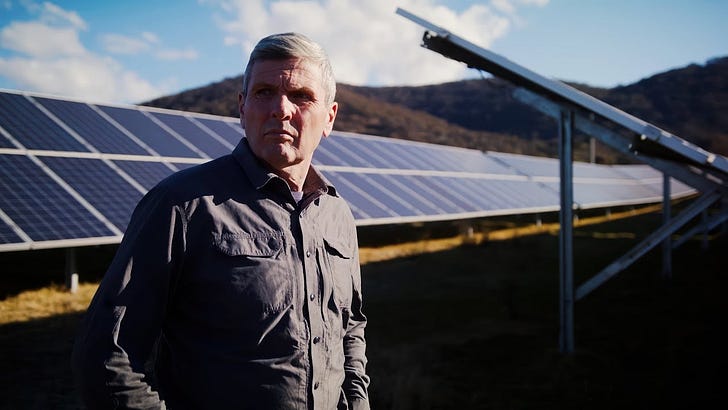
Since the 1992 Rio Earth Summit, when the world first committed to tackling climate change, carbon emissions have continued to rise every year with just two exceptions: the 2009 global financial crisis and the 2020 pandemic.In both cases, emissions fell only because of wrenching economic dislocation. And while much has been said about the energy transition, the numbers tell a more stubborn story. Little has changed in how much fossil fuel we burn. What has changed is where.According to the Statistical Review of World Energy 2024, global primary energy consumption rose by two percent in 2023, reaching yet another all-time high. Fossil fuels still supplied 81.5 percent of the world’s primary energy — barely down from 81.9 percent the year before.Coal production hit a record high, and China consumed 56 percent of it. [p. 5, SRWE 2024]But that was 2023. This year, the International Energy Agency (IEA) revised the figure upward. In its Global Energy Review 2025, the IEA reported that China consumed 58 percent of the world’s coal in 2024 — another record. Despite huge investments in wind, solar, hydro, nuclear, and gas, China’s surging electricity demand drove coal use up by 1.2 percent. IEA 2025, p. 6 – PDF linkIn 2023, coal supplied 60 percent of China’s electricity. Wind and solar contributed just over 15 percent — well below the combined share of hydro and nuclear. When it comes to China’s total primary energy, fossil fuels accounted for 82 percent, with coal, oil, and gas dwarfing wind and solar, which together delivered barely five percent. Put another way: for every unit of primary energy China got from wind and solar, it got sixteen from fossil fuels.Renewables decorate the China story, fossil fuels power it.🛢️ Fishing For PowerYet there is a near constant mismatch between energy headlines and energy realities. Every year, record-breaking capacity additions in wind and solar dominate the news. But “capacity” is not the same as generation.In 2023, the world added 346 gigawatts of solar and 115 gigawatts of wind capacity — historic numbers. But these generators are off more often than they are on. Solar panels typically operate at 10–25 percent of their installed capacity, and wind averages around 35 percent. In contrast, fossil fuel plants often run at 50–90 percent capacity factors. [SRWE 2024, “Capacity vs Generation” section]A better term for wind and solar is "energy gatherers." Like casting a net for fish, you get what nature gives.When it comes to global electricity generation, coal still leads at 35 percent, followed by gas at 23 percent. Oil accounts for about two percent. Wind, solar, and hydro combined now provide 30 percent, but wind and solar together make up less than half of that — under 15 percent. [SRWE 2024, Electricity Generation data]But electricity is only part of the energy story. When looking at total energy — including transport, heating, and industrial use — wind and solar account for just 8.2 percent of primary energy consumption. Nuclear contributes 4 percent, and hydro 6.4 percent.Fossil fuels remain the backbone of the global energy system.🌍 Emissions Keep ClimbingBoth reviews confirm that energy-related greenhouse gas emissions reached a new record in 2023. The Statistical Review of World Energy reports a 2.1 percent increase, pushing total emissions over 40 gigatonnes for the first time. The IEA’s 2025 Global Energy Review echoed this trend, attributing it in part to China’s record coal consumption“China now consumes nearly 40% more coal than the rest of the world combined,” the IEA wrote. “This drove global coal demand to a new high.” [IEA 2025, p. 6]The rule of thumb? Ignore the words. Follow the fuel. Judge nations by their actions, not their press releases.⚠️ Conclusion: This Is Not a Transition — It’s an AdditionFossil fuels haven’t been replaced — they’ve been joined by unreliable newcomers. Weather-dependent energy needs constant backup from hydrocarbons to keep the grid stable, or to take over entirely when the sun doesn’t shine and the wind doesn’t blow. Coal, oil and gas still carry the weight of the world. What we call decarbonisation is, in many cases, just offshoring. Industrial production and emissions haven’t disappeared — they’ve been exported, then reimported as goods made in coal-fired economies like China and India.Activists in developed countries may cheer the closure of coal plants and the rise of wind and solar, but the overall effect is marginal. Fossil fuels are simply being displaced geographically, not phased out.We’ve made enormous noise, spent trillions, and passed countless laws. But emissions are up. Coal is up. And the share of energy provided by oil, gas, and coal remains almost unchanged after 30 years of climate summits.The rhetoric changed. The reality didn’t. So, what do you call a movement that promises transformation but delivers the status quo? A performance. Not a transition. And the costliest illusion in history.See the full story here.Powerlines is a reader-supported publication. To receive new posts and support my work, consider becoming a subscriber. It’s free — though donations are welcome. This is a public episode. If you would like to discuss this with other subscribers or get access to bonus episodes, visit chrisuhlmann.substack.com
“Hope is not a strategy.” With that one line, former Home Affairs Secretary Mike Pezzullo cuts to the heart of Australia’s strategic complacency. In a wide-ranging interview for Powerlines, Pezzullo lays out a devastating account of how successive governments have failed to prepare the nation for a far more perilous world.The warnings were there. In 2009, Pezzullo led the drafting of a Defence White Paper that recognised the accelerating militarisation of China — a build-up that “could only have one purpose... to give themselves the option to take on the Americans militarily.” That paper proposed a significant naval expansion, including a new class of 12 submarines. “By 2030,” Pezzullo says, “we would have had a force getting close to 12.” Instead, the plan was shelved after then Prime Minister Kevin Rudd was toppled in 2010, and a decade of political churn followed. The result? A nation without a functioning deterrent. When three Chinese warships recently sailed around Australia and conducted a live-fire drill in the Tasman Sea — the first shots fired by a non-ally in that region since the Japanese in the 1940s — Pezzullo says the most likely explanation is chilling: “It probably was a rehearsal for a wartime combat operation.” And Australia was unable to track them with its own navy because, he notes, “our two floating petrol stations are both broken at the moment.”Worse, Pezzullo reveals that we now lack basic defensive capabilities. “We have no mine countermeasures capability.” If an adversary mined our ports, we’d have to “call someone... to clear out a channel into our harbour.” On missile defense, the story is just as bleak: “We have no interceptors.”Some weapons of war already lurk, invisibly, inside our borders. “Pre-positioned malware... designed to be animated, to be activated so that you take down critical infrastructure. Water, power, energy, air traffic control.” The next war, he warns, may start with a blackout.“And then ships start exploding off one of our ports.”Pezzullo does not believe war is imminent, but says it is prudent to plan for the “reasonable worst case scenario.” He calls for a complete reimagining of Australia’s strategic posture. We must be able to “hold out,” as Britain did in 1940 — with a population and a policy prepared to endure. We must be equipped to defend ourselves, on our own.“We should not expect anyone else to shed their blood in our direct defence… if we're not prepared to shed our own blood.”He urges investment in civil defense, energy resilience, cyber security, missile interception, and industrial self-reliance. Pointing to Sweden’s public campaign preparing citizens for conflict, he asks: “Could you imagine the government here... launching a pamphlet on civil defense called ‘If War Were to Come’?”It’s a warning from a man who’s spent a lifetime in the engine room of the state and who recognised threats before others did. Australia has been told. Whether it listens now is a test not just of government, but of national character. This is a public episode. If you would like to discuss this with other subscribers or get access to bonus episodes, visit chrisuhlmann.substack.com
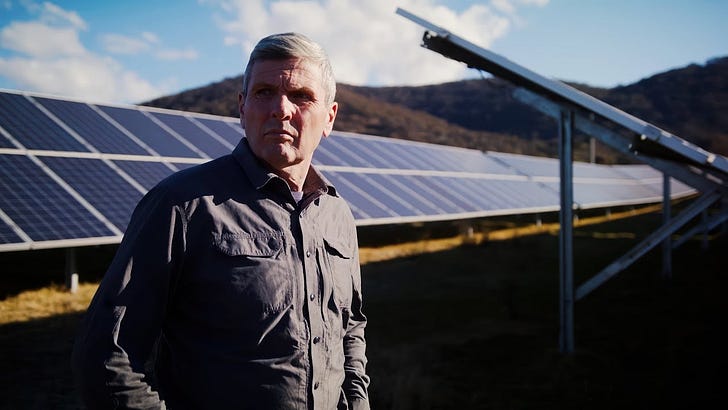
In far north Queensland, in the ancient forests of the Atherton Tablelands, Steven Nowakowski has spent three decades fighting to protect the natural world. A wilderness photographer and lifelong environmentalist, he once stood as a Greens candidate. Now he finds himself in open conflict with those who claim to be saving the planet.Steven and I met in 2024, while filming The Real Cost of Net Zero.Steven’s epiphany came through a camera lens. He began documenting the destruction wrought by industrial wind farms — roads carved through forests, ridgelines stripped bare, habitats fragmented in the name of climate salvation.“The end game here is to achieve Net Zero,” he says. “But pushing roads and clearing forests to build wind turbines is an oxymoron. The first thing we should be doing is keeping trees in the ground.”One project, the Chalumbin Wind Farm, would have cleared more than 500 hectares of forest next to a Wet Tropics World Heritage area. Steven helped rally the local community to stand against it.“I was shattered when the government wanted to come in and put these big windmills in,” said traditional owner Tom Gertz. “They didn’t consult with the traditional people. Everybody’s got to understand, you never gonna come in here and desecrate my country.”Against the odds, the campaign succeeded. The federal government rejected Chalumbin, deeming the environmental risks too great. The battle was over but the war had only just begun.Steven has turned his skills as a cartographer toward mapping the scale of what’s coming. Just in Queensland, 3,127 turbines are in the planning pipeline but as Steven says that number grows by the week. Thousands more turbines will march through New South Wales, Victoria, to Port Lincoln in South Australia and across the Bass Strait to Tasmania as the east coast grid is transformed, along with the landscape.And that’s only the generation side of the ledger. All of this scattered supply — wind and solar farms spread across the continent — must be stitched together with new transmission.“We’ve identified around 10,000 kilometres of transmission that needs to be built by 2050,” says Australian Energy Market Operator CEO Daniel Westerman. “About half of that in the next decade.”Think about that. Every fourteen hours, another turbine. Every day, 22,000 new solar panels. This is what it takes to meet the government’s 2030 renewable energy target.“The Australian public have got no idea,” says Steven. “I gotta laugh. They’ve got no idea what’s in store.”They will. These turbines won’t be tucked away in deserts or outback plains. They’ll march across the Great Dividing Range, loom over farmland, cut into native forests, and tower above once-pristine ridgelines.Changing the landscape forever, from sea to shining sea.This is what Net Zero looks like when the rubber hits the road and the bulldozers hit the bush.You can see (and buy) Steven’s beautiful wilderness pictures here. This is a public episode. If you would like to discuss this with other subscribers or get access to bonus episodes, visit chrisuhlmann.substack.com
As Australians head toward a federal election, former Senate president and High Commissioner to Canada Scott Ryan offers a measured but clear-eyed assessment: the old certainties in Australian politics are breaking down — and the international order that once underpinned them may not return.In a wide-ranging interview, Ryan provided a granular, state-by-state breakdown of the electoral battleground. He sees Victoria as central to any hope the Coalition has of forming government — a state where the Labor government is deeply unpopular, but the Liberal Party remains at historic lows.New South Wales is just as complex. In outer-metropolitan seats and areas with significant Muslim populations, new dynamics are at play — including the rise of faith-aligned independent candidates whose preference flows could prove decisive. Ryan notes that the two-party preferred metric is becoming less useful in an election increasingly shaped by minor parties and independents.Queensland, once the Coalition’s power base, is now home to rising Greens strength in inner-Brisbane, volatile regional contests, and a landscape that looks more fractured than ever. He sees Tasmania, South Australia, and the Northern Territory as largely status quo contests, while warning that even a small national swing could push Labor into minority — though a Coalition majority would require a historically large shift.Ryan believes we are entering a long era of fragile governments. Major party loyalty is declining, electoral volatility is rising, and preference flows — especially from the Greens to Labor — are becoming kingmakers.“Winning primary votes is no longer enough,” he says.He ties this fracturing at home to a wider story abroad. Ryan reflects on his early political awakening during Victoria’s early-1990s recession, where his father’s job loss taught him how policy decisions shape real lives. That experience led him to embrace the potential of reform — and he credits Australia’s success in liberalising its economy during the 1980s and ’90s without widespread social breakdown to a balance of free-market reform and social equity mechanisms like HECS and Medicare.Ryan then shifts focus to the broader collapse of the postwar order, especially in light of Donald Trump’s re-election campaign. In Canada, where he served as High Commissioner, Trump’s return has completely overturned a 20-point Conservative lead and resurrected the Liberal Party, thanks to tariff threats and a new sense of vulnerability in U.S.-Canada relations.He warns that Trump’s economic nationalism has direct implications for Australia, with our major trading partners all subject to high U.S. tariffs (although, of course, this changes by the day). More broadly, Ryan sees the unravelling of the rules-based order as a turning point: if America can no longer be counted on, Asia’s middle powers — including Australia — may be forced to look elsewhere. And China, he notes, is already filling the vacuum.Still, he ends on a note of cautious national pride: Australia, he says, has absorbed mass migration, resolved sectarian divides, and built a strong, flexible political culture.But the test of that resilience — at home and abroad — may be just beginning. This is a public episode. If you would like to discuss this with other subscribers or get access to bonus episodes, visit chrisuhlmann.substack.com
At Thursday’s National Press Club energy debate, I asked Energy Minister Chris Bowen a simple question: “Have electricity prices risen on your watch?” Once again, he refused to concede it, saying only that prices were higher than the government would like.On that, we can all agree.But here’s the point. In December 2021, Bowen released modelling that claimed Labor’s energy plan would reduce household electricity bills by $275 by 2025. It was a centrepiece of the last election campaign. In April 2022, I warned him in an interview that the modelling was flawed and would not survive contact with reality.This is the interview.When the interview ended, I urged Bowen to stop telling people their power prices would fall. Now, there’s no reason a politician should accept the advice of a journalist — but I was not alone. In private, I understand at least one senior energy executive issued the same warning.Bowen was undaunted. He — and many others in Labor — repeated the pledge in 2022, 2023, and all through 2024. He repeated it as electricity prices spiked. He repeated it as federal and state governments began spending billions in subsidies to protect consumers from massive hikes in their power bills.Then, this year, the rhetoric began to shift. In an interview on Sky, Bowen claimed electricity prices were falling. It’s axiomatic: if prices are falling, the government wouldn’t need to subsidise them. Then it emerged that this breathtakingly cynical claim rested entirely on the morphine of energy subsidies suppressing the real pain of actual price hikes. The Commonwealth’s share of those subsidies now stands at $6.8 billion.The spin cycle drew in other ministers. On Budget night, this line appeared in the Treasurer’s speech: “Electricity prices went down 25 per cent here last year...”Yet the Treasurer’s own Budget papers confirm this: “Without Commonwealth and state government electricity rebates, electricity bills would have been around 45 per cent higher in the December quarter 2024.”Using Labor’s preferred measure — citing numbers not adjusted for inflation — electricity prices on the east coast have risen by 43 per cent for residential bills and 53 per cent for businesses since Labor came to power.Consumers are now expected to be grateful for having their taxes recycled as “cost of living relief.” The arsonist demands thanks for waving a garden hose over his own inferno.On Thursday I asked Bowen to confirm one fact: “Electricity prices are rising, aren’t they, Minister? That’s written into every power bill, isn’t it? And if you can’t admit that simple fact, why should anyone believe anything you say?”It was a question aimed at piercing a thick fog of spin — and he dodged it.Bowen’s first move was to claim he wasn’t sure what the question was. Then he accused me of editorialising — of having “strong views” and saying things on Sky News with which he disagrees. That’s true. I do. But facts are not feelings. And the truth is, energy prices have risen — not fallen — since Labor made its promise. That’s not my opinion. That’s a fact.Eventually, Bowen conceded that prices are “higher than we’d like,” before pivoting to global woes: the war in Ukraine, international volatility, and other factors beyond his control.The problem is, the things within Bowen’s control are the ones that will drive prices ever higher. Wind and solar cannot deliver 24/7 power. They will never set the price of electricity at times of peak demand. And the explosion in transmission and distribution costs has yet to hit household bills. The future, on Bowen’s preferred path, is ruinously expensive.Thursday’s exchange was instructive. It wasn’t just about power prices. It was about trust. And one day, Bowen may learn that trust is the most important commodity in politics — and in life.Later, I turned to the Opposition’s Ted O’Brien and pressed him on gas: how he plans to lower prices by moving excess gas in Queensland south when the pipelines are already full. His answer rested on infrastructure investment and a gas reservation policy. He admitted it won’t solve short-term supply problems, but argued that storage and prioritising domestic use could help over the next few years. Maybe — but power prices are unlikely to tumble on the basis of what we’ve seen from the Opposition so far.Both sides are constrained by reality. Neither can promise to cut electricity bills. But only one side promised a miracle — and is now pretending they delivered it.The video courtesy of Sky News Australia. This is a public episode. If you would like to discuss this with other subscribers or get access to bonus episodes, visit chrisuhlmann.substack.com

Comments

Download from Google Play

Download from App Store
 United States