


 Claim Ownership
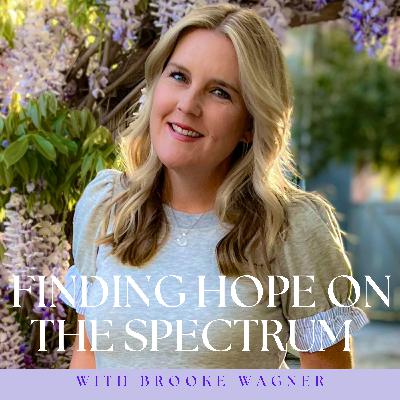
Finding Hope on the Spectrum
Subscribed: 1Played: 1
Subscribe

© Brooke Wagner
Description
Are you worried about your autistic son's or daughter's future and quality of life? Do you want to feel empowered to be the intuitive parent you know you are? Or are you a curious professional, seeking to learn and discover how to best reach your autistic clients? I invite you to join our community of growth seeking individuals as we connect, share and support each other.
This show will feature heart to heart conversations with parents, professionals, and autistic individuals sharing personal insight and life experiences. We will dive deep into supports, programs, and stories that inspire us.
This show will feature heart to heart conversations with parents, professionals, and autistic individuals sharing personal insight and life experiences. We will dive deep into supports, programs, and stories that inspire us.
38 Episodes
Reverse
In this heartwarming and thought-provoking episode of Finding Hope on the Spectrum, host Brooke sits down with Dr. Hedayat, a Stanford-trained physician specializing in integrative and developmental medicine.Dr. Hedayat shares his personal journey working with children on the autism spectrum and explains how he developed unique mathematical formulas to analyze bloodwork—allowing for highly personalized, systems-based care. The conversation introduces Endo-Biogenic Medicine, a holistic approach that focuses on supporting the body’s natural rhythms, restoring balance, and identifying root causes rather than managing symptoms alone.Together, they explore the role of plant-based medicine, gentle detoxification, circadian rhythms, and the body as an electromagnetic system. Dr. Hedayat also introduces cosmo-biology, examining how solar, lunar, and environmental forces may influence human biology and neurodevelopment. The episode highlights his innovative supplement line, Endo Logic, designed specifically for neurodivergent individuals, as well as the Gemma System for personalized care planning.Throughout the conversation, there is a strong emphasis on supporting caregivers, recognizing that true healing extends to the entire family system.⏱️ Episode Time Codes00:00 – Introduction & Dr. Hedayat’s personal journey01:45 – Welcome to Finding Hope on the Spectrum02:25 – Introducing Dr. Hedayat03:07 – Background, training, and integrative approach04:37 – Understanding Endo-Biogenic Medicine08:24 – The importance of listening and personalized care11:35 – Body rhythm, balance, and systems regulation17:47 – Gentle detoxification and drainage pathways20:14 – The healing power of plants27:33 – Identifying root causes and preventative care30:14 – Introduction to cosmo-biology30:49 – Electromagnetic energy and the human body31:43 – Impact of solar and lunar activity32:18 – The body as an electromagnetic system34:18 – Earth’s electromagnetic influence35:35 – Circadian rhythms and neurodevelopment38:35 – Identifying and treating physiological imbalances40:06 – The pineal gland and melatonin41:53 – Cosmo-biological sensitivities42:39 – Developing remedies for neurodivergent individuals46:46 – Endo Logic supplement line52:22 – The Gemma System and personalized care56:47 – Practical tips for MTHFR mutations58:55 – Resources, caregiver support, and final thoughtsConnect with Finding Hope on the Spectrum:Email: bwagner@findinghopeonthespectrum.comFacebook: https://www.facebook.com/profile.php?id=61574918739411Linkedin: https://www.linkedin.com/in/brooke-wagner-4819233a/Instagram: @findinghopeonthespectrumGuest Contact:Consultation: www.originbodymind.comResource: https://learnendobiogeny.com/Supplements: www.endologica.com The most essential support for children on the spectrum are the following:· Catavance: cortisol and dopamine balance, focus, memory, fungal, food allergies· Levovance: thyroid and dopamine balance, neurodevelopment, learning, memory, viral infections· Toniquel: brain-gut healing, GABA support, leaky gut, sticky stools, hyper before bed, anger, rage, picking, stimming or biting, environmental toxicity· Grow and Thrive Health Set: a support kit containing both Catavance and Levovance for optimal childhood developing: body, mind and heart.Learn more about GEMMA testing: https://www.systemsbrg.com/gemma-patients/
In this episode of 'Finding Hope on the Spectrum,' host Brooke invites Dr. Lisa Loegering, an integrative developmental pediatrician specializing in autism, anxiety, and ADHD, to discuss holistic approaches to childhood developmental issues. Dr. Loegering shares insights on dietary interventions, including the benefits of a gluten-free and dairy-free diet and the importance of whole foods. She highlights the role of key nutrients like zinc and omega-3s in managing autism symptoms. The discussion also delves into various testing methods such as hair tests, OAT tests, and the IntellxxDNA™ panel, and the relevance of these tests in creating personalized treatment plans. Dr. Loegering emphasizes the complexity of autism and the need for a step-by-step, individualized approach to treatment. She also discusses the significance of reducing environmental toxins and improving gut health for overall wellness. Finally, Dr. Loegering offers hope and encouragement, noting that all children can improve with the right interventions. The episode concludes with resources for parents and caregivers, including the TACA Now organization and various recommended readings.00:00 Introduction to Autism and Diet01:36 Welcome to Finding Hope on the Spectrum02:18 Meet Dr. Lisa Loegering03:09 Dr. Lisa's Journey into Integrative Pediatrics05:43 Understanding the Whole Child Approach07:38 Challenges in Autism Treatment08:51 Importance of a Step-by-Step Process12:17 Dietary Recommendations for Children with Autism17:50 The Role of Reverse Osmosis Water27:14 Testing and Supplements for Autism33:55 Introduction to Conditions and Testing35:25 Challenges with Mold and Toxins36:20 The Role of Folate and Leucovorin42:06 Nutritional Supplements for Autism54:43 Gut Health and Autism01:00:15 Resources and Support for Parents01:03:27 Final Thoughts and Contact InformationConnect with Finding Hope on the Spectrum:Email: bwagner@findinghopeonthespectrum.comFacebook: https://www.facebook.com/profile.php?id=61574918739411Linkedin: https://www.linkedin.com/in/brooke-wagner-4819233a/Instagram: @findinghopeonthespectrumTikTok: FindinghopeonthespectrumGuest Contact: https://www.lisaloegeringmd.comShow Resourceshttps://tacanow.orghttps://www.fratnow.comhttps://www.mitoswab.comhttps://intellxxdna.com/https://perpetualhealth.drgoodenowe.com/programs/autism/https://www.neuroneeds.com/product/spectrum-needs/https://autismnrc.org/products/anrc-essentials-plus-powder?variant=44961928118485https://mosaicdx.com/test/organic-acids-test/Book RecommendationsThe Personalized Autism Nutrition Plan, by Julie MatthewsThe Folate Fix, by Richard FryeBorn Lucky, by Leland Vittert
In this episode of 'Finding Hope on the Spectrum,' host Brooke Wagner has an enlightening conversation with Nancy Marin, a seasoned occupational therapist with over 40 years of experience. Nancy shares her extensive background in Neuro-Developmental Treatment (NDT), sensory processing, yoga, reiki, and the listening program (TLP) and discusses how she weaves these modalities together in her private practice, Occu Play Inc. in Northeast Florida. She emphasizes the importance of viewing the individual holistically and the significance of family involvement. Nancy also shares breakthrough stories, advice for families, and the importance of maintaining hope and perseverance in the journey of supporting neurodiverse children.00:00 Introduction to Sensory Integration01:31 Welcome to Finding Hope on the Spectrum02:12 Introducing Special Guest: Nancy Marin03:30 Nancy's Journey into Occupational Therapy06:34 Establishing a Private Practice10:10 Understanding Neurodevelopmental Treatment (NDT)15:04 Integrating Sensory and Motor Systems20:15 Addressing Sensory Processing at the Cellular Level25:20 Gathering Information and Diagnosing Sensory Challenges33:16 The Role of Sensory Processing in Daily Life36:02 Understanding Movement and Sensory Integration37:46 The Importance of Sensory Foundations40:27 Repetition and Neuroplasticity42:19 The Listening Program (TLP)49:04 Yoga and Reiki in Occupational Therapy57:24 Integrating Multiple Therapeutic Approaches01:01:04 Resources and Final ThoughtsConnect with Finding Hope on the Spectrum:Email: bwagner@findinghopeonthespectrum.comFacebook: https://www.facebook.com/profile.php?id=61574918739411Linkedin: https://www.linkedin.com/in/brooke-wagner-4819233a/Instagram: @findinghopeonthespectrumTikTok: FindinghopeonthespectrumGuest Contacthttps://www.facebook.com/Occuplayinc/Nancy@occuplayinc.comhttps://www.linkedin.com/in/nancy-marin-41162011/Resourceshttps://www.ndta.org/www.advancedbraintechnologies.comhttps://www.specialyoga.com/https://pppvonline.com/
In this episode of 'Finding Hope on the Spectrum,' host Brooke interviews Jessica Richards, a clinical expert with over 15 years of experience, about selective mutism. They delve into what selective mutism is, distinguishing it from trauma-based mutism, and discuss its prevalence and symptoms. Jessica shares insights into how sensory processing and a child's nervous system play crucial roles in managing this anxiety-based disorder. They explore strategies and practical tips, including a detailed discussion on the 'fade-in' and 'fade-out' processes to help children gradually communicate in various settings. The importance of parent coaching and creating supportive environments both in-home and school settings are emphasized. The episode offers hope and actionable steps for families and professionals working with children affected by selective mutism.00:00 Introduction to Sensory Inputs and Language01:04 Welcome to Finding Hope on the Spectrum01:46 Guest Introduction: Jessica Richards02:23 Understanding Selective Mutism04:02 Selective Mutism in Children07:02 Anxiety and Stress Responses14:24 Common Myths About Selective Mutism19:52 Coaching Model and Strategies29:18 Introduction to Structured Parenting30:19 Declarative Communication and Autism30:56 Comorbidity of Selective Mutism and Autism31:57 The Ladder Concept in Communication41:29 Fading Out Process in Parent Sessions45:54 Sensory Processing and Selective Mutism51:48 Support for Professionals and Parents54:38 Resources and Final ThoughtsConnect with Finding Hope on the Spectrum:Email: bwagner@findinghopeonthespectrum.comFacebook: https://www.facebook.com/profile.php?id=61574918739411Linkedin: https://www.linkedin.com/in/brooke-wagner-4819233a/Instagram: @findinghopeonthespectrumTikTok: FindinghopeonthespectrumGuest Contact: https://www.jessicarichardslcsw.com/JessicaRichardslcsw@gmail.comInstagram: @jessicarichardslcswNeurorelational Framework: nrfcare.org/starter-kitResourceshttps://www.selectivemutism.org/
In this episode of 'Finding Hope on the Spectrum,' Brooke hosts Sara Intonato, founder of 'Autism Change Makers.' They discuss the pervasive PTSD experienced by autism parents and the essential role of parent wellbeing. Sara shares her journey from a yoga teacher to an autism advocate after her son Rocco's diagnosis. They delve into the importance of emotional health for the entire family, the concept of presuming competence, and effective self-care strategies, including breathwork and meditation. Sara emphasizes that parents are the true changemakers for their children and discusses the supportive community and resources available through 'Autism Change Makers.' Tune in for inspiring stories and practical advice to help families thrive.00:00 Introduction: The Hidden Struggles of Autism Parents01:10 Welcome to Finding Hope on the Spectrum01:51 Today's Topic: Wellbeing of Parents and Caregivers02:01 Meet Sara Intonato: Founder of Autism Change Makers03:05 Sara's Journey: From Yoga Teacher to Autism Advocate04:57 Creating a Supportive Community for Autism Parents08:49 The Importance of Presuming Competence13:35 Parental Empowerment: Becoming the Changemaker20:50 The Role of Self-Care in Autism Parenting31:52 Parent Stress Tools and Self-Care Workshops33:40 Starting with Simple Self-Care Practices34:37 The Importance of Self-Worth and Overcoming Martyrdom36:36 Building Wins and Understanding Stress Addiction38:23 The Subconscious Mind and Identity Shifts42:01 Co-Regulation and Parental Self-Care42:41 The Lighthouse Metaphor and Handling Intense Behaviors52:45 The Role of Community and Support Circles58:28 Final Thoughts and Words of WisdomConnect with Finding Hope on the Spectrum:Website: www.findinghopeonthespectrum.comEmail: bwagner@findinghopeonthespectrum.comFacebook: https://www.facebook.com/profile.php?id=61574918739411Linkedin: https://www.linkedin.com/in/brooke-wagner-4819233a/Instagram: @findinghopeonthespectrumGuest Contact: https://www.autismchangemakers.com/autism-changemakers--60ab9
In this episode of Finding Hope on the Spectrum, host Brooke engages in a heartfelt conversation with Karla Shein, founder and president of Empathy for Autism California Inc. Karla shares her personal journey of raising two autistic children, her own autism diagnosis, and her experiences growing up with a sibling on the spectrum. The discussion covers the importance of community support, empathy, and cultural humility in supporting families with neurodivergent members. Karla also talks about her podcast, books, and upcoming events aimed at empowering families and professionals in the autism community.00:00 The Power of Embracing Uniqueness01:34 Introduction to Finding Hope on the Spectrum02:12 Meet Karla Shein: Advocate and Mother04:05 Growing Up with a Sibling on the Spectrum06:10 Parenting Two Autistic Children10:26 Discovering Her Own Autism Diagnosis13:07 Empathy for Autism California: Mission and Services18:54 Supporting the Whole Family with Empathy24:24 Empowering Through Understanding24:55 The Concept of Glass Children26:45 Balancing Attention Among Siblings30:43 Professional Empathy and Cultural Humility33:37 Books for Parents and Professionals37:23 The Power of Storytelling in Podcasts39:27 Upcoming Speaking Event41:08 Final Thoughts and ResourcesConnect with Finding Hope on the Spectrum:Website: www.findinghopeonthespectrum.comEmail: bwagner@findinghopeonthespectrum.comFacebook: https://www.facebook.com/profile.php?id=61574918739411Linkedin: https://www.linkedin.com/in/brooke-wagner-4819233a/Instagram: @findinghopeonthespectrumGuest Contact:https://www.empathyforautismcalifornia.com/
In this episode of 'Finding Hope on the Spectrum,' Brooke welcomes back Gail Ludwig, an experienced RDI program certified consultant and speech-language pathologist, to discuss the vital developmental milestone of coordinating actions. This conversation is part three of a three-part series, focusing on practical strategies and the importance of authentic communication through joint activities. Brooke and Gail delve into the developmental stages, from referencing to complex collaborative tasks, emphasizing the significance of engagement, emotional connection, and gradual scaffolding in enhancing coordination skills. They also reflect on the importance of framing activities, the dynamic nature of interactions, and celebrating small successes. This episode offers invaluable insights for parents, professionals, and caregivers seeking to foster meaningful connections with neurodiverse individuals.00:00 Introduction to Authentic Communication01:10 Welcome to Finding Hope on the Spectrum01:52 Introducing Gail Ludwig02:11 Understanding Coordinating Actions05:35 Foundations of Coordinating Actions08:19 Practical Examples and Strategies11:00 Importance of Dynamic Interaction14:11 Real-Life Applications and Success Stories21:31 Incorporating Coordinating Actions in Daily Routines27:39 The Role of Siblings and Family in Development28:56 Shifting from Doing For to Doing With29:43 Scaffolding Coordinating Actions29:48 The Importance of Framing30:59 Inviting Participation32:13 Preloading for Success32:57 Supporting Transitions33:36 Spotlighting Teamwork37:39 The Value of Slowing Down39:14 Emotional Engagement48:37 Reflecting on Success49:46 Final Words and ResourcesConnect with Finding Hope on the Spectrum:Website: www.findinghopeonthespectrum.comEmail: bwagner@findinghopeonthespectrum.comFacebook: https://www.facebook.com/profile.php?id=61574918739411Linkedin: https://www.linkedin.com/in/brooke-wagner-4819233a/Instagram: @findinghopeonthespectrumGuest Contact:www.tagforgrowth.com
In this episode of 'Finding Hope on the Spectrum,' host Brooke delves into the transformative world of equine-assisted therapy. Joined by Kelly Russo and Dr. Robyn Wyzinski, they explore how horseback riding can offer significant therapeutic benefits for children with neurodivergent conditions. Sharing a touching personal story about Kelly's goddaughter, Cece, the conversation highlights the incredible impact of this therapy on strength, balance, and confidence. The guests also discuss the formation and mission of the nonprofit Center X, the nuances between hippotherapy and adaptive riding, and the extensive community effort required to facilitate these therapeutic sessions. The episode is a heartfelt exploration of hope, community, and the life-changing potential of horses.00:00 Introduction to Equine Therapy01:11 Welcome to Finding Hope on the Spectrum01:54 Meet Our Guests: Kelly Russo and Robyn Wyzinski04:25 The Birth of Center X08:30 Understanding Angelman Syndrome16:30 The Journey to Find the Right Therapy Horse22:19 The Healing Power of Horses31:09 Creating a Predictable Routine for Therapy31:28 Progressing Through Different Positions and Movements32:25 Functional Tasks and Independent Mobility33:29 Emotional Connections with Horses36:12 Building a Volunteer Community39:50 Halloween Costumes and Community Projects42:01 Advice for Families Considering Equine Therapy50:19 Future Goals and Expansion Plans54:45 Encouraging Community Support and Donations58:32 Final Thoughts and GratitudeConnect with Finding Hope on the Spectrum:Website: www.findinghopeonthespectrum.comEmail: bwagner@findinghopeonthespectrum.comFacebook: https://www.facebook.com/profile.php?id=61574918739411Linkedin: https://www.linkedin.com/in/brooke-wagner-4819233a/Instagram: @findinghopeonthespectrumGuest Contact:Website: https://www.centerxequinetherapy.com/Instagram: centerxequinetherapyPhone: (760) 454-9709
In this heart-opening episode of Finding Hope on the Spectrum, host Brooke sits down with Michelle Hardy, a board-certified music therapist and spelling-to-communicate practitioner with over 25 years of experience supporting individuals with autism. Michelle shares how music becomes more than melody—it becomes movement, connection, and voice. Through rhythm and relationship, she shows how music therapy can unlock non-musical skills like communication, regulation, and confidence. Together, they explore the power of whole-body learning, sensory awareness, and the importance of presuming competence in every child. Michelle also opens up about her own journey into music therapy and offers insight on finding practitioners who truly understand the neurodevelopmental experience of autism. This episode is a reminder that when we listen with our hearts—and not just our ears—music has the power to connect us beyond words.00:00 Introduction to Functional Skills Through Music01:28 Welcome to Finding Hope on the Spectrum02:19 Introducing Michelle Hardy03:17 Michelle's Journey into Music Therapy05:39 Discovering the Power of Rhythm in Autism08:39 Spelling to Communicate: An Overview15:12 Understanding Whole Body Apraxia29:29 The Role of Sensory Processing in Autism35:04 A Chance Encounter on the Airport Shuttle35:59 Facing the Thesis Defense37:58 Introduction to Body Coaching40:09 Breaking Down Motor Plans46:42 Understanding Stuck Loops53:01 The Importance of Sensory Accommodations57:26 Final Thoughts on Apraxia and Music Therapy01:01:19 Resources and Mentorship for Music TherapistsConnect with Finding Hope on the Spectrum:Email: bwagner@findinghopeonthespectrum.comFacebook: https://www.facebook.com/profile.php?id=61574918739411Linkedin: https://www.linkedin.com/in/brooke-wagner-4819233a/Instagram: @findinghopeonthespectrumTikTok: FindinghopeonthespectrumGuest Contact: https://hardyautismservices.com/
In this episode of 'Finding Hope on the Spectrum,' host Brooke has an in-depth conversation with Brooke Ober, a seasoned speech-language pathologist and the executive director of the SKOLA school. They explore the innovative educational model of SKOLA, a nature-based, project-focused independent school that emphasizes the importance of authentic, meaningful learning integrated with the environment. Brooke Ober discusses the school's four core pillars—education, self, community, and nature—and how these elements create profound learning experiences. They delve into the school's unique methods, such as 'risky play' and 'sit spots,' which foster self-regulation, problem-solving, and situational awareness among students, especially those who are neurodiverse. Brooke Ober shares heartwarming success stories of neurodiverse students thriving in this inclusive model and reflects on the broader implications of adopting such educational approaches. The episode offers insights for parents, educators, and advocates interested in holistic, nature-driven support for neurodiverse children.00:00 Introduction to Risky Play in Scandinavian Countries01:19 Welcome to Finding Hope on the Spectrum02:14 Introducing Brooke Ober: Speech Language Pathologist03:19 The Unique Setting of the SKOLA School05:12 Brooke's Journey to Founding the SKOLA School11:25 Core Values and Pillars of the SKOLA School21:47 The Power of Nature in Education30:58 The Importance of Mapmaking and Spatial Awareness32:16 Creating Zones for Better Learning33:20 The Role of Technology in Spatial Understanding35:27 Reflecting to Enhance Learning37:53 Incorporating Neurodiverse Students44:17 Supporting Families and Extending Learning at Home48:07 Success Stories and Future Goals53:20 Final Thoughts and How to Support the SchoolConnect with Finding Hope on the Spectrum:Email: bwagner@findinghopeonthespectrum.comFacebook: https://www.facebook.com/profile.php?id=61574918739411Linkedin: https://www.linkedin.com/in/brooke-wagner-4819233a/Instagram: @findinghopeonthespectrumTikTok: FindinghopeonthespectrumGuest Contact: https://www.theskola.org/Instagram: @the_skola
In this episode of 'Finding Hope on the Spectrum,' host Brooke discusses the critical topic of social referencing with Gail Ludwig, an RDI program certified consultant and speech-language pathologist. Gail shares her extensive experience working with autistic individuals and explains the concept of referencing, its importance for emotional connection and communication, and how it can be nurtured in autistic children. The conversation covers practical strategies and activities, such as using 'Magic Soup' and creating anticipation, to help children develop this skill. The episode also highlights the significance of neural connectivity and offers words of hope for parents. Listeners can learn more about RDI and Gail’s programs by visiting TAG's website (www.tagforgrowth.com).00:00 Introduction to Social Referencing01:16 Welcome to Finding Hope on the Spectrum01:58 Guest Introduction: Gail Ludwig04:50 Gail's Journey into Speech Pathology and RDI09:01 Understanding RDI and Its Importance11:03 The Value of Referencing in Autism19:44 Challenges and Strategies in Teaching Referencing27:51 Integrating Skills into Daily Life28:27 The Natural Progression of Referencing32:02 Activities to Enhance Referencing35:51 Referencing for Help and Environmental Awareness37:59 Referencing in Adults42:51 The Importance of Scaffolding45:42 Encouragement and Final ThoughtsConnect with Finding Hope on the Spectrum:Email: bwagner@findinghopeonthespectrum.comFacebook: https://www.facebook.com/profile.php?id=61574918739411Linkedin: https://www.linkedin.com/in/brooke-wagner-4819233a/Instagram: @findinghopeonthespectrumTikTok: FindinghopeonthespectrumGuest Contact: www.tagforgrowth.com
In this episode of 'Finding Hope on the Spectrum,' Brooke interviews Amanda Crowell, an RN, BSN, and mother of special needs children, about her journey from traditional nursing to advocating for integrative and biomedical approaches to autism. Amanda shares her personal story of her children's health challenges and developmental regressions, which she ties to their 12-month vaccinations. She describes how her quest for answers led her to holistic and integrative treatments that significantly improved her children's conditions. Amanda also discusses the importance of diet, reducing toxins, sleep, and gut health. Additionally, she emphasizes the significance of working with MAPS (Medical Academy of Pediatric Special Needs) doctors and highlights current research findings linking vaccines to increased risks of neurodevelopmental disorders. The episode aims to inspire and educate parents and professionals about alternative healing paths for children with autism.00:00 A Mother's Struggle: Searching for Answers01:39 Introduction to Finding Hope on the Spectrum02:26 Meet Amanda Crowell: A Journey from Nurse to Special Needs Mom03:56 Blending Conventional Nursing with MAPS Approaches05:25 Amanda's Personal Health Journey and Her Children's Struggles09:39 The Turning Point: A Devastating Illness14:05 Discovering MAPS and the Path to Healing23:09 Understanding Cerebral Folate Deficiency26:22 Defining Biomedical Treatments for Autism28:23 Integrating Holistic Approaches with Nursing31:12 Foundational Steps for Families: Diet, Toxins, and Sleep35:29 Understanding Histamine and Its Effects on Children36:28 The Importance of Sleep for Brain Detoxification37:34 Exploring PANS and PANDAS39:41 Leaky Gut and Its Implications41:03 The Role of Leucovorin in Treating Cerebral Folate Deficiency47:27 Challenges in Holistic and Functional Medicine51:11 Vaccine Controversies and Personal Experiences01:00:45 Resources and Final ThoughtsConnect with Finding Hope on the Spectrum:Email: bwagner@findinghopeonthespectrum.comFacebook: https://www.facebook.com/profile.php?id=61574918739411Linkedin: https://www.linkedin.com/in/brooke-wagner-4819233a/Instagram: @findinghopeonthespectrumTikTok: FindinghopeonthespectrumGuest Contact: @my.holistic.havenRecommended ResourcesBook Recommendationby Paul Thomas Website Recommendationshttps://documentinghope.com/https://tacanow.org/Vax Facts: What to Consider Before Vaccinating at All Ages & Stages of Life
In this episode of Finding Hope on the Spectrum, host Brooke has an engaging conversation with Amy Sage, co-founder of Parenting EQ. They explore the underutilized tool of reflection in parenting and the significance of emotional intelligence (EI) for both neurodiverse children and parents. Amy shares her journey in creating the Parenting EQ life skills curriculum, highlighting its origins during the COVID-19 pandemic and its widespread adoption in homeschool and charter school settings. The discussion covers the essential competencies of emotional intelligence, the program’s structure, and practical strategies for nurturing EI in kids. They underline the importance of modeling and practice, the benefits of screen-free tools, and the vital role of community support. Through real-life examples, Amy illustrates the transformative impact of her curriculum on children’s emotional well-being and resilience. They also touch on future plans to expand the curriculum’s reach to include teens and various educational professionals.00:00 The Power of Reflection in Parenting01:29 Introduction to Finding Hope on the Spectrum02:19 Meet Amy Sage: Co-Founder of Parenting EQ03:42 The Journey to Creating Parenting EQ07:35 Understanding Emotional Intelligence12:59 The Importance of Social Emotional Learning16:24 Components of the Parenting EQ Curriculum30:11 Adapting Curriculum for Different Age Groups33:45 Practicing Emotional Skills33:58 Learning Emotional Intelligence Together35:30 Structuring Lessons and Activities36:47 Flexible Learning Approaches37:54 Interactive Family Discussions41:21 Screen-Free Support Tools45:59 Teaching Competencies in Depth48:03 Direct Instruction and Self-Regulation53:47 Community and Support Networks57:58 Future Directions and Success Stories01:04:14 Accessing the CurriculumConnect with Finding Hope on the Spectrum:Email: bwagner@findinghopeonthespectrum.comFacebook: https://www.facebook.com/profile.php?id=61574918739411Linkedin: https://www.linkedin.com/in/brooke-wagner-4819233a/Instagram: @findinghopeonthespectrumTikTok: FindinghopeonthespectrumGuest Contact: https://www.parentingeq.com/Facebook: @ParentingEQInstagram: @parentingeq
In this episode of Finding Hope on the Spectrum, host Brooke welcomes Jessica Richards, a seasoned expert in clinical social work and child development. They discuss the importance of understanding behavior as the "tip of the iceberg," influenced by underlying nervous system mechanisms. The conversation dives into Pathological Demand Avoidance (PDA) and the Neuro-Relational Framework (NRF), emphasizing the significance of the nervous system, relationships, and individual differences in managing stress responses. With a focus on autism and the broader neurodiverse community, Jessica shares insights on individualized approaches, environmental supports, and communication styles, offering practical strategies for parents and professionals. This episode aims to provide inspiration, insight, and hope, encouraging listeners to focus on green zone moments for effective support.00:00 Understanding Behavior: The Iceberg Metaphor01:01 Welcome to Finding Hope on the Spectrum02:15 Introducing Jessica Richards: Expertise in Neuro Relational Framework04:02 Jessica's Journey into Pathological Demand Avoidance (PDA)05:43 Defining PDA: Pathological Demand Avoidance07:55 The Neuro Relational Framework Explained12:29 Understanding the Autonomic Nervous System17:31 Recognizing Stress Responses in PDA20:04 Why Traditional Behavioral Approaches Fail30:40 Understanding the Biomedical Model and Autism33:13 Strategies for Growth and Flexibility34:50 Using Humor, Novelty, and Play in Therapy36:00 Sensory Strategies and Individualized Approaches41:21 The Importance of Presuming Competence43:42 Environmental Supports for PDA48:30 Effective Communication Styles51:49 Promoting the Green Zone55:14 Resources and Final ThoughtsConnect with Finding Hope on the Spectrum:Email: bwagner@findinghopeonthespectrum.comFacebook: https://www.facebook.com/profile.php?id=61574918739411Linkedin: https://www.linkedin.com/in/brooke-wagner-4819233a/Instagram: @findinghopeonthespectrumTikTok: FindinghopeonthespectrumGuest Contact: https://www.jessicarichardslcsw.com/JessicaRichardslcsw@gmail.comInstagram: @jessicarichardslcswNeurorelational Framework: nrfcare.org/starter-kitSleep-Wake States Arc: https://drive.google.com/file/d/1mlOa7Y0R9599oF1jF0dmEC0FIpPFtKzR/view?usp=drive_linkSafety-Challenge-Threat Triad: https://drive.google.com/file/d/1vzV2f6UbWeasIX_kTiXzunleRXGzHNGh/view?usp=drive_linkNRF's Three Steps to Resilience: https://drive.google.com/file/d/1EIzVZGD--aE6XZye3W2tbvvmSq_3b7nS/view?usp=drive_link
In this episode of 'Finding Hope on the Spectrum,' host Brooke delves into the transformative impact of neuro music-based interventions with Alex Doman, an entrepreneur, author, and founder of Advanced Brain Technologies. They discuss how connecting to oneself can enhance safety, communication, and interaction for individuals, especially those on the autism spectrum. Alex shares the origins and evolution of The Listening Program (TLP), its accessibility, and its profound benefits for sensory integration, communication, and executive function. The episode also touches upon the importance of high-quality headphones, the role of practitioners in guiding families, and exciting new advancements in neurotechnologies. Packed with insights and practical advice, this conversation aims to offer hope and inspiration to the neurodiverse community.00:00 Introduction to Self-Connection and Environment01:01 Welcome to Finding Hope on the Spectrum01:54 Today's Topic: Neuro Music Based Intervention02:12 Guest Introduction: Alex Doman07:40 The Evolution of Advanced Brain Technologies07:53 The Listening Program: Accessibility and Effectiveness10:41 The Role of Technology in Neuro Music Interventions11:44 Understanding Different Neuro Music-Based Interventions22:54 The Importance of High-Quality Headphones27:32 Sensory Modulation and the Listening Program31:10 Setting Goals with the Listening Program31:27 The Listening Program's Legacy and Family Integration32:12 Tools and Assessments for Participants33:35 Working with Practitioners36:20 Becoming a Listening Program Practitioner38:05 The Evolution and Benefits of the Listening Program41:18 Consultations and Initial Steps for Families42:13 Shifts in Understanding Autism and Sensory Processing49:17 Future Innovations and Vital Neuro52:03 Resources and Contact InformationConnect with Finding Hope on the Spectrum:Email: bwagner@findinghopeonthespectrum.comFacebook: https://www.facebook.com/profile.php?id=61574918739411Linkedin: https://www.linkedin.com/in/brooke-wagner-4819233a/Instagram: @findinghopeonthespectrumTikTok: FindinghopeonthespectrumGuest Contact: @advancedbraintechnologies@alex_doman as tags on Instagram. web: advancedbrain.comemail: info@advancedbrain.com phone: +1.801-622-5676
In this episode of 'Finding Hope on the Spectrum,' host Brooke reconnects with Gail Ludwig, RDI® Program Certified Consultant and Licensed Speech Language Pathologist, for the first installment of a three-part series exploring the foundational elements of RDI® (Relationship Development Intervention). This episode focuses on experience sharing as the cornerstone of all human connection and relationships. The conversation examines how experience sharing develops naturally in typical childhood development and provides practical strategies for RDI® consultants and families working with autistic individuals. Gail shares personal stories from her experiences as both a professional and grandmother, illustrating the profound joy that comes from meaningful emotional connections. The discussion emphasizes that experience sharing is a fundamental human right and explores how to create optimal environments for fostering these crucial developmental milestones at any age or ability level.00:00 Opening Story: The Baby Whisperer00:31 The Energy of Connection and Regulation01:05 Welcome to Finding Hope on the Spectrum02:00 Introducing the Three-Part RDI® Series04:00 Meet Gail Ludwig: RDI Expert and Speech Pathologist04:32 Experience Sharing as Foundation of Human Connection06:00 Typical Development: First Two Months08:00 The Role of Emotional Regulation09:00 Personal Stories: Soothing Granddaughters10:00 Creating Comfort and Safety11:08 Social Smiles: Two to Three Months12:51 The Beginning of Back-and-Forth Flow13:57 Shared Joy and Turn-Taking: Four to Five Months15:40 Personal Reflections on Connecting with Grandchildren18:18 The Human Right to Connection19:37 Recognition and Shared Affect: Six to Seven Months21:31 Emotional Referencing and Seeking Support22:35 Intentional Interaction: Eight to Nine Months24:51 Joint Attention and Complex Sharing: Ten to Twelve Months26:29 Referencing for Approval and Boundary Testing29:11 Personal Story: Anticipation and Connection29:45 The First Relationship Book Reference31:52 Understanding Autism and Experience Sharing Challenges35:00 Creating Regulation and Safety36:46 Removing Sensory Overload40:02 Finding Meaningful Activities for Each Child42:29 Declarative Communication and Taking Pressure Off45:01 The Power of Anticipation and Transition Cues46:25 Co-Regulatory Patterns in RDI Work48:43 Framing Interactions for Success49:43 Nonverbal Experience Sharing51:00 Experience Sharing Across All Ages52:22 The Gift of Shared Joy for FamiliesConnect with Finding Hope on the Spectrum:Email: bwagner@findinghopeonthespectrum.comFacebook: https://www.facebook.com/profile.php?id=61574918739411Linkedin: https://www.linkedin.com/in/brooke-wagner-4819233a/Instagram: @findinghopeonthespectrumTikTok: FindinghopeonthespectrumGuest Contact: www.tagforgrowth.comgludwig@tagforgrowth.comRecommended ResourcesThe First Relationship, by Daniel Stern
In this episode of 'Finding Hope on the Spectrum,' host Brooke sits down with Betsy Hicks- Russ, Director of the Autism Odyssey podcast, and creator of Picking Eating Solutions. Betsy shares her poignant journey with her non-speaking, autistic son Joey, discussing the challenges and discoveries in understanding his awareness through spelling to communicate (S2C). The conversation delves into Joey’s profound intelligence, humor, and deep emotional connections, as well as the critical need for raising awareness about apraxia. They explore the intersection of spelling and telepathy, highlighting the immense potential for these individuals to lead in a more evolved form of interaction. Betsy also emphasizes the importance of diet, purposeful movement, and mindfulness in managing the well-being of autistic individuals. This heartwarming and insightful discussion offers invaluable advice for families embarking on the journey of spelling to communicate with their children.00:00 Introduction and Personal Regret00:54 Welcome to Finding Hope on the Spectrum01:39 Introducing Special Guest: Betsy Hicks03:29 Joey's Journey with Autism04:41 Discovering Spelling to Communicate09:38 Understanding Apraxia13:48 Daily Practices and Lessons16:56 Joey's Interests and Learning20:53 The Importance of Presuming Competence25:24 Joey's Humor and Affection27:30 The Gift of Spelling29:05 Telepathy and Communication31:14 Exciting Developments in the Field31:52 The Hill: A Gathering Place for Non-Speakers36:39 Understanding Telepathy and Its Implications41:32 The Importance of Mindfulness for Parents50:58 Practical Advice for Families with Non-Speakers58:42 Betsy's Resources and Final ThoughtsConnect with Finding Hope on the Spectrum:Email: bwagner@findinghopeonthespectrum.comFacebook: https://www.facebook.com/profile.php?id=61574918739411Linkedin: https://www.linkedin.com/in/brooke-wagner-4819233a/Instagram: @findinghopeonthespectrumTikTok: FindinghopeonthespectrumGuest Contact: Betsy@autismodyssey.orghttps://stan.store/BetsyOnTheGo
In this episode of 'Finding Hope on the Spectrum,' host Brooke sits down with Laura Sylvester, co-founder and executive director of Good Dog Service Canines, to discuss the profound impact service dogs have on autistic individuals and their families. Laura shares the intricate process of breeding, training, and placing these specially trained dogs, including the unique apprentice trainer program affiliated with Bergen University. Listeners will hear heartfelt stories of transformation, especially how these service dogs provide crucial emotional and sensory support, enabling greater independence and quality of life. Laura also sheds light on the difference between service dogs and therapy dogs, and discusses the significant financial, emotional, and logistical considerations involved in obtaining and handling these wonderful animals. Finally, listeners will learn about the new initiatives and future goals for Good Dog Service Canines, including a promising new online training program to help meet the growing demand for autism service dogs.00:00 Introduction to Service Dog Breeding and Training00:59 Welcome to Finding Hope on the Spectrum02:01 Introducing Laura Sylvester and Good Dog Service Canines04:42 Understanding Service Dogs for Autism07:11 The Impact of Service Dogs: Personal Stories13:55 Training and Customizing Service Dogs for Individual Needs31:29 The Journey of Training a Service Dog34:08 Training the Families: Transitioning to Service Dog Ownership37:17 Matching Dogs with Families: The Science Behind It41:39 Retirement and Successor Dogs: Navigating the Next Steps45:10 The Cost of Service Dogs: Fundraising and Financial Support47:47 Future Plans: Addressing the Service Dog Shortage53:38 Inspirational Stories: The Impact of Service Dogs59:20 Community Support and PartnershipsConnect with Finding Hope on the Spectrum:Email: bwagner@findinghopeonthespectrum.comFacebook: https://www.facebook.com/profile.php?id=61574918739411Linkedin: https://www.linkedin.com/in/brooke-wagner-4819233a/Instagram: @findinghopeonthespectrumTikTok: FindinghopeonthespectrumGuest Contact: Email: laura@gooddogautism.orgWebsite: https://www.gooddogservicecanines.org/Instagram: @gooddogservicecanines
In this episode of 'Finding Hope on the Spectrum,' Brooke is joined by Stephanie Myung, a PDA autism mom and former Board Certified Behavior Analyst (BCBA), to discuss the challenges and experiences of raising a child with Pathological Demand Avoidance (PDA). Stephanie shares her personal story of navigating her son's intense autistic burnout, the difficulties of obtaining a proper diagnosis and services, and the paradigm shifts she experienced from her former career as a behavior analyst to her current advocacy work. Stephanie provides insights into PDA behavior, common misconceptions about autism, and strategies for parents to handle such complex situations, emphasizing the importance of non-reactive parenting, community support, and understanding the neurobiological aspects of behavior. The episode aims to spread awareness, offer practical advice, and encourage a compassionate approach in supporting individuals with PDA and their families.00:00 Introduction to PDA Parenting01:35 Welcome to Finding Hope on the Spectrum02:39 Introducing Stephanie Mayan04:01 Stephanie's Journey with PDA and Autism05:51 Understanding PDA and Autism Burnout09:39 Challenges and Misconceptions in PDA14:39 Navigating the School System with PDA34:40 Impact on Siblings and Family Dynamics36:13 Navigating Sibling Dynamics and Misophonia37:01 The Importance of Separating Siblings for Individual Time37:27 Challenges and Strategies for Parents38:13 Understanding PDA and Finding Community Support39:02 Effective Strategies for Managing PDA42:15 The Role of Parents in PDA Management43:38 Self-Care and Support for Parents56:33 Advocacy and Raising Awareness01:01:03 Concluding Thoughts and ResourcesConnect with Finding Hope on the Spectrum:Email: bwagner@findinghopeonthespectrum.comFacebook: https://www.facebook.com/profile.php?id=61574918739411Linkedin: https://www.linkedin.com/in/brooke-wagner-4819233a/Instagram: @findinghopeonthespectrumTikTok: FindinghopeonthespectrumGuest Contact: Instagram: @the_rehumanization_projectRecommended Books:The Declarative Language Handbook: Using a Thoughtful Language Style to Help Kids with Social Learning Challenges Feel Competent, Connected, and Understood, By Linda MurphyRecommended Articleshttps://www.psychotherapynetworker.org/article/the-pda-lens/Recommended Professionalshttps://www.peacefulparenthappykids.com/https://www.jessicarichardslcsw.com/Poppy and the Overactive Amygdala, By Holly Rae ProvanLow-Demand Parenting, By Amanda Diekman The Educator’s Experience of Pathological Demand Avoidance: An Illustrated Guide to Pathological Demand Avoidance and Learning, By Laura Kerbey
This episode of 'Finding Hope on the Spectrum' features a heart-to-heart conversation between Brooke and Linda Murphy, a speech language pathologist and RDI consultant. They delve into the concept of declarative communication, especially its use with autistic individuals. The discussion covers the benefits of adopting a positive intention in communication, moving away from imperative communication, and fostering authentic engagement with children. They also touch on the importance of noticing stress responses (fight, flight, or freeze) and how to respond in the moment to set the child up for success. Linda shares insights on how declarative communication supports social emotional development and self-agency, and provides practical strategies for parents and professionals to integrate this approach into everyday interactions. The episode also highlights the importance of pacing, processing time, and responding to safety situations. Listeners are encouraged to start small, reflecting on their current communication habits, and to build from there. Resources from Linda's books and website, Declarativelanguage.com, are also mentioned, offering further guidance on mastering declarative communication.00:00 Introduction to Declarative Communication00:59 Welcome to Finding Hope on the Spectrum02:30 Introducing Today's Guest: Linda Murphy03:46 Understanding Declarative Communication07:05 Imperative vs. Declarative Communication09:05 The Importance of Positive Intention10:02 The Role of Questions in Declarative Communication16:14 Recognizing and Addressing Stress Responses19:34 Shifting from Imperative to Declarative Communication22:52 The Power of Pacing and Processing Time28:39 Exploring Social Emotional Development30:03 Promoting Self-Agency and Autonomy30:41 Real-Life Examples of Self-Agency32:33 The Power of Declarative Language33:05 Common Imperative Communication in Families35:13 Effective Alternatives to Imperative Communication37:25 The Importance of Providing Context and the 'Why'39:20 When Imperative Communication is Necessary45:25 Practical Tips for Using Declarative Communication49:51 Resources and Final ThoughtsConnect with Finding Hope on the Spectrum:Email: bwagner@findinghopeonthespectrum.comFacebook: https://www.facebook.com/profile.php?id=61574918739411Linkedin: https://www.linkedin.com/in/brooke-wagner-4819233a/Instagram: @findinghopeonthespectrumTikTok: FindinghopeonthespectrumGuest Contact: linda@pptfth.comdeclarativelanguage.com peerprojectstherapyfromtheheart.comGuest Book: Declarative Language Handbook: Using a Thoughtful Language Style to Help Kids with Social Learning Challenges Feel Competent, Connected, and Understood

Comments

Download from Google Play

Download from App Store
 United States