


 Claim Ownership
On Messaging
Subscribed: 0Played: 0
Subscribe

© Josh Chronister
Description
Interviews with top product marketers detailing the stories, skills, processes and advice on developing high quality messaging. Hosted and written by Josh Chronister.
15 Episodes
Reverse
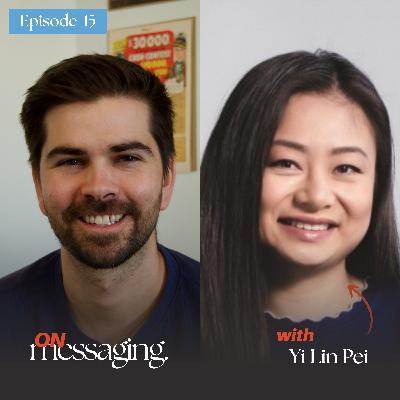
Episode SummaryProduct marketers are masters at positioning products, but we often struggle to apply those same skills to their own careers. In this episode, product marketing career coach Yi Lin Pei shares her framework for self-positioning and career differentiation. Yi Lin breaks down the concrete steps to shift from a tactical executor to a strategic growth driver, how to evolve your personal messaging to command executive presence, and why the most important communication skill might be asking "why" before saying "yes".Key TakeawaysPosition Yourself Like a Product: Apply PMM principles to your career. First, define your "destination" (where you want to go and who you want to be). Second, understand why your "target companies" would care about and value you.Shift from Executor to Growth Driver: To make this leap, you must first be exceptional at your foundational skills, like creating messaging that is human and differentiated. Then, focus on building cross-functional influence and thinking like a business strategist by tying your work directly to the company's P&L and growth levers.Evolve Your Language for Leadership: To gain executive presence, you must change your language. Shift from talking about "tasks" and "projects" to discussing "programs," "processes," and "playbooks" that you are building to be scalable for the future.Master the "T-Shaped" Framework: A "T-shaped" PMM has a broad range of expertise across core functions (research, positioning, launches, enablement) but also develops a deep, indispensable specialty in one or two areas, such as competitive intelligence or domain expertise in a technical field like cybersecurity.Tell Your Story (to a 5-Year-Old): If you struggle to tell your own career story, Yi Lin suggests practicing as if you're explaining it to a five-year-old. This forces you to simplify, cut to the chase, and focus on the "why" behind your decisions, which is far more compelling than the "what".Use a Consultative Approach: When pitching an idea to leadership, don't just present one option. Instead, offer 2-3 potential options, present a data-backed analysis of the ROI for each, and then give your recommendation. This changes the question from "Should we support this?" to "Which option should we support?".The Power of Asking "Why": When a manager gives you an urgent, out-of-left-field request, pause before reacting. Instead of saying yes or no, ask questions to understand the "why" behind the ask. This diffuses defensiveness, builds curiosity, and often reveals the true priority (or that the request isn't the right one).Chapters(00:37) Why Yi Lin chose career coaching after a 2020 layoff(04:40) How leaders can make others comfortable coming to them for advice(07:59) Applying PMM principles (positioning & differentiation) to your own career(14:47) The 3-step process to shift from a tactical executor to a strategic growth driver(19:06) How to balance day-to-day tactical work with long-term strategic efforts(23:31) Defining the "T-shaped" product marketer(26:39) The importance of domain experience (and when broad experience is an advantage)(30:55) A simple exercise for PMMs to apply storytelling to their own accomplishments(33:12) Tactics to evolve your personal messaging for leadership and executive presence(40:22) The single most important communication skill for handling urgent requests(44:22) Yi Lin's answer to "What is living all about?"About Yi LinYi Lin Pei is a product marketing consultant and career coach who helps product marketers grow in their careers and advises companies on building strong teams.LinkedIn: https://www.linkedin.com/in/yilinpei/Subscribe to On MessagingSubstack: https://onmessaging.substack.com/
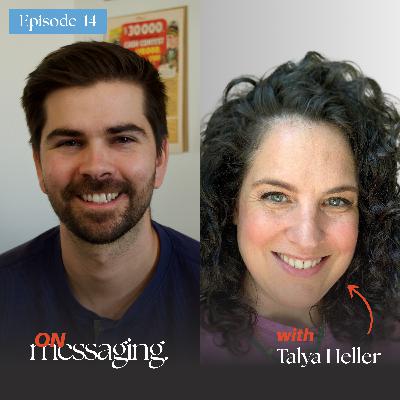
Like this episode? Clicking Like and Subscribe go further than you know. Thank you 💛Episode 14: Talya Heller, Owner of Down to a T (https://www.linkedin.com/in/talyahellermba18/) joins me (https://www.linkedin.com/in/joshua-chronister/) to break down how to weave competitive intelligence into messaging that actually differentiates. We talk about why most companies ignore competition (and why that’s a huge mistake), how to find your real positioning levers, and why product differentiation alone won’t save you. Talya also shares how to enable sales with “champion decks” and persona-specific one-pagers, why no one reads your 10-page messaging doc, and how to make messaging usable across the entire go-to-market team. We even get into localization gone wrong, multi-persona buying committees, and her favorite way to uncover the best customer language.//💡 During our conversation, you’ll learn:Why 10-page messaging docs fail How to adapt messaging for multiple personas Talya’s go-to ways to mine customer conversations How to create “champion decks” and persona one-pagersA simple framework for using competitive intel to shape messagingHow to identify the real differentiators that make customers choose youWhy ignoring your competitors is the biggest messaging mistake you can make//🎙️ In our conversation, we cover: 00:00 – Why ignoring competitors is the biggest messaging mistake00:45 – Welcome to On Messaging with Talya Heller, the “Competitive Intel Queen”02:00 – Talya’s career journey: engineer → PM → product marketer06:43 – Why she pivoted from product management to product marketing08:21 – Early impressions of marketers from the PM side09:44 – The #1 messaging pitfall: sounding the same as competitors14:33 – How much differentiation do you actually need?17:45 – Differentiation beyond product: experience, support, and community18:04 – Using competitive intelligence to shape positioning22:55 – Why no one reads messaging docs (and what to do instead)25:42 – Competition is emotional: avoiding bias in research26:09 – Where to research competitors’ ICPs and customers29:42 – How to position messaging across multiple personas36:12 – Equipping your champion to sell internally (champions decks & one-pagers)42:46 – Aligning sales and marketing on messaging and assets47:53 – Simple tools & playbooks for enabling marketing teams55:20 – Localization isn’t translation: global messaging mistakes1:01:18 – One piece of messaging advice to implement tomorrow1:02:36 – What living is all about1:03:22 – How to support Talya + where to subscribe to her newsletter Spill the T//🔦 Where to Find Talya (and more links):LinkedIn: https://www.linkedin.com/in/talyahellermba18/ Down to a T Consulting: https://www.downtoat.co/ Spill the T Newsletter: https://www.downtoat.co/newsletter //🔦 Where to Find Josh:LinkedIn: https://www.linkedin.com/in/joshua-chronister/ Newsletter: https://onmessaging.substack.com/ Spotify: https://open.spotify.com/show/3E1gduFoKQYHiLNmNLzeF4?si=c3e2bc4bd362490f Apple Podcasts: https://podcasts.apple.com/gb/podcast/on-messaging/id1787098696 //Follow On Messaging:Subscribe, like, and share if you’re a product marketer crafting messaging in B2B SaaS. New episodes drop every other week 💛#productmessaging #b2bmarketing #productmarketing #podcast
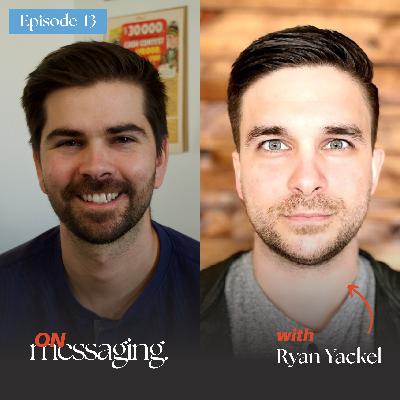
Like this episode? Clicking Like and Subscribe go further than you know. Thank you 💛Episode 13: Ryan Yackel, CMO at Databand.ai (https://www.linkedin.com/in/ryanyackel/) joins me (https://www.linkedin.com/in/joshua-chronister/) to share why product marketers make great CMOs and how narrative design can transform product launches. We dig into how he uses storytelling to cut through complexity, why sales enablement is often more about creativity than slides, and how to keep demand gen aligned when the market shifts. Ryan also explains his approach to competitor research using AI tools like Gemini and NotebookLM, the “red box vs. green box” framework he uses with sales teams, and why he believes go-to-market execution beats having the “best” product every time.//💡 During our conversation, you’ll learn:Ways to use narrative design in product launchesA very compelling sales narrativesHow to use AI for competitive researchHow product marketing is different at a startup vs. enterprise//🎙️ In our conversation, we cover: 00:00 – The “secret sauce” in messaging: telling a story buyers remember00:35 – Intro to Ryan Yackel, CMO at Data Band01:31 – Why product marketers make great CMOs02:17 – From sales engineer to product marketing leader03:43 – Why recruiters seek CMOs with product marketing backgrounds06:02 – Product marketing as the headlights guiding demand gen08:21 – Analogies that explain the role of product marketing09:36 – Narrative design: framework for product launches12:29 – Case study: Continuous Testing at Tricentis13:26 – Case study: Machine identity management at KeyFactor14:22 – Case study: Data observability at Data Band15:30 – Bringing narrative design into IBM product launches17:44 – Where narratives live: sales decks, messaging docs, and pitches21:36 – Using reference points like Datadog to simplify complex products22:07 – Building narratives for multi-product organizations24:40 – Using AI (Gemini + NotebookLM) for competitive research28:05 – Prompt engineering for category deep dives (Collier Rosin Kranz example)30:12 – Framework mashups: April Dunford + corporate visions + AI research32:27 – The “Red Box vs. Green Box” exercise for sales differentiation36:35 – Teaching sales teams to sell stories, not features38:17 – How messaging shifts from startup to enterprise companies43:28 – Three tactics to win sales mindshare in large enterprises46:52 – AMA sessions, newsletters, and internal podcasts for sales enablement50:11 – Contrarian opinions: AI for messaging, PLG caution, GTM beats product55:46 – Why go-to-market strategy beats having a “better” product58:23 – Ryan’s #1 piece of messaging advice: define your secret sauce1:00:56 – What life is all about: gratitude, faith, and perspective1:03:38 – Where to find Ryan and his children’s book Pancakes and Mr. Bear//🔦 Where to Find Ryan (and more links):LinkedIn: https://www.linkedin.com/in/ryanyackel/ Why A Product Marketer Should Be Your Next CMO Defeat Your Prospect’s Status Quo with Unconsidered NeedsHow narrative design works in product marketingApril Dunford BooksMy Book | Watch for Free//🔦 Where to Find Josh:LinkedIn: https://www.linkedin.com/in/joshua-chronister/ Newsletter: https://onmessaging.substack.com/ Spotify: https://open.spotify.com/show/3E1gduFoKQYHiLNmNLzeF4?si=c3e2bc4bd362490f Apple Podcasts: https://podcasts.apple.com/gb/podcast/on-messaging/id1787098696 //Follow On Messaging:Subscribe, like, and share if you’re a product marketer crafting messaging in B2B SaaS. New episodes drop every other week 💛
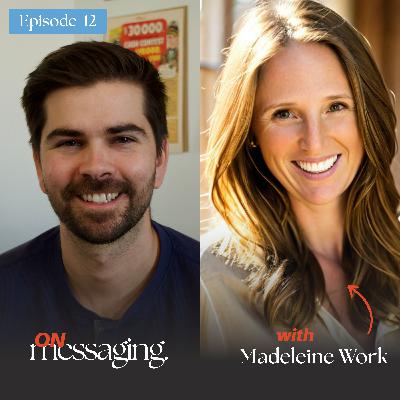
Like this episode? Clicking Like and Subscribe go further than you know. Thank you 💛Episode 12: Madeleine Work, Senior Product Marketing Manager at Chili Piper (https://www.linkedin.com/in/madeleinework/) joins me (https://www.linkedin.com/in/joshua-chronister/) to break down how to create messaging that reps actually use and customers remember. We talk about defining clear platform messaging, getting internal buy-in without watering it down, and why launches are never really one-and-done. We also dive into sales feedback loops, creative copy that still converts, and how Madeleine uses tools like Gong, Wynter, and Mutiny to test what’s working.//💡 During our conversation, you’ll learn:How to A/B test website messagingHow to create continuous feedback loopsGetting internal buy-in on your messagingBalancing creativity and clarity in messagingWhy product launches are on going and why you should repeat yourself//🎙️ In our conversation, we cover: 00:00 – Teaser: How Madeleine crowdsourced and tested messaging across her company00:29 – Intro to Madeleine and what you’ll learn in the episode01:44 – From content to product marketing: how the transition happened03:24 – What she loved (and didn’t love) about content marketing06:01 – The challenge of getting 100% messaging buy-in06:55 – The collaborative H1 test: value, competitor, and persona buckets08:53 – Running messaging through Wynter and Mutiny12:21 – The importance of above-the-fold copy and first impressions14:08 – UI images in messaging: show, don’t tell15:10 – How Chili Piper defined its platform messaging15:59 – “Demand conversion”: the phrase they landed on17:47 – Messaging in a competitive landscape (and naming your competitors)19:32 – How they brainstormed the phrase “demand conversion”21:02 – Creativity vs. clarity: writing how you talk23:44 – “No more complaints about unfair lead distribution”: voice-of-customer in action25:18 – Marketing to marketers: easier and harder26:13 – Why marketers don’t click UTM links—but give amazing form responses28:46 – How Madeleine continuously refines messaging over time29:53 – Sales feedback loops and scathing voice notes30:23 – Refresh cadence: product pages, competitor pages, then restart31:59 – PDF collateral vs. web content: keeping everything updated33:35 – Launches Madeleine’s proud of (and what she learned)35:12 – Why no one noticed the chat launch—and how they relaunched it36:55 – The importance of repetition in product marketing38:33 – Using Gong to track if messaging is landing with reps40:04 – What living is all about: being a little uncomfortable41:28 – Where to find Madeleine and her “Madeleine Love” folder//🔦 Where to Find Emily:LinkedIn: https://www.linkedin.com/in/madeleinework/🔦 Where to Find Josh:LinkedIn: https://www.linkedin.com/in/joshua-chronister/ Newsletter: https://onmessaging.substack.com/ Spotify: https://open.spotify.com/show/3E1gduFoKQYHiLNmNLzeF4?si=c3e2bc4bd362490f Apple Podcasts: https://podcasts.apple.com/gb/podcast/on-messaging/id1787098696 //Follow On Messaging:Subscribe, like, and share if you’re a product marketer crafting messaging in B2B SaaS. New episodes drop every other week 💛#productmessaging #b2bmarketing #productmarketing #podcast
Episode 11: Emily Pick, Lead Product Marketing Manager at Clari (https://www.linkedin.com/in/emilypick/) joins me (https://www.linkedin.com/in/joshua-chronister/) to dive into platform messaging, tailoring narratives for different buyer personas, and how to create a unified message across multiple products. We also unpack the balance of feature-level messaging, brand consistency, and customer words.//💡 During our conversation, you’ll learn:- Influencing the product roadmap as a product marketer- Why most B2B messaging gets stuck in feature-function battles- How to create messaging for buying committees without losing clarity- How to transition from single-product messaging to platform-level narratives//🎙️ In our conversation, we cover: 00:00 – Nobody’s buying a product—they’re buying a solution to their pain00:29 – Intro to the episode and what you’ll learn from Emily01:23 – Emily joins the show and shares her love for messaging02:26 – Why Emily stepped away from business books and back into travel stories03:17 – Backpacking, Rick Steves, and what travel taught Emily06:26 – Travelers, chaos, and the joy of unpredictable experiences07:20 – Introduction to platform vs. product messaging07:56 – The history of Clari and their transition to a revenue platform09:18 – Defining your category: what Clari wants to be known for12:02 – Using positioning as the North Star for platform messaging12:42 – Positioning vs. branding: how Emily differentiates the two13:37 – Platform-first vs. product-level messaging strategy14:08 – Moving from product features to solution-based messaging16:01 – When product-specific messaging becomes important16:54 – Mapping solutions to pains and personas before products17:47 – Aligning product launches to the company narrative18:36 – Crafting baseline and higher-order product messaging19:37 – How Clari avoids building “off-strategy” features19:48 – How product marketers can earn influence on the roadmap21:29 – Bringing market research and analyst feedback to PMs22:57 – Owning collateral and influencing alpha/beta feedback loops23:12 – Building trust with PMs by being useful and aligned24:02 – When Emily starts messaging and enablement for new features24:32 – Using launch tiers and customer impact scores25:56 – Examples: low impact vs. high impact, and how timing shifts28:08 – Why Clari focuses on retention as much as acquisition29:32 – The cost of new customers vs. caring for existing ones30:30 – A call for PMMs to think beyond net-new revenue31:00 – Tailoring messaging for the full buying committee32:22 – Adoption depends on frontline users, not just executives33:18 – Mapping personas to solutions and jobs-to-be-done34:17 – Pre- and post-sale assets for each user type36:45 – Collaborating with customer education to drive product adoption38:39 – Clari’s position in a competitive space—and how to stay ahead39:39 – Winning with relevance when features are at parity40:57 – Creating preference without getting stuck in feature wars42:49 – Signs you’re losing a deal: when the buyer uses your competitor’s language44:34 – Selling against pain instead of relying on features45:55 – How Emily and team enable sales with messaging that resonates48:38 – Why customer words and Q&A insights power better messaging49:41 – Tools Emily loves: Lottable and UserEvidence50:49 – Letting Q&A fuel your copy and message refinement52:04 – Emily’s #1 messaging tip: replace jargon with customer language53:06 – What is living all about? Emily’s personal perspective55:22 – Where to connect with Emily online56:20 – Closing thanks and wrap-up//🔦 Where to Find Emily:LinkedIn: https://www.linkedin.com/in/emilypick/🔦 Where to Find Josh:LinkedIn: https://www.linkedin.com/in/joshua-chronister/ Newsletter: https://onmessaging.substack.com/ Apple Podcasts: https://podcasts.apple.com/gb/podcast/on-messaging/id1787098696

On the show today, I have Gaspard Pastural, creator of PurpleOceans and a B2B SaaS Product Marketing Consultant. During our conversation, you’ll learn:Why go to market isn’t a one time eventHow differentiate with relevance instead of features & pricingWhy B2B websites should be consumption first, then conversionSales and marketing messaging should be aligned but not identicalIn our conversation, we cover:00:00 – Why most B2B websites fail: lead gen vs. consumption01:36 – Gaspard’s LinkedIn writing process and content philosophy02:32 – The real goal of differentiation: be the most relevant choice04:15 – What “relevance” means in practice: use cases over categories06:06 – Why you’ll never out-feature the gorilla in your space08:05 – The risk of trying to be everything for everyone09:55 – How poor differentiation breaks messaging, positioning, and conversions10:55 – Marketing your difference (not just saying you’re different)11:56 – Sales vs. marketing messaging: aligned, not identical13:00 – The analogy of explaining your job to everyone at once14:07 – Three key differences: who, how, and intent15:34 – Sales is adaptive; marketing is orchestrated16:03 – Homepage strategy: guide consumption, don’t push conversion17:29 – How to enable sales without dictating scripts19:56 – PMMs as collaborators, not message enforcers21:21 – Messaging as a structural alignment challenge22:32 – Why your messaging must support the full buying committee24:48 – Persona-based pages and website structure as messaging tools28:08 – How PMMs can earn internal trust to shift company messaging30:25 – The power of step-by-step change vs. the one-big-pitch trap32:01 – Underrated GTM principle: reverse-engineer your launch33:56 – How to do message testing without budget (and what *not* to do)36:27 – Cheap, scrappy message testing strategies that work38:14 – Why content is a long-term play, and why sales is faster for insights41:17 – Final takeaway: reverse engineer everything to de-risk your work42:53 – What living is all about: “Having no regrets and being proud”45:36 – Where to find Gaspard online//👉 Where to find GaspardLinkedIn: https://www.linkedin.com/in/gaspardpastural/Website: https://gaspardpastural.com/ Substack: https://gaspardpastural.substack.com/ 👉 Where to find JoshLinkedIn: https://www.linkedin.com/in/joshua-chronister/ Substack: https://onmessaging.substack.com/ YouTube: https://www.youtube.com/channel/UCUdKBktrLJWzNMDS45fh_Bg //Referenced:Gab Bujold: https://www.linkedin.com/in/gabriel-bujold/ Emma Stratton: https://www.linkedin.com/in/emma-stratton-punchy/ Salesforce: https://www.salesforce.com/ HubSpot: https://www.hubspot.com/ Folk CRM: https://www.folk.app/ Breakcold: https://www.breakcold.com/G2: https://www.g2.com/
On the show today, I have Collin Mayjack, Principle Product Marketing Manager at GoFundMe.Before joining GoFundMe, Collin worked in product marketing at Oncue and Dataro and is the creator of Holy Shift.//In our conversation, we cover:00:00 – Intro: Welcome Collin Mayjack to the show01:33 – From pastor to product marketer: Translating complexity into clarity03:53 – Why side projects make you a better writer and messenger06:17 – The origin of Collin’s 7 messaging principles08:32 – #1: Clear is better than clever (and why most messaging fails here)09:57 – #2: Differentiate or die—how to bring product strengths to the surface10:55 – #3: Jargon is the enemy—cut through corporate fluff11:25 – #4: You can’t say it all—focus on what matters most12:24 – #5: Customers do care about features (with a twist)14:21 – #6: Talk to your champion like a human15:50 – #7: Good messaging flows from good positioning18:22 – Bonus: The best messaging is clear and clever—but clarity wins19:17 – How Collin tests messaging without fancy tools (and why he goes rogue)20:44 – Partnering with PMs to pitch new features to real customers21:43 – Using customer reactions to validate and refine messaging22:37 – Real-world naming feedback: letting customers vote live23:31 – Testing messaging in startups vs. larger companies24:49 – Scrappy tactics: using social, email, and founders to test ideas26:00 – How to choose the right customers for feedback26:58 – The politics of advisory boards and enterprise obsession28:11 – The PMM cheat code: bring the story, get invited to the table29:04 – Balancing product messaging with SEO and brand voice30:33 – Winning influence by starting with positioning, not copy31:31 – Using Emma Stratton’s VBF framework to earn trust and traction33:01 – The “mild sauce” effect: how messaging evolves through compromise33:59 – The power of pen-to-paper: why the strategist shapes the outcome35:45 – Influence, humility, and the politics of feedback36:43 – Why being likable matters more than being right38:10 – How Collin enables the sales team with clear, human messaging39:21 – “Tuesdays with Enablement”: internal sessions that drive adoption40:14 – How Collin builds 30-second sales stories that actually stick41:43 – The James story: an example of sales messaging that works43:07 – Talk tracks over taglines: why real talk wins43:49 – Being active in Slack and jumping on sales calls to support deals44:55 – Lightning round: One messaging tip you can implement tomorrow46:21 – What is living all about? Collin’s personal reflection47:00 – Where to find Collin and lift him up//👉 Where to find CollinLinkedIn: https://www.linkedin.com/in/collinmayjack/ Holy Shift Podcast: https://www.linkedin.com/company/holy-shift-pod/ 👉 Where to find JoshLinkedIn: https://www.linkedin.com/in/joshua-chronister/ Substack: https://onmessaging.substack.com/ YouTube: https://www.youtube.com/channel/UCUdKBktrLJWzNMDS45fh_Bg //🎙️ReferencedAlex Eaton: https://www.linkedin.com/in/alexeaton1/ Mark Huber: https://www.linkedin.com/in/markehuber/ Gab Bujold: https://www.linkedin.com/in/gabriel-bujold/ Zach Messler: https://www.linkedin.com/in/zachmessler/ Anthony Pierri: https://www.linkedin.com/in/anthonypierri/ Emma Stratton: https://www.linkedin.com/in/emma-stratton-punchy/
On the show today, I have Alex Eaton, Director of Product Marketing at UserEvidence.Before joining UserEvidence, Alex worked in product marketing at Help Scout and Lessonly.What you’ll learn:The 3 traits that separate great product marketers from good ones—and why “execution” is the most underratedHow Alex avoided a messaging disaster at UserEvidence—and the simple question that unlocked the right positioningWhy most messaging gets overlooked inside companies—and how Alex ensures people actually use itA tactical breakdown of messaging docs that get read—why yours should be under two pagesThe “gut tension” test Alex uses to know when messaging isn’t ready yet—and how to push past itHow to tailor messaging for multiple personas without breaking consistencyThe role of customer evidence in brand messaging—and why UserEvidence leads with faces, not product shotsHow to enable sales without being the “messaging cop”—Alex’s exact approach to feedback, coaching, and internal buy-inWhat Alex learned from working with messaging consultants like Fletch—and when to bring in outside helpThe mindset shift from “being right” to “driving outcomes”—why collaboration beats ownership in product marketingAnd so much more.//In our conversation, we cover:00:00 – Intro & Welcome00:51 – What Separates Good from Great Product Marketers03:32 – How to Get Teams to Rally Behind You06:19 – The Anxiety of Surface-Level Messaging07:48 – Execution Over Strategy: Getting In the Weeds09:23 – How Alex Nearly Blew the Messaging at UserEvidence12:02 – The Phrase That Almost Made It: "Evidence-Based Content Platform"13:57 – The Simpler, Stronger Message: Customer Evidence Platform14:56 – Rolling Out the Messaging: Site, Deck, Personas, and More15:43 – Connecting Problem and Solution: From Evidence Gap to Platform Fit17:36 – Working With Fletch on Messaging: Why External Voices Matter21:37 – Simplifying Messaging for Global Understanding23:23 – Leading With Customer Stories in Messaging25:51 – Becoming the Best at Customer Evidence—In Their Own Marketing27:31 – Leading With Personas, Not Product28:26 – Why Real Faces > Stock Photography31:32 – The "Two-Page Messaging Doc" Philosophy34:06 – How to Layer in Nuance After the Message Sticks36:24 – Giving Feedback Without Micromanaging Sales41:43 – Enabling Sales to Use the Message Consistently44:53 – Tailoring Messaging for Personas Without Losing Focus50:11 – Final Takeaway: The Power of Gut Tension51:36 – What’s Living All About?53:13 – Where to Connect With Alex//👉 Where to find AlexLinkedIn: https://www.linkedin.com/in/alexeaton1/ 👉 Where to find JoshLinkedIn: https://www.linkedin.com/in/joshua-chronister/ Substack: https://onmessaging.substack.com/ YouTube: https://www.youtube.com/channel/UCUdKBktrLJWzNMDS45fh_Bg //🎙️ ReferencedMark Huber: https://www.linkedin.com/in/markehuber/ Jillian Hoefer: https://www.linkedin.com/in/jillianmacnulty/ Evan Huck: https://www.linkedin.com/in/evanhuck/ Ray Rhodes: https://www.linkedin.com/in/ray-rhodes-a0672568/ Anthony Pierri: https://www.linkedin.com/in/anthonypierri/ Robert Kaminski: https://www.linkedin.com/in/heyrobk/ David Ogilvy: https://www.amazon.com/Ogilvy-Advertising-David/dp/039472903X Jason Oakley: https://www.linkedin.com/in/oakleyjason/ UserEvidence: https://www.linkedin.com/company/userevidence/ Lessonly: https://www.linkedin.com/company/lesson-ly/ Gong: https://www.linkedin.com/company/gong-io/ Help Scout: https://www.linkedin.com/company/help-scout/ Fletch: https://www.linkedin.com/company/fletch-pmm/
On the show today, I have Shoshana Kordova, creator of Peel Product Marketing. She truly defines what it means to be a curious product marketer and I think you’ll see what I mean throughout our conversation. This episode is for product marketers who…Are coming from a writing or editing background and how that experience is a huge plusYou’re looking to run customer interviews that go beyond surface levelHow to create messaging for very technical productsHow to understand the core needs of sales and why they are asking for enablementWhy it’s about understanding the story first, then the tellingAnd how to break into product marketing at a high tech start upAnd so much more. //In our conversation, we cover:00:00 Introduction to Shoshana Kordova's Journey03:31 Transitioning from Journalism to Product Marketing06:13 The Importance of Research and Interviewing08:51 Understanding Messaging through Customer Insights11:32 The Role of Internal Stakeholders in Messaging14:19 Exploring Customer Needs and ROI17:03 Peeling the Onion: Digging Deeper in Conversations19:44 Crafting Clear Messaging for High-Tech Products24:57 Understanding Diverse Messaging Needs29:10 The Power of Visual Storytelling34:25 Crafting Compelling Stories in Marketing38:13 Mentoring and Building Confidence in Product Marketing44:59 Key Messaging Takeaways and What Living is All About// Find the full transcript at: https://onmessaging.substack.com/p/how-to-get-the-most-from-every-customer//Where to find Shoshana: Website: https://app.assetmule.ai/vVFtTvys LinkedIn: https://www.linkedin.com/in/shoshana-kordova/ How To Get Insights From Customer Interviews (Playbook #7): https://jetpack.productivepmm.com/playbooks/playbook-7-customer-insights-and-messagingWhere to find Josh:LinkedIn: https://www.linkedin.com/in/joshua-chronister/ Substack: https://onmessaging.substack.com/ YouTube: https://www.youtube.com/@OnMessaging //Referenced:Haaretz: https://www.haaretz.com/ Amanda Natividad: https://www.linkedin.com/in/amandanat/ Steven Dubner: https://www.linkedin.com/in/stephen-dubner-2a066578/ Washington Post: https://www.washingtonpost.com/ The New York Times: https://www.nytimes.com/ The Smithsonian: https://www.si.edu/ Marketo: https://business.adobe.com/products/marketo.html Hubspot: https://www.hubspot.com/ Gong: https://www.gong.io/ Peel Product Marketing: https://app.assetmule.ai/vVFtTvys
On the show today, we have Pete McCarthy, chief marketing officer at Open Road Integrated Media. Before joining Open Road, Pete led consumer insights at Ingram content group, co-founded a marketing SaaS, and led marketing at places like Penguin, and Random House.Pete’s been in marketing at start-ups, mid sized companies, large orgs, and as an agency owner.In our conversation he shares, How messaging strategy varies across business sizesThe method behind the right book, to the right reader, at the right timeHow customer relationships drive messagingThe CMO’s role on messagingWhy product marketers are positioned to be marketing executivesAnd so much more! //In our conversation, we cover:00:00 Introduction 01:44 Pete's Marketing Background13:17 The Evolution of Marketing Messaging22:20 Positioning and Messaging Across Business Sizes31:26 How Messaging was Created for Marketing Insights36:52 Building Relationships in Corporate Marketing41:19 The Role of a CMO in Messaging49:49 How a CMO Thinks About Data and Marketing Measurement01:00:01 Advice for Aspiring Marketing Executives//Find the transcript at: https://open.substack.com/pub/onmessaging/p/an-accidental-marketers-approach?r=4rttlc&utm_campaign=post&utm_medium=web&showWelcomeOnShare=true //Where to find Pete: LinkedIn: https://www.linkedin.com/in/petermccarthy1/ Where to find Josh: Newsletter: https://onmessaging.substack.com/ LinkedIn: https://www.linkedin.com/in/joshua-chronister/ YouTube: https://www.youtube.com/@OnMessaging //Referenced:Emma Stratton: https://www.linkedin.com/in/emma-stratton-punchy/ Jess Johns: https://www.linkedin.com/in/jessjohns/ Open Road Integrated Media Inc: https://openroadintegratedmedia.com/ Ingram Content Group: https://www.ingramcontent.com/ Penguin Random House: https://www.penguinrandomhouse.com/ The New York Review of Books: https://www.nybooks.com/ Granta Publications: https://granta.com/ Amazon: https://www.amazon.com/ Google: https://www.google.com/ Yahoo: https://www.yahoo.com/ Marketing InsightsApple: https://www.apple.com/ Microsoft: https://www.microsoft.com/en-us/ Dell Technologies: https://www.dell.com/en-us Pixar Animation Studios: https://www.pixar.com/ GE: https://www.ge.com/ Costco Wholesale: https://www.costco.com/ Walmart: https://www.walmart.com/ Adobe: https://www.adobe.com/ Salesforce: https://www.salesforce.com/
On the show today, we have Jeff Chase Director of Brand and Product Marketing at Vitally.io. Before joining Vitally, Jeff worked in product marketing and community at places like Plume Design, Verkada, Eero and Amazon.Jeff’s been a two time founding product marketer at high growth B2B SaaS start ups.In our conversation he shares, 1. His process to creating positioning and messaging at high growth start ups2. The crucial role of customer conversations to develop messaging3. Gaining Buy-In from leadership for Messaging and Positioning4. How to create Effective Interactive DemosAnd so much more!//Here's what's covered in our conversation: 00:00 Rethinking Product Marketing Titles06:20 The Evolution of Product Marketing Roles10:11 Creating Messaging and Positioning in Startups16:05 The Role of Customer Conversations19:11 Gaining Buy-In for Messaging and Positioning29:07 The Importance of Sales and Customer Feedback31:23 Brand and Product Messaging Alignment35:45 Creating Effective Interactive Demos43:11 Crafting Compelling Website Messaging51:07 Measuring Messaging Effectiveness58:05 Final Thoughts on Messaging and Life Lessons//Where to find Jeff:LinkedIn: https://www.linkedin.com/in/jeffchase1/ //Where to find Josh:LinkedIn: https://www.linkedin.com/in/joshua-chronister/ //For more episodes On Messaging visit: https://onmessaging.substack.com/
On the show today, we have Michele Nieberding, the Director of Product Marketing at MetaRouter. Before joining MetaRouter, Michele worked in product marketing Iterable, Qualtrics, and Cvent.Michele’s been named a two time top 100 product marketing leader by product marketing alliance.In our conversation she shares, How to Maintain Messaging Consistency Across Teams Leveraging AI Tools for Messaging and Research Crafting Messaging for Technical Products The Role of Storytelling in Technical MessagingAnd so much more!//Here’s what’s covered in our conversation:00:00 Introduction to Product Marketing and Messaging01:25 The Importance of Messaging in Product Marketing02:45 Michele’s Definition of Messaging07:26 Category Creation vs. Messaging: A Hot Take10:07 Understanding Customer Perspectives on Categories13:10 Maintaining Messaging Consistency Across Teams16:17 Leveraging AI Tools for Messaging and Research19:18 Crafting Messaging for Technical Products22:11 The Role of Storytelling in Technical Messaging25:20 Engaging with Subject Matter Experts for Accurate Messaging34:26 The Impact of Targeted Advertising39:06 Navigating Multiple Personas in Messaging46:50 Measuring Messaging Resonance50:04 Understanding the Messaging Funnel53:32 Key Messaging Takeaways//Where to find Michele:LinkedIn: https://www.linkedin.com/in/michele-nieberding/Reforge: https://www.reforge.com/profiles/michele-nieberding//Where to find Josh: LinkedIn: https://www.linkedin.com/in/joshua-chronister/Newsletter: https://onmessaging.substack.com/ //Referenced:MetaRouter: https://metarouter.ioIterable: https://www.iterable.comQualtrics: https://www.qualtrics.comCvent: https://www.cvent.comProduct Marketing Alliance: https://www.productmarketingalliance.comTealium: https://tealium.comSpeckit: https://spekit.comGong: https://www.gong.ioWe're Not Marketers: https://werenotmarketers.comClaude AI: https://www.anthropic.com/claudePerplexity: https://www.perplexity.aiChatGPT: https://chat.openai.comGoogle NotebookLM: https://www.notebooklm.googlePrompt Genie: https://www.promptgenie.comGartner: https://www.gartner.comForrester: https://www.forrester.comG2: https://www.g2.comTarget: https://www.target.comFacebook: https://www.facebook.comTikTok: https://www.tiktok.comInstagram: https://www.instagram.comWebMD: https://www.webmd.comRiverside: https://www.riverside.fmAruE9AtAjzfUcGcOnWK5
On the show today, we have Gab Bujold, messaging strategist and co-host of We’re Not Marketers Podcast. Gab’s helped 30+ B2B SaaS worldwide nail their product messaging. Before moving into being a messaging consultant. Gab was heading product marketing at BizDev Labs. In our conversation Gab shares: - How to listen to understand your customers- Steps to running effective message testing- How to create differentiation in your messaging- What is message market fit and why it’s needed before product market fit And so much more! //Actionable Takeaways:- Adopt a long-term mindset when it comes to messaging, continuously refining based on feedback and market changes.- Seek a deep understanding of your customers through direct conversations and listening to understand (not to fix).- Prioritize message market fit as a crucial step before product market fit.- When testing messages, don’t start with A/B testing. Ensure you have a clear ICP, a big enough testing volume, and you’re categorizing data correctly.- Dare to be different by developing your unique POV. Don’t copy competitors.- Ask prospects “in what category would you put this product?” to gauge how well your positioning is working.- Leverage the word "without" in your messaging and copywriting to add definition and eliminate doubt.//Here's what's covered in our conversation:00:00 Introduction02:04 Are Product Marketers, Marketers?11:07 Messaging is a Long-term Initiative13:45 You Need to be Speaking with Customers17:16 How to Speak with Customer21:42 Listening to Understand: The Key to Effective Communication22:34 Junk Food Advice: The Dangers of Surface-Level Messaging24:35 Understanding Message Market Fit: A Crucial Step for Startups30:00 Running Effective Message Testing: Steps and Strategies36:49 Differentiation in Messaging: Standing Out in a Crowded Market49:55 Aligning Messaging with Business and Product Strategy55:24 Practical Messaging Advice: Context is Key//Where to find Gab:Website: https://pressxtomarket.com/Message Market Fit Scorecard: https://mmf-scorecard-lp.carrd.co/LinkedIn: https://www.linkedin.com/in/gabriel-bujold/Podcast: https://www.notmarketers.com///Where to find Josh:Substack: https://onmessaging.substack.com/LinkedIn: https://www.linkedin.com/in/joshua-chronister///Referenced:We're Not Marketers podcast: https://www.notmarketers.com/Eric Holland: https://www.linkedin.com/in/eric-holland-not-a-marketer/Zach Roberts: https://www.linkedin.com/in/zgroberts/Product Marketing Alliance: https://www.productmarketingalliance.com/Yi Lin Pei: https://www.linkedin.com/in/yilinpei/BizDev Labs: https://www.bizdevlabs.com/V2 Cloud: https://v2cloud.com/Mitch Solway: https://www.linkedin.com/in/mitchsolway/Lenny's podcast: https://www.lennysnewsletter.com/podcastMindstone: https://www.mindstone.com/Jonathan Hoffsuemmer: https://www.linkedin.com/in/jonathanhoffsuemmer/Message Market Fit Book: https://www.fltrd.in/bookRobert Kaminski: https://www.linkedin.com/in/heyrobk/Anthony Pierri: https://www.linkedin.com/in/anthonypierri/Fletch PMM: https://www.fletchpmm.com/Zach Messler: https://www.linkedin.com/in/zachmessler/April Dunford: https://www.linkedin.com/in/aprildunford/Freckle.io: https://www.freckle.io/Clay: https://www.clay.com/PowerBI: https://www.microsoft.com/en-us/power-platform/products/power-bi

SummaryIn this episode of On Messaging, host Josh Chronister speaks with Zach Messler, a seasoned messaging consultant and educator, about the evolution of messaging in product marketing. They discuss how messaging has changed over the years, the importance of understanding audience resonance, and the challenges of navigating biases in messaging. Zach shares his insights on creating effective messaging strategies, emphasizing the need to focus on the audience and the essence of the product. He also highlights the significance of testing messaging and being aware of personal biases in the marketing process.//Takeaways Zach's approach to messaging has evolved but remains fundamentally the same. Understanding the essence of a product is crucial for effective messaging. The three core questions for messaging are: What is it? What does it do? Why does it matter? Audience resonance is key; the audience should always be the hero of the story. Conciseness in messaging is important, but leaving out information can create opportunities for discovery. Product marketers must be aware of their biases and how they affect messaging. Testing messaging in real-world scenarios provides valuable feedback. Effective messaging should focus on the audience's needs and experiences. Simplicity in messaging can enhance clarity and impact. Product marketing requires courage to challenge internal biases and advocate for the audience.//During this episode, we chat about:01:17 The Evolution of Messaging in Product Marketing18:28 Understanding Audience Resonance and Feedback23:04 Distinguishing Between Messaging and Copy29:38 The Simplicity of Messaging30:56 Understanding Message Clarity32:06 Conciseness vs. Completeness in Messaging35:36 Awareness of Bias in Messaging38:57 The Key to Effective Product Marketing48:46 Flipping the Message for Audience Engagement50:07 Living with Purpose and Love//Where to find Zach: LinkedIn: https://www.linkedin.com/in/zachmessler/Where to find Josh: Newsletter: https://onmessaging.substack.com/ LinkedIn: https://www.linkedin.com/in/joshua-chronister///Get a 5-minute breakdown of the entire episode at https://onmessaging.substack.com///Referenced: We're Not Marketers: https://www.notmarketers.com/ Gomocha:gomocha.com Wynter:wynter.com The 4-Hour Workweek by Timothy Ferriss: https://fourhourworkweek.com/ Message Clarity Workshop: https://zachmessler.com/message-clarity-intensive/ Zach Messler:https://zachmessler.com/
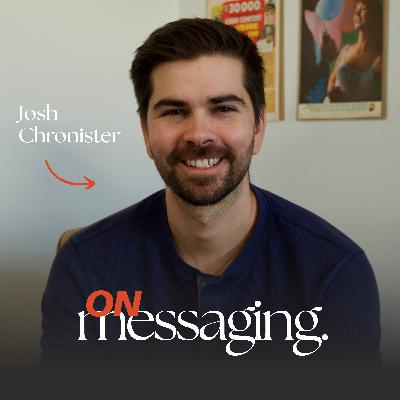
Hey everyone, welcome to On Messaging.
I’m your host Josh Chronister.
Creating product messaging that actually resonates with buyers is one of the most difficult tasks of being a B2B product marketer.
You get it.
A lot goes into crafting quality messaging, but you’re still left wondering if it’s good enough to push ‘publish’, and share across the company.
This is the show for B2B product marketers to learn how to craft messaging that resonates emotionally with the buyer, builds credibility, differentiates from the competition and gets in front of your ideal customer.
Join me twice a month as I sit down with top messaging experts and in-house product marketers to dig into the stories, skills, and advice from our friends who are crafting messaging that resonates every day.
On Messaging launches February 4th, 2025.
https://onmessaging.substack.com
Comments


Download from Google Play

Download from App Store
 United States