


 Claim Ownership
Architecture Topics
Subscribed: 42Played: 220
Subscribe

© Liam Caron
Description
Step into the world of architectural history with Architecture Topics (by WikiArquitectura).
Each episode uncovers the stories behind iconic buildings and the visionary architects who shaped history. From ancient wonders to modern masterpieces, we explore the ideas that revolutionized design.
🎧 New episodes every... often! – Subscribe now and discover the legends of architecture!
Each episode uncovers the stories behind iconic buildings and the visionary architects who shaped history. From ancient wonders to modern masterpieces, we explore the ideas that revolutionized design.
🎧 New episodes every... often! – Subscribe now and discover the legends of architecture!
45 Episodes
Reverse

In this episode of Architecture Topics, we explore Christ the Redeemer in Rio de Janeiro, one of the most iconic landmarks in the world and a defining symbol of Brazil.Perched atop Corcovado Mountain, overlooking Guanabara Bay, Sugarloaf Mountain, and the skyline of Rio, this 30-meter tall Art Deco statue attracts nearly two million visitors every year. But how did a reinforced concrete monument, built between 1922 and 1931, come to represent an entire nation?We dive into the historical context of early 20th century Brazil, the role of the Catholic Church, the political climate of a newly secular republic, and the collaboration between engineer Heitor da Silva Costa, artist Carlos Oswald, and sculptor Paul Landowski.From engineering challenges and construction techniques to symbolism, tourism, and global recognition as one of the New Seven Wonders of the World, this episode examines how architecture, faith, and national identity converged on top of a mountain.Whether you are an architect, architecture student, history lover, or planning a trip to Rio de Janeiro, this is the story behind the statue that became synonymous with Brazil.
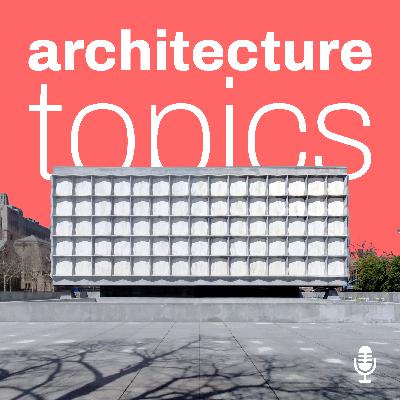
In this episode of Architecture Topics, we explore the Beinecke Rare Book and Manuscript Library at Yale University in New Haven, Connecticut.Designed by Gordon Bunshaft of Skidmore, Owings & Merrill and completed in 1963, the Beinecke Library stands as one of the most distinctive works of modern architecture on a university campus in the United States. Built during a period of rapid academic expansion, the project responded to Yale’s growing collection of rare books and manuscripts and the need for a purpose-built environment to preserve them.We look at the historical context of postwar America, the role of the Beinecke family’s philanthropic gift, and how Bunshaft approached the challenge of designing a rare book library that prioritized preservation over tradition.From modernism and material innovation to the cultural role of universities in the 1960s, this episode examines how architecture can shape the way knowledge is protected and experienced.If you are interested in Yale University, campus architecture, American modernism, or the work of Gordon Bunshaft and Skidmore, Owings & Merrill, this episode offers a clear and compelling look at one of the most unique libraries in the United States.

In this episode of Architecture Topics, we explore the full story behind the Petronas Towers in Kuala Lumpur, from their origins in late-20th-century Malaysia to the global controversy that reshaped how skyscrapers are measured.Designed by César Pelli and completed in 1998, the Petronas Towers were declared the tallest buildings in the world, surpassing the Sears Tower in Chicago. That declaration sparked an intense international debate about architectural height, spires versus antennas, and what “tallest building” really means.The controversy led to the formalization of global height standards by the Council on Tall Buildings and Urban Habitat, permanently changing how skyscrapers are compared and ranked.Beyond records, this episode looks at the political ambition of 1990s Malaysia, the role of Petronas as a national symbol, the engineering challenges of building twin concrete towers on difficult ground, the meaning of the skybridge, and how the Asian Financial Crisis transformed the towers from symbols of growth into symbols of resilience.A story about architecture, power, identity, and the moment when height became a global argument.

In this final episode of our Case Study House mini series, we step back from individual buildings and look at the experiment as a whole.Launched in postwar Los Angeles, the Case Study House program brought together architects like Charles and Ray Eames, Pierre Koenig, Craig Ellwood, Richard Neutra, and Eero Saarinen to rethink modern living through architecture. Over nearly two decades, more than thirty houses were designed, testing new materials, open plans, steel construction, and a radically different relationship between domestic life and design.Across this series, we explored three key projects.The Eames House, where life shaped architecture over time.The Salzman House by Craig Ellwood, where order, discipline, and precision set the terms of living.And the Stahl House by Pierre Koenig, where modern architecture became inseparable from image and representation.Together, they reveal the full spectrum of the Case Study House program, from flexible living frameworks to controlled systems, and finally to architecture as cultural icon.In this closing episode, we ask the difficult questions.What did the Case Study Houses truly achieve?Why did the program fail to produce repeatable housing models, despite its optimism around steel and industrial construction?And why do these houses still matter today, even as their original ambitions proved impossible to sustain?This episode explores the success, the limits, and the lasting legacy of the Case Study House program, not as a nostalgic moment in mid century modern architecture, but as a clear and honest test of how architecture tries, and sometimes fails, to shape the way we live.

Case Study House 22, also known as the Stahl House, designed by Pierre Koenig in Los Angeles, is one of the most iconic examples of mid century modern architecture. Overlooking the city and defined by steel, glass, and extreme exposure, the house became a powerful symbol of modern living in postwar California.In this episode, we explore how Case Study House 22 transformed domestic architecture into an image. We look at its design, its unconventional relationship to everyday life, and the role photography and media played in shaping its legacy. More than a house, it became a photograph, a cultural reference, and a vision of modern life consumed at a distance.This episode is part of a mini series on the Case Study House program, examining how modern architecture moved from living, to discipline, to image, and what that shift still means today.

Designed by Craig Ellwood in the early nineteen fifties, Case Study House number sixteen, also known as the Salzman House, offers a rigorous vision of mid-century modern living in Bel Air, Los Angeles. Here, architecture does not adapt to daily life. Instead, it establishes a clear order, asking its occupants to live carefully within it.In this episode, we explore the Salzman House as an exercise in discipline, precision, and control. From its carefully organized plan to its framed relationship with outdoor courts and terraces, the house reveals both the elegance and the limits of modernism when order comes first.Positioned between the flexibility of the Eames House and the later iconic Case Study Houses of Los Angeles, CSH16 helps explain why the dream of a perfectly designed modern home was both influential and difficult to sustain.
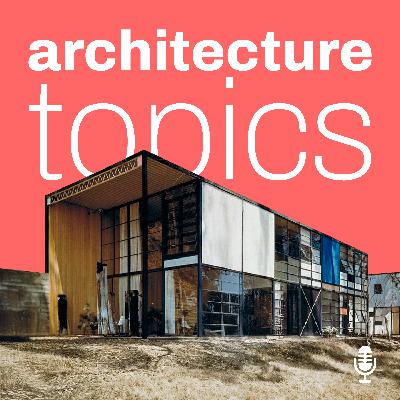
Case Study House number eight, designed by Charles and Ray Eames, is often celebrated as an icon of modern architecture. But its true significance lies not in how it looks, but in how it was lived in.In this episode, we explore a house that treated architecture as a flexible framework rather than a finished statement. A place where work, family life, and creativity unfolded side by side, and where objects accumulated naturally over time.We look at how the Eameses approached design, why this house could only have emerged in postwar California, and how it challenged the idea that modern living needed to be controlled or perfected. More than a prototype, the Eames House became a demonstration of how architecture could support everyday life without dominating it.This episode continues our mini series on the Case Study Houses, moving from the program’s founding ideas to a lived example where life, not image, took the lead.

After the Second World War, the United States faced an urgent question. How to house a new generation, and what that new way of living should look like.In this episode, we explore the origins of the Case Study House program, an ambitious experiment launched in California to rethink the modern home. Architects, editors, manufacturers, and clients came together to treat the house not as a finished object, but as a prototype for everyday life.We look at why this experiment emerged when it did, why it took shape in Southern California, and what tensions it revealed between modern ideals and real domestic life. This episode lays the groundwork for a mini series about life, discipline, image, and legacy, and how the Case Study Houses changed the way we imagine home.

For decades, a handful of architects shaped cities, skylines, and the public imagination. They were ambitious, controversial, sometimes flawed, and often brilliant. We called them starchitects.Today, almost all of them are gone, or well into their seventies, eighties, and nineties. And strangely, no new generation has replaced them.In this episode, we look at the data behind the rise and disappearance of the starchitect, ask why no young global architectural figures are emerging, and explore how regulation, mega firms, public backlash, and fear of ambition have quietly reshaped the profession.This is not a nostalgic defense of flashy buildings or big egos. It is an argument about vision, authorship, and why architecture, and society as a whole, might be worse off without people willing to push boundaries, take risks, and occasionally fail in public.A critical, opinionated episode about ambition, innovation, and what we lose when architecture becomes safe, polite, and predictable.

Explore the story behind the Unité d’Habitation in Marseille, Le Corbusier’s groundbreaking experiment in collective living. This episode looks at post war France, the housing crisis that shaped the commission, and the ideas that drove Le Corbusier to rethink how communities could live together. From the Modulor and the design of the duplex apartments to the challenges of construction, the first residents, and the building’s lasting influence, discover how this concrete giant became a milestone in modern architecture and a model for high density housing around the world.

In this episode, we explore how the Burj Al Arab transformed Dubai from a coastal trading hub into a global destination. From Tom Wright’s first sketches to the construction of its artificial island. From its soaring atrium to the famous stunts on its helipad. This is the story of how architecture became branding, and how one hotel reshaped the identity of a city.A sail rising from the sea, a symbol of ambition, and the moment Dubai stepped onto the world stage.

At the turn of the 20th century, New York was still a low-rise city. The Empire State and Chrysler Buildings were decades away, and the idea of a skyscraper north of Madison Square seemed absurd.Then came the Flatiron, a 22-story steel-frame experiment that turned an awkward triangular lot into one of the most recognizable silhouettes in the world.In this episode, we explore how the Flatiron Building was born: the ambitions of the Fuller Company, Daniel Burnham’s bold design, the skepticism it faced, and how it became a symbol of modern New York.From its first tenants to its cultural impact and ongoing transformation, this is the story of how an odd-shaped corner became the face of a city.

It wasn’t a palace, a museum, or a tower. It wasn't even a "place". It was just a wall.Yet for almost three decades, it held an entire city, and the world, hostage to fear, ideology, and division.In this episode, we explore the story of the Berlin Wall: how a city became trapped inside itself, how a simple structure evolved into one of the most sophisticated borders ever built, and how, in the end, it fell not to force, but to the will of ordinary people.A reflection on the power of architecture and the responsibility of those who shape it.

After the 1989 earthquake left the California Academy of Sciences in ruins, San Francisco faced a choice: rebuild what was lost, or imagine something entirely new.What emerged was one of the most sustainable museums ever created — a living, breathing building by Renzo Piano, where science and architecture merge beneath a rolling green roof.In this episode, we explore how an earthquake, a vision, and a radical architect turned disaster into rebirth, and created a museum that became part of the natural world itself.

Nearly two thousand years old, yet still standing in perfect balance. The Pantheon remains one of the greatest achievements in architectural history.In this episode, we travel back to ancient Rome to uncover how Emperor Hadrian and his engineers created the world’s largest unreinforced concrete dome, and how their vision of harmony between heaven and earth shaped architecture for centuries to come.Follow Architecture Topics for more stories of the buildings that changed our world, and the minds that imagined them.

In this episode of Architecture Topics, we travel to Chicago, the birthplace of the modern skyscraper, to explore Marina City, Bertrand Goldberg’s bold experiment in urban living.Designed in the late 1950s and completed in 1967, Marina City was a "city within a city," two cylindrical towers combining apartments, shops, parking, offices, and even a marina. At a time when Americans were fleeing downtowns for the suburbs, Goldberg set out to prove that high-density living could once again be desirable, not a compromise but an ideal.We’ll look at how this visionary project was built, how it changed Chicago’s skyline, and how it became a cultural icon featured in films, album covers, and the House of Blues.----------If you enjoy this show, I'm sure you will be interested in the new Certification Programs from the Global Institute for Architectural Analysis.Visit giaainstitute.org to learn more, and do it fast! The first 50 to enroll get a 50% OFF any Certification!

Rising 192 meters above the Mississippi River, the Gateway Arch is one of the most striking monuments in the United States. A stainless-steel curve that turned pure geometry into national poetry.In this episode, we'll discover the story behind Eero Saarinen’s masterpiece: from the ambitious vision of St. Louis in the 1930s, to the dramatic father-and-son design competition, to the decades of delays, protests, and technical challenges that nearly stopped it from being built.You’ll hear about the hidden engineers who made it possible, the civil rights activists who turned it into a stage for protest, and the quiet genius who invented its one-of-a-kind tram system.A story of ambition, time, and beauty.

In the early 1980s, Hong Kong’s HSBC Main Building became the most expensive building ever constructed. Designed by Norman Foster, it turned the skyscraper inside out and upside down.It was more than just an engineering marvel, it was also shaped by feng shui, public space, and the political uncertainty of Hong Kong’s looming 1997 handover. For Foster, winning the 1979 competition to design HSBC was the turning point that launched him onto the global stage.Join us as we explore the radical design and cultural context that came together to create one of the most influential skyscrapers of the late 20th century.

Step into the story of the Eiffel Tower, the iron revolution that reshaped Paris and captured the world’s imagination. Built for the 1889 World’s Fair, this daring structure was once mocked and resisted, yet it became the ultimate symbol of France. Learn how the engineers behind the design, backed by Gustave Eiffel’s leadership and ambition, turned a temporary fairground tower into the enduring “Iron Lady” we know today.

One World Trade Center is the tallest building in the United States and one of the most debated skyscrapers ever built. Initially envisioned as the “Freedom Tower,” its path from concept to reality was shaped by politics, security concerns, financial struggles, and symbolism. This episode explores how the design evolved after Daniel Libeskind’s master plan, how David Childs and SOM transformed it into its final form, the delays and controversies during construction, and the reception it received when it finally opened in 2014.

Comments

Download from Google Play

Download from App Store
 United States