


 Claim Ownership
Let’s Talk Vinyl
Subscribed: 1Played: 10
Subscribe

© Mike Fox
Description
Indie rocker Mike Fox is cracking open his record collection—one album at a time, one story at a time. If you’re listening on a regular podcast app, you’ll get the deep dives, the vinyl talk, and the passion. But if you want the full experience—music and all—hit the link in the show description and tune in on Mixcloud, where you’ll hear three tracks straight from the record Mike’s about to spin. Theme music by Mike Fox and Eugenio Schraier. Voiceover by Catherine Divaris.
16 Episodes
Reverse
Tune into this episode with the actual music at: https://www.mixcloud.com/letstalkvinyl/big-country-peace-in-our-time/! Big Country’s 1988 album, Peace In Our Time, was an absolute masterpiece, marking a pivotal moment in the band’s musical journey. Its release sparked a whirlwind of opinions across fans and critics alike. While some devoted followers embraced the bold transformation of the band’s sound, appreciating their willingness to evolve artistically, others felt it was a step too far from the raw, rugged style that had initially defined Big Country. This divergence in response underscored the complexities of artistic growth and the challenges bands face when balancing innovation with the expectations of a loyal fan base.Stuart Adamson, the band’s frontman and principal songwriter, was candid about his mixed feelings toward the album. He lamented that certain tracks, though undeniably classics, seemed to lose the gritty, authentic essence that had been the hallmark of Big Country’s earlier work. Critics often pointed to the album’s production as a key factor, describing it as overly polished, which, in their view, diluted the raw energy that had previously set the band apart. The slick production was seen by some as a move toward mainstream appeal, perhaps influenced by the musical trends of the late 1980s, where glossy finishes often dominated the charts.However, this critique was far from universal. Many fans passionately disagreed with the negative assessments, finding Peace In Our Time to be a richly layered, emotionally resonant album that showcased the band’s growth both musically and lyrically. They argued that the polished production brought a new dimension to Big Country’s sound, highlighting the intricacies of their instrumentation and the depth of Adamson’s songwriting. The album’s lush soundscapes and anthemic choruses resonated with listeners on a profound level, creating an enduring connection that has lasted well beyond its initial release.Despite the controversy surrounding the album’s production choices, Adamson stood by his work, steadfast in his belief that Peace In Our Time represents a powerful reminder of a time when music profoundly touched people’s lives. He viewed the album not just as a collection of songs but as a reflection of the socio-political climate of the era, with themes that continue to be relevant today. The title track, in particular, has stood the test of time, with its poignant lyrics resonating deeply with the world’s current state in the 21st century. Its message of hope, peace, and the universal longing for understanding transcends generations, making it as impactful now as it was upon its release.This episode highlights several standout tracks that exemplify the album’s strengths. "King of Emotion" bursts with anthemic energy, featuring driving rhythms and passionate vocals that showcase Big Country’s knack for crafting memorable hooks. "Broken Heart (Thirteen Valleys)" delves into more introspective territory, blending heartfelt lyrics with soaring melodies that evoke a sense of longing and reflection. And, of course, the timeless title track, "Peace In Our Time," stands as the album’s emotional centerpiece, its powerful lyrics and sweeping arrangement capturing the essence of Big Country’s vision.In retrospect, Peace In Our Time is more than just an album; it’s a testament to Big Country’s artistic courage and their commitment to exploring new musical landscapes. While it may have divided opinions upon its release, its enduring legacy is a testament to its impact and the emotional connection it continues to foster among fans old and new. The debates it sparked only highlight the passionate relationship between artists and their audiences, a dynamic that keeps music alive and meaningful across generations.
Tune in with music at: https://www.mixcloud.com/letstalkvinyl/cheap-trick-all-washed-up/On this episode of Let’s Talk Vinyl, I’m spinning Cheap Trick’s 2025 release All Washed Up — a late-career album that proves this band still knows how to write sharp, melodic rock with attitude and heart.I talk about where Cheap Trick is right now as a band, how All Washed Up fits into their long history, and why this record feels more reflective without sounding tired or forced. There’s a seasoned confidence here — catchy hooks, classic Cheap Trick crunch, and lyrics that feel earned rather than nostalgic.This episode dives into standout tracks, the overall feel of the album on vinyl, and why All Washed Up works as both a continuation and a statement from a band that refuses to coast on legacy alone. If you’re wondering whether Cheap Trick still delivers in 2025, this record — and this conversation — answers that question loud and clear.
Listen to this episode with vinyl music at: https://www.mixcloud.com/letstalkvinyl/lou-reed-new-sensations/! New Sensations, Lou Reed’s thirteenth solo studio album, was released in April 1984 by RCA Records. Produced by John Jansen and Reed, the album reached No. 56 on the U.S. Billboard 200 and No. 92 on the UK Albums Chart. This marked Reed’s first charting success in the US Top 100 since his eighth album, Street Hassle (1978), and his first charting in the UK since his sixth album, Coney Island Baby (1976). Three singles were released from the album: “I Love You, Suzanne,” “My Red Joystick,” and “High in the City.” Only “I Love You, Suzanne” charted, peaking at No. 78 on the UK Singles Chart. The music video for “I Love You, Suzanne” received limited rotation on MTV.
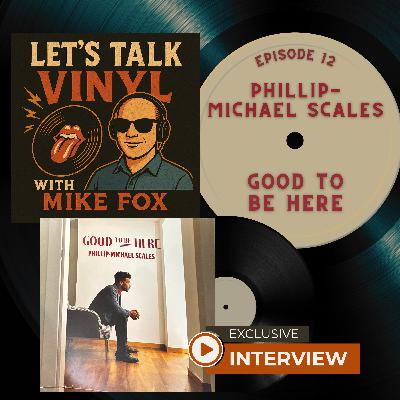
For a deeper dive into this episode with actual vinyl music, listen at: https://www.mixcloud.com/letstalkvinyl/phillip-michael-scales-good-to-be-here-interview/On this episode of Let’s Talk Vinyl, I sit down with singer-songwriter Philip-Michael Scales to talk about his fantastic album Good to Be Here. I first discovered Philip-Michael this past summer at Musikfest in Bethlehem, Pennsylvania, where his performance completely drew me in. I ended up buying the vinyl directly from him that day — and it’s been one of my favorite new additions to my collection.Philip-Michael shares his musical journey with me, starting from his early days performing in Joseph and the Amazing Technicolor Dreamcoat alongside Donny Osmond, to developing his own soulful sound as a solo artist. He also talks about the surreal experience of having one of his songs played on SiriusXM, which caught the attention of Ellen DeGeneres and eventually led to him being featured on The Ellen Show.We focus on three standout tracks from Good to Be Here: “Be My Own Man,” “Can’t Get Enough,” and “Something Bout You.” Each song showcases Philip-Michael’s knack for blending soul, blues, and emotion into something uniquely his own.You can find Philip-Michael Scales on all major music platforms, and if you love that warm vinyl sound, Good to Be Here is absolutely worth adding to your turntable.
Listen with music at: https://www.mixcloud.com/letstalkvinyl/re-release-rick-price-from-the-brains-to-the-georgia-satellites-to-tangled-oaks/On this re-released episode of Let’s Talk Vinyl, we sit down with legendary bassist Rick Price, whose musical journey spans some of the most iconic (and underrated) corners of rock history. From the edgy new wave pulse of The Brains ("Money Changes Everything") to the Southern rock swagger of The Georgia Satellites, and his current project Tangled Oaks, Rick shares stories from the road, the studio, and everywhere in between.
Listen to this episode with music at: https://www.mixcloud.com/letstalkvinyl/alice-cooper-muscle-of-love/!Muscle of Love,” the seventh studio album by the American rock band Alice Cooper, was released in late 1973. Tragically, the band played its final concert a few months later. Notably, this album marked the end of Alice Cooper’s studio career as a band, spanning an impressive 52 years, until the release of their highly anticipated reunion album, “The Revenge of Alice Cooper,” in 2025.
Tune in to this episode with vinyl music at: https://www.mixcloud.com/letstalkvinyl/elton-john-too-low-for-zero/In Episode 9 of Let’s Talk Vinyl, we embark on a comprehensive exploration of Elton John’s iconic album, Too Low for Zero. Released in 1983, this critically acclaimed album marked a significant comeback for Elton John, reuniting him with lyricist Bernie Taupin for all the tracks. We delve into the vibrant ‘80s pop-rock sound, unravel the unforgettable hits, and uncover the stories behind each track. Notably, Too Low for Zero was the first Elton John album to feature his classic touring band from the early ‘70s, including Davey Johnstone (guitar), Dee Murray (bass), and Nigel Olsson (drums), contributing to its dynamic sound.We highlight three standout songs: “I’m Still Standing,” an anthem of resilience with an energetic music video shot in Cannes, France; “I Guess That’s Why They Call It the Blues,” featuring Stevie Wonder on harmonica, which became one of Elton’s most beloved ballads; and “Kiss the Bride,” showcasing catchy hooks and upbeat rhythms typical of the era. The album achieved multi-platinum status, earning Platinum certification in the United States and the United Kingdom, and peaking at No. 25 on the US Billboard 200 and No. 7 on the UK Albums Chart. Its commercial success played a crucial role in revitalizing Elton John’s career during the 1980s, with several hit singles dominating international charts.Whether you’re a devoted Elton fan or just discovering his music, we’ll guide you through the album’s enduring legacy, its profound impact on popular culture, and the creative process behind these iconic tracks.
This episode turns into a radio show with music if you click here: https://www.mixcloud.com/letstalkvinyl/billy-joel-the-stranger/! ← Smash that link!The Stranger, the fifth studio album by American singer-songwriter Billy Joel, was released on September 29, 1977, by Columbia Records. It marked the beginning of a collaboration between Joel and Phil Ramone, who would work together on five subsequent albums. This album propelled Billy from regional east coast stardom to global stardom.Joel’s previous album, Turnstiles (1976), had sold modestly, peaking at only #122 on the US Billboard 200 charts. This prompted Columbia to consider dropping him if his next release failed to perform well. Joel wanted the new album to feature his touring band, formed during the production of Turnstiles. The band consisted of drummer Liberty DeVitto, bassist Doug Stegmeyer, and multi-instrumentalist Richie Cannata, who played the saxophone and organ. Seeking a new producer, Joel initially approached veteran Beatles producer George Martin but eventually settled on Ramone, whom he had noticed on albums by other artists like Paul Simon. Recording took place over three weeks, with DeVitto, Stegmeyer, and Cannata performing on the album. Additional studio musicians filled in as guitarists on various songs.The Stranger, released after a six-week stint at No. 2 on the US Billboard 200 chart, marked Joel’s critical and commercial breakthrough. Four singles were released in the US, all of which achieved Top 40 hits on the Billboard Hot 100 chart: “Just the Way You Are” (No. 3), “Movin’ Out (Anthony’s Song)”, “She’s Always a Woman” (both No. 17), and “Only the Good Die Young” (No. 24). Other songs, such as “Scenes from an Italian Restaurant” and “Vienna”, have become integral to his career and are frequently performed in his live shows. The album won two awards at the 21st Annual Grammy Awards in 1979: Record of the Year and Song of the Year for "Just the Way You Are". It remains his best-selling non-compilation album to date and surpassed Simon & Garfunkel's Bridge over Troubled Water (1970) to become Columbia's best-selling album release, with more than 10 million units sold worldwide. Rolling Stone magazine ranked the album number 70 on its 2003 list of the "500 Greatest Albums of All Time", repositioned to number 169 in a 2020 revision.[6][7] In 2008, The Stranger was inducted into the Grammy Hall of Fame.
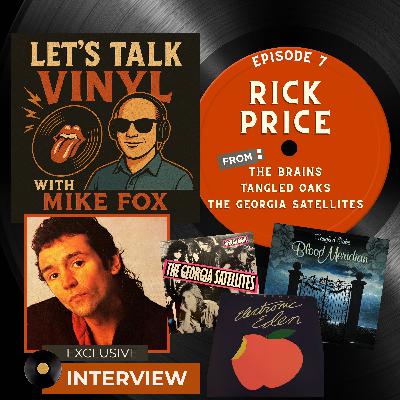
Listen to this episode with music at: https://www.mixcloud.com/letstalkvinyl/rick-price-from-the-brains-to-the-georgia-satellites-and-tangled-oaks/!On this episode of Let’s Talk Vinyl, we sit down with legendary bassist Rick Price, whose musical journey spans some of the most iconic (and underrated) corners of rock history. From the edgy new wave pulse of The Brains ("Money Changes Everything") to the Southern rock swagger of The Georgia Satellites, and his current project Tangled Oaks, Rick shares stories from the road, the studio, and everywhere in between.
Enjoy this episode more-more-more with vinyl music at: https://www.mixcloud.com/letstalkvinyl/billy-idol-dream-into-it/Dream Into It,” Billy Idol’s ninth studio album, was released on April 25, 2025, by Dark Horse Records and BMG. It marks his first album in over a decade, following 2014’s “Kings & Queens of the Underground,” and his first new songs since 2022’s EP “The Cage.” This concept album, the shortest of his career, clocks in at just 34 minutes and 50 seconds. While primarily a rock album, it incorporates elements of pop, electronic, country, and even grunge. Notable guest appearances include Avril Lavigne, Alison Mosshart, and Joan Jett.
Experience this show with vinyl music at: https://www.mixcloud.com/letstalkvinyl/wild-in-the-streets-motion-picture-soundtrack/!Wild in the Streets,” a 1968 American dystopian comedy-drama film, stars Christopher Jones, Hal Holbrook, Richard Pryor, and Shelley Winters. Directed by Barry Shear, it’s based on Robert Thom’s short story “The Day It All Happened, Baby!”. Distributed by American International Pictures, the film, described as both “ludicrous” and “cautionary”, was nominated for an Academy Award for Best Film Editing and became a cult classic of the 1960s counterculture. A soundtrack was released on Tower Records and became successful, peaking at No. 12 on the Billboard charts. Taken from the soundtrack and film, "Shape of Things to Come" (written by songwriters Barry Mann and Cynthia Weil) and performed by the fictional band Max Frost and the Troopers, was released as a single (backed with "Free Lovin' ") and became a hit, reaching No. 22 on Billboard.
To enjoy this episode with music, go ahead and smash this link: https://www.mixcloud.com/letstalkvinyl/kaiser-chiefs-easy-eighth-album/We’re talking about the brand-new record from Kaiser Chiefs—Kaiser Chiefs’ Easy Eighth Album. That’s right, the Leeds lads are back, and this time they’ve teamed up with none other than Nile Rodgers for a slick, funky, and very unexpected sound that still keeps that indie-rock edge we know and love.
Check out this episode with actual vinyl music. It’s at: ➡️: https://www.mixcloud.com/letstalkvinyl/the-police-dont-stand-so-close-to-me-86/! If you haven’t checked it out yet, why not? Just click on the link, and you’ll transform this podcast into a radio show on MixCloud. The Police disbanded in 1986, but a new version of their classic song, “Don’t Stand So Close To Me,” was recorded during a brief reunion for their first compilation album, “Every Breath You Take: The Singles,” released in October 1986. This new version departed from the reggae style of the original and embraced a new wave, melancholic sound. It was released as a single and reached No.24 in the UK, becoming the band’s final single of the 1980s.Tragically, Stewart Copeland, the band’s drummer, broke his collarbone the night before they were scheduled to record their sixth album, which unfortunately never materialized. This setback left the band in a precarious situation, as Copeland was unable to play the drums. Amidst this uncertainty, a heated argument ensued over whether to use a Synclavier or Fairlight CMI to program the drums.Musically, “Don’t Stand So Close To Me” stands out for its minimalist yet effective arrangement. The Police, known for their unique blend of rock, reggae, and punk elements, crafted a sound that is both distinctive and easily accessible. The song begins with a haunting synthesizer riff that sets a somber tone, followed by Andy Summers’ sharp, staccato guitar chords and Stewart Copeland’s precise drumming. Sting’s evocative vocal delivery adds to the song’s tension and emotional depth.The production of “Zenyatta Mondatta,” and particularly this song, exemplifies The Police’s signature style: a tight, polished sound that never compromises emotional depth. The harmonious interplay between the instruments and Sting’s voice creates an immersive atmosphere, drawing listeners into the song’s narrative.
Tune in with music at: https://www.mixcloud.com/letstalkvinyl/queen-a-night-at-the-opera/A Night at the Opera,” the fourth studio album by the renowned British rock band Queen, was released on November 28, 1975, by EMI Records in the United Kingdom and Elektra Records in the United States. Produced by Roy Thomas Baker and Queen themselves, it was reportedly the most expensive album ever recorded at the time of its release. Named after the Marx Brothers’ film of the same name, A Night at the Opera was recorded over a four-month period in 1975 at various studios. However, due to management issues, Queen had received almost none of the money they earned for their previous albums. Theme music by Mike Fox and Eugenio Schraier. Voiceover by Catherine Divaris.
Tune in with music on MixCloud at: https://www.mixcloud.com/letstalkvinyl/bob-dylan-and-the-band-the-basement-tapes/The Basement Tapes are a collection of songs recorded by Bob Dylan and The Band (then known as The Hawks) in 1967, largely at a house in West Saugerties, New York, known as Big Pink. These sessions, conducted while Dylan was recovering from a motorcycle accident, are known for their loose, rootsy style, blending folk, rock, blues, and Americana. The recordings captured a spontaneous, experimental spirit, reflecting Dylan’s retreat from the pressures of fame and his exploration of American musical traditions. Although many tracks were initially only circulated as bootlegs, they became legendary, influencing the development of roots rock and Americana. An official version, The Basement Tapes, was finally released in 1975, followed by The Basement Tapes Complete in 2014, offering a more comprehensive view of these landmark sessions. Theme music by Mike Fox and Eugenio Schraier. Voiceover by Catherine Divaris.
I’m here to celebrate the only way to truly and authentically experience the music you love: vinyl. Yeah, it can be pricey—but that’s why I hunt for deals. I’m all about that bargain bin life. If it’s cheap—or cheapest—I’m buying it. Each episode, I’ll spotlight one record from my personal vault. We’re talking classics, hidden gems, and even some new releases that deserve a place in the analog spotlight. If it’s in my collection, it makes the cut. And hey—if there’s an album you’d love me to feature, I’m accepting donations. Wink.Let’s Talk Vinyl with Mike Fox is a deep dive into my personal record collection—one classic at a time. In each episode, I pull a vinyl record off the shelf and spin three standout tracks, sharing stories, memories, and rock history along the way. From timeless legends to underrated gems, the show blends new and classic rock in a format made for true music lovers. Whether you’re a fellow vinyl junkie or just love good rock and roll, this show’s for you.Now, here’s the deal: every episode focuses on one vinyl record. Just one. As you heard in the intro, the best place to experience the full version of this show (with vinyl music) is on an app hardly anyone I know in the States is even aware of—Mixcloud. My MixCloud channel is available at: https://www.mixcloud.com/letstalkvinyl/
Comments

Download from Google Play

Download from App Store
 United States