


 Claim Ownership
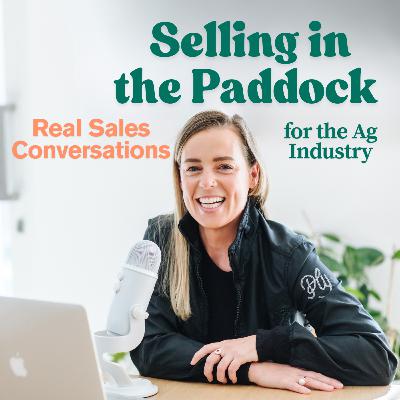
Selling in the Paddock
Subscribed: 6Played: 32
Subscribe

© Georgia Stormont
Description
Selling in the Paddock is a podcast about real sales in agriculture. Hosted by Georgia Stormont, The Ag Sales Coach, it cuts through the noise and gets to the point—how to sell better, lead stronger, and get results.
Guests include Paul Roos, AFL premiership coach turned leadership consultant, and Troy Williams, CEO of the National Farmers’ Federation, plus top ag reps, buyers, and business owners.
If you work in ag and want to sell smarter and build better teams, this podcast is for you.
Guests include Paul Roos, AFL premiership coach turned leadership consultant, and Troy Williams, CEO of the National Farmers’ Federation, plus top ag reps, buyers, and business owners.
If you work in ag and want to sell smarter and build better teams, this podcast is for you.
62 Episodes
Reverse
In this episode of Selling in the Paddock, Georgia Stormont is joined by Ciara Douglas, founder of Herd to Home, regenerative agriculture advocate, and multi-business operator based in Western Australia.Ciara’s journey into agriculture isn’t linear — and that’s exactly what makes it so powerful. Originally from Northern Ireland, Ciara moved to Australia as a child, grew up surrounded by farming, and has since carved out a diverse career spanning regenerative agriculture, cattle, horses, kelpie working dogs, education, and direct-to-consumer farm products.This conversation dives deep into regenerative thinking, transparency, asking better questions, and why lived experience matters just as much as data.Growing up in Northern Ireland and moving to Australia — and how Irish and Australian agriculture differCiara’s recent university studies in regenerative agriculture and why she deliberately tackled controversial topicsRed meat and climate change: why cattle, when managed correctly, can reverse climate damageGenetically modified crops: separating emotion from data and what the science actually saysWhy transparency builds trust — in agriculture, business, and sellingA producer’s perspective on what sales reps get right (and wrong)Why admitting limitations strengthens credibilityCiara’s experience as a jillaroo and working across WA cattle propertiesBuilding multiple businesses:horse re-education and trainingkelpie breeding and working dog programsagricultural merchandiseHerd to Home and the paddock-to-plate visionLaunching tallow-based skincare while regenerating land and rebuilding soil healthThe importance of questioning your own beliefs — and being willing to change your mindAdvice for women entering agriculture: self-education, resilience, and standing firm in your valuesTransparency over spinQuestions over assumptionsLong-term thinking over quick winsEducation, lived experience, and adaptability“If we can acknowledge where the technology actually is — and where it isn’t — trust grows.”“The worst you’re going to get is a no. And that’s just a redirection.”“There’s nothing that beats life experience.”Ciara Douglas on LinkedInHerd to Home – paddock-to-plate, regenerative-focused products and education☕ Coffee order: Small iced latte with an extra shot, raw milk preferred🎧 Listening to: Everything from Eminem to Cody Johnson — plus emerging artists discovered online📚 Winding down: Reading (The Seven Sisters), learning, and the occasional episode of Game of Thrones or Yellowstone
In this episode of Selling in the Paddock, Georgia is joined by Kristy Hollis, founder of Everlasting Health and a naturopath based in Darwin, working closely with women across regional and remote Northern Territory communities.Kristy’s journey into health didn’t start in a clinic — it started in the paddock. From applied science and entomology work with CSIRO, through to biological weed control and time spent in agricultural research, Kristy brings a grounded, science-backed and deeply human approach to health and wellbeing.Together, Georgia and Kristy explore what holistic health really means (and why it’s often misunderstood), the parallels between health and sales problem-solving, and why supporting rural women requires context, choice, and genuine understanding — not one-size-fits-all solutions.Kristy’s journey from ag science and entomology to naturopathyWhat “holistic” actually means — and why it’s not woo-wooWhy symptoms are rarely the real problem (in health and in life)The link between stress, burnout, hormones, immunity and gut healthSupporting women in regional and remote communities like KatherineThe importance of choice in healthcare, alongside traditional GP medicineWorking respectfully with Indigenous women and two-way learning in communityKristy’s work with First Nations women’s groups and DV support servicesWinning the AgriFutures Rural Women’s Award (NT) and what it unlockedHow visibility, voice and networks change impact for rural womenWhy thriving matters more than just “getting through”The hidden cost of doing it all — and how burnout shows up years laterWhat success really looks like at this stage of lifeHitting pause, asking for help, and redefining balanceRapid-fire fun: coffee orders, Fleetwood Mac, U2, and winding down wellThis episode is a powerful reminder that whether you’re selling, leading, parenting, or building a business — the real work starts by looking at the whole picture.If you’re in the Northern Territory (or anywhere in Australia) and want to learn more about Kristy’s work with women’s health, holistic wellbeing, or community programs, you’ll find her links in the show notes.📍 Enjoyed this episode?Make sure you follow Selling in the Paddock so you don’t miss what’s coming next.If you’ve got 30 seconds, leaving a quick review helps more people in ag find the show and learn alongside us.Know someone who should be our next guest?Send Georgia a DM or tag them — real conversations with real people are what this podcast is all about.See you next time 🌾
Episode: Why Sales People Discount to Early with Kurt NewmanPodcast: Selling in the PaddockHost: Georgia StormontGuest: Kurt Newman, Managing Director — Sales Consultants (Sydney / Southern Highlands)In this episode, Georgia sits down with sales coach and author Kurt Newman (MD of Sales Consultants) to talk about the hidden places profit disappears, why salespeople discount before they’re even asked, and how trust (not likeability) is what actually drives big-ticket decisions.Kurt has spent decades in frontline B2B sales, won global sales awards across multiple industries, and now works with organisations worldwide to improve sales performance — from mindset and confidence through to margin protection and practical sales behaviours.Why “just being liked” is fragile — and what matters more: like, trust and beliefThe real cause of margin leakage (hint: it starts in the salesperson’s head)The subtle tells that destroy value: hesitation before price, vocal tone shifts, and over-explainingWhy technical people can become “liquid gold” in sales once they build people skillsThe importance of doing your homework (and how the right research can break the ice instantly)Why sales leaders can’t manage purely from a CRM — and why face-to-face still winsHow to build confidence and resilience in younger salespeople (and why it’s needed more than ever)The difference between using AI as support vs expecting it to replace human coaching“Margin leakage starts in the salesperson’s mind.”Kurt’s story about the power of silence: asking for the close… then genuinely shutting upWhy discounting is often a self-worth issue, not a pricing strategyIf you’re selling into farmers or rural retail, this episode is a reminder that:Confidence + value clarity beats discountingTrust-building is a skill you can learn (even if you’re technical)Face-to-face conversations still create the strongest differentiationCoffee order: Skinny flat white (mug), no sugarMusic: Loud 70s rock (Boston, Rod Stewart)Wind down: Family time, movies/series, and quality time with the fur babiesConnect with Kurt Newman on LinkedIn: Learn more about Sales Consultants: Kurt’s article on why face-to-face still matters post-COVID: If you drop me your rough timecodes or a Descript export, I can format timestamps like:03:10 — Kurt’s background and why sales14:20 — Trust vs likeability22:40 — Margin leakage and discounting30:00 — Silence and closing34:30 — Rapid fire
In this episode of Selling in the Paddock, I’m joined by Harley Johnston from JH Leavy & Co for a grounded conversation about what selling really looks like when relationships, reputation and timing matter.Harley works in an environment where deals aren’t transactional and trust isn’t built overnight. We unpack what it means to show up consistently, read the room, and understand that in agriculture, people remember how you operate long after the paperwork is signed.This episode is a reminder that good selling in ag isn’t about being loud — it’s about being present, prepared, and credible when it counts.Why trust is earned long before a deal is on the tableThe role of timing and patience in agricultural salesHow reputation travels faster than marketing in regional communitiesWhat “turning up” really looks like in paddock-based conversationsLessons from working where relationships span generationsWhether you’re selling services, property, advice or ideas into agriculture, this conversation will resonate if you believe selling is about people first — always.🎧 Listen now and ask yourself:Are you building trust for today… or for the long game?In this episode, we cover:
In this episode of Selling in the Paddock, Georgia Stormont sits down with Jessie McQueen — Wagyu operator, former Bar H Wagyu team member, and President + founding committee member of WAGYOUTH.Jessie’s story is a ripper: raised on a cattle property in south-east Queensland, boarding school in Brisbane, rowing scholarship in the US (Rutgers University), then back home to study international business at QUT — before making the call to get “back into the paddock” and properly learn cattle.From there, Jessie spent nearly six years at Bar H Wagyu, moving from horses and cattle work into AI programs, genetics, data collection, analysis, business development and leadership. Along the way, she saw first-hand what makes sales relationships in agriculture work (and what absolutely kills them).Jessie’s pathway back into agriculture (and why she initially underestimated how complex ag really is)Life at Bar H Wagyu: what the operation looks like and what integrity in breeding means in practiceWhy genetics and outcrossing matter so much in Wagyu — and how the industry manages inbreeding riskThe origin story of WAGYOUTH and why the Wagyu industry needed a youth network focused on business, leadership and governanceJessie’s perspective on what good sales reps do differently in regional communitiesWhy “dropping in” still matters (and why emails often don’t cut through)Playing the long game: selling for next year and the year after that, not just this monthThe biggest turn-off: complacency — assuming you’ve “got the sale” and letting service slipA powerful reminder: value is defined by the buyer’s context (Georgia’s broccoli trial story is gold)Jessie’s self-reflection on selling: going too fast, talking too much, and learning to use silence well“It makes such a difference to drop in… even with something from the bakery.”“They’re not trying to sell you something this year… they’re trying to create something longer-term.”“People being complacent and assuming you have the sale… that’s pretty frustrating.”WAGYOUTH (follow along and stay updated on events, tours and webinars)Georgia also hosts the Australian Wagyu Association podcast, Beyond the MarblingIf you sell into ag: don’t rely on emails, don’t rush the relationship, and never confuse a past win with future loyalty. Consistency beats confidence every day of the week.☕ Coffee order: Flat white with “as many shots as possible” + cream milk🎶 Music: Instrumental / jazz-house vibes📺 Watching: Landman (Jessie’s up to Season 2)
In this episode of Selling in the Paddock, I’m joined by Mark Kable, Managing Director of Harvest Moon — one of Australia’s leading vegetable growing businesses, supplying major retailers and export markets across the country and internationally.Mark has spent more than 36 years in horticulture, building Harvest Moon from humble beginnings into a nationally recognised operation working with over 100 growers across Australia.Recorded while driving through rural South Australia on an onion trip, this conversation offers a rare and honest look into what growers really want from sales reps — and where many get it wrong.We talk about relationships, trust, follow-up, and why the best reps aren’t just selling products — they’re building long-term partnerships.Mark also shares one of the most powerful pieces of advice he was ever given:“Good news can wait. Bad news can’t.”If you sell into agriculture — or want to understand how to connect better with farmers — this episode is essential listening.Mark’s journey from driving trucks to leading Harvest MoonHow Harvest Moon grew into a national and export-focused businessWhat separates average sales reps from the best in the industryWhy preparation, product knowledge, and knowing your numbers mattersThe importance of follow-up and doing what you say you’ll doHow trust is built — and lost — in agricultural relationshipsManaging difficult conversations and delivering bad newsWhy relationships matter just as much with growers as they do with customersThe role of honesty, transparency, and communication in long-term successMark’s involvement in charity rides raising funds for Motor Neurone Disease research“The best reps are thorough. They do their homework. They follow up. And they tell you the truth.”Mark is currently raising funds for Motor Neurone Disease research. If you’d like to support the cause, you can donate here:[charity link]
This episode is a special one.To mark Episode 50 of Selling in the Paddock — and nearly 12 months on air — I invited a very special guest onto the show… my mum, Sally Stormont.At first glance, a primary school teacher and former newsagency worker might seem like an unlikely guest on a sales podcast. But as this conversation unfolds, it becomes clear: some of the most powerful selling lessons don’t come from sales training — they come from life.In this episode, Mum and I unpack the quiet skills that sit underneath great sales conversations:Selling ideas instead of giving instructionsWhy listening matters more than being “right”How trust is built over time — with kids, customers, and adults alikeWhat teaching, parenting, and customer service all have in commonHow calm, empathy, and preparation change difficult conversationsWe talk about growing up in a family-run newsagency, where relationships mattered more than transactions. We explore what it really means when people say “the customer is always right” — and why it’s actually about listening, not submission.We also go deeper into parenting:Navigating emotions with three kidsThe differences between eldest, middle, and youngest childrenHow feeling heard, seen, and safe shapes behaviourWhy connection always comes before influenceIf you sell for a living, lead people, raise kids, or work with humans in any capacity — this episode will land.It’s honest. It’s practical. And it’s a reminder that the best sales skills are deeply human ones.Why “selling the why” works better than telling people what to doHow teachers sell curiosity, confidence, and beliefWhat to do when emotions are high and conversations are hardThe role of empathy in trust and influenceWhy listening is still the most underrated skill in salesCoffee order: Extra-hot skinny latteMusic loves: Neil Diamond, ABBA, Fleetwood Mac, The Rolling StonesCurrently watching: Landman and ShrinkingThis one’s close to my heart.I hope you enjoy it as much as I did.🎧 Tune in now.🔥 You’ll hear:☕ Rapid Fire with Sally:
In this episode of Selling in the Paddock, I’m joined by Jess Federow from Copper Creek Contracting in Central West NSW – a former primary school teacher turned rural contractor, systems thinker, and freshly minted Nuffield Scholar.Jess and her partner Ross don’t just “put up fences”. They design whole-farm infrastructure that actually works in the real world – for people, livestock, seasons and the future of the business.We dig into Jess’s winding path from:Canberra kid ➝ NT station work ➝ primary school teacher ➝ DPI education ➝ rural contracting ➝ now shaping the future of farm design through her Nuffield research.In this ripper chat, we cover:🧠 Systems thinking in ag – why Jess struggled with a siloed ag degree, and how that “umbrella view” is now her superpower on-farm🛠️ Copper Creek’s 5-part framework – Grow, Graze, Move, Handle, Feed – and how one missed “movement” detail exposed a blind spot (and led to a better method)🚜 From “just build the fence” to solving the real problem – the questions Jess asks to get past “I need 500m of fence” and into what’s actually going on in the business🤝 Building trust with clients – how she does it over the phone, when to lean in with ideas, and when to trust the farmer’s experience and simply execute🧱 Values in business – why Jess and Ross refuse to sell projects they don’t believe in, and how they handle jobs where the “vibe” and values don’t align📈 Measuring ROI on infrastructure – what Jess will be exploring through her Nuffield Scholarship and why infrastructure is an underrated lever for productivity, efficiency and resilience🐴 Life outside work – getting back in the saddle after kids, riding with her daughter, and why the best pasture check is from the back of a horseIf you’re feeling overwhelmed about where to start with farm improvements, or you work in ag and want to think more holistically about your clients’ businesses, this episode will give you simple language, practical lenses, and a fresh way to see your farm as a whole system – not just a list of jobs.👉 Connect with Jess & Copper Creek Contracting
In this episode of Selling in the Paddock, Georgia heads to California (well… via Zoom) to talk tomatoes, trust and teamwork with William “Skeeter” Bethea from The Morning Star Company – the processor behind around 40% of California’s processing tomato crop.Skeeter lifts the lid on how Morning Star runs a massive, highly technical tomato operation with no traditional bosses, and what that actually looks like day to day for the people growing, transplanting, harvesting and moving fruit through the factories.Together, we dig into:🌱 From seed to sauce – how Morning Star handles transplants, harvesting and trucking across Bakersfield, Sacramento and beyond🧠 Planning backwards – why they start with factory demand and work back through the whole supply chain🤝 Trust and collaboration – building relationships in a no-boss structure and why staying in your lane helps the whole team win📊 Data, timing and adaptability – using growing degree hours, soil types and forecasts to hit tight processing windows🍅 Yield vs flavour – stories from tomatoes, berries and onions, and what happens when “through the windscreen” meets “it has to taste good”🧭 Integrity in ag – what Skeeter learned from a short detour into cannabis and why he came back to mainstream agriculture🏈 Football and field teams – how American football tactics mirror high-performing teams in ag and sales
Welcome back team to another episode of Selling in the Paddock!Today I’m joined by Ben Van Delden — founder of Delco AgriFood, co-founder of We Three AI, and a key partner in the Australian AgriFood System Alliance.If you’re picturing a simple job title, think again. Ben’s world crosses oysters, circularity, AI, livestock, climate strategy and big-picture system change in Australian agriculture and beyond.And yes, we recorded this rugged up on the first day of Melbourne summer. Of course we did.Ben’s childhood in New Zealand’s Bay of PlentyCanoeing to school and working on his parents’ oyster farmsEarly lessons in labour, risk and why he chose to pair agriculture with a business degreeBen breaks circularity down in practical language:Using resources for as long as possible within a systemMoving from “waste” to “value” in horticulture, livestock and processingReal-world examples:◦Hail-damaged crops and second/third pathways◦Nutra V and broccoli powder◦Dairy by-products turned into new value streams◦Using organic waste for energy and methane reductionWe dig into how We Three AI is building a kind of “virtual vet”:Using cameras and computer vision to:◦Count cattle more accurately◦Flag human–animal interactions and potential safety issues◦Detect health issues, lameness and shy feeders earlierReducing wasted feed and unnecessary antibioticsHelping animals reach target weights faster, with better welfare and lower emissionsBen shares insights from his time in places like Denmark:Why strong social systems can fuel innovationHow Denmark’s people voted for a 70% emissions reduction targetAlignment between government, research and industryCarlsberg’s water reduction goals and what that means for Australian barley growersWe explore the work of the Australian AgriFood System Alliance:Bringing commodity groups, processors, retailers, finance and others into one system viewDesigning structures and strategies that sit above individual sectors and statesWhy climate, circularity and food security can’t be solved in silosThe big challenge: shifting behaviour in an industry built on fragmentation and competitionThis is where it lands for leaders, sales teams, and anyone working in ag:Why behaviours are so deeply ingrained and hard to shiftThe role of vulnerability and mission in changing how we workThe importance of picking issues big enough that no-one can solve them aloneBen also shares a powerful piece of advice from Barry Irvin (Bega Cheese / Regional Circularity Cooperative):Share your problems widely – even with competitors. Human nature makes it very hard for people not to help you solve them.Gold.Coffee order: Almond flat white (long black at home)Music: Bruce Springsteen – Should I Fall Behind (his wedding song)Watching: American PrimevalReading/Gaming: More systems and strategy than Netflix, but that series has him hookedIn the show notes I’ll link to:Delco AgriFoodWe Three AIAustralian AgriFood System AllianceBen Van den Delden on LinkedIn🔍 In This Episode We Cover🌊 1. Growing up on an island & canoeing to school♻️ 2. What the circular economy actually looks like in ag🤖 3. We Three AI – computer vision for cattle and welfare🇩🇰 4. Lessons from Denmark, the Nordics and global leaders🇦🇺 5. The Australian AgriFood System Alliance🧠 6. Behaviour change, trust and sharing the hard stuff☕ Rapid Fire – Get to Know Ben🔗 Connect with Ben
In this episode of Selling in the Paddock, Georgia sits down with Steve Fuller, Director of Buzz and Growth at BeeStar – and a man who’s spent more than 40 years working with bees.Georgia admits she’s completely obsessed with bees, and Steve does not disappoint. He takes us inside the hive, explaining how colonies really work, why bees are so critical to Australian agriculture, and how technology like remote hive monitoring is changing the way beekeepers and growers work together.From almonds and blueberries to canola, clover and seed crops, Steve breaks down how managed pollination can dramatically lift yield and tighten the agricultural footprint – and why trust and communication between beekeeper and grower is non-negotiable.Along the way, Georgia and Steve explore what human teams can learn from bee colonies: shared purpose, calm leadership, and treating others how you’d like to be treated… just maybe without ripping anyone’s head off.From sawmilling to beekeepingHow Steve went from a sawmill job to beekeeping after his brother “found a great job” – and why he still isn’t sick of bees after four decades.How a hive really worksThe roles of workers, drones and the queen, how queens mate and lay up to seven million bees’ worth of eggs, and why everything in the hive is done for the good of the colony.Pollination and yield – why bees matterHow managed bees support crops like blueberries, raspberries, blackberries, macadamias, almonds, stone fruit, citrus, melons, pumpkins, canola seed, lucerne and clover – and why bringing in bees can boost yield by 10–48%.Monocropping, genetics and “missing” pollinatorsWhat happens when large monocrops push out natural pollinators, how modern varieties can unintentionally lose nectar or pollen, and why that changes what we see – and don’t see – in the paddock.Bees vs other pollinatorsWhere bees fit alongside flies, moths, bats, birds and wind, and why managed hives are such a powerful, controllable tool for growers.B Star and remote hive monitoringHow B Star uses in-hive sensors to track temperature and humidity, feeding data to an app that shows hive health using a simple traffic-light system – and how this helps both beekeepers and growers know if hives are truly working.Working with growers (and preventing bee carnage)Why spray timing and honest conversations matter, what happens when bees can work under a full moon, and how mis-timed spraying can undo months of work.Leadership and culture lessons from the hiveWhat Steve’s learned about calm energy, respect and reciprocity: treat bees (and people) how you’d like to be treated, don’t barge into their “house” and take everything, and know when to walk away on a bad day.Rapid fire with SteveHow he winds down (hint: 2,500+ bee books…), why he still finds bees endlessly fascinating, and the mindset he takes into every hive.
In this episode of Selling in the Paddock, Georgia sits down with Andrew Kelly, Executive Director of BioPacific Partners, to unpack a career that’s anything but linear – from veterinary science and epidemiology through to leading research institutes, venture capital, and now guiding global corporates through the innovation landscape in food, ag and health.Andrew shares how growing up in rural Victoria and choosing vet science with “farm animals in mind” led him into regional disease control, research leadership and eventually across the ditch to New Zealand, where he saw first-hand how a more commercial, customer-focused approach to publicly funded R&D could get good ideas out of the lab and into the paddock faster.Together, Georgia and Andrew explore what really builds trust between innovators, researchers, corporates and farmers – and why prep (in capital letters, three times over), empathy and genuine curiosity still beat any slick sales script.From rural Victoria to global life sciencesHow a kid from a small country town became a vet, then an epidemiologist, then a leader of major research institutes and finally a venture capitalist and adviser to global giants.Why Andrew chose New Zealand over Australia (at the time)What he saw in NZ’s “corporatised” R&D system that Australia hadn’t yet nailed – and how thinking globally is baked into New Zealand ag because the domestic market is simply too small.When research actually meets the customerThe difference between chasing revenue vs chasing profit and impact, and why “we’re doing good for people” isn’t enough if real customers aren’t lining up to buy.Inside BioPacific PartnersWhy Andrew describes his work as a consultancy in life sciences – spanning food, ag and health – and how his team helps both global corporates and local innovators navigate the Australia–NZ region.Trust, relationships and the limits of ZoomWhy remote communication can’t fully replace being in the room, and how cups of tea, idle time and noticing the “whole person” help build genuine trust across cultures and continents.Lessons from Māori culture on connectionHow starting with “who am I and where have I come from” changes the tone of a meeting, and what Western business can learn from relationship-first approaches to doing deals.Prep, empathy and selling complex ideasWhy Andrew puts huge emphasis on preparation – researching people, their history and their deals – to fast-track rapport, and how empathy and compassion sit at the heart of selling complicated, unfamiliar ideas.Working with senior decision makersUnderstanding the pressure they’re under, why you only get one short window to show you can genuinely help, and the power of knowing the three people they’ll ask about you before they say yes.Follow-up, nurturing and long-term businessHow five-year-old clients end up coming back because of small, thoughtful touches – sharing relevant articles, checking in, and treating relationships as compounding trust, not one-off transactions.Quick-fire: coffee, music and NetflixAndrew’s coffee order, his current dive back into ’90s “angry white man” rock courtesy of his kids, and why he’s hooked on The Diplomat.In this episode, we cover:
Welcome back team to another episode of Selling in the Paddock.Today I’m joined by Michael Young, an agro-economist with Farm Optimization Group, beaming in all the way from Western Australia. Michael grew up on a mixed farm in the south-west, took a detour towards engineering, and eventually found his way back to agriculture through a simple but powerful question:“Why are farmers doing what they’re doing – and could they do it better?”In this conversation, we dig into the world of farm systems modelling, profit, risk and decision-making in real farm businesses.We unpack:🌾 Michael’s journey from farm kid to agro-economist and why he turned away from engineering🧠 Why farmers make such different decisions with the same conditions (e.g. one goes all-in on wheat, the neighbour won’t touch it)🖥️ What the Australian Farm Optimiser (AFO) model actually does – and how it helps test ideas on a computer before risking five years and big dollars in the paddock🌦️ Farming under uncertainty – using modelling to adjust stocking rates, rotations and tactics when the season starts good… or turns bad💰 Profit, risk and greenhouse gases – what happens when we start overlaying emissions on top of farm profitability🧮 The real complexity behind “simple” questions like “What stocking rate should I run?”🤝 Working with grower groups, government and researchers to crunch numbers and turn trial results into practical, on-farm decisions🛠️ How Michael and his partner used the model on their own 100ha block to decide how much to crop, how much to keep in pasture, and how many sheep to run🤖 Where AI fits now (coding support, machine learning on trial data) and where Michael thinks it might go in future for farm decisionsWe also get to know Michael a bit more in the rapid fire:☕ Hot chocolate over coffee🎧 Red Hot Chili Peppers on repeat after reading Scar Tissue🚜 Evenings spent farming rather than binging NetflixIf you’ve ever wondered how to put better numbers behind your gut feel, or how economists actually turn trial results into real-world decisions on mixed farms, this episode will give you a clear, practical window into that world.
Welcome back team to another episode of Selling in the Paddock.Today I’m joined by the brilliant and refreshingly down-to-earth Dr Aurelie Quade, founder of Soil Resilience — a scientist who has built her career on helping farmers understand soil health without the complicated jargon.Originally from France and now 19 years deep into Australian agriculture, Orélie blends plant pathology, soil science and human behaviour to help farmers make practical, profitable changes on-farm. And yes… we even talk about changing nappies — and how that unexpectedly became the perfect analogy for explaining the difference between sounding clever and actually getting the job done.In this episode, we unpack:🌱 Why soil health is more than a product list — and why most farms still don’t have a real plan🌱 The shift from “fighting nature” to “working with it” in modern agriculture🌱 The chaos of this new era in ag… and why it’s a good sign🌱 Translating complex science into everyday farm language (without dumbing anything down)🌱 Why resilience matters more than perfection — for soil and for people🌱 Authenticity, strengths, and building a career that fits your natural wiring🌱 Orélie’s journey from plant pathology to whole-farm diagnostics🌱 Her rapid-fire favourites: coffee, music, knitting, and raising three kidsThis conversation covers science, psychology, language, leadership, parenting, and the future of farming — all through the lens of someone who truly understands how to connect knowledge with real-world change.A powerful, practical, heart-warming chat.You’re going to love this one.
In this episode of Selling in the Paddock, Georgia sits down with Bonnie Jupp from Regen WA — a passionate advocate for regenerative agriculture and natural capital. Based in Perth but deeply connected to her farming roots in Northampton, WA, Bonnie shares her story of how a love of nature, a family legacy of mixed farming, and a drive to make a difference led her to a career at the intersection of environment and agriculture.Together, Georgia and Bonnie unpack:🌱 The evolving meaning of regenerative agriculture — and how it’s about improving, not polarising.🤝 Why listening and having “two ears and one mouth” might be the most underrated leadership skill in ag.🫖 The power of a simple cup of tea in building trust, collaboration, and community in the paddock.💰 The real-world funding and perception challenges in regen ag — and how WA farmers are leading change.📊 How measuring natural capital is helping verify the impact of sustainable practices.💬 Advice for emerging leaders on finding their voice, asking the “dumb” questions, and building genuine relationships.From storytelling and soil health to collaboration and curiosity, this conversation highlights what happens when passion meets purpose in Australian agriculture.🎧 Tune in to hear how Bonnie and the team at Regen WA are helping the industry move beyond buzzwords — one conversation (and one cuppa) at a time.#SellingInThePaddock #RegenerativeAg #LeadershipInAg #WomenInAg #RegenWA #AgricultureAustralia
In this episode of Selling in the Paddock, Georgia chats with Jeff Kleypas, agronomist and Regional Sales Manager with Advancing Eco Agriculture (AEA), joining us all the way from South Texas — just 30 miles from the Mexican border.Jeff shares how his journey from conventional agronomy to regenerative agriculture completely re-shaped the way he views farming, soil health, and human nutrition. From his early days driving tractors in the Texas Panhandle to now supporting growers across the United States and Europe, Jeff talks about what it really takes to lead change in an industry steeped in tradition.💬 In this conversation:What regenerative agronomy really means (and how it differs from organic farming)How to help conventional growers adopt new practices without force or fearThe role of trust, education, and storytelling in creating mindset shiftsHow nutrient-dense farming connects to human health and profitabilityWhy patience, thick skin, and timing matter in sales and communicationJeff also shares his personal passion for small-scale farming, his love of college football, and why he’s finally come around to drinking black coffee.This one’s a grounded, real-world conversation about change, curiosity, and the future of agriculture — from the paddock to the prairie.
In this episode of Selling in the Paddock, I’m joined by Dr Michael Lawrence, Program Manager of Animal Wellbeing at Meat & Livestock Australia (MLA).Michael’s journey spans continents and careers — from a hands-on cattle vet in rural Australia and the UK (where he was part of the national response to the Foot and Mouth outbreak) to leading MLA’s animal wellbeing research portfolio.We unpack:The balance between animal health, welfare, and biosecurity — and why they’re inseparable.The difference between discovery research and translational research, and how both shape the future of agriculture.What true animal wellbeing means, beyond compliance and into productivity, sustainability, and care.How communication and influence have evolved in the livestock industry — and what scientists, vets, and producers can all learn from each other.Why conflict and curiosity are vital ingredients for innovation and change.This conversation is honest, curious, and full of insights on bridging science, people, and purpose in Australian agriculture.📍 Listen now to learn how improving animal wellbeing drives better outcomes — for producers, animals, and the entire red meat industry.
Today we head west with Justin Haydock from West Coast Wool & Livestock. Justin breaks down how wool is classed (in plain English), why micron matters to price, what lice means for clips, and how transparency and follow-up win trust with sheep producers. We also dig into export realities (hello, China), the ebb and flow of supply, and why asking clients, “What do you expect from your broker?” has changed his results.Justin’s path: from ag school trainee to Melbourne auction rooms, then home to WA, buying into the business and mentoring younger reps.Wool 101 (made simple): micron = fibre diameter (fine vs broad); how classing lines work; staple strength, colour, tenderness, and what gets skirted out.Lice & loss-affected clips: practical treatment options (off-shears and long-wool) and how prevention protects value.Price & planning: setting expectations before shearing; using last year’s tests, season context and deciles to map a marketing plan.Relationship-first broking: be “next in line” without the hard sell; bring useful data if they want it—and leave it out if they don’t.Comms that actually land: when to phone vs text; group updates; personal calls for holders; documenting visits and always following up.Export reality check: most Australian wool is exported; China remains the dominant buyer, with structural reasons why.Industry change: why parts of wool are behind on tech, and the opportunity for younger brokers to lift traceability and grower portals.Ask this early: “What do you expect from your broker?” Clarifies success and avoids guessing.Match their style: analytics for the data-driven; straightforward summaries for the rest.Record → remind → follow up: every visit, every promise.Plan the sale window: agree triggers and options before the clip hits the floor.Treat early, protect value: factor lice/long-wool treatments against likely discounts.Justin Haydock — Wool & Livestock, West Coast Wool & Livestock (WA). Auctioneer, broker and mentor, passionate about data-led advice, sustainability and long-term client relationships.Coffee: strong long black.TV: dabbles in true-crime/series when kid-time allows.Want your team selling smarter (not louder)? Book Influential Sales or High-Performing Teams workshops tailored for ag. Links in the description.If you enjoyed this, please follow, rate and review Selling in the Paddock—and share it with a teammate who lives in the shearing shed or the sales ute.
In this episode of Selling in the Paddock, Georgia chats with Andrew Morgan, CEO/Director at SFM and co-founder of Hydrowood, about building trust in sales, innovating under pressure, and how forestry intersects with carbon markets. From uni-bar lessons in reading the room to raising capital for an underwater-forestry barge on Tasmania’s wild west coast, Andrew covers the grit, trade-offs and persistence behind genuinely sustainable businesses.From Bernie to boards: Andrew’s path through plant science, consulting and asset management to leading SFM (≈50,000 ha under management).Hydrowood’s origin story: salvaging standing timber from hydro lakes; designing a 145-tonne self-propelled barge; why the wood emerges sound after decades underwater.Carbon + forestry, explained: how ACCUs change plantation cashflow (revenue from years 3–15 vs. waiting ~30 years), and why demand for high-integrity credits matters.Relationship-first selling: playing the long game (coffee, no immediate ask), advising prospects to seek independent advice, and earning trust before “the ask”.Working with government: show up with ideas and information, not just requests—so when you do ask, they listen.Innovation & risk: testing nothing until launch day; building “option value” into assets to mitigate downside; being tenacious when the chorus says “it won’t work”.Trade-offs over perfection: balancing sustainability with practicality—there are no perfect solutions, only trade-offs.Career advice for emerging leaders: get a mentor, back yourself, and don’t fear course-corrections when the market points to a better path.Trust compounds: invest early in relationships without pitching; credibility makes the later sale faster.De-risk innovation: design exits/secondary uses for new assets (plan B, C).Cashflow matters: carbon revenue can bridge the long forestry cycle—model it conservatively.Lead with value: bring insight to policymakers and customers; be the person they’re glad to see.Optimise, don’t idealise: decide explicitly which trade-offs you’ll accept, then execute.ACCUs (Australian Carbon Credit Units) and the safeguard mechanism (context for demand).TV: House of the Dragon (Andrew said “House of Guinness” 😄), A Killer Paradox / new Netflix thrillers.Gaming: Battlefield 6 (Andrew’s wind-down).Andrew Morgan — CEO/Director, SFM; Co-founder, Hydrowood; forestry, carbon and nature-based solutions; based in Hobart, TAS.If this helped you think differently about sales, sustainability and innovation, please follow, rate and review Selling in the Paddock—and share it with a teammate.Ready to lift your team’s sales capability without the BS? Book Georgia for an Influential Sales workshop or High-Performing Teams program.
In this episode of Selling in the Paddock, Georgia sits down with New Zealander James Grafas to unpack how purpose-led governance and people-ownership are reshaping horticulture—especially in gold kiwifruit. James shares lessons from chairing boards across ag and tech, from large-scale orchard development to irrigation automation, and why clarity beats busyness every day of the week.From orchard summers to the boardroom: James’ path back to ag and why food, jobs and strong returns drew him home.How NZ’s kiwifruit model works: single-desk exports, demand growth and the real constraints (land and capital).The economics of development: why licences and capex now top $1m/ha—and how the returns stack up.Labour that lasts: hiring for preferences (outdoors, hands-on) and team fit over quick CV wins.People-ownership in practice: inviting staff to co-invest, creating genuine buy-in and retention.Purpose that performs: giving to community and paying top-quartile wages while delivering shareholder returns—no waste, no trade-offs.Eliminating waste through clarity: structure first (e.g., Business Excellence, Community leads), then continuous improvement.Governance that serves people and planet: risk appetite (debt, biosecurity, climate), opportunity scanning, and when boards should “overreach” on culture.Abundance vs scarcity in sales and growth: why generous businesses think bigger and execute better.Leading yourself: journalling, evaluated experience, OKRs, and helping your team win the week.Hire for fit (preferences + values) and train for skill.Offer ownership pathways to lift engagement and retention.Make purpose operational: assign clear owners; measure impact as hard as EBIT.Set risk guardrails (especially around debt); pause projects when conditions change.Create clarity at every level: 3–5 outcomes per quarter with clear success measures.Reflect, don’t just grind: “Only evaluated experience makes you wiser.”The Infinite Game — Simon SinekWinners Take All — Anand GiridharadasGreenlights — Matthew McConaugheyShows: The Morning Show, Slow Horses, The DiplomatJames Grafas — Chair across ag and automation companies in the Bay of Plenty, New Zealand; governance adviser and community-builder.If this episode helped you think differently about leadership in ag, please follow, rate and review the show.Share it with a sales leader or grower who values purpose-driven performance.Keen to sharpen your team’s sales and communication under real paddock conditions? Book Georgia for an Influential Sales workshop or high-performing teams coaching:

Comments

Download from Google Play

Download from App Store
 United States