


 Claim Ownership
The EarthStory Podcast
Subscribed: 1Played: 6
Subscribe

© EarthStory
Description
EarthStory shares stories from ecologists and artists all over the world. We offer stories of environmental restoration, revival, and regeneration. We hope that these stories can empower all of us to re-wild our own lives, communities, and our planet. Learn more at midpenearthstory.org
earthstoryourstory.substack.com
earthstoryourstory.substack.com
27 Episodes
Reverse
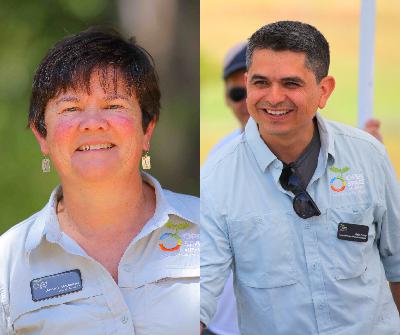
Coyote Valley is a miracle. For decades, large companies had their sights on building massive warehouses and paving over the valley floor. Others had visions of an entirely new town built to provide housing for the large corporations hoping to build on this ancient landscape. But it didn’t actually happen. The wildflowers continued to bloom in the spring and the farmers continued to labor with the land. After decades of back and forth debates in city councils, zoning changes, even deliberate re-routing of waterways in preparation for massive development, Coyote Valley still continues to bloom in the spring. The mountain lions still make their way between the Diablo and Santa Cruz Mountain Ranges. The birds and pollinators continue their good work among the flowers and trees. And the humans still come out to walk.The Santa Clara Valley Open Space Authority diligently sought the protection of this land in partnership with Peninsula Open Space Trust, and others who care for the future of life in the valley. Andrea Mackenzie is the general manger of the Open Space Authority. She tells Coyote Valley’s story with reverence for every inch of the place and a clear vision for a vibrant future that considers all of the living beings of the valley. Nick Perry is leading a team to develop a master plan for Coyote Valley. They have been studying the valley closely and working to understand the original expressions of life in the valley. In other words, without the destructive influences of industry, what would Coyote Valley look like? How would the water flow naturally? What native plants would grow and where? When and where would wildlife cross through the valley? What are the deeply rooted Indigenous understandings of this place?Answers to these questions provide the OSA with a blueprint for how to move forward with their conversation and restoration efforts. They imagine a future where the land is healed and protected for generations to come. Restoration efforts include tending to the naturally rich top soil that allows an abundance of native edible food plants to grow and be harvested. And there’s still space for us humans to walk and wonder at the beauty of the valley! Today’s episode shares a little piece of Coyote Valley’s story. This most recent chapter offers clues for how the tide of history can change toward restoration and rewilding. The Open Space Authority’s work in partnership with city governments, farmers, and other ecologically-minded organizations is a roadmap for how other cities can take similar actions toward conservation and restoration of essential landscapes. This is what the future can look like in every city in the world. Thank you for your beautiful work, Andrea, Nick, and Open Space Authority community. You are teachers for all of us.Eco-Musical Collaboration: “Coyote Valley Suite”, Will Rand, composer and piano, Grace Alexander, violin; Aireleen Zhu, cello; Darío Acosta, recording engineer This is a public episode. If you would like to discuss this with other subscribers or get access to bonus episodes, visit earthstoryourstory.substack.com
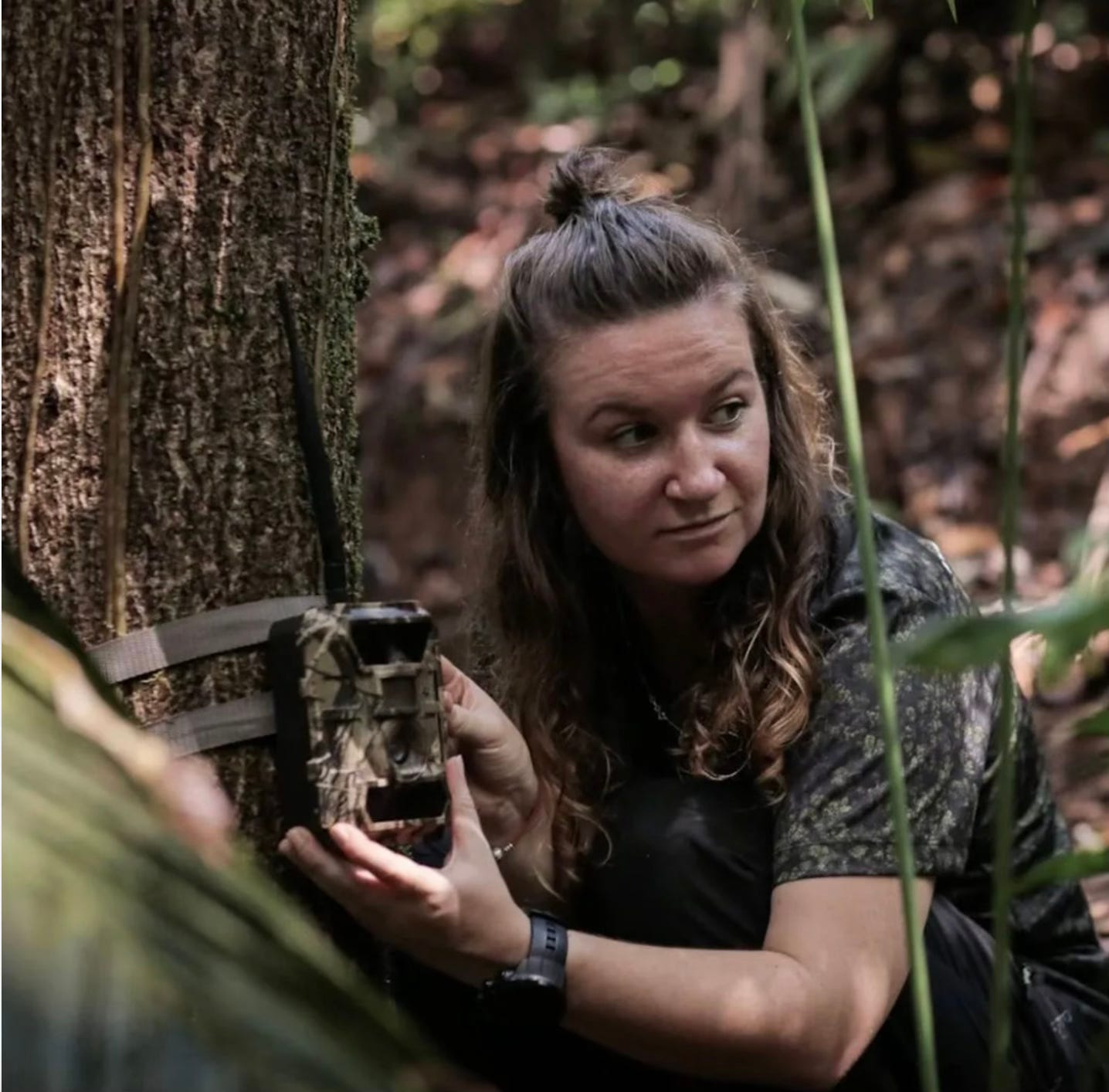
The Osa Peninsula of Costa Rica is a land of ecological resplendence. Not only is it well cared for under the protection of Corcovado National Park, it is also looked after by a biological corridor and conservation campus called Osa Conservation. I had the immense pleasure of traveling to Osa Conservation last summer to spend a week learning about all of their work in conservation, native plant regeneration, and biodiversity protection. It was a life-changing experience. The EarthStory Podcast continues in our third season featuring an enlightening conversation with the campus director of Osa, Eleanor Flatt. Eleanor shares about what it is like to live in the rainforest and what Osa is learning about biodiversity in their continuing work. Eleanor started out working in Costa Rica for a two month internship. Fast-forward ten years: she is still living, working, and advocating for the renewal of biodiversity in this extraordinary place.Stay tuned for more videos sharing the work of the Osa Conservation Tree Nursery and Regenerative farm in the coming days. This is a public episode. If you would like to discuss this with other subscribers or get access to bonus episodes, visit earthstoryourstory.substack.com
Happy Winter Solstice!We are observing the longest night of the year by revisiting a collection of music, stories, and poetry contributed some of our storytellers. On this long night, we are holding space for the darkness, the waiting, and the possibilities that can only emerge from the dark.With gratitude for the co-creators of Solstice Stories:Story sharing by: Youssef Ismael, Alrie Middlebrook, and Vicente MorenoMusic performed by: Michelé Crowder, Viveka Hall-Holt, Tess McCarty, Zoë García, and Grace Alexander.Poetry by: Robert Hasselblad and Will Rand This is a public episode. If you would like to discuss this with other subscribers or get access to bonus episodes, visit earthstoryourstory.substack.com
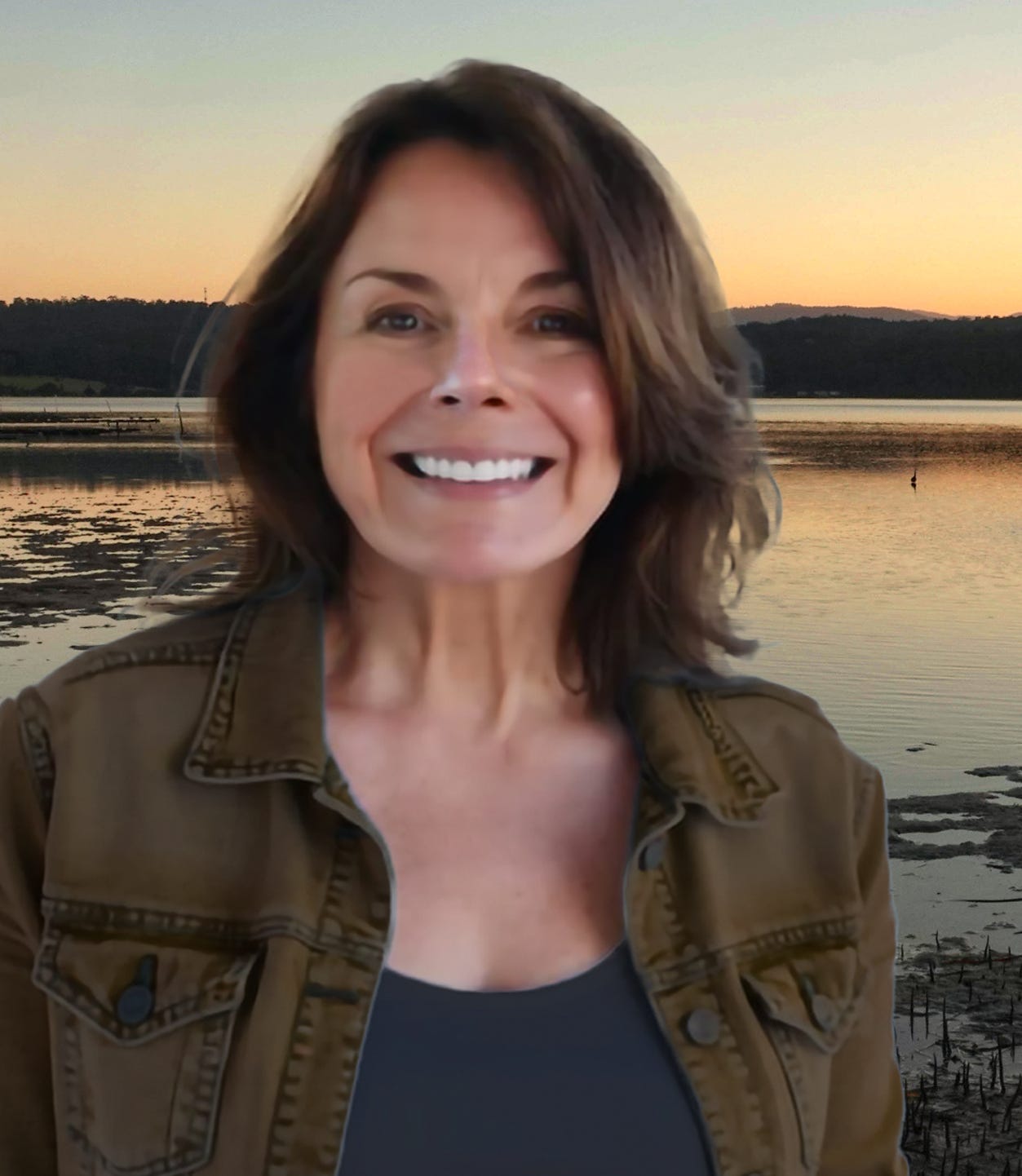
Katherine Boland is an artist and advocate for the climate. Based on the southeast coast of Australia, Katherine experienced the terrifying impacts of the bush fires that gripped global headlines in 2019. As a multi-disciplinary artist, Katherine creates evocative work that holds space for the coexistence of beauty and devastation. Her work focuses on shining light on climate change and the ecological crisis we are facing globally.This episode also features a few excerpts of “Burning” by Grace Brigham. Grace composed “Burning” to reflect on the perilousness of the fires in the Amazon rainforest and Australia between 2019 and 2020. This piece was never premiered due to the onset of the COVID-19 pandemic. This is a public episode. If you would like to discuss this with other subscribers or get access to bonus episodes, visit earthstoryourstory.substack.com
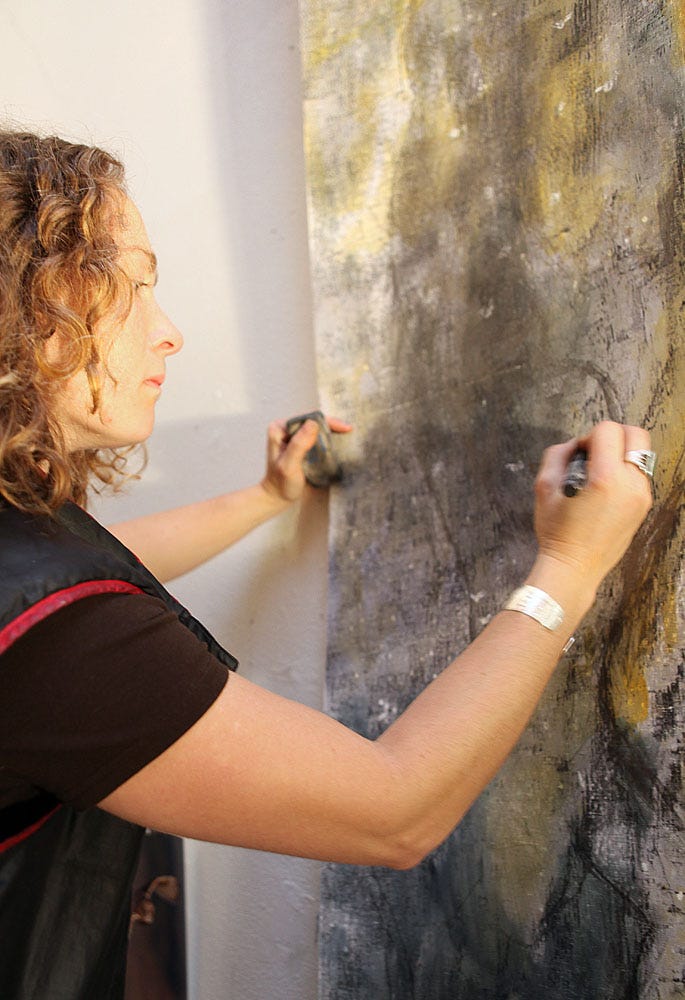
The EarthStory Podcast returns for a third season beginning with the artistry of Théodora Jonsson. As an artist and archeologist, she explores the geology of the Pacific Northwest listening to the poetry of the land. She creates art and sound in response to her deep listening. Her creativity is a duet, of sorts, with the world around her.Théo collects tree saps and resins from around the world. She reduces them into paint resins to use for painting and printmaking. It is like she is painting with the tree and the tree is painting with her. It is a true collaboration. As a multi-modal artist, she practices printmaking and glass blowing from sound vibrations. She observes how shapes transform when they move through water, rock, and ice. She also explores natural transformation from heating, cooling, and tension, learning from eons of evolution as well as how climate change affects us today. In our conversation, Théo shared stories from her childhood exploring the Pacific Northwest with her family on foot and in the water. In the video below, Théo shares her work and artistic process from inside her studio above a resplendent meadow overlooking the Skagit Valley. This is a public episode. If you would like to discuss this with other subscribers or get access to bonus episodes, visit earthstoryourstory.substack.com
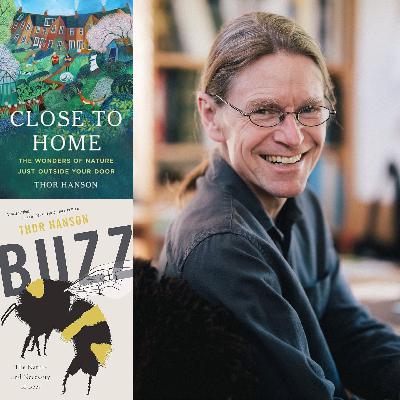
Thor Hanson is a delightful storyteller who keeps his eyes and ears close to the ground. After researching plants and animals all over the world from Tanzania to Costa Rica, Thor has come home to his own backyard biology. In his latest book, Close to Home, Thor shares stories and research uncovering entire new species discovered right in his own backyard and in the backyards of others around the world. He invites us to consider how we can better share our homes with the many other life forms who also inhabit our spaces, whether we already know them or not. As a lifelong conservation biologist, Thor shares with stubborn hope that we can be a part of the restoration of our Earth’s wellbeing simply by tending to native ecology and taking care of each one of our neighbors: bugs, birds, plants, and humans. This is a public episode. If you would like to discuss this with other subscribers or get access to bonus episodes, visit earthstoryourstory.substack.com
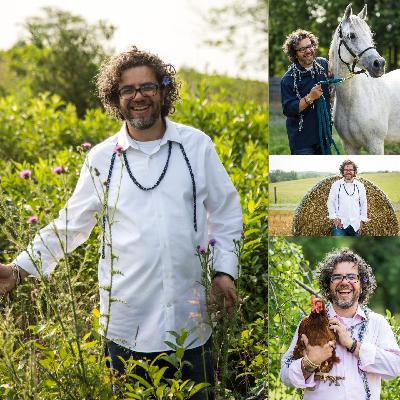
Cláudio Carvalhaes is an author, teacher, ritual-leader, playwright, and all-round creative soul. He describes himself as an Earth-thinker. He leads by example, sharing the stories of his life where he learned how to live more closely with the natural world and where he unlearned ways of being that separated him from Mother Earth. Cláudio has spent his life as a student of the natural world. He works tirelessly to create a green Earth community for his children. He invites his students in the classroom and through his books to consider ways that they can orient and re-orient their lives to be closer to the Earth. He invites us to consider the social, emotional, embodied, and spiritual ways that connect us to all of the natural beings around us, even in built environments. Cláudio was born in São Paulo, Brazil, teaches at Union Theological Seminary in New York City, and lives with his family in central Pennsylvania. This is a public episode. If you would like to discuss this with other subscribers or get access to bonus episodes, visit earthstoryourstory.substack.com
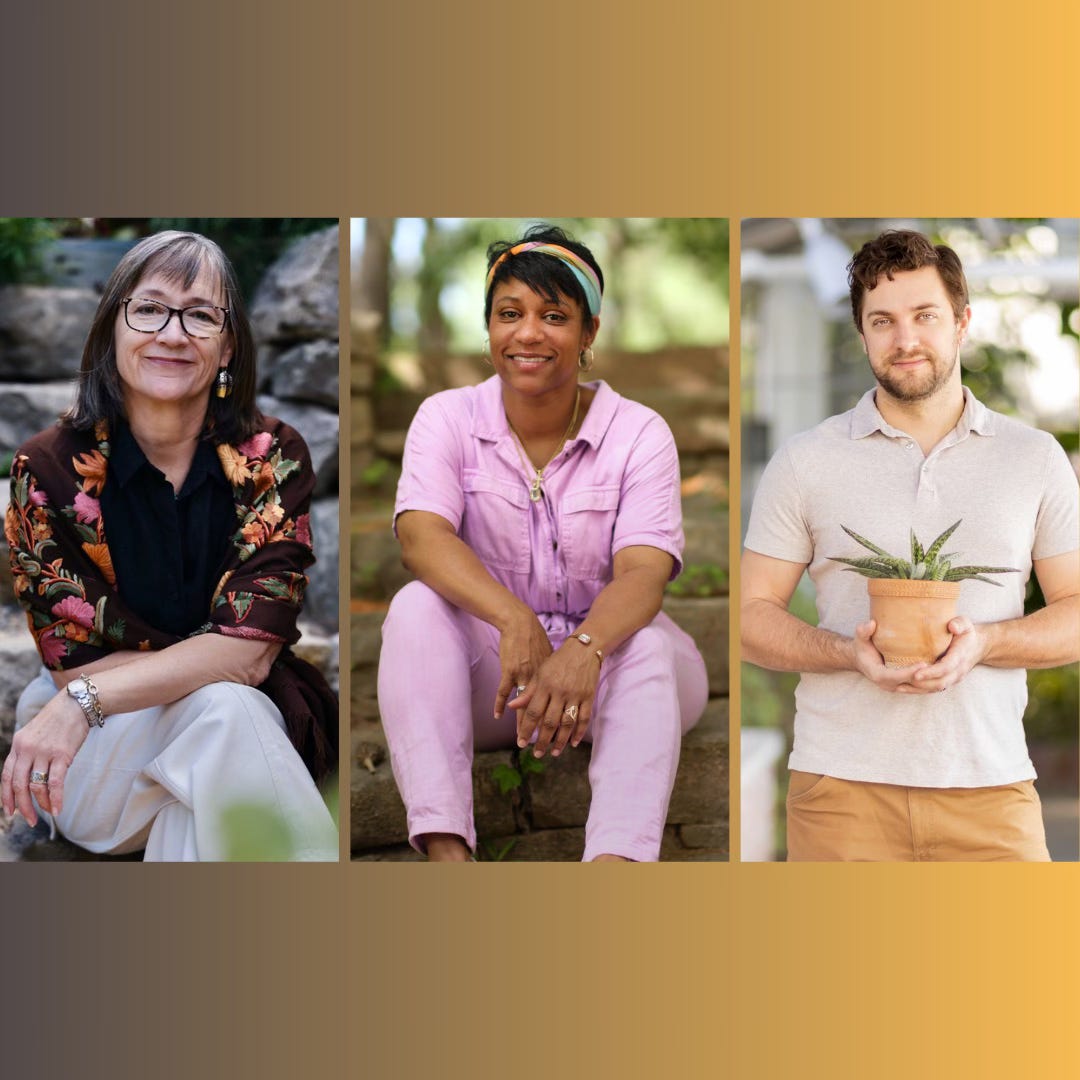
We continue our conversation with Cultivating Place by exploring the creative spirit and how our gardens teach us to live together as neighbors. We are spending more time with founder and host of Cultivating Place, Jennifer Jewell and her co-hosts, Abra Lee and Ben Futa. Jennifer shares about how she decided to create Cultivating Place. Ben shares about creating his community plant shop and how it continues to bring his neighbors together. Abra shares what she has learned about coexistence as a form of building resilience. This is a public episode. If you would like to discuss this with other subscribers or get access to bonus episodes, visit earthstoryourstory.substack.com
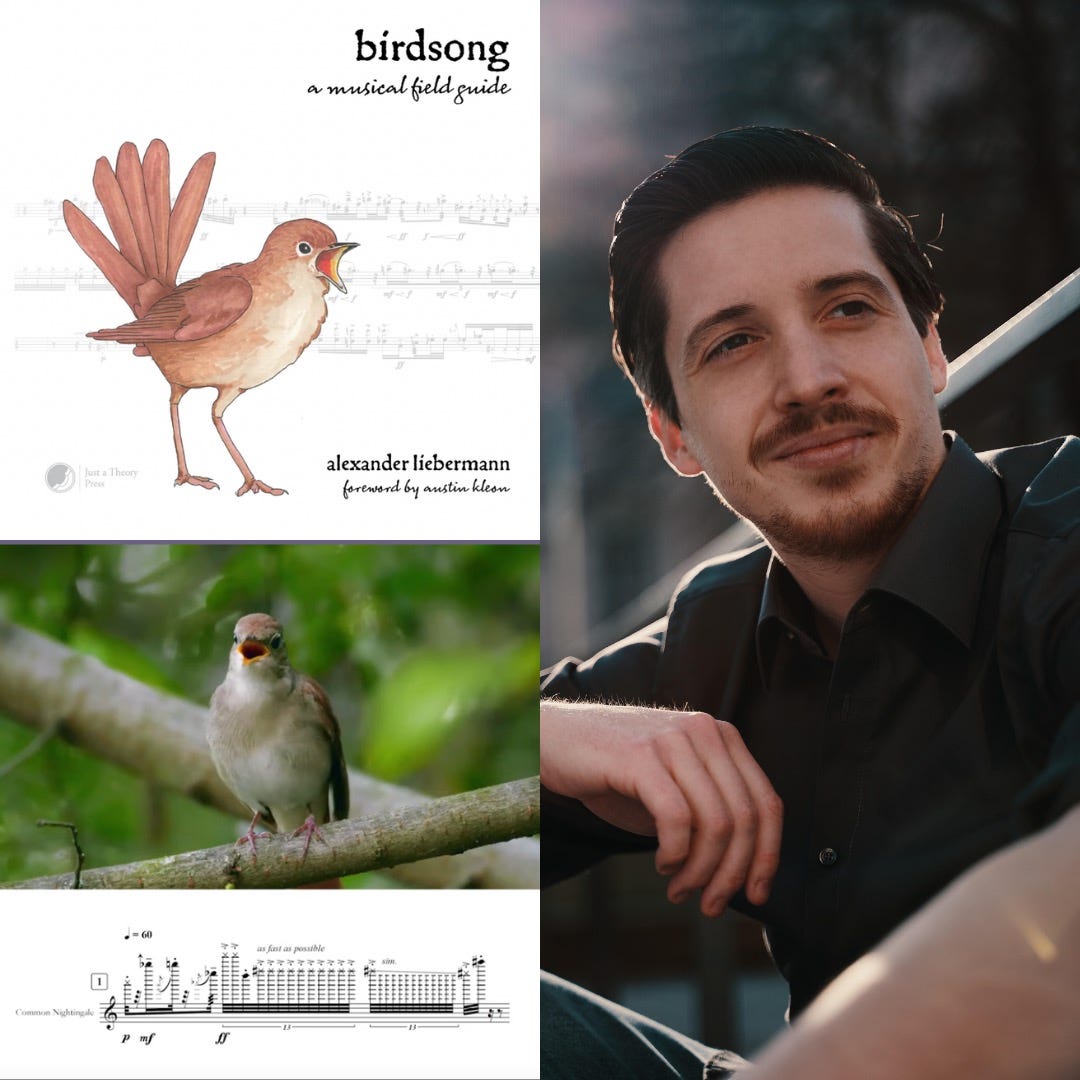
Alexander Liebermann is a composer who is passionate about the natural world. He specializes in birdsong, notating to exacting detail the contours and nuances of bird calls so that an instrumentalist or vocalist can perform their best imitation of the bird’s artistry. Alexander also works closely with biologists who are studying arctic ground squirrels. Alexander’s love for animals is so present in his music. Each note is a pleading invitation to pay attention to the wonder and mystery of the animal life on our planet along with the endangerment that most animal species experience in their day to day living. This is a public episode. If you would like to discuss this with other subscribers or get access to bonus episodes, visit earthstoryourstory.substack.com
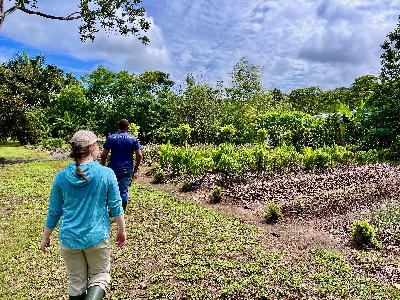
Meet Marco Lopez and the Osa Regenerative Farm. What is regenerative agriculture? It sounds like a good thing, but what does it look like in practice? And what does it mean in the middle of dense tropical rainforest?While I was visiting Osa Conservation, I had the opportunity to volunteer on their regenerative farm. The first thing I learned about regenerative farming: it requires intense, unyielding, back-aching work.You are probably thinking, well, of course. Farming is essentially labor-intensive in every way imaginable. Something about this farm was different. It wasn’t the same maneuver, the same harvest, the same planting row upon row. It was, rather, an immense garden bursting at the seams.The first thing you notice when you enter the farm is dozens of rows of crops. That sounds about right, yes? Well, look a little bit closer. Each and every row is different from the other. There are tall green shoots, short stems, shaggy leaves, drooping vegetables like cucumbers, an overabundance of bananas, peppers of every imaginable color, ginger, herbs of every shape, and even vanilla beans. That’s just one row. Now look to your left. You will see dozens more rows with the same prolific variation.Our job as volunteers was to harvest the cucumbers and remove all of the roughage from the root to the leaves. The vines, leaves, and roots were quite content to remain in the ground, thank you very much.Very quickly, we learned why it was essential to remove the entirety of these cucumber plants. There were ginger sprouts already eagerly poking through the ground and looking for light!The ginger has been there since before even the cucumbers were planted. They waited patiently while the cucumbers reached their green fingers out of the soil to the birth of the sturdy, bulbous green and water-laden vegetable. All the while, the ginger had been slowly growing and getting ready to poke its own green fingers into the open air. These two, somewhat disparate plants, grew together. They helped each other (until they outgrew each other). (Please note these are the words of a curious observer, not a real botanist.)My fellow cucumber-harvesters and I stood up to survey our labors that felt hard-won under the oppressive tropical sun. When I looked around, I was painfully aware that we had just tended to only one of many dozens of rows that leafed and flowered as if to say, “okay, my turn!"Our fearless leaders, Chonga and Marco, shared with us that they had started their day on the farm at around 3 in the morning. That was roughly ten hours before we stood there, drenched in sweat after just an hour of working. While we regained our electrolytes with fresh coconut water, we watched Chonga and Marco simply turn to the next bed and tend to the harvesting and composting efforts required by the next set of verdant plants.I learned from this experience that regenerative agriculture is a labor of love for life itself. The resplendent leafy plants, fruits, and vegetables that make it to the table nourish the human beings on the Osa Peninsula. The rotting and deceased fruits find their way into ripe compost piles that become the rich beginnings of new soil and create layers upon layers of ingredients for the next life to come. Even in death, the conditions for life are created again.The glory of growing food in this way is the diversity of life that is supported. What is the key to life on planet Earth? Biodiversity. The flourishing of a multiplicity of living beings. That’s it.We need each other. And the only way we can support one another is by tending gardens that help each other. From soil, to seed, to shoot, to flower, to fruit, back to soil — and then the next shoot, stem, flower, and decay. It is a cycle that never ceases. It is true abundance: the essential nature of Mother Earth.Thank you Marco, Chonga, and the many others who help feed the beings of the Osa rainforest. This is a public episode. If you would like to discuss this with other subscribers or get access to bonus episodes, visit earthstoryourstory.substack.com
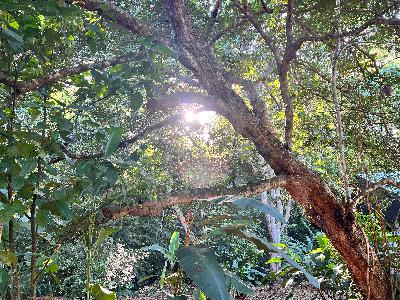
We continue our journey on the Osa Peninsula at the Osa Conservation Tree Nursery. I had the pleasure of the meeting the arborist, Mairon, or Titi, as he prefers to be called. Titi is passionate about trees. He showed me around the expansive tree nursery where Osa is growing a 280 different tree species. These saplings will eventually be taken to one of the 300 partner farms that Osa works with to support the development of riparian corridors. Their goal is to regenerate the native landscape to support wildlife, farmers, and those who depend upon the farms. Having a wildland corridor that connects through a farm, allows farmers to grow more lucrative crops such as vanilla beans or honey. As they tend to pollinators or vanilla bean vines, the bees and plants themselves then become a part of the regenerating forest. Each farm becomes a circle of care. Back at the nursery, Titi is focused on planting hundreds of seedlings and tending to their initial growth under close observation. Osa works to revive even the most stubborn of tree species such as the Magnolia Hueteri, that is known to be difficult to cultivate at first. When I stood in the nursery, I felt hope for a life on this planet that continues to be green and vibrant. Even in the great uncertainties of life on this planet as it seems to devolve in front of our very eyes, I think of these trees, ever continuously planted in an effort to feed future humans and monkeys alike. One day, I hope to be able to return to see some of these trees as they reach old age. Perhaps, centuries from now, they will be regarded as some of the old growth elders that have witnessed the regeneration of all life on this planet. This is a public episode. If you would like to discuss this with other subscribers or get access to bonus episodes, visit earthstoryourstory.substack.com
Our world has lost a giant. While we mourn the loss of a truly remarkable human being (and fellow primate), we will strive to be a part of her legacy. Jane taught us that we are all a part of nature and nature is a part of us. We are all interconnected in this great world’s web of life and no matter how we try, we cannot separate from it. We share this video today to honor Jane’s life and to invite all of us to rise to meet her legacy of hope and restoration of a better world for every living being. We all play a part of Jane’s dream for our world. This is a public episode. If you would like to discuss this with other subscribers or get access to bonus episodes, visit earthstoryourstory.substack.com
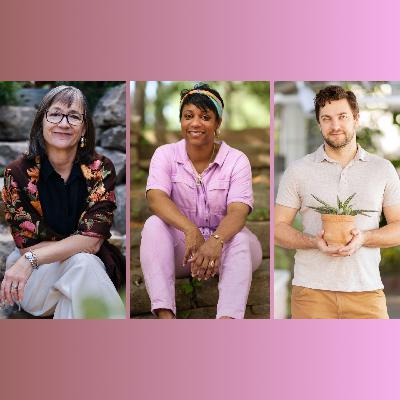
Cultivating Place convenes community through thoughtful conversations around the many interwoven layers of ecology, humanity, and community that can be found in the practice of gardening. We are joined by founder and host, Jennifer Jewell and her co-hosts, Abra Lee and Ben Futa who shared stories of growing up in their family gardens, their life-long relationships with plants, and how that has shaped the course of their lives. This is a public episode. If you would like to discuss this with other subscribers or get access to bonus episodes, visit earthstoryourstory.substack.com
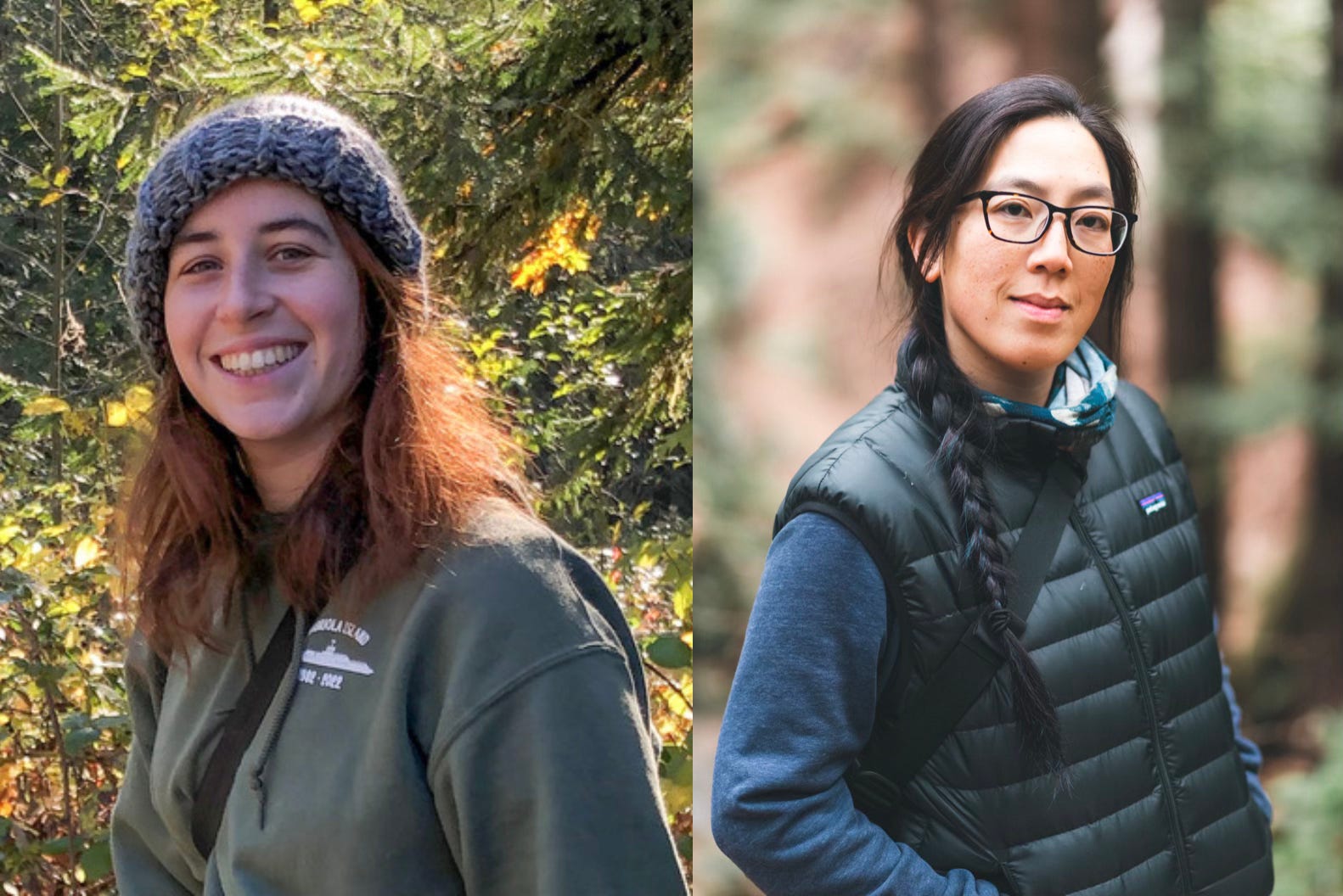
Tiffany Yap is a Senior Scientist at the Center for Biological Diversity. Meital Smith is an art teacher and a visual artist. Tiffany wrote and Meital illustrated the graphic novel Tales of the Urban Wild: A Puma’s Journey. This engaging story follows a Puma called C-8 through his life journey. Through a series of encounters with the built world, Tiffany and Meital give the readers an idea of what pumas face in their search for food, territory, and companionship. Follow the links below to learn more about the book, the author/illustrators, and the Center for Biological Diversity. Thank you for listening. This is a public episode. If you would like to discuss this with other subscribers or get access to bonus episodes, visit earthstoryourstory.substack.com
Happy Earth Day. We want to share this day with you by offering some poetry written and sung by Zoë García. Zoë shares:“While growing up in the Bay Area, I was very grateful to have had a childhood filled with a vast variety of natural wonders. That I Was Awake was inspired by the feeling many of us in the Bay Area know far too well: the feeling of an earthquake in the middle of the night. This piece reflects on the significant, yet puzzling moment where we are unsure of whether we should feel fearful or in awe: that we felt the Earth in motion beneath us. Each of these vignettes call us to listen to what seemingly insignificant moments can teach us. I invite each us of to hold onto the beauty of the Earth, hold onto wonder, and hold onto one another. Use that inspiration as momentum in the fight for climate justice.”Enter each day between sunset and sunrise.That I was awake, listening.Taste the briny air, hung round with silver.That I was awake, listening.In the lull of the night, feel the Earth move. Pulling on your heart, as the moon pulls the sea.That I was awake, listening.Aloofness in your limbs. You wonder, whether to seek refuge, within yourself, or extend in awe?That I was awake, listening.Feel the sharp, sting, of sea salt,A balm, healing hidden wounds. That I was awake, listening.Cupping pink seashells to our ears. That I was awake, listening.Sing to the emptiness of the night like the bullfrog who believes,in love. That I was awake, listening.Wrap your arms around centuries,resilient Redwoods, who have seen the world before me, and will remain long after. Hold on to the Earth, hold onto me.That we were awake, listening.Words: Zoë GarcíaMusic: Will RandVideo Production: Tom Rand, Viveka Hall-Holt, Campbell United Methodist Church This is a public episode. If you would like to discuss this with other subscribers or get access to bonus episodes, visit earthstoryourstory.substack.com
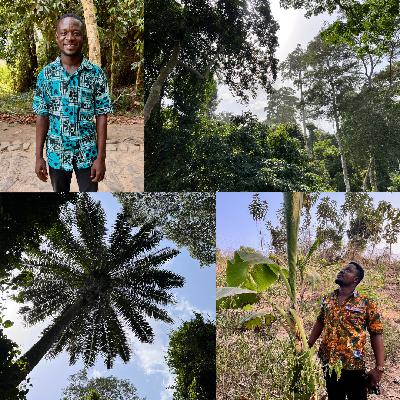
The EarthStory Podcast returns for a second season. Sampson Kofi Nani shares a wide-ranging conversation about the natural world in Ghana. Sampson Kofi is a research assistant at Ashesi University in Berekuso, Ghana. He shares with us his hopes for instilling the next generation with a love for the environment. He sees love of the environment as an act of protection for biodiversity. In the face of illegal mining and deforestation efforts, Sampson Kofi has an urgent reminder: destroying the natural world does not lead to greater wealth, it leads to harm for everyone. He invites us to consider that we all seek solace and serenity in natural spaces. Therefore, we should seek to protect this serenity of our children and grandchildren for generations to come. Thank you for listening.Read the Transcript[00:00:01.980] - Will RandWelcome to Season 2 of the Earth Story podcast. My name is Will Rand. Thank you for being here.[00:00:09.210] - Will RandSo much has happened since we were last together. For one, we have a new short video series. If you haven't already watched, Earth Story has released two parts of a video series called Earth Story in Ghana. You can watch these videos on our Substack or YouTube pages. I was so grateful to have the opportunity to travel to Ghana and meet some truly extraordinary conservationists and ecologists who are working to restore the land.[00:00:38.660] - Will RandThe first video in the series shares stories from the magnificent canopy walkways of Kakum National Park. With naturalist and teacher Joseph Acquah. The second video shares the story of gardens of Ghana in the village of Yamaransa. Our friend Alrie Middlebrook from Build25 was a part of starting this project, and it has been stewarded by the educators in Yamaransa and Rueben Foster, who shared the story with us so beautifully in the video. Today, we are starting our podcast season with the third installment of our Earth Story in Ghana series. After we had arrived home again, my partner, Viveka and I shared a wonderful Zoom conversation with our new friend, Sampson Kofi[00:01:23.620] - Will RandSampson is a research assistant at Ashesi University, educator in the village of Berekuso, and a true philosopher about the natural world. He speaks of love like a muscle that must be strengthened by learning why it matters to be intentional about caring for the natural world.[00:01:45.800] - Will RandI guess my first question is just what is your relationship with the natural world like at this point in time?[00:01:54.310] - Sampson KofiMy relationship with the natural world grew up from my experience I've experienced growing up as a young boy in the countryside in the Volta region of Ghana. That's in Eastern Ghana. And then living part of my adult life in Accra as well. And then back to the Eastern region of Ghana, where I currently school and work. So I've been able to live across different climates of Ghana.[00:02:23.840] - Sampson KofiI can say Ghana is divided into three main climates. We have the Southern Belt, the Middle Belt, and then the Northern Belt. So the Northern Belt is a bit dry. They have a drier climate, and the Middle Belt may be a bit dry. And then the Southern Belt is full of rain, and it's wetter for most parts of the year. So growing up in the Volta region, Peki specifically, we live very close to the environment. Peki is full of hills, hills full of trees, and the natural life, everything. You get to see animals in their natural habitats. You get to enjoy the fresh air and everything that is in there. So growing up as a child, I have a very deep connection with the natural world.[00:03:13.670] - Sampson KofiThen there's this transition to Accra. You come to Accra. Accra is an urban center of Ghana. There are literally no trees. The forest cover in Accra is not as much as we have in Peki. So the quality of the air in Accra is even quite questionable. So when you get into the cities, you realize the air is not as fresh as it is in the countryside. So, it wasn't as enjoyable as I had it when as a child growing up.[00:03:45.520] - Sampson KofiThen quickly to Berekuso, where I currently live in the Eastern region of Ghana. Berekuso shares many similarities with where I grew up. It's also a hilly. It also has a lot of hills. The temperatures quite similar to that of Peki. So, they share a lot of things in common, apart from a very bad road that we have here, which is quite dusty. There's a lot of fresh air here. I'm sure you guys can also I guess to that. I'm able to compare life living in the natural world compared to where there is no natural life, as in probably life in the countryside that is in Peki and then in Berekuso, as compared to life where there is limited sources of life, like trees, like Accra.[00:04:38.420] - Sampson KofiSo that helps me to connect to nature. I get to understand the importance of these trees to me firsthand, because I've lived in a place where there are lots of trees, and I've lived in a place where there are scarce trees. So I can understand from my perspective.[00:04:55.150] - Viveka Hall-HoltHow have African traditional religions protected the environment around? We talked about that a little bit when we were walking back from Berekuso.[00:05:07.890] - Sampson KofiWell, I'm glad a casual conversation during a walk developed into a bigger conversation like this. In fact, I would go back into my growing up as a young boy in Peki. So growing up in Peki: Peki has seven communities. And then each of these communities have forests, dedicated forests that are like sacred groups. And those places, nobody goes there to farm. Even the leaders of the community only go there on certain times. Those places are thickets of forests. Every community has them. In addition to the mountainous regions. And then straight into Accra, they don't have anything like that. And then back to Berekuso , there is something like that. So there is this connection between the African tradition and then the protection of natural environment. They achieve this mainly through superstition. So when they create superstition around these forests, these superstitions lead to reverence for the forest. People feel like, Okay, there are some deities in the forest. If I go and I cut down a tree in that forest, something like this may happen to me. These forests are there. Personally, I've never been into any of them because I'm also scared. And I think it is that fear that wards of people from destroying those forests.[00:06:38.690] - Sampson KofiSo why not? If these superstitions, even though they can be scientifically proven to be superstitious. I think if they have the tendency of protecting the environment, why can't we just uphold them and then use them as a means of protecting the environment? So we grew up believing that, Okay, there's something in this forest, nobody should go there. And the forest is there. And in fact, these forests have naturally become places of abode for endangered species because people don't go there to hunt or do anything. So we got to see different types of life, different living organisms in those forests, because animals in there are safer to live their lives because there is no hunting permitted there, and people don't disturb them as much as they do in other forests or other bushes. So, African traditional religion is a very great source for protecting the environment because of the superstition.[00:07:37.600] - Sampson KofiHowever, that brings into being the element of fear. As I mentioned in our previous conversation, human beings always have a prize. They have an innate reward towards overcoming their fear. So if you make people fear things, they are more likely to go back on their fears, or they are more likely to turn down their fears should they defeat those fears.[00:08:06.410] - Sampson KofiSo for instance, there is a forest in my hometown. We were told that, Okay, there's a deity in there. I shouldn't go in there. But some part of me wants to go into that forest because if I managed to go inside that forest, it's a means of overcoming my fear, and it's an innate trophy for me. So eventually, if I managed to go in there and I realized that, Okay, well, there's nothing in here, then I would realize that, Well, these people have been deceiving us for quite some time. And immediately I get to know this. There is that high probability that I may also start doing things that may end up destroying this wonderful forest.[00:08:46.380] - Sampson KofiSo, whereas superstition is good, I think for our parents, I'm trying to bring in three generations in here. So our parents' generation were raised in that fear, the fear of those superstitions. So you don't go into this forest, and then they don't go unless, of course, on special occasions. And we are also told those things. So they tell us, Okay, don't go in there. But as young people as we are, we always have, we are always curious, we have that inquisitiveness to explore those forests.[00:09:21.150] - Sampson KofiSo I don't think in our current jurisdiction or in our time, that fear will work anymore because we are getting enlightened. We are getting to know a lot of stuff. So raising us in fear will not work anymore. People veer into those forests, and once they realize that there is no harm or no harm can be done to them, They realize that, in fact, they can destroy this forest and nothing will happen to them. And of course, I think when they realize our generation, the fear of those superstitions is no longer working with us, I think we are trying to make laws. But the one thing also with the laws is laws can easily be broken. I know of people who... There are countless laws in Ghana protecting our forest, but people still go to forests to mine. So what happens? I think when people still go to forests to mine and then destroy this forest, and what happens after they destroy them? They get punished. But one question I always ask myself,
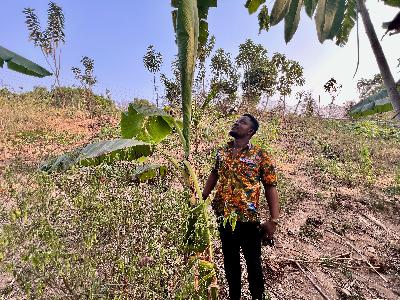
I met Alrie Middlebrook after the first EarthStory festival. We connected immediately. Ever since, I have learned so much from her, not only about ecology and the ways the Earth renews herself, but how to lead a life of purpose. Alrie just retired as the Executive Director of the California Native Garden Foundation. She is also in her ninth decade of life. In one of our early conversations, Alrie told me about her friend Rueben Foster in Ghana. She told me about her work with regenerative agriculture and how she worked with an amazing team to create a thriving garden program that continues to this day. I told her that I happened to be going to Ghana to visit family who are staying there this year. She told me that I had to meet Rueben and see the amazing gardens they worked on together.Fast forward a few months. I met Rueben in a taxi cab that pulled up to our lodging in Elmina, on the Atlantic coast. Too many of us piled into the back of the cab and we were off. Rueben told us about his work in public health, how he is a phD candidate at the University of Cape Coast, and how these garden are his passion project.30 minutes later, we arrived in the village of Yamoransa. We drove down a side street until we reached a grove of tall palm trees swaying in the afternoon breeze. We parked the car where the road ended and began to walk down a dirt path. Quickly, a fence line appeared and then continued for hundreds of feet into the distance. Rueben led us down the fence line and shared that we had indeed made it to one of the gardens. This garden, tended to by the Green Club at the Methodist School in the village, was a relatively new plot. Each time property owners in the village decide to no longer allow the gardens on their land, Rueben and educators in the local schools rush to find a new plot of land available for a new garden. While these transitions may be discouraging at times, the outcome in the long run is a remarkable testament to resilience in the face of change. Watch the video to learn about how these gardens came to be thanks to many contributors and creative minds in Yamoransa, Cape Coast, and the United States. Alrie returned to Ghana nine times to continue working on this project. Rueben visits Yamoransa frequently in between his engagements as a student in Cape Coast. The lifeblood of the garden is tended to by the teachers in the Methodist and Catholic schools in Yamoransa and their students in the Green Clubs. Check back soon to see the full interview with Rueben. We shared a wonderful conversation overlooking one of the gardens most recently built. You will hear excerpts of this interview in the video. This is a public episode. If you would like to discuss this with other subscribers or get access to bonus episodes, visit earthstoryourstory.substack.com
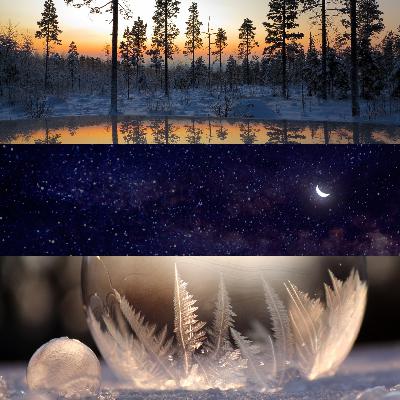
A special EarthStory podcast for the winter solstice featuring Michelé Crowder, Viveka Hall-Holt, Robert Hasselblad, Grace Alexander, Tess McCarty, Youssef Ismail, Alrie Middlebrook, Zoë García, Vicente Moreno, and Barbara Coleman. Join us by the fire as we share music, poetry, and ecology for long evenings. This is a public episode. If you would like to discuss this with other subscribers or get access to bonus episodes, visit earthstoryourstory.substack.com
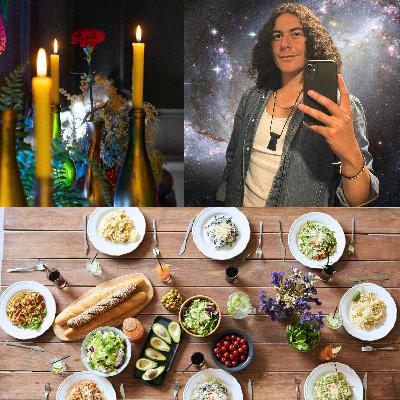
Jeremiah Lopez is a chef, poet, and his family's story keeper. He tells the stories of his family as they struggled to survive in the harrowing civil wars of Nicaragua and El Salvador as well as starting new lives in the United States. He is a gifted chef who brings people together around the table to share food that is connected to home. He shares poetry that weaves his own stories together in a way that honors all of the many lives around him. Featuring his work: "Salúd!" (c.w. contains depictions of violence) This is a public episode. If you would like to discuss this with other subscribers or get access to bonus episodes, visit earthstoryourstory.substack.com
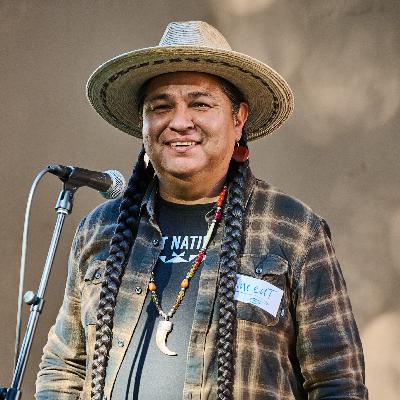
Vicente Moreno is an indigenous cultural practitioner in the San Fransisco Bay Area. He is Otomi and shares Comanche lineage on his mother's side. He has lived his life embedded in community and culture within the Bay Area. Vicente focuses on sharing native arts with indigenous youth and families as a way to remain connected to ancestral wellness. He believes that connection to the Earth, our Mother, here on Turtle Island is what will heal the Earth and all living beings.Credits:Wind In Bamboo 2 by Benboncan, Incoming-tide-on-Traeth-Llyfn by LolitaPerdurabo freesound.org License: Attribution 4.0 This is a public episode. If you would like to discuss this with other subscribers or get access to bonus episodes, visit earthstoryourstory.substack.com

Comments

Download from Google Play

Download from App Store
 United States