


 Claim Ownership
Mil History Talk
Subscribed: 0Played: 2
Subscribe

© Mil History Talk Team and Blackhawk33
Description
Mil History Talk is primarily for instruction purposes.
While the intended audience is primarily students and practitioners in the profession of arms, the content may also appeal to anyone with an interest in military history, operations, and strategy.
Episodes are based entirely on the podcast staff's writing and research. We take full responsibility for all assertions, interpretations, and errors—along with the occasional mispronunciations by the AI hosts.
Substack: https://dimarcol.substack.com/
Youtube: https://www.youtube.com/channel/UC-mFIQV_dG3oXGicjlJyMbA
While the intended audience is primarily students and practitioners in the profession of arms, the content may also appeal to anyone with an interest in military history, operations, and strategy.
Episodes are based entirely on the podcast staff's writing and research. We take full responsibility for all assertions, interpretations, and errors—along with the occasional mispronunciations by the AI hosts.
Substack: https://dimarcol.substack.com/
Youtube: https://www.youtube.com/channel/UC-mFIQV_dG3oXGicjlJyMbA
59 Episodes
Reverse
Episode 58 of Mil History Talk examines Operation Iraqi Freedom through the lens of Joint All-Domain Operations (JADO). In March 2003, the United States military demonstrated synchronized maneuver across land, air, maritime, space, and special operations domains at a level rarely seen in modern warfare. Corps-level advances, precision strike, ISR fusion, and space-enabled command and control revealed operational mastery. Yet embedded within that success were assumptions about uncontested domains and rapid political collapse that would shape the next decade. As the conflict shifted into counterinsurgency, training priorities, force structure, and modernization paths bent toward stabilization operations, temporarily attenuating certain high-end warfighting competencies. This episode explores the paradox of OIF: a peak demonstration of joint excellence that simultaneously initiated a doctrinal detour. What did Iraq strengthen? What did it weaken? And what lessons endure for modern multi-domain conflict?For a deeper discussion of this topic see the article on substack: Operation Iraqi Freedom's Effects on Joint All Domain Operations (JADO)
In this 45-minute episode of Mil History Talk, we trace the evolution of U.S. Navy aircraft operations across World War II and explain why the aircraft carrier emerged as the central instrument of American naval power. Picking up themes introduced earlier in the series, the discussion follows the Navy’s hard-won learning curve—from the fragile, improvisational carrier warfare of 1942 to the fully systematized, scalable carrier operations of 1943–1945. We examine key campaigns including Coral Sea, Midway, Guadalcanal, and Tarawa, highlighting how losses in ships, aircraft, and trained aircrews reshaped doctrine, training, and force design. Particular attention is given to operational tempo, survivability, radar-directed air defense, and the industrial capacity that allowed the United States to fight—and win—a war of attrition. By the end of the war, the carrier was no longer an experiment or supporting arm, but the backbone of U.S. naval strategy, a status that would carry directly into the Cold War and beyond.
Desert Storm — The Real Lessons Learned goes beyond the highlight reels, green-night-vision footage, and easy myths of America’s most celebrated modern war. In this episode of Mil History Talk, Hope and Brian dig into what Operation Desert Storm actually taught the U.S. military—and just as importantly, what it didn’t.With her trademark wit, pop-culture analogies, and a quick nod to Clausewitz (because of course), Hope challenges the idea of Desert Storm as a flawless blueprint for future war. Brian grounds the conversation with sober analysis, unpacking operational success, logistical brilliance, and the institutional assumptions that followed. Together, they explore how overwhelming victory shaped doctrine, expectations, and strategic blind spots that later conflicts would brutally expose.This is not a takedown—it’s a recalibration. If you’ve ever wondered how one stunning victory could still leave dangerous lessons misunderstood, this episode connects Desert Storm to the wars that followed—and the ones still ahead.For a more detailed discussion, see the article on substack: Mil History Talk | Louis DiMarco | Substack
Air War Vietnam explores one of the central paradoxes of modern warfare: how the United States achieved overwhelming airpower dominance in Southeast Asia yet failed to secure strategic victory.In this episode of Mil History Talk, Hope and Brian examine the Vietnam air war from Rolling Thunder (1965–1968) through Arc Light, Linebacker I, and Linebacker II in 1972, explaining why massive bombing campaigns and advanced technology did not translate into political success. Hope drives the conversation with sharp questions, humor, and pop-culture comparisons, while Brian provides clear, grounded analysis of escalation, coercion, and strategic misalignment.Together, they unpack the critical difference between tactical and operational success on the battlefield and true strategic decision at the political level. The episode also explores how North Vietnam adapted, endured punishment, and turned time into a strategic advantage—highlighting the enduring relevance of Clausewitz’s insights on war, will, and passion.Air War Vietnam is not a critique of airpower itself, but a reminder that airpower only works when it is anchored to a coherent strategy and achievable political goals.See the more detailed written article on our substack: Air War Vietnam - by Louis DiMarco - Mil History Talk
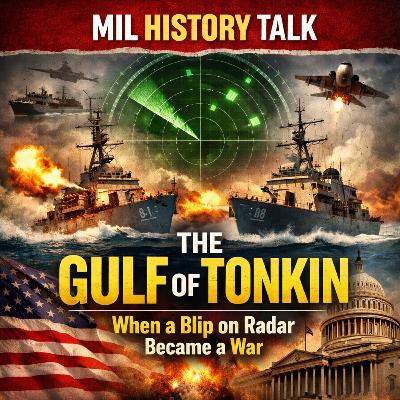
n this episode of Mil History Talk, Hope and Brian unpack one of the most consequential moments in modern U.S. military history—the Gulf of Tonkin. What began as a tense naval encounter, followed by a phantom attack that likely never occurred, quickly became the legal and political foundation for a massive expansion of war. With sharp analysis, accessible storytelling, and their signature blend of wit and rigor, the hosts explore how ambiguous intelligence, rushed decision-making, and broad language handed the executive branch sweeping war powers. More than a history lesson, this episode is a cautionary examination of how democratic systems behave under pressure, how authority quietly shifts in moments of crisis, and why asking hard questions early matters. It’s a timely, thoughtful look at war powers, credibility, and the enduring lessons of history for today’s leaders and citizens alike.For a more detailed look at the Gulf of Tonkin issue see the article on the Mil History Talk substack:n this episode of Mil History Talk, Hope and Brian unpack one of the most consequential moments in modern U.S. military history—the Gulf of Tonkin. What began as a tense naval encounter, followed by a phantom attack that likely never occurred, quickly became the legal and political foundation for a massive expansion of war. With sharp analysis, accessible storytelling, and their signature blend of wit and rigor, the hosts explore how ambiguous intelligence, rushed decision-making, and broad language handed the executive branch sweeping war powers. More than a history lesson, this episode is a cautionary examination of how democratic systems behave under pressure, how authority quietly shifts in moments of crisis, and why asking hard questions early matters. It’s a timely, thoughtful look at war powers, credibility, and the enduring lessons of history for today’s leaders and citizens alike.
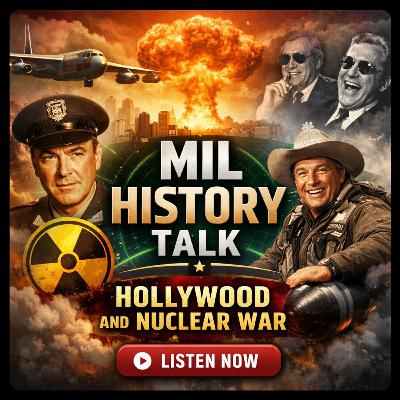
In this special movie-review episode of Mil History Talk, Hope launches the podcast’s new film review feature and takes on her role as the show’s official (and very unofficial) Hollywood liaison. With wit, skepticism, and historical depth, she explores how Hollywood has portrayed nuclear war—and how those portrayals shaped public understanding far more than doctrine ever could.From the confident professionalism of Strategic Air Command, through the chilling systemic failure of Fail Safe, to the dark satire of Dr. Strangelove, this episode traces the evolution of Cold War nuclear anxiety on screen. The second half confronts the human aftermath and institutional doubt shown in The Day After, By Dawn’s Early Light, and the modern unease of A House of Dynamite.Each film is rated using Mil History Talk’s 1–5 service-based system, blending cultural analysis with strategic insight. Serious subject, sharp humor, free popcorn—this is nuclear war as Hollywood taught us to fear it.
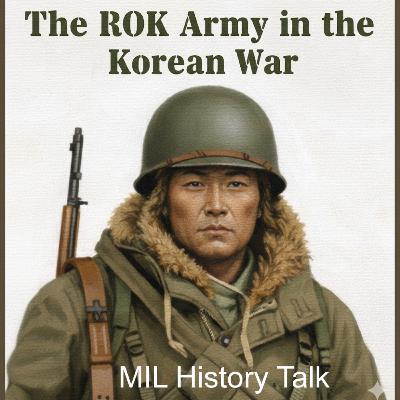
The Korean War is often remembered as a Cold War clash between the United States and China—but that memory overlooks the force that carried most of the fighting on the Allied side: the Republic of Korea Army.In Episode 50 of Mil History Talk, Hope and Brian explore how the ROK Army transformed from a shattered force in 1950 into a capable, battle-hardened army by 1952–53. We examine reforms in training and leadership, the integration of artillery and coalition support, and the brutal hill battles where Korean units increasingly held the line themselves.This episode also explains how growing ROK capabilities shaped the final phase of the war and influenced the armistice talks in 1953. The end of the conflict was not just a diplomatic decision—it reflected battlefield realities created by Korean soldiers.Blending operational analysis, cultural context, and sharp insight, Hope and Brian explain why this story still matters for alliance warfare, indigenous force development, and how wars are actually won.Related article is available on our Substack—link below:The Republic of Korea Army in the Korean War
In this episode of Mil History Talk, Hope and Brian explore Strategic Air Command, the Cold War force built to prevent World War III by being ready to fight it. From its origins after World War II to Curtis LeMay’s ruthless focus on readiness, SAC became the backbone of American nuclear deterrence. The episode examines the rise of the nuclear triad, SAC’s role during the Cuban Missile Crisis, and the human pressure carried by those on constant alert. As SAC transitioned into U.S. Strategic Command, its culture and logic continued to shape modern deterrence—and still matter today.For a detailed short history of the SAC see the article in our substack site: The Strategic Air Command: Deterrence, Discipline, and the Nuclear Age
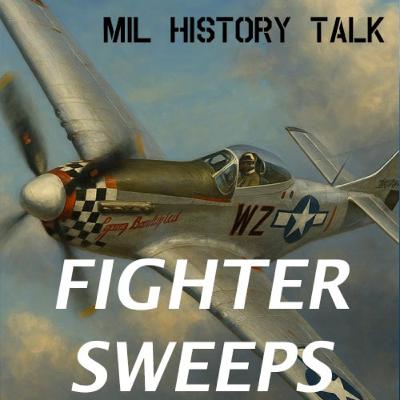
In late 1943, the U.S. Eighth Air Force was losing the air war over Europe. Bomber losses were soaring, doctrine was failing, and the Luftwaffe still controlled the initiative. Everything changed with the arrival of Maj. Gen. Jimmy Doolittle — a World War I fighter pilot and innovator who had zero patience for outdated dogma.In this episode, Hope and Brian break down how Doolittle shattered the bomber-centric culture of the Air Corps Tactical School, unleashed a new offensive doctrine built around fighter sweeps, and paired it with the perfect aircraft at the perfect moment: the P-51D Mustang. With long range, high altitude performance, and unmatched agility, the Mustang helped deliver the blow that the strategic bombing campaign alone could not — the destruction of German fighter strength.We walk through the collapse of Pointblank, the Mustang’s rise, the mechanics of a fighter sweep, and the brutal turning point of Big Week.This is the story of how leadership, doctrine, and technology combined to flip the air war — and why fighter tactics, not bombers, ultimately broke the Luftwaffe.Shorts on the P-51 and B-17 on our Mil History Talk Youtube Channel: https://youtube.com/shorts/0unZbpXrpBQ?feature=sharehttps://youtube.com/shorts/SQKGPFD1HS4?feature=share
Guadalcanal, Henderson Field, the Cactus Air Force, and the brutal Pacific War take center stage as Hope and Brian unpack one of World War II’s most decisive campaigns. This six-month fight for the Solomon Islands pitted U.S. Marines, sailors, and airmen against Japan’s best forces in a desperate struggle for airpower, logistics, and control of key terrain. From the Tenaru River and Edson’s Ridge to Cape Esperance, Santa Cruz, and the Naval Battle of Guadalcanal, the hosts break down the tactics, decisions, and leadership that shaped the campaign.Hope brings sharp humor and vivid storytelling; Brian tackles the operational art, contested logistics, and joint air-sea coordination that made Guadalcanal a blueprint for modern Multi-Domain Operations (MDO) and today’s Indo-Pacific planning. Clear analysis, dramatic narrative, and lively banter show why this battle still matters for 21st-century warfare.Also, the Mil History Talk Youtube channel is now live -- it carries all of our full library of audio only podcasts as well as video shorts relevant to the various podcast episodes. It will be updated from now on on a weekly basis. You can find it at: MIL HISTORY TALK - YouTubeKeywords: Guadalcanal, Pacific War, Henderson Field, Cactus Air Force, Solomon Islands, U.S. Marines, Imperial Japanese Navy, MDO, JADC2, island-hopping, air-sea battle, WWII strategy.
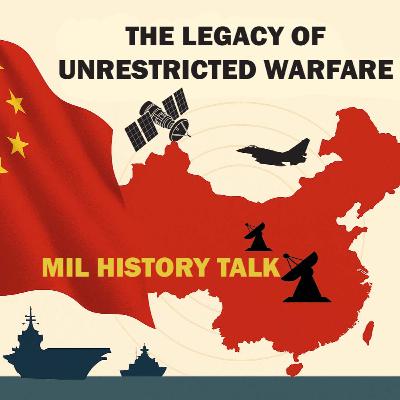
Welcome back to Mil History Talk, where history meets the headlines. Today, we’re stepping into the twenty-first century to unpack one of the most influential—and misunderstood—concepts in modern strategy: Unrestricted Warfare. In 1999, two Chinese PLA colonels, Qiao Liang and Wang Xiangsui, argued that the wars of the future wouldn’t just be fought with bombs and bullets—but with banks, data, and ideas. Their theory predicted a world where information is ammunition, and influence is a weapon. From cyberattacks to artificial islands, their vision is shaping China’s grand strategy today. In this episode, Hope and Brian explore how Qiao and Wang’s ideas evolved into a global playbook for power—melding Sun Tzu’s subtlety, Mao’s total warfare, and Mahan’s sea power into a modern doctrine of dominance without open war.For a deep dive into this subject see the paper we wrote at our substack site: https://dimarcol.substack.com/p/the-legacy-of-unrestricted-warfare?r=yqzwr

A discussion of the evolution of urban warfare from ancient to modern times through an AI-generated conversation
In Episode 59 of Mil History Talk, Hope takes the Book Review Desk—now apparently a permanent assignment—and dives into Sean Naylor’s Relentless Strike. This landmark 2013 work traces the evolution of Joint Special Operations Command from the failure of Desert One in 1980 to its rise as America’s premier counterterrorism strike force during Iraq and Afghanistan. Hope breaks down Naylor’s central argument: that JSOC didn’t just conduct raids—it built a system, integrating intelligence, surveillance, and strike capabilities into a relentless operational machine. But this isn’t hero worship. The episode explores the book’s controversy within the SOF community and, more importantly, its limitations. Hope challenges listeners to think critically about what’s missing—particularly the long-term strategic and civil-military implications of industrialized targeted killing. Essential listening for military professionals, students of counterterrorism, and anyone interested in how institutions adapt under pressure—and what that adaptation costs.
In Episode 56 of Mil History Talk, Hope—still the unpaid, unparked, but indefatigable Chief of the Book Review Desk—dives into The Korean War by Max Hastings. This episode tackles why the Korean War became “forgotten,” and why that label misses the point entirely. Hastings’ narrative-driven history exposes how overconfidence, bad assumptions, and political miscalculation turned a limited war into a frozen, grinding stalemate with lasting consequences.Hope breaks down what the book gets right, where it has limits, and why it still matters for modern military professionals and policymakers—especially anyone interested in coalition warfare, escalation, and friction. Expect sharp insight, dry humor about winter warfare (and zero bonuses), and clear guidance on how to read Korea intelligently.Recommended follow-on reads include The Forgotten War by Clay Blair and The Korean War by Bruce Cumings for deeper operational and strategic perspectives.
In the years after Vietnam, the U.S. Army faced a crisis unlike anything in its modern history. Discipline collapsed, morale cratered, and trust between soldiers, leaders, and the institution itself eroded—sometimes violently. Senior leaders used a word the Army rarely admits: broken.In this episode of Mil History Talk, Hope and Brian dig into how the Army reached that point. They examine the corrosive effects of an unpopular war, a draft system widely perceived as unfair, racial tension, drug abuse, leadership instability, and the loss of legitimacy that followed the force home from Vietnam.But this is not just a story of failure. The final portion of the episode explores how the Army rebuilt itself—ending the draft, transitioning to an All-Volunteer Force, restoring discipline, modernizing training and doctrine, improving pay and living conditions, and reinvesting in professionalism.The highly disciplined force that fought in Desert Storm did not appear by accident. It was rebuilt—painfully and deliberately—from the ashes of the Vietnam-era Army.See a more detailed article at: Fixing a Broken Army - by Louis DiMarco - Mil History Talk
In Episode 48 of Mil History Talk, Hope and Brian take you inside one of the most demanding logistics operations of World War II—the Red Ball Express. When the breakout from Normandy outran every sustainment assumption, thousands of trucks, overworked drivers, and improvised supply routes became the only lifeline for U.S. forces racing across France.We break down how the crisis formed, what the Red Ball Express actually accomplished, and the staggering statistics behind the effort: fuel deficits, maintenance backlogs, port shortfalls, and the human endurance that kept the campaign alive.Then, in our final segment, we explore what this WWII emergency teaches modern planners about Large-Scale Combat Operations—why improvisation can’t replace railroads and pipelines, how specialized logistics units matter more than ever, and why LSCO will always be limited by fuel, infrastructure, and friction.It’s a fast-moving episode about the trucks that kept victory possible.For more history shorts and visual breakdowns, visit the Mil History Talk YouTube channel:https://www.youtube.com/@MilHistoryTalkIn particular look at the video short on the CCKW 2 1/2 truck: US Army GMC CCKW 2 1/2 Ton Truck
What happens when a man with zero shipbuilding experience decides to take on World War II? You get Henry J. Kaiser—the builder who turned America’s industrial base into a ship-producing powerhouse and helped change the course of the war.In this episode of Mil History Talk, Hope and Chris explore how Kaiser’s shipyards created Liberty ships at incredible speed and mass-produced the Casablanca-class “jeep carriers” that became essential in the Atlantic and Pacific. Hope brings the humor and sharp questions; Chris breaks down the engineering, logistics, and strategy behind Kaiser’s revolution in modular shipbuilding and workforce mobilization.The episode also asks a timely question: Could the U.S. do this again today? With modern supply chains stretched thin and high-tech systems slow to build, Kaiser’s story is more than history—it’s a warning and a blueprint for the 21st century.Follow, share, and join us for the military history that shaped the world.See the full written paper here: World War II Strategic Base Lessons from the Kaiser ShipyardsA short video on Escort Carriers on Mil History Talk Youtube: https://youtube.com/shorts/_yMDgAOc1HE
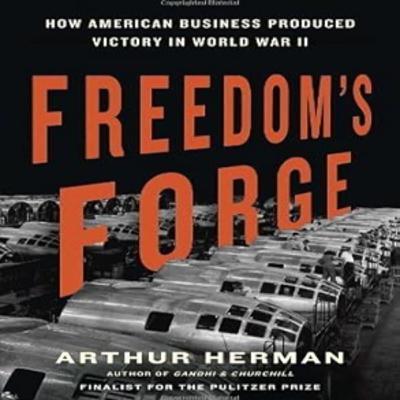
In this episode, Hope takes the mic solo as she breaks down Arthur Herman’s Freedom’s Forge—a fast-paced history of how American industry transformed into the “arsenal of democracy” during WWII. From Liberty ships and jeep carriers to the larger-than-life personalities behind the wartime production miracle, Hope explores the book’s sharp storytelling, key insights, and its surprising relevance to today’s military challenges.Smart, lively, and full of Hope’s trademark humor, this review highlights why industrial strength remains the backbone of modern warfighting. Perfect for listeners interested in WWII history, defense logistics, or the strategic lessons the 1940s still have to teach us.
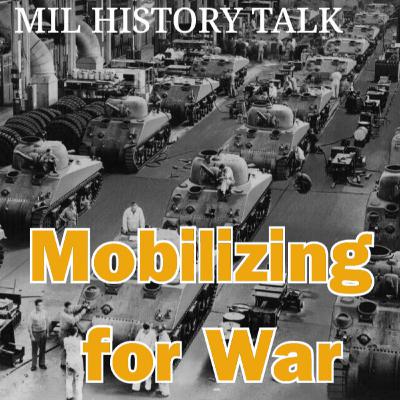
Mobilizing for War: America’s 18-Month Sprint to Readiness (1940–41)How do you go from “not ready” to “arsenal of democracy” in a year and a half? In this episode, Hope and Brian break down how the United States primed its strategic base before Pearl Harbor—so the wartime surge could actually surge.We track the political and industrial pivot from 1940 to late 1941: the first peacetime draft and the training camps it fed; the Two-Ocean Navy Act and the shipyards it supercharged; the birth of mobilization machinery (OEM, OPM, SPAB) that set the stage for the War Production Board; and the quiet hero of the story—machine-tool expansion and GOCO plants that turned sedans into tanks and bombers. We also follow the airfield and pilot-training boom, the early merchant-ship build that foreshadowed Liberty ships, and how Lend-Lease tied U.S. production to Allied survival.The big takeaway for today’s large-scale combat operations (LSCO): combat power and strategic logistics must scale together. You cannot wait for the first shot to plan fuel, parts, ports, rail, and repair—the spine has to be built pre-war.If you’re into strategy, logistics, or just great history with sharp banter, this is your go-to listen. Share it, rate it, and send it to your resident Clausewitz fan.
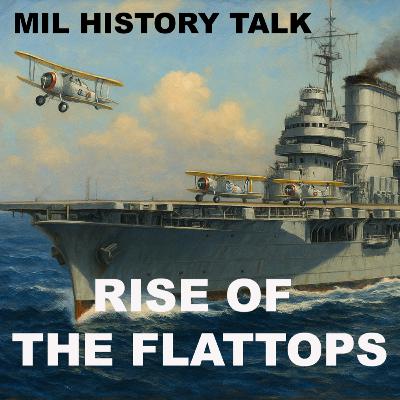
Step aboard Mil History Talk with hosts Hope and Brian as they launch the first episode in a four-part series charting the dramatic rise of the U.S. Navy’s aircraft carrier. In this 20-minute deep dive, The Rise of the Flattop: 1919–1941, the duo explores how the Navy transformed from a battleship-obsessed fleet into an airpower pioneer. From the experimental USS Langley to the sleek Lexington and Saratoga, Hope and Brian unpack the daring innovations, political battles, and strategic planning that shaped America’s naval aviation between the wars.Expect sharp insight, witty banter, and the perfect blend of scholarship and storytelling as the hosts connect bureaucratic infighting, the Washington Naval Treaty, and War Plan Orange to the coming Pacific showdown. Listeners will discover how Depression-era politics still prioritized the Pacific threat, how aviators like Moffett and Whiting reshaped doctrine, and how the groundwork was laid for the decisive carrier warfare of World War II.Smart, engaging, and packed with historical color, Mil History Talk makes the evolution of naval airpower as riveting as any blockbuster. Because history isn’t just about the past—it’s about the bold, brilliant, and stubborn people who dared to fly into the future.

Comments

Download from Google Play

Download from App Store
 United States