


 Claim Ownership
AEC Tech Journeys with Mayur Mistry
Subscribed: 23Played: 275
Subscribe

© Mayur M Mistry
Description
A platform for professional growth and personal growth for AEC Technologists with inspiring conversations with founders, builders and experts in AEC space.
I am Mayur Mistry, cofounder of 3DGuru.ai, ex Perkins & Will Digital Innovation Technologist with M.Arch at University of Illinois and B.Tech Civil Engineer from IIT Bombay.
I am Mayur Mistry, cofounder of 3DGuru.ai, ex Perkins & Will Digital Innovation Technologist with M.Arch at University of Illinois and B.Tech Civil Engineer from IIT Bombay.
170 Episodes
Reverse

In this interview, Adi Shavit, CTO and co-founder of SWAPP, shares his 25-year journey in AI, his insights on construction tech, and how AI can revolutionize the architecture, engineering, and construction industries. Discover practical advice on product development, market understanding, and building an AI-native startup.
key topics
AI in construction and architecture
Startup and product development strategies
Industry insights and future trends in AI
Chapters
00:00 Journey Through AI and Entrepreneurship
04:19 Lessons Learned in Construction Tech
08:09 Navigating Early Days of Swapp
12:16 The Role of a CTO in a Startup
16:30 Hiring and Building a Team
19:58 Go-to-Market Strategies and Challenges
23:21 Final Thoughts on AI and the Future
📩 Don’t miss future episodes.
Subscribe to the AEC Tech + AI Newsletter: https://aiaecdigest.substack.com/
In this insightful interview, Shreesha Ramdas, CEO and co-founder of Lumberfi, shares his entrepreneurial journey, startup growth frameworks, and the transformative impact of AI on construction. Discover practical lessons on scaling, culture, and innovative strategies for founders navigating the evolving industry landscape
key topics
Startup evolution stages: problem fit to scale fit
AI's impact on construction and product management
Building company culture with high agency teams
Fundraising and acquisition strategies in construction
Leadership lessons from startup founder
Chapters
00:00 Journey of a Startup Founder
04:38 The Evolution of Skills in Entrepreneurship
09:22 Navigating Acquisitions and Growth Strategies
14:10 The Future of Work and AI Integration
19:12 Inspiration Behind Lumberfi
23:34 Building a Culture of Innovation
📩 Don’t miss future episodes.
Subscribe to the AEC Tech + AI Newsletter: https://aiaecdigest.substack.com/

In this insightful interview, Jenny Song, partner at Navitas Capital, shares her diverse career journey from journalism to venture capital, emphasizing the impact of her varied experiences on her investment approach. She discusses trends in built environment tech, common founder mistakes, and her vision for the future of construction technology.
keywordsVenture Capital, Built Environment, Construction Tech, Startup Funding, Impact Investing, Founder Advice, AI in Construction, VC Trends
key topics
Career transition from journalism to VC
Impact investing in built environment
Common founder mistakes in construction tech
Trends in construction AI and robotics
Strategies for customer acquisition in construction
Chapters
00:00 Journey to Venture Capital: Jenny's Career Path
04:47 Skills Transfer: From Founder to VC
08:23 A Week in the Life of a VC Partner
11:14 Investment Thesis: What We Look For
14:36 Go-to-Market Strategies in Construction Tech
16:55 Market Insights: Saturation and Opportunities
18:24 Common Founder Mistakes
20:15 Calls for Ideas: What’s Hot in Construction Tech
22:18 Increasing Adoption: Initiatives for Construction Tech
23:46 Lessons Learned: Hard Truths in VC
25:59 Rapid Fire Round: Quick Insights
27:58 Closing Thoughts: The Future for Founders
📩 Don’t miss future episodes. Subscribe to the AEC Tech + AI Newsletter:
https://aiaecdigest.substack.com/
In this insightful interview, Bill Carney, Design Technology Leader at DLR Group, shares his journey through AI advancements in architecture and construction over the past five years. Discover key innovations, industry challenges, and future trends shaping the built environment.
key topics
AI advancements in architecture and construction
Industry collaboration and innovation
Future of design automation and digital twins
Chapters
00:00 Introduction to AI in Architecture
02:29 Innovations at DLR Group
05:04 Navigating AI Challenges
08:09 The Future of AI in Design
10:39 Collaboration with Startups
12:35 Opportunities for New Solutions
15:33 Evaluating AI Tools
17:48 Industry Events and Networking
20:33 Rapid Fire Insights
23:17 Closing Thoughts and Motivational Message
📩 Don’t miss future episodes.
Subscribe to the AEC Tech + AI Newsletter:
https://aiaecdigest.substack.com/

In this insightful interview, Sarel van Baalen, CEO and co-founder of TradeStack, shares his journey from civil engineering to leading a construction tech startup. Discover how AI is transforming construction productivity, the challenges of market entry, and the future of trade contracting with automation.
key topics
Sarel's career highlights and transition from engineering to startups
The impact of AI on construction productivity and operations
Market challenges and opportunities in construction tech
TradeStack's early validation and customer acquisition strategies
Future vision for AI in trade contracting and construction
Chapters
00:00 Journey from Engineering to Entrepreneurship
02:41 Navigating Tough Decisions
05:03 Comparing Construction Ecosystems: South Africa vs UK
07:45 The Birth of TradeStack
12:31 Pivotal Moments in Startup Growth
15:00 Go-to-Market Strategies and Learnings
17:20 Vision for TradeStack: 2026 and Beyond
19:23 Addressing AI Concerns in Construction
21:33 Rapid Fire Round: Insights and Reflections
22:13 Closing Thoughts and Opportunities
📩 Don’t miss future episodes. Subscribe to the AEC Tech + AI Newsletter: https://aiaecdigest.substack.com/

In this insightful interview, Alexander Gran, founder of Bobbie, shares his unconventional journey from research and public transport to building a digital platform revolutionizing construction material supply. Discover key decisions, technological challenges, and strategic insights for startups in traditional industries.
KEY TOPICS
Digitalization of construction supply chain
Challenges of industry data management
Strategic decisions in startup growth
Chapters
00:00 Journey to Founding Bobbie
02:37 Challenges of Entrepreneurship
04:58 Understanding Bobbie's Operations
07:55 Innovations in Construction Material Supply
10:40 Technical Challenges in Construction
15:38 Advice for Aspiring Founders
20:46 Navigating Customer Relationships
24:48 Lessons from Insolvency
📩 Don’t miss future episodes. Subscribe to the AEC Tech + AI Newsletter:
https://aiaecdigest.substack.com/

In this engaging conversation, Tigre Wenrich, CEO of Lab Ventures, shares his journey from management consulting to entrepreneurship in the PropTech space. He discusses the importance of community building in Miami's startup scene, the lessons learned from running a venture studio, and the strategies for successfully launching and scaling startups. Tigre emphasizes the need for quick market feedback, the significance of understanding customer lifetime value, and the importance of networking in the startup ecosystem. He also provides insights into evaluating startup pitches and shares advice for aspiring entrepreneurs.
takeaways
Tigre transitioned from consulting to entrepreneurship in PropTech.
Building a community is crucial for startup success.
Miami's startup scene has evolved significantly over the years.
Quick market feedback is essential for startups.
Understanding customer lifetime value is key to go-to-market strategies.
Networking can greatly enhance opportunities for entrepreneurs.
Evaluating startup pitches requires a focus on team, market size, and product.
Failing fast can lead to quicker learning and success.
Hiring quickly and efficiently is important in startup environments.
Tigre emphasizes the importance of problem-solving in entrepreneurship.
Chapters
00:00 Journey Through PropTech: Tigre's Career Highlights
06:14 Building Community: The Blueprint Experience
09:57 Navigating Miami's Startup Scene
12:38 Lessons from the Venture Studio
15:20 Effective Go-to-Market Strategies in PropTech
18:14 Evaluating Startup Pitches: What Investors Look For
21:31 Supporting Tigray's Mission: Opportunities for Engagement
📩 Don’t miss future episodes. Subscribe to the AEC Tech + AI Newsletter: https://aiaecdigest.substack.com/
In this conversation, Mike VanSickel shares his journey from a non-traditional career path to becoming the CEO Of Iron Sheepdog, a trucking technology solution company. He discusses the challenges faced in the trucking industry, the importance of understanding customer needs, and the cultural shifts necessary for technology adoption. Mike emphasizes the significance of building trust and relationships in business, as well as the value of team dynamics and company culture. The conversation concludes with rapid-fire questions that reveal Mike's personal insights and philosophies.
Takeaways
Mike's career path was non-traditional, starting from law to construction.
Mistakes are valuable learning experiences that shape who you are.
The idea for Iron Sheepdog was born out of necessity for better data.
The trucking industry still relies heavily on outdated methods.
Building a simple user interface is often the hardest challenge.
Understanding customer needs is crucial for technology adoption.
Trust and relationships are key in the trucking business.
Cultural shifts are necessary for embracing new technologies.
Team dynamics and company culture play a significant role in success.
Results-oriented work environments can enhance productivity.
Chapters
00:00 Introduction to Mike VanSickel and Iron Sheepdog
08:24 Building the MVP: Challenges and Solutions
12:41 Navigating the Industry: Insights on Sales and Trust
17:43 Team Dynamics and Leadership Philosophy
📩 Don’t miss future episodes.
Subscribe to the AEC Tech + AI Newsletter: https://aiaecdigest.substack.com/

In this conversation, Mayur Mistry hosts Alena Tuttle and Karly Heffernan, co-founders of Hardline, a construction tech startup. They discuss their unique career paths, the challenges of entering the construction industry, and the inception of Hardline. The founders share insights on fundraising, customer acquisition, and the importance of community support. They also delve into the functionality of Hardline, emphasizing its role in streamlining communication and data entry in construction projects. The conversation concludes with rapid-fire questions, showcasing their personalities and aspirations.
takeaways
Alena transitioned from finance to tech and then to construction.
The complexity of the construction industry is often underestimated.
Hardline was born from a need to solve communication issues in construction.
Fundraising as female founders presents unique challenges.
Hardline is designed for those who spend significant time on manual data entry.
Customer acquisition in construction requires personal relationships.
Community feedback is crucial for product improvement.
Privacy concerns are addressed in Hardline's AI functionality.
Building trust is essential for technology adoption in construction.
Mistakes can lead to valuable redirection in a startup's journey.
Chapters
00:00 Introduction to Hardline and Its Founders
04:59 The Birth of Hardline
10:04 Understanding Hardline's Functionality
15:00 Building Relationships in Construction
📩 Don’t miss future episodes. Subscribe to the AEC Tech + AI Newsletter: https://aiaecdigest.substack.com/
In this conversation, Mayur Mistry interviews Jameson Hartman, Vice President of RET Ventures, discussing his career journey, the operations of RET Ventures, and the current landscape of venture capital in construction and real estate technology. Jameson shares insights on the challenges and opportunities in the industry, the importance of data organization for startups, and advice for aspiring founders and venture capitalists. The discussion also touches on the impact of AI on deal flow and due diligence, as well as the need for technology solutions that enhance the resident experience in real estate.
Takeaways
Jameson Hartman tripped into investment banking at Goldman Sachs.
RET Ventures focuses on strategic investments in real estate tech.
The fund typically invests in Series A companies with product market fit.
A week at RET involves supporting portfolio companies and finding new investments.
AI has increased the number of startups but also the complexity of due diligence.
Seamless technology solutions are needed in the real estate rental process.
Construction tech presents significant opportunities for disruption.
Founders should focus on the user experience, not just the decision-makers.
Organized data and clear value propositions are crucial for startups.
Long-term relationships with clients are more valuable than short-term sales.
Chapters
00:00 Introduction to Jameson Hartman and RET Ventures
01:28 Career Journey and Highlights
03:05 A Week in the Life at RET Ventures
05:05 Navigating the AI Bubble in Venture Capital
07:29 Technology Solutions for Real Estate Challenges
09:28 Opportunities for Disruption in Construction Tech
10:43 Identifying Oversaturated Markets in PropTech
13:22 Advice for Early Stage Founders
16:33 Lessons from Founders' Mistakes
18:48 Advice for Aspiring Venture Capitalists
21:25 Rapid Fire Round and Closing Thoughts
📩 Don’t miss future episodes. Subscribe to the AEC Tech + AI Newsletter: https://aiaecdigest.substack.com/
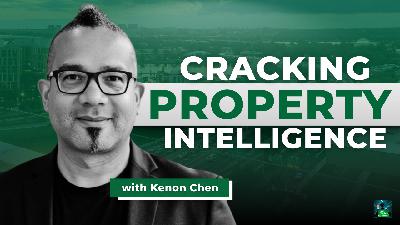
In this conversation, Kenon Chen, Executive Vice President of Strategy and Growth at Clear Capital, shares insights from his extensive career in the real estate and technology sectors. He discusses his career highlights, the evolution of Clear Capital, and the lessons learned in leadership. Kenon emphasizes the importance of authenticity, curiosity, and understanding market needs. He also outlines Clear Capital's innovative solutions and the technical challenges faced in the real estate market. Additionally, Kenon offers advice for aspiring PropTech founders and shares insights into his professional life and industry networking.
Takeaways
Survived the dot com boom and crash.
Proud of the growth at Clear Capital.
Authenticity is key in leadership.
Focus on understanding customer problems.
Curiosity drives better decision-making.
Managing without authority is crucial.
Clear Capital offers comprehensive property data solutions.
Technical compliance is a major challenge.
Networking is essential in PropTech.
Removing friction in the loan process is vital.
Chapters
00:00 Career Highlights and Early Experiences
01:58 Evolution of Clear Capital
04:05 Lessons Learned from Failures
06:18 Guidelines for Aspiring Leaders
07:38 Clear Capital's Offerings
11:11 Technical Challenges in Real Estate
14:29 Advice for PropTech Founders
15:53 A Week in the Life of a Leader
17:22 Conferences and Networking in PropTech
18:44 Identifying Market Gaps
21:00 Rapid Fire Questions
📩 Don’t miss future episodes. Subscribe to the AEC Tech + AI Newsletter: https://aiaecdigest.substack.com/
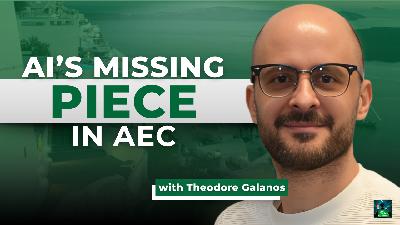
In this conversation, Theodore Galanos discusses the evolution of AI at Aurecon, highlighting the maturity of AI solutions by 2025, the importance of cultivating a culture of innovation, and the challenges of AI adoption. He emphasizes the need for domain expertise to effectively leverage AI technologies and shares insights on building effective workflows and the future of AI in engineering. The discussion also touches on the significance of collaboration with AI and the ongoing challenges in deploying AI solutions.
Takeaways
AI solutions have matured significantly by 2025.
Cultivating a culture of innovation is essential for AI adoption.
Domain expertise is crucial for effective AI implementation.
Workflows are key to integrating AI into engineering processes.
Collaboration with AI can enhance productivity and creativity.
The last mile challenge remains a significant hurdle in AI deployment.
Skills in AI should be seen as environments of experience.
AI can democratize product development and design.
Building effective workflows requires understanding both deterministic and non-deterministic tasks.
The future of AI lies in closing the gap between technology and domain expertise.
Chapters
00:00 AI Maturity and Key Highlights of 2025
02:38 Fostering a Culture of Innovation in AI
05:11 Championing AI Adoption and Overcoming Challenges
08:33 Learning from Failures in AI Implementation
12:48 The Unsexy Work Behind AI Success
19:07 Building Effective AI Solutions and Harnesses
27:42 Creating Infinite Data and Benchmarking
30:02 The Importance of Mapping and Task Environments
33:43 Skills for Collaboration with AI Models
43:29 Business Models and Workflows in AI Engineering
53:03 Optimizing for Long-Term Success
56:53 The Role of AI in Project Workflows
01:01:36 Recent Advances in AI Research
01:09:28 Understanding Workflows and Skills
01:19:55 Closing Thoughts on AI and Domain Expertise
📩 Don’t miss future episodes. Subscribe to the AEC Tech + AI Newsletter: https://aiaecdigest.substack.com/

In this conversation, Alon Gorbonos, General Partner and Founder of RE Angels, shares his journey from real estate operator to venture capitalist. He discusses the skills necessary for aspiring real estate operators, the challenges of transitioning to venture capital, and the importance of understanding market dynamics. Alon emphasizes the need for effective fundraising strategies, the identification of trends in real estate technology, and the significance of networking. He also provides insights into the future of real estate tech, highlighting areas of saturation and opportunity.
Takeaways
Alon Gorbonos transitioned from real estate to venture capital.
Understanding market dynamics is crucial for success.
Real estate is not a passive investment; it requires active involvement.
Fundraising is a humbling experience for both VCs and founders.
Networking and personal introductions are key to effective fundraising.
AI can enhance productivity in real estate operations.
The future of real estate will involve a hybrid of humans and AI.
There is a need for innovative solutions in procurement processes.
Founders should do their homework before pitching to investors.
Real estate tech is rapidly evolving with significant opportunities.
Chapters
00:00 Introduction to Alon Gorbonos and RE Angels
02:11 Challenges in the Real Estate Journey
03:56 Becoming a Real Estate Operator
08:58 Fundraising for a Venture Fund vs. Startup
09:16 Surprises in Fundraising
12:45 Effective Fundraising Tips
14:40 Forming an Investment Thesis
17:51 Call for Ideas in Real Estate Tech
22:34 Opportunities in Under-Saturated Areas
24:37 Common Mistakes in Pitching to Investors
28:24 Possibilities of Rapid Growth in Real Estate
32:39 Future of Real Estate Tech and Networking Events
📩 Don’t miss future episodes. Subscribe to the AEC Tech + AI Newsletter: https://aiaecdigest.substack.com/

In this conversation, Joshua Weyand, an Enterprise Solutions Engineer at Trunk Tools, shares his journey in the construction tech industry, highlighting key career milestones, the importance of empathy in his role, and the skills necessary for success. He discusses the unique challenges faced in construction tech, the innovative solutions offered by Trunk Tools, and the competitive culture within the company. Joshua also emphasizes the significance of understanding the construction buyer and offers valuable advice for those looking to succeed in this field, including the importance of mental health and community support.
Takeaways
Getting an internship can open many doors.
Public speaking skills are crucial for career success.
Saying yes to new opportunities can change your career path.
Empathy is essential in understanding customer needs.
Solutions engineers must bridge the gap between field and tech.
Understanding the construction buyer is complex and nuanced.
Mental health awareness is vital in the construction industry.
Admitting defeat and pivoting is important in startups.
Building relationships is key to success in sales.
Continuous learning and networking are essential for growth.
Chapters
00:00 Introduction to Joshua Weyand
02:47 Career Highlights and Lessons Learned
06:18 Understanding the Role of an Enterprise Solutions Engineer
10:21 Skills for Success in Construction Tech
11:44 Overview of Trunk Tools and Its Impact
14:56 Company Culture and Hiring at Trunk Tools
16:32 Challenges in Construction Procurement
18:53 Go-to-Market Strategies in Construction Tech
25:05 Navigating the Buyer Landscape in Construction
27:40 Final Thoughts on Mental Health and Community in Construction
📩 Don’t miss future episodes. Subscribe to the AEC Tech + AI Newsletter: https://aiaecdigest.substack.com/

In this conversation, Nate Robert-Eze, CEO and Co-founder of Path Intelligence, shares his journey from starting a fashion brand in college to leading a tech company focused on spatial intelligence. He discusses the importance of storytelling in business, the challenges of user experience, and the impact of AI on the real estate industry. Nate emphasizes the need for strong relationships in entrepreneurship and offers insights into effective go-to-market strategies. He envisions a future where immersive experiences redefine property exploration.
Takeaways
Nate's early ventures included a fashion brand and architecture projects.
Building relationships is crucial for entrepreneurial success.
Storytelling can significantly enhance client engagement.
The pivot to product was driven by advancements in AI.
User experience is a key challenge in tech development.
Engaging developers early can enhance project outcomes.
The future of real estate involves immersive experiences.
Technology will likely replace many traditional realtor roles.
Networking and authority are vital for market strategies.
Starting today is the best advice for aspiring entrepreneurs.
Chapters
00:00 Career Highlights and Early Ventures
02:27 Entrepreneurial Journey and Lessons Learned
04:45 The Power of Storytelling in Business
07:20 Pivoting to Product: Embracing AI and Spatial Intelligence
10:04 Challenges in User Experience and Engagement
12:20 Engagement Strategies for Developers and Realtors
14:42 Future Vision: The Evolution of Path Intelligence
17:15 Navigating Technology and Real Estate
19:53 Go-to-Market Strategies and Building Relationships
22:28 Rapid Fire Round and Closing Thoughts
📩 Don’t miss future episodes. Subscribe to the AEC Tech + AI Newsletter: https://aiaecdigest.substack.com/

In this conversation, Anton Glance, CTO and Co-founder of Buildroid AI, shares his entrepreneurial journey, highlighting his experiences in various startups, particularly in the fields of smart home technology and construction. He discusses the importance of understanding customer needs, the challenges of scaling innovations in the construction industry, and the potential of robotics to transform the sector. Anton emphasizes the need for startups to be adaptable, open to feedback, and focused on delivering real value to their customers.
Takeaways
Always dive deeper to understand how things are made.
The importance of customer feedback in product development.
Building a prototype quickly is crucial for validation.
Don't rely on friends for honest feedback; seek strangers.
The construction industry is conservative and resistant to change.
Startups need to find a balance between innovation and existing processes.
Revenue generation should be prioritized early in the startup journey.
Building a network early can provide significant advantages.
Iterate quickly and be open to changing your approach.
Focus on solving real problems that exist in the market.
Chapters
00:00 Journey of an Entrepreneur
09:26 Lessons from Startup Experiences
19:02 Navigating the Construction Industry
27:52 Innovating with Buildroid
37:07 Challenges and Triumphs in Robotics
📩 Don’t miss future episodes. Subscribe to the AEC Tech + AI Newsletter: https://aiaecdigest.substack.com/
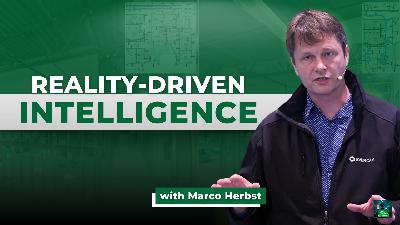
In this episode, Mayur Mistry interviews Marco Herbst, CEO and co-founder of Evercam, who shares the journey of building his company from its inception to its current status as a leader in construction technology. Marco recounts the early days of Evercam, starting with his fascination for capturing construction projects through time-lapse videos using IP cameras. He discusses the challenges faced in finding product-market fit, particularly in the competitive security industry, and how a pivotal shift towards construction technology allowed Evercam to thrive. Marco emphasizes the importance of visibility and collaboration on construction sites, highlighting how advancements in AI and camera technology have transformed project management and communication in the industry.
Takeaways
"The principle is the same, visibility, collaboration on the construction site."
"We realized that a lot of the challenge we were solving was the difficulty of connecting to the information."
"If you can possibly get the money from your customers, it means so much more than getting it from an investor."
"Construction is local; you have to make that choice of geography or vertical."
"The joy of going home at the end of the day and being able to say, I built that, I was part of that."
Chapters
00:00 Introduction to Marco Herbst and Evercam
00:20 The Early Days of Evercam
02:23 Challenges in the Security Industry
04:46 Pivoting to Construction Technology
07:18 Proudest Moments in the Journey
10:56 Fundraising Insights and Strategies
16:01 Hiring in a Remote Environment
20:47 Go-to-Market Strategies and Regional Adaptation
23:45 Lessons Learned and Reflections
📩 Don’t miss future episodes. Subscribe to the AEC Tech + AI Newsletter: https://aiaecdigest.substack.com/
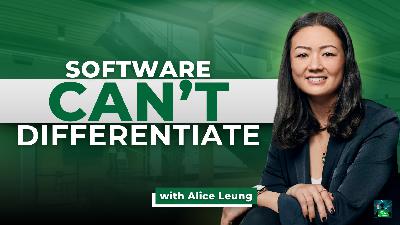
In this conversation, Alice Leung, Principal of Brick and Motor Ventures, shares insights on the evolving landscape of construction technology, particularly focusing on AI adoption, the rise of non-technical founders, and the challenges of software differentiation. She discusses the future of robotics in construction, the importance of pricing transparency, and the dynamics of venture capital and private equity in the industry. Alice also highlights the skills needed for success in construction tech and the common struggles founders face as they scale their businesses.
Takeaways
AI adoption in construction is still evolving.
Non-technical founders are increasingly entering the space.
Software differentiation is becoming more challenging.
Robotics in construction is gaining momentum.
Pricing transparency is essential for industry efficiency.
Navigating deal flow is a significant challenge for VCs.
Pattern recognition is crucial for success in VC.
AI-powered services could disrupt traditional construction methods.
Hiring talent in construction tech is becoming competitive.
Founders face unique challenges at different growth stages.
Chapters
00:00 Introduction to Construction Tech and AI Predictions
05:08 The Evolution of AI in Construction
09:20 Challenges and Opportunities in Construction Robotics
13:35 Navigating Deal Flow in Construction Tech
18:09 Skills Development in the Construction Tech Landscape
22:43 Emerging Trends and Unique Business Models
26:45 The Future of AI-Powered Services in Construction
30:01 Common Struggles for Founders in Construction Tech
35:24 Rapid Fire Questions and Closing Thoughts
📩 Don’t miss future episodes. Subscribe to the AEC Tech + AI Newsletter: https://aiaecdigest.substack.com/

In this conversation, Nikhil Nagaraj, co-founder of Struck, shares his journey from studying electronics engineering in India to building an AI-driven platform for construction compliance. He discusses the challenges of the construction industry, particularly the housing crisis, and how Struck aims to simplify compliance processes using AI. Nikhil elaborates on the product's features, including its ability to provide real-time compliance checks and generate reports, while also offering insights into navigating the AEC industry for those without a background in it.
Takeaways
Nikhil's journey into AI began during his undergraduate studies in electronics engineering.
The launch of Struck was driven by a desire to address the housing crisis and improve construction compliance.
Compliance in construction is often treated as an afterthought, leading to inefficiencies.
Struck aims to simplify compliance processes using AI, making regulations more accessible.
The product has evolved to include features like zoning laws and permit-free building checks.
Prioritization in product development is crucial, focusing on compliance-related features.
The AEC industry is fragmented, requiring tailored solutions for different regions.
Collaboration with industry experts is essential for building effective solutions.
Good software engineering practices are vital for successful AI implementation.
Building in the AEC space can be challenging but rewarding, with many willing to help.
Chapters
00:00 Nikhil Nagaraj's Journey into AI and Construction
07:27 The Challenges of Prioritization in Tech Development
09:25 Overcoming Technical Challenges in AI
17:06 Exploring Struck's Product and Its Functionality
24:36 Navigating Building Regulations and Workflows
27:20 Creating a Frictionless User Experience
29:42 Leveraging AI and Data Sources
32:33 Bridging B2B and B2G in Construction Compliance
36:00 Advice for Non-AEC Professionals
39:45 Final Thoughts on Building in AEC
📩 Don’t miss future episodes. Subscribe to the AEC Tech + AI Newsletter: https://aiaecdigest.substack.com/
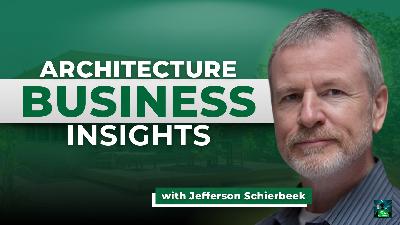
In this conversation, Jefferson Schierbeek, a principal and co-founder of Addison Schierbeek Architects, shares his journey in architecture, discussing his transition from practicing architect to business owner, the importance of client relationships, and the evolving landscape of architectural services. He emphasizes the significance of understanding client needs, effective pricing strategies, and the rise of accessory dwelling units (ADUs) in response to housing policies. Jefferson also reflects on his teaching experience and the impact of technology and AI on the future of architecture.
Takeaways
Architecture is a journey filled with adventures and highlights.
Creating homes that feel uniquely theirs is essential for clients.
Many architects back into business management rather than planning for it.
Joining professional networks like Entree Architect can be beneficial.
Building relationships is crucial for finding clients in architecture.
Understanding client needs is key to successful projects.
Pricing strategies should reflect both effort and market conditions.
The rise of ADUs is a response to changing housing policies.
Teaching architecture can provide valuable insights into design and methodology.
AI is evolving but is not yet ready to replace human architects.
Chapters
00:00 Journey Through Architecture: From Education to Practice
02:22 Navigating the Business of Architecture
04:53 Building Relationships: Finding Clients in Architecture
07:27 Understanding Client Needs and Expectations
09:51 Pricing Strategies in Architectural Projects
12:46 The Rise of Accessory Dwelling Units (ADUs)
15:21 Teaching Architecture: Insights and Experiences
17:56 Reflections on Notable Projects
20:27 The Future of Architecture: Technology and AI
📩 Don’t miss future episodes. Subscribe to the AEC Tech + AI Newsletter: https://aiaecdigest.substack.com/

Comments

Download from Google Play

Download from App Store
 United States