


Fun Facts Daily
Subscribed: 58Played: 2,376
Subscribe

© Copyright 2026 All rights reserved.
Description
Start your day smarter with Fun Facts Daily. Every episode explores a different topic giving you a quick and easy way to enjoy learning something new every weekday! Fun Facts Daily cuts through the noise of the world to deliver positive, uplifting, and fascinating trivia about art, biographies, geography, history, pop culture, science and anything else that might pique your curiosity. Get your daily dose of knowledge with a word of the day, five fun facts to blow your mind as well as practical tips and tricks that you can actually use. Every episode is safe for work (SFW) and appropriate for curious listeners of all ages.
240 Episodes
Reverse

The Dead Sea stands as the lowest point on the Earth's surface, with shores and water levels resting approximately 1,410 feet below sea level. Situated along a fault line where the African and Arabian plates diverge, this hypersaline environment boasts a salt concentration of roughly 34%, nearly ten times that of the open ocean. This extreme salinity fundamentally alters the water’s density, creating a unique buoyancy that allows human bodies to float effortlessly while feeling slightly oily to the touch. Beyond its famous salt, the sea’s chemical makeup includes high concentrations of magnesium, bromide, and potassium, which have drawn visitors seeking therapeutic treatments for millennia.
Historically, the region served as a premiere health resort for royalty, including Cleopatra and Herod the Great, who utilized the mineral-rich black mud and water for medicinal and cosmetic purposes. The sea's geological activity even yields natural asphalt, or bitumen, which the ancient Egyptians famously harvested for use in the mummification process. Despite its name, the environment is not entirely sterile; it supports specialized extremophiles like Dunaliella salina algae and various bacteria. This unique atmospheric pressure and dry climate also facilitated the incredible preservation of the Dead Sea Scrolls, ancient manuscripts that remained intact for two thousand years within nearby caves.
Learn more about your ad choices. Visit megaphone.fm/adchoices

Lobsters are truly amazing with a number of shocking traits, including a form of biological immortality. They produce the enzyme telomerase, which repairs their DNA indefinitely, allowing them to maintain their strength and fertility as they age. Most lobsters do not die of "old age" but rather from the physical exhaustion required to molt their increasingly large shells. These creatures also feature a sophisticated sensory system, using chemosensory hairs on their legs to "taste" and small antennae to "smell" their environment. While most appear brownish-green in the wild for camouflage, rare genetic mutations can produce vibrant blue, orange, calico, or even "split" colorations, with albino specimens appearing only once in every 100 million.
Once regarded as the "cockroach of the sea," the American lobster has a history rooted in abundance rather than luxury. In colonial New England, these crustaceans were so plentiful they would wash ashore in massive piles, leading them to be used primarily as fertilizer, fish bait, or food for prisoners and indentured servants. This reputation was so lowly that laws and contracts were reportedly established to prevent individuals from being forced to eat lobster more than a few times a week, a practice then considered a form of cruel punishment. It was not until the mid-19th century, with the advent of refrigerated rail transport and the growth of tourism, that lobster transitioned into the high-status delicacy recognized today.
Want to learn more? Head over to my website www.funfactsdailypod.com and be sure to listen to my other podcasts Who ARTed: Weekly Art History for All Ages or Art Smart. For family fun, check out my son's podcast Rainbow Puppy Science Lab
Fun Facts Daily is an Airwave Media Podcast. If you are interested in advertising on this or any other Airwave Media show, email: advertising@airwavemedia.com
Learn more about your ad choices. Visit megaphone.fm/adchoices

While March Madness is now a global phenomenon, the term actually originated with Illinois high school basketball in 1939. Henry V. Porter, an official with the Illinois High School Association, first used the phrase to describe the intense excitement of the state’s championship games. It wasn't until the 1980s that the term gained national traction after sports broadcaster Brent Musburger, who had covered the Illinois games, used it during an NCAA tournament broadcast. Today, the tournament is known for its high-stakes environment, even down to the specialized courts; these temporary hardwood floors are built with thousands of rubber pads beneath the panels to provide a bouncier, safer surface for athletes playing in large football stadiums.
The tournament’s history is also marked by significant milestones in women’s sports and long-standing traditions. Although the first official NCAA Division I Women’s Basketball Tournament wasn't held until 1982, women have been playing collegiate basketball since the 1890s. In a historic shift in 2024, the women’s national championship game officially outdrew the men’s final in viewership, averaging 18.8 million viewers. Beyond the stats, the tournament is defined by the tradition of "cutting down the net," a practice started by North Carolina State coach Everett Case in 1947. Originally done because Case wanted a souvenir from a conference championship victory, the ritual has evolved into a formal ceremony with the NCAA now providing custom ladders and scissors for winning teams to claim their piece of history.
Want to learn more? Head over to my website www.funfactsdailypod.com and be sure to listen to my other podcasts Who ARTed: Weekly Art History for All Ages or Art Smart. For family fun, check out my son's podcast Rainbow Puppy Science Lab
Fun Facts Daily is an Airwave Media Podcast. If you are interested in advertising on this or any other Airwave Media show, email: advertising@airwavemedia.com
Learn more about your ad choices. Visit megaphone.fm/adchoices

The McDonald’s Shamrock Shake has evolved from a local holiday experiment into a global seasonal phenomenon since its inception in 1967. Originally created by Connecticut franchise owner Hal Rosen, the beverage debuted nationally in 1970 with a surprising lemon-lime flavor composed of vanilla ice cream and lemon-lime sherbet. It wasn't until 1983 that the signature cool mint profile was introduced, replacing the plain green-dyed vanilla version that had persisted throughout much of the 1970s. Though it remained a regional item for decades, often tracked by dedicated fans via "shake-tracking" websites, it finally became a permanent national limited-time offering across the United States in 2012.
Beyond its cult-favorite status, the Shamrock Shake holds a significant place in philanthropic history as the "shake that built the house." In 1974, sales from the green treat funded the purchase of the very first Ronald McDonald House in Philadelphia, a project spearheaded by Eagles player Fred Hill to support families of hospitalized children. This charitable legacy continued through high-profile events, such as the 2010 symbolic pouring of a 24-foot tall "shake" into the Chicago River to commemorate a donation for a new local chapter. The brand even utilized a festive mascot, Uncle O'Grimacey, a green-furred character from "Sham-rock" who helped cement the drink's association with St. Patrick’s Day folklore and Irish heritage.
Want to learn more? Head over to my website www.funfactsdailypod.com and be sure to listen to my other podcasts Who ARTed: Weekly Art History for All Ages or Art Smart. For family fun, check out my son's podcast Rainbow Puppy Science Lab
Fun Facts Daily is an Airwave Media Podcast. If you are interested in advertising on this or any other Airwave Media show, email: advertising@airwavemedia.com
Learn more about your ad choices. Visit megaphone.fm/adchoices

Sabrina Gonzalez Pasterski is a world-renowned theoretical physicist celebrated for her groundbreaking contributions to our understanding of the universe's fundamental structures. A graduate of the Massachusetts Institute of Technology (MIT) with a perfect 5.0 GPA, she completed her undergraduate degree in just three years before earning a PhD from Harvard University. Pasterski’s research focuses on the Pasterski-Strominger-Zhiboedov (PSZ) Triangle, a theoretical framework connecting soft theorems, asymptotic symmetries, and memory effects at the boundary of spacetime. Her work is a cornerstone of celestial holography, which explores the possibility that the three-dimensional universe we experience may be encoded by a simpler two-dimensional theory.
Beyond her academic prowess, Pasterski's journey is marked by an extraordinary blend of practical engineering and abstract thought. At age 14, she became the youngest person to build, certify for airworthiness, and fly a single-engine airplane—a feat that helped secure her admission to MIT. Despite her global recognition and being cited by luminaries like Stephen Hawking, Pasterski maintains a unique digital profile, opting out of all social media in favor of a personal website, physicsgirl.com. Her dedication to pure research led her to decline lucrative positions at major aerospace companies to join the Perimeter Institute for Theoretical Physics, where she continues to tackle the challenge of unifying gravity with quantum mechanics.
Want to learn more? Head over to my website www.funfactsdailypod.com and be sure to listen to my other podcasts Who ARTed: Weekly Art History for All Ages or Art Smart. For family fun, check out my son's podcast Rainbow Puppy Science Lab
Fun Facts Daily is an Airwave Media Podcast. If you are interested in advertising on this or any other Airwave Media show, email: advertising@airwavemedia.com
Learn more about your ad choices. Visit megaphone.fm/adchoices

The mathematical constant pi is defined as the ratio of a circle's circumference to its diameter, characterized by an infinite and non-repeating decimal sequence. As a transcendental number, it cannot be expressed as the solution to a simple algebraic equation, representing a value that surpasses finite calculation. Despite its infinite nature, high-precision scientific endeavors require surprisingly few digits; for instance, NASA utilizes only about 15 or 16 decimal places to navigate the entire solar system. Calculating the circumference of the observable universe to the precision of a single hydrogen atom would require only about 40 digits of the constant. Furthermore, because pi is considered a "normal number," any specific sequence of digits—such as a birthdate or a phone number—is eventually found within its infinite string.
The cultural and historical impact of pi is evident in architectural structures and human achievements throughout history. The proportions of the Great Pyramid of Giza reflect the constant, as the ratio of its base perimeter to twice its height is remarkably close to 3.14. Human fascination with the number has led to extreme feats of memorization, such as the world record of 70,000 decimal places recited over a period of 10 hours. Artistic expressions have also emerged, including "Pilish" literature, where the length of each word corresponds to the consecutive digits of pi. In an odd bit of legal history, in 1897, the Indiana General Assembly nearly passed a bill that would have legally redefined pi as 3.2.
Beyond abstract theory, the geometric principles of pi offer practical utility in everyday life, such as determining the best value when purchasing pizza or ensuring a pie crust is the correct size for a baking tin.
Want to learn more? Head over to my website www.funfactsdailypod.com and be sure to listen to my other podcasts Who ARTed: Weekly Art History for All Ages or Art Smart. For family fun, check out my son's podcast Rainbow Puppy Science Lab
Fun Facts Daily is an Airwave Media Podcast. If you are interested in advertising on this or any other Airwave Media show, email: advertising@airwavemedia.com
Learn more about your ad choices. Visit megaphone.fm/adchoices

AI is revolutionizing diverse fields by identifying patterns beyond human perception. In medicine, deep learning models have scanned millions of chemical compounds to discover Halicin, a powerful new antibiotic capable of killing drug-resistant superbugs. In the natural world, AI-powered satellites track endangered species like snow leopards, while researchers use acoustic analysis to decode the complex "coda" dialects of sperm whales. Beyond scientific utility, AI has shown remarkable creative and emergent behaviors, from completing Beethoven’s unfinished 10th Symphony to discovering unintended "glitches" in virtual environments to solve tasks more efficiently.
While many associate conversational AI with recent breakthroughs, the first chatbot, ELIZA, was actually developed in 1966 by Joseph Weizenbaum at MIT. Operating on a simple logic of rephrasing user statements as questions, ELIZA demonstrated that even basic programming could create a profound human connection. At the core of these interactions are algorithms, step-by-step sets of instructions that have evolved from 9th-century mathematical concepts into the complex "recipes" that allow modern AI to process information and make autonomous decisions.
Want to learn more? Head over to my website www.funfactsdailypod.com and be sure to listen to my other podcasts Who ARTed: Weekly Art History for All Ages or Art Smart. For family fun, check out my son's podcast Rainbow Puppy Science Lab
Fun Facts Daily is an Airwave Media Podcast. If you are interested in advertising on this or any other Airwave Media show, email: advertising@airwavemedia.com
Learn more about your ad choices. Visit megaphone.fm/adchoices

The evolution of personal hygiene has transformed the simple act of washing into a complex interplay of engineering and biology. While early bathing relied on basins and washstands, the first mechanical shower was patented in 1767 by London stove-maker William Feetham. His "English Regency Shower" utilized a hand pump to push water into a container above the user’s head, though it lacked a drainage system, forcing users to repeatedly recycle the same soapy water. Since then, showering technology has branched into highly specialized environments. In space, NASA developed zero-gravity showers for the Skylab missions that used vacuum-like suction to prevent water from forming suffocating blobs in microgravity. Similarly, the "Navy shower" method—alternating short bursts of water with lathering—demonstrates extreme efficiency, reducing average water consumption from 60 gallons to just three.
Beyond simple cleansing, showering triggers significant physiological and psychological responses. Cold water immersion activates vasoconstriction and vasodilation, a circulatory "workout" that may stimulate white blood cell production and activate brown fat for calorie burning. In the brain, the relaxed, repetitive nature of showering encourages the release of dopamine and shifts mental states into alpha waves, a condition conducive to creative problem-solving and "epiphanies." This effect is further enhanced by the Leonard Effect, where the physical impact of water against a surface strips electrons from the air to create negative ions. When inhaled, these ions are believed to increase serotonin levels, acting as a natural mood elevator. Even the ancient world recognized these benefits; archaeological evidence from 4th-century BCE Greece reveals sophisticated shower rooms in cities like Pergamon, featuring lead pipes and lion-headed spouts centuries before modern plumbing was standardized.
Be sure to email funfactsdailypod@gmail.com with our word of the day, pluviophile, in the subject line by March 21 for a chance to win in my latest giveaway.
Want to learn more? Head over to my website www.funfactsdailypod.com and be sure to listen to my other podcasts Who ARTed: Weekly Art History for All Ages or Art Smart. For family fun, check out my son's podcast Rainbow Puppy Science Lab
Fun Facts Daily is an Airwave Media Podcast. If you are interested in advertising on this or any other Airwave Media show, email: advertising@airwavemedia.com
Learn more about your ad choices. Visit megaphone.fm/adchoices

Fred Rogers, the iconic creator and host of Mister Rogers' Neighborhood, remains a symbol of equanimity and gentle strength in American cultural history. A classically trained musician with a degree in music composition, Rogers wrote over 200 original songs for his program, including the famous theme "Won't You Be My Neighbor?". His dedication to his audience was unparalleled; he famously personally responded to every piece of fan mail he received, waking up at 5:00 AM daily to maintain this sacred trust with children and parents. His signature sweaters, one of which is now housed in the Smithsonian Institution, were hand-knitted by his mother, Nancy, adding a layer of authentic familial warmth to his television persona.
Beyond his on-screen kindness, Rogers was a formidable advocate for the importance of quality children's media. In 1969, he provided pivotal testimony before the U.S. Senate that effectively saved $20 million in funding for the Corporation for Public Broadcasting. His ability to connect with individual needs was also a hallmark of his work; for instance, he began narrating the feeding of his fish after receiving a letter from a young blind fan who worried the fish were hungry. Rogers consistently used his platform to promote inclusivity and social progress, most notably in 1969 when he invited Officer Clemmons to share a wading pool, a powerful symbolic gesture against racial segregation.
Want to learn more? Head over to my website www.funfactsdailypod.com and be sure to listen to my other podcasts Who ARTed: Weekly Art History for All Ages or Art Smart. For family fun, check out my son's podcast Rainbow Puppy Science Lab
Fun Facts Daily is an Airwave Media Podcast. If you are interested in advertising on this or any other Airwave Media show, email: advertising@airwavemedia.com
Learn more about your ad choices. Visit megaphone.fm/adchoices
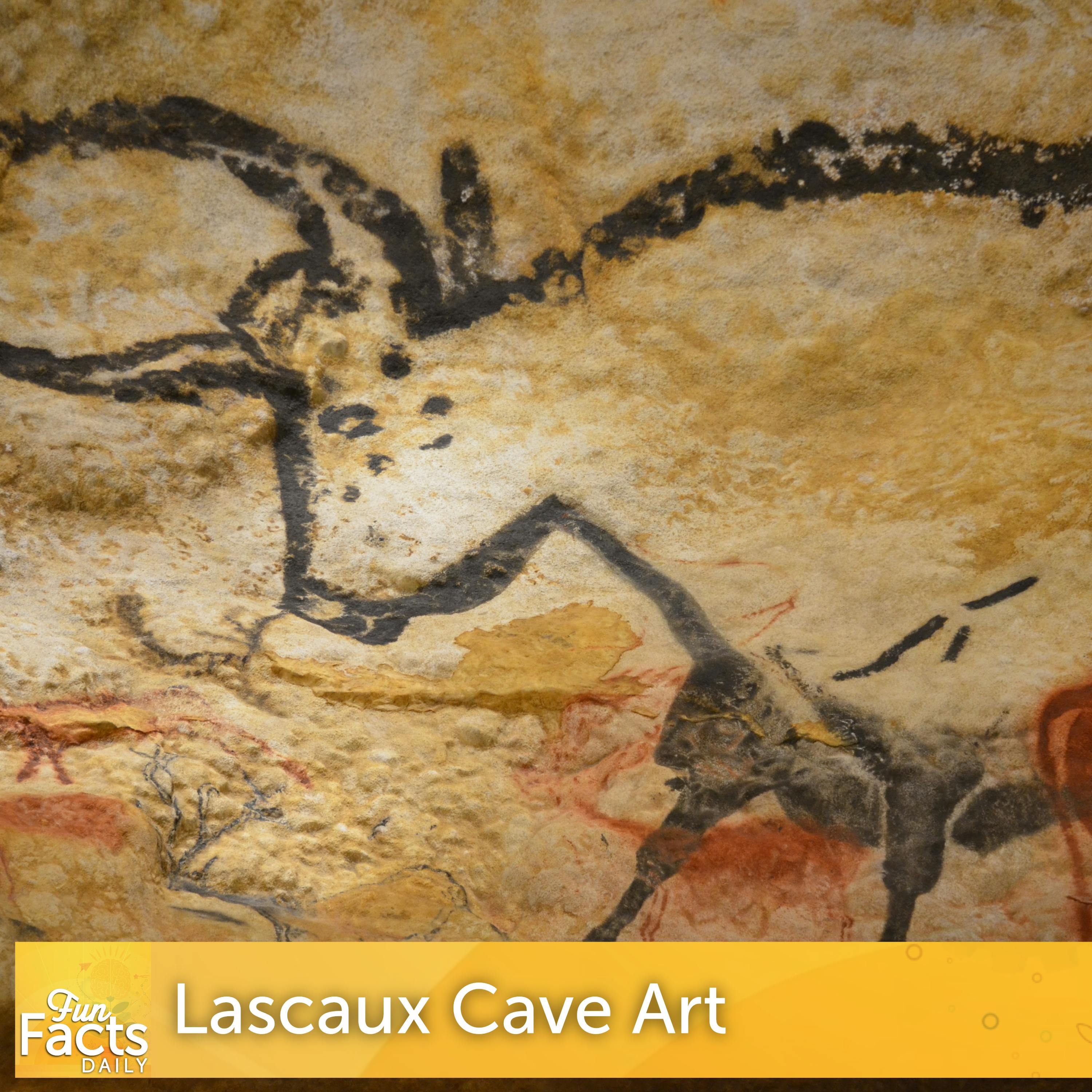
The prehistoric Caves of Lascaux in Southwestern France are home to some of the most significant Upper Paleolithic art ever discovered. Dating back approximately 17,000 years, the cave complex features nearly 2,000 figures, including the massive 17-foot bull in the Hall of the Bulls. These ancient artists displayed remarkable technical sophistication, utilizing scaffolding to reach high cave walls and employing advanced spray-painting techniques by blowing pigments through hollowed bird bones or reeds to create soft gradients and stencils. Beyond animal depictions, some researchers suggest the caves contain one of the oldest known star maps, with dot patterns potentially representing the Pleiades cluster and the constellation Taurus.
To ensure the long-term preservation of the original site, which suffered from mold and mineral growth due to human exposure after its 1948 opening, the cave was closed to the public in 1963. In its place, Lascaux II, a meticulous one-to-one replica, was constructed nearby to allow visitors to experience the artwork without damaging the ancient pigments. This conservation effort highlights the delicate balance between archeological study and the physical protection of world heritage. The discovery itself remains a legendary tale of accidental find, attributed to four teenagers and their dog, Robot, who stumbled upon the entrance in 1940 while searching for a rumored underground tunnel.
Want to learn more? Head over to my website www.funfactsdailypod.com and be sure to listen to my other podcasts Who ARTed: Weekly Art History for All Ages or Art Smart. For family fun, check out my son's podcast Rainbow Puppy Science Lab
Fun Facts Daily is an Airwave Media Podcast. If you are interested in advertising on this or any other Airwave Media show, email: advertising@airwavemedia.com
Learn more about your ad choices. Visit megaphone.fm/adchoices

Stockholm, the capital of Sweden, is uniquely situated across 14 islands connected by 57 bridges, earning it the nickname "Venice of the North". This geography is the result of post-glacial isostatic rebound; following the last ice age, the removal of massive glaciers caused the Earth's crust to slowly rise, a process that continues today at a rate of approximately 4 millimeters per year. This ongoing geological shift has transformed former Viking waterways into dry land over centuries. Beneath the city's surface lies the world's longest art gallery within the Stockholm metro system, known as the Tunnelbana. Spanning over 110 kilometers, more than 90 stations feature unique installations, often preserving the raw, two-billion-year-old bedrock of the Baltic Shield as a natural backdrop for modern artistic expression.
The city’s cultural landscape is defined by its dedication to both scientific achievement and historical preservation. Stockholm is the primary home of the Nobel Prizes, hosting the annual awards and banquets for physics, chemistry, medicine, and literature in honor of Alfred Nobel, the inventor of dynamite. For maritime enthusiasts, the Vasa Museum displays the world's only preserved 17th-century ship, which famously sank on its maiden voyage in 1628 due to a high center of gravity caused by excessive heavy cannons. Furthermore, Stockholm serves as the "Sun" in the Sweden Solar System, the world's largest scale model of the planetary system, with the Avicii Arena representing the central star on a scale of 1:20 million. Today, the city remains a global leader in digital infrastructure, operating as one of the most cashless societies in the world.
Want to learn more? Head over to my website www.funfactsdailypod.com and be sure to listen to my other podcasts Who ARTed: Weekly Art History for All Ages or Art Smart. For family fun, check out my son's podcast Rainbow Puppy Science Lab
Fun Facts Daily is an Airwave Media Podcast. If you are interested in advertising on this or any other Airwave Media show, email: advertising@airwavemedia.com
Learn more about your ad choices. Visit megaphone.fm/adchoices
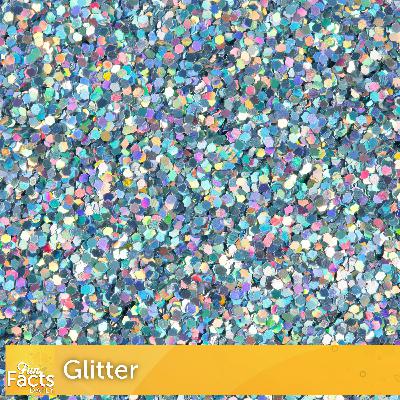
Glitter’s transition from an ancient decorative tool to a modern industrial staple reveals a history of both artistic ingenuity and accidental discovery. Long before the synthetic materials of today, ancient Egyptians utilized ground mica to impart an iridescent sheen to makeup and sarcophagi, while Paleolithic cave painters achieved a metallic glimmer using hematite. The modern iteration of glitter emerged in 1934 on a New Jersey farm when machinist Henry Ruschmann inadvertently created "schnibbles"—tiny, reflective plastic and metal fragments—after his cutting machine malfunctioned. These scraps were initially repurposed as artificial snow for holiday decorations before evolving into the ubiquitous craft material used globally today.
Beyond its aesthetic uses, glitter serves sophisticated roles in science and engineering. In forensic investigations, glitter acts as a "sparkly fingerprint," where unique polymer compositions and the Lacard’s exchange principle allow scientists to link suspects to crime scenes through microscopic evidence. While hobbyists use significant quantities, an anonymous industry consumes millions of pounds annually, likely for automotive finishes or currency security. Furthermore, specialized edible glitters made of 24-karat gold are used in luxury culinary arts, and NASA utilizes high-tech, space-grade glitter coatings on spacecraft to reflect solar radiation and protect sensitive instrumentation from extreme heat.
Want to learn more? Head over to my website www.funfactsdailypod.com and be sure to listen to my other podcasts Who ARTed: Weekly Art History for All Ages or Art Smart. For family fun, check out my son's podcast Rainbow Puppy Science Lab
Fun Facts Daily is an Airwave Media Podcast. If you are interested in advertising on this or any other Airwave Media show, email: advertising@airwavemedia.com
Learn more about your ad choices. Visit megaphone.fm/adchoices

For centuries, medical practices were guided by the miasma theory, which posited that diseases like cholera and the Black Death were caused by "bad air" or foul-smelling vapors. This belief led to unconventional treatments, such as the 17th-century practice of storing farts in jars to be inhaled as a shield against the plague. Other historically accepted remedies included the use of mummy powder, or mummia, made from ground human remains, which was believed to cure ailments ranging from headaches to broken bones. This practice originated from a linguistic misunderstanding regarding bitumen, a natural healing substance thought to be used in Egyptian mummification.
Advancements in the 19th and 20th centuries introduced equally peculiar, and often dangerous, treatments. "Medicated cigarettes" containing herbs like stramonium and belladonna were prescribed to treat asthma and congestion, despite the harmful effects of inhaling burnt plant matter. In the early 1900s, Radithor, a radioactive energy drink made with distilled water and radium isotopes, was marketed as a health supplement before the lethal effects of radiation were understood. Similarly, hydro-electric baths, which delivered low-voltage electric currents to patients in porcelain tubs, were popular for treating conditions like exhaustion and writers' cramp, highlighting a period of medical history defined by experimental, and often hazardous, innovation.
Want to learn more? Head over to my website www.funfactsdailypod.com and be sure to listen to my other podcasts Who ARTed: Weekly Art History for All Ages or Art Smart. For family fun, check out my son's podcast Rainbow Puppy Science Lab
Fun Facts Daily is an Airwave Media Podcast. If you are interested in advertising on this or any other Airwave Media show, email: advertising@airwavemedia.com
Learn more about your ad choices. Visit megaphone.fm/adchoices

The platypus is a unique, egg-laying mammal native to Australia, classified as a monotreme. It possesses a distinct combination of features, including a duck-like bill, a beaver-like tail, and otter-like feet. One of its most remarkable biological adaptations is electroreception, which allows the platypus to hunt underwater by detecting the tiny electrical impulses generated by the muscle contractions of its prey. Despite their somewhat comical appearance, male platypuses are among the few venomous mammals, featuring sharp, hollow spurs on their hind ankles connected to venom glands that are most active during the breeding season.
Beyond its physical oddities, the platypus exhibits several extraordinary internal and external characteristics. It lacks a traditional stomach, with its esophagus connecting directly to the small intestine, requiring it to consume small, soft-bodied invertebrates that are easily processed. Recent scientific discoveries have also revealed that platypus fur is biofluorescent, glowing a vivid bluish-green under ultraviolet light. Furthermore, mother platypuses do not have nipples; instead, they secrete milk directly through pores in their skin, which collects in grooves on their abdomen for their young to lap up. These diverse and unusual traits reflect the complex evolutionary history of one of nature’s most fascinating creatures.
Want to learn more? Head over to my website www.funfactsdailypod.com and be sure to listen to my other podcasts Who ARTed: Weekly Art History for All Ages or Art Smart. For family fun, check out my son's podcast Rainbow Puppy Science Lab
Fun Facts Daily is an Airwave Media Podcast. If you are interested in advertising on this or any other Airwave Media show, email: advertising@airwavemedia.com
Learn more about your ad choices. Visit megaphone.fm/adchoices

The Palais Idéal stands as a monumental achievement of "outsider art" located in Hauterives, France, constructed entirely by a local postman named Ferdinand Cheval. The project began in 1879 after Cheval tripped over an unusually shaped stone—a piece of water-hardened mollasse sandstone—while walking his 18-mile mail route. Inspired by the natural sculpture of the rock, he spent the next 33 years collecting stones in a wheelbarrow and cementing them together using a self-taught method of reinforced lime and cement. The resulting structure is a fantastical labyrinth of grottos, towers, and sculptures that reaches heights of up to 10 meters, despite Cheval having no formal architectural or masonry training.
Architecturally, the palace is a "world tour in stone," blending diverse styles that Cheval encountered through postcards and magazines he delivered. The facade features a surrealist mélange of Swiss chalets, Algerian fortresses, Hindu temples, and medieval castles, populated by stone figures ranging from Julius Caesar to mythological beasts. Though initially dismissed by critics as the work of an eccentric hobbyist, the Palais Idéal was championed by surrealists like Salvador Dalí and Pablo Picasso. In 1969, it was officially designated a protected historical monument by the French Minister of Culture, André Malraux, cementing its status as a global symbol of individual creativity and perseverance.
Want to learn more? Head over to my website www.funfactsdailypod.com and be sure to listen to my other podcasts Who ARTed: Weekly Art History for All Ages or Art Smart. For family fun, check out my son's podcast Rainbow Puppy Science Lab
Fun Facts Daily is an Airwave Media Podcast. If you are interested in advertising on this or any other Airwave Media show, email: advertising@airwavemedia.com
Learn more about your ad choices. Visit megaphone.fm/adchoices
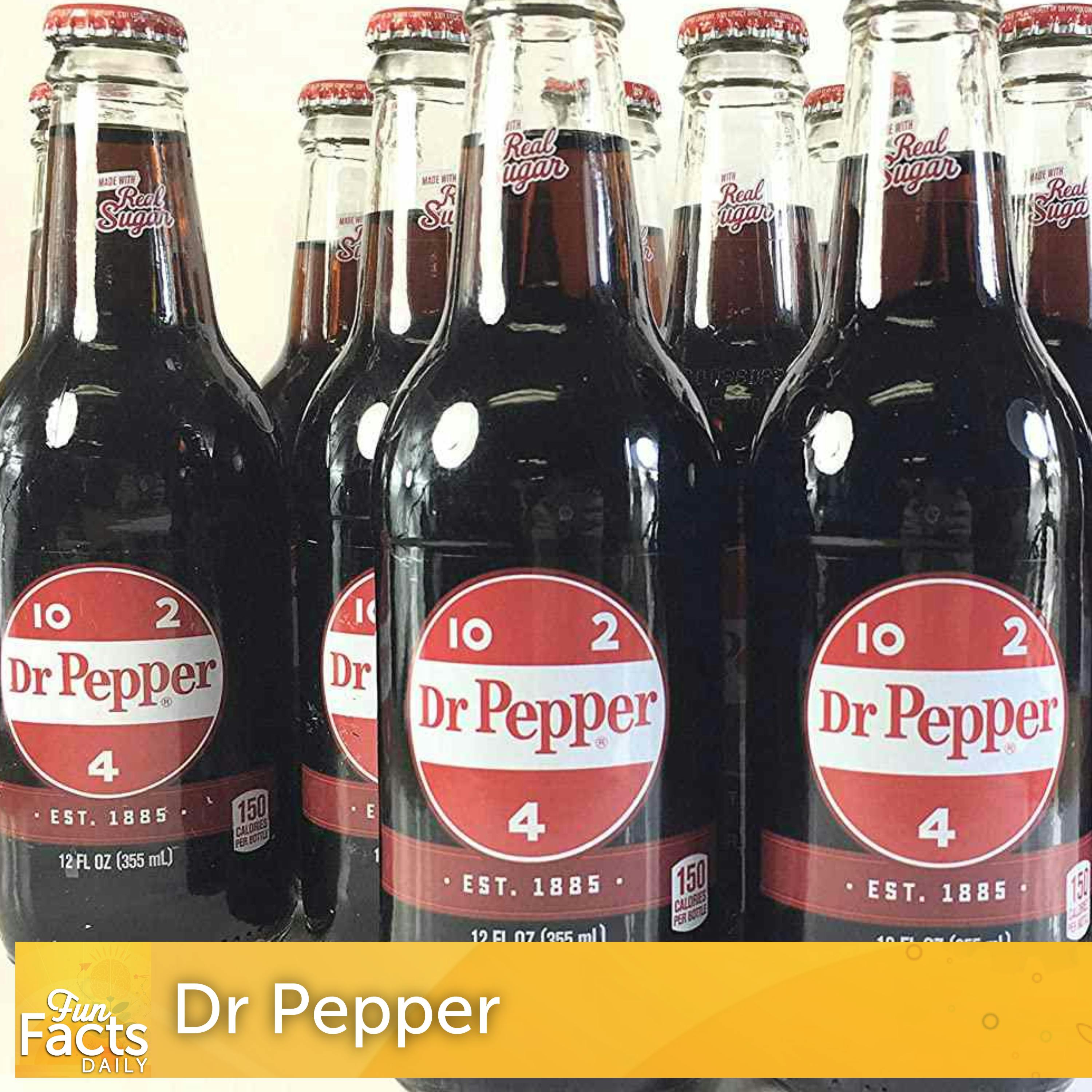
Dr Pepper is the oldest major soft drink in the United States, originating in 1885 at Morrison’s Old Corner Drug Store in Waco, Texas. Created by pharmacist Charles Alderton, the beverage features a proprietary blend of 23 fruit, herb, and spice flavors that was designed to mimic the pleasant aroma of a 19th-century pharmacy. Unlike standard colas, Dr Pepper is officially classified as a "pepper soda" because it lacks kola nut extract, a distinction that proved legally vital in the 20th century. This classification allowed the company to bypass exclusive bottling contracts held by industry giants like Coca-Cola and Pepsi, ensuring the drink's widespread availability across different restaurant chains and grocery stores.
Beyond its unique flavor profile, Dr Pepper’s legacy is defined by inventive marketing and versatile consumption habits. The brand gained national recognition at the 1904 World’s Fair in St. Louis, where it was showcased alongside other American staples like the ice cream cone and hot dog. During the 1920s and 30s, the company leveraged energy research to promote a "10, 2, and 4" routine, encouraging consumers to "drink a bite to eat" to combat natural energy slumps. Its versatility even extends to the winter months; a 1960s campaign popularized serving the soda hot with a slice of lemon, a tradition that remains a niche favorite. Today, the beverage is also a staple in culinary circles, particularly in Texas BBQ, where it is used as a tenderizing marinade for pulled pork and brisket.
Want to learn more? Head over to my website www.funfactsdailypod.com and be sure to listen to my other podcasts Who ARTed: Weekly Art History for All Ages or Art Smart. For family fun, check out my son's podcast Rainbow Puppy Science Lab
Fun Facts Daily is an Airwave Media Podcast. If you are interested in advertising on this or any other Airwave Media show, email: advertising@airwavemedia.com
Learn more about your ad choices. Visit megaphone.fm/adchoices

Explore the fascinating phenomenon of individuals establishing secret residences within unconventional urban structures. They often inhabit interstices, the small, overlooked gaps between architectural elements. These hidden dwellings range from a fully furnished 750-square-foot apartment built by artists inside the Providence Place Mall in Rhode Island to a wooden room suspended within the iron supports of the Manhattan Bridge. Other notable examples include a woman who lived undetected in a crawl space of a Japanese man's closet for a year and a designer who constructed a mobile pop-up studio beneath a highway bridge in Valencia, Spain, using the bridge's concrete beams as rails for a movable platform.
The most recent and striking instance of this behavior occurred in April 2024, when a woman was discovered living inside the large rooftop sign of a Family Fair supermarket in Midland, Michigan. Having occupied the hollow sign for approximately a year, she equipped the space with flooring, a mini desk, a pantry, a computer, and a printer powered by the sign's existing electrical infrastructure. These cases highlight a growing trend of "hidden history" where resourceful individuals reclaim "dead space" in overcrowded urban environments, challenging traditional definitions of usable living and working areas.
Want to learn more? Head over to my website www.funfactsdailypod.com and be sure to listen to my other podcasts Who ARTed: Weekly Art History for All Ages or Art Smart. For family fun, check out my son's podcast Rainbow Puppy Science Lab
Fun Facts Daily is an Airwave Media Podcast. If you are interested in advertising on this or any other Airwave Media show, email: advertising@airwavemedia.com
Learn more about your ad choices. Visit megaphone.fm/adchoices

Frogs possess a unique biological makeup that allows them to thrive in diverse environments, largely due to their permeable skin. Unlike human skin, which acts as a barrier, a frog’s skin allows liquids and gases to pass through easily, enabling them to absorb necessary moisture directly from their surroundings rather than drinking with their mouths. This sensitivity makes them vital bioindicators, as they are often the first to react to pollution or environmental changes. Some species, such as the North American wood frog, have evolved extreme survival mechanisms, including the ability to survive being frozen solid. By producing large amounts of glucose that acts as a natural antifreeze, these frogs can protect their vital organs even as their heart stops beating and their body water turns to ice.
In addition to their unique skin and survival tactics, frogs exhibit remarkable physical adaptations for hunting and protection. When consuming prey, many frogs use their eyeballs to assist in swallowing; by retracting their bulging eyes into their skull, they create downward pressure that shoves food toward the stomach. Defensive strategies vary by species, ranging from the Golden Poison Frog’s potent batrachotoxin—derived from a specific wild diet of ants and beetles—to the nictitating membrane, a translucent third eyelid that functions like built-in goggles for underwater vision. Their legendary jumping ability is powered by specialized leg muscles and stretchy tendons that act like springs, allowing a small cricket frog to leap distances equivalent to a human jumping the length of a football field.
Want to learn more? Head over to my website www.funfactsdailypod.com and be sure to listen to my other podcasts Who ARTed: Weekly Art History for All Ages or Art Smart. For family fun, check out my son's podcast Rainbow Puppy Science Lab
Fun Facts Daily is an Airwave Media Podcast. If you are interested in advertising on this or any other Airwave Media show, email: advertising@airwavemedia.com
Learn more about your ad choices. Visit megaphone.fm/adchoices

Nerf has been one of the most recognizable names in the toy industry since it began in 1969 with an inventor named Reyn Guyer, who also created the classic game Twister. Originally pitched as a game involving foam "cavemen" and rocks, the product was simplified by Parker Brothers into the world’s first 4-inch foam indoor ball. The material itself is a specialized visco-elastic polyurethane. During manufacturing, a chemical reaction between polyester resin and water releases carbon dioxide, creating millions of microscopic "open cells" that give the material its signature squishy, velvety texture.
While the brand is now synonymous with high-tech blasters, the first Nerf projectile toy, the Blastaball, did not debut until 1989, followed by the dart-firing Sharpshooter in 1992. Today, Nerf has evolved into a high-performance hobby with the Nerf Pro and Rival series, which are designed for enthusiasts and can fire rounds at speeds exceeding 100 feet per second. For maintenance, players can actually repair dented or misshapen foam darts by using a hair dryer on a low heat setting; the heat causes the air inside the microscopic cells to expand, pushing the foam back into its original cylindrical shape. From world-record-breaking pneumatic creations to competitive backyard tournaments, the brand remains the gold standard for safe, kinetic play.
Want to learn more? Head over to my website www.funfactsdailypod.com and be sure to listen to my other podcasts Who ARTed: Weekly Art History for All Ages or Art Smart. For family fun, check out my son's podcast Rainbow Puppy Science Lab
Fun Facts Daily is an Airwave Media Podcast. If you are interested in advertising on this or any other Airwave Media show, email: advertising@airwavemedia.com
Learn more about your ad choices. Visit megaphone.fm/adchoices

The Australian Outback encompasses approximately 70% of the Australian continent, covering nearly 2.2 million square miles of diverse terrain. If this vast interior were an independent nation, it would rank as the sixth-largest country on Earth, surpassing the size of the entire European Union. While often characterized by its iconic red sands, the region features complex ecosystems ranging from tropical savannas and mountain ranges to some of the world’s oldest rainforests. Beneath this arid surface lies the Great Artesian Basin, one of the largest and deepest freshwater resources globally. Covering 22% of the continent, this subterranean reservoir holds enough water to fill Sydney Harbour 130,000 times, providing a critical lifeline for wildlife and industry in areas where rainfall is rare.
The region’s history and culture are defined by unique geological records and adaptive human architecture. At Lark Quarry, the Outback preserves the world's only known fossilized record of a dinosaur stampede, where over 3,300 footprints from 95 million years ago remain etched in sediment. In the opal-mining town of Coober Pedy, residents have adapted to extreme temperatures exceeding 104°F by constructing subterranean "dugouts" that maintain comfortable temperatures year-round. The landscape is also home to the 3,488-mile Dingo Fence, the longest continuous fence in the world, and a population of over one million wild dromedary camels. Furthermore, the native flora offers practical survival solutions, such as the tea tree, which contains the compound terpinen-4-ol and serves as a natural insect repellent and antiseptic.
Want to learn more? Head over to my website www.funfactsdailypod.com and be sure to listen to my other podcasts Who ARTed: Weekly Art History for All Ages or Art Smart. For family fun, check out my son's podcast Rainbow Puppy Science Lab
Fun Facts Daily is an Airwave Media Podcast. If you are interested in advertising on this or any other Airwave Media show, email: advertising@airwavemedia.com
Learn more about your ad choices. Visit megaphone.fm/adchoices


Download from Google Play

Download from App Store
 United States
Great show. Fits into the day easily with its program length. Interesting facts and wide variety of topics. Educational and fun. Highly recommend!