DiscoverSpinal Chat with The PCA
Spinal Chat with The PCA
Claim Ownership

Spinal Chat with The PCA

Author: Pennsylvania Chiropractic Association

Subscribed: 0Played: 0
Share

Description

The Spinal Chat – A Service of the Pennsylvania Chiropractic Association

Welcome to The Spinal Chat, the official podcast of the Pennsylvania Chiropractic Association (PCA), your front-row seat to everything shaping Pennsylvania’s $800 million chiropractic industry.

Each episode brings you insights from industry luminaries, conversations with PCA’s Strategic Business Partners, and practical guidance to help chiropractors strengthen their practice, elevate patient care, and thrive in today’s evolving healthcare landscape.

From study breakdowns and legislative updates to member spotlights and stories that celebrate the power of chiropractic, The Spinal Chat is your trusted source for connection, knowledge, and advocacy in the Commonwealth and beyond.

Tune in, stay informed, and be part of the movement advancing chiropractic in Pennsylvania.

Contact the PCA Email: pca@pennchiro.org

PCA: https://pennchiro.org/

29 Episodes
Reverse
Exploring Impact Health Sharing: A Game-Changer for Chiropractic PracticesIn this episode of the Pennsylvania Chiropractic Association podcast, Executive Director Mike Barba hosts Richard and Trey from Impact Health Sharing. This strategic business partnership has been assisting PCA members in transitioning from traditional insurance models to more cost-effective healthcare sharing systems. The discussion covers the benefits of Impact Health Sharing for chiropractic care, including faster payment processing, increased patient access, and reduced administrative burdens. They dive into how chiropractors can become preferred providers, leveraging Impact Health to improve practice sustainability and patient satisfaction. Highlights include easy enrollment, premium savings, and new benefits, including teletherapy. Richard and Trey emphasize the nonprofit nature of Impact Health Sharing and its commitment to keeping costs low while promoting wellness. Listeners are encouraged to learn more about becoming a preferred provider to take advantage of these opportunities.00:00 Introduction to the Podcast00:52 Meet Richard and Trey from Impact Health Sharing01:55 Impact Health Sharing: Benefits and Opportunities04:18 How to Become a Preferred Provider09:11 Real-Life Success Stories11:31 Educational Resources and Support17:53 New Features and Future Plans19:29 Final Thoughts and Closing RemarksTo learn more about Impact Health Sharing: https://www1.impacthealthsharing.com/?referral_id=02251386.Your Exclusive Referral Code: 02251386Use this code for PCA member exclusive benefits and pricing.Impact Health representatives:Richard Voelker: rkvoelker@gmail.comTrey Voelker: rtreyvoelker@gmail.comPCA: https://pennchiro.org/Email the PCA: pca@pennchiro.org
PCA Deep Dive: Medicare Stuck in 1972; The Case for Chiropractic ModernizationEpisode OverviewThis episode examines the Chiropractic Medicare Coverage Modernization Act (H.R. 539 / S. 106) and the structural limitations within Medicare that restrict coverage of chiropractic services to spinal manipulation only, excluding evaluation, imaging, and related services routinely covered for other physician types.We explore the economic impact of referral loops, opioid exposure pathways, and downstream surgical costs, along with recent JAMA analysis on Medicare Advantage quality measurement and data fragmentation.00:00 Why Federal Policy Matters: Medicare Modernization Act (H.R. 539 / S. 106)01:31 The ‘Mechanic Can’t Pop the Hood’ Analogy (How Medicare Handcuffs Chiropractors)03:19 2026 vs. 1972: The Time-Capsule Rules Still Running Medicare03:59 Mission & Sources: Legislative Text, Cost Data, and the New JAMA Viewpoint05:31 Back to 1972: What Medicare Actually Covers (One Service Only)06:37 Portal-of-Entry Reality vs. Medicare Reimbursement (No Pay for Exams or Imaging)09:28 What the Bill Really Does: Parity, Not ‘New Services’11:14 Meet Brenda: The Referral Loop, Delays, and the Opioid ‘Prescription Pathway’ Risk15:39 The Hidden Price of Restricted Chiropractic Access (and Why Costs Explode)16:34 Lane Assignment: How Barriers Push Patients Toward Opioids, Injections & Surgery17:19 Static vs Dynamic Budget Modeling: The $50 Exam That Prevents $40,000 Surgery19:01 The Opioid & Safety Data: Lower Prescriptions, Fewer Adverse Events, Fewer Falls22:25 If It’s a Slam Dunk, Why Hasn’t Medicare Changed? Enter the Macro View23:29 Medicare Advantage Explained: Star Ratings, Admin Metrics & the “Illusion” of Quality26:10 The Data Swamp: Missing Encounter Data, Invisible Networks & Fragmented Governance28:45 How HR 539 Fixes the Feedback Loop: DCs as Physicians, Closed Data Loops & Real Outcomes31:21 Wrap-Up + Call to Action: Align Policy With Reality and Get OrganizedChiropractic Medicare Coverage Modernization Act H.R. 539 / S. 106 (118th Congress) Amends Section 1861(r) of the Social Security Act to recognize Doctors of Chiropractic as physicians within Medicare for covered services within their state scope of practice.Congress.gov: https://www.congress.govResearch and Economic DataWhedon JM et al. Association Between Chiropractic Use and Opioid Receipt Among Older Medicare Beneficiaries. Spine. 2020.Whedon JM et al. Association Between Chiropractic Care and Use of Prescription Opioids Among Older Adults with Spinal Pain. JAMA Network Open. 2018.Kazis LE et al. Increased Health Care Expenditures Associated with Opioid Initiation for Low Back Pain. Health Services Research.Davis MA et al. Association Between Early Physical Therapy or Chiropractic Care and Reduced Risk of Subsequent Spine Surgery. BMJ Open.Agency for Healthcare Research and Quality (AHRQ) Noninvasive Treatments for Low Back Pain: Comparative Effectiveness Review.CDC Opioid Prescribing and Risk Data https://www.cdc.gov/drugoverdosePCA Contact information:PCA Website: https://pennchiro.org/PCA Email: pca@pennchiro.org
PCA Strategic Business Partner Highlight: Foot Levelers In this PCA Strategic Business Partner Highlight, we sit down with Jamie Greenawalt, President of Foot Levelers, a long-time sponsor and trusted partner of the Pennsylvania Chiropractic Association.This conversation explores how continuity of care extends beyond the adjustment table and into everyday life, particularly through sleep posture and recovery. Patients may only see their chiropractor once or twice a month, but posture, gravity, and healing occur daily. Technology-backed tools that reinforce care between visits play a critical role in improving outcomes and long-term patient engagement.Jamie shares the clinical and historical foundation behind Foot Levelers’ custom pillow technology, including its biomechanical design, data-driven customization, and role as an extension of chiropractic care rather than a lifestyle accessory. The discussion highlights how aligning daytime support, through orthotics, with nighttime recovery, through sleep posture, creates a more complete approach to whole-body biomechanics.The episode also addresses how strategic business partners can help practices responsibly diversify revenue, strengthen patient interactions, and support compliance without compromising clinical integrity. Education, mentorship, and evidence-informed tools are positioned as force multipliers that enhance both patient experience and practice sustainability.This highlight underscores the value of PCA’s strategic partnerships and their role in supporting chiropractors with practical solutions, professional advocacy, and long-term practice resilience.00:00 Introduction to PCA Strategic Business Partner Highlight01:03 Meet Jamie Greenwalt and Foot Levelers01:31 The Evolution of Foot Levelers' Custom Pillow02:25 The Science Behind the Nexi Pillow04:09 Success Stories and Patient Feedback05:55 Integrating the Pillow into Chiropractic Care10:20 Training and Continuing Education for Doctors11:19 Business Benefits of Foot Levelers' Products12:48 Final Thoughts and Call to ActionFoot Levelers': https://www.footlevelers.com/YouTube Link: https://youtu.be/eKAG5aiii7U?si=nqBlzdliLmOvYUBiPCA: https://pennchiro.org/Email the PCA: pca@pennchiro.org
January President’s Address Dr Andrew Heck: Momentum and Advocacy in PA ChiropracticJanuary President’s Address: Momentum and Advocacy in PA ChiropracticIn this episode of Spinal Chat by the Pennsylvania Chiropractic Association (PCA), the January President’s Address is delivered by PCA President Dr. Andrew Heck. The address, initially shared in the PCA newsletter, provides an overview of the significant progress in the chiropractic profession within Pennsylvania. Key topics include legislative advancements (such as House Bill 1106), ongoing advocacy efforts, insurance reform, and the conceptual introduction of 'chiropractic physicians' to better reflect their roles within the broader healthcare system. The address emphasizes the importance of chiropractor engagement, public education, and policy support to integrate chiropractic care into mainstream healthcare further.00:00 Introduction to Spinal Chat00:53 President's Address: Momentum in Chiropractic01:35 The Role and Value of Chiropractic03:40 Legislative Progress and Advocacy04:33 Insurance Issues and Solutions05:05 Exciting Developments and Conclusion05:53 Call to Action: Get InvolvedPCA Advocacy Team:Jessica Treichler Email: jessica.pennchiro@gmail.comTim Faircloth Email: timpennchiro@gmail.comPCA Contact information:PCA Website: https://pennchiro.org/PCA Email: pca@pennchiro.org
PCA Deep Dive: Opioid Addiction Doesn’t Start With a Pill, It Starts With PainIn this episode of PCA Spinal Chat Deep Dive, the focus is on re-examining the opioid crisis from an upstream perspective. While most discussions center on the aftermath of addiction, this episode explores what happens before addiction begins, emphasizing the role of pain management in prevention. By comparing the latest guidelines on opioid use disorder with research advocating for conservative-first approaches like chiropractic care and physical therapy, the discussion highlights the importance of early pain management. Effective pain management can significantly reduce the need for surgeries and opioid prescriptions, potentially preventing addiction from ever starting. The conversation also delves into systemic issues, such as how authorization friction in healthcare policies often directs patients toward pharmacological solutions, rather than conservative care. This episode makes a compelling case for integrating upstream accountability with downstream compassion, stressing that regulating pathways to care is as crucial as regulating medications themselves.00:00 Introduction to the Opioid Crisis00:24 Understanding the Upstream Approach01:09 Care Sequencing Explained04:03 Current State of Opioid Use Disorder Treatment06:50 The Role of Conservative Care12:22 Barriers to Conservative Care14:45 Conclusion and Call to ActionReferencesMessmer, J. M., et al. Management of Opioid Use Disorder: Clinical Guidelines Synopsis. JAMA, 2026. Available at: https://jamanetwork.com/journals/jama/fullarticle/250008PCA Website: https://pennchiro.org/PCA Email: pca@pennchiro.orgDisclosureThe Pennsylvania Chiropractic Association did not generate this data. PCA Deep Dive reviews and discusses independent, peer-reviewed research to translate long-term outcomes and clinical implications for patients, clinicians, policymakers, and healthcare decision-makers.
From Fringe to First-Line: 50 Years of Evidence Now Defining Spinal Manipulation as Standard CareIn this episode of PCA Deep Dive, we explore a recent 2024 narrative review from the Journal of Clinical Medicine, focusing on spinal manipulation and chiropractic practice. Analyzing over 50 years of research and more than 6,000 studies, we examine the modern evidence on spinal manipulative therapy (SMT) and its role, safety, and clinical value in musculoskeletal care. We discuss the evolving academic focus from defensive research to high-quality methods, such as randomized controlled trials (RCTs) and systematic reviews, leading to robust clinical practice guidelines (CPGs) that strongly support SMT for conditions such as low back pain (LBP), neck pain, cervicogenic headaches, and tension-type headaches. We also address historical safety concerns and the current evidence indicating a low risk of adverse events. The episode underlines SMT’s position within integrated, evidence-based conservative care and highlights ongoing research pushing its application even further into general healthcare.00:00 Introduction to PCA Deep Dive00:58 Unpacking the Evidence: Spinal Manipulation and Chiropractic Practice02:34 Historical Context and Research Evolution05:23 Clinical Practice Guidelines and Recommendations07:45 Expanding the Scope: Beyond Spine Care09:15 Addressing Safety Concerns and Value Proposition13:24 Conclusion and Future DirectionsPrimary Evidence SourceClinical Practice Guidelines for Spinal Manipulative Therapy: A Narrative Review Journal of Clinical Medicine, 2024This comprehensive narrative review analyzes more than 50 years of chiropractic and SMT research, mapping the profession’s progression from early regulatory and safety inquiries to modern guideline-supported clinical practice. The authors reviewed:6,286 chiropractic-related publications spanning 1972–202433 clinical practice guidelines published between 2013 -202459 distinct guideline recommendations related to spinal manipulative therapyKey findings include:Strong guideline support for SMT in low back pain and neck pain, particularly when delivered as part of multimodal, conservative careDemonstrated maturation of research quality, with a shift toward randomized controlled trials and systematic reviewsNo definitive causal link between SMT and serious vascular adverse events, with overall risk classified as rareIncreasing alignment with value-based care goals, including reduced downstream imaging, medication use, and surgeryDirect link to the study: https://doi.org/10.3390/jcm13055668PCA Website: https://pennchiro.org/PCA Email: pca@pennchiro.orgDisclosureThe Pennsylvania Chiropractic Association did not generate this data. PCA Deep Dive reviews and discusses independent, peer-reviewed research to translate long-term outcomes and clinical implications for patients, clinicians, policymakers, and healthcare decision-makers.
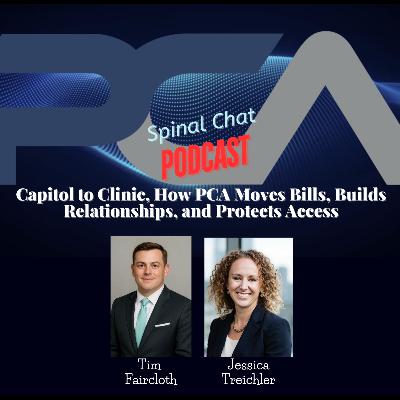
Capitol to Clinic: How PCA Moves Bills, Builds Relationships, and Protects AccessThe Power of Advocacy: Strengthening the Future of Chiropractic Care in PennsylvaniaIn this episode of Spinal Chat, host Mike Barb, Executive Director of the Pennsylvania Chiropractic Association (PCA), is joined by legislative liaisons Jessica Treichler and Tim Faircloth to discuss the vital advocacy efforts of the PCA. They delve into the significance of maintaining a consistent presence in the Capitol to protect and advance chiropractic care. Key initiatives being promoted include HB 1106 for scope modernization, copay reform, Conservative Care First, and sports chiropractic policies. The episode emphasizes the importance of grassroots involvement, engagement with legislators, and the power of chiropractors and their patients' voices. They also discuss the potential for collaboration between chiropractors and physical therapists and invite semi-retired or retired chiropractors to join the advocacy efforts. The conversation highlights the PCA's ongoing legislative goals and the collective effort required to secure the future of chiropractic in Pennsylvania.00:00 Introduction to Spinal Chat Podcast00:58 Meet the Legislative Liaison Team02:02 Understanding Advocacy and Its Importance02:57 Personal Stories and Experiences04:12 The Role of Advocacy in Chiropractic06:21 Engaging with Legislators and Community07:32 Advocacy Day and Community Involvement19:48 Legislative Goals and Future Plans31:18 Call to Action and Final Thoughts34:49 PCA's Legislative Agenda and Key Players35:26 Meet Jessica Trier and Tim Faircloth37:38 The Importance of Advocacy in Chiropractic40:08 Advocacy Day and Grassroots Efforts43:26 Engaging Legislators and Community Involvement53:35 PCA's Legislative Goals and Scope of Practice01:03:46 The Power of Advocacy and Community Support01:05:05 Conclusion and Call to ActionJessica Treichler Email: jessica.pennchiro@gmail.comTim Faircloth Email: timpennchiro@gmail.comPCA Website: https://pennchiro.org/PCA Email: pca@pennchiro.org
PCA Deep Dive: The Osteoarthritis Crisis: How the System Is Failing to Use Proven, Evidence-Based CareIn this episode of PCA Deep Dive, hosted by the Pennsylvania Chiropractic Association, the focus is on the escalating global health crisis of chronic joint pain driven by osteoarthritis (OA). The episode discusses the significant burden OA places on healthcare systems worldwide, highlighting the forecasted increase to nearly 1 billion affected individuals by 2050. Despite clear clinical guidelines advocating for conservative care and therapeutic exercise, many patients are receiving misaligned treatments. The discussion underscores the importance of movement and non-drug approaches in managing OA, explaining how a lack of movement contributes to cartilage degradation. The episode also explores the vital role of chiropractors as primary care providers for musculoskeletal issues, emphasizing their training and capabilities in delivering effective, cost-efficient care that aligns with evidence-based guidelines. Key statistics reveal systemic failures in current care pathways, underscoring the need for an integrated approach to close the treatment gap and improve patient outcomes. The episode concludes by urging the need to address environmental and behavioral risks to mitigate the looming OA crisis.00:00 Introduction to PCA Deep Dive00:18 The Global Health Crisis of Osteoarthritis01:18 Understanding the Scale and Projections03:59 The Role of Obesity and Sedentary Lifestyles05:44 Therapeutic Exercise: The Best Medicine09:00 The Treatment Gap and Systemic Failures10:52 The Role of Chiropractors in Conservative Care14:21 Conclusion and Call to ActionPrimary Research & Evidence SourcesGlobal Burden of Disease Study – OsteoarthritisWorldwide prevalence and years lived with disability projectionsOsteoarthritis – GBD 2019 Analysis Why Exercise Should Be First-Line Treatment for Joint PainExplains cartilage physiology, movement-driven joint nutrition, and guideline recommendationsJoint Pain or Osteoarthritis: Why Exercise Should Be Your First Line of Treatment Collaborative Musculoskeletal Care and the Role of ChiropractorsCost outcomes, scope, training, and conservative care integrationCollaborative Musculoskeletal Care: Chiropractors PCA Website: https://pennchiro.org/PCA Email: pca@pennchiro.orgDisclosureThe Pennsylvania Chiropractic Association did not generate this data. PCA Deep Dive reviews and discusses independent, peer-reviewed research to translate long-term outcomes and clinical implications for patients, clinicians, policymakers, and healthcare decision-makers.
PCA Deep Dive: One Surgery Rarely Stays One: What 308,000 Patients RevealThis episode of PCA Deep Dive, presented by the Pennsylvania Chiropractic Association, examines the critical decisions patients face when dealing with severe low back pain. The discussion centers on the impact of choosing initial care providers—comparing conservative management (such as chiropractic care) with surgical pathways. Using data from key studies, including long-term outcomes of lumbar discectomies, the episode highlights how initial decisions influence long-term surgical risks, reoperation rates, and the overall durability of surgical interventions. The insightful analysis emphasizes the importance of sequencing, risk management, and understanding the broader implications of early healthcare choices on lifelong spine health.00:00 Introduction to PCA Deep Dive00:09 The Immediate Crisis of Severe Low Back Pain00:20 The Impact of Initial Care on Long-Term Outcomes01:08 Comparing Initial Provider Choices01:52 Statistical Analysis of Surgical Risks02:19 The Conservative Pathway vs. Surgical Pathway06:04 Understanding Surgical Durability08:31 Factors Influencing Surgical Outcomes10:58 Implications for Patients and Healthcare Systems14:28 Conclusion and Key TakeawaysStudy Attribution & SourceThis episode references findings from the following peer-reviewed study published in Spine:Etigunta, S.K., Liu, A.M., Gausper, A., Chan, V., Scheer, J., Perry, T., Skaggs, D.L., Walker, C., & Tuchman, A. Long-Term Reoperation Rates After Single-Level Lumbar Discectomy: A Nationwide Cohort Study. Spine, Volume 50, Issue 15, August 1, 2025.The study is a retrospective cohort analysis of 308,979 patients followed for at least 5 years, evaluating long-term reoperation and fusion rates following single-level lumbar discectomy.Journal Link (DOI): https://doi.org/10.1097/BRS.0000000000005328PCA Website: https://pennchiro.org/PCA Email: pca@pennchiro.orgDisclosureThe Pennsylvania Chiropractic Association did not generate this data. PCA Deep Dive reviews and discusses independent, peer-reviewed research to translate long-term outcomes and clinical implications for patients, clinicians, policymakers, and healthcare decision-makers.
PCA Deep Dive: Beyond the Pain Score: What Really Prevents Chronic Back PainIn this episode of the Deep Dive, the focus is on a newly published randomized clinical trial, the PACBACK trial, from The Journal of the American Medical Association. This study examines spinal manipulation and clinician-supported biopsychosocial self-management versus standard medical care in treating acute and subacute low back pain in patients at high risk of chronic disability. The trial's findings emphasize the importance of long-term function over short-term symptom relief, showcasing how conservative, nonpharmacologic approaches, particularly self-management strategies, lead to significant reductions in disability. The episode also delves into the methodologies and tools used in the study, such as the Start Back screening tool, the Wellbeing Wheel, and the Behavior Change Wheel, offering a comprehensive look at how these approaches can transform patient care in chiropractic and physical therapy.00:00 Introduction to the Deep Dive00:06 Overview of the PACBACK Trial00:35 Significance of Low Back Pain00:45 Study Design and Methodology02:18 Detailed Breakdown of Study Groups03:16 Results: Disability and Pain Outcomes05:40 Mechanisms Behind Supported Self-Management06:06 Practical Implementation and Skills Taught08:25 Responder Analysis and Key Statistics08:58 Comparing Spinal Manipulation Therapy11:41 Policy Implications and Systemic Challenges12:53 Study Limitations and Final Thoughts14:15 Conclusion and Key TakeawaysTitle: Spinal Manipulation and Clinician-Supported Biopsychosocial Self-Management for Acute Back Pain: The PACBACK Randomized Clinical TrialPublished: JAMA, December 29, 2025Authors: Gert Bronfort, PhD, DC Eric N. Meier, MS Brent Leininger, PhD, DC, MS Michael Schneider, PhD, DC Roni Evans, PhD, DC, MS Carol Greco, PhD Linda Hanson, DC, MS Christine McFarland, BS, BA Roger Chou, MD John Connett, PhD Anthony Delitto, PhD, PT Steven Z. George, PhD, PT Ronald M. Glick, MD Francis Keefe, PhD John Licciardone, DO, MS, MBA Craig Schulz, DC, MS Dennis Turk, PhD Patrick J. Heagerty, PhD, MSJournal Reference: JAMA. 2025; Published online December 29, 2025.DOI: 10.1001/jama.2025.21990This episode references findings from the PACBACK Randomized Clinical Trial published in JAMA in December 2025 by Bronfort and colleagues.PCA Website: https://pennchiro.org/PCA Email: pca@pennchiro.orgDisclosureThe Pennsylvania Chiropractic Association did not generate this data. PCA Deep Dive reviews and discusses independent, peer-reviewed research to help translate long-term outcomes and clinical implications for patients, clinicians, policymakers, and healthcare decision makers.
Judge, Jury, and Insurer? The Geico No-Fault Wake-Up CallThis episode of PCA Deep Dive, a service of the Pennsylvania Chiropractic Association, explores the New York Court of Appeals decision in Geico v. Mayzenberg. This landmark case redefines the boundaries of authority between insurers and state regulators. It highlights the court's ruling that insurers cannot unilaterally deny claims based on suspected misconduct. Instead, such assessments must be made by state regulatory bodies like the New York State Board of Regents. The episode delves into the case specifics, legal strategies, and the broader implications for healthcare providers, insurance professionals, and the no-fault system. Despite potential new bottlenecks at the regulatory level, the ruling aims to protect due process and maintain the efficiency of accident victim compensation.00:00 Introduction to PCA Deep Dive00:13 Case Overview: Guyco v. Mayzenberg01:25 The Alleged Scheme and Legal Strategy04:02 Court's Ruling and Its Implications04:32 The Role of State Regulators10:10 Balancing Efficiency and Justice11:44 Conclusion and Key Takeaways13:12 Closing Remarks and Call to ActionPCA Website: https://pennchiro.org/PCA Email: pca@pennchiro.orgDisclosureThe Pennsylvania Chiropractic Association did not generate this data. PCA Deep Dive reviews and discusses independent, peer-reviewed research to help translate long-term outcomes and clinical implications for patients, clinicians, policymakers, and healthcare decision makers.
PCA Strategic Business Partner Spotlight: Praxi AI In this episode of the PCA Spinal Chat Podcast, Executive Director Mike Barba hosts Andre Jones from Praxi AI to explore how their AI technology can transform chiropractic practices. They discuss in detail how Praxi AI can improve office efficiency, reduce missed calls, boost patient satisfaction, and free up staff time for more value-added activities. Andre explains Praxi AI’s seamless integration, customizable features, and measurable ROI. He also addresses common questions about HIPAA compliance and brand integration, emphasizing the importance of safeguarding patient information while maintaining a practice’s unique voice. The episode includes a live demo of Praxi AI’s advanced capabilities, including appointment scheduling, language adaptability, and 24/7 support, highlighting its potential to revolutionize practice management in the chiropractic field.00:00 Introduction to PCA Spinal Chat Podcast00:34 Meet Praxi AI and Andre Jones01:41 Understanding Praxi AI's Unique Approach04:05 Praxi AI's Integration and Customization05:10 Live Demo of Praxi AI05:54 Challenges in Chiropractic Practices07:25 The Business Case for AI in Healthcare10:10 Praxi AI's Key Features and Benefits13:50 Measurable ROI and Analytics15:38 HIPAA Compliance and Brand Integration21:39 Language Support and Subscription Details24:08 Live Call Demo and Final Thoughts29:59 Conclusion and Closing RemarksPraxi AI: http://www.praxiai.com/ Discount Code: PCA Andre Jones Email: info@praxiai.comPCA Website: https://pennchiro.org/PCA Email: pca@pennchiro.org
PCA Audio Newsletter: October’s Key Updates and AnnouncementsIn the October 2025 edition of the PCA Spinal Chat Audio Newsletter, the Pennsylvania Chiropractic Association highlights legislative advances, member achievements, new educational offerings, and updates shaping chiropractic's future in Pennsylvania. This episode features messages from Executive Director Mike Barba, PCA President Dr. Andrew Heck, Vice President Dr. Kris Arnold, and Treasurer Dr. Theresa Russo. Key topics include the recent success at the Northeast Chiro Summit, the launch of the state's first chiropractic apprenticeship pathway, progress in legislative advocacy, and enhancements to member benefits. Additionally, the episode promotes the 2026 Northeast Chiro Summit, announces new continuing education opportunities, and highlights partnerships with various business members. Listeners are encouraged to support legislative initiatives like H.R. 539 to enhance patient access to chiropractic care.00:00 Welcome to the PCA Spinal Chat Audio Newsletter00:44 Annual Address and Year in Review03:28 Maximizing Your PCA Membership08:26 Financial Transparency and Sustainability11:42 President's Annual Address17:49 Federal Advocacy and Legislative Updates20:01 Northeast Chiro Summit 202621:17 Member Spotlights and Business Partners24:56 Insurance Hot Topics and CE Opportunities27:09 Closing Remarks and Call to ActionLink to October Newsletter: https://www.flipsnack.com/8A598DCC5A8/october-2025-newsletter/full-view.htmlPCA Website: https://pennchiro.org/PCA Email: pca@pennchiro.org
The 41.2° Breakpoint: What X-rays Reveal About Acute Low Back PainStudy Featured in This EpisodeSensitivity and Specificity of Elliptical Modeling and Sagittal Lumbar Alignment Variables in Normal vs. Acute Low Back Pain Patients: Does Pelvic Morphology Explain Group Lordotic Differences? Published in Healthcare (MDPI Multidisciplinary), 2025.Full Article Link (Open Access): https://doi.org/10.3390/healthcare13233163MDPI / Multidisciplinary Journal Homepage: https://www.mdpi.com/journal/healthcareAuthor Credits (as required by MDPI)Paul A. Oakley, Independent Researcher, CanadaIbrahim M. Moustafa, College of Health Sciences, University of Sharjah, UAEJoseph W. Betz, Independent Researcher, Idaho, USAJason O. Jaeger, Southern California University of Health SciencesDeed E. Harrison, Chiropractic Biophysics NonProfit, Inc. 00:00 Introduction to PCA Deep Dive00:26 Challenging Conventional Wisdom on X-rays01:52 Study Overview: Participants and Measurements05:17 Key Findings: Alignment vs. Structure08:30 Implications for Clinical Practice11:55 Conclusion and Final ThoughtsEpisode SummaryIn this PCA Deep Dive, we examine a newly published MDPI Multidisciplinary study that challenges long-standing assumptions in acute low back pain management. Using standing radiographs from 100 participants, 50 healthy controls and 50 patients with first-episode acute mechanical LBP, the researchers investigated whether simple spinal alignment variables could objectively distinguish the two groups.Their key finding: sacral base angle (SBA) and global lumbar lordosis (Cobb T12–S1) were significantly greater in the acute pain group, despite no differences in pelvic morphology. The SBA cut-off value of 41.2° demonstrated meaningful discriminative value (AUC 0.665; sensitivity 70%; specificity 62%).The implication is clear: alignment, not structure, separates acute pain patients from healthy individuals, and routine imaging may offer clinically meaningful biomechanical clues during a first episode of low back pain. This study adds to the growing evidence challenging “no imaging” guidelines that rely on outdated radiological risk models.We break down the methodology, biomechanical logic, statistical outcomes, and the provocative case the authors make regarding the limitations of the ALARA radiation principle.PCA Website: https://pennchiro.org/PCA Email: pca@pennchiro.orgDisclosureThe Pennsylvania Chiropractic Association did not generate this data. PCA Deep Dive reviews and discusses independent, peer-reviewed research to help translate long-term outcomes and clinical implications for patients, clinicians, policymakers, and healthcare decision makers.
Faster Recovery, Lower Costs: Chiropractic’s Role in Workforce HealthUnlocking the Potential of Chiropractic Care in Workers’ CompensationIn this episode of the PCA Deep Dive Series by the Pennsylvania Chiropractic Association, we explore the significant impact of chiropractic care on low back pain within the workers' compensation (WC) system. With low back pain being the leading cause of disability worldwide, contributing to over $134 billion in U.S. healthcare costs annually, this episode delves into comprehensive data from the Workers’ Compensation Research Institute and a long-term study on a self-insured workforce. Key findings reveal that exclusive chiropractic care can substantially reduce overall medical costs, shorten disability duration, and decrease the necessity for high-risk services like MRIs and opioids. The episode also examines the influence of state policies on the prevalence of chiropractic care in WC systems and discusses strategies for policymakers and employers to identify which workers could benefit most from early chiropractic intervention.00:00 Introduction to the PCA Deep Dive Series00:15 Understanding the Impact of Low Back Pain00:43 Data Sources and Real-World Outcomes01:23 The Workers' Compensation System and Chiropractic Care03:16 Recommended First Steps for Low Back Pain04:13 Chiropractors vs. Physical Therapists05:49 State Policies and Chiropractic Care Usage07:38 Treatment Patterns and Patient Complexity10:12 Exclusive Chiropractic Care: Cost and Recovery Benefits12:45 Concluding Insights and Future ChallengesWorkers’ Compensation Research Institute (WCRI)Wang D, Mueller KL, Murphy DR, Lea RD. Chiropractic Care for Workers with Low Back Pain. WCRI, 2022. PDF: https://www.wcrinet.org/reports/chiropractic-care-for-workers-with-low-back-painMajor Self-Insured Employer StudyAllen H, Wright M, Craig T, Mardekian J, Cheung R, Sanchez R, Bunn WB, Rogers W. Tracking Low Back Problems in a Major Self-Insured Workforce: Toward Improvement in the Patient’s Journey. Journal of Occupational & Environmental Medicine, 2014. 10.1097/JOM.0000000000000210PCA Website: https://pennchiro.org/Contact the PCA: pca@pennchiro.orgDisclosureThe Pennsylvania Chiropractic Association did not generate this data. PCA Deep Dive reviews and discusses independent, peer-reviewed research to help translate long-term outcomes and clinical implications for patients, clinicians, policymakers, and healthcare decision makers.
Succession, Retirement, and Real Wealth Planning for Chiropractors with PrudentialIn this episode of The Spinal Chat Podcast, powered by the Pennsylvania Chiropractic Association, host Mike Barba discusses financial planning, succession strategies, and long-term wealth management tailored explicitly for chiropractors. The special guests are Tom and Annette Quigley from Prudential, who share their expertise on business valuation, practice transition, insurance strategies, and personal financial health. They offer practical advice for chiropractors at various career stages, from those just starting to those nearing retirement. Key topics include maintaining financial stability amid transitions, retaining key staff, and balancing personal and business wealth. The episode highlights the importance of initiating financial planning early, tailoring strategies to individual needs, and considering tax implications to maximize long-term security. Check out the show notes for links to contact information, educational resources, and upcoming financial planning webinars with Prudential.00:00 Introduction to The Spinal Chat Podcast00:12 Meet Prudential: New Strategic Business Partner00:38 Financial Challenges and Opportunities for Chiropractors01:15 Introducing Tom and Annette from Prudential01:35 Understanding Prudential's Role and Services03:12 Planning for Retirement and Business Transition04:26 Valuing Your Chiropractic Practice08:30 Retaining and Rewarding Key Staff12:35 Tax Strategies for Chiropractors18:08 Personal and Professional Financial Planning20:24 Insurance and Annuities for Long-Term Wealth25:31 The Importance of Risk Management29:02 Balancing Financial Health and Investments29:44 Incremental Changes for Financial Growth30:48 Importance of Early Financial Planning31:48 Retirement Planning and Insurance34:21 Real-Life Retirement Stories38:17 Longevity Risk and Financial Planning42:52 Investment Strategies for Different Life Stages48:51 Net Worth vs. Cash Flow50:36 Conclusion and Final ThoughtsYouTube Video: https://www.youtube.com/watch?v=seGQX4eLjHo&t=2sTom McElwee contact: Tom.McElwee@prudential.com Mid-Atlantic Financial Group: https://midatlanticfg.com/about-us/Anette Quigley contact: annette.quigley@prudential.com Frame Partners: https://www.framewealth.com/PCA Website: https://pennchiro.org/Contact the PCA: pca@pennchiro.org
Proof in Practice: Chiropractic and Acute Low Back Pain ReliefIn this episode of The Spinal Chat Podcast powered by the Pennsylvania Chiropractic Association, we delve into the pivotal role of initial chiropractic care for acute low back pain. We examine the highly-cited study 'Association of Spinal Manipulative Therapy With Clinical Benefit and Harm for Acute Low Back Pain' from the Journal of the American Medical Association, and present compelling data from Washington State illustrating significantly lower odds of surgery for patients who first see a chiropractor. Additionally, we discuss a comprehensive meta-analysis of spinal manipulative therapy (SMT) to evaluate its effectiveness and safety, revealing modest but meaningful benefits for pain and function with minimal side effects. The episode underscores the importance of considering chiropractic as a first-line treatment option to improve patient outcomes, reduce healthcare costs, and potentially avoid unnecessary surgeries.00:00 Introduction to The Spinal Chat Podcast00:49 Deep Dive into Acute Low Back Pain02:15 The Impact of Initial Treatment Choices02:33 Evidence from Washington State Study03:09 Chiropractic Care vs. Surgery06:54 Effectiveness and Safety of Spinal Manipulative Therapy11:36 Key Takeaways and Implications14:24 Conclusion and CalAll citations are verified from the uploaded JAMA LinkEpisode Topic“Interpreting the Evidence: Spinal Manipulative Therapy for Acute Low Back Pain”Primary Study ReviewedNeil M. Paige, MD, MSHS; Isomi M. Miake-Lye, BA; Marika Suttorp Booth, MS; Jessica M. Beroes, BS; Aram S. Mardian, MD; Paul Dougherty, DC; Richard Branson, DC; Baron Tang, PT, DPT; Sally C. Morton, PhD; Paul G. Shekelle, MD, PhDAssociation of Spinal Manipulative Therapy With Clinical Benefit and Harm for Acute Low Back Pain: Systematic Review and Meta-analysis.Link to article: JAMA. 2017;317(14):1451-1460. https://doi.org/10.1001/jama.2017.3086Excerpted from uploaded PDF†jama_paige_2017_oi_170024.pdf†L1-L40PCA Website: https://pennchiro.org/Contact the PCA: pca@pennchiro.orgDisclosureThe Pennsylvania Chiropractic Association did not generate this data. PCA Deep Dive reviews and discusses independent, peer-reviewed research to help translate long-term outcomes and clinical implications for patients, clinicians, policymakers, and healthcare decision makers.
Unlocking Student Loan Forgiveness for Chiropractors with Dr. Ian HoffmanEpisode SummaryIn this episode of The Spinal Chat Podcast, PCA Executive Director Mike Barba sits down with Dr. Ian Hoffman, president of the Healthcare Access Project, to explore one of the most potent and underutilized financial opportunities available to chiropractors: Public Service Loan Forgiveness (PSLF).Chiropractors carry some of the highest student loan burdens in healthcare. Yet many remain unaware that PSLF is not only available to them but can also eliminate remaining student loan balances through income-driven repayment and qualifying nonprofit work.Dr. Hoffman shares his personal journey using PSLF, explains how chiropractors can create a nonprofit branch within their existing practice, and outlines the exact steps needed to qualify. He also highlights real success stories, including chiropractors who have already achieved complete loan forgiveness through these pathways.If you’re a chiropractor, student, associate, or clinic owner looking to reduce or erase student loan debt, this episode is essential listening.00:00 — Introduction and Exciting Announcement: Mike sets the stage for a significant financial opportunity for chiropractors.00:10 — Meet Dr. Ian Hoffman: Background on Dr. Hoffman and the Healthcare Access Project.00:42 — Understanding Public Service Loan Forgiveness (PSLF): What PSLF is and why chiropractors qualify.01:22 — Dr. Hoffman’s Personal Journey: How he used PSLF and why he teaches others to do the same.04:26 — Starting a Nonprofit for Loan Forgiveness: How to build or integrate a nonprofit arm within your practice.08:30 — Employee Attraction and Retention Strategy: Why nonprofit pathways help you hire and keep staff.13:51 — Navigating the PSLF Requirements: Exact steps, timelines, and compliance details.17:00 — Success Stories and Impact: Real chiropractors who have wiped out their student loans.22:21 — Advice for Students and New Graduates: What every DC entering the profession should know.29:01 — Conclusion and Partnership Announcement: How PCA and Healthcare Access Project are working together.Learn more about the Healthcare Access Project: Register HerePCA Website: https://pennchiro.org/Contact the PCA: pca@pennchiro.org Chiropractic student loans, student loan forgiveness for chiropractors, PSLF for chiropractors, Public Service Loan Forgiveness, nonprofit chiropractic practice, chiropractic career pathways, IDR student loan plans, chiropractor debt elimination, Healthcare Access Project, PCA strategic partner, chiropractic financial planning, chiropractic practice management, student loan solutions for chiropractors
Debunking the Myth: Chiropractic Care and Cervical Artery DissectionIn this 'Deep Dive' episode of PCA Spinal Chat, the official podcast of the Pennsylvania Chiropractic Association, the hosts explore the controversial topic of neck pain, chiropractic care, and its alleged risk of causing cervical artery dissection (CAD). They examine a recent systematic review and meta-analysis that investigates the purported link between cervical manipulation and CAD. Despite finding a statistical association, the study's overall evidence quality is very low, primarily due to issues such as confounding factors, recall bias, and misclassification. The episode discusses critical findings from various studies, including the influential Cassidy study, which suggests that the apparent link is likely due to patients seeking care for pre-existing symptoms rather than the treatment causing the dissection. Ultimately, the hosts emphasize the importance of challenging widely held medical beliefs and the need for critical evaluation and evidence-based practice in healthcare.00:00 Introduction to PCA Spinal Chat00:05 Exploring Neck Pain and Chiropractic Care00:14 Understanding Cervical Artery Dissection (CAD)02:16 The Study: Separating Fact from Fear02:35 Analyzing the Evidence05:18 Confounding Factors and Misinterpretations06:49 The Cassidy Study: A Crucial Insight08:44 Weaknesses in the Reviewed Studies10:39 Applying Hill's Criteria for Causation13:19 Conclusion and Final Thoughts14:54 Closing Remarks and ResourcesStudy Title: Systematic Review and Meta-analysis of Chiropractic Care and Cervical Artery Dissection: No Evidence for CausationAuthors: Ephraim W. Church, Emily P. Sieg, Omar Zalatimo, Namath S. Hussain, Michael Glantz, Robert E. HarbaughJournal: Cureus 8(2): e498 (2016)DOI: https://doi.org/10.7759/cureus.498PCA Website: https://pennchiro.org/PCA Email: pca@pennchiro.orgDisclosureThe Pennsylvania Chiropractic Association did not generate this data. PCA Deep Dive reviews and discusses independent, peer-reviewed research to help translate long-term outcomes and clinical implications for patients, clinicians, policymakers, and healthcare decision makers.
PCA Deep Dive: The Impact of Chiropractic Care on Opioid Use in Older AdultsIn this episode of The Spinal Chat Podcast, powered by the Pennsylvania Chiropractic Association, the hosts discuss a landmark 2022 study published in Chiropractic & Manual Therapies. The study examines the association between chiropractic care and the use of prescription opioids among older Medicare beneficiaries with spinal pain. The episode covers the study's methodology, key findings, and broader implications, highlighting that early chiropractic care can significantly reduce the likelihood of opioid prescriptions. The discussion highlights the importance of non-pharmacological treatments as safer alternatives, particularly for older adults, and advocates for the greater implementation of evidence-based chiropractic practices.00:00 Introduction to The Spinal Chat Podcast00:43 Understanding the Opioid Crisis in Older Adults01:16 The Landmark Study: Chiropractic Care vs. Opioid Use04:48 Study Methodology and Data Analysis07:24 Key Findings: Impact of Chiropractic Care08:50 Timing Matters: Early vs. Delayed Chiropractic Care10:20 Broader Implications and Economic Benefits12:07 Study Limitations and Researcher Confidence13:59 Final Thoughts and Takeaways15:40 Closing Remarks and Call to ActionStudy Title: Association between chiropractic care and use of prescription opioids among older Medicare beneficiaries with spinal pain: a retrospective observational studyAuthors: Whedon JM, Uptmor S, Toler AWJ, Bezdjian S, MacKenzie TA, Kazal LAJournal: Chiropractic & Manual Therapies (2022) 30:5DOI: https://doi.org/10.1186/s12998-022-00415-7PCA Webste: https://pennchiro.org/Contact the PCA: pca@pennchiro.orgDisclosureThe Pennsylvania Chiropractic Association did not generate this data. PCA Deep Dive reviews and discusses independent, peer-reviewed research to help translate long-term outcomes and clinical implications for patients, clinicians, policymakers, and healthcare decision makers.
loading
Comments