


 Claim Ownership
Escape The Clock: How to Become Financially Free and Have the Option Not to Work
Subscribed: 5Played: 90
Subscribe

© 2025 Daniel C. Rodgers - Escape The Clock - All Rights Reserved
Description
Join me, Daniel C. Rodgers, the author of the award-winning book Escape The Clock, where I break down the strategies from the book to help you make the moves you need to make to get in control of your finances and achieve financial independence.
These 30-60 minute long episodes are focused on bite-size and easy to understand strategies to get the most out of your money so that you can have the option to work (or not work) on your terms.
For the book, the planner, and more free resources, please visit www.escapetheclock.com.
50 Episodes
Reverse

Most people in the financial independence community write off life insurance as an overpriced product that benefits agents more than clients. Randolph Love III, ChFC®, CLU®, FLMI, CPCU®, RICP®, founder of ShieldWolf Strongholds and author of the forthcoming book The Miracle Money Vehicle, joins the show to make the case that we have been looking at the wrong product, sold by the wrong people, for the wrong reasons. In this episode, Randolph breaks down how properly structured life insurance functions as a tax-advantaged wealth vehicle, why the 401k may be setting up a bigger tax bill than expected, and how the wealthy have used IRS tax code to their advantage for decades — while most people were never told it was an option.Key Talking Points:Why life insurance has a bad reputation and what that reputation gets wrongHow the wealthy use the tax code to move capital from high-drag to no-drag environmentsPre-tax versus after-tax accounts and how to think about the tradeoffWhy the future tax burden inside a traditional 401k is a risk most people underestimateHow banks and institutions use life insurance on their own balance sheetsThe differences between Whole Life, Term, and Index Universal Life policiesWhen each type of policy makes sense and for whomHow to access a life insurance policy without creating a taxable eventHow a properly structured IUL can buffer against sequence of returns riskEscape The Clock Resources:The Book: https://escapetheclock.com/book The Planner: https://escapetheclock.com/planner The Podcast: https://escapetheclock.com/podcast1:1 Help: https://escapetheclock.com/scheduleFree Weekly Insights: https://escapetheclock.com/subscribeEpisode References & Resources:U.S. banks held over $205 billion in bank-owned life insurance assets — FDIC (2024): https://www.fdic.gov/regulations/applications/boli.htmlCBO projects federal deficits averaging 7.2% of GDP annually through 2055, with debt-to-GDP reaching 175% by 2056 — Congressional Budget Office Long-Term Budget Outlook (2025): https://www.cbo.gov/publication/61270Social Security retirement trust fund projected to reach insolvency as early as 2032, triggering a 24% automatic benefit cut — Committee for a Responsible Federal Budget (2025): https://www.crfb.org/blogs/top-13-fiscal-charts-2025Gross national debt exceeded $39 trillion in March 2026 — Committee for a Responsible Federal Budget (2026): https://www.crfb.org/blogs/top-13-fiscal-charts-2025Connect with Randolph:Website: https://shieldwolfstrong.com/LinkedIn: https://www.linkedin.com/in/randolph-love-660998183/Facebook: https://www.facebook.com/RandolphChFCYouTube: https://www.youtube.com/@ShieldWolfStrongholdsPodcast: https://entreprenudist.comSupport the podcast:Leave a rating & review.Share this episode with others.Join the newsletter at https://escapetheclock.com/subscribeThis information is for educational purposes only and not financial advice. Consult a qualified professional for personalized guidance.
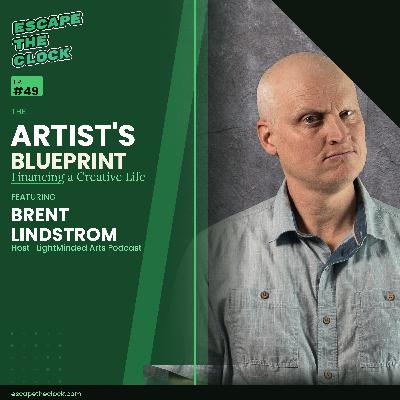
From a construction site to financial independence — how one artist built the runway to pursue his passion full time.Brent Lindstrom spent years swinging hammers on job sites while quietly writing on the side. In this episode, Brent shares the real financial blueprint behind his transition from construction worker to full-time author and podcaster. He shares his ten-year plan built on scenario modeling, strategic real estate, aggressive debt elimination, and the kind of patient compounding that most people underestimate. If you have a passion project that feels financially out of reach, Brent’s story is a masterclass in building the foundation first.Key Talking Points:The challenge of financing a creative lifestyle.How to finance freedom on a low income.Worst, middle, and best-case scenario planning.Financing freedom with strategic frugality.Diversified investing strategies.The lifestyle of a financially free artist.Escape The Clock Resources:The Book: https://escapetheclock.com/book The Planner: https://escapetheclock.com/planner The Podcast: https://escapetheclock.com/podcast1:1 Help: https://escapetheclock.com/scheduleFree Weekly Insights: https://escapetheclock.com/subscribeEpisode References & Resources: The Authors Guild reports that the median income for full-time published authors is just over $10,000 a year, which is a 42% decline from a decade ago. — The Authors Guild (2023) https://authorsguild.org/news/authors-guild-survey-shows-drastic-42-percent-decline-in-authors-earnings-in-last-decade/A study by the IRS on the Top 400 Individual Income Tax Returns shows that the wealthiest individuals typically have seven distinct streams of income. — IRS Statistics of Income (2022) [https://www.irs.gov/statistics/soi-tax-stats-top-400-individual-income-tax-returns-with-the-largest-adjusted-gross-incomes]57% of U.S. artists face financial vulnerability; median artistic income just $15,000 — Mellon Foundation / NORC National Survey of Artists (2025): sayart.net/news/view/1065667805693430Only 27.7% of homeowners under 65 are mortgage-free — Construction Coverage / U.S. Census Bureau ACS (2024): constructioncoverage.com/research/where-residents-have-paid-off-homesFreelance and independent creative work grew 10.3% since 2019; independent artists/writers/performers up 65.6% over the past decade — Center for an Urban Future (2025): 6sqft.com/nycs-creative-industry-at-risk-amid-affordability-crisis-report-findsConnect with Brent:Website: https://www.lightmindedarts.com/Facebook: https://www.facebook.com/LightMindedArtsYouTube: https://www.youtube.com/channel/UCosUlYjbzVQ4_Zv9xFNVOqQSupport the podcast:Leave a rating & review.Share this episode with others.Join the newsletter at https://escapetheclock.com/subscribeThis information is for educational purposes only and not financial advice. Consult a qualified professional for personalized guidance.

Financial freedom is often treated as a math problem, but for those who reach the destination, it often reveals itself as a biological one.In this episode, Dan sits down with Jennifer Edwards, founder of Breakthrough Financial Wellness, to explore the profound emotional conundrum called the “Wealth Paradox.” We deep dive into her Seven Layer Financial Wellness framework to understand why hitting your freedom number doesn't automatically fix the way you think or feel. From the macro societal systems to the micro neurological triggers of trauma, we discuss how to make your subconscious drivers conscious so you can stop operating in a state of reaction and start living a life of true design.Key Talking Points:The de-accumulation trap and why high net worth individuals struggle to shift from saving to spendingDefining your version of enough to stop the moving goalposts of lifestyle scope creepThe seven layers of financial wellness from macro societal systems down to micro neurological triggersWhy financial stress triggers the same fight or flight cortisol response as a physical life threatHow childhood narratives formed between ages seven and ten drive adult financial behaviorsUsing mindfulness and nervous system regulation to align your body with your financial strategyThe impact of scarcity mindset on generosity and the importance of philanthropy in wealth managementEscape The Clock Resources:The Book: www.escapetheclock.com/bookThe Planner: www.escapetheclock.com/toolkit1:1 Help: www.escapetheclock.com/scheduleFree Weekly Newsletter: www.escapetheclock.com/subscribeEpisode References & Resources:Only 29% of American millionaires actually describe themselves as "wealthy" - Edelman Financial Engines (2024) - https://www.edelmanfinancialengines.com/wealth-in-america/2024/The average American believes they need $2.5 million to be considered wealthy - Charles Schwab (2024) - https://www.aboutschwab.com/schwab-modern-wealth-survey-2024Money is a significant source of stress for 72% of Americans - American Psychological Association (2023) - https://www.apa.org/news/press/releases/stress/2023/financial-strain-mental-healthFinancial stress triggers the same "fight or flight" cortisol response in the body as a physical threat - Journal of Financial Therapy (2020) - https://newprairiepress.org/jft/vol11/iss2/2/Emotional well-being satiates around a specific income level ($75k-$100k adjusted for inflation) - Princeton University (2010) - https://www.pnas.org/doi/10.1073/pnas.1011492107Connect with Jennifer:Website: https://www.breakthroughfw.comLinkedIn: https://www.linkedin.com/in/jennifer-edwards-cfp/Support the podcast:Leave a rating & review.Share this episode with others.Join the newsletter at www.escapetheclock.com/subscribeThis information is for educational purposes only and not financial advice. Consult a qualified professional for personalized guidance.

Stop paying a premium for loneliness and start treating your home like a collaborative asset rather than a private liability.In this episode, Daniel sits down with Annamarie Pluhar to challenge the modern housing model that prioritizes isolated privacy over financial and social sanity. We discuss the critical distinction between companionship and compatibility, how to write ads that "repel" the wrong people to protect your future peace, and the systems needed to manage a shared home without the drama. Whether you are a single parent looking for a village or an empty-nester with a guest room that is currently just a line item on your balance sheet, this conversation provides the protocol for turning your roof into a cash-flow asset that improves your quality of life.Key Talking Points:The difference between cohousing, cohabitation, and shared housingMitigating the rising cost of housing in the United StatesThe distinction between companionship and compatibilityHow to find the right people to rent and share space withThe "Do it while it is easy" protocol for managing guests and significant othersHow shared housing serves as a direct answer to the surgeon general's loneliness epidemicEscape The Clock Resources:The Book: www.escapetheclock.com/bookThe Planner: www.escapetheclock.com/toolkit1:1 Help: www.escapetheclock.com/scheduleFree Weekly Newsletter: www.escapetheclock.com/subscribeEpisode References & Resources:19.7 million US households spent over 30 percent of income on housing in 2022. Source: Harvard Joint Center for Housing Studies (2024). Link: https://www.jchs.harvard.edu/state-nations-housing-2024The share of one-person households has more than tripled since 1940, meaning 27.6% of occupied homes now contain just a single person. Source: U.S. Census Bureau (2023). Link: https://www.census.gov/library/stories/2023/06/more-than-a-quarter-all-households-have-one-person.htmlLoneliness and isolation carry a mortality risk comparable to smoking 15 cigarettes a day. Source: U.S. Surgeon General’s Advisory (2023). Link: https://www.hhs.gov/sites/default/files/surgeon-general-social-connection-advisory.pdfOlder adults with strong social connections had just a 4% risk of dying within five years, compared to a 57% risk for those who were isolated. Source: Population Reference Bureau (2024). Link: https://www.prb.org/resources/todays-research-on-aging-44-more-than-a-feeling-how-social-connection-protects-health-in-later-life/Shared living conflicts are most frequently caused by "instrumental" issues like cleanliness and noise rather than personality clashes. Source: Journal of Social and Development Sciences (2016). Link: https://ojs.amhinternational.com/index.php/jsds/article/download/1232/1218Connect with Annamarie:Website: https://www.sharinghousing.com/Facebook: https://www.facebook.com/SharingHousing/Instagram: https://www.instagram.com/sharinghousingcommunity/LinkedIn: https://www.linkedin.com/company/sharing-housing-incSupport the podcast:Leave a rating & review.Share this episode with others.Join the newsletter at www.escapetheclock.com/subscribeThis information is for educational purposes only and not financial advice. Consult a qualified professional for personalized guidance.

Stop gambling and start strategizing by moving from the twitch reactions of day trading to the logic of technical analysis.In this episode, we dive into the Bison Blueprint with Josh Fuhr to understand why 88 percent of professional experts fail to beat the market and how regular investors can find an edge. We discuss the transition from high-stress day trading to position trading, the importance of identifying support and resistance levels on a real stock chart, and why following insider buying is more effective than following the news cycle. Whether you are a novice or a seasoned trader, this conversation provides a framework for removing emotion from your investments and treating your portfolio like a logistics problem.Key Talking Points:The reality of market performance where 60 percent of Large Cap funds fail to beat the S&P 500 in a single yearThe hierarchy of trading styles from scalping and day trading to swing and position tradingHow to use technical analysis to identify support levels and historical trend lines for better entry pointsThe danger of gamified trading apps and why 80 percent of active traders quit within two yearsWhy technical indicators and insider buying confluences are more reliable than company narrativesStrategies for mitigating emotional trading and avoiding the trap of fear of missing outHow to build a checklist and toolkit to ensure data driven decision making in any marketEscape The Clock Resources:The Book: www.escapetheclock.com/book The Planner: www.escapetheclock.com/planner 1:1 Help: www.escapetheclock.com/scheduleFree Weekly Newsletter: www.escapetheclock.com/subscribeEpisode References & Resources:Nearly 88% of all large-cap active fund managers failed to outperform the S&P 500 — S&P Dow Jones Indices (2024) - https://www.spglobal.com/spdji/en/research-insights/spiva/Day traders averaged a -3.8% return while swing traders managed a +2.1% return — Cambridge University (2023) - https://www.cam.ac.uk/research/news/day-trading-is-a-losing-game-for-most-new-research80% of active traders quit within the first two years due to psychological and financial pain — FINRA Investor Education Foundation (2024) - https://www.finra.org/investors/insights/day-trading-2024Connect with Josh: Website: https://bisonblueprint.com/X: https://x.com/BisonBlueprintYouTube: https://www.youtube.com/@bison.blueprintInstagram: https://www.instagram.com/trade_edge_pro/Support the podcast:Leave a rating & review.Share this episode with others.Join the newsletter at www.escapetheclock.com/subscribeThis information is for educational purposes only and not financial advice. Consult a qualified professional for personalized guidance.
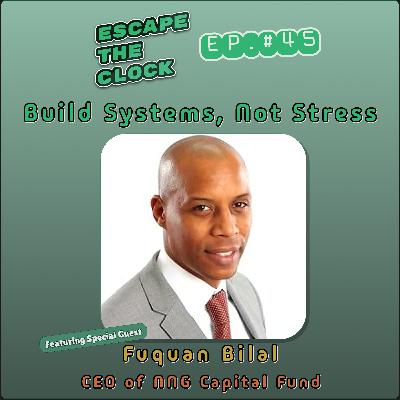
Real estate is often sold as the ultimate path to freedom, but for many investors, it becomes a second job that demands more hours than their 9-to-5. In this episode, Fuquan Bilal, CEO of NNG Capital Fund, joins us to dismantle the "Accumulation Myth." After losing half his net worth in the 2008 crash, Fuquan realized that "more doors" didn't equal more freedom—it just equaled more stress. He pivoted from being a landlord to being the bank, mastering the art of Note Investing to reclaim his time. We dive deep into the difference between "Scaling Up" and "Scaling Over," the systems required to escape operations fatigue, and why the true definition of legacy isn't what you leave to your children, but what you leave in them.Key Talking Points:Why adding units often decreases actual freedom if you don't have the systems to handle the complexityThe strategic pivot from acquiring property to acquiring debt to reduce operational dragHow to be the bank by buying distressed mortgage notes and restructuring them for cash flowUsing the Green, Yellow, Red framework to audit your time and delegate tasksWhy 70% of generational wealth disappears by the second generation and how to involve family to break that cycleEscape The Clock Resources:The Book: www.escapetheclock.com/book The Planner: www.escapetheclock.com/planner 1:1 Help: www.escapetheclock.com/scheduleFree Weekly Newsletter: www.escapetheclock.com/subscribeEpisode References & Resources:More than 55 percent of small real estate investors report doing tasks they know they should be delegating (Buildium, 2024) - https://www.buildium.com/resource/2024-property-management-industry-report/70 percent of wealthy families lose their wealth by the second generation because heirs are unprepared to manage it — The Williams Group (Nasdaq, 2018) - https://www.nasdaq.com/articles/generational-wealth%3A-why-do-70-of-families-lose-their-wealth-in-the-2nd-generation-2018-10Traction: Get a Grip on Your Business by Gino Wickman (2007) - https://amzn.to/4aSCnUHScaling Up: How a Few Companies Make It...and Why the Rest Don't by Verne Harnish (2014) - https://amzn.to/4ayQld7Connect with Fuquan: Website: http://nngcapitalfund.comBook: Turning Distress into Sucess - https://amzn.to/4tFjjAJ LinkedIn: https://www.linkedin.com/in/fuquanbilal/YouTube: https://www.youtube.com/@FuquanBilalInstagram: https://www.instagram.com/fuquanbilal/Support the podcast:Subscribe/Follow on your favorite platform.Leave a rating & review.Share this episode with others.Support me by picking up the book for yourself or a loved one at www.escapetheclock.com/book.Thank you for listening!Please note: This information is for educational purposes only and not financial advice. Consult a qualified professional for personalized guidance.

Most people view their mortgage as a non-negotiable thirty-year sentence. It keeps them tethered to the clock and limits their freedom.In this episode, Dan sits down with Andy Bennetts, Founder of Empower Wealth Solutions, to audit the "Generational Debt Loop" that keeps millions of Americans running on a financial treadmill. Andy breaks down the engineering behind amortization schedules, revealing how banks front-load interest to ensure they profit before you build equity.We discuss the critical difference between APR and TIP (Total Interest Percentage), the concept of "Interest Arbitrage," and how to use a "Financial GPS" to treat your debt payoff like a dynamic journey rather than a static obligation.Key Talking Points:Why debt "shrinks our lives" and delays our dreams.How the fundamental calculation of mortgage interest creates a technical debt trap.Why the standard 30-year amortization schedule is designed to maximize bank yield.How to use interest arbitrage and velocity of capital to cancel debt daily.The role of automated technology in removing the decision fatigue of debt repayment.Why only 25% of U.S. students receive financial education in schools.Understanding the "TIP" (Total Interest Percentage) vs the APR.Escape The Clock Resources:The Book: https://escapetheclock.com/book The Planner: https://escapetheclock.com/toolkit 1:1 Help: https://escapetheclock.com/scheduleFree Weekly Newsletter: https://escapetheclock.com/subscribeEpisode Sources:Total interest paid on a 30-year mortgage at 7 percent is approximately 154 percent of the original principal — Bankrate (2024) - https://www.bankrate.com/mortgages/amortization-schedule/Average American household debt has reached over $104,000 — Federal Reserve Bank of New York (2024) - https://www.newyorkfed.org/microeconomics/hhdcAmericans pay over $600 billion in interest annually on non-mortgage debt — St. Louis Fed (2024) - https://fred.stlouisfed.org/series/AABQIOnly 25 percent of U.S. high school students have access to a standalone personal finance course — Next Gen Personal Finance (2024) - https://www.ngpf.org/state-of-financial-education-report/25 percent of Americans cite debt as the primary reason they cannot retire — Northwestern Mutual (2024) - https://news.northwesternmutual.com/planning-and-progress-study-2024TED: Sir Ken Robinson - Do Schools Kill Creativity? https://www.ted.com/talks/sir_ken_robinson_do_schools_kill_creativityConnect with Andy: Website: http://www.EmpowerWealth.SolutionsLinkedIn: https://www.linkedin.com/in/andy-bennetts/YouTube: https://www.youtube.com/@Empower-Wealth-2024Support the podcast:Subscribe and follow on your favorite platform.Leave a rating & review.Share this episode with others.Support me by picking up the book for yourself or a loved one at https://escapetheclock.com/book.Thank you for listening!This information is for educational purposes only and not financial advice. Consult a qualified professional for personalized guidance.

We often treat borrowing money as a math problem. We assume that if the credit score is good and the collateral is there, the loan is approved, and the risk is managed. But as Walt Postelwait explains, the spreadsheet doesn't tell the whole story. As a former commercial lender and the Co-Founder of Portfolio Watch, Walt spent years on the other side of the table. He learned that while assets get you to the table, it is "Character" that gets you the check, and more importantly, helps you survive when things go wrong.In this episode, we move beyond the basics of debt. We discuss the critical difference between "Consumer Borrowing" and "Strategic Leverage." Walt shares the specific metrics lenders use, like the 1.25 Debt-Service Coverage Ratio, and explains why "Gateway Businesses" like laundromats are often a trap. Most importantly, Walt shares the raw, unfiltered story of his own 66-unit real estate development failure. He walks us through the "Sunk Cost" trap, the red flags he ignored, and how he relied on relationship capital to pay everyone back and avoid bankruptcy.Key Talking Points:The Character Metric and why lenders prioritize grit over cash flowThe difference between Bad Debt (consumer) and Good Debt (strategic leverage)Understanding Debt-Service Coverage RatioA real life lesson of leveraged borrowing gone wrongHow AI is changing how borrowing will work in the futureEscape The Clock Resources:The Book: https://escapetheclock.com/book The Planner: https://escapetheclock.com/toolkit The Podcast: https://escapetheclock.com/podcast1:1 Help: https://escapetheclock.com/scheduleFree Weekly Insights: https://escapetheclock.com/subscribeEpisode References & Resources:Business owners have a median net worth nearly 9 times higher than wage earners ($1.3M vs $155k) — Federal Reserve Board (2023) — https://www.federalreserve.gov/econres/scfindex.htmRoughly 20% of new businesses fail within the first two years — U.S. Bureau of Labor Statistics (2024) — https://www.bls.gov/bdm/us_age_naics_00_table7.txtConstruction projects specifically face a 98% chance of cost overruns or delays — McKinsey & Company (2022) — https://www.mckinsey.com/capabilities/operations/our-insights/the-construction-productivity-imperative52% of financial services companies are accelerating their AI adoption for risk management — PwC (2025) — https://www.pwc.com/us/en/industries/financial-services/library/ai-in-financial-services.htmlConnect with Walt: Website: https://portfoliowatch.co/LinkedIn: https://www.linkedin.com/in/walt-postlewait-0082ab31b/Support the podcast:Subscribe and leave a reviewShare this episode with othersJoin the free newsletter at escapetheclock.com/subscribeThank you for listening. This podcast is for education only and is not financial advice.
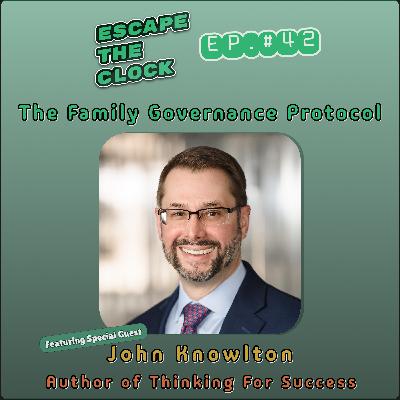
Most parents hide their wealth to "protect" their children, but in business, hiding the financials from future CEOs is negligence.In this episode, Dan speaks with John Knowlton, author of Thinking for Success, about the concept of "Shared Governance" for family wealth. John breaks down why 52% of parents fail to discuss money with their children, the critical distinction between "Good Success" and "Bad Success," and how to use tools like a Family LLC and a "Golden Triangle" framework to turn your legacy into a business that every family member helps run.Key Talking Points:The danger of "Authority without Information" in parentingWhy "Good Success" requires relationships, not just capitalThe "Golden Triangle" framework: Why, How, and WhatUsing a Family LLC to shift the psychology of inheritanceThe "Shared Governance" model for decision makingHow to start the "Board Meeting" at the dinner tableEscape The Clock Resources:The Book: escapetheclock.com/book The Planner: escapetheclock.com/toolkit The Podcast: escapetheclock.com/podcast1:1 Help: escapetheclock.com/scheduleFree Weekly Insights: escapetheclock.com/subscribeEpisode References & Resources:71% of parents would rather talk about death than money — T. Rowe Price Parents, Kids & Money Survey (2019) — https://www.troweprice.com/corporate/en/press/releases/t-rowe-price-parents-kids-money-survey.html52% of parents have not discussed their net worth with their kids — Fidelity Family & Finance Study (2025) — https://newsroom.fidelity.com/pressreleases/fidelity--study-finds-the-great-wealth-transfer-leaves-families-poised-to-build-stronger-financial-f/s/3c72b6d3-9ab6-400a-95e7-f4b30e43db6470% of wealthy families lose their wealth by the second generation — The Williams Group (2018) — https://www.williamspgroup.com/Connect with John: Website: https://abundantthoughtrevolution.com/Book: https://indiepubs.com/products/thinking-for-successLinkedIn: https://www.linkedin.com/in/john-knowlton-516b828/Support the Podcast:Subscribe and leave a reviewShare this episode with othersJoin the free newsletter at escapetheclock.com/subscribeThank you for listening. This podcast is for education only and is not financial advice.

We are living in a financial reality where money and capital are no longer the same thing. In this deep-dive episode, Dan speaks with Paul Musson, author of Capital Offence, about the "Great Category Error" most investors make: confusing the currency they save with the wealth they create. Paul breaks down how the Fiat system punishes savers, why your home’s appreciation might be a hidden mechanism of wealth redistribution, and how to build a portfolio of "Real Assets" that allows you to opt out of the distorted reality and escape the clock.Key Talking Points:The fundamental difference between Money (currency) and Capital (productive capacity)Why the "Wealth Effect" in housing is actually a transfer of wealth from the young to the oldThe "Paradox of Thrift" and why central banks are incentivized to punish prudenceHow to use the "Central Bank Lunacy Hedge" to protect your portfolio from policy errorsThe danger of "Zombie Companies" in passive index fundsWhy you must balance financial defense with living for todayEscape The Clock Resources:Book: www.escapetheclock.com/book Planner: www.escapetheclock.com/toolkit1:1 Help: www.escapetheclock.com/scheduleFree Weekly Newsletter: www.escapetheclock.com/subscribeEpisode References:The M2 Money Supply exploded by 40% between 2020 and 2022, while real productivity barely budged - Federal Reserve Economic Data (2024) - https://fred.stlouisfed.org/series/M2SLSince 2009, US Household Wealth has nearly tripled to $150 Trillion, largely driven by asset price inflation rather than GDP growth - Federal Reserve Financial Accounts of the US (2023) - https://www.federalreserve.gov/releases/z1/The percentage of "Zombie Companies" (firms that can't cover interest payments with profits) rose to nearly 20% in the US by 2020 - Bank for International Settlements 2020) - https://www.bis.org/publ/qtrpdf/r_qt2009a.htmOver the last 100 years, gold supplies have increased at an annual rate of only 1% to 3%, making it hard to manipulate - Mark Skousen, The Structure of Production (2015) - https://www.amazon.com/Structure-Production-Mark-Skousen/dp/1479848522People & Concepts Mentioned:Michael Green: Portfolio Manager known for his research on how passive investing strategies (index funds) distort market prices.Paul Volcker: Former Fed Chair (1979–1987) who famously raised interest rates to 20% to crush the inflation of the 1970s.Paul Krugman & Paul McCulley: Economists referenced regarding their 2002 arguments for creating a "housing bubble" to replace the dot-com bubble.Bob Kierlin (Fastenal): The founder referenced by Paul as a prime example of ethical stewardship for distributing wealth to his employees.Connect with Paul:Website: https://paddingtoncapitalmgmt.comBook: https://paddingtoncapitalmgmt.com/capital-offence-book-paul-musson-economic-policy-inequality-money-management-financial-intelligenc/LinkedIn: https://www.linkedin.com/in/paulbmusson/Support the podcast:Subscribe and leave a reviewShare this episode with someone who would benefitJoin the community at escapetheclock.com/subscribeThank you for listening. This podcast is for education only and is not financial advice.
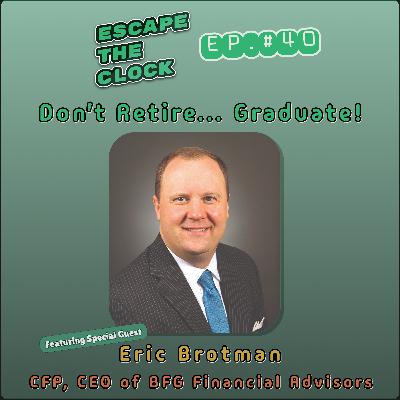
Most people treat retirement like a finish line, only to find themselves struggling with a crisis of identity and purpose once the work stops. In this episode, Daniel talks with CFP and author Eric Brotman about why we need to change our vocabulary to change our outcome. Eric explains why retirement should be viewed as a "graduation" into your life's work, not a cessation of activity. He shares critical strategies for shifting from "playing offense" in your accumulation years to "playing defense" to protect your freedom, and why everyone needs a "Financial Editor" to check their blind spots. Listen to learn how to graduate into your next phase rather than just quitting your current one.Key Talking Points:Why "retirement" definitions are broken and how the "graduation" mindset prevents an identity crisisThe critical shift from playing Offense (Growth) to playing Defense (Risk Management)The "Day 2 Problem": How to build a moat around your financial castleThe math of $1 Million: Why it might only provide a $40k/year lifestyleThe "Financial Editor" concept: Why even financial advisors need advisorsWhy taking a "Trial Run" sabbatical is the only way to test your readiness Escape The Clock Resources:The Book: www.escapetheclock.com/bookThe Tools: www.escapetheclock.com/toolkitHelp: www.escapetheclock.com/scheduleFree Weekly Insights: www.escapetheclock.com/subscribeEpisode Sources:From Strength to Strength — Arthur Brooks (2022) - https://arthurbrooks.com/book/from-strength-to-strength/A 65-year-old couple retiring in 2024 needs an estimated $330,000 for health care — Fidelity (2024) - https://www.fidelity.com/viewpoints/personal-finance/plan-for-rising-health-care-costsThe 4% Rule (Safe Withdrawal Rates) — William Bengen (1994) - https://www.financialplanningassociation.org/sites/default/files/2021-04/MAR04%20Determining%20Withdrawal%20Rates%20Using%20Historical%20Data.pdfConnect with Eric:Website: https://dontretiregraduatebook.com/Firm: https://bfgfa.com/Book: https://www.amazon.com/Dont-Retire-Graduate-Financial-Retirement/Podcast: https://bfguniversity.com/podcasts/Social: https://www.linkedin.com/in/ebrotman/Support the Podcast:Subscribe and follow on your favorite platformLeave a rating & reviewShare this episode with othersSupport me by picking up the book for yourself or a loved one at escapetheclock.com/bookThank you for listening!This information is for educational purposes only and is not financial advice. Consult a qualified professional for personalized guidance.

Most people never track their finances, and it keeps them stuck hoping and worrying.In this episode, Dan talks with actuary and real estate investor Jack Allweil about how tracking your net worth and cash flow transforms behavior, accelerates financial independence, and brings clarity to your financial life. Jack shares how losing his job at age 27 became the turning point that led him to build freedom through data-driven decision-making, real estate, and intentional planning. Listen to learn how to use data in your plan to better achieve your goals.Key Talking PointsJack’s story of transformation after job lossWhy tracking drives better financial decisionsHow to build a personal balance sheet that creates clarityHow tracking guides investing, real estate, and passive income choicesThe first steps anyone can take to start tracking and improving their financial lifeEscape The Clock ResourcesThe Book: www.escapetheclock.com/book The Tools: www.escapetheclock.com/toolkit Help: www.escapetheclock.com/scheduleFree Weekly Insights: www.escapetheclock.com/subscribeEpisode SourcesTracking increases savings rates by 15 to 20 percent: Morningstar (2023) - https://www.morningstar.com/content/dam/marketing/shared/research/foundational/802866-SaveMoreToday.pdfOnly 32 percent of Americans calculate net worth annually: Charles Schwab Modern Wealth Survey (2024) - https://content.schwab.com/web/retail/public/about-schwab/schwab_modern_wealth_survey_2024_findings.pdfTracking increases goal achievement by 42 percent: Psychological Science (2015) - https://www.apa.org/news/press/releases/2015/10/progress-goalsConnect with JackWebsite: www.fired-to-fire.comYouTube: https://youtube.com/@jackallweilBook: Make Better Bets - https://amzn.to/4nHfms3LinkedIn: https://linkedin.com/in/jack-allweil-fsa-3b1a3318/Social: https://x.com/Jack_AllweilSupport the PodcastSubscribe and follow on your favorite platformLeave a rating & reviewShare this episode with othersSupport me by picking up the book for yourself or a loved one at escapetheclock.com/bookThank you for listening! This information is for educational purposes only and is not financial advice. Consult a qualified professional for personalized guidance.

In this end-of-year special, Daniel C. Rodgers looks back at the transformative lessons of 2025, big learnings, and what to expect going into the year ahead. Tune into this special episode to celebrate a crazy year and learn new ways you might start 2026 off in a strong way.Key Talking PointsBig milestones from a year of Escape The ClockA recap of the big FI events that shaped 2025.Dan's five learnings from 2025.Predictions and things to watch for in 2026.Escape The Clock ResourcesThe Book: www.escapetheclock.com/bookThe Planner: www.escapetheclock.com/toolkit1:1 Help: www.escapetheclock.com/scheduleOther Resources: www.escapetheclock.com/resourcesFree Weekly Newsletter: www.escapetheclock.com/subscribeSupport the podcastSubscribe, follow, and leave a review where you listenShare this episode with someone who would benefitVisit EscapeTheClock.com to get the book, subscribe, or more episodes.This information is for educational purposes only and not financial advice. Consult a qualified professional for personalized guidance.

The most dangerous number in personal finance is "one," yet most of us are never taught how to build a second source of stability.Most people know they need more than one income stream to reach financial freedom, but very few know where to start. Today’s episode explores one of the most overlooked and misunderstood paths to income diversification: franchising. Adam Goldman, Franchise expert and coach, joins Daniel to break down what makes franchising work, where beginners get it wrong, and how to evaluate opportunities in a way that aligns with your time, goals, and risk tolerance.Key Talking PointsWhy a single income source is not enough in today’s economyWhat franchising actually is and why it remains a proven business modelBeginner friendly insights on choosing the right franchiseRed flags to avoid when evaluating franchise opportunitiesHow franchising can fit into a financial freedom planEscape The Clock ResourcesThe Book: www.escapetheclock.com/book The Planner: www.escapetheclock.com/planner 1:1 Help: www.escapetheclock.com/scheduleOther Resources: www.escapetheclock.com/resourcesFree Weekly Newsletter: www.escapetheclock.com/subscribeEpisode References & ResourcesAverage millionaire has seven income streams – Ramsey Solutions (2025)Sixty two percent of Americans want a second income stream – Bankrate (2025)Franchise success and failure trends – International Franchise Association (2025)The "Seven Streams" of income used by the wealthy – Robert Allen, Multiple Streams of Income (2000)65% of self-made millionaires have at least three streams of income – Tom Corley, Rich Habits Study (2009/2013)Connect with AdamWebsite: https://www.franchisecoach.netBook: The Franchisee Lifestyle: Your Future as a Franchisee is Better Than You ThinkLinkedIn: https://www.linkedin.com/in/adamgoldmanSupport the podcastSubscribe, follow, and leave a review where you listenShare this episode with someone who would benefitVisit EscapeTheClock.com to get the book, subscribe, or more episodes.This information is for educational purposes only and not financial advice. Consult a qualified professional for personalized guidance.

Many people in their 40s, 50s, and 60s feel behind on retirement, but the real problem is not just the numbers. It is the uncertainty.In this episode, financial planner and author of PopEnomics Jesse Hurst explains how pop culture, practical planning, and a shift in mindset can help anyone build a more confident path forward, even if they feel like they started late.Key Talking PointsWhy so many people feel behind on retirementHow news and media leads people to make financial mistakesThe power of pop culture when it comes to relating with the momentHow to move from fear and guessing to clarity and actionCreating a catch-up plan that actually works in the real worldEscape The Clock ResourcesThe Book: https://escapetheclock.com/book The Planner: https://escapetheclock.com/toolkit1:1 Help: https://escapetheclock.com/scheduleFree Weekly Insights: https://escapetheclock.com/subscribeEpisode References & ResourcesOne in three people over fifty have less than twenty-five thousand saved – Northwestern Mutual (2024)Sixty-one percent of workers over forty-five say they are behind on savings – Fidelity (2024)One in three retirees underspend by more than twenty percent – Morningstar (2023)Seventy percent say headlines hurt their financial confidence – Allianz Life (2024)Connect with JesseWebsite: https://impelwealth.comLinkedIn: https://linkedin.com/in/jessehurstcfp YouTube: https://youtube.com/@ImpelWealthSupport the podcastSubscribe, follow, and leave a review where you listenShare this episode with someone who would benefitVisit EscapeTheClock.com to get the book, subscribe, or more episodes.This information is for educational purposes only and not financial advice. Consult a qualified professional for personalized guidance.
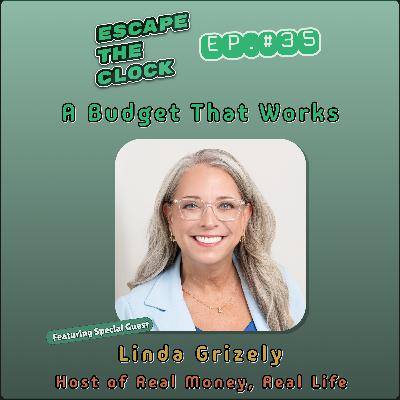
Budgets often fail because they treat money as a math problem, not an emotional one. If your plan ignores your personality, it’s like forcing a square peg into a round hole.In this episode, CFP Linda Grizely joins Dan to introduce the "MeMoney Method"—a strategy to stop the cycle of shame. Instead of viewing a budget as a cage that says "no," Linda explains how to use it as a permission slip that says "yes." They discuss the five money archetypes, why "Savers" struggle to spend, and how "Spenders" can build freedom through boundaries.If you dread checking your bank account, this conversation offers the psychological shift you need to spend without regret.Key Talking Points:Why traditional budgeting fails by ignoring the "person"The 5 Money Personalities: Spender, Saver, Avoider, Security Seeker, Risk TakerThe MeMoney Method: Creating a guilt-free spending allowanceChanging the "emotional weight" of spending with physical cashSafe ways to teach children about moneyOvercoming the scarcity mindset during the holidaysEscape The Clock Resources:Book: escapetheclock.com/bookPlanner: escapetheclock.com/planner1:1 Help: escapetheclock.com/scheduleNewsletter: escapetheclock.com/subscribeEpisode References & Resources:61% say budgeting feels emotionally draining – Forbes Advisor (2025)90% acknowledge finances cause emotional stress – NEFE (2024)44% of budgets fail within 60 days – You Need A Budget (2024)72% say stress causes poor financial decisions – APA (2024)Connect with Linda:Website: lindagriz.com Podcast: Real Money, Real LifeMoney Personality Quiz: bit.ly/MonPersQuizYouTube: @LindaGrizely Support the podcast:Subscribe and leave a reviewShare this episode with someone who would benefitJoin the Free Escape Insights Newsletter at escapetheclock.com/subscribeThank you for listening. This podcast is for education only and is not financial advice.

Money shapes children long before they understand it. Kids absorb financial messages through emotion, behavior, and family culture, often forming beliefs by age seven that follow them into adulthood.In this episode, Dr. Nicholas Michels joins Dan to explore how children learn about money, why parents often feel unprepared to teach it, and how small, intentional choices can break generational patterns. Together they discuss practical tools for building financial confidence in kids, the psychological roots of money habits, and how to pass down values that last longer than wealth.If you want to raise kids who understand money, make confident choices, and grow into financially free adults, this conversation will give you the perspective and tools to start today.Key Talking Points:Why kids learn about money emotionally firstHow childhood tension shapes adult behaviorModeling openness vs. secrecyPractical tools: allowances, games, and real decisionsEscape The Clock Resources:Book: escapetheclock.com/book Planner: escapetheclock.com/planner 1:1 Help: escapetheclock.com/scheduleNewsletter: escapetheclock.com/subscribeEpisode References & Resources:Foundational money habits are often formed by age seven – University of Cambridge (2013)Only 23 percent of kids say they talk to their parents frequently about money – NFEC (2024)Around 70 percent of wealthy families lose their wealth by the second generation and 90 percent by the third – Williams Group (2025)Connect with Dr. Nicholas: Website: https://www.drnickmichels.com LinkedIn: https://www.linkedin.com/in/nicholas-michels-phd Instagram: @coachdrnick Support the podcast:Subscribe and leave a reviewShare this episode with someone who would benefitJoin the Free Escape Insights Newsletter at escapetheclock.com/subscribeThank you for listening. This podcast is for education only and is not financial advice.
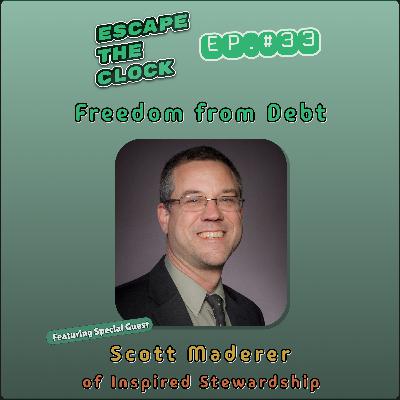
Debt shapes the way people think, behave, and relate to one another. Many carry the weight of financial stress, shame, and fear in silence, even while presenting a stable and successful exterior.In this episode, Scott Maderer of Inspired Stewardship joins Dan to share his personal journey from hidden debt and overwhelm to honesty, clarity, and long-term financial freedom. Together, they explore why debt so often becomes a secret, how financial stress impacts relationships, and why true change comes from behavior and consistency rather than perfect budgeting.Key Talking Points:How debt quietly reshapes behavior, relationships, and daily decisionsWhy consumer culture and rising costs trap many householdsWhy your debt plan does not need to be perfect to workHow tools like the debt snowball rebuild confidence and momentumThe difference between getting out of debt and staying debt-freeEscape The Clock Resources:The Book: www.escapetheclock.com/bookThe Planner: www.escapetheclock.com/planner1:1 Help: www.escapetheclock.com/scheduleFree Weekly Newsletter: www.escapetheclock.com/subscribeEpisode References/Resources:Average U.S. household debt exceeds $104,000 – Federal Reserve (2025)43 percent of marriages cite money stress – Ramsey Solutions (2023)Written debt plans increase payoff success by 60 percent – Fidelity (2024)80 percent of debt payoff attempts relapse within 18 months – Credit Counseling Society (2023)Connect with Scott:Website: https://inspiredstewardship.com/escapePodcast: https://inspiredstewardship.com/podcastSupport the podcast:Join the newsletter at www.escapetheclock.com/subscribeSubscribe and leave a reviewShare this episodeSend your thoughts to contact@escapetheclock.comThis information is for educational purposes only and not financial advice. Consult a qualified professional for personalized guidance.

Burnout is rising, and many high achievers stay stuck even when they're financially free. Hidden expectations, identity pressures, and fear keep them locked into the golden handcuffs.In this episode, financial planner and author Chris Pollard joins Dan to break down why high achievers stay stuck in the golden handcuffs and why financial independence alone doesn’t create emotional freedom. They explore how identity, expectations from work and family, early money narratives, and hidden fears all tighten into life knots that hold people back from change. Chris explains how to recognize these knots, where they come from, and how defining “enough” through purpose, community, and clarity can help people finally move toward a life of intention instead of obligation.Key Talking Points:Why burnout is rising and how invisible expectations fuel itHow money becomes tied to identity and keeps people stuckWhat life knots are and how they limit freedomHow to define enough and build a purpose-centered visionWhy clarity, community, and honest conversations matterEscape The Clock Resources:The Book: www.escapetheclock.com/bookThe Planner: www.escapetheclock.com/planner1:1 Help: www.escapetheclock.com/scheduleOther Resources: www.escapetheclock.com/resourcesFree Weekly Newsletter: https://bit.ly/etc-newsEpisode References/Resources:77 percent of workers report experiencing burnout – Zippia (2024)Nearly half of professionals feel stuck due to financial pressure – Gallup Workplace (2024)Most Americans lack a clear definition of financial enough – Edward Jones & Age Wave (2023)Connect with Chris:Website: greatpathplanning.comBook: Untangling the Golden Knot: Confronting Your Retirement Worries and Knowing When Enough is EnoughEmail: chris@greatpathplanning.comSupport the podcast:Subscribe/Follow on your favorite platformLeave a rating & reviewShare this episode with othersSupport me by picking up the book atwww.escapetheclock.com/bookThis information is for educational purposes only and not financial advice. Consult a qualified professional for personalized guidance.
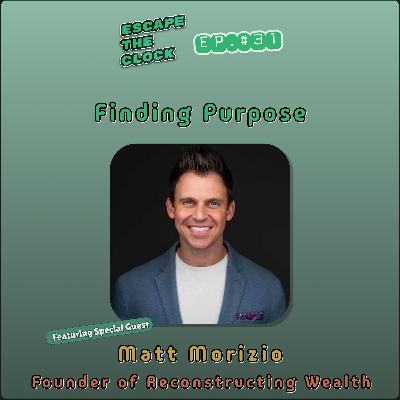
Why are you working as hard as you are? What is your purpose?In this episode, former professional baseball player turned wealth coach Matt Morizio, founder of Reconstructing Wealth, joins Dan to explore how purpose transforms not just your financial plan, but your life. Together, they discuss how to detach from money emotionally, build value-aligned goals, and lead with meaning in both wealth and family life.Key Talking Points:Why financial freedom without purpose often feels emptyHow detaching from money can reduce anxiety and build real independenceWhy your “why” is usually a who — and how to find itHow values-based planning creates resilience through financial setbacksBalancing purpose across relationships, marriage, and familyThe shift from chasing success to building significanceEscape The Clock Resources:The Book: www.escapetheclock.com/bookThe Planner: www.escapetheclock.com/planner1:1 Help: www.escapetheclock.com/scheduleOther Resources: www.escapetheclock.com/resourcesFree Weekly Newsletter: https://bit.ly/etc-newsEpisode References/Resources:80% of Americans lack a clear sense of purpose in their financial life — Edward Jones & Age Wave (2023)Only 36% of U.S. adults have a written long-term financial plan — Charles Schwab (2024)7 in 10 families experience a major financial setback every 10 years — Federal Reserve (2023)Connect with Jaden:Website: www.reconstructingwealth.com Instagram: @mattmorizioFree Course: DM Matt on Instagram or visitreconstructingwealth.comListener Offer!As mentioned in the episode, in support of the show Matt Morizio is offering his three part education videos directly to you for free. Just reach out to him on Instagram at @mattmorizio.Support the podcast:Subscribe/Follow on your favorite platform.Leave a rating & review.Share this episode with others.Support me by picking up the book atwww.escapetheclock.com/book.Thank you for listening!This information is for educational purposes only and not financial advice. Consult a qualified professional for personalized guidance.

Comments

Download from Google Play

Download from App Store
 United States