


 Claim Ownership
The BrainFood Show
Subscribed: 3,994Played: 102,265
Subscribe

© Cloud10
Description
In this show, the team behind the wildly popular TodayIFoundOut YouTube channel do deep dives into a variety of fascinating topics to help you feed your brain with interesting knowledge.
229 Episodes
Reverse

Who among us hasn’t had this experience? You are eating a lovely outdoor
meal or working peacefully in the garden when unexpected guests arrive.
Dressed in menacing yellow and black, they buzz annoyingly around you,
coming between you and your juicy steak or prized roses. You try to
gently shoo them away, but they just grow more and more aggravated
until, suddenly, you feel it: that sharp, searing pain, flashing up your
hand, as if you’ve just been stabbed with red-hot poker. If you’re
lucky, your finger will swell up and you will have to endure that
throbbing agony for an hour or two. If, however, you happen to be among
the unlucky 0.5-7% of the general population that is allergic to insect
stings, you can look forward to the delights of anaphylactic shock: a
sudden drop in blood pressure, itchy hives, and difficulty breathing
which, in severe cases, can lead to death without immediate medical
intervention. Whether we like it or not, venomous creatures like bees,
wasps, scorpions, spiders, snakes, and jellyfish are a part of everyday
life for nearly every human on earth, with hundreds of thousands of
species worldwide being capable of delivering some kind of painful or
toxic bite or sting. Thankfully, however, as is often the case in
nature, most of these organisms will not attack unless directly
provoked. And, if you happen to live in a part of the world where the
worst stings you have to face are those of bees, paper wasps, and
yellowjackets, consider yourself very, very lucky, for mother nature
holds far greater horrors in her arsenal, from ants with bites so
painful they are used as tests of manhood, to wasps whose stings have
been likened to being thrown into a live volcano, and fish with venom so
excruciating it can literally stop your heart. But which bite or sting
is the absolute worst? Which organism on this planet is, as the English
rock band The Police might have put it, the “King of Pain”? Well, let’s
find out as we dive into the agonizing world of the worst bites and
stings in nature.
Author: Gilles Messier
Host/Editor: Daven Hiskey
Producer: Samuel Avila
0:00 Intro
6:00 Schmidt Theory and His Wine Lover-esk Index
17:20 The Starr Sting Pain Scale
20:00 Nathaniel "Coyote" Peterson's BSI and Looking Beyond Insects
25:30 The Ultimate Stings- The Platypus and Stonefish
Learn more about your ad choices. Visit megaphone.fm/adchoices

In the podcast today, we're looking at what it was really like to be a
gladiator in Ancient Rome, how corrupt the roman senate was, what's the
deal with roman gods and much, much more.
0:00 What was It Like to Be a Gladiator in Ancient Rome?
18:13 How Corrupt was the Roman Senate Really?
32:50 What's the Deal with the Roman Gods?
46:51 The Roman Emperor Who Tried to Make His Horse Consul
59:46 Julius Caesar and His Pirate Adventure
1:06:22 History's Literal Deadliest Fart and the Origin of Mooning
1:20:49 Intentionally Removing People From History (Damnatio Memoriae)
1:24:45 Did Nero Really Fiddle When Rome Burned?
1:32:23 That Time the Title 'Emperor of Rome' was Up for Auction (and the Sorry Soul Who Won)
1:43:42 The Colosseum's Big Brother, The Circus Maximus
1:49:35 Are C-Sections Really Named After Julius Caesar?
2:00:12 Where Did Goth Teen Subculture Come From and Why is it Associated With Roman Invaders?
Learn more about your ad choices. Visit megaphone.fm/adchoices
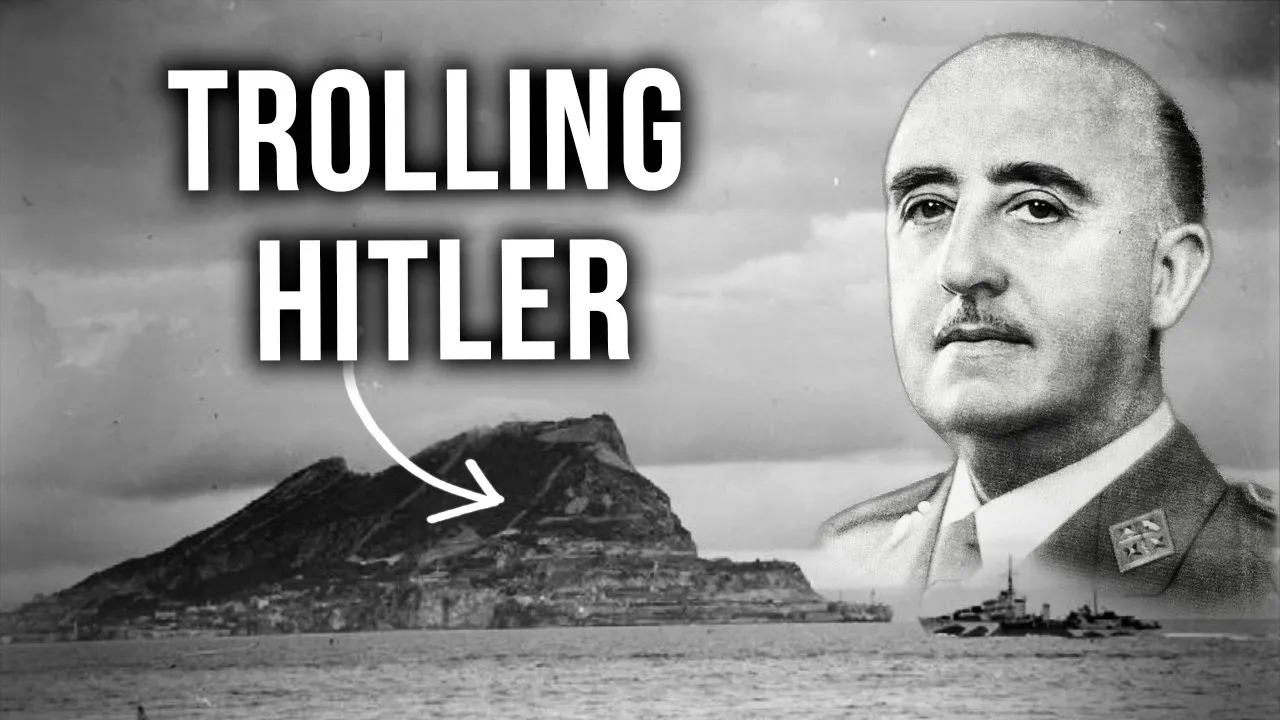
At the southern tip of Spain, jutting out into the Mediterranean Sea,
lies Gibraltar, a narrow peninsula measuring only 6.8 square kilometres
or 2.6 square miles in area and dominated by a 426 metre or 1,298 foot
high limestone monolith: the legendary Rock of Gibraltar. A British
overseas territory and naval base since 1713, Gibraltar has long been of
vital strategic importance, controlling the narrow passage between the
Mediterranean and the Atlantic Ocean. And at no time was this truer than
during the Second World War, when the Axis powers plotted to capture
Gibraltar in a bid to cut Britain off from its overseas Empire and
starve her into submission. And though the heavily-defended enclave
would be a tough nut to crack, the very real threat of invasion led
British military planners to take elaborate precautions should the“Rock”
ever fall. And perhaps the most extreme of these contingencies was an
utterly bonkers plan to seal six men into a secret network of tunnels
and chambers carved into the Rock of Gibraltar. Provided with several
years’ worth of food and water, these volunteers were to spy on the
occupying Axis forces and report their movements back to Britain,
secretly keeping Gibraltar in the fight. This is the bizarre tale of
Operation Tracer.
What is now known as the Rock of Gibraltar was formed during the early
Pliocene Epoch around 5 million years ago, when the collision of the
African and Eurasian tectonic plates lifted up and inverted a large slab
of the Eurasian plate, composed of the 200-million-year-old Catalan Bay
Shale, Gibraltar Limestone, Little Bay Shale, and Dockyard Shale
formations. The ongoing movement of these plates continues to push the
Rock of Gibraltar steadily skyward, with the monolith growing in height
at a rate of around 0.05 millimetres or 0.002 inches per year. The area
has been inhabited for at least 125,000 years, with the bones, tools,
and other remnants of both neanderthals and modern Homo sapiens being
found in numerous caves dotting the peninsula. In antiquity the Rock of
Gibraltar, then known as Mons Calpe, was frequently visited by
Phoenician, Greek, and Roman mariners, with the Greeks recognizing the
mountain as one of the two “Pillars of Heracles.” According to Greek
mythology, while trying to obtain the Cattle of Geryon - the 10th of his
12 Labours - the legendary hero smashed his way through the Atlas
Mountains, forming the Straits of Gibraltar and connecting the Atlantic
Ocean and Mediterranean Sea. The identity of the other pillar has been
lost to history and is heavily debated among classicists, though it is
now widely believed to be either Monte Hacho or Jebel Musa in
Morocco....
Author: Gilles Messier
Editor: Daven Hiskey
Host: Daven Hiskey
Producer: Samuel Avila
Learn more about your ad choices. Visit megaphone.fm/adchoices

Few brands are as closely associated with the idea of “luxury” as
Rolls-Royce, a car manufacturer so fancy schmancy that the company's
official website doesn’t even bother to list how much the things it
sells are. Rolls-Royce knows that for anyone serious about buying one of
their automobiles, price is not a concern. And to be clear, what you
can get for said insane amount of money is likewise insane in
customization, which we’re going to now talk about because it’s a lot
more interesting, and occasionally bizarre, than even we originally
thought when dreaming up this topic.
But in any event, to this end, Rolls-Royce, who as a company can be
fairly certain that the average person strolling into one of their
showrooms likely has a credit card with a limit rivalling the GDP of a
small nation, offers clients a level of customisation and
self-expression seldom seen outside of old episodes of Pimp My Ride or
the Need For Speed games to the point that literally every every car
they sell is one of a kind. Or as we like to call the brand- Billionaire
Build a Bear.
One thing we should clarify first though is that even with a luxury
brand like Rolls-Royce there are levels to the fanciness on offer with
the price increasing accordingly. Now, we know we said in the
introduction that Rolls-Royce themselves don’t list how much their cars
cost because that would be tacky and only for plebians, but it’s not
hard to find out how much they sell for by consulting things like trade
magazines or browsing the secondary market.
With this in mind the least you’d be looking to spend on a new
Rolls-Royce is about £250,000 (about $310,000) for a stock Rolls-Royce
Ghost which online auction site Auto Trader describes as the brand's
“entry level model”. Meanwhile a Rolls-Royce Phantom will set you back a
cool £350,000 (about $450,000). If this is too rich for your blood,
older models, like from the 70’s, sometimes pop up for sale for as
little as £10,000 (about $12,000). As good a deal as this may sound be
warned, older models of many luxury cars are very often a huge pain in
the butt to fix and maintain, with collectors frequently bemoaning that
you can easily spend more than a car’s listed value, just to get it to
run...
Author: Karl Smallwood
Host: Simon Whistler
Editor: Daven Hiskey
Producer: Samuel Avila
Learn more about your ad choices. Visit megaphone.fm/adchoices
Tesla is often cited to have been a genius ahead of his time and held back by finances. But what did he ACTUALLY invent, and is it true that most of his inventions only existed in his head because that is the only place they could possibly work? Well, let's dive into it all shall we?
Learn more about your ad choices. Visit megaphone.fm/adchoices
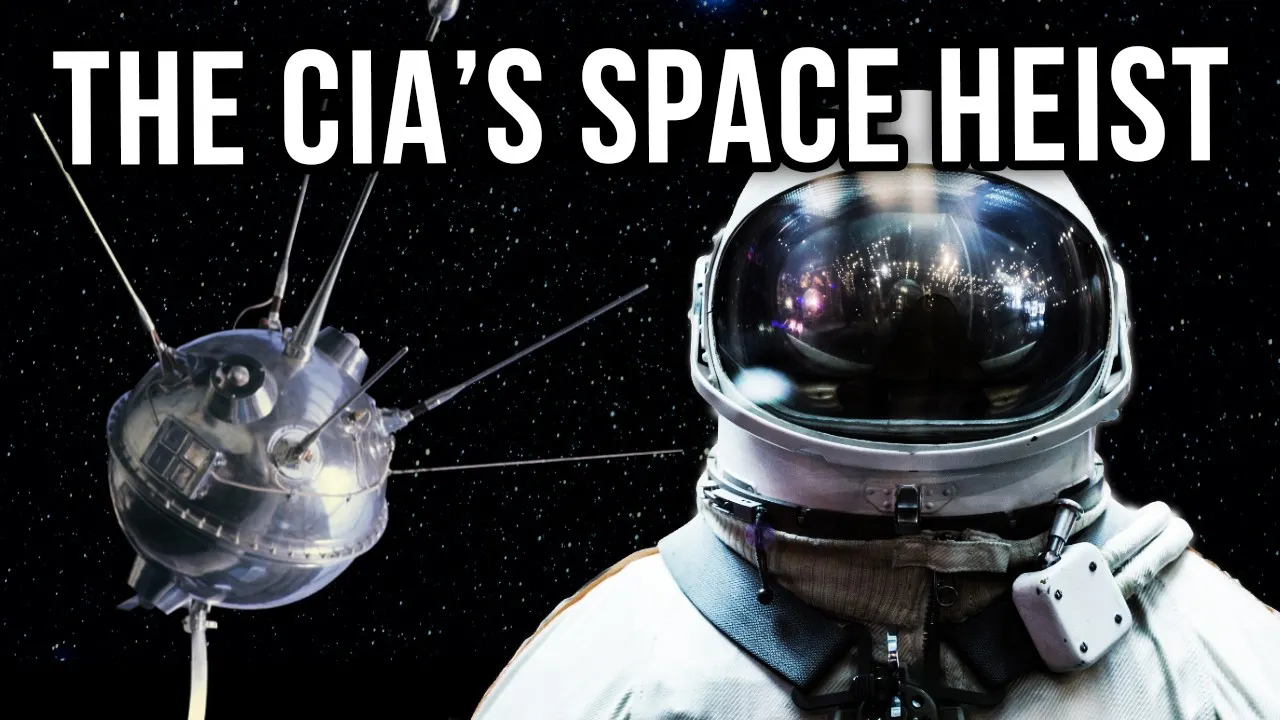
Anyone interested in the shirt can find it here: https://store.todayifoundout.com/products/beep-beep-sputnik-2
On October 4, 1957 at 7:28 PM Greenwich Mean Time, a massive R7 Semyorka
rocket roared off the launch pad at Baikonur Cosmodrome in Kazakhstan
and soared into the night sky. The following morning, the world awoke to
the stunning news: the Soviet Union had launched Sputnik 1, the world’s
first artificial satellite, into earth orbit. In Washington, DC,
American politicians and military officials flew into a panic. Not only
had the supposedly backwards Soviets achieved spaceflight years ahead of
Western predictions, but the same R7 rocket which had placed Sputnik in
orbit could also place a nuclear warhead anywhere in the Continental
United States with less than 30 minutes’ warning. Worse still, unlike a
manned strategic bomber, such intercontinental ballistic missiles could
not be intercepted or shot down. Overnight, outer space became a new
battlefield in the escalating Cold War. As the American government and
aerospace industry geared up to compete in this newly-declared Space
Race, intelligence agencies like the CIA sought to learn all they could
about Soviet space technology. This proved a daunting task, for the
closed nature of Soviet society made it all but impossible to infiltrate
using human agents. As a result, analysts were forced to glean what
little they could from grainy spy plane and satellite photographs and
intercepted telemetry signals. But then, in late 1959, an unlikely
opportunity suddenly presented itself: a chance to “kidnap” and examine a
genuine Soviet space probe. This is the audacious story of the Great
Lunik Heist.
Author: Gilles Messier
Host/Editor: Daven Hiskey
Producer: Caden Nielsen
0:00 Shirt
0:13 Intro
7:14 Planning the Luna Space Heist
8:46 Kidnapping the Spacecraft
13:32 The Results of the Heist
Learn more about your ad choices. Visit megaphone.fm/adchoices

In the episode today, we're looking at whether absinthe actually makes you hallucinate or not. Next up the hilarious story of the wine lover's meltdown, and then
the popular cocktail that includes a dehydrated human toe. Finally
whether or not tapping a shaken can of soda actually reduces foam. Who
invented the bloody mary drink. Where does the practice of pouring one
out for your homies come from. Why alcohol content is referred to as a
proof. How much it would cost to fill a swimming pool with booze. And
why wine is almost always drunk in wine glasses instead of regular
glasses.
0:00 Does absinthe actually make you hallucinate?
14:27 The wine lover meltdown
21:55 The popular cocktail that includes a dehydrated human toe
33:48 Does tapping a shaken can of soda actually reduce foam
45:32 Who invented the bloody mary drink
1:01:48 Where does the practice of pouring one out for your homies comes from
1:08:49 Why is alcohol content referred to a proof
1:12:24 How much would it cost to fill a swimming pool with booze
1:25:08 Why is wine almost always drunk in wine glasses instead of regular glasses
Learn more about your ad choices. Visit megaphone.fm/adchoices

“We sewed the sacks, we broke the stones,
We turned the dusty drill:
We banged the tins, and bawled the hymns,
And sweated on the mill:
But in the heart of every man
Terror was lying still.”
These are the words of famed master of the pen, Oscar Wilde, in his
Ballad of Reading Gaol, referencing his time spent at Pentonville Prison
for, ironically, mastering working with a different type of pen…
As a brief aside, while many lament the initial thing that set forth a
chain of events that saw Wilde imprisoned today, specifically his affair
with Lord Alfred Douglas, very surprisingly, unlike with the likes of
the great Alan Turing and countless thousands others who were unjustly
punished for their sexuality, it turns out there is a LOT more to the
story of Wilde’s conviction that many a biographer skirts over, though
to be fair this is in part because some elements of the original
transcript from the original trial were only discovered in the year
2000. Reading through those, however, even in modern times and through a
modern lens and sensibilities, Wilde would have almost certainly found
himself behind bars, disgraced, and absolutely vilified pretty well
universally on the interwebs.
But we’re not here to discuss Oscar Wilde, the full story of his
conviction was simply a rabbit hole we were previously woefully ignorant
of, and will share more on later in the Bonus Facts if you’re
interested as well- though fair warning, it’s quite dark and, oof. Never
look too deeply into your heroes, especially when they are from the
past, which was of course, the worst.
But in any event, embedded in Wilde’s aforementioned poem, he references
sweating on the mill. This was a device created by famed engineer Sir
William Cubitt in the early days of Cubitt’s career, with the primary
purpose of the surprisingly feature rich machine being both to punish
prisoners in an excruciating way for upwards of 10 hours per day, while
also isolating them in that task so that they could properly think about
what they’d done wrong.
While Wilde may have abhorred the machine, having been forced to march
on it for a couple years, another famous master wordsmith, Charles
Dickens, would praise it, writing, "It is a satisfaction to me to see
that determined thief, swindler, or vagrant sweating profusely at the
treadmill... [knowing] he is doing nothing all the time but undergoing
punishment."
Here now is the story of when humans first started exercising for
fitness’ sake, as well as the rather torturous invention of the
treadmill, which saw prison death rates ramp up considerably once
implemented, but paradoxically also seemed to be a major health boon to
those that survived their monotonous march.
Author / Host: Daven Hiskey
Producer: Samuel Avila
0:00 Intro
3:13 When Humans Started Purposefully Exercising
6:47 Prison Reform and Inventing the "Treadmill"
22:02 Inventing the Modern Treadmill
29:02 Cooking with Dogs
32:14 Oscar Wilde was the Worst
Learn more about your ad choices. Visit megaphone.fm/adchoices

For those of us of the slightly more seasoned vintage growing up in or
living in the late 20th century, which was totally only a decade ago and
I’ll take no further input on this matter, spontaneous Human Combustion
ranks alongside the likes of quicksand, the Bermuda triangle. and rain
that melts your skin off as one of those things that everyone from the
news to popular social consciousness taught us was going to be something
we’d simply have to deal with in our day to day lives for some reason.
And then, just as suddenly as a person randomly turning into ash,
everyone just moved on and stopped talking about it…
Which leads us to the subject of today’s video- what ever happened to
everyone spontaneously combusting? Where did the idea come from, how did
it proliferate public consciousness, and what’s up with all the people
who did burst into flames and turned to ash, generally leaving only
things like arms and legs behind? Can awesome science explain what
happened to them?
Authors: Karl Smallwood and Daven Hiskey
Host: Daven Hiskey
Producer: Caden Nielsen
Learn more about your ad choices. Visit megaphone.fm/adchoices

 1
1In the video today we're looking at how the Ancient Romans made
incredibly long, perfectly straight and incredibly durable roads, what
it was like being a slave in ancient rome, how they made concrete better
than ours, were they really as wild as we sometimes think today or more
prudes, did gladiators really live or die based on thumbs up or thumbs
down by the audience, that time a farmer was given ultimate power twice
and changed the world by walking away both times after he'd done what
Rome asked of him, what really happened on the ides of march, and the
chickens that shaped world history.
Host: Simon Whistler
Producer: Pacience Hiskey
0:00 How Did the Ancient Romans Manage to Build Perfectly Straight, Ultra Durable Roads?
17:35 What was It Really Like to Be a Slave in Ancient Rome?
31:14 How Did the Ancient Romans Make Concrete So Much Better Than Ours?
41:42 Were the Ancient Romans Really Wildly Debauched or Actually Prudes
53:45 Did Gladiators Really Live or Die Based on Thumbs Up or Thumbs Down by the Audience?
1:04:24 That Time a Farmer was Given Ultimate Power Twice and Changed the World By Walking Away Both
1:14:55 Fact From Fiction: What Really Happened on the Ides of March?
1:37:03 The Chickens That Decided Ancient Rome’s Major Events and Shaped World History
Learn more about your ad choices. Visit megaphone.fm/adchoices
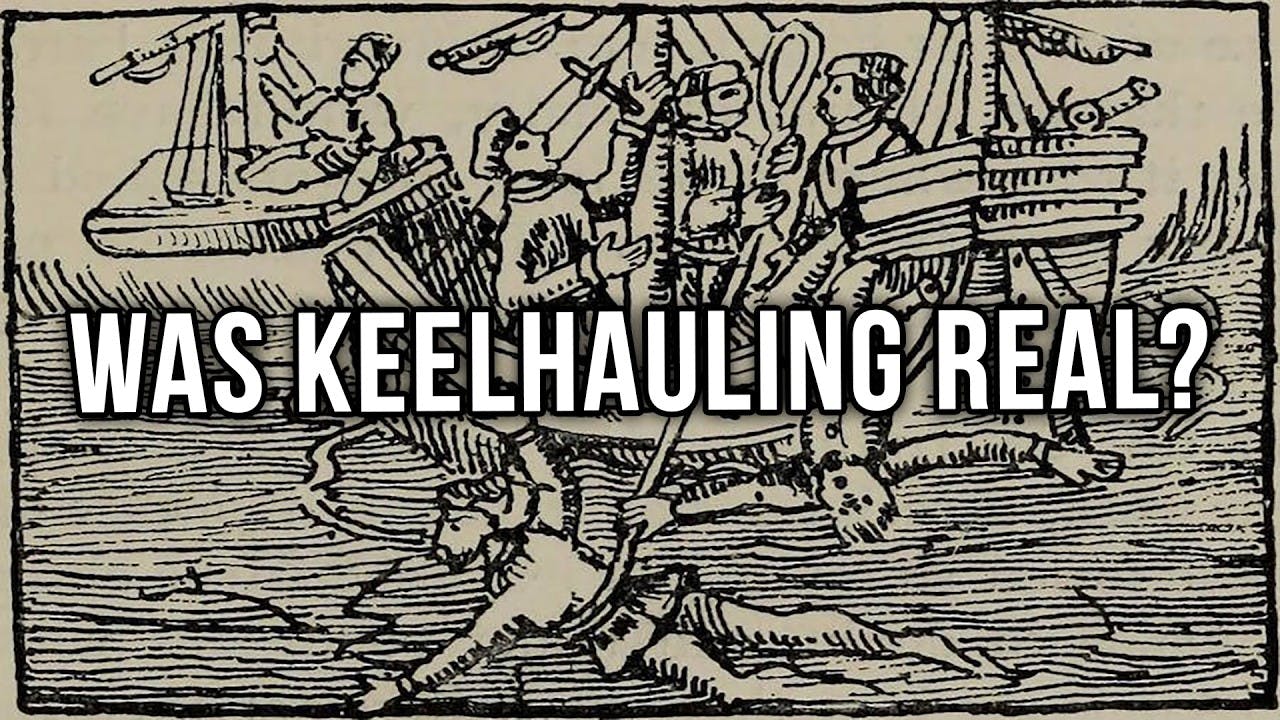
Running the gauntlet. Starting. Flogging with the cat ‘o 9 nine tails.
Gagging. Clapping in irons. Hanging from the yardarm. While this all
might sound like a super fun Saturday night with the misses when the
grandparents are watching your kiddos for you, it turns out these are
actually just a few of the dizzying array of corporal and capital
punishments inflicted upon sailors of old - both navy men and pirates -
to enforce discipline and punish a wide variety of crimes. But while
most of these punishments are fairly well-known, you may have noticed
two notable practices missing from the list: that old staple of pirate
movies, “walking the plank”… and keel-hauling. Perhaps the most infamous
of all nautical punishments, keel-hauling struck such fear into the
hearts of sailors over the centuries that the term survives to this day
as a byword for particularly harsh discipline. But what was
keel-hauling? How did it work, who invented it, and was it actually a
real thing? Or, like so much popular seamen lore, was it just the
product of some adventure writer’s imagination? Well, put on your
eyepatch and tricorn hat, strap on your peg-leg, as we dive into the
reality of one of the Age of Sail’s most barbaric practices.
Author: Gilles Messier
Producer: Caden Nielsen
Host/Editor: Daven Hiskey
Learn more about your ad choices. Visit megaphone.fm/adchoices
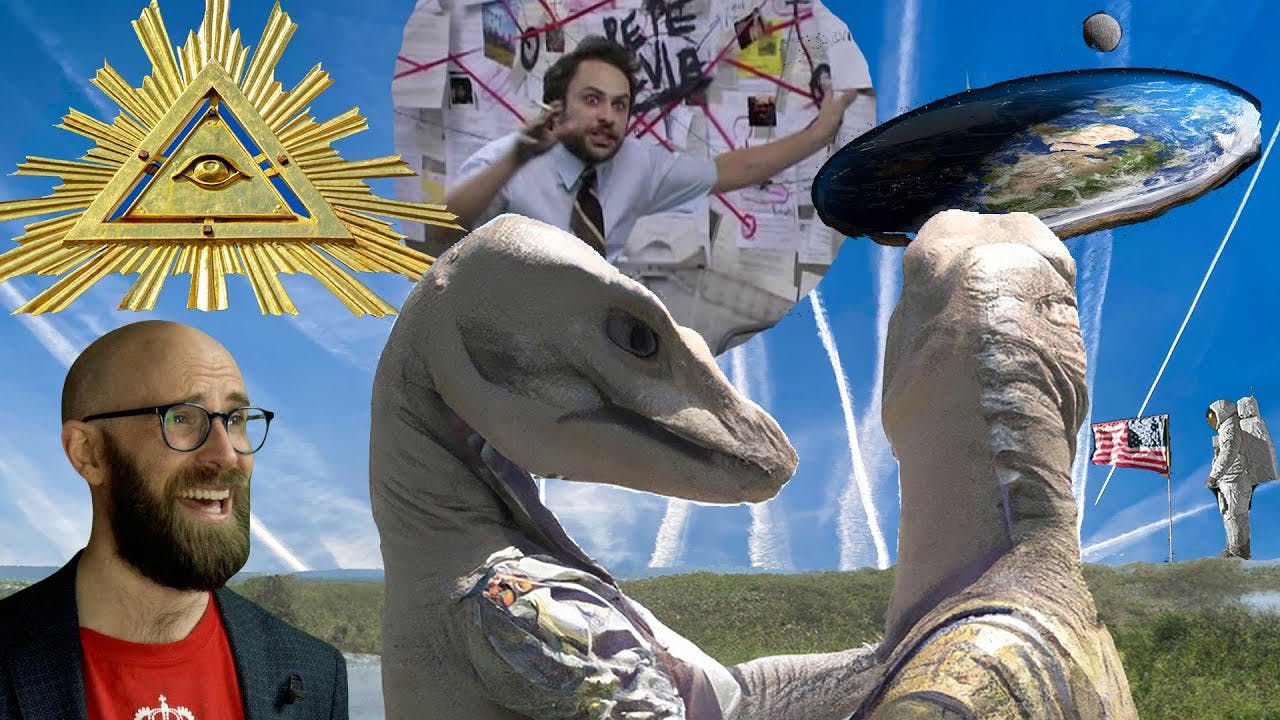
In today's video, we're looking at What's Up with the All Seeing Eye on
the Dollar Bill? Who Started the Flat Earth Conspiracy Theory, How Many
Believe This, and What Do They Believe? Why is the Stereotypical Image
of Aliens Green or Grey Bald Humanoids? How Do We Actually Know We
Landed on the Moon? What Really Causes Chemtrails? The Truth About the
Freemasons: The Not-So-Secret Society Did Any Musicians Actually Put
Backwards Satanic Messages in Their Songs? and Why Do People Think There
are Aliens in Area 51?
Chapters:
0:00 What's Up with the All Seeing Eye on the Dollar Bill
14:52 Who Started the Flat Earth Conspiracy Theory, How Many Believe This, and What Do They Believe?
35:37 Why is the Stereotypical Image of Aliens Green or Grey Bald Humanoids?
54:33 How Do We Actually Know We Landed on the Moon?
1:28:12 What Really Causes Chemtrails?
1:35:49 The Truth About the Freemasons: The Not-So-Secret Society
1:48:12 Did Any Musicians Actually Put Backwards Satanic Messages in Their Songs?
2:03:04 Why Do People Think There are Aliens in Area 51?
Learn more about your ad choices. Visit megaphone.fm/adchoices

At exactly 5:30 AM on July 16, 1945, the world’s first atomic bomb,
codenamed Trinity, detonated over the desert in New Mexico, unleashing
in an instant the power of 18,000 tons of TNT. The atomic age had begun.
As night turned to day and a fireball 200 metres across rose into the
sky, the scientists of the Manhattan Project who had built the bomb
reacted in different ways. Some were jubilant, others more somber. J.
Robert Oppenheimer, the scientific director of the project, famously
recalled a line from the Hindu scripture (ba-ga-vad gee-ta) Baghavad
Gita: “Now I am become death, destroyer of worlds”; while Kenneth
Bainbridge, director of the Trinity test, was more blunt, stating: “Now
we’re all sons of bitches.” Elsewhere around the test site, money
frantically changed hands as scientists settled a series of private
bets. Some had wagered that the test would be a dud, or that it would
reach just a fraction of its predicted yield. But others, including
Italian physicist Enrico Fermi, had wagered on a more disturbing
outcome: that the intense heat of the bomb would ignite the atmosphere,
setting off an unstoppable chain reaction that would wipe out all life
on earth. This apocalyptic bet has since become an infamous part of
nuclear lore, but does it have any basis in reality? Could the Trinity
test - or any nuclear weapon, for that matter - actually have set
earth’s atmosphere ablaze?
Well, let’s dive into it, shall we?
Author: Gilles Messier
Host: Daven Hiskey
Producer: Samuel Avila
Learn more about your ad choices. Visit megaphone.fm/adchoices

From the terrifyingly effective De-bollocker to the ugly little boat
that won WWII to the German fighter that dissolved its pilots alive,
this is the story of several of the more interesting weapons utilized in
the world's most terrifying war.
Hosts: Simon Whistler and Daven Hiskey
Authors: Daven Hiskey, Gilles Messier, Karl Smallwood
Producers: Samuel Avila and Pacience Hiskey
Learn more about your ad choices. Visit megaphone.fm/adchoices

If ever there was a criminally underrated natural resource, it would
have to be Helium. Though most commonly associated with party balloons
and making one’s voice sound like a cartoon, Helium’s most important
application is in cooling the magnets of Magnetic Resonance Imaging or
MRI machines. While the finite and ever-dwindling global supply of this
vitally important gas is a topic worthy of its own video, perhaps even
more fascinating is just how bizarre an element Helium truly is. For if
Helium is liquefied and cooled to a low enough temperature, it begins to
behave like no other liquid on earth, seemingly violating the laws of
gravity, thermodynamics, and even logic itself. This is the story of
superfluid Helium II, the weirdest substance known to science.
In order for Helium to be liquefied, it must be cooled to a temperature
of -268.8 degrees Celsius or 4.2 Kelvin – that is, only 4.2 degrees
above Absolute Zero, the coldest temperature theoretically possible. By
contrast, Nitrogen liquefies at a relatively balmy 77 Kelvin, Oxygen at
54 Kelvin, and Hydrogen at 33 Kelvin. The reason Helium is so difficult
to liquefy lies in its electron orbitals being completely filled, making
it – like the other noble gases Neon, Argon, Krypton, Xenon, and Radon –
electrically neutral and chemically inert. This means that the only
force which can pull Helium atoms together is the so-called Van de Waals
Force, which is caused by electrons shifting from one side of an atom
to the other and creating a momentary electrostatic charge. This force
is incredibly weak, meaning that Helium must be cooled to extremely low
temperatures in order for the Van de Waals forces to overcome the energy
of the moving atoms and pull them close enough together for the gas to
liquefy. Solidifying Helium is even more difficult – so difficult, in
fact, that it cannot be done at regular atmospheric pressures. Only at
pressures of 25 atmospheres and above can solid Helium be created.
Learn more about your ad choices. Visit megaphone.fm/adchoices
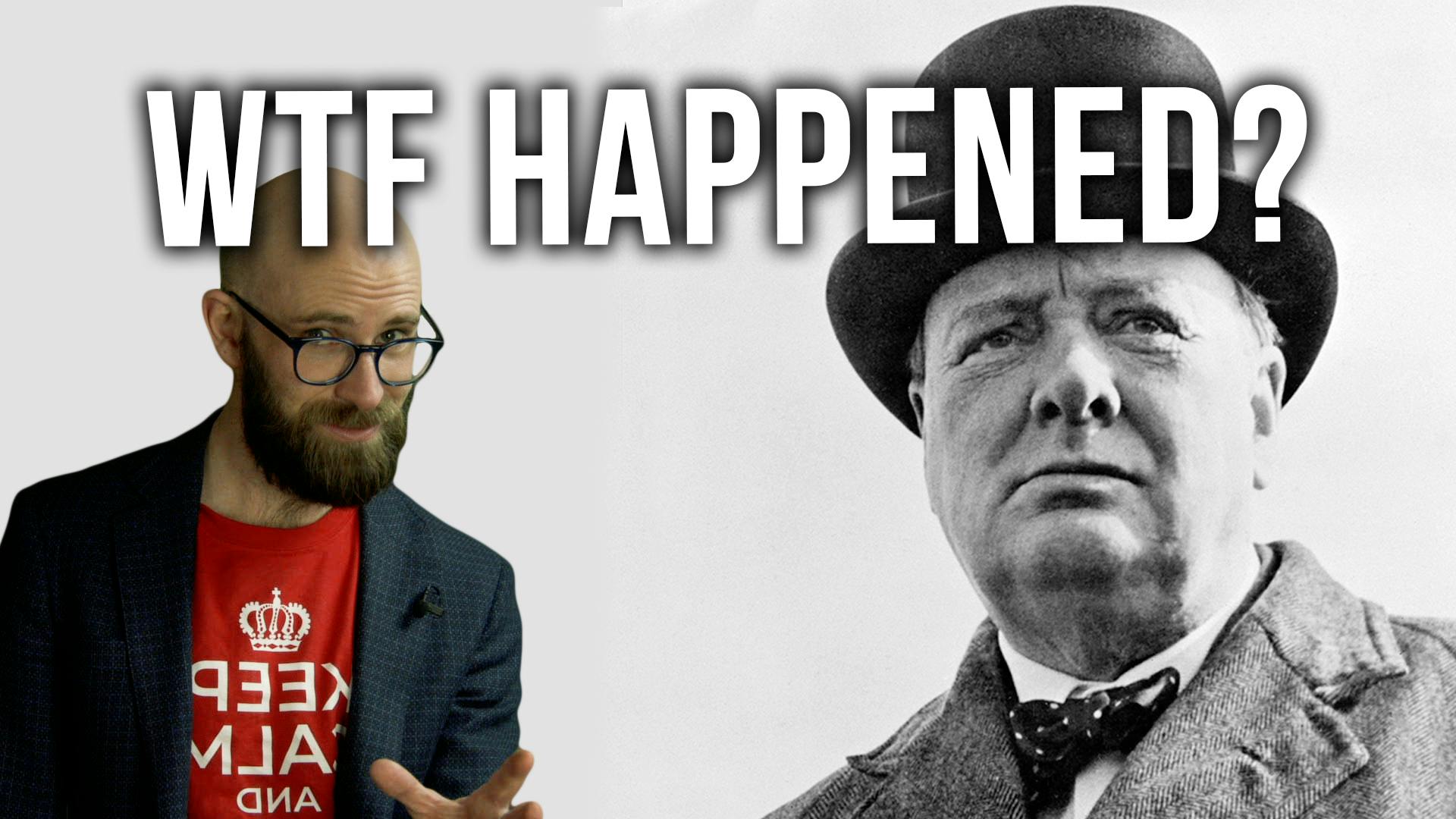
Nazi Germany officially surrendered on May 7, 1945. With the war still
raging in the Pacific against Japan and sporting a popularity rate at
around 83%, Sir Winston Leonard Spencer Churchill seemed a shoe-in to
maintain his position as Prime Minister of the British Empire. Just
before the announcement of the results of the election, Churchill had
been at the Potsdam Conference with U.S. President Truman and Joseph
Stalin, only intending to travel home briefly to accept his victory, and
then back to the conference. Yet a funny thing happened on July 26,
1945, the voting populace of the UK, which had turned out in record
numbers of 73%, had decided to collectively say “Thanks for your
service, Winston, but we’ve decided to go in a different direction,” in a
landslide defeat that shocked the world.
While in more modern times you might think some sort of scandalous
affair or offensive comment may have whipped up the mob on the interwebs
precipitating such a massive electoral fall in the span of just a
couple months, there was no such issue here either. So what happened?
How did this wildly successful politician, frequently named among the
top Prime Ministers ever in the nation, at the height of his popularity
no less, and who had just helped successfully guide Britain through one
of its most harrowing periods of its storied history, not just lose, but
lose in a landslide?
And not only this, making the whole thing even more inexplicable, he
lost to a man who one of said man’s own party members, Aneurin Bevan,
stated “seems determined to make a trumpet sound like a tin whistle.” Or
as chairman of the Daily Mirror, Cecil King, would remark in 1940, he
was “of very limited intelligence and no personality. If one heard he
was getting £6 a week in the service of the East Ham Corporation, one
would be surprised he was earning so much.” Or, let’s not stop there, as
famed social reformer Beatrice Webb would remark, “He looked and spoke
like an insignificant elderly clerk, without distinction in the voice,
manner or substance of his discourse. To realize that this little
non-entity is… presumably the future Prime Minister, is pitiable.” Or
how about as Churchill himself would allegedly quip about his opponent,
he is "a modest man, but then, he has so much to be modest about."
The demeaning quotes about the man Churchill lost to go on and on and
on, and his own party before, during, and after the election likewise
tried to oust him as their leader…. Only to see this quiet, oft’
forgotten individual who rapidly rose from a middle class background to
the heights of power, defy them all and go on to become one of the
greatest Prime Ministers in the history of the nation, often even ranked
above Churchill himself, despite only serving in the position for a
handful of years.
As ever, of course, the devil is in the fascinating details, so let’s
dive into it, and what specifically happened to see a titan of history
defeated by a man likely no one outside of the UK even knows the name
of, yet shaped the Britain we have today arguably more significantly
than Churchill ever did.
Learn more about your ad choices. Visit megaphone.fm/adchoices
In this episode of The Brain Food Show, we begin by discussing the clandestine way Niel Armstrong managed to get his application to the astronaut program in despite submitting it past the deadline. We then look at why he got to be first to walk on the moon when precedent should have had it been Buzz Aldrin. Next up we look at the oft’ forgotten second thing Armstrong said when stepping out onto the moon.
Moving swiftly on we do a rapid fire of a variety of space related bonus facts including, but not limited to, the real color of the Sun, how much energy it would take to cause the Earth to stop orbiting the Sun, how old the Sun is in Sun years, how many Sun rises and sunsets astronauts aboard the International Space Station see every day, etc.
And for those curious on Simon and my treatise on the proper order of watching Star Trek series and other such thoughts, the mentioned forum post is here.
Learn more about your ad choices. Visit megaphone.fm/adchoices
If you've followed this website, our YouTube channel, or BrainFood Show
podcast very long, you know one of our favorite historic individuals is
Theodore Roosevelt- among countless other reasons to be admired, a man
who enjoys a reputation as one of the most terrifyingly badass
individuals to ever hold the office of leader of a nation, with
countless stories detailing his cartoonishly manly exploits. For just a
small sample to start, at one point while he was living as a rancher,
some thieves stole his boat in the middle of an ice storm. Given the
rather dangerous weather conditions, you might think he'd just let them
go. But this was Teddy Roosevelt and it was the principal of the thing.
He states, "In any wild country where the power of law is little felt or
heeded, and where every one has to rely upon himself for protection,
men soon get to feel that it is in the highest degree unwise to submit
to any wrong…no matter what cost of risk or trouble. To submit tamely
and meekly to theft or to any other injury is to invite almost certain
repetition of the offense, in a place where self-reliant hardihood and
the ability to hold one’s own under all circumstances rank as the first
of virtues."
Thus, he spent the next three days building another boat so he could
track the thieves down and take his original boat back. Once done, it
took him a few days of searching, but using his prodigious skills as a
master tracker, he managed to find and capture the men. However,
ultimately the river became too frozen over to continue to the nearest
town that way, so instead he sent his ranch hand companions home and
marched the thieves on foot, alone for 40 hours straight to town. During
this trek, he did not bind the thieves' in any way as he felt sure
they'd suffer from frostbite if he did so. To keep them from
overpowering him while they trudged along through the frozen wasteland,
he simply kept a gun trained on them and, while they slept during rest
periods, he kept himself awake by reading Tolstoy's then relatively
recently published Anna Karenina.
It's also noteworthy here that because of the weather conditions, the
fact that he was in hostile territory in the middle of nowhere, and
escorting a trio of criminals who would have killed him without
hesitation if he'd given them the chance, he was within his rights to
simply execute them on the spot and go home, something the vast majority
of lawmen of his era would have done. Roosevelt, however, felt they
deserved a trial...
Learn more about your ad choices. Visit megaphone.fm/adchoices

The McRib is a food with both a devout following and many detractors.
But what is the genesis of the world’s most popular fast food chain’s
most mysterious menu item? And why, oh why, is it not available all the
time like the majority of the rest of the McDonald’s menu?
Cooking ribs in the Americas predates the colonial period. But the
earliest records of Europeans cooking foods near what we would call
barbeque were in colonial Virginia. Settlers observed a native way to
cook meat, and they adapted it to their tastes. Later, as slaves were
brought in from Caribbean plantations, the food genre we know as
barbeque developed.
In fact, the word barbeque is a loan word from the Taino language of the
Caribbean. It was originally called barbacoa. It is unclear whether the
name comes from the native islander's method of cutting the meat or the
wooden frame on which the food was smoked. In any case, after it
arrived in the North American colonies, it spread wherever pork was
plentiful.
Important here to the story of the McRib is that barbeque, in the proper
sense, is any meat that is slow-cooked over indirect heat, usually
wood, and not merely meat with barbeque sauce on it. It can take up to
eighteen hours to turn raw meat into barbeque for it to reach
perfection. If brined first, it can take an additional day.
That is part of what makes the McRib a surprise. Rib joints usually
slow-cook. Many places brine it before smoking. Additionally, cooking
with a wood fire is inherently messy. Barbeque meat is also often hand
butchered. None of this lends itself to a fast food chain that in 2011
had to abandon the idea of using celery root in one of its food items
because to offer the item, McDonald's would have had to buy all of the
world’s celery root supply, and there still would not have been enough
celery to meet the projected demand. A frequent problem for the
restaurant chain that annually serves 1/27th of all restaurant food
consumed in the world, and caters to about 1 percent of the world’s
population on any given day.
Sponsor: Incogni - Use code BRAINFOOD and get 60% off an annual plan using the link https://incogni.com/brainfood
Learn more about your ad choices. Visit megaphone.fm/adchoices
In this episode of The Brain Food Show, we begin by discussing the real origin of Tang and what that has to do with Pop Rocks and how they work. We then move on to the interesting story behind the invention of Velcro and how it works.
Next up we look at whether NASA really spent many millions of dollars developing the famous “space pen” instead of just using a pencil like the Russians.
Moving on from there we discuss the fascinating reason why only one side of the moon faces the Earth and how this happened and is still happening, with the Earth itself slowing down such that in theory at some point only one side of it will face the moon.
Moving on, we look at what the actual odds of navigating a typical asteroid field in space would be and whether the depictions in movies here are actually accurate.
Finally, we respond to some user feedback, including on initial attempts listeners of the female persuasion have made to pee standing up without peeing all over themselves (which sounds even weirder to write, but is in reference to a previous space episode ;-)), and the interesting phenomenon of people using the show to fall asleep every night and whether we should take that as a good thing or a bad thing…
Sponsor: Incogni - Use code BRAINFOOD and get 60% off an annual plan using the link https://incogni.com/brainfood
Learn more about your ad choices. Visit megaphone.fm/adchoices


Download from Google Play

Download from App Store
 United States
oh my GIDDY AUNT, YOU GUYS ARE BACK!!! The years of staying subscribed when you went silent have been worth it 🥳
love this podcast 5 stars. Simon we need more Brain Blaze
Great podcast been listening for a few days now and halfway through. Love the banter and the topics. Absolute perfect balance between rambling and facts as well.
Simon was feeling like a 'baller' because he could afford some 4 buck chocolate. Ten minutes later "Wait, when did we eat Foie Gras together?"
getting yelled - you infidel!! highlight of my day
7:46 Kobe!!! Too soon....? lol
I absolutly love this podcast... this and your youtube channels have gotten me thru alot of days at work. Thanks guys
This podcast needs Metamucil. Get regular, Stay regular. all jokes aside it's one of my favorites but the ebb and flow of episodes is maddening.
these boys slap
the poop thing is for like colon cancer or something instead of doing it at a doctors office or having to bring it in, but that's the only one I heard about in which Simon was talking about
Came here after discovering your emense amount of YouTube channels (you cold legit make a channel putting them all together in a news/highlights type style). The two of you here and the rest of the team from YouTube have not only saved my mind over lockdown but genuinely given me something to look forward to and learn from. I'm slowly making my way through from the very start and love the organic nature, genuine banter and perfectly random structure. I also really appreciate that'll you'll go back to something that was wrong or mispoken. Even though at least 80% of this seems to be picked from the air after a light bulb appears above your head. The facts get across. solid content. Well researched. Overall 5/5. Keep it up - you've got a life listener right here ❤
so excited to hear Simon and Daven on a somewhat regular basis
Go watch some marvel movies Simon! Cap America!
Great podcast. I binged all the episodes in about a month. The episodes got better as they went on but I do miss the "how can we connect this topic to star trek" bonus fact. I listen to other podcasts like this one but I like that the topics seems to be anything Daven finds interesting at the time. It's fun when I have heard some of facts and references on other podcasts and now get a different aspect of the story not relevant to my other podcasts topic.
Great podcast, I love listening to it when I go for a walk or run.
Simon is right about 2 months salary, class rings, and the postal service. what was the episode about again?
Simon is so right about 2 months salary thing.
Now I'm listening to the podcast as well as the numerous YouTube channels. I think this is a good addiction.
I love to listen to this show when. I'm just walking around. The back stories are so fun to hear about and the tangents are great.
finally finished the ep started when it first came out, yes you can legally rip and upload videos to your own personal accounts/servers just as long as you don't share it.