


 Claim Ownership
American History Hotline
Subscribed: 164Played: 2,904
Subscribe

2026 iHeartMedia, Inc. © Any use of this intellectual property for text and data mining or computational analysis including as training material for artificial intelligence systems is strictly prohibited without express written consent from iHeartMedia
Description
Bob Crawford searches for the best historians and experts to answer listener questions about American history — from the Revolutionary War to rock & roll feuds. Got a question? Send it to AmericanHistoryHotline@gmail.com.
42 Episodes
Reverse
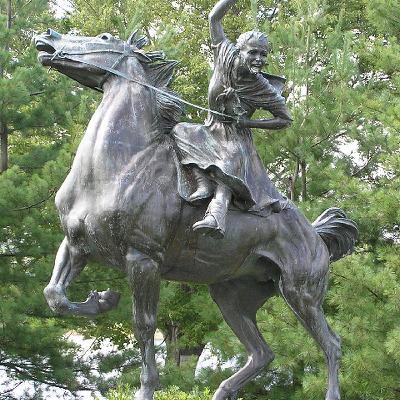
She was just 16 years old when she rode nearly 40 miles through the night rallying the militia as the British attacked during the American Revolution. Bob calls up Karen Romano Young (Sybil Ludington: Revolutionary War Hero) to get the story of Sybil Ludington. They explore what parts of her story are fact or fiction, and why she was nearly forgotten.See omnystudio.com/listener for privacy information.
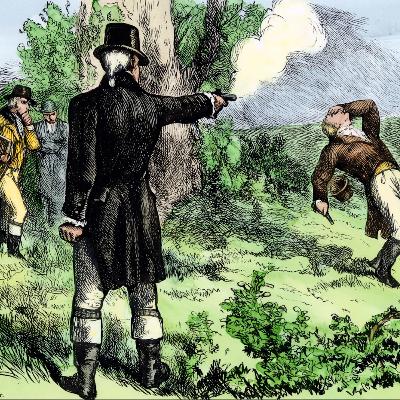
In 1804, Vice President Aaron Burr shot and killed Alexander Hamilton in the most infamous duel in American history. But what happened next? Did Burr face murder charges? Was he convicted? And why did he go full Gary Busey? (You'll have to listen to understand that reference!) Bob calls up Yale historian Joanne Freeman (The Essential Hamilton: Letters and Other Writings) to unpack the astonishing second act of Aaron Burr’s life. From criminal indictments to conspiracies, a treason trial and exile, the duel was just the beginning for Aaron Burr. See omnystudio.com/listener for privacy information.
 1
1No, Benjamin Franklin did not invent Daylight Saving Time. But he did muse about its practicality in a 1784 essay. So, if Franklin didn't invent DST, where did all this springing forward come from? Bob calls up Chad Orzel (A Brief History of Timekeeping: The Science of Marking Time, from Stonehenge to Atomic Clocks) to get to the bottom of this question. Oh, and don't forget to change your clocks on March 8th! See omnystudio.com/listener for privacy information.
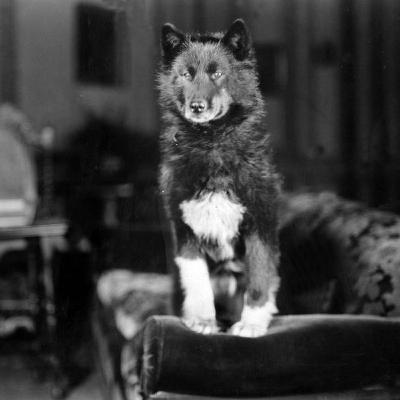
Was the Disney movie Balto actually based on a true story? A listener wants to know if this heroic snow dog was real—or just a Hollywood invention. To get answers, Bob calls up Dr. Nicole Burt of the Cleveland Museum of Natural History. It turns out, the real Balto is actually IN her museum. What?! Bob and Nicole dive into the truth behind one of the most beloved animated films of the 1990s by exploring the real 1925 serum run to Nome, Alaska. How did a deadly diphtheria outbreak create a hero sled dog? And what happened to Balto once the spotlight of fame dimmed? It’s an episode that will have you heading to Alaska and hop on a dog sled! Or, at least, pop in an old VHS of Disney’s Balto.See omnystudio.com/listener for privacy information.
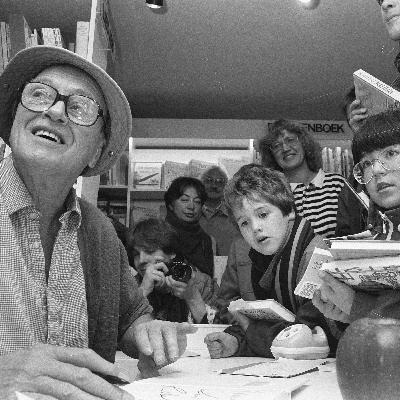
Roald Dahl is a beloved children’s author. Turns out, he was also a British spy during WWII! So how does one transition from seducing prominent Americans’ wives to writing Matilda? Well, we’re glad you asked! We called up the creator of a new docu-series called The Secret World of Roald Dahl to get all the dirt on this famous children’s author. Aaron Tracy, Creator of The Secret World of Roald DahlSee omnystudio.com/listener for privacy information.
In honor of President's Day, we're sharing some of the best conversations we've had about Honest Abe and General Washington. We speak with historian Alexis Coe (You Never Forget Your First: A Biography of George Washington) about George Washington myths, including whether or not his teeth were made of wood. We also speak with Julian Zelizer about which party Abraham Lincoln would belong to today. Check out Julian's Substack, The Long View. See omnystudio.com/listener for privacy information.
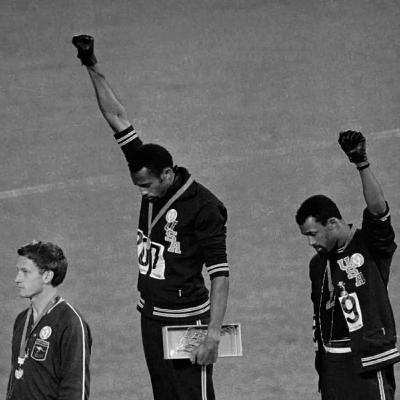
You gotta keep 'em separated. That's a lot of people's opinion about mixing sports and politics. But as the world turns its eyes to Italy for the 2026 Winter Games, you have to wonder if this is the ideal place to make a political statement. To understand how acts of political activism have played out at the Olympics throughout history, we call up Jules Boykoff. He's the author of numerous books about the Olympics, including What are the Olympics For? So, are the Olympics fair game for protest? Or should athletes keep their eye on the ball ... or épée ... or curling stone? You get the point. See omnystudio.com/listener for privacy information.
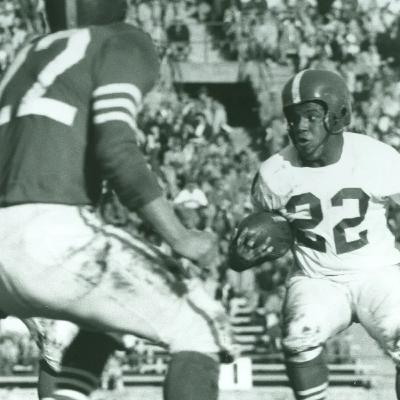
Jackie Robinson broke the color barrier in baseball. That's a well known piece of history. But who integrated the NFL? Well, it's an amazing story with lots of binge drinking, miraculous comebacks and hot dog eating. Seriously. Just in time for the Super Bowl, we're calling up David Fleming, author of A Big Mess in Texas: The Miraculous, Disastrous 1952 Dallas Texans and the Craziest Untold Story in NFL History. He explains how one of the worst teams in NFL history shaped the game we know today. See omnystudio.com/listener for privacy information.
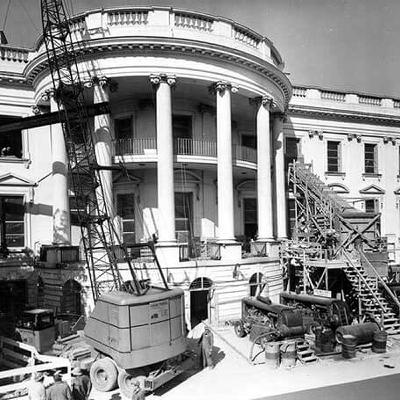
Who owns the White House? Is it the American people or the person who lives inside of it — AKA, the president? If the President of the United States of America controls the White House, does ANYONE have say over what he does with it (we're looking at you, preservation societies and Congress)? Here to help us answer these questions (and weigh in on President Trump's renovations to the East Wing) is Robert Klara, author of The Hidden White House: Harry Truman and the Reconstruction of America’s Most Famous Residence See omnystudio.com/listener for privacy information.
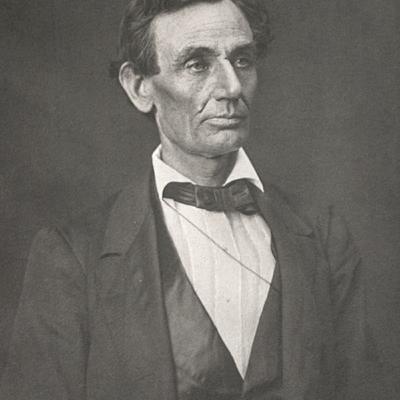
Before he became president, Abraham Lincoln spent just one term in Congress. So how did "the best known two-time Senate loser in the country" become one of the greatest presidents in American history? Bob calls up historian and author Chris DeRose (Congressman Lincoln: The Making of America’s Greatest President) to help answer this question. Together, they explore how Lincoln's short stint on Capitol Hill shaped his presidency — from his early and consistent resistance to the expansion of slavery to his firsthand experience of seeing men kidnapped and sold into bondage. See omnystudio.com/listener for privacy information.
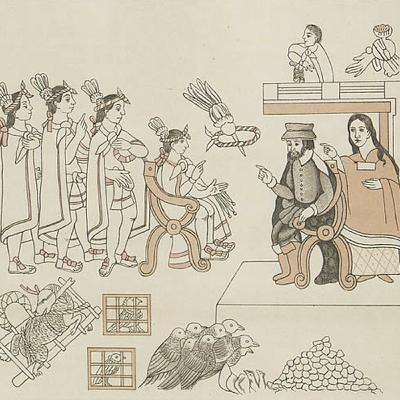
For centuries, the story has been told the same way: Montezuma surrendered to Hernán Cortés, and a small band of Spaniards conquered the Aztec Empire. But that story has always seemed a bit ... fishy. To get the TRUE story, Bob calls up historian Matthew Restall to debunk one of the most enduring myths of the Spanish conquest of the Americas. As it turns out, when you dig into Indigenous sources a whole new story begins to emerge. Shocker, Montezuma did not surrender and Cortés was not viewed as a God-like figure. In this episode, we'll revisit the famous meeting between Montezuma and Cortés, unpack the legend that Europeans were mistaken for gods, and explore how Spanish self-promotion shaped the history books for hundreds of years. If you’ve ever wondered how a few hundred conquistadors were said to defeat an empire of millions — or why we’ve been telling this story the same way for 500 years — this episode offers a long-overdue reset.See omnystudio.com/listener for privacy information.
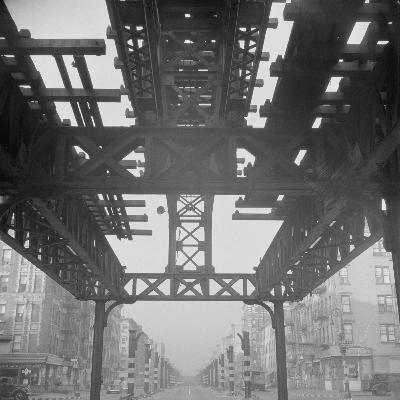
It takes decades to build a new subway line in the United States. Meanwhile, China is building entire high-speed rail networks in just a few years. So, how did America's once-great love of trains get derailed? We use New York City’s Second Avenue Subway as a test case to answer this bigger question: Why is building trains in America so hard compared to places like China? Bob calls up Dan McNichol, author of Second Avenue Subway: Building the Most Famous Thing Never Built in New York City, and transportation expert Joe Stanford to break down how the U.S. went from a rail-building powerhouse to a country where major transit projects feel nearly impossible. In this episode we bore deep into: America’s century-long struggle to complete the Second Avenue Subway China’s rapid expansion of subways and high-speed rail How politics, regulation, and Americans' LOVE for their cars shape infrastructure Why the cost of expanding passenger rail lines is so much higher in the U.S. (like, WAY higher) than in Europe and Asia All aboard! Next stop: a brief history of American rail. (Toot! Toot!) 🚂 See omnystudio.com/listener for privacy information.
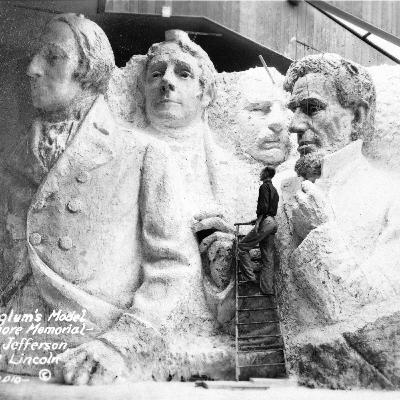
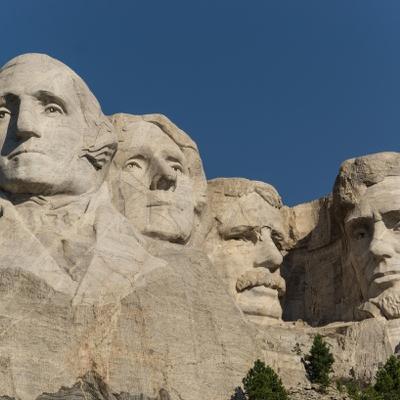
Could a new president ever be carved into Mount Rushmore? It depends on who you ask. We call up historian Matthew Davis (author of A Biography of a Mountain: The Making and Meaning of Mount Rushmore) to learn about the history of the monument and what its future might hold. It’s a story with a lot of surprising twists and turns, from the hills of Georgia to the sacred mountains of South Dakota. How does Mount Rushmore reflect America’s battles over who and what America chooses to celebrate? In this episode, you’ll learn: Why Mount Rushmore was carved, and who originally inspired the project The forgotten faces and ideas that never made it onto the mountain How Indigenous history and land rights shape Rushmore’s legacy Whether a future president could legally (or physically) be added GUEST: Matthew Davis, author of A Biography of a Mountain: The Making and Meaning of Mount RushmoreSee omnystudio.com/listener for privacy information.

What is the greatest movie of the 21st century? The New York Times says it’s Parasite, but not everyone agrees. We call up Rotten Tomatoes correspondent Mark Ellis to debate the NYT’s list of the 100 Best Movies of the 21st Century and explore how cinema has changed in the past 25 years. Mark says it’s an era of “hopeless films in a time of hopelessness.” Grab some popcorn and silence your phone (unless you’re using it to play this podcast) and sit back as we tear this list apart. What do you think of NYT’s list? Share your thoughts by emailing AmericanHistoryHotline@gmail.com Oh, and here’s our watchlist if you’re looking for a good film: Spider-Man: Into the Spider-Verse Predator: Badlands Spirited Away Weapons Creed Spotlight Marty SupremeSee omnystudio.com/listener for privacy information.
Netflix’s Death by Lightning is gripping, dramatic and TRUE. Or is it? We call up historian and New York Times bestselling author Alexis Coe for a lightning round fact check of Netflix’s new James A. Garfield series Death by Lightning. What does the series gets right? What does it bend for dramatic effect? And how does it rank compared to other presidential biopic(esque) series? We'll hit all the highlights: The assassination of President James A. Garfield The portrayal of Chester A. Arthur by Nick Offerman Political corruption 19th century medicine Should we have more stories about obscure presidents? Did you have thoughts on the series? Send your thoughts to AmericanHistoryHotline@gmail.com See omnystudio.com/listener for privacy information.
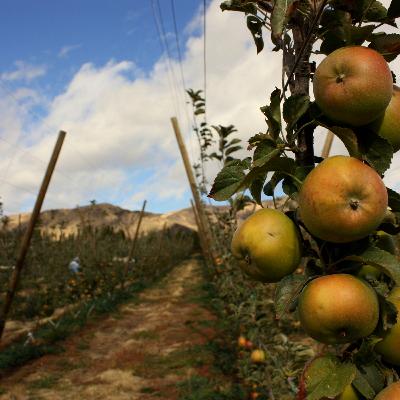
Was Johnny Appleseed a real person or just another American tall tale? We get to the core of the issue with author William Kerrigan (Johnny Appleseed and the American Orchard: A Cultural History) to see how one man's true story inspired an enduring folk legend. In this episode Bob and William explore how John Chapman's religious revival led him to pioneer apple nurseries across Pennsylvania and Ohio. Just like some hybrid apples, Chapman was a mix of naturalist and capitalist. He bought vast tracts of land for apple orchards but believed in America’s lost simplicity and a connection to nature. So, kick off your shoes and put a pot on your head as we travel around spreading seeds of knowledge. GUEST: William Kerrigan, author of Johnny Appleseed and the American Orchard: A Cultural HistorySee omnystudio.com/listener for privacy information.
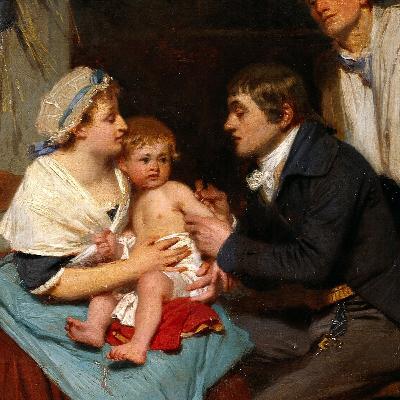
Many Americans have turned their backs on the vax, but early Early Americans would literally have killed for some vaccines. In this episode, we explore the history of America's first vaccines, which can be traced to a mandate from none other than General George Washington. Dr. Kathryn Olivarius (author of Necropolis: Disease, Power, and Capitalism in the Cotton Kingdom) explains the surprising story of how vaccines shaped American life — from smallpox inoculations during the Revolution to modern-day debates over public health and personal freedom. We're going to poke and jab at history to see why vaccine resistance isn’t new, and how the fight between science, religion, and politics has defined 250 years of American medicine. GUEST: Kathryn Olivarius, author of Necropolis: Disease, Power, and Capitalism in the Cotton KingdomSee omnystudio.com/listener for privacy information.
Was it the rise of hitchhiking? Lead in the water pipes? Or was it something a little darker in our culture? Bob rings up private investigator and host of the podcast Hell & Gone: Murder Line — Catherine Townsend — to learn why there were so many serial killers in America during the 1970s. From Ted Bundy to the Night Stalker and John Wayne Gacy, we dive into the “golden age” of serial killers to see how difficult it was to catch predators in a world before DNA testing, cell phones, and surveillance cameras. But that also begs the question: Are there fewer serial killers today? Listen, and find out! GUEST: Catherine Townsend, host of Hell and Gone: Murder Line and Red CollarSee omnystudio.com/listener for privacy information.
We all have that relative that tells us there was actually no green bean casserole at the first Thanksgiving. Yeah, we know, Grandma! But how much do we really know about that first feast between the Pilgrims and the Indians? Well, a lot. But the story most of us learned in school is completely wrong. Author David J. Silverman, (This Land Is Their Land: The Wampanoag Indians, Plymouth Colony, and the Troubled History of Thanksgiving) joins us to carve up the myths about Turkey Day and serve a nice helping of truth. In this episode, Bob and David explore the origins of Thanksgiving, from the Wampanoag people’s strategic decision to ally with the English, to Abraham Lincoln’s role in turning that footnoted feast into a national holiday. Tell your family to turn down the yacht rock and play this episode of American History Hotline as you avoid talking about politics and stir the gravy. GUEST: David J. Silverman, author of This Land Is Their Land: The Wampanoag Indians, Plymouth Colony, and the Troubled History of Thanksgiving. He has a new book coming out in February of 2026 titled, The Chosen and the Damned: Native Americans and the Making of Race in the United States See omnystudio.com/listener for privacy information.
In 1859, Congressman Daniel Sickles murdered Philip Barton Key (son of the man who wrote The Star-Spangled Banner) in a fit of jealous rage just steps from the White House. The resulting trial became America’s first true media circus, and gave rise to the “crime of passion” defense. In short, it basically became legal to kill a man for sleeping with your wife. While this wasn't technically a law, it was the "Unwritten Law" for way longer than you might think. Chris DeRose, author of Star Spangled Scandal: Sex, Murder, and the Trial that Changed America, joins Bob to talk about how this legal defense played out in America. GUEST: Chris DeRose, author of Star Spangled Scandal: Sex, Murder, and the Trial that Changed AmericaSee omnystudio.com/listener for privacy information.


Download from Google Play

Download from App Store
 United States
Excellent show. Very clear and informative discussions on American History topics I've always thought about. it's also refreshing to hear from the guests who are experts on each topic