


 Claim Ownership
Let's Talk Antigonish Podcast
Subscribed: 4Played: 155
Subscribe

© Let's Talk Antigonish
Description
Let’s Talk Antigonish brings you thoughtful conversations as we unpack the questions, stories, and decisions shaping everyday life in our community.
letstalkantigonish.substack.com
letstalkantigonish.substack.com
42 Episodes
Reverse

Lynne DeLorey, who recently became the first-ever Director of Tourism for the Antigonish Tourism Association (ATA), is on a mission to change the face of Antigonish tourism. Justin and Anuj sat down with DeLorey for a wide-ranging conversation about what the town has going for it, what it’s missing, and what the Antigonish Tourism Association is doing to put Antigonish firmly on the tourism map.Who Is Lynne DeLorey and What Is the Antigonish Tourism Association?DeLorey is not new to the hospitality world. She got her start at the front desk of the Claymore Inn while attending StFX in the late 1980s, later purchased and ran the Evergreen Inn — growing it into the number one rated place to stay in Nova Scotia on TripAdvisor through a focus on customer service and savvy marketing — and then spent six years working in the president’s office at StFX. When the newly formed ATA posted the director role, she jumped at it.The Antigonish Tourism Association itself is a young organization, formed in 2021. It is not a government body, but functions independently, with a mandate to increase overnight visitation, improve visitor services, and make Antigonish a genuine destination rather than a rest stop. “We’re not a drive-through,” DeLorey said plainly. “We have lots of assets here to be your destination.”What Does Antigonish Actually Have to Offer?Quite a lot, as it turns out. DeLorey ran through a long list of destinations and events, and it’s unlikely that even lifelong residents of Antigonish have done everything on it: StFX University itself — its heritage buildings, the Cathedral, and the chapel — draws visitors on its own. The town’s beaches are a significant summer draw, as is Chez Deslauriers. There are multiple breweries, beautiful coastal drives, and the Keppoch outdoor recreation area. The Highland Games remain one of the marquee annual events, alongside the Jazz Festival, Festival Antigonish, Riverside, The Exhibition, the list goes on!Beyond entertainment, the town’s institutional assets are also tourism draws in their own right. The Coady International Institute, the Brian Mulroney Institute of Government, and Peace by Chocolate — nationally known and a genuine point of pride — all bring people to town who want to see them in person. And StFX draws a steady stream of parents visiting students, conference attendees, and prospective students, all of whom need accommodation, food, and things to do.“We cross-promote,” DeLorey explained. “We work with St. FX and their tour office. We work with the hospital. We can supply their conferences with maps of Antigonish and help them engage with attendees.”Four Seasons, Not Just SummerOne of DeLorey’s central goals is to move Antigonish beyond its reliance on summer as the only peak season. The conversation was recorded mid-winter, with the town buried in snow — and even then, DeLorey pointed to real winter tourism offerings: groomed trails at the golf course and Keppoch for cross-country skiing, snowshoeing, and fat biking, plus Snow Dogs snowmobile trails that connect all the way to Amherst.“We want people from away coming here, booking their night stay, and hitting our groomed trails,” she said, noting that a social media campaign promoting exactly that was about to go live.Her vision for summer is even more ambitious. She’d love to see live music happening nearly every night during peak season, more outdoor restaurant patios, stores staying open later on the main street, and a more connected sense of a town that’s alive and happening. Mi’kmaq Heritage and Inclusive TourismOne area DeLorey is actively working to develop is showcasing the Mi’kmaq heritage of the region. Prompted by a mention of a previous podcast conversation with local advocate Trevor Gould, who had spoken about the desire for more visible recognition of Mi’kmaq history in town, DeLorey confirmed that Paqtnkek is already part of new tours the ATA is planning.On the accessibility front, the ATA is working to have an accessibility champion review their upcoming Antigonish guide and map before they go to print, with the goal of clearly marking accessible venues and attractions. And in collaboration with Coastal Nova Scotia, the ATA is also developing a Coastal Kids Guide — a new family-focused resource launching this year.The Budget Cuts QuestionThe conversation couldn’t avoid the elephant in the room: the Nova Scotia provincial budget, which has seen significant cuts to Community, Cultures, Tourism, and Heritage funding, including the closure of provincially funded Visitor Information Centres across the province.The good news for Antigonish is that the local Visitor Information Centre, run by the ATA, is locally operated and not directly affected by the provincial cuts. It receives some funding through Coastal Nova Scotia, a regional destination marketing organization covering Pictou County, Antigonish, and Guysborough County, and that funding stream currently remains intact. A meeting to assess the full impact on the region was planned for March 10th.The closure of the provincial VIC at Port Hastings — the welcome gateway at the Cape Breton causeway — is, however, a genuine loss. “We will miss that one,” DeLorey said. But she also sees an opportunity: with that gateway point gone, Antigonish can step up as the information hub for travelers heading to Cape Breton. The ATA has already reached out to Paqtnkek to explore expanding their tourism info already in place at the Bayside Travel Centre.Meanwhile, the Antigonish Visitor Information Centre recently received approval for a New Horizons grant to fund a 55-plus Ambassador Program, which will train volunteers to serve as informed, welcoming guides throughout the community — in restaurants, at gas stations, and anywhere visitors are likely to ask for help. If this sounds like something that might interest you, please contact Lynne at info@antigonishtourism.ca to discuss!Tourism Is for Locals TooPerhaps the most useful reminder DeLorey offered was this: the Antigonish Tourism Association and its Visitor Information Centre are not just for people from away. Locals regularly walk into the VIC asking what’s happening in town that week.“We are more than just for the visitor,” she said. “We are for locals as well.”The ATA website at antigonishtourism.ca features an events calendar that anyone can submit to. If you’re running an event and want it listed, you can add it yourself — or simply send it to the ATA and they’ll take care of it. In an era when people increasingly Google “what’s on in Antigonish” before making plans, having events listed in one central, easily searchable place matters more than ever.DeLorey’s main message was as much for longtime residents as for potential visitors: “We have it all here and we can make Antigonish a destination!”More info on the Antigonish Tourism Association: https://antigonishtourism.ca/And their local events page - please feel free to submit an event: https://antigonishtourism.ca/events/ Get full access to Let's Talk Antigonish at letstalkantigonish.substack.com/subscribe

If you haven’t been to a pharmacy lately for anything beyond picking up a prescription, you might be missing out. As of February 1, 2026, the Nova Scotia government has rolled out province-wide funding for a broad range of minor ailment treatments at pharmacies across the province — and it’s a bigger deal than most people realize.On our latest episode, Justin sat down with Miranda Teasdale, owner and pharmacist at Teasdale Apothecary, and Marcel van den Berg, a relief pharmacist and newly appointed member of the Nova Scotia Pharmacy Regulator, to break down what’s changed and what it means for people living here in town.From Pilot to Province-WideThe new funding didn’t come out of nowhere. For nearly three years, a select group of pharmacies (including Teasdale Apothecary here in Antigonish) participated in a provincial pilot program called the Community Pharmacy Primary Care Pilot (CPPCC), which allowed pharmacists to assess and treat a range of minor ailments and be reimbursed for those services. The results were compelling enough that the province has now extended the program to every pharmacy in Nova Scotia.“It has shown based on the results of the pilot that we have kept a significant amount of people out of emergency rooms,” said Miranda Teasdale. Early data from the pilot suggested a reduction of more than 10% in emergency room visits — and van den Berg noted that figure came from only the first phase of the study, with roughly half of participating clinics reporting. The real impact, he suggested, is likely considerably higher.What Can a Pharmacist Actually Treat?The list of conditions pharmacists can now assess and prescribe for — fully covered by the province with a valid Nova Scotia health card — is longer than many people might expect. It includes a wide range of common ailments including allergies, pink eye, dry eyes, cold sores, canker sores, oral thrush, mild acne, mild to moderate eczema, skin rashes and dermatitis, impetigo, fungal skin infections, insect bites, hives, heartburn and reflux, nausea, diarrhea, hemorrhoids, threadworms and pinworms, urinary tract infections , yeast infections, shingles assessment and treatment, Lyme disease prevention and early treatment, COVID-19-related cough (for those 18+ with a positive test), emergency contraception, menstrual cramps, mild headaches, mild joint pain, muscle aches, and minor sleep disorders.Some additional conditions — such as calluses and corns, dandruff, nail fungal infections, and warts — are within a pharmacist’s scope of practice but are not yet government-funded and may be offered for a fee. It’s worth calling your pharmacy to ask about those.Going Beyond Minor AilmentsThe scope of what pharmacists can do in Nova Scotia has grown considerably beyond treating a seasonal rash or a bout of heartburn. Pharmacists can now also renew existing prescriptions; not just as a temporary loan until you see your doctor, but as a full prescription renewal following a proper assessment.“The way it works is we fully become the prescriber,” explained Teasdale. “So we would do an assessment... we’d check your blood pressure, we’d ask questions about side effects.” Depending on the situation, a pharmacist can renew a prescription for three months, six months, or even a year. And if you have a family doctor or nurse practitioner, your pharmacist will send them a record of everything done, keeping your care file complete.At clinics like Teasdale Apothecary, pharmacists with additional training can go further still — ordering blood work, assessing and helping manage chronic conditions like high blood pressure and diabetes, and treating ear infections and strep throat. Van den Berg emphasized that these expanded services are available to any pharmacist in Nova Scotia who has completed the required competency training, though not all pharmacists will have completed every course. That’s why calling ahead matters.No Conflict of InterestOne question that naturally comes up: if a pharmacist prescribes something, aren’t they drumming up business for their own store? The short answer is no. As Teasdale explained, when her clinic prescribes a medication, they ask the patient which pharmacy they want it sent to — and it can be any pharmacy in the province. “We do that all the time,” she said. The prescribing role is kept separate from the dispensary, functioning much the same way a family doctor’s office does.Travel Clinic Now OpenFor Antigonish residents planning international travel, Teasdale Apothecary has also launched a dedicated travel clinic. Miranda Teasdale recently completed a global travel health exam, becoming a certified travel health educator. The clinic offers comprehensive travel consultations covering vaccinations, malaria prevention, traveler’s diarrhea, food and waterborne illness risks, and country-specific healthcare information. It is also a certified yellow fever vaccine site. Notably, Teasdale’s is currently the only travel clinic in Antigonish, following the closure of a previous clinic more than a year ago. Appointments can be booked by calling the pharmacy or through their website.Injections Now Covered TooAs part of the expanded funding, certain injections administered at pharmacies are now also covered. This includes vitamin B12 injections and the Depo-Provera contraceptive injections.Filling the Pharmacist Gap Van den Berg, speaking from his perspective on the Nova Scotia Pharmacy Regulator, also highlighted efforts to address pharmacist shortages across the province. Nova Scotia is one of the few provinces in Canada that recognizes pharmacy licenses from countries including the United States, the United Kingdom, Ireland, Australia, and New Zealand, allowing pharmacists from those countries to transfer their credentials relatively quickly. More than 100 pharmacists have now registered through that pathway.A newer initiative involves a cohort of Jordanian pharmacists, many of them holders of a PharmD degree, who are coming to Nova Scotia through a partnership between the regulator and Dalhousie University. The first group of 17 has arrived and is completing an accelerated internship program before receiving their Nova Scotia licenses. “It not only helps to bring in more good qualified pharmacists, but also gives some people, some refugees, a better life here in Nova Scotia,” said van den Berg.How to Access These ServicesThe key takeaway from the conversation: call your pharmacy first. While pharmacies strive to offer same-day or next-day appointments for many conditions, they cannot always guarantee immediate walk-in service. If you’re unsure whether your pharmacy offers a specific service, or whether their pharmacists have the training for a particular condition, a quick phone call will save you a wasted trip.Alternatively, you can call 811, where health navigators can help triage your situation and even assist with booking a pharmacy appointment.More info on Community Pharmacy Primary Care Clinics (CPPCC): https://pans.ns.ca/cppcc/and here: https://novascotia.ca/dhw/pharmacare/healthcare-services.asp Get full access to Let's Talk Antigonish at letstalkantigonish.substack.com/subscribe

For most Antigonish families, Dr. John Hugh Gillis Regional High School is simply “the regional”—the place where virtually every teenager in the area spends their formative years. But for those without direct connections to the school, or newcomers to the community, what actually happens inside that large building on the edge of town can remain something of a mystery.Justin and Anuj invited Principal Cory Austen to pull back the curtain on the region’s largest school, exploring everything from the September 2024 cell phone ban to the robust trades programs, from International Baccalaureate offerings to the challenges of serving 800 students with vastly different needs.Austen brings an unusual perspective to the role. An Antigonish native who attended the regional himself, he spent 10 years working in private international schools in Mexico, South Korea, and Kuwait before returning home. That global experience gives him a unique lens on what makes public education in rural Nova Scotia special—and what challenges remain.The School by the NumbersDr. John Hugh Gillis Regional High School serves grades 9-12 and is the largest school in the Strait Regional Centre for Education, which covers territory from parts of Cape Breton to Pictou County. As of the interview date, enrollment sat at around 800 students with 59.5 teachers (the “.5” representing part-time positions) and a total staff of about 100 when including teaching assistants, Nova Scotia Health personnel, and custodians.The population is stable to slightly growing, reflecting broader demographic trends in Antigonish. The school operates with a budget and resources that Austen describes as privileged compared to more remote rural schools.The Cell Phone Ban That Isn’t Quite a BanWhen Nova Scotia implemented a province-wide “cell phone ban” in September 2024, Dr. John Hugh Gillis took a measured approach that Austen believes is working well.“I’d start with it’s overall very positive,” Austen said. “And I think maybe ‘cell phone ban’ is not the best way to put it.”The actual policy: no cell phones during instructional time, but students can use them during transitions, lunch, and recess. Individual teachers have discretion about whether phones must go in designated holders or simply stay out of sight in backpacks.“We’ve been battling, like since I’ve been in high school, battling that issue with the distraction of the cell phone,” Austen explained. “So we’re finding students more focused, more engaged with that little change.”The benefits extend beyond academic focus. Austen noted a significant reduction in “inappropriate communication” among students via social media apps during class time—the kind of messaging that can escalate into conflicts disrupting school operations. With phones away during instruction, these incidents have declined markedly.While Austen doesn’t have hard test score data yet, the qualitative improvements from teachers and the reduction in behavior incidents speak volumes. Some schools have implemented stricter policies (no phones at all), but the regional’s approach appears to strike a workable balance.A Reflection of Community DiversityOne of Austen’s recurring themes was that “most schools are like a reflection of the community they’re in”—and Antigonish’s diversity makes the regional particularly rich.The school serves children of healthcare workers at St. Martha’s Regional Hospital, professors and staff from St. FX and the Coady Institute, tradespeople, farmers, fishers—the full spectrum of the local economy. This diversity extends to cultural backgrounds, with Syrian and Ukrainian refugee students, international families, and long-established local families all sharing hallways.“We’re very privileged to have the high school that we have in Antigonish,” Austen emphasized. “We’re a mirror of our own community.”His international experience gives him perspective on how special this is. After working 10 years in private schools abroad, Austen moved home specifically wanting his own children to have a public school experience.“What I love about Canada is public school is as good as most of the private school that I have ever worked at,” he said. “I can tell you that what we have here is as good as any. And, you know, I say that with confidence and it’s true.”Key Insights from Principal Corey Austen:* Staffing Advantage: Unlike remote rural schools that struggle to fill substitute teacher positions, Antigonish has a healthy pool of available teachers. “Here in Antigonish, there seems to be more of a pool of teachers... We’ve been very lucky.”* Programming Diversity: The school offers International Baccalaureate (full diploma and certificate programs), skilled trades, Options & Opportunity (trades pathway with guaranteed NSCC seats), French immersion, Gaelic, robust arts and music, and comprehensive sports—something for virtually every interest and career path.* Skilled Trades Excellence: Students can progress from Skilled Trades 10 (experiencing electrical, plumbing, carpentry through projects like building complete hotel rooms with wiring, plumbing, drywall) to Construction Trades 11/12 to co-op placements with actual tradespeople. Classes are capped for safety. Transportation trades offers a full automotive shop.* IB Program Strong: About 30 students pursue full IB diplomas across grades 11-12, with another 30-35 taking the IB certificate programs. “Almost 100% university prep,” though some students choose different paths. The program is well-established and internationally recognized.* Arts and Music Punch Above Weight: The band program, led by the “Bannerman Empire” (as Justin described it) has produced numerous professional musicians. Students can enter grade 9 barely knowing an instrument and perform at StFX graduation by grade 12. Theater arts with Jenn Priddle prepares students to “leave our high school here and go directly into a theater program.”* COVID’s Lingering Shadow: Austen acknowledged COVID had “a drastic effect on some of our students” socially and academically, though he struggles to articulate exactly how. “It’s noticeable, but I don’t know how…it’s difficult to prove.” The good news: “We’re coming out of it.”* Food Access Priority: While not yet part of the provincial lunch program (expected next year), the school operates eight “grab and go” carts throughout the building with free food. “Don’t be a gatekeeper to food.” Students in the Success in the Community class help prep and distribute food. The cafeteria is run by Chartwells under provincial nutritional guidelines.* Success in the Community Program: This program (also called community living) serves students with various challenges or medical conditions, providing life skills and independence training. Many students transition to CACL (Canadian Association for Community Living). Austen sees this as a reflection of Antigonish’s leadership in disability services.* Updated Code of Conduct Working: The province-wide standardized code of conduct provides consistency in addressing behavioral issues and clear consequences. “Our incidences are down. Our parents and community, our guardians have been very supportive.”* No Rise in Violence Locally: Despite news reports of increasing violence in schools, Austen doesn’t see this trend at the regional. “I don’t get a sense that there is. I truly don’t.”* Poverty and Complex Needs: The school’s biggest challenge is meeting diverse needs under one roof. “Everything filters through our high school... trying to make sure that everyone’s getting what they need and getting ready for what’s next.” The region provides school materials for families in financial difficulty and ensures no student goes hungry.One particularly revealing exchange came when co-host Anuj—a newcomer to Canada—asked about perceived rigor, noting that families from the Global South sometimes worry Canadian schools lack sufficient challenge or content.Austen’s response was confident: “I am confident that that is being well addressed within our school... in our IB programs, but it’s in most of our courses.”He expanded the definition of rigor beyond academics, and include many of the student-led fundraising efforts: “The critical thinking skills and some of the things that’s not always taught right there in the classroom. Like when you put a kid in a situation, the efforts it takes to raise $10,000, there’s some skills that are being involved in that endeavor, especially when it’s led by students.”Fundraising, trades projects, arts performances—these build capacities that standardized testing might miss but that prepare students for real-world challenges.Austen Reflects On His Tenure As Principal“Never in my life did I dream like oh I want to be the principal of this school,” he admitted. “That was never a thought in my mind.”But he takes the responsibility seriously: “You’ve got 800 students, you’ve got staff and you got to make sure people are enjoying where they want to come... that’s part of my job in making a safe, welcoming work environment or school environment.”He closed by thanking staff, students, and community partners—particularly noting the substantial scholarship money provided by community members and organizations for graduates. “We feel well supported by the community.” Get full access to Let's Talk Antigonish at letstalkantigonish.substack.com/subscribe
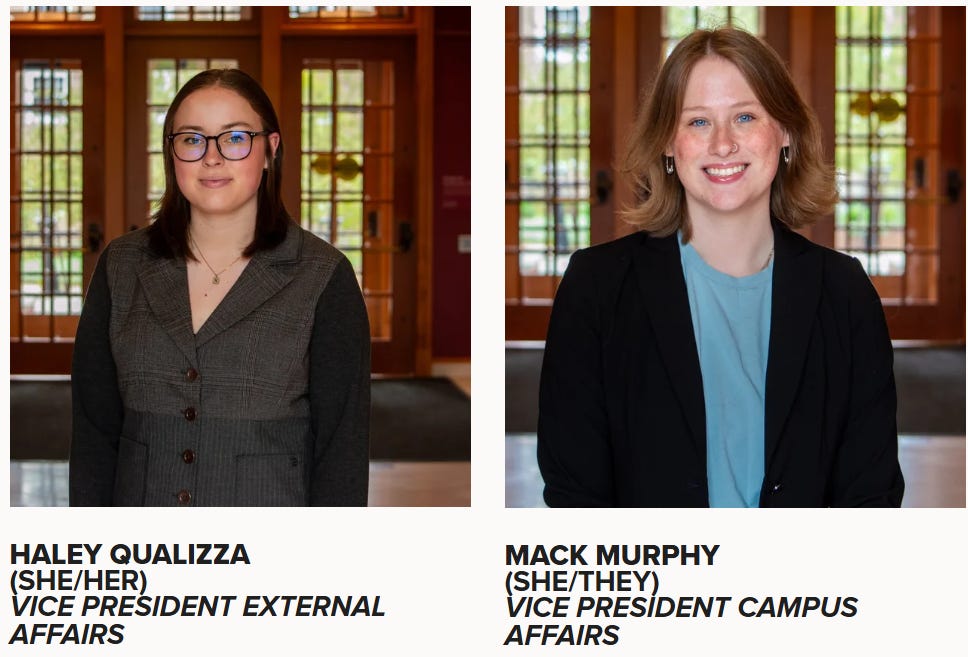
This week we sat down with Haley Qualizza and Mack Murphy, student leaders at St. FX Students’ Union, to discuss housing challenges, drinking culture shifts, the need for third spaces, and what it means to call Antigonish homeWhen you live in a university town but aren’t connected to the institution, it’s easy to develop incomplete—sometimes inaccurate—impressions of student life. Students become visible mainly during high-impact events like homecoming or St. Patrick’s Day, when downtown streets fill with revelers and tensions between “town and gown” surface in predictable patterns.But what’s student life actually like in Antigonish? What challenges do young people face here? How has campus culture changed? And do students actually feel like they belong to this community, or are they just passing through?To find out, we spoke with two St. FX Students’ Union executives to share the student perspective: Haley Qualizza, VP External Affairs (a second-year public policy and governance student from Fernie, BC), and Mack Murphy, VP Campus Affairs (a fourth-year honors public policy and governance student in her second year in the role).Their conversation revealed a complex picture—one where students deeply love Antigonish while struggling with housing affordability, transportation isolation, and a shortage of alcohol-free social spaces. It’s a story of a generation navigating cultural shifts around drinking, mental health, and inclusion, while simultaneously trying to bridge the persistent divide between university and town.The Biggest ChallengesWhen asked about the unique challenges facing St. FX students, Murphy didn’t hesitate: inclusion and safety, particularly for LGBTQ+ students. While she emphasized that Antigonish has “an amazing community” and noted significant progress through involvement with local Pride initiatives, the small-town dynamic still creates challenges. “Sometimes I really do struggle with that small-town feel of just some people cannot grasp the fact that the world is changing and that’s okay.”Qualizza identified a very different challenge: transportation and geographic isolation.“A lot of students that come to St. FX come from large city centers like Toronto and Calgary,” she explained. The adjustment from cities with public transportation and easy access to amenities to Antigonish—where you “really need a car if you want to leave”—proves difficult for many.“I knew five people who dropped out because they came from Calgary or Toronto. And they’re like, there’s nothing to do here,” Qualizza recalled. Coming from a small rural town herself, she understands “how to find the joys in sitting in a parking lot with your friends and going to Shoppers Drug Mart.”The lack of reliable public transportation means students can’t easily explore Nova Scotia. Qualizza didn’t go to the beach her entire first year because she had no car and didn’t know anyone with one. “So it’s hard to get out and see the province that you’re living in when you have no way of seeing it unless you have money and can buy a car.”This creates a visible tension: downtown Antigonish is increasingly filled with student cars, prompting complaints from residents who wonder why students can’t just walk to campus. But without cars, students struggle to access basic necessities like groceries—Qualizza lives a 20-minute walk from Sobeys and 40 minutes from Atlantic Superstore, distances that become prohibitive when carrying heavy bags.The Antigonish Community Transit System is currently running a referendum asking students to pay a small fee to support more buses and more reliable service. Whether students vote to support it will reveal how important they consider this issue.Key Insights from Haley Qualizza and Mack Murphy:* The Third Space Problem: Students lack non-alcoholic social spaces off-campus. While campus societies organize hikes and activities, “sometimes you want to get off campus. You want to feel like a human again.” The town has third spaces for families, but not specifically welcoming to students seeking alternatives to bars.* What Students Want: Board game cafes (like those in Halifax), movie theaters, video game arcades, pottery studios (they celebrated the recent opening), rec spaces—anywhere offering activities with friends that don’t center on drinking. “There is an expectation that you get a beer” even at music venues, creating social pressure.* Food Desert for Students: When Grape Leaves opened, Murphy “thanked God” for cuisine beyond “Maritime time food.” Students crave diverse, affordable options. “What I would do for like a really good curry.” But most restaurants in town are too expensive for regular student budgets.* Transportation Reduces Drinking: Both students believe reliable public transportation would significantly impact drinking culture. “I think it’s as simple as sometimes giving access. People’s first choice wouldn’t be to drink if they could just go to the beach or go do something.”* Housing Crisis Timeline: Every student lives on campus first year. Then there’s “this huge rush in October where every student is trying to find a place to live off campus. And I swear, if you miss the two-week window in October, you will not find housing for the entire year.”* Predatory Rental Market: First-year students with no rental experience sign agreements they don’t understand for places that “aren’t necessarily the best place to live. Because if I don’t take this place, will I have anywhere else to live?” Qualizza signed a lease with rent higher than average, no washer/dryer, for the first place she viewed—driven by fear of homelessness.* Campus Living Costs More: Residence requires purchasing meal plans (minimum $1,000 in “declining credit balance”), and it’s only an eight-month lease costing the same as a 12-month off-campus lease. Off-campus is cheaper if you can find it, but campus offers guaranteed repairs and avoids landlord issues.* Non-Market Housing Solution: Qualizza advocates for affordable, student-targeted non-market housing—nonprofit apartment buildings specifically for students, like those emerging in Halifax and Wolfville. “There should be safe, affordable housing for students who want to do that.”* Strong Sense of Belonging: Despite challenges, both rated their sense of community connection at 9-9.5 out of 10. Qualizza: “People in Nova Scotia are the epitome of the friendly Canadian person.” Murphy: “People are so kind.”* Town-Gown Collaboration Works: Students sit on committees with town and county councils, collaborating on issues from stop sign placement to high-impact day management. While perspectives differ (“the town is trying to protect the town and the students are trying to protect the students”), meaningful collaboration happens.* Students Can Vote Municipally: After living in Antigonish for about nine months, students can be sworn in to vote in local elections. Murphy voted and attended all debates, having learned that “what’s happening on the ground” matters as much as federal politics. Qualizza couldn’t vote her first year but would “love to vote here. I love voting.”* Drinking Culture Has Changed Dramatically: From “top party school” reputation to something very different. Murphy: “I love to see people having fun. But I think the drinking culture has changed. And I would argue it’s not because of anything the administration has done. I think it’s changed because students have taken it into their own hands.”* Gen Z and Social Media Shifts: Less peer pressure, more empowerment to advocate for yourself. “It’s more appropriate now to be like, hey, guys, I don’t feel like doing this. And everyone’s like, OK, whatever.” Students crave community more than alcohol—societies organize hikes, dog walks, creative events.* Students Are Respectful at Street Parties: Despite disruption, RCMP reports at town meetings consistently note that when asked to move, St. FX students comply respectfully. This isn’t a St. FX-specific problem—it happens at universities everywhere, including Toronto.* Craving Community, Not Chaos: “Students really crave community and big events like that are huge community building events. And it is very disruptive and a lot of parts of it are illegal, but it’s gotten a lot better. And there’s a lot of harm reduction practices going into these events.”* Multicultural Progress Through Student Action: Students are driving real inclusion initiatives. International students are joining the Students’ Union board; Shirley, the representative of students of African descent, is creating a black hair care business with “the most well flushed out thought through plan.”* Representation Over Consultation: Murphy: “There’s some stuff I just shouldn’t speak on. I hand the microphone over so they get to do it. That for me is what’s important.” Students of color face less racism than five years ago, partly because peers call out bad behavior more actively.* Record Society Involvement: Campus has a record number of student societies creating community through shared interests and activities—a healthier alternative to alcohol-centered socializing.The conversation tackled the perennial tension around student drinking and street parties. Qualizza’s response was both diplomatic and pointed: “I hope that the town folk think back to when they were 20 and when they were in university and what it felt like to be in university.”She emphasized that students “really crave community and big events like that are huge community building events.” While acknowledging disruption and illegality, she noted substantial improvement and increasing harm reduction practices.“Try not to characterize all students by three really bad students that are a misrepresentation of the entire student body,” she urged—a point both hosts readily endorsed.Murphy added that even with abundant third spaces, “you’re going to have homecoming. That’s just humans being humans. The students crave the streets.”The deeper question cente
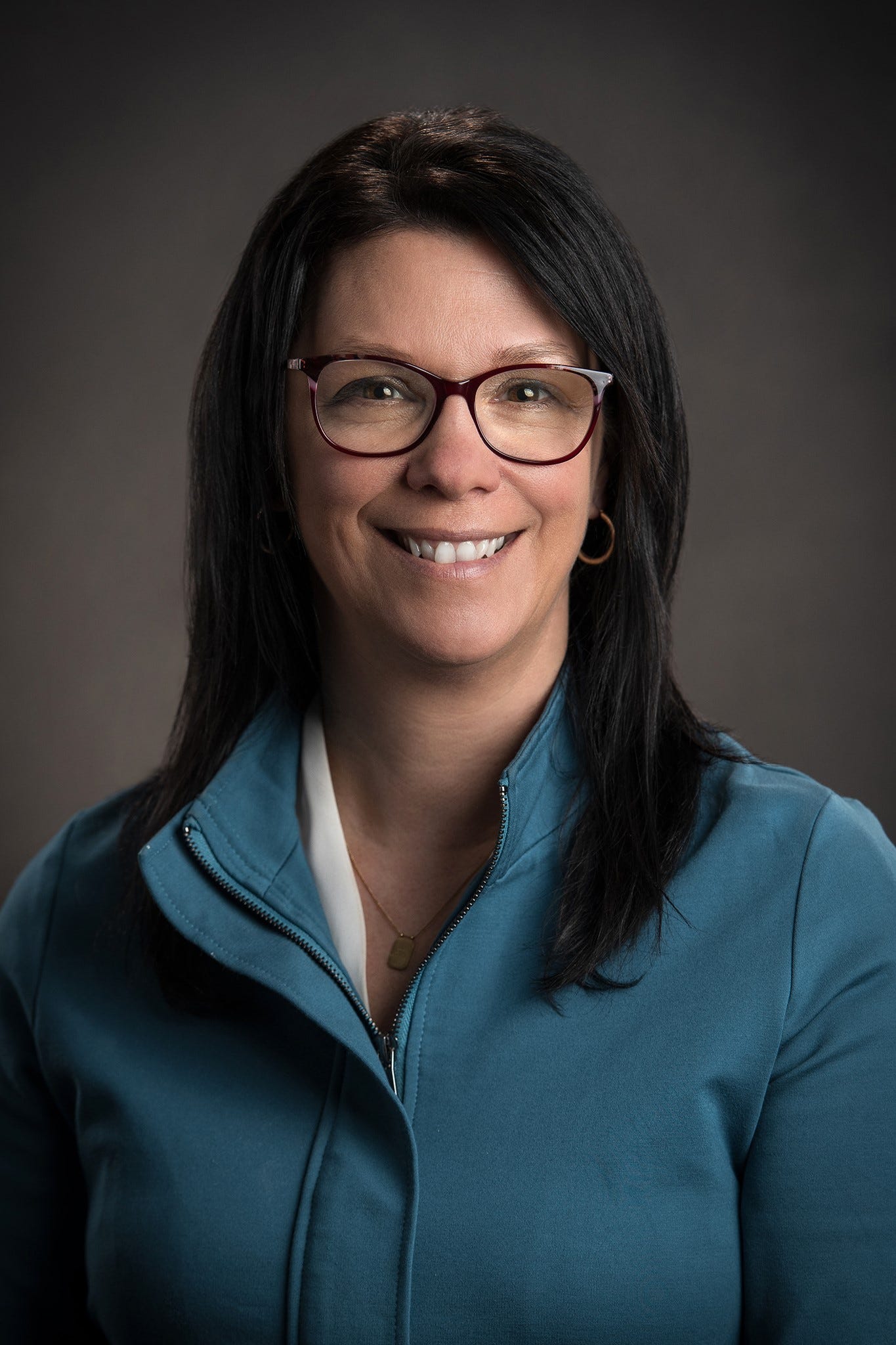
We sat down with the Honourable Michelle Thompson, Nova Scotia’s Minister of Health and Wellness and Antigonish MLA, to discuss healthcare transformation, her role as a local representative, and what’s actually happening to improve access to care.When someone gets elected to represent their community, they don’t necessarily expect to oversee one of the most complex portfolios in government. But for Michelle Thompson, the journey from registered nurse at St. Martha’s Regional Hospital to Minister of Health and Wellness has been a natural—if challenging—progression.Thompson was first elected as MLA for Antigonish in 2021 with 49% of the vote, then re-elected in 2024 with 65%. In between, she’s been navigating the massive undertaking of transforming Nova Scotia’s healthcare system while still driving local roads to inspect potholes reported by constituents.Justin and Anuj sat down with Thompson for an extensive conversation that ranged from the technical details of new payment models for physicians to the very personal reality of being the public face when healthcare tragedies occur. A graduate of StFX’s school of nursing, Thompson worked as a nurse and part time instructor at StFX before she became CEO of RK MacDonald for about five years prior to entering politics. “It’s a privilege, first of all, to be elected to represent Antigonish,” Thompson reflected. “You go on this journey as a politician. You don’t really know if you’re going to resonate with people or if the party or if the platform is going to resonate. So just to be elected was amazing.”But being an MLA involves far more than policy-making in Halifax. Thompson and her constituency assistant Wendy Chisholm (with help from Vangie Babin a few days a week) operate an office at 325 Main Street—the old post office building on the second floor—where they handle a steady stream of constituent concerns.And what tops the list of those concerns? Roads.“Sometimes I would say the biggest thing we hear about are the roads,” Thompson admitted. “Potholes, grading, dust control are really big issues.”This might seem trivial for a Health Minister, but Thompson takes it seriously, meeting with local officials roughly every second month to review road complaints, discuss the five-year road plan, and prioritize repairs. When someone complains about a road, she often gets in the car and drive it herself to better understand the nature of the problem.“It’s one thing for someone to explain it to me, but I think it’s important that I go,” she explained. Poorly maintained roads are more than just an inconvenience, they can lead to car damage that is a non-trivial problem for most people. “Cars are expensive and they’re a big investment for people and families.”Key Insights from the interview with Minister Michelle Thompson:* The MLA Role Takes Priority: Thompson emphasized that her constituency office serves Antigonish residents specifically. Provincial concerns get forwarded to the appropriate departments. “There’s no votes for me in Halifax. You don’t get to be the Minister of Health if you’re not reelected.”* Nose In, Hands Out: As minister, Thompson has oversight and funding authority but doesn’t operate the system. “The folks that I work with in Halifax would say that I can have my nose in but my hands out.” She can’t tell a doctor to accept a patient, but she can ensure systems are in place to help people navigate care.* The Collaborative Care Revolution: A new clinic will open in Antigonish in late winter/early spring 2026 with 25-30 healthcare professionals. Led by Dr. Brittany Barron and Dr. Jane Howard, it will serve roughly 10,000 people with evening and weekend hours and same-day/next-day access.* Health Homes Replace Individual Doctors: The new model focuses on attaching patients to clinics with teams of professionals (physicians, nurse practitioners, family practice nurses, dietitians, social workers) rather than individual doctors. This provides continuity when practitioners retire or leave and appeals to newer healthcare professionals who prefer team-based environments.* Longitudinal Family Medicine (LFM) Payment Model: Instead of fee-for-service, physicians receive base salaries adjusted for patient complexity. A doctor might have 1,000 complex patients versus 1,400 healthier ones. Additional payment comes for extended hours, nursing home coverage, or taking on more patients. Quarterly report cards track performance.* Learning from Other Systems: Thompson’s team has traveled to Denmark and London to study their healthcare systems. “Rather than trying to figure it all out on our own, we take the best ideas and we bring them home and it allows us to implement things more quickly.”* 94% Attachment Rate: About 94% of Nova Scotians now have a primary care provider. The registry (formerly “the list”) shows roughly 66,000 people still in need of a family doctor, representing about 6.4% of the population. The goal is to reach 5%.* Virtual Care Expansion: Through the YourHealthNS app, Nova Scotians can access virtual care appointments. If in-person care is needed, they can be booked into primary care clinics within 48 hours. The app also helps locate pharmacies offering minor ailment services and other care options based on location.* Emergency Wait Times Improving: Average emergency department wait times have decreased by about six hours across the province through various initiatives: virtual urgent care terminals at hospitals, rapid assessment zones for specific conditions, and most importantly, addressing “bed blockers”—seniors awaiting long-term care placement.* The Care Coordination Centre (C3): Nova Scotia is the only province with this system—a centralized operation tracking every hospital bed across the province, helping manage patient flow, ensuring timely discharges, and coordinating care transitions.* New EHS Base: Antigonish now has a large new ambulance base capable of housing nine ambulances (up from three at the old location). Paramedic workforce has stabilized with new classifications and a separate transport system for non-urgent transfers.* Physician Recruitment Success: Numbers are “very good” through multiple streams: increased medical school seats, a new medical school at Cape Breton University focused on rural family medicine, the PACE program for mid-career internationally educated physicians (12-week assessment leading to conditional license), Patient Access to Care Act (allowing physicians licensed in any Canadian province to practice in Nova Scotia), and Atlantic licensure agreements.The conversation revealed fascinating dynamics about how government actually functions. Thompson described caucus meetings every second week where Premier Houston sits with roughly 42 PC MLAs for at least three hours, debating policies and priorities. While whipping exists in the Nova Scotia legislature (unlike the Senate), Thompson emphasized that “in caucus, we can have some pretty heated debates.”“We’re a big caucus now,” she noted. “We kind of work through that. And you know, we have those kind of—we air those concerns, and sometimes things change a little bit as a result of those conversations.”On being the public face when healthcare tragedies occur—required to apologize on television for system failures—Thompson drew on her nursing background: “I’ve experienced that over the course of my career... You have to show up humbly. And the hard part is you can’t often change what’s happened. But your commitment always has to be to make things better and to be sorry that people have experienced something really difficult.”She’s received extensive media training but noted: “To date, the media has been very respectful. They have a job to do, and I appreciate that job, and I have a job to do. And I try to give them as much information as I can when I’m able to do it.”The interview tackled several hot-button issues beyond healthcare basics. On addiction treatment, Thompson acknowledged there are currently no publicly funded residential addiction treatment centers—only day programs—but indicated this is “something that we are thinking about” pending budgets. The 211 helpline provides immediate support outside regular hours.On immigration’s role in healthcare, Thompson was unequivocal: internationally educated clinicians are essential to the recruitment strategy and often come mid-career with valuable experience that helps mentor Nova Scotia’s large cohort of new graduates. “The diversity is really an important part of who we are as a country,” Thompson emphasized. “Often the folks who come from an internationally educated background... actually come with a number of years of experience and actually become some of the mentors in our system.”She pushed back firmly against rhetoric connecting immigration to healthcare strain: “Our workforce should reflect our communities. And so it’s really important that we see people with different ethnic backgrounds, different skin tones... it’s so comforting and so reassuring to us when we go to the healthcare system.”On library funding—raised because the interview took place in the People’s Place Library—Thompson acknowledged the loud calls for support but couldn’t make promises: “This will be our toughest budget that we’re about to deliver as government. Things have changed.” The interview only briefly listed other non-health-focused issues like fracking, universal basic income, and housing—all issues worthy of in-depth discussion even though they’re not directly in thompson’s portfolio. Hopefully, there will be a follow-up interview touching on these and other issues. The conversation concluded with Thompson’s simple message to constituents: “I want people to know that I’m here to the best of my ability to help. And I can’t fix everything. And sometimes ‘no’ is an answer, even though we don’t like the answer. But my commitment is that we’ll work hard.”“It is a privilege for me to be able to represent Antigonish, to sit in the leg

We sat down with artist Anna Syperek and Andrea Terry, director and curator of the StFX Art Gallery, to find out if it’s possible to making a living as an artist in Antigonish. It’s a question that haunts creative people everywhere: can I actually support myself doing what I love? For visual artists in particular, the path from passion to sustainable income often feels impossibly precarious. But in Antigonish, some artists have found ways not just to survive, but to thrive—though not always in the ways you might expect.A bit about Anna from her website: “Anna Syperek is a Nova Scotia artist working in watercolours, oils and etchings, living in the Antigonish area on the shores of St. Georges Bay with her husband, a filmmaker, where together they raised three daughters. Born in England of Polish and English parents and raised in Oshawa, Ontario, Anna moved to Antigonish in 1971 when she was 20. In 1980 she graduated with a BFA in painting and printmaking from the Nova Scotia College of Art and Design. She then returned to Antigonish to set up her own etching/printmaking studio at her home overlooking St. George’s Bay. Well known for her etchings, watercolours and recent oils, Anna has also taught art part time at St. Francis Xavier University where she also set up a community printmaking workshop.”When Anna first arrived in Antigonish decades ago, not quite finished with art school, her first instinct was clear: “You can’t sell work unless you have an art gallery.” So she and her husband started one—the Main Street Gallery—which ran for a couple of summers.The fact that her initial thought as a young artist was to start a commercial gallery is vital to understanding the life of a visual artist: you need galleries to sell your work if you want to make a living. Antigonish has numerous current and former galleries, including names residents would recognize like Down To Earth Art Gallery, the Lyghtesome Gallery, Red Sky Gallery, and Old Barn Galleries & Gardens. These institutions don’t simply sell art—they create community, provide legitimacy, and offer crucial infrastructure for artists to connect with collectors and audiences.The financial reality of being a self-employed artist involves significant uncertainty. “There’s a lot of ebbs and flows,” Syperek acknowledged. “You never know when the next cheque’s going to come in.” She and her husband maintain a garden, have borrowed money at times, and once faced a tricky situation when a gallery didn’t pay while they were in Europe. But they’ve thrived as independent artists despite the financial uncertainty. Anna’s works are known the world over, and “found in galleries in the Maritimes, Ontario, Quebec, and British Columbia, in the Canada Council Art Bank, the Nova Scotia Art Bank, Petro Canada, Via Rail, Canadian Airlines, and other corporate collections, and in numerous private collections across Canada, Europe and the United States.”Andrea Terry, who directs the StFX Art Gallery, offered a complementary perspective on the life of an artist from the institutional side. With a PhD in art history from Queen’s University, Terry spent about 10 years teaching at various universities across Canada before transitioning to gallery work—first at Thunder Bay Art Gallery, then at StFX when a position opened in 2019.The StFX Art Gallery operates fundamentally differently from commercial galleries. As a public gallery, it doesn’t sell artworks. Instead, it pays artists standardized fees set by Canadian Artists Representation (a union for artists) to exhibit their work. If someone expresses interest in purchasing, the gallery connects them directly with the artist, staying completely out of the transaction.“We pay artists who show in our gallery,” Terry emphasized. This model addresses a critical question co-host Anuj raised: what if art doesn’t sell? Shouldn’t artists be compensated just for being presented? Public galleries answer that question with a resounding yes.The gallery’s approach reflects a broader philosophy. “I look at the StFX Art Gallery as a space to promote the appreciation of local, regional, even provincial and national art,” Terry explained. “So it’s a space of learning and appreciation.” With free admission and Saturday hours to avoid parking fees, the gallery aims to make art “as accessible, as democratic, and as inviting and engaging as possible.”Key Insights from Anna Syperek and Andrea Terry:* Galleries Are Essential Infrastructure: Artists depend on a healthy ecosystem of both commercial galleries (which sell work and split proceeds) and public galleries (which pay exhibition fees and focus on education). Without these institutions, connecting with audiences and generating income becomes exponentially harder.* Geography Matters for Sustainability: Living in a small town significantly reduces costs compared to cities, making an artist’s life more financially viable. However, artists still need connections beyond their immediate community to generate sufficient income.* Multiple Income Streams Are Essential: Syperek supplements gallery sales with part-time teaching at St. FX (a practice the university has maintained for decades, hiring practicing artists to teach students). This provides “a small but steady income” while enriching students’ education.* The StFX Ecosystem: Since the late 1980s, StFX’s art department has hired part-time practicing artists, creating a mutually beneficial relationship. Students work with active artists, while artists gain steady supplemental income. * Teaching Is Learning to See: Syperek discovered that teaching drawing fundamentally involves “learning how to see, not how to draw.” * Public vs. Private Galleries Serve Different Functions: Commercial galleries sell work and split proceeds with artists. Public galleries pay exhibition fees but don’t sell, instead focusing on education, appreciation, and giving artists exposure without sales pressure.* Cultural Richness in Small Places: Despite limited population, Antigonish offers sufficient social and cultural richness to sustain artists. The combination of university, galleries, community events, and engaged residents creates a viable ecosystem.* The Return Beyond Money: When asked about gratification beyond income, Syperek noted she’s “never worked apart from painting and drawing” (except three weeks in a restaurant and four weeks in a daycare). The lifestyle itself—the independence, the creative practice, the community engagement—constitutes the real compensation.* Showing Up Matters: Both guests emphasized that successful artists actively participate in community events, openings, and conversations. Syperek attends Antigonight, does live painting demonstrations, and maintains warm relationships with collectors and admirers.The conversation revealed an unexpected divide in how people from different backgrounds approach art. Co-host Anuj, whose son is a professional tuba player in Chicago, shared his struggle in understanding the artist lifestyle: “He tells me every time I have some doubts, I am an artist because I want to be an artist. Economy comes later.”The economics question highlights why public galleries matter. They provide free access to art for those who can’t afford to purchase it, democratizing cultural participation while also paying artists for their work.Antigonish’s art infrastructure includes several key venues beyond St. FX and commercial galleries. The People’s Place Library has exhibition space with a sign-up sheet for displays. The Tall and Small shows artwork. The Arts House offers exhibition opportunities and coordinates various markets—weekly summer art fairs, plus seasonal markets for Valentine’s Day and Christmas.For emerging artists, the advice was consistent: put yourself out there. Attend craft fairs and art fairs to get work into galleries. Bring portfolios to gallery directors. Submit work for group shows. Show up at openings and engage warmly with visitors. Build relationships. Create opportunities rather than waiting for them.The StFX Art Gallery is currently displaying “Our World in Photos – Connections,” a photo voice project by young Bardi Jawi artists aged 8-15 from a remote area of Western Australia. The connection came through StFX professor Ann Fox, who encountered the work during her 2024 sabbatical and arranged for it to travel internationally, giving young photographers global exposure.Looking ahead to summer 2026, the gallery celebrates its 50th anniversary with an ambitious juried exhibition. In 2020, the gallery relocated to a professional space in Mulroney Hall with specialized lighting, reinforced walls, protective window filters, and a glass door.For the anniversary, the gallery has issued a call for submissions from artists living in Pictou, Antigonish, and Guysborough counties. A jury will select 50 works by 50 different artists for the exhibition. The catch: artworks must never have been seen publicly before, ensuring fresh discoveries for visitors.The submission deadline is mid-May 2026.As the conversation concluded, Anuj offered practical wisdom: “One of the best gifts you can give to anyone is a piece of art. Because that creates a relationship that lasts over life, even beyond. And we have tried to do that and has been so appreciated by people who receive the gift.”This sentiment captures something essential about the artist’s life in a small town. It’s not just about making a living—though that’s certainly challenging and requires creativity, multiple income streams, and regional rather than purely local connections. It’s about creating lasting relationships through beauty, transforming how people see the world, and building a community that values cultural richness alongside economic sustainability.Can you make a living as an artist in Antigonish? The answer appears to be: maybe, if you’re resourceful, willing to supplement gallery income with teaching or other work, build relationships across the region, and defi
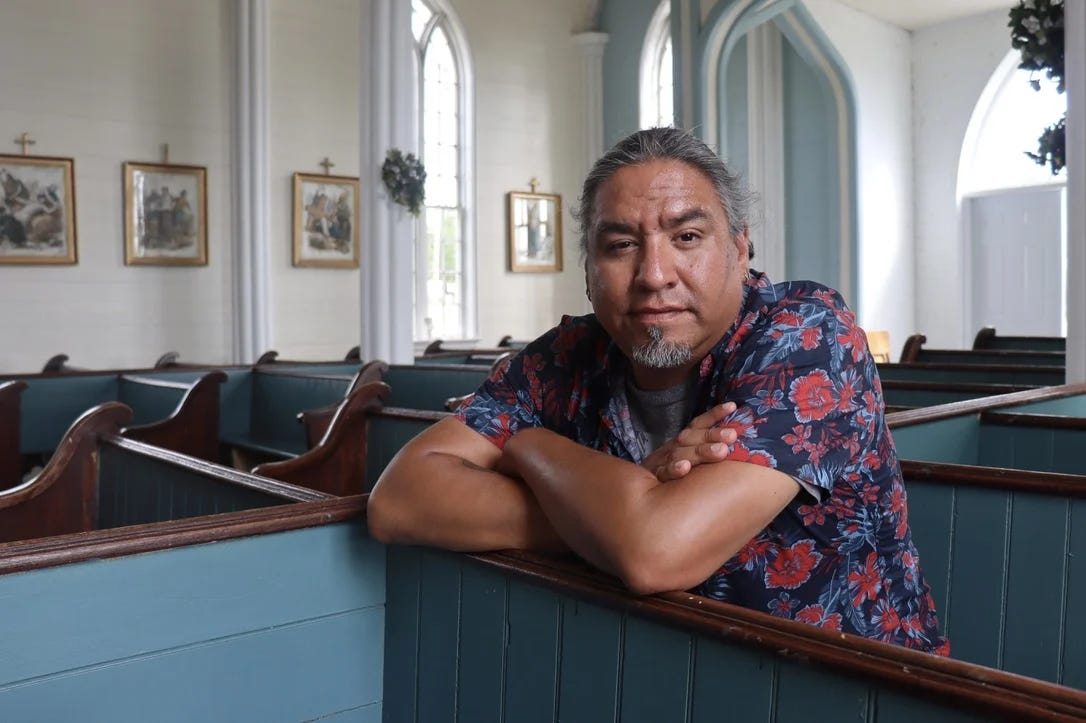
We sat down with Mi’kmaw community historian Trevor Gould to pepper him with questions about Paqtnkek, the history of the Mi’kmaq in this area, and the origins of the name “Antigonish”Every time someone says “Antigonish,” they’re speaking a Mi’kmaw word—though most don’t realize it. The town’s name comes from Nalikitquniejk, meaning “the place where the branches are broken off,” a descriptor of this land that predates European settlement by thousands of years. And as Trevor Gould, Mi’kmaw community historian and former Paqtnkek band council member, explained to “Let’s Talk Antigonish” hosts Justin and Anuj, understanding this history isn’t just an academic exercise—it’s essential to understanding how we, as a community, share this place.Gould, 42, was born and raised in Paqtnkek. He studied history at Dalhousie University and worked at the Mi’kmawey Debert Cultural Centre for about 12 years, where he developed a deep expertise in Mi’kmaw oral histories, place names, and cultural preservation. He’s also known across Canada as an emcee/singer/dancer at powwows, a filmmaker, and someone who’s worked tirelessly to make Mi’kmaw history visible in a region where it’s too often overlooked.To understand Antigonish’s Mi’kmaw history, Gould began with geography. The region sits within Eskikewa’kik, one of seven districts that comprise Mi’kma’ki (the Mi’kmaw homeland). The name means “skin dresser’s territory,” reflecting the area’s (former) abundance of caribou, black bear, and porcupines, and the skill of local Mi’kmaw people in creating quilled clothing.“This was like the Paris of Mi’kma’ki,” Gould joked. “You want to go get good clothes, man? You go down to Eskikewa’kik.”Antigonish sits at the head of a crucial river system that sustained Mi’kmaw communities for millennia. When Loyalist Captain Timothy Hierlihy arrived in the 1760s seeking soldiers who had deserted, he found hundreds of Mi’kmaw people living on both sides of the harbor—at Town Point and Williams Point. The harbor was particularly valuable for its eel population, a resource that remains significant today.What followed was a pattern repeated across North America: conflict, displacement, and forced relocation. Initially, the Loyalists wanted to call their settlement Dorchester. There were no roads connecting it to other settlements, which were all on Nova Scotia’s South Shore. Over time, the Mi’kmaw population was pushed out—into the mountains, down the river, away from their traditional territories.The journey from Nalikitquniejk to present-day Paqtnkek involved multiple displacements over centuries. In the late 1700s, Mi’kmaw families moved to Pomquet (itself derived from the Mi’kmaw word Poqmkek, meaning something like “fishing hole” or “hole in the ice”). There they lived for over a century, eventually forming three distinct communities along the river.“When we moved to Pomquet, we were already a combination of many different communities,” Gould explained. These included Niktuek (meaning “the forked area”) upriver near Heatherton, Paqtnkek proper at the harbor front, and Welnek where the mission church was built in the late 1800s.Throughout the 1800s, these communities occupied their traditional territories even as European settlement expanded. But in 1911, the railroad came through, literally cutting through Mi’kmaw reserve land and beginning a new displacement. Between 1911 and 1917, families were forced to relocate to Afton, where a new reserve had been established on rocky uphill land nowhere near the harbor or river.“They needed us out of there,” Gould said of the railroad’s impact. “So they started moving us from there to Afton.”The Afton location became the consolidated home for families from all three previous communities. When the community officially changed its name around 2001, they chose Paqtnkek—the traditional name most associated with their identity, even though they now lived far from the harbor that name describes.“It’s nowhere by the bay.” Gould explained. “But that’s why we have that name, because this is where we originated.”The conversation touched on the complexities of identity for both Indigenous peoples and newcomers. Co-host Anuj, who immigrated to Canada 15 years ago, asked how he should understand his place as a new Canadian on Mi’kmaw land. Gould’s response emphasized that Mi’kmaw people have been “the doorway to Canada” since time immemorial, constantly adapting and accepting different cultures.“If you come with an open mind and understand that this is a Mi’kmaw place that you’re living in, of course you’re going to be accepted,” Gould said. Gould acknowledged experiencing his strongest encounters with racism in Antigonish, despite traveling to the American South. Growing up, he felt a visible separation between Paqtnkek and the town—a separation that was both historical and present. For years, he didn’t feel connected to Antigonish despite it bearing a Mi’kmaw name and sitting on Mi’kmaw territory.The powwow discussion revealed opportunities for bridge-building. Paqtnkek initially brought their powwow to St. FX to create a large contest powwow with better facilities and to introduce the town to Mi’kmaw culture in a “safe place.” After two successful years building that relationship, they moved the powwow back to the community—but many town residents didn’t follow.“Everyone that’s listening to this, you are welcome to Paqtnkek Powwow whenever we have it,” Gould emphasized, addressing the awkwardness many non-Indigenous people feel about attending events in the community itself.Gould sees the town changing substantially, particularly in the past 15 years with increased immigration and diversity. He credits St. FX and the Coady Institute for both an increase in diversity and increased tolerance. This diversification seems to have created more space for Indigenous visibility and acceptance.One tangible symbol of recognition came just a year or two ago: the installation of the “Antigonish Nalikitquniejk” sign. “That alone is the one Mi’kmaw presence and the one Mi’kmaw thing that you can see when you’re walking in Antigonish,” Gould noted. Beyond that sign, Mi’kmaw presence remains largely invisible in the town’s public spaces and narratives.Future developments at Paqtnkek include a birthing center being built on their former powwow grounds—the reason last year’s powwow served as a “last hurrah” before the arbor is removed. The community is also home to Bayside, a health center, and numerous other initiatives Gould hopes to discuss in future conversations.The interview concluded with Gould’s powerful message directly to listeners: “For thousands of years, my ancestors have been part of this land, buried or been put back and given back. When you think of when you put your ancestors in the ground, they become the ground. They become the soil. The trees and the grass and everything that grows from that soil contain a part of them.”This isn’t merely spiritual, Gould clarified—it’s chemical, atomic, literal. His ancestors’ physical matter has become part of every tree, every blade of grass in Nalikitquniejk. The concept of land ownership becomes impossible when you understand this deep, millennia-long integration with place.Anuj and Justin just barely scratched the surface of topics they wanted to explore: two-eyed seeing, the history of fishing (especially eels and salmon), and countless other threads of Mi’kmaw history in this region. Gould enthusiastically agreed to return for regular conversations, joking that since he’s not currently on band council, “I got no job, so you guys can hire me.”Key Insights from Trevor Gould:* Oral History as Valid Historical Record: Mi’kmaw oral traditions preserved knowledge of treaties and territorial rights for centuries when written records denied their existence. This transmission method deserves equal weight with European-style documentation.* Antigonish Is a Mi’kmaw Word: Every time someone says “Antigonish,” they’re speaking Mi’kmaw, whether they know it or not. The name comes from Nalikitquniejk, meaning “the place where the branches are broken off.”* Eskikewa’kik—The Skin Dressers’ Territory: Antigonish and Guysborough County comprise one of seven Mi’kmaw districts, known for exceptional hunting and clothing craftsmanship. Paqtnkek is currently the only Mi’kmaw community within this district.* Multiple Forced Displacements: From the 1760s through the early 1900s, Mi’kmaw communities were repeatedly pushed from their territories—first from the Antigonish harbor area to Pomquet/Heatherton, then to Afton when the railroad came through in 1911.* The Eel Connection: Leaving the Antigonish harbor meant abandoning one of the region’s greatest eel resources. During the 1940s centralization policies that tried to relocate Mi’kmaw people entirely, those who stayed did so largely because of eels and salmon.* Names Carry History: Pomquet, Tracadie—these aren’t French names but Mi’kmaw words adapted by Acadian settlers who lived cooperatively with Mi’kmaw communities. The Acadians “appreciated our way of life so much that they kept Pomquet, which was Poqmkek, which is really just a French way of saying it.”* Ancestors in the Land: For thousands of years, Mi’kmaw people have been buried in this soil, becoming part of the trees, grass, and earth. “My ancestors are part of that. Every grass, every tree, everything that you see in this area. My ancestors are part of that.”* Welcoming Newcomers—With Conditions: Mi’kmaw people have always been open to sharing the land with others. “As long as you understand that where you’re at is a Mi’kmaw place and that these resources were here to be shared in a very respectable way... then of course you’re going to be accepted.”* Visibility Matters: Gould noted feeling increasingly comfortable in Antigonish in recent years, being invited to speak at the museum, St. FX, and other venues. “I feel visible, man. When I come to this place now, I feel that there is more

For most Canadians, the Senate of Canada remains something of a mystery—an appointed body they vaguely remember from high school civics class. But as Senator Mary Coyle explained in this week’s episode of Let’s Talk Antigonish, the reality of Senate work is far more dynamic, consequential, and increasingly independent than most citizens realize.Senator Coyle, who has represented Nova Scotia in the upper chamber for eight years and calls Antigonish home, used the conversation to pull back the curtain on what she describes as a job that keeps her “brain on fire all day, every day”—investigating everything from Arctic sovereignty to medical assistance in dying, from climate solutions to the rights of Indigenous peoples.The Senate’s primary function, Coyle explained, is straightforward but crucial: every law in Canada must pass through three readings in both the House of Commons and the Senate before receiving royal assent. But the Senate’s role goes far beyond rubber-stamping legislation from the elected lower house.“We primarily are legislators,” Coyle noted, “but in addition to that, senators represent regions. I represent the province of Nova Scotia along with nine colleagues. And then the final thing we do is investigate—we look around at what are the issues of burning concern to Canada and to our world.”This investigative function plays out through Senate committees, where Coyle has served on Foreign Affairs, Human Rights, Indigenous Peoples, Fisheries and Oceans, and a Special Committee on the Arctic. These committees do two things: scrutinize bills with rigorous detail before they become law, and study major issues facing the country—from Coast Guard search and rescue capabilities in a changing climate to the implementation of the United Nations Declaration on the Rights of Indigenous Peoples.The committee work involves calling witnesses, receiving submissions from Canadians, consulting Library of Parliament analysts who provide specialized research, and often traveling to communities to hear directly from those affected by proposed legislation. Increasingly, witnesses appear online rather than in person—a shift accelerated by COVID-19 that has made the process more accessible.A crucial distinction separates today’s Senate from its historical predecessor: the independent appointment process introduced in 2016 under Justin Trudeau’s government. Coyle had to apply for her position through what she described as “quite a rigorous application process” that took months.“I would have never been a senator under the partisan system,” Coyle acknowledged. “I’m not a fierce partisan, and I would have been very unlikely to be appointed. The independence attracted me.”Today, out of 105 Senate seats, only 12 to 13 are held by partisan Conservatives in an official caucus. Five senators represent the government but are described as “unaffiliated,” while Coyle belongs to the largest group, the Independent Senators Group. Critically, there’s no whipping of votes—no party leadership demanding senators vote a particular way.“One piece of advice I was given when I was a new senator was don’t vote with your buddies,” Coyle recalled. “Stay independent, talk to your colleagues, but make sure the decision the way you vote is true to your own sense of what the right thing is to do.”This independence creates fascinating dynamics. Coyle described one instance where Conservative senators, though opposed to a government bill, voted in favor of it when they realized it might otherwise fail—prioritizing respect for the elected government’s agenda over their own partisan position.However, the transformation isn’t complete. “The chamber and all the rules are still set up to a large extent to be a bipartisan chamber,” Coyle explained. “So a lot of our job, in addition to legislate, represent, investigate, is to renovate.”The future of Senate independence now hangs in the balance with Prime Minister Mark Carney’s new government. Several Senate seats are vacant, and everyone is watching to see whether Carney will continue using the independent appointment process or revert to partisan appointments.“We don’t have any indication that he will scrap it,” Coyle noted, “but we also haven’t seen any evidence that he’s going to use the new system.”Key Insights from Senator Mary Coyle:* Regional Representation by Design: Nova Scotia insisted on disproportionate Senate representation as a condition of joining Confederation. With 10 senators compared to Ontario and Quebec’s 24 each, smaller provinces have far more influence than their population would suggest—and that was the whole point.* Three Core Functions: Senators legislate (all laws must pass both houses), represent (their provinces and underrepresented voices), and investigate (studying critical issues facing Canada through committees).* The Power of Amendment: The Senate focuses primarily on improving bills rather than rejecting them outright. Through rigorous committee study, senators identify ways to strengthen legislation while respecting the primacy of the elected House.* Balancing Impossible Choices: On issues like medical assistance in dying, senators must weigh deeply conflicting perspectives—disability advocates concerned about devaluing disabled lives versus individuals suffering unbearably who want autonomy. Coyle sought input from L’Arche Antigonish and disability communities locally before voting.* Independence Attracts Different Leaders: The new appointment process has brought in senators who would never have sought partisan appointments, changing the chamber’s character and potentially its effectiveness.* Climate as a Unifying Issue: As co-chair and co-founder of Senators for Climate Solutions, Coyle works to create a “big tent” approach that avoids polarization. The group is “solutions agnostic,” exposing senators to all potential climate solutions—including controversial ones like nuclear energy or carbon capture—while maintaining focus on meeting net-zero targets.* Constant Learning Required: Senators must develop expertise across wildly diverse subjects. Coyle has sponsored bills on offshore tax havens, border information, chemical weapons, and citizenship for “lost Canadians.” Each requires deep study and consultation.* Active Community Engagement: Unlike elected officials focused on their districts, senators actively seek out information from multiple levels of government and civil society. Coyle regularly meets with municipal leaders, provincial representatives, Indigenous chiefs and councils, and advocacy groups.* The Antigonish Advantage: Having a senator from a small town means the community gets national attention. All 20 of Coyle’s King Charles III coronation medals went to Antigonish residents, shining a spotlight on local contributions that might otherwise go unrecognized nationally.* Senators Can Introduce Legislation: While most government bills originate in the House of Commons, some start in the Senate to manage legislative timelines. Additionally, any senator can introduce “Senate public bills” (similar to private members’ bills)—current examples include guaranteed livable basic income and restricting sports betting advertising to youth.Coyle’s personal connection to Antigonish runs deep. She came to run the Coady International Institute 29 years ago, intending to stay five years. She became a VP at St. Francis Xavier University, ran the McKenna Center, and now has five grandchildren and two of her three daughters living in the community.This local rootedness informs her Senate work in tangible ways. When she learned from maritime environmental groups that the recent federal budget contained nothing on nature conservation, she confronted then-Minister Stephen Guilbeault at COP30 in Brazil with their concerns. (He promised action “by early December,” though it hadn’t materialized by the interview date and he’s since left cabinet.)She’s working with the Mulroney Institute at StFX on initiatives including an upcoming Canadian Youth Climate Assembly, bringing together her climate work with local educational institutions. She hosted Antigonish’s mayor and councillors when they visited Ottawa, bringing them into the Senate chamber and facilitating their meetings with other municipal leaders.During COVID and the crisis around Indigenous fishing rights, Coyle met with then-Senator Dan Christmas and P.J. Prosper (who was regional chief at the time, now also a senator) to address the conflict—an example of issue-specific collaboration across government levels.Public perception of the Senate remains mixed, Coyle acknowledged. Canadians recall scandals from roughly 20 years ago and often know little about what the institution actually does. However, polling conducted by a former pollster who’s now a senator shows attitudes are slowly improving, particularly around the move toward independence.“Canadians like that,” Coyle said of the independent appointment process. “It does sound on the surface like the way it should be.”The conversation revealed a portrait of modern Senate work still adhering to the main goal of being the “chamber of sober second thought” Senators engage in active investigation, community consultation, and what Coyle described as “renovation”—transforming an institution designed for partisan operation into something more independent and potentially more effective.When asked if she’d serve until the mandatory retirement age of 75, the 71-year-old senator didn’t hesitate: “That’s, of course, my current plan.”For a small town like Antigonish, having one of its own in the Senate means more than symbolic representation. It means local concerns reach national decision-makers, local expertise informs national legislation, and local contributions receive national recognition. As Coyle put it: “If the Senate had never heard of Antigonish, they certainly know about it now.” Get full access to Let's Talk Antigonish at letstalkantigonish.substack.com/subscribe
Catherine MacPherson, the local food security coordinator with the Antigonish Community Fridge and Pantry, sat down with Let’s Talk Antigonish hosts Justin and Anuj on Christmas Eve to discuss the stark reality of hunger in our community and how residents are responding with compassion and creativity. The Community Fridge, operating since August 2022, is addressing the growing food insecurity problem in our town through accessible, dignified community support—no questions asked, no judgment given.The statistics are sobering: Nova Scotia leads all Canadian provinces in food insecurity, with 28.9% of residents unable to reliably access adequate food. Perhaps most surprisingly, a quarter of those accessing emergency food services are employed.“I really think it’s just the cost of living has risen so much and wages haven’t met it,” MacPherson explained. “Disability payments, social assistance—those payments haven’t matched the price of inflation. They’ve been stagnant for years.”The Community Fridge model offers a simple but revolutionary approach: two accessible locations where anyone can drop off or pick up food, 24 hours a day at the Farmers Market location, with no registration, no monitoring, and no policing. The motto is straightforward: “Take what you need and give what you can.”Unlike the traditional food bank, which requires registration and limits access to once every three weeks, the Community Fridges provide immediate food access. One fridge operates outside the Antigonish Farmers Market in a red shed 24/7, while another sits inside the People’s Place Library and is accessible during operating hours. Both are stocked with basics like milk, cheese, bread, and vegetables, as well as canned goods and frozen soups and meals.MacPherson painted a vivid picture of who relies on these services: “I met one person who is unhoused, living somewhere in the town under a structure. I met a single mom on disability with a lot of kids. I meet seniors on fixed incomes. One man going through chemo who can’t afford the meal replacement drinks he needs. Single men who’ve been laid off. A construction worker in work boots, working 12-hour days, caught between paychecks with nothing in his fridge.”The operation runs on $500 weekly in purchased groceries, split between both locations by volunteer shoppers who hit the stores three times per week. But community donations far exceed that amount, with residents regularly dropping off items from their own cupboards.A partnership with Sodexo at St. Francis Xavier University has proven particularly impactful. The campus food service now packages unused cafeteria food—everything from biryani to mashed potatoes—into one-pound containers that are frozen and distributed through the fridge program. Weekly pickups yield 200 to 350 portions of perfectly good food that would otherwise be thrown away.“When we fill up the fridge and freezer on a Saturday, if I go back the next day to check, most of that stuff is already gone,” MacPherson noted.Key Insights from the discussion:* Food Insecurity Affects Everyone: Among those using the fridge are employed people, nurses, single parents, seniors, people on disability, and individuals experiencing homelessness. Food insecurity doesn’t discriminate, and employment doesn’t guarantee food security.* Dignity Through Design: The 24/7 access with no registration or monitoring removes stigma. People can access food privately, at any time, without explaining their circumstances to anyone. This design intentionally centers human dignity.* The Distribution Problem: “There is so much food out there. It’s really a distribution system. It’s also a government policy decision that is keeping people food insecure.” The problem isn’t scarcity—it’s access and affordability.* Community Generosity Multiplies Impact: While the program budgets $500 weekly for groceries, community donations significantly expand what’s available. The fridges rely on grassroots support to function.* The Greedy User Myth: Initial concerns about people “abusing” free food proved unfounded. What appears as one person taking “too much” is often someone distributing to their community. “If you’re there taking it, it’s because you need it for some reason.”* Beyond Emergency Food: The initiative has expanded to include a community soup gathering every two weeks at the Farmers Market, where volunteers prepare hot meals and freeze portions for the fridges. The goal: ensure something is always available.* Food as a Human Right: MacPherson repeatedly emphasized this principle, using #FoodIsAHumanRight on social media. This framing shifts the conversation from charity to rights and dignity.* The Ripple Effect: Volunteer Judy from St. Vincent de Paul Society goes beyond, delivering meals to seniors’ complexes and households on fixed incomes. * Growing Need, Limited Capacity: The greatest challenge is space and resources. MacPherson believes Antigonish needs a daily hot meal service, but the current program relies on volunteers with limited storage and kitchen access.* The Bigger Picture: This isn’t just an Antigonish problem. One Toronto food bank went from serving 135,000 people weekly to 1 million in a single year, highlighting a national crisis.The program started when the Antigonish Coalition to End Poverty secured a grant from Nova Scotia’s Department of Communities, Culture, Tourism and Heritage. DeCoste Interiors donated the first fridge, and the Farmers Market provides free space and electricity. A separate grant enabled the library location in early 2023.MacPherson’s own journey began with a surprisingly common “first world problem”—too much food in her household. A friend’s offhand suggestion to start a food pantry led her to that fateful September 2022 meeting, where she’s been involved ever since.The program welcomes donations of any kind: food dropped at either location, e-transfers to AntigonishCommunityFridge@gmail.com, or volunteer time coordinated through their Facebook page, “Volunteers for the Antigonish Community Fridge.” They cannot accept meat due to safety concerns, but milk, cheese, bread, yogurt, canned goods, and packaged foods are always needed.As the holiday season approached and usage spiked in December, MacPherson’s message remained simple: “Just keep on donating. See the people in your community and realize that it doesn’t matter who they are. They could have a struggle no matter what their income. And when it comes to food, food is a human right.” Get full access to Let's Talk Antigonish at letstalkantigonish.substack.com/subscribe

Justin and Anuj sat down with Professor Doug Brown, a retired associate professor of political science at St. Francis Xavier University and expert on municipal governance, to understand how things went so wrong and what can be learned from this experience.The construction projects, particularly work on Bay Street near the regional hospital, blocked key arteries into town, creating catastrophic ripple effects for emergency services, local businesses, doctor’s appointments, and daily commutes.Professor Brown explained that the crisis exposed fundamental tensions in how municipal government is structured. The council—elected officials including the mayor and councillors—approved the projects back in September but handed implementation to staff led by the Chief Administrative Officer (CAO). As problems mounted, residents struggled to get the local government to respond.Mayor Cameron’s comments at the emergency meeting held on December 11 highlighted this structural challenge: “We follow the government CAO system, and as such, council has one employee, the CAO. We cannot direct staff. We as individuals or collectively cannot direct our engineer to do things.” The council hadn’t reviewed the construction contracts in detail, which Brown suggested is normal for elected officials who shouldn’t be managing technical specifications.However, when the crisis reached a tipping point, the council stepped in decisively, moving to an in-camera session and emerging with the order for overnight-only construction—demonstrating that elected officials can and should intervene when public safety and welfare are at stake.Key Insights from Professor Doug Brown:* The System Works—Until It Doesn’t: The separation between elected officials (council and mayor) and professional staff (CAO and employees) is fundamental to Canadian governance at all levels. Staff should be independent, nonpartisan, and professional, but continuous communication between both sides is essential.* Small Town Reality: With Antigonish operating on roughly a $20 million annual budget, everyone knows everyone. This makes the theoretical separation between policy and administration harder to maintain but doesn’t change the underlying governance structure.* Geography Should Have Been a Red Flag: Antigonish’s topography creates natural bottlenecks with only three or four entry points into town. The risks of closing multiple access points simultaneously should have been apparent even without formal studies.* Timing Pressures Create Impossible Choices: Federal funding deadlines (money must be spent by March 31st) created pressure to proceed despite the timing. While extensions are possible, they require sign-offs and can delay projects by six months or more due to seasonal construction limitations.* The Tipping Point Problem: Governments must recognize when complaints shift from “a few cranks” to genuine crisis. Leadership is tested by the ability to identify that moment and change course quickly.* The Mayor’s Role in Crisis: In emergency situations, the mayor should be the public face and primary communicator, though always in close consultation with staff. This is standard practice.* Provincial Resources Exist: The Department of Municipal Affairs and the Union of Nova Scotia Municipalities offer consulting and training services that could help prevent such crises, though small municipalities may lack dedicated staff to access these resources.* Future Challenges Loom: With aging infrastructure across Canada and more complex public-private partnerships on the horizon, municipalities need to build capacity for early public consultation and expect more such challenges ahead.Professor Brown was careful to note that officials likely acted in good faith, making decisions under pressure about projects they deemed important. The lesson isn’t about assigning blame but about recognizing systemic weaknesses in communication and consultation that allowed a manageable situation to become a crisis.The episode concluded on a hopeful note: councillors acknowledged the communication breakdown and committed to doing better. As Brown observed, even governments can learn from these types of crises—the key is maintaining open channels with both the public and staff, and recognizing when it’s time to change course. Get full access to Let's Talk Antigonish at letstalkantigonish.substack.com/subscribe
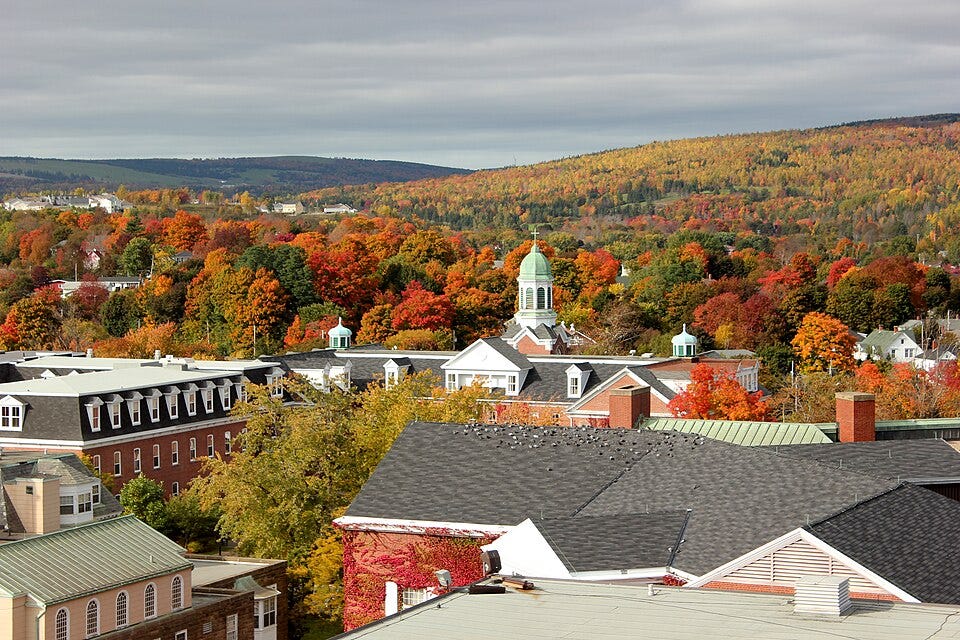
Join Justin and Anuj as they reunite in the studio to reflect on nine whirlwind months of “Let’s Talk Antigonish.” From discovering how global politics affects the price of beer in Antigonish to the People’s Place Library ‘s impressive laundry list of services they offer on a shoestring budget, these two neighbours-turned-podcasters have been on quite a journey. In this candid conversation, they break down their episodes into three categories—community matters, social matters, and government matters—while celebrating the incredible organizations working behind the scenes in Antigonish. Learn about topics they’ve tackled like Jazz Fest, the fair, biking culture, refugees, loneliness, palliative care, intimate partner violence, the museum’s evolving role, and why affordable housing remains a pressing issue. Hear about their ambitious plans for 2026, including hiring a journalist to dig deeper into local stories, and discover what’s coming up next (including a chat with Minister of Health and Wellness Michelle Thompson). Whether you’re a long-time listener or brand new to the podcast, this behind-the-scenes peek reveals why local news matters for small-town democracy and how two guys with day jobs are helping keep local news alive—one conversation at a time. Get full access to Let's Talk Antigonish at letstalkantigonish.substack.com/subscribe

We sat down with Jenn Priddle, director of Music of the Night, to uncover the magic behind one of Antigonish’s beloved community theater companies. From its humble beginnings in 1997 (including a dinner theater performance in a barn in November!) to selling out eight-show runs at the Eleanor Mutimer Theatre, Music of the Night has been bringing Broadway-caliber productions to Antigonish for nearly three decades. Discover how 100 volunteers—from high school band students to retired symphony players, from theater newbies to performers who could totally be on Broadway—come together every year to create something extraordinary. Jenn shares the heartwarming story of mentorship flowing through generations, the intimidating complexity of mounting this year’s show Into the Woods, and why this production features Monty Python coconuts. Learn about the beautiful legacy of community theater and why sometimes the best performances aren’t found in the big cities. Grab your tickets before the show sells out! More info about Music of the Night and ticket links here: https://www.facebook.com/MOTNAntigonish/ Get full access to Let's Talk Antigonish at letstalkantigonish.substack.com/subscribe

This week Justin and Anuj sat down with palliative care physician Dr. Emily Rice and nurse consultant Jamie Campbell to clear up what might be the most misunderstood area of healthcare. Spoiler alert: if you think palliative care is just end-of-life care in a hospital, you’re wrong—and you’re not alone. From the surprising truth that patients with palliative care actually live longer than those without it, to discovering that your family doctor is likely already providing palliative care without calling it that, Emily and Jamie dismantle misconceptions while explaining what this “contractor for your health” approach really means. Covering a massive geographic area from Antigonish to Canso with just two physician positions, the team—which includes social workers and even a music therapist—helps patients navigate everything from symptom management at home to difficult conversations about goals and quality of life. Along the way, Justin and Anuj learn how we’ve medicalized death and why that is not always in a patient’s best interest, how the Antigonish Palliative Care Society (yes, the poultry box people!) provides crucial support, and why having these conversations with your family now matters more than you think. Tune in for an honest, surprisingly uplifting look at care that meets people exactly where they are.Important links provided by Dr. Rice: Antigonish Palliative Care Society: https://www.antigonishpalliativecaresociety.com/Nova Scotia Hospice Palliative Care Association: https://nshpca.ca/Canadian Virtual Hospice: https://www.virtualhospice.ca/en_US/Main+Site+Navigation/Home.aspxCanadian Hospice Palliative Care Society: https://www.chpca.ca/BC Centre for Palliative Care: https://www.bc-cpc.ca/Palliative Care Physician and Author Dr. Kathryn Mannix: Dying for Beginners Video Palliative Care Public Service Announcement Videos by Dr. Jared Rubinstein: https://www.youtube.com/playlist?list=PL1dPS3PDtoPgPqR3Z-lazrkAceGwmg1_rThe Waiting Room Revolution: https://www.waitingroomrevolution.com/ and wherever you get your podcasts, start with season 1Advanced Care PlanningLove is Not Enough: https://www.youtube.com/playlist?list=PL-9dMSJLk6gpTw5WlzbL4INuzqjGJBfh_NS Hospice Palliative Care: https://nshpca.ca/advance-care-planning/GriefNS Health Life Changes resources: https://www.nshealth.ca/lifechanges#bereavementwww.mygrief.cawww.kidsgrief.cawww.youthgrief.ca Get full access to Let's Talk Antigonish at letstalkantigonish.substack.com/subscribe

This week Justin and Anuj sat down with Pat McKenna from the Naomi Society to discuss their plans for a new 10-unit building at Sugarloaf. Behind the construction plans lies a sobering reality: Nova Scotia declared intimate partner violence an epidemic in 2024 after eight femicides in a single year, and all 483 shelter beds in the province are currently full. The Naomi Society is building affordable second-stage housing for women and children fleeing violence, providing a safe place to land after shelter stays when returning to the community. From coordinating escapes to shelters to accompanying women through court proceedings, the organization supported 225 individual clients in Antigonish and Guysborough counties in just six months. If you or someone you know needs help, call the Naomi Society at 902-863-3807. Tune in to understand the hidden scale of this crisis in our community and what’s being done to address it.More info for the Naomi Society website: https://naomisociety.ca/ Get full access to Let's Talk Antigonish at letstalkantigonish.substack.com/subscribe
This week Justin and Anuj sat down with Warden Nicholas MacInnis to unpack the 2025 Electoral Boundary Review. What sounds like dry bureaucratic shuffling turns out to be anything but. From balancing the districts to create electoral fairness to navigating tricky questions of community identity, Nicholas walks us through why redrawing these lines is far trickier than you’d think. Along the way, Justin and Anuj discover that the fringe area around town is growing faster than anyone realized (the county now accounts for up to 40% of the town’s sewer usage), learn about ambitious plans to drill new wells to supplement water supply after this summer’s once-in-50-years drought, and find out why the county actually operates more of its own water and sewer systems than most people know. With public hearings underway and a New Year’s deadline looming, this is your chance to understand what’s at stake and how you can weigh in. Tune in to learn why these boundaries are about so much more than lines on a map—and why the county and town’s improving relationship might be the best news of all.Important info on the boundary review from the county: https://antigonishcounty.ca/boundary-review-2025/ Get full access to Let's Talk Antigonish at letstalkantigonish.substack.com/subscribe

This week Justin and Anuj sat down with Children’s Services Librarian Kristel Fleuren-Hunter and Programming and Outreach Assistant Elizabeth Glintz to discover why this isn’t your typical library. From helping newcomers navigate their first days in Canada to providing a vital third space for everyone in Antigonish, from running a community fridge to preparing tax returns for over 500 residents, the People’s Place has become Antigonish’s unofficial hub for connection and support. Behind the magic is a crew of incredibly committed staff whose passion for community service shines through in everything they do. A remarkable feat given the realities of a budget and salaries that, as Justin and Anuj found out, is nowhere near what you’d expect for this level of public service. Tune in to learn how this remarkable initiative became a model of what collaborative public service should be—and why it needs more support to keep thriving.Some news stories on library funding issues: https://www.saltwire.com/nova-scotia/new-glasgow/pictou-antigonish-libraries-scrambling-to-make-up-shortfallhttps://www.cbc.ca/news/canada/nova-scotia/nova-scotia-s-libraries-say-their-financial-books-are-1.7500890https://www.989xfm.ca/pictou-antigonish-regional-library-receives-additional-funding-from-the-province/ Get full access to Let's Talk Antigonish at letstalkantigonish.substack.com/subscribe

This week, Justin and Anuj sat down with Dorothy Lander and Dr. John Graham-Pole to explore Antigonish’s Death Cafe—a monthly gathering where locals come together to break the ultimate taboo and talk openly about aging, dying, and what comes after. From green burials and willow caskets to personal directives and letters to the beloved dead, this conversation reveals how a group of friends transformed death from a whispered “D word” into a topic of laughter, tears, and profound connection. Whether you’re curious about palliative care, interested in different cultural approaches to mortality, or simply wondering what happens when your neighbor dies at home, this frank and surprisingly uplifting discussion proves that talking about death might just be one of the most life-affirming things we can do.For more about the Death Cafe Antigonish, email John: john.gp@live.com Get full access to Let's Talk Antigonish at letstalkantigonish.substack.com/subscribe

This episode of Let’s Talk Antigonish features Mark Ballard, chair of SAFE (Settlement in Antigonish for Families from Everywhere), a refugee resettlement organization celebrating its 10th anniversary. What began in 2015 as a small group responding to the Syrian refugee crisis has grown into a regional organization that has successfully resettled approximately 180 refugees from countries including Syria, Afghanistan, Congo, Rwanda, and South Sudan. SAFE operates entirely through volunteers with virtually no administrative overhead, working with Immigration, Refugees and Citizenship Canada (IRCC) to sponsor both the most vulnerable refugees and families seeking reunification. The organization provides comprehensive support including housing, English language training, employment assistance, health care navigation, and cultural integration.Mark discusses the unique success of refugee resettlement in small rural communities like Antigonish, attributing it to the hands-on volunteer approach and the town’s welcoming culture, influenced by St. Francis Xavier University and the Coady Institute’s presence. He emphasizes that SAFE’s work is fundamentally humanitarian—giving people fleeing life-threatening situations a chance to rebuild their lives. The organization is celebrating its 10th anniversary on November 15th with a panel discussion and dinner, while running a $60,000 matching fundraising campaign to sponsor two or three additional vulnerable families. SAFE continues to advocate for refugee causes and remains committed to its mission of community-driven humanitarian support. Get full access to Let's Talk Antigonish at letstalkantigonish.substack.com/subscribe

We sat down with Emilie Chiasson (Alumni Engagement coordinator at StFX and freelance writer) and Elizabeth Yeo (Vice President Students sat StFX) to talk about their plans to bring GenWell (Canada's Human Connection Movement) to Antigonish. On October 29th, StFX will host the first-ever GenWell Day at a Canadian university, bringing CEO Pete Bombaci to campus for a series of presentations and discussions on social isolation and community connection. In this conversation, we discuss how technology and modern life have contributed to what some call a "loneliness epidemic" – with six in ten Canadians reporting they don't identify as having community. Elizabeth shares insights on how the university is addressing post-pandemic social challenges among students, while Emilie discusses her observations about declining human connection in everyday life, from those pesky earbuds that seem permanently lodged in everyone’s ears, to the disappearance of traditional community gathering spaces. Emilie and Elizabeth offer some practical solutions for building stronger connections, from simple acts like talking to strangers and inviting neighbours over for supper, to institutional changes like StFX's Good Neighbors program. More about GenWell at this link Get full access to Let's Talk Antigonish at letstalkantigonish.substack.com/subscribe

You might not expect a rural Nova Scotia town of 5,000 to be a hotbed for international jazz talent, but Antigonish is full of surprises. In this week’s episode, we sit down with Jake Hanlon, chair of St. FX's music department, and Paul Tynan, Artistic Director of the Antigonish Jazz Fest, to explore the remarkable musical ecosystem in our backyard. From hosting Canada's first jazz studies degree program to bringing Grammy winners like Pacific Mambo Orchestra and legends like Herbie Hancock's Headhunters to intimate local venues, our town has become one of Canada's most important east coast jazz destinations. Discover St. FX's legendary visiting artist program attracting world-renowned musicians from Mongolia to Barcelona, learn about regular student gigs around town, and find out how a tourism initiative became a festival drawing music lovers across the Maritimes—whether you're a jazz aficionado or have never entered the Schwartz Auditorium to hear a student recital, this conversation will give you new appreciation for the extraordinary musical talent performing in your community. And it’s not just jazz (as Jake and Paul point out): Antigonish is home to the Antigonish Performing Arts Series, a ton of local bands, traditional sessions and ceilidhs, and more. We really punch above our weight when it comes to music in this town!StFX Music DepartmentAntigonish Jazz Fest websiteStFX Music’s Instagram account Get full access to Let's Talk Antigonish at letstalkantigonish.substack.com/subscribe

Comments

Download from Google Play

Download from App Store
 United States