


 Claim Ownership
Sacred Rituals & Devotion of India by Dharmikvibes
Subscribed: 5Played: 6
Subscribe

© DharmikVibes (DIVIVB LIFESTYLE PRIVATE LIMITED)
Description
Discover the sacred essence of India through its timeless rituals, heartfelt devotion, and spiritual pilgrimages. A journey into the traditions that continue to inspire seekers across the world.
blog.dharmikvibes.com
blog.dharmikvibes.com
245 Episodes
Reverse

Holi is one of the most vibrant and spiritually powerful festivals in Sanatan Dharma. Known as the Festival of Colors, Holi celebrates the victory of devotion over ego, truth over evil, and divine love over fear.If you’re planning to celebrate Holi in 2026, here is your complete guide covering Holi 2026 date, Holika Dahan muhurat, Braj Holi schedule, mantras, spiritual meaning, and FAQs.Holi 2026 Date & Muhurat* Holika Dahan (Chhoti Holi): Evening of March 2, 2026 (Monday)* Rangwali Holi (Dhulandi): March 3, 2026 (Tuesday)Holika Dahan Muhurat (Tentative Panchang-based timing)* Holika Dahan is performed during Pradosh Kaal (after sunset) when Purnima Tithi prevails.* Exact muhurat will depend on your location and local Panchang.* Avoid Bhadra period for Holika Dahan.👉 Always check your local city-based Panchang for precise timing.Why is Holi Celebrated?Holi is celebrated to mark:* The victory of devotion (Bhakti) over evil* The burning of ego and negativity* The arrival of spring (Vasant Ritu)* The divine love of Radha and KrishnaSpiritually, Holi represents:* Letting go of past karmic baggage* Forgiveness and renewal* Emotional purification* Celebration of divine joyStory of Prahlad & HolikaThe roots of Holi come from the ancient Puranic story of Prahlad, a devotee of Lord Vishnu.The Story:King Hiranyakashipu was a powerful demon king who wanted everyone to worship him as God. However, his son Prahlad was a devoted follower of Lord Vishnu.Despite multiple attempts to punish him, Prahlad’s faith remained unshaken.Finally, Hiranyakashipu sought help from his sister Holika, who had a boon that made her immune to fire. She sat in a blazing fire holding Prahlad on her lap, intending to burn him.But due to Prahlad’s devotion:* Holika burned to ashes.* Prahlad remained unharmed.This event symbolizes:* Ego cannot overpower faith.* Evil destroys itself.* Divine protection always supports true devotion.Holika Dahan commemorates this victory.Holika Dahan Timing & Rituals When is Holika Dahan Performed?* On Phalguna Purnima evening* After sunset during Pradosh Kaal* Avoid Bhadra period (considered inauspicious) How to Perform Holika Dahan:* Collect dry wood and cow dung cakes.* Place a Holika structure symbolically.* Offer:* Raw coconut* Wheat grains* Chana* Mustard seeds* Turmeric* Circumambulate (Parikrama) 3 or 7 times.* Pray for removal of negativity and protection from obstacles.Many families bring the sacred ashes home the next day as protection.Safe Ways to Celebrate HoliModern Holi celebrations should combine tradition with safety:Use Natural Colors* Haldi (Turmeric)* Beetroot powder* Multani mitti* Flower-based colors (Palash, Tesu) Protect Skin & Hair* Apply coconut oil before playing.* Wear full-sleeve cotton clothes.* Avoid chemical-based colors. Respect Boundaries* Celebrate with consent.* Avoid forceful color application.* Avoid intoxication misuse.Eco-Friendly Celebration* Avoid water wastage.* Avoid plastic balloons.* Keep celebrations mindful and clean. Spiritual Meaning of HoliHoli is not just about colors, celebration, or festivity — it is about inner transformation and spiritual awakening.At its deepest level, Holi represents the burning of ego, purification of the heart, and celebration of divine love. Every ritual performed during Holi carries a profound spiritual message rooted in Sanatan Dharma.Holika Dahan: Burning the Inner NegativityThe sacred bonfire of Holika Dahan symbolizes the destruction of ego, pride, anger, jealousy, and fear.Just as Holika was reduced to ashes while Prahlad’s devotion remained untouched, the ritual reminds us that:* Ego destroys itself* Faith protects* Truth ultimately prevailsSpiritually, Holika Dahan invites us to reflect:What within me needs to be burned this year?It is a time to surrender negative tendencies and allow divine light to replace inner darkness. Playing with Colors: Unity Beyond IdentityWhen people apply colors to one another, external identities begin to fade. Differences of status, wealth, age, caste, or background temporarily dissolve.Covered in colors, everyone looks the same.This symbolizes:* Equality of all souls* Oneness of humanity* Joyful expression of life energy* Breaking social barriersColors represent vitality, celebration, and the divine play (Leela) of existence itself.Forgiveness and Emotional RenewalTraditionally, Holi is a time to:* Let go of old grudges* Reconnect with loved ones* Seek forgiveness* Heal broken relationshipsJust as spring brings new blossoms, Holi brings emotional renewal. It encourages us to cleanse the heart and begin again with love. Holi in the Bhakti TraditionIn the land of Braj - Vrindavan, Barsana, and Mathura - Holi is celebrated as a festival of divine love between Radha and Krishna.Here, Holi symbolizes:The divine union of Radha and Krishna - representing the soul’s longing for unionMantras for Holika DahanChanting mantras during Holika Dahan enhances spiritual purification.Holika Dahan Mantra:ॐ प्रह्लादाय विद्महे
हिरण्यकशिपु ध्वंसाय धीमहि
तन्नो विष्णुः प्रचोदयात् ॥
Vishnu Protection Mantra:ॐ नमो भगवते वासुदेवाय ॥
Narasimha Mantra:उग्रं वीरं महाविष्णुं
ज्वलन्तं सर्वतोमुखम्।
नृसिंहं भीषणं भद्रं
मृत्युर्मृत्युं नमाम्यहम्॥
Chant 11, 21, or 108 times.Braj Holi 2026 Schedule (Vrindavan, Barsana, Nandgaon & Mathura)Braj Holi is world-famous and celebrated for nearly 10 days before Holi.(Complete Schedule – Barsana, Nandgaon, Vrindavan, Mathura, Gokul & Baldev)Braj Holi is world-famous and unlike regular Holi celebrations, it lasts for nearly 10–12 days. Celebrated in the sacred land of Radha and Krishna, the festivities take place across Barsana, Nandgaon, Vrindavan, Mathura, Gokul, and Baldev.Each day has its own unique tradition rooted in Krishna Leela. Here is the complete Braj Holi 2026 schedule:February 25, 2026 (Wednesday)Laddu Holi – BarsanaThe Holi celebrations in Braj begin with Laddu Holi at the Radha Rani Temple in Barsana. Devotees play Holi by showering laddus (sweets) instead of colors. This marks the ceremonial beginning of the Braj Holi festivities. February 26, 2026 (Thursday)Lathmar Holi – BarsanaOne of the most famous Holi celebrations in India. Women of Barsana playfully hit men from Nandgaon with sticks (lathis), while the men defend themselves with shields. This tradition symbolizes the playful teasing between Radha and Krishna.February 27, 2026 (Friday)Lathmar Holi (Return Celebration) – NandgaonOn this day, the people of Barsana visit Nandgaon. The celebration continues in reverse tradition, recreating Krishna’s playful visit to Radha’s village.February 28, 2026 (Saturday)Phoolon Ki Holi (Flower Holi) – VrindavanAt the Banke Bihari Temple in Vrindavan, Holi is celebrated with flower petals instead of colors. Priests shower flowers upon devotees in a spiritually uplifting atmosphere.February 28, 2026 (Saturday)Widows’ Holi – VrindavanWidowed women in Vrindavan participate in playing Holi with colors. This celebration has become a symbol of social inclusion and breaking age-old societal barriers. March 1, 2026 (Sunday)Chadimar Holi – GokulIn Gokul, devotees celebrate Chadimar Holi, connected to the childhood pastimes of Lord Krishna.March 2, 2026 (Monday)Raman Reti Holi – GokulAt Raman Reti, saints and devotees celebrate Holi through bhajans, kirtans, and spiritual gatherings in a more devotional setting.March 3, 2026 (Tuesday)Holika Dahan – Mathura & VrindavanOn the evening of Phalguna Purnima, Holika Dahan is performed. Bonfires are lit symbolizing the victory of devotion over evil, commemorating the story of Prahlad.March 4, 2026 (Wednesday)Dhulandi (Rangwali Holi) – Mathura & VrindavanThe main festival of colors is celebrated across Braj. Major temples such as Shri Krishna Janmabhoomi and Banke Bihari Temple host grand Holi celebrations filled with colors, music, and devotion.March 5, 2026 (Thursday)Huranga Holi (Dauji Ka Huranga) – Dauji Temple, BaldevAt Dauji Temple in Baldev, women playfully drench men in colors and tear their clothes as part of the Huranga tradition. This is considered one of the most energetic and unique Holi celebrations in Braj.March 6, 2026 (Friday)Baldev Huranga – BaldevThe Huranga festivities continue with great enthusiasm, marking the closing phase of Braj Holi celebrations. Main Temples to Visit During Braj Holi• Banke Bihari Temple – Vrindavan• Shri Krishna Janmabhoomi – Mathura• Radha Rani Temple – Barsana• Nand Bhawan – Nandgaon• Dauji Temple – Baldev✨ Divine Yatra Tips for Braj Holi 2026• Expect extremely large crowds.• Book accommodation at least 1–2 months in advance.• Wear light or white cotton clothes.• Protect your phone and camera from colors.• Follow local administration and temple guidelines.Braj Holi is not just a festival - it is a divine experience of Krishna’s playful love and devotion. If you wish to witness Holi in its most authentic and spiritual form, Braj is the ultimate destination in 2026. FAQ Section1️⃣ When is Holi 2026?Holi 2026 will be celebrated on March 3, 2026, and Holika Dahan on March 2, 2026.2️⃣ What is Holika Dahan?Holika Dahan is a ritual bonfire performed on the night before Holi symbolizing the burning of evil and negativity.3️⃣ Why do we burn Holika?Holika is burned to commemorate the victory of Prahlad’s devotion over evil forces, symbolizing that ego and arrogance destroy themselves.4️⃣ What is the significance of colors?Colors represent:* Joy* Unity* Equality* Divine love* Breaking social barriersIn Krishna Bhakti, colors symbolize the playful love between Radha and Krishna.5️⃣ Is Holi a religious festival?Yes. Holi is deeply rooted in Hindu scriptures and Puranas. However, it is also celebrated culturally across India and worldwide as a festival of joy and togetherness.Holi is more than a festival of colors - it is a celebration of:* Faith over fear* Love over hatred* Devotion over ego* Light over darknessAs you prepare for Holi 2026, celebrate responsibly, spiritually, and joyfully.Happy Holi 2026! This is a public ep
In a world that moves faster than our breath, something quietly ancient is calling us back.We live in the most connected era in human history - yet loneliness is at an all-time high. We have productivity apps, wellness trackers, and endless content on “success,” yet anxiety and burnout feel like default settings. Somewhere between deadlines and dopamine scrolls, modern life has left many of us asking a simple but uncomfortable question:Is this all there is?And increasingly, people are finding the answer not in another upgrade - but in a return.A return to spiritual roots. The Hidden Burnout of Modern LifeOn paper, life has never looked better.Better salaries.Better technology.Better access to information.But emotionally? Spiritually?Many of us feel exhausted in ways sleep can’t fix.* Burnout despite doing “everything right”* Anxiety without a clear cause* Loneliness even when surrounded by people* Emptiness after achieving long-chased goalsThis isn’t just stress - it’s disconnection.We’ve optimized life for efficiency, but forgotten meaning. We chase outcomes, but neglect inner balance. Modern life rewards speed, visibility, and constant achievement - while the soul thrives on stillness, belonging, and purpose.🌿 Success Without Satisfaction: The Silent CrisisOne of the strangest realities of our time is this:People are more successful than ever - and more spiritually lost than ever.Promotions come, but peace doesn’t.Material comfort increases, but inner restlessness grows.Why?Because external success cannot replace inner alignment.When identity becomes tied only to roles -job titles, social status, achievements -we slowly lose touch with who we are beneath them. And when life inevitably shakes those roles, we’re left feeling hollow.This is where spirituality quietly enters - not as religion, not as superstition - but as a human need. Spirituality Is No Longer About Ritual - It’s About GroundingFor a long time, spirituality was misunderstood.Seen as rigid.Seen as outdated.Seen as disconnected from modern life.But today’s spiritual revival looks very different.It’s not about blind rituals.It’s about inner peace.Not about escaping the world.But about living better within it.Modern spirituality asks questions like:* How do I stay calm in chaos?* How do I find meaning beyond achievement?* How do I feel rooted in a fast-changing world?This is why meditation apps, mindfulness practices, yoga, and ancient dharmik wisdom are resonating again - especially in India, where spiritual philosophy was always meant to be lived, not just followed.Dharmik Values in a Modern WorldDharmik values were never about rejection of life - they were about balance.* Dharma as purpose, not obligation* Karma as responsibility, not fear* Seva as connection, not sacrifice* Sadhana as inner discipline, not escapeIn today’s context, these values translate beautifully:* Choosing purpose over constant pressure* Acting consciously instead of reactively* Building community in an isolated world* Cultivating inner peace in an anxious ageThis is why modern spirituality feels less like going backward - and more like coming home.✨ Stories of Inner TransformationAcross cities and villages, boardrooms and bedrooms, the story repeats.A startup founder who found clarity through meditation after burnout.A corporate professional who rediscovered peace through daily prayer.A young adult who replaced constant comparison with self-acceptance through spiritual study.These are not dramatic renunciations of life.They are quiet inner shifts.People aren’t leaving modern life - they’re learning how to live it without losing themselves.🌱 Spiritual Lifestyle: The New NormalWhat we’re witnessing isn’t a trend - it’s a transition.A shift from:* Hustle → harmony* Noise → awareness* Achievement → alignmentA spiritual lifestyle today might look like:* Starting the day with stillness* Seeking guidance from spiritual mentors* Visiting temples, retreats, or sacred spaces for grounding* Integrating ancient wisdom into modern routinesIt’s not about perfection.It’s about presence. Why This Moment MattersModern life isn’t failing us - it’s reminding us of what’s missing.And what’s missing isn’t more technology or productivity.It’s connection.To self.To purpose.To something larger than ego.That’s why modern life is pulling us back to spiritual roots - not out of fear, but out of wisdom.Because progress without peace isn’t progress at all.And in remembering our spiritual foundations, we aren’t going backward—we’re finally moving forward, whole.DharmikVibesWhere ancient wisdom meets modern emotions. This is a public episode. If you would like to discuss this with other subscribers or get access to bonus episodes, visit blog.dharmikvibes.com
Shivratri is not a festival of celebration but a night of stillness, discipline, and inner awakening. It is dedicated to Lord Shiva, who represents awareness beyond form, silence beyond noise, and stability beyond chaos. For householders, Shivratri offers a rare opportunity to pause worldly momentum and realign with inner balance- without leaving home.This article presents a complete, traditional, and practical Shivratri vrat and puja plan, covering preparation, fasting, home worship, abhishek, mantra, aarti, night sadhana, timings, and essential do’s and don’ts.1. Spiritual Meaning of ShivratriShivratri literally means “the night of Shiva.” Spiritually, it represents:* The stilling of the mind* The withdrawal of senses* The awakening of awareness* The union of individual consciousness with Shiva-consciousnessUnlike other festivals, Shivratri emphasizes:* Silence over sound* Awareness over activity* Discipline over indulgenceEven simple worship done with sincerity is considered powerful on this night.2. Preparation Before ShivratriPhysical Preparation* Clean the home, especially the puja area* Keep the puja space simple and uncluttered* Arrange all puja items a day in advanceMental Preparation* Reduce unnecessary speech from the previous evening* Avoid anger, arguments, and distractions* Sleep early so the body remains light and alertShivratri begins with preparation, not ritual.3. Shivratri Vrat (Fasting) – Complete GuidelinesVrat is a discipline of self-restraint, not punishment of the body. Choose according to health, age, and lifestyle.Types of Shivratri Vrat1. Nirjala Vrat* No food or water for the entire day and night* Recommended only for healthy and experienced practitioners2. Phalahar Vrat (Most Common)* Fruits, nuts, dry fruits* Milk, curd, buttermilk* Coconut water* Makhana, sabudana* Rock salt (sendha namak)3. Satvik Vrat (Householder-Friendly)* One light meal* No grains, onion, garlic, or heavy spicesIntent matters more than intensity.4. What to Eat and What to AvoidAllowed During Vrat* Fruits and nuts* Milk and milk products* Coconut water* Simple vrat food* Light herbal tea (optional)Strictly Avoid* Rice, wheat, lentils* Onion and garlic* Non-vegetarian food* Alcohol, smoking, tobacco* Overeating or indulgence5. Morning Routine on Shivratri* Wake up early (Brahma Muhurta if possible)* Take bath and wear clean, light-colored clothes* Sit calmly and take Vrat Sankalp:“Aham Mahashivratri Vratam Karishye”(I undertake the Shivratri vrat with devotion)* Light a diya in the puja space* Chant Om Namah Shivaya mentally for 5–10 minutes6. Home Puja SetupRequired Puja Items* Shivling or image of Lord Shiva* Clean water or Gangajal* Milk, curd, honey, ghee, sugar (for Panchamrit)* Belpatra (three-leafed, unbroken)* White flowers* Diya and incense* Fruits or simple prasad7. Shivratri Puja Vidhi at Home (Step-by-Step)Step 1: Abhishek (Most Important)Perform abhishek slowly and attentively while chanting Om Namah Shivaya.Traditional Abhishek Order* Water or Gangajal* Milk* Curd* Honey* Ghee* SugarConclude again with clean water.Abhishek symbolizes washing away ego, impurities, and restlessness.Step 2: Offerings* Offer belpatra (always three-leafed)* Offer white flowers* Apply sandalwood paste if availableStep 3: Mantra Japa* Om Namah Shivaya – 108 or 1008 times* Maha Mrityunjaya Mantra – 11 or 21 timesSit calmly with straight spine and steady breath.Step 4: Shiva Aarti* Perform Shiva Aarti slowly* Focus on meaning rather than speed* Even a short aarti done sincerely is sufficient8. Shivratri Night Puja & Timing (Prahar Importance)Night worship is the heart of Shivratri.Four Prahars (Night Periods)* Evening Prahar* Midnight Prahar (most auspicious)* Late-night Prahar* Early morning PraharYou may:* Perform puja once during the night* Chant mantras silently* Sit in meditation or awarenessStaying awake is helpful but not compulsory.9. Silent Sadhana Shivratri (For Householders)This form is highly effective and practical.Daytime Discipline* Reduce speech (mauna)* Avoid unnecessary phone use* Treat every action as an offeringNight Sadhana* Sit in dim light or darkness* Spine straight, eyes closed* Focus on breath* Mentally chant Om Namah Shivaya or So-Ham for 15–30 minutesInner Abhishek* Breath as water* Thoughts as flowers* Awareness as belpatra10. What to Do on Shivratri* Maintain calmness and purity* Speak gently and truthfully* Read or listen to Shiv Chalisa or Shiva stories* Keep the mind inward-focused11. What Not to Do on Shivratri* Avoid anger and arguments* Avoid laziness and excessive sleep* Avoid gossip and entertainment* Avoid indulgence of any kind12. Breaking the Vrat* Break the vrat the next morning after bath and prayer* Consume light, satvik food first* Offer gratitude to Lord Shiva before eatingShivratri is not about how much you do, but how deeply you are present.Even a single mantra chanted with awareness is powerful.May Lord Shiva bless restraint, clarity, and inner stillness.Har Har Mahadev. This is a public episode. If you would like to discuss this with other subscribers or get access to bonus episodes, visit blog.dharmikvibes.com
When Prime Minister Narendra Modi mentioned bhajan clubbing in his first Mann ki Baat address of the year, he was not merely pointing to a musical trend. He was signalling a cultural inflection point. Describing the phenomenon as one where “spirituality and modernity are merging beautifully,” the Prime Minister acknowledged something deeper: a generation is renegotiating how faith is experienced, shared, and sustained in the digital age.Across Indian cities and global venues, bhajan-clubbing concerts - led by international kirtan artists such as Krishna Das and Radhika Das, alongside homegrown performers - are selling out. Ancient devotional chants, once rooted in temples and satsangs, are now unfolding in concert halls, auditoriums, and hybrid spaces that borrow as much from live gigs as from spiritual congregations. The audience is young, urban, digitally native - and deeply engaged.What appears, on the surface, to be a stylistic remix is in fact part of a larger transformation that extends well beyond music. Bhajan clubbing is not happening in isolation; it is unfolding alongside the rise of spiritual-tech platforms that are re-architecting how people discover, access, and participate in dharmik life.From Ritual to Experience - and Now to PlatformsEvery generation translates culture into forms it can recognise. The bhakti movement once did this by breaking ritual monopolies and using vernacular languages, music, and mass participation. Bhajan clubbing follows that lineage, but with a crucial difference: it is emerging in a platform-driven world.Today’s spiritual seeker does not begin their journey at the temple gate alone. They begin online:* discovering artists, gurus, and traditions through social media,* attending hybrid or ticketed spiritual experiences,* forming communities through apps, streaming platforms, and curated networks.Bhajan clubbing thrives because it fits seamlessly into this ecosystem. It is highly participatory, emotionally immersive, and easily shareable - all qualities that align with how platforms scale engagement.This is where spiritual-tech movements come in. Platforms that curate astrologers, pandits, kirtan artists, retreat partners, homestays, pilgrimage logistics, devotional music communities, and spiritual influencers are not just digitising religion; they are rebuilding the infrastructure of devotion for the 21st century.Why the Youth Are Showing UpIndia’s young are often described as disconnected from tradition, but bhajan clubbing suggests something else: they are disconnected from rigid forms, not from meaning.In a world shaped by:* constant digital noise,* economic precarity,* social fragmentation,* and algorithmic attention,spirituality is no longer sought primarily through obligation, but through experience. Bhajan clubbing offers:* belonging without dogma,* transcendence without hierarchy,* emotional release without explanation.Spiritual-tech platforms amplify this shift by lowering friction:* You don’t need lineage to participate.* You don’t need geography to access teachers or experiences.* You don’t need prior knowledge to begin.The result is a democratised spiritual entry point - one that mirrors how other aspects of life (education, fitness, mental health) have moved to platforms.Echoes of the 1960s - With One Key DifferenceFor older generations, bhajan clubbing evokes the global counterculture of the 1960s, when Western youth turned eastward in search of meaning. The Beatles’ retreat to Maharishi Mahesh Yogi’s ashram in Rishikesh in 1968 marked a turning point - not just for their music, but for the globalisation of Indian spirituality.That moment eventually led to institutions, long-term practices, and enduring communities.Bhajan clubbing stands at a similar threshold. The difference is structural: today, platforms exist to convert curiosity into continuity. What once relied on chance encounters and individual teachers can now be sustained through ecosystems - apps, networks, curated journeys, and communities that extend beyond a single event.The Risk of Commodification - and the Opportunity Beyond ItThere is, however, a clear risk. Bhajan clubbing can remain trapped as spectacle — another consumable experience in the attention economy. High production values, celebrity performers, and social-media virality can flatten devotion into a vibe.This is where spiritual-tech platforms face their defining test.If they merely monetise access, the movement will plateau.If they enable depth, it can mature.Depth can take many forms:* connecting concert-goers to philosophical learning,* guiding them toward seva, pilgrimages, or disciplined practices,* building local and digital communities that persist after the music fades.Platforms that integrate experience, guidance, and continuity can transform bhajan clubbing from an event into a gateway.A Cultural Shift Still in FormationPrime Minister Modi’s acknowledgement matters because it legitimises this hybrid space - one where faith is neither frozen in the past nor dissolved into trend. It reflects an India where tradition is not abandoned, but re-expressed through modern tools.Bhajan clubbing, when viewed alongside the rise of spiritual-tech platforms, appears less like a novelty and more like a transitional form - a bridge between inherited traditions and future-facing dharmik ecosystems.Whether this moment becomes a lasting cultural shift depends on what follows the chanting:* Do participants move from performance to practice?* From attendance to belonging?* From platforms of discovery to communities of discipline?The answers are still unfolding. But one thing is clear: a generation that was presumed to be drifting away from faith is, instead, finding new ways to arrive - through music, technology, and shared experience.In that sense, bhajan clubbing may not be the destination. It may simply be the doorway. This is a public episode. If you would like to discuss this with other subscribers or get access to bonus episodes, visit blog.dharmikvibes.com

हिमालय की गोद में, बर्फीली चोटियों और मंदाकिनी नदी की कलकल ध्वनि के बीच, जब कोई यात्री गौरीकुंड से आगे कदम बढ़ाता है - तो वह केवल एक पर्वतीय पथ पर नहीं चलता, वह अपने भीतर की यात्रा शुरू करता है। केदारनाथ धाम पहुँचना केवल एक “स्थान” तक पहुँचना नहीं, यह श्रद्धा के शिखर तक उठना है। यहाँ हर सांस में “ॐ नमः शिवाय” की गूँज उतरती है और मन धीरे-धीरे संसार की व्यस्तताओं से मुक्त होकर शिव के मौन में टिकने लगता है।केदारनाथ धाम उत्तराखंड के रुद्रप्रयाग जिले में स्थित है और भारत के सर्वाधिक पावन तीर्थों में इसकी गणना होती है। यह बारह ज्योतिर्लिंगों में से एक है तथा चारधाम यात्रा का अत्यंत महत्वपूर्ण पड़ाव। केदारनाथ का नाम आते ही मन में एक ऐसा भाव जागता है जो शब्दों में बाँधा नहीं जा सकता - एक गहरी श्रद्धा, एक अनकही पुकार और एक अद्भुत शांति।केदारनाथ धाम का धार्मिक महत्त्व: क्यों है यह यात्रा जीवन का पुण्य?केदारनाथ ज्योतिर्लिंग को शिव-भक्तों के लिए अत्यंत फलदायी माना गया है। यह धाम केवल दर्शन का स्थान नहीं, यह आत्मा की शुद्धि, कर्मों के भार से मुक्ति और साधना की भूमि है। कहा जाता है कि जो भक्त सत्य भाव से यहाँ आकर भगवान केदारनाथ के दर्शन करता है, उसके भीतर के भय और संशय धीरे-धीरे विलीन होने लगते हैं।यहाँ की विशेषता यह है कि यह तीर्थ कठिन है—पर उसी कठिनाई में इसकी महिमा छिपी है। चढ़ाई, ठंड, ऊँचाई, सांस की गति - ये सब मिलकर यात्री के अहंकार को गलाते हैं। और जब यात्री मंदिर के सामने पहुँचता है, तो लगता है जैसे वह अपने भीतर के किसी पुराने बोझ को उतारकर हल्का हो गया हो।‘केदार’ शब्द का अर्थ भूमि, क्षेत्र या क्षेत्रपाल भी माना जाता है। इस दृष्टि से केदारनाथ वह पवित्र क्षेत्र है जहाँ शिव स्वयं क्षेत्रपाल रूप में विराजते हैं। यहाँ मनुष्य अपनी सीमाएँ देखता है और उसी में प्रभु की असीम सत्ता का अनुभव करता है।इतिहास, पौराणिक कथा और स्थापना: केदारनाथ का सनातन वैभवकेदारनाथ की कथा महाभारत काल से जुड़ी हुई मानी जाती है। महाभारत युद्ध के बाद पांडवों को अपने कर्मों का पश्चाताप हुआ। वे भगवान शिव से क्षमा पाने के लिए हिमालय की ओर निकले। किंतु भगवान शिव उन्हें सहज दर्शन देना नहीं चाहते थे। उन्होंने बैल (नंदी) का रूप धारण कर लिया और उनसे बचने लगे।पांडवों ने जब उन्हें पहचान लिया, तब शिव भूमि में समाने लगे। उसी समय बैल का पृष्ठभाग केदारनाथ में प्रकट हुआ, और अन्य अंग अन्य स्थानों पर - इस प्रकार पंच केदार की परंपरा बनी। केदारनाथ पंच केदार में सबसे प्रमुख माना जाता है।माना जाता है कि मंदिर की मूल स्थापना पांडवों ने की थी। कालांतर में आदि शंकराचार्य ने इस पावन स्थल की पुनः प्रतिष्ठा की और पूरे भारत में सनातन धर्म की धारा को एक सूत्र में बाँधने हेतु चारधाम की स्थापना का कार्य किया। केदारनाथ मंदिर के पीछे आदि शंकराचार्य का समाधि-स्थल आज भी श्रद्धालुओं को मौन साधना और विवेक का संदेश देता है। जब कोई यात्री वहाँ कुछ क्षण बैठता है, तो भीतर एक अद्भुत स्थिरता उतरती है - मानो समय ठहर गया हो।केदारनाथ की आध्यात्मिकता: यात्रा नहीं, साधना का मार्गकेदारनाथ का अनुभव केवल दर्शन की घटना नहीं, यह साधना का वातावरण है। यहाँ मोबाइल नेटवर्क कम हो सकता है, पर भीतर का नेटवर्क प्रभु से जुड़ता चला जाता है। जैसे-जैसे आप ऊपर चढ़ते हैं, सांस तेज़ होती है, कदम धीमे होते हैं और मन स्वतः जप में उतरने लगता है।बहुत से लोग कहते हैं कि केदारनाथ में पहुँचकर कुछ क्षणों के लिए शब्द कम पड़ जाते हैं। वहाँ खड़े होकर आँखें भर आना सामान्य है—क्योंकि वह केवल पत्थर का मंदिर नहीं, बल्कि शिव की अनुभूति है। कोई इसे आस्था कहे, कोई ऊर्जा - लेकिन सच यह है कि वहाँ मन को एक ऐसा सहारा मिलता है जो दुनिया की किसी वस्तु से नहीं मिलता।दर्शन, आरती और मंदिर की दिनचर्या: केदारनाथ में पूजा का दिव्य अनुशासनकेदारनाथ में दर्शन का सबसे सुंदर समय प्रातःकाल होता है। पहाड़ों में अंधेरा धीरे-धीरे हटता है, हवा अत्यंत शीतल होती है और मंदिर के घंटों की ध्वनि मन को भक्ति में डुबो देती है। सामान्यतः मंदिर बहुत सुबह खुलता है और दिन भर श्रद्धालुओं को दर्शन का अवसर मिलता है।प्रातः मंगला आरती का समय सामान्यतः लगभग 4:30 बजे के आसपास माना जाता है। यही वह समय है जब वातावरण सबसे पवित्र और एकाग्र लगता है। शाम की आरती भी अत्यंत भावपूर्ण होती है, जिसका समय आम तौर पर 6:30 से 7:30 बजे के बीच रहता है। मौसम और प्रशासनिक व्यवस्थाओं के अनुसार समय में परिवर्तन हो सकता है, इसलिए यात्रा के दौरान स्थानीय सूचना अवश्य लें।पूजन में रुद्राभिषेक को विशेष स्थान प्राप्त है, क्योंकि यह शिव को अत्यंत प्रिय माना जाता है। जलाभिषेक, बिल्वपत्र अर्पण, दीपदान तथा महामृत्युंजय मंत्र का जप यहाँ अत्यंत फलदायी माना जाता है। यदि आप चाहें तो एक सरल संकल्प लेकर केवल “ॐ नमः शिवाय” का जप करें - केदारनाथ में यह जप स्वयं भीतर गूँजने लगता है।केदारनाथ कैसे जाएँ: यात्रा मार्ग और पहुँचने की पूरी जानकारीकेदारनाथ यात्रा का प्रमुख मार्ग हरिद्वार या ऋषिकेश से प्रारंभ होता है। यहाँ से सड़क मार्ग द्वारा गुप्तकाशी, सोनप्रयाग होते हुए गौरीकुंड पहुँचा जाता है। गौरीकुंड के बाद केदारनाथ तक लगभग 16 से 18 किलोमीटर का ट्रेक होता है।मार्ग में देवप्रयाग का संगम, श्रीनगर, रुद्रप्रयाग और अन्य पड़ाव आते हैं। यात्रा का एक बड़ा आकर्षण स्वयं प्रकृति है - हरे-भरे जंगल, नदी के किनारे चलते रास्ते, ऊँचे पहाड़ और बादलों के बीच की राह। यह यात्रा शरीर से अधिक मन को बदलती है।ट्रेक के विकल्प भी उपलब्ध रहते हैं - पैदल चलना सबसे आध्यात्मिक अनुभव देता है। इसके अतिरिक्त पालकी/डंडी, खच्चर सेवा भी कई यात्रियों के लिए सुविधाजनक होती है। हेलिकॉप्टर सेवा भी कुछ स्थानों से उपलब्ध रहती है, जो समय बचाने में मदद करती है, किंतु पैदल यात्रा का भाव - उसका तप और उसका आनंद - वह अलग ही होता है।धार्मिक यात्रा का आदर्श कार्यक्रम: पाँच दिन का संपूर्ण ‘धार्मिक यात्रा’ इटिनरीयदि आप केदारनाथ को केवल “ट्रिप” नहीं, बल्कि ‘धर्म-यात्रा’ की भावना से करना चाहते हैं, तो यह योजना अत्यंत उपयोगी है।पहले दिन आप ऋषिकेश या हरिद्वार से प्रस्थान करके गुप्तकाशी या सोनप्रयाग तक पहुँच सकते हैं। रास्ते में देवप्रयाग संगम का दर्शन कर लेना अच्छा माना जाता है। शाम को यात्रा-स्थल पर शांत मन से आरती, जप या ध्यान किया जा सकता है।दूसरे दिन सोनप्रयाग से गौरीकुंड पहुँचकर केदारनाथ की चढ़ाई प्रारंभ करें। गौरीकुंड में स्नान का धार्मिक महत्त्व माना जाता है। रास्ते में भीमबली, जंगलचट्टी, रामबाड़ा जैसे पड़ाव आते हैं। ट्रेक में धीरे चलना, पर्याप्त पानी पीना और सांस को स्थिर रखना आवश्यक है।तीसरे दिन प्रातः ब्रह्ममुहूर्त में दर्शन करें। यही दिन सबसे पावन होता है - दर्शन, आरती, समाधि-स्थल, भैरवनाथ दर्शन और मौन साधना। इस दिन आप स्वयं महसूस करेंगे कि केदारनाथ केवल बाहर नहीं, भीतर उतरता है।चौथे दिन आप डाउन ट्रेक करके वापस गौरीकुंड आएँ और फिर गुप्तकाशी की ओर लौटें। लौटते समय मन में एक अद्भुत संतोष होता है - जैसे जीवन ने कुछ नया अर्थ पा लिया हो।पाँचवें दिन गुप्तकाशी से ऋषिकेश/हरिद्वार वापसी। यदि समय हो तो रास्ते में धारी देवी या अन्य मंदिरों का दर्शन कर सकते हैं।केदारनाथ के पास दर्शनीय धार्मिक स्थान: यात्रा को और पवित्र बनाने वाले तीर्थकेदारनाथ धाम के आसपास कई ऐसे स्थान हैं जो आपकी यात्रा को और भी गहन आध्यात्मिक अनुभव बना देते हैं। भैरवनाथ मंदिर को केदारनाथ का रक्षक माना जाता है। यहाँ तक छोटा-सा ट्रेक होता है और ऊपर से पूरे केदारघाटी का दृश्य मन को मंत्रमुग्ध कर देता है।मंदिर के पीछे आदि शंकराचार्य का समाधि स्थल है, जहाँ कुछ मिनट मौन बैठना - मानो अपने भीतर की आवाज़ सुन लेने जैसा है। इसके अलावा कुछ मौसमों में चोराबाड़ी ताल/गांधी सरोवर की ओर भी लोग जाते हैं, जहाँ प्रकृति और साधना का एक अद्भुत संगम मिलता है।रास्ते में गुप्तकाशी के विश्वनाथ मंदिर और अर्द्धनारीश्वर मंदिर दर्शन योग्य हैं। त्रियुगीनारायण मंदिर भी अत्यंत प्रसिद्ध है, जिसे शिव-पार्वती विवाह स्थल माना जाता है। यदि आपके पास समय और सामर्थ्य हो, तो तुंगनाथ और चंद्रशिला जैसे स्थानों की यात्रा भी आपकी साधना-यात्रा को व्यापक बना सकती है।केदारनाथ यात्रा का सर्वोत्तम समय: कब जाएँ ताकि अनुभव श्रेष्ठ हो?केदारनाथ यात्रा के लिए मई से जून का समय लोकप्रिय माना जाता है, क्योंकि मौसम अपेक्षाकृत साफ रहता है। हालाँकि इस समय भीड़ अधिक हो सकती है। सितंबर से अक्टूबर का समय भी अत्यंत सुंदर माना जाता है - भीड़ कम, मौसम सुहावना और घाटी का दृश्य बहुत मनोहारी होता है।मानसून के दौरान जुलाई-अगस्त में भूस्खलन और भारी वर्षा का जोखिम रहता है, इसलिए इस समय यात्रा से बचना उचित है। सर्दियों में अत्यधिक बर्फबारी के कारण मंदिर बंद रहता है और भगवान की पूजा शीतकाल में उखीमठ में होती है।यात्रा में क्या करें और क्या न करें: श्रद्धा और सुरक्षा दोनों जरूरीकेदारनाथ में सबसे सुंदर कार्य है - प्रातः मंगला आरती में शामिल होना, मंदिर के सामने कुछ समय मौन ध्यान करना, बिल्वपत्र अर्पित करना और सरल जप में टिकना। यदि संभव हो तो महामृत्युंजय मंत्र या “ॐ नमः शिवाय” का नियमित जप यात्रा को अधिक दिव्यता देता है।यात्रा में संयम अत्यंत आवश्यक है। अत्यधिक शोर, अनुशासनहीनता, प्लास्टिक फैलाना या दूसरों को असुविधा देना - ये सब धर्म यात्रा की भावना के विपरीत है। धीमी गति से चलना, मौसम का सम्मान करना और अपने शरीर की सीमा पहचानना बहुत जरूरी है।सात्त्विक भोजन: केदारनाथ यात्रा में क्या खाएँ ताकि शरीर और मन दोनों शुद्ध रहेंकेदारनाथ यात्रा में सात्त्विक भोजन का महत्व केवल धार्मिक नहीं, बल्कि व्यावहारिक भी है। ऊँचाई पर हल्का, सुपाच्य भोजन शरीर को ऊर्जा देता है और मन को स्थिर रखता है।आप खिचड़ी, दाल-चावल, रोटी-सब्जी, हल्का आलू भोजन, गरम दूध या हल्दी दूध, फल (केला, सेब), सूखे मेवे और जरूरत के अनुसार ग्लूकोज/ORS ले सकते हैं। ज्यादा तला हुआ, ज्यादा मसालेदार, भारी मिठाइयाँ और अत्यधिक चाय-कॉफी से बचना बेहतर है। शराब और तंबाकू से पूर्णतः दूर रहें - यह यात्रा साधना है, मनोरंजन नहीं।यात्रा की तैयारी: जरूरी सामान जो साथ होना ही चाहिएहिमालय में मौसम पल भर में बदल सकता है, इसलिए गर्म कपड़े, थर्मल, रेनकोट, टोपी, मफलर, ग्लव्स, ट्रेकिंग शूज, टॉर्च, पानी की बोतल, पावर बैंक, प्राथमिक दवाइयाँ और पहचान पत्र अवश्य रखें। धीरे चलें, पर्याप्त पानी लें, बार-बार रुककर सांस सामान्य करें और शरीर पर अनावश्यक दबाव न डालें।केदारनाथ - जहाँ यात्रा पूरी होती है, और एक नई शुरुआत होती हैकेदारनाथ यात्रा एक पड़ाव नहीं, जीवन की दिशा बदलने वाला अनुभव है। यहाँ कोई बहुत कुछ लेकर नहीं आता- और बहुत कुछ लेकर लौट जाता है। कोई शांति लेकर लौटता है, कोई विश्वास; कोई संकल्प, कोई नया दृष्टिकोण।जब आप मंदिर के सामने खड़े होकर शिवलिंग को देखते हैं, तब लगता है जैसे जीवन की सारी उलझनें एक क्षण के लिए मौन हो गई हों। केदारनाथ में शिव केवल पूजे नहीं जाते - वह आपको भीतर से गढ़ते हैं।यदि आप इस यात्रा पर जा रहे हैं, तो बस एक बात साथ रखें - श्रद्धा। बाकी रास्ता केदारनाथ स्वयं बना देते हैं। This is a public episode. If you would like to discuss this with other subscribers or get access to bonus episodes, visit blog.dharmikvibes.com
Jagannatha Puri Ratha Yatra is not only a festival - it is one of the most powerful spiritual events on Earth. Every year, the sacred city of Puri in Odisha becomes a living ocean of devotion as Lord Jagannatha, along with Lord Balabhadra and Devi Subhadra, steps out of the sanctum and travels through the streets on colossal wooden chariots. For devotees, this is not simply a procession; it is a divine moment when God becomes accessible, visible, and present among people.In 2026, this extraordinary festival again invites millions of devotees to witness one of Hindu dharma’s most emotional teachings: the Divine does not remain distant - He comes out, He moves, and He meets you where you are.This article covers everything in complete detail: the official date, tithi timings, spiritual meaning, history, main rituals, what happens before and after the Yatra, why this experience is considered life-changing, and how to plan a safe, meaningful pilgrimage.Jagannatha Puri Ratha Yatra 2026 Date and TithiRatha Yatra 2026 will be observed on:Thursday, 16 July 2026According to Drik Panchang (New Delhi reference), the festival falls on Dwitiya Tithi of Shukla Paksha in Ashadha month.Dwitiya Tithi Timing (New Delhi):* Dwitiya begins: 11:50 AM on 15 July 2026* Dwitiya ends: 08:52 AM on 16 July 2026The festival’s lunar basis is constant: Dwitiya (second day) of the bright fortnight in Ashadha. This is why the festival generally falls in June or July in the Gregorian calendar.What is Ratha Yatra? The Meaning Beyond the ChariotsThe word “Ratha Yatra” literally means “chariot journey,” but the spiritual meaning goes far deeper.Usually, the Divine is approached through temple rituals inside sanctum walls. Ratha Yatra reverses this relationship. The Lord comes out. He moves on the streets. He becomes visible to all. It is the rare spiritual moment when devotees feel that God is no longer behind boundaries - He is among the people.This is why Ratha Yatra is often described as:* a festival of divine accessibility* a celebration of mercy* an event where darshan becomes universalFor many pilgrims, the deepest emotion of the Yatra is not excitement. It is surrender. The heart naturally becomes quieter in the presence of this collective devotion.The Spiritual Significance of Jagannatha Ratha Yatra1) God Comes to the People: A Festival of CompassionIn most pilgrimages, the devotee travels to reach God. But in Ratha Yatra, God travels outward, as if to say:“You don’t have to be perfect before you come to me. I will come closer to you first.”This is one reason the festival is seen as deeply compassionate. It feels like grace in motion.2) Darshan Without BarriersThe chariot darshan is experienced as uniquely powerful because the deities are not inside the temple - rather they are on the road. Many devotees believe this public darshan carries immense spiritual blessing.The experience also carries a social-spiritual message: faith becomes shared and inclusive. In the crowd, worldly identity becomes small. Devotion becomes the greatest identity.3) The Chariot as a Symbol of Human LifeMany spiritual teachers explain the chariot symbolism in a deeply philosophical way:* the body becomes the chariot* the mind becomes the driver* the senses become the horses* devotion becomes the rope of direction* grace becomes the movement that carries us beyond limitationsEven without intellectual explanation, this symbolism is felt in the heart. A person may arrive with curiosity and leave with inner transformation.4) Collective Bhakti Creates a Different Spiritual AtmosphereRatha Yatra is one of those rare moments where spirituality is not silent - it is living, moving, singing, crying, chanting, and serving. The sound of prayer becomes continuous like a river. Many pilgrims describe that the mind does not remain the same after standing on the Grand Road for a few hours. Something softens. Something releases. Something becomes light.The History and Sacred Tradition of Ratha Yatra in PuriRatha Yatra is primarily centered at the Jagannatha Temple in Puri, Odisha. Lord Jagannatha is worshipped here along with his brother Balabhadra and sister Subhadra. Jagannatha is widely considered a form of Lord Vishnu and is deeply revered by Vaishnav traditions.Puri is among the most sacred pilgrimage destinations in Hindu dharma. The Jagannatha Temple is also associated with the Char Dham tradition of pilgrimage.The Ratha Yatra commemorates Lord Jagannatha’s annual visit to Gundicha Temple. Devotees understand this journey as part of a divine tradition that honors devotion and sacred relationship. The deities leave their main abode and spend several days in Gundicha Temple before returning back.Why Does the Lord Travel to Gundicha Temple?The heart of the festival lies in this sacred journey. According to traditional explanation, the Yatra commemorates Lord Jagannatha’s annual visit to Gundicha Mata temple.One day before Ratha Yatra, Gundicha Temple is cleaned in a ritual called Gundicha Marjana.This ritual holds deep devotional teaching. The devotee cleans the Lord’s path not for display, but as service. In bhakti, service is considered higher than celebration. The act of cleaning becomes a metaphor: if the Lord is coming to your life, prepare your heart through humility.The Complete Ritual Cycle of Ratha Yatra: What Happens Before and AfterMany people think Ratha Yatra is only one day, but it is actually a complete ritual season.Snana Yatra: The Ceremonial Bath Before the YatraAbout 18 days before Ratha Yatra, the deities are given a sacred ceremonial bath known as Snana Yatra.This ritual holds special importance because it marks a major moment of public darshan and creates the emotional momentum toward the grand procession.Anavasara: The Period of Sacred SeclusionAfter Snana Yatra, the deities remain away from public view for a traditional period known as Anavasara.Devotees interpret this phase as a spiritual lesson: faith is not dependent on visibility. Even when the Divine is not seen, devotion deepens.Gundicha Marjana: Purification Through SevaOne day before Ratha Yatra, Gundicha Temple is cleaned in the ritual called Gundicha Marjana.This is not merely cleaning a temple floor. For devotees, it is an act of surrender. The hands serve so the heart becomes ready.Ratha Yatra Day: The Chariot JourneyOn Ratha Yatra day, Lord Jagannatha, Balabhadra, and Subhadra travel on their chariots along the Grand Road of Puri. The chariots are pulled by devotees, and the atmosphere becomes intensely devotional.This is often seen as one of the highest moments of public darshan.Hera Panchami: The Sacred Visit of Goddess LakshmiThe fourth day after Ratha Yatra is celebrated as Hera Panchami. On this day, Goddess Lakshmi, the consort of Lord Jagannatha, visits Gundicha Temple in search of the Lord.This ritual is deeply loved because it introduces divine emotion into the festival:love, longing, separation, and relationship.It reminds devotees that even the Divine expresses intimacy - not distance.Bahuda Yatra: The Return JourneyAfter staying at Gundicha Temple, Lord Jagannatha returns to the main temple. This return journey is called Bahuda Yatra.Many pilgrims feel the return has a distinct spiritual mood. The outward journey feels like invitation. The return feels like fulfillment.Why You Must Experience Jagannatha Ratha Yatra Once in LifeA person can watch videos of Ratha Yatra, but videos cannot carry the spiritual atmosphere of the Grand Road.Ratha Yatra becomes unforgettable because:* the faith is visible, not theoretical* devotion is collective, not isolated* the city vibrates with chanting* the mind experiences surrender through the crowd* the heart becomes humble without effortMany pilgrims return with the feeling that they were not only watching a divine journey - they were being carried by it.For devotees, even a single darshan of the chariot becomes a lifelong memory. It is seen as grace that touches the soul directly.How to Plan Your Ratha Yatra 2026 Trip: A Pilgrim’s ApproachWhen to ArriveIt is strongly recommended to reach Puri at least 2–3 days before 16 July 2026.This allows you to understand the routes, temple surroundings, crowd patterns, and overall rhythm of the city.If you want a deeper pilgrimage, stay longer to witness the post-yatra rituals and the calmer devotional evenings after the main day.Where to StayChoose accommodation carefully because movement becomes difficult near the Grand Road on the main day.Options include:* Near Grand Road: very close, but extremely crowded* Near beach area: comfortable, accessible, balanced* Slightly away: calmer stay, but travel becomes harder on Yatra dayBooking early is essential because this is peak pilgrimage season.Managing Crowds SafelyA sacred experience also needs practical wisdom.* carry minimal valuables* keep your group close* decide a meeting point in case of separation* avoid standing too close to moving chariots* do not enter tight crowd zones without an exit pathOdisha authorities often issue safety and crowd management measures for major rituals.What to Do in Puri Beyond the Yatra (To Make the Pilgrimage Complete)A true pilgrimage is not rushed. Puri is a sacred city and deserves slow time.Experience the Sea as Spiritual SilenceThe beach is not only a tourist spot. For many pilgrims, sitting near the ocean after intense devotion feels like cleansing. The sound of waves becomes a meditation.Mahaprasad and Sacred Food CultureJagannatha culture has a special relationship with prasad. Devotees experience it as a blessing that carries the mood of surrender.Nearby Spiritual and Cultural VisitsMany pilgrims also explore nearby sacred and heritage destinations such as:* Konark Sun Temple* Chilika Lake region* local temple sites around PuriThese places provide balance after the intensity of the crowd.How to Make Your Ratha Yatra Experience Spiritually Deep (Not Just a Trip)If you want the Yatra to truly transform you, follo
क्या आपके साथ भी कभी ऐसा हुआ है कि आप लगातार पूजा-पाठ कर रहे हों, मंदिर जा रहे हों, भगवान से रोज़ प्रार्थना कर रहे हों… फिर भी आपकी मनचाही चीज़ नहीं मिल रही?कभी नौकरी अटकी रहती है, कभी शादी की बात नहीं बनती, कभी स्वास्थ्य सही नहीं होता, कभी पैसा रुक जाता है, तो कभी रिश्ते टूटने लगते हैं।ऐसे समय में मन बहुत जल्दी कमजोर हो जाता है और दिल के अंदर एक सवाल उठता है—“भगवान मेरी सुन क्यों नहीं रहे?”“इतनी प्रार्थना के बाद भी मेरी जिंदगी में बदलाव क्यों नहीं आ रहा?”लेकिन धर्म और अध्यात्म का एक गहरा सत्य यह है कि भगवान आपकी प्रार्थना हमेशा सुनते हैं।कई बार वो तुरंत उत्तर नहीं देते, क्योंकि वो आपको सिर्फ देना नहीं चाहते… वो आपको बनाना चाहते हैं। जब भगवान देर करते हैं, तो अक्सर इसका मतलब होता है कि वो आपको मजबूत बना रहे हैं।इस लेख में आप जानेंगे:✅ भगवान देर क्यों करते हैं?✅ भगवान संकेत कैसे देते हैं?✅ प्रार्थना कब और कैसे स्वीकार होती है?✅ मन टूटे तो क्या उपाय करें?भगवान देर क्यों करते हैं? (Why God Delays Your Answer)हम इंसान समय के अनुसार चलते हैं। हम चाहते हैं कि हमारी दुआ आज की आज पूरी हो जाए।लेकिन भगवान समय से नहीं, कर्तव्य और भविष्य से चलते हैं।कई बार भगवान देर इसलिए करते हैं क्योंकि—* आप अभी उस चीज़ के लिए पूरी तरह तैयार नहीं होते* वो चीज़ अभी आपके जीवन में आएगी तो नुकसान हो सकता है* आपकी परीक्षा के बाद ही आपकी प्रगति तय है* आपका धैर्य और विश्वास मजबूत होना बाकी हैधर्म में माना जाता है कि ईश्वर कभी “ना” नहीं कहते,वो बस कहते हैं— “अभी नहीं… सही समय पर।”1) भगवान ‘ना’ नहीं करते… वो ‘समय’ देखते हैंहम जब कुछ मांगते हैं, तो भावना में मांगते हैं।लेकिन भगवान आपको वो देते हैं जो आपके जीवन के लिए सही हो।मान लीजिए आप किसी चीज़ के लिए रोज़ प्रार्थना कर रहे हैं—* नौकरी* प्रमोशन* सफलता* प्यार* शादी* धन* स्वास्थ्यआपको लगता है देर हो रही है… लेकिन हो सकता है भगवान आपको उस चीज़ के योग्य बना रहे हों।🌱 जैसे एक बीज मिट्टी में दबता है…तो उसे लगता है कि अब सब खत्म हो गया।पर वही मिट्टी उसकी नई जिंदगी की शुरुआत बनती है।✨ वैसे ही जब आप संघर्ष में होते हैं, तब भगवान आपके भविष्य की नींव रख रहे होते हैं।2) देरी का मतलब ये नहीं कि भगवान दूर हैंदर्द के समय सबसे ज्यादा डर इसी बात का होता है कि “भगवान साथ नहीं हैं।”लेकिन अध्यात्म कहता है—🙏 ईश्वर कभी दूर नहीं होते।हमारी नजरें कमजोर हो जाती हैं, हमारा विश्वास हिल जाता है।धर्म में एक बात बहुत गहरी है—जिसे भगवान सबसे ज्यादा प्यार करते हैं, उसकी परीक्षा भी सबसे ज्यादा लेते हैं।क्योंकि भगवान चाहते हैं कि आप मजबूत बनें, टूटें नहीं।कई बार भगवान आपकी परिस्थिति नहीं बदलते,वो आपको इतना मजबूत बना देते हैं कि आप परिस्थिति से डरना बंद कर देते हैं।✨ यही असली कृपा है।3) भगवान आपकी किस्मत नहीं… आपका चरित्र बनाते हैंबहुत लोग मानते हैं कि भगवान बस इच्छाएं पूरी करते हैं।लेकिन भगवान का काम सिर्फ देना नहीं है।भगवान का काम है:✅ आपको जीवन के लिए तैयार करना✅ आपको सही निर्णय लेने लायक बनाना✅ आपको अहंकार से बचाना✅ आपको दुख में भी स्थिर रखनाकई बार वो चीज़ देर से देते हैं ताकि—* मिलने पर घमंड न आए* खोने का डर न रहे* आप कृतज्ञ बनें* आप सही दिशा में बढ़ेंभगवान पहले इंसान को सुधारते हैं, फिर परिस्थितियां बदलते हैं।भगवान संकेत कैसे देते हैं? (How God Gives Signs)भगवान इंसान से सीधे शब्दों में नहीं बोलते।लेकिन वो संकेतों के माध्यम से मार्ग दिखाते हैं।नीचे कुछ सबसे शक्तिशाली संकेत दिए गए हैं जो अक्सर लोगों को अनुभव होते हैं:संकेत 1: बार-बार मंत्र या भगवान का नाम मन में आनाकभी अचानक मन करता है—“ॐ नमः शिवाय जप करूं…”“हनुमान चालीसा पढ़ लूं…”“राधे-राधे बोलूं…”ये केवल संयोग नहीं होता।यह एक प्रकार की ईश्वर की प्रेरणा मानी जाती है।✅ अगर आपके साथ ऐसा हो रहा है, तो समझिए भगवान आपको अंदर से संभाल रहे हैं।संकेत 2: सही समय पर मदद मिल जानाकई बार मुश्किल में कोई व्यक्ति मदद कर देता है।जो आपकी उम्मीद के बाहर होता है।धर्म कहता है—भगवान कभी-कभी खुद नहीं आते, किसी इंसान के रूप में मदद भेज देते हैं।✨ इसलिए मदद मिलने पर सिर्फ “भाग्य” नहीं…उसे “ईश्वर का आशीर्वाद” समझिए।संकेत 3: बार-बार रुकावट आना (Divine Redirection)आप किसी दिशा में जा रहे हों और बार-बार रुकावट आ रही हो—डील टूट रही है, रिश्ता नहीं बन रहा, बार-बार fail हो रहा है…यह हमेशा दुर्भाग्य नहीं होता।कई बार भगवान आपको रोकते हैं क्योंकि—👉 वो रास्ता आपके लिए सही नहीं होता।🌿 भगवान कभी-कभी आपको टूटने से बचाने के लिए रुकावट बन जाते हैं।संकेत 4: अंदर से अचानक शांति महसूस होनाकभी परिस्थितियां वैसी ही होती हैं, लेकिन मन शांत होने लगता है।अंदर से आवाज आती है:“सब ठीक होगा…”यह बहुत बड़ा संकेत है।क्योंकि जब भगवान साथ होते हैं तोतूफान नहीं रुकता… लेकिन मन मजबूत हो जाता है।संकेत 5: भक्ति की चीज़ें बार-बार सामने आनाकई बार सोशल मीडिया खोलते ही भजन आ जाता है,या कहीं से आरती की आवाज सुनाई देती है,या मंदिर देखकर आंखें नम हो जाती हैं।यह संकेत है कि भगवान आपको वापसविश्वास और भक्ति की ओर बुला रहे हैं।प्रार्थना कब स्वीकार होती है? (When Your Prayer Gets Answered)अब सबसे बड़ा सवाल—“मेरी प्रार्थना कब स्वीकार होगी?”यह समझना जरूरी है कि प्रार्थना स्वीकार होने का मतलब यह नहीं किआपको वही चीज़ उसी रूप में मिल जाए जो आपने मांगी।धर्म के अनुसार भगवान प्रार्थना 3 तरीकों से स्वीकार करते हैं:✅ तरीका 1: वही चीज़ दे देते हैं जो आपने मांगीजब वो चीज़ आपके लिए सही होती है और समय भी सही होता है,तो भगवान आपकी इच्छा पूरी कर देते हैं।यह सबसे प्रत्यक्ष आशीर्वाद है।✅ तरीका 2: उससे बेहतर दे देते हैं जो आपने मांगाकई बार आप एक दरवाजा मांगते हैं,भगवान आपके लिए पूरा रास्ता खोल देते हैं।क्योंकि भगवान आपकी इच्छा नहीं…आपकी जरूरत देखते हैं।✨ हम छोटा सोचते हैं, भगवान बड़ा सोचते हैं।✅ तरीका 3: अभी नहीं देते, सही समय पर देते हैंयह वही चरण है जहां कई लोग टूट जाते हैं।लेकिन यही चरण सबसे बड़ा परीक्षण होता है।भगवान देरी इसलिए करते हैं ताकि—* आपको नुकसान से बचाया जा सके* आपका धैर्य मजबूत बने* आप सही दिशा में बढ़ें* आपको वो चीज़ स्थायी रूप से मिले🙏 भगवान चीज़ नहीं रोकते… भगवान नुकसान रोकते हैं।जब मन टूटे… तो ये 7 devotional उपाय जरूर करें 🌿अगर आप लंबे समय से परेशान हैं और मन भारी रहता है,तो ये उपाय आपके जीवन में तुरंत सकारात्मक ऊर्जा ला सकते हैं:1) 11 बार मंत्र जप (Daily 11 Times Mantra)* ॐ नमः शिवाय* जय श्री राम* राधे राधेनाम मन को संभालता है और डर घटाता है।2) दीपक जलाकर एक संकल्पघर के मंदिर में दीपक जलाइए और कहिए:“हे प्रभु, मेरे घर में सुख-शांति बनाए रखना।”यह सरल लेकिन बहुत शक्तिशाली अभ्यास है।3) जल अर्पण या तुलसी जल* शिवलिंग पर जलया* तुलसी को जलधर्म में इसे मन और घर की ऊर्जा शुद्ध करने वाला माना गया है।4) हनुमान चालीसा (जब डर और तनाव हो)जब मन में डर बहुत बढ़ जाए,हनुमान चालीसा सबसे बड़ा संबल बनती है।5) शिव चालीसा (जब मन भारी हो)जब मन भारी और उदास हो,शिव चालीसा गहरी शांति देती है।6) किसी का भला कर देनाएक गरीब को भोजन, पानी या मदद…यह प्रार्थना की ऊर्जा को कई गुना बढ़ा देता है।7) “शिकायत नहीं, समर्पण”भगवान से यह कहिए:“मुझे नहीं पता क्या सही है… पर मैं आपकी शरण में हूँ।”✨ यह समर्पण जीवन को भीतर से बदल देता है।भगवान देर कर सकते हैं, लेकिन अंधेर नहीं करते अगर आज आपकी प्रार्थना का उत्तर नहीं मिला,तो यह मत सोचिए कि भगवान मना कर रहे हैं।हो सकता है वो आपको उस उत्तर के लिए तैयार कर रहे हों।आपके भीतर धैर्य, साहस और शक्ति भर रहे हों।भगवान देर करते हैं… क्योंकि वो आपको मजबूत बना रहे हैं।याद रखिए:✨ भगवान देर कर सकते हैं… लेकिन अंधेर कभी नहीं करते।आप अभी किस चीज़ के लिए भगवान से प्रार्थना कर रहे हैं?कमेंट में सिर्फ एक शब्द लिखिए:शांति / नौकरी / पैसा / स्वास्थ्य / परिवार / प्रेम 🙏और अगर आप चाहते हैं कि आपकी प्रार्थना जल्द पूरी हो—कमेंट में लिखो: “शुभ होगा” ✨ This is a public episode. If you would like to discuss this with other subscribers or get access to bonus episodes, visit blog.dharmikvibes.com
In Sanatan Dharma, no spiritual activity begins without light. The simple act of lighting a diya every morning is not merely a household custom, but a deep spiritual discipline practiced by sages, householders, and seekers for thousands of years. It represents the eternal struggle between light and darkness, knowledge and ignorance, purity and negativity.When this sacred act is performed with awareness, discipline, and mantra chanting—especially with powerful mantras like Om Namah Shivaya—it becomes a daily spiritual sadhana that slowly but surely transforms one’s life from within.The Origin and History of Lighting a Diya in Sanatan DharmaThe tradition of lighting a lamp is deeply rooted in the Vedic and Puranic period. In ancient times, homes, temples, gurukuls, and ashrams relied entirely on oil lamps, but over time, this necessity evolved into a spiritual symbol.The Vedas repeatedly associate light with:* Truth (Satya)* Knowledge (Gyaan)* Consciousness (Chaitanya)The famous Upanishadic prayer:Tamaso mā jyotirgamaya(Lead me from darkness to light)clearly establishes that light is not external alone; it is inner awakening. Lighting a diya every morning is a physical reminder of this inner spiritual journey.Philosophical Meaning of the DiyaEvery part of the diya holds symbolic meaning:* The oil or ghee represents human desires and tendencies* The wick represents ego* The flame represents knowledge and divine consciousnessAs the diya burns, oil is consumed and the wick slowly disappears, symbolizing how ego and desires are destroyed in the fire of knowledge, leaving behind illumination.Thus, lighting a diya daily is a symbolic surrender of ego and ignorance to divine wisdom.Spiritual Effects of Lighting a Diya Every MorningRemoval of Tamasic and Negative EnergiesFire is considered the purest of the five elements. According to scriptures, Agni has the power to:* Destroy negative vibrations* Purify subtle energies* Protect the environment from unseen forcesA house where a diya is lit daily develops a sattvic atmosphere, making it suitable for peace, prayer, and prosperity.Awakening of Inner AwarenessObserving the flame of a diya, even for a few moments, helps:* Calm the mind* Improve concentration* Stabilize thoughtsThis practice is often recommended before meditation, as the steady flame trains the mind to become steady.Reduction of Past Sins and Karmic BurdensSeveral Puranas mention that lighting a lamp with devotion reduces the effects of past karmas. While karma cannot be erased instantly, regular spiritual acts like diya lighting soften karmic consequences and strengthen positive actions.This is why lamps are lit during prayers for ancestors, during eclipses, and on sacred days.Invitation of Divine Energies into the HomeIn Hindu belief, deities are not attracted by luxury, but by:* Purity* Discipline* DevotionA regularly lit diya signifies that the household respects dharma. Such homes are believed to naturally attract divine grace and protection.Importance of Time and DirectionMorning diya lighting holds special importance because morning is governed by sattva guna. The mind is calm, the environment is pure, and spiritual impressions are strongest.The most auspicious directions are:* East, associated with the rising Sun and new beginnings* North-East, associated with Ishaan, the direction of divine energyLighting a diya facing these directions strengthens spiritual benefits.Choice of Diya and Oil: Scriptural InsightsClay DiyaClay is formed from earth and absorbs negativity. This is why clay diyas are highly recommended for daily worship.Ghee DiyaGhee is considered extremely pure. Lighting a ghee diya is believed to:* Strengthen spiritual growth* Please divine beings* Enhance mental clarityOil DiyaDifferent oils have different effects. Mustard oil is traditionally used to ward off negativity, while sesame oil is associated with ancestral peace.Mantras to Chant While Lighting a DiyaLighting a diya silently is beneficial, but chanting a mantra activates its full spiritual power.Traditional diya mantra:ॐ दीप ज्योति परब्रह्मदीप सर्व तमोपह:दीपेन साध्यते सर्वंसंध्या दीप नमोऽस्तुते॥This mantra acknowledges the lamp as a manifestation of divine consciousness.The Power of Chanting Om Namah Shivaya DailyAmong all mantras, Om Namah Shivaya holds a unique place. It is called the Panchakshari Mantra and is mentioned in the Yajur Veda.The mantra represents the five elements:* Na – Earth* Ma – Water* Shi – Fire* Va – Air* Ya – SpaceChanting this mantra aligns the individual with cosmic balance.Spiritual Transformation Through Om Namah ShivayaRegular chanting leads to:* Gradual purification of mind* Reduction of fear and anxiety* Development of detachment* Increased inner stabilityLord Shiva represents stillness, awareness, and dissolution of ego. Chanting His name brings the same qualities into the devotee’s life.Combined Practice: Diya Lighting and Om Namah ShivayaWhen the diya is lit and Om Namah Shivaya is chanted together:* Fire represents Shiva’s transformative power* Sound represents universal vibration* Devotion connects the individual soul to supreme consciousnessThis combined practice is especially powerful on Mondays and during the early morning hours.Common Mistakes to AvoidLighting a diya should never be treated casually. Avoid:* Lighting it in an unclean space* Blowing it out forcefully* Skipping it only during difficult timesSpiritual practices are most effective when performed consistently, especially during challenges.Scientific and Psychological PerspectiveModern studies show that fire light:* Improves mood* Reduces mental stress* Enhances focusThe ancient sages intuitively understood what science is now validating.Lighting a diya every morning is not a superstition, but a daily spiritual discipline that connects the individual with timeless wisdom. When combined with chanting Om Namah Shivaya, it becomes a powerful path of inner purification, peace, and spiritual elevation.A diya does not fight darkness; it simply shines -and darkness disappears.Similarly, a spiritually disciplined life does not struggle against negativity; it naturally transcends it. This is a public episode. If you would like to discuss this with other subscribers or get access to bonus episodes, visit blog.dharmikvibes.com
Pilgrimage in Hindu dharma is not merely travel. It is karma correction, emotional purification, and spiritual alignment.According to Vedic astrology, when a pilgrimage (Tirth Yatra) is chosen according to your Rashi (zodiac sign) and performed at the right planetary time, its spiritual impact multiplies many times.The year 2026 is especially powerful for spiritual journeys due to major planetary transitions that activate:* Karmic release* Ancestral healing (Pitru Shanti)* Shani, Rahu–Ketu corrections* Emotional and mental purificationThis detailed guide explains:* Which temple or pilgrimage is best for your zodiac sign in 2026* The best months to travel* Associated doshas and their remedies* Recommended pujas, mantras, and spiritual practicesWhy 2026 Is a Highly Auspicious Year for PilgrimageFrom an astrological and spiritual perspective, 2026 supports:* Inner healing and emotional maturity* Family peace and ancestral blessings* Completion of long-standing karmic cycles* Strong results from bhakti, daan, and vrataMost Powerful Pilgrimage Window in 2026June to October 2026 is considered the strongest period for:* Tirth Yatra* Ganga snan* Jyotirlinga darshan* Devi and Vishnu worshipPilgrimages performed during this window are believed to give long-term spiritual and life benefits.Important Note on Zodiac Signs (Rashi Clarification)This guide is based on Chandra Rashi (Moon Sign), not Sun Sign.Why Moon Sign?* Moon governs mind, emotions, karma, and receptivity* Pilgrimage affects the mind and subconscious most deeply* Vedic remedies are traditionally prescribed using Moon SignIf you know only your Sun Sign, you may still use this guide for general spiritual planning.Dosha-Based Temple Selection (Before Choosing Your Yatra)Mangal Dosha (Anger, Conflict, Relationship Issues)Recommended Temples* Mangalnath, Ujjain* Kukke Subramanya* Palani MuruganRemedies* Tuesday Hanuman worship* Kartikeya (Murugan) puja* Donation of red lentils or jaggeryShani Influence (Delays, Career Pressure, Sade Sati)Recommended Temples* Shani Shingnapur* Tirunallar* Kashi (Bhairav + Shiva)Remedies* Saturday oil lamp donation* Service to elderly and poor* Hanuman Chalisa recitationRahu–Ketu Issues (Confusion, Fear, Sudden Changes)Recommended Temples* Kal Bhairav, Varanasi* Durga Shakti Peeths* Ganesh TemplesRemedies* Durga Saptashati* Ganesh Atharvashirsha* Charity and fasting on SaturdaysPitru Dosha (Ancestral Karma)Recommended Pilgrimages* Gaya (Pind Daan)* Prayagraj Sangam* Haridwar (Ganga)Remedies* Amavasya tarpan* Ann daan* Respect and care for eldersZodiac-Wise Temple & Pilgrimage Guide for 2026Aries (Mesh Rashi)Spiritual Theme: Channel anger into discipline and devotion.Best Temples* Vaishno Devi* Mahakaleshwar, Ujjain* Kashi Vishwanath* Hanuman templesBest Months* January–February* June–OctoberRemedies* Tuesday Hanuman puja* Avoid impulsive travel decisionsTaurus (Vrishabh Rashi)Theme: Stability, prosperity, and spiritual grounding.Best Temples* Somnath Jyotirlinga* Mahalakshmi, Kolhapur* Tirupati Balaji* DwarkaBest Months* May–June* July–SeptemberRemedies* Friday Lakshmi worship* Control excess indulgenceGemini (Mithun Rashi)Theme: Mental clarity and focus.Best Temples* Jagannath Puri* Kashi Vishwanath* Siddhivinayak (Ganesh)Best Months* June–July* SeptemberRemedies* Wednesday Ganesh puja* Vishnu SahasranamaCancer (Kark Rashi)Theme: Emotional healing and family peace.Best Temples* Rameswaram* Haridwar / Badrinath* KamakhyaBest Months* June–October (most powerful for Cancer natives)Remedies* Monday Shiva Abhishek* Amavasya tarpanLeo (Singh Rashi)Theme: Leadership with humility.Best Temples* Tirupati Balaji* Surya Mandir, Konark* DwarkaBest Months* August–NovemberRemedies* Sunday Surya arghya* Seva (selfless service)Virgo (Kanya Rashi)Theme: Health, service, purification.Best Temples* Shirdi Sai Baba* Deoghar (Vaidyanath)* HaridwarBest Months* January–February* September–OctoberRemedies* Wednesday Ganesh puja* Health-related charityLibra (Tula Rashi)Theme: Relationship harmony and balance.Best Temples* Kolhapur Mahalakshmi* Meenakshi Temple* Udupi Krishna TempleBest Months* July–OctoberRemedies* Friday Lakshmi worship* Pradosh vratScorpio (Vrishchik Rashi)Theme: Deep karmic transformation.Best Temples* Mahakaleshwar* Kedarnath* Kal Bhairav TempleBest Months* April–JuneRemedies* Shiva Rudra japa* Bhairav worshipSagittarius (Dhanu Rashi)Theme: Dharma, wisdom, and pilgrimage.Best Temples* Badrinath* Kashi* Bodh GayaBest Months* June–October* DecemberRemedies* Thursday Guru puja* Bhagavad Gita readingCapricorn (Makar Rashi)Theme: Karma, discipline, stability.Best Temples* Shani Shingnapur* Tirunallar* TrimbakeshwarBest Months* January–February* November–DecemberRemedies* Saturday oil lamp donation* Hanuman ChalisaAquarius (Kumbh Rashi)Theme: Service, detachment, purpose.Best Temples* Haridwar / Rishikesh* Amarnath* Jagannath PuriBest Months* July–October* DecemberRemedies* Charity and seva* Ganesh + Durga worshipPisces (Meen Rashi)Theme: Moksha, surrender, devotion.Best Temples* Dwarka* Badrinath* Rameswaram* GuruvayurBest Months* March–April* June–OctoberRemedies* Monday Shiva worship* Thursday Vishnu pujaMonth-Wise Pilgrimage Planning for 2026* January–February: Kashi, Ujjain, Shirdi, Somnath* March: Ganga snan, Prayagraj, Haridwar* April–May: Devi, Hanuman, Shiva temples* June–October: Best overall window for all major pilgrimages* November–December: Shani, Bhairav, Ganesh-focused journeysA pilgrimage chosen according to Rashi, Dosha, and correct timing is not tourism—it is destiny alignment.“Yatra shuddh karti hai sharir ko, bhakti shuddh karti hai mann ko, aur sahi samay badal deta hai jeevan ko.”Frequently Asked Questions (FAQ)Q1. Should I follow Moon sign or Sun sign for pilgrimage planning?Moon sign (Chandra Rashi) is preferred in Vedic astrology because it governs mind, karma, and emotional receptivity.Q2. Is 2026 good for spiritual travel?Yes. 2026 is considered excellent for pilgrimage, ancestral healing, and devotional remedies.Q3. Which months are best for pilgrimage in 2026?June to October 2026 is the most auspicious overall window.Q4. Can pilgrimage reduce doshas like Shani or Pitru Dosha?Yes, when combined with correct puja, daan, and intention, pilgrimage is one of the strongest remedies.Q5. Can I visit more than one temple?Yes, but it is better to choose a focused circuit rather than scattered travel.Q6. Is it necessary to perform puja during pilgrimage?Puja is not mandatory, but it greatly enhances the results. Even a simple sankalp, mantra chanting, or daan strengthens the spiritual outcome of the journey.Q7. Can pilgrimage help with mental stress and emotional problems?Yes. Pilgrimage calms the mind, reduces anxiety, and brings emotional clarity. Sacred environments naturally slow down mental turbulence and promote inner peace.Q8. Can pilgrimage improve career or financial problems?Indirectly, yes. Pilgrimage improves decision-making, patience, and clarity, which helps resolve career and financial challenges, especially when related to Shani or Rahu influence.Q9. Is pilgrimage useful even if I am not very religious?Yes. Pilgrimage works on a psychological and emotional level as well. Many people experience clarity, calmness, and renewed purpose even without strong religious beliefs.Q10. Should I fast or follow dietary rules during pilgrimage?Fasting is optional, but a light, sattvic diet is recommended. Simple food improves mental focus and helps absorb spiritual energy more effectively.Q11. Can families go on pilgrimage together?Yes, family pilgrimages are highly beneficial, especially in 2026. They support emotional bonding, ancestral blessings, and long-term harmony within the family.Q12. How many days should a pilgrimage ideally last?A pilgrimage of 3 to 7 days is considered ideal. Short trips work for local temples, while longer stays deepen spiritual impact at major tirthas.Q13. Can pilgrimage change destiny?Pilgrimage does not erase karma, but it reduces its intensity and changes how challenges are experienced. It strengthens inner resilience and aligns a person with dharma.Q14. What mindset should I carry during pilgrimage?Carry humility, patience, and gratitude. Pilgrimage is most effective when treated as an inner journey, not as tourism or achievement. This is a public episode. If you would like to discuss this with other subscribers or get access to bonus episodes, visit blog.dharmikvibes.com
A Spiritual & Astrological Guide to 20262026 is not just another year on the calendar - it is a turning point.Astrologically, energetically, and spiritually, 2026 marks a bridge between old systems dissolving and new consciousness taking root. For those seeking meaning, direction, and inner clarity, this year invites a deeper conversation with the soul.This article explores the spiritual themes, astrological movements, and inner lessons of 2026, helping you align with life’s bigger questions: Who am I becoming? What must I release? And how do I live with purpose?1. The Spiritual Theme of 2026: From Survival to Soul-Led LivingThe dominant spiritual vibration of 2026 is integration.For years, humanity has oscillated between fear and awakening. In 2026, the lesson shifts from knowing spiritual truths to living them.Key spiritual themes:🌱 Embodied spirituality (less theory, more practice)🔥 Authenticity over approval🌊 Emotional healing and ancestral release🌟 Purpose-driven actionThis is the year where spirituality moves out of meditation rooms and into daily decisions - how we work, love, lead, and serve.The big question of 2026:How do I live my truth in the real world?2. Major Astrological Influences Shaping 2026Saturn in Pisces: Spiritual ResponsibilitySaturn continues its journey through Pisces for part of 2026, asking humanity to take responsibility for its inner world.* Escapism is no longer tolerated* Spiritual bypassing collapses* Discipline meets compassionThis transit teaches that true spirituality requires structure, boundaries, and integrity - not avoidance.Pluto in Aquarius: The Awakening of the CollectivePluto firmly establishes itself in Aquarius, activating:* Radical shifts in technology and AI* New definitions of community* Decentralization of power* Collective consciousness awakeningSpiritually, this signals the death of outdated hierarchies and the birth of soul-aligned collaboration.Question Pluto asks in 2026:How do you contribute to the collective without losing yourself?Eclipses of 2026: Destiny CrossroadsEclipses in 2026 activate karmic timelines. Many people experience:* Sudden endings* Fated meetings* Career or soul-path redirectionsResistance creates suffering. Surrender creates miracles.3. The Inner Journey: What 2026 Asks of You Personally Emotional Mastery2026 highlights emotional intelligence as a spiritual skill. Healing isn’t about fixing yourself - it’s about befriending your feelings.Practices that thrive in 2026:* Somatic healing* Breathwork* Inner child integration* Trauma-informed spiritualityPurpose Over PressureHustle culture continues to collapse. In its place:* Meaningful work* Soul-aligned leadership* Intuitive decision-makingPeople who chase external validation feel drained. Those who listen inward feel guided.4. Astrology Meets Spirituality: Living in Alignment in 2026To thrive in 2026:* ✨ Choose alignment over control* ✨ Slow down to hear intuition* ✨ Honor rest as sacred* ✨ Serve without self-sacrificeAstrology in 2026 is not about prediction - it is about participation. The stars suggest, but consciousness decides.5. The Biggest Spiritual Lessons of 2026* Healing is nonlinear* Boundaries are holy* Your nervous system is your compass* Community is medicine* Presence is power2026 reminds us that awakening is not dramatic - it is consistent, gentle, and deeply human.6. A Message for the SeekerIf you feel:* Lost but hopeful* Tired but awakening* Confused yet curiousYou are exactly where you need to be.2026 does not demand perfection - it invites participation.Show up honestly. Live consciously. Choose love over fear, again and again.The biggest answers in 2026 will not come from the stars alone - they will come from how bravely you listen to yourself. This is a public episode. If you would like to discuss this with other subscribers or get access to bonus episodes, visit blog.dharmikvibes.com
On a humid weekend night in India’s cities, something unexpected is unfolding. Auditoriums dim their lights. Basslines roll through café halls. Hundreds of young people raise their hands, eyes closed, voices loud - but not for a DJ drop or a tequila shot.Instead, they’re chanting.Across Bengaluru, Mumbai, Delhi, Pune, Hyderabad and beyond, India’s Gen Z is redefining nightlife. The new “high” doesn’t come from alcohol or substances but from collective singing, rhythmic clapping, and devotional music amplified through concert-grade sound systems. What was once confined to temples, satsangs, or family prayer rooms has migrated into ticketed venues and urban nightlife spaces - and it’s selling out fast.Welcome to the era of bhajan clubbing: a sober, soulful, youth-driven cultural shift that’s quietly reshaping how India’s youngest generation seeks joy, community, and meaning.The End of the Hangover EraFor years, Gen Z has been boxed into easy stereotypes - distracted, dopamine-addicted, obsessed with nightlife and validation. But the crowds now packing devotional music nights tell a more complex story.These gatherings look, at first glance, like conventional raves: dramatic lighting, thumping beats, packed floors, phones held aloft. Yet the bar serves chai instead of cocktails. The lyrics invoke divine names instead of heartbreak or excess. And when the night ends, there’s no regret - only a lingering sense of calm.Many attendees describe these evenings as a “clean high” - an experience that delivers intensity without emptiness. Instead of numbing out, they say, they feel more present, more connected, and oddly refreshed the next morning.A Movement, Not a MomentWhat started as small, informal chanting circles has evolved into a full-fledged cultural phenomenon. Young organisers now curate devotional music nights much like mainstream concerts, complete with ticketing platforms, touring schedules, and professional production.Some collectives have gone from hosting intimate living-room sessions to filling halls with over a thousand attendees in under a year. International devotional artists are drawing massive Indian audiences. Traditional folk and bhakti musicians report a surge in demand for full-length spiritual sets, not just token performances squeezed between Bollywood covers.Industry data reflects this surge. India’s broader spiritual and wellness economy - already worth tens of billions of dollars - is expanding rapidly, with live devotional music emerging as one of its fastest-growing segments. Search trends for terms like “modern kirtan” and “sober rave” have skyrocketed in the past year, especially among users under 30.This isn’t nostalgia. It’s reinvention.Why Gen Z Is Showing UpTo understand why this resonates so deeply, one has to look beyond music and into the mental landscape of young adulthood today.Gen Z is coming of age amid relentless uncertainty: economic volatility, career instability, digital overload, and chronic anxiety. Many are fatigued by hyper-curated lifestyles and performative pleasure. The promise of endless fun has begun to feel hollow.Collective chanting offers something radically different.Psychologists point out that rhythmic group vocalisation has powerful neurological effects. Repetition and synchronised sound calm the nervous system, reduce stress hormones, and increase feelings of trust and bonding. Research has shown that group chanting can lower anxiety levels, enhance emotional regulation, and create a strong sense of social cohesion - often faster than solitary mindfulness practices.In simple terms: singing together literally helps people feel safer, calmer, and less alone.And unlike therapy or meditation apps, these events don’t isolate individuals. They dissolve boundaries.Spirituality Without the GatekeepersWhat makes this movement particularly striking is how it treats tradition.There is reverence - but no rigidity.Unlike formal religious settings, these gatherings are fluid and participatory. There’s no fixed hierarchy, no prescribed tempo, no single authority controlling the experience. The playlist evolves organically. A centuries-old chant might flow into a contemporary melody, then segue into a familiar film song that carries devotional undertones.Faith here is not inherited; it’s curated.Scholars describe this as a form of deterritorialised spirituality - devotion untethered from specific places, times, or institutions. Cafés become sanctuaries. Concert halls replace temple courtyards. Smartphones act as both witness and amplifier, carrying snippets of collective ecstasy into countless digital feeds.Far from diluting spirituality, this approach appears to re-enchant it. For many young participants, it feels more authentic precisely because it is chosen, not imposed.Community Over ConsumptionDespite its modern format, bhajan clubbing hasn’t abandoned ethical boundaries. Most events enforce strict no-alcohol policies and serve vegetarian food. Interestingly, venue owners report that these nights are often more profitable than traditional club events, thanks to higher footfall and ticket sales.But profit isn’t the primary currency here - connection is.Attendees frequently describe hugging strangers, crying during chants, or feeling an unexpected sense of belonging. For a generation accustomed to digital interaction and fragmented communities, these moments of shared vulnerability are rare and deeply valued.Surveys back this up. A growing majority of young Indians say they are blending mental health practices with spiritual exploration and actively seeking experiences that make them feel part of something larger than themselves.Bhajan clubbing delivers exactly that - without demanding belief, dogma, or lifelong commitment.Between the Ancient and the AlgorithmPerhaps the most fascinating aspect of this movement is how seamlessly it bridges opposites.It is ancient and modern.Sacred and social.Offline yet deeply digital.A 15-second clip of hundreds of voices chanting in unison can travel farther and faster than traditional outreach ever could. Social media doesn’t replace the experience — it extends it, allowing people to revisit moments of calm during anxious nights or stressful mornings.In this sense, technology hasn’t weakened devotion; it has transformed how devotion circulates.A New Definition of NightlifeAs midnight approaches at one such gathering, the music often simplifies rather than escalates. The chant becomes repetitive, almost meditative. The crowd moves as one - not chasing a peak, but settling into stillness.Phones remain raised, not for vanity, but for memory.Somewhere between incense and LED lights, between centuries-old mantras and modern sound engineering, Gen Z is quietly rewriting the rules of pleasure. They’re proving that intensity doesn’t require intoxication, that community can replace consumption, and that spirituality doesn’t have to be solemn to be sincere.For now, these nights offer something rare: a space where young people can feel held - by sound, by rhythm, by each other.And in an age defined by fragmentation, that might be the most radical rave of all. This is a public episode. If you would like to discuss this with other subscribers or get access to bonus episodes, visit blog.dharmikvibes.com

Yamuna Pushkaram is one of the most revered river festivals in Sanatana Dharma, celebrated once every twelve years when Jupiter (Brihaspati), the planet of wisdom and dharma, enters the zodiac sign Karka Rashi (Cancer). During this divine transit, a celestial entity known as Pushkara is believed to enter the sacred waters of the Yamuna for twelve days, purifying the river and blessing millions of devotees.For Hindus, the festival is not merely a ritualistic bath - it is a spiritual pilgrimage, a time for ancestral offerings, devotional worship, self-purification, and reconnecting with Indian heritage and Vedic tradition. The flowing waters of Yamuna are worshipped as a living goddess, the compassionate sister of Yama (the God of Dharma), and the beloved river associated with Lord Krishna’s divine pastimes.History and Mythological SignificanceThe story of Pushkaram traces back to ancient Puranic tradition. Pushkara is described as a celestial being who performed intense tapas (penance) to please Lord Shiva. As a boon, Shiva granted him the power to sanctify the twelve sacred rivers of India, one river every twelve years, based on the position of Jupiter.The twelve rivers correspond to Jupiter’s twelve-year cycle through the zodiac. When Jupiter enters Cancer, the blessings of Pushkara flow into the Yamuna River, elevating its waters to the highest spiritual potency. These twelve days are considered divinely charged, capable of cleansing lifetimes of accumulated karmas.Yamuna Devi occupies a central place in Indian mythology:* She is the daughter of Surya and sister of Yama.* Scriptures say, “One who bathes in Yamuna frees himself from the fear of death,” as Yama himself granted this boon.* She is intimately connected with Lord Krishna, who spent his childhood on the banks of Yamuna in Vrindavan and Mathura.* The river is mentioned in the Rig Veda, Atharva Veda, the Bhagavata Purana, and Mahabharata.For these reasons, taking a holy dip in Yamuna during Pushkaram holds extraordinary religious merit.Importance of Yamuna PushkaramThe festival is cherished for its spiritual, cultural, and astrological significance. Devotees believe that participating in Yamuna Pushkaram grants blessings that are rarely obtainable through ordinary rituals.Key Spiritual Benefits* Believed to cleanse the mind, body, and accumulated sins of past lives.* Purifies negative karmas and resolves long-pending obstacles in life.* Provides relief from Pitru Dosha, Naga Dosha, and other ancestral or planetary afflictions.* Grants spiritual merit equal to performing many pilgrimages.* Helps devotees overcome emotional burdens through surrender and prayer.* Ensures family wellbeing, peace, financial stability, and positive progress.Yamuna Pushkaram 2026 DatesThe auspicious period is determined by the entry of Jupiter into Cancer. For the year 2026:* Pushkaram begins on 2 June 2026.* Pushkaram ends on 13 June 2026.* Total duration: 12 days.These twelve days are considered the Aadi Pushkaram, which carry the highest spiritual potency. The concluding day is observed as Anthya Pushkaram, important for final offerings and rituals.Auspicious Ritual Timings (General)* Early Morning Holy Bath (Mangala Snan): 4:00 AM to 7:00 AM* Pinda Pradan and Tarpanam: Morning hours, ideally before noon* Parayanam, Japa, Meditation: Daytime hours* Deepa Daan and Yamuna Aarti: Around sunsetMajor Yamuna Pushkaram Pilgrimage LocationsDuring Pushkaram, devotees may visit any sacred location along the Yamuna River, from its Himalayan origin to the plains where it merges with the Ganga. Several towns and ghats are specially prepared for the influx of millions of visitors.Important Pilgrimage Points Along the Yamuna* Prayagraj (Triveni Sangam)* Mathura* Vrindavan* Agra* Delhi & Noida* Yamunotri (source of the Yamuna)* Firozabad* Baghpat* Etawah* Hamirpur* Kalpi* Sonipat* Panipat* Auraiya* Yamuna NagarEach location has its own spiritual significance and dedicated ghats for ritual bathing.Most Sacred Yamuna Pushkaram Sites to VisitPrayagraj – Triveni SangamConsidered the most powerful location for Pushkar Snan, where Yamuna meets Ganga and Saraswati. The ghats at Sangam are expanded every Pushkaram to accommodate pilgrims.Mathura – The Divine City of KrishnaVishram Ghat and Keshi Ghat are central bathing spots. Visiting Krishna temples and performing parikrama during Pushkaram is considered extremely auspicious.Vrindavan – Land of Krishna’s PastimesKeshi Ghat is known for its enchanting Yamuna Aarti. Temples like Banke Bihari, ISKCON, and Prem Mandir draw millions of devotees.Yamunotri – The Birthplace of River YamunaA pilgrimage to Yamunotri during Pushkaram is considered spiritually elevating. The trek from Janki Chatti is scenic and deeply devotional.Delhi and NCRKalindi Kunj, Wazirabad, and Nigambodh Ghats are major bathing points for devotees from the capital region.AgraKailash Ghat and Balkeshwar Ghat draw pilgrims who wish to combine Pushkaram with visits to the Taj Mahal and other historical temples.Pujas, Rituals, and Spiritual Practices During Yamuna PushkaramDevotees perform a variety of sacred rituals during these twelve days. Each carries symbolic meaning and spiritual depth.Important Rituals* Pushkara Snan: A mandatory ritual bath believed to purify past sins and karmic burdens.* Pinda Pradan: Offerings made to ancestors for peace and liberation of their souls.* Tarpanam: A water-based ritual to honor and satisfy forefathers.* Deepa Daan: Lighting lamps in the river at dusk, symbolizing devotion and removal of inner darkness.* Go Daan: Charity in the form of donating cows or equivalent offerings.* Annadanam: Feeding devotees, sadhus, and the needy; considered one of the highest acts of dharma.* Japa, Meditation, Parayanam: Chanting mantras such as Vishnu Sahasranama, Yamunastakam, and Krishna bhajans.* Temple Visits: Visiting Krishna temples, Yamuna temples, and ancient shrines along the river.Doshas Believed to Be Alleviated During PushkaramDevotees participate in Pushkaram specifically for relief from various spiritual or astrological afflictions.* Pitru Dosha: Caused by unsatisfied ancestors or improper ancestral rites.* Naga Dosha: Related to issues in marriage, progeny, or repeated obstacles.* Kula Dosha: Family-level karmic burdens affecting generations.* Graha Doshas: Unfavorable planetary influences, especially linked to Jupiter.* Paapa Karma: Accumulated sins or negative deeds from previous births.Performing rituals at Yamuna during Pushkaram is believed to provide significant relief.How Devotees Can Travel for Yamuna PushkaramPilgrims from across India and abroad visit Yamuna Pushkaram. The government and local administrations make special arrangements for transportation, accommodation, sanitation, and crowd management.Travel to Key Locations* Prayagraj* Reachable by air, rail, and road.* Special buses and trains operate during the festival.* Mathura & Vrindavan* Well-connected by road from Delhi and Agra.* Mathura Junction is the nearest railway hub.* Yamunotri* Devotees travel to Dehradun or Rishikesh, then proceed to Janki Chatti by road.* A short trek leads to Yamunotri Temple.* Agra* Accessible by expressways from Delhi.* Major railway junction with wide connectivity.* Delhi/NCR* Pilgrims can visit local ghats without long-distance travel.Essential Guidelines for PilgrimsWhat to Carry* Simple cotton clothing suitable for bathing.* Towels, spare sets of clothes, and footwear appropriate for wet ghats.* Water bottle, medicines, first-aid kit.* Puja materials for rituals.* Identification documents.Recommended Practices* Take an early morning dip before crowds build.* Use designated ghats for safety.* Participate in Annadanam and charity activities.* Respect local customs and maintain cleanliness.Avoid* Bathing in deep or unsafe waters.* Carrying valuables or jewelry.* Pushing or rushing in crowded spaces.* Disposing plastic or waste in the river.Suggested Yamuna Pushkaram Yatra (Sample 3-Day Plan)Day 1* Take Pushkara Snan at sunrise.* Perform Pinda Pradan and Tarpanam.* Visit nearby temples.* In the evening, attend Yamuna Aarti.Day 2* Visit Mathura and Vrindavan for Krishna-related temples.* Perform parikrama at holy sites.* Engage in bhajan, kirtan, and scripture reading.Day 3* Spend time in meditation, chanting, and personal worship.* Offer Deepa Daan during sunset.* Carry home Yamuna Theertham (holy water) for blessings.Yamuna Pushkaram is much more than a religious event - it is a rare spiritual opportunity that arrives only once every twelve years. It invites devotees to immerse themselves in the sacred waters of Yamuna, release burdens of the past, honor their ancestors, and reconnect with the divine through rituals, devotion, and pilgrimage.Participating in Yamuna Pushkaram restores inner harmony, brings ancestral blessings, and strengthens one’s spiritual path. The river that has witnessed the pastimes of Krishna and the evolution of civilizations continues to bless millions with peace, prosperity, and liberation. This is a public episode. If you would like to discuss this with other subscribers or get access to bonus episodes, visit blog.dharmikvibes.com
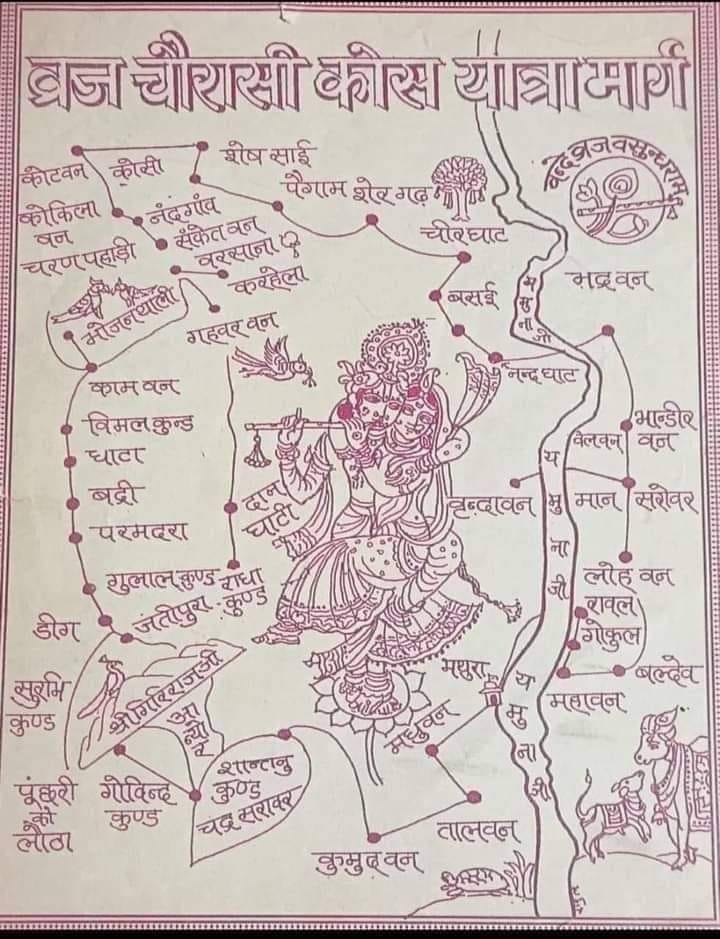
The Braj Chaurasi Kos Yatra - also known as the Braj 84 Kos Parikrama -is a 252 km spiritual circuit around Braj Bhoomi, the land of Shri Krishna. It includes all the major places linked to Krishna’s birth, childhood, youth and leelas: Mathura, Vrindavan, Gokul, Govardhan, Barsana, Nandgaon and dozens of forests (van), kunds and villages.Devotees say:Braj Chaurasi Kos Ki, Parikrama Ek DetLakh Chaurasi Yoni Ke, Sankat Hari Har LetMeaning: One complete parikrama of Braj Chaurasi Kos can free the soul from the suffering of 84 lakh yonis (birth cycles).This guide covers:* What “84 Kos” means and how many km it is* Scriptural & religious importance* Historical & cultural relevance* Why one should do it at least once in life* Best timing & seasons* Multiple ways of doing the Yatra (foot, vehicle, ashram, group packages)* Detailed itineraries (4N/5D, 7D & 10D) including stays and daily darshans* Who should do this Yatra, and how to prepare* Key places on the 84 Kos Brij Parikrama route1. What is Braj Chaurasi Kos Yatra?In ancient India, distances were measured in Kos, not kilometres.* 1 Kos ≈ 3.0–3.2 km* So 84 Kos ≈ 252–268.8 kmFor the Braj Parikrama, most traditional routes accept 252 km (84 Kos) as the sacred measure.This circuit:* Encircles Braj Bhoomi - the region where Krishna lived and performed his leelas.* Covers Mathura, Vrindavan, Govardhan, Radha Kund, Barsana, Nandgaon, Gokul, and many surrounding forests and kunds.* Traditionally is done as a full circumambulation, returning to the same starting point.The route passes through:* Approx. 1300 villages* ~1100 kunds/ponds* 36 forests (van)* Hills, ghats, teerth sthals and historic temples2. Religious & Spiritual Importance2.1 Story of Yashoda Maiya & Nand BabaIt is believed that when Yashoda Maiya and Nand Baba expressed their wish to go on a tirth yatra in old age, Shri Krishna - out of compassion - called all teerths to Braj Bhoomi itself.Therefore, doing the Braj 84 Kos Parikrama is considered equivalent to visiting many holy teerths across Bharat.2.2 Freedom from 84 Lakh YonisBrahmavaivarta and other Vaishnav traditions hold that:* The soul cycles through 84 lakh yonis (species).* Sincerely performing the Chaurasi Kos Parikrama in Braj can help one escape this cycle and move closer to liberation and Bhagavat-bhakti.2.3 All Teerths Reside in Braj During ChaturmasAnother belief: during Chaturmas (four holy months), all teerths reside in Braj. Hence:* Doing parikrama in this period = multiplied punya* Every step in Braj during the Yatra is considered a spiritual punya-karma2.4 Walking Through Krishna’s LeelasthaliThe greatest spiritual value is this:* You walk where Krishna walked* You bathe where Krishna bathed* You pray where Krishna played, danced, lifted Govardhan, and performed ras-leelaThe Yatra is an act of:* Smaran (remembrance)* Shraddha (faith)* Samarpan (surrender)3. Historical & Cultural ImportanceOver centuries:* Saints, acharyas and great devotees - Goswamis, Acharyas of various sampradayas - have walked this parikrama route.* Many temples, ashrams, kunds and ghats were established specifically because of parikrama traditions.* Local Braj culture - language, music, Raas, Holi of Barsana & Nandgaon, Annakut of Govardhan - are deeply tied to this Yatra.Even today:* Villagers along the route see serving yatris as seva to Krishna.* The Yatra keeps the oral history, stories and local bhakti traditions alive.4. Why One Should Do This Yatra At Least Once in Life* Total immersion in Krishna consciousnessYou don’t just visit one temple - you travel through an entire living leelasthali.* Powerful spiritual purificationThe belief that it reduces past karmas and destroys obstacles of 84 lakh yonis gives the Yatra deep spiritual weight.* Journey of inner transformationLiving simply for days - walking, singing bhajans, taking darshan - changes one’s priorities and calms the mind.* Shared family & community experienceDoing Yatra as a family or satsang group creates lifelong spiritual memories.* Connection to Sanatan heritageIt reconnects us to ancient Bharatiya pilgrimage traditions - barefoot parikrama, dharmshalas, satsang, prasad, seva.* Once-in-a-lifetime darshan of the entire BrajIn one structured yatra, you see Mathura, Vrindavan, Gokul, Govardhan, Radha Kund, Barsana, Nandgaon and many hidden spots people never see as casual tourists.5. Timing & Best Season for Braj 84 Kos Parikrama5.1 Traditional Parikrama Season* Chaitra Purnima to Vaishakh Purnima (March–April):The main traditional parikrama is often organised in this window.* Some groups also start after Vijaya Dashami / Dussehra, in October.* Doing the Yatra in Chaturmas is considered especially auspicious.5.2 Best Time Weather-wiseFor vehicle-based yatras, the most comfortable months are:* October to March – pleasant to mildly cold* Avoid peak May–June heat for elderly yatris if possible.5.3 During Major FestivalsSpiritually charged times:* Janmashtami (Krishna Janmotsav in Mathura–Vrindavan)* Radhashtami (special importance in Barsana & Radha Kund)* Holi in Barsana & Nandgaon* Kartik month (Kartik purnima, Govardhan Puja, etc.)Crowds are higher, but the bhava (devotional mood) is very intense.6. Distance, Structure & Route – 84 Kos in Detail* Total distance: ~252 km (84 Kos)* Regions touched:* Mathura & Vrindavan core* Border areas of Rajasthan & Haryana* Terrain: Mostly plains, village roads, fields, small hills around GovardhanAlong the way you encounter:* 36 forests (van) – like Talvan, Kumudvan, Bahulavan, Kamyavan, Bhandirvan, Lohvan etc.* 1100 kunds – Radha Kund, Shyam Kund, Kusum Sarovar, Pavan Sarovar, Vimal Kund, etc.* 1300 villages – each with its local Krishna-katha.7. Multiple Ways to Do the Yatra7.1 Full Barefoot Parikrama (Traditional)* Duration: ~30–40+ days* Mode: Mostly on foot, often barefoot* Stay: Ashrams, dharmshalas, village accommodations* Best for: Physically fit devotees with time, seeking deep tapasya7.2 Vehicle-Based Parikrama (5–10 Days)Uses AC cabs / Innova / Tempo Traveller / minibus:* 4N/5D Brij 84 Kos Yatra – compact but rich, ex-Mathura / ex-Delhi* 7D Yatra ex-Delhi – from Delhi NCR to Mathura & back* 10D/9N Ashram-based Yatra – deeper, more detailed coverage from VrindavanThis is ideal for:* Families, senior citizens, children* Those with limited leave* People who want to cover key places without extreme physical exertion7.3 Hybrid Yatra (Vehicle + Short Walks)* Travel longer stretches by vehicle* Walk shorter parikramas: e.g. Govardhan Parikrama by foot or e-rickshaw, small temple parikramas.* Good balance of tapasya + comfort.7.4 Ashram / Group Yatra (10 Days / 9 Nights)* Fixed date group departure (e.g. 08 March 2026)* Start & end in Vrindavan* Stay in ashrams / guest houses in Vrindavan* Sumo / Eco type vehicles for local travel* Inclusive of stay, meals, tea, water & transport8. Who Should Do This Yatra?Ideal For* Devotees of Radha–Krishna, Vaishnavs, Sanatanis* Families wanting a spiritual holiday with children* Senior citizens (especially in vehicle-based, slow-paced yatra)* Spiritual seekers needing a reset from urban life* Those who love temples, history, culture and bhakti musicWith Caution / Medical Advice* People with serious heart conditions, recent surgery, or severe mobility limitations* They can still do vehicle-based, short-walk versions with doctor’s clearance, wheelchair support and careful planning.9. Key Places on the 84 Kos Brij ParikramaA non-exhaustive but important list:9.1 Mathura* Shri Krishna Janmabhoomi & prison cell* Vishram Ghat – Yamuna snan & pujan* Dwarkadhish Temple* Keshav Dev Temple* Birla Temple* Dhruv Teela (Maholi)* Tapovan Gayatri Temple9.2 Vrindavan* Banke Bihari Temple* Nidhivan* Radha Raman Temple* Radha Vallabh Temple* Madan Mohan Temple* Shahji Temple* Rangnath Temple* ISKCON Temple* Prem Mandir (especially in the evening)* Pagal Baba Temple9.3 Govardhan, Radha Kund & Nearby* Govardhan Hill – Govardhan Parvat* Daan Ghati Temple* Manasi Ganga* Jatipura* Radha Kund & Shyam Kund* Kusum Sarovar* Chandra Sarovar* Punchhari Ka Lautha9.4 Barsana, Nandgaon, Kokilavan* Barsana (Radha Rani’s Village):* Shriji Temple (Radha Rani Temple)* Maan Mandir* Rangili Mahal* Gahvar Van* Mor Kutir, Radha Bagh, Mahaprabhu Ji ki Baithak* Nandgaon (Krishna’s village):* Nand Bhawan / Nand Yashoda Bhawan* Nandeshwar Mahadev* Kokilavan Dham (Shani Dev temple)* Gomti Kund* Kot Van* Garud Govind9.5 Gokul, Mahavan, Raman Reti* Gokul Nath Ji Temple* Chaurasi Khamba* Brahmand Ghat (Krishna eats mitti)* Raman Reti – sacred sands of Krishna’s play* Mahavan* Dauji Temple (Baldev)* Lohvan9.6 Important Vans & Other Spots* Talvan, Kumudvan, Bahulavan, Kamyavan* Bhandirvan – Radha–Krishna vivah sthali* Belvan, Matvan, Biharvan, Tapovan* Khelnavan, Viharvan* Akshay Vat* Katyayani Devi Temple* Cheer Ghat (original Cheer Haran spot)* Kaliya Naag Daman sthali* Many kunds – Pawan Sarovar, Vimal Kund, Kishori Kund, Jai Kund, Brahma Kund etc.10. Detailed Itineraries (with Stay & Yatra Flow)10.1 4 Nights / 5 Days – Compact Braj 84 Kos Yatra(Ex-Mathura / Ex-Delhi, vehicle-based)Stay pattern:* Night 1: Mathura / Vrindavan* Night 2: Mathura / Vrindavan* Night 3: Mathura / Vrindavan* Night 4: Mathura / VrindavanDay 1 – Mathura & Vrindavan Darshan* Arrival in Mathura (by train / road or via Delhi).* Check-in at hotel in Mathura / Vrindavan.* Yamuna pujan at Vishram Ghat* Darshan at Dwarkadhish Temple* Krishna Janmasthan Temple, Potra Kund, Keshav Dev Temple* Vrindavan:* Nidhivan* Banke Bihari Temple* Radha Vallabh Temple* Radha Raman* Shahji Temple* Rangnath Temple* Evening: Prem Mandir and nearby Durga Temple* Dinner & overnight stayDay 2 – Govardhan, Deeg & Dham Temples* Breakfast at hotel* Move to Govardhan:* Danghati Temple* Govardhan Parvat Puja* Manasi Ganga, Jatipura* Radha Kund & Shyam Kund* Kusum Sarovar, Chandra Sarovar* Punchhari Ka Lautha, Luk-Luk Dauji* Visit Deeg Palace (Deeg Mahal), Laxman Temple* Local dham-style temples of Badrinath, Kedarnath, Gango
India is a land where spirituality forms the heartbeat of everyday life. The subcontinent’s ancient landscapes are filled with sacred temples, holy rivers, and pilgrimage cities that have guided seekers for thousands of years. From the Himalayas to the southern seas, millions of devotees travel annually to honor deities, take ritual baths, participate in festivals, and attend mega-events like the Kumbh Mela — the largest spiritual gathering in human history.This detailed guide brings together:* Famous Hindu pilgrimage sites (tirths)* Major spiritual cities and their principal temples* Month-wise spiritual events of 2026* The complete overview of the 2027 Ardh Kumbh Mela (Haridwar)* 2027 Nashik Simhastha Kumbh Mela* 2028 Ujjain Simhastha Kumbh Mela* Historical significance, rituals, associated rivers, and key locationsThis comprehensive document serves as a timeless spiritual reference for pilgrims, scholars, planners, and travelers seeking to understand India’s sacred geography for the years 2026–2028.SECTION 1 — FAMOUS HINDU TIRTHS OF INDIAA tirtha is a sacred crossing point between the material and the divine. Hindus believe visiting a tirtha purifies the mind, destroys karmic baggage, and elevates the soul toward liberation. Below are the most revered pilgrimage circuits and shrines across India.1. Chaar Dham of UttarakhandThe Himalayan Chaar Dham is considered the pinnacle of spiritual travel.Temples:* Badrinath: Dedicated to Lord Vishnu, located on the banks of the Alaknanda River.* Kedarnath: One of the 12 Jyotirlingas, located at 3,583 meters in the Himalayas.* Gangotri: Origin of the holy River Ganga.* Yamunotri: Origin of the River Yamuna.Significance:A pilgrimage to these sites is believed to grant moksha (liberation).Best Season:May to October (closed during winter due to heavy snowfall).2. The 12 JyotirlingasThese shrines are the highest places of worship for Lord Shiva.The Jyotirlingas include:* Somnath (Gujarat)* Mallikarjuna (Srisailam)* Mahakaleshwar (Ujjain)* Omkareshwar (Madhya Pradesh)* Kedarnath (Uttarakhand)* Bhimashankar (Maharashtra)* Kashi Vishwanath (Varanasi)* Trimbakeshwar (Nashik)* Vaidyanath (Jharkhand)* Nageshwar (Dwarka, Gujarat)* Rameshwaram (Tamil Nadu)* Grishneshwar (Aurangabad)Each Jyotirlinga represents a divine manifestation of Shiva’s eternal cosmic light.3. Major Tirth CitiesVaranasiThe spiritual capital of India, known for its ghats, Kashi Vishwanath Temple, ancient culture, and cremation rituals at Manikarnika Ghat.HaridwarThe gateway to the Himalayas and site of the Kumbh Mela; famous for Har Ki Pauri and Ganga Aarti.RishikeshWorld’s yoga capital; home to the Ganga Aarti at Parmarth Niketan, numerous ashrams, and Himalayan foothills.Mathura–VrindavanBirthplace and play-land of Lord Krishna; home to Banke Bihari Temple, ISKCON, Krishna Janmabhoomi, and dozens of leela sites.AyodhyaBirthplace of Lord Rama; now home to the grand Ram Temple (Ayodhya Mandir).PrayagrajSacred Triveni Sangam (Ganga–Yamuna–Saraswati); central venue for Kumbh Mela.UjjainCity of Mahakal; a major centre of Shaivism and astrology.NashikAssociated with Lord Rama; home of Panchavati, Trimbakeshwar, and Simhastha Kumbh.DwarkaKingdom of Lord Krishna, home of Dwarkadhish Temple.PuriSacred abode of Lord Jagannath; famed for Rath Yatra.RameshwaramSouthernmost Dham, linked to Lord Rama’s bridge to Lanka.SECTION 2 — MAJOR SPIRITUAL CITIES AND IMPORTANT TEMPLESThis section offers detailed insights into the core pilgrimage cities of India and their temple clusters.1. Varanasi (Kashi)Key Temples:* Kashi Vishwanath Temple* Annapurna Devi Temple* Sankat Mochan Hanuman Temple* Durga Kund TempleSacred Ghats:* Dashashwamedh Ghat* Manikarnika Ghat* Assi GhatRitual Highlights:Boat rides at dawn, cremation rituals, Sanskrit learning centers, classical music heritage.2. HaridwarKey Temples:* Mansa Devi* Chandi Devi* Bharat Mata Mandir* Maya DeviSacred Ghats:* Har Ki Pauri* Brahmakund* Sapt Rishi GhatSignificance:A gateway to the Himalayas and the meeting point of millions during Kumbh Mela.3. RishikeshTemple sites include:* Parmarth Niketan* Triveni Ghat* Neelkanth MahadevRishikesh is also renowned for yoga, Ayurveda, Ganga Aarti, and spiritual training.4. Mathura–VrindavanKey Temples:* Krishna Janmabhoomi* Banke Bihari Temple* Prem Mandir* ISKCON Sri Krishna Balaram Mandir* Govind Dev TempleSpiritual Importance:The birthplace of Krishna, associated with Raas Leela, bhakti movement, and saint traditions.5. Nashik & TrimbakeshwarImportant Temples:* Trimbakeshwar Jyotirlinga* Kalaram Temple* Kapaleshwar MahadevSacred Sites:* Panchavati region* Godavari Ghats including Ramkund6. UjjainImportant Temples:* Mahakaleshwar Jyotirlinga* Harsiddhi Temple* Kal Bhairav* Chintaman Ganesh* MangalnathRitual Sites:* Ram Ghat* Shipra River GhatsUjjain is the city of timekeeping (Kaal), astrology, and Shaivite rituals.SECTION 3 — MAJOR SPIRITUAL EVENTS OF 2026 (WITH DATES)Below are the major religious events and festivals of the year 2026, with approximate dates based on the Hindu lunar calendar.January – February 2026: Magh Mela, Prayagraj* Duration: Entire months of January and February* Main Snan (Bathing) Days:* Paush Purnima* Mauni Amavasya* Basant PanchamiA mini-Kumbh-like gathering attracting millions to the Triveni Sangam.March 2026: Maha Shivaratri* Approximate Date: March 3, 2026* Major Celebration Sites:* Kashi* Ujjain* Somnath* Srisailam* Isha Yoga Center (night-long meditation festival)Night-long vigils, Shiva parikrama, fasting, chanting, and sacred dances.June 21, 2026: International Yoga DayCelebrated globally with major gatherings in:* Rishikesh* Mysuru* Varanasi* DelhiJuly 2026: Rath Yatra & Guru PurnimaPuri Rath Yatra* Approx. Date: July 13, 2026The journey of Lord Jagannath, Balabhadra, and Subhadra in massive chariots.Guru Purnima* Approx. Date: July 27, 2026Devotees honor gurus and spiritual masters.September 2026: Krishna Janmashtami* Approx. Date: September 4, 2026The midnight birth celebration of Krishna, especially in Mathura & Vrindavan.October 2026: Navratri* Tentative Dates: October 9–17, 2026Celebrations include garba, temple visits, and worship of the nine forms of Durga.November 2026: Kartik Purnima & Chhath PujaKartik Purnima* Date: November 24, 2026Bathing rituals on ghats of Varanasi, Haridwar, Pushkar.Chhath Puja* Dates: November 16–19, 2026Dedicated to the Sun God; observed with sunrise and sunset offerings.SECTION 4 — KUMBH & ARDH KUMBH MELA DETAILS (2027–2028)The Kumbh Mela is a spiritual phenomenon representing cycles of time, cosmic alignment, and the descent of divine nectar according to Hindu mythology. It rotates between four cities: Haridwar, Prayagraj, Nashik, and Ujjain.For the years 2027–2028, three major Kumbh-related events will occur.2027: Ardh Kumbh Mela – HaridwarType: Ardh Kumbh (occurs every 6 years)Location: Haridwar, UttarakhandRiver: GangaMain Period: January to April 2027 (precise dates to be announced)Key Ritual Sites:* Har Ki Pauri* Brahmakund* Sapt Rishi Ghat* Neel DharaTemple Visits During the Mela:* Mansa Devi* Chandi Devi* Maya Devi* Bharat Mata Temple* Daksha Mahadev Temple (Kankhal)Main Events:* Shahi Snan (Royal Bath) on astrologically significant dates* Akhara procession ceremonies* Mass Ganga Aartis* Yajnas, havans, recitations* Discourses by saints, gurus, and spiritual institutionsHaridwar during Kumbh becomes a city of tents, spiritual camps, meditation gatherings, and around-the-clock devotion.2027: Simhastha Kumbh Mela – Nashik & TrimbakeshwarType: Simhastha KumbhLocation: Nashik City and TrimbakeshwarRiver: GodavariMain Period: July to September 2027Key Ritual Spots:* Ramkund (Nashik)* Godavari Ghat* Kushavarta Kund (Trimbakeshwar)Temple Circuit:* Trimbakeshwar Jyotirlinga* Kalaram Temple* Kapaleshwar Mahadev* Godavari Ghat templesMain Rituals and Events:* Royal bathing dates* Akhara camps and spiritual debates* Naga Sadhu processions* Deep spiritual practices, meditations, and karmic cleansingsThe atmosphere is filled with chants, devotional music, and the energy of millions of pilgrims.2028: Simhastha Kumbh Mela – UjjainType: Simhastha KumbhLocation: Ujjain, Madhya PradeshRiver: ShipraMain Period: April to May 2028Key Ritual Ghats:* Ram Ghat (central venue)* Triveni Ghat* Dutt Akhara Ghat* Mangalnath regionImportant Temples During the Mela:* Mahakaleshwar Jyotirlinga* Harsiddhi Mata Temple* Kal Bhairav Temple* Chintaman Ganesh* Mangalnath TempleMain Events and Practices:* Shahi Snan (Royal Bath) in the Shipra* Spiritual congregations by saints and matha leaders* Yajnas, mantra chanting, and devotional singing* Jyotirlinga darshan, Rudrabhishekams, and pilgrimagesUjjain’s Kumbh is considered especially powerful due to its connection with the planet Jupiter’s position in Simha Rashi (Leo).Between 2026 and 2028, India will witness a rare alignment of spiritual events: from annual festivals and temple rituals to the immense Kumbh Melas in Haridwar, Nashik, and Ujjain. These years offer a rich opportunity for spiritual seekers to deepen their faith, experience ancient traditions, and witness humanity’s largest spiritual congregations.Whether one seeks inner peace, cultural exploration, devotion, or holistic wellness, the coming years provide extraordinary pathways to immerse in India’s sacred essence. This is a public episode. If you would like to discuss this with other subscribers or get access to bonus episodes, visit blog.dharmikvibes.com
The Hindu Calendar for 2026 (Vikram Samvat 2082–2083) follows the traditional lunar–solar Panchang system, where festivals are determined using the movement of both the Moon (tithis) and the Sun (transits/sankranti). Therefore, festivals such as Navratri, Diwali, Holi, Ekadashi, Purnima, Amavasya shift each year according to planetary motion.This comprehensive guide provides:* Month-wise Hindu festivals* Ekadashi, Purnima, Amavasya* Major pujas, jayantis, and spiritual observances* Sankranti (solar transits)* Significant regional celebrations* Auspicious days for spiritual practices and charityAll dates are based on India Standard Time (IST) and aligned with New Delhi Panchang.JANUARY 2026 – Pausha / MaghaJanuary begins with major spiritual days like Makar Sankranti, Pausha Purnima and Basant Panchami.* January 1, Thursday – Shukla PradoshAuspicious for Shiva puja during evening twilight.* January 3, Saturday – Pausha PurnimaSacred bathing day, charity, and Bhagavat Saptah reading.* January 6, Tuesday – Sankashti ChaturthiDedicated to Lord Ganesha. Fast is broken after moonrise.* January 14, Wednesday* Shattila Ekadashi* Pongal / Magh Bihu* Uttarayana Begins* Makar SankrantiSun enters Capricorn – very auspicious for giving sesame and jaggery.* January 16, Friday – Krishna PradoshEvening Shiva worship.* January 18, Sunday – Mauni AmavasyaHighly auspicious for silence (mauna), holy dips, and pitru tarpan.* January 23, Friday – Basant Panchami / Saraswati PujaExcellent for beginning new studies and creative arts.* January 25, Sunday – Ratha SaptamiA key Surya festival symbolizing the beginning of spring.* January 26, Monday – Bhishma Ashtami* January 29, Thursday – Jaya Ekadashi* January 30, Friday – Shukla PradoshFEBRUARY 2026 – Magha / PhalgunaFebruary is marked by the powerful Mahashivratri and Magha Purnima.* February 1, Sunday – Magha PurnimaImportant for Ganga Snan and charity.* February 5, Thursday – Sankashti Chaturthi* February 13, Friday – Vijaya Ekadashi & Kumbha SankrantiEkadashi for victory and removal of obstacles.* February 14, Saturday – Krishna Pradosh* February 15, Sunday – Mahashivratri / Monthly ShivratriOne of the holiest nights of Shiva worship; night vigil and four-prahar puja.* February 17, Tuesday – Phalguna AmavasyaOccurs near an Annular Solar Eclipse (timings per local Panchang).* February 27, Friday – Amalaki Ekadashi* February 28, Saturday – Shukla PradoshMARCH 2026 – Phalguna / ChaitraA vibrant month with Holi, Chaitra Navratri, and Hindu New Year.* March 3, Tuesday – Holika Dahan & Phalguna PurnimaAlso aligned with a Total Lunar Eclipse.* March 4, Wednesday – Holi (Rangwali Holi)* March 6, Friday – Sankashti Chaturthi* March 15, Sunday – Papmochani Ekadashi; Meena Sankranti* March 16, Monday – Krishna Pradosh* March 17, Tuesday – Monthly Shivratri* March 19, Thursday – Hindu New Year (Chaitra Shukla Pratipada)* Chaitra Navratri Begins* Gudi Padwa (Maharashtra)* Ugadi (South India)* Ghatasthapana* March 20, Friday – Cheti Chand (Jhulelal Jayanti)* March 24, Tuesday – Yamuna Chhath* March 26, Thursday – Rama Navami (Smarta)* March 27, Friday – Rama Navami (Vaishnav / ISKCON); Swaminarayan Jayanti* March 27 – Navratri Parana* March 29, Sunday – Kamada Ekadashi* March 30, Monday – Shukla PradoshAPRIL 2026 – Chaitra / VaishakhaApril brings Hanuman Jayanti, Akshaya Tritiya and Vishu/Mesha Sankranti.* April 2, Thursday – Hanuman Jayanti; Chaitra Purnima* April 5, Sunday – Sankashti Chaturthi* April 13, Monday – Varuthini Ekadashi* April 14, Tuesday – Mesha Sankranti (Solar New Year)Celebrated as Vishu, Puthandu, Baisakhi regionally.* April 15, Wednesday – Krishna Pradosh; Monthly Shivratri* April 17, Friday – Vaishakha Amavasya* April 19, Sunday – Akshaya TritiyaBest for auspicious beginnings, charity, and spiritual acts.* April 23 – Ganga Saptami* April 25 – Sita Navami* April 27, Monday – Mohini Ekadashi* April 28, Tuesday – Shukla Pradosh* April 30 – Narasimha JayantiMAY 2026 – Vaishakha / Jyeshtha (Adhik Maas)A spiritually rich month with Buddha Purnima and Ganga Dashami.* May 1, Friday – Vaishakha Purnima & Buddha Purnima* Early May – Narada Jayanti* May 5, Tuesday – Sankashti Chaturthi* May 13, Wednesday – Apara Ekadashi* May 14, Thursday – Krishna Pradosh* May 15, Friday – Monthly Shivratri; Vrishabha Sankranti* May 16, Saturday – Jyeshtha AmavasyaAlso:* Vat Savitri Vrat (in many regions)* Shani Jayanti* May 25 – Ganga Dashami* May 27, Wednesday – Padmini Ekadashi (Adhik Maas)* May 28, Thursday – Shukla Pradosh* May 31, Sunday – Adhik Jyeshtha PurnimaJUNE 2026 – Adhik Jyeshtha / Jyeshtha–Ashadha* June 3, Wednesday – Sankashti Chaturthi* June 11, Thursday – Parama Ekadashi* June 12, Friday – Krishna Pradosh* June 13, Saturday – Monthly Shivratri* June 15, Monday – Amavasya; Mithuna Sankranti* June 25, Thursday – Nirjala EkadashiMost powerful Ekadashi; fasting gives the merit of all Ekadashis.* June 27, Saturday – Shukla Pradosh* June 29, Monday – Jyeshtha Purnima; Vat Purnima (some regions)JULY 2026 – Ashadha / Shravan (Begins)Chaturmas begins this month.* July 3, Friday – Sankashti Chaturthi* July 10, Friday – Yogini Ekadashi* July 12, Sunday – Krishna Pradosh; Monthly Shivratri* July 14, Tuesday – Ashadha Amavasya* July 16, Thursday – Jagannath Rath Yatra; Karka Sankranti* July 25, Saturday – Devshayani EkadashiBeginning of Chaturmas — four sacred months of austerity and devotion.* July 26, Sunday – Shukla Pradosh* July 29, Wednesday – Guru Purnima; Ashadha PurnimaReverence to the Guru, extremely auspicious for initiation and spiritual learning.AUGUST 2026 – Shravan / BhadrapadaOne of the holiest months for Shiva devotees.* Shravan Somvar (Every Monday) – Shiva Abhishek* August 2, Sunday – Sankashti Chaturthi* August 9, Sunday – Kamika Ekadashi* August 10, Monday – Krishna Pradosh* August 11, Tuesday – Monthly Shivratri* August 12, Wednesday – Shravan AmavasyaAlso aligned with a Total Solar Eclipse (check local timings).* August 15, Saturday – Hariyali Teej* August 17, Monday – Nag Panchami; Simha Sankranti* August 23, Sunday – Shravan Putrada Ekadashi* August 25, Tuesday – Shukla Pradosh* August 26, Wednesday – Onam / Thiruvonam* August 28, Friday – Raksha Bandhan; Shravan PurnimaAlso Gayatri Jayanti; Partial Lunar Eclipse alignment.* August 31, Monday – Sankashti Chaturthi; Kajari TeejSEPTEMBER 2026 – Bhadrapada / AshwinMajor festivals include Janmashtami, Ganesh Chaturthi and start of Pitru Paksha.* September 4, Friday – Krishna JanmashtamiCelebrated with midnight worship of Lord Krishna.* September 7, Monday – Aja Ekadashi* September 8, Tuesday – Krishna Pradosh* September 9, Wednesday – Monthly Shivratri* September 11, Friday – Bhadrapada Amavasya* September 14, Monday – Ganesh Chaturthi; Hartalika Teej* September 15–16 – Balarama Jayanti; Rishi Panchami (regional)* September 17, Thursday – Kanya Sankranti; Vishwakarma Puja* September 19, Saturday – Radha Ashtami* September 22, Tuesday – Parsva (Parivartini) Ekadashi* September 24, Thursday – Shukla Pradosh* September 25, Friday – Anant Chaturdashi; Ganesh Visarjan* September 26, Saturday – Bhadrapada Purnima* September 27, Sunday – Pitru Paksha Begins* September 29, Tuesday – Sankashti ChaturthiOCTOBER 2026 – Ashwin / KartikaThe month of Shardiya Navratri and Dussehra.* October 6, Tuesday – Indira Ekadashi* October 8, Thursday – Krishna Pradosh; Monthly Shivratri* October 10, Saturday – Ashwin Amavasya (Sarva Pitru Amavasya)Culmination of Pitru Paksha.* October 11, Sunday – Sharad Navratri Begins; Ghatasthapana* October 16, Friday – Kalparambha (Durga Puja rituals begin)* October 17, Saturday – Navpatrika Puja; Tula Sankranti* October 19, Monday – Durga Maha Ashtami & Maha Navami* October 20, Tuesday – Vijayadashami (Dussehra); Navratri Parana* October 21, Wednesday – Durga Visarjan* October 22, Thursday – Papankusha Ekadashi* October 23, Friday – Shukla Pradosh* October 25/26 – Kojagari Puja; Sharad Purnima* October 29, Thursday – Sankashti Chaturthi; Karwa ChauthNOVEMBER 2026 – Kartika / MargashirshaThe month of Diwali and Dev Uthani Ekadashi.* November 5, Thursday – Rama Ekadashi* November 6, Friday – Dhanteras; Krishna PradoshCelebration of Dhanvantari and the beginning of Deepotsav.* November 7, Saturday – Monthly Shivratri* November 8, Sunday – Diwali; Narak Chaturdashi* November 9, Monday – Kartika Amavasya* November 10, Tuesday – Govardhan Puja / Annakoot* November 11, Wednesday – Bhai Dooj* November 15, Sunday – Chhath Puja (Surya Shashthi)* November 16, Monday – Vrischika Sankranti* November 20, Friday – Devutthana EkadashiEnd of Chaturmas; auspicious for weddings.* November 21 – Tulsi Vivah* November 22, Sunday – Shukla Pradosh* November 24, Tuesday – Kartika Purnima; Dev Deepawali* November 27, Friday – Sankashti ChaturthiDECEMBER 2026 – Margashirsha / PaushaA month filled with moksha-oriented days.* December 4, Friday – Utpanna Ekadashi* December 6, Sunday – Krishna Pradosh* December 7, Monday – Monthly Shivratri* December 8, Tuesday – Margashirsha Amavasya* December 14 – Vivah PanchamiCelebration of Sri Ram–Sita divine marriage.* December 16, Wednesday – Dhanu Sankranti* December 20, Sunday – Mokshada Ekadashi & Gita Jayanti* December 21, Monday – Shukla Pradosh* December 23, Wednesday – Margashirsha Purnima; Dattatreya Jayanti* December 26, Saturday – Sankashti ChaturthiThe Hindu Calendar 2026 is rich with sacred observances, fasts, festivals, and planetary alignments. From Mahashivratri to Navratri, from Chaturmas to Diwali, the year provides abundant opportunities for devotion, spiritual growth, auspicious beginnings, rituals, and charity. This is a public episode. If you would like to discuss this with other subscribers or get access to bonus episodes, visit blog.dharmikvibes.com

December 2025 is a spiritually significant month in the Hindu calendar, marked by an extensive list of festivals, vrat observances, auspicious yogas, and ritual days across regional traditions. The month spans the transition from Margashirsha Shukla Paksha to Pausha Shukla Paksha, offering devotees numerous opportunities for worship, fasting, charity, and prayer.This detailed guide brings together all major Hindu festivals, vrats, pujas, sankrantis, lunar observances, and cultural events falling in December 2025, based on Drik Panchang and traditional Hindu almanacs. It also covers additional relevant observances from Jain, Tamil, Kannada, Malayalam, and Vaishnava traditions where applicable.Hindu Festivals and Vrats in December 2025December 1, 2025 – MondayGita Jayanti* Celebrates the divine teaching of the Bhagavad Gita delivered by Lord Krishna to Arjuna.* Observed on Margashirsha Shukla Ekadashi.Guruvayur Ekadashi (Solar)* Important observance at the Guruvayur Temple in Kerala.* Devotees fast and offer prayers to Lord Krishna.Mokshada Ekadashi* A highly auspicious Ekadashi believed to grant liberation (moksha).* Ideal for Vishnu Puja and Gita Path.World AIDS Day* International observance (non-religious but widely marked).December 2, 2025 – TuesdayMatsya Dwadashi* Dedicated to Shri Vishnu’s Matsya Avatar.* Fasting and prayers are performed for protection from calamities.Bhauma Pradosh Vrat* Pradosh falling on a Tuesday, dedicated to Lord Shiva.* Observed during the evening twilight.December 3, 2025 – WednesdayHanuman Jayanti (Kannada Tradition)* Celebrated on Margashirsha Shukla Trayodashi in Karnataka.* Devotees perform Hanuman Chalisa, oil offerings, and temple visits.December 4, 2025 – ThursdayDattatreya Jayanti* Appearance day of Lord Dattatreya, believed to be the combined incarnation of Brahma, Vishnu, and Shiva.* Observed with meditation, bhajans, and Dattatreya Sahasranama.Annapurna Jayanti* Celebrates Goddess Annapurna, the giver of nourishment and food.* Annadanam (food donation) is highly meritorious.Bhairavi Jayanti* Dedicated to Goddess Bhairavi, one of the Mahavidyas.Margashirsha Purnima & Margashirsha Purnima Vrat* Full moon day in the holy month of Margashirsha.* Ideal for Satyanarayan Puja, charity, and Ganga Snan.Karthigai Deepam (Solar)* Major Tamil festival celebrated with oil lamps and Murugan worship.Anvadhan* Vedic ritual of replenishing the sacrificial fire.December 5, 2025 – FridayPausha Month Begins (North India)* Start of Pausha Krishna Paksha.Rohini Vrat (Jain)* Observed by Jain women for family well-being.* Dedicated to Goddess Rohini.Ishti* A Vedic fire ritual performed during specific lunar alignments.December 7, 2025 – SundayAkhuratha Sankashti Chaturthi* Sankashti falling in Pausha Krishna Chaturthi.* Devotees fast for the blessings of Lord Ganesha.December 11, 2025 – ThursdayKalashtami* Monthly Ashtami dedicated to Lord Kalabhairava.* Fasting and night vigil are common.Masik Krishna Janmashtami* Monthly observance honoring Lord Krishna’s birth.* Devotees perform Krishna bhajans and milk offerings.December 15, 2025 – MondaySaphala Ekadashi* Fasting today is believed to bring success, prosperity, and spiritual upliftment.* A popular Ekadashi among householders.December 16, 2025 – TuesdayKrishna Matsya Dwadashi* Observance connected to Matsya avatar worship.Dhanu Sankranti* Sun enters Dhanu Rashi (Sagittarius).* Start of the auspicious Dhanurmasa period in many traditions.* Considered excellent for Vishnu worship, especially in South India.December 17, 2025 – WednesdayBudha Pradosh Vrat* Pradosh falling on Wednesday.* Devotees perform Shiva Abhishekam during dusk.December 18, 2025 – ThursdayMasik Shivaratri* Monthly Shivaratri occurring on Krishna Chaturdashi.* Night-long worship of Shiva with Rudra Abhishek.December 19, 2025 – FridayHanuman Jayanti (Tamil tradition)* Observed in Tamil Nadu on Amavasya.Darsha Amavasya* New moon observance.* Ideal for Pitru Tarpan and meditation.Anvadhan* Another occasion for replenishing Vedic sacrificial fire.Pausha Amavasya / Magha Krishna Amavasya* Highly auspicious for rituals dedicated to ancestors.* Considered spiritually potent for deep charity and mantra chanting.December 20, 2025 – SaturdayIshti* Performed during Amavasya rituals.December 21, 2025 – SundayShortest Day of the Year (Winter Solstice)* Marks the transition into Uttarayana energy buildup.* Astronomically significant and spiritually potent.Chandra Darshan* First visibility of the waxing moon.* Considered auspicious for new beginnings.December 24, 2025 – WednesdayVighneshvara Chaturthi* Monthly Vinayaka Chaturthi.* Fasting and Ganesha mantras ensure removal of obstacles.December 25, 2025 – ThursdaySkanda Sashti* Dedicated to Lord Murugan or Kartikeya.* Observed with fasting and temple processions.December 27, 2025 – SaturdayGuru Gobind Singh Jayanti* Celebrates the birth anniversary of the 10th Sikh Guru.Mandala Pooja (Malayalam tradition)* Marks the end of the 41-day vratham for Sabarimala pilgrims.December 28, 2025 – SundayBanada Ashtami* Regional observance significant in certain Indian states.Masik Durgashtami* Monthly observance of Durga Ashtami.* Devotees perform Durga Saptashati readings.December 30, 2025 – TuesdayTailang Swami Jayanti* Birth anniversary of the yogic saint Tailang Swami.Pausha Putrada Ekadashi* Main Ekadashi for progeny blessings.* Devotees fast for the wellbeing of children and family harmony.Dharma Savarni Manvadi* Beginning of the Dharma-Savarni Manvantara cycle (scriptural reference).December 31, 2025 – WednesdayKurma Dwadashi* Dedicated to Vishnu’s Kurma (Tortoise) avatar.Masik Karthigai* Monthly Karthigai festival, connected with Murugan worship.* Celebrated mainly in Tamil Nadu.Vaikuntha Ekadashi (Solar)* Highly significant Ekadashi in Vaishnava tradition.* The Vaikuntha Dwaram is opened in temples such as Tirupati, Srirangam, and others.* Ideal for complete fasting and Vishnu Sahasranama chanting.Gauna Pausha Putrada Ekadashi* Observed when Ekadashi tithi extends based on regional rules.Vaishnava Pausha Putrada Ekadashi* Observed by Vaishnavites as per their sect’s calendar rules.Important Lunar Days in December 2025Purnima* Begins 4 December at 8:38 AM* Ends 5 December at 4:44 AM* Extremely auspicious for Satyanarayan Puja.Amavasya* Begins 19 December at 4:59 AM* Ends 20 December at 7:13 AM* Ideal for Pitru rituals and introspection.Additional Observances, Auspicious Yogas & NotesPausha Month Significance* Known for spiritual discipline, charity, and Vishnu worship.* Dhanurmasa rituals commence.Pradosh Vrat Days* December 2 (Bhauma Pradosh)* December 17 (Budha Pradosh)Sankashti / Vinayaka Chaturthi* December 7 and 24Auspicious for Charity and Puja* Full moon (Dec 4)* First moonlight (Dec 21)* Ekadashi days (Dec 1, Dec 15, Dec 30/31)Important Regional Festivals* Karthigai Deepam (Tamil) – Dec 4* Mandala Puja (Kerala) – Dec 27* Skanda Sashti – Dec 25* Kannada & Tamil Hanuman Jayantis – Dec 3 and Dec 19Spiritual Places, Temples, and Tirthas to Visit in DecemberDecember falls during Hemant Ritu, a spiritually powerful period with cool, stable weather—ideal for pilgrimages, teerth yatras, temple visits, meditation retreats, and austerity.1. Vishnu Temples (Highly Recommended in Pausha & Dhanurmasam)December includes Dhanurmasam, making Vishnu temples extremely auspicious.Best Vishnu temples to visit:* Tirumala Tirupati Balaji, Andhra PradeshIdeal during Dhanurmasam; early morning suprabhatam is considered extremely meritorious.* Shri Ranganathaswamy Temple, Srirangam, Tamil NaduThe Vaikunta Ekadashi celebrations here are world famous.* Padmanabhaswamy Temple, Thiruvananthapuram, KeralaBeautiful winter climate; ideal for Vishnu Sahasranama chanting.* Dwarkadhish Temple, Dwarka, GujaratPerfect for Gita Jayanti pilgrimages during early December.* Badrinath Temple (Closes in winter)However, visiting Joshimath (Winter Seat of Badrinath) is recommended in December.2. Krishna & Gita-related Tirthas (Perfect for Gita Jayanti)Kurukshetra, Haryana* Brahma Sarovar* Jyotisar (where the Gita was spoken)Massive celebrations on Gita Jayanti day (Dec 1).Mathura–Vrindavan, Uttar Pradesh* Banke Bihari Temple* ISKCON Vrindavan* Dwarkadhish TempleIdeal for Krishna bhakti, winter parikramas, and Gita recitations.3. Shiva Temples (Good for Pradosh & Masik Shivaratri)December has multiple Pradosh Vrat & Masik Shivaratri.Best Shiva temples to visit:* Kashi Vishwanath Temple, VaranasiVibrant energy during Margashirsha Purnima and winter rituals.* Mahakaleshwar Jyotirlinga, UjjainExtremely powerful for Pradosh Vrat and Kalashtami.* Somnath Temple, GujaratBeautiful sea view and peaceful winter weather.* Omkareshwar, Madhya PradeshGood for meditation and Narmada parikrama in December.4. Hanuman Temples (During both regional Hanuman Jayantis)* Hampi (Anjanadri Hill) – Birthplace of Hanuman* Salasar Balaji, Rajasthan* Mahavir Mandir, Patna, Bihar* Hanuman Garhi, Ayodhya5. Ganesha Temples (For Sankashti & Vinayaka Chaturthi)* Siddhivinayak Temple, Mumbai* Ashtavinayak Circuit, Maharashtra* Ganpatipule Temple, Maharashtra6. Devi Temples (For Annapurna Jayanti, Durgashtami, Bhairavi Jayanti)* Annapurna Temple, Kashi – Best during Purnima* Vaishno Devi, Jammu – Ideal for winter darshan* Kamakhya Temple, Assam* Jwala Ji, Kangra (HP)* Bhairavi Temple, Chintpurni & Kolkata regions7. Dattatreya & Bhairav Temples (For Dattatreya Jayanti & Kalashtami)* Ganagapur Dattatreya Peeth, Karnataka* Pithapuram Datta Temple, Andhra Pradesh* Kal Bhairav Temple, Ujjain* Kalabhairava Temple, Varanasi8. Sacred Tirthas Best in WinterWinter makes many tirthas ideal and comfortable for pilgrimage.Recommended tirthas in December:* Rameshwaram, Tamil Nadu* Haridwar & Rishikesh, Uttarakhand* Narmada Parikrama (any segment)* Prayagraj Sangam for spiritual baths* Pushkar, Rajasthan (pleasant climate)Dosha Remedies Effective in DecemberDecember is highly favorable for graha shanti, japa, and cleansing sadhan
2026 arrives carrying a very different vibration from the last 2–3 years.Where 2024 was chaotic and 2025 was transitional, 2026 is stabilizing, grounding, and purposeful.Think of 2026 like stepping from a dimly lit hallway into a room where the lights gradually turn on - revealing clarity that was missing for a long time.Astrological Energies Guiding 2026: Jupiter: The Planet of Growth & ExpansionIn 2026, Jupiter plays a major role by:* opening new opportunities,* bringing career clarity,* expanding finances,* supporting travel, learning, and spiritual awakening.For many signs, Jupiter brings long-awaited breakthroughs.Venus: The Planet of Love, Harmony & BeautyVenus blesses:* relationships,* family matters,* emotional balance,* marriage,* and self-worth.Homes become calmer, bonds strengthen, old pain dissolves. Saturn: The Planet of Lessons & DisciplineSaturn continues to test patience, but unlike previous years,its lessons now lead to maturity, stability, and inner strength rather than struggle.Saturn’s message in 2026 is:“You will grow, but you will grow with discipline.”Eclipses (Solar & Lunar)The eclipses of 2026 awaken:* hidden truths,* buried emotions,* sudden realizations,* liberation from old patterns.Many people change life direction completely - relationships, career paths, lifestyle habits. Overall Theme of 2026 For Everyone“Release the old. Anchor the new. Rise with clarity.”* Questions left unresolved in 2025 finally get answers.* Emotional heaviness from the past 2 years begins to lift.* Opportunities that were blocked suddenly open.* People step out of confusion and into alignment.* Stability returns - mentally, financially, emotionally.* New beginnings take shape.Now, Let’s Go Sign by Sign - Your Deepest 2026 Astrology BreakdownIn this section, we dive into each zodiac sign with crystal-clear, in-depth guidance for the year ahead. Every sign will receive a complete 2026 roadmap covering its core yearly theme, career shifts, financial flow, love and relationships, family dynamics, health patterns, spiritual growth, and the most favorable months to act, evolve, and manifest. This is your all-round celestial blueprint for navigating 2026 with confidence, clarity, and alignment.ARIES (March 21 – April 19)Theme of 2026: “Rebirth through Patience and Realignment.”Aries steps into 2026 with a sense of emotional fatigue from the previous year. You may feel like you’re unsure about your next direction, or that certain parts of your life- career, relationships, or even your inner world- were left incomplete or unsettled in 2025.This feeling is not a sign of weakness; it is the final stage before a powerful transformation.2026 is a year where Aries slowly but steadily realigns with purpose, truth, and emotional clarity.The first half is introspective and slow-moving, but the second half becomes decisively powerful and rewarding.Love & RelationshipsThe emotional tone of the year begins somewhat heavy.In the early months of 2026, buried feelings come to the surface. Situations that you avoided or tolerated in the past now demand your attention.The first half of the year brings:* unresolved emotional wounds resurfacing,* family tensions or responsibilities,* occasional distance or misunderstandings in romantic relationships.This is not meant to break you; it is meant to clear the emotional space for healthier connections.After July, the energy shifts beautifully.From mid-year onward:* Single Aries attract a grounded and emotionally stable partner. This may come through work, mutual friends, or during a travel period.* Couples who were struggling find easier communication, renewed affection, and a sense of partnership rather than conflict.* Married Aries experience a calmer, more supportive home environment, and many will resolve long-standing issues that once felt impossible to fix.The second half of 2026 is far more romantic, peaceful, and emotionally fulfilling than the first.CareerProfessionally, the year has two distinct phases.From January to May, the energy is slow:* tasks feel heavier,* progress may be delayed,* opportunities can appear unclear or inconsistent,* authority figures may seem demanding or unresponsive, and* you might feel like you’re putting in more effort than the results show.This is not a punishment.It is Saturn’s way of teaching patience, structure, and long-term strength.Once June arrives, everything changes direction.Between June and December:* many Aries will receive a new job offer,* promotions become more likely,* a project may bring unexpected recognition,* leadership roles or responsibility increases,* and your confidence and ambition return stronger than ever.The second half of 2026 is the time when Aries rises professionally and begins a new chapter with clarity and momentum.FinancesThe financial pattern of the year mirrors the emotional one.In the first half:* money may come and go quickly,* sudden expenses or obligations may arise,* savings may feel slower or harder to maintain.This is temporary.In the second half:* steady income flow returns,* financial stability improves,* long-term decisions and investments become safer,* and many Aries find better financial planning habits.By the end of 2026, you feel more secure and in control of money matters than you have in years.HealthThe early months of the year require attention.From January to March:* energy levels may feel lower,* sleep may be irregular,* stress may build up more easily,* mental overthinking or emotional heaviness may surface.This is a period where your body asks for rest, grounding, and emotional detox.Focusing on:* mental clarity,* stress reduction techniques,* proper sleep routines,* and light physical activitywill make a significant difference.By mid-year, your vitality returns and continues to strengthen as emotional weight clears.Best Months of 2026September, October, DecemberThese months bring clarity, confidence, new beginnings, breakthroughs, and emotional ease.Challenging Months of 2026January, February, March, AprilThese months bring introspection, slower progress, emotional lessons, and opportunities for healing that may initially feel heavy but ultimately transform you.TAURUS (April 20 – May 20)Theme of 2026: “Expanding Comfort Zones and Building Strong Foundations.”2026 is a year of steady but meaningful growth for Taurus.You begin the year wanting more stability, more clarity, and more control over your life - especially in areas related to career, home, and personal relationships.The universe responds by gently pushing you out of your comfort zone, but in ways that ultimately strengthen your foundation.This is not a disruptive year; it is a year of slow, consistent forward movement that leads to long-lasting results.The lessons of 2026 revolve around:* making practical decisions,* embracing new responsibilities,* improving emotional maturity,* and learning to trust your own judgment more deeply.Love & RelationshipsRelationships in 2026 are not dramatic but deeply meaningful.The earlier months may highlight areas where communication has been lacking or where emotional needs have gone unexpressed. You may notice:* moments of distance,* occasional misunderstandings,* or feeling unsure about someone’s intentions.These moments are invitations to be honest—with yourself and with others.After July, emotional clarity arrives.The second half of 2026 brings:* stronger connections with loved ones,* improved communication,* a deeper sense of trust and emotional bonding.For singles, a meaningful romantic opportunity appears mid-year or later—someone stable, reliable, emotionally grounded, and possibly connected through career, networking, or family circles.Married or committed Taurus natives will experience greater peace and stability, especially after addressing issues that had been quietly building in previous years.CareerProfessionally, 2026 is a productive and transformative year for Taurus.You are likely to take on:* new leadership responsibilities,* new tasks or projects that help you stand out,* or even new job opportunities that align better with your long-term goals.The first half of the year may involve:* adjustments in your work environment,* dealing with changing roles or team structures,* and learning to assert your boundaries.But by mid-year, your hard work begins paying off.From June onward:* recognition increases,* senior figures notice your reliability,* growth opportunities become more visible,* and some Taurus natives may even shift career direction if they feel undervalued where they are.2026 rewards consistency, patience, and steady effort - all qualities Taurus naturally embodies.FinancesYour financial life remains stable and gradually improves throughout the year.In the first half:* expenses might feel routine and predictable,* income remains steady,* savings might grow slowly.But there is no major financial disruption.In the second half:* better investment opportunities appear,* savings increase,* money matters feel more secure and predictable.This is an excellent year for:* property planning,* long-term investments,* insurance decisions,* and financial restructuring.Taurus, known for practical financial instincts, feels more in control by the end of 2026.HealthYour health remains moderately steady throughout the year, but some areas need attention.At times, especially in the first half, you may experience:* neck or shoulder tension,* throat or voice issues,* emotional fatigue from overthinking or taking on too many responsibilities.Balancing your workload and prioritizing rest will be essential.By mid-year and onward, your energy stabilizes and your sense of physical and emotional well-being strengthens significantly.Best Months of 2026July, September, NovemberThese months bring clarity in relationships, stability in finances, and greater confidence in your life choices.Months with Mixed EnergiesMarch, April, MayThese months may require more communication effort, emotional patience
India’s spiritual landscape is vast and diverse, but some temples stand out not just for their sanctity, but for their astonishing geographical settings. These are places where the natural world and the divine seem inseparable - shrines perched on Himalayan ridges, sanctums that sink under the tide, and temples hidden so deeply in forests that they survived unseen for centuries.Below is an expanded, in-depth look at five of India’s most unique temple locations, enriched with history, insights, rituals, geography, and reasons to visit.1. Tungnath Temple, UttarakhandThe Highest Shiva Temple on Earth (3,680 m)Why This Location Is ExtraordinaryTungnath sits high above the clouds in the Garhwal Himalayas. The temple is located on a ridge overlooking some of India’s grandest peaks such as Chaukhamba, Neelkanth, and Kedarnath. Because of its elevation, the air is thin, the silence is profound, and the temple feels suspended between earth and sky.Mythology and Historical BackgroundTungnath is one of the five Panch Kedar temples. According to the Mahabharata, the Pandavas sought Shiva’s forgiveness after the Kurukshetra war. Shiva avoided them by taking the form of a bull and diving underground. At Tungnath, the bull’s arms surfaced, and a temple was built to mark this divine emergence.Scholars date the temple to around 1,000 years old, likely constructed under the Katyuri or Pandava lineage.Rituals and Pujas* Rudrabhishek with ice-cold Himalayan spring water* Panchamrit puja by local Brahmins* Daily aarti in the small stone sanctum* In winter, when heavy snow blocks the region, the deity is shifted to Mukunath villageThe Journey* Trek distance: Around 3.5 km from Chopta* Difficulty: Moderate, but altitude requires pace control* Best time to visit: April to November* Avoid winter due to snow, ice, and closed temple doorsWhy You Should VisitVisitors often describe Tungnath as one of the most peaceful places on earth. The views are majestic, the spiritual energy is intense, and the sense of accomplishment after the trek adds to its sanctity. Sunrise from Tungnath is considered one of the most spectacular in the Himalayas.2. Umananda Temple, AssamA Temple on the World’s Smallest Inhabited River IslandWhy This Location Is ExtraordinaryUmananda is located on Peacock Island in the middle of the mighty Brahmaputra River. The island is small enough to walk around in minutes, yet it contains centuries of devotion and folklore. Surrounded by the wide Brahmaputra, the temple appears almost like a floating shrine.Mythology and Cultural SignificanceThe Kalika Purana recounts that Shiva created the hill on the island for meditation. When Kamadeva disturbed him, Shiva’s anger reduced Kamadeva to ashes, giving rise to the name Bhasmachal. Over time, the island and its temple became important parts of Assam’s Shaivite traditions.Rituals and Festivals* Shivratri draws large crowds from across Assam* Traditional Assamese style worship* Offerings include milk, flowers, water, and bel leaves* Evening aarti on the river-facing steps creates a serene ambianceHow to Reach* Ferry rides operate from Guwahati’s Kachari Ghat (approximately 10 minutes)* A cable car also connects the city to the island, offering panoramic viewsWhy You Should VisitUmananda offers river-side spirituality, scenic views, and a peaceful island environment. It is ideal for those who love combining culture, nature, and simple but profound experiences.3. Amarnath Cave Temple, Jammu and KashmirHome of the Naturally Formed Ice ShivlingWhy This Location Is ExtraordinaryAmarnath is one of the most revered pilgrimages in India. The cave sits at an altitude of around 3,888 m, surrounded by snow-covered mountains. Inside the cave, a naturally formed ice shivling appears each year as water droplets freeze in layers. This natural formation is considered a divine manifestation of Shiva as Baba Barfani.Mythology of the Amar KathaLegend says Shiva narrated the secret of immortality to Parvati inside this cave. To ensure no living being overheard the sacred story, he left behind all his symbols and companions, including Nandi and even the Moon, before stepping into the cave.The Amarnath YatraThere are two main routes:* Pahalgam route - longer, traditional, scenic* Baltal route - shorter but steeper, suitable for fit pilgrimsThe trek passes through glaciers, mountain passes, narrow pathways, and breathtaking valleys. Weather can change suddenly, making the yatra both challenging and spiritually uplifting.Rituals* Darshan of the ice shivling* Offering of prasad distributed near the cave* Continuous chanting of “Bum Bum Bhole” by pilgrims and sadhusWhy You Should VisitAmarnath is more than a journey; it is a test of faith, resilience, and devotion. The dramatic Himalayan landscape combined with the spiritual importance of the cave makes this yatra one of the most transformative experiences for Hindu devotees.4. Dholkal Ganesh Temple, ChhattisgarhA 1,100-Year-Old Ganesha Hidden Deep in the ForestWhy This Location Is ExtraordinaryLocated atop a 3,000-foot hill in Dantewada, this site remained unknown to the modern world until 2012. It is not a temple structure but a solitary 1,100-year-old stone idol of Lord Ganesha placed on a natural rock platform high above dense forests.Historical ContextHistorians link the idol to the Naga kings who ruled the region around the 9th to 10th century. The carving style matches ancient tribal-influenced Ganesha sculptures of central India.The idol mysteriously toppled off the cliff in 2017 but was later restored using a helicopter operation.The Trek* A forest trail passing through tribal settlements* Moderate difficulty, requiring around 2 to 3 hours* Best during early morning or cooler monthsThe serene environment and lack of commercial activity make the journey meditative.Ritual Practices* Local tribes perform puja with turmeric, vermilion, and flowers* Special rituals during Ganesh Chaturthi* Priests often narrate tribal legends and tales associated with the idolWhy You Should VisitDholkal offers a rare combination of archaeology, mystery, spirituality, and natural beauty. It is ideal for those seeking offbeat, raw, and unexplored pilgrimage sites far from city crowds.5. Stambheshwar Mahadev Temple, GujaratThe Temple That Disappears Under High TideWhy This Location Is ExtraordinaryLocated in Kavi Kamboi near Vadodara, Stambheshwar Mahadev is one of the country’s most unique tidal temples. During low tide, the shrine is fully accessible. But when the tide rises, seawater gradually engulfs the shivling and the entire temple structure. The appearance and disappearance of the temple symbolizes cycles of creation and dissolution.Mythological LinksThe temple is said to have been built by the sons of Sage Kashyapa after Shiva destroyed the demon Tarkasura. It stands as a reminder of Shiva’s power and protection.Rituals and Experiences* Devotees schedule darshan according to tide timings* Aarti performed during receding tide is a major attraction* The sight of waves gently covering the shrine is deeply symbolic and meditativeTravel Details* Best visited in early morning or late afternoon low tide* Tide timings are available locally and online* The coastal landscape is serene and largely untouchedWhy You Should VisitThis is one of the rare places where nature itself performs a daily ritual. Watching the sea reclaim the temple at high tide is a spiritual and visual experience unlike any other in India.These five temples demonstrate the extraordinary way India blends nature with spirituality. From plunging Himalayan valleys to floating river islands, from secret forest hilltops to tidal shorelines, each of these sacred places offers more than a visit - they offer a life-changing experience.Whether you are a pilgrim, a traveler, a historian, or a seeker of beauty, these temples promise a journey into India’s soul. This is a public episode. If you would like to discuss this with other subscribers or get access to bonus episodes, visit blog.dharmikvibes.com
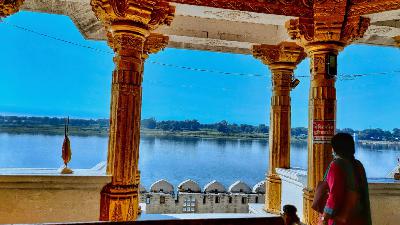
Set on the serene banks of the Narmada, Maheshwar is one of those rare towns where history, craft, faith, and slow river life blend into a single, unforgettable experience. You see fort walls rising straight from the water, hear the soft thunder of looms from inside old houses, and watch evening lamps flicker to life on the ghats - all in a single day.If you’ve been looking for a place that feels both deeply spiritual and beautifully handcrafted, Maheshwar deserves a top spot on your list.Where Is Maheshwar & Why Is It Special?Maheshwar is a small heritage town in Madhya Pradesh, about 90–95 km from Indore, on the northern bank of the Narmada River.It is known for:* The 18th-century Ahilya (Maheshwar) Fort and its ghats* A close association with Queen Ahilyabai Holkar, one of India’s most admired women rulers* Maheshwari handloom weaving, especially lightweight silk-cotton sarees* A cluster of ancient temples and a calming, river-centric way of lifeAncient texts refer to Maheshwar as Mahishmati, an important city in epic and early historic times. But it truly blossomed in the 18th century, when Ahilyabai made it her capital and turned it into a hub of temples, civic works, and weaving traditions.A Brief History: Legacy of Ahilyabai HolkarAfter the decline of the Mughal Empire, the Malwa region passed into Maratha hands. The Holkar family rose to prominence under Malhar Rao Holkar, and later, after family tragedy and political turmoil, his daughter-in-law Ahilyabai Holkar took charge in 1767 - a remarkable event for that era.From Maheshwar, she:* Built and fortified the fort-palace complex overlooking the Narmada* Laid out ghats and temples that still define the town’s riverfront* Sponsored and rebuilt temples, rest houses, and water tanks across India* Revived the local handloom tradition, bringing weavers from different regionsHer patronage gave birth to the now-famous Maheshwari fabric, and her governance style, often described as just and compassionate, left a strong imprint. Even today, Maheshwar feels like a living museum of her vision.Best Time to Visit MaheshwarThe ideal time is October to March, when daytime temperatures hover around 20–30°C:* Comfortable for walking around the fort, ghats, and bazaars* Festive time with Diwali and Narmada Jayanti, when the town is beautifully lit and buzzing* Evenings by the river can be slightly cool - a shawl or light jacket is handySummer afternoons can be harsh, and the monsoon, while atmospheric, may make river activities less predictable.How to Reach MaheshwarBy Air* Nearest airport: Devi Ahilya Bai Holkar Airport, Indore (~95 km)* From Indore, you can hire a taxi or use state/private buses to reach MaheshwarBy Train* Closest station: Barwaha (~39 km)* More convenient option: Indore Junction (~90 km), with better connectivity to major Indian citiesBy RoadWell-maintained state highways connect Maheshwar to nearby cities:* Indore to Maheshwar: ~90 km, about 2.5 hours via NH52* Ujjain to Maheshwar: ~150 km, about 3.5 hours* Bhopal to Maheshwar: ~270 km, about 5.5 hoursTop Experiences in Maheshwar1. Walk Through Ahilya (Maheshwar) FortPerched on a hill above the Narmada, Ahilya Fort is the emotional and physical heart of Maheshwar. Built in the 18th century, it once housed the royal residence, administrative offices, and durbar hall.Inside the complex, you’ll find:* The Rajwada (old palace) with courtyards and arched corridors* A life-size statue of Ahilyabai Holkar seated on a throne* Grand gateways like Ahilya Dwar* Old structures that hint at the vibrant court life that once filled these hallsFrom the fort’s edge, you get sweeping views of the Narmada River, ghats, temples, and boats drifting slowly downstream.A portion of the fort, Ahilya Wada, is now an exclusive heritage hotel, which adds a lived-in charm to the complex rather than turning it into a silent ruin.* Timings: Approximately 7 am – 5 pm* Entry: Usually free (specific activities or hotel areas may have charges)2. Explore Maheshwar’s TemplesMaheshwar isn’t just a fort town; it is also a temple town, dotted with shrines big and small. Many were built or restored under Ahilyabai’s patronage.Some key temples to visit:* Kaleshwar Temple* Close to the ghats* Dedicated to Lord Shiva* Noted for its intricately carved pillars and domed sanctum* Rajarajeshwara Temple* Considered one of the oldest temples in Maheshwar* Famous for its tradition of 11 Akhand Deepaks - lamps believed to have been burning continuously in honour of Agni, the fire god* Kashi Vishwanath Temple* Commissioned by Ahilyabai in the late 18th century* Designed as a smaller reflection of the Kashi Vishwanath Temple in Varanasi* Stepping inside feels like experiencing a piece of Kashi on the banks of the Narmada* Baneshwar Temple* A striking Shiva temple located on a tiny island in the middle of the river* Estimated to be nearly a thousand years old* Local legends say the linga was established by Banasura, a devout follower of ShivaAs you walk along the ghats, keep an eye out for smaller shrines tucked into corners and steps. Each has its own character and stories.3. See Maheshwari Weaves Come Alive at Rehwa SocietyNo trip to Maheshwar is complete without experiencing its loom culture. At the heart of this is the Rehwa Society, an organisation set up in the late 1970s by the Holkar family to revive Maheshwari weaving and support local weavers.What to expect at Rehwa Society:* Rows of wooden handlooms in action* Skilled artisans weaving silk-cotton sarees with delicate borders* Motifs inspired by local temple spires, ghats, and architectural patterns* A chance to understand the entire process — from setting up the warp to finishing a saree over several daysIt’s also one of the best places to buy genuine Maheshwari textiles, including:* Sarees* Dupattas* Stoles* Fabric lengths* Timings: Roughly 10 am – 6 pm* Entry: FreeIf you enjoy craft and slow processes, keep at least 1–2 hours just for this visit.4. Take a Boat Ride on the NarmadaOne of the most memorable ways to see Maheshwar is from the water itself.* Boats usually operate from the ghats below the fort* As you glide along, you see fort walls, ghats, temples, and houses forming a dramatic backdrop* From the river, the fort looks taller and more imposing, rising almost straight out of the stone stepsMany rides halt at Baneshwar Temple on the small river island before looping back.Best time:* Sunrise: Soft light, fewer people, a very tranquil experience* Sunset: Golden light on the fort and ghats, perfect for photographyTip:* Always confirm the fare in advance and ask roughly how long the ride will be.5. Experience the Evening Narmada AartiAfter sundown, head to Ahilya Ghat for the Narmada Aarti.* Priests line up with lit lamps* The soundscape fills with bells, conches, and chanting* Rows of diyas reflect on the water, adding to the serenityIt’s not an overly long ceremony, but it leaves you with a deep sense of calm and is a beautiful way to end your day in Maheshwar.6. Eat Like a Local: Food in MaheshwarMadhya Pradesh’s Malwa region is known for its hearty, flavourful food, and Maheshwar gives you a cosy, small-town version of that culinary heritage.Must-try dishes:* Poha–jalebi: Classic breakfast pairing - light, tangy poha with crisp, syrupy jalebi.* Dal baafla: Wheat balls baked or boiled and served with ghee and lentils — a cousin of Rajasthani dal baati, but with its own Malwa twist.* Bhutte ka kees: Grated corn cooked slowly with milk and spices, slightly sweet, slightly savoury, and very comforting.* Sattvik thali: Pure vegetarian platter with dal, vegetable preparations, roti, rice, and a dessert, ideal if you want simple temple-style food.Popular places mentioned by travellers:* Labboo’z Café & Lodge – A relaxed space near the fort serving Indian and some continental dishes.* Gurukripa Restaurant – Loved for its thalis with generous, often unlimited servings.* Shree Mahakali Bhojnalaya – Known for simple, sattvik meals in a traditional setting.* Krishna Sweets – Famous for its jalebis, which make an excellent snack after your fort or ghat walk.7. Shopping in Maheshwar: Beyond SouvenirsMaheshwar is paradise if you love textiles. But it also has charming local markets with handicrafts.For Maheshwari textiles:* Rehwa Society (inside Ahilya Fort) – Best for seeing weaving and buying authentic, heritage-quality pieces.* Maheshwari Handloom Works & Tana Bana Handloom – In the main bazaar, with a wide variety of traditional and contemporary designs.* Pawar Handloom & Hansa Handloom – Great for cotton and silk blends, plus fabric lengths you can later stitch into outfits.For other local goodies:Markets around Rajwada Gate and MG Road offer:* Brassware* Wooden toys* Stone idols* Glass bangles* Small religious souvenirsSet aside half a day if you enjoy browsing, bargaining, and discovering unique pieces.8. Where to Stay in MaheshwarYou’ll find everything from intimate heritage stays to comfortable mid-range hotels.* Ahilya Fort Heritage Hotel* Boutique heritage stay inside the fort* Atmospheric courtyards, river views, and a strong sense of history* MPT Narmada Resort (MP Tourism)* Reliable, family-friendly option* Spacious rooms and gardens, right along the Narmada* Araam Baagh Maheshwar* Mid-range property with Mughal-style design and open courtyards* Good choice if you want comfort with a touch of elegance* Hotel Shivalay Palace* Popular and well-rated among travellers as a more budget-conscious stay9. Extend Your Trip: Nearby PlacesIf you have an extra day or two, Maheshwar can be combined with:* Mandu* A short drive away* Famous for its medieval palaces, fortifications, and romantic architecture* Omkareshwar* A sacred island town on the Narmada* Home to one of the twelve Jyotirlingas of Lord ShivaTogether, they make a meaningful heritage-and-pilgrimage circuit in central India.Practical & Insider Tips for Maheshwar* Clothing:* Light cottons for the day* A shawl or light jacket for coo
India is a land woven with temples, sacred vibrations, and timeless spiritual pathways. In Vedic astrology and numerology, your date of birth (from 1 to 9) is not a coincidence. It carries a frequency that defines your personality, karmic lessons, strengths, weaknesses, and spiritual alignment. This frequency is governed by a ruling planet, and aligning with the right divine energy enhances fortune, mental clarity, protection, and spiritual peace.Just as each birth number has its gemstone, mantra, and deity, there are specific temples across India that resonate strongly with the energy of each number. Visiting the temple that matches your birth vibration is believed to accelerate healing, attract blessings, and balance planetary influences.Below is a detailed guide on temples to visit according to your birth date, along with associated doshas and the pujas that can help balance your planetary energies.UNDERSTANDING BIRTH NUMBERS AND PLANETARY INFLUENCESEvery birth number from 1 to 9 is ruled by a specific planet. Their influence shapes:* Personality traits* Life purpose* Strengths and limitations* Emotional tendencies* Spiritual inclinations* Remedies and pujas requiredHere is a simple breakdown of birth numbers and their ruling planets:* Birth Number 1: Surya (Sun)* Birth Number 2: Chandra (Moon)* Birth Number 3: Jupiter (Guru)* Birth Number 4: Rahu* Birth Number 5: Mercury (Budha)* Birth Number 6: Venus (Shukra)* Birth Number 7: Ketu* Birth Number 8: Saturn (Shani)* Birth Number 9: Mars (Mangal)TEMPLES TO VISIT ACCORDING TO YOUR BIRTH DATEEach temple below is spiritually aligned with the planet governing your birth number.BIRTH NUMBER 1 — Chamunda Devi Temple, Himachal PradeshBirth Dates: 1, 10, 19, 28Ruling Planet: Surya (Sun)Chamunda Devi Temple is associated with fierce yet compassionate Shakti energy. People born under the Sun thrive in places where courage, strength and inner power are heightened.Why This Temple Resonates With Birth Number 1* Helps in strengthening confidence and decision-making* Enhances leadership qualities* Provides protection from negativity* Restores vitality and inner radianceCommon Doshas* Weak Sun energy may cause ego conflicts, low confidence, health fluctuations, strained relationship with fatherRecommended Pujas and Remedies* Surya Namaskar at sunrise* Aditya Hridayam chanting* Offering red flowers and jaggery* Nav Durga puja for balancing solar energyBIRTH NUMBER 2 — Rameshwaram Temple, Tamil NaduBirth Dates: 2, 11, 20, 29Ruling Planet: Chandra (Moon)Rameshwaram, a sacred Jyotirlinga, holds the power of purification, healing and emotional cleansing—qualities crucial for Moon-born individuals.Why This Temple Resonates With Birth Number 2* Soothes mental and emotional disturbances* Enhances intuition and inner peace* Helps release past emotional burdens* Ideal for spiritual purificationCommon Doshas* Chandra dosha may cause emotional instability, anxiety, mood swings, weak relationshipsRecommended Pujas and Remedies* Rudrabhishek with milk or water* Chanting “Om Somaya Namaha”* Fasting on Mondays* Teertha snan at Agni TeerthamBIRTH NUMBER 3 — Somnath Temple, GujaratBirth Dates: 3, 12, 21, 30Ruling Planet: Jupiter (Guru)Somnath is one of the most sacred Jyotirlingas, revered for enhancing wisdom, spiritual insight and prosperity—qualities linked with Jupiter.Why This Temple Resonates With Birth Number 3* Strengthens luck and dharma* Enhances clarity and spiritual focus* Attracts abundance and stability* Ideal for those seeking higher wisdomCommon Doshas* Guru dosha may lead to delayed marriage, career stagnation, lack of direction, financial instabilityRecommended Pujas and Remedies* Brihaspati puja* Yellow offerings like turmeric or chana dal* Rudrabhishek for clarity* Chanting “Om Gurave Namaha”BIRTH NUMBER 4 — Tirupati Balaji Temple, Andhra PradeshBirth Dates: 4, 13, 22, 31Ruling Planet: RahuTirupati Balaji Temple is one of the most energetically powerful temples in India, capable of balancing the intense energy of Rahu.Why This Temple Resonates With Birth Number 4* Provides stability in unpredictable life patterns* Helps manifest success and material growth* Stabilizes disturbances related to ambition* Cleanses karmic obstaclesCommon Doshas* Rahu dosha may create confusion, addictions, legal issues, sudden failuresRecommended Pujas and Remedies* Rahu Shanti puja* Donation or annadan* Tonsuring (hair offering)* Chanting Durga SaptashatiBIRTH NUMBER 5 — Siddhivinayak Temple, MaharashtraBirth Dates: 5, 14, 23Ruling Planet: Mercury (Budha)Siddhivinayak Temple is a powerful shrine for clearing obstacles, improving communication and enhancing intellect—traits Mercury governs.Why This Temple Resonates With Birth Number 5* Helps sharpen intellect and creativity* Removes obstacles in career and travel* Enhances communication skills* Brings clarity and fresh opportunitiesCommon Doshas* Budh dosha may cause speech issues, business losses, nervousness, indecisionRecommended Pujas and Remedies* Ganesh Atharvashirsha Path* Modak offering* Budh graha shanti* Chanting “Om Gan Ganapataye Namaha”BIRTH NUMBER 6 — Kamakhya Temple, AssamBirth Dates: 6, 15, 24Ruling Planet: Venus (Shukra)Kamakhya Temple is a powerful Shakti Peetha known for transforming emotional, creative and sensual energies—making it ideal for Venus-ruled individuals.Why This Temple Resonates With Birth Number 6* Enhances love, harmony and beauty in life* Strengthens creativity and artistic talent* Helps overcome relationship problems* Powerful for feminine energy activationCommon Doshas* Shukra dosha may cause marriage difficulties, love issues, financial instability, health problemsRecommended Pujas and Remedies* Shukra graha shanti* Devi puja with white flowers* Chanting the Tripura Sundari mantra* Visiting during Ambubachi MelaBIRTH NUMBER 7 — Mahakaleshwar Temple, UjjainBirth Dates: 7, 16, 25Ruling Planet: KetuMahakaleshwar Temple’s deep spiritual vibrations align perfectly with the introspective, mystical nature of Ketu-born individuals.Why This Temple Resonates With Birth Number 7* Ideal for meditation and awakening* Helps dissolve karmic blocks* Strengthens mental peace and detachment* Balances spiritual and worldly lifeCommon Doshas* Ketu dosha may cause isolation, fears, sudden losses, spiritual confusionRecommended Pujas and Remedies* Ketu shanti havan* Mahamrityunjaya Jaap* Bhasma Aarti darshan* RudrabhishekBIRTH NUMBER 8 — Bhimashankar Jyotirlinga, MaharashtraBirth Dates: 8, 17, 26Ruling Planet: Saturn (Shani)Bhimashankar is known for relieving karmic burdens and challenges typically experienced by Saturn-ruled individuals.Why This Temple Resonates With Birth Number 8* Reduces delays and obstacles* Strengthens patience and discipline* Provides protection from repeated failures* Helps overcome karmic sufferingCommon Doshas* Shani dosha may lead to delays, financial issues, health problems, job instabilityRecommended Pujas and Remedies* Shani graha shanti* Offering sesame oil* Saturday darshan* Maha Rudrabhishek for karma healingBIRTH NUMBER 9 — Kashi Vishwanath Temple, VaranasiBirth Dates: 9, 18, 27Ruling Planet: Mars (Mangal)Kashi Vishwanath carries a fiery transformative energy that aligns with the courage and dynamism of Mars-born individuals.Why This Temple Resonates With Birth Number 9* Strengthens courage and confidence* Helps overcome anger and aggression* Protects against accidents and conflicts* Enhances spiritual power and intuitionCommon Doshas* Mangal dosha may create marriage delays, conflicts, property issues, angerRecommended Pujas and Remedies* Mangal dosh nivaran puja* Kashi Ganga snan* Chanting “Om Mangalaya Namaha”* Rudrabhishek with water or milkZODIAC SIGNS LIKELY TO GET MARRIED IN 2026Astrological predictions suggest strong marriage energies for the following signs in 2026:* Taurus* Cancer* Virgo* Capricorn* PiscesEach of these signs experiences powerful planetary alignments that favor long-term relationships, commitments and new beginnings.Your birth number acts like a spiritual compass. When you visit temples aligned with your ruling planet, the experience becomes more transformative. These temples amplify your strengths, heal your weaknesses, and balance planetary doshas that influence your emotional, material and spiritual life.Pairing your temple visit with appropriate pujas and remedies creates a powerful spiritual alignment that can significantly enhance your life path. This is a public episode. If you would like to discuss this with other subscribers or get access to bonus episodes, visit blog.dharmikvibes.com

Comments

Download from Google Play

Download from App Store
 United States