


 Claim Ownership
unNatural Selection
Subscribed: 0Played: 0
Subscribe

© Nic Encina
Description
~ Evolution by Design: Synthesizing Cross-Industry Innovation ~
Curious about what innovation looks like in industries vastly different from yours? The unNatural Selection Podcast applies ‘Survival of the Fittest’ to the world of business innovation. We explore how organizations adapt, evolve, and outcompete under the ruthless laws of evolution -- directly from the pioneers shaping their frontiers.
** This podcast is a living thesis on innovation strategy. The best place to start are the Synthesis Episodes (eg Episode 25)
Curious about what innovation looks like in industries vastly different from yours? The unNatural Selection Podcast applies ‘Survival of the Fittest’ to the world of business innovation. We explore how organizations adapt, evolve, and outcompete under the ruthless laws of evolution -- directly from the pioneers shaping their frontiers.
** This podcast is a living thesis on innovation strategy. The best place to start are the Synthesis Episodes (eg Episode 25)
46 Episodes
Reverse

The Toilet Paper Thesis: How Innovation Creates a New EvolutionWhat if you could take a crash course on innovation—one taught not in a classroom, but by the foremost pioneers across dozens of radically different domains? What might you learn? What patterns would emerge when the FBI, NASA, genomics leaders, policy architects, opera sopranos, and world-champion coaches all answered the same underlying question: How does innovation really work?What began as a simple observation about a roll of toilet paper quickly spiraled into a 46-episode expedition across wildly different fields. As we interviewed 45 pioneers, the patterns of a human-driven evolution—what we call unNatural Selection—became undeniable.In this Season 1 synthesis, we deliver The Evolution Playbook: the comprehensive framework distilled from these diverse experiences. We connect early signals into a clear map of how innovation behaves across two critical levels:Macro: The Four Evolutionary Patterns.The cross-industry forces—Adaptability, Asymmetry, Culture as Infrastructure, and Dual Time Horizons—that define how ideas compete, how systems adapt, and how cultural evolution unfolds across society.Micro: The Three Tactical Playbooks.The high-impact strategies you can implement today, built on the lessons of System Architecture, Trust-as-a-Moat, and the Mastery Mindset.If Natural Selection explains how species evolve, this finale decodes how society evolves by design. This is not a grand conclusion, but a living thesis—a map for tracing the forces that strengthen, disrupt, and define the future of human ingenuity.
The Coral Reef of Innovation: Building Symbiosis in the Biotech EcosystemIn this season finale, Nic sits down with Errik Anderson, founder and CEO of Alloy Therapeutics, for a deep dive into how collaboration—not competition—is redefining the future of drug discovery.Alloy isn’t a traditional biotech company chasing its own therapies. It’s building the plumbing—the shared infrastructure and ecosystem upon which others develop life-saving drugs. Much like Linux transformed software through open collaboration, Alloy is reimagining the business of innovation itself by making the tools of discovery accessible to all.Errik’s approach to strategy and innovation is a masterclass. He seamlessly pulls on the full spectrum of the Doblin Group’s Ten Types of Innovation—from product and experience to networks, structure, and business models—creating a moat that’s not only unique, but dizzying to potential competitors.Together, Nic and Errik unpack the principles of culture, incentive alignment, and systems design that allow openness to scale without losing coherence. This conversation goes beyond Alloy—it’s about how to think differently, build collaboratively, and redefine what it means to innovate in one of the world’s most complex industries.A perfect close to Season One of unNatural Selection, before Nic’s upcoming Season Synthesis episode that will connect the dots across all 45 interviews to reveal the broader patterns of innovation and survival.
Airborne Ideas: The Life of Scientific StorytellingWhat makes a science story worth telling — and how do you make it stick? In this episode, Nic speaks with Carl Zimmer, the award-winning science journalist behind the New York Times “Origins” column and author of fifteen books, including She Has Her Mother’s Laugh and Air-Borne.Carl’s work has earned the Stephen Jay Gould Prize, a National Academies Communication Award, and contributed to Pulitzer Prize-winning coverage during the COVID-19 pandemic. Together, he and Nic explore how storytelling can bring complex science to life, how Carl chooses which discoveries to follow, and how the field of journalism is evolving under pressure from AI and fragmented media.Whether you're a scientist, communicator, or just curious, this episode is a deep dive into the craft of making science matter.
Evolving Immunity Against Cyber PredatorsRajeev Raghavan has been at the center of the Federal Bureau of Investigation's (FBI) efforts to combat cybercrime and national security threats, advising the FBI Director and senior leaders on cyber strategy, policy, and the rise of AI-enabled risks. In this episode, he joins Nic to discuss the ever-evolving cat-and-mouse game with cybercriminals, the balance between security and civil liberties, and the importance of collaboration across government, industry, and international partners. They also explore how organizations can prepare not only to prevent breaches, but to respond effectively when they occur.
Signal vs. Noise: Revvity's Data Strategy for the Future of Life SciencesThe life sciences and diagnostics industry is evolving faster than ever. We sit down with Prahlad Singh, CEO of Revvity, to discuss this dramatic shift. Prahlad explains the vision behind Revvity's major rebranding (formerly PerkinElmer), moving from a tools provider to a high-value, end-to-end solutions partner. The focus? Agility, innovation, and data. We explore how their Signals Platform is the new "crown jewel" that addresses the immense complexity in fields like genomics, multi-omics, and precision medicine. Learn why advanced data analytics is no longer optional—it's essential for navigating the future of science.Tune in to understand how Revvity is anticipating client needs and driving the next generation of scientific breakthroughs.
Tribal Leadership: How Culture Creates ChampionsWhat does it take to build a winning team—and a lasting community—around a sport still growing its roots in the U.S.? In this episode, Alex Magleby, Co-Founder and Executive Chairman of the New England Free Jacks, shares insights that go far beyond the field.Alex walks us through Rugby’s rich history, from its earliest origins to its ongoing evolution, and reveals how the Free Jacks are redefining what it means to compete. Their philosophy begins with Rugby itself, then culture, and only then the mechanics of skills and strategy—an approach more like building a special forces unit than a traditional sports team.This is a conversation about leadership, culture, and innovation—less a sports analysis and more a masterclass in how to forge resilience, belonging, and excellence in any competitive environment.

Reweaving the Safety Net: Innovating Against Youth HomelessnessYouth homelessness is a crisis hiding in plain sight. Unlike chronic homelessness, it doesn’t always look obvious—these are young people who may seem like classmates, coworkers, or friends, while quietly struggling with housing insecurity.In this episode of unNatural Selection, we sit down with Connor Schoen, co-founder and CEO of Breaktime, to explore how his team is innovating new ways to identify and engage youth in need. Connor shares how Breaktime equips young people with not only jobs, but the soft skills and resilience required in a world where technology is rapidly transforming the value of hard skills.We discuss what it takes to truly understand the needs and challenges of this population, how to engage them in ways that foster trust and opportunity, and how to equip them with the skills to navigate a rapidly changing social landscape during one of life’s most vulnerable and confusing periods—youth.
From Caves to Skyscrapers: Powering Progress and Paying the PriceThe modern world runs on an invisible foundation—precious metals, rare earths, and fossil fuels that power everything from smartphones to clean energy. But behind the shine lies a darker reality. In this episode, Dr. Matthew Humbert, a globally seasoned materials scientist, joins us to unpack the high-stakes world of resource extraction—where innovation is slow, margins are razor-thin, and the consequences are often borne by the most vulnerable. From blood diamonds to oil fields, from Dutch disease to national security, we explore how geopolitical tension, economic dependency, and community exploitation are all part of the true cost of what powers progress.

From Revolution to Innovation: Shaping America’s Next LeadersThe Eliot School in Boston, founded in 1713, is one of the oldest public schools in the United States and counts Paul Revere and Samuel Adams among its early students. Today, it has transformed from an underperforming school into one of the most desirable in Massachusetts — a journey that reflects both resilience and vision.In this conversation, Principal Traci Walker shares insights into the school’s history, its unique status as an “innovation school,” and the leadership required to guide such a transformation. We explore the importance of teaching children not just facts, but how to learn, adapt, and thrive in a rapidly evolving world — especially as artificial intelligence reshapes the very foundations of education.Because society itself is evolving, our educators must stay ahead of the curve — directing our children’s evolution so they can be prepared for increasingly unpredictable horizons, where adaptability and leadership will define the future.
Beyond Natural Selection: When Genes Are the Start, Not the DestinyWe sit down with Dr. Robert Green of Harvard Medical School and Brigham & Women’s Hospital, a pioneer in genomic newborn screening. From his early curiosity in science fiction to launching a field that’s now coming full circle, Robert shares the innovations, challenges, and ethical questions of applying genomics to healthy newborns.2025 is a landmark year: genomic newborn screening is moving from research to real-world implementation, with Robert helping to lead the NIH’s national initiative to test feasibility in the U.S. public health system. He also recently gave a TED Talk on the topic, highlighting the significance of this moment for preventive healthcare and the future of precision medicine.Join us to explore how genomic newborn screening is ushering in the era of precision medicine on a population scale, shaping a future where care is truly proactive, personalized, and preventive.
Catalysts of Discovery: Powering Innovation in Biology and MedicineIn this episode, Nic speaks with Gianluca Pettiti, Executive Vice President at Thermo Fisher Scientific, about the company’s vision for the future of life sciences, diagnostics, and healthcare.The conversation explores how Thermo Fisher positions itself as a value-added partner to the ecosystem, building seamless solutions that help customers achieve success. Gianluca shares perspectives on the company’s competitive advantage, the opportunities created as engineering and biology converge, and how integrated sciences and multi-omics are unlocking new dimensions of discovery—from gene-gene interactions to higher-order biological systems.A deep look at how Thermo Fisher sees the field evolving, and how innovation at the intersection of disciplines may reshape science and health in the years ahead.
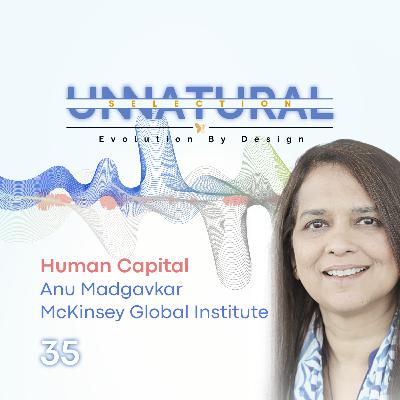
The Vanishing Herd: Survival and InnovationGlobal fertility rates are falling, populations are aging, and the consequences are already reshaping economies and societies. In this episode, Nic speaks with Anu Madgavkar, partner at the McKinsey Global Institute, about what these demographic shifts mean for the innovation capacity and long-term vitality of nations and companies.They explore how shrinking workforces, aging populations, and declining dynamism threaten growth — while also creating opportunities for new models of productivity, technology adoption, and global collaboration. As fertility and vitality decline, what might these trends mean for us — and for the societies awaiting future generations?

The War on Illness: Inside Sanofi’s Arsenal of InnovationRecorded LIVE at the World Medical Innovation Forum and produced in partnership with MassGeneral Brigham, this episode of unNatural Selection features Nic in conversation with Michael Quigley, Chief Scientific Officer and Global Head of Research at Sanofi. Together, they explore Sanofi’s competitive edge in a rapidly changing pharmaceutical landscape, the company’s perspective on global demographic shifts, and the transformative potential of modern technologies like AI, genomics, and CRISPR. Michael also shares how Sanofi is willing to disrupt itself when saving lives is on the line—and what these bold choices could mean for the future of human health.
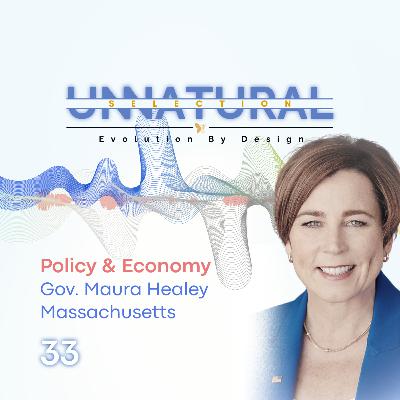
The Roots of Democracy Branch Toward InnovationGovernor Maura Healey joins unNatural Selection to discuss how Massachusetts is navigating federal headwinds to remain a global leader in innovation. We explore the state’s partnerships with industry, academia, and communities, the challenges of competition with other states and nations, and the unique role Massachusetts plays as both a modern innovation hub and the birthplace of American democracy.Governor Healey shares how her administration is stepping in to fill gaps left by federal retrenchment — from weakened public health systems to declining research investment — and why bold investments in education, infrastructure, and policy innovation are critical for keeping Massachusetts competitive. In a time of disruption, she makes the case that states must innovate to evolve and lead.
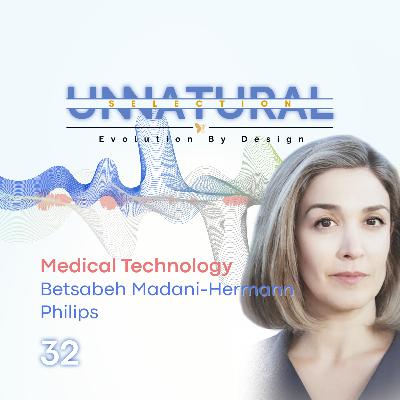
Light Into Life: Philips’ Journey of ReinventionPhilips has been reinventing itself for more than 134 years — a rare feat in an age when most companies struggle just to survive. In this episode, we explore how a global giant stays competitive and vibrant through continuous innovation. Our conversation dives into the challenges and opportunities of innovating inside a large company with a long history, Philips’ internal accelerator program that empowers employees to turn ideas into initiatives, and the leadership skills required to build a culture of transparency and psychological safety where innovation can truly flourish.
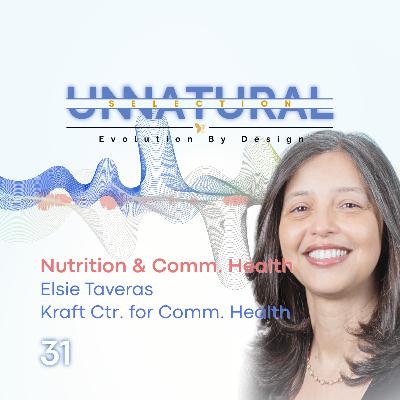
Flock Survival: Innovation, Nutrition, and Building Resilient CommunitiesChildhood obesity is one of today’s most pressing health challenges, but the story is far more complex than “eat less, move more.” In this episode, Dr. Elsie Taveras discusses the latest research on childhood nutrition and obesity, the myths that have shaped what we eat, and how her team at the Kraft Center for Community Health is helping bring healthcare innovations to communities — moving solutions from early adopters to the late majority. A conversation at the intersection of science, strategy, and community health.
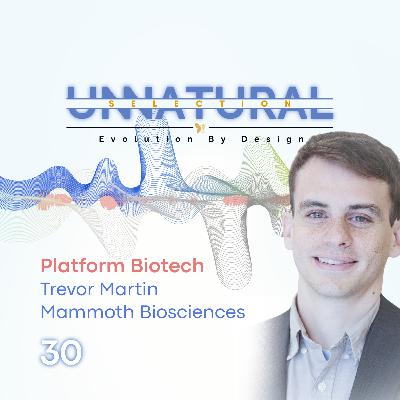
Rewriting the Blueprint: How CRISPR and AI Free Us from Inherited DestinyTrevor Martin, CEO of Mammoth Biosciences, joins us to discuss how biology, AI, and engineering are converging to create a biotechnology operating system — a platform of reusable components that can be rapidly deployed to tackle new conditions. We explore the groundbreaking story of baby K.J., the first newborn to receive a personalized CRISPR therapy for a rare disease, and look ahead to a future where genome editing moves beyond rare disorders to common diseases like heart disease. At its core, this vision points to a profound shift: a world where humanity is no longer bound by inherited genetics, but empowered to lead healthy lives that were once unimaginable.

Harnessing Nature’s Defense: Antibody Breakthroughs in the War on IllnessThe immune system is one of nature’s most powerful defense systems—and antibodies have become a cornerstone of modern medicine. In Episode 29, produced in partnership with Mass General Brigham for the upcoming World Medical Innovation Forum, Nic speaks with Dr. Richard Blumberg of Brigham and Women’s Hospital and Harvard Medical School. A pioneer in the field, Dr. Blumberg shares how his research path led him unexpectedly to pivotal antibody breakthroughs, the innovation process behind groundbreaking discoveries, and how antibody therapeutics have grown from a research curiosity into a force reshaping cancer, autoimmune disease, and beyond.
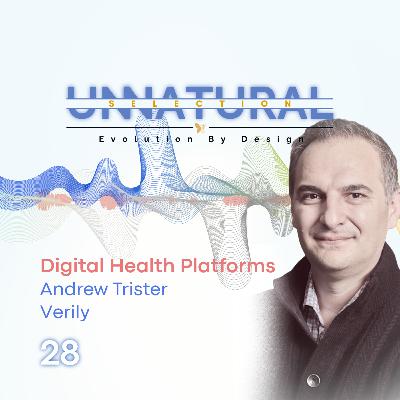
Engineering Precision Care: Verily’s Strategy and VisionIn this episode of unNatural Selection, produced in partnership with Mass General Brigham for the World Medical Innovation Forum, we sit down with Andrew Trister to explore the evolution of Verily, Alphabet’s precision health company. We discuss Verily’s journey from its early days as an innovation lab to its transformation into a platform company, focused on delivering insights directly into clinical workflows. Andrew shares how Verily is shaping its innovation strategy, with a five-year horizon on the biggest opportunities in connecting health data and driving insights toward precision care. At the heart of this vision is Verily’s objective of building a true health decision platform—one that bridges technology and medicine to redefine how care is delivered.
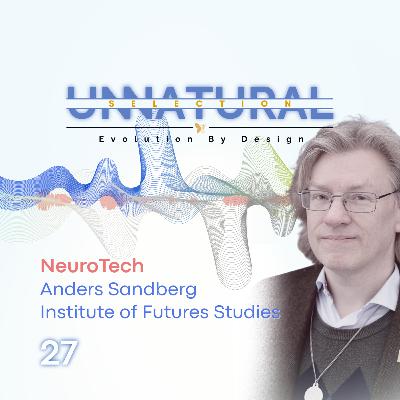
Intelligence Eats Reality: One Neuron at a TimeIn this episode of unNatural Selection, we’re joined by Dr. Anders Sandberg — a researcher at the Institute of Futures Studies and one of the world’s most provocative thinkers at the intersection of science, philosophy, and the far future. His work spans neurotechnology, human enhancement, AI, ethics, forecasting, and even the search for extraterrestrial life.We explore how biology and technology are no longer separate spheres, but merging forces reshaping the trajectory of our species. As innovation begins to supplant natural selection, reality itself is becoming more fluid — and the boundaries between human and machine, mind and system, begin to blur.We also delve into Dr. Sandberg’s imaginative approach to science communication, from dissolving the Fermi Paradox to reimagining planetary engineering in “Blueberry Earth,” and how these playful yet rigorous ideas help provoke public dialogue on our long-term future.This conversation reflects the core premise of unNatural Selection: that innovation is becoming the dominant evolutionary force — not survival of the fittest, but survival of the most adaptable, the most imaginative. This is Evolution by Design.

Comments

Download from Google Play

Download from App Store
 United States