


 Claim Ownership
The Hard at Work Podcast
Subscribed: 0Played: 6
Subscribe

© Ellen Whitlock Baker
Description
I’m Ellen Whitlock Baker, and I’m a 20 year survivor of many different workplaces, from the good to the bad to the ugly.
I created the Hard at Work podcast to help you navigate…and maybe even update… the workplace, which wasn’t made for most of us. Hard at Work is the show for people who are ready to challenge workplace norms, advocate for themselves and others, and create a more equitable, healthier work culture.
I created the Hard at Work podcast to help you navigate…and maybe even update… the workplace, which wasn’t made for most of us. Hard at Work is the show for people who are ready to challenge workplace norms, advocate for themselves and others, and create a more equitable, healthier work culture.
40 Episodes
Reverse
In this episode of the Hard at Work podcast, host Ellen Whitlock Baker sits down with award-winning author, facilitator, and coach Trystan Reese to explore the transformative power of "adaptation skills" in the modern workplace. Reese challenges the prevailing "throwaway culture" by arguing that no employee is truly disposable, particularly when harm is caused unwillingly due to a lack of awareness or a steep learning curve. By moving away from shame-based reactions and toward restorative coaching, organizations can help leaders transition from causing harm to becoming genuine accomplices in building more inclusive environments.Reese introduces the "farming for dissent" framework—a strategy used by leaders like Barack Obama—to proactively seek out and reward disagreement as a means of building trust and improving project outcomes. Listeners will learn how to implement "pre-mortems" to identify risks before they become failures, turning potential workplace disasters into opportunities for collective growth.For people who struggle with receiving feedback, Reese provides a masterclass on navigating rejection sensitivity and the physiological "tunnel" of emotional triggers. He shares practical "nervous system hacks," such as the power of starting a difficult conversation with a simple "thank you" to signal safety to both the speaker and the receiver. The episode also highlights the importance of modeling self-awareness by allowing leaders to "tap out" of conversations when they are too emotionally activated to respond productively.Finally, the discussion reframes the goal of workplace culture from "psychological safety" to "brave leadership". Reese explains that while safety can be misconstrued as mere comfort, bravery allows for the discomfort necessary to dismantle systemic biases and foster real change. By centering dignity and curiosity over defense mechanisms, teams can create higher-trust environments.#BraveLeadership #WorkplaceCulture #ConflictResolution #TrystanReese #InclusionAndBelonging #FeedbackSkills #PsychologicalSafety #HardAtWorkPodcast #LeadershipDevelopment #FarmingForDissent
How people-pleasers stop outsourcing their decisions and reconnect with their inner knowingFor anyone who has ever hit every goal and received all the praise yet still felt profoundly miserable, this episode offers a roadmap out of the "A-student" trap. Host Ellen Whitlock Baker is joined by Lauree Ostrofsky—coach, business and marketing consultant, and two-time author—to explore what happens when high achievers realize their current career no longer fits. Ellen and Lauree dig into the classic people-pleaser trap: being valued for one set of skills while the work that lights you up gets sidelined—and how that disconnect can keep you stuck longer than you want to admit.Lauree shares the reinvention lessons she’s seen in her most successful clients, including: “find the linchpin.” She and Ellen talk about the small, crucial people and moments that bolt your next chapter into place (even when you don’t have a perfect plan), how gratitude helps you notice new doors, and why change doesn’t have to be a brutal, hustle-y leap off a cliff. If you’re burned out on overthinking and constantly needing a second opinion, you’ll love Lauree’s take on building self-trust and making decisions without outsourcing your confidence.The "Linchpin" Strategy: Lauree breaks down how to identify the small, crucial moments and people that anchor a new chapter, just like a linchpin holds parts of a car together. By practicing gratitude for past "linchpins," listeners can open themselves up to noticing the new doors and connections appearing in their current lives.Building Self-Trust: A look at how to stop "outsourcing confidence" and overthinking every move. Lauree shares a challenge from her own coach that forced her to send proposals without a second opinion, highlighting how ingrained the need for permission can be.Fear with Compassion: Lauree explains the origin of her mantra, "I’m scared, but I’m doing it anyway." This philosophy was born from a life-altering brain tumor diagnosis at age 28, which forced her to redefine what was truly scary versus what was merely uncomfortable.The "First Day of School" Approach: Instead of "muscling through" fear, Lauree suggests treating your inner anxious self like a child on their first day of school—offering snacks, comfort, and kind words to move gently over the start line.Certainty in the Chaos: From keeping a puzzle in her office to finding "soft" ways to pivot, Lauree emphasizes that reinvention doesn't have to be a "hustle-y" leap off a cliff. It can be a series of kind, intentional shifts that prioritize personal happiness over corporate praise.If you're looking for a smarter way to pivot without losing your sense of self in the process, this conversation provides the permission and the tools to begin.Tags: Career Reinvention, Overcoming Burnout, Self-Trust, People Pleasing, Women in Business, Professional Coaching, Mindset Shift, Career Change, Overcoming Fear, Personal Development, A-Student Syndrome, Intuition at Work, Life Transitions, Leadership, Entrepreneurship, Mental Health, Work-Life Balance, Self-Compassion, Pivot, Career GrowthShow Notes:Simply Leap by Lauree OstrofskyI'm Scared, But I'm Doing It Anyway by Lauree OstrofskyThe Science of Stuck and Align Your Mind by Britt FrankLearn more about Lauree’s membership programConnect with Lauree:WebsiteInstagramFacebookLinkedIn

Whether you’ve spent 20 years in one field and realized you’re unfulfilled, or you’re just a few years into your first job and realizing the path you were "supposed" to take doesn't fit who you are, this episode is for you. Ellen is joined by Aleenah Ansari—a writer, content creator, and strategic creative who specializes in helping people find and amplify their own stories.Ellen and Aleenah dive deep into "Step Zero" of a career pivot: reclaiming your narrative. Aleenah shares why jealousy might actually be your most honest career coach and how to perform a skills audit that honors your humanity, not just your job titles. They also explore how to apply human-centered design to the workplace, reimagining our environments to work for us rather than feeling like something we need to escape.This conversation is a masterclass in owning your story before someone else writes it for you. They discuss how to make networking feel authentic to the current version of you and why being honest about being in transition is the key to building a supportive community. For anyone ready to stop starting from scratch and start designing a career with agency, Aleenah’s insights provide the roadmap to get there.In this episode, Ellen and Aleenah discuss:Step Zero: How to reclaim your professional narrative during a career transition.The Jealousy Compass: Using envy as a data point to identify what you actually value.Skills Auditing: Why you aren't starting at zero and how to identify your transferable "human" skills.Human-Centered Design: Applying design thinking to your career and your workplace.Authentic Networking: Building a community that supports the version of you that exists today.Show Notes:Aleenah’s Website: AleenahAnsari.comAleenah’s TEDx Talk: "How to Reclaim Your Narrative"Book: Uncompete by Ruchika MalhotraBook: The Design of Everyday Things by Don NormanTags: Career Pivot, Personal Branding, Transferable Skills, Human-Centered Design, Career Change, Narrative Identity, Professional Development, Networking for Introverts, Workplace Culture, Design Thinking, Mid-Career Transition, Women in Business.
What if the nonprofit sector isn’t broken because people don’t care—but because we’ve been taught a whole lot of nonsense about how work, funding, and leadership are “supposed” to function? In this episode of Hard at Work, Ellen is joined by writer, activist, and nonprofit truth-teller Vu Le, author of Unicorns Unite and the mind behind the long-running blog Nonprofit AF, for a wide-ranging, funny, and deeply honest conversation about why nonprofit work is exhausting—and how it could be radically better.Vu breaks down the biggest myths holding the sector back: risk aversion driven by short-term funding, performative accountability obsessed with metrics instead of impact, and workplace structures borrowed from corporate culture that burn people out instead of supporting them. Together, they explore alternatives like four-day workweeks, co-director leadership models, advice-based decision making, and community-centric fundraising—approaches that prioritize trust, expertise, and shared power rather than hierarchy and control. Vu also names how philanthropy’s refusal to fund operations, salaries, and long-term work keeps nonprofits stuck in survival mode while pretending that’s “responsible.”This episode is especially for fundraisers, nonprofit leaders, and mission-driven professionals who feel tired, disillusioned, or trapped in systems that don’t align with their values. It’s also a reminder that hope doesn’t only live inside institutions. Vu shares powerful examples of community-led action, mutual aid, and collective care that exist beyond nonprofit status—and why reconnecting to community is often the antidote to burnout. Expect laughter, righteous frustration, praise of the Oxford comma, and a new way of thinking about the future of work. Show NotesGet Vu's book, Reimagining Nonprofits and Philanthropy, hereCheck out Vu's blog, Nonprofit AFKeywords: workplace culture, burnout, nonprofit leadership, toxic work culture, equity at work, systems change, moral injury, emotional labor, mission-driven work, nonprofit burnout, values-driven leadership, women at work, humane workplaces
In this episode of Hard at Work, Ellen is joined by critic, speaker, and author Jodi-Ann Burey (Authentic: The Myth of Bringing Your Full Self to Work) for an honest conversation about why “bring your whole self to work” has become one of the most misleading—and dangerous—ideas in modern workplace culture.Jodi-Ann shares that she wrote the book because she wanted to have a conversation about authenticity that she could recognize. She explains the concept of "ops," or the "agents of the status quo," who she describes are the people in the workplace who help to keep things the same when they really need to change. Ellen and Jodi-Ann get into how the fear of losing power keeps these agents of the status quo working against the best interests of employees, and leads them instead to practices like employee monitoring (checking badge swipes, whether you're active on teams), which, instead of creating productivity, create an environment of unease and distrust.Jodi-Ann explains that when we ask people to "bring their whole self to work" we are pushing off the work of creating a protective environment to the individuals who are most vulnerable to the workplace's harms. Ellen and Jodi-Ann also discuss how toxic and corrosive the nonprofit sector can be, particularly for people of color, whose individual stories Jodi-Ann shares in the book. How do you avoid being an op? Jodi-Ann suggests building community connections and performing an audit of your personal and professional life -- asking yourself what communities are you connected with? Who are you getting feedback from? Who might be missing? And answering honestly.If you're in the workplace in 2026, especially if you're a leader, this is an episode not to miss. It may be uncomfortable to investigate your own history with asking team members to bring their whole self to work, or encourage authenticity for everyone, but Jodi-Ann's thought leadership helps us all more deeply understand why it's time for change in the workplace. Show NotesBuy Jodi-Ann's book hereJodi-Ann's website, LinkedIn, and InstagramWatch Jodi-Ann's TED Talk, The Myth of Bringing Your Full, Authentic Self to WorkRead Stop Telling Women They Have Imposter Syndrome, an HBR article by Jodi-Ann and Ruchika Malhotra, and their follow up, End Imposter Syndrome In Your Workplace.
Sarah Jaffe on capitalism’s “labor of love,” grief, and why you can’t meditate your way out of a rigged systemWhat if the heaviness you feel at work isn’t a personal failing — but capitalism doing what capitalism does? Labor journalist and author Sarah Jaffe (Work Won’t Love You Back and From the Ashes) joins Ellen for a wide-ranging, deeply grounding conversation about why so many of us feel exhausted, disillusioned, and even heartbroken by our jobs. Together, they explore how “do what you love” culture, hustle narratives, and nonprofit martyrdom have trained us to expect meaning, identity, and emotional fulfillment from work — and how devastating it can be when those promises inevitably fall apart.Sarah breaks down why burnout is not an individual resilience problem but a structural feature of capitalism, especially in nonprofit, public-sector, care, and mission-driven work. Ellen and Sarah dig into how love-based narratives are used to justify low pay, chronic overwork, and understaffing; why crises like the 2008 financial collapse and COVID made these systems suddenly visible; and how gender, race, and class shape who is expected to sacrifice the most. If you’re a leader who feels trapped by money, healthcare, responsibility to your team, or a lack of alternatives, this episode names that reality without judgment — and without pretending there’s a simple solution.This conversation also offers a different way forward. Instead of self-care checklists or meditation apps that ask you to adapt to a broken system, Sarah and Ellen talk about grieving what we thought work would be, reclaiming agency inside imperfect conditions, and thinking collectively rather than individually. You’ll hear practical ideas like power-mapping your workplace, building community instead of self-blame, and understanding why “it’s not your fault” is both emotionally freeing and politically important.Show NotesFind Sarah on her website and Twitter.Books by Sarah Jaffe: • Work Won’t Love You Back • From the Ashes: The Remaking of the WorldListen to Sarah narrate both books on Audible.Resources mentioned during the episode: Mia Tokumitsu’s book Do What You LoveKathi Weeks’ book The Problem With WorkKarl Marx’s book Das Capital (where he compares capitalism to a Gothic monster as discussed) Molly Crapapple’s websiteJoshua Clover’s many booksRuth Wilson Gilmore’s works (she coined “capitalism saves capitalism from capitalism”)Your nonprofit boss Instagram (by Nicole Olive, follow her, she’s amazing)Melinda Cooper’s booksSamhita Mukhopadhyay’s The Myth of Making it: a Workplace ReckoningTags: burnout, work culture, labor, capitalism, workplace systems, productivity myths, hustle culture, emotional labor, grief at work, exploitation, management, leadership, toxic workplaces, women at work, gender and labor, class and work, workplace power, work and identity, modern work, organizing, collective care, boundaries at work, work isn’t broken—it’s working
A practical conversation about leadership and how trust (not control) drives retention, productivity, and healthier workplaces.In this episode of the Hard at Work podcast, host Ellen Whitlock Baker sits down with Minda Harts—author of Talk to Me Nice and a leading voice on workplace trust and leadership—to explore why trust is the missing foundation in so many modern workplaces. Drawing on Minda’s concept of the seven trust languages, the conversation breaks down how trust is built, eroded, and repaired at work—and why its absence fuels burnout, disengagement, turnover, and loneliness.Minda explains that trust failures are often mistaken for performance issues, attitude problems, or resistance to change. In reality, mistrust grows through ambiguity, lack of transparency, inconsistent follow-through, poor feedback practices, and leadership behaviors rooted in control rather than care. The episode examines how these patterns show up in real workplace challenges, including return-to-office mandates, rigid policies, micromanagement, and fear-based leadership.Listeners will learn how trust impacts productivity, retention, and workplace health—and why rebuilding it is both a human and a business imperative. Minda offers practical tools for leaders, managers, and individual contributors alike, including how to ask “What does trust look like to you?” in one-on-ones, how to repair trust after harm, and how to communicate difficult information without stripping people of dignity.This episode is ideal for leaders seeking to create healthier workplace cultures, managers caught between pressure from above and responsibility to their teams, and employees navigating environments where trust feels fragile or broken. Rather than offering vague advice or toxic positivity, the conversation provides clear language, real examples, and actionable ways to rebuild trust one interaction at a time.Show NotesGet Minda's Book, Talk to Me Nice: The Seven Trust Languages for a Better Workplace hereMinda's websiteFollow Minda on LinkedInMinda's LinkedIn Learning course on trustMinda as a Trust Coach on Google Labs’ PortraitsAnd if you're interested in learning more about the Momentum Sessions, the three-session coaching package I mentioned during the episode, you can find out more on my website. Tags: trust at work, workplace trust, rebuilding trust, trust languages, Minda Harts, Talk to Me Nice, leadership trust, manager employee relationship, psychological safety, workplace communication, feedback culture, employee retention, workplace culture, healthy workplace, leadership development, modern leadership, HR and trust, burnout and boundaries, workplace burnout, toxic workplace recovery, return to office, remote work culture, hybrid work, change management, belonging at work, employee engagement, difficult conversations at work, boundary setting at work, equity at work, women at work, women leaders, women of color at work, inclusive leadership, humane leadership, workplace well-being, Hard at Work podcast, Ellen Whitlock Baker
A systems-level look at why “do more with less” is collapsing nonprofit leadership—and what sustainable organizations do instead.What happens when passion-driven missions collide with unrealistic growth goals, broken governance, and chronic underfunding? In this episode of Hard at Work, I’m joined by nonprofit strategist and systems thinker Ariel Glassman Barwick for a powerful, honest conversation about what she calls the nonprofit death spiral—the cycle of overextension, undercapitalization, burnout, turnover, and declining impact that’s quietly unraveling organizations across the sector. We unpack how aggressive revenue targets, pressure to “do more with less,” and misaligned board dynamics create downstream harm for staff, fundraisers, and the communities nonprofits exist to serve.We take a deep dive into fundraising burnout, moral injury, and governance failures, including why development roles are some of the most misunderstood and overloaded jobs in the nonprofit world. Ariel breaks down the constant “whiplash” fundraisers experience as they juggle wildly different skill sets, shifting expectations, and impossible goals—often without adequate training, staffing, or protection from inappropriate donor behavior. We explore how outdated donor-centric models, lack of management training, and inequitable power structures create ethical stress that drives talented professionals out of the sector altogether.This conversation is also a roadmap forward. We talk about community-centered fundraising, human-centered leadership, contraction as a strategic choice (not a failure), and the real skills nonprofit leaders need right now—including patience, systems thinking, and the ability to truly receive feedback from their teams. If you’re an executive director, fundraiser, board member, or nonprofit professional feeling the strain of an unsustainable system, this episode will help you name what’s actually happening—and imagine what a healthier, more resilient nonprofit future could look like.Show Notes: Find Ariel on the Common Great website and LinkedIn.Vu Le's book, Reimagining Nonprofits and Philanthropy: Unlocking the Full Potential of a Vital and Complex SectorDorothy A. Johnson Center for Philanthropy studyKeywords: burnout in nonprofits, nonprofit leadership, nonprofit fundraising burnout, nonprofit governance, community-centric fundraising, moral injury at work, nonprofit death spiral, nonprofit executive director support, leadership coaching for EDs, sustainable fundraising strategy, toxic workplace culture, capacity building in nonprofits, nonprofit staff burnout, managing nonprofit boards, nonprofit sector challenges
After 30 episodes of saying the quiet part out loud, host Ellen Whitlock Baker closes out Season 1 of Hard at Work with a reflective and forward-looking finale. From people-pleasing and perfectionism to systemic burnout and the stubborn pace of change since the movie "9 to 5" came out 45 years ago, Ellen unpacks what she’s learned about why work still isn’t working — and what it will take to change it.She looks back on the guests, the lessons, and the quiet revolutions happening in real workplaces, while issuing a challenge for the hiatus: take one step, however small, toward building the future of work we actually deserve. Because as the great Dolly Parton says: "the tide's gonna turn and it's all gonna roll your way."Tags: burnout, workplace culture, women at work, leadership, boundaries, equity, systemic change, perfectionism, people pleasing, feminist workplace, future of work, Hard at Work podcast, season finale

In this episode of Hard at Work, host Ellen Whitlock Baker welcomes author, two-time founder, and Hype Women CEO Erin Gallagher for a candid conversation about women, work, and the shift from competition to collective power. Erin shares the origin of the Hype Women movement—including that now-famous photo of Jamie Lee Curtis celebrating Michelle Yeoh—and explains why hype is a verb: it’s the choice to convert admiration into action by promoting, buying from, hiring, referring, and amplifying other women.Together, Ellen and Erin name the conditioning that teaches women to compete for scarce recognition, how “mean-girl” behavior gets rewarded in professional settings, and why empathy without boundaries leads to chronic self-abandonment and burnout. Erin offers a practical reframe for jealousy as a signal of desire—when someone else lands a keynote or book deal, ask how they did it, celebrate them publicly, and let your body learn the feeling of abundance. The two dig into resentment, invisible unpaid labor, and the constant interruptions that drain women’s energy—connecting it to the $10.9 trillion of unpaid work women shoulder globally—and explore how anger can be a healthy messenger when it’s moved through the body: writing, running, singing at top volume in the car, painting, or simply letting yourself feel it. They also discusses Erin's forthcoming book, Hype Women: Breaking Free from Mean Girls, Patriarchy, and Systems Silencing You (out October 14, 2025), which blends narrative with practical tools to help women stop equating worth with service. Erin shares the line that changed her life: “I will no longer abandon myself in service to others.” Listen for honest stories, tangible mindset shifts, and next steps you can take today to hype other women, reclaim your time, and build work that actually supports your life. (Keywords: hype women, women at work, workplace culture, mean girls, patriarchy, boundaries, burnout recovery, abundance mindset, leadership, Jamie Lee Curtis Michelle Yeoh)
In this high-energy episode, host Ellen Whitlock Baker welcomes licensed neuropsychotherapist Britt Frank, author of The Science of Stuck and Align Your Mind, for a fast, practical tour of how your brain actually works—and how to get it working for you at work and at home. Britt explains that anxiety isn’t all bad; it’s the brain’s check-engine light, an alarm that asks for investigation rather than suppression. Britt shares how we can convert overwhelm into forward motion using micro-yeses, comically tiny steps (think: shoes by the door, one sentence on the page) that slip past the brain’s change-resistance and build momentum over time. The conversation distinguishes feelings (physiological signals like tightness or a racing heart) from emotions (feelings plus the story we add), and offers a quick self-audit to test whether your story is true before you spiral. Britt also brings her signature parts work approach: treat your mind like a team, retrain the “inner critic” into a useful coach, and send unhelpful parts to the metaphorical green room until it’s their scene. For leaders, Britt delivers a provocative reframe—managers aren’t therapists—and recommends replacing over-empathy (which lights up shared pain) with curiosity (which activates problem-solving), while designing conditions where humans can still be human. Ellen and Britt also unpack why brains resist change (they’re wired for survival, not optimization), why insight alone can keep us “insightfully stuck,” and how to ask a better question: What am I willing to do today? Listeners dealing with burnout, perimenopause shifts, career pivots, or post-pandemic malaise will leave with a brain-smart playbook for momentum: respect alarms, pick one micro-yes, use curiosity to de-charge tough moments, and align work with clear roles and lived values. Keywords: Britt Frank, The Science of Stuck, Align Your Mind, neuropsychotherapist, micro-yeses, workplace culture, burnout recovery, anxiety tools, parts work, shadow work, leadership, curiosity vs empathy, role clarity, behavior change, emotional regulation, feelings vs emotions
In this Hard at Work episode, host Ellen Whitlock Baker sits down with business coach Melissa Fackler of One Team Partners for a conversation about what it really takes to create a thriving, people-centric workplace. Melissa explains why most organizations don’t have a “work problem” so much as a “how we work” problem—and why band-aid solutions (like free yoga at lunch) won’t fix burnout, turnover, or disengagement. Instead, she offers a simple but powerful cycle leaders can use immediately: Awareness → Structure → Habit. First, awareness: surface the real issues, name tradeoffs honestly, and acknowledge that doing nothing is still a choice. Next, structure: design lightweight, value-add systems (think: calendar blocking, simple hiring and onboarding flows, role clarity, performance rhythms) that make the right work easier to do. Finally, habit: repeat the fundamentals until they’re automatic, then revisit awareness when something stops serving the team. Throughout, Melissa and Ellen emphasize values as the filter for decisions and culture, not a poster on a wall. Melissa shares how One Team’s values—practice self-care, bring your whole self, be present, invest in relationships, commit to learning—keep the focus on people so the business can perform. She argues that leaders must “slow down to speed up,” accepting that metrics may dip while foundations are rebuilt, and she illustrates success with stories: a CEO who finally took a real vacation because decision rights and processes were clear; teams getting more done with fewer people after aligning roles to strengths. The conversation also tackles AI with nuance: treat it like an assistant for drafts, notes, and summaries, not a replacement for human judgment or authentic communication. For listeners stuck in difficult workplaces, Melissa suggests assessing value alignment, having earlier, calmer conversations, and auditing how often joy-giving work actually appears on your calendar. If you’re a leader wrestling with retention, employee experience, or scaling sustainably, you’ll leave with a practical blueprint to replace quick fixes with systems that reduce burnout, rebuild trust, and let your best work lead. Keywords: healthy workplace culture, burnout at work, employee retention, leadership habits, values-driven management, simple systems, calendar blocking, people-first operations, organizational change, One Team Partners, Melissa Fackler, Hard at Work podcast.
In this solo episode of Hard at Work, Ellen Whitlock Baker shares three leadership mistakes she wishes she could go back and do differently — and the practical steps you can take to avoid them.From listening less and talking too much, to modeling unhealthy work habits, to relying on vague job descriptions and biased review processes, Ellen unpacks why these common traps harm teams and what managers can do instead.You’ll learn how to:Listen with curiosity instead of defensivenessModel boundaries and healthy work habits (instead of hustle)Create clear job plans and fair review processes that prevent burnout and biasIf you’ve ever wondered how to be the kind of manager people actually want to work for — start here.Tags: leadership mistakes, management tips, healthy workplace, career clarity, burnout prevention, boundaries at work, fair reviews, leadership coaching, Hard at Work podcast, Ellen Whitlock Baker
What does it mean to actually live your values — even when it costs you something? In this episode of Hard at Work, Ellen sits down with executive coach, speaker, and visionary leader Lindsey T.H. Jackson to unpack the practice of unlearning, the courage it takes to align actions with values, and how mid-career women can reconnect with their authentic selves.Lindsey shares powerful stories about walking away from VC funding to stay true to her company’s values, why anger is a signal of potential, and how leaders can move beyond fear to create people-centered workplaces. Together, Ellen and Lindsey dig into generational shifts at work, why “lazy ease” is toxic, and the everyday practices that help us return to ourselves.If you’ve ever felt stuck between old rules and the possibility of something better, this episode will help you imagine — and build — a healthier, more authentic way forward.Tags: Leadership, Women at Work, Workplace Culture, Unlearning, Authentic Leadership, Values-Based Leadership, Diversity and Inclusion, Anti-Racist Leadership, Boundaries at Work, Career Growth, Women in Leadership, Personal Development, Mid-Career Women, Coaching, Resilience
We’ve all done it: talked ourselves out of something we know would make life better. A walk. A tough conversation. A career change. But what’s really going on when you know you should do the thing…and you don’t?In this solo episode of Hard at Work, Ellen Whitlock Baker breaks down the science of “blockers” — the protective part of your brain that sounds the alarm whenever something feels new, different, or risky. She explains how neuroplasticity works, why change feels so threatening, and the three simple steps you can use to prove your blockers wrong.If you’ve ever found yourself stuck in the cycle of overthinking, avoidance, and regret, this episode will show you how to take tiny experiments that lead to big clarity.Tags: career clarity, overcoming fear, burnout, blockers, start anyway, neuroscience, boundaries, clarity coaching, workplace change, stuck at work, Hard at Work podcast

What does it actually take to build something from scratch—and stay sane while doing it? Ellen talks with Jaebadiah Gardner, founder of Gardner Global, about building wealth, the importance of believing in yourself, and pushing past barriers as a Black and Latino entrepreneur. They get real about hustle culture, staying grounded, and what success looks like behind the scenes (it’s not always as pretty as it seems on the surface). If you’ve ever felt stuck, under-resourced, or underestimated, this one’s for you. A thoughtful, no-BS conversation about drive, ambition, and getting in the room where it happens—even when you don’t know anyone there.Show Links:Find Jaebadiah’s book, Believe in Yourself, here Learn more about Jaebadiah’s company, Gardner Global, and all the cool work they are doing in Seattle.Connect with Jaebadiah on LinkedIn and Instagram
In this episode of Hard at Work, Ellen sits down with Robbin Hudson — founder and CEO of Gradient, the Human Equity Think Tank, and an executive and leadership coach. Together, they dig into what it means to truly lead with people at the center — and why so many workplaces still get it so wrong.Robbin shares her journey from philanthropy and grassroots leadership development to founding Gradient, a consulting and coaching firm that prioritizes human equity over doing things they way they've always been done. She explains how deep listening, brave spaces, and “starting at stuck” help leaders and organizations align who they say they want to be with who they actually are.They talk about how intergenerational workplaces, burnout, and “golden handcuffs” keep people stuck — and how clarifying your core values and building both a “stay plan” and a “go plan” can help you get unstuck. Robbin also offers real talk for managers trying to create change inside systems that resist it, plus why your story — and your unique leadership DNA — matter.Whether you’re an executive, a middle manager, or someone trying to survive a system that doesn’t center your humanity, you’ll walk away from this episode with practical wisdom on how to start — right where you are.Keywords: human-centric leadership, executive coaching, nonprofit leadership, DEI consulting, brave leadership, burnout at work, intergenerational workplaces, leadership DNA, coaching for leaders, storytelling at work, psychological safety, people and culture, human equity think tank, Gradient Consulting, Start at Stuck, values-based leadership, workplace culture change, philanthropic leadership, boundary setting, career clarity, stuck at work
In this episode of Hard at Work, Ellen is joined by Ryan Stadt—Senior Talent and Inclusion Manager at Cengage Group and executive coach—for a conversation that gets real about what it actually takes to support and grow people-centered leaders. Ryan shares what it looks like when leadership development is fully resourced and taken seriously—and how even organizations without big budgets can design meaningful programs for new managers. From pulse surveys and coaching cohorts to the difference between protecting your team and empowering them, this episode offers both tactical tools and deep insight. Ellen and Ryan also talk openly about the current backlash against DEI, how to keep doing the work even if you stop using the acronym, and why equity-focused change starts with small but intentional decisions. Whether you’re a burned-out middle manager, an HR leader trying to shift workplace culture, or just someone trying to lead without losing your mind, there’s something here for you. Oh—and you’ll definitely want Ryan’s fiction recs. You’ll hear about: the biggest mindset traps new managers fall into, why slowing down is essential to good leadership, what to delegate (and how), the right way to check in with your team, and why designing your own leadership program might be the best move you can make.Keywords: burnout, leadership development, delegation at work, people management, workplace equity, DEI backlash, inclusive leadership, emotional intelligence at work, HR best practices, new manager training, psychological safety, executive coaching, workplace flexibility, healthy work culture, employee engagement
In this vulnerable and wide-ranging conversation, personal branding expert Cat Coffrin joins Ellen to unpack what happens when ambitious women hit a wall—and realize they’ve lost themselves in the process. From working in global policy and green building to launching her own consulting firm, Cat’s story mirrors what so many mid-career professionals experience: success on paper, but disconnection underneath. Through honest storytelling, humor, and deep personal reflection, Cat shares how she rebuilt her identity—and how others can too.You’ll hear why personal branding isn’t just for entrepreneurs or influencers—it’s a reclaiming tool for anyone feeling lost in a job that no longer fits. Ellen and Cat explore the pressures of perfectionism, the emotional toll of caregiving and grief, and the radical act of telling the truth in professional spaces. If you’ve ever thought, “I’m proud of what I’ve built… but I don’t recognize myself anymore,” this episode will speak to your soul.
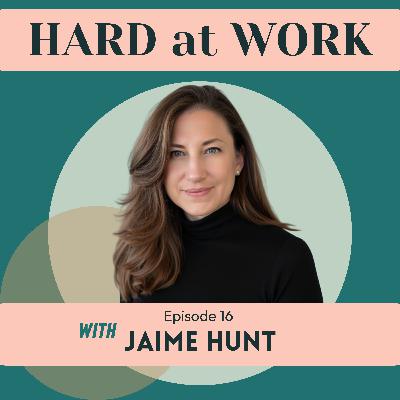
Empathy doesn’t mean letting people off the hook. In this honest and energizing episode, Ellen sits down with Jaime Hunt—consultant, author of Heart Over Hype, and higher ed veteran—to talk about what it means to lead with heart and hold people accountable.They dig into the unique challenges of higher education, why so many managers are unprepared for leadership, and what it really looks like to support your team without sacrificing results. From using coaching techniques to having hard conversations with care, Jaime shares actionable strategies for leaders who want to make work better—without burning themselves (or their people) out.Get your copy of Heart Over Hype, Jaime's book, here!Plus: when to walk away, how AI can help you practice empathy, and why turtles might be the best coworkers of all.🎧 You’ll hear about:How to lead with empathy while still expecting resultsWhy coaching is underused but transformational in higher edPractical strategies for managing overwhelm and supporting struggling employeesWhat it takes to bust silos and actually lead changeThe power of boundaries—and how to set them without guilt

Comments

Download from Google Play

Download from App Store
 United States