


 Claim Ownership
Generalist Universe
Subscribed: 0Played: 4
Subscribe

© Caio Huck Spirandelli
Description
Welcome to the Generalist Universe Podcast, hosted by Caio Huck Spirandelli, a Brazilian economist and science communicator. Originally envisioned as an interdisciplinary exploration across numerous fields, the show now delves deeply into high-quality social sciences.
The name "Generalist Universe" celebrates Homo sapiens as a generalist species—adaptable, versatile, and endlessly curious. Caio embodies this generalist spirit through thoughtful dialogues with leading social scientists, providing insightful perspectives on complex social phenomena and human behavior.
The name "Generalist Universe" celebrates Homo sapiens as a generalist species—adaptable, versatile, and endlessly curious. Caio embodies this generalist spirit through thoughtful dialogues with leading social scientists, providing insightful perspectives on complex social phenomena and human behavior.
6 Episodes
Reverse
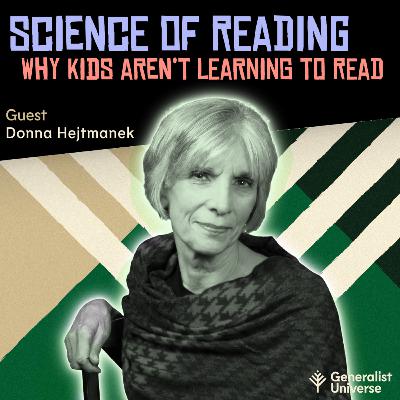
The "Science of Reading" isn't a philosophy or a trend—it is a body of research spanning over five decades. In this interview, Donna Hejtmanek, a veteran educator with nearly 50 years of experience, explains why the dominant "Whole Language" and "Balanced Literacy" approaches have led to a decline in literacy rates and why a shift toward Structured Literacy is a scientific necessity.We delve into the cognitive neuroscience of how the brain actually learns to read, exploring the work of researchers like Stanislas Dehaene and Dr. Linnea Ehri. We discuss the "Mississippi Miracle" and why thousands of teachers are now experiencing a professional "awakening" as they move away from guessing-based methods (three-cueing) toward explicit instruction in phonics, orthographic mapping, and the five pillars of reading.Donna Hejtmanek is a retired special education teacher and a prominent literacy advocate. She is the founder of the massive Facebook community, "Science of Reading—What I Should Have Learned in College," which has become a global hub for educators transitioning to evidence-based practices.*** Support the Channel ***PayPal Donation*** Key Takeaways ***- The Failure of Naturalism: Contrary to Balanced Literacy theories, humans do not learn to read as naturally as they learn to speak; reading is a complex skill requiring direct instruction. - The Five Pillars of Reading: Effective instruction must integrate phonemic awareness, phonics, vocabulary, fluency, and comprehension. - Orthographic Mapping: The cognitive process the brain uses to turn unfamiliar words into "sight words" by mapping sounds to letters, creating permanent neural pathways. - The 3-Cueing Problem: Why teaching children to guess words based on pictures or context (Balanced Literacy) is scientifically ineffective and often breaks down by third grade. - The School-to-Prison Pipeline: The profound economic and social repercussions of low literacy, noting that approximately 70% of the prison population has low literacy skills.*** Links ***FB Group - Science of Reading: What I Should Have Learned in CollegeThe Reading LeagueInternational Dyslexia AssociationReading RocketsCOX CampusNational Council on Teacher Quality (NCTQ)MORE RESOURCES
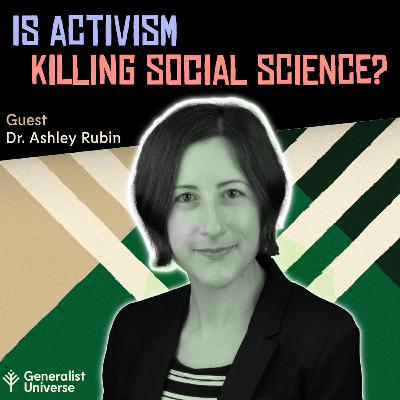
In this compelling interview, Dr. Ashley T. Rubin explains why normativity is not a replacement for theory, addressing how activism is increasingly shaping academic research in the social sciences. Rubin identifies critical issues such as the misuse of jargon, the blurred line between scholarship and advocacy, and the erosion of scientific standards due to ideological pressures. By examining terms like "carceral state," "prison-industrial complex," and "decolonization," she highlights how ambiguous language can distort academic research and mislead policy-making. Rubin calls for a renewed emphasis on methodological rigor and theoretical clarity, cautioning against letting political activism dictate scientific inquiry. If you're concerned about the integrity of academic research, activism's role in scholarship, or the future of social sciences, this conversation provides vital insights.Article - Normativity is Not a Replacement for Theoryhttps://link.springer.com/article/10.1007/s11186-025-09633-3Dr. Ashley Rubin's website:http://ashleytrubin.com/*** Support the Channel ***PayPal Donation: https://www.paypal.com/donate/?hosted_button_id=HFTDRKY9532F2
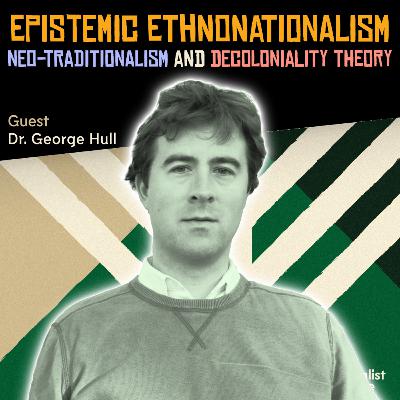
Are Neo-Traditionalism and Decoloniality Theory alike? In this thought-provoking interview, Dr. George Hull, senior lecturer in Philosophy at the University of Cape Town, dives deep into the surprising parallels between these two ideological frameworks. Exploring the concept of epistemic ethnonationalism, he explains how both schools of thought tie knowledge, values, and identity to cultural and ethnic belonging.We examine how figures like Alexandr Dugin and decoloniality theorists such as Walter Mignolo and Aníbal Quijano challenge modernity, liberalism, and universalism, raising critical questions about cultural relativism, identity policing, and academic freedom.Dr George Hull is a senior lecturer in Philosophy at the University of Cape Town (UCT), South Africa. He has taught widely in the areas of the philosophy of race, political philosophy, ethics and German idealism. Dr Hull has edited a number of books, including Debating African Philosophy: Perspectives on Identity, Decolonial Ethics and Comparative Philosophy (Routledge, 2019) and The Equal Society (Lexington Books, 2015).*** Links ***Article: ‘Epistemic ethnonationalism: identity policing in neo-Traditionalism and Decoloniality theory’Edited book: Intellectual Decolonisation: Critical Perspectives YouTube channel Beyond Decoloniality*** Support the Channel ***PayPal Donation: https://www.paypal.com/donate/?hosted_button_id=HFTDRKY9532F2

Why does violence against women persist in Latin America, even as gender equality advances? In this insightful conversation, economist Caio Huck Spirandelli interviews Dr. Alice Evans, a social scientist at King’s College London, to explore the complex roots of femicide and gender violence in the region. They discuss how factors like inequality, weak state capacity, patriarchal norms, media influence, and general violence intertwine to create this paradox. Drawing on comparative research, Dr. Evans explains why Latin America remains an outlier in femicide rates despite cultural shifts toward gender equality. If you're interested in understanding the deeper causes of violence against women — beyond simple explanations — this interview offers a thought-provoking analysis.Why are So Many Latin American Women Beaten & Murdered? (Dr. Alice Evans)Why are Homicides so High in Latin America? (Dr. Alice Evans)Can We Track the Great Gender Divergence on TV? (Dr. Alice Evans)Dr. Alice Evans' Substack*** Support the Channel ***PayPal Donation
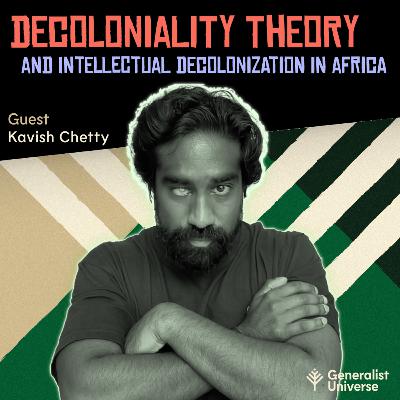
Kavish is a doctoral student in the Department of English Literary Studies at the University of Cape Town, South Africa. His research interests include African literature and the history of intellectual decolonization in Africa. He has worked as a culture journalist for many years, most recently as the film critic for the Sunday Times. *** Support the Channel ***PayPal Donation*** References ***You'll find most of the books mentioned HERE.List of thinkers mentioned (in alphabetical order):Aijaz Ahmad - Amílcar Cabral - Aníbal Quijano - Arif Dirlik - Audre Lorde - Ayi Kwei Armah - Bessie Head - Biodun Jeyifo - Boaventura de Souza Santos - C. Wright Mills - Chinua Achebe - Chinweizu Ibekwe - Dipesh Chakrabarty - Dilip Parameshwar Goankar - Edward Said - Fredric Jameson - Frantz Fanon - Gayatri Spivak - Homi K. Bhabha - J. Sai Deepak - Jonathan Jansen - Julius Nyerere - Joseph-Achille Mbembe - Kwame Anthony Appiah - Kwame Nkrumah - Kwasi Wiredu - Mogobe Ramose - Nelson Maldonado-Torres - Neil Lazarus - Ngũgĩ wa Thiong'o - Olúfẹ́mi Táíwò - Paulin J. Hountondji - Ramón Grosfoguel - Reverend Attoh-Ahuma - Sabelo J. Ndlovu-Gatsheni - Samuel Ajayi Crowther - Samir Amin - Silvia Rivera Cusicanqui - Steve Biko - Toyin Omoyeni Falola - Tsitsi Dangarembga - Walter Mignolo - Walter Rodney - Yambo Ouologuem

Dr. Alice Evans is a Senior Lecturer in Developmental Social Sciences at King’s College London and a Visiting Professor at the University of Toronto. She is currently writing a book titled The Great Gender Divergence: Why All Societies Became More Gender-Equal, and Why Some Are More Equal Than Others. She has published on topics such as gender, urbanization, drivers of social change, inequality, and global production networks. In addition to her blog and Substack, she hosts a podcast called Rocking Our Priors, where she shares her latest research and updates her hypotheses on the variables that shape gender relations in human societies.INTERVIEW ORIGINALLY RECORDED IN AUGUST 2023*** Support the Channel ***PayPal Donation
Comments


Download from Google Play

Download from App Store
 United States