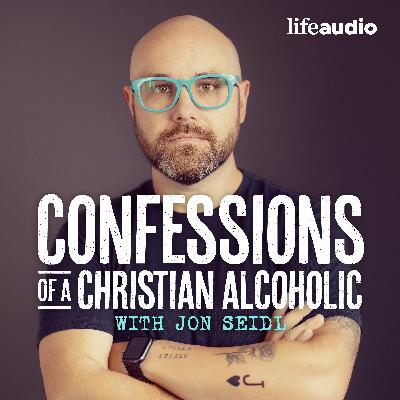
DiscoverConfessions of a Christian Alcoholic with Jon Seidl
Confessions of a Christian Alcoholic with Jon Seidl
Claim Ownership

Confessions of a Christian Alcoholic with Jon Seidl

Author: Jon Seidl

Subscribed: 7Played: 71
Share

Description

Jon Seidl is the bestselling Christian author who became an alcoholic, not the other way around. It's usually the other way around. Or is it? "Confessions of a Christian alcoholic" (based on the book by the same title) is all about real stories, radical vulnerability, and remarkable comebacks of people who have struggled with alcoholism and addictions of all sorts. The show features interviews with fellow addicts and alcoholics as well as professionals in the fields of trauma, faith, and addiction recovery. Because let's be honest, we're all addicted to something. "Confessions" is a place for the desperate, the downtrodden, the destitute, and especially, the drunk. But it's also a place of hope and healing. Jon found sobriety after decades of struggling, but more importantly than finding sobriety, he found Jesus. In every episode, he gets radically vulnerable as he explores what it looks like to be on this journey of messy sanctification. Visit christianalcoholic.com for more resources.

45 Episodes
Reverse
“Suffering brings you to the end of yourself and you have to decide—do I love the Giver or do I love the gifts the most?” That realization didn’t come easily for Kimberly Phinney. It came after years of chasing the kinds of addictions people rarely call addictions at all—perfectionism, workaholism, people-pleasing, and the relentless drive to prove your worth. And it came after chronic illness stripped away the very things she once used to define herself and led to an unraveling. For Kimberly, that unraveling eventually led to a nervous breakdown in her twenties. But the story didn’t stop there. Years later she was diagnosed with severe stage-four endometriosis. What followed were multiple surgeries, catastrophic complications, sepsis, months of being bedridden, and the long process of learning how to walk again. In a short span of time, the things that once shaped her identity—productivity, professional success, physical strength, reputation—were stripped away. What remained forced her to confront a deeper question: when suffering removes the gifts we’ve relied on, do we still love the Giver? In this episode, Kimberly shares how perfectionism, anxiety, and eating disorders quietly shaped her early life, how chronic illness dismantled the idols she didn’t know she had built, and how suffering became the place where her faith was both tested and deepened. If you’ve ever wrestled with perfectionism, self-reliance, the "shiny" addictions as Kimberly calls them, chronic illness, shame, or the tension between faith and suffering, this conversation is an honest look at what it means to keep trusting God when he's all you have to hold on to. Looking for a one-stop recovery resource? Learn more about the Tyndale Life Recovery Bible here. We explore: — The “shiny addictions” that often hide behind success, including perfectionism, workaholism, people-pleasing, and control— How trauma, anxiety, and identity wounds can quietly build toward a mental health crisis— Why socially acceptable addictions can be just as destructive as substance addictions— The devastating physical toll of severe stage-four endometriosis and chronic illness— What happens when suffering strips away productivity, independence, and reputation— The connection between shame, secrecy, and healing— How chronic illness exposed the idols Kimberly did not realize she had built— Why suffering can deepen faith instead of destroying it— What it means to love the Giver more than the gifts Get Kimberley's books: Of Wings and Dirt and Exalted GroundThe website: The Way Back to OurselvesKimberly's Substack newsletter: My Way BackFollow her on InstagramFollow me: @jonseidlOrder my new book, Confessions of a Christian AlcoholicGet the Tyndale Life Recovery Bible: https://hubs.la/Q041HjWm0Support the Show: https://www.jonseidl.com/ Discover more Christian podcasts at lifeaudio.com and inquire about advertising opportunities at lifeaudio.com/contact-us.
“Everyone has a shame story.” That’s from this week’s guest, Dr. Zoe Shaw. And she’s right. Shame isn’t reserved for the dramatic or the scandalous. It’s universal. It goes back to the garden. It hides deep. And it quietly shapes far more of our behavior than we’d like to admit. Dr. Zoe is a licensed psychotherapist, speaker, and author of Stronger in the Difficult Places: Heal Your Relationship with Yourself by Untangling Complex Shame. Her story has been featured on the OWN Network, and her clinical work focuses on helping people untangle complex shame, break cycles of codependency, and build emotionally healthy relationships rooted in truth instead of hiding. In this episode, we unpack what shame really is, how it forms, and why so many Christians confuse shame with holiness. Zoe shares her story of becoming pregnant at 15, being sent away to give birth in secret, and returning home carrying layers of hidden shame that shaped decades of overachievement, people-pleasing, and self-protection. And if you’ve spent any time in recovery, you know this pattern. Shame doesn’t make you better. It makes you hide. It drives behavior underground. It convinces you that if people really knew you, they wouldn’t love you—and maybe that God wouldn’t either. Zoe explains the difference between guilt and shame, simple shame and complex shame, and why guilt can lead to repentance, but shame leads to isolation. We talk about how complex shame snowballs over time, how overachievement can become a coping strategy, and why external validation doesn’t always dissolve what’s happening internally. We also talk about faith. About bringing your real self—not just your cleaned-up self—to Christ. Because the gospel tells us we are loved despite our flaws and invites us out of hiding. We wrestle with forgiveness—not as minimizing what happened—but as “giving up all hope of a better past.” We talk about codependency, about trying to fix others in order to feel worthy ourselves. And we explore what Zoe calls the “maintenance phase” of healing, where shame still shows up but no longer gets to run the show. If everyone has a shame story, the real question becomes: What are you doing with yours? Are you hiding it? Managing it? Overachieving around it? Or are you bringing it into the light—where Christ has been inviting you the whole time? Looking for a one-stop recovery resource? Learn more about the Tyndale Life Recovery Bible here. We Explore: —The difference between guilt, simple shame, complex shame, and toxic shame—Why shame drives behavior underground instead of transforming it—How complex shame builds in layers over time—The connection between shame and overachievement, self-harm, and addiction patterns—What it means to “deconstruct the blame”—Forgiveness as giving up hope of a different past—The link between shame and codependency—Why fixing others won’t fix you—Healthy vulnerability versus oversharing—What the maintenance phase of healing actually looks like Get Zoe's new book: Stronger in the Difficult PlacesFollow Zoe on InstagramWatch Zoe's story on OWNFollow me: @jonseidlOrder my new book, Confessions of a Christian AlcoholicGet the Tyndale Life Recovery Bible: https://hubs.la/Q041HjWm0Support the Show: https://www.jonseidl.com/ Discover more Christian podcasts at lifeaudio.com and inquire about advertising opportunities at lifeaudio.com/contact-us.
“I feel like I’m seeing colors now that I didn’t know existed.” There should be a study done on how many recovering addicts say this exact thing (or something similar) about colors and their senses. It's what I said after getting sober and pursuing Jesus, and it's what Eddie Brett told me happened to him after he did the same thing.  Eddie is someone who had it all. He had the record deal. The top 10 hit. The Simon Cowell contract. He stood on the stage of Britain’s Got Talent and nearly won the whole thing. From the outside, it looked like momentum and success. But inside, things were unraveling. After getting dropped from his label, the drinking escalated. Nights blurred together. Shame piled up. A drunk-driving incident forced him to sit with a question he’d been avoiding: What if this isn’t just normal partying? What if this is something deeper? In this episode, Eddie opens up about chasing blackouts, losing himself in alcohol culture, and the moment he admitted in a lonely studio, “I’ve actually got a problem.” He talks about what sobriety exposed in him—old wounds, fear of rejection, and a lifelong habit of running—and he shares how faith grew out of his climb toward finding the parts of himself he had numbed away. If you’ve ever felt empty after getting everything you wanted, you'll want to hear Eddie's story. Looking for a one-stop recovery resource? Learn more about the Tyndale Life Recovery Bible here. We Explore: – Fame, record deals, and the identity crisis that followed success– The cultural pressure of British drinking culture and why “I’m fine” is so easy to believe– The drink-driving incident that forced an honest look inward– Writing a song alone in a studio and realizing, “I’ve actually got a problem”– Why early sobriety felt like missing out—and how that shifted– Replacing alcohol with discipline, fitness, and intentional habits– The impact of a 30-year sober church member who radiated joy– How faith reshaped his fashion, language, career decisions, and relationships– Why pursuing Jesus changed more than just his drinking– What it means to “see colors you didn’t know existed” in sobriety Listen to Eddie's new Album: Common KalosFollow Eddie on InstagramFollow me: @jonseidlOrder my new book, Confessions of a Christian AlcoholicGet the Tyndale Life Recovery Bible: https://hubs.la/Q041HjWm0Support the Show: https://www.jonseidl.com/ Discover more Christian podcasts at lifeaudio.com and inquire about advertising opportunities at lifeaudio.com/contact-us.
“Hope does not know how to leave. It just stays and quietly whispers, 'everything’s going to be okay. I know everything isn’t okay right now. Everything’s going be okay.'” That's from Tanner Olson, an absolutely incredible poet who has a lot to say about the things that plunge us into addiction in the first place. His poetry isn't unreachable, though. It's poetry that meets you where you are at. Especially in your struggles. And that's why I'm talking to him today.  Tanner understands hopelessness—that thing so many of us try to escape and drink away. He's struggled through infertility, depression, and working jobs you know you weren't meant to work. Now he's written a new book all about the antidote to hopelessness called Getting Through What You’re Going Through. It’s a collection of poems and reflections written through hard seasons when the life he wanted felt far out of reach. He doesn’t offer clichés. Instead, he offers beauty. In this episode, we talk about what led to the new book: working at Chick-fil-A at 25 while dreaming of becoming a writer, winters in northern Wisconsin that felt isolating, and depression that wrapped him like a wet bathing suit. But more importantly, we talk about hope—not as a slogan, not as a trite verse thrown at pain—but as something that remains. If you’ve ever felt stuck…If you’ve ever wondered whether you have the faith to sit with yourself instead of escaping…If you’ve ever questioned whether God is still present in what you’re walking through… This conversation is an invitation to slow down and go through it, not around it. Because in those places is where God meets us.  Looking for a one-stop recovery resource? Learn more about the Tyndale Life Recovery Bible by visiting https://hubs.la/Q041HjWm0. We Explore: — Hope as “the full assurance that God is with me in this and will get me through this”— The lie of feeling like a burden and not being good enough— Depression, loneliness, and winters in northern Wisconsin— Working at Chick-fil-A at 25 while pursuing a writing calling— The courage required to leave a season that is no longer life-giving— Why spiritual clichés often deepen wounds instead of healing them— How to sit with someone who feels hopeless without trying to fix them— The quiet, steady nature of real hope— The difference between escapism and endurance— Developing the faith to sit with yourself instead of reaching for escape Get Tanner's new book: Getting Through What You're Going Through: Notes and Poems for Hoping and BecomingFollow Tanner on Instagram and SubstackTanner's website: writtentospeak.comFollow me: @jonseidlOrder my new book, Confessions of a Christian AlcoholicGet the Tyndale Life Recovery Bible: https://hubs.la/Q041HjWm0Support the Show: https://www.jonseidl.com/ Discover more Christian podcasts at lifeaudio.com and inquire about advertising opportunities at lifeaudio.com/contact-us.
“Forgiveness isn’t condoning what happened. It’s choosing not to let it destroy you anymore. … I forgave my dad more times than I can count, and I’ll probably keep forgiving him forever.” Those are the beautiful words from Stephen McWhirter. You might not know McWhirter's name, but you do know his songs. Especially one of them. That’s because he’s the man behind the incredibly gripping worship anthem “Come Jesus Come,” recorded by CeCe Winans and eventually country superstar Cody Johnson. But that's just a small part of a much bigger story. That story? It starts at a young age when McWhirter's father, a successful preacher loved by everyone, would beat his mother. The man who would praise God in the morning would punch his mom in the evening. How do you make sense of that? The way so many of us do: we try to escape it. Numb it. Blur it out. That’s exactly what McWhirter did. Despite his Christian upbringing, he ran hard into a life of drugs and alcohol starting at a young age. He needed to do all he could to drown the hypocrisy. The confusion. The images. Until one night, he couldn’t run anymore and God met him in the most unlikely way. In this episode, McWhirter tells his unedited story from bitterness, to addiction, and ultimately to forgiveness. Along the way, he also tells the unlikely story behind Come Jesus Come—a song born out of longing for Christ’s return that later found a wider audience through Winans and Johnson—and explains how that longing reshaped the way he lives in the present. This is a conversation for anyone who has ever tried to run from God, and for anyone longing for things to be made right. Looking for a one-stop recovery resource? Learn more about the Tyndale Life Recovery Bible by visiting https://hubs.la/Q041HjWm0. We explore:  — How spiritual hypocrisy can fuel addiction and rebellion— Growing up with abuse behind the scenes of public faith— Addiction as self-destruction, numbness, and unresolved rage— Encountering Jesus in the middle of active drug use— Why forgiveness is necessary even when reconciliation isn’t possible— The repeated, ongoing nature of true forgiveness— Repentance as an invitation to freedom, not punishment— Why hiding always leads to deeper bondage— Why recovery aimed only at sobriety will never be enough— What it means to become fully alive in Jesus Get Stephen's new book: Radically Restored: How Knowing Jesus Heals Our BrokennessStephen's Instagram: @stephenmcwhirterFollow me: @jonseidlOrder my new book, Confessions of a Christian AlcoholicGet the Tyndale Life Recovery Bible: https://hubs.la/Q041HjWm0Support the Show: https://www.jonseidl.com/ Discover more Christian podcasts at lifeaudio.com and inquire about advertising opportunities at lifeaudio.com/contact-us.
“You are not stuck because of what happened. You’re stuck because your brain keeps running the same play. And your brain is always ready to run a new one the moment you tell it to.” That's just one of the incredible insights from practicing neurosurgeon Dr. Lee Warren, who joins us today to talk about a practice he calls "self-brain surgery." In this conversation, Lee explains how modern neuroscience confirms what Scripture has been teaching for thousands of years: transformation happens through the renewing of the mind, and our brains are not fixed, broken machines doomed to repeat the past. Drawing from his experience as a neurosurgeon, Iraq War veteran, and grieving father, Lee walks through the science of neuroplasticity and why addiction is best understood as a hijacked reward system rather than a moral failure. We talk about how thoughts shape brain structure, why trauma isn’t what keeps us stuck—but our responses to it can—and how believers often unknowingly participate in their own demise by assuming change isn’t possible. This episode is not about quick fixes or denying the need for professional help. It’s about recovering agency, reclaiming responsibility, and understanding that God has designed the brain to change. If you’ve ever felt trapped by patterns you hate, weighed down by grief, or discouraged by how slow sanctification feels, this conversation offers both hope and a way forward. Listen if you want a deeper, grounded understanding of how faith and neuroscience work together in real transformation. We explore: — Why the brain is not creating your thoughts but responding to them— How neuroplasticity explains biblical commands to renew the mind— Addiction as a hijacked reward system rather than mere behavior— The difference between trauma and the responses we form to trauma— Why grief can become something we unconsciously worship— How “self-brain surgery” describes real, structural brain change— The role of metacognition in interrupting destructive thought patterns— Why Christians often feel stuck even while believing the right theology— The limits of medication and the necessity of professional care alongside cognitive change— What it means to refuse to participate in your own demise Get Lee's new book: The Life-Changing Art of Self-Brain SurgerySign up for Lee's emailsLee's Instagram: @drleewarrenFollow me: @jonseidlOrder my new book, Confessions of a Christian AlcoholicSupport the Show: https://www.jonseidl.com/ Discover more Christian podcasts at lifeaudio.com and inquire about advertising opportunities at lifeaudio.com/contact-us.
“Addiction promises control, comfort, and rescue—but it actually strips all of those things away. It intoxicates you so you can no longer discern what’s really happening.” Is addiction merely a personal struggle—or is it part of a much larger spiritual battle? In this episode, Joel Muddamalle helps us rethink addiction through the lens of spiritual warfare, not in a sensational or fear-driven way, but in a deeply biblical and pastoral one. Rather than framing spiritual warfare as dramatic demonic encounters or something to obsess over, Joel explains how the real danger often lies in what quietly compromises our discernment, dulls our awareness, and slowly reshapes our loves. Joel is the author of a new book, The Unseen Battle: Spiritual Warfare, Three Rebellions, and Christ’s Victory Over Dark Powers. We explore how addiction functions as a form of spiritual intoxication—one that promises relief and control while subtly disorienting the heart, mind, and soul. Joel shows why Scripture consistently calls believers to be sober-minded, alert, and resistant, and how addiction undermines those very capacities. This conversation also reframes sanctification itself as a battleground, where the fight is not simply against bad habits, but against counterfeit comforts that keep us from true dependence on Jesus. If freedom has felt harder than you think it should, or willpower alone never seems to be enough, this episode offers a reason: the struggle is bigger than you think. But so is the God you serve. We Explore: — why addiction is not just about excess but about losing spiritual and emotional discernment— how Scripture frames spiritual warfare as something we resist, not something we seek out— the difference between awareness and acceptance when it comes to addictive patterns— why sanctification itself is a form of spiritual warfare— how counterfeit comfort keeps us from true dependence on Jesus— the danger of aiming for sobriety instead of aiming for Christ— how pride, secrecy, and isolation fuel addiction— why honesty and humility are essential for real healing— how modern systems quietly train us to self-medicate and self-save— what it actually looks like to fight sin with love instead of willpower Joel's new book: The Unseen Battle: Spiritual Warfare, Three Rebellions, and Christ’s Victory Over Dark PowersJoel's Substacks Humble Theology and Stranger TheologyJoel’s Instagram: @muddamalleInvite Joel to speakFollow me: @jonseidlOrder my new book, Confessions of a Christian AlcoholicSupport the Show: https://www.jonseidl.com/ Discover more Christian podcasts at lifeaudio.com and inquire about advertising opportunities at lifeaudio.com/contact-us.
“It wasn’t about how much I drank—it was about how much mental and heart space it occupied. I loved it more than I wanted to admit.” That realization for Ali Kennedy didn’t come during a dramatic rock bottom. Instead, it came after years of managing, moderating, and justifying a relationship with alcohol that looked fine on the outside but was slowly crowding out joy, clarity, and intimacy with God. In this episode, I sit down with Ali—a pastor’s wife, missionary, former Ivy League athlete, and writer—who shares her honest story of giving up alcohol not once, but twice. Ali’s journey challenges the idea that addiction has to look a certain way and invites us to ask deeper questions about disordered loves, shame, and the subtle ways we settle for breadcrumbs when God is offering a feast. Ali opens up about growing up around alcohol, finding early freedom after a radical encounter with Christ, and then slowly welcoming alcohol back into her life in socially acceptable, highly-regulated ways. Over time, what never crossed obvious lines began to quietly take up more space than she wanted to admit—especially during seasons of grief, motherhood, and ministry pressure. And I think a lot of us can relate to that. This conversation isn’t about labels. It’s about obedience, discernment, and the courage to listen when the Holy Spirit keeps tapping your shoulder. If you’ve ever felt foggy, restless, or spiritually distracted—even while doing “nothing wrong”—Ali’s story may give you permission to take that prompting seriously and ask what God might be inviting you to lay down. We explore: — Why addiction isn’t defined only by quantity or frequency— How shame keeps Christians silent and stuck— The difference between moderation and freedom— Alcohol as a “disordered love” rather than a visible vice— Grief, motherhood, and the quiet return of coping behaviors— Why obedience sometimes matters more than labels— The role of confession and community in lasting change— What it means to stop settling for breadcrumbs and pursue the feast Work with Ali: https://www.alikennedy.comAli's writing: Homes of GloryAli's Instagram: @alikennedyliveFollow me: @jonseidlOrder my new book, Confessions of a Christian AlcoholicSupport the Show: https://www.jonseidl.com/ Discover more Christian podcasts at lifeaudio.com and inquire about advertising opportunities at lifeaudio.com/contact-us.
“I got prideful. I was like, ‘I’m never going to drink again.’ And then all of a sudden… it looked really good.” This conversation with Jeramy Houghton is a reminder that recovery is rarely clean or linear. Jeramy shares how growing up in an unsafe home shaped his sense of stability long before alcohol ever entered the picture. When drinking did become part of his life, it wasn’t chaos at first—it was relief. Alcohol became a way to cope with pressure, stress, and the weight of adulthood, even as his faith was growing. Over time, that coping turned into dependence. Jeramy talks honestly about knowing God was calling him to stop and still choosing alcohol because it felt easier. What started as occasional drinking escalated into daily use, morning vodka, and a slow unraveling that included job loss, health warnings, and deep strain on his marriage. Eventually, everything came to a head when Jeramy admitted what he could no longer deny: he couldn’t stop on his own. What followed was a dramatic turning point. Jeramy describes a moment where his desire for alcohol disappeared entirely—something he’s careful not to present as a formula or a promise. For years, sobriety came without craving. But freedom didn’t mean the work was finished. Slowly, pride crept in. After five years sober, Jeramy found himself believing he was beyond the danger zone—until the old pull returned and drinking “looked really good again.” This time, the turning point wasn’t dramatic—it was honest. Jeramy shares how naming his desire out loud before acting on it changed everything, exposing unresolved family pain and leading to difficult but necessary boundaries. His story isn’t about perfection or permanence. It’s about humility, obedience, and the kind of freedom in Christ that keeps inviting deeper truth long after sobriety begins. We Explore: — Growing up in an emotionally unsafe home shaped by alcoholism— How alcohol slowly became a coping mechanism rather than a pleasure— Living as a Christian while choosing alcohol despite conviction— The escalation into daily drinking and morning vodka— Job loss, medical warnings, and the moment of surrender— Experiencing radical freedom from desire—and why that wasn’t the end— Why some recovery structures felt like a different form of bondage— How pride quietly reopened the door after years sober— The power of naming desire out loud before acting on it— Setting painful family boundaries for the sake of safety— What freedom in Christ looks like amid ongoing sanctification Follow me: @jonseidlOrder my new book, Confessions of a Christian Alcoholic.Support the Show: https://www.jonseidl.com/ Discover more Christian podcasts at lifeaudio.com and inquire about advertising opportunities at lifeaudio.com/contact-us.
“Alcohol is a poison disguised as a remedy.” That’s the wisdom Ericka Andersen brings to this conversation—wisdom that developed after years of a quiet struggle that slowly took ahold of her and wouldn't let go. Like many evangelicals nowadays, she assumed drinking was neutral, normal, and largely harmless. But over time, she began to notice a widening gap between what alcohol promised and what it actually delivered. In this episode, Ericka shares how drinking slowly moved from social habit to something she felt unable to control—even though she knew early on that something was off but kept overriding that inner voice. She opens up about hiding alcohol, waking up in the middle of the night consumed by compulsion, and living with the tension of appearing fine on the outside while unraveling internally. Ericka also names the loneliness of not seeing stories like hers reflected in church spaces, where alcohol is increasingly treated as a non-issue or even a virtue and especially harms women. Rather than calling for rules or ultimatums, though, she makes a compelling case for curiosity—asking better questions about why we drink, what it costs us, and who it quietly harms. This conversation is for anyone who doesn’t look out of control but knows something is wrong; for those who don’t resonate with “rock bottom” narratives but still feel unsettled; and for Christians who are ready to examine cultural assumptions and get curious. We Explore: — How alcohol functions as a socially acceptable coping mechanism— Why early internal warnings are so easy to ignore— The gap between outward control and inner compulsion— How secrecy quietly reshapes drinking habits— Why many Christians don’t see their stories reflected in church culture— The myth that a problem has to look extreme to be real— How alcohol promises relief but delivers diminishing returns— Why asking better questions matters more than forcing behavior change— The difference between legal and harmless— What freedom begins to look like when denial ends Ericka's new book: Freely Sober Follow Ericka: @ericka_andersen Ericka's writing: https://erickaandersen.substack.com  Follow me: @jonseidl Order my new book, Confessions of a Christian Alcoholic.Support the Show: https://www.jonseidl.com/ Discover more Christian podcasts at lifeaudio.com and inquire about advertising opportunities at lifeaudio.com/contact-us.
“When I numbed anxiety and uncertainty, I also numbed beauty and joy.” That moment of clarity from Ericka Graham came after years of abusing prescription drugs, when God met her in a beautiful way involving a bumble bee and a flower. The point? Substances numb the bad, sure, but they also numb the good. But addiction isn't the whole of Ericka's story. From a young age, she also struggled with obsessive-compulsive disorder—compulsions, intrusive thoughts, and scrupulosity, the form of OCD that focuses on faith and religious rituals. In this episode, Ericka shares how OCD and scrupulosity quietly trained her nervous system to look for relief through control. She explains how religious fear, perfectionism, and an all-or-nothing mindset made it difficult to tell the difference between faith and compulsion—and how those same patterns eventually showed up in disordered eating and prescription medication abuse. None of it looked alarming from the outside. She was high-functioning, responsible, and sincere. But internally, anxiety was running the show. Ericka also reflects on the night in an emergency room that her denial cracked, why recovery didn’t begin with willpower, and how learning to sit with uncertainty became a crucial part of healing from both addiction and OCD-driven control. This conversation is for anyone who lives with intrusive thoughts, spiritual anxiety, or the exhausting need to get it “right,” and for those who’ve learned to cope quietly rather than ask for help. Ericka’s story is a reminder that numbness is never selective—and that real healing often begins when we stop managing ourselves and allow God to meet us in our fear instead of our certainty. We explore:  – How anxiety quietly fueled Ericka’s need for control– The early signs of compulsive behavior that were easy to overlook– Why high-functioning coping often delays honesty– How numbing anxiety also numbs joy, beauty, and connection– The progression from disordered eating to prescription drug abuse– Why denial can coexist with sincerity and faith– The moment that finally cracked her self-deception– The difference between willpower and surrender in recovery– How recovery reshaped her experience of God– Why feeling again was both terrifying and necessary Ericka's podcast: Curiously Follow Ericka: @mrserickagraham Follow me: @jonseidl Order my new book, Confessions of a Christian Alcoholic.Support the Show: https://www.jonseidl.com/ Discover more Christian podcasts at lifeaudio.com and inquire about advertising opportunities at lifeaudio.com/contact-us.
“If you think you have an issue, you probably do.” That sentence from Carol McCracken gets to the heart of this week's episode. Carol didn’t fit the picture she had in her mind of what an alcoholic looked like. She was a Christian. A Bible study teacher. A ministry leader. A good mom. And for years, she told herself the same thing many of us do: I don’t have a problem—because I don’t look like that. But slowly (like it does for many) alcohol became her primary way of coping with chronic stress from raising a special needs son, fear, control, and the pressure to perform. She shares how drinking escalated over years, how secrecy and isolation took hold, and how her understanding of addiction was shaped by cultural myths, church misunderstanding, and even well-meaning pastoral advice. But all that came crashing down one afternoon, when a trip to get more wine ended in being arrested on the side of the road for a DUI. That moment became a surprising turning point, eventually leading to clarity, surrender, and an unexpected reconciliation after her divorce she never saw coming. (And neither did we!) This is a conversation for anyone who has ever wondered if their drinking “counts” as a problem, for those who can stop for a while but can’t stop thinking about starting again, and for anyone who is exhausted from carrying fear, control, and unprocessed pain. Carol’s story is a reminder that freedom doesn’t begin when life falls apart—it begins when we get honest. We explore: – How stress, fear, and control quietly fueled Carol’s drinking– Why performance and image management thrive in church culture– How alcohol slowly moved from enjoyment to emotional anesthesia– The myth that addiction has to look a certain way to be real– Why quantity and frequency aren’t the best measures of a problem– What happens when shame finally gives way to honesty– The role of surrender versus willpower in recovery– Why curiosity is often the first step toward freedom– How alcohol promised relief but delivered deeper captivity– What lasting healing looked like over time, not overnight– The surprising twist after getting arrested for a DUI– The reconciliation after her divorce she never saw coming Carol’s podcasts: “Faith Over Fear” and “Your Daily Bible Verse” Follow Carol: @carologlemccracken Follow me: @jonseidl Order my new book, Confessions of a Christian Alcoholic.Support the Show: https://www.jonseidl.com/ Discover more Christian podcasts at lifeaudio.com and inquire about advertising opportunities at lifeaudio.com/contact-us.
“We can think and act our way to a new feeling. We cannot feel our way to a new way of thinking and acting.” That line from therapist and author Nicole Zasowski cuts to the heart of anxiety, addiction, and the stories we tell ourselves when life feels uncertain. Nicole is the author of What If It’s Wonderful?—a book built around a disarming and deeply important question: What if, instead of bracing for the worst, we allowed ourselves to hope? In this conversation, Nicole shares how a season marked by loss, miscarriage, and prolonged uncertainty exposed her own coping mechanisms—performance, control, and pessimism disguised as realism. She explains why catastrophizing isn’t just negative thinking but a form of control, and why preparing for the worst often robs us of joy without actually protecting us from pain. We also explore the connection between shame and escape, how feelings can be real without being true, and why naming what’s happening inside us is essential for healing. Nicole offers practical ways to interrupt shame cycles, retrain the brain toward hope, and steward pain without glorifying it. This episode is an invitation to tell ourselves a truer story—about who God is, who we are, and what might still be possible. We explore: — Why catastrophizing feels responsible but quietly fuels anxiety— How the brain learns fear faster than hope— The difference between feelings that are real and thoughts that are true— Why shame often drives both anxiety and addictive behaviors— How performance and control masquerade as faith— What miscarriage and unresolved grief revealed about Nicole’s inner life— Why hope is not denial, but courage— Practical ways to retrain anxious thought patterns— How naming internal experiences leads to healing— What it looks like to tell a truer story about God and ourselves Website: https://www.nicolezasowski.com Books: What It's Wonderful? and Daring Joy Follow Nicole on Instagram: @nicolezasowski Follow Jon: @jonseidl Order Jon's new book, Confessions of a Christian Alcoholic. Get daily motivation: www.theveritasdaily.comSupport the Show: https://www.jonseidl.com/ Discover more Christian podcasts at lifeaudio.com and inquire about advertising opportunities at lifeaudio.com/contact-us.
“I don’t want to be 60 years old having the same issues I had when I was 25.” What an honest and important statement from this week's guest, Brandon Ricks. Because the truth is, too many of us have just resigned ourselves to always being the way we are now. The fight for something different is hard, and so we give up. Brandon, though, finally had enough, and he started the painful but hopeful process of healing. Brandon is a successful entrepreneur with his own company. He projects strength and competency. But for a long time, behind that exterior was someone who had shut down for so long that he couldn’t feel anything—and didn’t know how to. Porn became one of the ways he coped. So did marijuana, which he used to numb himself when life felt too overwhelming or too painful to face. He even shares the detailed story of the period in his life where he considered ending it all (and what kept him from doing it). In this conversation, Brandon explains how his numbing behaviors weren’t just random vices but survival strategies—ways to avoid the internal world he’d never been taught to navigate. He talks about the moment the Holy Spirit confronted his hiding, how the collapse of a relationship exposed the fragility of his emotional world, and why counseling became the turning point he didn’t know he needed. Brandon also unpacks what long-term emotional shutdown does to the mind and body, why addiction thrives in silence and isolation, and why maturity requires discomfort, not avoidance. This episode reminds us that healing begins when we stop numbing and start telling the truth—the truth that Jesus says about us and our situations. We explore: —Why Brandon learned to shut down his emotions to survive—How porn and weed became coping mechanisms rather than “just habits”—The difference between self-protection and sanctification—Why the Holy Spirit confronted his hiding—How a painful breakup forced him to reckon with his inner world—Why healing requires community, honesty, and discomfort—The neurological impact of long-term emotional shutdown—The choice every man faces: hide and numb, or grow and tell the truth—Why he refuses to be “60 years old with the same issues I had at 25” Work with Brandon: https://productionmasterminds.com  Follow Jon: @jonseidl Order Jon's new book, Confessions of a Christian Alcoholic. Get daily motivation: www.theveritasdaily.comSupport the Show: https://www.jonseidl.com/ Discover more Christian podcasts at lifeaudio.com and inquire about advertising opportunities at lifeaudio.com/contact-us.
“Trauma does not reside in the bad event. Trauma is what becomes embedded in your body in the wake of a bad event when there’s no one there to comfort you.” What if you've been viewing trauma all wrong? And what if you don't think you've experienced trauma but you actually have? My guest this week is renowned trauma therapist Adam Young, and we're having a powerful conversation on not only trauma but our origin stories—specifically our family-of-origin stories. Adam explains why the wounds we minimize—the moments we brush off as “not that bad”—often carry the deepest impact. Because, as he explains, the real harm isn’t the event itself but what happened after: the absence of comfort, attunement, engagement, and care. That’s what embeds in our bodies and shapes the ways we cope. And often, that coping becomes unhealthy when we don't name what has happened and talk about it. Adam unpacks how trauma lives in the body, why triggers are often physiological rather than emotional, and how our relational histories shape the addictions we later develop. He also explains why dysregulation isn’t a character flaw but a survival response, and why compassion toward your younger self may be the most mature step you can take. This episode is an invitation to look beneath the behaviors you want to change and explore the stories that shaped them. Healing begins by honoring your wounds and telling the truth about where you come from. We Explore: — Why trauma is not the event but the absence of an empathetic witness afterward— The connection between chronic dysregulation and addiction— How the body keeps responding to stories long after the mind forgets— The role of triggers and why they’re physiological— Why kindness changes the heart more effectively than shame— What children need to develop securely—and what happens when those needs aren’t met— How unresolved family-of-origin stories form our adult coping strategies— Why honoring your wounds is an act of courage, not self-pity— Practical next steps for engaging your story with curiosity instead of contempt Website: https://adamyoungcounseling.com Podcast: The Place We Find Ourselves Book: Make Sense of Your Story Follow Jon: @jonseidl Order Jon's new book, Confessions of a Christian Alcoholic. Get daily motivation: www.theveritasdaily.comSupport the Show: https://www.jonseidl.com/ Discover more Christian podcasts at lifeaudio.com and inquire about advertising opportunities at lifeaudio.com/contact-us.
“We all just have different medicines that we reach for.” That’s how Tim Sexton describes the real story behind the affair that blew up his life. Even though at one point that affair led to his downfall as a pastor, today it's not something he hides from. Instead, he's leaning into it in hopes to help others, and one of the ways he's doing that is by calling out the roots that run much deeper. Those roots for him? A lifelong addiction to people-pleasing and affirmation rooted in childhood trauma, fear, and spiritual confusion. In this conversation, Tim opens up about growing up with two alcoholic parents, feeling responsible for their chaos, and carrying a distorted picture of God into adulthood—one built on fear, performance, and the desperate need to be enough. He shares how that inner ache followed him into marriage and ministry, how it quietly shaped his identity, and how flattery, secrecy, and emotional validation became the “medicine” that eventually led to infidelity. But this is not only a story about destruction. It’s also a story about the long road back—through exposure, humility, counseling, discipleship, and the honest surrender that brings real freedom. Tim talks about the years he spent dismantling false identities, the painful undoing that came even after public confession, and the miracle of restoration he never expected. If you’ve ever thought you've done something beyond forgiveness, this episode reminds you that there is always hope. We explore: —Why infidelity was a symptom, not the root—How childhood trauma and alcoholic parents shaped Tim’s identity—People-pleasing as an addiction—Why fear of God (not awe of God) destroyed his early faith—The moment everything collapsed on a high-school football field—What public shame exposed in him—Why approval addiction is every bit as powerful as substance addiction—How Jesus rebuilt him from the inside out—Why the church must rethink restoration—What it really means when Tim says “The best definition of sin I’ve ever heard is you and me trying to get our needs met apart from Christ.” Website: M46Dads.com Book: Fight for Their Hearts: Hope and Help for Every Dad Follow Jon: @jonseidl Order Jon's new book, Confessions of a Christian Alcoholic. Get daily motivation: www.theveritasdaily.comSupport the Show: https://www.jonseidl.com/ Discover more Christian podcasts at lifeaudio.com and inquire about advertising opportunities at lifeaudio.com/contact-us.
“Our hypocrisy is our testimony. That’s God’s glory on display.” That truth from Faith Womack is exactly what those of us with messy sanctification stories not only need to hear, but embrace and embody. We all fall short. We all stumble. And yet, God uses our weakness—not our polished moments—to reveal His power and his grace. Faith Womack is one of the most popular Bible teachers on the internet with over 200,000 Instagram followers, and today she's joining the podcast to talk about how our struggles are exactly what God uses to not only refine us but to put himself on display. In this conversation, Faith and I also talk about how to actually read the Bible faithfully, why so many Christians misuse Scripture, and what it means to walk out holiness without falling into perfectionism. We explore the tension between grace and obedience, why context matters, why so many believers doubt their salvation, and how to build a life that’s rooted in the Word of God. She even helps us unpack some of the Scriptures used against those of us with messy sanctification stories and introduces us to her new book, No More Boring Bible Study. If you’ve ever felt like your failures or weaknesses disqualify you, this episode is a reminder that they are the very place God shines the brightest. We explore: — Why “hermeneutics” isn’t scary but essential— What legalism gets wrong about holiness— Lordship Salvation and the fear of “going on sinning”— How to hold grace and obedience together without shame— Why the thief on the cross destroys our performance mindset— What 1 John and Romans 7 really teach about believers and sin— How to stop weaponizing Scripture and start being formed by it— Why Bible study must be relational, not just informational— How abiding in Christ transforms us over time— The lifelong journey from hypocrisy to testimony Website: BibleNerdMinistries.com Instagram: @biblenerdministries Book: No More Boring Bible Study Follow Jon: @jonseidl Order Jon's new book, Confessions of a Christian Alcoholic. Get daily motivation: www.theveritasdaily.comSupport the Show: https://www.jonseidl.com/ Discover more Christian podcasts at lifeaudio.com and inquire about advertising opportunities at lifeaudio.com/contact-us.
“I was tormented. Literally tormented. I'd look in the mirror and go, ‘What are you doing? That’s not you.’” Brandon Puffer had everything, or so it seemed. He was a Major League pitcher with a World Series ring and was even being groomed to be a big league coach. But beneath the success were so many secret wounds that he refused to deal with. One night, after years of quiet compromising and numbing pain with alcohol, he made a decision that changed everything. In this episode, Brandon tells his story with raw honesty—from a childhood shaped by trauma and numbing, to five years of sobriety and faith, to the night that landed him in a Texas prison. He shares how small compromises led to massive consequences, what repentance really looks like, and how God’s grace can redeem even the most broken story. This isn’t a tale of excuses, it’s one of ownership, humility, and the long, painful work of redemption. We explore: — The slippery slope from “one drink” to full relapse— How trauma and insecurity planted the seeds of addiction— Why white-knuckling sobriety never works— What true repentance means: turning, not just confessing— How taking full responsibility became his path to freedom— The consequences that remain even after grace— How to live unashamed when the world won’t forget— Why humility, gratitude, and daily discipline keep him sober— What it means to be “faithful in the little things” after hitting bottom Website: coachpuffpositive.com Book: From the Bullpen to the State Pen Follow Jon: @jonseidl Order Jon's new book, Confessions of a Christian Alcoholic. Get daily motivation: www.theveritasdaily.comSupport the Show: https://www.jonseidl.com/ Discover more Christian podcasts at lifeaudio.com and inquire about advertising opportunities at lifeaudio.com/contact-us.
“Sin’s power is disconnection.” That's one of the essential ideas that runs through what therapist and author Chuck DeGroat talks about in this episode. A longtime pastor and counselor, Chuck isn't just commenting on burnout and addiction from afar—he's actually lived it. In fact, he opens up about his own journey of breaking down in his early forties, when his body and soul finally gave out after years of religious workaholism. That collapse became the doorway into healing what was broken within. That also happens to be the topic of his latest book, Healing What's Within. In this conversation, Chuck unpacks what he calls homing: the Spirit’s invitation to return to the worth, belonging, and purpose we were made for. We talk about addiction not as the problem, but as the attempted solution to disconnection. Chuck even explains why true recovery isn’t about behavior modification, but about reconnection—to God, to self, and to others. We also discuss why repentance must be specific, how trauma fragments our stories, and what it means to offer empathy to our unhealed parts rather than shame. This is a deeply pastoral, psychological, and hopeful episode for anyone who’s ever wondered, Why do I do what I don’t want to do—and how do I find my way home? We explore: — The three essential questions from Genesis that still heal today: “Where are you?”, “Who told you?”, and “Have you eaten?”— How addiction is an attempted solution to pain and disconnection— Why every human is, at some level, an addict— The myth of purity and how God still uses broken people— What true repentance looks like: specific, reparative, and relational— “Faux-nerability” vs. authentic vulnerability— Why trauma isn’t what happens to us, but what happens inside us— The four needs every child has: to be safe, seen, soothed, and secure— The danger of coping mechanisms that look holy, like workaholism— How to come home to yourself through curiosity, connection, and grace Website: chuckdegroat.net Explore one of Chuck's Soul Care Intensives Chuck's blog: "Sit With Chuck" Book: Healing What's Within Follow Jon: @jonseidl Order Jon's new book, Confessions of a Christian Alcoholic. Get daily motivation: www.theveritasdaily.comSupport the Show: https://www.jonseidl.com/ Discover more Christian podcasts at lifeaudio.com and inquire about advertising opportunities at lifeaudio.com/contact-us.
“Sin doesn’t care who you are or what you’ve seen—it’s coming for all of us.” That theme runs through Kirby Kelly’s story. See, she's part of a group of women you don't often hear about: females that struggle (or have struggled) with pornography addiction. Kirby's story is heartbreaking: She was exposed to pornography at four years old, again at seven, and then again at ten. Each time the exposure happened it left a deeper imprint of secrecy and shame. Even after coming to Christ, she carried the hidden struggle for years, convinced she had to fix it alone. In college, a simple exercise called "stand for your sister" opened the door to confession, community, and real healing. But Kirby's exposure to addiction goes beyond her own. She also happens to be the child of two parents who died of complications related to alcoholism.  In this episode, Kirby talks candidly about growing up as the daughter of two alcoholics, why isolation kept her stuck, and how confession—to God and within community—helped her find freedom. She also shares how abiding in Christ moved from discipline to desire, why boundaries are not buzzkills but protection, and the hope-filled message she wants every struggling parent to hear. We explore: — Early exposure, shame, and why secrecy fuels addiction— Confession vs. concealment and how healing begins in honest community— Sanctification: messy, daily, real— Escapism, control, and chasing dopamine— Abiding in Christ as the path to peace and freedom— Practical boundaries for media and triggers— What she tells parents wrestling with addiction and their kids Website: kirby-kelly.com Instagram: @kirbyisaboss Book: You Can Be Free  Podcast: Bought & Beloved Follow Jon: @jonseidl Order Jon's new book, Confessions of a Christian Alcoholic. Get daily motivation: www.theveritasdaily.comSupport the Show: https://www.jonseidl.com/ Discover more Christian podcasts at lifeaudio.com and inquire about advertising opportunities at lifeaudio.com/contact-us.
loading
Comments 
loading