


 Claim Ownership
Autistic: Beyond the Label
Subscribed: 0Played: 0
Subscribe

© Dana Colarusso, Ph.D., Mom
Description
Hey, have you made an autistic child smile today? Let's talk about what we are learning as we parent, teach and provide fundamental services to autistic children and youth. If you are reading this, you probably already know about Temple Grandin, one of the world's foremost autism advocates. Check out mr recent two-part interview with Dr. Grandin. Come back for a new interview and book review each month!
14 Episodes
Reverse
If your autistic child has meltdowns, displays unusualbehaviours, and scores low on psychometric tests, is it reasonable to hope that he or she can have a bright future? What about success in post- secondary education or a chance at a satisfying career? In thisepisode of Autistic: Beyond the Label, I will explore these questions with Theresa, a dental hygienist from Ontario, Canada who is the mom of two grown boys, the oldest one, Michael, being autistic. What is clear in listening to the story of Theresa and her autistic son, is that where you begin in your autism journey need not determine where you arrive. Even after a healthy start new setbacks can emerge which seem to threatenthe progress that your child is making. However, Theresa shows us that a willingness to ask questions, to seek the right help for both you and your child, and to try, and try again, can make --as it did with her own son -- all the difference. Theresa describes her son’s “blossoming” from a child with tics and odd behaviours who struggled in school and was two years behind his peers in reading, to a thriving university scholar. She also recounts some of the unconventional steps she took to overcome obstacles: For example, her decision to show a psychologist videotapesof her child’s concerning behaviours and her own difficultefforts to manage them. When new challenges arose in her son’s teen years, she turned to the same technique toensure that the most effective intervention was identified. Theresa opens up about the fears and doubts that haunted her as she struggled to understand and find answers to her son’s condition. Many parents will relate to the challenge of dealing with conflicting information and advice. She alsoshares what she has learned about the psychological conditions that often go along with autism and how they can be effectively managed. Gradually with each new success, Theresa learned to let go of the low expectations that seemed to accompany an ASD diagnosis, and to recognize and celebrateher son’s growing skills and strengths, leading to his enrolment in university where he is now excelling in his secondyear. Theresa’s story about raising her autistic son Michael to his full potential is an inspiring reminder that autistickids must have the same access to pathways that the neurotypical world takes for granted. A Note about the diagnosis:In our conversation, the fact that Theresa’s son was alsotested by a pediatric psychologist by way of a play session was incidentally left out.Music composed by and provided with the permission of Peterde Mello.Research:Front Psychiatry. 2022 Feb 28;13:768586. doi:10.3389/fpsyt.2022.768586Recognizing Psychosis in Autism Spectrum DisorderMichele Ribolsi 1,*, Federico Fiori Nastro 2,3, MartinaPelle 2,3, Caterina Medici 2,3, Silvia Sacchetto 2,3, Giulia Lisi 4, AssiaRiccion i 5, Martina Siracusano 6,Luigi Mazzone 5, Giorgio Di Lorenzo 2,3,…https://www150.statcan.gc.ca/n1/pub/11f0019m/11f0019m2024004-eng.htmhttps://universityaffairs.ca/news/neurodiversity-in-canadian-postsecondary-education/Resources:https://www.ontario.ca/page/identifying-students-special-education-needsLook for psychological and behavioural services in yourlocal area. Here are a few in Ontario:https://www.autismontario.com/programs-services/adults/mental-health-resourceshttps://kinarkautismservices.ca/request-a-free-consultation/utm_source=google&utm_medium=search&utm_campaign=sa_kinark_autismcentretoronto_2025&gad_source=1&gad_campaignid=19781378094&gbraid=0AAAAApZpaICJnAuVjXy79ZJ_9oR54ACD_&gclid=Cj0KCQiAjJTKBhCjARIsAIMC44_2DUoaF9pXIenvAr_csyG3ziqzW8ezj0GyrKV4Ugjge8Cq1gJEBUcaAuooEALw_wcBhttps://thefamilyhelpnetwork.ca/services/autism-and-behavioural-services/
This full length episode follows from the October 26 previewepisode titled Higashida’s Alphabet Grid. In this review of Fall Down 7 Times Get Up 8, advocate Beth McBarnett joins me, Dr. Dana Colarusso, in a methodical consideration of this work as both a unique portrait of one man's experience of autism in his own words (published pre-AI, no less!), and a starlit sky of guidance for understanding autism from the inside out. Along the way, we marvel at the evidence of one man's transformation from non-verbal autistic to a far-reaching authorial voice.Bibliographic Information: Title: Fall Down 7 Times Get Up Eight: A young man’svoice from the silence of autism by Naoki Higashida. With introduction by David Mitchell.Originally written in Japanese - translated by KA Yoshidaand David Mitchel. Published in UK by Random House, July 2017Published in Canada by Knop, July 2017Music for this podcast composed by and used with the permission of Peter J de Mello.

Cathy Vey is a Canadian Occupational Therapist registered with the College of Occupational Therapists of Ontario. She isa member of the Ontario Society of Occupational Therapists. Cathy has over 20 years of experience providing occupational therapy services for infants, children, and adolescents with a wide range of needs and abilities. She has also worked with other groups such as Veterans. In this episode of Autistic Beyond the Label, podcast host Dr. Dana Colarusso interviews Cathy Vey about what occupational therapy is and how it can help autistic kids. Cathy Vey shares her knowledge of how occupational therapists tailor the therapy program to the individual child’s specific needs and goals. She explains the difference between top-down and bottom-up strategies, and the dual focus on need-to-do and want-to-do goals. In this conversation, Dr. Dana Colarusso and Cathy Vey explore the different facets of occupational therapy, especially in regard to children with autism, including:*The ways in which occupational therapy can help children participate in daily activities at home, at school, and in the community*the importance of parental involvement*the role of sensory processing and stimming in therapy. The discussion also highlights success stories and the various therapeutic approaches used to support children's development.Cathy Vey can be reached at her website: cathyveyot.comMusic composed by and used with the permission of Peter de Mello.
Scary tales with autistic heroines? In this review of The Framed Women of Ardemore House Dr. Dana Colarusso explores relatively new literary phenomenon of the autistic heroine. In this case, the female protagonist Jo Jones is victim, suspect, and investigator, all three. Yet as an autistic character she lends a new perspective on the roles neurodivergent individuals can play in both life and art. The mix of strengths and weaknesses, sensory, neurological, and social, in the atypical heroine make for a refreshing take on the familiar mystery novel formula. Along the way, we look at one of the character's stated autistic conditions: hyperlexia, and its various ways of presenting.Schillace, Brandy. The Framed Women of Ardemore House. Hanover Square press. February 13, 2024.Hyperlexia. Written by WebMD Editorial Contributors Medically Reviewed by Jabeen Begum, MD on October 09, 2023https://www.webmd.com/children/what-is-hyperlexiaWhen Babies Read: A Practical Guide to Helping Young Children with Hyperlexia, Asperger Syndrome and High-Functioning Autism by Audra Jensen and Peter Steen Jensen. Published by Jessica Kingsley Publishers. August 8, 2005.Music excerpt from Youtube, Hocus Pocus.Dog sound effects by Tobi the dog.
The Alphabet Grid is a key to understanding Naoki Higashida's sequel to The Reason I Jump, titled Fall Down 7 Times Get Up 8. In this introduction to the upcoming review of his sequel, guest Beth McBarnett helps us describe the importance of the alphabet grid for appreciating the significance of Higashida's work. As David Mitchell explains in his introduction to the sequel, unlocking communication in nonverbal autistic individuals can help us question possible assumptions about the link between cognitive and communicative barriers.Podcast by Dana Colarusso with guest narrator Beth McBarnett.Music created by and used with the permission of Peter de Mello.
Have you ever wondered what is going on inside the minds of autistic kids? Is there a way we can find clues to the reasons behind their actions? More and more, autism researchers are turning to the first hand accounts of autistic children themselves. Two early harbingers of this trend are Daniel Safanski's How to Talk to An Autistic Kid and Naoki Hagoshida's The Reason I Jump. Taking a sidetrip from science and psychology to explore anecdotal accounts of autistic individuals themselves can yield deeply helpful and meaningful insights.How to Talk to An Autistic Kid by Daniel Stefanski with contributors Eric Braun and Hazel Mitchell. Minneapolis: Free Spirit Publishing, 2011.The Reason I Jump: The Inner Voice of a Thirteen Year Old Boy with Autism. New York: Random House, 2013.Host Dana Colarusso with guest narrator Peter de Mello.Music for this podcast provided by and used with the permission of Peter de Mello.

What is music therapy? Can it help kids with autism? In this episode, I interview Roxanne Christian, an international board certified music therapist, who shares her journey into music therapy and the profound impact it can have on emotional well-being, particularly for children on the autism spectrum. Roxanne discusses the applications and modalities of music therapy, its tailored approach to individual needs, and the therapeutic power of music beyond just listening. She emphasizes the importance of using voice as medicine, the role of breath work, and the significance of gratitude in therapy. The conversation highlights the growing awareness of music therapy as a valuable tool for mental health and emotional support.https://www.youtube.com/@roxlllmusichttps://livelovelifemusic.com/Roxanne Christian is also the moderator for the Daily Gratitude Movement on Clubhouse.Intro and outro music created by and used with the permission of Peter de Mello.
In this episode, we will look at changes in how the mediaportray atypical characters and their helper guides in books, films and tvshows. Among some famous neurodivergent characters, like Sheldon Cooper, in BigBang Theory, there is no mention of a diagnosis. Nevertheless, there is anunmistakeable pattern of traits and behaviours consistent with Asperger’s. Thecomedy we find in modern day characterizations of people on the spectrum, orhaving similar sensory issues, (Monk, Geek Girl, Young Sheldon, Sam Gardner) isa far cry from the dark, tragic depictions of atypical characters in classicbooks like Of Mice and Men and Lord of the Flies. We can further trace atransition from dark, to chiaroscuro (a mix of dark and light), to a greaternumber and variety of stories of atypical characters that are more light intone and hopeful in perspective. Alongthe way, we find that the treatment of helper characters also evolves, from thesolitary figures who cannot overcome their society’s response to neurodivergence,to individuals like Siobhan in The Curious Incident of the Dog in theNighttime, who make all the difference in smoothing the road to maturity forthe atypical Christopher Boone. Please comment if you know other books withatypical characters and whether you would characterize them as having a dark,chiaroscuro, or light perspective -- or none of the above -- and why!This article was written by Dr. Dana Colarusso and cannot be reproduced whole or in part without the author's express written permission.Narrated by Dana Colarusso with guest narrator Beth McBarnett.Music composed by and used with permission of Peter de Mello.Website Cited:Books with Autistic Characters for Kids and Teens on thewebsite andnextcomesL.https://www.andnextcomesl.com/2019/03/autism-fiction-chapter-books.html Works Cited:DarkSteinbeck, John. Of Mice and Men. Covici Friede Inc., 1937.Golding, William. The Lord of the Flies, Coward-McCann,1955. Darabont, Frank. The Green Mile. Warner Bros. 1999.ChiaroscuroHaddon, Mark. The Curious Incident of the Dog in theNighttime. Doubleday, 2003.Larsson, Stieg. The Girl with the Dragon Tattoo. VintageBooks, 2009.LightDemonia, Lori. Leah’s Voice. Halo Publishing International,2012.Hoang, Helen. The Kiss Quotient. Berkley, 2018.Smale, Holly. Geek Girl. Harper Collins, 2015
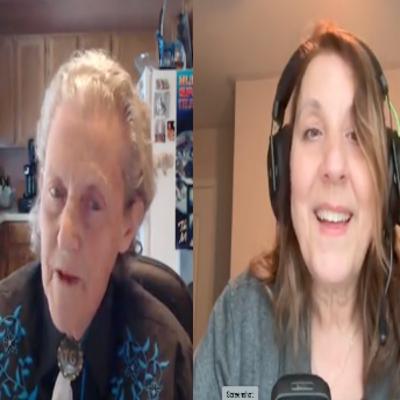
Welcome to Part 2 of my interview with Dr. Temple Grandin. Based initially on a discussion of her recent book Autism and Adolescence, in this second half of our conversation, we discuss issues that branch across many of her works, including Visual Thinking, The Loving Push, and The Unwritten Rules of Social Relationships. Along the way we explore questions such as overcoming barriers to communication and cognitive tasks for non verbal autistics, the balance of medication, meditation and other options for coexisting conditions with autism, and the early pathways to employment, as well as the important role autistic individuals have in the workplace. Come along for a n informative, wide-ranging, and insightful look at autistic topics the way Dr. Grandin sees them.Books and Articles Cited:Environmental Enrichment as an Effective Treatment for Autism. Cynthia Woo and Michael Leon. Behavioral Neuroscience © 2013 American Psychological Association2013, Vol. 127, No. 4, 487– 497Grandin, Temple. Autism and Adolescence: The Way I See It. What Teens and Adults need to Know. Future Horizons, 2024.Grandin, Temple, and Debra Moore. The Loving Push: How Parents and Professionals Can Help Spectrum Kids Become Successful Adults. Future Horizons, 2015. Grandin, Temple. Visual Thinking: The Hidden Gifts of People who Think in Pictures, Patterns and Abstractions. New York: Riverhead Books, 2022.Grandin, Temple, and Sean Barron.The Unwritten Rules of Social Relationships. Future Horizons, 2005.
Book review with host Dana Colarusso and guest narrator Beth McBarnett.In this book review episode, we will explore the 7 Keys to Unlock Autism by Elaine Hall and Diane Isaacs. We start by looking at the story behind the story, how the authors' experience in media arts and shared experience raising autistic children led to The Miracle Project and Autism: the Musical. We then consider how parenting, therapeutic and creative insights inform the seven keys methodology, as focused on our own inward readiness to see things through the eyes of the autistic child. Seven Keys to Unlock Autism; Making Miracles in theClassroom by Elaine Hall and Diane Isaacs. Foreword by Stephen Shore.Music composed by and shared with the permission of Peter de Mello.
In this conversation, Dr. Grandin tells us about her unique journey as an autistic person who has made significant contributions to both the cattle industry and autism advocacy. She emphasizes the importance of teaching life skills to teens on the spectrum, and shares insights on social skills, communication challenges, mental health, and the significance of personal interests in career development. Grandin also addresses sensory sensitivities and offers strategies for supporting non-verbal autistic teens, highlighting the need for engagement and participation in various activities.This is part one of a two-part episode based on an interview with Temple Grandin that took place on May 25, 2025.Music composed by and used with the permission of Peter de Mello.
In this episode of Autistic Beyond the Label, host Dana Colarusso shares her personal journey through autism literature, discussing key insights from various books that have shaped her understanding of autism. She emphasizes the importance of communication, sensory processing, and the unique experiences of autistic individuals. The episode features reviews of 'More Than Words' and 'To Siri with Love,' as well as an exploration of Temple Grandin's 'The Autistic Brain,' highlighting the evolving understanding of autism and the significance of recognizing individual strengths.Key topics:As a parent of an autistic child, reading is essential but reading fatigue can delay exploring helpful booksBooks like 'More Than Words' serve as practical guides.Understanding sensory processing is crucial for effective communication.'To Siri with Love' offers relatable insights into parenting an autistic child.Temple Grandin's work emphasizes the uniqueness of the autistic brain.Personal stories in autism literature can provide comfort and understanding.Recognizing strengths in autistic individuals can lead to meaningful opportunities.The understanding of autism continues to evolve with ongoing research.BOOKS CITED IN THIS PODCAST:More Than Words: A Parents Guide to Building Interaction and Language Skills for Children with Autism Spectrum Disorder or Social Communication Difficulties by Fern Sussman, Illustrated by Robin Baird Lewis. 424 pagesISBN-10. 0921145411. Publication date January 1, 2012.To Siri with Love: A Mother, Her Autistic Son, and the Kindness of Machines by Judith Newman. 256 pagesISBN.10178429828XISBN.13978-1784298289Published by Harper on August 22, 2017.The Autistic Brain: Thinking Across theSpectrum by Temple Grandin with Richard Panek. 256 pagesISBN.10.0547636458Published by Houghton Mifflin Harcourt April, 2014. AVAILABLE AS AUDIOBOOK.Music composed by and used with the permission of Peter de Mello
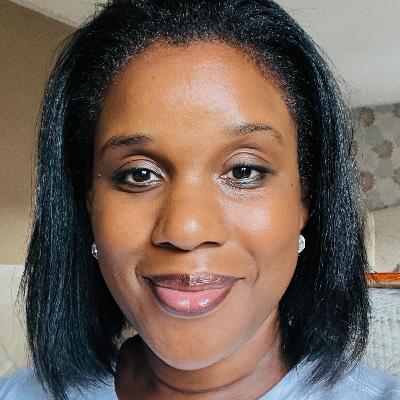
Beth McBarnett, Ambassador at Grandview Kids and a parent support worker at Mount Sinai Hospital in Toronto, describes her journey from the Neonatal Intensive Care Unit to life after an Autism Diagnosis for her son. Keywords: autism, parenting, support, diagnosis, family, resilience, community, milestones, patience, advocacySummary: In this conversation, Beth McBarnett shares her journey as a mother of an autistic child, discussing the challenges and triumphs she faced after her son Aaron's diagnosis. She reflects on her experiences in the NICU, the importance of finding support and resources, and the impact of community on her family's journey. Beth emphasizes the significance of patience, acceptance, and celebrating milestones, while also advocating for the need to share stories within the autism community.Takeaways:Beth's son Aaron was diagnosed with autism at two years old.The initial reaction to the diagnosis was numbness and denial.Self-care included spa visits and time away from home.Finding local resources like Grandview Kids was a relief.Integration in schools has been beneficial for Aaron.Celebrating small milestones has changed their parenting approach.Patience has been a key lesson learned through parenting.The decision to have more kids after an autism diagnosis is different for everyoneCommunity support has been vital in their journey.Sharing stories helps shape care in the community.Grandview Kids a hub for children's special needs services: https://grandviewkids.ca/https://www.canada.ca/en/public-health/services/diseases/autism-spectrum-disorder-asd/supports-services.htmlPoetry by Matthew Stewart Ball mentioned in this episode:https://www.goodreads.com/book/show/32332995-kiss-of-godMusic created by and used with the permission of Peter de Mello.
Keywords:autism, empathy, learning community, support, diagnosis, parenting, resources, understanding, awareness, transformationSummary: In this introductory episode of 'Autistic Beyond the Label', Dana Colarusso shares her insights and experiences as a parent of an autistic child and a teacher. She emphasizes the importance of empathy and understanding in navigating the complexities of autism. The episode highlights the need for a supportive learning community that connects parents, professionals, and autistic individuals to share resources and strategies. Dana invites listeners to join her on this journey towards a deeper understanding of autism, with the first full-length episode set to air on April 28, 2025.Takeaways:You cannot rely solely on familiar parenting models.Empathy is crucial in understanding autism.Sensory dysregulation is a key sign of autism.Listening to autistic individuals is essential for understanding.Each autistic child is an unlimited individual.Parenting an autistic child requires community support.Communication between professionals and families is vital.Sharing personal experiences can transform the autism support system.The goal is to help autistic kids reach their potential.A deeper understanding of autism can transform society.
Comments

Download from Google Play

Download from App Store
 United States