


 Claim Ownership
Engineer In the Looop
Subscribed: 10Played: 108
Subscribe

© Alec Harrison
Description
Engineer in the Loop is the weekly show for software engineers who ship with models in the mix. Host Alec Harrison chats with practitioners about architecture decisions, failure modes, and the workflows that keep humans firmly “in the loop.” Expect repo round-ups, post-mortems, and listener Q&A—with actionable code examples and zero buzzword fluff!
91 Episodes
Reverse
What does it really take to turn bold ideas into real impact inside one of the world’s largest technology companies?In this episode of Engineering in the Loop, Alec Harrison sits down with Taylor Black, Director of AI & Venture Ecosystems in the Office of the CTO at Microsoft, to unpack how internal incubators actually work — and why most innovation efforts fail before they ever ship.Taylor leads Microsoft’s internal incubation studio, where early-stage, high-risk ideas are tested, validated, and scaled into products capable of generating hundreds of millions — and eventually billions — in revenue. Unlike traditional startups, these ventures must meet Microsoft-scale expectations while navigating enterprise constraints, long buying cycles, and strategic alignment across product groups.In this conversation, we cover:What makes an idea “Microsoft-sized” (and why most aren’t)How internal incubators de-risk innovation before product teams investWhy $1B in revenue within five years is the bar — not the exceptionThe biggest mistakes founders make when starting companiesWhen not to take venture capital (and why most founders do it too early)How AI agents will reshape work far beyond chat interfacesWhy the future may include one-person billion-dollar companiesWhether you’re an engineer, founder, product leader, or innovation executive, this episode offers a rare, inside look at how venture-style thinking works inside a global enterprise — and what you can learn from it.
In this episode Alec and Brian talk about AI, turkey, and AI turkey?
AI News For October 2ndSora 2 is out! Perplexity Acquires AI Video Company Microsoft Agent Framework
Here's a little life update and AI/Tech news for October 1st 2025[Anthropic Joins Microsoft 365 Copilot](https://www.microsoft.com/en-us/microsoft-365/blog/2025/09/24/expanding-model-choice-in-microsoft-365-copilot/)[Claude Sonnet 4.5 Is Out!](https://www.techradar.com/ai-platforms-assistants/claude/anthropics-claude-sonnet-4-5-is-available-now-the-best-ai-model-in-the-world-for-real-world-agents-coding-and-computer-use)[Amazon unveils new generation of AI-powered Kindle and other devices](https://apnews.com/article/amazon-ai-alexa-kindle-echo-4e2983e166b8b62b2a3e51fc30a4a46c)
In this thought-provoking episode, Alec Harrison sits down with Peter Swimm—founder of Toyleville and a veteran in conversational AI—to unpack the real value of AI in today’s business world. From the early days of teaching internet literacy in Chicago libraries to advising enterprises on AI adoption, Peter brings a rare blend of empathy, technical depth, and straight talk.They discuss why most businesses are still stuck in Excel purgatory, the risk of blindly chasing AI hype, and how true innovation means aligning technology with human strengths—not replacing them. They also explore the messy reality of model upgrades, the danger of centralized AI monopolies, and how smaller companies can outmaneuver giants by embracing context, creativity, and collaboration.Whether you’re an enterprise leader, startup founder, or just AI-curious, this episode will challenge your assumptions and leave you asking better questions.🔗 Links:peoplemakeitbetter.com – Peter’s consulting agency and info on Toyleville
🚀 Description:In this packed episode of Engineering the Loop, we break down everything you need to know from Microsoft Build 2025—and trust us, it’s not just incremental upgrades. From the rise of AI agents and the Model Context Protocol (MCP) to the total transformation of search, software development, and even how you cool a data center, this year’s Build proves Microsoft is all in on an AI-first future.We cover:Why MCP might replace traditional APIs (and kill search engines as we know them)How Copilot is leveling up with Agent Mode and SRE capabilitiesRunning your own copilots locally with AI Foundry LocalThe wild vision of NL Web for conversational internetAnd why every developer needs to pay attention—fastWhether you’re a developer, an architect, or just fascinated by what’s next in AI, this episode will catch you up and spark ideas.⏱️ Chapters:00:00 – Welcome & Build 2025 OverviewKickoff and why this year’s conference felt like a seismic shift.02:30 – Agents and MCP 101What are agents? What is Model Context Protocol? Why do they matter so much?10:20 – Copilot EverywhereCopilot Studio, Copilot Agent Mode, GitHub Copilot Chat, and the rise of SRE agents.19:15 – AI Foundry Local & Bring Your Own ModelsHow you can run and fine-tune your own models—locally and securely.25:40 – NL Web & The Death of SearchCould conversational agents replace traditional search engines?31:00 – Data Center Innovations & SustainabilityImmersive cooling, carbon negativity, and the future of green AI infrastructure.35:10 – Developer Productivity SuperchargedSwagger specs, MCP servers, and Copilot building entire applications for you.41:45 – Governance, Security & What Comes NextManaging agents, protecting MCP endpoints, and Microsoft’s vision for AI governance.47:00 – Closing Thoughts & PredictionsWhere do we go from here?🎧 Listen now and join the conversation—because the future is arriving faster than you think.
In this episode of Engineer in the Loop, Alec and Brian sit down with Dwayne Natwick—renowned Microsoft Certified Trainer, security expert, and mentor to countless professionals navigating the certification landscape. Dwayne demystifies the path to becoming an MCT, from the instructional skills training and role-based certifications you’ll need, to the hidden benefits (and the upcoming return of the annual fee).The conversation goes deeper than the requirements: Dwayne shares what it’s really like to build and deliver your own train-the-trainer curriculum, why live instruction trumps recorded video courses, and how teaching can both exhaust and inspire. Along the way, you’ll hear war stories about canceled classes, the challenge of staying relevant, and how AI might (or might not) change how we learn.If you’ve ever wondered whether becoming a certified trainer is worth it—or you just want to hear how top instructors keep up with nonstop new technologies—this is the episode for you.🔗 Resources Mentioned:Learn more about becoming an MCT: Microsoft Learn - Become a Microsoft Certified TrainerConnect with Dwayne on LinkedIn: Dwayne Natwick on LinkedInNebraska.Code() 2025 Conference: Nebraska.Code() Website
This week Alec Harrison and Brian Gorman skip the rose-tinted dev chat and head straight for some therapeutic tech-venting. Fresh off an under-whelming WWDC, Alec wonders why Apple is flexing 3-D lock-screen clocks instead of, you know, actual Apple Intelligence—while a $3 k Vision Pro still can’t replace his decade-old Mac. Brian fires back with a blistering take on Google Gemini (“the passion of a thousand burning suns”) and explains how C#’s new runapp.cs experiment feels a lot like scrapping the foundation while the house is still standing. 🤦♂️Along the way they swap war stories on:The Wall Street Journal grilling Craig Federighi & Greg Joswiak about Siri’s perpetual “coming soon” status 📱EF Core “CLI Hell, Level 6” and how ChatGPT bailed Brian out of phantom configsWhy top-level statements, disappearing .csproj files, and NuGet inline directives might be great for demos—but brutal for real-world onboardingAlec’s discovery of Azure role-based data actions (spoiler: they’re not roles) and when over-architecting becomes a five-figure bonfireBuilding the new Engineer in the Loop site with Astro, zero-JS by default, and an assist from AINeed a cathartic laugh—or just want to feel seen about the messy state of modern tooling? Hit play and commiserate with two devs who love tech enough to roast it 🔥.Links promised in-episodeWall Street Journal interview with Craig Federighi & Greg Joswiak (Apple AI promises vs. reality)“Announcing .NET runapp.cs” – .NET BlogAlec’s deep-dive on Azure Storage data actionsAstro Framework – astro.build00:00 Underwhelmed by Apple WWDC03:22 AI and Apple's Intelligence05:43 Frustrations with Voice Assistants08:25 The Evolution of Windows and Apple10:49 The Dumbing Down of C#13:17 C# vs Python: A Language Debate15:40 The Future of C# Development18:10 Managing Dependencies in C#20:32 The Real-World Application of C#23:00 Onboarding New Developers to C#26:20 The Structure of Programming: A Necessary Evil27:33 Adapting to Change: The Frustration of New Tech28:56 Writing and Learning: The Joy of Creation31:06 AI in Coding: A Game Changer33:32 The Frustrations of CLI and Migration Issues35:59 Enums vs Strings: A Design Debate38:06 Delivering Value vs Over-Engineering39:39 Leveraging AI for Web Development42:16 Upcoming Projects and Conferences45:19 Understanding Azure Data Attributes
In this wide-ranging Engineering the Loop chat, Alec Harrison and Brian Gorman welcome Peter Vasillion—CEO & AI Partner at Facet Interactive—to dissect how “models in the loop” are changing the way businesses ship software and automate everyday work.Peter traces his journey from rebuilding Pentium-2 towers in his parents’ Southern California warehouse to guiding Fortune-level AI roll-outs. The trio swap stories about:⚡ Rapid prototyping with LLMs – how Claude 4 Sonnet spun up a functional Blazor app for a non-developer in minutes, and why starting with a strong domain brief still matters.🧠 Treating your AI like a junior hire – prompt-engineering, RAG, and iterative feedback loops that “skill up” an agent the same way you’d mentor a new teammate.🛡️ Agent governance & bias – building ruler-slap guardrails in n8n workflows, the danger of hidden corporate filters, and what happens when monetization meets model moderation.🤖 Assistant futures – from AI scheduling podcast guests to autonomous purchase-making, and the sociotechnical ripples when your virtual assistant becomes a trusted coworker.Whether you’re wrestling with shadow-IT Power Apps, dreaming of a personal Telegram bot, or just curious about where the next wave of AI commoditization leads, this conversation is packed with practical war stories and forward-looking caution flags.Links promised in the show notesPeter Vasillion on LinkedIn – https://www.linkedin.com/in/pvasilion/Facet Interactive – strategy, data & AI consulting https://facetinteractive.com/n8n.io – open-source, agent-friendly workflow automation
From jiu-jitsu to jumpstarting innovation at Toyota Connected, Renard Henry brings the heat in this episode of Engineer in the Loop. We talk AI in vehicles, life-saving tech, and the growing need for AI governance. Renard shares how Toyota stays lean while experimenting fast, why autonomous cars still need human oversight, and what the future holds for AI in healthcare and transportation. Whether you’re a tech lead, car geek, or just curious about how AI shows up in the real world—you’ll want to buckle up for this one.Checkout Renard's Podcast Black Belts & Boardrooms @BlackBeltsandBoardrooms 📌 Chapters:00:00 – The Invisible AI Already in Your Car01:37 – Meet Renard Henry: From Sports Medicine to Tech Leadership04:32 – Leadership Lessons from Jiu-Jitsu and Industry Hopping06:02 – Fast-Paced Innovation at Toyota Connected07:47 – Why Toyota Still Gets Lean Right09:21 – AI vs. Autonomy: How Toyota Approaches Both13:51 – Autonomous Traffic, White Stoplights, and Sci-Fi Reality17:04 – The Future of Vehicle Ownership & Passive Income Fleets21:05 – From IT to Intelligent Agents: What’s Coming Next22:11 – How AI Changed Renard’s Work and Worldview25:29 – AI in Healthcare: Personal Loss and Hopeful Progress27:16 – Ethics, Automation, and the Trolley Problem28:24 – Why AI Governance Will Be the Next Big Tech Role30:51 – Cost, Risk & Value: The Hidden Work of Enterprise AI34:55 – Avoiding the Wild West of Shadow AI36:29 – Innovation with Purpose: Vetting the Right Tools40:07 – Final Thoughts + Where to Connect with Renard
Show sponsor: https://www.fromcodetoclarity.com/Join Alec Harrison as he’s joined by special guest Clark Sell—veteran conference organizer turned AI coach behind Code to Clarity—in a Brian-less edition of Azure Cloud Talk. Clark walks us through his pivot from running THAT Conference and boutique engineering work to helping organizations modernize with AI-driven agents and low-code automations. Along the way, they unpack what “agents” really mean, debate buy vs. build, and explore how AI can boost productivity and reshape the future workplace—without replacing people. Tune in for real-world stories, tooling tips, and a roadmap for getting ahead on the AI hype train.00:01 – Welcome & Brian-less Episode00:10 – Brian’s Absence & MSSA Graduation Shout-Out00:43 – Introducing Clark Sell & Code to Clarity01:43 – Pivoting from THAT Conference to AI Coaching04:40 – AI’s Role in Modernizing Repetitive Work07:13 – Demystifying “Agents” in Automation09:37 – Buy vs. Build Debate: Zapier, Make.com & AI16:01 – AI in Podcasting: Riverside, Copilot & Production Enhancements24:15 – Low-Code Rapid Prototyping: Google Sheets & Copilot Studio31:26 – Future of Work: New Roles, Industries & Innovation39:45 – Final Calls to Action & Working with Clark43:09 – Wrap-Up & What’s Next
Show sponsor: https://www.fromcodetoclarity.com/Join Alec Harrison as he’s joined by special guest Clark Sell—veteran conference organizer turned AI coach behind Code to Clarity—in a Brian-less edition of Azure Cloud Talk. Clark walks us through his pivot from running THAT Conference and boutique engineering work to helping organizations modernize with AI-driven agents and low-code automations. Along the way, they unpack what “agents” really mean, debate buy vs. build, and explore how AI can boost productivity and reshape the future workplace—without replacing people. Tune in for real-world stories, tooling tips, and a roadmap for getting ahead on the AI hype train.00:01 – Welcome & Brian-less Episode00:10 – Brian’s Absence & MSSA Graduation Shout-Out00:43 – Introducing Clark Sell & Code to Clarity01:43 – Pivoting from THAT Conference to AI Coaching04:40 – AI’s Role in Modernizing Repetitive Work07:13 – Demystifying “Agents” in Automation09:37 – Buy vs. Build Debate: Zapier, Make.com & AI16:01 – AI in Podcasting: Riverside, Copilot & Production Enhancements24:15 – Low-Code Rapid Prototyping: Google Sheets & Copilot Studio31:26 – Future of Work: New Roles, Industries & Innovation39:45 – Final Calls to Action & Working with Clark43:09 – Wrap-Up & What’s Next
Show sponsor: https://www.fromcodetoclarity.com/In this episode of Engineer in the Loop, Alec Harrison and Brian discuss the rebranding of the podcast, the challenges in the current job market, the importance of upskilling, and the role of AI in development. They emphasize the need for engineers to adapt to changes, explore side gigs for financial security, and leverage networking opportunities to navigate their careers effectively.Chapters00:00 Welcome to Engineering the Loop05:52 Navigating Layoffs and Job Security09:51 The Challenges of Entry-Level Job Seekers15:11 Staying Relevant in a Rapidly Changing Tech Landscape16:44 Navigating Uncertainty in the Job Market21:38 The Rise of AI in Development25:09 Building Multiple Income Streams31:09 Leveraging AI for Rapid Prototyping33:24 Job Opportunities and Networking
Alec welcomes Sakari Nahi, CEO of Zure, for a fun and thoughtful discussion that spans 25 years of tech evolution. Sakari shares how a single C# book jump-started his career, why he left a job he didn’t love to found a cloud-native consultancy, and what it’s like building a people-first engineering culture across multiple countries.The two dig into real AI use cases that actually work today—vector search, customer service automation, field-tech knowledge retrieval—and explore how spec-driven development and tools like GitHub Copilot are transforming the way teams build software. They also get honest about shadow IT, geopolitics affecting cloud decisions, the future of Power Platform, and why AI feels “magical” even without AGI.Whether you’re a developer, leader, or just AI-curious, this episode is packed with relatable stories and practical perspectives.
Cory House (Pluralsight/DomeTrain author and principal at ReactJS Consulting) shares the story of going “all-in” on JavaScript/React and how that focus grew into a successful independent consulting and training career. We dig into the tradeoffs of deep specialization vs breadth, how to spot real opportunities, and the “two-way door” idea for tech career moves. Cory also walks through his current pivot: using AI as a developer accelerator (how teams use it, where it helps most, what to watch out for) and how experimentation today — while tooling is cheap and rapidly evolving — is valuable. Along the way we surface mindset lessons (Cal Newport, Carol Dweck), how to balance giving away content vs paid courses, and practical tips for auditors/consultants trying to scale their impact.Guest: Cory House — https://www.bitnative.com/ · Consulting & training: https://www.reactjsconsulting.com/ · Courses: Dometrain (TypeScript: Getting Started / Deep Dive) · YouTube: https://www.youtube.com/@housecor · X: https://x.com/housecor · GitHub: https://github.com/coryhouse · DevOpsDays Des Moines (speaker): https://devopsdays.org/events/2025-des-moines/welcome/ · Podcast: https://eitl.ai/podcast/ · Books: So Good They Can’t Ignore You (Cal Newport), Mindset (Carol Dweck)
Alec Harrison and Brian Gorman return from a short break to talk all things certifications, Copilot, and the curious evolution of learning with AI. Alec shares his experience taking Microsoft’s new Applied Skills exams for Copilot Studio, while Brian gives some veteran insight into two decades of Microsoft certifications and how the new role-based system compares.They debate whether AI tools are replacing junior engineers, discuss what makes modular Infrastructure as Code essential, and riff on the future of “speech-to-IaC” — where voice meets automation. Plus, Brian shares his own upcoming video course and gives pragmatic advice for anyone chasing their next cert.👉 Explore Microsoft Learn’s Applied Skills here: https://learn.microsoft.com/credentials/applied-skills🎧 Listen, comment, and tell us: Is modular Bicep overkill, or best practice?#EngineerInTheLoop #Azure #AI #Copilot #MicrosoftLearn #Bicep #Terraform #Certifications
Founder of .NET Conf and 20-year Microsoft MVP Javier Lozano joins Engineer in the Loop to talk about what’s changed—and what hasn’t—in web development. We riff on MVP categories, why demos are easy and production is hard, and how AI is a force multiplier that still demands human judgment. Javier shares “SIMON” (Simplified Minutia and Operational Nonsense), his vision for agents that run conference ops, plus practical takes on trust, determinism, and the trade-off between faster output and more defects. We hit identity’s growing role, WebAssembly’s promise, and why tools (the picks and shovels) often win the gold rush. If you build .NET apps, run cloud workloads, or just want a grounded view of AI’s near future, this one’s packed with hard-earned lessons and optimistic realism.
Tech news for Oct 3rd, 2025https://github.com/github/copilot-clihttps://devblogs.microsoft.com/azure-sdk/azure-sdk-release-september-2025/https://techcommunity.microsoft.com/blog/securitycopilotblog/from-idea-to-security-copilot-agent-create-customize-and-deploy/4458516
From Exchange 2003 to Azure landing zones, Elliott shares 15 years of lessons on moving beyond VMs, building platform ops that devs actually love, and keeping cloud costs sane.Key TakeawaysPlatform engineering > “just cloud”: Guardrails, vending, and templates win hearts (and roadmaps).FinOps framing: Translate infra to “cost per sale/visit” and budgets to anomaly alerts.PaaS by default: Avoid VMs unless there’s a clear reason.DX = adoption: The easier you make it, the faster devs ship safely.AI is force-multiplier, not autopilot: Keep humans in the loop for security, design, and intent.Chapters00:00 – Cold Open & SetupWelcome to Engineering the Loop. Alec introduces Elliott Leighton-Woodruff, Principal Architect at Synextra, and shouts out his pro studio setup.01:18 – Origin Story: From Helldesk to ArchitectElliott’s path through managed services, Exchange migrations, and into Azure—why his “O365 is only for SMBs” take aged badly and what that taught him about platform shifts.03:00 – Cloud Era PivotFrom AD/Exchange to Azure/Entra, early lift-and-shift vs. today’s PaaS-first mindset: “How do we avoid servers?” and drive ROI/security simultaneously.04:32 – Compliance Across the PondGDPR, UK/EU data residency, and pragmatic risk: why proper data handling matters more than headlines—and the nuance of Microsoft’s US metadata access.09:08 – SaaS/PaaS > IaaS & Vendor Lock WorriesWhy “vendor lock-in” is often less risky than running your own racks—and how integrated ecosystems (Microsoft, Apple) win on user experience.14:48 – IaC Choices in the WildARM → Terraform → Bicep (and back). When Terraform’s versatility wins, when Bicep is “good enough,” and how state files can be a superpower for diffing real changes.17:49 – Standards & ModulesMinimal code, shared module repos, and composable templates; using internal modules to enforce good defaults and speed delivery across clients.21:10 – Developer Experience (DevEx) as the SellResource vending, guardrails, and starter pipelines so devs ship .NET without touching VNet/front door/APIM—but still stay within policy.26:40 – Cost Control & Landing Zones 101What an Azure landing zone really is (governance + network + RBAC + policy). Budgets, quotas, and anomaly alerts to prevent “surprise bills.”32:59 – Real Billing War StoriesCostly misconfigs (AKS + Log Analytics, Custom Neural Voice hosting), forgiveness policies, and AWS vs. Azure leniency, plus why alerts matter.38:19 – Spot & Batch = Cheap ComputeSpot VMs and batch patterns for big workloads; tradeoffs and when to queue jobs for 80%+ savings.41:45 – FinOps Mindset ShiftTalk in cost per X (visit/transaction/customer) instead of monthly totals; why scaling beats fixed VMs when revenue is on the line.49:50 – Agents, “Vibe Coding,” and Reality ChecksAI can ship features, but humans still set direction and prevent face-palm security mistakes (like leaking waitlist emails via DevTools).52:19 – The Junior Talent QuestionIf agents do the grunt work, where do juniors learn? Potential futures for hiring, training, and the skills that stick.55:49 – Hybrid, Edge, and HCI Use CasesAzure Stack/HCI examples (manufacturing/food QA) and the appeal of local inference with cloud aggregation.57:39 – The (Maybe) Dystopian FutureMeetings → summaries → agents; what stays human, what becomes automated—and why good platform ops multiply teams.58:08 – How to Reach Elliott & SynextraWhere to follow Elliott and Synextra; why they give away “do-it-yourself” playbooks and when to call them for the hard stuff.Platform engineering > “just cloud”: Guardrails, vending, and templates win hearts (and roadmaps).FinOps framing: Translate infra to “cost per sale/visit” and budgets to anomaly alerts.PaaS by default: Avoid VMs unless there’s a clear reason.DX = adoption: The easier you make it, the faster devs ship safelyAI is force-multiplier, not autopilot: Keep humans in the loop for security, design, and intent
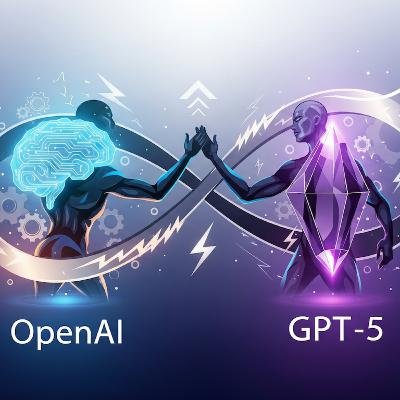
“GPT-5 is going to kill OpenAI.” That’s the headline making the rounds—but it’s wrong. In this episode, Alec Harrison breaks down why the panic is overblown, why those infamous GPT-5 launch graphs don’t tell the real story, and how OpenAI is shifting from hype to stability.We’ll zoom out on the bigger picture: OpenAI’s rapid rise, the reality of innovation cycles, and why competition from Anthropic, Google, Meta, and others actually makes the whole industry stronger. From enterprise adoption to government deals, GPT-5 isn’t a death knell—it’s the start of OpenAI’s next chapter.If you’ve been wondering whether GPT-5 signals decline or maturity, this episode will give you the context you need.👉 Stick around until the end for Alec’s take on what this launch means for the future of AI.

Comments

Download from Google Play

Download from App Store
 United States