


 Claim Ownership
Disturbing History
Subscribed: 148Played: 4,958
Subscribe

© 2025 Paranormal World Productions LLC
Description
Disturbing History is a dark history podcast uncovering the strange, sinister, and little-known stories the past tried to bury. Each week, we explore unsolved mysteries, secret societies, forgotten crimes, eerie folklore, lost civilizations, historical conspiracies, and disturbing events that never made it into your high school textbook
.Hosted by author, investigator, and storyteller Brian King-Sharp, Disturbing History dives deep into:
Because the past isn’t always dead.
Sometimes it’s just been buried.
Follow Disturbing History and turn on automatic downloads for weekly deep dives into history’s most unsettling stories.
.Hosted by author, investigator, and storyteller Brian King-Sharp, Disturbing History dives deep into:
- Unsolved historical mysteries
- Secret societies and hidden power structures
- Dark folklore and urban legends
- Lost colonies and vanished civilizations
- True crime cases buried by time
- Historical conspiracies and cover-ups
- Paranormal events rooted in real history
Because the past isn’t always dead.
Sometimes it’s just been buried.
Follow Disturbing History and turn on automatic downloads for weekly deep dives into history’s most unsettling stories.
75 Episodes
Reverse
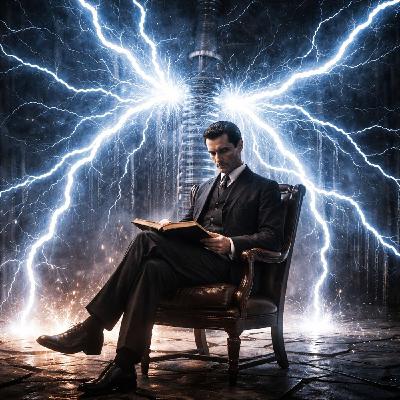
In the early nineteen thirties, an aging inventor living alone in a New York City hotel room told the world he'd built a weapon capable of destroying ten thousand enemy aircraft at a distance of two hundred and fifty miles. The press called it a death ray. He called it a peace beam. And the man making the claim wasn't some fringe eccentric chasing headlines. It was Nikola Tesla, the same mind behind the alternating current electrical system that powers the modern world, the same inventor who held over three hundred patents and whose work laid the foundation for radio, radar, robotics, and remote control. When Tesla said he'd built something, history suggested you take him seriously.We trace the full arc of Tesla's extraordinary and tragic life, beginning with his birth in eighteen fifty-six in the village of Smiljan in what is now Croatia. Born into a Serbian Orthodox household, Tesla exhibited vivid sensory experiences from childhood, describing flashes of light and mental images so detailed he could design and test entire machines in his mind without ever touching pencil to paper. The death of his older brother Dane in a riding accident left a lasting mark, fueling a relentless drive to prove himself that would define everything that followed. We follow Tesla through his education at the Austrian Polytechnic in Graz, his pivotal breakthrough in Budapest in eighteen eighty-two when he conceived the rotating magnetic field while walking through a park, and his arrival in New York in eighteen eighty-four with virtually nothing to his name. His brief and bitter employment under Thomas Edison ended with a broken promise and a fury that set the stage for the War of Currents, one of the ugliest chapters in the history of American industry. Edison's campaign to discredit alternating current included the public electrocution of stray animals, the development of the electric chair as a deliberate smear against AC power, and the botched execution of William Kemmler at Auburn Prison in eighteen ninety. Tesla's system won decisively with the illumination of the eighteen ninety-three World's Columbian Exposition in Chicago and the completion of the Adams Power Plant at Niagara Falls, but his victory came at a devastating personal cost when he tore up his royalty agreement with George Westinghouse to save the company from bankruptcy, surrendering a fortune that would have been worth billions today.The episode covers Tesla's groundbreaking experiments in Colorado Springs in eighteen ninety-nine, where he produced the largest man-made lightning bolts in history and claimed to have achieved wireless power transmission over a distance of twenty-five miles. We explore the rise and fall of Wardenclyffe Tower on Long Island, his ambitious plan for a global wireless energy system that was funded and then deliberately killed by J.P. Morgan when Morgan realized the project threatened his copper investments and the very concept of metered electricity.At the heart of the episode is Tesla's proposed teleforce weapon, the so-called death ray. We break down the technical details of what Tesla actually described, a particle beam device that would accelerate microscopic tungsten or mercury pellets to extreme velocities using an open-ended vacuum tube and electrostatic generators producing up to sixty million volts.Tesla shopped the weapon to the United States, Britain, the Soviet Union, and Yugoslavia. The Soviets paid him twenty-five thousand dollars for a preliminary description. The American government turned him down, at least publicly.We also examine Tesla's other inventions and contributions, including the Tesla coil, the first remote-controlled device demonstrated at Madison Square Garden in eighteen ninety-eight, early X-ray imaging, the theoretical groundwork for radar published more than twenty years before its official development, and his eerily accurate nineteen twenty-six prediction of pocket-sized wireless devices that would allow people to communicate, access information, and transmit images across the globe.Alongside these genuine achievements, we address the claims that haven't held up, including thought photography, the earthquake machine, and his belief that he'd received radio signals from extraterrestrial intelligence.The final act of the episode covers Tesla's lonely last years at the Hotel New Yorker, his obsessive devotion to the pigeons of New York City, and his death on January seventh, nineteen forty-three, alone in room thirty-three twenty-seven. Within hours, the Office of Alien Property seized his papers under legally questionable authority despite Tesla's status as a naturalized American citizen. MIT physicist John G. Trump evaluated the materials in roughly three days and declared them of no significant value, a conclusion that many researchers have found unconvincing given the volume of material and the government's continued classification of the documents for years afterward. Tesla's nephew Sava Kosanovic reported that key documents appeared to be missing, and declassified FBI files confirm the Bureau had been monitoring Tesla for years and considered his weapon claims potentially significant. The episode also explores the persistent questions around what was actually in those eighty to one hundred and fifty trunks, the fate of Tesla's technical treatise on the teleforce weapon, the parallels between his particle beam concept and Cold War weapons programs pursued by both the United States and the Soviet Union, and the possibility that the full contents of his seized research have never been made public.Have a forgotten historical mystery, disturbing event, unsolved crime, or hidden conspiracy you think deserves investigation?Send your suggestions to brian@paranormalworldproductions.com.Disturbing History is a dark history podcast exploring unsolved mysteries, secret societies, historical conspiracies, lost civilizations, and the shadowy stories buried beneath the surface of the past.Follow the show and enable automatic downloads so you never miss a deep dive into history’s most unsettling secrets.Because sometimes the truth is darker than fiction.
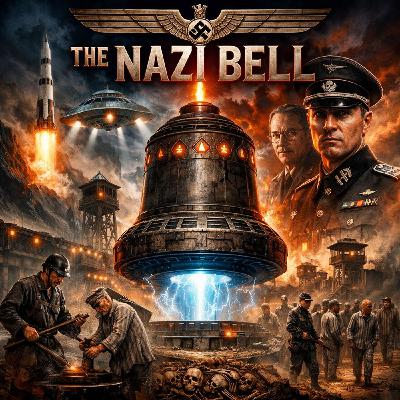
In this episode of Disturbing History, we investigate Die Glocke, the Nazi Bell, an alleged top-secret SS weapons program that may have been experimenting with anti-gravity technology and exotic physics in the underground mines of Lower Silesia during the final years of World War Two. We trace the rise of SS General Hans Kammler, the engineer who built the gas chambers at Auschwitz and eventually controlled every advanced weapons program in Nazi Germany, from the V-two rockets to the jet fighters to whatever was happening deep beneath the Owl Mountains of what is now southwestern Poland.We examine the claims of Polish military journalist Igor Witkowski, who says he was shown classified documents describing a bell-shaped device filled with a mysterious violet metallic substance called Xerum five twenty-five, a device that allegedly killed scientists through radiation exposure and produced terrifying effects on biological tissue when activated. We visit the Henge, a mysterious concrete structure still standing in a Polish forest that some researchers believe was a test rig for the Bell, and we dig into the verified history of Project Riese, the massive underground construction program built on the backs of slave laborers from the Gross-Rosen concentration camp.We explore the theoretical physics behind the claims, from Einstein's general relativity and frame dragging to the unresolved questions about the relationship between electromagnetism and gravity, and we ask whether nineteen forties technology could have produced anything close to what the Bell was allegedly designed to do. We follow the trail of Hans Kammler's suspicious disappearance at the end of the war, the multiple contradictory accounts of his death, and the growing body of evidence suggesting he may have been secretly captured and debriefed by American intelligence.We connect the Bell story to the fully documented history of Operation Paperclip, the program that brought over sixteen hundred Nazi scientists to the United States, and we confront the deeply uncomfortable question of what happens when governments decide that knowledge gained through slave labor and human suffering is too valuable to destroy.This episode separates verified history from speculation, gives the skeptics their fair hearing, and ultimately asks listeners to sit with the fact that the documented parts of this story, the mass executions, the slave labor, the institutional secrecy that persists eighty years later, are disturbing enough on their own, whether the Bell was real or not.Have a forgotten historical mystery, disturbing event, unsolved crime, or hidden conspiracy you think deserves investigation?Send your suggestions to brian@paranormalworldproductions.com.Disturbing History is a dark history podcast exploring unsolved mysteries, secret societies, historical conspiracies, lost civilizations, and the shadowy stories buried beneath the surface of the past.Follow the show and enable automatic downloads so you never miss a deep dive into history’s most unsettling secrets.Because sometimes the truth is darker than fiction.
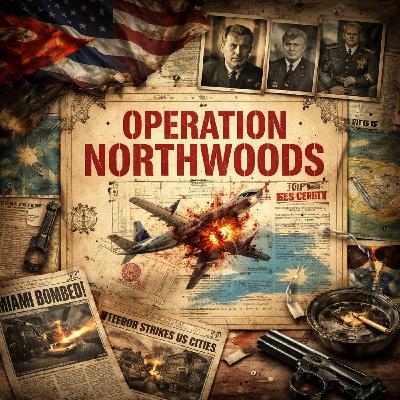
In this episode of Disturbing History, we dive into one of the most shocking declassified documents in American history. Operation Northwoods was a nineteen sixty-two proposal drafted and signed by every member of the Joint Chiefs of Staff that outlined a series of false flag operations designed to trick the American public into supporting a full-scale military invasion of Cuba.The proposals included staging terrorist attacks in Miami and Washington, D.C., blowing up an American ship and blaming it on Castro, faking the destruction of a civilian airliner, conducting a terror campaign against Cuban refugees on American soil, and manufacturing evidence of Cuban aggression across the Caribbean.The episode traces the full story from its origins in Cold War paranoia and the humiliating failure of the Bay of Pigs invasion in nineteen sixty-one, through the toxic relationship between President John F. Kennedy and his military leadership, and into the desperate scheming of Operation Mongoose, the sprawling covert program aimed at overthrowing Fidel Castro by any means necessary.We walk through the specific proposals in the Northwoods memorandum, examine the cold strategic logic that made them possible, and reveal how President Kennedy's flat rejection of the plan may have prevented a chain of events that could have ended in nuclear war.We also explore the document's long burial in classified Pentagon archives, its eventual declassification in nineteen ninety-seven through the work of the JFK Assassination Records Review Board, and its explosive entry into public awareness after journalist James Bamford published it in two thousand and one. The episode places Northwoods in the broader context of Cold War-era abuses of power, from the Gulf of Tonkin incident to COINTELPRO to the CIA assassination programs exposed by the Church Committee, and asks what lessons this chilling chapter holds for citizens living in a democracy today.Have a forgotten historical mystery, disturbing event, unsolved crime, or hidden conspiracy you think deserves investigation?Send your suggestions to brian@paranormalworldproductions.com.Disturbing History is a dark history podcast exploring unsolved mysteries, secret societies, historical conspiracies, lost civilizations, and the shadowy stories buried beneath the surface of the past.Follow the show and enable automatic downloads so you never miss a deep dive into history’s most unsettling secrets.Because sometimes the truth is darker than fiction.
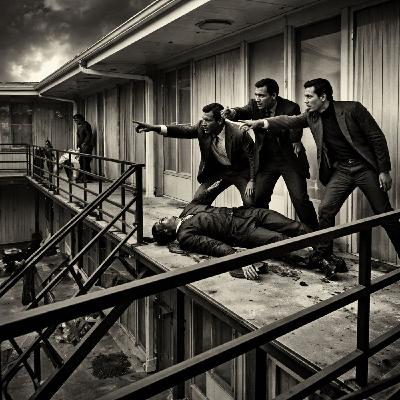
On April 4th, 1968, a single rifle shot ended the life of Doctor Martin Luther King Junior on the second-floor balcony of the Lorraine Motel in Memphis, Tennessee. He was thirty-nine years old. The official story has always been simple: a lone escaped convict named James Earl Ray, acting out of personal racial hatred, pulled the trigger and was caught sixty-five days later in London. Case closed. Except it wasn't. And it isn't.In this episode of Disturbing History, we go deep into one of the most consequential and most deliberately obscured murders in American history. We trace Doctor King's life from his Atlanta childhood through the Montgomery Bus Boycott, the Birmingham campaign, the March on Washington, and his evolution from civil rights leader into something the American power structure found genuinely terrifying — a man demanding the economic restructuring of the entire country, calling the United States government the greatest purveyor of violence in the world, and building an interracial coalition of the poor to march on Washington and force a reckoning.We dig into J. Edgar Hoover's decade-long COINTELPRO campaign against King — the illegal wiretaps, the forged letters, the blackmail attempts, the anonymous package urging him to kill himself, and the internal FBI memo identifying King as "the most dangerous Negro in America." None of this is conspiracy theory. All of it is documented in the Bureau's own declassified files.We walk through what happened in Memphis — the sanitation workers strike, the disrupted March twenty-eighth demonstration, the Mountaintop speech, and the events of April fourth itself. And then we go where the official account refuses to go: the removal of King's police bodyguards the morning of the assassination, the military intelligence operatives on the ground in Memphis, the destruction of physical evidence the morning after, the pressured guilty plea that denied Ray a trial, and the witnesses whose testimony has spent decades being ignored.Most importantly, we cover the nineteen ninety-nine civil trial that most Americans have never heard of — in which a Memphis jury, after four weeks of testimony from over seventy witnesses, found that Loyd Jowers and others including governmental agencies were part of a conspiracy to murder Doctor King. The King family was awarded one hundred dollars. The country barely noticed.The files are still partially classified. The questions are still unanswered. And the truth about what happened on that balcony is still waiting for the country to decide whether it's ready to look at it honestly.This is Disturbing History. We look at it honestly.New episodes drop every week. If this episode moved you, share it with someone who needs to hear it. And if you have a story of your own — a personal encounter, a piece of history that haunts you — reach out to us at brian@paranormalworldproductions.com.Have a forgotten historical mystery, disturbing event, unsolved crime, or hidden conspiracy you think deserves investigation?Send your suggestions to brian@paranormalworldproductions.com.Disturbing History is a dark history podcast exploring unsolved mysteries, secret societies, historical conspiracies, lost civilizations, and the shadowy stories buried beneath the surface of the past.Follow the show and enable automatic downloads so you never miss a deep dive into history’s most unsettling secrets.Because sometimes the truth is darker than fiction.
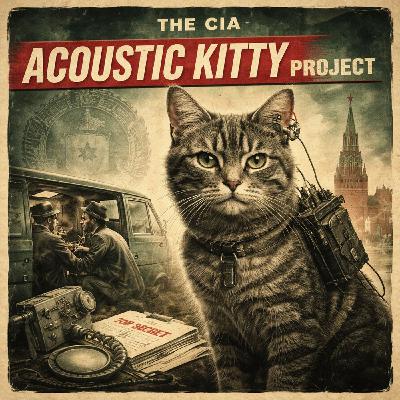
In the early nineteen sixties, at the height of Cold War paranoia, the CIA's Technical Services Division conceived and built one of the strangest intelligence programs in American history. They called it Acoustic Kitty. The idea was straightforward in the most disturbing possible way: surgically implant a microphone, a radio transmitter, and a battery inside a living cat, thread an antenna along its spine, and deploy it near Soviet officials having conversations in public parks. A cat wandering up to a park bench raises no suspicion.Nobody looks twice. It was, in theory, the perfect surveillance platform.It cost an estimated twenty million dollars. It took years to develop. It required major surgery on multiple animals and the combined effort of CIA engineers, veterinarians, and behavioral specialists working under complete secrecy. And on its first real operational deployment — near the Soviet embassy in Washington, DC — the cat walked into the street and was struck by a taxi.In this episode of Disturbing History, we trace the full arc of Acoustic Kitty from its origins in the CIA's anything-goes Technical Services culture to its spectacular and absurd failure, and we ask the harder question that the punchline usually obscures: what kind of institution produces this? The program wasn't the work of lunatics. It was approved, funded, and executed by serious, intelligent, technically sophisticated people who genuinely believed they were doing what the Cold War required.That's the real disturbance here — not the failure, but the trying. We also cover the role of Victor Marchetti, the former CIA executive who risked his career and his freedom to bring this story to the public in the early nineteen seventies, and we look at what the eventually declassified CIA documents actually say versus what people usually claim they say. We put Acoustic Kitty inside the broader context of the Church Committee, MKUltra, and the recurring pattern of a powerful institution convincing itself that the stakes are high enough to justify anything.And at the end, we sit with the cat itself for a moment. Not the program. Just the cat.Disturbing History is a Paranormal World Productions podcast. New episodes drop regularly. If this one hit home, leave us a review and share it with someone who needs to hear it. Subscribe wherever you get your podcasts, and we'll see you next time.Have a forgotten historical mystery, disturbing event, unsolved crime, or hidden conspiracy you think deserves investigation?Send your suggestions to brian@paranormalworldproductions.com.Disturbing History is a dark history podcast exploring unsolved mysteries, secret societies, historical conspiracies, lost civilizations, and the shadowy stories buried beneath the surface of the past.Follow the show and enable automatic downloads so you never miss a deep dive into history’s most unsettling secrets.Because sometimes the truth is darker than fiction.
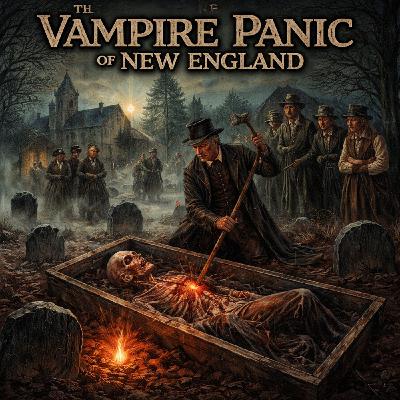
For nearly a century, families across rural New England dug up their dead, cut out their hearts, burned them, and fed the ashes to the living. They weren't insane. They were desperate. In this episode, we dive deep into the New England Vampire Panic — a terrifying chapter of American history driven by tuberculosis, grief, and folk beliefs that most history books conveniently leave out.We start with the tuberculosis epidemic that killed one in four Americans and Europeans in the 1800s and explore how the natural process of decomposition mimicked the very "signs" that communities believed proved vampirism. From there, we trace the panic through its most significant cases, beginning with the Tillinghast family of Exeter, Rhode Island in the 1790s — one of the earliest documented episodes — and moving through the remarkable 1990 archaeological discovery in Griswold, Connecticut, where a skeleton rearranged in a skull-and-crossbones pattern provided physical proof that these rituals actually took place.We cover the public heart-burning on the town green in Woodstock, Vermont involving Captain Isaac Burton's family, the story of Rachel Harris in Manchester, Vermont — a dead wife accused of feeding on her replacement from beyond the grave — and the impossible position of rural physicians caught between their training and their community's expectations. The heart of the episode is the full story of Mercy Lena Brown, the nineteen-year-old Exeter woman exhumed in March of 1892 in what became the most thoroughly documented vampire case in American history. We walk through her father George Brown's agonizing decision, the examination of three family members' remains, the burning of Mercy's heart, and the tragic death of her brother Edwin just two months later despite drinking the ash mixture. We also explore how the national press turned Exeter into a punchline, the possible connection between the Brown case and Bram Stoker's Dracula, and folklorist Michael Bell's groundbreaking research documenting over eighty cases across the region.Key figures in this episode include Stukeley Tillinghast, the Exeter farmer who lost half his fourteen children to consumption; the unidentified man known only as JB from Griswold, Connecticut, whose rearranged skeleton confirmed vampire rituals; Dr. Harold Metcalf, the physician who performed the autopsy on Mercy Brown and later stated her condition was entirely natural; and Michael Bell, author of Food for the Dead: On the Trail of New England's Vampires, whose decades of research transformed our understanding of this phenomenon. Connecticut State Archaeologist Nick Bellantoni, who led the excavation of the Griswold vampire burial, also features prominently.For those who want to go deeper, we'd recommend Michael Bell's Food for the Dead, Paul Barber's Vampires, Burial, and Death for the science behind decomposition and vampire folklore, and the Providence Journal archives for the original 1892 reporting on the Mercy Brown exhumation. Leave us a review and let us know what you thought of this episode. Follow Disturbing History on all major podcast platforms.Have a forgotten historical mystery, disturbing event, unsolved crime, or hidden conspiracy you think deserves investigation?Send your suggestions to brian@paranormalworldproductions.com.Disturbing History is a dark history podcast exploring unsolved mysteries, secret societies, historical conspiracies, lost civilizations, and the shadowy stories buried beneath the surface of the past.Follow the show and enable automatic downloads so you never miss a deep dive into history’s most unsettling secrets.Because sometimes the truth is darker than fiction.
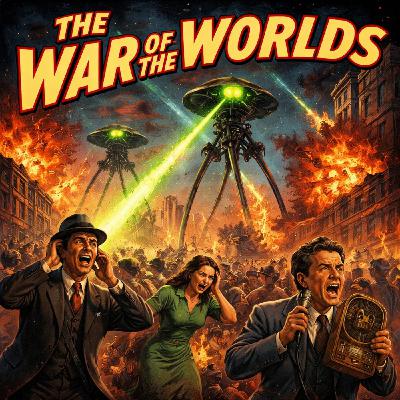
On October 30th, 1938, a twenty-three-year-old Orson Welles and his Mercury Theatre troupe performed a radio adaptation of H.G. Wells's The War of the Worlds that supposedly sent millions of Americans into mass hysteria. But did it really happen that way?In this episode of Disturbing History, we pull back the curtain on one of the most misunderstood events in broadcasting history. We walk through Depression-era America and a nation already on edge from the looming threat of war in Europe, break down how Welles and writer Howard Koch crafted a broadcast so realistic that it mimicked the exact style of emergency news coverage listeners had been hearing for months, and then we get into what actually happened that night versus what the newspapers wanted you to believe happened.Turns out the newspaper industry had every reason to exaggerate the panic because radio was eating their lunch, and a flawed 1940 Princeton study cemented the myth for decades.We also tie it all into the modern UFO disclosure movement and how the exaggerated panic narrative has been used for nearly ninety years to justify keeping the public in the dark. This one goes deep, and it might change the way you think about media, trust, and the truth.Have a forgotten historical mystery, disturbing event, unsolved crime, or hidden conspiracy you think deserves investigation?Send your suggestions to brian@paranormalworldproductions.com.Disturbing History is a dark history podcast exploring unsolved mysteries, secret societies, historical conspiracies, lost civilizations, and the shadowy stories buried beneath the surface of the past.Follow the show and enable automatic downloads so you never miss a deep dive into history’s most unsettling secrets.Because sometimes the truth is darker than fiction.

This episode of the Disturbing History Podcast contains graphic discussion of child sexual exploitation, human trafficking, and violence against minors. The content is historically accurate and factually sourced but extremely disturbing in nature. Listener discretion is strongly advised and this episode is not suitable for younger audiences.The dancing boys of Afghanistan represent one of the darkest and most deeply hidden traditions in human history. In this episode of the Disturbing History Podcast, we uncover the true story behind the ancient Afghan practice known as Bacha Bazi — a term that translates to "boy play" — and trace the full history of child sexual exploitation in Afghanistan from its origins in ancient Central Asian pederasty to the modern era.We begin with the Bacha Bazi origins that stretch back thousands of years, exploring how ancient pederasty in Central Asia took root through Greek influence during Alexander the Great's conquest and evolved through the courts of Ghaznavid sultans and Mughal emperors where Afghan boys were forced to dance for powerful men.We examine the Pashtun cultural practices that allowed this tradition to flourish openly, particularly in Kandahar, where the Bacha Bazi tradition became a symbol of wealth and power among tribal leaders and Afghan warlords whose child abuse went unchallenged for generations. This episode explores how the British colonial encounter with Afghanistan's dark traditions during the Anglo-Afghan Wars produced the first Western documentation of the practice — and how geopolitical interests ensured that nothing was done about it. We follow the history of child trafficking in Afghanistan through the Soviet invasion, which created a generation of orphans vulnerable to exploitation, and into the warlord era of the 1990s where Afghan child exploitation reached unprecedented levels and helped spark the rise of the Taliban. We dig into the complicated truth behind the Taliban Bacha Bazi ban — a crackdown rooted not in concern for children's rights but in rigid religious authoritarianism — and the hypocrisy that undermined it from within.From there, we confront the US military Afghanistan abuse cover up, where American soldiers were ordered to ignore the exploitation happening in the compounds of allied Afghan commanders. We tell the story of Charles Martland in Afghanistan, the Green Beret who was punished for defending a child from his rapist, and the Marine Lance Corporal whose pleas to intervene went unanswered before he was killed on base.This Bacha Bazi documentary-style episode examines how the practice operates in the modern era — the recruitment of boys, the economics of the trade, the gatherings where children perform, and the devastating aftermath for survivors. We close with the Afghan dancing boys true story as it stands today under renewed Taliban rule, where a humanitarian crisis is driving new waves of child exploitation even as the regime claims to oppose it.This episode draws from historical texts, investigative journalism including New York Times reporting on human rights in Afghanistan, documentaries by journalist Najibullah Quraishi, PBS Frontline coverage, and reports from Human Rights Watch, UNICEF, and the Afghanistan Independent Human Rights Commission documenting the child sexual exploitation history that continues to shape Afghanistan today.If you or someone you know is affected by child exploitation, contact the National Center for Missing & Exploited Children at 1-800-843-567Have a forgotten historical mystery, disturbing event, unsolved crime, or hidden conspiracy you think deserves investigation?Send your suggestions to brian@paranormalworldproductions.com.Disturbing History is a dark history podcast exploring unsolved mysteries, secret societies, historical conspiracies, lost civilizations, and the shadowy stories buried beneath the surface of the past.Follow the show and enable automatic downloads so you never miss a deep dive into history’s most unsettling secrets.Because sometimes the truth is darker than fiction.
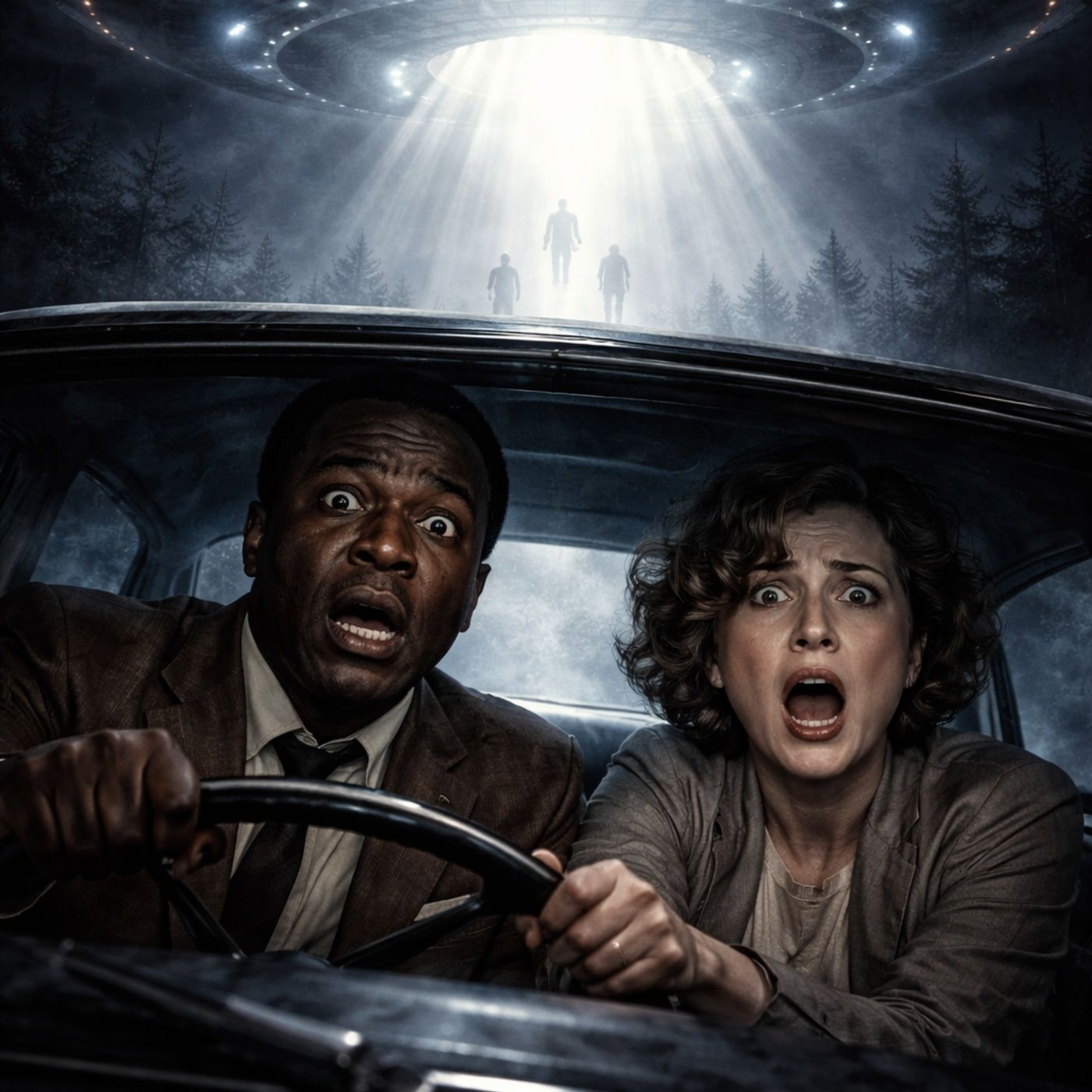
On the night of September 19th, 1961, Betty and Barney Hill were driving home to Portsmouth, New Hampshire after a short vacation in Canada. Somewhere on a dark stretch of US Route 3 in the White Mountains, they encountered a bright light in the sky that followed their car, descended toward the road, and changed their lives forever. What happened over the next two hours remains one of the most thoroughly documented and hotly debated cases in the history of the UFO phenomenon.In this episode, we explore the full story of the Betty and Barney Hill abduction from beginning to end. We start with who the Hills were before that night, a respected interracial couple in early 1960s New England whose credibility has never been successfully challenged. Betty was a social worker for the State of New Hampshire. Barney was a postal worker, a veteran, and an active member of the NAACP. These were serious, private people who never sought the spotlight and who had everything to lose by going public with their story.We walk through the encounter itself in detail, from the first sighting of the object near Colebrook to the terrifying moment Barney looked through his binoculars and saw figures staring back at him from behind a row of windows. We cover the two missing hours that neither Betty nor Barney could account for, the strange physical evidence they found when they got home, and the psychological unraveling that followed in the weeks and months after the encounter.We take a deep look at the hypnosis sessions conducted by Dr. Benjamin Simon, a Harvard-trained psychiatrist who hypnotized Betty and Barney separately and found their accounts to be remarkably consistent despite having no opportunity to compare notes. We examine Betty's star map, the controversial sketch that amateur astronomer Marjorie Fish later matched to the Zeta Reticuli star system using data that wasn't publicly available when Betty drew it.Finally, we explore how the Hill case created the template for every alien abduction report that came after it, from Travis Walton to the Pascagoula encounter to Whitley Strieber's "Communion" to the Ariel School sighting in Zimbabwe. We look at how the case influenced researchers like Budd Hopkins, David Jacobs, and Harvard psychiatrist John Mack, and how the Hills' story connects to the modern UAP conversation happening in Congress today.Whether you believe the Hills were taken aboard an extraterrestrial craft or you think there's a more conventional explanation, one thing is certain. Something happened on that road. And more than sixty years later, nobody has been able to fully explain what it was.Have a forgotten historical mystery, disturbing event, unsolved crime, or hidden conspiracy you think deserves investigation?Send your suggestions to brian@paranormalworldproductions.com.Disturbing History is a dark history podcast exploring unsolved mysteries, secret societies, historical conspiracies, lost civilizations, and the shadowy stories buried beneath the surface of the past.Follow the show and enable automatic downloads so you never miss a deep dive into history’s most unsettling secrets.Because sometimes the truth is darker than fiction.
 1
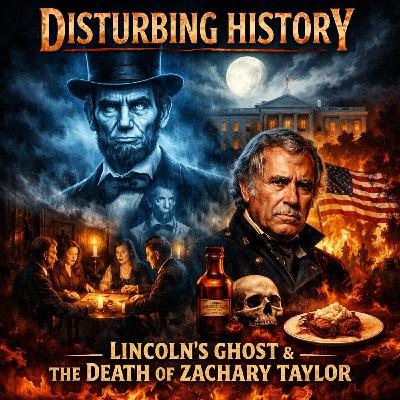
1Tonight's episode takes you inside the most famous house on the planet for two stories that are equally strange and equally disturbing. The first is about a ghost that won't leave. Abraham Lincoln is the most frequently reported spirit in the history of the White House, seen by presidents, first ladies, prime ministers, and queens over the span of more than a hundred and fifty years.But this isn't just a ghost story. It's a deep dive into Lincoln's own fascination with the supernatural, the séances held inside the White House after the death of his son Willie, and the explosive Spiritualism movement that swept across Civil War-era America as a nation drowning in grief searched desperately for a way to talk to its dead. Winston Churchill saw him. Queen Wilhelmina of the Netherlands fainted at the sight of him. Eleanor Roosevelt felt him standing behind her. And the sightings have never stopped.The second story is a murder mystery that took a hundred and forty-one years to investigate. President Zachary Taylor dropped dead in eighteen fifty, just five days after a Fourth of July celebration, and his death handed the presidency to a man who immediately reversed everything Taylor had fought for. Taylor was a slaveholder who'd turned against slavery's expansion, and his death was the single most convenient thing that could've happened for the pro-slavery forces trying to pass the Compromise of eighteen fifty. In nineteen ninety-one, a university professor convinced the state of Kentucky to dig him up and test his remains for arsenic.What they found, and what they didn't find, is a story that raises as many questions as it answers.Two presidents. One who never left the building, and one who left it far too soon.Have a forgotten historical mystery, disturbing event, unsolved crime, or hidden conspiracy you think deserves investigation?Send your suggestions to brian@paranormalworldproductions.com.Disturbing History is a dark history podcast exploring unsolved mysteries, secret societies, historical conspiracies, lost civilizations, and the shadowy stories buried beneath the surface of the past.Follow the show and enable automatic downloads so you never miss a deep dive into history’s most unsettling secrets.Because sometimes the truth is darker than fiction.
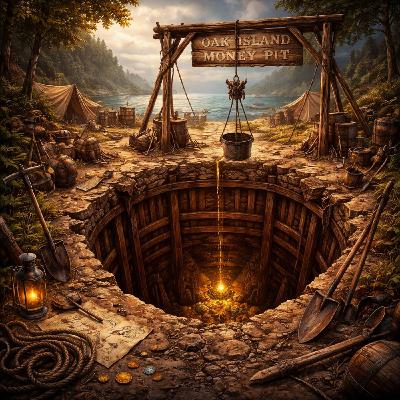
In this episode, we travel to a tiny, hundred-and-forty-acre island off the coast of Nova Scotia, Canada, where a mystery first uncovered by three teenagers in 1795 has consumed fortunes, destroyed lives, and killed six men over the course of more than two hundred and thirty years.We start with sixteen-year-old Daniel McGinnis and his discovery of a mysterious depression on Oak Island, complete with oak log platforms buried every ten feet underground.From there, we trace the full history of the Money Pit — the Onslow Company's excavation and the catastrophic flooding at ninety feet, the Truro Company's discovery of the ingenious flood tunnel system at Smith's Cove, and the parade of treasure hunters who followed, from Frederick Blair's sixty-year obsession to a young Franklin Delano Roosevelt's involvement as an investor in 1909.We cover the darkest chapter in Oak Island's history — the Restall Tragedy of August 17, 1965, when former daredevil Robert Restall, his twenty-four-year-old son Bobby, and two coworkers were killed by toxic gas in a shaft on the island. We talk about Robert Dunfield's destructive brute-force excavation, Dan Blankenship's fifty-year obsession and his terrifying near-death experience inside Borehole 10-X, and the decades of legal battles that nearly killed the treasure hunt entirely.Then we bring it into the modern era with Rick and Marty Lagina, two brothers from Michigan who purchased most of the island in 2006 and turned the search into a global phenomenon through the History Channel's The Curse of Oak Island, now in its thirteenth season.We examine the key artifacts recovered over the years — a medieval lead cross, human bones with Middle Eastern DNA, a five-hundred-year-old gemstone, coconut fiber that has no business being in Canada, and stone pathways in the swamp dating back centuries. We also break down the major theories about what's buried on the island, from pirate treasure and the French Crown Jewels to Knights Templar relics and the skeptic's argument that the whole thing is a natural sinkhole. And we talk about the curse — the legend that seven men must die before the treasure can be found. Six have. The seventh hasn't. Yet. As of February 2026, the treasure has not been found. The digging continues.This is Disturbing History.Have a forgotten historical mystery, disturbing event, unsolved crime, or hidden conspiracy you think deserves investigation?Send your suggestions to brian@paranormalworldproductions.com.Disturbing History is a dark history podcast exploring unsolved mysteries, secret societies, historical conspiracies, lost civilizations, and the shadowy stories buried beneath the surface of the past.Follow the show and enable automatic downloads so you never miss a deep dive into history’s most unsettling secrets.Because sometimes the truth is darker than fiction.
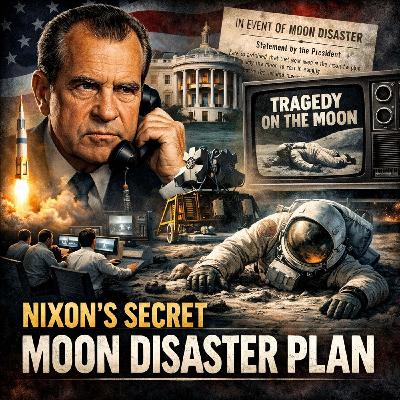
In July of 1969, while the world watched Apollo 11 head for the Moon, a speech sat folded in a White House desk drawer. Written by Nixon speechwriter William Safire, the memo titled "In Event of Moon Disaster" was a contingency address prepared for the very real possibility that Neil Armstrong and Buzz Aldrin would never leave the lunar surface. The ascent engine that had to fire to bring them home had no backup and had never been tested under actual lunar conditions. If it failed, two men would die on the Moon while the world listened.This episode breaks down Safire's memo line by line, examining the rhetoric, the political strategy, and the emotional weight behind every word. We explore the grim contingency planning happening simultaneously in Houston, where young flight controllers faced the unbearable question of how long to maintain communication with a stranded crew. We talk about the Cold War stakes that made failure not just a tragedy but a potential strategic defeat for the United States, and how Nixon's political survival was tangled up in the outcome of a single rocket engine. We also dig into the moments that nearly made the speech necessary, from the computer alarms during descent to the broken circuit breaker switch that Aldrin fixed with a felt-tip pen. We discuss Michael Collins, the often-forgotten third astronaut who would have had to fly home alone, and what that journey would have meant for the rest of his life.The episode covers the memo's discovery in 1999 by journalist James Mann in the National Archives, the way it reframed the Apollo 11 story for a generation that had only known the triumph, and the unsettling 2020 MIT deepfake project that used AI to show Nixon delivering the speech that was never given.This is the story of the speech that was written to never be read, and what it reveals about courage, fear, and the impossibly thin line between humanity's greatest achievement and its greatest disaster.Have a forgotten historical mystery, disturbing event, unsolved crime, or hidden conspiracy you think deserves investigation?Send your suggestions to brian@paranormalworldproductions.com.Disturbing History is a dark history podcast exploring unsolved mysteries, secret societies, historical conspiracies, lost civilizations, and the shadowy stories buried beneath the surface of the past.Follow the show and enable automatic downloads so you never miss a deep dive into history’s most unsettling secrets.Because sometimes the truth is darker than fiction.
Something happened the other night that got me thinking. I sat down to watch the Grammy Awards, expecting a celebration of music. What I got instead felt more like a political rally than an awards show.And it made me ask a question I think a lot of us have been asking quietly. When did everything become political? When did we lose the ability to just enjoy things together?This episode is different from our usual content. No serial killers. No mass graves. No presidents with dark secrets. But the most disturbing changes in history aren't always the obvious ones. Sometimes they're the ones that seep in slowly, so gradually you don't notice until you wake up one day and the world doesn't feel like the world you remember.I want to be clear from the start. This isn't a political rant. I'm not trying to change your mind or tell you how to vote. I'm not saying the issues people care about don't matter. They do.What I am saying is that something has shifted in our culture over the past two decades, and I think it's worth talking about honestly. The way entertainment became activism. The way corporations discovered that appearing virtuous was good for business. The way social media algorithms learned that outrage keeps us engaged. The way we lost the shared spaces that used to bring us together despite our differences. This is a conversation I've been wanting to have for a long time. I hope you'll stick with me through it.Have a forgotten historical mystery, disturbing event, unsolved crime, or hidden conspiracy you think deserves investigation?Send your suggestions to brian@paranormalworldproductions.com.Disturbing History is a dark history podcast exploring unsolved mysteries, secret societies, historical conspiracies, lost civilizations, and the shadowy stories buried beneath the surface of the past.Follow the show and enable automatic downloads so you never miss a deep dive into history’s most unsettling secrets.Because sometimes the truth is darker than fiction.
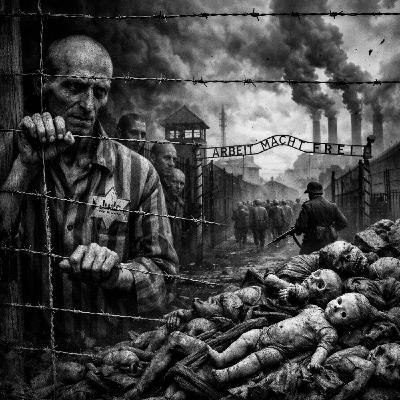
This episode takes you through the full, unflinching story of the Holocaust — from the ancient roots of antisemitism that made it possible, to the rise of Adolf Hitler and the Nazi Party in a broken and humiliated post-World War One Germany, and into the systematic, industrialized murder of six million Jews and millions of others deemed unworthy of life. We walk through the ghettos of Warsaw, where hundreds of thousands were starved behind walls and barbed wire. We follow the Einsatzgruppen death squads across Eastern Europe, where entire Jewish communities were marched to ravines and shot. We step inside the machinery of the death camps — Auschwitz, Treblinka, Sobibor, Belzec — where human beings were gassed by the thousands and their bodies burned in crematorium ovens running around the clock.But this episode is not only about death. It's about resistance — the fighters of the Warsaw Ghetto Uprising, the Sonderkommando revolt at Auschwitz, and the countless small acts of defiance that kept the human spirit alive in the darkest of places. It's about the Righteous Among the Nations — people like Oskar Schindler, Raoul Wallenberg, Irena Sendler, and Chiune Sugihara — who risked everything to save lives when most of the world looked the other way.We cover the liberation of the camps by Allied forces, the Nuremberg trials, the hunt for escaped war criminals, and the founding of the State of Israel in the shadow of genocide.We address Holocaust denial head-on, dismantling the lies with the overwhelming mountain of evidence left behind by the Nazis themselves, by survivors, by perpetrators who confessed, and by the Allied soldiers who walked through the gates of hell and documented what they found.And we examine the generational trauma that continues to shape the descendants of survivors — the silence, the anxiety, the emerging science of epigenetic inheritance that suggests the wounds of the Holocaust may be written into the very biology of those who came after. This is one of the most important episodes we've ever produced. It is not easy to listen to. But it is necessary. Because the last survivors are dying, and when they're gone, it falls to us to carry this memory forward.Listener discretion is strongly advised. This episode contains graphic descriptions of violence, genocide, and human suffering. Never forget.Have a forgotten historical mystery, disturbing event, unsolved crime, or hidden conspiracy you think deserves investigation?Send your suggestions to brian@paranormalworldproductions.com.Disturbing History is a dark history podcast exploring unsolved mysteries, secret societies, historical conspiracies, lost civilizations, and the shadowy stories buried beneath the surface of the past.Follow the show and enable automatic downloads so you never miss a deep dive into history’s most unsettling secrets.Because sometimes the truth is darker than fiction.
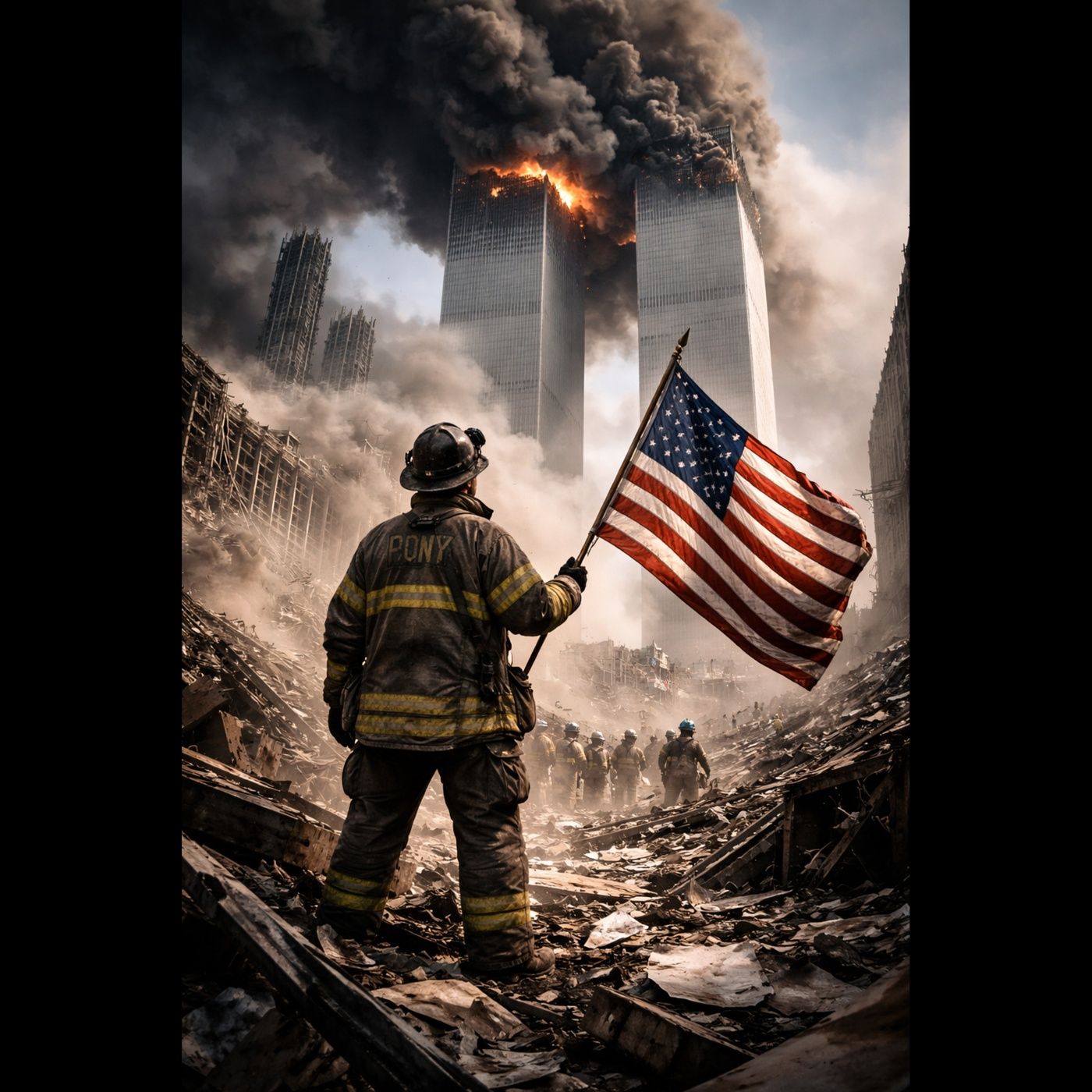
We all know where we were that morning. The clear blue sky. The impossible images on our television screens. The moment when time itself seemed to split into before and after.In this episode of Disturbing History, we go back to September eleventh, two thousand and one, and tell the complete story of the deadliest terrorist attack on American soil. From the years of planning in Afghan caves and Hamburg apartments to the final desperate moments aboard four hijacked aircraft, this is the full account of how nineteen men murdered nearly three thousand innocent people and changed the course of history. We trace the origins of al-Qaeda and Osama bin Laden's obsession with striking America. We examine the intelligence failures that allowed the hijackers to train at American flight schools and move freely through the country in the months before the attack. We relive the horror of that Tuesday morning as two planes struck the World Trade Center, a third hit the Pentagon, and a fourth was brought down by its own passengers in a Pennsylvania field.This episode honors the victims, the first responders who climbed toward certain death, and the ordinary people who became heroes when their moment came. We follow the aftermath through the wars in Afghanistan and Iraq, the transformation of American security and society, and the long shadow that September eleventh continues to cast more than two decades later.Have a forgotten historical mystery, disturbing event, unsolved crime, or hidden conspiracy you think deserves investigation?Send your suggestions to brian@paranormalworldproductions.com.Disturbing History is a dark history podcast exploring unsolved mysteries, secret societies, historical conspiracies, lost civilizations, and the shadowy stories buried beneath the surface of the past.Follow the show and enable automatic downloads so you never miss a deep dive into history’s most unsettling secrets.Because sometimes the truth is darker than fiction.
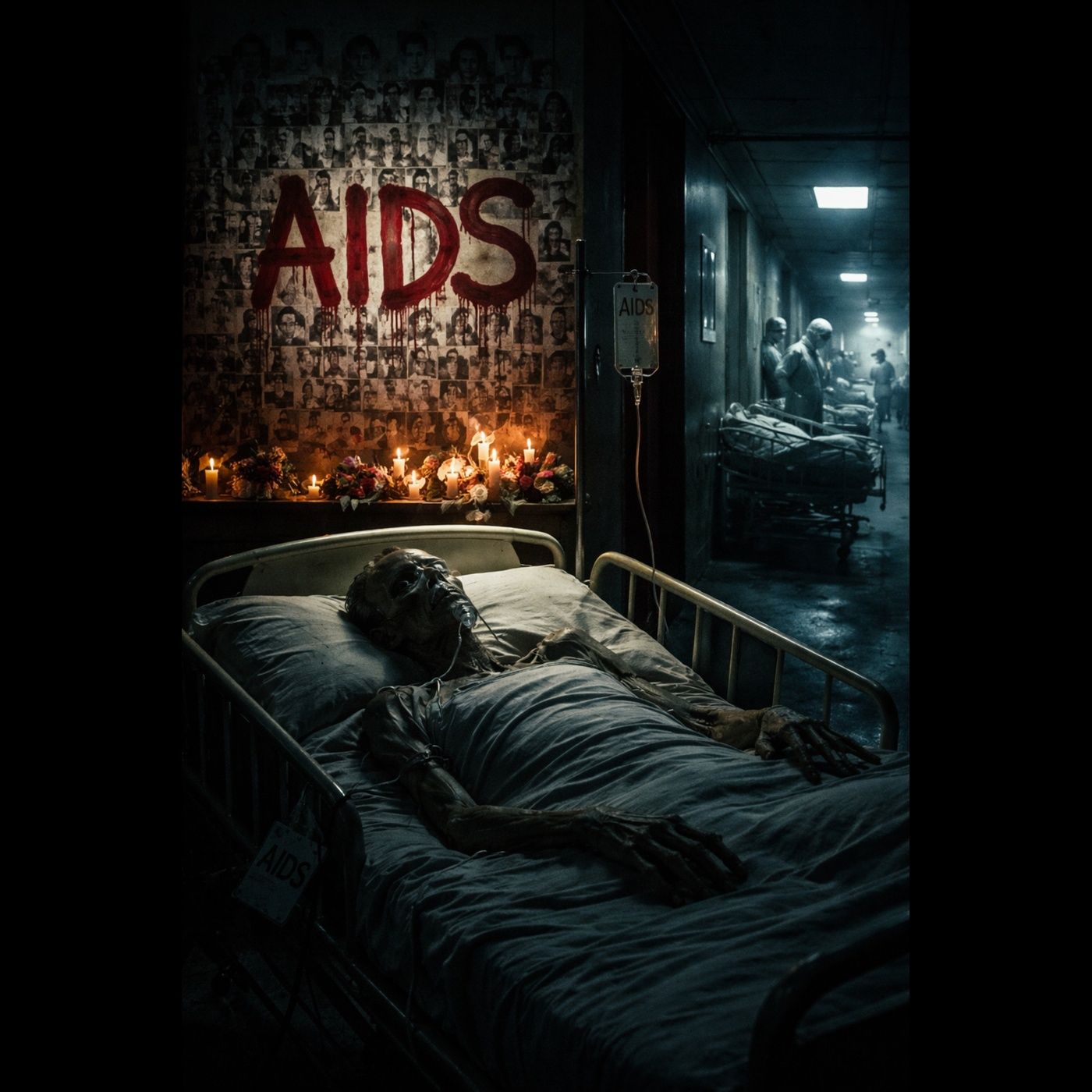
In June of 1981, the CDC published a brief report about five young gay men in Los Angeles diagnosed with a rare pneumonia. Two were already dead. That report marked the official beginning of the AIDS epidemic in America, though the virus had been killing long before anyone noticed.This episode examines how a preventable health crisis became a catastrophe through government neglect, institutional indifference, and moral condemnation.President Reagan refused to publicly say the word AIDS until 1985, by which time over 12,000 Americans had died. He didn't give a major speech on the epidemic until 1987, when the death toll had reached 36,000. While the Tylenol poisoning that killed seven people received immediate federal response, AIDS received pennies and jokes at White House press briefings.We explore the science behind HIV, a retrovirus that hijacks the immune system's own cells and can remain dormant for years while silently spreading. We detail the horrific deaths that defined the epidemic's early years, from Kaposi's sarcoma to wasting syndrome, when doctors had no weapons and could only watch their patients die.The episode covers the contaminated blood supply crisis that infected more than half of American hemophiliacs, including teenager Ryan White, whose attempt to return to school sparked community outrage and death threats. We examine the rise of ACT UP and the activist movement that refused to die in silence, changing not just AIDS policy but the entire landscape of patient advocacy and drug approval.Finally, we trace the scientific breakthroughs from AZT to combination therapy, which transformed AIDS from a death sentence into a manageable condition, and the ongoing global fight for treatment access that continues today. More than 40 million people have died worldwide. The epidemic is not over. The lessons remain urgent.Have a forgotten historical mystery, disturbing event, unsolved crime, or hidden conspiracy you think deserves investigation?Send your suggestions to brian@paranormalworldproductions.com.Disturbing History is a dark history podcast exploring unsolved mysteries, secret societies, historical conspiracies, lost civilizations, and the shadowy stories buried beneath the surface of the past.Follow the show and enable automatic downloads so you never miss a deep dive into history’s most unsettling secrets.Because sometimes the truth is darker than fiction.
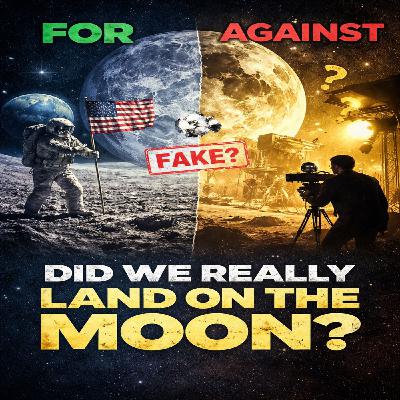
In this special follow-up to our Space Race episode, we dive headfirst into one of the most persistent conspiracy theories in American history. Did NASA really land men on the moon six times between 1969 and 1972, or was the whole thing an elaborate hoax filmed on a soundstage?We start with Bill Kaysing, the former Rocketdyne technical writer who self-published "We Never Went to the Moon" in 1976 and launched a conspiracy movement that refuses to die. From there, we explore the cultural moment that made America ripe for such theories, including the shadow of Vietnam, the Pentagon Papers, and Watergate. This episode presents the conspiracy arguments in their strongest form, examining claims about the waving flag, the missing stars, the suspicious shadows, the absent blast crater, and the supposedly lethal Van Allen radiation belts. We also tackle the Stanley Kubrick theory and the darker claims about suspicious deaths within the Apollo program.Then we flip the script and examine the overwhelming scientific evidence for the moon landings, including 842 pounds of lunar samples verified by scientists worldwide, retroreflectors still being used for laser ranging experiments today, and high-resolution photographs from multiple international spacecraft showing the landing sites exactly where NASA said they'd be. We also explore why the Soviet Union, America's mortal enemy with every reason to expose a fraud, acknowledged the landings as genuine. Along the way, we discuss the infamous moment when Buzz Aldrin punched conspiracy theorist Bart Sibrel in the face, and we examine the psychological reasons why conspiracy theories persist even in the face of insurmountable evidence.This one's a little different from our usual fare. We had fun with it, and we hope you do too.Have a forgotten historical mystery, disturbing event, unsolved crime, or hidden conspiracy you think deserves investigation?Send your suggestions to brian@paranormalworldproductions.com.Disturbing History is a dark history podcast exploring unsolved mysteries, secret societies, historical conspiracies, lost civilizations, and the shadowy stories buried beneath the surface of the past.Follow the show and enable automatic downloads so you never miss a deep dive into history’s most unsettling secrets.Because sometimes the truth is darker than fiction.
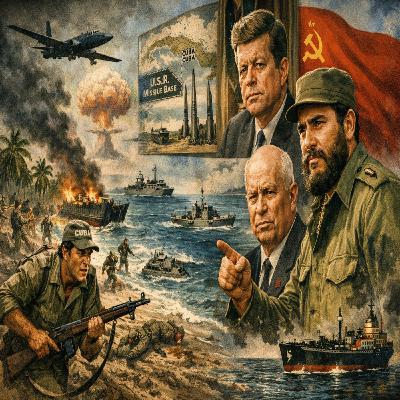
On October twenty-seventh, nineteen sixty-two, the world came within a single vote of nuclear annihilation. Deep beneath the Caribbean Sea, Soviet submarine commander Valentin Savitsky prepared to launch a nuclear torpedo at American destroyers. Two officers had already said yes. Only Vasili Arkhipov's refusal to authorize the launch saved humanity from extinction. But that terrifying moment during the Cuban Missile Crisis didn't happen in a vacuum. It was the direct consequence of a botched invasion that had occurred eighteen months earlier on the beaches of Cuba's southern coast.In this episode of Disturbing History, we take you inside the complete story of the Bay of Pigs invasion, from its origins in America's Cold War paranoia to its devastating aftermath that continues to shape global politics more than six decades later. We begin in Batista's Cuba, where American corporations owned the sugar fields and American mobsters ran the casinos. Meyer Lansky and Santo Trafficante turned Havana into a playground for tourists seeking pleasures that would get them arrested back home. Meanwhile, Batista's secret police tortured and murdered tens of thousands of Cuban citizens while Washington looked the other way and called him a valued ally. Then came Fidel Castro. A young lawyer who traded courtrooms for mountain guerrilla warfare. A man who survived disaster after disaster, from the failed Moncada Barracks attack to the catastrophic Granma landing that left him with only twenty survivors. Yet within two years, he had toppled a dictator backed by the most powerful nation on Earth.What happened next set the world on a collision course with destruction.We reveal how the CIA, drunk on its successes in Iran and Guatemala, convinced itself that Cuba would fall just as easily. How Allen Dulles and Richard Bissell assembled Brigade twenty-five oh six from Cuban exiles and trained them in the jungles of Guatemala. How the agency built an invasion plan on assumptions that were catastrophically wrong, then deceived a young President Kennedy about the operation's chances of success. You'll hear the full story of the invasion itself. The air strikes that failed to destroy Castro's air force. Kennedy's fateful decision to cancel the second round of bombing. The coral reefs that shredded landing craft. The supply ships sunk by Cuban jets while the brigade watched helplessly from the beach. Seventy-two hours of desperate fighting by men who had been promised American support that never came. We examine the aftermath that changed everything. Kennedy's humiliation and his growing distrust of military advisors, a distrust that may have saved the world during the missile crisis. Khrushchev's assessment that the young American president could be pushed around. Castro's transformation from embattled revolutionary to seemingly invincible leader with a Soviet nuclear umbrella. The episode traces the direct line from the beaches of Playa Giron to the thirteen days in October nineteen sixty-two when humanity stood at the brink. We explore Operation Mongoose, the CIA's obsessive campaign to assassinate Castro using everything from exploding cigars to mob hitmen. We show how these operations convinced Moscow that Cuba needed protection, leading directly to the deployment of nuclear missiles ninety miles from Florida.Finally, we examine the long shadow the Bay of Pigs continues to cast over American foreign policy. The patterns of wishful thinking and intelligence failure that repeated themselves in Vietnam and Iraq. The Cuban exile community's enduring influence on American politics. The embargo that has lasted more than sixty years without achieving regime change. And the human cost paid by the men who fought and died on both sides of a battle that accomplished nothing but tragedy. This is Cold War history at its most dramatic and its most disturbing. A story of hubris, deception, and unintended consequences. A reminder that the decisions made by a handful of men in Washington and Havana and Moscow brought our entire species to the edge of extinction. The beaches of Playa Giron are tourist resorts now. But the consequences of what happened there in April of nineteen sixty-one are still shaping our world today.Have a forgotten historical mystery, disturbing event, unsolved crime, or hidden conspiracy you think deserves investigation?Send your suggestions to brian@paranormalworldproductions.com.Disturbing History is a dark history podcast exploring unsolved mysteries, secret societies, historical conspiracies, lost civilizations, and the shadowy stories buried beneath the surface of the past.Follow the show and enable automatic downloads so you never miss a deep dive into history’s most unsettling secrets.Because sometimes the truth is darker than fiction.
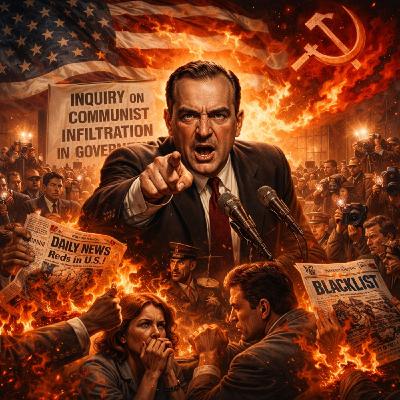
In the spring of 1954, Wyoming Senator Lester Hunt walked into his Senate office with a rifle hidden beneath his overcoat. Weeks of blackmail by allies of Joseph McCarthy had broken him. The gunshot that followed should have warned America about the darkness that had descended upon the nation. It didn't.This episode of The Disturbing History Podcast takes you inside one of the most troubling chapters in American history. Senator Joseph McCarthy's four-year reign of terror destroyed thousands of lives, drove good people to suicide, and held an entire nation hostage to paranoia. From his infamous 1950 Wheeling speech where he claimed to hold a list of 205 Communists in the State Department to his spectacular downfall during the Army-McCarthy hearings, we cover the complete story of how one man weaponized fear and nearly brought American democracy to its knees. You'll hear about the Hollywood blacklist that ended careers and drove artists into exile. The Lavender Scare that persecuted gay and lesbian Americans alongside suspected Communists. The brave few who stood against McCarthy, including Senator Margaret Chase Smith and broadcast legend Edward R. Murrow. And the dramatic moment when Army counsel Joseph Welch asked the question that finally ended McCarthy's power: "Have you no sense of decency, sir? At long last, have you left no sense of decency?"This is the story of McCarthyism, the Red Scare, and the House Un-American Activities Committee. It's the story of the Hollywood Ten, Roy Cohn, and the Cold War paranoia that gripped 1950s America.Most importantly, it's a warning about what happens when fear overwhelms reason and accusation becomes proof of guilt.The tactics McCarthy pioneered didn't die with him. They echo through American politics to this day.Have a forgotten historical mystery, disturbing event, unsolved crime, or hidden conspiracy you think deserves investigation?Send your suggestions to brian@paranormalworldproductions.com.Disturbing History is a dark history podcast exploring unsolved mysteries, secret societies, historical conspiracies, lost civilizations, and the shadowy stories buried beneath the surface of the past.Follow the show and enable automatic downloads so you never miss a deep dive into history’s most unsettling secrets.Because sometimes the truth is darker than fiction.

In this special episode of Disturbing History, we step away from ancient mysteries and infamous crimes to confront something far closer and far more unsettling: the forces shaping our thoughts, behavior, and attention right now. This is not a story about the past. It is a story unfolding in real time, in your hands, on your screen, and inside your mind.We begin with a simple observation: most of us carry a device more powerful than all the computers used to reach the moon, yet we spend hours a day trapped in endless, hypnotic scrolling.This is not accidental. It is the system working exactly as designed. To understand how we got here, we trace the origins of modern manipulation back to Edward Bernays, the father of public relations, who used psychological insight to shape mass behavior without people ever realizing they were being guided. From his early campaigns to his chilling concept of an “invisible government,” Bernays laid the foundation for an economy built on influence rather than truth.As television rose, attention itself became the product. Networks sold viewers to advertisers, rewarding content that provoked fear, conflict, and emotional intensity over nuance or accuracy.The internet promised liberation from this model, but instead created an attention crisis, where infinite content competes for finite human focus. Design choices like infinite scroll quietly removed moments of choice, turning engagement into compulsion and regret into an afterthought.Social media perfected the formula by exploiting our deepest social instincts. Likes, notifications, and algorithmic feedback loops mirror the mechanics of addiction, a fact later acknowledged by the very people who helped build them.Platforms optimized for engagement inevitably favor outrage, misinformation, and emotional extremes, not because people crave lies, but because the system rewards whatever keeps us hooked.We explore how these same psychological techniques dominate retail environments, media ecosystems, and digital spaces, all rooted in dopamine-driven anticipation rather than satisfaction. Over time, this constant stimulation reshapes the brain, eroding focus, increasing anxiety, and fueling cycles of craving and withdrawal.The effects are especially severe for children and adolescents, where rising rates of depression, anxiety, and suicide closely track the spread of smartphones and social media, despite companies knowing the harm their products cause. The episode also examines shrinking attention spans, declining cognitive measures, and the concentration of media power into the hands of a few dominant platforms that quietly decide what billions of people see, believe, and argue about. Identity itself has shifted from something lived to something performed, curated for an invisible audience, leaving many feeling more connected than ever and yet profoundly alone.As shared reality fractures and misinformation thrives, even the basic foundations of democracy begin to erode.When facts are contested and outrage is profitable, persuasion, compromise, and truth lose their footing. The episode closes by asking what resistance looks like in a world engineered for distraction, offering ways to reclaim agency, protect the vulnerable, and rebuild genuine human connection. This is not ancient history. This is the story of now. And the ending has not yet been written.Have a forgotten historical mystery, disturbing event, unsolved crime, or hidden conspiracy you think deserves investigation?Send your suggestions to brian@paranormalworldproductions.com.Disturbing History is a dark history podcast exploring unsolved mysteries, secret societies, historical conspiracies, lost civilizations, and the shadowy stories buried beneath the surface of the past.Follow the show and enable automatic downloads so you never miss a deep dive into history’s most unsettling secrets.Because sometimes the truth is darker than fiction.


Download from Google Play

Download from App Store
 United States
Wonderful Pod. I love history and this one digs into the heart of it. Great research. Interesting and engaging.